Rachel Dacus's Blog, page 21
November 29, 2017
Illustrated Preview of my novel The Renaissance Club, and countdown to launch!
It’s starting to feel like the countdown to the offical launch of my novel, The Renaissance Club, in January! As the daughter of a rocket scientist, I have to use rocket metaphors in connection with the word “launch”. Very soon you’ll be able to pre-order my book on Amazon. And also soon, I’ll host a giveaway. My giveaway will include another good read, signed paperback copies of my book of poems and essays, Gods of Water and Air, as well as other prizes.
To celebrate, I’m sharing this free preview of the first two chapters. This free preview is the newest, updated version of the book that will be printed or sold as an ebook. It includes a brand new prologue! So here, without further ado, is …
 The Renaissance Club, A Novel
ROME
Prologue. The Folds of Time.
If you could go anywhere in time, where would you go? George remembered being asked that question in fourth grade by his best friend Timmy, who was reading it aloud from the famous science-fiction novel, Time’s Wily Thief. Sitting in his favorite neighborhood trattoria in Rome, he wasn’t sure why he remembered that. Maybe because Ancient Rome was one of his favorite places to visit.
George St. James stirred his cappuccino and contemplated a file describing the people he would lead in his next tour group. He would guide a group of college teachers, who called themselves The Renaissance Club, through Northern Italy to study sites of importance to the dawn of the modern era, known as the Italian Renaissance. For the next several weeks, he would shepherd twelve mostly aging professors through more than one hundred sites. Norman, their leader and club organizer, had sent George a wish list for the ages. George would have to pace them, or they’d drop before they left Rome.
History was after him again. He could feel it tugging on his sleeve as he drank his coffee. It pressed on him as he leaned back in his chair, distracted from reading the file. Time always made its inclination to fold known with a flutter, and then a tremor underfoot. He’d have to be careful about his disappearances during this tour. He had a feeling they’d be frequent.
George relished having a peaceful day before the tour. Taking visitors around Italy while lecturing was strenuous, though, he took breaks between tour groups, teaching at various universities. Much more peaceful. He thought of it as his hobby and touring as his real work.
Tomorrow would be a busy day, escorting them through eight different sites, according to Norman’s schedule. And history had been behaving in a tricky manner this week, which told him that someone on this next tour would need special attention. He could always tell if someone did, and if history had an agenda for that person.
Where for others time was orderly, time had always been disorderly for George, even as a child. He had trouble keeping events in a straight line. For George it sometimes did a backflip or side-step. Where most children would be late to class, or show up eagerly early, George could be sitting in the classroom and suddenly find himself somewhere else. He went beyond woolgathering into timegathering.
When a teacher first caught him having been absent, she accused him of sneaking out of the room. She asked him point blank what he was thinking about right now.
He answered with cheerful honesty. “I didn’t leave and I wasn’t woolgathering, Mrs. Smith. I was talking to Julius Caesar’s youngest slave.”
He was sent to the principal for telling outrageous fibs. The second, third, and fourth times it happened, he learned from a friend that he had only been gone a short time. He then took care to prepare an excuse, such as having slipped away to go to the bathroom or to see what was going on in the hallway because he heard someone crying. Once the teacher just accused him of daydreaming and asked in a warning tone if he wanted to concoct any more lies.
George said, “No ma’am.”
Later, he asked other daydreamers from class where they had gone. They said things like, to the clouds, or thinking about breakfast.
Years later, after meeting many people on his time travels, he realized he wasn’t daydreaming. He learned to not talk about his adventures, but to write about them. Doing so, he eventually became a history scholar.
It made sense to George that time often found him and made him do a backflip or a side-step. He was always meeting fascinating people. Once he met a delightful man, a poet, in nineteenth century India, who seemed to understand him. The poet told him, “Let your life lightly dance on the edges of Time, like dew on the tip of a leaf.” He suggested George start writing poetry and looking for poetry in the world around him. It was there, he advised George, but most people couldn’t see its rhythms and order, because they hadn’t cultivated silence or made friends with time.
In Colonial America, George helped a new friend who thanked him with a special writing quill; a gift to thank him for helping with the signing of the American Declaration of Independence. Pens would become important to George, and he cherished this artifact of his modest role in fashioning the document his friend would call “the noblest, happiest page in humankind’s history.”
George helped Jefferson during the siege of migraines that preceded his writing the document, and the weeks of debilitation. To inspire Thomas and help cure the headaches, George sent him on an excursion to ancient Greece, where Thomas had a conversation with the Greek lawmaker Solon. But George had tripped himself up. He had given Solon advance warning, asking him to teach the young American scholar about Greek voting rights. Solon had improved on the assignment, describing to Jefferson his vision of Greek democracy, rather than its current reality. And Thomas had taken back a vision that seemed shiningly impossible. That was when George realized history had infinite branches and possibilities.
Gradually, he came to understand that this was his calling, to steer special people through the shimmering doorway, folding time, and so enable them to explore their potentials. He liked helping people. Leading others, whether through modern-day Italy, or the real Renaissance, was now his job.
The waiter came and asked if he’d like something to eat. He didn’t offer a menu, as he knew his customer well. George ordered a bowl of specialty pasta that wasn’t on the menu.
While waiting for his food, he took out his Florentine tooled-leather case and pulled a gold-banded cigarette from it. He lit up and set his gold lighter on the table, thinking about different individuals in The Renaissance Club. His trusted colleague Jake, who had known George for many years, had brought him the file when they met the night before. The file described what George knew would be a good group. He knew there would be a least one very intrepid traveler, maybe more.
Jake, who had only been with their faculty for a couple of terms, suggested one of George’s exercises when Norman formed the Renaissance Club. The exercise was to make a list of the most fascinating artists in history, people you wished you could have met in person. The file contained the answers given by every club member except Norman’s daughter, who had declined to do the exercise. George had the feeling she wasn’t meant to be on this tour, and certainly not on one of his special side tours.
The waiter brought him a fragrant bowl of pasta coated with a tomato-basil sauce. He looked down into the bowl. Time parted to show him the face of Zheng, an elderly man from Guizhou Province who had invented pasta. George had visited the region in the eighteenth century on a winter night. He knocked on the door and was invited in for a meal, but Zheng’s cupboard proved to be empty of everything but flour and one egg.
“What can be done with one egg and some flour?” Zheng had asked George as they sipped tea.
His hovel had cracks between the boards that made it a breeze-riddled night, so they took extra care with each sip, the kind of care that proclaims nobility of spirit, despite one’s poverty. Zheng’s shredded clothes were barely enough to cover him, let alone keep warm, but the old man smiled and nodded encouragingly at George.
George smiled and the memory of that beautiful, meditative night inspired him. He speared a generous forkful and ate appreciatively. Appreciation was another lesson he had learned about time traveling. Zheng had taught it by exchanging scarcely a word, simply by being.
George finished his meal and lit another cigarette. The smoke rose around the table in delicate tendrils. An opening door let in a gust of air, and lemon-colored light dazzled on the creamy walls.
Time had such strange currents. At the moment, he savored only the freshness of the September breeze and the day ahead when he would begin to work again. Someone in this new group would be ready to seize adventure, and need it.
Chapter One. Temblors in Time.
If she could, May would ask her seventeenth century hero one thing: If I were trapped in a piece of stone, would you chisel me free?
But even a genius like Bernini couldn’t free her from being a precocious failure. At age twenty-six, with a teaching career stuck at Almost-Launched, and an addiction to Baroque art, her future was trapped in stone. And after yesterday’s long flight from California, she was as much a deadweight as a block of marble. So, apparently, was Darren, snoozing beside her, making gentle noises through his nose.
She wanted to sink into this luxurious bed, but Bernini’s art was out there, literally covering Rome. After imagining its creator so many times in her tiny office at the college, she couldn’t bear to miss a moment of real Bernini, up close. If only personal.
May forced herself and stealthily stood up. She looked down at him. He didn’t so much as blink. That meant she could sneak out early to greet Rome. Of course, she should be sharing these first moments with Darren, her generous boyfriend who was sponsoring her on this trip. But instead she tiptoed into the bathroom, taking her notebook. On a blank page she scribbled, Gone surfing. Start the Renaissance without me. She tore it out of the book and then shedding her nightgown, stepped into the shower.
After a quick shower, she came back into the room. He was still sound asleep. She slipped into jeans, silk shirt, and sandals and left the note on her pillow. He snored it slightly into motion. Stuffing her lipstick, blush, and water bottle into the backpack, she slung it on and opened the door.
A flush of excitement pushed her down the carpeted hallway. She stepped into the old-fashioned elevator, and while it slowly descended, she twisted her hair into a braid, dabbing on blush while staring into the compact mirror.
Her large, green eyes were bloodshot, clouded with fatigue, but still pretty. Was that all people saw in her? Prettiness, like her name—simple and uncomplicated. Her life was anything but uncomplicated. Chattering in the creaks of the old elevator, she heard the disappointed voices of parents and teachers, as she went—always, it seemed—down. They were wrong to push me so hard. I don’t have talent or the drive to be a distinguished professor. But today I’ll be surrounded by beauty and art, and maybe it will change me so that I do.
She was going out alone not only for beauty, but also for time—time to fully forgive Darren for his reaction when she had told him, two months ago, that she had been accidentally pregnant, and then she wasn’t. He devastated her with one look of relief and no sympathy. Of course, a baby wasn’t part of their agreement. Their agreement was to make no promises to each other.
It might take more than a few minutes to stop hurting from that moment. He was right. It was good that their lives weren’t going to be disrupted, but he might at least have had mixed feelings.
But May knew she could bounce back with her impresario of ecstasy, the subject of her Master’s Thesis. She needed to see Bernini’s Triton Fountain, with its muscular Greek god trumpeting a blast of water. And the shiny marble of young Apollo’s face as he chased the nymph, who only escaped by turning into a tree. Bernini’s beauty would transport her, bring her into his monumental, heroic world. Maybe a little of his genius could rub off.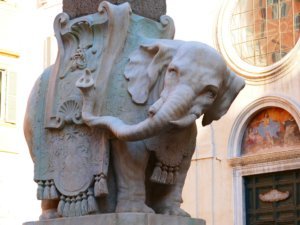
The elevator reached the ground with a bump. She sensed a gust of air—having left her zipper down and tugged it up. At least one thing in her life was going up today. Before the doors opened, she adjusted her blouse to reveal a purple bra strap and stepped out into the elegant lobby of the grand hotel.
It was full of stylish people, all talking at top volume. May waded through the crowd to the breakfast buffet, cruised through, and grabbed an espresso and a roll, signed her bill, and then headed outside. Pushing through the revolving door, she ran right into a tall man in a gray suit. He had a black coat draped around his shoulders.
“I’m so sorry!” she said, trying not to spill coffee on him.
“Are you by any chance a member of The Renaissance Club?” he asked.
“Yes.” How, in the crush of people, had he guessed? “I’m May Gold. I’m here to drink in this entire city, especially everything created by Gianlorenzo Bernini.”
“You have good taste!” He held out his hand. “I’m George St. James, your guide in Italy.”
She shook the hand of their distinguished art historian guide, trying to compose her cool façade and cover up her nervousness at meeting him, at being the most junior member of this club of successful academics. She clasped his thin, long-fingered hand with its heavy gold ring, and as she did, the street wavered. The buildings with their scrollwork and columns shimmered as if underwater.
Noisy market stalls crowded around Renaissance facades. Vendors shouting to customers in colorful Italian acquired turbans and were shouting in another language. A small, decorated elephant passed her, surrounded by a cloud of yellow butterflies, and led by a woman in a red sari. It was just like the elephant she had wanted to ride as a child in India. Visiting with her parents while they made a documentary on the Untouchables, she had been enchanted by the little pachyderm. She would have felt like a queen atop that animal, but they had all yelled, “Don’t get on, it’s not safe!” She didn’t. What if she had jumped onto its back, kicked her heels on its soft, heavy sides, and ridden off to Zanzibar—
She let go of George’s hand. The street wavered back into its present moment of tourists, Vespas, fumes, and noise. He was looking at her intently, almost as if peering inside her, watching her adventure with friendly interest. She would definitely need more espresso.
“I’m pleased to meet you, May Gold,” George said in a deep, gentle voice. “I think you’ll enjoy Italy. Everyone does.”
He sounded kind. “I know I will.”
She had expected a stuffy, probably conceited elder, based on Norman’s description. Their guide to the Renaissance might be middle-aged, but George was hardly stuffy. He had gray-streaked, wavy black hair and an assured manner. His olive skin, black eyes, and uber-charming smile combined to give him a slightly exotic look.
“Are you always the first out?” he asked. He had a curly voice, rich as an actor’s, with an American accent.
“I must have been born five minutes early,” May said.
Gesturing toward the bus idling at the curb, he said, “Our bus is on time. That’s remarkable in Rome! It must be you. Today, everything will be five minutes early.”
She laughed. “And it will be twenty-five times more beautiful than I could have hoped.”
Embarrassed to be gushing to an esteemed scholar, she amended. “I can’t imagine anywhere better to be, unless I could be in the actual Renaissance.”
George smiled wryly, showing even, white teeth. “How actual do you want it to be?”
“As actual as the law of time allows,” she said. “But I guess time is pretty rigid.”
“On the contrary, I think it’s pretty plastic. By the way, am I right in remembering that there are twelve members of your Renaissance Club?”
Why was the number important to him? “Thirteen are here on the tour, including the doctor.”
“A doctor? Is someone ill?”
“No. Dr. Iris is a friend of Norman’s wife. They tacked her onto the tour at the last minute. She hasn’t even studied the Renaissance.”
“I guess as president of your club, Norman has that prerogative.” George’s voice, deep as it was, ran up and down a musical scale.
He was different from most academics. He didn’t spar and vie for dominance. He was tall, but he didn’t try to tower. Although May was five-eight, he made her feel short in a way she didn’t mind at all.
She relaxed into the wonder of simply being in Italy. Her first day here promised delights, the extreme artistic beauty that had made her rebel against her parents’ wishes that she go into a more prestigious field than teaching. Though she now doubted she could rise higher than the first rung on the tall and crowded academic ladder, May was glad she had chosen art, its history and its depth of meaning.
George walked back toward the entrance. She remembered her note. Darren wouldn’t find it funny. Gone surfing in the Renaissance. “Gone surfing” was their running joke about her wanting to wander away. He rarely found these notes amusing. Sometimes Darren seemed a whole generation older, and not just ten years her senior. But she shouldn’t be an ingrate.
She took out her notebook, thinking about her Gratitude Practice, a habit she was trying to cultivate in order to counter her tendency to be critical of people. She was sure they were all criticizing her, starting with Darren. She had read about gratitude. Grateful people had more friends and better health. They slept well at night. They probably didn’t disparage their generous boyfriends, and they were undoubtedly more successful in their careers.
Her pen skipped, so she took out her phone and typed the note.
Italy, Bernini, gorgeous art! Today I will see his ecstatic statues. I’m going surfing in passionate beauty, and Darren made it all possible. Grateful-” She paused. Honesty made her add “-ish.”
Just as George returned, a rolling movement underfoot startled her. “Hey, did you feel that?”
“Yes, an earth tremor. We’ve had several this morning. You must have a good sense of balance to feel it.”
“Yoga,” she said. “And living in California.”
“I was living there during the last big one,” George said. He thought she had been living there, too, but she hadn’t been born yet.
“Are you our guide all the way through Italy?” she asked.
“Yes. Rome, Assisi, Siena, Florence, Venice. With a few gaps in time.”
Gaps in time—an odd phrase. She hoped Darren wouldn’t come out soon. She wanted to get to know this interesting man who fell into gaps in time.
George pulled out a cigarette pack and removed a gold-banded smoke. He offered her one. When she declined, he asked if she minded his smoking, and she said she didn’t. He took out a large, decorative lighter, lit up and inhaled deeply, then exhaled curlicues. The curly shapes echoing the fountain across the street with its curvilinear forms. Everything today was going to be beautiful, even cigarette smoke.
“What an elegant lighter!” she said, admiring the gold object. The lighter and his hand seemed comfortable together.
“It was made by Cartier,” he said. “A gift from one of my tour members.”
May marveled that a tourist would so extravagantly thank a guide. “So, what made you decide to take on our Renaissance Club?”
“Hosting a group that has studied the period extensively, one that includes teachers of art and history. A rare challenge.”
That made May laugh, thinking of herself as part of a rare challenge. Was he being sarcastic?
“We studied it up one side and down the other for an entire year,” she said. “I bet most of your groups haven’t spent as much time on the Renaissance.”
“Most only want to find the cheapest lunch,” he said.
May made a mental note never to ask George where to go for lunch.
“What do you teach?” he asked.
The question made her shy again, reluctant to tell this renowned art historian that she taught in his field. “Art history. I’m an adjunct right now, but Norman has hinted that I have a future.” She didn’t mention that she was earning a part-time salary, sharing a classroom with fifteen other instructors, and had to hold office hours in a coffee shop. Or that Eva, her boss in the Art Department, had encouraged her to think of another career, or get a higher degree if she wanted to continue teaching.
“I’m interested in the Renaissance,” she elaborated, “but my specialty is the Baroque. I studied how Baroque artists took the classical, idealized human form and spun it into action. I did my thesis on Bernini’s one surviving play and his sense of theater.” She heard herself trying to impress George, and wished she could stop it.
“Interesting. Bernini, the rock star of the Baroque.”
Her smile lit up. The way he called her hero a rock star made her stop trying so hard. “Yes. And he scripted, directed, and acted in his own plays.”
“Forty-seven of them! I believe he made his assistants act in his annual plays. And his stage machinery was the marvel of Rome. Do you have an interest in theater as well as art?”
“I have a cousin in The Bay Conservatory, and I get free tickets. I think Bernini used theater to develop a new style of sculpture.”
George nodded. “Your luck with theater tickets gave you a good insight. Bernini is inspired by theater, and especially the new Commedia dell’arte theater in Rome.”
“The most theatrical sculpture is, of course, St. Teresa in her famous ecstasy.” She was a little embarrassed about mentioning it. Art historians called the saint’s open-mouthed expression ‘orgasmic’.
Briefly, Bernini filled her imagination, the caresses she had always imagined while idling over her thesis or a lesson plan. She would be sitting on a stool in his studio, modeling for one of his masterpieces. The floor was littered with marble chips as he hammered on stone. Then he would come to adjust her pose and enfold her in his arms.
A good thing George couldn’t read her thoughts.
“Bernini is a master showman,” he said.
Why did George use the present tense?
“Yes, he was,” she replied, subtly correcting him and wondering if he would notice.
“He’s such a showoff!” George said. “He loves acting in his plays.”
He surprised her again with the present tense—a grammatical error by such an erudite man, talking as if Bernini were still alive.
“You know, I didn’t even want to come to Italy,” she confessed. “Norman organized The Renaissance Club, and of course once he did, we all had to sign up. I mean, I always planned to come here, but not in a group…” she trailed off, not wanting to say that her colleagues intimidated her with their success, their departmental infighting, and their aggressive ambitions.
“Of course, you had to comply with your dean’s wish,” George said. “It’s only politic when you work in a college.”
“But my boyfriend—” She broke off, feeling another small tremor. “Wow! Did you feel that?”
“I’m surprised you can feel them. That was a single fold in time.”
A fold in time—May registered the poetic metaphor. George was a very unusual scholar. “I feel every little quake,” she said. “It comes from growing up in San Francisco. Why are you surprised I can feel them?”
“They’re not big. No one else seems to notice them. Just you. And me, because of my pen.”
“Your pen makes you feel earthquakes?”
He reached into his breast pocket and took out an ornamented gold fountain pen. It was even more beautiful than his lighter.
“What, does it have a tiny seismograph inside?” she asked.
“In a way. It’s made for keeping track of my journeys in space and time. Historians are always traveling in time, aren’t ?”
Before she could ask why a gold pen would make you feel an earthquake, Darren joined them. George smiled and extended his hand. Darren’s large hand clasped George’s, and he moved forward as he spoke, ever urgent to take control of a conversation.
“I’m Dr. Darren Perl. Norman has told us all about you, Dr. St. James.”
So formal. Darren was wearing the smile he gave to his new classes as he advertised his doctorate.
“We heard you give tours for the pope’s guests,” Darren said.
“Yes, the last pope. This one is such a populist he might want to escort his own guests. A man of the people.”
“This pope would probably drive them in his Fiat. Pope, driver, and Vatican Tour Guide in one. A cost-savings for a new age.”
Darren sometimes sounded as if he had memorized everything he said. But George laughed appreciatively, so Darren followed with, “How did you get hooked up with a tour full of college professors?”
“I’m a friend of Jake’s. I believe he recommended me to Norman.”
“Weren’t you teaching at Stanford?” Darren asked. “Why are you hosting tours?”
Let the sparring begin, May thought. She stepped a little away.
George replied, “I’ve taught there, off and on, but I like traveling.”
Darren said, “Norman told us you lecture all over the world.”
“Yes. I like the world,” George said. He gestured with a sweep of hand. “But who wouldn’t want to come back to this place as often as possible?”
Finishing his cigarette, he pulled out another, and offered one to Darren, who shook his head. As the flame of George’s lighter flared, May was amused to see envy in Darren’s eyes. George was being convivial, while Darren was being a snob. She was embarrassed for him. These were the moments that made her want to renounce the whole academic world and plunge into art, even if she starved.
Suddenly, George looked at her. He seemed to be asking a silent question, but she had no idea what it was. She thought of small elephants and big adventures. George smiled as if he understood.
Norman came out, leading The Renaissance Club. She sighed. Here it goes, she thought. They might as well be called The Bickering Club. Or the Jousting Club. She would have good opportunities today to practice patience and work on her gratitude, being grateful for a tour of many Bernini masterpieces, and the chance to find out if the Renaissance really was where she belonged.
#
The post Illustrated Preview of my novel The Renaissance Club, and countdown to launch! appeared first on Rachel Dacus.


November 18, 2017
Writing in a Community of Writers
 I’m past the midway point of National Novel Writing Month, and wouldn’t be here without my community of writers. In my fortunate case, it’s fellow members of the Women’s Fiction Writers Association, and the subset of those who are doing the wild writing marathon of #NaNoWriMo, wherein you write 50,000 words of a new novel in 30 days. Crazy, huh? Yet more than 300,000 people every year are now participating. How many get to the end with 50K words? I’m willing to bet a large percentage are writers working in some kind of community. For mutual support and encoureagement along the lonely writing path, there’s nothing like a #NaNoWriMo group.
Joining a writing group means opening up about your process, and for introverted writer types, that can be scary. My impression was that writers were all competing with each other, so when I first joined WFWA, saying anything on any topic felt fraught with the risk of humiliating myself. I felt these were all such accomplished, published novelists (at the time I wasn’t published), and how dare I comment or even broach a subject.
After more than a year, and having done #NaNoWriMo now twice with a community of supportive writers, I stopped being shy. I began to interact and make friends, and the net result is an improvement to my writing and confidence, and the feeling that writing in a community, I can tackle anything! Also, publishing in a community is extraordinary. So many authors sharing tips and ideas and resources!
I want to encourage you writers to join up! Join someone, form your own group if you like being a leader. In the poetry world, I’ve noticed the poets from my critique groups, poet groups, and workshops tend to succeed more than the lone poets in terms of publishing.
And for you readers who are always hunting for new and great books? Pick a category you like reading, and find the associations, clubs, and groups of writers in that category, and you’ll find books to read. There’s a way we have of influencing and aiding each other in the writing process, sharing writing tips, craft tips, and publishing tips, that begins to improve everyone’s work. It’s a kind of community magic, and I’ve seen it at work over the years. So join, read from writers who belong to groups, and expand your literary horizons!
Do you have a favorite writing group, conference, retreat center, or workshop you’d recommend? I’m interested to hear about your experience of writing in a community.

Save
The post Writing in a Community of Writers appeared first on Rachel Dacus.
November 10, 2017
10 Days of National Novel Writing Month – #NaNoWriMo Survival
 It was the best of days, it was the worst of days on Day 10 of National Novel Writing Month. Because I wrote for an hour first thing, it was the best. But actually, mostly it was the worst of days. Consider having:
Your heating installed over a 3-day period of mistakes, confusion, and changing personnel.
Three of your 4 website disappearing for no reason — all paid for and not hacked.
The world’s stiffest neck from writing all week.
And yet, I wrote. And so am happy. What is it that makes writers have to write to achieve the peculiar bliss we know in our imaginative worlds? What makes you write? I’m almost sure most of you reading this do write. Please let me know in the comments what propels you to do this crazy cantilevering out into the unknown that is the act of creating something.
And Yet, I Wrote – Day 10 of National Novel Writing Month
I committed my month of November to #NaNoWriMo, as it’s affectionately called by its participants. My goal is to revise a (mostly) complete draft of a new novel, The Ro30-daymantics. I knew from last year’s writing marathon that forcing myself to write every day is a little like forcing myself to have cherry pie every day. There are days when I’d rather not — but most days, I’d definitely rather.
And despite the hassles of life (See 1., 2., and 3.), despite not always feeling inspired — and yet, I wrote. It’s an addiction, I’ve learned. The longer I write, the more I must write. Because it really is my happy place.
Even with a Novel Coming Out, I’m Still a Student
Even with all the marketing chores attendant on having a new novel be published in less than two months (Yikes!), I have to write something else, and write every day. The thing that becomes clear if you can hack the month-long marathon is that writing tips, craft tips, the art of fiction articles, and the camaraderie of other writers will sustain you during the dry periods and the downpours. Being a constant student of the craft of writing fiction.
Here’s a craft tip article to motivate your writing this weekend. If, like me, you’re revising a book, here are some great guidelines for revising a novel.
Save
The post 10 Days of National Novel Writing Month – #NaNoWriMo Survival appeared first on Rachel Dacus.
November 8, 2017
Day 8 of #NaNoWriMo — and I’m Still Here
 On Day 8 of #NaNoWriMo — National Novel Writing Month — I’m still fulfilling my commitment to spend two hours every day working on my new novel, The Romantics. NaNoWriMo is a marathon, an endurance test for writers. The official goal of participating is to draft a new novel of at least 50,000 words. Yes, 50,000 words. That divides up into more than 1,600 words a day. Remember having to write essays in school? This is an essay every single day.
My self-determined goal is not to count words this time, but hours, in order to finish last year’s NaNoWriMo creation.ehemoth of a story that needs to be tamed. As you can imagine, it sags in the middle. No, actually, it gets amnesia in the middle — why did I take a day trip to Portofino, and what is that castle doing in my story, and just how is it going to improve my terrible relationship with my only sister?
My primary way is to write for two hours first thing every morning. Just showing up — or #buttinchair as some call it — is my way of courting my muse. I can only hope by just showing up, the muse will really steer me and help me kill my (pointless) darlings to get that middle as lean as if it had been doing 50 situps every day in those two hours.
5 Ways to Make Your Daily Goal — Word- or Hour-Count
If you’re doing a #NaNoWriMo project this year, you may, like me, need some ideas to keep going, especially as we head toward the middle of the month. Here are 6 tools and writing tip for keeping at it:
Keep the action rising in your story. This article from LitChart explains rising action it in clear terms.
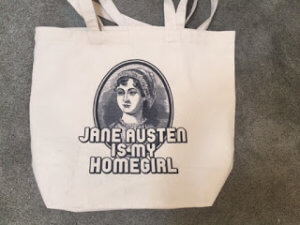
Reread some of your favorite author’s fiction. Analyze what that writer does that you love so much. In my case, Jane Austen has marvelous tricks — using weather, unreliable narrators, and other things she practically invented in fiction. This amusing article from Vox identifies her novels’ best qualities.
Add a new character. Even if a minor one, it can liven things up and exercise your creative muscles.
Research your setting. The details of place — whether a country or a room — give life to your story. Especially on days when you feel blocked, deepen the detail of your descriptions. A unique place is like another character.
Read your favorite book on the craft of fiction. My current one is Story Genius by Lisa Cron. One item of her advice is golden for me: attend to the main character’s backstory and not front-loading it into your book but sprinkling it into many places where it bears on the current action.
You Can Do This! Day 8 of #NaNoWriMo — Success Is Simple
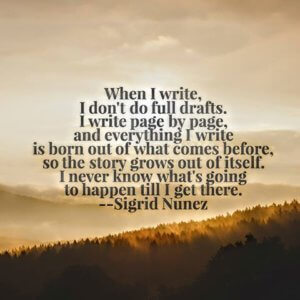
The main thing you can do is believe in your power of storytelling and your skill in writing. At whatever level you practice the art, you’re the master of what you have to say. And you do have a lot to say! Here are some of my favorite memes of writerly encouragement. Look at one as often as you need — and do you have some you love? Leave them here in the comments. No one writes alone! It’s a community venture.


Save
Save
Save
Save
The post Day 8 of #NaNoWriMo — and I’m Still Here appeared first on Rachel Dacus.
November 3, 2017
Thriving in National Novel Writing Month
I never thought I’d be writing about thriving in National Novel Writing Month, but November 2016 changed my perspective on what I could do in my writing life. I learned the discipline of trying to write an entire novel in one month. I had had nothing but challenges trying to find a publisher for my first novel, The Renaissance Club (forthcoming January 16, 2018 from Fiery Seas Publishing). They say the best thing you can do to sell your book is write a new one. So on a reckless whim, I signed up for my first #NaNoWriMo.
How did I find a way to thrive? By plunging into a daily word goal of 1,600+ words. What I learned is that I love s challenge, and word count made me compete with myself, I was not only reckless to enter #NaNoWriMo, I wrote recklessly. Thirty days later, I found the partial novel draft full of life, and for the last year I’ve fleshed it out.
NaNoWriMo for Pantsers
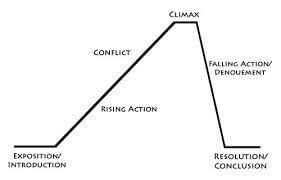
If you’re an outline-averse writer like me, the idea of entering a force writing march with a precise outline of who, what, when, where, why feels like closing the door to inspiration. Charts like that shoo away any muse I have wooed close. So what can I use as a guide, other than my vague idea that my sisters would be like those in Sense and Sensibility (did I mention that I have two complete sets of Jane Austen novels, one for upstairs, and one for downstairs?).
 Here’s what I did, sans outline, sans character and scene cards, sans any clear idea of how to cut my path through the forest. I signed up on NaNo and found my thermometer of daily word counts. And I soon discovered that I love a race with myself! I loved writing wildly and without knowing where the words and characters were taking me. I loved exceeding my daily goal. And when I couldn’t, I loved cheating. I’d grab research notes about the Ligurian coast and dump them in as placeholders for scenes. And add them to the count. I’ve always been a happy rebel.
Thriving National Novel Writing Month – Writing Tips
If you’re a writer who believes in letting the characters and situation take you where they will, never planning too much where they’ll end up, preparing for National Novel Writing Month can seem hopeless. But it’s for us too! Here are some of my writing tips for NaNo prep:
Set a daily writing schedule. For me, it’s first thing in the morning. This year, instead of 50K words, I set my goal as 2 hours of daily writing.
Write your hook (also known as short pitch). Yes, I know that’s the hard part, but if you can write a good one, it will carry you.
Write one character’s problem and goal a day. Include that in your word count.
Research your setting and count the notes in your daily word count. Place it somewhere in your manuscript, or if you keep a manuscript in chapter files, make a file for research notes. Every time you add to that, count it in your word count.
Then begin at the beginning and write as far as you can in 30 days.
If you’re like me, you’ll begin obsessively checking your word count and pushing yourself farther at the end of the day if you’re not quite there.

This NOvember? I’m in, using the marathon for a full revision of last November’s book. Two chapters a day (I write short ones), plus a few days to go over the opening and closing chapters again, and I should have finished revising my next book, The Romantics.
What do you think of writing schedules and disciplines? What are yours, if you work that way? I would love to hear your ideas in the comments.
Save
Save
Save
Save
Save
Save
Save
The post Thriving in National Novel Writing Month appeared first on Rachel Dacus.
November 2, 2017
A 30-day, Part-Time DIY Writing Retreat
I’m beginning a new DIY writing retreat! Heading down a new path of revising my draft of Novel #2 – better known as The Romantics, a story of two half-sisters and the cottage they inherit in Italy, along with its resident ghost.
It was drafted last year during National Novel Writing Month, (NaNoWriMo) a month-long writing marathon in which you commit to write 50,000 words of a new book. Are you jumping into this national writing craze too? I rashly signed up and plan to revise last year’s book.
Did you know you can use NaNoWriMo as a rebel? You don’t have to make your goal 50k words. This time, I’m committing to two hours of revision every day, for 30 consecutive–my part-time DIY writing retreat.
If you’re venturing down the #NaNoWriMo path with me — maybe your first-time? — here are some ideas to keep yourself going. Take your courage in both (typing) hands, and tell yourself every day, “I’m now going to do my beautiful writing!” Also, make yourself a structure. Here’s mine.
Structuring a 30-Day Writing Sprint
You need some sort of promise to yourself — that’s the structure. It could be “I’ll write every day” or “I’ll think about my book every day.” My goal is to give myself a month of part-time StayWriCation (as I call my stay-at-home writing retreat) and revise my 353-page novel. NowI’m not counting words, but chapters — 48 chapters to revise.My DIY writing retreat goals and strategies:
Make a list of the big plot holes and thin scenes and revise those first.
Stick to a daily writing schedule: 20 hours a day.
Schedule your writing time first thing and don’t blow it by surfing social media until you finish your words or hours.
Outline the chapters, including thumbnail descriptions of action. Look for to spot inconsistencies, etc. I didn’t start with this outline completed, so I’ll finish it today (Day 2).
Spot themes and enhance them throughout the book. This requires having an outline!
My Pitch for The Romantics
The Romantics is a story about two half-sisters and the cottage in Italy they inherit, with its ghost, the poet Percy Bysshe Shelley. A tale of love and sisters like Sense and Sensibility, it’s also a story of friendship between women similar to The Enchanted April, also set on the Ligurian coast of Italy.
Do you have #writing tips on structuring a DIY writing retreat for yourself? Any suggestions on surviving and winning, or on giving yourself a DIY writing retreat? Leave your thoughts and ideas in the comments!
Save
Save
Save
Save
Save
Save
Save
Save
Save
The post A 30-day, Part-Time DIY Writing Retreat appeared first on Rachel Dacus.
October 30, 2017
Preparing for National Novel Writing Month – 4 Writing Tips
 Preparing for National Novel Writing Month can be hard if you’re allergic to plot outlines. And with any method, it’s a steep climb to write 50,000 words in a month. But if you have the urge to join the 34,000 people who last year completed a novel in 30 days, and your pen is poised over the paper (=your fingers poised on the keys), here are some tips.
Thanks to Editor Barbara Bos and Women Writers, Women’s Books for featuring my article today on how to prepare, without resorting to the dreaded outline and index cards (does anybody still sell index cards?).
Preparing for National Novel Writing Month without an outline?
It might be a breeze if you approach it a little differently. Here are some ways to prepare.
Set a daily writing schedule. For me, it’s first thing in the morning. This year, instead of 50K words, I set my goal as 2 hours of daily writing.
Write your hook (also known as short pitch). Yes, I know that’s the hard part, but if you can write a good one, it will carry you.
Write one character’s problem and goal each day. Include that in your word count.
Research your setting and count the notes in your daily word count. Place it somewhere in your manuscript, or if you keep a manuscript in chapter files, make a file for research notes. Every time you add to that, count it in your word count.
Remember: it’s your imagination, and it’s endless. And they’re just words. They can all be changed later. Are you tempted to jump in? If so, good luck! And let me know how it’s going.
Save
Save
Save
Save
Save
Save
Save
Save
The post Preparing for National Novel Writing Month – 4 Writing Tips appeared first on Rachel Dacus.
October 27, 2017
How to Get Blurbs for Your Book – 3 Ways to Ask
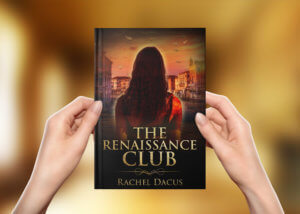 How to get blurbs for your book — this has been my recent focus. I’ve wondered how, if I should, and if so whom I dare ask to take the time away from their own writing. I shied away from it for months. But everyone says blurbs, or short testimonials, help book buyers decide if they want to buy a book. Buyers see them on Amazon, on the back cover in a bookstore, and they can be used in social media posts.
In the end, I decided I wanted three authors whose books I admire, and whose subjercts related to mine, for my novel, The Renaissance Club, which comes out next January (2018).
Naturally, I turned to my best research assistant, Google. Happily, I found some excellent articles on how to get blurbs for your book. I found even more — why an author would want to write a blurb, how to ask (letter samples), and how to create the right list of authors for your novel. First world problems, yes — those of a happily about-to-be-published writer. Still, I sweated through some sleepless nights over how to, and how to sustain my optimism following rejections.
How to Get Blurbs for Your Book – Articles
This article has incredible details and explanations — just about everything you need to know — how to get them, why you want them, and how to write an author you like and ask for one. Especially good in this one is the way you should compile a list of the best authors to blurb your book. For example, even if I could get Stephen King to write me a sentence or two, his name on my book would not sell to my potential readers. Okay, maybe his book on writing is universally loved, but horror and my genre don’t exactly mix.
How to Get Book Blurbs from Famous Authors
The thing I like best in this article is the good sample letters requesting a blurb, plus the fact that it never hurts an author to have her or his name seen on the back cover of a good book. Different ways to write your request letters — it all boils down to how are you related to this writer, even if you don’t know them personally? What have they written that makes you want their endorsement? In my case, I selected authors of women’s fiction, time travel, and love stories that are more mainstream than romance formula (though I can enjoy a good romance! But mine isn’t the formula).
A wonderful and generous author tells why she provides blurbs for many authors who approach her — paying it forward. If all authors realized that we are a community, things would work so much better for us all.
How to Ask – 3 Ways
Go back through the books you’ve read this last 12 months and list the authors of the 10 you liked best. (What? You didn’t read 10 good books? Keep reading!)
Write 2 sentences on each — what you liked, how that book might relate to yours, or how that author’s style or subjects relate to yours. Now reshape them as things to thank the author for.
Make those sentences your opener. Write not to ask but to thank!
Use a simple subject line, such as “Request + thanks”. Thanks is always an attention grabber.
In the End, the Blurbs I Received
How to get blurbs for your book? In the end I made a good list, authors I admire and who have written books that relate in some way to mine — and Igot three wonderful authors to agree to add a testimonial!!! Three exclamation marks, one for each author, each of whom I very much admire. So now, if ever I’m asked, I will do at least three for others, following Tess Gerritsen’s lead. Because if I can do anything to help another author, I will. I will make time, if I possibly can. Maybe not every time asked, but as often as I can, because writing is hard and we need to always support one another.
Save
Save
Save
Save
Save
The post How to Get Blurbs for Your Book – 3 Ways to Ask appeared first on Rachel Dacus.
How to Get Blurbs for Your Book
How to get blurbs for your book — this has been my recent focus. I’ve wondered how, if I should, and if so whom I dare ask to take the time away from their own writing. I shied away from it for months. But everyone says blurbs, or short testimonials, help book buyers decide if they want to buy a book. Buyers see them on Amazon, on the back cover in a bookstore, and they can be used in social media posts.
In the end, I decided I wanted three authors whose books I admire, and whose subjercts related to mine, for my novel, The Renaissance Club, which comes out next January (2018).
Naturally, I turned to my best research assistant, Google. Happily, I found some excellent articles on how to get blurbs for your book. I found even more — why an author would want to write a blurb, how to ask (letter samples), and how to create the right list of authors for your novel. First world problems, yes — those of a happily about-to-be-published writer. Still, I sweated through some sleepless nights over how to, and how to sustain my optimism following rejections.
How to Get Incredible Blurbs for Your Book
This article has incredible details and explanations — just about everything you need to know — how to get them, why you want them, and how to write an author you like and ask for one. Especially good in this one is the way you should compile a list of the best authors to blurb your book. For example, even if I could get Stephen King to write me a sentence or two, his name on my book would not sell to my potential readers. Okay, maybe his book on writing is universally loved, but horror and my genre don’t exactly mix.
How to Get Book Blurbs from Famous Authors
The thing I like best in this article is the good sample letters requesting a blurb, plus the fact that it never hurts an author to have her or his name seen on the back cover of a good book. Different ways to write your request letters — it all boils down to how are you related to this writer, even if you don’t know them personally? What have they written that makes you want their endorsement? In my case, I selected authors of women’s fiction, time travel, and love stories that are more mainstream than romance formula (though I can enjoy a good romance! But mine isn’t the formula).
A wonderful and generous author tells why she provides blurbs for many authors who approach her — paying it forward. If all authors realized that we are a community, things would work so much better for us all.
In the End
How to get blurbs for your book? In the end I made a good list, authors I admire and who have written books that relate in some way to mine — and Igot three wonderful authors to agree to add a testimonial!!! Three exclamation marks, one for each author, each of whom I very much admire. So now, if ever I’m asked, I will do at least three for others, following Tess Gerritsen’s lead. Because if I can do anything to help another author, I will. I will make time, if I possibly can. Maybe not every time asked, but as often as I can, because writing is hard and we need to always support one another.
Save
Save
Save
The post How to Get Blurbs for Your Book appeared first on Rachel Dacus.
October 24, 2017
Preparing for National Novel Writing Month
I never thought I’d be writing about preparing for National Novel Writing Month, but November 2016 changed my perspective on what I had considered a ridiculous rush to write a novel in one month. How could any self-respecting author write so fast, so carelessly, so focused on the wrong dimension — the sheer number of words?
And then I tried it. I was in grief over losing someone close to me. I couldn’t work, I had had nothing but challenges with my fist novel, The Renaissance Club (forthcoming January 16, 2018 from Fiery Seas Publishing), and my life felt like an ash heap. All I could do was to watch television and — write, of course. So on a reckless whim, I signed up for my first NaNoWriMo (the unpronounceable acronym for this festival of madcap fiction writing).
I had hatched an idea for a new book, conceived during happier months of that year. The next thing I knew, I was plunging into a daily goal of 1,600+ words, and friends — I’m not an outliner. I had nothing but a hook: Two half-sisters clash over inheriting a cottage on the Ligurian coast, with its resident ghost, the poet Percy Bysshe Shelley. Thirty days later, I was downloading my certificate of completion! And popping champagne.
The goal for NaNo is to write 50,000 words in 30 days. Now, that isn’t a full book length manuscript, but I didn’t care. I wanted to achieve something that mattered to me, something I could control, a happiness I could give myself, without the permission of an editor or agent, without anyone telling me not to do it. I kept my head down and wrote every morning.
NaNoWriMo for Pantsers
If you’re an outline-averse writer like me, the idea of entering a force writing march with a precise outline of who, what, when, where, why feels like closing the door to inspiration. Charts like that shoo away any muse I have wooed close. So what can I use as a guide, other than my vague idea that my sisters would be like those in Sense and Sensibility (did I mention that I have two complete sets of Jane Austen novels, one for upstairs, and one for downstairs?).
Here’s what I did, sans outline, sans character and scene cards, sans any clear idea of how to cut my path through the forest. I signed up on NaNo and found my thermometer of daily word counts. And I soon discovered that I love a race with myself! I loved writing wildly and without knowing where the words and characters were taking me. I loved exceeding my daily goal. And when I couldn’t, I loved cheating. I’d grab research notes about the Ligurian coast and dump them in as placeholders for scenes. And add them to the count. I’ve always been a happy rebel.
Preparing for National Novel Writing Month as a Free-writer
If you’re a writer who believes in letting the characters and situation take you where they will, never planning too much where they’ll end up, preparing for National Novel Writing Month can seem hopeless. But it’s for us too! Here are some of my writing tips for NaNo prep:
Set a daily writing schedule. For me, it’s first thing in the morning. This year, instead of 50K words, I set my goal as 2 hours of daily writing.
Write your hook (also known as short pitch). Yes, I know that’s the hard part, but if you can write a good one, it will carry you.
Write one character’s problem and goal a day. Include that in your word count.
Research your setting and count the notes in your daily word count. Place it somewhere in your manuscript, or if you keep a manuscript in chapter files, make a file for research notes. Every time you add to that, count it in your word count.
Then begin at the beginning and write as far as you can in 30 days.
If you’re like me, you’ll begin obsessively checking your word count and pushing yourself farther at the end of the day if you’re not quite there.
If you do those things during the month of November, I guarantee you’ll be a long way toward having a full novel drafted. And while 50,000 words isn’t a full novel, it could be a long novella. Or it could be a fantastic start on finishing your next book. And don’t forget to get some swag!
I’m using this November to do my first revision on last November’s book, which has been completely drafted. Two chapters a day (I write short ones), plus a few days to go over the opening and closing chapters again, and I should have finished revising my next book, The Romantics.
If you jump into NaNo, good luck! What do you think of writing schedules and disciplines? What are yours, if you work that way? I would love to hear your ideas.
Save
Save
The post Preparing for National Novel Writing Month appeared first on Rachel Dacus.