Rachel Dacus's Blog, page 18
May 19, 2018
Love Stories — 3 Reasons We Can’t Get Enough of Them
 Love stories — three reasons we can’t get enough: 1) love is essential to wellbeing, 2) stories are essential maneuvering through life, and 3) every love is unique. Are our brains hardwired for stories? Story Genius author Lisa Cron thinks humans evolved by learning how to solve problems through hearing stories. Cron cites scientific evidence that human brains are inclined to be interested in stories because we want to solve problems — not merely to survive, but to thrive and live well in our human relationships. My twist — we’re wired for love stories. The best way to live is to love each other, finding the love in our hearts, as does my novel’s main character, May Gold.
I’m hardwired to seek stories of love, every kind of love. Whether it’s love in human relationships, or love of animals, or doing things like writing and taking walks in nature, love is what rings my bell. Problems in love are the stories that fascinate me — how do you find and sustain love, and what do you do when you lose someone you love?
 My biggest writing tip: ask yourself what your main character would do if put into the situation of being denied love in whatever form he or she most cares about. Whether the story becomes an adventure, fantasy, mystery, or suspense, love powers most of us. We seek, solve, and venture for love. And that pursuit causes a character to gain, lose, grow, and achieve. Write your character’s driving desire for love, and the story arc will find its way. I’ve loved every genre of story except horror. My reading embraces ghost stories, adventures, mysteries, thrillers, and fantasies — as long as love of something or someone is in there, is thwarted, is hopeful, I’ll read on.
My Favorite Stories of Love
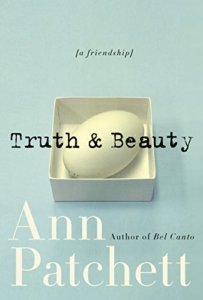
Friendship love. What happens when the person who is your family is someone you aren’t bound to by blood? What happens when the person you promise to love and to honor for the rest of your life is not your lover, but your best friend? In Truth & Beauty, her frank and startlingly intimate first work of nonfiction, Ann Patchett shines a fresh, revealing light on the world of women’s friendships and shows us what it means to stand together.
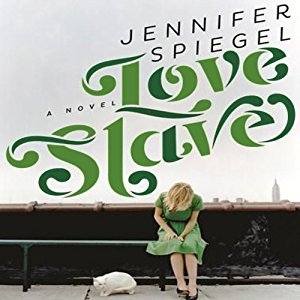
Love Slave is one of my favorite contemporary romances for its wit and emotional richness. A literary novel set in 1995 New York, Love Slave follows Sybil Weatherfield, her generation’s Dorothy Parker, and her strange friends as they defy chick-lit expectations (though they’re unaware that they’re doing so). Sybil is an office temp by day and a columnist by night for New York Shock, a chatty rag (her column is called “Abscess”, which is a wound that never heals). Her friends include a paper-pusher for a human rights organization, and the lead singer of a local rock band called Glass Half Empty.
Eleanor Brown’s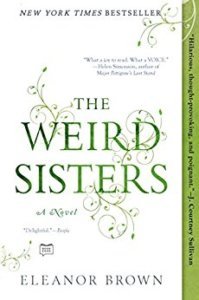 The Weird Sisters. Three sisters have returned to their childhood home, reuniting the eccentric Andreas family. Here, books are a passion (there is no problem a library card can’t solve) and TV is something other people watch. Their father-a professor of Shakespeare who speaks almost exclusively in verse-named them after the Bard’s heroines. It’s a lot to live up to.
I love stories of siblings, which I’m binge-reading right now, as I finish work on my own stories of two feuding half-sisters who inherit a cottage in Italy, with its resident ghost of the poet Percy Bysshe Shelley. The love between siblings can be one of the strongest bonds in life. I know, because I lost my brother a year and a half ago. I miss and cherish his presence every day. No one else has lived with me through — well, everything.
For more of my blog posts, follow me on Twitter: @Rachel_Dacus. Like my Facebook author page: Rachel Dacus, Poet & Writer
My Novel’s Love Stories
 In May’s story in my time travel romance novel The Renaissance Club, I posed this question: if you could go back in time, where would you land and who would you want to meet, and why? For me, the answer had to be an artist, one of the Renaissance geniuses whose sculptures and paintings stunned me when I visited Italy. So I wanted my heroine to meet someone like Michelangelo or Bernini or Raphael. I wanted her to fall in love with one of these difficult geniuses, men who reminded me of some of the most difficult love stories in my life.
I considered them all. Right away, Michelangelo was off the table. The love of his life, besides art, was a spiritual mentor he met when he was an old man. Their love was a spiritual one, which wasn’t among the love stories I wanted to write about at that time. But it was a beautiful love story. Renaissance poet Vittoria Colonna inspired the elderly sculptor to take up the pen and write about the Divinity he had portrayed in marble. This Roman noblewoman had a close, non-romantic friendship with the artist that inspired him. Here’s the opening of his poem “Celestial Love”. It’s tempting to think he’s writing about his spiritual adoration of Vittoria:
 CELESTIAL LOVE
by: Michelangelo Buonarroti (1475-1564)
No mortal thing enthralled these longing eyes
When perfect peace in thy fair face I found;
But far within, where all is holy ground,
My soul felt Love, her comrade of the skies:
For she was born with God in Paradise;
Nor all the shows of beauty shed around
This fair false world her wings to earth have bound:
My heroine May Gold was young — just twenty-six — and she needed a more earthy partner in her love story. She was yearning for one of the most passionate of Renaissance artists, a man clearly passionate about the human body, and who captured its sensuous beauty as no other artist ever has.  Gianlorenzo Bernini not only sculpted his passions, but in the early part of his life, he lived them. You could certainly say Bernini was hardwired for love stories, he just didn’t know how to write a good ending, until someone wrote it for him. The marriage, by the way, was happy and lengthy. In my book, his love life ends a different way.
What does May learn from her adventure in love and time? Grab your ebook or paperback copy of The Renaissance Club today and find out!
The post Love Stories — 3 Reasons We Can’t Get Enough of Them appeared first on Rachel Dacus.


Love Stories — Are We Hardwired For Them?
Are our brains hardwired for love stories? Story Genius author Lisa Cron thinks humans evolved by learning how to solve problems through hearing stories. Makes sense to me. Why else would stories be so popular down the ages, even back to when we lived in caves and scrawled stories on the walls. Cron cites scientific evidence that humans are neurologically inclined to gravitate to stories because we want to learn how to solve problems — not merely survive, but live well with each other. Here’s a twist I’m adding: we are hardwired for love stories because the best way to live with each other is to find the love in our hearts. 
The minute I read Cron’s book, I recognized that I’m definitely hardwired for love stories. I’ve loved every kind of story, from ghost stories, to adventures, mysteries, thrillers, and stories of magic, but what grab me the most are love stories — love of every kind and in every kind of relationship, even the love between animals and humans. When I picked up my first Oz book, then read the whole series, then Little Women, and all the Nancy Drews, what appealed to me most were the relationships. The family love, the friendships, eventually the romances, all drew me to turn pages. But the most powerful stories I gravitated to were stories where something goes wrong with love, the people who are so necessary to each other, but kept apart, people who try to find love but don’t realize that to get it is the same thing as giving it. I love reading about star-crossed lovers whom even death can’t part or diminish, families whose love is the power that shapes their lives true.
In May’s story in my time travel romance novel The Renaissance Club, I posed this question: if you could go back in time, where would you land and who would you want to meet, and why? For me, the answer had to be an artist, one of the Renaissance geniuses whose sculptures and paintings stunned me when I visited Italy. So I wanted my heroine to meet someone like Michelangelo or Bernini or Raphael. I wanted her to fall in love with one of these difficult geniuses, men who reminded me of some of the most difficult love stories in my life.
I considered them all. Right away, Michelangelo was off the table. The love of his life, besides art, was a spiritual mentor he met when he was an old man. Their love was a spiritual one, which wasn’t among the love stories I wanted to write about at that time. But it was a beautiful love story. Renaissance poet Vittoria Colonna inspired the elderly sculptor to take up the pen and write about the Divinity he had portrayed in marble. This Roman noblewoman had a close, non-romantic friendship with the artist that inspired him. Here’s the opening of his poem “Celestial Love”. It’s tempting to think he’s writing about his spiritual adoration of Vittoria:
CELESTIAL LOVE
by: Michelangelo Buonarroti (1475-1564)
No mortal thing enthralled these longing eyes
When perfect peace in thy fair face I found;
But far within, where all is holy ground,
My soul felt Love, her comrade of the skies:
For she was born with God in Paradise;
Nor all the shows of beauty shed around
This fair false world her wings to earth have bound:
My heroine May Gold was young — just twenty-six — and she needed a more earthy partner in her love story. She was yearning for one of the most passionate of Renaissance artists, a man clearly passionate about the human body, and who captured its sensuous beauty as no other artist ever has. Gianlorenzo Bernini not only sculpted his passions, but in the early part of his life, he lived them. In a string of wild romances, he acted on his intimate acquaintance with the human form, but his love llife was so unrestrained that the pope put a stop to them by ordering him to marry, and even picking the woman. You could certainly say Bernini was hardwired for love stories, he just didn’t know how to write a good ending, until someone wrote it for him. The marriage, by the way, was happy and lengthy. In my book, his love life ends a different way.
That’s how May Gold was born as the main character in the love story I wanted to write. She’s an art historian with a lot of passion and a creative soul. She has questions about love, and she’s hardwired to want personal answers from her idol, Bernini. Read more about her story here. She’s lucky enough to meet George St. James, her tour guide through Italy, and the entrepreneur of a time travel business. George helps May slip through a fold in time to briefly achieve her goal. May gets to meet the living, breathing embodiment of her search for love and beauty. The only trouble is, one meeting turns out not to be enough. And geniuses are notoriously difficult to stay with. The Bernini she meets is the young, passionate, but troubled Bernini, the one whose love of love is undefined, rebellious, headstrong, and ultimately brings about his downfall.
Thereby hangs the love story May is hardwired to finish … the tale of The Renaissance Club. What does May learn from her adventure in love and time? Grab your ebook or paperback copy of The Renaissance Club today and find out!
The post Love Stories — Are We Hardwired For Them? appeared first on Rachel Dacus.
May 12, 2018
The joy of time-traveling to your favorite season
 If you could choose any one season and time-travel again and again to that, which one would you choose? For me, every season has been a choice at one time or another in my life. Read my blog post at Fiery Seas Publishing, during my favorite month, May.
Time-traveling to your favorite place, person, or season is an internal experience that allows us to deepen an appreciation and understanding of who and what we love. Sometimes we call such time travels memory, sometimes fantasy or wish fulfillment. In my novel, The Renaissance Club, the main character May Gold time-travels to deepen her connection with an artist she has written about, and then slips through time’s fold to meet in person. Will she be able to return and stay with him that way? It all depends on how you look at the idea of time-travel and memory and fantasy.
 If you want a time-travel story that’s been called “rich, enchanting, and romantic,” get your copy of The Renaissance Club today!
The post The joy of time-traveling to your favorite season appeared first on Rachel Dacus.
Time-Traveling to Your Favorite Places, People, or Seasons
 If you could choose any one season and time-travel again and again to that, which one would you choose? For me, every season has been a choice at one time or another in my life. Read about this evolution in my blog post at Fiery Seas Publishing, during my now-favorite month of May. I love the month so much I named my first novel’s main character May!
Time-traveling to your favorite place, person, or season is an internal experience that allows us to deepen an appreciation and understanding of who and what we love. Sometimes we call such time travels memory, sometimes fantasy or wish fulfillment. In my novel, The Renaissance Club, the main character May Gold time-travels to deepen her connection with an artist she has written about, and then slips through time’s fold to meet in person. Will she be able to return and stay with him that way? It all depends on how you look at the idea of time-travel and memory and fantasy.
If you want a time-travel story that’s been called “rich, enchanting, and romantic,” get your copy of The Renaissance Club today!
The post Time-Traveling to Your Favorite Places, People, or Seasons appeared first on Rachel Dacus.
May 5, 2018
Thankful for reviews on social media boosting my novel
I’m extremely thankful for reviews on social media for my new novel THE RENAISSANCE CLUB has helped boost its discoverability, and if you’re someone who’s posted a comment on Amazon or Goodreads, thank you so very much! If you’ve read the novel and liked it, but haven’t reviewed it, I’d love it if you could post a short review on Amazon. Reader reviews help books find a wider audience, boosting authors’ careers. If you’d like to write one, here are some ideas, from comments I’ve received. # 1: A page-turner with a surprise ending! If you love time travel, read this one. #2: The poetic descriptions of Italy made me want to travel there, and the love story touched me. #3: I loved the vivid characters, especially the fiery genius Bernini. Art and history lovers will like this book.
Book clubs, book publishers, book buyers, book browsers all rely on reader reviews to decide what fiction they’re going to pile onto their to-be-read lists. Amazon lists a book’s blurb on each book page, but we all know it’s the comments by actual readers that swing us into action, clicking on that Buy-Now button. Among the best writing advice I can give is to write your reviews of books you like, and think about what makes you read a book, and how you want to write books in that way, to garner readers of your fiction.
 The thing I love about reading reader reviews is their genuineness and often quirky use of words. Here are three examples that tickle my fancy;
1. The dialog was snappy and the locations were edgy.
–> Edgy locations? As in cliffside, on top of a skyscraper, in a prison cell?
2. The only trouble is finding the town. Then finding out she’s a witch and the being told she’s not a witch but a fairy. What exactly is she? To add to her problems she finds out that a recent murder has taken place and the killer is still at large.
–> Wow, that’s a lot of plot setup. I’d have picked just one, but then I like a slow read. And witches and fairies, but really, pick one.
3. A quirky cast of characters and possible big foot sightings
–> Okay, I’m in. Wouldn’t we include Bigfoot as a quirky character? I would!
Whether or not you choose to write a book review for your favorite recent reads, definitely give yourself the pleasure of reading many reader reviews. If you’re a writer, it may inform your shaping of characters and plot. If you’re a reader, you’ll discover some amazing books.
The Renaissance Club, a time travel love story by Rachel Dacus
Favorite reader review comment: “I think I now have a crush on Bernini. But what I really want to know is, how can I book a tour with George?”
The post Thankful for reviews on social media boosting my novel appeared first on Rachel Dacus.
The Power of Reader Reviews — Helping to Boost Author Careers
I’ve been thrilled by the outpouring of support for my novel THE RENAISSANCE CLUB. I’m posting this to see if some of that love can be transmitted onto Amazon, in the form of book reviews. Reader reviews will help me find a wider readership and boost my career as an author.To make it easier to write one, I’m sharing here comments from local friends. If any of these sum up your own feelings about the book, please feel free to use them. If you have any questions about exactly how to post it on Amazon, contact me and I’ll help out.
Comment 1: A page-turner with a surprise ending! If you love time travel, read this one.
Comment 2: The poetic descriptions of Italy made me want to travel there, and the love story touched me.
Comment 3: I loved the vivid characters, especially the fiery genius artist Bernini. Art and history lovers will like this book.
Comment 4: Recommended for readers of Diana Gabaldon and others who love time travel stories.
Thank you, my kind friends, for your support, using the power of reader reviews! I’m grateful to have such friends in my life.
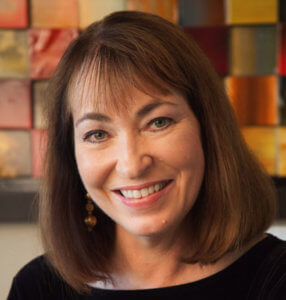
The post The Power of Reader Reviews — Helping to Boost Author Careers appeared first on Rachel Dacus.
May 4, 2018
What Is Magical Realism Fiction
Exactly what is Magical Realism fiction — what is it, and what differentiates it from fantasy? Since it’s the category I’ve chosen to read most and often write, I think a lot about this. The many good lists of magical realism fiction online point us toward some stories that seem to me to belong more in the category of fantasy. Ironically, the publishing industry does a lot to steer readers in wrong directions because of inaccurate terminology.
Publishing Terminology
The publishing industry defines magical realism fiction as realistic fiction with a magical element. Bookstores have no such aisle or shelf. They typically shelve magical realism among all realistic fiction, so you have to go to Goodreads or another list online to find out the titles that might interest you. Some will list the classical examples, such as Book Riot’s or Goodread’s lists. Other will list more contemporary MR novels.
Magical Realism Book Lists
Bookbub’s list of 2018’s new Magical Realism fiction has some exciting entries, one of which I’ve already read. Each overlaps with another category — mystery, romance, high fantasy, women’s fiction. I think I might buy all of them! Always room for one more on the Kindle app. Every one sounds like a great read.
Book Riot lists 10 Best Magical Realism Books. They’re arguably all masterpieces of MR. One thing I noticed on this list is the number of “post-Colonial” authors, people we’re now calling “marginalized voices” — not the mainstream white male authors that have dominated fiction ever since fiction was invented. The books are all literary, rather than commercial, fiction. The classics of Magical Realism.
The Renaissance Club — Magical Realism Fiction That’s Also Women’s Fiction, Time Travel, Romance, & a Love Story

But that’s not a real category. Magical Realism fiction isn’t a category much understood in the publishing or bookselling world. Few stores have a ‘magical realism’ shelf. You have to pick one out of that long list. When I began my novel, The Renaissance Club, I considered that I was writing fantasy. But an astute agent/editor I worked with set me straight. World-building, as in other worlds, is the way fantasy readers expect their fantasy these days. My book isn’t exactly time travel romance, either, though that’s where it found its niche on Amazon. It’s not straight romance structure, though a love story is central.
How to Categorize Your MR Book
So what category is my magical realism novel in terms of the publishing industry and in terms of what readers look for on Amazon and other online retailers? I’ve read a lot of today’s magical realism authors — Sarah Addison Allen, Alice Hofmann, Laura Esquivel, Susanna Kearseley, Diana Gabaldon, Joanne Harris. I finally let my Amazon category be Time Travel Romance. It put me in company with some of those authors, and that made the most sense to me.
 But I’d like to see the shelving and categorization change. I’d like to see emphasis on the new super category, Speculative Fiction. Sophie Playle’s blog, Liminal Pages has a nice set of definitions of the sub-genres under Spec Fiction.
So magical realism — what is it? In a way, it’s any fiction. All fiction is speculative. We can’t create real worlds with words, and literary devices such as metaphor and simile remove reality more and more from fiction. I found while writing that simply removing the word “like” changed the comparison to a magical realism event — giving the effect of magic invading our everyday reality. A setting sun like a warm, ripe peach became a a warm, ripe peach descending in the west. For me, that’s much more fun!
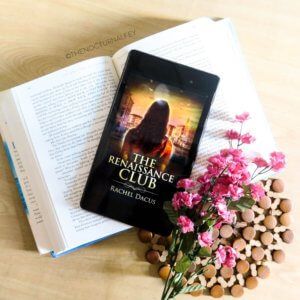
The post What Is Magical Realism Fiction appeared first on Rachel Dacus.
April 26, 2018
Writers — 5 Tips to Balance Your Creative Life
These 5 tips for balancing your creative life and your published author life might just help save your sanity. Every day when I wake up, I wonder whether I should be the writer or the author — should I spend my time on my new work-in-progress or promote my novel, The Renaissance Club. Creating and promoting are two different mindsets, thiough both involve creativity. But here’s the thing: imaginatively traveling to another world takes a lot more time than engaging with this world and your audience. They also require some different skill-sets. So what’s an author to do with a given amount of time to devote to writing on any given day? These 5 tips to balance your creative life might keep your creative juices humming and your books getting read.
5 TIPS TO BALANCE YOUR CREATIVE LIFE
1. The best thing you can do to promote your book is write a new one.
This is a way the creative writer and author in you become one.Think of your fans as you write the new book. Remember that you’re writing for people, as well as for yourself. Pick one reader and write for her or him.
2. Allocate 3/4 of your time to creating new work.
A quarter of your writing time is plenty enough for book promotion. Sometimes even less. But creative work, especially drafting a new story, takes far more time and should be done with care, without rushing. You can dash off a few tweets and memes on Facebook or Instagram. But you can’t dash off a chapter — at least, not well. At the end of the day, the best book promotion is your best writing.
3. Alternate book promotion days with creative writing days.
I’ve put this into my calendar: Writer morning, Author morning, each getting an hour or two at the top of the day, which is my most creative time. Promoting my book requires creativity too, and I can’t often do both things in one day, unless, per #2, I give most of the time to writing and a small amount to promoting. 
4. Pay someone to do book promotion.
I’m not going to recommend services and websites, but they’re out there. Book tours, reader newsletters, etc. can be working for your published book while you’re writing the next one. Here’s a good list from Reedsy of book blogs. You can do it yourself, or pay a tour service, which is what I recommend.
5. Get off social media and promote your book in person with friends & acquaintances.
Take your book business cards and bookmarks to parties and other gatherings. Find ways to introduce the topic, and hand them out assertively. Always take time when someone wants to talk to you about your book or writing — or their book or writing — to listen, support, help, explain, enjoy books together. Building an audience in conversation builds your creativity as well. I’ve found ideas from all kinds of conversations about my book and the writing life. This is another way the creative writer and author in you become one.
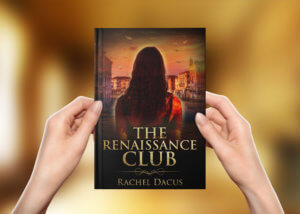
The post Writers — 5 Tips to Balance Your Creative Life appeared first on Rachel Dacus.
Author or Writer — 5 Tips to Balance Your Creative Life
These 5 tips for balancing your creative life and your published author life might just help save your sanity. Every day when I wake up, I wonder whether I should be the writer or the author — should I spend my time on my new work-in-progress or promote my novel, The Renaissance Club. Creating and promoting are two different mindsets, thiough both involve creativity. But here’s the thing: imaginatively traveling to another world takes a lot more time than engaging with this world and your audience. They also require some different skill-sets. So what’s an author to do with a given amount of time to devote to writing on any given day? These 5 tips to balance your creative life might keep your creative juices humming and your books getting read.
5 TIPS TO BALANCE YOUR CREATIVE LIFE
1. The best thing you can do to promote your book is write a new one.
This is a way the creative writer and author in you become one.Think of your fans as you write the new book. Remember that you’re writing for people, as well as for yourself. Pick one reader and write for her or him.
2. Allocate 3/4 of your time to creating new work.
A quarter of your writing time is plenty enough for book promotion. Sometimes even less. But creative work, especially drafting a new story, takes far more time and should be done with care, without rushing. You can dash off a few tweets and memes on Facebook or Instagram. But you can’t dash off a chapter — at least, not well. At the end of the day, the best book promotion is your best writing.
3. Alternate book promotion days with creative writing days.
I’ve put this into my calendar: Writer morning, Author morning, each getting an hour or two at the top of the day, which is my most creative time. Promoting my book requires creativity too, and I can’t often do both things in one day, unless, per #2, I give most of the time to writing and a small amount to promoting.
4. Pay someone to do book promotion.
I’m not going to recommend services and websites, but they’re out there. Book tours, reader newsletters, etc. can be working for your published book while you’re writing the next one. Here’s a good list from Reedsy of book blogs. You can do it yourself, or pay a tour service, which is what I recommend.
5. Get off social media and promote your book in person with friends & acquaintances.
Take your book business cards and bookmarks to parties and other gatherings. Find ways to introduce the topic, and hand them out assertively. Always take time when someone wants to talk to you about your book or writing — or their book or writing — to listen, support, help, explain, enjoy books together. Building an audience in conversation builds your creativity as well. I’ve found ideas from all kinds of conversations about my book and the writing life. This is another way the creative writer and author in you become one.
The post Author or Writer — 5 Tips to Balance Your Creative Life appeared first on Rachel Dacus.
April 25, 2018
New Interview Up at Authors18
 I’m delighted to have a new interview up at Authors18 — a group of this year’s debut authors, of which I’m a proud member. Among the questions asked: “If you could spend a day with anyone in history, who would it be?” See my answer in today’s interview (hint: I’d travel to Renaissance Italy). Here’s a link to the interview.
Joining this great group of 2018 debut novelists is the best thing that has happened to me and my book since I signed a contract with Fiery Seas Publishing. If you’re writing a book, or have already published one and are trying to bring attention to it, buddy up with some other authors in the same position. Not only is it immense fun, it’s a way to discover great ideas and marshal the reach of many audiences to bring attention to your novel. Of all the how-to-market ideas I’ve read this is the best advice I’ve heard — and I’ve read many books on book launch, marketing, book publicity, and building book buzz. A publishing group can help you launch your book, continue to promote it, and lend necessary support to the hard work of being an author. I couldn’t do this alone! And all my fellow Authors18 people seem to feel the same way.
My novel, The Renaissance Club, is about a group of travelers in northern Italy. My group of academics is touring important sites of the Italian Renaissance. I took such a tour, and I wouldn’t have explored that fabulous place any other way. Being part of a group is to widen your horizons in a special way. For a writer, being in a group of any kind brings riches of different perspective, observation, insight — not to mention with a tour group, sharing photos!
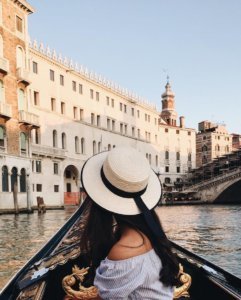 A book can be the same thing, an experience that joins you to a wider group than yourself. As one of the Amazon reviews for my book stated, “Have you ever put on a pair of glasses and instantly see things you’ve never seen before? The Renaissance Club is like a pair of glasses that bring a new way of seeing, a new perception.”
If you’re touring this summer, you might want to take along this story about a group of tourists, several of whom slip through time’s folds and explore rich and enchanting Italy, but also its history in a very personal way. Time travel is history travel! More about this in my new interview.
The post New Interview Up at Authors18 appeared first on Rachel Dacus.