Rachel Dacus's Blog, page 17
July 9, 2018
Need a Lift? Books with Magic for Delightful Summer Reading
 Three books with magic to uplift your summer reading, to inspire hope and lift you into a world of new possibilities. Books of fun, magic, and humanity. Summer is a magical time, and reading is one of its great pleasure. With my magic wand, I’m conjuring three novels to lift your summer reading onto a magic carpet.
What makes us crave magic in stories? We want to be inspired, to hope, and to be lifted into a world of new possibilities. We want to walk a shimmering path to become more than we are. The very telling of a tale implies that we’ll be lifted out of our ordinary reality. Real life has magical moments too, but they’re few and far between. Without the guiding path of fiction, we might miss them. A novel’s magic lets us indulge in a childlike wonder while learning from the character’s journey. So here are three books full of wonder and hope.
NOVEL #1:
Mr. Penumbra’s 24-Hour Bookstore by Robin Sloan. Just the word “penumbra” (the shadow cast by the earth or moon during an eclipse) is magical-sounding. Grab a copy of this fantasy set in our world and discover an underground library connected to Silicon Valley’s technology. The story is one part conspiracy, one part fantasy, and one part technology, with a dash of romance. The perfect elixir to intoxicate you into flipping the pages faster and faster. For me, a resident of the San Francisco Bay Area, it was fun to read about the setting of this mythical bookstore that reminded me of so many in the city—and one I’d love to visit. If only it existed. My rating: FIVE ENTHUSIASTIC STARS!
NOVEL #2:
Sometimes the magic is right here among us and we can’t see it. Another book I read without stopping was about a girl who has a magical ability that might not turn out to be the happiest gift. In Aimee Bender’s The Particular Sadness of Lemon Cake, a young girl can taste the feelings of the person who created the food she’s eating. You’d imagine that if she eats in the best restaurants, this could feel very nice—but of course, young Rose eats at home and learns about her mother’s difficult challenges and feelings as she struggles forward. Rose begins to want not to eat. Ultimately this aversion to other people’s food-feelings draws her to create food herself, and to use her gift for the sake of others. My rating: FIVE STARS ISN’T ENOUGH FOR THIS BOOK!
NOVEL #3:
I like magical realism better than fantasy set in another world. I find in real life magic enough, and so stories that t to do with the fact that real life has its magical dimensions and moments — moments of inspiration, transporting love, and heightened perception. Magical realism doesn’t put me on another planet the way fantasy does. It keeps me on this one, and despite the chaos and destruction we hear about every day, this form of literature encourages me to believe in those magical dimensions I’ve experienced as being more important. It urges wonder and allows hope.
Another magical book I recommend recently is Sarah Addison Allen’s Garden Spells. Folksy, small-town nostalgia is the atmosphere in this one, but who doesn’t love a magical garden with a magical apple tree? Bad things happen to good people, and each of the three sisters uses special gifts to work their ways through. The apple tree prophesies the future (nice evocation of the Garden of Eden), and that alone was enough to hook me as a reader. The story evokes wonder and hope. My rating: FIVE STARS. The magic is wondrous, the characters a bit thin, but the overall story will lift you up.
We need wonder and hope right now, more than ever. They’re built into human consciousness. The headlines, which often seem to me the opposite of hope, send me more often to read stories that take me away, embody hope, and inspire wonder.
Novel #4
A bonus book! My novel The Renaissance Club uses the magic of time travel. The story takes young art historian May Gold down a path through time to meet her artistic idol in the 17th century, a journey that helps her overcome self-doubts and the opposition of her colleagues, to discover her creative potential and find the love of her life. 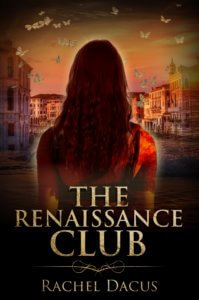
Thanks for reading — and happy summer fiction adventures! Do you have some favorite books with magic to recommend? Add them in the comments.
The post Need a Lift? Books with Magic for Delightful Summer Reading appeared first on Rachel Dacus.


June 20, 2018
Marketing a Romance Novel That’s Non-Traditional
 Now available on Amazon in Kindle or print.
 Gianlorenzo Bernini, the only known self-portrait in oil
One of the challenges I’m facing is marketing a romance novel that’s non-traditional — that is, doesn’t follow the romance formula. My book The Renaissance Club didn’t start out as a classic romance story formula. I was simply intrigued by the idea of a love story across the ages. As I imagined my heroine, May Gold, I wasn’t thinking about book marketing categories, Amazon, the Big Five, romances, or literary agents. I was blissfully inventing a young art historian who gets to meet her hero, the 17th century genius sculptor Gianlorenzo Bernini, face-to-face, under the gilded dome of St. Peter’s in Rome. I was engrossed in finding out what would happen if you met the love of your life — in another century. What would you give up to stay with him — would you give up even your own time?
And now I’m looking at what I would give up to market this love story so that it reaches the wides audience. In a way, it’s harder than figuring out how to time travel.
Market a Non-traditional Romance Novel — Categories & Keywords
And then I got an offer to publish the book! After a giddy acceptance and big celebrations came some of the hardest work of all — determining my publishing category and sub-categories on Amazon. Amazon is where you can, as a small press published author, best have your book discovered. This is arguable, but I believe it to be true. I learned, possibly too late, that determining your proper category is crucial to marketing your book well.
Then came launch day, and a dizzying blog tour month! Thrilling to hear from friends and strangers who bought and loved my book. After that, came all the post-writing marketing business, and trying to figure out how to put my book in front of people I don’t know or can’t reach through my fairly extensive online networks. The vast public out there, possibly full of people who would LOVE this story, but haven’t had a chance to see it. How to get them to see it?
Categories and keywords are the way readers search for books online. They also search in bookstores for categories, but the typical store doesn’t parse categories as finely as Amazon. Pick your Amazon category and sub-category correctly, and your book should be shelved well in bookstores too.
Your Book’s Discoverability & Categories
 Discoverability is the buzz word for getting out the word that your book exists, showing a cover image, and a blurb with a link. It’s hard enough to market a romance book when you fit neatly into the formula. But when you overlap with the category of women’s fiction, as my book does, you have to think about the expectations of readers who are quickly browsing through ads, emails, and Amazon categories. What is each reader looking for in her next read? Does she want steamy close encounters? Is she looking for a heartfelt journey toward love? Does she look for adventure or suspense mixed with a story of love and happy endings? My book is really a non-traditional romance, a women’s fiction book about find love, confidence, and creativity that overlaps several categories: romance, time travel, women’s fiction, magical realism (or fantasy, depending on the retailer’s categorization system).
Here’s a great article from Jerich Writers on choosing the right fiction categories on Amazon — and the complexities of keywords and categories in that biggest of retailers. The article is aimed at self-publishers, but the knowledge is applicable to all. My publisher asked me to choose categories. Most publishers don’t give authors the choice, but if you have a choice, study the market and determine where you’ll get the best support from Amazon. I found that to market my non-ttraditional romance novel
Here’s a good piece from Romance University on promoting a romance novel — though it could as easily be applied to other categories of novel.
More to come on this blog! This is a big topic. Do you have ideas, links, blog posts to share on this topic? Let me know in the comments. I love to hear from readers.
The post Marketing a Romance Novel That’s Non-Traditional appeared first on Rachel Dacus.
June 9, 2018
In writer-bliss – thrilled to be writing a new novel
Today, I find myself in writer-bliss — thrilled to be writing a new novel. There’s the phase of editing a book (tough fun) and the phase of marketing it (tough and not so fun), and the best phase, starting one. It’s summer, and ideas are blooming in my head as wildly as the roses I tend in 12 pots are putting out buds and opening red, pink, gold, and white. New story ideas opened up buds too. A lemon grove. A new heroine who’s fleeing a catastrophe in her life to run away to Florence, Italy. Italy. I can’t seem to set my stories anywhere else. Italy is the land of dreaming, for me. This will be my third novel set there. Specifically, this one will be set in Florence. And medieval Provence. Because it’s another time travel tale.
While researching for my Florence setting, I came across a place I absolutely have to visit one day. Hesperidarium is a world-renowed garden of citruses in the territory of Pistoia. Who knew there could be such a lavish citrus garden in Tuscany? I’m going to use citrus trees around a small hotel where my main character is staying. At the beginning of the story, she has flown to Florence from San Francisco and checks into a hotel that looks something like this house on the right. 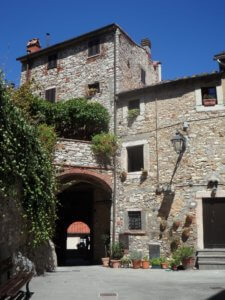
My heroine’s name is Beth Pomeroy, and she’s a 32-year-old fundraising specialist who is escaping a failed engagement. After her fiance announced he was dying and wanted to spend his last months with someone else, Beth decides to accept an offer from her cousin, May Gold to come to Italy. May, an art historian, has been working on a restoration project in Florence, restoring forgotten paintings by women of the Renaissance. The project needs money, of course, and Beth knows how to find donations. Beth signs onto the project for the summer, leaving her job and her old life, hoping to find in Tuscany an avenue of solace. What she doesn’t plan on is to meet George St. James, a very special kind of tour guide — and to wind up in time traveling to medieval Provence, where she meets a legendary troubadour.
Thrilled to be writing a new novel! Stay tuned for more about this story as I develop it.

My Newest News
I’m excited to announce that my new poetry collection — my fourth — will be arriving in the world this coming August! It’s called Arabesque and will be published by FutureCycle Press. When we have the cover design, I’ll launch it here.
The Renaissance Club
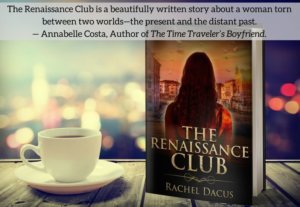
Happy to say that wonderful reader reviews are coming in on Amazon and Goodreads. If you’re on Goodreads, and would like to read the novel, mark it To-Read and let me know. I’m planning a giveaway over the summer too. THE RENAISSANCE CLUB
The post In writer-bliss – thrilled to be writing a new novel appeared first on Rachel Dacus.
June 1, 2018
Time Travel and Romance – A Perfect Combination
 In a new review for The Renaissance Club, one reader summed up the story: “Time travel and romance, a perfect combination.” I think so too, and it thrills me when someone loves my love story between the Italian genius Bernini and a young art historian who falls through a fold in time. To get a copy and leave your own review, click on THE RENAISSANCE CLUB.Thanks to this Amazon reviewer for a good review summarizing the story:
Time Travel and Romance, a Perfect Combination
A group of Art and Art History professors decide to visit historical sites in Italy. They don’t all get along with each other, and one in particular, May, is the underdog who must struggle to keep her contract position in the department. She’s a huge fan of Renaissance artist Bernini. To her astonishment, she meets him in person, when time keeps slipping and depositing her in his life. Her current boyfriend is pretty much an arrogant bastard, but as is typical in novels and real life, May can’t seem to ditch the loser for the longest time. Other characters on the tour discover surprising things about themselves, too. I see the Club well named: many of those on the tour have their own personal renaissance, viewing and experiencing the glory of art in Italy. May isn’t the only one for whom time is fluid. How will May resolve the conundrum in which she finds herself, caught between centuries? A delightful read, just enough fantasy to let the reader daydream.
 Reader Reviews on Amazon
If you want to show an author you liked her book, leave a few stars and a sentence with a headline on the book’s Amazon page. It’s a vote for the book’s life. Most books are sold on Amazon, and Amazon pays attention to the number of reader reviews. Once those reach 50, Amazon helps to promote the book to more people, which keeps it in print and keeps it alive. Here are some reader review headlines from other books that could really be used for any book;
#1 – A page-turner!
#2 – A love story to warm your heart
#3 – Art, history, and love — a magical combination
The post Time Travel and Romance – A Perfect Combination appeared first on Rachel Dacus.
May 30, 2018
Promote your novel using your own unique voice
 Your novel is about to be published and you just googled ‘Promoting a Novel”. Then you became dizzy and disoriented reading all the articles. Novelists have an especially difficult time weeding through advice on book promotion because most is for nonfiction. Here’s a hint: fiction writers can build on their uniqueness. Promoting the highly individual, specific story in a novel isn’t the same as promoting ways to build a business or to gain Twitter followers. Developing your strategy and brand as a novelist requires, well, the highly refined writing skills it takes to become a novelist in the first place. And add to that the instincts of a marketer. It’s a tall order! Here are my five strategic ideas. You can apply them on any social media or conventional media platforms you like.
One, know your audience and focus your ads & posts
Aim your posts to your specifc segment of readers. Have you (like me) written a time travel romance? Use Facebook ads or boost your key Facebook posts to interest readers who love a love story. You can select your audience by interests as well as demographics. when boosting a post or creating an ad. This really does pull people in to reading your posts and blurbs for your book. Use Twitter to widen your network too, but don’t count on it to generate sales. Instead, it helps build your author brand. I find Facebook the best for my writing and identity as an author. Fellow writers and authors, avid readers of women’s fiction, and my own network are all most likely to be on Facebook. But everyone’s different.
Two , post repeatedly around the same themes.
 Since my book is a time travel love story, I post around romantic themes and the settings in my book: why people love stories of romance, travel and history; is time travel theoretically possible. Most of all I try to post around the hook for my novel: Would you give up everything, even the time in which you live, to be with your soulmate?
Three , be active on at least two social media platforms, but don’t spread yourself thin.
Be sure to use your favorite platform regularly to post your book ads, seek and give book reviews to other authors. And be regularly active, be a genuine person appearing on Facebook, Twitter, Pinterest, or wherever you most enjoy hanging out. It’s so easy to spot authors who are only on Twitter to relentlessly tweet their book ads, or those who aren’t familiar with the easy, conversational ways of Facebook and use their author pages to slam us with promotions. Be active in promoting, but space it out and sprinkle in liberal amounts of appreciating other peoples’ books and posts. Be a human having fun! This article on Draft 2 Digital has some tactical ideas for being active in various social media. Their comments on promoted Facebook posts are golden, including using Canva or a similar design site to layer your book cover onto an attractive background for social media posting.
Four, Join or create an author community relevant to your book.
I’m a member of the Women’s Fiction Writer’s Association and Authors18. They’ve been invaluable in not only supporting my book promotion, but creating a community of mutual support through the joys and woes of being a writer and a published author. Someone in one of my groups asked the other day if any of us missed the days before we were published writers? That tells you why you need a community of support! And you can ask them to do all sorts of things that help bring visiblity to your book — from liking your posts to leaving Amazon reviews. Be sure to reciprocate! Jane Friedman has a powerful thought about community in this article. She says “start where you are”, as in make the most of your own networks at the beginning of promoting a book.Fifth, a strategic question to consider
The final piece of strategy for selling your novels — especially for authors promoting books that don’t fit easily into a genre or category — is to be true to yourself in your writing and your promotions. Be yourself, and be out there. And here’s a bonus: I just discovered a writer’s site that makes me feel inspired and has lots of great articles. Mandy Wallace covers the writing of fiction very thoroughly and with some great tools for writers.

The post Promote your novel using your own unique voice appeared first on Rachel Dacus.
Promoting a Novel – 4 Strategic Tips
Your novel is about to be published and you just googled ‘Promoting a Novel”. Then you became dizzy and disoriented reading all the articles. Novelists have an especially difficult time weeding through advice on book promotion because most is for nonfiction. Here’s a hint: fiction writers can build on their uniqueness. Promoting the highly individual, specific story in a novel isn’t the same as promoting ways to build a business or to gain Twitter followers. Developing your strategy and brand as a novelist requires, well, the highly refined writing skills it takes to become a novelist in the first place. And add to that the instincts of a marketer. It’s a tall order! Here are my five strategic ideas. You can apply them on any social media or conventional media platforms you like.
One, know your audience and focus your ads & posts
Aim your posts to your specifc segment of readers. Have you (like me) written a time travel romance? Use Facebook ads or boost your key Facebook posts to interest readers who love a love story. You can select your audience by interests as well as demographics. when boosting a post or creating an ad. This really does pull people in to reading your posts and blurbs for your book. Use Twitter to widen your network too, but don’t count on it to generate sales. Instead, it helps build your author brand. I find Facebook the best for my writing and identity as an author. Fellow writers and authors, avid readers of women’s fiction, and my own network are all most likely to be on Facebook. But everyone’s different.
Two , post repeatedly around the same themes.
Since my book is a time travel love story, I post around romantic themes and the settings in my book: why people love stories of romance, travel and history; is time travel theoretically possible. Most of all I try to post around the hook for my novel: Would you give up everything, even the time in which you live, to be with your soulmate?
Three , be active on at least two social media platforms, but don’t spread yourself thin.
Be sure to use your favorite platform regularly to post your book ads, seek and give book reviews to other authors. And be regularly active, be a genuine person appearing on Facebook, Twitter, Pinterest, or wherever you most enjoy hanging out. It’s so easy to spot authors who are only on Twitter to relentlessly tweet their book ads, or those who aren’t familiar with the easy, conversational ways of Facebook and use their author pages to slam us with promotions. Be active in promoting, but space it out and sprinkle in liberal amounts of appreciating other peoples’ books and posts. Be a human having fun! This article on Draft 2 Digital has some tactical ideas for being active in various social media. Their comments on promoted Facebook posts are golden, including using Canva or a similar design site to layer your book cover onto an attractive background for social media posting.
Four, Join or create an author community relevant to your book.
I’m a member of the Women’s Fiction Writer’s Association and Authors18. They’ve been invaluable in not only supporting my book promotion, but creating a community of mutual support through the joys and woes of being a writer and a published author. Someone in one of my groups asked the other day if any of us missed the days before we were published writers? That tells you why you need a community of support! And you can ask them to do all sorts of things that help bring visiblity to your book — from liking your posts to leaving Amazon reviews. Be sure to reciprocate! Jane Friedman has a powerful thought about community in this article. She says “start where you are”, as in make the most of your own networks at the beginning of promoting a book.Fifth, a strategic question to consider
The final piece of strategy for selling your novels — especially for authors promoting books that don’t fit easily into a genre or category — is to be true to yourself in your writing and your promotions. Be yourself, and be out there. And here’s a bonus: I just discovered a writer’s site that makes me feel inspired and has lots of great articles. Mandy Wallace covers the writing of fiction very thoroughly and with some great tools for writers.
The post Promoting a Novel – 4 Strategic Tips appeared first on Rachel Dacus.
How to Promote Your Novel — 4 Strategic Tips
You have a book published and you just googled ‘How to Promote Your Novel” — I should trademark that term! — and you became dizzy just reading all the advice. Novelists have an especially difficult time weeding out the gems of promotion strategy from the hype. Promoting the highly individual, specific story in a novel isn’t the same as promoting ways to build a business or to gain Twitter followers. Developing your strategy and brand as a novelist requires, well, the highly refined writing skills it takes to become a novelist in the first place. And add to that the instincts of a marketer. It’s a tall order! Here are my five strategic ideas. You can apply them on any social media or conventional media platforms you like.
One, know your audience and focus your ads & posts
Aim your posts to your specifc segment of readers. Have you (like me) written a time travel romance? Use Facebook ads or boost your key Facebook posts to interest readers who love a love story. You can select your audience by interests as well as demographics. when boosting a post or creating an ad. This really does pull people in to reading your posts and blurbs for your book. Use Twitter to widen your network too, but don’t count on it to generate sales. Instead, it helps build your author brand. I find Facebook the best for my writing and identity as an author. Fellow writers and authors, avid readers of women’s fiction, and my own network are all most likely to be on Facebook. But everyone’s different.
Two , post repeatedly around the same themes.
Since my book is a time travel love story, I post around romantic themes and the settings in my book: why people love stories of romance, travel and history; is time travel theoretically possible. Most of all I try to post around the hook for my novel: Would you give up everything, even the time in which you live, to be with your soulmate?
Three , be active on at least two social media platforms, but don’t spread yourself thin.
Be sure to use your favorite platform regularly to post your book ads, seek and give book reviews to other authors. And be regularly active, be a genuine person appearing on Facebook, Twitter, Pinterest, or wherever you most enjoy hanging out. It’s so easy to spot authors who are only on Twitter to relentlessly tweet their book ads, or those who aren’t familiar with the easy, conversational ways of Facebook and use their author pages to slam us with promotions. Be active in promoting, but space it out and sprinkle in liberal amounts of appreciating other peoples’ books and posts. Be a human having fun! This article on Draft 2 Digital has some tactical ideas for being active in various social media. Their comments on promoted Facebook posts are golden, including using Canva or a similar design site to layer your book cover onto an attractive background for social media posting.
Four, Join or create an author community relevant to your book.
I’m a member of the Women’s Fiction Writer’s Association and Authors18. They’ve been invaluable in not only supporting my book promotion, but creating a community of mutual support through the joys and woes of being a writer and a published author. Someone in one of my groups asked the other day if any of us missed the days before we were published writers? That tells you why you need a community of support! And you can ask them to do all sorts of things that help bring visiblity to your book — from liking your posts to leaving Amazon reviews. Be sure to reciprocate! Jane Friedman has a powerful thought about community in this article. She says “start where you are”, as in make the most of your own networks at the beginning of promoting a book.Fifth, not a strategy but a strategic question to consider
A fifth question has come up in my Facebook author groups, and it’s a very valid question relevant to promoting books I haven’t yet written. The question is, can you succeed writing books in different genres and categories? It’s truly a lot harder to sell a lot of books in multiple genres. But there’s also the strategic question of how many stories you have in you to tell, and what your motive is for writing. If you’re like me, you simply want to write the books you have in mind, regardless of how well they sell. If you’re one of those authors, consider choosing just two genres. For me, it’s going to all fall under the category of upmarket women’s fiction, or book club fiction. Not an easy category to promote, but that’s where I live and read and write.
That final piece of strategy — especially for authors promoting books that don’t fit easily into a genre or category — be true ot yourself in all your promotions. Be yourself, and be out there. It will happen, whatever’s supposed to. And people will be reading your book!
The post How to Promote Your Novel — 4 Strategic Tips appeared first on Rachel Dacus.
May 23, 2018
Poetry’s wonderful world of magic and realism
Poetry’s wonderful world of magic — that’s almost redundant. Isn’t the elevated world of a poem necessarily a magical one? The magic comes from close attention –the writer’s and the reader’s — to people, beings, relationships, and things. But every poem needs specifics to ground the reader, to help a reader enter the world of the poem.
A poem about water rushing down a small creek, bending bushes and grasses, can make me feel like the bent and twisted weed, crushed by life’s flowing forces. A poem of lament can raise my own sorrows and pull me into their gravity. Good, imagistic writing invites us
Poetry is by definition magical realism: writing rooted in realism but splashing wonder in all directions. Here’s my poem that began with paying attention through a restaurant window to a small creek outside. Gradually my observation became a journey and then a foretelling, and then I was carrying love on my back.

The River
Cookies crumble in the pockets of my jeans.
I save them in case I need extra good fortune.
The one today told me to relax, and I remember
my mother always said, What are you waiting for?
But then she also said, Why are you so impatient?
She couldn’t have been right both times.
I just grabbed the nearest one
and as I chew and swallow the pieces,
they melt into the same thing: loss, anger, joy,
and swirl down the stream beyond
the restaurant. I left it winking
at the statue of Lao-Tzu on his ox.
Take some more, they said,
I took a hunk of architecture,
some random windows—open, close.
I took the cheapest ticket, the desperate caress,
the stolen insight. Moments flowed
through my ears, whispering
that nothing is ever lost, just changed
into memory. I should have done more
with my life. I should do less and relax.
All time exists at once.
I think Einstein said that, or Lao-Tzu, breathing
down my neck, wanting his river back.
I cross carefully, my shoulders
wearing wings of fog.
I step on small islands, all the gone souls
I have ever known blooming and scented
as they hang around my neck.
The post Poetry’s wonderful world of magic and realism appeared first on Rachel Dacus.
Magical Realism in Poetry
Magical realism in poetry — that’s almost redundant. Isn’t the elevated world of a poem necessarily a magical one? The magic comes from close attention –the writer’s and the reader’s — o the people, beings, relationships, and things of this world, and to the associations we have to those observed phenomena. To enter a poem, or any evocative piece of writing., is to go to another world, to enter a place both alien and transformational, one both deeply personal and yet universal.
A poem about water rushing down a small creek, bending bushes and grasses, can make me feel like the bent and twisted weed, crushed by life’s flowing forces. A poem of lament can raise my own sorrows and pull me into their gravity. Good, imagistic writing invites us
Here’s my poem that began with paying attention through a restaurant window to a small creek outside. Gradually my observation became a journey and then a foretelling, and then I was carrying love on my back. Poetry is by definition magical realism: writing rooted in realism but splashing wonder in all directions.
The River
Cookies crumble in the pockets of my jeans.
I save them in case I need extra good fortune.
The one today told me to relax, and I remember
my mother always said, What are you waiting for?
But then she also said, Why are you so impatient?
She couldn’t have been right both times.
I just grabbed the nearest one
and as I chew and swallow the pieces,
they melt into the same thing: loss, anger, joy,
and swirl down the stream beyond
the restaurant. I left it winking
at the statue of Lao-Tzu on his ox.
Take some more, they said,
I took a hunk of architecture,
some random windows—open, close.
I took the cheapest ticket, the desperate caress,
the stolen insight. Moments flowed
through my ears, whispering
that nothing is ever lost, just changed
into memory. I should have done more
with my life. I should do less and relax.
All time exists at once.
I think Einstein said that, or Lao-Tzu, breathing
down my neck, wanting his river back.
I cross carefully, my shoulders
wearing wings of fog.
I step on small islands, all the gone souls
I have ever known blooming and scented
as they hang around my neck.
The post Magical Realism in Poetry appeared first on Rachel Dacus.
May 19, 2018
Love stories — 3 reasons we adore them
 Love stories — three reasons we adore them: 1) love is essential to wellbeing, 2) stories are essential maneuvering through life, and 3) every love is unique. Are our brains hardwired for stories? Story Genius author and master story coach Lisa Cron thinks humans evolved by learning how to solve problems through hearing stories. Cron cites scientific evidence that human brains are inclined to be interested in stories because we want to solve problems — not merely to survive, but to thrive and live well in our human relationships. My twist — we’re wired for love stories. The best way to live is to love each other, finding the love in our hearts, as does my novel’s main character, May Gold.
I’m hardwired to seek stories of love, every kind of love. Whether it’s love in human relationships, or love of animals, or doing things like writing and taking walks in nature, love is what rings my bell. Problems in love are the stories that fascinate me — how do you find and sustain love, and what do you do when you lose someone you love?
 My biggest writing tip: ask yourself what your main character would do if put into the situation of being denied love in whatever form he or she most cares about. Whether the story becomes an adventure, fantasy, mystery, or suspense, love powers most of us. We seek, solve, and venture for love. And that pursuit causes a character to gain, lose, grow, and achieve. Write your character’s driving desire for love, and the story arc will find its way. I’ve loved every genre of story except horror. My reading embraces ghost stories, adventures, mysteries, thrillers, and fantasies — as long as love of something or someone is in there, is thwarted, is hopeful, I’ll read on.
My Favorite Stories of Love
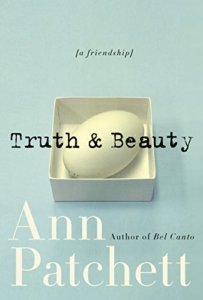
Friendship love. What happens when the person who is your family is someone you aren’t bound to by blood? What happens when the person you promise to love and to honor for the rest of your life is not your lover, but your best friend? In Truth & Beauty, her frank and startlingly intimate first work of nonfiction, Ann Patchett shines a fresh, revealing light on the world of women’s friendships and shows us what it means to stand together.
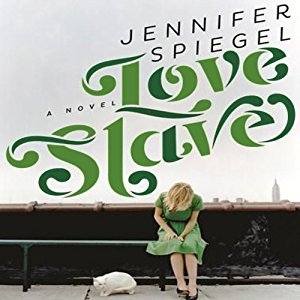
Love Slave is one of my favorite contemporary romances for its wit and emotional richness. A literary novel set in 1995 New York, Love Slave follows Sybil Weatherfield, her generation’s Dorothy Parker, and her strange friends as they defy chick-lit expectations (though they’re unaware that they’re doing so). Sybil is an office temp by day and a columnist by night for New York Shock, a chatty rag (her column is called “Abscess”, which is a wound that never heals). Her friends include a paper-pusher for a human rights organization, and the lead singer of a local rock band called Glass Half Empty.
Eleanor Brown’s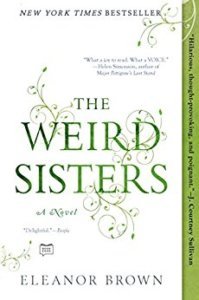 The Weird Sisters. Three sisters have returned to their childhood home, reuniting the eccentric Andreas family. Here, books are a passion (there is no problem a library card can’t solve) and TV is something other people watch. Their father-a professor of Shakespeare who speaks almost exclusively in verse-named them after the Bard’s heroines. It’s a lot to live up to.
I love stories of siblings, which I’m binge-reading right now, as I finish work on my own stories of two feuding half-sisters who inherit a cottage in Italy, with its resident ghost of the poet Percy Bysshe Shelley. The love between siblings can be one of the strongest bonds in life. I know, because I lost my brother a year and a half ago. I miss and cherish his presence every day. No one else has lived with me through — well, everything.
For more of my blog posts, follow me on Twitter: @Rachel_Dacus. Like my Facebook author page: Rachel Dacus, Poet & Writer
My Novel’s Love Stories
In May’s story in my time travel romance novel The Renaissance Club, I posed this question: if you could go back in time, where would you land and who would you want to meet, and why? For me, the answer had to be an artist, one of the Renaissance geniuses whose sculptures and paintings stunned me when I visited Italy. So I wanted my heroine to meet someone like Michelangelo or Bernini or Raphael. I wanted her to fall in love with one of these difficult geniuses, men who reminded me of some of the most difficult love stories in my life.
I considered them all. Right away, Michelangelo was off the table. The love of his life, besides art, was a spiritual mentor he met when he was an old man. Their love was a spiritual one, which wasn’t among the love stories I wanted to write about at that time. But it was a beautiful love story. Renaissance poet Vittoria Colonna inspired the elderly sculptor to take up the pen and write about the Divinity he had portrayed in marble. This Roman noblewoman had a close, non-romantic friendship with the artist that inspired him. Here’s the opening of his poem “Celestial Love”. It’s tempting to think he’s writing about his spiritual adoration of Vittoria:
 CELESTIAL LOVE
by: Michelangelo Buonarroti (1475-1564)
No mortal thing enthralled these longing eyes
When perfect peace in thy fair face I found;
But far within, where all is holy ground,
My soul felt Love, her comrade of the skies:
For she was born with God in Paradise;
Nor all the shows of beauty shed around
This fair false world her wings to earth have bound:
My heroine May Gold was young — just twenty-six — and she needed a more earthy partner in her love story. She was yearning for one of the most passionate of Renaissance artists, a man clearly passionate about the human body, and who captured its sensuous beauty as no other artist ever has. Gianlorenzo Bernini not only sculpted his passions, but in the early part of his life, he lived them. You could certainly say Bernini was hardwired for love stories, he just didn’t know how to write a good ending, until someone wrote it for him. The marriage, by the way, was happy and lengthy. In my book, his love life ends a different way.
What does May learn from her adventure in love and time? Grab your ebook or paperback copy of The Renaissance Club today and find out!
The post Love stories — 3 reasons we adore them appeared first on Rachel Dacus.