Rachel Dacus's Blog, page 16
October 12, 2018
Teaching a Child to Write
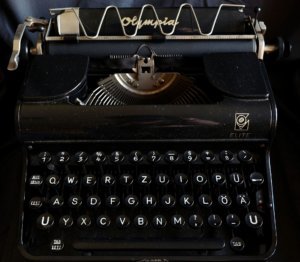 Teaching a Child to Write — How I Began
I gained my desire to write from my mother. She always read aloud to us, and often took me to the library. At age ten, she took me to a fantastic and immense used bookstore. How she found Acre of Books in downtown Long Beach, California, remains a mystery, but I remember holding her hand and walking into a warehouse sized space so thick with dust that I instantly sneezed. The shelves were taller than she was. We browsed around and Mom picked out a few books. I didn’t dare touch anything, until she encouraged me to select a few myself. I was drawn to books with colorful, clothbound books with the word “Oz” stamped in gold on their spines. The Oz books were written by a man named L. Frank Baum. 
After a reading hop down the length of the Yellow Brick Road, and all the Oz spinoffs, I had run out of Oz books, and I had learned that L. Frank Baum was long dead. He would not be writing any more. Therefore, I reasoned, it was up to me to provide my own fascinating adventures in literature. That was the place where my inspirations seemed to bubble up, along with the aspiration to tell stories. I wanted to write more Oz books because I needed to read.
The Wishing Well of Desperation
That was how I found the desire to write. It was up to me! So I dipped into the well of desperation and my pen picked up the ink to rite some stories. My most successful one was a Halloween story that I was invited to read out to my fourth grade class. I was delighted to discover I had a sense of humor! I could make people laugh. Unfortunately, my next read-aloud story bombed. But the thrill of an audiencewas unforgettable.
Next, I bought and read the colored fairytale books, notably the story of the Twelve Dancing Princesses. The idea of a kingdom under my bed was so appealing that I began to imagine alternate kingdoms everywhere—in my back yard, down the block, in the ravine beyond our backyard, over the hill where the sun went down as we ate dinner on the patio every night.
Children should be encouraged to geek out about writing. Thanks to my father’s intervention with our Seventh Street School’s principal, I was the kid who was allowed to bring a typewriter to fifth grade class, where my teacher Mr. Judge asked me to blend with our curriculum by writing a play for the class to enact on The Westward Expansion. That chapter of history may never be the same — thanks to the frenetic wagonmaster who resembled my manic engineer father — but the thrill of hearing my story enacted was unforgettable. I’m still writing plays.
Mysteries and Suspense
When I found Nancy Drew, I learned that there was such a story as a mystery, and that it kept you turning pages to find out what happened. Mysteries! Suspense! After all, everything in my world, and every kingdom I could imagine, was pretty mysterious. At the ages of ten, eleven, and twelve, there’s so much you notice and don’t understand, and that the adults in your life are always telling you they’ll explain when you’re older.
My first novel was called The Prisoner of the Locked Room. I wrote it when I was about twelve. It was 100 whole pages long! My father’s secretary typed it up, and I still have it. I still didn’t understand that a mystery involved a murder. I don’t believe I had yet heard of murders, leading a sheltered suburban childhood. So I wrote all around this mysterious locked room, with its nameless prisoner—why were they imprisoned? By whom? I’d write until I figured it out. I decided to better Nancy Drew, and have twin girl sleuths! Double the fun, double the fancy clothes, double the mystery-solving. Now all I needed was an actual mystery. I never did figure out what was in that room.
My love of literature began with tlavish amounts of bedtime reading. Mom also gets huge credit for taking me to the library many days and to the wonderful Acre of Books. I wish for every child in the world to be read to and told stories. Anything, a sacred text, a poem, a comic book, a website for stories. Thanks, Mom, for reading to me and teaching me touch typing—giving me a love of language and an important tool to write!
The post Teaching a Child to Write appeared first on Rachel Dacus.


October 6, 2018
Best Time Travel Fiction and Finding Love
 Sure, on paper, you can simply step through a fold in time’s curtain or a magical standing stone and find love in a past century. You just discover your love in a past century and it’s perfect. But when love across time is the story, it gets messy. First, the customs of love are all different. Like trying to speak a different language, you can get the nuances and protocals all wrong. When to touch, when not to touch, what does a smile mean in another society than your 21st century one, and what constitutes an invitation for a woman to be treated as less than a lady? Writing love stories across the centuries is complicated.
Then there’s the scientific angle. Is time travel even possible? Stephen Hawking said it was. Practically speaking, however, it would probably mush your insides and scramble your cells. DNA, however, could be a reason someone could be able to time travel. That will be the reason for the ability to time travel in my fiction series featuring the elegant and knowledgeable time-travel tour guide, George St. James. He was born with the ability, and has learned to help others travel in history. Below are some lists of great time travel novels and movies, for comparison.
Time Travel Fiction- Best Novels
Amazon’s Bestselling Time Travel Novels
Goodreads’ Best Time Travel Novels List
Zimbio’s Best Romantic Movies About Time Travel
https://racheldacus.net/2017/06/time-travel-romance-italy-love-how-to-find-the-best-novels/
Time Travel Fiction & Identity
Let’s just say it’s possible physically, and that you could find a way back to the century you’re interested in. Say you even could predict where you’d land – though my favorite time travel novels don’t always give that assurance. Books like The jane Austen Project posit a scientific way to calibrate exactly when and where you’d land. On the other hand, stories like Outlander make traveling in history seem like breaking your leg while hiking, only way worse.
Stepping into another time could surely challenge your sense of self, for one thing. How many of us carry our identities around in our purses and pockets? When you travel backward or forward to another century, let’s face it, that iPhone is a useless papereight and your driver’s license could be mistaken for a piece of witchcraft. You can’t get network, so you can’t see your calendar, your to-do list, your recent shares, book sales—come to think of it, that’s sounding better all of a sudden. But without your own century, who are you, really?
Traveling to another century, or even just another decade, also really screws with your wardrobe. I did ask myself before throwing away all those shoulder pads from the 80s, am I sure? And now, here I am in 1982 again, wishing I’d saved them all, and trying to remember how I made my hair that tall and full of scrunchies.
And seasons. If you travel in time and space, you could lose all sense of the seasons. Nineteenth century Australia, for example, has Christmas in July and surfing in December. (Actually they have surfing all the time, even on Christmas.) If you pop into the 13th century anywhere on earth you’ll found yourself in the perpetual wintry starvation of the Little Ice Age.
Time Travel Fiction & Comfort
Then there’s the question of plumbing. I think I can just rest my case against time travel right there. The real intent of a time travel novel, I believe, is to fold history into the present and compare and contrast. History can be like a distant planet, alien and confusing to those from a different planet. And that’s part of the fascination.
I love writing and reading about history and using time travel to do it, but I’m grateful for the century I live in, though it has much to improve. I like the armchair kind of history and time travel. With plumbing, my smart phone, and good coffee. You can have all those as you read about May Gold’s adventures in the 17th century. In The Renaissance Club, the time travel is only for a few hours or days at a time. My main character May has time to freshen up. I think after a few jaunts, May well understood the plumbing issue. And being a magical realism time travel story, her wardrobe changed automatically. Kind of a Cinderella situation.

I will come back to you through the doorway of stars.
The post Best Time Travel Fiction and Finding Love appeared first on Rachel Dacus.
Time Travel Fiction – Not As Easy As It Looks
Sure, on paper, you can simply step through a fold in time’s curtain — but time traveling fiction isn’t as easy as it looks. Or you can switc the hands of the clock backwards, or even just looking with a different angle of vision. But in reality, time traveling can really mess you up. And writing time travel fiction isn’t much easier than actually stepping back in time.
That is, if time travel were physically possible. Science says theoretically it is, but practically speaking, it would probably smash your insides and scramble your DNA. DNA, however, could be a reason someone could be able to time travel. That will be the case in my new time travel series featuring my time travel tour guide, George St. James.
Time Travel Fiction- Best Novels
Amazon’s Bestselling Time Travel Novels
Goodreads’ Best Time Travel Novels List
Zimbio’s Best Romantic Movies About Time Travel
https://racheldacus.net/2017/06/time-travel-romance-italy-love-how-to-find-the-best-novels/
Time Travel Fiction & Identity
Let’s just say it’s possible physically, and that you could find a way back to the century you’re interested in. Say you even could predict where you’d land – though my favorite time travel novels don’t always give that assurance. Books like The jane Austen Project posit a scientific way to calibrate exactly when and where you’d land. On the other hand, stories like Outlander make traveling in history seem like breaking your leg while hiking, only way worse.
Stepping into another time could surely challenge your sense of self, for one thing. How many of us carry our identities around in our purses and pockets? When you travel backward or forward to another century, let’s face it, that iPhone is a useless papereight and your driver’s license could be mistaken for a piece of witchcraft. You can’t get network, so you can’t see your calendar, your to-do list, your recent shares, book sales—come to think of it, that’s sounding better all of a sudden. But without your own century, who are you, really?
Traveling to another century, or even just another decade, also really screws with your wardrobe. I did ask myself before throwing away all those shoulder pads from the 80s, am I sure? And now, here I am in 1982 again, wishing I’d saved them all, and trying to remember how I made my hair that tall and full of scrunchies.
And seasons. If you travel in time and space, you could lose all sense of the seasons. Nineteenth century Australia, for example, has Christmas in July and surfing in December. (Actually they have surfing all the time, even on Christmas.) If you pop into the 13th century anywhere on earth you’ll found yourself in the perpetual wintry starvation of the Little Ice Age.
Time Travel Fiction & Comfort
Then there’s the question of plumbing. I think I can just rest my case against time travel right there.
Though I love writing and reading time travel, I want the fantasy, not the real kind. The armchair time traveling kind. With plumbing and good coffee. And you can have all those and your snart phone as you read about May Gold’s adventures with her artist hero in the 17th century. In The Renaissance Club, the time travel is only for a few hours or days at a time. My main character May has time to freshen up. I think after a few jaunts, May well understood the plumbing issue. And being a magical realism time travel story, her wardrobe changed automatically. Kind of a Cinderella situation.
I will come back to you through the doorway of stars.
The post Time Travel Fiction – Not As Easy As It Looks appeared first on Rachel Dacus.
September 24, 2018
Pros & Cons of Small Press Publishing
 Self-publishing fiction versus small press publishing? Making that choice can be tricky. Most of the articles I’ve encountered weigh the options as “self-publishing versus traditional publishing”. I had experience with small press publishing for my first novel, a time travel Renaissance romance called The Renaissance Club. One thing I learned is that small press publishers are as different from one another as humans are, because most small presses are run by one to three individuals, and they can invent their own rules. Is it traditional publishing? Depends on the publisher.
When my book came out in January 2018, it arrived in both ebook and print-on-demand formats. People ordering the paperback through Amazon or Barnes & Noble would have no idea that it wasn’t a print-run publication — except that it wasn’t shelved at the local Barnes & Noble, and could only be special ordered in print through B&N. Being a new novelist, I felt I was traditionally published — except for that print run/bookstore thing.
With my small press, I had good editing, presentable cover art, and social media support. A good month of touring book blogs helped sales. I felt “traditionally” published. But when I proposed to my publisher some modestly priced ads, I suddenly felt v ery “Indie” or self-published. Subsequent conversations made it clear I was my own publicity department.
Differences between Small Press and Being Your Own Publisher
The big difference in self-publishing and small press publishing can vary from company to company, but here are the components that should be present with a small press, and that you’d pay for, and also that would take a lot of your time and energy, if doing it yourself.
PROS – SMALL PRESS PUBLISHING
Professional editing — from development to proofing, the publisher pays
Cover art and interior layout — a small press publisher pays and ideally has professionals familiar with book cover design
ARCs =for book blurbs, advancef reviews, and pre-orders — the months before a book’s launch require a publisher’s support. If you’re doing it yourself, this is easy, but if choosing a small press, it’s vital to make sure they have the book’s ARC prepared (and looking professional) at the three-month before launch stage
Book tours – online or in person, a small press publisher should arrange something for the launch week (mine got a whole month)
CONS – SMALL PRESS PUBLISHING
No control over pricing of the book — this can be a huge factor in sales
Can’t see sales figures except when (if) publisher reports them, so difficult to tie them to any promotions. My experience was lengthy delays in reporting meant I was paying for some promotions that did nothing for my sales
Have no control over design and placement of promotions — you may know your genre or category better than your publisher and have better ideas about promotion, which a small publisher may or may not be willing to consider
May have little say in cover design — a huge factor in promoting sales, and if you self-publish, you can hire the best
Useful Articles on Pros, Cons & Definitions
Here are some articles that help highlight the differences and outline what’s involved in successful self-publishing:
Kindlepreneur – How to Start a Publishing Company
Jane Friedman: Publishing With a Small Press
Marshall Moore on Advantages of Self-Publishing
That’s all for now!
For fans of Susanna Kearsley and Diana Gabaldon, an enchanting, romantic new time travel novel about a great artist and his superfan from another century …Click over to read inside The Renaissance Club, and see if you can find love in another century!

The post Pros & Cons of Small Press Publishing appeared first on Rachel Dacus.
Publishing Fiction – Pros & Cons of Small Press or Self-Publishing
Self-publishing fiction versus small press — it’s a tricky decision, and one not often written about. Most of the articles I’ve encountered on the subject weigh the options as “self-publishing versus traditional publishing”. But my experience with small press publishing my first novel, The Renaissance Club, is something I’d call a third option. Small press publishers are almost as different from one another as individual authors.
When my book came out in January 2018, it arrived in the new hybrid format of ebook + print-on-demand paperback. People ordering the paperback through Amazon or Barnes & Noble would have no idea that it wasn’t a print-run publication — except that it wasn’t shelved at the local Barnes & Noble, and could only be special ordered in print through B&N. Being a new novelist, I felt I was being traditionally published — except for that print run/bookstore thing. I quickly learned that small press publication might lean more toward traditional, or more toward self-publishing, depending on the company.
When it came to editing, cover art, presentation, social media support, and a good month of touring book blogs, I felt very traditionaly published. But when I proposed to my publisher to buy some modestly priced ads on websites geared toward women’s fiction, I found myself very much alone — very self-published feeling.
Differences between Small Press and Being Your Own Publisher
The big difference in self-publishing and small press publishing can vary from company to company, but here are the components that should be present with a small press, and that you’d pay for, and also that would take a lot of your time and energy, if doing it yourself.
PROS – SMALL PRESS
Professional editing — from development to proofing, the publisher pays
Cover art and interior layout — a small press publisher pays and ideally has professionals familiar with book cover design
ARCs =for book blurbs, advancef reviews, and pre-orders — the months before a book’s launch require a publisher’s support. If you’re doing it yourself, this is easy, but if choosing a small press, it’s vital to make sure they have the book’s ARC prepared (and looking professional) at the three-month before launch stage
Book tours – online or in person, a small press publisher should arrange something for the launch week (mine got a whole month)
CONS – SMALL PRESS
No control over pricing of the book — this can be a huge factor in sales
Can’t see sales figures except when (if) publisher reports them, so difficult to tie them to any promotions. My experience was lengthy delays in reporting meant I was paying for some promotions that did nothing for my sales
Have no control over design and placement of promotions — you may know your genre or category better than your publisher and have better ideas about promotion, which a small publisher may or may not be willing to consider
May have little say in cover design — a huge factor in promoting sales, and if you self-publish, you can hire the best
Useful Articles on Pros, Cons & Definitions
Here are some articles that help highlight the differences and outline what’s involved in successful self-publishing:
Kindlepreneur – How to Start a Publishing Company
Jane Friedman: Publishing With a Small Press
Marshall Moore on Advantages of Self-Publishing
That’s all for now!
For fans of Susanna Kearsley and Diana Gabaldon, an enchanting, romantic new time travel novel about a great artist and his superfan from another century …
The post Publishing Fiction – Pros & Cons of Small Press or Self-Publishing appeared first on Rachel Dacus.
September 3, 2018
Blogs to Get Your Writer Mojo Working
 Blogs about writing are like my morning newspaper, they get my writer mojo. Each day, I wake up and read stuff on my phone while I’m still in bed, and into the coffee phase of waking up. I have a writing practice of using the first two hours of the day for my creative self — drafting new chapters, poems, story ideas, and editing works in progress. To get into the swim, I read about writing.
In my sidebar, I list and link some great blogs about writing and the process of becoming an author. These bl;ogs and author or poet sites that are my go-to content providers. The newspapers of my writing world. I’m grateful to each and every one for writing these blogs, sharing their journey, their craft tips and writing ideas, as well as insights and strategies to navigate the difficult industry of publishing. Thank you, writers, for your generosity! We are a community.
I’m an especially avid reader of Jane Friedman, Writer Unboxed, and the fabulous Book Doctors. They also have a Youtube channel that often makes me laugh so hard it’s dangerous to drink coffee while listening. For fascinating, quirky, informative, and poetic thoughts on being a poet, Jeannine Blogs from Jeannine Hall Gailey will rock your writer world.
Today, I’ve added a new one to my sidebar list:
Dan Blank’s WeGrowMedia Blog — The title sounds like one of those publicity firms that pushes you to use their canned strategy to sell more books (Sorry, Dan!) but in fact it’s a comprehensive, personal blog that covers every aspect of the writing life from the best places to choose as your writing office, to what silences your creativity. Thoughtful articles make me think more about my choices as a writer and an author. One of the posts he made that I loved rereading — I had read Delilah Dawson’s thread on Twitter — was about author expectations after you publish your debut novel. It talked me back into the joy of writing for those readers who do find and love my book and eagerly hope for the next one. The blog can be found here.
Check out the blogs on my sidebar — have a writerly Labor Day (that means reading too).

The post Blogs to Get Your Writer Mojo Working appeared first on Rachel Dacus.
Blogs to Get My Writer Mojo Working
Blogs about writing are like my morning newspaper, they get my writer mojo. Each day, I wake up and read stuff on my phone while I’m still in bed, and into the coffee phase of waking up. I have a writing practice of using the first two hours of the day for my creative self — drafting new chapters, poems, story ideas, and editing works in progress. To get into the swim, I read about writing.
In my sidebar, I list and link some great blogs about writing and the process of becoming an author. These bl;ogs and author or poet sites that are my go-to content providers. The newspapers of my writing world. I’m grateful to each and every one for writing these blogs, sharing their journey, their craft tips and writing ideas, as well as insights and strategies to navigate the difficult industry of publishing. Thank you, writers, for your generosity! We are a community.
I’m an especially avid reader of Jane Friedman, Writer Unboxed, and the fabulous Book Doctors. They also have a Youtube channel that often makes me laugh so hard it’s dangerous to drink coffee while listening. For fascinating, quirky, informative, and poetic thoughts on being a poet, Jeannine Blogs from Jeannine Hall Gailey will rock your writer world.
Today, I’ve added a new one to my sidebar list:
Dan Blank’s WeGrowMedia Blog — The title sounds like one of those publicity firms that pushes you to use their canned strategy to sell more books (Sorry, Dan!) but in fact it’s a comprehensive, personal blog that covers every aspect of the writing life from the best places to choose as your writing office, to what silences your creativity. Thoughtful articles make me think more about my choices as a writer and an author. One of the posts he made that I loved rereading — I had read Delilah Dawson’s thread on Twitter — was about author expectations after you publish your debut novel. It talked me back into the joy of writing for those readers who do find and love my book and eagerly hope for the next one. The blog can be found here.
Check out the blogs on my sidebar — have a writerly Labor Day (that means reading too).
The post Blogs to Get My Writer Mojo Working appeared first on Rachel Dacus.
August 30, 2018
Onward and Ice Cream – Surviving As a Writer
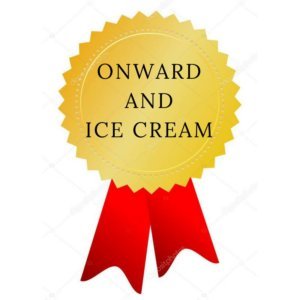
It’s my motto for surviving as a writer and a creative — Onward & Ice Cream!
One of my writer pals was even nice enough to create this graphic for me. This is my banner as I ride into battle with the hope of conquest in finding a publisher or agent to champion my writing and the many stories I’m planning. The Onward motto is for persistence — how it pays a writer at every stage of creating, publishing, and promoting a work. Ice cream because — well, sometimes you just need something to soothe your hackles. Toast works too.
Articles that have helped me survive and thrive:
Have More Fun (Stop Worrying and Obeying) – Jane Friedman
Confessions from a Weary Writer – Julia Monroe Martin
I especially like Julia Monroe Martin’s article, for its candor, the weariness I share, and its wisdom. Read to the end to get the payoff you need to move onward, and if ice cream is involved, I’m not here to judge.
Why a seagull? Just because. For fun.

The post Onward and Ice Cream – Surviving As a Writer appeared first on Rachel Dacus.
August 1, 2018
In the Querying Trenches? Courage — It’s a Marathon
 Are you in the querying trenches — querying agents with a fiction manuscript? That’s probably one of the hardest phases of the writing life. Being on submission is hard too (when your agent is sending out your manuscript to editors) but somehow querying agents feels to me harder.
They say the best thing to do while you wait for answers form those who seem to hold your publishing future in their hands is to write new things. I’m here to tell you that really works — but also planning your author career as if you are in charge (you are!) really works too. Think past this one book. Think past the querying trenches to the after you’re published part.
Do you wonder what’s behind the form letters? Anne R. Allen’s blog has a great article: “The 10 REAL Reasons Your Book Was Rejected”. It may surprise you. The thing is, many agents you query will at some point confess they really don’t know what they’re looking for until they see it. It’s about as scientific as betting on horses. If you search on “fiction trends 2018” you will learn that self-published books are to increase (big surprise there). So one of your options is to quit querying and self-publish.
Going Indie
If you plan to make self-publishing your next stop after querying, you may want to look at these stats:
Self-Publishing’s Share of the Kindle Market by Genre
ROMANCE. Self-published: 49% Small/medium: 11% Amazon: 9% …
MYSTERY/THRILLER/SUSPENSE. Self-published: 11% Small/medium: 5% Amazon: 16% …
SCIENCE FICTION. Self-published: 56% Small/medium: 9% Amazon: 5% …
FANTASY. Self-published: 49% Small/medium: 7% Amazon: 7% …
Romance: 40% Mysteries/Thrillers: 20% Fantasy: 6.33% Sci-Fi: 5%
For traditionally published books, several women’s fiction titles were on bestsellers lists of 2018 so far. Political nonfiction books dominated the lists. If all of this doesn’t make you want to change the way you write or topics you write about, read on.
Writing What You Want to Write and Letting the Chips Fall
This is my game plan. It’s a long game, and it’s based on the fact that I’m not trying to make a living from writing fiction. I have topics, characters, issues, and events I want to write about in my fiction and poetry. I’m a serious literary writer in the sense that I choose the topics that draw me and then try to find a genre or category to fit into. If I can’t, I can’t. I’m going to write what I want to write.
 This brings me to a long-game strategy. If a book you’ve slaved over, rewritten, had early readers and editors review, polished, polished more, and finally queried to agents (and in my case, also small presses) without success — put it in a drawer and write something new. It will be great, when you finally get an agent or publisher, to have other books to talk to them about. You’d be surprised how everything old can be new again — publishing trends included. Articles on the querying trenches rarely mention this, but it’s a fact.
Chick-lit is back? Vampires never died (LOL), fantasy is still dominant, romance rules the world. You don’t have to look at statistics. If you have a manuscript that’s a romantic fantasy with suspense, a magical realism whodunit, a YA that’s nearly NA, or any other blend of categories, and isn’t selling this year — count on it, it will be BIG another year.
When to put a manuscript away, or when to consider self-publishing, — those decisions are about how to build a writing career. I decided to go with a small press. Not the Big Five publishing companies in New York, but a small, feisty upstart with ambitions. But I’ve been down the querying path for many years, first with The Renaissance Club, and now with a new manuscript.I considered self-publishing. I know several very successful self-pubbed novelists. If I ever do that, I’m going to do it with the right book, and most like through Amazon, with whatever program such as KDP Select they’re promoting.
While I’m in the querying trenches, one thing I try to remember is that I have many options for this book. I’m the boss of my writing life, not an agent, not an editor, not a publisher. I’m building my audience and my literary goals. These are my choices — and guess what? They all involve a lot of work and a ton of decisions. But always Onward! And sometimes ice cream helps.

One option is putting the manuscript away for a time, if it isn’t picked up right now. When you put a manuscript away, you’re not necessarily abadnoning it. You may instead be making a strategic move that works out well later.
The writing path can be long, steep, and require a well-supplied backpack of optimism and faith in yourself. Keep moving! It will pay off.

Have some strategies of your own for navigating the querying/publishing field? I’d love to hear them and have them included here in the comments. Or point me to articles you like! Thanks for reading and writing.

The post In the Querying Trenches? Courage — It’s a Marathon appeared first on Rachel Dacus.
July 15, 2018
Books with Magic – More Exciting Reading Adventures
I recently discovered a new author who has given me many exciting reading adventures and has also become a role model for me as an author. Gigi Pandian is a writer who decided to go her own way and play outside the box, only to find the box was following her. Gigi Pandian‘s Jaya Jones mystery series incorporates a different kind of magic — the stage magician kind — with no less transporting effects than if it was the fantasy kind. And her mysteries are gentle enough for my sensitivies, and take me traveling to places on the planet I enjoy as an armchair traveler. Throw in some complicated romantic tensions and these have become my late-night addiction. Here are the books I’ve enjoyed so far, and I’m happy to say I have many more to enjoy, because Pandian is a prolific writer. She also brings her background as the child of archaeologists to the international settings and characters from diverse backgrounds. All in all, her books are an intoxicating blend of mystery, people, places, and humor.
Michelangelo’s Ghost
A lost work of art linking India to the Italian Renaissance. A killer hiding behind a centuries-old ghost story. And a hidden treasure in Italy’s macabre sculpture garden known as the Park of Monsters … When Jaya’s old professor dies under eerie circumstances shortly after discovering manuscripts that point to a treasure in Italy’s Park of Monsters, Jaya and her brother pick up the trail. From San Francisco to the heart of Italy, Jaya is haunted by a ghost story inexorably linked to the masterpieces of a long-dead artist and the deeds of a modern-day murderer. Untrustworthy colleagues, disappearing boyfriends, and old enemies—who can Jaya trust when the ghost wails?
This was the one I started with, mainly because of the title. Anything Renaissance! After writing and publishing my book, The Renaissance Club , I’d studied Michelangelo and hadto see how he could be worked into a ghost story. I wasn’t disappointed. More exciting reading adventures from Pandian soon followed.
Quicksand
A thousand-year-old secret room. A sultan’s stolen treasure. A missing French priest. And an invitation to Paris to rekindle an old flame…Historian Jaya Jones finds herself on the wrong side of the law during an art heist at the Louvre. To redeem herself, she follows clues from an illuminated manuscript that lead from the cobblestone streets of Paris to the quicksand-surrounded fortress of Mont Saint-Michel. With the help of enigmatic Lane Peters and a 90-year-old stage magician, Jaya delves into France’s colonial past in India to clear her name and catch a killer.
This one took me to France, where I’ve always wanted to go. I love books that allow me to travel without the tiresome thing of getting on planes. And I love a strong heroine who’s capable of solving mysteries, traveling the world, taking on villains, and still laughing. Especially if she’s a bit of a romantic.
The Elusive Elixir
Dorian Robert-Houdin, the three-and-a-half-foot gargoyle chef who fancies himself a modern-day Poirot, is slowly turning into stone, and it’s up to Zoe Faust to unravel the alchemical secrets that can save him. When they discover that a long-lost stone gargoyle with a connection to Dorian has reappeared in Europe, the stakes are even higher. From Portland to Paris, Zoe searches for the hidden knowledge she needs, but a cold case that harkens back to 1942 throws her off course. With an ailing friend desperately trying to discover his own Elixir of Life and a new romantic interest offering the first chance at love she’s had in nearly a century, Zoe is torn between a dangerous form of alchemy and her desire for a normal life.
I jumped into this other series by Pandian because it promised actual magic, as in the fantasy kind. Right away, the living gargoyle character won my heart. Not to mention alchemy and near-immortality (via the elixir).

I highly recommend these books, if you like lively mysteries without lots of blood and gore, and with appealing, compelling characters (the gargoyle is the best), and settings that take you traveling.
The role model part was compelling to me too. As a new novelist finding the whole publishing thing utterly challenging, Gigi Pandian’s road to and through publication inspired. She forged her own path.
The gate keepers of the industry these days appear to be often in disarray. They don’t seem sure about what they want, what will sell, and how to go about finding authors. Small presses pop up and disappear, leaving their authors sometimes stranded. Self-published authors find their books sinking beneath the might waves of millions of other books, with no publicity life rafts to save them. I’m sure there are masterpieces going unread in that ocean of Amazon. It’s all daunting, to say the least.
But Pandian’s courage inspires me. She began to work in her own way, with her own blend of categories, and with a small press. She’s gone on to win awards and confidently start a new series. I’d like to write what I’m inspired to write, no matter what the market wants. And seeing an author who’s independent and focused on her vision gives me heart to keep going.
And while you’re here, take a look inside my magical story of a time-traveling art historian who gets to meet the artist she’s idolized, in The Renaissance Club.
The post Books with Magic – More Exciting Reading Adventures appeared first on Rachel Dacus.