Rachel Dacus's Blog, page 24
August 17, 2017
FREE preview chapter of The Renaissance Club, my time travel novel, a love story
 In case you haven't read about this already, I'm giving away a free chapter of The Renaissance Club, due to be published by Fiery Seas Publishing in January 2018. You can claim one from Instafreebie here, or simply by going to my website.
 Would you give up everything, even the time in which you live, to be with your soul mate? May Gold, a college adjunct teacher, often dreams about the subject of her master’s thesis – Gianlorenzo Bernini. In her fantasies she’s in his arms, the wildly adored partner of the man who invented the Baroque.
But in reality, May has just landed in Rome with her teaching colleagues and older boyfriend. She considers herself a precocious failure and yearns to unleash her passion and creative spirit. Over the course of the tour, she realizes she has to choose — stay in a safe but stagnant existence, or take a risk. Will May’s adventure in time ruin her life or lead to a magical new one? The Renaissance Club is forthcoming from from Fiery Seas Publishing in 2018.
These aren't the actual covers, but I had fun playing around with images! If you want to comment, please do.


Visit http://RachelDacus.net for more information and writing by Rachel Dacus.


FREE preview chapter of The Renaissance Club, my time travel novel
In case you haven't read about this already, I'm giving away a free chapter of The Renaissance Club, due to be published by Fiery Seas Publishing in January 2018. You can claim one from Instafreebie here, or simply by going to my website. Would you give up everything, even the time in which you live, to be with your soul mate? May Gold, a college adjunct teacher, often dreams about the subject of her master’s thesis – Gianlorenzo Bernini. In her fantasies she’s in his arms, the wildly adored partner of the man who invented the Baroque.
But in reality, May has just landed in Rome with her teaching colleagues and older boyfriend. She considers herself a precocious failure and yearns to unleash her passion and creative spirit. Over the course of the tour, she realizes she has to choose — stay in a safe but stagnant existence, or take a risk. Will May’s adventure in time ruin her life or lead to a magical new one? The Renaissance Club is forthcoming from from Fiery Seas Publishing in 2018.
These aren't the actual covers, but I had fun playing around with images! If you want to comment, please do.
Visit http://RachelDacus.net for more information and writing by Rachel Dacus.
August 7, 2017
My DIY Writer's Retreat - Part 2 - Writing Tips
 I finished my 10-day Do-It-Yourself At Home Writing Retreat, and I learned some new things about my creative process . I got a lot done:
Edited the first third of my novel manuscriptWrote three new poemsPrepared ideas for cover art for my forthcoming novelWrote a couple of blog posts and some tweetsFinished the script for a musicalHad some fun days in nature and in town It was an experiment, as always. I learned that a writing retreat can be as short or long as you like and can manage. A writing retreat is really just at heart a self-discipline, an intention. A promise you make to yourself to do something deeply pleasing and also productive. I've found there are three important elements: time, place, and strategy.
TIME.
 A holiday -- any three-day weekend has the golden potential of being a writing retreat time. For a novelist, who must keep writing fiction over an extended period of years, any weekend can become a DIY writer's retreat. But a holiday weekend has a special glow. A delicious sense of timelessness. The prospect of losing track of TIME gets my creative juices going.
 PLACE.
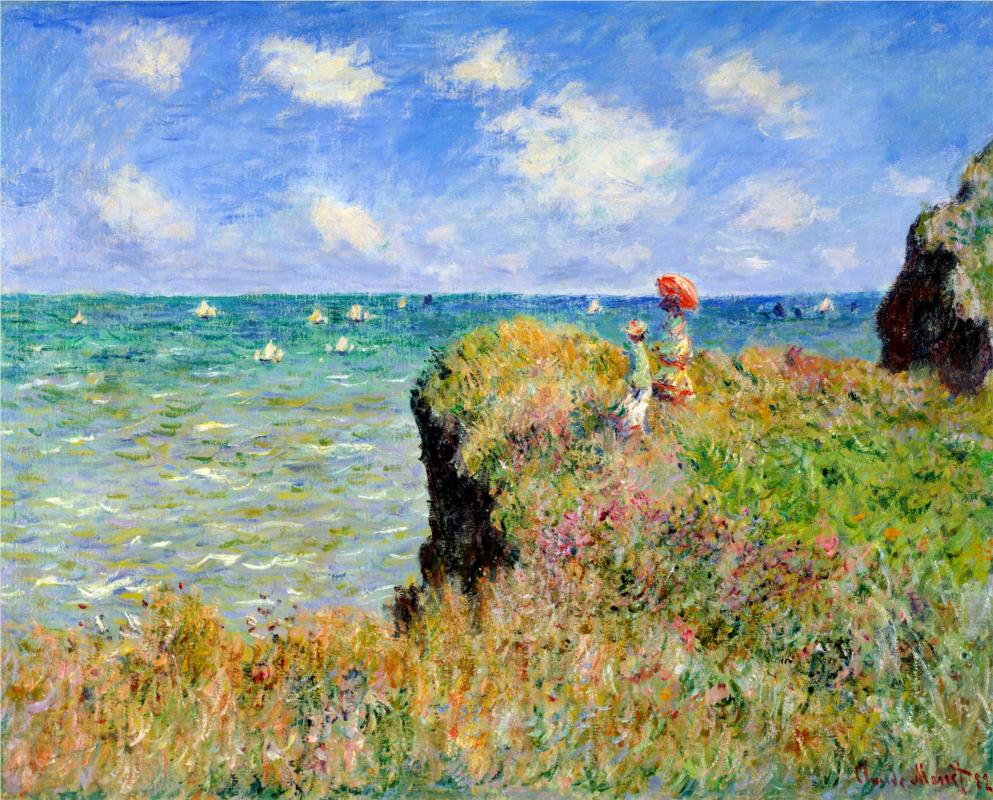
Since it's a StayWriCation -- home-based writer's retreat -- for me the place is imaginary. This is my favorite writer's retreat place, beside a beautiful ocean. Of course this is Monet's ocean in Normandy, and I like to think of myself as painted by Monet into it, the woman with the red umbrella standing there. In literal reality, my place is usually a couch in the living room, with an occasional foray to my deck or a coffeehouse with my laptop. PLACE for me is mostly in the landscape of my work in progress.
STRATEGY.
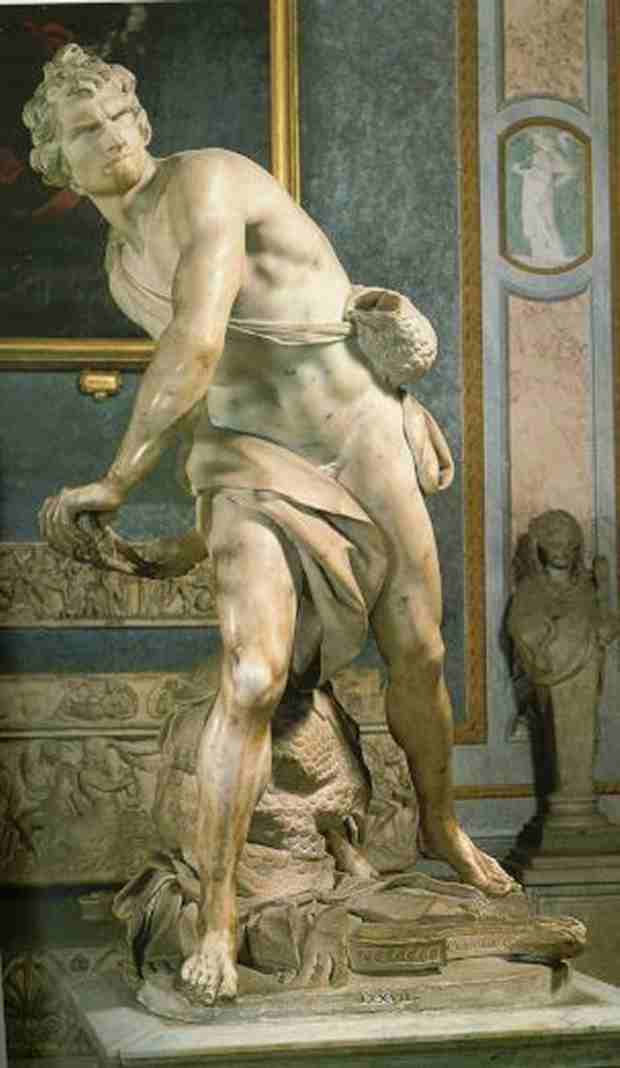 Deciding on goals is key to a successful StayWriCation --- even if you don't achieve them! I find it key to my every day, planning what I want to accomplish, and then being flexible about what comes. Interruptions happen, new directions, ideas, wishes. If you're too rigid, inspiration dries up, and if too scattered, nothing happens. So STRATEGIC PLANNING WITH FLEXIBILITY is my best gambit. I think of Bernini's sculpture of David, aiming at the giant. You can hit the target of a big goal in a compressed amount of time with strategy and a good aim.
 More articles on Do-It-Yourself Writing Retreats:
Julia Guirgis' Self Writing Retreat
A good list of tips for creating your own retreat at home
Bustle's 3 tips on a DIY writer's retreat
Cynthia Morris' tips on creating your own retreat
One thing I like in this one is rcruiting allies. When I did my recent DIY retreat, I enlisted the support of writer friends, and the cheering section was like NaNoWriMo, very motivating.Visit http://RachelDacus.net for more information and writing by Rachel Dacus.
My DIY Writer's Retreat or StayWriCation - Part 2
I finished my 10-day Do-It-Yourself Writing Retreat at home, and learned some new things about my creative process . I got a lot done, though I did allow some interruptions, including:Edited the first third of my novel manuscriptWrote three new poemsPrepared ideas for cover art for my forthcoming novelWrote a couple of blog posts and some tweetsFinished the script for a musicalHad some fun days in nature and in town It was an experiment, as always. I learned that a writing retreat can be as short or long as you like and can manage. A writing retreat is really just at heart a self-discipline, an intention. A promise you make to yourself to do something deeply pleasing and
there are three important elements: time, place, and strategy.
TIME.
Labor Day is coming up. Any three-day weekend, for those of us who work, has the golden potential of being a writing retreat. Really, any weekend does, but a holiday weekend has a special allure for me, a sense of timelessness I can sink into. The prospect of losing track of TIME gets my creative juices going.
PLACE.
Since it's a staycation retreat, for me the place is imaginary. This is my favorite writer's retreat place, beside a beautiful ocean. Of course this is Monet's ocean in Normandy, and I like to think of myself as painted by Monet into it, the woman with the red umbrella standing there, getting inspired by the sound and sight of the waves and clouds. In reality, my place is usually a couch in the living room, with an occasional foray to my deck or a coffeehouse with my laptop. PLACE is mythical for me when I'm writing. Mostly I'm in the landscape of my work in progress.
STRATEGY.
Deciding on goals is key to a successful StayWriCation --- even if you don't achieve them! I find it key to my every day, planning what I want to accomplish, and then being flexible about what comes. Interruptions happen, new directions, ideas, wishes. If you're too rigid, inspiration dries up, and if too scattered, nothing happens. So STRATEGIC PLANNING WITH FLEXIBILITY is my best gambit. I think of Bernini's sculpture of David, aiming at the giant. You can hit the target of a big goal in a compressed amount of time with strategy and a good aim. More articles on Do-It-Yourself Writing Retreats:
Julia Guirgis' Self Writing Retreat
A good list of tips for creating your own retreat at home
Bustle's 3 tips on a DIY writer's retreat
Cynthia Morris' tips on creating your own retreat
One thing I like in this one is rcruiting allies. When I did my recent DIY retreat, I enlisted the support of writer friends, and the cheering section was like NaNoWriMo, very motivating.Visit http://RachelDacus.net for more information and writing by Rachel Dacus.
August 3, 2017
Twitter for Authors -- Writing Tips
Twitter -- with all you have to do writing an entire novel, and then spendig nearly as much time finding a publishing house and marketing it after publication -- why jump into this fast-moving river that is Twitter? Why grab your 15 seconds of attention in the feed to try and sell your book to readers? The simple answer is because any social platform gives you the chance to benot just an author to potential readers, but a person. You make connections. Hopefully, you meet people who will want to read your books.
I initially joined Twitter to get news. It was the season of the Green Revolution in Iran, and the mainstream media didn't seem to know that anything was happening. There was this fearless woman tweeting out news from the square where the pro-democracy protest was gathering, and I just signed up because someone on Facebook said that's where you could find out.
 Then I was glued to someone called Oxford Girl, who was putting out tweets through a complex network that allowed her to use her cell phone to get brief reports and pictures of the action out, while (resumably) keeping her safe.
The Atlantic described it this way: "The immediacy of the reports was gripping," reported the Washington Times. "Well-developed Twitter lists showed a constant stream of situation updates and links to photos and videos, all of which painted a portrait of the developing turmoil. Digital photos and videos proliferated and were picked up and reported in countless external sources safe from the regime's Net crackdown." Journalists even gave the unrest in Tehran a second moniker: the "Twitter Revolution."
My husband couldn't pry me away from the computer for about three days.
Now the launch of your novel isn't going to attract the breathless interest a developing revolution gets, but it is a news event, for you and for your fans. It may be modest in comparison to NationalGirlfriendsDay, or whatever outrageous thing the Tweeter-in-Chief posted last night. But it's news to those who follow you. The difference between Twitter and other platforms is the speed of news and sense of excitement. So it should probably be in your network.
Build a following, largely by following others and tweeting about your writing life (#amwriting #writinglife #amediting are good hashtags to follow and use), and then when you have some news, tweet and ask your @friends to retweet. If you want some basics, here's The Ultimate Guide to Twitter for Writers.
Follow me @Rachel_Dacus and I'll follow you back!
Visit http://RachelDacus.net for more information and writing by Rachel Dacus.
I initially joined Twitter to get news. It was the season of the Green Revolution in Iran, and the mainstream media didn't seem to know that anything was happening. There was this fearless woman tweeting out news from the square where the pro-democracy protest was gathering, and I just signed up because someone on Facebook said that's where you could find out.
 Then I was glued to someone called Oxford Girl, who was putting out tweets through a complex network that allowed her to use her cell phone to get brief reports and pictures of the action out, while (resumably) keeping her safe.
The Atlantic described it this way: "The immediacy of the reports was gripping," reported the Washington Times. "Well-developed Twitter lists showed a constant stream of situation updates and links to photos and videos, all of which painted a portrait of the developing turmoil. Digital photos and videos proliferated and were picked up and reported in countless external sources safe from the regime's Net crackdown." Journalists even gave the unrest in Tehran a second moniker: the "Twitter Revolution."
My husband couldn't pry me away from the computer for about three days.
Now the launch of your novel isn't going to attract the breathless interest a developing revolution gets, but it is a news event, for you and for your fans. It may be modest in comparison to NationalGirlfriendsDay, or whatever outrageous thing the Tweeter-in-Chief posted last night. But it's news to those who follow you. The difference between Twitter and other platforms is the speed of news and sense of excitement. So it should probably be in your network.
Build a following, largely by following others and tweeting about your writing life (#amwriting #writinglife #amediting are good hashtags to follow and use), and then when you have some news, tweet and ask your @friends to retweet. If you want some basics, here's The Ultimate Guide to Twitter for Writers.
Follow me @Rachel_Dacus and I'll follow you back!
Visit http://RachelDacus.net for more information and writing by Rachel Dacus.
Twitter for Authors -- Should You or Shouldn't You
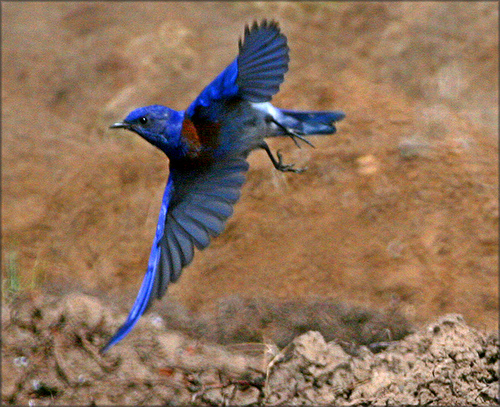 This isn't a How-to, this is a Why-to. Why jump into the fast-moving river that is Twitter and try to grab your .05 seconds of attention as the feed flows past at the rate of a river fed by a hurricane?
I initially joined Twitter to get news. It was the season of the Green Revolution in Iran, and the mainstream media didn't seem to know that anything was happening. There was this fearless woman tweeting out news from the square where the pro-democracy protest was gathering, and I just signed up because someone on Facebook said that's where you could find out.
Then I was glued to someone called Oxford Girl, who was putting out tweets through a complex network that allowed her to use her cell phone to get brief reports and pictures of the action out, while (resumably) keeping her safe.
The Atlantic described it this way: "The immediacy of the reports was gripping," reported the Washington Times. "Well-developed Twitter lists showed a constant stream of situation updates and links to photos and videos, all of which painted a portrait of the developing turmoil. Digital photos and videos proliferated and were picked up and reported in countless external sources safe from the regime's Net crackdown." Journalists even gave the unrest in Tehran a second moniker: the "Twitter Revolution."
My husband couldn't pry me away from the computer for about three days.
Now the launch of your novel isn't going to attract the breathless interest a developing revolution gets, but it is a news event, for you and for your fans. It may be modest in comparison to NationalGirlfriendsDay, or whatever outrageous thing the Tweeter-in-Chief posted last night. But it's news to those who follow you. The difference between Twitter and other platforms is the speed of news and sense of excitement. So it should probably be in your arsenal of places to trumpet your news.
Build a following, largely by following others and tweeting about your writing life (#amwriting #writinglife #amediting are good hashtags to follow and use), and then when you have some news, tweet and ask your @friends to retweet. If you want some basics, here's The Ultimate Guide to Twitter for Writers.
Follow me @Rachel_Dacus and I'll follow you back!
Visit http://RachelDacus.net for more information and writing by Rachel Dacus.
July 28, 2017
Magical Realism in Women's Fiction
 There's a reason a good number of novelists writing about women and their relationships (the loose definition of women's fiction) include elements of magical realism. It's a fine way to make visual a character's adventures in relationships.
A butterfly emanating from a woman's mouth when she tries to answer her lover, a small elephant that keeps appearing in different Italian towns -- elements I've used in my novel The Renaissance Club -- signal to us as readers that we're about to enter an interior realm that obeys different laws than the usual ones, laws of feeling and symbol.
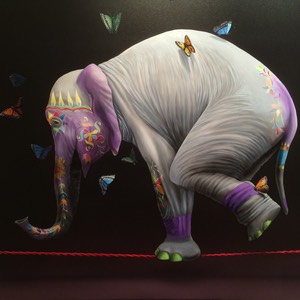 I seek out these WF books with magical realism because to me that's the deeper reality, the one described by unlikely occurrences and symbols appearing in unusual ways and places. Here are two magical realism reads in women's fiction, and writers who often use MR as a way to shape the story of a woman's journey.
Aimee Bender's newest is The Color Master , a collection of stories called "a wondrous collection of dreamy, strange, and magical stories." The bestselling author of The Particular Sadness of Lemon Cake (one of my favorite novels ever) has been called an enchantress whose lush prose is “moving, fanciful, and gorgeously strange” (People), “richly imagined and bittersweet” (Vanity Fair), and “full of provocative ideas” (The Boston Globe). In her deft hands, “relationships and mundane activities take on mythic qualities” (The Wall Street Journal). Enough said.

Susanna Kearsley's The Rose Garden. When Eva's film star sister Katrina dies, she leaves California and returns to Cornwall, where they spent their childhood summers, to scatter Katrina's ashes and in doing so return her to the place where she belongs. But Eva must also confront the ghosts from her own past, as well as those from a time long before her own. Kearsley's other books use magical elements to shape a character's journey.
Sarah Addison Allen's Garden Spells. Allen uses magical realism as nonchalantly as her character might pick up a trowel and dig in the earth. Her story is set in a garden with magical properties, so that its apple tree bears special fruit. She has a naturalistic way of telling her stories that makes the magic seem natural too.
Do you have any authors and titles to add to the topic of women's fiction and magical realism? I'd love to hear them! Here in the comments. Thanks for reading MR!
'); Visit http://RachelDacus.net for more information and writing by Rachel Dacus.
July 22, 2017
DIY Writing Retreats - Writing Tips
 I'm calling mine a StayWriCation, because I plan to host my solitary writer's retreat here in the most comfortable, lovely place I can work -- home. Many writers escape to rural retreats where they often share solitude (how is this possible?) with other writers in an unplugged, calm setting, in order to make progress on whatever they're starting or working on. I can't afford travel, hate planes and airports, miss my dog when I leave home, and insist on the comforts of a speedy Internet while writing. Writing retreats are not really designed for me.
So one year, I crafted my own StayWriCation. It was in November, and I had to finish final editing of a childhood memoir, so as to send out queries and snag an agent. I was determined to have pure, unadulterated, daily writing time -- and what better place to have it than my sun-filled, high-ceilinged living room, with a wall of glass, a deck nestled under trees, with the roses I grow to water while thinking through plot points, hummingbirds whizzing over my head?
I developed a daily rhythm, working from 7 am until 1 or 2 in the afternoon, and then taking myself out for fun, going places I normally don't go. I treated my home, the San Francisco Bay Area, as if I were a tourist, wanting to see exciting things.
 It worked like a dream. Novel writing is long and requires great concentration. For those without young children at home, I recommend trying a home-based, Do-It-Yourself Writer's Retreat whenever you need to make a big push: first draft, first edits, approving publisher's edits, etc. I don't sit at a writing desk, but roam around the house and neighborhood using portable devices. My muse seems to enjoy a good walk or a lng shower. I've learned to memorize long chunks of writing until I can get to a computer.
You'll have to warn your spouse that you're Not Available during certain hours, but presumably if you're a novelist, he knows the "I'm Writing" look -- the vacant stare, lack of response to questions, mumbling to yourself. Mine says he can never tell if I'm talking to someone or dictating onto my phone. So he doesn't like to interrupt me -- great!
For ideas and inspiration, here are some articles on how-to DIY your writing retreat. Every one of them mentions having a writing goal, to which I say YES!!
A Summer Personal Writing Retreat: Turning your home into your sanctuaryWriter Laura Munson defines her own personal Walden
Writer's Digest - Create Your Own Mini-Writing Retreat
E.M. Welsh's How to Have the Perfect Weekend Writer's Retreat
But don't be limited. Dream your own perfect in-place writing retreat. Maybe it's in a local cafe, a library, or like one of my friends, a hotel room so close to her home she can walk to it.
Happy writing! What's your current writing goal? Write me if you like.
Visit http://RachelDacus.net for more information and writing by Rachel Dacus.
DIY Writing Retreats, or StayWriCations
 I just made that up, StayWriCations, but if NaNoWriMo (National Novel Writing Month) can do it, so can I. Many writers escape to rural retreats where they often share solitude (how is this possible?) with other writers in an unplugged, calm setting, in order to make progress on whatever they're starting or working on. I can't afford travel, hate planes and airports, miss my dog when I leave home, and insist on the comforts of a speedy Internet while writing. Writing retreats are not really designed for me.
So one year, I crafted my own StayWriCation. It was in November, and I had to finish final editing of a childhood memoir, so as to send out queries and snag an agent. I was determined to have pure, unadulterated, daily writing time -- and what better place to have it than my sun-filled, high-ceilinged living room, with a wall of glass, a deck nestled under trees, with the roses I grow to water while thinking through plot points, hummingbirds whizzing over my head?

I developed a daily rhythm, working from 7 am until 1 or 2 in the afternoon, and then taking myself out for fun, going places I normally don't go. I treated my home, the San Francisco Bay Area, as if I were a tourist, wanting to see exciting things.
 It worked like a dream. For those without young children at home, I recommend trying a Do-It-Yourself Writer's Retreat whenever you need to make a big push on a project. You have to warn your spouse that you're Not Available during certain hours, but presumably if you're a writer, he knows the drill -- the vacant stare, that lack of response to questions, the mumbling to yourself so that he can never tell if you're on the phone or dictating onto your phone.
 For ideas and inspiration, I've found others doing the same. Here are some good articles on how-to DIY your Staycation writing retreat this summer. Every one of them mentions having a writing goal, to which I say YES!!
A Summer Personal Writing Retreat: Turning your home into your sanctuaryWriter Laura Munson defines her own personal Walden
Writer's Digest - Create Your Own Mini-Writing Retreat
E.M. Welsh's How to Have the Perfect Weekend Writer's Retreat
But don't be limited. Dream your own perfect in-place writing retreat. Maybe it's in a local cafe, a library, or like one of my friends, a hotel room so close to her home she can walk to it.
Happy writing! What's your current writing goal? Write me if you like.
Visit http://RachelDacus.net for more information and writing by Rachel Dacus.
July 15, 2017
Author Blogging & Why It's Essential - Publishing Tips
Should be easy, right? After all, many of us set a word count quota for the day's writing, somewhere in the thousands of words. Surely we can spare 200 or so for a short blog. But deciding what to write about is what always stops me from blogging. Who am I as a writer? Do you really want to hear about the Green Veggie Smoothie I just made with my food processor, throwing in fresh pineapple, cucumbers, apples, spinach, lettuce, grapes, cucumber, and orange, and how it tastes like the smell of watering my garden early in the morning, before the sun is high, with hummingbirds duking it out overhead to get to the feeder above me?
Or smells like sunlight coming through the leaves. After all, I'm a poet. I need to exercise these metaphor muscles the way gardens need water and fertilizer.
 But you didn't come here to this title about blogging in order to hear that -- did you? That's the dilemma of the literary blogger. We have a tendency to get personal, to get specific, and to ignore the title topic until almost the end of the blog.
Plus, they say you have to add lots of visuals to your blogs if you want anyone reading them. We just can't read any more without illustrations. Here's my smoothie.
So now, to the question of how to blog as an author. Now that I have your attention with personal stuff and visuals. Here's an excellent article on the three things you must do in an author blog.
My writing process is pretty much like going to work every day. I reserve two hours from the moment I open my eyes (with coffee -- here's another visual) and before I get started working at the mundane job, for creative writing. I'm disciplined about it, but I count everything as writing, even reading about how to write (though not reading about how to market books -- that's death to the creative flow, though very necessary in other zones of the day.)
 My writing process is sort of effortless once I'm in the zone of those two hours. I know you hated hearing that, but it's true. Assigning a regular time is like waving huge bars of chocolate in front of my Muse. She can't resist.
So there you have it. One article of how-to, a fair amount of personal with a dash of wit (I hope), and a lot of pictures. Author blogging. It was fun!
Visit http://RachelDacus.net for more information and writing by Rachel Dacus.
Or smells like sunlight coming through the leaves. After all, I'm a poet. I need to exercise these metaphor muscles the way gardens need water and fertilizer.
 But you didn't come here to this title about blogging in order to hear that -- did you? That's the dilemma of the literary blogger. We have a tendency to get personal, to get specific, and to ignore the title topic until almost the end of the blog.
Plus, they say you have to add lots of visuals to your blogs if you want anyone reading them. We just can't read any more without illustrations. Here's my smoothie.
So now, to the question of how to blog as an author. Now that I have your attention with personal stuff and visuals. Here's an excellent article on the three things you must do in an author blog.
My writing process is pretty much like going to work every day. I reserve two hours from the moment I open my eyes (with coffee -- here's another visual) and before I get started working at the mundane job, for creative writing. I'm disciplined about it, but I count everything as writing, even reading about how to write (though not reading about how to market books -- that's death to the creative flow, though very necessary in other zones of the day.)
 My writing process is sort of effortless once I'm in the zone of those two hours. I know you hated hearing that, but it's true. Assigning a regular time is like waving huge bars of chocolate in front of my Muse. She can't resist.
 So there you have it. One article of how-to, a fair amount of personal with a dash of wit (I hope), and a lot of pictures. Author blogging. It was fun!
Visit http://RachelDacus.net for more information and writing by Rachel Dacus.