Rachel Dacus's Blog, page 28
November 5, 2016
National Novel Writing Month -- I jumped in with sisterhood
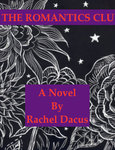 I did it. I signed up to write 50,000 words in the month of November. Partly, I did it because I'm writing a new novel, The Romantics Club, about two half-sisters who inherit a cottage in Italy and along with it, the ghost of the poet Shelley.
I wanted something to distract me from two inevitabilities: death, this one my beloved brother's; and waiting to hear about my completed manuscript, in this case from agents who are reading the whole thing. Death and patience -- of course they seem so similar. Grief and creativity -- who knew they could be aligned.
But I'm writing my way out of grief. The more I feel sad, the more I turn to the blank page and find it blossoming with places I want to go (always Italy!) and people I want to know more about. Sisterhood is a topic in which I can explore my feelings of having been a sister. It makes me cry to write "having been" but I guess I still am a sister to my brother, and to my sister-in-law and a few close friends. Sisterhood fascinates me.
As a child, I always wanted a sister because it seemed like that would make me less lonely. I read about girls I would have like to have as sisters: Dorothy in the Oz books and Nancy Drew. The little girl in Miracles on Maple Hill, and all those fantastic sisters in Little Women.
I now belong to an organization called Women's Fiction Writers Association, and a number of those novelists are participating in NaNoWriMo.
Half a million books will be written in this month -- astounding statistic. Mine won't be finished because my Muse can't be rushed. But the experience feels -- sisterly. And that's a wonderful feeling right now.
Visit http://RachelDacus.net for more information and writing by Rachel Dacus.


October 29, 2016
Girl Protagonists in Books -- a Literary Trend or Something Bigger?
 <!-- /* Font Definitions */ @font-face {font-family:"MS 明朝"; mso-font-charset:78; mso-generic-font-family:auto; mso-font-pitch:variable; mso-font-signature:-536870145 1791491579 18 0 131231 0;} @font-face {font-family:"Cambria Math"; panose-1:2 4 5 3 5 4 6 3 2 4; mso-font-charset:0; mso-generic-font-family:auto; mso-font-pitch:variable; mso-font-signature:-536870145 1107305727 0 0 415 0;} @font-face {font-family:Palatino; panose-1:2 0 5 0 0 0 0 0 0 0; mso-font-charset:0; mso-generic-font-family:auto; mso-font-pitch:variable; mso-font-signature:-1610611969 2013274202 341835776 0 403 0;} /* Style Definitions */ p.MsoNormal, li.MsoNormal, div.MsoNormal {mso-style-unhide:no; mso-style-qformat:yes; mso-style-parent:""; margin:0in; margin-bottom:.0001pt; mso-pagination:widow-orphan; font-size:12.0pt; font-family:Palatino; mso-fareast-font-family:"MS 明朝"; mso-fareast-theme-font:minor-fareast; mso-bidi-font-family:"Times New Roman"; mso-bidi-theme-font:minor-bidi;} .MsoChpDefault {mso-style-type:export-only; mso-default-props:yes; font-family:Cambria; mso-ascii-font-family:Cambria; mso-ascii-theme-font:minor-latin; mso-fareast-font-family:"MS 明朝"; mso-fareast-theme-font:minor-fareast; mso-hansi-font-family:Cambria; mso-hansi-theme-font:minor-latin; mso-bidi-font-family:"Times New Roman"; mso-bidi-theme-font:minor-bidi;} @page WordSection1 {size:8.5in 11.0in; margin:1.0in 1.1in 1.0in 1.1in; mso-header-margin:.5in; mso-footer-margin:.5in; mso-paper-source:0;} div.WordSection1 {page:WordSection1;} </style></div><span style="font-family: "georgia"; font-size: large;">I spent my morning reading and replying on the Women’s Fiction Writers Association website to a discussion about defining women’s fiction. One of the topics was trends in Women's Fiction, and in that thread the topic of “girl” and “wife” books came up. Bestseller titles tell you much about the trend: Gone Girl, Girl on a Train, The Girl with the Dragon Tattoo, The Time Traveller’s Wife, The Kitchen God’s Wife. Girls who are women trying to save themselves, as one commenter on the thread so aptly put it. </span><br /><div class="MsoNormal"><br /></div><div class="MsoNormal"><span style="font-family: "georgia";">Of course, the “girls” are really women. I think it's fiction about women we’re talking about as a “trend.” Women as protagonists in non-romance fiction is becoming a big thing. Goodreads’ Listopia has a list of 749 books with “Girl” in the title! This trend doesn't show any more signs of stopping than books with “Vampire” in the title. </span></div><div class="MsoNormal"><br /></div><div class="MsoNormal"><span style="font-family: "georgia";">So what is it about literary trends? They say you shouldn’t write to them because by the time you finish your book, the trend will be dead. They’re actually speaking of agents’ and editors’ ideas about trends, not actual trends in real life or even among readers. I think trends ARE something you should write to, if you feel them and care about them. It’s something you can do beyond voting. It’s a way of speaking up that matters. </span></div><div class="MsoNormal"><br /></div><div class="MsoNormal"><span style="font-family: "georgia";">I think the "girl" "wife" trend reflects a big shift underway in our culture -- a mega-trend, if you will, and one I think those of us who want to should chase. It's a re-visioning of what it means to be a woman, and WF is a fantastic medium for exploring these cultural shifts, especially as they pertain to being a young woman in a rapidly changing culture speeded up by technology. </span></div><div class="MsoNormal"><br /></div><div class="MsoNormal"><span style="font-family: "georgia";">I'm not a young woman, but I like writing about them. I like exploring the way women find themselves, and create or recreate their lives. I'm a rocket scientist's daughter, so I'm fascinated by the impact of technology on cultural shifts and the way women are perceived in the world. These two trends power my fiction and my poetry. I guess growing up in the 60s, when women's roles shifted dramatically, especially in the workplace, has given me a lifelong interest in trends. So I write to the mega-trends and could care less about literary ones.</span></div><div class="MsoNormal"><br /></div><div class="separator" style="clear: both; text-align: center;"><a href="https://1.bp.blogspot.com/-hJkPRRDIGg..." imageanchor="1" style="margin-left: 1em; margin-right: 1em;"><img border="0" height="133" src="https://1.bp.blogspot.com/-hJkPRRDIGg..." width="200" /></a></div><div class="MsoNormal"><br /></div><div class="blogger-post-footer">Visit http://RachelDacus.net for more information and writing by Rachel Dacus. </div>
"Girl" Protagonists in Books -- a Literary Trend or Something Bigger?
<!-- /* Font Definitions */ @font-face {font-family:"MS 明朝"; mso-font-charset:78; mso-generic-font-family:auto; mso-font-pitch:variable; mso-font-signature:-536870145 1791491579 18 0 131231 0;} @font-face {font-family:"Cambria Math"; panose-1:2 4 5 3 5 4 6 3 2 4; mso-font-charset:0; mso-generic-font-family:auto; mso-font-pitch:variable; mso-font-signature:-536870145 1107305727 0 0 415 0;} @font-face {font-family:Palatino; panose-1:2 0 5 0 0 0 0 0 0 0; mso-font-charset:0; mso-generic-font-family:auto; mso-font-pitch:variable; mso-font-signature:-1610611969 2013274202 341835776 0 403 0;} /* Style Definitions */ p.MsoNormal, li.MsoNormal, div.MsoNormal {mso-style-unhide:no; mso-style-qformat:yes; mso-style-parent:""; margin:0in; margin-bottom:.0001pt; mso-pagination:widow-orphan; font-size:12.0pt; font-family:Palatino; mso-fareast-font-family:"MS 明朝"; mso-fareast-theme-font:minor-fareast; mso-bidi-font-family:"Times New Roman"; mso-bidi-theme-font:minor-bidi;} .MsoChpDefault {mso-style-type:export-only; mso-default-props:yes; font-family:Cambria; mso-ascii-font-family:Cambria; mso-ascii-theme-font:minor-latin; mso-fareast-font-family:"MS 明朝"; mso-fareast-theme-font:minor-fareast; mso-hansi-font-family:Cambria; mso-hansi-theme-font:minor-latin; mso-bidi-font-family:"Times New Roman"; mso-bidi-theme-font:minor-bidi;} @page WordSection1 {size:8.5in 11.0in; margin:1.0in 1.1in 1.0in 1.1in; mso-header-margin:.5in; mso-footer-margin:.5in; mso-paper-source:0;} div.WordSection1 {page:WordSection1;} </style></div><span style="font-family: "georgia"; font-size: large;">I spent my morning reading and replying on the Women’s Fiction Writers Association website to a discussion about defining women’s fiction. One of the topics was trends in Women's Fiction, and in that thread the topic of “girl” and “wife” books came up. Bestseller titles tell you much about the trend: Gone Girl, Girl on a Train, The Girl with the Dragon Tattoo, The Time Traveller’s Wife, The Kitchen God’s Wife. Girls who are women trying to save themselves, as one commenter on the thread so aptly put it. </span><br /><div class="MsoNormal"><br /></div><div class="MsoNormal"><span style="font-family: "georgia";">Of course, the “girls” are really women. I think it's fiction about women we’re talking about as a “trend.” Women as protagonists in non-romance fiction is becoming a big thing. Goodreads’ Listopia has a list of 749 books with “Girl” in the title! This trend doesn't show any more signs of stopping than books with “Vampire” in the title. </span></div><div class="MsoNormal"><br /></div><div class="MsoNormal"><span style="font-family: "georgia";">So what is it about literary trends? They say you shouldn’t write to them because by the time you finish your book, the trend will be dead. They’re actually speaking of agents’ and editors’ ideas about trends, not actual trends in real life or even among readers. I think trends ARE something you should write to, if you feel them and care about them. It’s something you can do beyond voting. It’s a way of speaking up that matters. </span></div><div class="MsoNormal"><br /></div><div class="MsoNormal"><span style="font-family: "georgia";">I think the "girl" "wife" trend reflects a big shift underway in our culture -- a mega-trend, if you will, and one I think those of us who want to should chase. It's a re-visioning of what it means to be a woman, and WF is a fantastic medium for exploring these cultural shifts, especially as they pertain to being a young woman in a rapidly changing culture speeded up by technology. </span></div><div class="MsoNormal"><br /></div><div class="MsoNormal"><span style="font-family: "georgia";">I'm not a young woman, but I like writing about them. I like exploring the way women find themselves, and create or recreate their lives. I'm a rocket scientist's daughter, so I'm fascinated by the impact of technology on cultural shifts and the way women are perceived in the world. These two trends power my fiction and my poetry. I guess growing up in the 60s, when women's roles shifted dramatically, especially in the workplace, has given me a lifelong interest in trends. So I write to the mega-trends and could care less about literary ones.</span></div><div class="MsoNormal"><br /></div><div class="separator" style="clear: both; text-align: center;"><a href="https://1.bp.blogspot.com/-hJkPRRDIGg..." imageanchor="1" style="margin-left: 1em; margin-right: 1em;"><img border="0" height="133" src="https://1.bp.blogspot.com/-hJkPRRDIGg..." width="200" /></a></div><div class="MsoNormal"><br /></div><div class="blogger-post-footer">Visit http://RachelDacus.net for more information and writing by Rachel Dacus. </div>
October 23, 2016
Notating Nature's Delicate Song
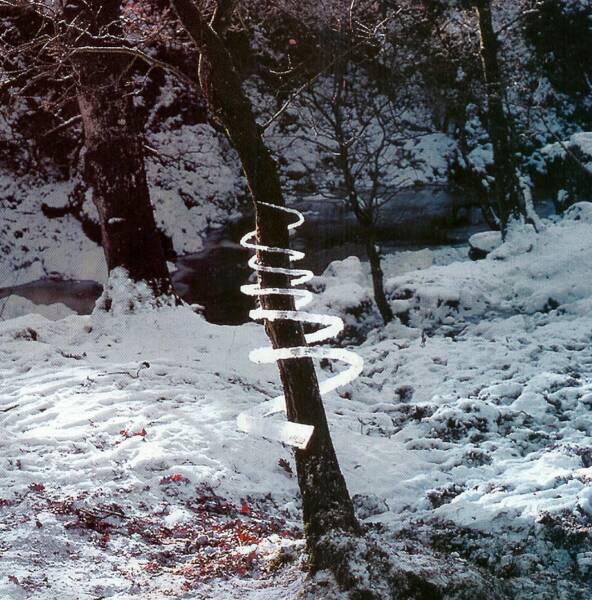 The evanescence in British artist Andy Goldworthy's work is what first caught hold of me. (Click the link for Artsy's wonderful Goldsworthy pages.) He works with nature to make sculptures of the moment, or perhaps the hour, using all natural elements. Ice, water, leaves, twigs, wind, rain are the easel, palette, paints, and media he sculpts with. It's as if he's having a conversation with nature and time, an intense wrestling almost. His work seems to say beauty is all around us but constantly changing, impossible to capture for long. It's as if he's trying to notate Nature's delicate and constant singing.
Rivers and Tides, the splendid documentary on Goldsworthy and his work, actually is part of his work by letting us watch him work with fast disappearing natural elements. He describes his work as capturing something "intangible. It is here and then gone." And Goldsworthy shows how quickly that intangible Something, a spirit of beauty in nature, arrives and departs. It's a metaphor for life, of course. It's about time and the sacredness of being alive.
Watching that documentary moved me to a tribute poem. I often like to write poems about pieces of art, but I think this is my only poem about an artist other than my father. This sonnet originally appeared in Image: Art, Faith, Mystery.
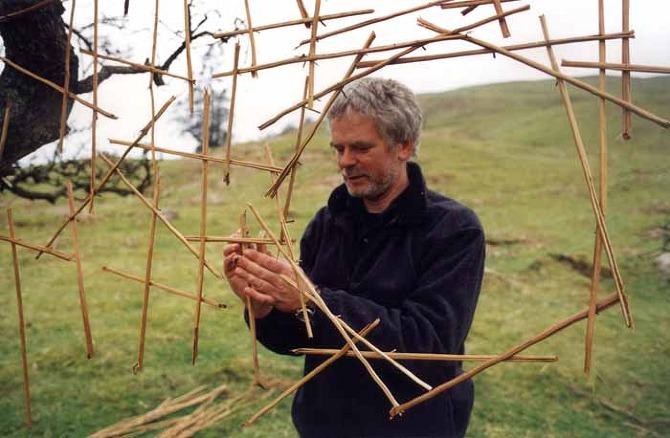
Self-Portrait by Andy Goldsworthy One must have a mind of winter to regard the frost and the boughs of the pine-trees crusted with snow – Wallace Stevens
He doesn't appear to have a mind of winter, this man handling shards of ice between shaking gloves, tacking hewed splinters together by flashlight. He has a keen grasp of water's arctic state. His stone of a mind feels the light’s first crack and dazzle through his muscle and bone. He stakes his art on a pre-dawn slack tide, hurrying an art’s punctilious making for a sculpture sun’s full glory will soon undo. But the camera, quaking, again freezes art's old story. He rises satisfied with the dazzling rime. A mind not of winter, but of time.
Visit http://RachelDacus.net for more information and writing by Rachel Dacus.
October 21, 2016
My brother's art and service created a beautiful life
This week I lost my dearest brother, David Abramson, one of the kindest, gentlest people I will ever know. Sixty-four years was not nearly enough to be connected, so I'm sure we'll meet again in the next rooms of existence. Among the several arts he pursued -- visual and culinary as well -- was the bliss of making music. He wrote songs, he led several bands, and he was always learning more about his craft. In the last year of his life, he was deprived of the ability to sing, and even to talk much. I'm posting this video generously shared on Facebook by his band mate Paul Henry so we can all hear his voice again. There are many more recorded songs, but few videos. I cherish this one! The guy with the long gray ponytail is David Abramson, my little brother who I recently awarded elder sibling status to for his wisdom and support. Rock on, Davey. I'm sure in the between-life you're in now, there's a band waiting for their lead singer.
 Art was something we learned at home, from our painter father and musician mother. How making it, at any level, is bliss. I would watch my father at his easel, contemplating intently the strokes he had just made with the brush, dipping it in the jar of turpentine, and a little in the oils on his palette, maybe remixing a color, and then just a dab or two on the canvas. Then he would step back and observe. Then step in again with another idea, This could go on for hours.
I believe it was from observing a creative mind at work that David and I learned that creating is bliss. Our mother was at the piano, practicing her parts in the Pro Musica Chorale performances. Sometimes she would just play a whole piece for the beauty of it. We observed that same absorption and self-transcendence in those creative moments. He took up painting and I took up dance. He would up with music and I with writing as our main forms of making. I'm sure he will be making music in the next room where he has gone, and in the rooms of life beyond that one. I'm sure at some point we'll again make things together, the way we made support and kindness for each other as siblings.
I'm measuring my grief in memories. <!-- /* Font Definitions */ @font-face {font-family:"MS 明朝"; mso-font-charset:78; mso-generic-font-family:auto; mso-font-pitch:variable; mso-font-signature:1 134676480 16 0 131072 0;} @font-face {font-family:"MS 明朝"; mso-font-charset:78; mso-generic-font-family:auto; mso-font-pitch:variable; mso-font-signature:1 134676480 16 0 131072 0;} @font-face {font-family:Palatino; panose-1:2 0 5 0 0 0 0 0 0 0; mso-font-charset:0; mso-generic-font-family:auto; mso-font-pitch:variable; mso-font-signature:-1610611969 2013274202 341835776 0 403 0;} /* Style Definitions */ p.MsoNormal, li.MsoNormal, div.MsoNormal {mso-style-unhide:no; mso-style-qformat:yes; mso-style-parent:""; margin:0in; margin-bottom:.0001pt; mso-pagination:widow-orphan; font-size:12.0pt; font-family:Palatino; mso-fareast-font-family:"MS 明朝"; mso-fareast-theme-font:minor-fareast; mso-bidi-font-family:"Times New Roman"; mso-bidi-theme-font:minor-bidi;} .MsoChpDefault {mso-style-type:export-only; mso-default-props:yes; font-family:Cambria; mso-ascii-font-family:Cambria; mso-ascii-theme-font:minor-latin; mso-fareast-font-family:"MS 明朝"; mso-fareast-theme-font:minor-fareast; mso-hansi-font-family:Cambria; mso-hansi-theme-font:minor-latin; mso-bidi-font-family:"Times New Roman"; mso-bidi-theme-font:minor-bidi;} @page WordSection1 {size:8.5in 11.0in; margin:1.0in 1.25in 1.0in 1.25in; mso-header-margin:.5in; mso-footer-margin:.5in; mso-paper-source:0;} div.WordSection1 {page:WordSection1;} </style><br /><br /><div class="MsoNormal">It feels like homework from God,</div><div class="MsoNormal">remembering you, brother.</div><div class="MsoNormal">Digging deeply into the stream</div><div class="MsoNormal">of memories and feelings as they flow</div><div class="MsoNormal">past the stone pillar I’ve lately become.</div><br /><div class="MsoNormal">I sort and weigh the meaning </div><div class="MsoNormal">of having a brother of such fineness, </div><div class="MsoNormal">seamed with gold</div><div class="MsoNormal">as he served his many communities,</div><div class="MsoNormal">silver-haloed by a fine long mane</div><div class="MsoNormal">as if you were the older one, </div><div class="MsoNormal">which would at least have made a little more </div><div class="MsoNormal">sense of your having to leave first. </div><br /><div class="blogger-post-footer">Visit http://RachelDacus.net for more information and writing by Rachel Dacus. </div>
September 17, 2016
Listening to the Paint
 Every once in awhile, an author should Google herself. I did my routine check last night and was amazed to discover that Prairie Schooner, one of my longtime favorite literary journals, had reprinted one of my poems. "Listening to the Paint" appeared in their 2012 issue, at a time that coincided with the record-breaking sale of an abstract painting. So PS chose to include my poem in their series of reprints.
The poem is about how my father's being a painter influenced me growing up and deciding to become a writer. Click on the link above to read the poem in its entirety, but the heart of it is in these lines:
How many times he loaded the brush,
swiped on those parallel lines. Strokes now fossilized
in the exhibition room’s angled-down lights.
I have an idea how long that dry rhythm held
because as I waited for my father to speak
I counted the falling dust motes.
The silence art must bear.
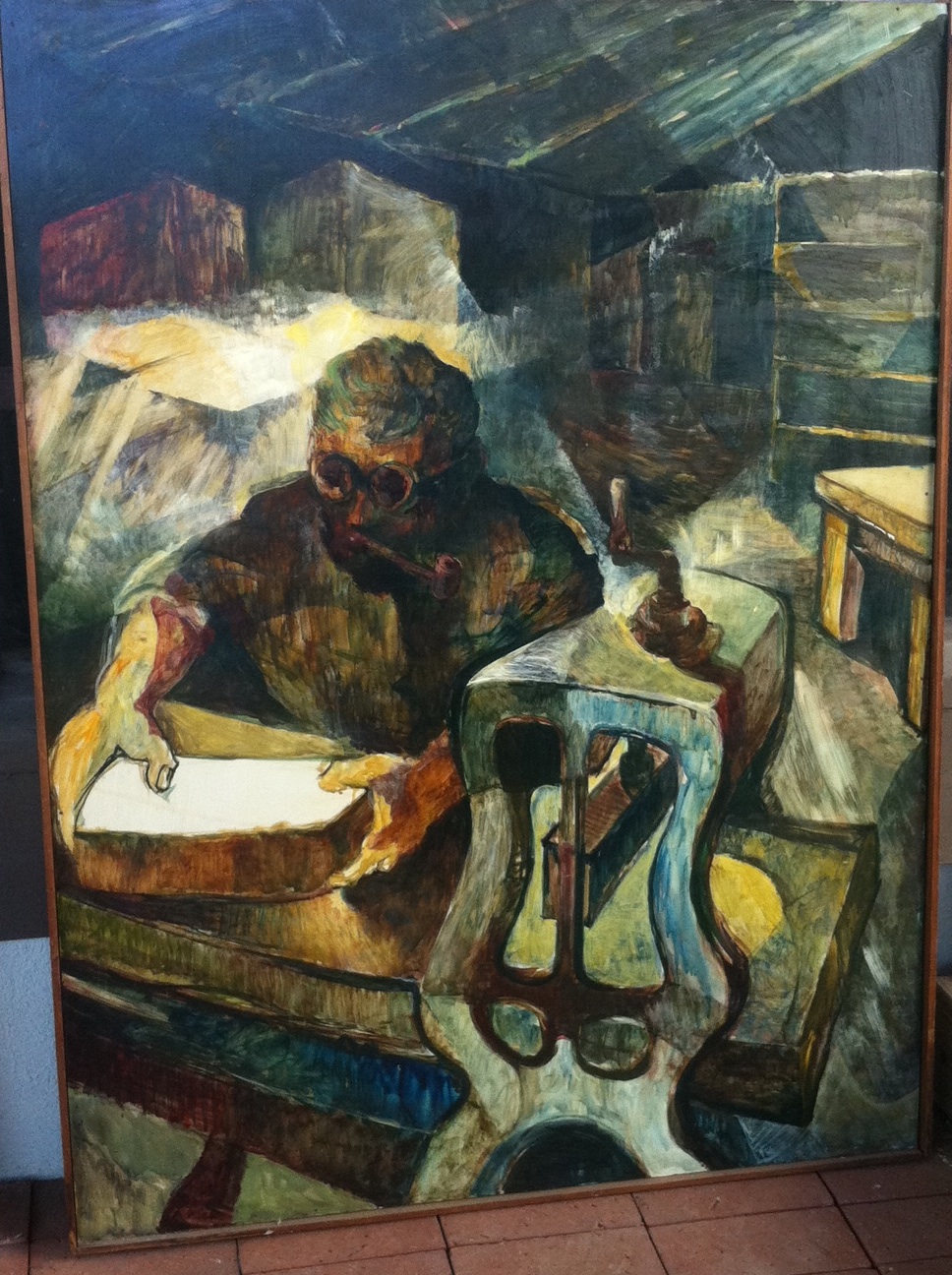
This painting is "Joe Funk" and is of a printmaking friend of my father's, a man he shared a studio with in San Pedro, where I grew up. The Exodus Gallery contained the oddest group of people I ever met. You had to climb an exterior ladder to get into the second floor space -- which is probably why the artists could afford to rent it -- and it was a wonderland of strange canvases, tilted pieces of pottery, and best of all an easel with a blank canvas for me to play on. That rich silence of concentration and inspiration floated around the vast space and started me on this journey.
Thanks to Prairie Schooner and their "Alberta Clipper" series for selecting my poem. Finding it now is like a tap on the shoulder from Dad, who's been gone for seven years. Here's another of his.

Visit http://RachelDacus.net for more information and writing by Rachel Dacus.
September 9, 2016
Lucky Summer, Happy Author Here
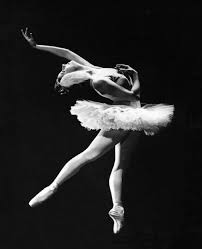
I'm really happy that one of my most recently published poems was "Wings Clipped" and appeared in Issue 4 of a journal called Panoply. Several reasons: 1) I've had a panoply of acceptances this season -- far more than my usual batting average! 2) "Wings Clipped" is the lead poem in my new manuscript, Arabesque (available to an interested publisher) and 3) the poem brings together the two art forms I've devoted myself to: dance and poetry.
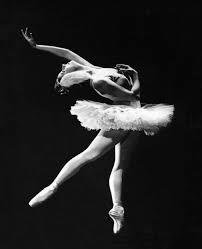 The journal One from Jacar Press also published one of my poems -- "Elegance" -- that brought together those two arts. Even though this lovely art form broke my back, I would do it all over again. I suppose that might be a form of courage. And publishing that poem helped me have the courage to focus the opening section of my book around the way these arts and injuries shaped me.
This year I've had 16 poems accepted so far, which is much more than ever in any 9-month period. They're all from this manuscript, which makes me feel it's strong. I campaigned the poems to support publishing the book, but I never expected so much so quickly.
To be part of new literary ventures is also an exciting privilege I've had this season. The new and beautiful Peacock Journal recently published four of mine.
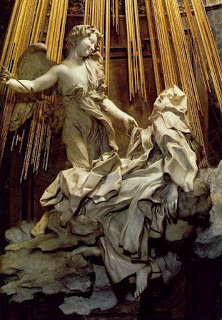 And they did me the kindness of pairing the work with a beautiful image that means a lot to me, as it's involved in my new novel, The Renaissance Club (also available). Bernini's Ecstasy of St. Teresa figures in my story, and when I met this sculpture in Rome, its power is partly why I wanted to write the novel.
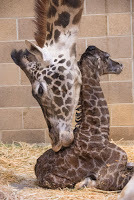
The other new journal I was happy to participate in is Mockingheart Review. They took three of my favorites from Arabesque, including my favorite dream poem, "Giraffes."
 Gingerbread House published one of the poems that surprised me the most to write -- a poem about a dead-drunk superhero called "Transparency" -- and they paired it with original art that was just perfect. Thanks to the editors for that pairing!
I have a poem forthcoming from Prairie Schooner, and I'm waiting to hear on a few more. But all in all, 2016 has been a bonanza for this poet. And in other ways, a most interesting series of literary adventures. Some of which I will have to wait to tell. Thanks for listening to my surprised delight.Visit http://RachelDacus.net for more information and writing by Rachel Dacus.
 The journal One from Jacar Press also published one of my poems -- "Elegance" -- that brought together those two arts. Even though this lovely art form broke my back, I would do it all over again. I suppose that might be a form of courage. And publishing that poem helped me have the courage to focus the opening section of my book around the way these arts and injuries shaped me.
 This year I've had 16 poems accepted so far, which is much more than ever in any 9-month period. They're all from this manuscript, which makes me feel it's strong. I campaigned the poems to support publishing the book, but I never expected so much so quickly.
To be part of new literary ventures is also an exciting privilege I've had this season. The new and beautiful Peacock Journal recently published four of mine.
 And they did me the kindness of pairing the work with a beautiful image that means a lot to me, as it's involved in my new novel, The Renaissance Club (also available). Bernini's Ecstasy of St. Teresa figures in my story, and when I met this sculpture in Rome, its power is partly why I wanted to write the novel.
The other new journal I was happy to participate in is Mockingheart Review. They took three of my favorites from Arabesque, including my favorite dream poem, "Giraffes."
 Gingerbread House published one of the poems that surprised me the most to write -- a poem about a dead-drunk superhero called "Transparency" -- and they paired it with original art that was just perfect. Thanks to the editors for that pairing!
 I have a poem forthcoming from Prairie Schooner, and I'm waiting to hear on a few more. But all in all, 2016 has been a bonanza for this poet. And in other ways, a most interesting series of literary adventures. Some of which I will have to wait to tell. Thanks for listening to my surprised delight.Visit http://RachelDacus.net for more information and writing by Rachel Dacus.
September 1, 2016
Get poetically inspired -- go on a meditation-vacation
A new scientific study came out following people who had recently been on resort vacations and those who were meditators who had been on meditation retreats. The interesting thing is that the beneficial effects on their bodies, though similar, were different. And meditators seemed to have the longest term benefits. Their immune responses and ability to resist stress were stronger for a longer time than those who had simply greatly relaxing vacations.
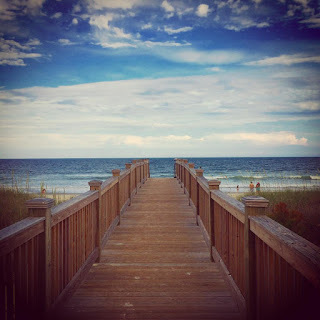 Here's an article that gives a simple overview of the research -- interestingly enough, in Money Magazine.
So how about Meditation Vacations? Going somewhere where the goal is intensive meditation WHILE in a beautiful resort. It happens. I just went to one, and am hoping that once I get over the jetlag, I'll find my resistance to stress much higher.
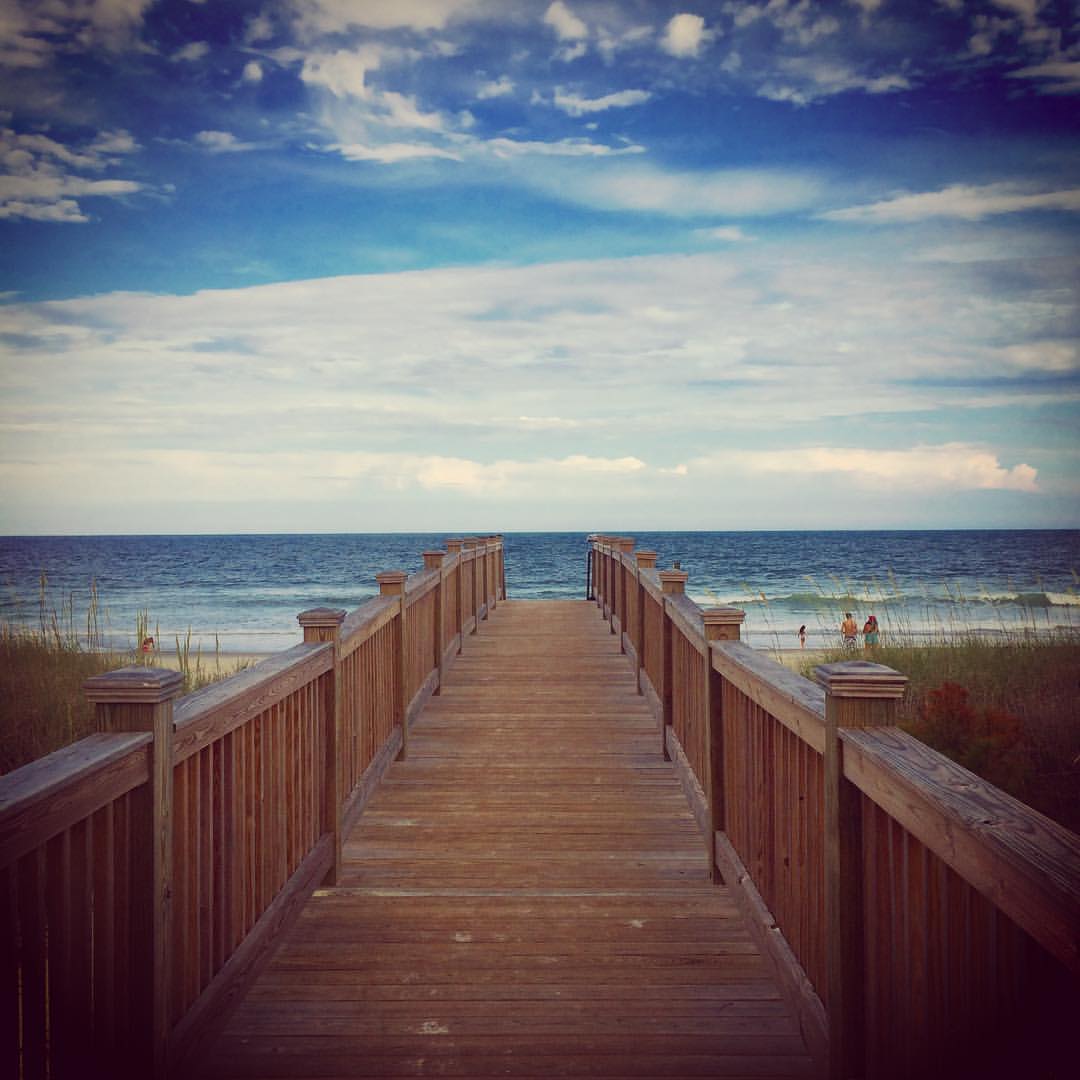
 But HERE'S THE PART NO RESEARCHER STUDIED: I caught 10 poems in 5 days while on my meditation-vacation-retreat at the South Carolina coastline. My normal pace is maybe five poems in a month. Clearly, the inspiration index was through the roof on a Medtiation Vacation. The Muse was hanging out on those beaches and patios, under the oak trees and at my buffet lunches and dinners. All I had to do, it seemed, was feel a stirring of idea, pick up my phone, and dictate. Of course they're all rough drafts, but THAT MANY POEM DRAFTS in five days is unparalleled in my life.
So roll it all together -- resort vacationing, meditation as a focused slowing down, and writing! I've been on active vacations three times as long in which I didn't get either as relaxed or inspired.
Visit http://RachelDacus.net for more information and writing by Rachel Dacus.
 Here's an article that gives a simple overview of the research -- interestingly enough, in Money Magazine.
 So how about Meditation Vacations? Going somewhere where the goal is intensive meditation WHILE in a beautiful resort. It happens. I just went to one, and am hoping that once I get over the jetlag, I'll find my resistance to stress much higher.
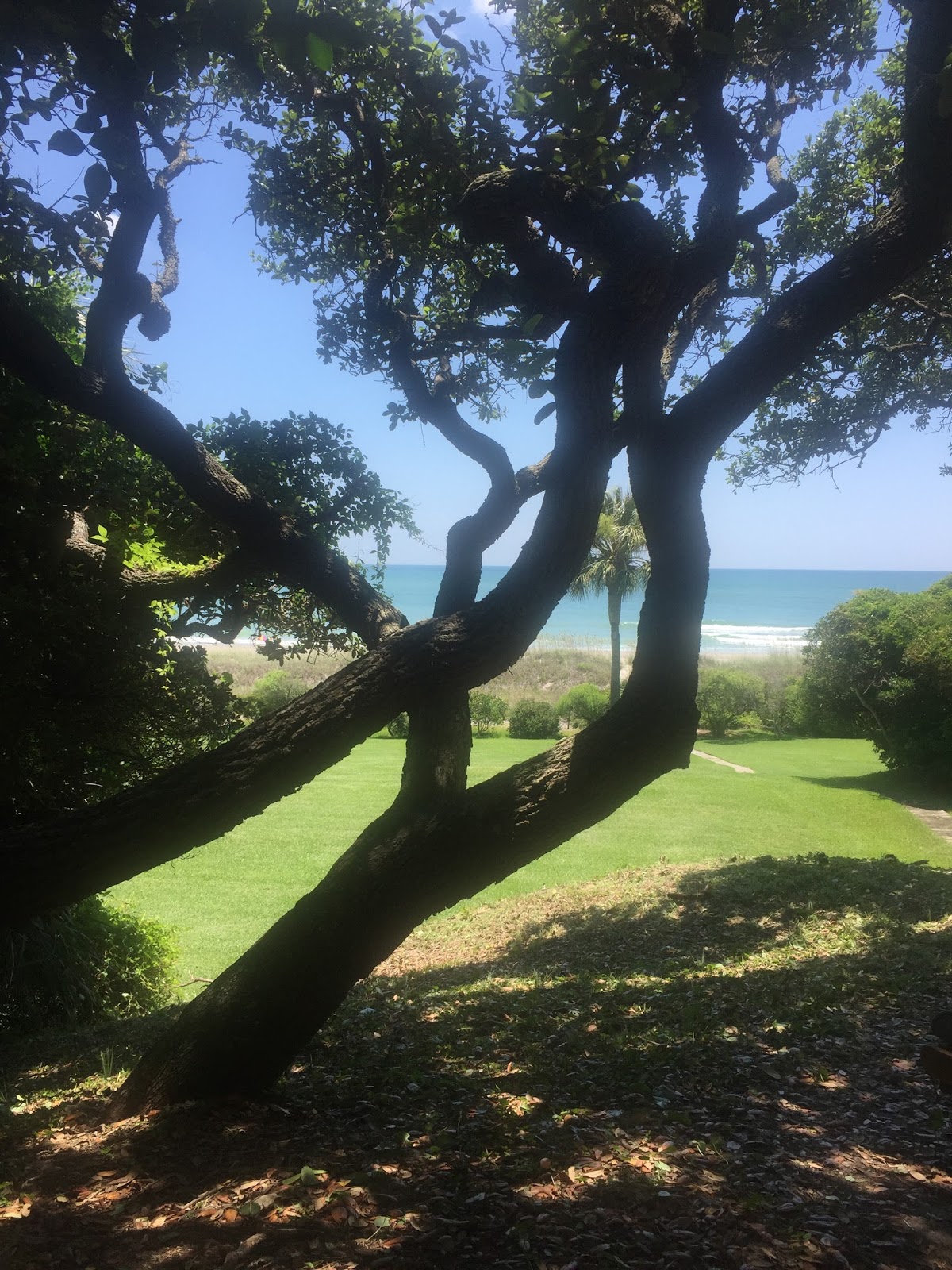 But HERE'S THE PART NO RESEARCHER STUDIED: I caught 10 poems in 5 days while on my meditation-vacation-retreat at the South Carolina coastline. My normal pace is maybe five poems in a month. Clearly, the inspiration index was through the roof on a Medtiation Vacation. The Muse was hanging out on those beaches and patios, under the oak trees and at my buffet lunches and dinners. All I had to do, it seemed, was feel a stirring of idea, pick up my phone, and dictate. Of course they're all rough drafts, but THAT MANY POEM DRAFTS in five days is unparalleled in my life.
So roll it all together -- resort vacationing, meditation as a focused slowing down, and writing! I've been on active vacations three times as long in which I didn't get either as relaxed or inspired.
Visit http://RachelDacus.net for more information and writing by Rachel Dacus.
August 11, 2016
To obtain a great cover image, try pleading "Poet in Poverty"
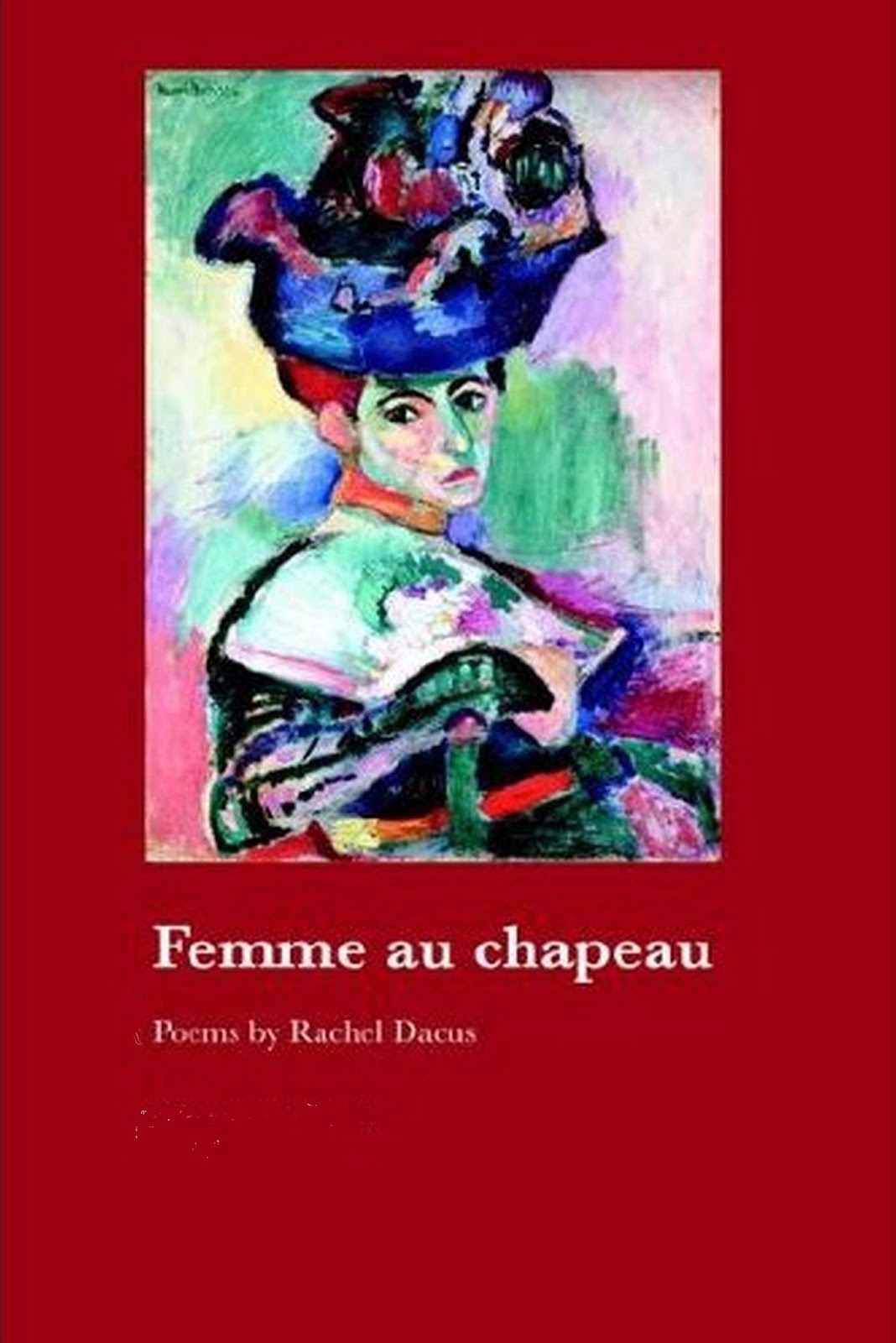 It was great fun to correspond with Matisse's great grandson in order to obtain rights to use this image on the cover of my poetry collection Femme au chapeau. Happy to say it will be available as an eBook in September! Pre-order price for you is $2.99, until 9/26/16. You can go here to pre-order: https://www.smashwords.com/books/view/657130.
Poet Barbara Crooker did a wonderful review of the book on Smartish Pace, mentioning "exquisite figurative language throughout". She cited my "unusual and surprising subject choices", such as "the differences between men and women, as revealed in their choice of razors and bathroom accessories ("The Difference"), the unattainable/remote mother ("Piano Lessons," "Apple Pie Order," "Laparoscopy," "Beauty by a Sideboard"), the self-explanatory "Ode to My Purse," the olfactory genius of dogs ("Dog Sniffing"), the state fish of Hawai'i ("A Pot of Humuhumunukunukuapua'a"), manual typewriters (the hilarious "Ode to a Smith-Corona" which has to be explained by its equally funny end note)."
Best of all, this quintessential ekphrastic poet -- check out Crooker's books, especially her New and Selected -- said of my poems about paintings: "Dacus embodies the best of ekphrastic work, which doesn't merely describe works of art, but responds to them, allows the paintings to take her someplace else, and brings us along with her."
Visit http://RachelDacus.net for more information and writing by Rachel Dacus.
August 8, 2016
What If Your Heroes Won't Play Nice?
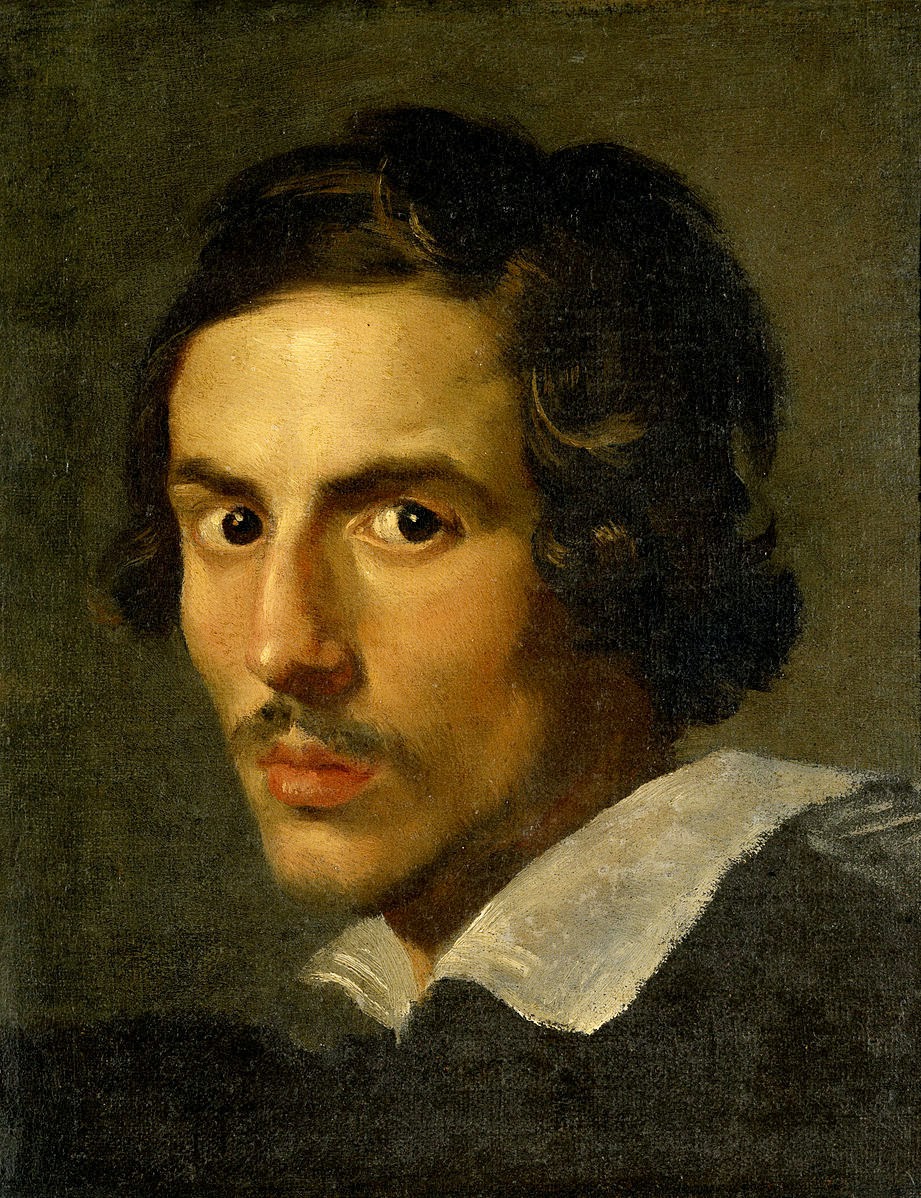 What if you can't get your two favorite heroes from history to play nice? That's the problem my main character, art historian May Gold has in my WIP novel The Renaissance Club. She has a plan to get her idol, Gianlorenzo Bernini, the rock star artist of the Renaissance, and his chief rival, architect Borromini, to play nice and work together. Trouble is, she has to travel four centuries to bring it about. Time isn't giving her much time, and Borromini is out for blood. Here's an excerpt:
“Hear me out,” May said. “If you ask him for advice, then the project becomes his to share, and that gives him an incentive to defend it. Even against those he has stirred up.”Bernini wasn’t convinced. She had a bad feeling in her stomach, wondered briefly if it was the sausage from last night, but when he replied, it vanished. “Shrewd woman,” he said, smiling now. “You would make a good courtier. But the man truly hates me for taking the job he assumed would be his—Architect of St. Peter’s. I doubt anything can change his hatred.” He was wavering, but considering her idea. She elaborated on her reasons. “But he loves his reputation. Being your advisor could enhance his standing a lot. Surely he will recognize how a partnership of geniuses will promote you both.” She had to say so herself: it was a brilliant idea.“He may be a genius, but he’s also depressive egomaniac.”His anger for a moment almost seemed to be directed towards her, so she adopted his strategy. She fought his opposition with an audacious turn. “He is going to be completely taken by surprise at your invitation to collaborate. And if he is a genius architect, he will recognize how valuable it will be to him.” It was the truth, and Bernini saw it. He broke into a laugh and his face lit up with his most charming smile. “For you, I will try it! My note to Borromini will be the roses I lay at your feet, for coming here at my request.” She was delighted. “That’s much better than roses!” He sent the invitation immediately and Borromini’s reply came within an hour. He would come that afternoon. May was very excited to meet another giant of the Renaissance, the architect whose buildings proudly refused ornamentation because their complex geometries were so beautiful that colors, paintings, and statues would have been a distraction. Francesco Borromini arrived just after one in the afternoon. He came toward them from the door at the far end of the studio, so she could watch him approach. He was everything she had imagined, with his pale face and Van Dyke beard, good looks sabotaged by his scowl—such a contrast with Bernini’s very public and ready charm. Borromini wore a knee-length dark brown cloak, old-fashioned and dour for the period. Under it he wore black, making him dark from hair to shoes. She could feel the anger simmering under his melancholic greeting.“Cavaliere," he said, bowing.Before he lowered his head, she saw the grim expression that revealed the temperament. That depressive, suspicious nature had resulted in Borromini withdrawing from working under Bernini, his young rival, at St. Peter’s. It was a banked fury that scared her and reminded her that Borromini would die by grotesque suicide, on his own sword. She wondered, as Bernini bowed in response, whether this meeting had been a good idea.“Maestro,” Bernini conceded as Borromini rose unsmiling to stare at him, waiting. Bernini’s bow put a fleeting smile on Borromini’s face. Despite their evident mutual dislike, May was excited. It would benefit them both if they could work together to rescue the bell tower project. And if that changed history, so much the better for history. She was playing God. She felt almost up to the part. But Bernini wasn’t playing his part. He was just standing there silently waiting. She prompted him, “You wanted to ask for some advice?”Borromini turned to her with a disgusted look. “Is this one of your models? Why is she here?”May was suddenly frightened. She felt the chasm between cultures and centuries and realized she was out of her depth with such male chauvinism that they hadn’t yet even invented a term for it. It simply was the way things were—women were inferior and to be treated as barely existing.Bernini came to her rescue. “She is not my model. She is my adviser on … matters of politics. I’ll thank you not to insult Signora Bellini.”He had improvised a distinguished Venetian name for her, thinking quickly to give her social superiority over Borromini from a region wouldn’t be very familiar with. This was the moment to say something, but she had no idea what. If a curtsey was right, she didn’t know how to execute one. She opted for the nobler slight dip of her head. Borromini, out-maneuvered, dipped his. He hesitated and then executed a lavish bow to her.May was very glad she had not made the mistake of a bow, as she had in St. Peter’s—a masculine bow, which had made Bernini laugh. She reminded herself to be feminine, but not subservient. Feminine and noble, whatever that was. “It seems politic for you both to consider working collaboratively on the bell tower design,” she said, hoping that by filling in the blank she would gain the advantage for Bernini.Borromini turned to him. “So, Cavaliere, is this why have you summoned me?” He made his disdain clear.“You are to consult with me,” Bernini said in a commanding voice that May didn’t think was going to help. “I acknowledge your engineering proficiency, and I want you to … to …” He was choking on the word “advise.” He just couldn’t say it.“You seek his advice, isn’t that right?” she said softly, hoping only Gianlorenzo heard.Borromini allowed himself a smile. “You seek my expertise about the bell tower project, is that it?”Bernini seemed unable to utter, “yes,” so he bowed again. Borromini bowed even lower. Bernini bowed again. There seemed to be a pissing match in progress that May didn’t understand. She guessed that whoever spoke next would be the loser.“Might you be concerned the towers are too heavy for their bases?” Borromini asked. Score one for Bernini, who eked out the merest of smiles. “You are correct, sir. I have concerns. I might consider your thoughts on the matter.”May was thrilled. Borromini smiled broadly and said, “Because you’re already trying to decrease weight in the South Tower as it is built, I understand your dilemma. You must be aware that your design may prove too heavy for the bases already constructed by our predecessor, Maderno.”Bernini was the one to scowl now. “That is exactly what the cowardly author of the scandaglio wrote against my plan. I wonder, Maestro, whether or not you are acquainted with the author of that insulting document?”To May, this was tantamount to an accusation. Borromini seemed to agree. “You think I would write such a public rant? Why would I jeopardize my own reputation with the pope? No, I had planned to wait until your tower is finished and then we will see if it stands. Of course, my estimate about the weight may be entirely incorrect.”This was to have been the moment when Bernini asked Borromini to help calculate what had to be done, but Borromini had succeeded in getting Bernini to fume. This wasn’t what May had envisioned. How had they managed to collaborate at St. Peter’s? Surely they could find some common ground. “Stonemasons have been consulted,” Bernini said defensively, “and they assured us that my design for the towers is not too heavy for the bases.” His haughtiness wasn’t helping. May could see Borromini’s mood had a deeper and darker color than Bernini’s. He could afford to bait Bernini, because the Cavaliere was notoriously emotional. With a lurch of disappointment, May realized that was why Borromini had come. This had been a terrible idea. These two artistic titans were hoping to mortally wound each other. As a result, both would fall. “I remember this anonymous critic mentioned that your towers will cost twice as much as Maderno’s original design,” Borromini said. “I suppose you justify that on the basis of the pope and his taste for extravagance. He seems to always prefer the most elaborate design to the most pure one.” “You impugn all my designs at one sweep!” Bernini’s steam was frothing over. The dour Borromini now shot May a smirking glance. He was going to milk this encounter in the hope of getting Bernini to do something he might regret. She saw now that the greater maneuverer in this meeting was Borromini, though Bernini always had the greater luck. That luck lay at the core of Borromini’s hatred and thus it would never change. She felt the tightness of her sleeves and bodice, the surreal way her breasts wanted to spill over the top of the dress. She couldn’t catch her breath. She couldn’t imagine surviving the oily poison of this atmosphere between them.“Cavaliere, you must rise or fall on your own calculations,” Borromini said grandly. “I do not know why you summoned me, if you have no wish to listen. I cannot help you.”“You always were a stubborn ass!” shouted Bernini.“And you, Cavaliere, have always been a thief.”“What do you mean?”“The devious way you stole my rightful commission for the Four Rivers Fountain. A pickpocket’s ruse robbing a true artist.”“Rightful commission?” Bernini shouted.Borromini’s voice rose too, cracking in a higher pitch. “Your esthetic is as common as your heritage.”“And how would the son of a stonemason appreciate esthetic refinement?” Bernini shouted.Borromini was already retreating, but at this last insult, he turned. Throwing one side of his cape over his shoulder to reveal his hand on the hilt of his sword, though not drawing it, he answered.“As easily as the son of a mediocre carver of small statues can understand the complexities of geometry.”It was amazing that Borromini, renowned for his temper, had managed to bring the poised Bernini to near-hysteria. Her hopes were at an end. She just hoped there wouldn’t be a duel, and she had to remind herself that history had recorded none between them. Borromini turned again and with an insulting swagger departed. Gianlorenzo turned to her and said, “I don't need him. I don't need any of them. I am going to build taller towers than anyone ever dreamed. My towers will complement Michelangelo’s perfect dome. That is how I will silence my ignorant critics!” She said nothing, knowing that Borromini had been right about the engineering. The added height would cause the bell towers to crack. She had done nothing but goad him into daring too much height. The entire basilica, had been built on underground springs that would destabilize the foundations. But those facts would be manipulated, and a pope who was far from Bernini’s champion would tear down Bernini’s towers. “Why did you insist that I invite him?” Bernini’s anger was still hot. Now it found its target in her. May couldn’t wish Bernini’s passion crushed, but it was going to be. She couldn’t imagine living such a reckless, passionate life as he did—but passion was the essence of his art. She didn’t belong here. Her ideas would create dangers for him and this culture could suffocate her. She turned to say she was leaving, but before she could, she was caught by a dazzle of afternoon light that struck the window. Visit http://RachelDacus.net for more information and writing by Rachel Dacus.