Rachel Dacus's Blog, page 30
May 28, 2016
Writing It Short, Fat, and Lean
 <!-- /* Font Definitions */ @font-face {font-family:"MS 明朝"; mso-font-charset:78; mso-generic-font-family:auto; mso-font-pitch:variable; mso-font-signature:-536870145 1791491579 18 0 131231 0;} @font-face {font-family:"MS 明朝"; mso-font-charset:78; mso-generic-font-family:auto; mso-font-pitch:variable; mso-font-signature:-536870145 1791491579 18 0 131231 0;} @font-face {font-family:Palatino; panose-1:2 0 5 0 0 0 0 0 0 0; mso-font-charset:0; mso-generic-font-family:auto; mso-font-pitch:variable; mso-font-signature:-1610611969 2013274202 341835776 0 403 0;} /* Style Definitions */ p.MsoNormal, li.MsoNormal, div.MsoNormal {mso-style-unhide:no; mso-style-qformat:yes; mso-style-parent:""; margin:0in; margin-bottom:.0001pt; mso-pagination:widow-orphan; font-size:12.0pt; font-family:Palatino; mso-fareast-font-family:"MS 明朝"; mso-fareast-theme-font:minor-fareast; mso-bidi-font-family:"Times New Roman"; mso-bidi-theme-font:minor-bidi;} .MsoChpDefault {mso-style-type:export-only; mso-default-props:yes; font-family:Cambria; mso-ascii-font-family:Cambria; mso-ascii-theme-font:minor-latin; mso-fareast-font-family:"MS 明朝"; mso-fareast-theme-font:minor-fareast; mso-hansi-font-family:Cambria; mso-hansi-theme-font:minor-latin; mso-bidi-font-family:"Times New Roman"; mso-bidi-theme-font:minor-bidi;} @page WordSection1 {size:8.5in 11.0in; margin:1.0in 1.1in 1.0in 1.1in; mso-header-margin:.5in; mso-footer-margin:.5in; mso-paper-source:0;} div.WordSection1 {page:WordSection1;} </style> <style>"<!-- /* Font Definitions */ @font-face {font-family:"MS 明朝"; mso-font-charset:78; mso-generic-font-family:auto; mso-font-pitch:variable; mso-font-signature:-536870145 1791491579 18 0 131231 0;} @font-face {font-family:"Cambria Math"; panose-1:2 4 5 3 5 4 6 3 2 4; mso-font-charset:0; mso-generic-font-family:auto; mso-font-pitch:variable; mso-font-signature:-536870145 1107305727 0 0 415 0;} @font-face {font-family:Palatino; panose-1:2 0 5 0 0 0 0 0 0 0; mso-font-charset:0; mso-generic-font-family:auto; mso-font-pitch:variable; mso-font-signature:-1610611969 2013274202 341835776 0 403 0;} /* Style Definitions */ p.MsoNormal, li.MsoNormal, div.MsoNormal {mso-style-unhide:no; mso-style-qformat:yes; mso-style-parent:""; margin:0in; margin-bottom:.0001pt; mso-pagination:widow-orphan; font-size:12.0pt; font-family:Palatino; mso-fareast-font-family:"MS 明朝"; mso-fareast-theme-font:minor-fareast; mso-bidi-font-family:"Times New Roman"; mso-bidi-theme-font:minor-bidi;} .MsoChpDefault {mso-style-type:export-only; mso-default-props:yes; font-family:Cambria; mso-ascii-font-family:Cambria; mso-ascii-theme-font:minor-latin; mso-fareast-font-family:"MS 明朝"; mso-fareast-theme-font:minor-fareast; mso-hansi-font-family:Cambria; mso-hansi-theme-font:minor-latin; mso-bidi-font-family:"Times New Roman"; mso-bidi-theme-font:minor-bidi;} @page WordSection1 {size:8.5in 11.0in; margin:1.0in 1.1in 1.0in 1.1in; mso-header-margin:.5in; mso-footer-margin:.5in; mso-paper-source:0;} div.WordSection1 {page:WordSection1;} -</style><span style="font-size: 16.0pt; mso-bidi-font-family: "Times New Roman"; mso-fareast-font-family: "Times New Roman";">"Not that the story need be long, but it will take a long while to make it short." – Henry David Thoreau.<br /><br />When I<b> #amwriting </b>either prose or poetry, I first write long and thin. By that I mean a lot of words to say not as much as I will wind up with, compressed. Having just finished what I hope is the final revision of a 400-page novel, I know the meaning of short and long, thin and fat. I started with what I've come to view as a 300-page outline of my novel. Twelve months later, working with an amazing set of editors, I've fleshed out the action and compressed the verbage until at 416 pages, I have more scenes, less dialogue, more description, less flounder, and much deeper characters.<br /><br />It's amazing what taking out leaves room to put in. If you're writing an #novel or a #shortstory, try drafting longer and longer and then get out the shears and the dictionary of muscular verbs. (I just made that up, but wouldn't it be nice to have one?)<br /><br />If you're writing #poetry, take out the connective tissue until you reach "terse" and then begin adding adverbs and adjectives. That's right, I'm recommending to add modifiers. They're a bridge. You're going to cut them, but for now see them and consider if you've picked the right verb. Verbs are everything. Nouns are a little something. All other parts of speech incline away from making an impact, so are best used sparingly.<br /><br />Anyway, that's my #recipeforwriting.<br /><br />What's with all the #hashtags? I'm learning. Shortly after I publish this post, I will remove 50% of them.</span><span style="font-size: 16.0pt;"></span></div><span style="font-size: 14.0pt; mso-bidi-font-family: "Times New Roman"; mso-fareast-font-family: "Times New Roman";"></span>


May 25, 2016
Publishing a Memoir -- Strategies & Tricks of Memory
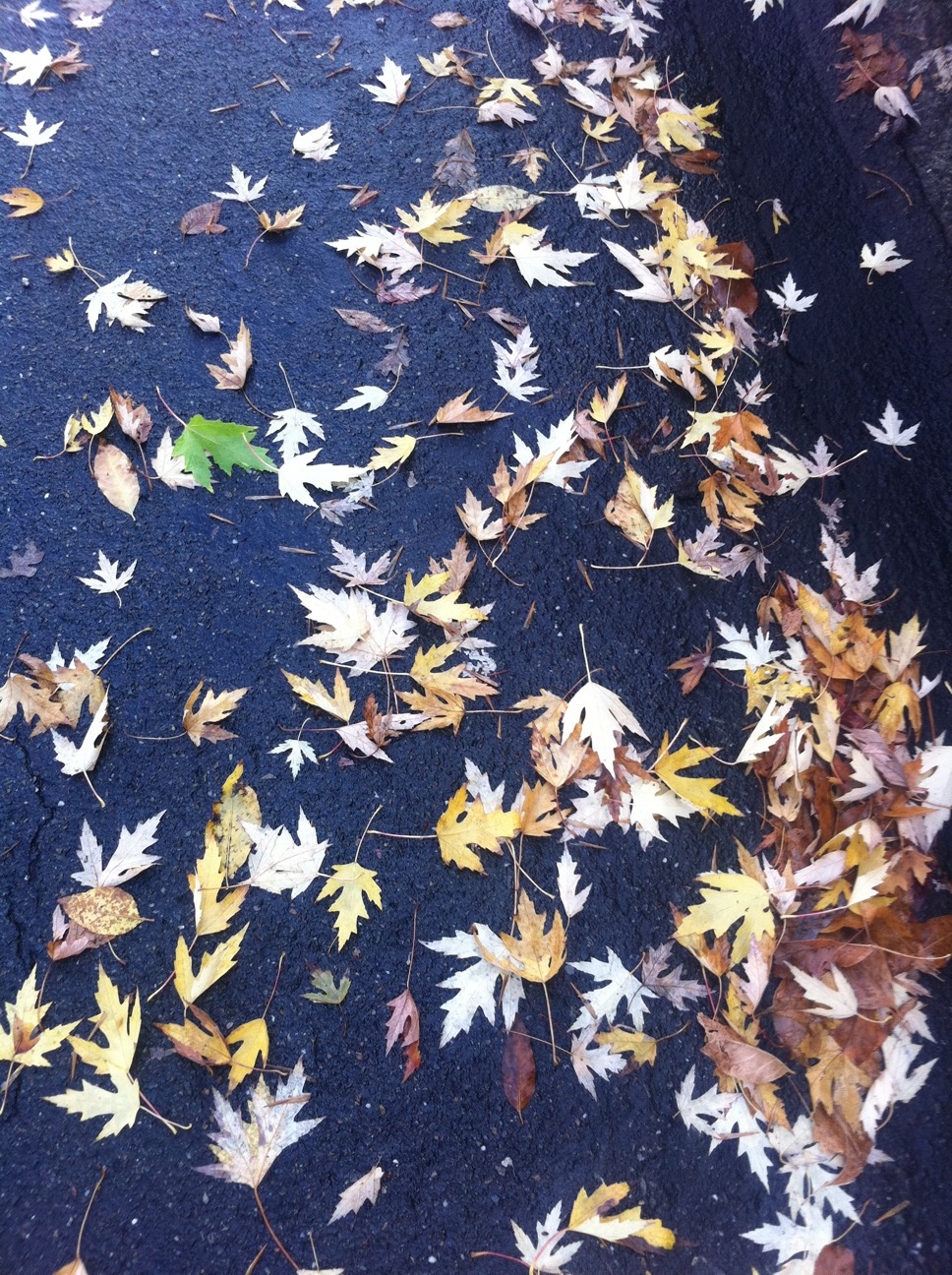 They're like fallen leaves, memories. They arrange themselves in nature's beautiful random order beyond our ability to perceive, like weather, like a life until you're looking back on it and suddenly see an organizational purpose. And are amazed into writing about it.
The thing is, who else wants to see it? Why is that mysterious, suddenly perceived arrangement important to anyone but you? That's the question a memoir essay or book must answer. Answering it doesn't guarantee publishability, but it does put you in the running.
So I wrote a memoir book: Rocket Lessons. So I got an agent who sent it around to all the big NY publishers. So it didn't get picked up. So she said, "Put it in the trunk and make it your second book." So I wrote another book -- not a memoir, this time fiction, though it's arguable that any memoir is fiction -- and it found an agent. Rinse, hopefully not repeat.
Thing is, I don't want to make my memoir my second book after all. I don't want to revisit it because -- drumroll for things I should have known before I started writing a book -- publishing a memoir is incredibly hard. Enter self-publishing and/or small press publishing. Which is almost the same thing, only with someone else's name on the cover page as a kind of bonafide.
Publishing a memoir is hard, but all the big publishers have had a hit-out-of-the-park with one. The Angela's Ashes, Glass Castle kind of hit. Will your memoir be "outta here!" famous? Without any idea of how such phenomena occur, I do know that you can build an author platform for your memoir by publishing excerpted essays and blogging, publishing related pieces of fiction and poetry, and by getting yourself interviewed on topics related to your memoir and life experience contained in it. Those all help persuade an agent and publisher to go with your arrangement of the fallen leaves, that there's something universal enough in it -- as in some way every story is a story we all can relate to -- enough to publish.
Some useful links about publishing memoirs:
Jane Friedman on truth in memoirs
What do top agents want in a memoir?
May 21, 2016
A new sculpture by Baroque genius Bernini
 It's almost like time travel exists! As it does in my new WIP, THE RENAISSANCE CLUB. We now have a new masterpiece by the inventor of the Baroque, seventeenth century artist Gianlorenzo Bernini (and one of my novel's main characters).
According to the New York Times' article, the Getty Museum just came upon one of the rarest of finds, a new work by Bernini, one that was thought long ago lost.
The minute you look at it, it's clear it's an authentic Bernini. And the provenance makes that positive. What I love is that it's an early Bernini, the beginning of his ground breaking work in portraiture. This avenue of his sculpting, marble portrait busts and the way he made them seem to live and breathe, figures as part of the plot of my yet-to-be published novel The Renaissance Club that has Bernini as a main character.
 I just hope the Getty keeps digging. Who knows what is down there, in that bottomless basement of art they must have, given their incredible amount of funding. Bernini lives! And apparently, is still working, folding time to suit himself, so he can surprise us with new work.
 UPDATE: THE RENAISSANCE CLUB, a magic realism novel of love, art, creativity, and time, is moving toward making an appearance and being available to you. Email me at rachel@dacushome.com and I'll put you on the update list.
May 17, 2016
Write another novel? At your peril
 Clearly writing this novel, THE RENAISSANCE CLUB, has wiped the floor with me. I haven't worked on my new poetry manuscript, thoughtfully blogged, wittily tweeted, or amusingly updated in ... let's just say furlongs of seasons. I'm trying to pick myself up off the floor of a rigid and focused writing routine that produced a 416-page, carefully revised manuscript over a period of years. I'm trying to remember the carefree writer who could take a whole morning to envisage the newest incarnation of a poem or muse on growing up seaside in southern California -- a blog just for the fun of it.
Instead, I have become this driven person chained to a book. Don't get me wrong, I love my book and miss working on it, as I now have turned it over to A Higher Power (by that I mean the publishing professionals). I find everything in my writing trunk half-done, partly forgotten, a bedraggled muse adjusting her crown of brambles and berries and wildflowers as she climbs out of the box glaring at me.
But I did review a book -- stay tuned for a link when it goes live -- and I've read a few. You could say I'm resting in the steam and settle after the train has arrived at a station. Glad to still have my fingers on a keyboard, making some kind of word music. And to have written this today.
Don't you feel like writers should get an all-expenses-paid summer by the sea, every summer? Yeah. This sea. Mediterranean. Portovenere, where I might partially set my next story.

April 30, 2016
Superheroes and Imaginary Giraffes
 Starting off with two of my recent fantasy/fairytale/science-fiction poems, I'm starting what will be a great summer run of poem publications. Gingerbread House has just published my poem "Transparency" about a superhero dead-drunk on dilithium crystals and impossible to manage. Sharad Haksar's “Superhero,” that accompanies the poem, is fantastic!
 Mockingheart Review, a new publication under the direction of Clare L. Martin, began the sequence with publishing my poems "Giraffes" about a mythical herd that inhabits my livingroom, along with "Pure" and "The Gods Among Us," also mystical/mythically inclined. Thanks to Clare for selecting these poems. They're among my newest poems and currently most favorite -- as the newest always are, often pointing the way to a new direction in writing, which I hope these will for me.
I have more work forthcoming in three more journals over the summer, and one more in the fall. I've been a lucky poet! Because as we poets and writers know, it's 99% luck, but you can't get a seat at the table if you don't first play the game of hard work and insane persistence.
Happy summer writing!
April 8, 2016
Novels take an awful lot of time to write
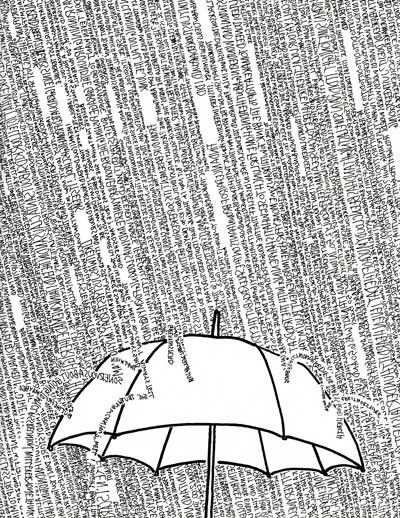 Long absence from blogging because ... a novel, a play, many grant proposals, a poetry manuscript, and I have words coming out of my ears, dangling over my head as I sleep, raining into my bedroom, puffing out of my puppy's nostrils. (Can you see that one? I do!)
Really, novels take too much time to write. I love reading them and writing them. I hope I've learned enough to write faster the next time. I've learned way more than I ever wanted to about story arcs and story structure, including such things as plot points, pinch points, story goals, stakes, consequences, foreshadowing -- and I had little idea when I waded into the book that there was such a science developed around this art form.
Now when I read or watch TV and movies I'm analyzing how they're handling story and character and backstory and setting. It's good to know the rules to break. I so look forward to getting back into poetry, where the rules are more familiar and breakable. I can hear them cracking along the lines where the chips appeared and then the pieces falling on the floor and breaking into smaller pieces. Those rules I know and love. These new ones, I'm tapping with tiny hammers to find the breaking seams.
Recent novels that interested me: Erica Bauermeister's The School of Essential Ingredients, Karen Essex's Leonardo's Swans, Elizabeth Kostova's The Swan Thieves, Christine Potter's Time Runs Away With Her.

March 4, 2016
Rain Dancing!
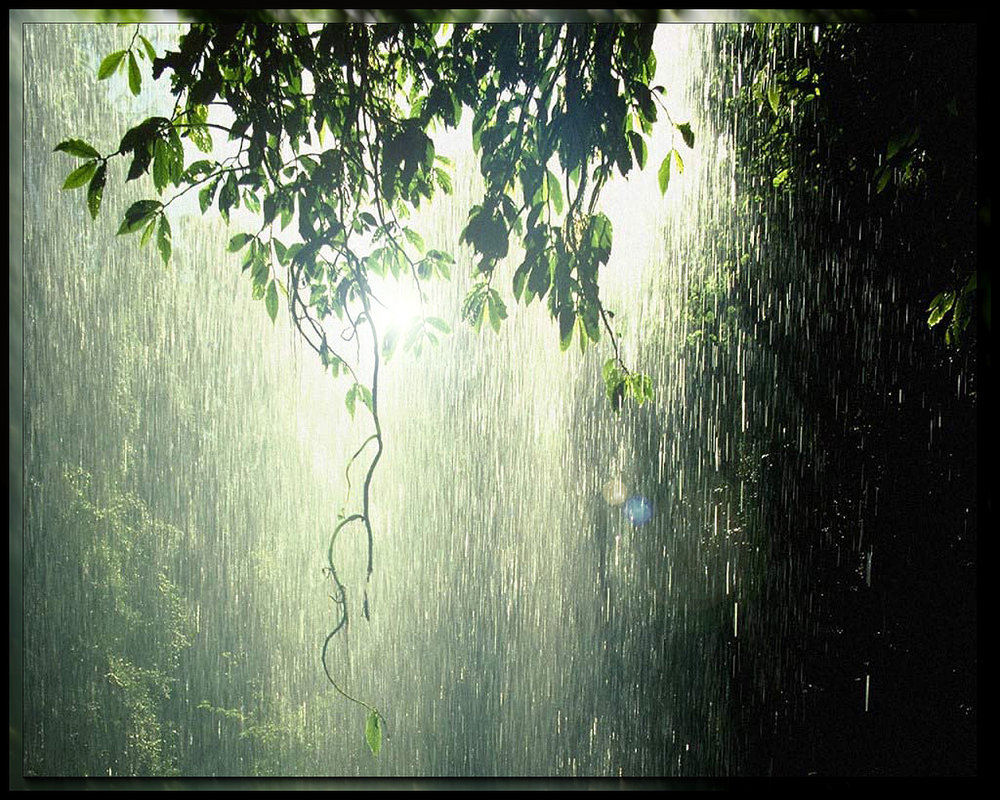 RAIN! In honor of El Nino's "moisture plume" that's predicted to sweep into droughty California this weekend and next week, I'm posting a couple of rain dance poems. One was based on an authentic rain dance I was taught in Hawai'i. We hired this teacher and he came with his drum to work work the four of us who were sharing a house on Kaua'i. He played and we danced on the lanai, summoning the gods of rain, and then it rained for three days straight! On and off, though, so our vacation wasn't spoiled. I have ever since been impressed by the idea of rain dancing. Thanks to the editors of Stirring magazine, where "Rain Hula" originally appeared:
Rain Hula at Anini Beach
He arrived on our moldy lanai,
swept-up hair bedecked with a hibiscus. An indeterminate pronoun
in an orange sarong, he kissed
us damply on both cheeks,in air, a double cross. Introduced himself as Pa’ula without looking us in the eyes.He demonstrated the kahiko, a history in dance of Hanalei Bay’s fifteen kinds of rain.
Pa’ula’s large, wide feet stamped down the spade-digging torrents of aka-ula, and his fingers petal-whisked hanini showers. Undulant brown biceps rippled up a sea spout and a chant rose from his proud throat,a belly-anchored cry to clouds.
But the eyes mourned as he broke down each leaf-soft move for our architect and teacher fingers.He laid mourning words at our white feetas they tangled on themselves and sweat sprayed. On the beach, palm fronds thrilled to his drum, but we woke only the neighbors with our stamping.
This one is from my most recent book, Gods of Water and Air (available in ebook or print on Amazon):
Drained
1.A contrapuntal drumming on skylight and roof, andante, vivace, allegro ---a run of notes up and up, rain’s finger exercises. Mesmeric hour, then bullet-hail. A thousand knocks on the door. Hello, hello? He knows I’m trying to get out, but pretends no one’s home. I’m inside the instrument, hammered between vibrating strings. All night the poles shift, mayhem gusts. After that, between us only hard rain for days,When I roll over to touch, he rolls away. Lightning’s swift split. Shivering for hours.
2. Trees bend sideways in the blast, seaweed in currents. The redwood snipped off by a bolt. The dog under the bed. The storm door is open, but it’s not the Doors of Paradise,filigreed with figurines like the doors of the Baptistry in Florence that day we browsed, careless of our savings. Today we’re baptized by a deluge, out of cash and luck, and despite umbrellas and cloaks. We endure cold-lipped neck kisses of rain dripping down our backsas we trudge to chilly coffeehouses. With Old Testament winds, January sculpts. When the chisel slips, a car is crushed by a tree. A house falls into the ocean. A car hydroplanes off a freeway, Like its occupant, I lie undiscovered for days.
3.Three weeks of storms, a wet juggernaut from the northwest met by slushy southerlies. Soil sludge, but gardeners with jet-packs still blow around the ruins of hedges, mad as the gods who hurl monsoon rains. Even computers and weathermen can’t get it right: Thou shalt or shalt not? I have been undone by the yammering, and lay my neck on this altar. I ready myself to join the sky, symphonically rushing down the drains.
4.Frankenstorm was what they called a computer model of a hurricane stalled in the middle of the Golden State. Weeks of wet, many feet of rain, new rivers and lakes where had been towns, a flood subsiding into giant puddles. They needed to decide about disaster drills, but canceled the meeting because of rain. We were haunted by the crackling airand the sky, like us, refused to relent.
February 11, 2016
Pirene's Fountain - my poems in Vol. 8 Issue 16
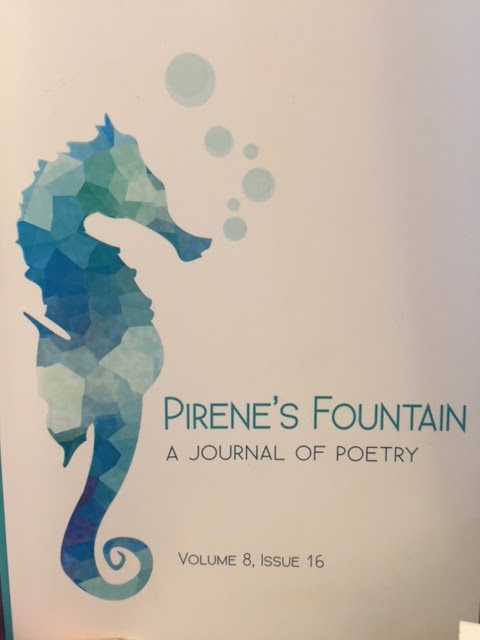 I've had poetry in a lot of journals over many years, but I've rarely been so pleased to have work alongside such a great group of poets and writers. I was talking about publishers and poetry presses with a friend this morning and we agreed that even if it's on a paper bag, it's the quality of work that outlasts any reputation, prominence, or publicity a publisher might be able to boast of or gain. Pirene's Fountain magazine is one publication I cherish. My poems "False Star" and "The Camel's Teeth," both from my WIP Arabesque, appear in this issue. I've had poems in several other issues too, many from this developing collection. I'm so proud that they have found their way to this fine journal, among these fine poems. Celebrating by reading and rereading, such a pleasure! I don't often feel so proud of having work published. The company indeed matters.
January 17, 2016
My Wishing Star
 My poem, "My Wishing Star on a Long Ride," which appeared in Eclectica's July/August 2015 issue, will soon appear in one of their four forthcoming 20th anniversary anthologies! It's nice to have a poem make several appearances, and not just one or two. Eclectica is running a Kickstarter campaign to sponsor the anthology, so if you feel inclined to make a contribution, follow the link -- every donation helps!
 Here's the poem -- it makes me long for summer. Summer and horses. Stars and long stretches of mountain time and that pure, thin air.
My Wishing Star on a Long Ride
That last summer we sat
in creaking saddles on day trips
in the High Sierra, inhaling petrichor
and lichened bedrock.
Nudged cattle through tall grass.
I had all I ever wanted, at thirteen:
my own horse and a long August.
Above the cabin, stars buzzing
like mosquitoes. I knew the seasons
to come wouldn't have horses and those stars.
This morning above my town trees gallop
in the wind, flexing thin branches,
gold leaves whipping around
themselves like a horse
that bucks when backing up.
I have hooked my star
to dawn's grapefruit moon.
Boughs creak like saddles
in the wind. My wishing star, gone
on a long ride, vanished in a meteor shower.
The news said a chance of more
showers later. That made me buck
and back up at a sudden call
from lost mountains. At sixty-five,
I spun around, pranced downhill
in a last sweet lope to the valley
of lost things, where a new trail starts
and the underground river cuts
deeper, flashing its dark lights.
January 2, 2016
It's Awful Being a Writer, It's Wonderful Being a Writer
 To help us all tilt our pens forward and launch them into a vibrant and productive 2016, I thought I'd share some bad news and some good news about writing. First the bad news. Kristen Lamb's blog entry today sums up the bad news about publishing, for the writer. Never mind if book sales are up over Kindle sales, and don't bother with the debate about Amazon vs. Indie bookstores. You're almost never going to make a living as a writer, she tells us -- as do countless other books and articles -- unless perhaps you self-publish and hit the sweet spot of a category or -- rare as a UFO sighting -- general audience. Know your enemy, and your enemy is the overwhelm of books now out for sale online and in stores.
Here's the good news. Writers don't care. Well, I'll qualify that. Most of us don't totally care. Especially poets. We eat poverty for breakfast and wash it down with a large helping of being the most misunderstood and least read of writers. We write because we have to and love to. Readers are a bonus, a necessary one, but if you're stringing words together because you hope to make a fortune, try selling cars instead. Or houses. I write because I can't stop. I haven't stopped since I was eleven. Writing is my form of meditation, being here now, self-discovery, discovery of the world, and -- along with reading -- my greatest pleasure. If I get a readable product out of writing, and if that product somehow sells -- that's gravy. I have a day job. And I don't want my greatest pleasure to turn into a day job.
Other great posts along the lines of good-bad-essential news for writers: Anything by Jane Friedman. Starting with this article on how to self-publish a book. And focus on this sentence: "An author who is primed to succeed at self-publishing has an entrepreneurial spirit and is comfortable being online." She is also a freelance editor.
My big recommendation: read well and hire a book editor. Even if you're putting together a poetry book. Yes, pay for someone to tell you how everything you wrote has to change. I highly recommend The Book Doctors, Arielle Eckstut and David Henry Sterry, without whom my novel-in-progress, The Renaissance Club, would be stuck on the starting square.