Rachel Dacus's Blog, page 33
May 21, 2015
Zen and the Art of Waiting for an Agent (or Editor)
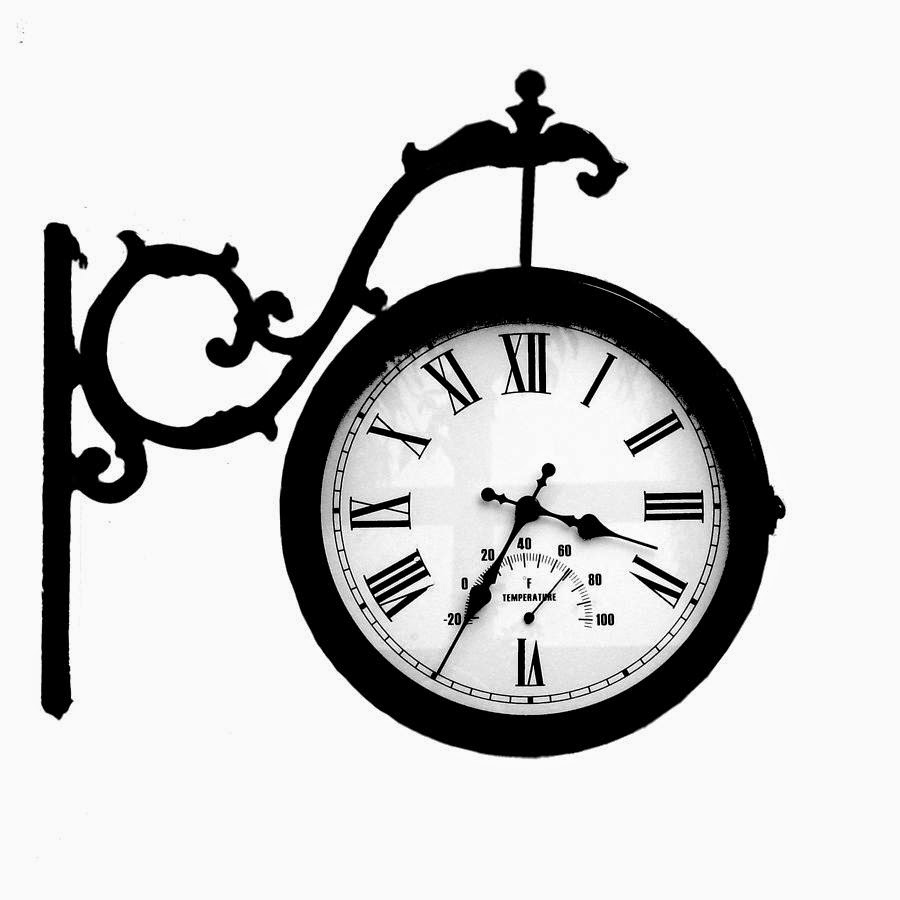 Einstein was right: time isn't real. I know because I've fallen into the black hole between finishing my novel,
The Renaissance Club
, and waiting for an agent to offer to represent it. A seemingly endless span in which "Replies if interested" is the new "No, thanks."It's been two months and many queries. I'm growing anxious, which is not a help to a writer.
Einstein was right: time isn't real. I know because I've fallen into the black hole between finishing my novel,
The Renaissance Club
, and waiting for an agent to offer to represent it. A seemingly endless span in which "Replies if interested" is the new "No, thanks."It's been two months and many queries. I'm growing anxious, which is not a help to a writer. So what to do while waiting so impatiently? I've read many articles on this topic. Google it. But I have just one suggestions: Water a plant. Consider as you thoroughly and slowly wet the dry soil and wait for the water to soak in how long it took the plant to develop the buds that are now showing in late May, promising to open in bright splendor as soon as they have finished developing their full vigor. Consider how like a budding, hardy plant is your book. If you're like me, you've spent many years (six in my case) working on it. If you're like me, that included many revisions, one major plot game-change, and endless copy-editing passes. Consider how like pruning and feeding and watering every day for months that process is. And then tell yourself that this is only one day in the life of your book. One day of not hearing, not seeing a bud open yet, and that as surely as the sun will shine, you will get published.
Why do I say that I will get published? Because of my second suggestion: make a plan. The word "plant" contains the word "plan." Like plants, plans tend to grow stronger, bigger, and more durable, especially if committed to paper. For my book as soon as I hit the Wall of Impatience, I turned to doing something more fruitful. I made The Plan to Publish The Renaissance Club. It consists of tiered options that range from finding literary representation and going with a top publisher to self-publishing, preferably in a collective or hybrid publishing house. But the endpoint of The Plan is Publication.
I am assured of my goal. The waiting has become tolerable, the way I can wait for my twelve rosebushes and five phalaeopsis orchids to sprout buds and eventually give me glorious flowers. It's a certainty. That makes waiting easier. One other way to make it easier: read all about the industry and how to get into and survive in it. Here are a few interesting articles.
Why Self-Publishing Doesn't Work and How It Can
How to Write or Not Write Plot
What Does a Good Development Editor Do?
Get Your Query Critiqued
How To Title Your Book - by Agent Rachelle Gardner
Social Metrics That Matter
And remember -- no matter what anyone tells you -- your pen is golden.


May 19, 2015
Time's Mysterious Flow: Poetry, Fiction, and Hummingbirds.
 When you spend most of your life in midair, how do you travel through time differently than someone does when spending your time seated among a throng of thoughts?
 Most of my days and nights are spent sitting and thinking. It must look like an odd life to a hummingbird. Like a sloth of some upright kind. But I think time moves faster for me than the hummingbird, who dives to the feeder and pokes a tongue into the sugar water while I pause, spinning in his blur of wings, both of us suspended in differing flows of time.
His life is short. Mine seems endless. Some of my mornings are arranged by a muse who is a conductor of time and coincidence. Who makes me turn my head at the moment the hummingbird swoops into view.
I'm thinking today of my brother's surgery, which is going on right now. I'm also thinking of how each petal fell from the bouquets that filled the house a week ago for my birthday. I felt each one's soft thud on the table. I'm still feathered with good wishes, but the whir of anxiety rises. Time keeps us frozen in an illusion of separation, but only if we think of it as a forward progression. It may not be.
That's why time-travel interests me, and why I chose to set the story in my novel The Renaissance Club in sudden shifts in time, in the attendant meetings and connections that are possible if time flows in all directions at once.
We often meet in the etheric space of memory, those who are present to me and those who aren't. Einstein's theory says time is an illusion. So do the Vedas and Buddhists. Poets, of course, already know about time's mysteriously directionless flow. We hover in our memories and sip the nectar of possibilities. We are always hovering. In my book, the main character must choose a century to remain static in. I, the author, never have to choose because there's always another book, poem, or way of looking at my own story.
Time's Mysterious Flow, Poetry, and Hummingbirds.
When you spend most of your life in midair, how does time and travel through it differ from the way time falls, softly, quieting the air and stilling itself, when you're seated among your throng of thoughts?Most of my days and nights are spent inside that stilled throng. But sometimes time stops in its track. I look over at the bird feeder and at that precise moment a hummingbird dives over to poke a tongue into the sugar water while I watch the spinning blur of wings and am suspended.
Some mornings seem arranged by a muse who is a conductor of time, or coincidence, of meetings, and of ideas as evanescent as swiftly whirling wings. I'm thinking today of my brother's surgery later, of how long a hummingbird lives, and of the fall of each petal from the bouquets that filled the house a week ago, on my birthday. I'm feeling flurried with all the good wishes, and thinking of how time keeps us in the illusion of separateness. But only when we think of time as a forward progression. That's why time-travel interests me, and why I chose to set my novel's story in sudden shifts of time, with its attendant meetings and rearrangements.
We meet in the etheric space of memory, if we really think about time, and that destroys the idea of forward progression. Of course, Einstein's theory says time is an illusion. So do the Vedas and Buddhists. Poets, of course, already know all about time's mysterious flow. We hover in it, sipping the nectar of future possibilities while also drinking long drafts of the past and savoring its revelations. We are always putting things together while hovering midair on whirling wings.
And now the clock is ticking its illusion and I must get to work, raising money for some good causes.
May 18, 2015
Time-Travel Novels -- Who Hasn't Rocketed Back?
 Because I've written a mainstream (not fantasy) novel involving time travel, I'm reading as many of them as I can find. Lo and behold, besides the obvious science fiction writers, it turns out that many literary and mainstream authors also have used the device of traveling through time, including: Marge Piercy, Stephen King, Erica Jong, Michael Crichton, Kurt Vonnegut, Anya Seton, Alan Lightman, and Chuck Palahniuk.
 Time travel stories come in all shapes and sizes, from the predictable scifi to literary novels like The Time Traveller's Wife. Goodreads lists more than 1,000 under "Best Time Travel Fiction." Amazon has one for Time-Travel-Novels-Worth-Reading. They can be SciFi, literary, fantasy, magical realism, or unclassifiable. Kirkus Review has an intriguing list, Recent Novels that Use Time Travel to Great Effect. The Huffington Post's Top 10 Time-Travel Books is intriguing. And of course, the granddaddy of all contemporary time-travel novels, Diana Gabaldon's Outlander series, which to me reads more like historical fiction that was simply kicked off by a time trip and sustained by the tension of wondering if the main character can return to her own time.
And now I'm irrelevantly wondering why the hyphen in time-travel. After all, Time is a place to travel through like any other. You don't write European-travel guides, or California-travel books. Google makes hyphens irrelevant too, I noticed.
May 6, 2015
Time-traveling in Italy
 While researching time-travel novels as I work on my novel, The Renaissance Club, I saw that Google can grab plenty of articles that answer the question, "When is the best time to travel to Italy?" But none answered, "The Seventeenth Century." It seems Rick Steeves and Frommer's can't propel me back in time to the Renaissance and Baroque to watch splendors of art and architecture arise from the workshops of Gianlorenzo Bernini and his competitors. That's where I set my lyrical adventure and love story. With plenty of Italy atmosphere, and today I'm coming up with some finishing touches (fine-tuning of language). Thinking about the next time-travel adventure story, involving colonial America, and George St. James, the time-wielding travel guide. And still thinking of this guy.
  Cavaliere Gianlorenzo Bernini
May 2, 2015
Multimedia poem - "Chopin Reigns"
 In my nostalgia for the rain that has forsaken California this year, I went back to a marvelous multimedia remix by the inventive poet/publisher Nic Sebastian and talented visual artist Kimm Kiriako. Here's a video version of my poem "Chopin Reigns", in a fruitful remix that I sincerely hope will serve as a rain dance to propitiate Indra and bring us the wet stuff soon.
Video poetry is in its infancy, but what a glorious infancy! Check out more from the creative mind and voice of Nic Sebastian and Poetry Storehouse.
April 24, 2015
On Poetry Jeans & Noticing Something Closely
 Here are some fresh ideas for National Poetry Month at Tweetspeak, the Best in Poetry & Poetic things. Including photographing your poet jeans in a creative way. I think if I do that, I will have to write about it. Also from Tweetspeak, some unusual poem prompts.
 How has your poetry month been going? Mine is rich with poetry everywhere I turn -- for reading, listening, and writing. I didn't go for the poem-a-day exercise, but rather the read-a-poem-a-day direction. Also I have revised poems every week, if not every day, and in batches. I pick out poems from a manuscript that speak to each other and see where they want to go next, keeping all three or four open as I work on each one, going back and forth, and if there seem to be connections strengthening them.
Over at Blogalicious, Diane Lockward is featuring a poetry book a day, complete with blurbs and sample poems and links to poems from the book online. What a gracious way to celebrate poetry month! I liked especially the sample poems from Adele Kenny's book A Light, a Thirst, or Nothing At All.
Read a poem today! Buy a book! Or just notice something very closely. To me, that act is poetry.
April 8, 2015
Reading Fiction Breeds Compassion -- and I Hope Writing It Does Too
 Scientific studies have confirmed what avid readers know: reading novels makes you a more warm-hearted person, more likely to understand your fellow human beings, and quicker to empathize with them. And not just ONE study, but several scientific studies, have identified activity in the brain that leads to this result. And not only fiction, but specifically literary fiction, was determined to have this salubrious effect on the human heart-mind.
 As a reader of novels, and now a writer of one to hopefully come out in 2015-16, I feel better about devoting an embarrassingly immense amount of time to worlds that are described with a certain subtly disparaging tone as "fictional." But as psychologists at the New School for Social Research in New York say, "Fiction is not just a simulator of a social experience, it is a social experience."So those "pretend" worlds I lived in as a child, and still inhabit as an adult writer -- they're good for my "real world" relationships. Which include my relationships on social media. It's as real as you need to get, because whatever is in your mind is your reality.
 And now, back to working on my novel, The Renaissance Club. I hope that by transporting you back to 17th century Renaissance Italy and introducing you to a time-traveling young art historian who gets mixed up about whether she lives in the "then" or "now," the story will support your own inner journey of understanding human nature, love, and time.
April 5, 2015
Celebrating Poetry Month - You can get my book at a discount
 I'm celebrating the month in yet another way -- giving a hefty discount on my recent book, Gods of Water and Air. From now through April 30, you can get a copy directly from me for only $11, including shipping. Email me if you'd like one: rachel@dacushome.com
Poet and essayist Molly Fisk said : “In Gods of Water and Air, Rachel Dacus turns a painterly eye onto both the nooks and crannies of our world — ‘hints of rose madder in the cerulean,’ a palm tree’s
‘rigid, rattling arguments’ — and ‘the blue immensity’ that holds us all.
Thanks to editor Angelique Jamail, my poem "Prayers for E...
 Thanks to editor Angelique Jamail, my poem "Prayers for Everywhere" appears on her site Sappho's Torque today. I'm delighted that it appears on the weekend of Passover and Easter, as I think prayers should be borderless and expansive, helpful to all, everywhere. Which is where the poem started, actually. The poem is from my book
Gods of Water and Air
(reviewed on The Pedestal).
Thanks to editor Angelique Jamail, my poem "Prayers for Everywhere" appears on her site Sappho's Torque today. I'm delighted that it appears on the weekend of Passover and Easter, as I think prayers should be borderless and expansive, helpful to all, everywhere. Which is where the poem started, actually. The poem is from my book
Gods of Water and Air
(reviewed on The Pedestal).Happy Easter, happy April, and have a poetic day! Buy or pick some roses if you can.