
David Allen Sibley's Blog, page 8
February 20, 2014
Quiz on Belizean Birds and Greater Coverts
These are some of my digiscoped photos from a recent trip to Belize, all taken at the fantastic Black Rock Lodge.
On each photo body parts are labeled with letters, and your challenge is to identify the greater secondary coverts on each bird.
Good luck!
Belize Bird Topography
Please wait while the activity loads. If this activity does not load, try refreshing your browser. Also, this page requires javascript. Please visit using a browser with javascript enabled.
If loading fails, click here to try again
Congratulations - you have completed Belize Bird Topography.
You scored %%SCORE%% out of %%TOTAL%%.
Your performance has been rated as %%RATING%%
Your answers are highlighted below.
Question 1
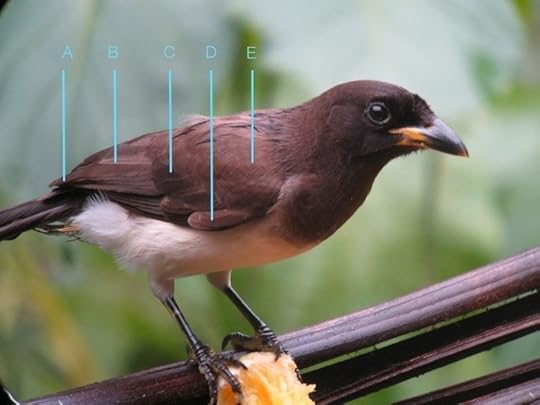
Brown JayAABBCCDDEEQuestion 2
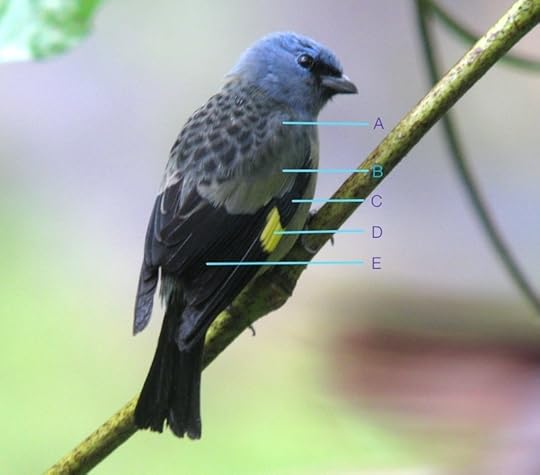
Yellow-winged TanagerAABBCCDDEEQuestion 3
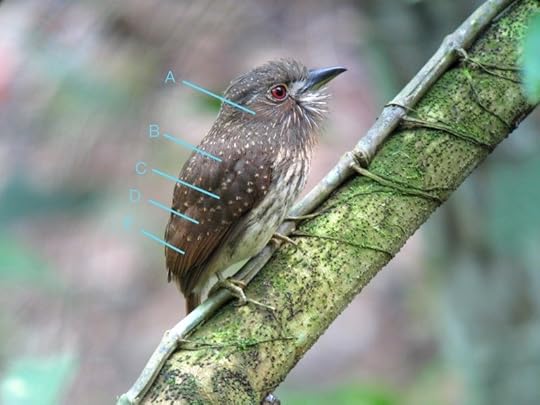
White-whiskered PuffbirdAABBCCDDEEQuestion 4
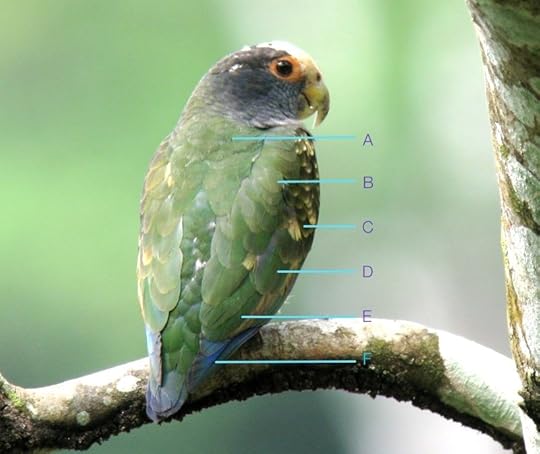
White-crowned ParrotAABBCCDDEEFFQuestion 5
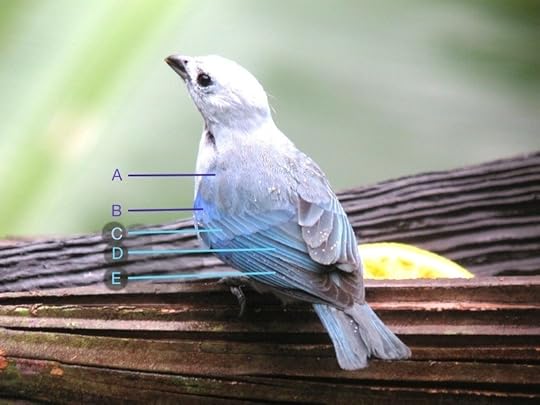
Blue-gray TanagerAABBCCDDEE
Once you are finished, click the button below. Any items you have not completed will be marked incorrect.
Get Results
There are 5 questions to complete.
You have completed
questions
question
Your score is
Correct
Wrong
Partial-Credit
You have not finished your quiz. If you leave this page, your progress will be lost.
Correct Answer
You Selected
Not Attempted
Final Score on Quiz
Attempted Questions Correct
Attempted Questions Wrong
Questions Not Attempted
Total Questions on Quiz
Question Details
Results
Date
Score
Hint
Time allowed
minutes
seconds
Time used
Answer Choice(s) Selected
Question Text
All doneNeed more practice!Keep trying!Not bad!Good work!Perfect!


January 13, 2014
Snowy Owl print to benefit research
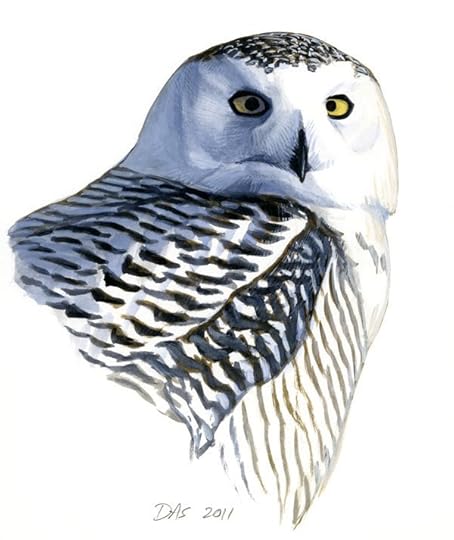
I have made prints of this gouache painting that I did in 2011 for the cover of the Journal of Raptor Research to highlight a paper on Snowy Owls (more info about my gouache technique here).
A portion of the sale of each print will be donated to help fund research, such as the work of Project SNOWstorm, which seeks to understand more about the invasion of Snowy Owls that is happening right now (January 2014) in eastern North America. And of course you can also donate directly to the project.
Price: $45
When you click the “add to cart” button your “cart” will appear at the bottom of this page.
This 9 X 11″ limited edition giclee print is made with archival ink and paper. The edition is limited to 300 prints (with one Artist’s proof). Each print is signed and numbered, and comes with a certificate of authenticity.
Payment is through PayPal. If you are not already a PayPal member you can still pay with a credit card through the PayPal portal, which is easy and secure.
A shipping fee of $7 will be added per shipment (not per print), and sales tax will be added for shipments to Massachusetts addresses.
Shipping is via USPS Priority Mail; please allow up to 3 weeks for packaging and shipping (contact me if you need faster delivery).
Other Prints for Sale
Northern Saw-whet Owl
Gray Hawk from “The Wind Masters”
And more…
Snowy Owl print to benefit Project SNOWstorm
I have made prints of this gouache painting that I did in 2011 for the cover of the Journal of Raptor Research to highlight a paper on Snowy Owls (more info about my gouache technique here).
Ten dollars from the sale of each print will be donated to help fund the work of Project SNOWstorm, which seeks to understand more about the invasion of Snowy Owls that is happening right now (January 2014) in eastern North America. And of course you can also donate directly to the project.
Price: $45
When you click the “add to cart” button your “cart” will appear at the bottom of this page.
This 9 X 11″ limited edition giclee print is made with archival ink and paper. The edition is limited to 300 prints (with one Artist’s proof). Each print is signed and numbered, and comes with a certificate of authenticity.
Payment is through PayPal. If you are not already a PayPal member you can still pay with a credit card through the PayPal portal, which is easy and secure.
A shipping fee of $7 will be added per shipment (not per print), and sales tax will be added for shipments to Massachusetts addresses.
Shipping is via USPS Priority Mail; please allow 1-2 weeks for packaging and shipping.
The Second edition is in-hand
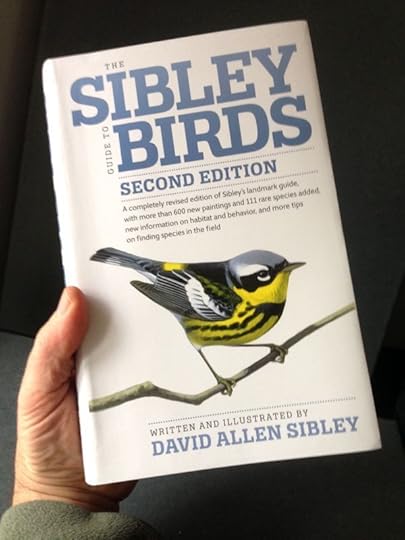
The completely revised Sibley Guide to Birds, Second Edition, will be on sale in a matter of weeks – March 11, 2014. You can pre-order the second edition at your local independent bookstore or at Amazon.com or find other online sellers at Random House.
Birdwatching interviewed me about the revision, which you can read along with a few sample pages from the new book.
Stay tuned for more news and events this spring.
December 18, 2013
Book news and gift ideas
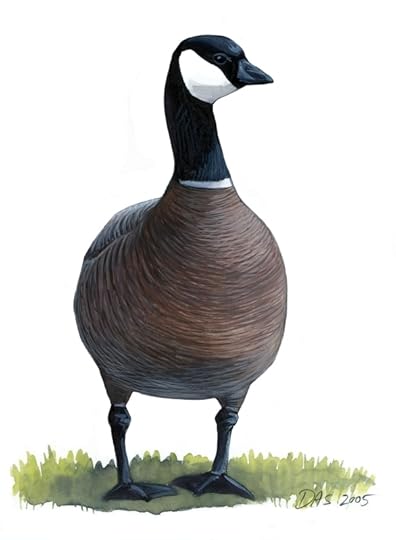 If you’re looking for a one-of-a-kind gift for someone on your list, there are still a couple of days left to order a piece of my original art and have it delivered before Christmas. See the selection available here.
And in case you haven’t heard, the completely revised Sibley Guide to Birds, Second Edition, will be on sale in a few months – March 11, 2014. You can still buy the first edition, or you can pre-order the second edition at Amazon.com or at your local independent bookstore.
Birdwatching interviewed me about the revision, which you can read along with a few sample pages from the new book.
It’s been a very busy and productive fall here at Sibley Guides. The coming year should be the same, and I have a lot of ideas for this blog starting in January – stay tuned.

October 7, 2013
Hummingbird Art Auction to benefit Paton’s Birder Haven
Click on the Auction Link to the right.
Like so many other birders, I’ve had the great pleasure of sitting and birding in the Paton’s backyard sanctuary in Patagonia, Arizona, where Violet-crowned Hummingbird is one of the specialties. I did this gouache painting of a Violet-crowned Hummingbird remembering my visits there, and 100% of the proceeds from the sale of this painting will be donated to help permanently preserve the property as a bird sanctuary and education center.
I’m donating a painting because I support this cause, and you can make a donation even if you’re not buying the painting. Please be generous. You can read more about the project, and make donations, at this link http://www.abcbirds.org/paton/

About the artwork
This is an original painting created with gouache on bristol board. These are archival materials and with proper care the painting should remain essentially unchanged for a hundred years or more.
The original is 8.5″ wide by 10″ tall.
Info about auctions in general
This auction uses “proxy” bidding or automatic bidding, the same method used on eBay. The system allows you, as a bidder, to specify a hypothetical maximum price that you would be willing to pay, and it will automatically respond to other bids for you up to your maximum. If a previous bidder has entered a maximum bid, then YOUR bid will trigger the system to place an automatic bid in THEIR name that is slightly higher than yours.
If you want to know more you can read the explanation on eBay here. And if you have any questions or concerns please contact me.
Payment
The winner of the auction will receive an email notification, with a link to a Paypal page to make payment. A Paypal account is not required to use the service, and all major credit cards are accepted. The winning bidder can pay for the auction by clicking on the Paypal link in that email. I will transfer the full payment in your name to the Paton’s Birder Haven fundraising campaign.
If you would like to make other arrangements for payment, or have other questions, you can contact me.
Shipping
The cost of shipping to the continental US via USPS ground is included in the sale price. Overnight delivery or shipping to other countries is available at additional cost. The winning bidder can contact me for details and pay separately for these services if needed.
Satisfaction Guarantee
As with all of my artwork, if you feel the piece you receive is unsatisfactory for any reason, just contact me and return it in its original condition for a full refund.
August 20, 2013
Peter Pyle on Sage Sparrows
The most significant change for North American birders in the 2013 AOU Checklist supplement is the split of Sage Sparrow into two species: Sagebrush Sparrow and Bell’s Sparrow. In this arrangement Bell’s Sparrow includes the distinctively dark coastal California subspecies belli, as well as the much less distinctive interior California subspecies canescens. Sagebrush Sparrow is monotypic (no named subspecies) and breeds throughout the Great Basin region.
The new challenge is to distinguish Sagebrush Sparrow from the interior subspecies of Bell’s Sparrow, and Peter Pyle has put together a preliminary guide to these species. The simplest summary is that Sagebrush Sparrow has stronger streaks on the back and a weaker lateral throat stripe, but the differences are small and affected by wear. You can download the pdf here:
pdf – On separating Sagebrush and Bells Sparrow
Feel free to leave comments here, including links to other resources that might help sort out this ID problem.
A blog post by Lauren Harter from Feb 2013 briefly discusses the status in the Lower Colorado River Valley, where both species winter, with a photo of an apparent canescens Bell’s Sparrow.
(A summary of all the new AOU changes is at the ABA blog)
May 22, 2013
Another odd Snowy Egret, or a hybrid?
Recently on Cape Cod, Massachusetts, Mary Keleher noticed an egret with two long head plumes, and took a couple of photos. This bird matches well with the ones I discussed in 2011 in a previous blog post
Little Egrets have been showing up in the northeast regularly enough for the last couple of decades that one or more could have paired with a Snowy Egret and raised young, thus hybrids are plausible. In my earlier blog post I mention similar “long-plumed” Snowy Egrets from Texas and Baja California, where Little Egrets or hybrids are unlikely, and maybe the concentration of such birds in New England is simply a matter of birders paying close attention to plumes there.
But I still have to ask the question: Can we be sure this is not a hybrid, and how would we know? Hopefully this one will stick around for more detailed study and some of the questions can be resolved.
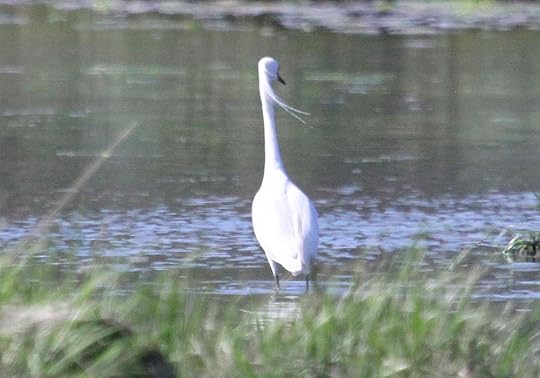
Unusual egret at Cockle Cove in Chatham, MA, 16 May 2013. Photo copyright Mary Keleher, used by permission. Clicking the photo links to the original on Flickr.
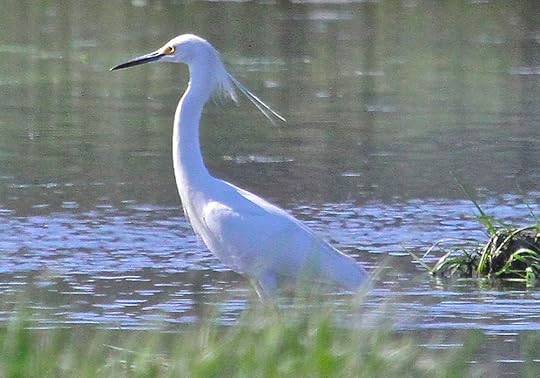
Unusual egret at Cockle Cove in Chatham, MA, 16 May 2013. Photo copyright Mary Keleher, used by permission. Clicking the photo links to the original on Flickr.
Thanks to Mary Keleher for noticing the bird and allowing the use of her photos here.
April 12, 2013
Flycatcher identification by the calendar
Here are some eBird maps showing all records for the month of April for several species of small flycatchers in eastern North America. A glance at these maps will show which species are possible in your area in the next few weeks, and this greatly simplifies flycatcher identification. For most of the east, through most of April, small flycatcher identification can be summed up in one short phrase – ”It’s a phoebe” (see Eastern Phoebe map at the end of this post below).
Anything is possible, of course, and spring migration is getting earlier each year, but if you think you have found, for example, an Alder Flycatcher in Pennsylvania in April, you’ll need some photo or audio documentation to verify it.

Alder Flycatcher records in the month of April – very few!

Yellow-bellied Flycatcher records in the month of April – very few!

Willow Flycatcher records in April. Only a handful of records scattered north and east of Texas. Assuming that these are correctly identified, the fact remains that any Willow Flycatcher in those areas in April is an extreme rarity.

Least Flycatcher records in April. The second-earliest Empidonax (after Acadian), and getting farther north by the end of April. This map was made on April 10th, the orange markers indicate records in the current year (i.e. the first ten days of April), blue markers show records from past years. Virtually all of the blue markers shown represent records from late April.

Acadian Flycatcher records in the month of April – this species arrives on its southern breeding grounds in mid- to late-April, and is generally the earliest Empidonax.

Eastern Wood-Pewee records for the month of April, showing as purple rectangles because there are over 2000 total records in view. Note that there are very few records north of about Missouri, southern Ohio, and Maryland. North of there any April reports of this species should be very carefully identified.

Eastern Phoebe records in April. This species is the earliest flycatcher by far. Many winter in the southern US, and spring migrants arrive as far north as New England during March, with a big influx there in early April. This map represents a nearly fully-occupied breeding range in April.
April 9, 2013
The white eyelid of American Dipper
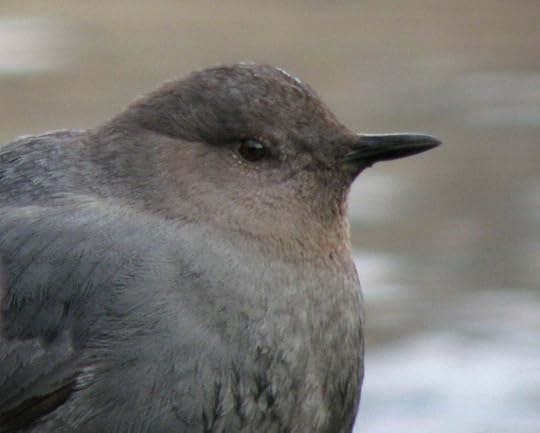
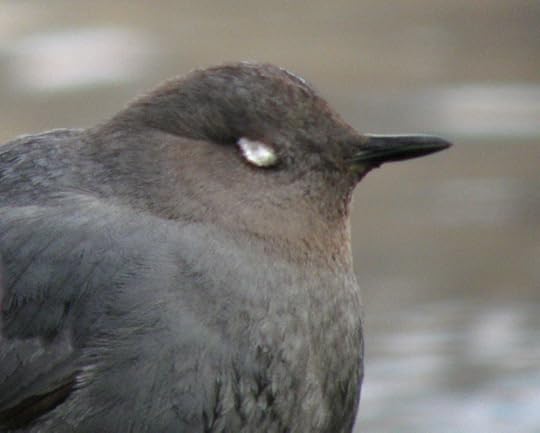
American Dipper showing off its white eyelid. Photographed near Cody, WY, March 2013, by David Sibley.
It’s one of the first things people notice when they get a good look at a Dipper – the eyelid flashes white when it blinks! This is so different from any other bird that it begs for an explanation. Understandably, many people assume that the flashing white eyelid must have something to do with the dipper’s unusual underwater habits, related to helping them see underwater, which leads to the common misconception that the white flash is a nictitating membrane.
All birds have a nictitating membrane, a translucent whitish/bluish “third eyelid” that flicks across the surface of the eye from front to back to protect it while still allowing some vision (more info on Wikipedia).
But the dipper’s flash is bright white, and travels from top to bottom and back up (and if you can examine it very closely you’ll see that it’s covered with tiny white feathers). It is the eyelid.
Because the eyelid is white, we notice every time a dipper blinks. They don’t blink a lot more than other birds, it’s just that most other birds have dark grayish eyelids without feathers, and blink more quickly, so their blinking is barely noticeable.
The next question is… Why? Why do dippers have white eyelids and then make a big show of blinking slowly? Nobody knows.
One idea that’s been proposed is that it’s a useful way of communicating with other dippers in the very noisy streamside environment, but that’s just a general idea about visual communication and doesn’t get any closer to explaining what dippers are trying to say with their eyelids. Even the authoritative BNA account by Willson and Kingery offers no explanation.
Maybe the dippers we see – blinking as they pop in and out of the water – are just blinking, and the white eyelid has some other specialized function at another time in their life. It’s a basic question about a relatively common and easy-to-see bird, and it could be answered by just observing and getting to know some dippers. And that seems like it would be a pretty nice way to spend a few months.
References
Willson, Mary F. and Hugh E. Kingery. 2011. American Dipper (Cinclus mexicanus), The Birds of North America Online (A. Poole, Ed.). Ithaca: Cornell Lab of Ornithology; Retrieved from the Birds of North America Online: [subscription required] http://bna.birds.cornell.edu/bna/species/229
David Allen Sibley's Blog

- David Allen Sibley's profile
- 151 followers

