Conor Byrne's Blog, page 3
December 5, 2016
The Death of Francois II of France
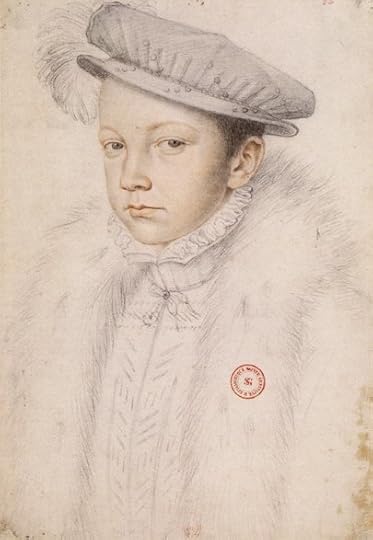
On 5 December 1560, King Francois II of France died at the age of sixteen years old in Orleans. His reign had lasted merely sixteen months, having succeeded his father, Henri II, on 10 July 1559. Francois' health had deteriorated rapidly in the autumn and early winter of 1560. He suffered syncope and seems to have died from an ear condition, although mastoiditis, meningitis and otitis have also been suggested. Inevitably, there were rumours that the king had been poisoned, but these appear to have been unsubstantiated.
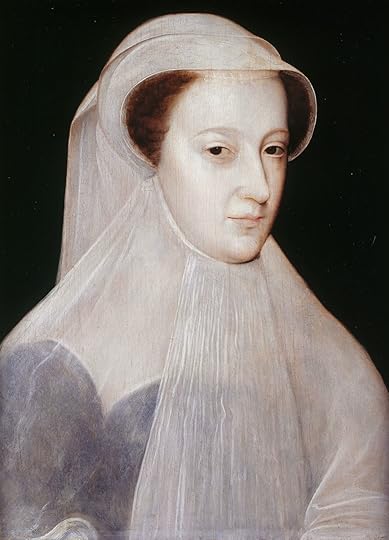 Above: Mary Queen of Scots was left a widow by the death of her husband, Francois II.
Francois' premature death left his wife Mary Queen of Scots a widow. The former queen of France soon learned that there was no place left for her in the kingdom of her husband's family, and departed for Scotland in August 1561. She survived her first husband by twenty-six years, dying on the scaffold at Fotheringhay Castle in 1587. The teenaged couple had no children together, which meant that Francois was succeeded by his ten-year-old brother, Charles, who became known as Charles IX. The new king's reign was marked by religious turmoil, including the infamous St. Bartholomew's Day Massacre in 1572, which witnessed the slaughter of thousands of French Huguenots.
Only weeks after Francois' death, his mother Catherine de Medici, Queen Dowager of France, was appointed regent - or governor - for her young son Charles during his minority. Shortly after this decision, Catherine wrote to her daughter Elisabeth, queen of Spain: 'My principal aim is to have the honour of God before my eyes in all things and to preserve my authority, not for myself, but for the conservation of this kingdom and for the good of all your brothers.'
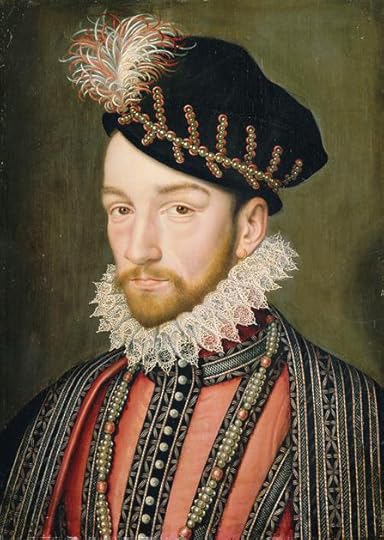
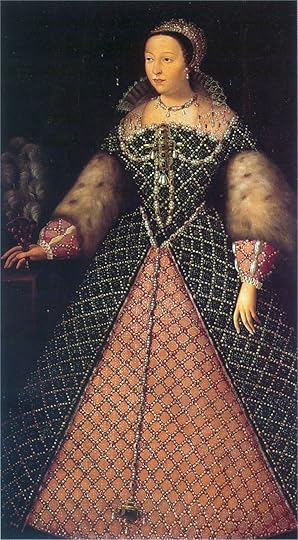 Above: Francois II was succeeded by his younger brother, Charles IX (left), who reigned until his death in 1574. During Charles' minority, his mother Catherine de Medici (right) acted as regent.


November 28, 2016
28 November 1499: The Execution of Edward Plantagenet, Earl of Warwick
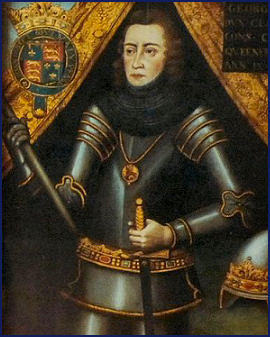
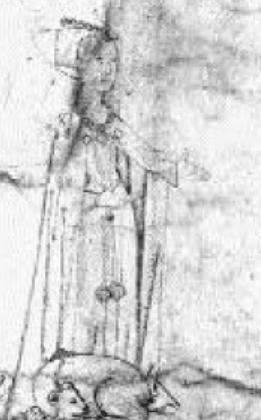
Above: Edward was the son of George, duke of Clarence (left) and Isabel Neville, duchess of Clarence (right).
28 November 1499 is one of the darkest days in Tudor history, for it witnessed the execution of Edward Plantagenet, earl of Warwick. The earl, who was only twenty-four years of age, was the only son of George, duke of Clarence and Isabel, duchess of Clarence. He was, therefore, a nephew of Edward IV and Richard III. After Henry VII's triumph at Bosworth in 1485, the ten-year-old Warwick - whose parents had died in 1478 and 1476, respectively - was incarcerated in the Tower of London.
The Tudor dynasty was vulnerable in its early days, and Henry VII's reign was troubled by the emergence of pretenders claiming to be members of the House of York. The two most notable pretenders were Lambert Simnel and Perkin Warbeck, who claimed to be Richard of York. Historians have puzzled over whether or not Warwick willingly became involved in Warbeck's conspiracy to seize the throne from Henry VII. Allegedly, both Warbeck and Warwick attempted to escape from the Tower in 1499. Both were tried and found guilty of treason. On 23 November, Warbeck processed from the Tower to Tyburn on a hurdle, where he was hanged.
Five days later, Warwick was executed on Tower Hill. His body was later buried at Bisham Abbey in Berkshire. Contemporaries believed that Warwick's execution was the result of pressure put on Henry VII by Ferdinand of Aragon and Isabella of Castile, who were concerned about the situation that their daughter, Katherine, would face in England if she were to marry the king's son Arthur. Jane Dormer, duchess of Feria, an attendant of Katherine's daughter Mary, claimed that Katherine believed that her marriage to Arthur had been made in blood.
In 1541, Warwick's sister, Margaret, was also executed, on the orders of Henry VIII. She was sixty-seven years old and was literally hacked to death by an inexperienced executioner. The Tudors were undoubtedly ruthless in their pursuit of dynastic security, and the actions of Henry VII and Henry VIII towards the Yorkists does not reveal either king in an especially flattering light. Elizabeth I exercised a similarly militant policy in regards to her royal cousins.
November 13, 2016
13 November 1553: The Trials of Queen Jane, Archbishop Cranmer, and the Dudley Brothers
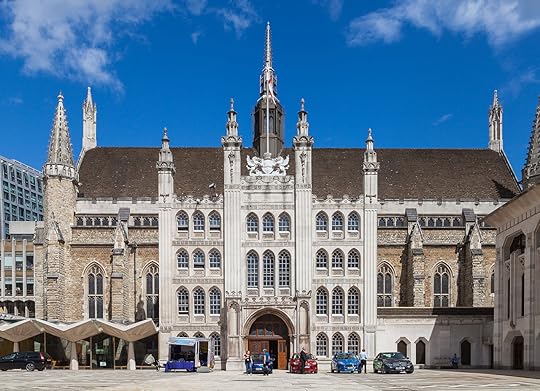
At London's Guildhall on 13 November 1553, five individuals were tried for high treason: Lady Jane Grey, the so-called 'Nine Days Queen'; her husband Guildford Dudley; his brothers Ambrose and Henry; and Thomas Cranmer, archbishop of Canterbury. Cranmer was charged with helping to seize the Tower for Jane and of levying troops for the duke of Northumberland's expeditionary force against Mary I (Northumberland himself had been executed in August that year). The beleaguered archbishop allegedly 'openly confessed his crime', although he himself later clarified that he had 'confessed more... than was true'.
The Guildhall was the venue of several notable treason trials during the Tudor period. Francis Dereham and Thomas Culpeper, the reputed lovers of Katherine Howard, were tried and convicted at the Guildhall in 1541, while Anne Askew was tried for heresy at the same venue five years later. The five tried on 13 November 1553 proceeded from the Tower of London through the streets on foot to the Guildhall. Lady Jane - or Queen Jane; her exact title continues to rouse debate - was dressed in a sombre gown of black cloth and a black French hood.
The commission was headed by the lord mayor, Sir Thomas White. Eric Ives notes that the commission was 'overwhelmingly Catholic in sentiment', which was surely a calculated move on Queen Mary's part, as a sign of the new order that was to be a feature of her reign. The 'Nine Days Queen' was charged with taking possession of the Tower, alongside her husband, and 'signing various writings'. In short, she had unlawfully usurped the sovereign's authority.
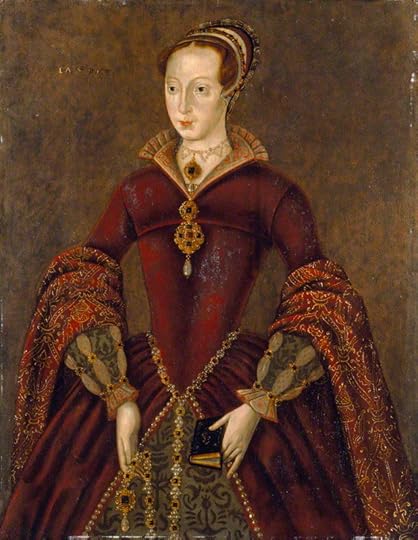
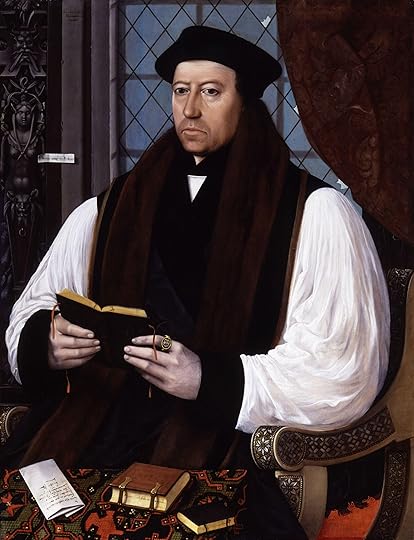
All five were found guilty of high treason. The four men were sentenced to suffer a traitor's death: hanging, drawing and quartering. Jane was sentenced to be burned alive or beheaded according to the Queen's pleasure. The teenager faced news of her sentence bravely; she was sustained during those bleak months of imprisonment by her devout reformist faith. No date was given for the executions, and it appears that Queen Mary was, at least initially, willing to show mercy to the defendants, with the exception of Cranmer.
The outbreak of rebellion in early 1554, however, changed that. Whether or not she was pressured by the Spanish envoys, with the promise of marriage to Philip of Spain, or by her Privy Council, Mary elected to order the executions of Guildford Dudley and Lady Jane Grey, for she feared that her security would be compromised as long as they remained alive and a focus for reformers. On 12 February, Guildford and Jane were executed. Both died bravely. Jane was subsequently represented in cultural works as an innocent victim of her scheming parents, or as a virtuous Protestant martyr. Guildford was viewed with sympathy by his contemporaries, but modern writers tend to depict him negatively as an abusive, weak-willed and vicious adolescent, a portrayal that is essentially fictional in basis.
Ambrose and Henry, Guildford's brothers, were more fortunate. Ambrose was released from the Tower in late 1554 and went on to serve Elizabeth I as her Master of the Ordnance. In 1561, he was created earl of Warwick. He died in 1590. His younger brother Henry participated with Ambrose in several tournaments held by Philip of Spain, as a demonstration of Anglo-Spanish amity. Henry participated in the Battle of St. Quentin in 1557, where he died. Archbishop Cranmer fared less well. He was tried for heresy in 1555 and went to the stake on 21 March 1556.
November 1, 2016
Women of the Italian Renaissance 1
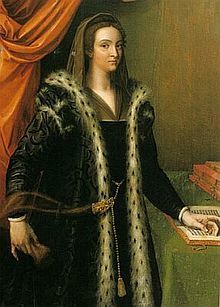
Women of the Italian Renaissance: Giulia Gonzaga (1513-1566)
Giulia Gonzaga (1513-1566) was the daughter of Ludovico Gonzaga, lord of Sabbioneta and Bozzolo, and his wife Francesca Fieschi. At the age of fourteen, Giulia was married to Vespasiano Colonna, count of Fondi and duke of Traetto. Their marriage was destined to be a short one, for Vespasiano died only three years after their wedding. At the age of twenty-two, Giulia joined a convent in Naples and was acquainted with the Spanish religious exile Juan de Valdés. Members of the Italian nobility, including Giulia and her cousin by marriage, Vittoria Colonna, were admirers of Valdés. Diarmaid MacCulloch has noted that this elite support meant that ‘there was a ready entry to the courts and noble palaces of northern Italy [while] Valdesian ideas in turn filtered into the lively world of humanist discussion in Italian cities’.
 Above: Gazzuolo, where Giulia was born in 1513.
Camilla Russell has argued that Giulia was one of Valdés’ most prominent dedicated and enduring disciplines. Her social position, her vast social links and her personal influence means that she was one of the most important heterodox figures in sixteenth-century Italy. Valdés’ ideas were appealing to members of what has been called the spirituali movement, which was active in mid sixteenth-century Italy. This movement is both enigmatic and difficult to define. It sought spiritual and organisational Church reform, and some of its members sympathised with reformed doctrines. Several of the ideas embraced by the spirituali, including organisational Church reform and the pursuit of a personal relationship with God, were gaining currency across Europe. They were familiar with, and were in some respects influenced by, the works of northern reformers, including Luther and Calvin. Elements of Calvin’s Institutes, for example, can be traced in the anonymously published Beneficio di Cristo (1543), which was the most significant literary product of the spirituali, and has been described by Dermot Fenlon as ‘the most revolutionary product of Italy’s unaccomplished Reformation’. The spirituali sought the abolition of superstitious forms of religious practice, while abhorring the widespread corruption and ignorance of the clergy. However, unlike the northern reformers, most of the spirituali wished to remain in communion with the Roman Catholic Church.
[image error]
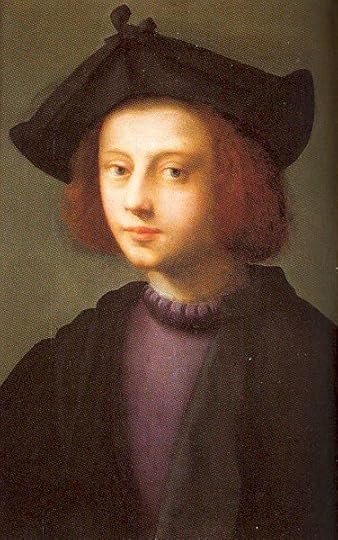 Above: Vespasiano Colonna, husband of Giulia (left). Pietro Carnesecchi, Giulia's friend (right).
Giulia is also known for her friendship with the humanist Pietro Carnesecchi (1508-67). Carnesecchi’s beliefs were undoubtedly heterodox, for he believed in justification by faith alone and viewed the Scriptures and leading doctors of the Church as the only authorities on matters of doctrine and spirituality, while rejecting the sacrament of confession and the doctrine of purgatory. Carnesecchi was investigated by the Roman Inquisition between 1546 and 1567, and was eventually imprisoned, convicted and executed. The records of his trial illuminate his religious activities, as well as those of Giulia, who experienced ‘disquiet’ and ‘contradiction’, perhaps in relation to the teachings of the Church and those of Valdés, who encouraged her to embrace ‘the idea of Christian perfection’.
These records are useful, given that Giulia wrote no religious reflections or treatises of her own (or, at least, none that survive). She did not explicitly express religious sentiments in her letters, which contain oblique, cautious references to her beliefs. Certainly Giulia acknowledged that her beliefs were not orthodox. In June 1558, she wrote to Carnesecchi saying that she needed to ‘watch out, otherwise she could fall into the net’ of the Inquisition. Eventually, the letters between Carnesecchi and Giulia were used as evidence against Carnesecchi during his trial for heresy. Carnesecchi was certain that his and Giulia’s actions were correct. He wrote to her in 1557 claiming that ‘there is no doubt that God permits everything, with just (although to us obscure) reason, and that from everything he will draw his glory, to the edification and profit of his elect’. The term ‘elect’, of course, has reformed, specifically Calvinist, connotations. Giulia died in 1566 at the age of fifty-three, the year before Carnesecchi's execution. The timing of her death ultimately prevented her from sharing her friend's fate, or at the very least, a trial for heresy.
October 24, 2016
The Lost Heir: Henry Frederick, Prince of Wales

Everyone has heard of Charles I of England, who was beheaded in 1649 for high treason. Not everyone, however, has heard of Charles's elder brother, Henry Frederick. This 'faire and strong' Prince of Wales, as described by the prince's chaplain Dr. Daniel Price, was destined to be king of England, but his unexpected death in 1612 meant that the crown passed instead to Charles.
Henry was born on 19 February 1594 at Stirling Castle. He was the eldest child of James VI of Scotland and Anne of Denmark. Nine years later, his father became king of England upon Elizabeth I's death. Henry grew up at Stirling Castle in the care of John Erskine, earl of Mar. The prince was legally separated from his Roman Catholic mother, which caused Queen Anne considerable anguish. Within a year of her son's birth, the queen began to fight the arrangements in place, but she was eventually reconciled both to her husband and to Mar. Henry remained at Stirling until the spring of 1603, the year he turned nine. When his father became king of England, Henry was made duke of Cornwall, to add to his titles of duke of Rothesay, earl of Carrick, baron of Renfrew, lord of the Isles and Prince and Great Steward of Scotland.

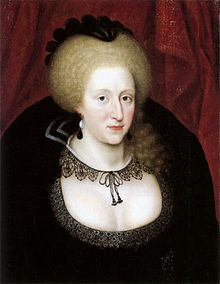 Above: Henry's parents, James VI of Scotland and Anne of Denmark.
At the age of five, Henry was granted a tutor, Adam Newton, and the learned Sir David Murray was placed in the prince's bedchamber to assist Newton with the education of the prince. Henry soon proved gifted at sports and physical exercise. Upon his father's accession to the crown of England, Henry and his mother departed for England, where they arrived in June 1603; at Windsor Castle, Henry was made a knight of the Garter. This departure from Scotland had been accompanied by family drama. The pregnant queen had insisted that her son be handed over to her, and when she was rebuffed by Mar's mother and younger brother, her anger and despair were so intense that she suffered a miscarriage.
Once in England, the prince's household was formed. Sir Thomas Chaloner was made governor, while Newton and Murray were retained as tutors. 141 men and youths resided in the prince's household. The Venetian ambassador was acquainted with Henry at Oatlands Palace in August 1603, and noted: 'He is ceremonious beyond his years, and with great gravity he covered and bade me be covered. Through an interpreter he gave me a long discourse on his exercises, dancing, tennis, the chase'. At the age of nine years old, Henry was already dignified and regal in his carriage. He seems to have been well aware of his glorious destiny as the future king of England, and was determined to demonstrate his suitability for the role.
Henry was interested in the cultural activities that were popular at court. He attended a masque at Winchester in the autumn of 1603 arranged by his mother, and attended her Twelfth Night masques in 1604, 1605 and 1608, as well as attending entertainments hosted by Robert Cecil, earl of Salisbury. But his love of sports was renowned. The French ambassador reported in 1606 that, while the prince studied for two hours a day, he 'employs the rest of his time in tossing the pike, or leaping, or shooting with the bow, or throwing the bar, or vaulting'. He was also interested in both the military and navy, and encouraged his friends to send him secret reports on French fortifications.

Henry was also well known for his Protestant faith. The treasurer of the prince's household, Sir Charles Cornwallis, explained that Henry was 'a reverent and attentive hearer of sermons', and believed that financial aid should be given to the poor. He was opposed to Roman Catholicism and believed that recusants should be brought to justice. Somewhat ironically, in view of this, the prince was offered more Roman Catholic marriage proposals than Protestant. As heir to the throne, the subject of Henry's marriage attracted great interest.
In June 1610, at the age of sixteen, Henry was created Prince of Wales and Earl of Chester at Westminster Palace. The ceremonies accompanying the investiture were lavish. James M. Sutton comments that 'this extraordinary quasi-sacramental parliamentary installation was surrounded by a whole year of court festivities that further demarcate 1610 as the signal year in Henry's short life'. The prince was a sight to behold. He was, according to a contemporary writer, 'tall... strong and well proportioned... his eyes quick and pleasant, his forehead broad, his nose big, his chin broad and cloven, his hair inclining to black... his whole face and visage comely and beautiful... with a sweet, smiling, and amiable countenance... full of gravity'.
Installed at St. James's Palace, Henry was a major patron of the arts. His musical activities were noteworthy; his household musicians formed the first new group added to the royal music since Henry VIII's reign, and his musical patronage is notable for its Italianate interests, including the employment of the musician Angelo Notari. He collected mannerist paintings from northern Italian and Netherlandish artists, and after he acquired Lord Lumley's library in 1609, was an avid collector of books until his death.
On 6 November 1612, at the age of eighteen, Henry unexpectedly died of typhoid fever, and was buried at Westminster Abbey on 7 December. His death occasioned widespread grief. Charles Carlton notes that 'few heirs to the English throne have been as widely and deeply mourned as Prince Henry'. The prince's younger brother Charles was the chief mourner at the funeral. Four years after Henry's death, Charles was created Prince of Wales and Earl of Chester. It was he, rather than Henry, who succeeded James as king of England in 1625.
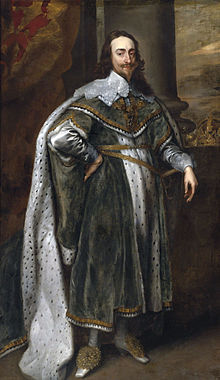 Above: Charles I, brother of Henry Frederick.
The prince's death was lamented by his chaplain, Dr. Daniel Price, in a number of sermons, in which Price stressed that Henry, 'while he lived, was a perpetuall Paradise', 'that blessed Model of heaven'. A large number of verses were written about Henry's passing, including by William Alexander, Joshua Sylvester and George Wither. Prince Henry's Grammar School in Otley (West Yorkshire) and Prince Henry's High School in Evesham (Worcestershire) were both named after the prince.
October 18, 2016
18 October 1541: The Death of Queen Margaret
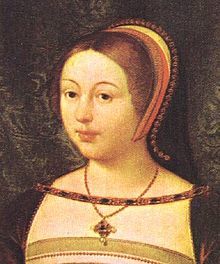
On 18 October 1541, Margaret Tudor, Queen Dowager of Scotland, died at Methven Castle. She was six weeks shy of her fifty-second birthday. Margaret was the elder sister of King Henry VIII of England, and was the eldest daughter of Henry VII and Elizabeth of York. In 1503, at the age of thirteen, Margaret married James IV of Scotland at Holyrood Abbey. Only one of their six children survived infancy: the future James V of Scotland. Margaret's husband was slain at the Battle of Flodden in 1513. She married twice after his death. Her second husband was Archibald Douglas, sixth earl of Angus; by him, she gave birth to a daughter, Lady Margaret Douglas, in 1515. Her third husband was Henry Stewart, Lord Methven.
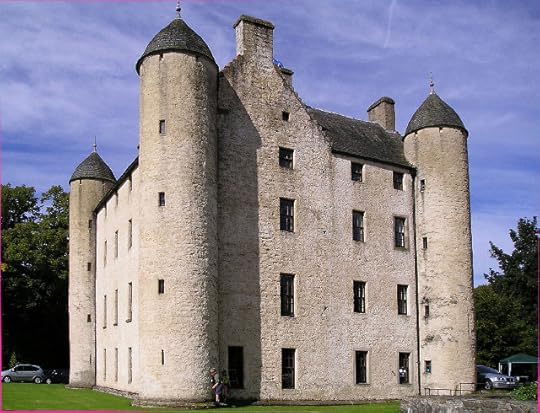 Above: Methven Castle. Margaret died here in 1541.
Margaret's last years were not necessarily happy ones. Her son, who became king in 1513, differed with her over foreign policy, for Margaret favoured close ties with England, her home country, whereas James elected to renew the French alliance. Margaret seems to have hoped that England and Scotland would unite in marriage, as she had done by marrying James IV. It was anticipated that her son would marry Mary, daughter of Henry VIII, and Margaret's niece. This was fated never to take place, and James V went on to marry Madeleine of France in 1537.
Margaret was particularly unhappy in her third marriage, to Lord Methven. She regularly wrote to Henry VIII complaining of Methven's love affairs and her debts. Margaret wished to divorce her husband, but she was blocked in doing so by her son. In late 1537, she attempted to escape to Berwick, but was intercepted. Madeleine of France had died earlier that summer, and James went on to marry Mary of Guise, by whom he had a daughter, Mary Queen of Scots.
It is clear that Margaret was lonely during her final years. She had little influence with her son, and her relationship with her husband was acrimonious. Henry VIII refused to invite her to England and was content to ignore her. At Methven Castle, the dowager queen suffered a stroke. She asked that her valuables should go to her daughter Margaret Douglas, but James ignored his mother's wish and her goods reverted to the crown. She was buried in St. John's Abbey in Perth.
Although Margaret's marriage to James IV, ultimately, failed to secure peace between the warring kingdoms of England and Scotland, her great-grandson James VI of Scotland's accession to the throne of England in 1603 brought the conflict between the two kingdoms to a close.
September 26, 2016
Almost A King: Lord Guildford Dudley
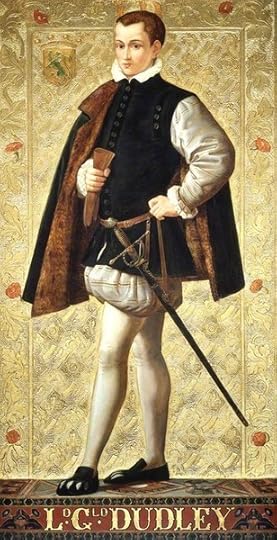
Lord Guildford Dudley, son of the duke of Northumberland, is not usually depicted positively either in fiction or non-fiction. Often, Guildford is presented as a weak-willed, snivelling adolescent who sobbed on the scaffold, or as an abusive sociopath capable of bullying his gentle wife, Lady Jane Grey. In her study of the so-called nine days queen, Hester Chapman described Guildford as 'a spoilt, conceited and disagreeable young man', while in her novel Innocent Traitor, Alison Weir portrayed Guildford as a vicious abuser who mistreated Jane on their wedding night.
Guildford, who married Jane in 1553, could have become king of England, had events turned out differently. Little is known of him, but it is likely that he was well educated and was brought up to favour the reformist faith. It is possible that he was younger than his wife Jane, who was probably born in the spring of 1537. The Dudleys had a newborn son in March 1537, while one of Guildford's godfathers, Diego de Mendoza, visited England between the spring of 1537 and the summer of 1538. Thus making it likely that Guildford was born in 1537 or 1538 and inherently probable that he was younger than his wife. According to Grafton, Guildford was 'a comely, virtuous and godly gentleman'.
In the spring of 1553, Guildford married Jane Grey, the cousin of Edward VI. For the Dudleys, the Grey marriage was a notable triumph, for it allied them with the ducal house of Suffolk as well as to the Tudor dynasty. There is no evidence that John Dudley, duke of Northumberland, schemed to marry his son to Jane as part of his plan to have Jane made queen in the wake of Edward VI's death. Traditionally, it has been reported that Jane was bullied into marrying Guildford by her scheming family; some alleged that she had been physically beaten until she had submitted to the will of her parents. These stories are questionable. Certainly there is no evidence that she objected to Guildford on personal terms, although it could be said that the duke and duchess of Suffolk, Jane's parents, might have hoped for a more noble bridegroom for their daughter. After all, rumours had circulated in some quarters that Edward VI himself hoped to marry Jane. Once it became apparent that the king's demise was imminent, the Dudleys surely realised that Guildford might very well become king of England as the husband of Queen Jane, if the coup against Mary Tudor succeeded.
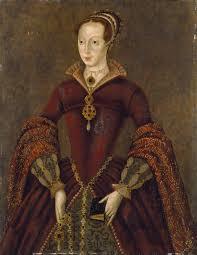 Above: Lady Jane Grey. After her marriage, Jane referred to herself as 'Lady Jane Dudley'. There is no evidence that she objected to the marriage with Guildford on personal grounds.
Unfortunately for both the Greys and the Dudleys, Mary Tudor was highly popular in the country at large, and following Edward VI's death on 6 July, the displaced Mary immediately acted to ensure that she was accepted, and then crowned, as England's queen. Jane had arrived at the Tower of London shortly after the king's death, and she was presented with the crown jewels by the Marquess of Winchester. Reportedly, Jane explained that she did not wish her husband to be presented with a crown, because she wished to make him a duke, rather than honour him with the title of king consort. This was not because of personal feelings on her behalf, given that she was 'loving of my husband'. Indeed, after her marriage Jane consistently referred to herself as 'Lady Jane Dudley'. On 19 July, the last day of her 'reign', Jane acted as godmother to a son born to one of the Tower guards. The child was named Guildford.
Mary Tudor took the throne with triumph. Eric Ives and Leanda de Lisle have explained, in detail, how Mary seized the throne from Jane; whether or not she should be viewed as the rightful queen and Jane the usurper, or vice versa, continues to be disputed. On 22 August, Guildford's father, the duke of Northumberland, was executed. Three months later, both Jane and Guildford were tried and found guilty of treason, but the queen made known her wish that the two prisoners should be spared death.
However, Sir Thomas Wyatt's rebellion in early 1554, which involved Jane's father, sealed the fates of both Jane and Guildford. Both wrote letters to the duke; Guildford signed himself 'youre lovyng and obedynent son', while Jane described herself as 'youre gracys humble daughter Jane Duddley'. On the day of their execution, 12 February 1554, it is reported that Guildford wished to see Jane one last time, 'desiring to give her the last kisses, and the last embrace'. Jane refused, however, because 'their sight would increase the misery in both, and bring much more suffering'. After their deaths, Jane believed, they would 'live perpetually joined in an indissoluble bond'.
Evidence suggests that Guildford, at the age of only fifteen or sixteen, went to his death with dignity. He made a short, unrecorded speech on the scaffold and prayed without losing control of his emotions. No mention, in this contemporary account, of Guildford's supposed sobbing in the moments before his execution.
Lord Guildford Dudley has traditionally been viewed as a weak-willed, vicious adolescent, who was loathed by his gentle, victimised wife Lady Jane Grey. There is no evidence of this, and the couple's closeness and loyalty to one another emerges from the sources even during the last hours of their lives. Had the events of the summer of 1553 gone differently, had Jane been blessed by fortune, Guildford could have become king of England as the husband of Jane I. It was not to be, and history has not been kind to him in the centuries since his passing.
September 4, 2016
24 September 2016: An Evening with the Authors

An exciting event will be taking place in London on Saturday 24 September 2016. Made Global Publishing are hosting "An Evening with the Authors" at the Venue in Malet Street. Not only can you meet a wide range of authors who will be discussing their latest research and projects, but you can discuss publishing your work with Made Global Publishing. This event, therefore, is perfect for aspiring authors, particularly those writing history or historical fiction. Made Global Publishing, however, are also branching out and authors writing modern fiction are welcome to get involved.
There will be a professional photographer, breakout question and answer panels, and a bar available. For those unable to attend the event, it will be live streamed, with an opportunity to ask questions. However, if you live in the UK then definitely consider coming down for the day, it really is a once-in-a-lifetime event.
In all, nineteen authors will be involved. They are: myself, Adrienne Dillard, Alan Wybrow, Amy Licence, Beth von Staats, Clare Cherry, Claire Ridgway, Derek Wilson, Gareth Russell, Heather Darsie, Hunter S. Jones, Jane Moulder, Kirsteen Thomson, Kyra Kramer, Melanie V. Taylor, Philip Roberts, Sandra Vasoli, Sarah Bryson, Samantha Morris, and Toni Mount; as well as Made Global's CEO, Tim Ridgway. The authors have, between them, covered a wide range of topics relating to the medieval and Tudor era, including Henry VIII and his court; George Boleyn; Katherine Howard; the Borgias; Anne Boleyn; Thomas Cranmer; Edward VI; and Katherine Carey. Moreover, topics will also include Tudor art; palace architecture; historical fiction; and a live performance of Tudor music. There really is something for everyone.
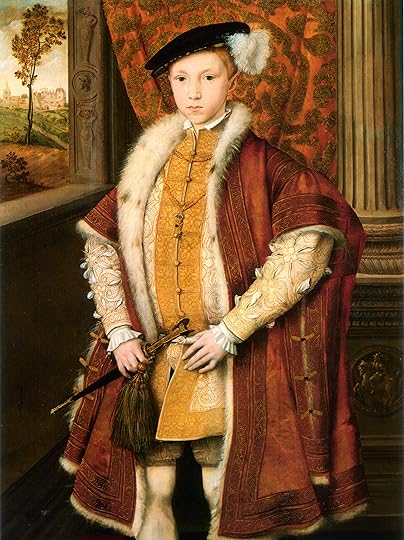
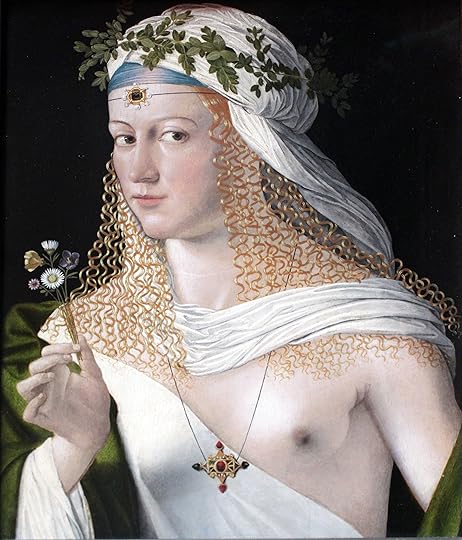
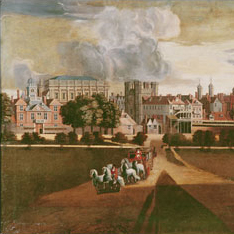
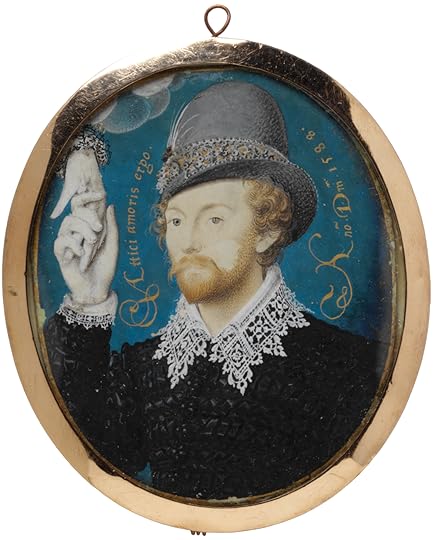
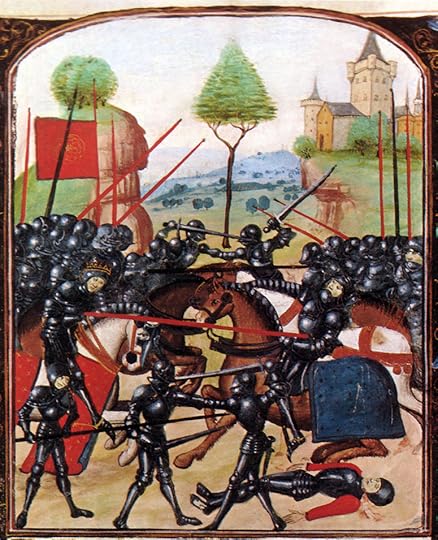
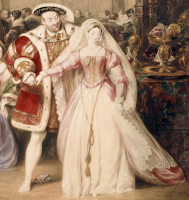 Above (from left): Edward VI; the Borgias; Whitehall Palace; Nicholas Hilliard; the Wars of the Roses; and Henry VIII and his wives are some of the topics that will be discussed.
Tickets are still available and can be purchased here. The event will begin at 7.30pm and is expected to finish around 10.30pm. You won't regret buying a ticket!
September 2, 2016
Anne Boleyn's Hair Colour in Portraiture
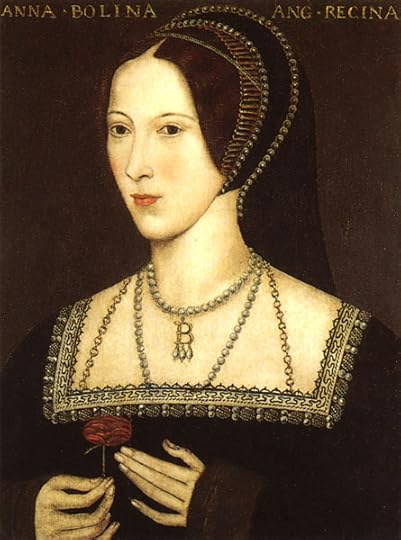
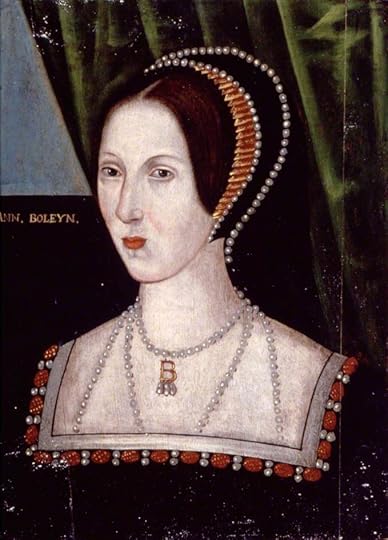
Mystery surrounds Anne Boleyn's appearance. Contemporaries were ambiguous in their descriptions of the appearance of Henry VIII's second queen: either she was a slim and very beautiful, small-breasted Venus, or a grotesque, deformed creature who had lured Henry VIII into breaking from the Roman Catholic Church and marrying her. Controversy centres, in particular, on the colour of Anne Boleyn's hair.
It is worth noting that no surviving portraits of Anne Boleyn date from her own lifetime. At the very earliest, they were painted in the reign of her daughter, Elizabeth I, and may have been based on lost originals; thus dating, at the earliest, fifty to sixty years after her execution in 1536. The standard portrait of Anne Boleyn, a copy of which is now housed in the National Portrait Gallery in London, depicts the queen wearing a French hood, black gown and pearls with a 'B' choker. In most of these portraits, Anne is portrayed with very dark brown or black hair.
When examining these portraits, it is worthwhile to bear in mind the now infamous description of Anne Boleyn put forward by the Elizabethan Jesuit, Nicholas Sander, in his Rise and Growth of the Anglican Schism, published in 1585. Sander described Anne thus:
Anne Boleyn was rather tall of stature, with black hair and an oval face of sallow complexion, as if troubled with jaundice. She had a projecting tooth under the upper lip, and on her right hand, six fingers. There was a large wen under her chin, and therefore to hide its ugliness, she wore a high dress covering her throat. In this she was followed by the ladies of the court, who also wore high dresses, having before been in the habit of leaving their necks and upper portion of their persons uncovered. She was handsome to look at, with a pretty mouth.
Sander presented the queen as a witchlike figure who had cunningly seduced Henry VIII into abandoning his virtuous wife, Katherine of Aragon, and breaking with the true Church to marry her. Leaving aside the suggestion that Anne favoured high dresses - for which there is no other extant evidence - Sanders' description of Anne corresponds strikingly with the representation of the queen in the NPG pattern of portraits, two of which are provided at the top of the page. We can observe the queen's 'black hair', her 'oval face of sallow complexion' and 'pretty mouth'. His description of her raven hair, in particular, corresponded closely to contemporary notions of a witch's appearance.
No other contemporary author described Anne Boleyn's hair colour as black. The Venetian ambassador, whose description of Anne's appearance has been viewed as largely accurate, stated that she had 'a swarthy complexion'. Simon Grynee, a professor of Greek at Basle, similarly noted that Anne was of a 'rather dark' complexion. It is possible that she had black hair, of course, but as Susan Bordo suggests, the notion that Anne Boleyn had raven tresses belongs largely to the work of Nicholas Sander, an author unquestionably hostile to the queen and her daughter, Elizabeth.
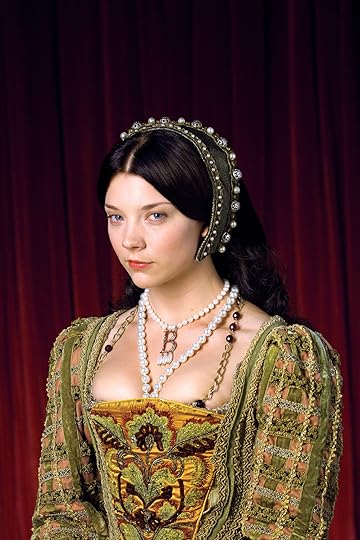
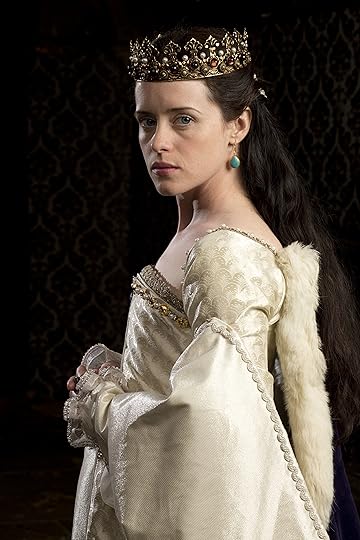 Above: Often Anne Boleyn is portrayed in modern films and TV with black hair. Natalie Dormer (left) in The Tudors and Claire Foy (right) in Wolf Hall.
Anne Boleyn's hair was almost certainly dark. Cardinal Wolsey allegedly referred to her as 'the night crow', probably alluding to her appearance, and as we have seen, at least two other individuals described her as possessing a dark complexion. But it does not necessarily follow that her hair colour was black, and it is possible that it was the influence of Nicholas Sander's hostile description that meant that she was portrayed in portraiture as having black hair. It is important not to underestimate how influential Sanders' work was at the time. As Retha Warnicke explains, it formed the basis for every subsequent Catholic history of the Reformation, and by 1628 it had appeared in six Latin editions and was translated into six other languages.
Other portraits depicted the queen's hair as lighter, whether medium brown or even reddish. It is possible that these portraits 'beautified' Anne, so to speak, giving that queens were customarily depicted in artistic mediums with fair hair, because it was associated with fertility, virginity and goodness. But it is also possible that these portraits more accurately represented the queen's true hair colour.
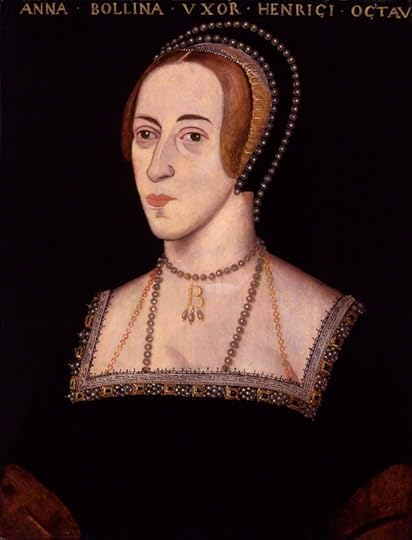
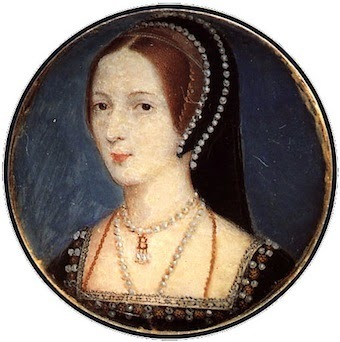 Above: Just how dark was Anne? Two reputed portraits of her that show her with lighter hair.
August 12, 2016
Uncrowned Consorts 1066-1558
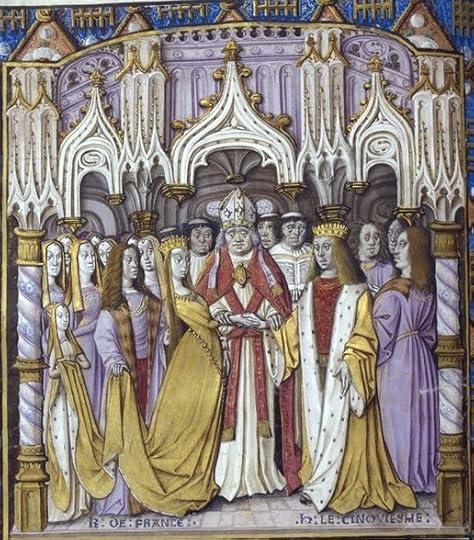
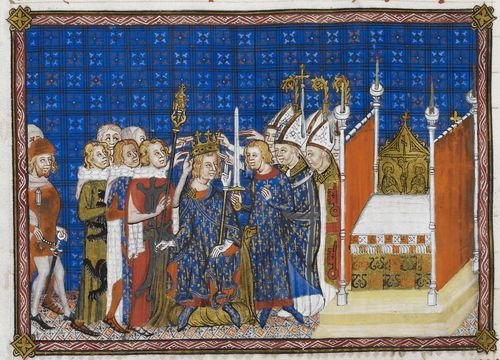
After the Norman Conquest of 1066, it became customary for the king's consort to be crowned, either alongside him or at a later date. In Anglo-Saxon England, it had not been usual for the queen to be crowned. However, William the Conqueror signalled a break with the past when he assented to the coronation of his wife, Matilda of Flanders, alongside him on Christmas Day 1066. Thereafter, the wife of the king was usually honoured with a coronation.
As J. L. Laynesmith notes, the medieval coronation enhanced the quasi-religious nature of the royal dynasty and manifested a 'dynasty-bound divine right'. It conveyed divine favour while promising prosperity for the dynasty, provided that the king and his consort obey God's laws and govern their people equitably and justly. For the queen consort, the coronation was concerned with her role as an integral part of her husband's public body. Thus the coronation, as Laynesmith suggests, offered the consort 'a richer sense of her divinely ordained role'.
Given that the majority of English queens in the period 1066-1558 were foreign-born, it was customary for the consort to be crowned after her arrival in England and subsequent marriage to the king. Indeed, no Englishwoman was crowned queen until Elizabeth Wydeville in 1465. The coronation, from the consort's perspective, functioned as a celebration of the ruling king's dynasty and more broadly demonstrated the wealth and magnificence of the realm which she had arrived in.
However, not all consorts in the five hundred years after the Conquest were crowned, for a variety of reasons. These were complex in nature and included political troubles, financial difficulties, and domestic insurrection or rebellion that prevented the king from dedicating the time and expenses required to furnish his consort with a coronation. Whether or not a lack of coronation affected the consort's claim to legitimacy is a significant question that cannot always be answered straightforwardly, but it will be seen that at least in some cases, the consort felt slighted by the absence of this ceremony.
Isabelle of France, second consort of Richard II(1389-1409), consort 1396-1399
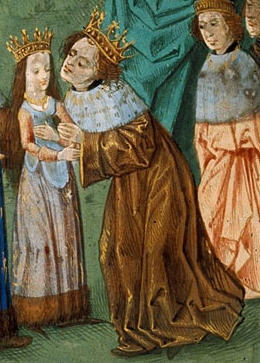
Traditionally, Richard II's second consort is said to have been crowned on or about 8 January 1397, but unusually, there is no extant evidence of the coronation festivities. If her coronation did take place, it must have been very low-key and this may partly be because of the hostility generated by Richard's choice of bride. The new queen was only seven years old and would be unable to bear children for some years to come. Given the uneasy political climate, it could be said that Richard had not chosen particularly wisely, although the marriage was designed to cement peaceful relations between England and France. If the coronation took place, it was apparently unworthy of being recorded for posterity; some historians doubt whether it actually took place. If it did not, Isabelle was the first consort in over three hundred years not to be honoured with a coronation.
Henry VIII's consorts (1536-1547)
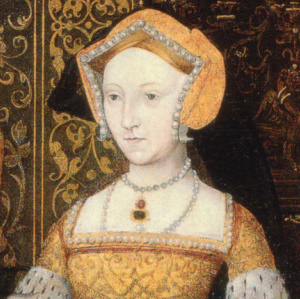
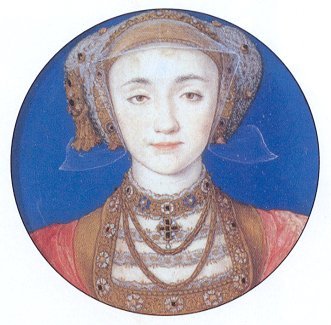
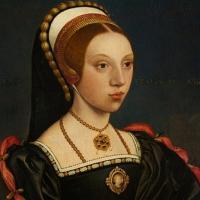

After his failed marriages to Katherine of Aragon and Anne Boleyn, Henry VIII elected not to honour any of his subsequent four wives with a coronation. In two cases, evidence suggests that coronation festivities were planned but did not take place. Jane Seymour, his third consort, most likely would have been crowned had she lived after giving birth to her only son, the future Edward VI. Court observers reported that the king wished for Jane to be crowned in October 1536, six months after her marriage, but rumours of plague alongside insurrection in the north of England prevented the ceremony from taking place. The coronation could, and did, celebrate the queen's fertility, thus legitimising the king's dynasty. Had Jane survived the birth of Edward in October 1537, it seems reasonable to suppose that her grateful husband would have arranged for her coronation, but her unexpected death prevented this from coming to fruition.
Henry's belief that Anne of Cleves was not his wife prevented her from receiving a coronation, while his final consort, Katherine Parr, was not favoured with a coronation for reasons that remain unclear. However, it is possible that Henry did consider crowning his fifth wife, Katherine Howard. The royal couple departed on a northern progress in the summer of 1541, partly because Henry was determined to ensure the north's obedience to him following recent rebellion in the area, and partly because he hoped to meet his nephew, James of Scotland, at York. One ambassador reported that Henry intended to have Katherine crowned at York, which would have marked a break with the past given that both Katherine of Aragon and Anne Boleyn, not to mention the medieval consorts, had been crowned in London. The coronation did not take place, perhaps because Henry was waiting for his consort to provide him with an heir. She did not, of course, and her execution the following year prevented her from being crowned.
Guildford Dudley, consort of Jane (c. 1537/8-1554), consort 1553
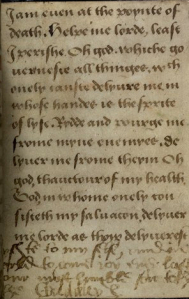
Whether Lady Jane Grey should in truth be referred to as Queen Jane I of England continues to be disputed by modern historians, but if she was rightful queen, as Eric Ives argues, then her husband Guildford Dudley should be viewed as her consort. Guildford, who was probably younger than his wife, most likely would have been crowned alongside his wife had Mary Tudor not successfully seized the crown from Jane and had the young couple imprisoned in the Tower of London. Contrary to popular belief, there is no evidence of animosity or dislike between Jane and Guildford and the young noblewoman continued to refer to herself as Lady Jane Dudley even while imprisoned. When Guildford requested to see Jane before their executions on 12 February 1554, Jane refused because the sight of one another would 'increase the misery in both, and bring much more suffering'. Fifteen or sixteen when he was beheaded, Guildford Dudley was the first male consort since Geoffrey of Anjou, husband of the Empress Matilda.
Philip II of Spain, consort of Mary(1527-1598), consort 1554-1558
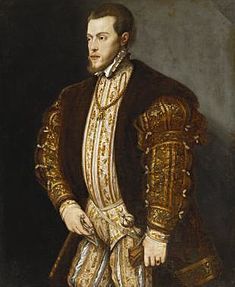
Mary I's husband, Philip II of Spain, was never crowned. It is clear that he personally resented his wife's decision not to arrange for his coronation, because it confirmed that his wife took precedence at least in governing England. This absence of a coronation was part of a broader curtailing of Philip's powers and influence in Mary's realm. Philip was made king by an Act of Parliament stipulating that he 'shall aid her Highness... in the happy administration of her Grace's realms and dominions'. It is possible that the decision not to crown Philip was at least partly a result of the widespread antipathy to Mary's choice of a husband who was both Catholic and Spanish.
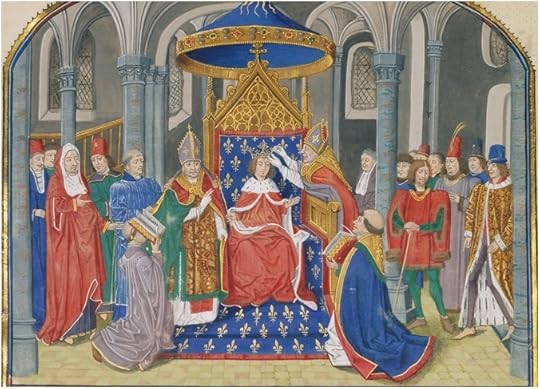
In the period 1066-1558, the consort expected to be crowned alongside her husband (or more rarely, his wife). It was unusual for the consort not to be honoured with a coronation and usually, if the ceremony did not take place, it was due to extraordinary circumstances. These circumstances included political troubles, as in the case of Philip II; domestic insurrection and rebellion, as Jane Seymour and Guildford Dudley discovered, the latter being deposed alongside his wife; and the king's decision to wait for his consort to prove her fertility, as occurred with Henry VIII's later consorts. Whether the consort accepted the absence of a crowning or not depended on their personality. No evidence survives for how Henry's later consorts felt, or perhaps Isabelle of France. Nor do we know whether Guildford Dudley minded, but given that his wife was also not crowned before she was deposed, it is unlikely that he had much say in the matter. But evidence suggests that Philip resented what he perceived as the curtailing of his rights in England; the absence of a coronation confirmed his supplication to Mary, at least in her own realm.