
Jennifer Bohnhoff's Blog, page 6
December 19, 2024
Christmas 1944
 No one battling in Europe in 1944 knew that this would be the last Christmas of the war. Americans didn’t know they were halfway through the Battle of the Bulge, the major German offensive that had begun December 16 and would end late in January, 1945. This battle, also known as the Ardennes Offensive, raged throughout the densely forested Ardennes region between Belgium and Luxembourg during what was one of the area’s coldest winters on record. About 8 inches of snow lay on the on the ground, and the temperature averaged of 20 degrees Fahrenheit.
Christmas was definitely not celebrated in style among the troops. In front line hospitals, Bing Crosby’s “White Christmas” played on an old gramophone and champagne was served, but nearby, piles of undelivered Christmas cards and packages were drenched with gasoline and set on fire to keep them out of German hands. Years later, Lt. Robert I. Kennedy recalled his Christmas dinner he shared with three other soldiers: “One can of hamburger patties and one can of mashed potatoes so cold they were almost frozen. No one had any mess kits or any utensils, so each man reached dirty, bare hands into one can for one patty and with the other dirty hand for a fistful of mashed potatoes.”

 Life was a little better for Americans who had already been captured. At Stalag Luft III in Sagan, Poland, temperatures hovered just below 0°F, but at least the men were in barracks instead of foxholes. The American Red Cross had packed and shipped 75,000 Christmas parcels containing canned turkey, fruit cake, tobacco, games, and Christmas decorations during the summer of 1944. Kriegies, the English slang for the German Kriegsgefangenen or prisoner of war, used those packages to celebrate.
 The prisoners in Stalag Luft III wrote that they had a gigantic “bash,” and were allowed to roam the grounds. Alcohol, made by fermenting raisins from aid packages, flowed in several camps. Many camps had Christmas concerts and services. The Christmas pageant at Stalag Luft III was so well attended that not all of the 11,000 POWs were able to attend in the 700 seat auditorium, even though they gave multiple performances. German guards in Stalag VIIA gave their prisoners small Christmas trees from guards, which the men decorated with snowflakes cut from tin cans, lint, food labels, and nails.
 Donald G. Cassidy Collection (AFC/2001/001/1599), Veterans History Project, American Folklife Center, Library of Congress Donald G. Cassidy, who was a Technical Sergeant in the 570th Bomb Squadron, 390th Bomb Group, 8th Air Force, spent Christmas of 1944 in Stalag XVIIB, just outside of the village of Krems, Austria. When he’d first arrived, in December of 1943, he and the other prisoners each received their own Red Cross parcels. Eventually, the supplies dwindled. Guards explained that American planes were bombing the Red Cross supplies. They began dividing parcels between two men when they got them at all. To make up for the loss of parcels, the Germans gave the POWs soap on occasion. The POWs also got ersatz coffee, a coffee substitute made from the taproots of chicory, soybeans, barley, and grains and formed into bricks, and sauerkraut, but the POWs found both so bad tasting that they used it for fuel.
 Ministry of Information Photo Division Photographer, Public domain, via Wikimedia Commons Meanwhile at home, families managed as best as they could. Rationing of sugar and butter made cookie making challenging. Many had to forego the Christmas turkey, since so much of the supply was sent overseas for the troops. Children’s toys were manufactured from wood and paper since metal, rubber, and rayon were all rationed for the war effort. Worst of all was the absence of so many men, and the fears that they might not come back at all, It’s no wonder that many of the songs released during the war, including “White Christmas” (1941), “I’ll Be Home for Christmas” (1943), and “Have Yourself a Merry Little Christmas” (1944) have a melancholy air to them.
 Jennifer Bohnhoff writes historical and contemporary fiction for middle grade through adult readers. Her novel, Code: Elephants on the Moon tells the story of a young French woman who joins the Resistance as D-Day approaches.


December 11, 2024
The 80th Anniversary of Two Brutal Massacres
 This December marks the 80th anniversary of two terrible massacres. Both took place during World War II, but in different theaters of the war.
 The Battle of the Bulge, which began on December 16, 1944. By the time it ended, 40 days later, approximately 600,000 American troops had participated in the largest battle ever fought by the US Army. Fighting in brutal conditions and freezing temperatures, Allied forces managed to stop the Nazi war machine from reversing the gains the Allied forces had made ever since the Normandy invasion. The Allies pushed the German Army back, but at a great price. The U.S. Army lost 19,000 men and suffered more than 80,000 casualties. 23,000 Americans were captured and taken prisoner.
 source: WikiCommons One of the most horrific events within the Battle of the Bulge was the Malmedy Massacre. On December 17, 1944, roughly 80 American POWs were led to a field, where they were machine gunned to death by a Waffen-SS unit. 43 men managed to escape into the surrounding forest. Although Allied commanders started receiving news of the massacre by the evening that it occurred, the area was in German hands. Americans didn’t regain access to the area until January 13, 1945, when a Graves Registration Platoon entered the site. Because of the snow and freezing temperatures, the bodies were remarkably well-preserved, but hard to locate. An engineer platoon used metal detectors to help find them. The field was still a frontline combat area. The infantry occupied foxholes in one corner of the field, and German artillery fire repeatedly disrupted the work. Despite this, 72 bodies were found. After autopsies in a nearby abandoned railway building that had no water or electricity, the Graves Registration Platoon was able to determine by the nature of the wounds that the men were executed, rather than killed in combat. Most of the dead did not wear their mandatory identification tags. Why that was has never been determined. Despite the lack of tags, the GRREG soldiers managed to identify every single victim.
 Marines exhume the remains of prisoners who were killed at Palawan. But the massacre at Malmedy was not the only one that happened in December 1944. On the other side of the world, near the city of Puerto Princesa in the Philippine province of Palawan, another horrific event took place on December 14, 1944. It is called the Palawan massacre.
The men killed in the Palawan massacre had been interned in Palawan Prison Camp, an old Philippine Constabulary barracks since August 12, 1942, when they’d arrived in two transport ships. Originally 300 in number, the men were survivors of the Battle of Bataan and the Battle of Corregidor. For the next two years, they cleared land and constructed a concrete runway for their captors, using only hand tools, wheelbarrows and two small cement mixers. Half of the prisoners were sent back to Manila on September 22, 1944. A month later, the airstrip and nearby harbor came under allied attack and the prisoners were forced to dig trenches 5 feet deep and 4 feet wide for use as bomb shelters. Afraid that the advancing Allies would be able to rescue the prisoners of war, the Japanese sounded an air raid siren. Once the 150 men had entered the trenches, Japanese soldiers set them on fire using barrels of gasoline. Prisoners who tried to escape the flames were shot down by machine gun fire. Others attempted to escape by climbing over a cliff that ran along one side of the trenches, but were later hunted down and killed. 139 of the prisoners were killed. 11 men escaped and were aided by Filipino scouts and guerrillas. The testimony of one survivor, Pfc. Eugene Nielsen, convinced the US military to embark on a series of rescue campaigns to save the POWs in the Philippines. The raid at Cabanatuan on January 30, 1945, the raid at Santo Tomas Internment Camp on February 3, 1945, the raid of Bilibid Prison on February 4, 1945, and raid at Los Baños on February 23, 1945 all saved POWs from horrible deaths.
 Former Cabanatuan POWs in celebration.wikipedia Jennifer Bohnhoff is a former middle grade and high school teacher who now stays home and writes historical fiction for middle grade through adult readers. She wishes to honor all who have served their country and remember those who made the ultimate sacrifice.
The 80th Anniversary of Two Brutal Massacres
This December marks the 80th anniversary of two terrible massacres. Both took place during World War II, but in different theaters of the war.
The Battle of the Bulge, which began on December 16, 1944. By the time it ended, 40 days later, approximately 600,000 American troops had participated in the largest battle ever fought by the US Army. Fighting in brutal conditions and freezing temperatures, Allied forces managed to stop the Nazi war machine from reversing the gains the Allied forces had made ever since the Normandy invasion. The Allies pushed the German Army back, but at a great price. The U.S. Army lost 19,000 men and suffered more than 80,000 casualties. 23,000 Americans were captured and taken prisoner.
One of the most horrific events within the Battle of the Bulge was the Malmedy Massacre. On December 17, 1944, roughly 80 American POWs were led to a field, where they were machine gunned to death by a Waffen-SS unit. 43 men managed to escape into the surrounding forest. Although Allied commanders started receiving news of the massacre by the evening that it occurred, the area was in German hands. Americans didn’t regain access to the area until January 13, 1945, when a Graves Registration Platoon entered the site. Because of the snow and freezing temperatures, the bodies were remarkably well-preserved, but hard to locate. An engineer platoon used metal detectors to help find them. The field was still a frontline combat area. The infantry occupied foxholes in one corner of the field, and German artillery fire repeatedly disrupted the work. Despite this, 72 bodies were found. After autopsies in a nearby abandoned railway building that had no water or electricity, the Graves Registration Platoon was able to determine by the nature of the wounds that the men were executed, rather than killed in combat. Most of the dead did not wear their mandatory identification tags. Why that was has never been determined. Despite the lack of tags, the GRREG soldiers managed to identify every single victim.
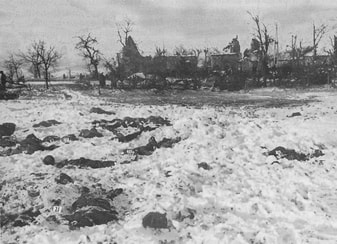
source: WikiCommons
But the massacre at Malmedy was not the only one that happened in December 1944. On the other side of the world, near the city of Puerto Princesa in the Philippine province of Palawan, another horrific event took place on December 14, 1944. It is called the Palawan massacre.
Marines exhume the remains of prisoners who were killed at Palawan.
The men killed in the Palawan massacre had been interned in Palawan Prison Camp, an old Philippine Constabulary barracks since August 12, 1942, when they’d arrived in two transport ships. Originally 300 in number, the men were survivors of the Battle of Bataan and the Battle of Corregidor. For the next two years, they cleared land and constructed a concrete runway for their captors, using only hand tools, wheelbarrows and two small cement mixers. Half of the prisoners were sent back to Manila on September 22, 1944. A month later, the airstrip and nearby harbor came under allied attack and the prisoners were forced to dig trenches 5 feet deep and 4 feet wide for use as bomb shelters. Afraid that the advancing Allies would be able to rescue the prisoners of war, the Japanese sounded an air raid siren. Once the 150 men had entered the trenches, Japanese soldiers set them on fire using barrels of gasoline. Prisoners who tried to escape the flames were shot down by machine gun fire. Others attempted to escape by climbing over a cliff that ran along one side of the trenches, but were later hunted down and killed. 139 of the prisoners were killed. 11 men escaped and were aided by Filipino scouts and guerrillas.
The testimony of one survivor, Pfc. Eugene Nielsen, convinced the US military to embark on a series of rescue campaigns to save the POWs in the Philippines. The raid at Cabanatuan on January 30, 1945, the raid at Santo Tomas Internment Camp on February 3, 1945, the raid of Bilibid Prison on February 4, 1945, and raid at Los Baños on February 23, 1945 all saved POWs from horrible deaths.
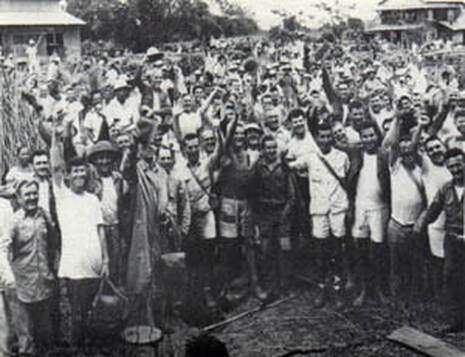
Former Cabanatuan POWs in celebration.wikipedia
Jennifer Bohnhoff is a former middle grade and high school teacher who now stays home and writes historical fiction for middle grade through adult readers. She wishes to honor all who have served their country and remember those who made the ultimate sacrifice.
December 5, 2024
Who were the Folsom People?
 Wild Horse Arroyo, location of the Folsom Site
Between about 10800 BCE and 10200 BCE, a group of people lived throughout much of central North America. These Paleo-Indians left enough artifacts that archaeologists were able to recognize that their culture was distinct from that which came before them, and that which came after. The discovery of Folsom artifacts, particularly those first found at Wild Horse Arroyo, are significant enough to site have been called the "discovery that changed American archaeology."
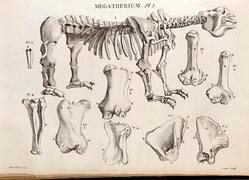
It took early scientists quite a while to figure out what they were finding.
Biblical tradition asserted that the world was created 6,000 years ago. Beginning in the middle of the nineteenth century, advances in geology and paleontology began to challenge that date. European discoveries of human bones and artifacts in association with extinct Pleistocene mammals proved that human beings existed side by side with Ice Age mammals. However, most scientific experts thought that humans had been in North America for only a few thousand years. Ales Hrdlicka and William Henry Holmes of the Smithsonian Institution suggested that no one was in the Americas 3,000 years ago. Any scientist who advocated a longer antiquity for inhabitants of the Americas risked being blackballed from academia.
In 1922, two amateur naturalists, a Raton blacksmith named Carl Schwachheim, and a banker named Fred Howarth visited a section of Wild Horse Arroyo where a cowboy named George McJunkin had discovered extremely large bison bones after a monsoon in August of 1908. McJunkin had recognized that these bones were not from modern bison, and had tried to interest paleontologists in the site, but hadn’t been able to convince anyone to visit the site before he died in 1922.
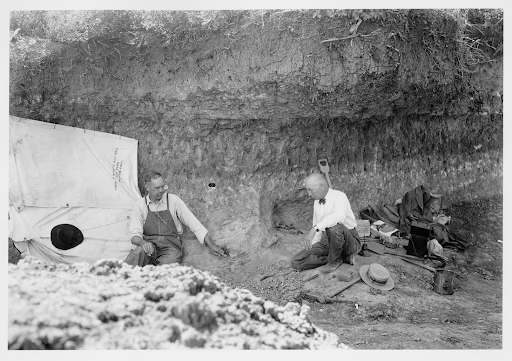
Carl Schwachheim, left, and Barnum Brown are examining the first Folsom point found in situ, circa 1927. Jesse D. Figgins snapped the photo. (Courtesy of the Denver Museum of Nature and Science)
Schwachheim and Howarth collected bones and took them to Jesse Figgins, director of the Denver Museum of Nature and Science, and to paleontologist Harold Cook. Figgins and Cook were already proponents of human antiquity in the New World. Cook had found a human tooth among the bones of extinct mammals at Snake Creek in Nebraska in 1922. Two years later, excavators at Lone Wolf Creek in Texas reported to Figgins that they had found three projectile points associated with a bison skeleton. However, since Schwachheim and Howarth had presented nothing but bison bones to Figgins and Cook, the two scientists didn’t believe there was anything significant about the site in Wild Horse Arroyo.
In 1926, v Schwachheim, and Howarth took Figgins and Cook to the Folsom site. They began excavations, with the intention of collecting full skeletons of bison antiquus to take back to the museum. But on August 29, 1927, they found man-made stone projectile points in the same layers, and therefore of the same age as, the bison bones. Other archaeologists were invited to see the findings in situ and they agreed that the bison bones and the spear point were contemporaneous.
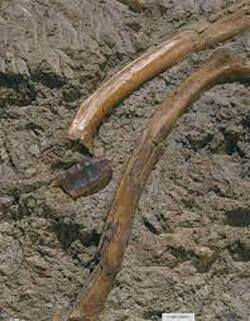
However, no one could pinpoint when bison antiquus had lived. At a December 1927 meeting of the American Anthropological Association, archaeologists speculated that the evidence from the Folsom site suggested that man had arrived in the New World 15 to 20 thousand years ago. Speculation about the exact antiquity of Folsom continued until radiocarbon dating came into use in the 1950s and the bison bones at the site could be dated more precisely. Even without an exact date, the Folsom point demonstrated conclusively that human beings were in North America during the last ice age—thousands of years earlier than Hrdliča's 3,000-year limit. Hrdlička, angry at having his theory criticized, managed to make Figgins and Cook were not invited to any of the seven academic symposia devoted to American antiquity which took place from 1927 to 1937.
The points Figgins and Cook discovered at the Folsom Site in Wildhorse Arroyo were distinctive. Figgins called the culture which created these points the Folsom Culture, named after the small town of Folsom, New Mexico which
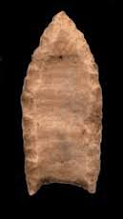
was nearby. Soon after the Folsom Culture was discovered, an earlier group, the Clovis Culture, was found. Folsom projectiles have a concavity running down their center that Clovis projectiles did not have. Statistical analysis of radiocarbon dates suggest that the earliest Folsom dates overlap with the latest Clovis dates, so the two technologies overlapped for multiple generations. This points to Folsom Culture being an outgrowth of Clovis Culture. It might be that the extinction of most species of megafauna marks the boundary between Clovis and Folsom Cultures. Clovis artifacts are associated with mammoth bones, while Folsom people hunted Bison antiquus, which became extinct about the same time that Folsom evolved into cultures relying on greater dependence on smaller animals and plant foods. It is unknown whether the extinctions of megafauna were caused by climate change or by over-hunting, or both.

Although the Folsom culture is associated with the kill site in Northern New Mexico, it flourished over a large area on the Great Plains, in what is now both the United States and Canada, eastward as far as what is now Illinois and westward into the Rocky Mountains. There is even one Folsom site in Mexico, across the Rio Grande River from El Paso, Texas.
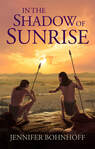
In the Shadow of Sunrise, Jennifer Bohnhoff's middle grade novel about the Folsom People in what is now New Mexico, Texas and Colorado will be published by Kinkajou Press, a division of Artemesia Publishing in April 2. It can be preordered in ebook and paperback here.
December 4, 2024
Who were the Folsom People?
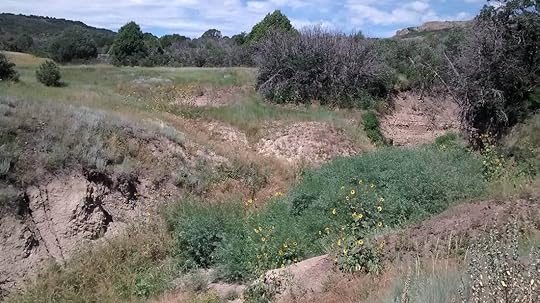 Wild Horse Arroyo, location of the Folsom Site Between about 10800 BCE and 10200 BCE, a group of people lived throughout much of central North America. These Paleo-Indians left enough artifacts that archaeologists were able to recognize that their culture was distinct from that which came before them, and that which came after. The discovery of Folsom artifacts, particularly those first found at Wild Horse Arroyo, are significant enough to site have been called the "discovery that changed American archaeology."
 It took early scientists quite a while to figure out what they were finding. Biblical tradition asserted that the world was created 6,000 years ago. Beginning in the middle of the nineteenth century, advances in geology and paleontology began to challenge that date. European discoveries of human bones and artifacts in association with extinct Pleistocene mammals proved that human beings existed side by side with Ice Age mammals. However, most scientific experts thought that humans had been in North America for only a few thousand years. Ales Hrdlicka and William Henry Holmes of the Smithsonian Institution suggested that no one was in the Americas 3,000 years ago. Any scientist who advocated a longer antiquity for inhabitants of the Americas risked being blackballed from academia.
  Carl Schwachheim, left, and Barnum Brown are examining the first Folsom point found in situ, circa 1927. Jesse D. Figgins snapped the photo. (Courtesy of the Denver Museum of Nature and Science)
 In 1922, two amateur naturalists, a Raton blacksmith named Carl Schwachheim, and a banker named Fred Howarth visited a section of Wild Horse Arroyo where a cowboy named George McJunkin had discovered extremely large bison bones after a monsoon in August of 1908. McJunkin had recognized that these bones were not from modern bison, and had tried to interest paleontologists in the site, but hadn’t been able to convince anyone to visit the site before he died in 1922.
Schwachheim and Howarth collected bones and took them to Jesse Figgins, director of the Denver Museum of Nature and Science, and to paleontologist Harold Cook. Figgins and Cook were already proponents of human antiquity in the New World. Cook had found a human tooth among the bones of extinct mammals at Snake Creek in Nebraska in 1922. Two years later, excavators at Lone Wolf Creek in Texas reported to Figgins that they had found three projectile points associated with a bison skeleton. However, since Schwachheim and Howarth had presented nothing but bison bones to Figgins and Cook, the two scientists didn’t believe there was anything significant about the site in Wild Horse Arroyo.
 In 1926, v Schwachheim, and Howarth took Figgins and Cook to the Folsom site. They began excavations, with the intention of collecting full skeletons of bison antiquus to take back to the museum. But on August 29, 1927, they found man-made stone projectile points in the same layers, and therefore of the same age as, the bison bones. Other archaeologists were invited to see the findings in situ and they agreed that the bison bones and the spear point were contemporaneous.
  However, no one could pinpoint when bison antiquus had lived. At a December 1927 meeting of the American Anthropological Association, archaeologists speculated that the evidence from the Folsom site suggested that man had arrived in the New World 15 to 20 thousand years ago. Speculation about the exact antiquity of Folsom continued until radiocarbon dating came into use in the 1950s and the bison bones at the site could be dated more precisely. Even without an exact date, the Folsom point demonstrated conclusively that human beings were in North America during the last ice age—thousands of years earlier than Hrdliča's 3,000-year limit. Hrdlička, angry at having his theory criticized, managed to make Figgins and Cook were not invited to any of the seven academic symposia devoted to American antiquity which took place from 1927 to 1937.
The points Figgins and Cook discovered at the Folsom Site in Wildhorse Arroyo were distinctive. Figgins called the culture which created these points the Folsom Culture, named after the small town of Folsom, New Mexico which was nearby. Soon after the Folsom Culture was discovered, an earlier group, the Clovis Culture, was found. Folsom projectiles have a concavity running down their center that Clovis projectiles did not have. Statistical analysis of radiocarbon dates suggest that the earliest Folsom dates overlap with the latest Clovis dates, so the two technologies overlapped for multiple generations. This points to Folsom Culture being an outgrowth of Clovis Culture. It might be that the extinction of most species of megafauna marks the boundary between Clovis and Folsom Cultures. Clovis artifacts are associated with mammoth bones, while Folsom people hunted Bison antiquus, which became extinct about the same time that Folsom evolved into cultures relying on greater dependence on smaller animals and plant foods. It is unknown whether the extinctions of megafauna were caused by climate change or by over-hunting, or both.
 Although the Folsom culture is associated with the kill site in Northern New Mexico, it flourished over a large area on the Great Plains, in what is now both the United States and Canada, eastward as far as what is now Illinois and westward into the Rocky Mountains. There is even one Folsom site in Mexico, across the Rio Grande River from El Paso, Texas.
  In the Shadow of Sunrise, Jennifer Bohnhoff's middle grade novel about the Folsom People in what is now New Mexico, Texas and Colorado will be published by Kinkajou Press, a division of Artemesia Publishing in April 2. It can be preordered in ebook and paperback here.
November 28, 2024
Disaster Leads to Stunning Archaeological Discovery
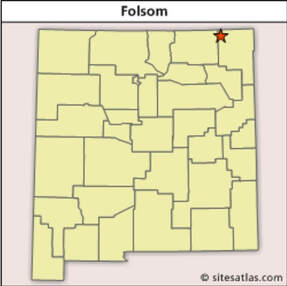
On August 28, 1908, disaster struck Folsom, a ranching and farming town on the plains in north- eastern New Mexico. It was late summer, which is often monsoon season. The hay had been cut and harvested. Leftover stalks littered the fields.
Monsoons can bring stunning amounts of water to the parched plains in short amounts of time. A cloudburst on August 28 dumped 14”, an unusually large amount of rain, even for monsoon season. The waters collected the hay stalks and other debris and swept it down the arroyos and rivers that are often dry. When the water reached the small railroad bridges that crossed those arroyos and dry rivers, the debris got caught and created impromptu dams. Under pressure from the swelling river, the dams gave way, resulting in a huge surge of water.
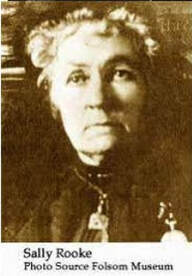 Residents up river from Folsom realized that the town was in danger. They called Sarah J. "Sally" Rooke, the Folsom telephone operator to warn of the coming danger. In 1908, telephones were not yet automated and connections could only be made by hand, sticking wires into holes for each telephone. Rooke stayed at her station and continued to call as many residents as she could to alert them to the impending wall of water. When the flood hit the town, Ms. Rooke was washed away. She was one of 18 people who died in the disaster.
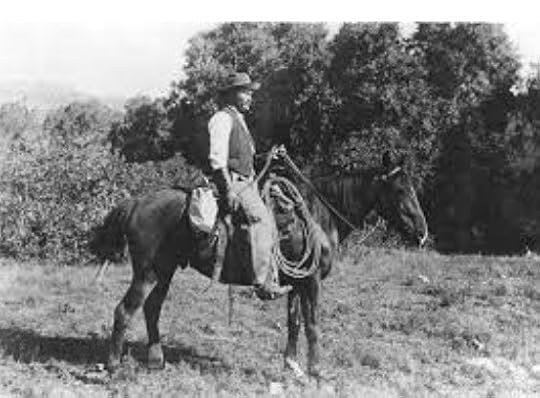
On the day after the flood, a cowboy named George McJunkin was riding the range above the ravaged town of Folsom. He was looking for cattle that had gotten bogged down in the mud and fences that had been broken down. Instead, he found something that eventually changed the story of humans in North America.
McJunkin had been born a slave on a ranch in Midway, Texas. He was born in about 1856 and was probably around 9 years old when the Civil War began. Although he never received a formal education, he had a quick and inquisitive mind. Other cowboys taught him to read and write, speak Spanish, and play the fiddle and guitar. An enterprising man, when he was freed at the end of the war, he worked many jobs, including hunting buffalo and working on ranches in Colorado, New Mexico and Texas. He also spent some time loading bison bones onto boxcars.
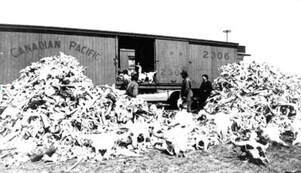 Hundreds of thousands of bison had been shot during the time that the railroads were coming west. Their carcasses were left to rot where they had fallen. When it was discovered that bone meal strengthens concrete, many of those piles of bison bones were loaded into boxcars and shipped east, to New York City, where the first skyscrapers were beginning to rise.

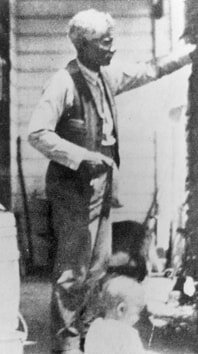 At the time of the Folsom flood, McJunkin was the foreman of the Crowfoot ranch, which lay upstream from Folsom. McJunkin was riding through Wild Horse Arroyo when he saw some bones sticking out of the soil some 11 feet below the surface of the mesa. McJunkin knew that the deeper an object was found, the older they usually were. These bones must be older than the ones typically found on the high-country grasslands. Furthermore, they were much larger than any bison bones he’d seen during his time loading bones onto railroad cars. Recognizing the significance of the find, McJunkin left the site undisturbed. He spent the rest of his life trying to get scientists to visit Wild Horse Arroyo. In 1918 he sent sample bones and a lance point to the Denver Museum of Natural History, who sent paleontologist Harold Cook to look at them the following spring. Cook and McJunkin did some exploratory digging but found nothing that Cook deemed important. When McJunkin died in 1922, the site was still considered just a place where bison antiquus had died.
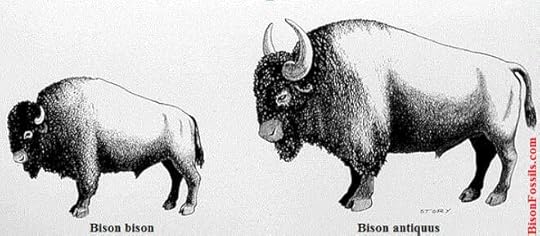 Scientists already knew that giant bison, far larger than modern ones, once roamed North America. Their bones were first discovered at Big Bone Lick, Kentucky in the 1850s. One of the many megafaunas, or giant animals that existed during the Pleistocene period, or the last Ice Age, Bison Antiquus could reach 7.4 ft tall, be 15 ft long, and weigh up to 3,501 lbs. Their horns were considerably larger than those of living American bison and differed in shape, some looking more like longhorn cattle than the small, curved horns of modern bison. These giant beasts had a large range. Specimens of Bison antiquus have been discovered in the United States, Canada, and Mexico. They went extinct sometime around 9,000 years B.C.E.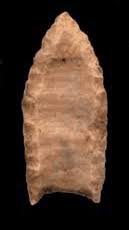
 Four years after McJunkin’s death, the Colorado Museum of Natural History sent a crew of paleontologists to Wild Horse Arroyo with the intention of excavating a prehistoric Bison skeleton for their museum. Instead, they discovered something that changed archaeologist's understanding of man in the North American hemisphere. The Museum workers found stone projectile points that are now known as “Folsom points.” One, actually embedded in a rib, proved that the points were left by men who were hunting bison these bison. By studying the site and the angles of the cut marks in the bones, scientists have been able to determine that ancient men herded the bison into the arroyo, then attacked them from above. Scientists have found the skeletons of 32 bison. Cut marks in the bones show that some of the choicest meats where butchered off the animals, but much was left in place.
 An illustration by Ian Bristow, from Jennifer Bohnhoff's In the Shadow of Sunrise, a middle grade novel about the Folsom people.Until this discovery, scientists had believed that men had crossed the Bering Strait into North America about 2,000 b.c.e. George McJunkin’s find showed that man was here 7,000 years earlier than previously thought. Since then, Folsom points have been found in many places in North America, and other finds have pushed back man’s arrival on the continent even further.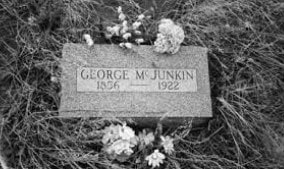
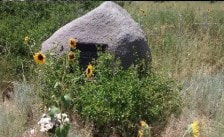 Sally Rooke and George McJunkin are both buried in the Folsom Cemetery, which occupies a windy and isolated hill outside of town. The town itself has a museum that is housed in an old mercantile. The Historical Society sponsors trips to the Folsom Site twice a year.
 A former New Mexico History teacher, Jennifer Bohnhoff is the author of a number of books for middle grade through adult readers, many of which are set in her home state of New Mexico. Her latest book,
In the Shadow of Sunrise,
tells the story of Folsom people in Colorado, Texas and New Mexico and includes the Folsom site. It will be published in April 2025 and is available for preorder.
A former New Mexico History teacher, Jennifer Bohnhoff is the author of a number of books for middle grade through adult readers, many of which are set in her home state of New Mexico. Her latest book,
In the Shadow of Sunrise,
tells the story of Folsom people in Colorado, Texas and New Mexico and includes the Folsom site. It will be published in April 2025 and is available for preorder.
November 27, 2024
Disaster Leads to Stunning Archaeological Discovery
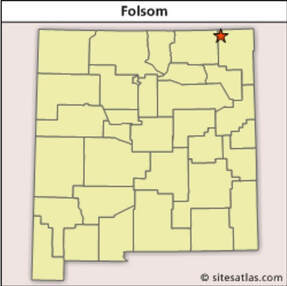 On August 28, 1908, disaster struck Folsom, a ranching and farming town on the plains in north- eastern New Mexico. It was late summer, which is often monsoon season. The hay had been cut and harvested. Leftover stalks littered the fields.
Monsoons can bring stunning amounts of water to the parched plains in short amounts of time. A cloudburst on August 28 dumped 14”, an unusually large amount of rain, even for monsoon season. The waters collected the hay stalks and other debris and swept it down the arroyos and rivers that are often dry. When the water reached the small railroad bridges that crossed those arroyos and dry rivers, the debris got caught and created impromptu dams. Under pressure from the swelling river, the dams gave way, resulting in a huge surge of water.
Residents up river from Folsom realized that the town was in danger. They called Sarah J. "Sally" Rooke, the Folsom telephone operator to warn of the coming danger. In 1908, telephones were not yet automated and connections could only be made by hand, sticking wires into holes for each telephone. Rooke stayed at her station and continued to call as many residents as she could to alert them to the impending wall of water. When the flood hit the town, Ms. Rooke was washed away. She was one of 18 people who died in the disaster.On the day after the flood, a cowboy named George McJunkin was riding the range above the ravaged town of Folsom. He was looking for cattle that had gotten bogged down in the mud and fences that had been broken down. Instead, he found something that eventually changed the story of humans in North America.
McJunkin had been born a slave on a ranch in Midway, Texas. He was born in about 1856 and was probably around 9 years old when the Civil War began. Although he never received a formal education, he had a quick and inquisitive mind. Other cowboys taught him to read and write, speak Spanish, and play the fiddle and guitar. An enterprising man, when he was freed at the end of the war, he worked many jobs, including hunting buffalo and working on ranches in Colorado, New Mexico and Texas. He also spent some time loading bison bones onto boxcars.
Hundreds of thousands of bison had been shot during the time that the railroads were coming west. Their carcasses were left to rot where they had fallen. When it was discovered that bone meal strengthens concrete, many of those piles of bison bones were loaded into boxcars and shipped east, to New York City, where the first skyscrapers were beginning to rise.
At the time of the Folsom flood, McJunkin was the foreman of the Crowfoot ranch, which lay upstream from Folsom. McJunkin was riding through Wild Horse Arroyo when he saw some bones sticking out of the soil some 11 feet below the surface of the mesa. McJunkin knew that the deeper an object was found, the older they usually were. These bones must be older than the ones typically found on the high-country grasslands. Furthermore, they were much larger than any bison bones he’d seen during his time loading bones onto railroad cars. Recognizing the significance of the find, McJunkin left the site undisturbed. He spent the rest of his life trying to get scientists to visit Wild Horse Arroyo. In 1918 he sent sample bones and a lance point to the Denver Museum of Natural History, who sent paleontologist Harold Cook to look at them the following spring. Cook and McJunkin did some exploratory digging but found nothing that Cook deemed important. When McJunkin died in 1922, the site was still considered just a place where bison antiquus had died. Scientists already knew that giant bison, far larger than modern ones, once roamed North America. Their bones were first discovered at Big Bone Lick, Kentucky in the 1850s. One of the many megafaunas, or giant animals that existed during the Pleistocene period, or the last Ice Age, Bison Antiquus could reach 7.4 ft tall, be 15 ft long, and weigh up to 3,501 lbs. Their horns were considerably larger than those of living American bison and differed in shape, some looking more like longhorn cattle than the small, curved horns of modern bison. These giant beasts had a large range. Specimens of Bison antiquus have been discovered in the United States, Canada, and Mexico. They went extinct sometime around 9,000 years B.C.E.
Four years after McJunkin’s death, the Colorado Museum of Natural History sent a crew of paleontologists to Wild Horse Arroyo with the intention of excavating a prehistoric Bison skeleton for their museum. Instead, they discovered something that changed archaeologist's understanding of man in the North American hemisphere. The Museum workers found stone projectile points that are now known as “Folsom points.” One, actually embedded in a rib, proved that the points were left by men who were hunting bison these bison. By studying the site and the angles of the cut marks in the bones, scientists have been able to determine that ancient men herded the bison into the arroyo, then attacked them from above. Scientists have found the skeletons of 32 bison. Cut marks in the bones show that some of the choicest meats where butchered off the animals, but much was left in place. An illustration by Ian Bristow, from Jennifer Bohnhoff's In the Shadow of Sunrise, a middle grade novel about the Folsom people. Until this discovery, scientists had believed that men had crossed the Bering Strait into North America about 2,000 b.c.e. George McJunkin’s find showed that man was here 7,000 years earlier than previously thought. Since then, Folsom points have been found in many places in North America, and other finds have pushed back man’s arrival on the continent even further.
Sally Rooke and George McJunkin are both buried in the Folsom Cemetery, which occupies a windy and isolated hill outside of town. The town itself has a museum that is housed in an old mercantile. The Historical Society sponsors trips to the Folsom Site twice a year.
A former New Mexico History teacher, Jennifer Bohnhoff is the author of a number of books for middle grade through adult readers, many of which are set in her home state of New Mexico. Her latest book,
In the Shadow of Sunrise,
tells the story of Folsom people in Colorado, Texas and New Mexico and includes the Folsom site. It will be published in April 2025 and is available for preorder.
November 20, 2024
A Lighter Pumpkin Bread
Last week I got the hankering for pumpkin bread. I love its creamy texture, its pumkiny taste, especially when slathered with cream cheese.
So I got out my mother's old recipe for pumpkin bread, and I pulled all the ingredients out of my cupboards, and I discovered that I was in trouble. My mothers old recipe calls for 1 1/4 cups of vegetable oil, and I had just a little bit in the bottom of the bottle: definitely not 1 1/4 cups!
I live high up in the mountains. The closest grocery store is 20 minutes away. Did I want to drive 40 minutes just to get my craving filled? Not me. Instead, I did some tinkering with the recipe. What I ended up with was better tasting and healthier for you, too! I hope you give this recipe a try, and you agree with me. Ingredients 2 eggs
1/2 cup sugar
2 TBS. oil
1/2 cup unsweetened applesauce
7 oz. canned pumpkin (if your measuring cup doesn't have ounces,
this is halfway between 3/4 and 1 cup)
1 1/2 cup flour
1 tsp baking powder
1 tsp baking soda
1/2 tsp salt
1 1/2 tsp cinnamon
Directions Preheat oven to 350°
Beat eggs, sugar, oil, applesauce, and pumpkin together until fluffy.
Mix in dry ingredients, blending well so that everything is evenly distributed.
Pour into a greased and floured bread pan. Smooth the top.
Bake for 1 hour, or until the top bounces back when lightly pressed down with your finger.
When not tinkering around in the kitchen or running to the store for supplies, Jennifer Bohnhoff writes historical and contemporary fiction for middle grade through adult readers. You can learn more about her and her books here, on her website.
So I got out my mother's old recipe for pumpkin bread, and I pulled all the ingredients out of my cupboards, and I discovered that I was in trouble. My mothers old recipe calls for 1 1/4 cups of vegetable oil, and I had just a little bit in the bottom of the bottle: definitely not 1 1/4 cups!
I live high up in the mountains. The closest grocery store is 20 minutes away. Did I want to drive 40 minutes just to get my craving filled? Not me. Instead, I did some tinkering with the recipe. What I ended up with was better tasting and healthier for you, too! I hope you give this recipe a try, and you agree with me.
Ingredients 2 eggs1/2 cup sugar
2 TBS. oil
1/2 cup unsweetened applesauce
7 oz. canned pumpkin (if your measuring cup doesn't have ounces,
this is halfway between 3/4 and 1 cup)
1 1/2 cup flour
1 tsp baking powder
1 tsp baking soda
1/2 tsp salt
1 1/2 tsp cinnamon
Directions Preheat oven to 350°
Beat eggs, sugar, oil, applesauce, and pumpkin together until fluffy.
Mix in dry ingredients, blending well so that everything is evenly distributed.
Pour into a greased and floured bread pan. Smooth the top.
Bake for 1 hour, or until the top bounces back when lightly pressed down with your finger.
When not tinkering around in the kitchen or running to the store for supplies, Jennifer Bohnhoff writes historical and contemporary fiction for middle grade through adult readers. You can learn more about her and her books here, on her website.
November 13, 2024
Hidden Gem: Pueblo Montaño Chainsaw Sculpture Garden
Sometimes the most interesting but unknown places are hidden within plain sight. That is certainly true of Albuquerque's Chainsaw Sculpture Garden. Located off Montano, just east of Coors Blvd, the sculpture garden is one of the trailheads for the Paseo del Bosque hiking system. It includes picnic tables and a public restroom. The address is 4100 Montaño Rd NW, Albuquerque, NM 87120. The story of how this sculpture garden came to be is an interesting one. In 2003, some teenagers were playing with fireworks when they inadvertently sparked a wildfire in the bosque. The fire spread to over 250 acres and damaged a lot of land and trails along the riverfront. One of the firefighter who helped to put out the blazes was named Mark Chavez. Chaves is a chainsaw artist in his free time, and thought that turning the charred cottonwood trunks into sculpture honors both the natural beauty of the Southwest and the fire itself. One of the sculptures depicts an eagle rising like a phoenix from the flames.k Another shows a firefighter, perhaps a self-portrait (?) standing upon a slain dragon. This is more significant if you know that the word “dragon” is what being firemen call especially bad fires. There are also sculptures of coyotes, beavers, fish, turtles, roadrunners and cranes, all animals who live in the area. And to remind children to stay out of arroyos, there's a sculpture of La Llorona, the legendary ghost/witch who drowns children who go where they shouldn't, unless a firefighter or other hero rescues them. If visiting the sculpture garden is not enough, you can continue your adventure with a walk along the Paseo del Bosque trail, a 16-mile multi-use trail that runs through the cottonwood forest that follows the banks of the Rio Grande.  When she's not hiking, Jennifer Bohnhoff is writing. The author of over a dozen books, many of which are historical fiction for middle grade readers through adults, Bohnhoff lives in the mountains east of Albuquerque. You can read more about her and her books on her website.
When she's not hiking, Jennifer Bohnhoff is writing. The author of over a dozen books, many of which are historical fiction for middle grade readers through adults, Bohnhoff lives in the mountains east of Albuquerque. You can read more about her and her books on her website.
November 6, 2024
The Little War: Children's Propaganda in WWI
 War impacts everyone; world wars, even more so. Now through February, the National WWI Museum and War Memorial in Kansas City is hosting an exhibit which explores the lives of children swept up by the storms of World War I while adults were fighting on the front line and supporting the war effort.
 Black and white photograph of American soldiers and a small girl. The soldiers and the girl all hold rifles over their right shoulder. Photo: object 2023.122.1 in the Museum collection. https://collections.theworldwar.org/a...
 Although everyone wants to shield children from the horrors of war, it seems that no one wants children to be completely unaware of war. The objects on display for this exhibit clearly show that society wanted children to believe that their fathers and their country were fighting for a just and important cause. People wanted their children to feel like they, too, were fighting for something important.
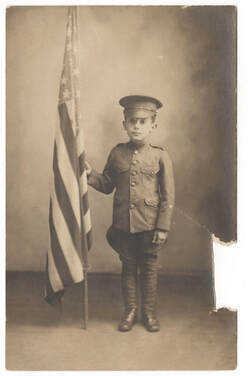
 Picture: Joseph D. Marcelli wearing the play uniform made by his father, a tailor in New Jersey. Object ID: 2011.50.1 in the museum collection.
 One way that adults tried to indoctrinate children was with uniforms such as the one pictured above. The museum also shows miniature nurses uniforms emblazoned with red crosses, so that girls could also play their part in imaginary war games.
 Another way that children learned to hate the enemy, and therefore war against him, was by ridiculing the other side. Nursery Rhymes for Fighting Times took common Mother Goose rhymes such as Humpty Dumpty, and adapted them to make the Germans, especially Kaiser Wilhelm, look ridiculous.
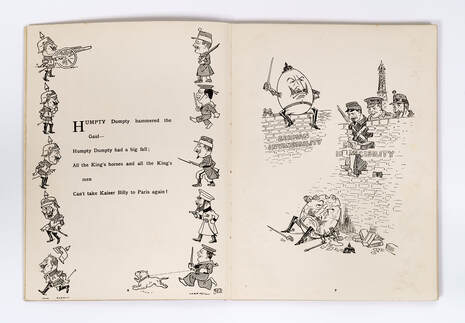 Such propaganda seems horrible and jingoistic by today's standards. At the time, they were commonplace. The impressionable young minds of American and British children were being fed a clear lesson: that loyalty and commitment would win the war against an enemy that had to be defeated. Molded by the first truly global conflict, the children who grew up during World War I became the adults who had to endure the horrors of World War II. I wonder if they wouldn't have become The Greatest Generation had they not been trained into it in childhood. Located in Kansas City, the National WWI Museum and Memorial is America's leading institution dedicated to remembering, interpreting and understanding the Great War and its enduring impact on the global community. Click here for more information about its collection or visiting the museum.
 Jennifer Bohnhoff in an author who lives and writes in the mountains of central New Mexico. She wrote about World War I in her historical novel, A Blaze of Poppies.


