Jason SurfrApp's Blog, page 18
August 14, 2016
The Gluten-Free Business Plan
Recently I’ve found myself extremely frustrated and stumbling into a simple realization. The frustration should probably be about politics, religion, or world issues, but alas, it’s something very selfish that I bet has frustrated you as well: my nutrition.
Now, before you completely disregard this article because I just said I was more concerned with my nutrition than with bigger world-changing issues, hear me out for a moment.
We can’t give our gifts to the world, or have a chance at making positive change, if we can’t even take care of ourselves.
This year, I turned 34. A completely unimportant and inconsequential birthday. But one thing slapped me in the face as I was getting ready to put on my party hat and bash my gluten-free cookie-filled piñata (I didn’t actually have one of these, but now I want one). I’m not getting any younger, and I don’t want to look back later in life and wish I’d taken better care of myself.
Maybe this is the first time you’re reading my writing, or you haven’t combed through every word I’ve ever written (WHY NOT?!), but I’ve mentioned before that my girlfriend, Caroline, and I subscribe to a meal-prep service and have 90% of our food delivered to us every Wednesday by a nice college student named Diego. I always love our charming two-minute conversations while I exchange last week’s empty food cooler bags with Diego’s packed-to-the-brim-with-new-food bags. Let me pause for a second and explain (or remind you) why we use a meal-prep company:
Cooking does not bring us unbridled joy. “Cut the bell peppers lengthwise; why would you ever in a million years cut them into squares?” and “I don’t know where the tablespoon is. I don’t even know if that’s bigger or smaller than a teaspoon.” We ended up having more mini-fights about how vegetables should be prepared than we ate romantic candlelit dinners.
We don’t value the time it takes to cook. Some people want/need the break from their work or live to spend 30-60 minutes in the kitchen, free from life’s distractions. This actually seems like a waste of time to us. We’d rather spend that time creating art, writing articles, or helping people in our small tribes. (I’ve estimated that we save 40 hours a month by using a meal-prep company.)
We know we’re putting good food in our bodies. No sauce is needed. No extra condiments thrown on. The meals are simple, they’re free of bad things, and after three minutes in a skillet, they are ready to be consumed.
Let’s get back to turning 34. I realized the person staring back at me in the mirror wasn’t the person I wanted to look like.
How’s that possible? With a meal-prep company, shouldn’t I be in the best shape of my life?
Enter the frustration.
Plenty of studies show that testosterone levels drop in men after 30. Plenty of other studies show that the human body can quickly adapt to anything and begin to plateau after positive progress. So I started looking around at other nutrition options (read: diets), and here’s a short list of some of the options out there:
Paleo
Bulletproof
Intermittent fasting
Slow carb
The Zone
Weight Watchers
Jenny Craig
Mediterranean
Whole 30
Gluten-Free
Flexitarian
and even one called Acid Alkaline (do you just drop acid all day!?)
How the heck do you choose?
How do you run an experiment on yourself that doesn’t change too many variables, but can show you which nutrition plan is the best for your genetic makeup?
How do you not just throw in the towel on all of it and start the Ben & Jerry’s diet? Mmmm, half-baked ice cream.
Remember that realization I mentioned in the first line of this article? Here it is:
There is no perfect plan for anything. Nutrition. Business. Relationships. Building modular homes. The only perfect plan is the one you enjoy and that you can make work for your specific situation.
It sounds simple, right? Well, it kind of is. But it’s also easy to get caught up in the never-ending game of perfectionism. Every single one of those diets up there has entire online communities dedicated to doing it perfectly, and to debating the minutia like whether chicken broth counts as a complete protein. We all get bogged down by the details, and that makes it more likely that we’ll fall off the wagon (into a vat of ice cream) when we start to feel like we’re not doing it exactly right.
What I’ve decided to do for my nutrition frustration is to remove the idea that I need to find the perfect plan or execute any one plan perfectly. Perfect anything doesn’t exist. You can create a bulletproof business plan, based on previous experience and written by the brightest minds, but it can all go to shit when unforeseen circumstances rear their ugly heads (and oh, will they rear!).
I’m reframing my thinking from finding the perfect plan to finding the plan that I can stick to
There are near-perfect plans. I know I could eat five meals a day of boiled chicken, broccoli, and almonds. That nutrition plan would put me in the best shape of my life and give me the exact macronutrients my body needs every day. Apparently, I could do the same thing with Soylent. But both options sound unbelievably miserable and unsustainable (especially since I did the exact chicken/broccoli/almonds plan after college for six months— ::cringe::).
I’ve talked to handful of very beautiful people recently. People who have abs on top of their abs. People who look like they just fell out of a health and fitness magazine. People who spend 24 hours a day thinking about their health. And the one thing they all have in common? None of them are talking about the same plan.
The reason you can find 10-20 different diets in a matter of seconds on Google is that different diet plans work for different people. It’s the same reason yet another “21 Steps To Creating A Successful Business” article will show up on all the business sites tomorrow, and why Amazon search tells me there are 42,344 results for books on “starting a business.”
There is no silver (gluten-free) bullet
No one has the only set of answers.
No one has the exact plan you need to follow.
No one has the one perfect way of doing anything that works for every human on Earth.
You have to find the plan, for anything, that works best for you and your specific set of circumstances.
Trial and error is good. Embrace it. Try stuff. Don’t get caught up in the hype. Figure out what works best for you, and embrace that plan.
That’s what I’ll be doing for my nutrition plan going forward. Trying different things and listening to my body. Not trying to find the perfect plan that will work overnight, but instead, trying to find the plan I can stick to and that I’ll actually enjoy.
I’ve removed the frustration of trying to run a perfect business. It’s time to do the same with my health and nutrition so I can have more time on the planet to make an impact on things that matter.
The post The Gluten-Free Business Plan appeared first on Jason Does Stuff.


August 7, 2016
You Shouldn’t Do It
I love Nike’s slogan, Just do it. It’s a great motivator. There are lots of difficult things in life that you should do anyway. But for this article, I want to tell you why you shouldn’t do it.
And what’s “it?” Starting and running your own business.
You shouldn’t do it because it takes effort you aren’t willing to put in
Are you someone who loves the idea of putting your entire business on autopilot and automating everything? Yeah…first of all, best of luck with that. I know absolutely no one who runs a successful business that is completely automated. But secondly, the effort (read: the journey) should be the fun part. It has to be, actually, because the challenge is going to crush you otherwise. You’re going to work longer and harder than you ever have in your life, and the payoff is so far removed from “overnight success” that everyone who’s ever succeeded in business just laughs at that concept.
If you aren’t ready to invest countless hours and make big sacrifices in your life, you shouldn’t do it.
You shouldn’t do it because you will have to change all of your plans
You can have the most ironclad and well-thought-out business plan of all time. You can have experience from previous businesses. You can have amazing mentors and maybe even a bunch of funding.
But you know what? Your plans will change. If you’re doing it right, your vision will be shaped and molded by what your customers are actually willing to pay for. Your plans will fall apart as quickly as you can say pivot.
If you’re allergic to change, you shouldn’t do it.
You shouldn’t do it because you’re not famous
You aren’t going to be the next Steve Jobs.
You aren’t going to be the next Elon Musk.
You aren’t going to be the next anyone.
You are going to be you. No one knows who you are, and that’s a really big hurdle in people’s minds. They’re not going to trust someone they don’t know, and it’s a lot of work to get people to both recognize and trust you. It’s an even bigger hurdle to do the work your business requires without the expectation of ever getting accolades for it.
If you’re hoping to see your name or your business’ name in lights some day, you shouldn’t do it.
You shouldn’t do it because you’re going to mess up
You are going to make mistakes. You are going to have to make tough decisions, and no one is going to be able to give you all the answers. All the advice in the world can’t help you when YOU have to be the one to make the tough call. And sometimes, you’re going to make the wrong one. It’s going to suck.
If you are afraid of failing often, and in public, you definitely shouldn’t do it.
You shouldn’t do it because you have a good thing going
You shouldn’t start your own business. You should keep your job and make the best of it you can. Enjoy every day of job security that you can soak up. Relish the idea that you know where your paycheck is coming from and that someone else has to make all the tough decisions.
But…
If these things don’t scare you into hiding, then maybe you should do it.
The post You Shouldn’t Do It appeared first on Jason Does Stuff.
July 31, 2016
Do It Differently
In 2013, it was measured* that there were 152 million blogs on the Internet. Google tells me there are 248 million results for the search term “portrait photographer.” A quick search on Amazon, and there are 50 million published books for sale.
What do any of those numbers mean to you? Your immediate reaction might be, Whoa, how would I ever have a blog, photography business, or book that gets noticed?
Every day, someone starts a blog and writes something interesting that gets spread around the internet like wildfire. Every day, another author shoots up the rankings on Amazon to become a bestseller, seemingly out of nowhere. Every day, someone shares a photo on Instagram that gets 100x the exposure of any other photo that photographer has ever posted.
And why do these things happen? Why are some people able to break through the noise and make an impact? Because they do it differently.
94% of first-time authors don’t make money with their first book
When I set out to write my book, Creativity For Sale, I first emailed and called multiple friends who were accomplished (most were best-selling) authors. I wanted to know how to do what they’d done, but to my surprise and disappointment, they all told me I wouldn’t directly make money from my first book. They told me that I should instead use it as a marketing vehicle for something I could make money from, like teaching people how to get sponsorships or promoting myself as a marketing consultant.
The more I heard that answer, the more I could feel my stomach turn, and the more I wanted to prove them wrong.
I wanted to buck the system and prove that a first-time author could make great money from their first book without a publisher, an agent, or even a platform like Kickstarter.
In October 2013, I embarked on a journey through uncharted first-time-author waters. With my previous experience in getting sponsors for IWearYourShirt, I knew what my angle would be: to have the first-ever fully sponsored book.
My first step was to create a new Google Spreadsheet, open my email inbox, and to scour my contacts for people I had an existing relationship with. I found 50 people I felt confident would support my new idea, pasted their info into my spreadsheet, and wrote a quick email explaining how I wanted to fill the pages of my book with sponsors in an unobtrusive way (footnotes at the bottom of each page). I told these folks they were the first to hear about this project and that they could adorn (read: sponsor) the first handful of pages in the book for $500 each.
Copy email. Customize email to each person. Hit send. I did this 50 times, making a note in my spreadsheet each time I hit send. A few minutes passed, and I received the first reply:
“I don’t get it.”
Crap.
Then another reply:
“I’ll pass on this. Thanks, though.”
Double crap.
Immediately, my heart sunk, and I started to question the idea altogether. More time passed, and no replies came in.
This was the worst idea ever. Everyone was right. I was going to be one of the 94%.
Then, right before I went to sleep that night, my first win. My friend James from J William Culinary (a gourmet packaged meal company) wrote back and said: “I’m in!” Faster than you can say dinner, I whisked a Paypal invoice his way, and a few moments later, the money was in my account. Huzzah! I had sold the first sponsorship for a project that would change my career and life forever.
Quick aside: Often, when you’re doing something differently, you’ll be met with resistance. Resistance can derail momentum faster than you can say dinner (again). In these moments of resistance, you have to remember that you want the outcome more than you will let rejection affect you. It will affect you. It affects me all the time. But I don’t let it stop me and you shouldn’t let it stop you.
Now, it wasn’t all sunshine and rainbows from there for my sponsored book project. If you’re keeping track at home, out of the 50 emails I sent, only 6 people ended up buying. While that ~10% conversion percentage is decent by “industry standards,” I still had quite an uphill battle on my hands (204 total sponsors to fill in my book). That first sale was the momentum boost I needed. It was the win that filled my entrepreneurial gas tank with fuel. That one “yes” catapulted me forward into creating the SponsorMyBook website, sending over 2,000 emails (back and forth with people), and after five and half months, ending up with $75,000 in total revenue before a single word of my book had been written.
You read that correctly: I made over $75,000 selling sponsorships for a book that didn’t exist yet and hadn’t sold a single copy. No publisher. No agent. Just hard work and not being afraid to try something new.
Why do I tell you this story? If you remember earlier, I mentioned that there are about 50 million books on Amazon.com. Well, 94% of first-time authors don’t make a single dollar on their first book. Many of them actually lose money. I was able to make really good money with my first book because I did it differently. I flipped the process on its head and wasn’t afraid to put in some hard work to prove the statistics wrong.
The statistics, pundits, and people who’ve been in your industry will all tell you it’s too crowded or that there’s a way things have to be done
There are too many blogs on the Internet—you could never start a popular one now.
There are too many portrait photographers—you couldn’t possibly make a good living doing photography full-time.
There are authors with much bigger platforms and more marketing savvy than you—you shouldn’t even try.
Yet, here were are. Popular blogs are popping up every day. Instagram has created a stage for photographers to shine. And self-publishing has made it possible to do anything you can think of to make your book successful—including having every single page sponsored.
All of the data and “experienced” people will tell you that a space is too crowded or that you’re too late (the dreaded bubbles).
Spaces and crowds should only scare you if you plan on fitting in and doing things the same way as everyone else.
Sometimes an industry, and the people in it, won’t even have to tell you how things are supposed to be done—you will just see it everywhere. A few years ago when my girlfriend, Caroline, wanted to start her own creative branding and design business (Made Vibrant), she kept seeing websites in her space that were minimal, white, and full of very styled photography (read: OCD organized). But that’s not who Caroline is. She’s a creative person who needs some disarray. She finds creativity in the chaos of a messy desk, messy art studio, and piles of bright journals and markers.
I remember Caroline not wanting to neatly arrange her desk to share a perfectly styled photo on social media. She wanted to show what it actually looked like for her to be creative, and she believed that there were other people out there like her. Low and behold, she was correct.
Caroline has built a thriving business that went from scraping by in the first year to generating a very comfortable 6-figure income. And more than the financial success, she has a community of thousands of people who subscribe to her “life made vibrant” philosophy where not everything has to be perfectly organized. I love that Caroline continues to operate her business differently by using bright colors and designs that stand out from the crowd, and that she embraces her chaotic creativity (even if the chaos is the opposite of my neat-and-tidy tendencies and can cause my OCD-ness to be driven wild from time to time).
A few ways to come up with your own different ideas
No-bad-ideas brainstorming: This simple exercise has been crucial for me over the years. I use it on a weekly basis, and it always brings me some idea, thought, or new perspective.
Just start executing: I love this short article from Derek Sivers. And it’s totally true. The more you just start doing something, anything, the more will happen. If you can stop sitting by waiting for an idea to hit you and start executing on anything, ideas will come to you.
Get outside: Never once have I had a big idea while scrolling through my email inbox or social media feeds. Even reading articles online can feel like you’re searching for motivation/inspiration, but it rarely works (has never worked for me). Go on a hike. Go sit by the ocean. Just be in nature and let your brain wander. You’ll be shocked by what you come up with if you do this often.
Go outside your bubble: So often, people want to get inspiration from their competition/industry. I’ve never thought this way. Instead, I’ll go way outside my comfort zone and look for inspiration in unfamiliar places. I watch documentaries on Netflix I’d never normally watch (I recently watched Birth of Sake, which was super interesting). I’ll read a fiction book that’s way outside my normal reading list. I’ll hop in the car and just drive in different directions than I normally would (sounds weird, but it really helps clear your head).
Take a break: It sounds so counterintuitive, but I’ve come up with some of my best (and most obscure) ideas while taking a break from technology. The most recent example is BuyMyFuture, which has generated over $173,000 in revenue so far.
The way things have always been done is not the way things have to be done
People always want to know how to stand out. How to get noticed. How to get more sales, more press, more everything. And the one way I’ve learned to do that over the years is by doing things differently.
Being different is uncomfortable. It’s ingrained in us that we should fit in with the herd or we’ll be cast out. That way of thinking mattered when we were fighting off saber tooth tigers and living in caves. In modern society, the people who stand out (the outcasts) are the same people that experience success.
You are in complete control of your life and your decisions. It’s easy to copy someone else or to follow the paths that people have carved out before. But copying people and following existing paths rarely leads to fulfilling results.
Think about this for your next idea or project: challenge yourself to avoid being one of the 94%. How can you do it differently?
The post Do It Differently appeared first on Jason Does Stuff.
June 26, 2016
I Want Enough
There’s a culture of more going on right now. More money. More social media followers. More customers. More attention. More. More. More.
As someone who’s fought to have more of everything in recent years, I’ve learned I don’t actually want more anymore. I want enough.
I want enough money to live a comfortable life.
I don’t want all the problems that come along with more money. You may scoff at that notion and think it’s a “first world problem,” and maybe it is, but it’s a problem nonetheless. I don’t want money to control my decisions ever again. I don’t want the pursuit of making more money to be any kind of driving force in my life again. I don’t want all the additional expenses that come with additional income.
I want enough money to know my bills are paid. I want enough money coming in that I don’t have to worry about money every week/month. I want enough money to take off on an adventure at a moment’s notice.
I want enough of an audience that I can actually manage.
I’m not interested in being famous. I’ve had an incredibly small slice of what that feels like, and it’s completely overwhelming. I remember having an insurmountable amount of emails (400-500 per day) to reply to, and it’s not fun—especially when you genuinely care about replying to people. I don’t want so many Twitter followers that I wake up to 99+ notifications/mentions. I don’t want so many email subscribers that I can’t reply to everyone who takes the time to write to me. I don’t want server-crushing traffic to my website.
I want to be able to reach enough people that I feel reachable in return to those people. I want to be the type of person who can reply to an email or a tweet, especially when the person on the other end doesn’t expect that to happen.
I want enough travel, but not too much.
Isn’t it glamorous to think about traveling the world? In 2011, I traveled 30+ weeks out of the year. It wasn’t glamorous to be recognized by TSA agents in two different airports. I hate the idea of having to check luggage, or even carry luggage that doesn’t easily^ fit in the awkwardly designed overhead bins on airplanes. I don’t want to be on the edge of airline statuses where I’m wondering if I should do a “mileage run” to reach the next level of seat upgrade-ability or the next color of frequent flier card.
I want enough meaningful trips every year that I feel like I’m being adventurous, but not too adventurous. I want to visit places that look interesting, but also seem safe. Sometimes, I just want to take one big trip in a year and spend the rest of the time not traveling.
I want enough friends, but not too many.
There was a time when the amount of friends I had mattered. It was a quantity game. A badge of honor to have so many names in your phone’s address book that multiple finger swipes didn’t even get you through the last name’s that started with “A.” I don’t want to have to make tough decisions if two friends are having a momentous life event on the same weekend. I don’t want too many friends pulling me in too many directions, leading me to the guilt of having to say “no” (or worse, showing up for things I don’t actually want to be doing).
I want enough friends that I feel I can make an impact on their lives, and they on mine. I want enough friends that I can actually remember all their birthdays without Facebook having to remind me. I want enough friends that if I think about having a wedding, I don’t ever have to wonder, Hmmm, is so-and-so a good enough friend to invite?
I want enough time, but not too much.
My mind can be a swirling mess. I’m notorious for trying to spend a relaxing day at the beach, only to be overcome with boredom within 12 minutes of arriving. I don’t want to feel like I’m wasting time if my time isn’t actually occupied with things to do (if that makes any sense?).
I want enough time to enjoy the limitations of time. The thought of living forever scares the absolute crap out of me. I feel empowered when I know I only have a certain amount of time to accomplish a task or launch a project, and I make it happen. Having just enough time can make the time you have that much sweeter.
I want enough projects to keep my mind busy.
I juggle too many projects. I have too many things going on. But as soon as I remove a project or free up space to think of a new project, ideas hit me. My brain has no issues coming up with ideas, but the problem is the energy my brain will put forth to any new idea. Sometimes I end up way too far down a rabbit hole of a business idea that has no reason to exist (and trust me, I’ve passed on many more weird ideas than I’ve pursued).
I want enough projects that I can constantly be learning new things. I want enough projects to continue to diversify my skills. I want enough projects that I continue to show up on people’s radar and keep enough people interested in my work adventures.
I want to enough news, but way less than most people.
I don’t believe being “informed” makes us better people. Because the source of the “informed” information we consume is being fed to us by people with agendas.
I want enough news about the world I live in to know everything’s not completely going to hell in a hand-basket around me. Other than that, I have enough news with no news.
I want enough customers, but not too many that I have to outsource things.
Some business owners take pride in immediately outsourcing things like design and customer service. Especially when it comes to customer service, I want people to feel treated exactly how I’d want to be treated. It’s nearly impossible to train someone to treat you the way you want to be treated (especially because that can change in the moment). I don’t want to get to a point with any of my business ventures where someone complains about the customer service, ever.
I want enough customers that I can always be the first person to reply. I want enough customers that I have the ability to not get overwhelmed when something goes wrong. I want enough customers so that when my competition keeps playing the game of more, the customers they piss off can fall into my lap and I can give them the time and attention they deserve.
I want enough people reading this to understand that when I say, “I’ve made it,” I’m not being arrogant or gloating.
I’ve earned where I am in life. I’ve put in countless hours of hard work, both in my business and with who I am as a person. I’ve dug deep to figure out what I really value in life and how not to get caught up in what society tells me I should value. I’ve had recent conversations with fellow entrepreneurs who go silent when I tell them, “I’ve made it”—both because I think they’re shocked to hear me actually say it, and because their version of enough is measured by more, which has no end in sight.
I want enough people reading this to understand my definition of “making it” without having to show you an income report. I want more people to celebrate running businesses without 7-figure (or even 6-figure) income. I want more entrepreneurs to stop consuming the impossible dreams that people are force-feeding them in well-written copy in well-designed sales funnels (ew).
I want enough people reading this to realize you have enough, and not to want more.
More is a losing sum game. Once you get more, you only continue to want more. We’re pre-wired this way. Human beings instinctively collect more because thousands of years ago we had to if we wanted to survive. Back then, we were collecting nuts, berries, twigs, and animal pelts. The things we have the ability to collect have changed, but our instinctual habits to collect things have not.
I want enough people reading this to give enough a try. I want you to draw a line in the sand and realize you don’t need more. I hope you’ll finish reading this article and think about the changes you need to make in your life to shift from more to enough.
Note: I try to live everything I write about, so I’ll be away for the month of July (no writing, no social media, not much technology), enjoying “just enough” of the summer away from the daily routine and pressures to always do more. I encourage you to see what steps you can take in July to adopt the mindset of enough. I promise you’ll be surprised by the results.
The post I Want Enough appeared first on Jason Does Stuff.
June 22, 2016
Why Switching From Mailchimp To ConvertKit Has Been The Best Thing I’ve Done For My Business
For as long as I can remember, I’ve used Mailchimp for my email marketing needs. The cute little monkey logo. The free subscribers up to 2,000. The friendly customer service. All of those things kept me a customer of Mailchimp for many years. But then, my girlfriend made the switch to ConvertKit, and the entire game changed.
Let me back up a second and explain how I use email marketing to drive about 90% of my revenue to various businesses.
My $54,000 surprise email
For years, I was so focused on trying to get people to follow and connect with me on various social networking sites. It seems/seemed like the right thing to do, right? Maybe you’ve done this, or are still doing it. Up those follower numbers, and business will come flowing in, we’re told.
It took me until June of 2009 to finally put up an email signup form on my (IWearYourShirt) website. I ended up collecting around 500 email addresses over the course of that summer. In September of the same year, I hit send on an email with an offer to purchase advertising space for the next year. That email resulted in $54,000 in revenue in just 24 hours. WHOA! I had never sent an email that made even $540, let alone 100x that! I was as shocked as you probably are reading that.
And then a funny thing happened. Even with the fantastic financial success of that one email, I continued to focus on trying to grow social media followings and build up website traffic. Growing my email list and using my email list to run my business were always an afterthought.
In hindsight, I can see now that I didn’t understand that there was a different between sending out email newsletters and doing email marketing. While I still send newsletters today, I consider email marketing the crux of my business.
Realizing the power of using email, for good (and with a strategy)
Fast forward a few years: in 2015, JasonDoesStuff (the brand that encapsulates and promotes all my businesses) brought in over $300,000 in revenue. You’ll notice that wasn’t the headline of this article. Nor is the text bolded or highlighted. I don’t bring it up because I want to attract people who think they can do the same thing with their business(es), but because nearly every dollar of that revenue can be tied directly to emails I’ve sent to my subscribers (the Action Army).
I wish I could give ConvertKit all that credit, but I was still using Mailchimp in 2015. So why isn’t this article about using Mailchimp?
ConvertKit was made for someone like me, and maybe you, who runs a content-driven business. Stated another way: If you write articles, blogs, newsletters, and create products or services around them, you also run a content-driven business. ConvertKit takes everything I was doing in Mailchimp and makes it easier to see trends and growth, make changes to track conversions, and set up automations that can help make money.
But the best thing ConvertKit has done for my business? Made me excited to log in to my email dashboard because I felt in control.
That’s a long introduction to ConvertKit, but I wanted to set the stage for you. Now, let’s talk about the nuts and bolts of how I use ConvertKit and why I made the switch (and am loving every second of it).
There’s also a video walk-through and you can click here to jump to that if you like.
This is your ConvertKit dashboard:
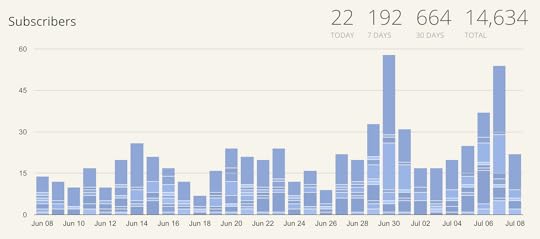
At an insanely quick glance, you can see your daily, weekly, 30-day, and all-time subscriber growth. This is collected across all your forms (which I’ll talk more about in a second) that you can see are denoted by the different shades of blue bars. Each color blue represents a different email form and the amount of subscribers it is receiving.
These are your ConvertKit forms:
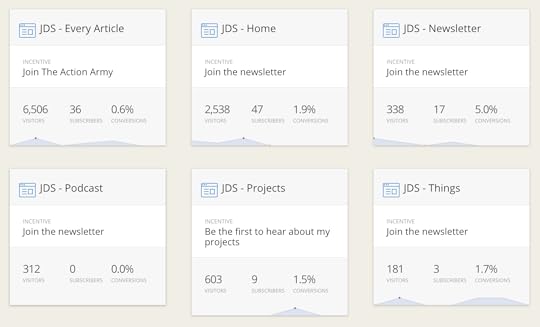
Forms are exactly what they sound like. They’re the boxes you put on your website where people can hand you their highly coveted information (their email address). This was something that was always missing for me in Mailchimp. I really wanted to know which email signup forms in which places on my websites were converting the best. Was it the form on my homepage? My newsletter page? Some random article I have that gets lots of traffic? In Mailchimp, you could only see this information if you dug into list segmentation and groups (which was a huge pain in the ass).
Let’s talk about ConvertKit tags:
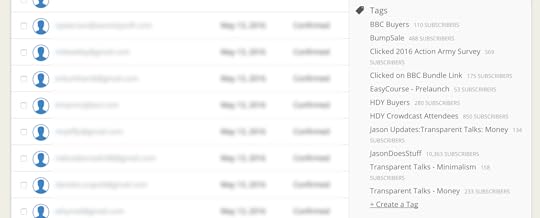
This is where you’ll have to shift your thinking from having specific email lists for your various businesses or projects. In Mailchimp, I had separate lists for “JasonDoesStuff” and a project like “BuyMyFuture.” As you can see, those are now “tags” in ConvertKit. It works similarly to organize emails under one business, but ConvertKit’s tagging gives you much more flexibility and ease of creating different segments (other tags) of email subscribers quickly. Kind of confusing to type and try to explain, but as soon as you set this up, you 100% grasp the concept and enjoy tags.
These are ConvertKit automations:
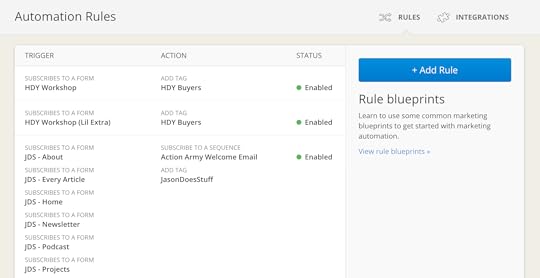
I’m not even going to be able to scratch the surface on the power of ConvertKit’s automations in this article (it definitely deserves an entire other article, maybe even how-to course). But just to give you an idea, you can set different rules for different actions: signing up for a form and getting added to an email sequence and/or getting adding to a specific tag. You can also create things called link triggers, which let you add people to sequences, tags, etc., based on clicks in emails. Yeah, it’s a bit advanced, but when you get the hang of automation, it’s rad.
And ConvertKit broadcasts and sequences:
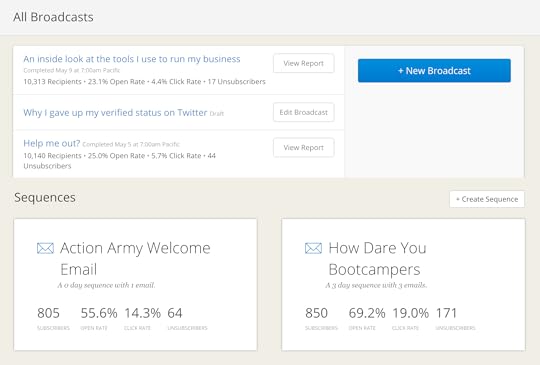
I’m lumping these two together, although they could probably use their own paragraphs. Similar to Mailchimp’s campaigns and automation, ConvertKit has broadcasts and sequences. I will admit that Mailchimp’s campaign designer is much friendlier than ConvertKit’s broadcast designer. However, if you’re moving from Mailchimp to ConvertKit (like I did), you can export your Mailchimp templates as HTML and upload them into ConvertKit’s templates (with a little bit of code finagling). The folks at ConvertKit also help with migrations and can assist you in moving over email template designs from any email provider.
So how do I use ConvertKit for my business?
I send broadcasts to the Action Army (my list) every Monday
I have about 30 forms created for various places on my website and other websites
I have a 1-email welcome sequence people get when they sign up for the Action Army
I have a couple email sequences for various topics
It’s pretty freakin’ simple. And that’s what I love about ConvertKit. They’ve stripped out all the unnecessary fluff and features, and left behind exactly what’s needed to use email marketing to run a business.
Here’s a video walk-through of ConvertKit which shows my forms, broadcasts, sequences, tags, automations and more:
Now let’s look at the direct impact ConvertKit has made on subscriber growth
With my Mailchimp forms, I was forced to essentially use one form everywhere on my website (homepage, about page, newsletter page, articles, etc). With ConvertKit, I have about 20 different signup forms on JasonDoesStuff. Some have different text. Some have different button text.
With Mailchimp, I averaged 5-10 new email subscribers per day (2,400 in 2015)
With ConvertKit, I now average 18-23 new email subscribers per day! (on pace for 6,500 in 2016)
That’s double the email growth without a noticeable increase in website traffic!
And while the subscriber growth increase is great, I’ll repeat that the best thing ConvertKit has done for my business this year is help me really enjoy knowing I’m in more control and understanding of the thing (email marketing) that drives 90% of the revenue for my businesses.
Ready to give ConvertKit a try?
If this article has piqued your interest in ConvertKit, well, they’re interested in you, too! They’re offering a 1-month free trial with the link convertkit.com/jason. Sign up and you can kick the ConvertKit tires for 1 month without spending a single dime. That’s exactly what I did to see how I liked it, while still using Mailchimp.
Once the 1-month free trial is over, you’ll start paying the standard prices ConvertKit charges to manage your email addresses, and I’ll get a small commission. You don’t pay any extra, and I get to make a little money for recommending one of the most important tools I use for my business.
And of course, if you aren’t interested in using my 1-month free link, you can always go to ConvertKit.com directly to sign up.
The post Why Switching From Mailchimp To ConvertKit Has Been The Best Thing I’ve Done For My Business appeared first on Jason Does Stuff.
June 19, 2016
How We Paid Off $124,000 in Debt in 3 Years and Became Completely Debt-Free
In the summer of 2013, my girlfriend, Caroline, and I were drowning in debt. How much debt? $124,000 spread across six credit cards, a car loan, and student loans. We never could have imagined being debt-free at that time.
I wrote a bit of my debt story and the steps we took to start getting out of debt in this other article. Here’s an excerpt from that explaining where my business debt (over half of my debt) had come from:
I want to be clear that I didn’t get into overwhelming debt overnight. I also wasn’t buying extravagant things. My business had monthly operational costs. These costs ranged from salaries, design/development expenses, advertising/marketing, and countless products and services that kept everything organized. Over the course of a year, I went from $12,000 spread across two credit cards to nearly $100,000 across six different credit cards.
These were our specific debts and and where they came from:
Jason business debt: $72,328
Caroline business debt: $6,764
Caroline student loans: $20,208
Volkswagen Tiguan lease payoff: $24,794
Total debt: $124,094
I want to point something out before I move a step further. I remember the visceral feeling I had looking at these debt numbers in 2013.
I was ashamed. I was embarrassed. I was disgusted. It felt like an insurmountable mountain to climb. If you’re currently battling with debt and having similar feelings, those feelings are completely normal.
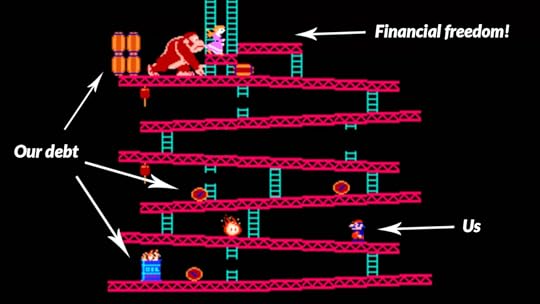
We could’ve given into those feelings, and resigned ourselves to being in debt forever. But we decided to do something different: It sounds weird, but we gamified our debt reduction, much like Mario in the original Donkey Kong. Each ladder we climbed and every barrel we jumped over was another chunk of our debt we were getting rid of.
A short disclaimer before we go on…
I’m not an accountant. I’m not a debt specialist. I’m not a certified anything when it comes to money. I’m just a guy who ran an online business and got into debt. I have a girlfriend who had student loan debt from college. We had a car payment we loathed paying each month. We, as a couple, sat down and created a plan to get out of our debt (along with some outside financial advisement, which we’ll get to). You know, so, like, don’t sue us. 
June 12, 2016
Your idea isn’t good enough
Wait, what? Is that contraction supposed to be there? Shouldn’t that have said your idea is good enough.
Nope.
If your idea was good enough, you would pursue it. If your idea was good enough, you would carve out precious time for it. If your idea was good enough, it would keep you up at night and force you to work on it, hour after hour.
Let me be clear: I’m not saying your idea sucks. I’m not saying your idea is bad.
What I’m saying is that you’re resisting taking action with your idea. The reasons for resisting might be totally legitimate. Sometimes we’re just not ready, and that’s okay. Not being ready is okay.
Sometimes we’re TOO ready, and we get dangerously consumed by an idea. Some people’s ideas take control of their lives. It can be scary to have an idea so powerful, or a job so demanding, that it ruins relationships and destroys your health. Sounds drastic, right? How could a simple thing like an idea do that? Ask Mita Diran, the 24-year-old copywriter who died at her desk after spending 30 straight hours in the office. Consider the Japanese concept of karoshi, which translates as “death by overwork” and is estimated to claim 200 workers every year.
That’s not what we’re going for here. I don’t want you to swing from procrastination all the way to dangerous obsession.
The key is to find a comfortably challenging place between procrastination and obsession. A place that will empower you to get things done and still enjoy your life. To take action with your idea.
What would you create if money didn’t need to be involved? What’s something you just feel you need to get out into the world? What is something you can’t stop thinking about?
We all have bills to pay, but we all also spends hours wasting time. Watching TV. Reading random articles on the Internet. Reading every book by Seth Godin. Scrolling through social media feed after social media feed. Every single person, myself included, has the extra time to create the thing we can’t stop thinking about.
What people want: To make money doing what they love.
What people don't want: To do the work that it takes.
— Jason Zook (@jasondoesstuff) May 9, 2016
You’ll know when your idea is good enough
How? You’ll stop having so much time to read articles like this one. You’ll fall behind on your favorite podcast. Heck, you may even miss hitting inbox zero for a few days/weeks.
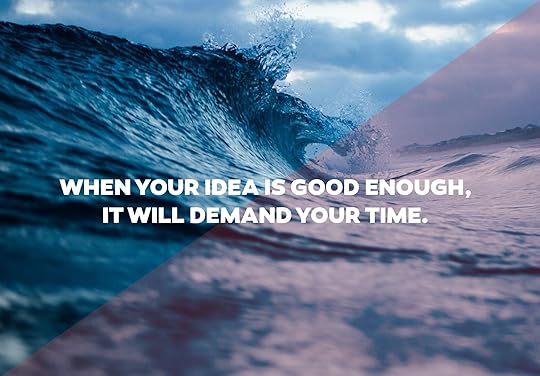
But when your idea is good enough, it will demand your time. Not all of it, because your idea wants you to have a life, too. But a lot of your time. And when your idea is good enough, the time you invest will be rewarded.
The post Your idea isn’t good enough appeared first on Jason Does Stuff.
June 5, 2016
Behind the Scenes of Building a Product in 1 Day: Emojibombs
Recently I was a Skype call with my buddy Paul when the conversation shifted from whatever topic we were supposed to be focused on over to emojis. (You know, as most Skype conversations naturally transition.)
While joking around, we landed on a silly idea: What if we created fictional origin stories for emojis and asked the Internet to pay to receive one of these stories every day for a year?
We both laughed at the idea and moved on from it. But then the idea pestered us. A few days later I woke up thinking about how fun it would be to read an emoji origin story amidst all the other emails in my inbox. I hopped in the Slack channel Paul and I have (called “Rat People” after this article). I told Paul I couldn’t stop thinking about these emoji stories and that we should make it happen. He said he was also thinking about them.
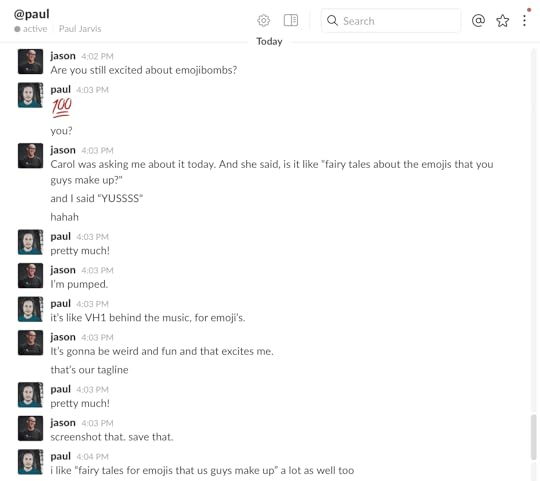
The longer we chatted in Slack to more decisions we made:
We’d call the daily emails “Emojibombs”
We’d build the product of Emojibombs in 1 day
We’d let the Internet watch us do it and submit their own emoji origin stories
It would be cheap to buy
It would be a fun idea, something super silly
Quick aside here: We, as a collective group of makers/creators/entrepreneurs, get very caught up in business. Meaning, we base decisions on outcomes that increase the bottom line and that have concrete ROI. But what about fun? What about doing things just to scratch an itch and to stretch our creativity? Fun was the biggest reason we decided Emojibombs had to be created. Read more about fun and business here. Okay, let’s get back to the journey…
We decided June 1 (a Wednesday) would be a good day to build and launch Emojibombs. At the time we put it on our calendars, it was a relatively quiet week. Unbeknownst to me, it ended being one of the busiest weeks I’ll have in all of 2016 (no joke). Nonetheless, we picked a date and committed to it.
Our plan of attack looked like this:
We’d set up a kick-off Crowdcast (live video event) for June 1 at 9am* PDT
Paul would include a mention to the Crowdcast in his May 29 Sunday Dispatches (his weekly newsletter)
I would include a mention to the Crowdcast in my May 30 Action Army newsletter
We’d share the link to the Crowdcast on both of our Twitter accounts
Everything** would be done live on June 1***!
*: Paul and I both wake up fairly early. When I woke up at 6am on June 1, I’d already received a message from Paul saying he wished we’d set the kick-off call for way earlier. We spent the hours of 6am – 9am twiddling our thumbs and being super antsy to get started. We’ll start earlier the next time we do this. Hah.
**: “Everything” meant almost everything. With experience, we knew that registering a domain name and getting all the DNS/SSL stuff done ahead of time would help us avoid any dreaded domain propagation issues. Paul did this stuff a few weeks in advance.
***: Neither of us had done a 1-day project before. We’d created plenty of things in the past, but building anything in one day presents a ton of challenges. I’d say we were both a little nervous, but we were also confident that we could get it done based on the scope of the project.
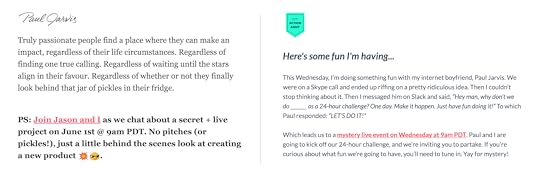
After our emails went out to our lists, we had 335 people registered for the live event. We pitched it as a “mysterious” and “silly” event.
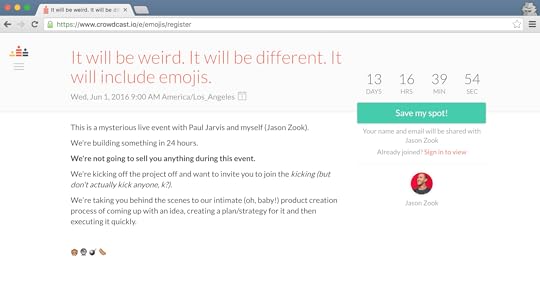
On the morning of June 1 our Slack was buzzing with ideas for Emojibombs. Especially in the 3+ hours when we were awake waiting for our own Crowdcast to start. It was hard for us not to start doing things, but even harder when people started messaging us in anticipation…
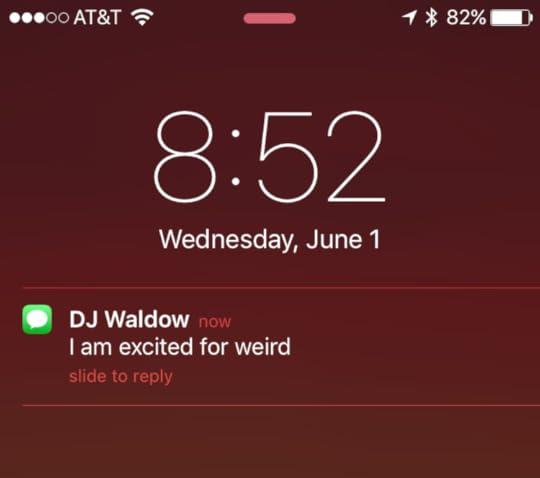
9am PDT FINALLY rolled around, and we were ready to kick things off… or so we thought. Paul and I have used Crowdcast for almost all our projects in the past year. We’ve done at least 10 Crowdcasts together, and I’ve done another 10 on my own (yes, I can do things without Paul!). But on this day, the launch day for Emojibombs, Crowdcast did not want to cooperate.
At first, I couldn’t see Paul’s video. Then I could see him, but I couldn’t hear him. Then he could see me, but he couldn’t hear. It was a terrible game of “who’s on first,” but some of the time you couldn’t hear/see the other person. Luckily one of the founders from Crowdcast was in the chat and quickly jumped in to help us out. I’m not sure if he power-cycled the Crowdcast modem or if he pulled out the cartridge and blew on it Nintendo style, but after a few minutes of panic, things finally started working correctly and we were on our way. Of course I grabbed a screenshot amidst all the technical troubles:
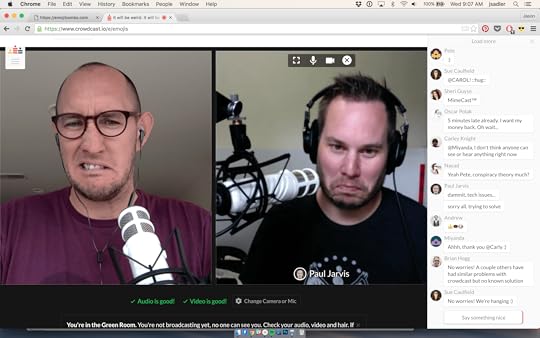
Another quick aside: I share the technical hiccup here, not to criticize Crowdcast. I’m actually a very happy paying customer of Crowdcast and think they have a fantastic live video/webinar platform. I share this because things will always go wrong. Something will break. Something will not work properly. Some cartridge will need to be pulled out and blown on (that sounded dirty, but stop it, it’s a Nintendo reference!). Plan for the technical glitches and allow yourself to take a deep breath in the moment and figure out how to overcome the obstacle staring you in the face.
Anyhoodle, we Crowdcasted. Over 100 people were watching us live as we finally told the world what this “mysterious” and “silly” emoji-related project would be. I remember a few things happened right as we explained what Emojibombs would become:
About 30-40 people immediately left the Crowdcast (to be expected, some people hate emojis – weird, I know!)
About 10-20 people had no clue what we were talking about
A handful of people wanted to pay us money right then and there
A handful of people had lots of idea for how we should do things, what we should charge, and other feedback that would derail us
It’s an interesting thing to announce a project to a group of people and then say you’re going to go build it in 1 day. While we appreciated the advice and thoughts of the people on the live call, we also knew we’d never get Emojibombs created and launched if we tried to make everyone happy. We had an initial plan (an idea for an MVP, if you will) and were going to stick to that plan.
It was also interesting to watch people leave a live event, essentially saying “I don’t like this idea.” But, as Paul and I have both learned over the years, seeing those people leave is a good thing. They weren’t interested in Emojibombs and we’d rather not spend time trying to convince them otherwise. There were also plenty of other people who were watching and excited about it. I had to avoid worrying about people not liking the idea to focus on the larger number of people who were ready to support us.
As we wrapped up the Crowdcast, we wrote down a list of the immediate next steps:
Paul would install his Nada WordPress theme on Emojibombs so we could start writing updates on a 1-page blog for people to read.
Paul would put an email capture somewhere on Emojibombs so folks could get updates emailed to them throughout the day.
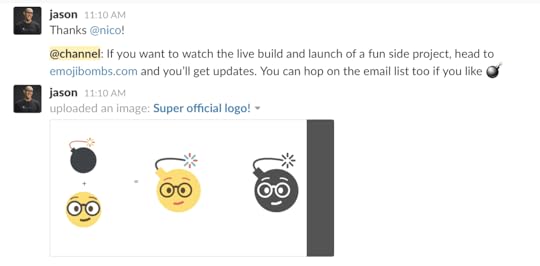
Paul would work on the branding and logo.
Paul would create the initial automation sequences and subscriber groups in Mailchimp.
I would setup the Stripe account so we could accept money from people who thought Emojibombs would be fun to get each day. (We decided on a price point of $11.)
I would start organizing all the screenshots and conversations we were having so we could share updates throughout the day.
I would try to keep us on some semblance of a schedule (11am for the next email, 1pm for launch. Both deadlines we failed to make… haha).
Paul and I have worked on a bunch of projects together now. We’re both acutely aware of our strengths. Paul handles most of the technical and design aspects. I handle the administrative and organizational aspects. If this was our first project together, it would probably have been a complete disaster. But, because we’ve worked together so many times before, we knew exactly what the other person would be doing and we trusted each other. Plus, (and this is one of the most important parts of creating a project in 1 day) we have a dedicated Slack channel where we over-communicate with each other. I can’t imagine trying to do this project, or any other project we work on together, without Slack.
Within the first hour, we were off to the races…
Mailchimp had been setup. Stripe had been activated. People were sitting on the website refreshing incessantly.
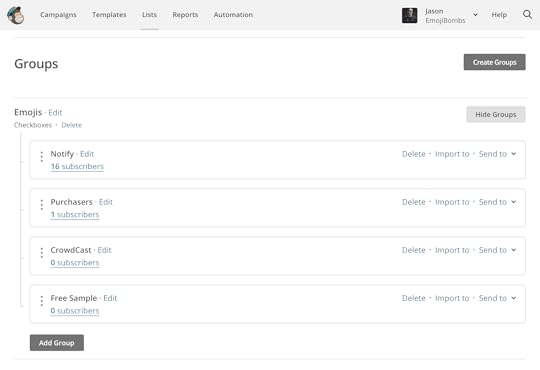
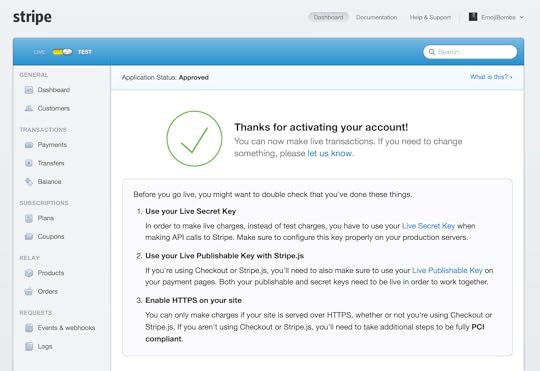
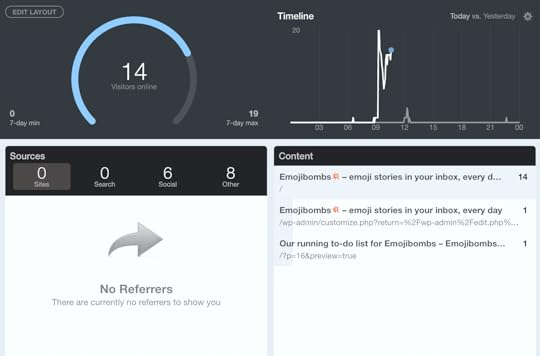
Me, refreshing https://t.co/hM9G02UXL3, @jasondoesstuff Twitter feed, and @pjrvs feed… #emojibombs pic.twitter.com/JSyS1kE7jJ
— Zach Holloway (@zgholloway) June 1, 2016
We even started to do some marketing. Which, for us, just meant sharing sarcastic updates on social media and other places we already have attention (like other Slack channels).
I remember taking a moment to realize my brain was zooming around a mile-a-minute, and I thought I should take a look at my heart rate on my Fitbit to see if my heart rate matched my mind rate. It did:
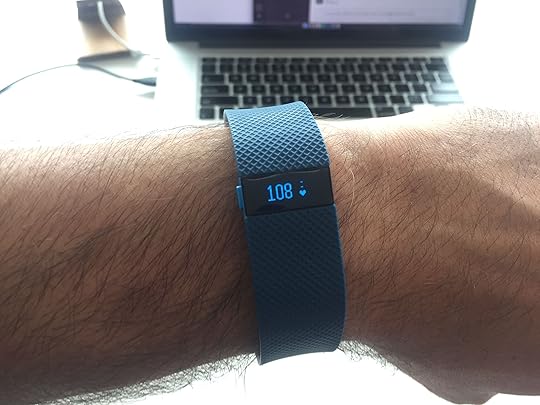
Note: Paul would have shared his Fitbit heart rate too, but his wife Lisa had taken his phone with her to go run some errands. He said his heart rate was in the 60s, but I didn’t believe him (and since he couldn’t send me a photo of proof, we’ll never know…).
Paul had just finished creating an initial logo and we hopped on Skype to check in with one another and record a short video. Here is that video:
Almost immediately after we finished filming that video we hit our first bump in the road. And by bump, I mean flipped over semi-truck that was carrying 20,000 tons of glue and covered the entire build-a-project-in-1-day highway we were driving down.
< Insert Project Drama >
Mailchimp had flagged our brand new account for compliance issues…
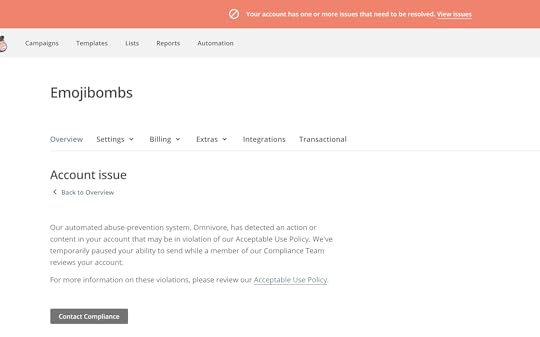
CRAP!
Now, why is this such a big deal? Well, if I haven’t cleared explained it, Emojibombs is completely driven by email. It’s a daily emoji origin story sent to someone’s inbox. Mailchimp is the company that would be handling that sending for us. If Mailchimp flagged our account for something and we couldn’t get the compliance issue resolved quickly, it would be almost impossible to launch this project in 1 day.
Paul reached out to Mailchimp through their support form and explained what we were doing and that we didn’t understand why we were being flagged for compliance. We did have a few thoughts as to why it might have happened:
The speed at which he created an account, made a list, made groups, created an automation, designed an email template, and imported our 350+ Crowdcast attendees emails could look robotic (because speed = robots).
We were using the word “bombs.” (Paul didn’t think this was actually a problem and while I agreed with him, a small part of me was skeptical).
Before I share whether we got out of Mailchimp Jail or not, I’ll pause to take a moment to share what it feels like when you have a vision for your idea and something out of your control yanks the rug out from under your ideating feet.
It freakin’ sucks. But, any time you work with another provider or service (Mailchimp, Stripe, etc), you are always at their mercy. This is just a known fact that you have to consider and deal with. While we were upset, we also knew this was a possibility and had to come up with other possible solutions if things didn’t work out in our favor (read: escape Mailchimp Jail with only a dull spork, our wits, and a map made from potato skins).
A funny thing happened when we posted that Mailchimp had put us in temporary jail. Someone from the ConvertKit team sent me a tweet:
@jasondoesstuff if only there was another way!

May 29, 2016
There Are No Rules In Business
For as long as men and women have walked upright, there has been some sort of commerce. Trading food, pelts, gold, goods for services, etc. Throughout it all, there is one common element that has secretly remained unchanged: there are no rules.
You may think there are rules, but look at our current reality as an example:
Tomorrow, I could buy a domain, put up a website, and sell a product or service—all without asking a single person for permission.
Even more interesting (to me, at least) is that I could sell whatever* I want to whomever I want. Used cereal boxes? Yep. A subscription service about the mating habits of chameleons? Sure. Snow? It’s been done. If you can dream it up, you can sell it, and no one can tell you no.
*Of course, I can’t sell drugs or anything that’s illegal. Stay with me here, and try not to poke a hole in this theory just because there are also no rules about criticism.
Another great non-rule about starting a business right now? You could make $100,000 tomorrow. It would be incredibly difficult to do, but the ability for that to happen is 100% possible. 50 years ago? Good luck.
But if there are no rules, why aren’t more of us having fun with our businesses?
I bet you can count on your fingers and toes the amount of people you know who hate their jobs. You might even be one of them.
But why do we resign ourselves to doing work all the time that doesn’t bring us joy and happiness? Why do we subscribe to “rules” that don’t exist about how to work and live?
I’m not trying to paint a picture where everyone in society has a job they love. I know that’s only going to lead to people saying, “Who’s going to clean our toilets?” and “Do you think all the trash men/women have fun disposing of your garbage?” So let’s not go down that road (for now).
Let’s go down the road of making time and space for fun in our work. Time and space for making your own rules.
I don’t mean a corporate trip to Legoland to do team building and synergistic yoga exercises (…everyone get into downward-facing-demand-chain-economic-reporting). I mean allotting time for projects that have no immediate tangible benefit. Doing things that are a bit outlandish and may even veer into bizarre/crazy/what-the-hell-were-we-thinking spectrum.
Beautiful things happen when you stop following the rules.
Amazing discoveries are made when you’re willing to have some fun without limitations (revenue projections, legalese, etc). If every decision you make has to involve the bottom dollar, then I truly feel sorry for the way you run your business.
Fun has unintended outcomes
You know what people talk about? They talk about things being done differently. They talk about the weird things that pique their interest. They talk about memorable things. Not a single person goes and tells their friends about the amazing time they had doing mountain poses with the accounting team.
Trying to have fun can spur ideas.
Trying to have fun can land you press and attention.
Trying to have fun can do more for personal and team morale than any raise, bonus, or product launch.
I read an article recently by Ali Mese titled I can’t tell you why your business is growing. There was one point that stuck out for me:
“No matter how strong the temptation to obsess about conversions or short-term hacks, we need to understand that what lies behind sustainable growth is our ability to delight our customers with our dedication to extreme value creation.”
I strongly believe that adding a little fun here and there can (and will) delight your customers. Even if whatever fun thing you create isn’t something they can buy or have.
It’s nearly impossible to measure the ROI of fun. But not everything in business needs a measurable ROI.
Share your fun!
I would imagine most entrepreneurs and business owners don’t have fun for fear of what people will think. What if I alienate a customer who thinks we don’t take our business seriously? What if we show that we’re having fun and a big client thinks we just goof off all day?
What if YOU drew a line in the sand and were okay with embracing fun instead of working a few extra hours to try to make extra money?
In our current no-rules-in-business society, you get a badge of honor for working hard and hustling. What if instead of another honor badge, you went for some colorful flair (fun!)?
I’m up for having more fun and not worrying about it increasing my revenue. Are you ready to join me?
Here’s how I’m having fun without rules…
This Wednesday, I’m doing something fun with my internet boyfriend, Paul Jarvis. We were on a Skype call and ended up riffing on a pretty ridiculous idea. Then I couldn’t stop thinking about it. Then I messaged him on Slack and said, “Hey man, why don’t we do _______ as a 24-hour challenge? One day. Make it happen. Just have fun doing it!” To which Paul responded: “LET’S DO IT!”
Which leads us to a mystery live event on Wednesday at 9am PDT. Paul and I are going to kick off our 24-hour challenge, and we’re inviting you to partake. If you’re curious about what fun we’re going to have, you’ll need to tune in. Yay for mystery!
Oh, and we’re also going to let you make some decisions for us. Because, fun. There are no rules to this project. We just want to do something fun and see what happens. Join us!
The post There Are No Rules In Business appeared first on Jason Does Stuff.
May 20, 2016
Should You Build An Online Course?
Years ago, you had to have a website. Then, you had to have a blog. Now, it seems you need to have an online course. Let’s discuss.
Online courses are, simply put, just another way to share information. They can get a bad rap because people are sleaze-balls and make crappy things in life. But the same thing can be said about terrible websites, spammy e-books, and blogs with 47 email capture popups. An online course, like any other vehicle for sharing information, doesn’t have to suck.
If you don’t need to be convinced about creating an online course and you want an in-depth article on how to create and sell yours, read this article.
Online courses can do a few things very well:
1. Teach something that you know and have experience with.
2. Make you some great money.
3. Become a marketing channel for other products/services you sell.
4. Become a piece of leverage for other projects (included as a bonus, etc).
Online courses can also do bad things:
1. Distract you from the core mission and foundation of your business (read: sprinkles).
2. Pull your precious time and energy into something you think you should do.
3. Add to the digital clutter of the internet.
A crash course (hah!) in realistic expectations
As a society, we’re so quick to jump at a new project or opportunity. We get immediately wrapped up in all the amazing potential! But, as with every new thing, potential is not guaranteed results. Even if you’ve created an online course before, it doesn’t mean the next one you create will be a smashing success.
When I set out to create my second sponsorship course, How To Get Sponsorships For Podcasts, I thought I had a big hit on my hands. My first sponsorship course had generated over $100,000 (in about 18 months), and I thought my second course could add to that.
I did a pre-sale to gauge interest and generated over $6,000 in sales in two weeks. Hey, not too shabby! When the course was finished (a month after the pre-sale), the content itself was well received. I heard things like:
This course content was super helpful! Thanks for putting this course together.
Oh man, I would have paid 10x for this course. I learned a ton and even came up with ideas for making money with my podcast that I hadn’t thought of before.
I landed a $10,000 sponsorship deal thanks to a couple things I learned in this course—woot!
Hearing those types of things made me think I had a huge winner on my hands. I sent out emails to my list promoting the course. I passed it around to influential podcasters and asked them if they wanted to promote it. I reached out to a handful of people who’d emailed me about getting podcast sponsors. And then I waited…and waited. The sales did not roll in as expected. To be honest, I was a little bummed, until I readjusted my expectations.
Since launching the course in 2015, I’ve moved my attention away from promoting it or spending extra time on it. I’ve decided that I’m very happy that it made $6,000 on its own, and that it continues to be a valuable resource I can add to other projects as a bonus.
I share this story with you because I want you to know that creating and selling an online course could take you to six figures or more (like what happened to me), or it could make you $6,000 or less (also happened to me).
If you’re saying “YES!” and you do want to build your own online course…
Then let’s take the next steps.
6 questions to answer YES to before you set out to create an online course
1. Do I have the time it takes to make something that’s high quality and will actually help people?
2. Do I have real demand for an online course? (Not just email sign ups—are people trying to put money in my wallet/purse/murse?)
3. Do I really want to make this course or am I just chasing the financial dream someone is selling me?
4. Do I have a plan for promoting the course after the initial launch?
5. Does an online course align with my current business offerings?
6. Am I going to survive (financially) if the course doesn’t make money after the initial launch (or at all)?
If you answered yes to every question—and you must answer yes—then congrats! You should build an online course.
I force myself to answer yes to all six of these questions every time I create a new online course. Much like my Road Runner Rules, I want to make sure I’m doing things for the right reasons and with a solid foundation.
Related: If you want to plan, create, and launch an online course in 30 days, my friend Omar Zenhom and I are going to walk you through the exact process, step by step. Check out EasyCourse.co
The post Should You Build An Online Course? appeared first on Jason Does Stuff.