Jason SurfrApp's Blog, page 16
February 12, 2017
Building A Community That Matters
One of the most important things I’ve done for my entrepreneurial career has been to build a community.
Call them friends, subscribers, tribe, or whatever noun is haute at the moment. A community is a group of people organized around your ideas. And it’s something you must have if you want to succeed as an entrepreneur.
A community provides you with a wealth of opportunity and support
Whether it’s 20 people, 200 people, or 20,000 people, whoever’s interested in what you’re doing is part of your community.
When I started my first entrepreneurial endeavor in 2006, a two-person design company, I had about 18 people in my personal rolodex. And because it was 2006, I think I had an actual physical rolodex, too (hah!).
Now, these people weren’t successful business owners or deep-pocketed angel investors. They were just friends or acquaintances I’d met and kept in touch with. From those initial 18 people, we were able to take our small design firm (“firm” makes it sound cool) from absolutely nothing to a $250,000/year company in just over a year’s time. Those 18 people ended up being the starting point to my entrepreneurial journey.
You never know who someone else knows
While I had less than 20 people in my community, they all had communities of their own. When I asked them if they needed our design services or knew anyone who might, my community suddenly had exponentially larger reach. I started to get emails and (gasp) phone calls from people I didn’t know. They had been recommended to me from my original community connections.
As my community has grown over the years, I’ve enjoyed opportunities I never saw coming.
One random email introduction from someone in my community to someone in their community led to $50,000 in speaking engagements. One random Facebook message led to a live interview on CNN. One random email led to a direct message on Twitter, which led to meeting my life partner, Caroline (no joke!). I could go on and on about all the amazing opportunities that have come to me in my life due to my community. But remember, it all started with 18 people.
Community isn’t measured in followers
That design firm I mentioned above grew when there was no Twitter, no Facebook, no email list. It didn’t have any of the hallmarks we think of when we think of “community” these days, and remember, it was SUPER small by many people’s standards.
You might be thinking a community has to grow and get big to bring you success, but I’d disagree. You can keep a community extremely small and it can bring you immense results. The key is to surround yourself with the right people and to be extremely clear about who you want to join your tribe/group/blessing (you know, like a blessing of unicorns… which is the actual way to describe many unicorns in a group).
Having an email list > Having followers on social media
The strongest community I had a few years ago was on Facebook. I used to get 250-500 Likes on anything I posted. But guess what? Facebook changed their algorithm. Just a few weeks after that change, the Likes plummeted to 25-50 (and the comments almost all but disappeared). While social media can give you access to lots of people, when you don’t control the platform, your community rug can get pulled out from under you out of nowhere.
Since then, I’ve focused my efforts on building my community through an email list. Email hasn’t changed in years, and if you’re delivering value (which I’ll share more about next), no one can pull any rug out from under you and rob the attention of the community you’ve built.
How to build a community and keep them coming back for more
Engage in valuable or entertaining conversations
The majority of us aren’t celebrities, we won’t be featured on prominent news outlets on a regular basis, and won’t have any opportunities to have a community of fans/followers/friends fall into our laps. However, if you become a source for valuable or entertaining content, people will talk about you to people they know.
Early on in my entrepreneurial journey, I was very curious about marketing. I had some hunches of my own to share, but I also did research and stayed up on marketing trends. Whenever I’d find myself in a conversation with a stranger, they’d ask, “What do you do?” The answer to that question inevitably led to my sharing my thoughts about marketing. I remember always trying to give away as much knowledge as I could. Conversation after conversation, and I became known as a guy who understood and knew things about marketing. It wasn’t because I put it in my Twitter bio. It was because I lived it.
You have something of interest to share with other people. Everyone does. The key is to figure out how to share your topic or ideas while ensuring that you’re trying to help the person you’re talking to. Remember, we’re trying to build a community here, and building a community happens quickly when you become a source of value.
If you’re looking for an advanced technique, think of whatever topics you enjoy the most (marketing, design, music theory, woodworking, etc). Go search keywords related to your topic on Twitter Search. You now have hundreds, if not tens of thousands of people you can interact with and try to help. You’re welcome!
Create consistent content to keep people engaged
Following conversation, what kind of content are you putting out into the world to keep your community interested and new people finding you?
When I wrote “one of the most important things I could have done for my career…” earlier in this article, another important thing would have been consistency. I wrote an entire article about the power of consistency. Showing up. Publishing regularly. Being a reliable source of information. These things matter and make you stand out the more you do them on a consistent basis.
Content doesn’t have to be expensive. You don’t have to spend 10,000 hours per year creating content for your community. You don’t have to buy the fanciest gear to produce your content with. You simply need to create the content you can create, on a consistent basis, so that people in your community can count on you. Think about all the people you enjoy consuming content from. I bet you could list out the schedule of when they publish articles, podcasts, videos, etc.
I mentioned your content not having to be expensive, but don’t be cheap, either. Early on, just get your content out into the world to the best of your abilities. Any smartphone can record a video these days (it certainly couldn’t in 2005, when the only smartphones were Blackberries (ew) and Palm Pilots (ew ew)). This $70 lavalier microphone is one I still use often for anything audio related. And even professional journalists need nothing more than a mic and a blanket fort to record professional audio anywhere in the world.
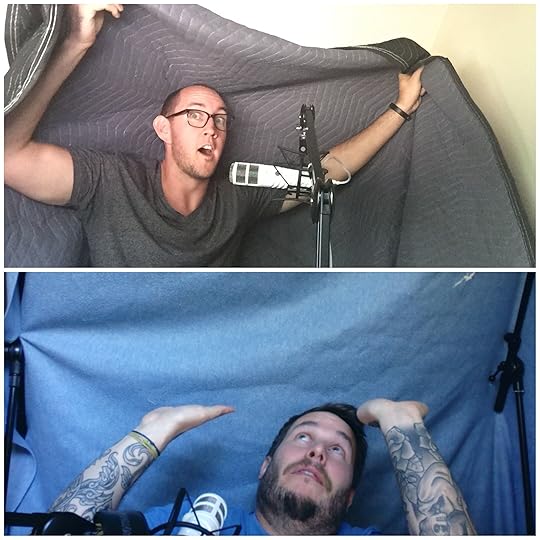
(Paul Jarvis and I use blanket forts to record our podcast: Invisible Office Hours)
As you get more comfortable creating content and start to build a community, then you can start to think about the fancy equipment you should upgrade to. Until then, do the absolute best you can with what you’ve got at your immediate disposal.
Context separates you from the pack
You can create content all day long, but odds are, someone else in the world is creating content on your exact same topic. Instead of trying to compete on the content level, focus on context.
What is it about YOU that you can infuse into the content you create for a community?
What unique outlook or experiences do YOU have that you can share (pro tip: don’t have unique outlooks or experiences? Go create some by getting outside your comfort zone!)?
What’s twist can you put on things? Is it your non-sequitur writing style? Is it a super unique video style? Are you a wizard with metaphors?
Context is what makes your content stand out from the rest of the players in the arena. If you’re at a complete loss about your context, ask your friends. What do they think is unique about you? What stands out? See what you can learn from the people who know you best and are willing to shoot you straight. Your context will evolve over time, and that’s perfectly okay.
Creativity keeps a community engaged
Let’s face it, people get bored quickly these days. There’s a new app, cat GIF, cool website, or hilarious video to watch every day. When you’re building a community, it’s important to think about how you’ll add creativity to the mix to keep people’s attention on you and what you’re putting out into the world.
Creativity doesn’t happen out of thin air. Here are three ways you can cultivate it. You can exercise your creativity muscles and come up with interesting and different ideas for your community.
Get a little uncomfortable. Nothing creative ever happens in comfort zones and routines. This TEDx Talk about creative thinking has some great wisdom and practical advice when it comes to creativity:
Commotion brings new people into your community
Don’t be afraid to shake things up! Throwing a curveball every once in awhile will keep you energized and your community engaged.
Some of the most popular articles and projects I’ve done are the weirdest. They don’t fit into the categories of “marketing” or “running an online business” or “how to be entrepreneur.” You don’t have to do the big/crazy things, but switching it up from your standard focus and topics can really energize a community.
Let creating a community happen by accident
I never knowingly set out to build a community, which might be one of your most important takeaways. Mine happened organically, and yours can, too. It actually already is happening! Every time you connect with someone and pique their interest, you are building your community.
But the best/hardest part? Is that you can’t fake it.
The opportunities and support that come from a community cannot be engineered. It happens organically when you treat people with respect.
It may sound cliche, but it’s true, and it’s very simple. Be a good human being, go out of your way for other people, and you’ll find yourself with opportunities and helpful people at your beck and call.
Just remember, it may take a long time, but you should be building a community for the long haul, not the short-term.
The post Building A Community That Matters appeared first on Jason Does Stuff.


February 5, 2017
Getting Things Done and Taking More Action
We live in this weird time when anyone can make anything from almost absolutely nothing.
But they have to take action to do it. And many people don’t. You’re reading this article because you want to be among those who do.
I never set out to be an “action” person.
I wasn’t always an action taker. I didn’t always have washboard action muscles that you could do your laundry on. Actually, when my journey as an entrepreneur started, I spent the majority of my days surfing the Internet in my sweatpants. That’s not just a made-up story you hear about all entrepreneurs. It was absolutely true for me. Very quickly I’d have unanswered emails, calls, and impending deadlines that always felt stressful. For the majority of my life, I’d been a person who finished things last minute.
But when I started my first business, IWearYourShirt, it was evident very quickly that I had a ton that I needed to do. The premise of the business was to wear a different shirt every day of the year, and on each day I would:
film and edit a YouTube video
host a one-hour live video show
take photos
interact with an audience on Facebook and Twitter
and, oh, run and grow the actual business (marketing, sales, etc.)
I had never even attempted 99% of the things that I was going to have to do on a daily basis.
A few days before starting that business in December 2008, I remember thinking, How in the world will I possibly get all these things done? What have I gotten myself into?
Ultimately, I rewired my brain by learning how to take rapid action. There was no other option. The best part is that it didn’t just help me with that business—it’s now how I approach every single thing I do.
When people started to consistently ask me, “How do you get all these things done?” I realized that they didn’t even think it was possible to do so much. They didn’t realize their action muscle existed. They didn’t realize they could train it.
But it can be done. I’m proof.
How you can build your action muscle right now
Ultimately, it’s about putting in the work. And 100% committing to it.
Everyone wants a silver bullet to make all their problems go away. Everyone wants to just read the next article, the next listicle, the next blog post, the next thing in their Twitter feed, all the “best of” stories of success. And it’s so easy to just say, “OK, I’ll read an article,” but how many of those articles have you read at this point? Enough to fill at least a book.
The reason you keep clicking on those articles is because you haven’t found the answer yet. Here are the action muscle-building things that work for me and that I believe can work for you:
Use a calendar and do time blocking (one week at a time)
I started doing this in 2009 and have been doing it ever since. Every week, my Google Calendar gets filled with blocks of time for specific tasks. Usually the Friday before, I start mapping out the next week with time blocks. As the week begins, I can adjust accordingly. The key with time blocking is to make sure you’re only doing THAT specific task during that time. Shut down all other browser tabs, apps, anything that can distract you with notifications.
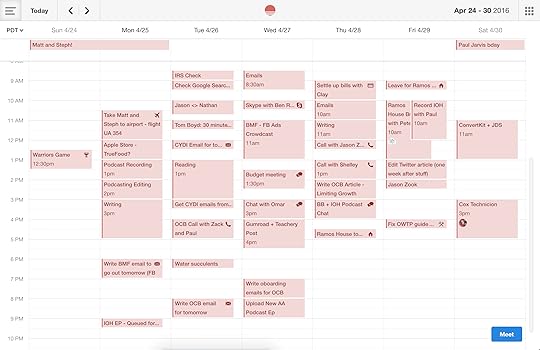
(I used to use the Sunrise Calendar. RIP, Sunrise.)
There are folks out there, even other Jasons, who will make the argument that an unscheduled calendar is the way to go. I don’t believe that one way of doing things is right for everyone. All I know is that blocking off time on my calendar keeps me laser focused and highly motivated.
I don’t see a full calendar as stressful. I see it as organized and pointing me in the direction of maximum output. Not every week is filled to the brim, of course. I just wanted to show you a fuller week (above) to give you an idea of what things look like when times get busy. In fact, here’s my upcoming week (as of writing this article):
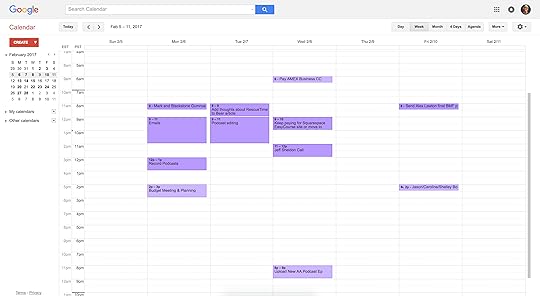
(have to use Google Cal now, sad face.)
Keep a written list of your to-do items, broken down by project
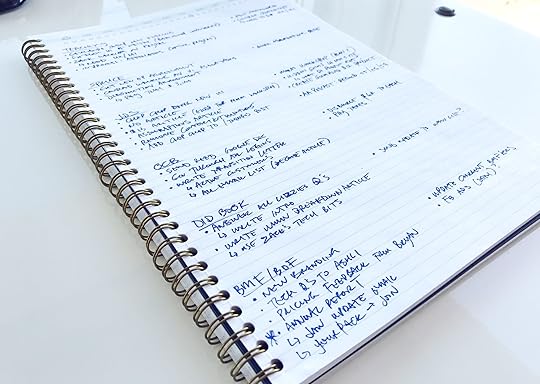
Every six months, I spend $2.19 on an 8.5×11 notebook at Target (here’s a similar one on Amazon for $1.09!). It’s almost identical to the notebooks I used to buy during my back-to-school days. A simple lined notebook (college rule, obviously!) takes all the distracting frills away from writing down to-do items. I write out each project heading and then all of the small tasks I can think of associated with that project. There’s something really profound about physically crossing off a task on paper with a Sharpie. Pro-tip: I like to leave the notebook open so I can see my list of projects and tasks all day long, every day.
Use an accountability partner
This is super important when you’re first sculpting that action muscle. Your accountability partner can be a friend, a spouse, or a random person you find on Tinder. I mean Twitter. Yeah, probably Twitter.
Make this easy for the both of you, and simply set up a weekly Skype call or in-person meeting where you can reflect on your time-blocked tasks and your written to-do list. How did you do? Where did you slip up? It’s important to admit where you fell short so you can improve in the future. Having someone else help you stay accountable to your tasks will keep you honest and keep you motivated.
Accountability calls or meetings may vary in length, but try scheduling less time than you need to stay more focused on the call (save the chit-chat for drinks or coffee!).
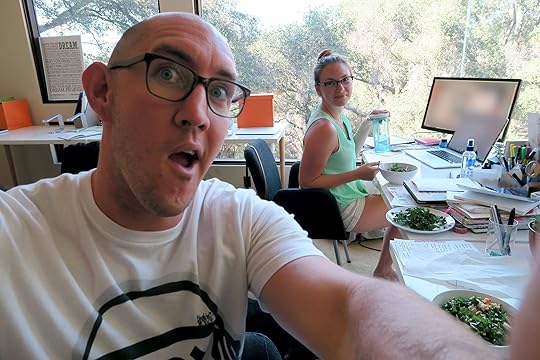
(My accountability partner is also my life partner, and my kale salad partner)
Last tip: Eat kale salads!
Okay, I originally was just going to leave this as a joke, but it’s kind of true. Your action muscle, like the muscles in your body, is only going to get more chiseled and shapely if you take care of your health. If you’re constantly eating crappy food, your body (and mind!) won’t have the fuel to function properly. You don’t have to eat kale salads, but you should absolutely avoid foods that cause you to crash or run low on energy. Getting a bit of exercise and fresh air can work wonders to boost your motivation.
Be reasonable about your output
Yes, I am particularly well-versed at the art of GTD (getting things done), but even I rarely get ALL my to-dos and tasks done. Why? Because life sometimes take a crap on your face when you least expect it. Because as much as I want to tell you that you can get every task done all of the time, you’re going to experience moments of resistance (some of us just experience less than others from years of action-muscle sculpting). But do I beat myself up about not getting all my tasks and to-dos done? Not at all. Not ever, actually. I cross off what I can, I reschedule what I have to, I take responsibility for why things didn’t get done, and I keep moving forward. Taking action isn’t some game to be won. It’s a process, one that all of us have to keep working at.
Taking consistent action brings unintended consequences
The biggest thing I’ve learned about the benefit of taking action is that it isn’t just about getting a ton of stuff done. The real benefit is opening yourself up to unintended consequences. It’s about putting the kind of stuff out there that other people would think is scary. It means not letting things stay in your head anymore.
Since I’ve embraced a bias toward action, so many things have fallen into my lap that I couldn’t have possibly dreamt of. I made $1,000,000 wearing t-shirts. I made $100,000 selling my last name. And I made over $300,000 selling my future.
Our society is so obsessed with successful people, but many don’t appreciate that success is never overnight: it’s consistent effort and consistent action. You have to put in the work to get to that level of success.
When you make taking action your lifestyle, when you’ve built that muscle, there’s no pressure anymore. There’s no pressure of having to worry so much about this client or this gig because things will keep happening. The expression “the rich get richer” is true because the people who are out there making stuff happen are opening themselves up to so many more opportunities.
Things get done because you do them, not because you dream of doing them
The steps I’ve outlined for you in this article may work wonders for you, but you won’t know until you actually put them into practice. There’s no better time to start than right now. No matter what day of the week it is or what month of the year, start right now and work on your action muscle.
**
This article has been adapted from the foreword I wrote for a book about becoming a better action taker.
When the authors behind Surge: Your Guide to Put Any Idea into Action reached out and asked me to write the foreword for their book, I had to make sure they were viewing action-taking in a way that resonated with me. After reading an early draft of the book, I couldn’t have been more excited to enthusiastically endorse it. My exact response to them after reading the book was something to the effect of, “I don’t have to write the book on how to take action. You guys have already done it.”
I encourage you to pick up a copy of Surge: Your Guide to Put Any Idea into Action. They dive much deeper into the topic and give you a blueprint to hone your action muscle.
So here’s yet another permission slip to start your journey to becoming an “action” person. Will you take it?
The post Getting Things Done and Taking More Action appeared first on Jason Does Stuff.
January 29, 2017
The Difference Between Getting Paid and Making Money
Making My First $13
I’d made well over $13 before 2008. In fact, I had a perfectly acceptable 9-5 job that paid me thousands of dollars per month (as many of you reading this probably do). But on one morning in 2008, I made $13 on my own. My own money that came from an idea I had and someone being willing to pay for it.
I’d made every single dollar, until 2008, in “normal” ways. I did chores as a kid and had an allowance (it was measly, but aren’t all allowances supposed to be that way?). I had a handful of “normal” jobs growing up:
I mowed lawns as an angsty teenager.
I worked at a “health-food grocery store” as a produce boy, and sometimes register boy when they weren’t afraid that a 15-year old kid would pocket money from the cash machine (quick aside for the younger readers: Cash was this thing we used to carry around in our pockets. It was like paper, but it had weird, made-up value. Oh, you know what cash is? Great, we’ll carry on!).
I sold pagers at a Verizon store.
I pumped gasoline at a gas station.
I worked as a summer camp counselor.
I had a whole bunch of part-time design jobs.
I share all of these jobs with you to point out that it was always a standard payment for services rendered. Normal jobs, if you will.
My first taste of entrepreneurial money
In 2008, I got my first taste of entrepreneurial money. That sweet, sweet nectar that I became addicted to and would continue to chase (and still do). My IWearYourShirt business had just launched to crickets (and they didn’t have money, those cheap-insect-jerks), and I started emailing friends and family to share the website with them. This was both in a moment of panic, but also because I had a thought: “If I don’t tell people about this idea, how in the world do I expect them to find it?”
Those few emails to friends and family weren’t sales pitches. They were just friendly hellos, accompanied by a request to check out or share this crazy t-shirt wearing scheme (err, business) I had come up with. Unbeknownst to me, a few of the email recipients took pity on me and deposited money into my PayPal account via the fancy buttons on the website link I’d sent them.
Brace yourself: After the first day of sending emails, I’d made $13.
I’ll give you a moment to pick yourself up off the floor. Are you okay? You are? Great. Things get a little bit more exciting from here.
In the coming weeks after sending those first emails, the money-making part of IWearYourShirt started to gain some traction. That $13 had increased to $500. Then $1,000. Then, after two and a half months of emails and tweets, I was looking at a PayPal balance containing over $6,000.
There’s a difference between making money and getting paid
I’m going to steal this wonderful sentiment from my girlfriend, Caroline. Mostly because she’s the better writer of the two of us, and because… joint household (see, babe? If I win, we both win!)
Anyone can get paid. Anyone can get a job. Anyone can exchange time for money. But it’s another ball of wax (why is it a ball of wax? who even has ever owned a ball of wax?) to make money.
When my IWearYourShirt business started making money, I noticed a shift in my thinking. Sure, I’d read about and seen other people who were making money from their ideas, but I had never done it. I had never had that experience.
That first $13 was like seeing the light. It opened my eyes to this idea that you literally can do anything and make money from it.
If getting paid to wear t-shirts isn’t proof of that, I don’t know what is. The feeling you get when someone gives you money for your thoughts is unlike any other. Many successful people, or at least experienced entrepreneurs, will tell you that the money itself pales in comparison to the transaction that happens. Someone is essentially voting for you, saying YES to you, with their dollars. If you haven’t felt this feeling before, I will warn you: Once you feel it, you won’t want to stop feeling it.
You don’t get what you don’t ask for
This little eight-word phrase has become a mantra for me. It works well in life, but it works especially well in business. Any time I have an idea and self doubt starts to creep in, I simply combat that self doubt with the broadsword of asking. It’s not a physical broadsword, although that would be really cool. But it is a weapon I keep in my arsenal.
Self doubt will say, “You’re an idiot! no one will pay for this! Hahahahaha, you’re also ugly!”
(We all know self-doubt is also a name-calling a-hole.)
My broadsword of asking will reply, “You may be right, self doubt, but we won’t know until we ask, right?”
Then self doubt retorts, “You’re still ugly!”
It’s silly, especially imagining self doubt and a broadsword arguing, but we all deal with it. We all have some version of these thoughts. But if I’ve learned one important thing since making my first $13, it’s this:
The asking gets easier over time. The rejection you receive from asking also gets easier over time, because you know you’ll have something more interesting to ask for again in the future.
This eight-word mantra, “You don’t get what you don’t ask for,” has popped up time and time again since that initial day in 2008. I continue to refer back to my broadsword of asking. I continue to make money, not only because I have ideas and execute them, but also because I’m unafraid of the consequences of asking.
Making money makes momentum
How about that for a sweet alliteration? It’s also the truth. If you can land ONE sale, you’ll feel a sense of empowerment that can fuel you to continue. But without that one sale, you can feel powerless.
So, is it that simple? You just have to make your first sale?
I’d say: YES.
Sure, you aren’t going to retire rich, pay off all your debt, and buy that gold-plated yacht you’ve been dreaming about with just one sale. But it will give you something you can’t manufacture: momentum. And with momentum, you can push through and more easily combat your thoughts of self-doubt.
If you’ve already made your first sale, awesome. Relish that. Enjoy it. Learn everything you can from it so you can make your next sale. And then your next. And then your next.
I hope you make way more than $13 from whatever you’re working on, but don’t lose sight of the fact that everyone starts with a version of this story. And everyone remembers their version, no matter if they go on to make $1,000 $100,000 or $100,000,000.
You just have to start.
**
Related Project: Make Money Making
The post The Difference Between Getting Paid and Making Money appeared first on Jason Does Stuff.
January 22, 2017
How many times are you willing to hear no?
I want you to imagine a number in your mind—a guess about how many times I’ve heard “no” to my ideas. Whether it was trying to convince companies to buy my t-shirt advertising space, place a bid to own my last name, sponsor a page in my first book, or buy one of the 20+ products I’ve released in the past few years.
Do you have your number?
If your number was under 100, you have a lot of faith in me and I love you for that, but oh no, I’m so sorry. You were way off.
If your number was lower than 4,000, you would still be wrong.
I’m sure the actual number of times I’ve been told “no” when asking someone to pay me money for something (since 2008) is higher than 4,000. Here’s how I can say that:
I wrote at least 1,000 tweets to people to buy spots on the IWearYourShirt calendar
I sent at least 500 emails in 2009 to companies to sponsor IWearYourShirt
I wrote over 2,500 emails to people I’d worked with previously (or had talked to previously) to sponsor my book
I had a spreadsheet of 250 companies I pitched to bid on my last name
I’ve sent over 50 emails to my various email lists (that range in size from 2,000 – 25,000 people) asking them to buy my products
And boy oh boy, have I racked up the “nos.”
People aren’t saying “no” because you’re a bad person
Early on, I took a “no” to mean I was doing something wrong and that I should feel bad about it. What I started to realize though was not that I was a bad person, it was simply that my ask wasn’t a good fit for the person on the other end for a myriad of reasons.
Sometimes people don’t even have to say the word “no” to you. They simply don’t reply to your ask. They don’t buy your product. They don’t take an action you’d like them to take. Again, even these things don’t mean you’re a bad person.
Here are a few different examples of why people say “no” that have nothing to do with you (or me) as a person:
The timing is wrong
I see this all the time. In fact, I tend to see it every year during the months of June, July, August, and December. Those are the worst months, historically, for me, and the onslaught of “nos.” People are busy with other things. They’re trying to take time off. Or, it’s the end of the year and they can’t be bothered. I do not control the timing and schedules of other people, therefore, I am not a bad person.
It isn’t in the budget
You simply can’t do anything about other people’s budgets. You can’t. If I could, I would invent a magic wand that increases all budgets. I would have waved this wand more than Harry Potter (budgetus increasimus!).
It doesn’t fit with their marketing plan
Well, guess what? You and I didn’t create their marketing plan! Moving on.
They’ve tried this type of thing before and had a bad experience
I don’t get this one as often with my weird ideas, but I do get it with products I sell that have been similar to other products out there. We can’t change a person’s experience with another product. We can give them an opportunity to change their mind, but that’s for another article.
They don’t see the value
This is the only example on this list that gets a bit tricky. It’s either a problem with how you and I are explaining our project and the value proposition behind it, or the person we’re trying to get a “yes” from just doesn’t get it. I imagine you know I’ve dealt with this a time or two.
I could go on and on with more examples. The point is: You need to remove yourself, and the feeling of being personally attacked, when someone says “no” to you.
Find gold in your “nos” (not nose)
This was a little trick I wish I’d stumbled upon way earlier in my time as an entrepreneur. Regardless of where you are in your journey, maybe this trick will help you going forward.
When I was pitching sponsors for my first book project, I had the company Gumroad on my list. (Gumroad is a company that can help you sell digital products.) I thought they’d be the perfect fit for the cover sponsor of my book (a $20,000 ask). Through some Internet sleuthing, I found a guy on Twitter who was doing marketing for Gumroad.
Side note, cool tip thing: In an article I co-wrote with my friend Matt Giovanisci, he found a cool way to use Google to try to find anyone’s email address at any company. It’s not guaranteed to work, but it’s better than picking your nose – https://www.getsponsorships.co/find-sponsorship-leads-using-google-hack/
I sent my pitch email about my $20,000 sponsorship request (ballsy, yes) and was happy to get a quick reply from the guy. Unfortunately, quick replies typically go one of two ways:
1. The person is on-board immediately and you’ve won! You can now swim through your money like Scrooge McDuck.
2. The person says “no” and you have to go back to the drawing board.
The quick response I received was a #2 type of response (and yes, I meant that as a poop euphemism). For some odd reason, I wasn’t ready to accept defeat in that moment. I fired back an email that went something like this:
“Hey ! Thanks for the quick reply. I totally understand this type of sponsorship isn’t a good fit for everyone. That being said, is there any chance you think of anyone off the top of your head that might be a good fit? If you have an email address or have the time to make a super quick intro, I would greatly appreciate it!”
I had no clue if that message would actually get a worthwhile response and any meaningful introductions. But hey, as the not-so-old-adage-you-just-learned goes, you don’t get what you don’t ask for!
I received a reply, and it was exactly what I’d hoped for (not always the case… budgetus increasimus againumys!) The guy had two companies he thought would be interested and he was willing to make a short email intro for me. BOOMSHAKALAKA! (NBA Jam ref, anyone?) Needless to say, I was stoked. I didn’t know if these email intros would turn into anything, but for the first time in my life, I had taken an “no” email and turned it into a potential “yes.”
That email response lead to two introductions. One of which was the CEO of a company called Treehouse, an online education platform. I’d actually met the CEO, Ryan Carson, at one of Future of Web Apps (FOWA!) conferences many years prior. While the introduction was great, I still had to put in the work to convince Ryan that Treehouse would be a good fit for the $20,000 sponsorship I was asking for. And spoiler alert: Ryan and Treehouse said YES, which you can read more about in the SponsorMyBook story.
You won’t always find gold, but at least you’re trying
Now for some honesty, because that’s how I roll: Landing Treehouse for my book has, to date, still been my biggest victory in turning a “no” into a “yes.” Sure, I’ve had a handful of other victories over the years. However, I’ve had my fair share of additional “nos” as well. And the pile of additional “nos” is exponentially taller than the pile of converted “nos to yeses.” But I just keep trying.
Why?
I want the dream more than I fear the rejection that comes from making an ask.
I want to succeed more than I’m afraid to fail.
I know from experience that every “no” is another opportunity to hear “yes” later on.
I’m willing to put myself out on the line, because I know that’s what it takes to have incredible things happen in life.
I hope you want those things for whatever it is you’re trying to get. Because if you don’t, then it’s time to figure out what you’re really looking for.
Sniff out some nos
A challenge for you today: try to get a no on one of your ideas. Email a potential sponsor, press send on that podcast interview request, or just ask your local Krispy Kreme to make you some Olympic ring donuts. “Sometimes, when you make a crazy request, you get an awesome answer.”
The post How many times are you willing to hear no? appeared first on Jason Does Stuff.
January 14, 2017
The Obstacle Is The Way
The most important book I’ve ever read.
Speaking in absolutes is one of my least favorite things. It’s something I try not to do in my own life, and it can cause me cringe-worthy feelings when other people do it. Here’s what I mean when I’m referring to speaking in absolutes: You launch a website for your new business, and on launch day, when you’ve built excitement and buzz leading up, your site is completely down. You think or say, “This is the worst day ever!”
Nope. That day is most certainly not “the worst day ever.”
I get it. Most people don’t actually mean it when they speak in absolutes. But it’s something that drives me nuts because absolutes stretch the reality of the situation. Things aren’t usually as cut and dry and people make them out to be, and absolutes make us lose perspective on what’s actually happening.
That said, I can unequivocally state with absolute fact that the most important book I’ve ever read is Ryan Holiday’s The Obstacle Is the Way.
This book, unlike any in the Harry Potter series (ahh, who am I kidding—I haven’t read more than a handful of pages in any of those books), has changed my life. The Obstacle Is the Way has made me a better person. And it has definitely made me a better business owner.
The premise of this most important book I’ve ever read is stoicism. Google tells me the definition of this word: The endurance of pain or hardship without a display of feelings and without complaint.
I want to be clear that I haven’t become an emotionless robot because I read this book. Holiday walks you through stories of stoicism as they relate to business owners, the über-successful, and war heroes—they weren’t emotionless robots, either. And I didn’t have interest in becoming more like any of the people in the book as much as I wanted to overcome a big obstacle in my life that was holding me back: Thinking of my IWearYourShirt business as a failure.
When you do something for five years and pour your heart, soul, and nearly every waking hour into it, it’s not an easy thing to detach from. It becomes especially more difficult to detach from the negative thoughts and memories. After hanging up my final t-shirt in 2013, a dark cloud hovered over any thought or discussion involving IWearYourShirt. Sure, the business had generated over $1,200,000 during its 5-year tenure, but I didn’t have any of that money left; in fact, I was over $100,000 in debt (which we got out of last year!). I didn’t even like to bring up money in conversations about IWearYourShirt because I felt such shame about the financial situation I (and really, the business) had gotten into. This was the obstacle that I wanted to find my way over.
About a third of the way through the book, I started to see the light. I could begin to understand that having this unfortunate ending to the story of IWearYourShirt was not what defined the business, idea, and five years of my life. That ending was simply a stepping stone. Sure, it was a stepping stone that stepped on ME at times, leaving me hurt and stressed out.
But it wasn’t the final stepping stone. In fact, it was actually a very important piece of my entrepreneurial journey. In Ryan’s words:
“Just because your mind tells you that something is awful or evil or unplanned or otherwise negative doesn’t mean you have to agree. Just because other people say that something is hopeless or crazy or broken to pieces doesn’t mean it is. We decide what story to tell ourselves.”
And here’s another quote that hit me at exactly the right place and time:
“The obstacle in the path becomes the path. Never forget, within every obstacle is an opportunity to improve our condition.”
Why the obstacle IS the way
When an obstacle hits, it’s like standing at the foot of Mount Everest. How will we climb this insurmountable obstacle? How will we navigate all the unknown parts? How will we survive if Games of Thrones ever comes to an end???
For me, and for my IWearYourShirt business, I realized something that completely shifted my outlook on the ill-fated closing of that shirt wearing business: The shutting of IWearYourShirt opened doors to new ideas. The longer IWearYourShirt stayed open, the longer I’d have to wait to pursue other things.
Now, was I brimming with ideas? Was my brain overflowing with concepts and dreams I couldn’t wait to try out? Not really. On the contrary. IWearYourShirt, and the downturn of it, actually zapped me of most of my creative thoughts and aspirations. What started as an endless supply of creativity in 2009 ended in 2013 with what felt like nowhere to turn.
I thought the only option was to continue to iterate (insert industry buzzword bingo: pivot) my IWearYourShirt business again and again until something hit. And while that actually could have been a possibility, to land on another direction for that business, the more time I spent holding onto it, the more time I wasted allowing other possibilities to show up in my life. A big part of me was just ready to move on and challenge my brain to come up with another idea like IWearYourShirt. Could I could up with another truly original/unique/different idea? Or was I a one-hit wonder?
Finishing The Obstacle Is The Way gave me new perspective on what has happened for me between 2013 and now. And while it wasn’t an overnight shift in that perspective, it was actually much quicker than I thought. Sure, I was also having many-a-DM (deep and meaningful) conversation with my life partner, Caroline. That helped as well. But as we all know, even the people closest to us can give us the best advice, but when the advice comes from a credible outside source, like a book, we take it and are much quicker to accept it. What this book helped me learn to do was repeat these things to myself:
IWearYourShirt was not a complete failure.
You, Jason, are not a complete failure.
You, Jason, are not just IWearYourShirt.
You, Jason, can come up with more ideas and will go on to do other things.
You, Jason, could always just get a job at Target or Starbucks, and figure out a way to get by in life.
You, Jason, could always move home, suck it up for a bit, and remember that nothing is permanent.
You, Jason, need to stop talking to yourself in third person. It’s freaking people out.
How it made me a better person
It sounds silly, but Ryan’s book gave me the permission I needed to be more accepting of myself and the mistakes I’ve made. More importantly, it also gave me story after story and example after example of people who had screwed up WAY worse than I had and made huge comebacks from it.
Unfortunately, I have to drop another absolute on you. Ugh, I’m such a rule-breaker of my own rules. Writing my first book, Creativity For Sale, was the most cathartic thing I’ve done. With the help of my amazing book editor, Lizzie, I was able to let go of a lot of mental baggage. The reason that book got written and the subsequent catharsis happened was that IWearYourShirt failed. Had it kept going, I would have kept going. I would not have gone through the exercise of writing a book and hosting my own personal mental gymnastics.
The obstacle of shutting down IWearYourShirt was the stepping stone to writing a book. And writing a book opened me up as a person. That allowed me to move on and let go of a bunch of stuff I was holding inside. While IWearYourShirt was one big stepping stone towards writing my first book, it’s all the stories about building IWearYourShirt that were the tiny stepping stones that advanced me further and further across the river that is life.
How it made me a better entrepreneur
A year prior to shutting down IWearYourShirt, I had another obstacle get in the way. My mom went through a divorce, and it left me (and her!) with a last name we no longer wanted. This obstacle, having a last name that didn’t define who I wanted to be, sparked the idea for my BuyMyLastName project: a crazy idea to auction off my last name to the highest bidder in a 30-day auction. That project (I did two auctions in two years) netted me nearly $100,000. I was able to creatively overcome an obstacle in my life, make money from it, and also donate a sizable portion of that money to charitable organizations.
Selling my last name and writing my book were the stepping stones to leaving IWYS behind and believing I had more to offer the world. I began to believe I could come up with other unique ideas and they wouldn’t all end like IWYS did. So I set out to create my first online course in 2013, I searched high and low and couldn’t find a course platform that suited my needs. Everything was either too bloated with features, too difficult to set up, or worst of all, forced me to have a website plugin or house my course within a branded platform. This was my course-creation obstacle. I knew I could create the content. I knew I could sell the course. The obstacle was finding a platform that was technology agnostic (meaning: wasn’t forced into an existing ecosystem) and that would be easy to use over and over again. Stumbling into that obstacle was what led to the creation of Teachery, an online course platform I co-own with my friend Gerlando Piro. That initial obstacle has gone on to create a side business for me that pays my bills and provides an incredibly easy-to-use course creation platform for anyone in the world (at a very affordable monthly price, I might add).
I can look at every situation I’ve been in and every business I’ve created, even before IWearYourShirt, and clearly see an obstacle that led to the beginning of each business. Some problem. Some issue. Some event that needed to be overcome.
What obstacle is standing in your way?
You, most likely, are staring an obstacle in the face right now. It may not be one as insurmountable as standing at the foot of Mount Everest (I think we’re both thankful for that!) But I’m guessing something has happened in your life or business that you feel you can’t get past. Something that’s holding you back and keeping you from moving forward to the next stepping stone.
How can you change your perspective on whatever that obstacle is?
Your website went down on launch day?
Truly a bummer. I’ve been there (many times). Can you use it as a teaching moment for anyone who looks up to you for inspiration? Can you use it as a moment to reward your loyal customers and extend some offer to them that wouldn’t have existed? Can you learn from the experience if you have the right customers for your business (ones that don’t scurry like roaches when the lights get turned on at the sight of any problems with your business)?
You end a long-term relationship?
Also truly a bummer and one I’ve experienced, too. Does this open the doors for you to find someone who is better suited for the person you’ve become? Does this allow your former partner to do the same thing (find someone they are a better match for)? Does it create the opportunity for both of you to live happier and healthier lives?
You close down a business that isn’t doing well?
I don’t even think I need to say much else here. Won’t closing down this business open the doors of opportunity that have been closed? (The answer is yes, and I can obviously attest to that.)
Obstacles suck. They are not fun.
They are not ice cream cones covered in fudge and sprinkles. They are plates of boiled chicken and broccoli. They are the difficult decisions we must make in our lives. They are the important decisions hiding behind awful events and circumstances. When you’re in the middle of dealing with an obstacle, it will feel like climbing Mount Everest. And even though you and I will probably never know that exact feeling, we can sure as hell take a wild guess at how difficult it would be.
Like climbing Everest, you overcome obstacles step by step (or stepping stone by stepping stone). You put one foot in front of the other. You swing your pickaxe into the next piece of frozen mountain, and you move forward. Eventually you reach whatever summit of your version of Mount Everest that will make the difference for you. Then, you get to look back on it. You get to see your life and all the new opportunities in front of you with more clarity, because you’ve overcome a difficult obstacle.
There will always be more obstacles.
But as Holiday talks about in his book, and as stoicism teaches, if you can endure the pain and hardship, and see it for exactly that, you can take a step back and not let it affect you. With every new obstacle that comes your way, you have the reflection of previously overcome obstacles to guide you. To have you take a deep breath. To have you take a step back. To have you realize today isn’t “the worst day ever.”
The post The Obstacle Is The Way appeared first on Jason Does Stuff.
January 6, 2017
State of the Union 2016, and 2017 Preview
It’s time to look into the rear view mirror, while also keeping one eye looking out the front windshield (and trying not to get dizzy while doing it). Weird way to kick off a “year in review/preview” article? Sure. But I’m a weird guy!
What went well in 2016?
PAYING OFF OUR DEBT!!! Yeah, this one is first on the list and gets ALL the exclamation points and caps lock action. In 2013 my girlfriend Caroline and I felt like we were drowning in debt. It felt suffocating. But we hunkered down and built a plan to pull ourselves out of our $124,000 debt-hole. I wrote two articles about our getting out of debt plan and then becoming debt-free. This was one of the biggest highlights of 2016.
A JasonDoesStuff Redesign: Halfway through 2016, I redesigned JasonDoesStuff (for the fifth time). Funny enough, I have a new design in the works. Yes, I have a problem with redesigning my site. Anyhoo, the 2016 redesign was great for cleaning things up, removing clutter, and getting focused on what I really wanted my digital home to become. I love redesigning my site because I’m always evolving as a person and my virtual home should follow suit.
JasonDoesStuff Website Traffic: While we’re on the topic of my virtual home, let’s look at some traffic numbers…
Total visitors (aka sessions) – 323,600 // 106% increase from 2015
Most visited article – Social Media Detox // 101,320 visitors
Traffic from social media sites – 10,200 visitors // 3.1% of total traffic*
*It may seem weird to celebrate extremely low traffic from social media, but I’m on a tear against using social media for business these days. More on that in my next point.
Quitting Facebook: Can I tell you how amazing this has felt?? I finally did it. I was scared, no doubt about it. I had over 9,000 followers/friends on Facebook. Some of my strongest connections with people have been through Facebook. But I finally decided to rip the band-aid off. I couldn’t take it anymore. I believe social media, especially Facebook, is the next great addiction we will face. I’m willing to be on the wrong side of history if I’m incorrect in that assumption. I greatly reduced all my social media usage and had one of my most profitable years yet (and I was happy!) If you didn’t read it, here’s my goodbye letter to FB.
Projects with Matt Giovanisci: I don’t remember how Matt and I originally got connected, but early on in 2016 we kept chatting and finally decided to work on something together (GetSponsorships.co). I think/hope Matt would agree, we work really well together. We’re both rare breeds of humans that can just hunker down and get a ton of work done in a short period of time. It was definitely a highlight to chat with Matt on Skype for hours about coffee, social media douchecanoes, and Internet sleazeballs. Oh, and we’re working on a fun software project together (SpruceMetrics.com). You can check out what Matt’s up to at MoneyLab.co.
Continuing California Life: In 2015 we (my girlfriend Caroline and our dog Plaxico) sold all our stuff and moved to California. We spent the first few months finishing out an awesome roommate-filled adventure in this crazy house. Once our time there came to an end, we ventured a little further up the coast finding our newest digs in Oceanside, CA. We love it here!
The Vibrant Stuff Bundle: On a whim Caroline and I decided to do a Black Friday bundle of all our courses, guides, and digital goodies. We’d been looking for a way to use Bumpsale together, but nothing felt right. Then, the Vibrant Stuff Bundle was born (Caroline’s site is Made Vibrant, and this site is JasonDoesStuff)! It was 16 total products, valued at $2,500, but the price started at just $1 and increased by $1 after each purchase. A few days of work, a few years of creating products, and what I thought would bring us a couple thousand dollars, brought in over $20k! Crazy awesome. It also felt good to give folks who couldn’t afford to buy all our products the deal of a lifetime.
Money: Since I touched on it with the Vibrant Stuff Bundle, I may as well just come out and say it: We had a great year financially. Sure, we didn’t make $1,000,000, but we don’t need that type of money to be happy. Our projects brought us enough money to finish paying off our debt, build a small nest egg of savings, and start doing some light investing. After 10+ years of working at this online business stuff, I finally feel like I’m in a bit more control of my income and finances (insert huge sigh of relief).
What didn’t go well in 2016?
Getting Burnt Out With Online Courses: Listen, you don’t need to run for the hills if you’re thinking about creating an online course. Go ahead and make one, I’d love for you to see if it’s something you should do. I, however, have been dabbling in creating online courses for three years and I got tired of it. In fact, I got downright bored with it. It’s one of those things I know I can do well, but it doesn’t excite me. As soon as something stops exciting me it’s time to move on. (Don’t worry if you’re a Teachery customer, read more on this in the What’s Ahead section below.)
Emojibombs: Hah! I still LOVE that name. My Internet BFF Paul Jarvis and I decided to embark on a 24-hour project experiment. We wanted to create and launch an idea in just one day. Emojibombs.com was born. A daily emoji origin story delivered to your email inbox. People seemed to really enjoy watching the process, but we only ended up making about $200 after expenses (woof!) The t-shirt I got out of it was a nice bonus though!
Juggling Too Many Projects: There were a handful of times in 2016 when I simply had way too much on my plate. I have no one to blame but myself for this one. It’s crazy to realize that working for yourself can bring more stress and overwhelm than working for someone else. It shouldn’t be this way. This is something I’m definitely looking to get better at in 2017.
What surprised me about 2016?
Health and Fitness: Sometime around June I was getting really frustrated. I couldn’t seem to lose weight, and I felt like I was eating pretty well (90% of our meals are prepared by a meal prep company). Then I started to think I might be fighting a battle I couldn’t win on my own. With the help of Paul and Brian from HealthGeeks, I ran a few tests and started taking some natural supplements. I also changed up my prepared meal company and got into a simple exercise routine (3-4 days of weight lifting per week, 15-20 minute workouts). I feel really good on a day-to-day basis since working with Paul and Brian, plus I’ve lost over 20 pounds. Yay for fitting into my clothing comfortably again and doing it in a sustainable way!
Reorganizing My Email Accounts: I used to manage all my disparate email accounts (11 of them) using Mac Mail. In fact, I’d been using Mac Mail for as long as I’d been on a Mac (since 2004). I got tired of the poor user experience of Mac Mail and trying to keep up with so many email accounts. I ended up just turning on email forwarding for 9 of my accounts and one account gets managed completely through a customer support system (Intercom). That left my main Gmail account and I turned one dormant Gmail account into personal stuff only. Now, I only use Gmail, have embraced labels, and love the multiple login feature. I don’t think anyone actually cares where your email reply comes from as long as they get the reply they’re looking for. It surprised me that this big move with my multiple email addresses went so smoothly.
Finding Out Cashews Make Good Cookies: Wait, what? Yeah… So, I love cookies. I love baked goods in general. But I REALLY love cookies and enjoy baking my own. I don’t enjoy the guilt I feel from eating them and I’ve tried to cut sugar out of my diet completely. I randomly Googled “cashew chocolate chip cookies” not thinking I would find any worthwhile results. I. Was. Wrong. Cashew-based cookies have become a staple in our home. I use this recipe as my go-to starter and replace sugar with maple syrup. From there, I’ve concocted a few different recipes of my own. Look for my Cashew Cookies Changed MAH Life cookbook to hit shelves soon.
Minimal Wardrobe: In February I shared one of my favorite articles I’ve written (Find Your Flavor of Minimalism). A few weeks after publishing that article I cleared out the majority of my already fairly minimal closet. I wanted to see if I could wear only 7 t-shirts and further downsize the rest of my clothing items. The first few weeks were kind of weird, but after that I found it liberating to not have to worry about choosing what to wear. As the months went on, I’ve continued to stick to a wardrobe that consists of:
9 t-shirts
5 long-sleeve shirts
3 dress shirts
3 pairs of shorts
3 pairs of pants
9 pairs of underwear
5 pairs of athletic socks
5 pairs of dress socks
2 jackets
2 zip-up hoodies
2 beanies
1 pair of sweatpants
1 sweatshirt
1 pair of joggers (hipster, I know)
3 pairs of mesh shorts
3 workout shirts
4 pairs of shoes
61* total items of clothing
*I challenge you to go into your closet after reading this and start counting your clothing items. You may end up having 61 items just in shorts and socks.
What’s ahead (projects) for 2017?
Focusing On My Software Products: I’m really excited about the software products I’m working on right now (Teachery, Spruce Metrics, and Your Pack). I want to dig even deeper with these products and make them better. Make the experience better for people using them. Be more helpful to existing customers. Just create more value. Notice I didn’t mention growth or money. That’s not my focus, that’s a byproduct for me at this point.
BuyMyFuture Round 3: Oh man, I have a really fun twist for the third iteration of BuyMyFuture! It’s going to be crazy and should be quite a unique surprise. The third round of BuyMyFuture will open at the end of March. I will probably do a smaller fourth round in September as well. BuyMyFuture has become my main source of income and I’m really happy about that. It checks all the boxes for me and the first two groups of purchasers have been extremely happy with the value.
A Shift In My Writing: I feel like 2016 was focused on How-To articles. Which is fine. I have no qualms about that. But, I’d like to spend more time sharing my entrepreneurial journey. More time looking at the behind of the scenes of projects I’m working on and less time on how other people can replicate the exact steps. I, absolutely, want to continue to share my knowledge, but I’d like to find a new way to do that and one that stands out a bit from other entrepreneurs who write about their experiences.
More Tools, Less Content: I keep having these nagging thoughts about creating tools, not content. Instead of writing an article that would help you do something, I’d love to create a simple tool that does that thing for you (or, at a minimum speeds up the process!) This is very vague at the moment, but keep an eye out for interesting tools in 2017.
Something With Bumpsale: My friend and Bumpsale biz partner, Conrad Decker, got left out of my 2015 review and it’s stung me all year (don’t worry Conrad, the sting wasn’t that bad!) But, Conrad is super talented and I’m hoping that clearing my schedule a bit will free up time to build something unique and interesting with Bumpsale. I purchased a pretty cool domain last year and I think it could lend well to a software product that Bumpsale gets wrapped into. We’ll see!
Experimenting With YNAB: Very recently I was introduced to YNAB (youneedabudget.com). I was searching for a way to track business and life expenses, and had yet to find an easy-to-use platform. So far, YNAB looks awesome (and I hate budgeting!) We have some financial milestones/goals we want to try to hit this year and YNAB looks like it will be great for keeping a closer look at our spending.
MOAR Travel: Caroline and I went on some awesome trips in 2016 and we’re continuing that trend in 2017. In fact, we created an entire website where we’re sharing all our travel adventures. Here’s a sneak peek.
How am I framing 2017?
I’ve jumped on the train of picking a word to “frame your year.” Here’s what previous year’s words were:
2015: Experimentation
2016: Moderation
How’d I do with moderation in 2016? Eh, I’d say so-so. For business stuff? Better than 2015, but not fantastically great. For diet/nutrition and fitness, the moderation framing absolutely helped.
What’s my word for 2017? Different
My second book will come out in 2017 and the working title is Do It Differently. I want to go somewhat-all-in on making sure I look at everything I’m doing a bit differently in 2017. Whether it’s a new product, a relaunch of a product, a new direction in writing, my website redesign, etc. Just really make sure things feel different and unique.
Write Your Review, Preview, and Pick Your 2017 Word
This doesn’t have to happen in January. There are no rules about year in reviews, year in previews, and framing words. I’m so glad I do this exercise every year, if nothing else to spend time doing a bit of reflection.
Looking back on where I’ve been helps me see more clearly where I want to go.
As a random end to this review/preview article, I surveyed the BuyMyFuture buyers and asked them to pick words for 2017. Here are the words they picked in case you need some inspiration:
Create
Established
Do
Leap
STRONG
Deliver
Ship!!!
Structure
Execute
Make
Explore
Focus
Completion
Build
Fun fact: Out of the 111 survey responses, over 60% of the words had something to do with creating/building. I love that!
Let’s make 2017 awesome and… different! 
November 20, 2016
Unique Gifts For Entrepreneurs

I adore unique gifts. I especially enjoy gifts that appeal to my entrepreneurial sensibilities. But… I’m also a minimalist and I try not to fill my life with too many things.
I share the list below, not as a collective list of things I own, but as a list of items that you or the entrepreneur in your life might enjoy.
Each section of gift ideas is ordered by price (lowest to highest). I’ve also added notes for each item and some items have an affiliate link where I’d make a small commission if you make a purchase. At the bottom of the list, you’ll also find options for the minimalist in your life who may not want a physical gift.
And now, the unique gifts for entrepreneurs!
Desk Items

Field Notes Notebook – $9ish
Every entrepreneur needs notebooks. We all have so many hair-brained ideas! I love, and own, a bunch of Field Notes notebooks in various sizes. These are perfect stocking stuffers.

Ugmonk Mouse Pad – $36
I love how my leather mouse pad from Ugmonk has aged over time. I don’t worry about spilling coffee or putting cans of LaCroix on it. The craftsmanship on this thing is fantastic, and you should expect nothing less from products created and sold by Jeff from Ugmonk. Photo credit: Ugmonk.

Walnut Pen Cup – $39
Speaking of craftsmanship, you can’t go wrong with anything made by the folks at Grovemade. This simple pen cup is a beautiful way to organize pens and other straggling desk items. Also available in maple. Photo credit:Grovemade.

Studioneat Dock – $45 (pictured) or $70
When Tom and Dan from StudioNeat announced this dock, I purchased the iPhone version ($45) immediately. It’s kind of like a home for your iPhone, where it can stay warm (charged) and be in a permanent state of reclined relaxation for your viewing pleasure.

Unsplash Coffee Table Book – $60
When I heard the Kickstarter for this coffee table book was happening, I was elated. The book is full of some of the best crowdsourced photography in the world, and you get it for just $60 with some fun stories from the photographers. Photo credit: Unsplash.
Productivity Gifts
Action Journal/Notebook – $10-20
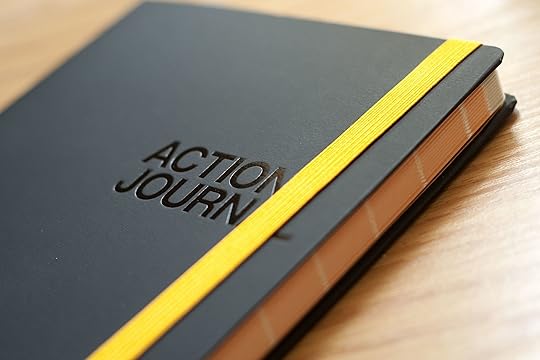
Yes, yet another notebook/journal. Where the Action Journal products are different from standard journals is they give you a format for taking notes and then taking action on those notes. Now all those hair-brained ideas can actually turn into real businesses! Photo credit: Dave Emmitt.

Hourglasses 30/5 Minute – $25
I wanted a productivity tool I could hold in my hands that wasn’t an app on my phone or computer (let’s face it, productivity doesn’t happen online). These hourglasses are super affordable, look great, and help get things done. Photo credit: Amazon.

Kindle Paperwhite – $100
Reading books has definitely made me a more productive person. Having all of my books stored in a device that fits in my back pocket is hard to beat. There are multiple versions of the Kindle, just get this one. I’ve done the research for you.
Recommended Books
[image error]
 The Obstacle is the Way – $10-$15
This is the book I recommend the most. To anyone. Ryan Holiday’s writing will help you reframe the way you look at the tough moments in your life or business. A must read for entrepreneurs.
[image error]
 Rework – $12-$15
I’ve read Rework more than any book I own. It’s the best business book I’ve ever read. I go back to it constantly for inspiration and real-talk about running a business.
[image error]
 The Crossroads of Should and Must – $9-$10
Elle Luna’s book was born out of a popular article she shared a few years ago. Not only is the book full of great content to read, it’s also full of beautiful artwork too.
[image error]
 Essentialism – $12-$15
The last of the nonfiction recommendations. Essentialism is a principle that can be applied to life and business. Read this book or buy it for an entrepreneur, you won’t be disappointed.
[image error]
 The Circle – $10-$20
One of two fiction books I couldn’t put down in the past few years. The Circle is coming out as a major motion picture in 2017 starring Tom Hanks and lots of other important actors. Read the book though, it’s really good and eye-opening.
[image error]
 Dark Matter – $12-17
Many of you reading this list may have heard of Blake Crouch or his first successful book Wayward Pines. I hadn’t. I started my Crouch author experience with Dark Matter and am happy I did. A fun read with a few good twists and turns.
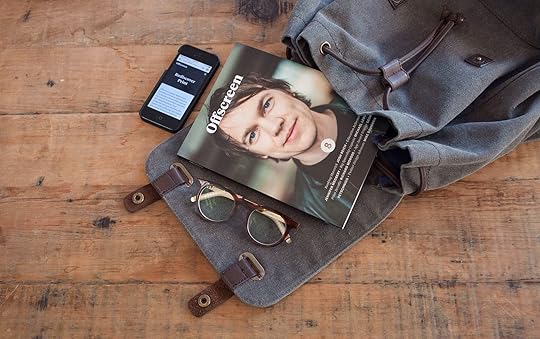
 Offscreen Magazine – $20 per month
I’ve heard nothing but rave reviews of the quality and craftsmanship of Offscreen magazine. Support the good folks behind Offscreen and share the gift of unique entrepreneurial stories.
Gifts for the Audiophile
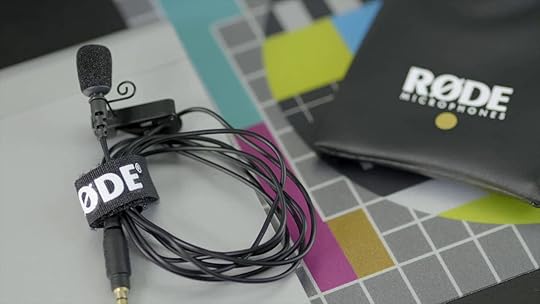
Rode Smartlav Lavalier Microphone – $80
If you or an entrepreneur in your life needs to record audio for interviews, a podcast, or other things they want to create, this $80 lavalier (lav) microphone is a steal. It’s the best microphone to start with if you want great audio for an affordable price. Photo credit: Vimeo.com.
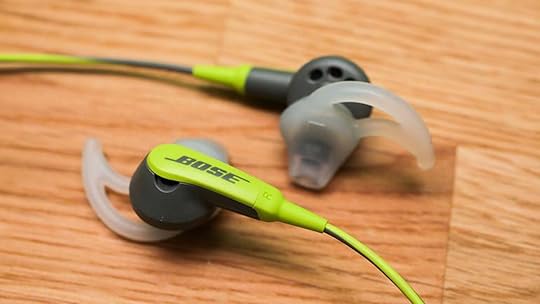
Bose SoundSport In-Ear Headphones – $80-90
These are my earbuds of choice. I’ve tried over 20 different earbuds and they all were terribly uncomfortable and sounded mediocre. The SoundSport’s fit amazingly well and never fall out due to the in-ear design. Photo credit: CNET.com.

Amazon Echo Speaker – $180
You’ve probably heard about this thing. In three words: It is great. The Echo has the speaker quality of any small portable-ish speaker (it is wired) and is loud enough for a small office or living room. Alexa, much like Apple’s Siri, does a decent job with her voice activated robot duties. The Amazon Echo Dot is the smaller option, but know that it needs to be paired with another speaker to have quality sound. Photo credit: TheVerge.com.

Bose Noise Canceling Headphones – $350
Stepping up from earbuds, if you’re looking for the best bang for your buck when it comes to noise canceling headphones, Bose has you covered. For the frequent traveler, these are a must. Photo credit: CNET.com.

Walnut Desk Speakers – $599
If you looked at the photo of these, you know why they’re on the list. Another amazingly stunning product from the folks at Grovemade. Yes these are pricey, but you’d never have to buy another set of desk speakers again. These are available in maple as well. Photo credit: Grovemade.
Video Related Gifts
Minimalism Film – $15
I started this list off with a note about minimalism. Minimalism has truly changed my life. I’ve become a happier person and have been able to shed so many unnecessary things (both physical and mental). Find your own flavor of minimalism after watching this film or gifting it.

Google Chromecast – $35
This is a great alternative to the item next on the list. If you want a simple way to watch things on your TV from your laptop, or get access to certain apps directly on your TV, you can’t go wrong with this affordable little gadget from Google. Photo credit: Gizmodo.com.

Apple TV – $149 (and up)
The 4th generation of Apple TV is fantastic. I’ve owned each iteration, and the newest version is a huge step up in experience and usability. I find Siri to be worthless on my phone, iPad, or laptop, but essential with Apple TV. I’ve completely replaced my cable subscription thanks to all the apps available on Apple TV. Photo credit: Tested YouTube Channel.
Apparel
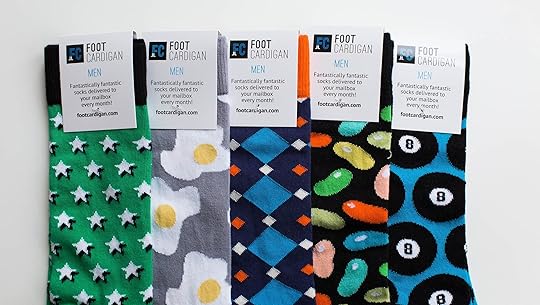
Foot Cardigan Sock Subscription – $9/month (and up)
Most people own boring socks. Why? Step up your sock game, and do it with some pizzazz. Plus, with a name like Foot Cardigan, they can’t be wrong about their choices for your feet.

Any T-Shirt from Cotton Bureau – $25ish
This is my go-to for new t-shirts. I have a rotation of 8-12 t-shirts and when I wear through one, I order something new and support an artist on Cotton Bureau.

Any T-Shirt from Ugmonk – $28ish
You can’t go wrong with any of the t-shirts from Ugmonk. They’re all meticulously well-designed, printed with eco-friendly ink, and the shirts used are high quality. My three favorites are: Mountains, Less, and Plus Minus. Photo credit: Ugmonk.

Chunky Wool Beanie – $28
Every entrepreneur (and hipster) needs a good beanie. Everlane makes fantastic products at super reasonable prices. Your head (or a friend/family member’s) will thank you for buying this. Available in gray and black.
Travel Necessities

Waxed Canvas Dopp Kit – $50
Years ago I searched for a waxed canvas dopp kit. I ended up buying one on ebay from Japan. Now, you can find them everywhere. A great catch-all for miscellaneous desk items, travel accessories, or bathroom goodies. Photo credit: Etsy.

Everlane Twill Backpack – $68
Everlane is back on the list with this sleek and simple backpack. As much as I love Jansport, we all have to grow up sometime. Everlane has a bunch of other backpacks to choose from. The entrepreneur in your life will also appreciate Everlane’s transparent business philosophy (look at the bottom of any product description on their website). Photo credit: Everlane.

Herschel Novel Duffle Bag – $85
I’m a sucker for a nice duffle bag (hence why there are two in this list). Herschel makes quality products at spot-on prices. This style of duffle from Herschel comes in 30+ styles! You’ll be happen with any product from Herschel. Photo credit: Rushfaster.com.

Ugmonk Messenger Bag – $235
This is a great option if you want to graduate from a backpack to an “adult bag.” Since everything from Ugmonk is meticulously well-crafted, this bag will last a lifetime (And then some). Photo credit: Ugmonk.

Minaal Carry-On Bag – $299 – FAVORITE PRODUCT ALERT!
If you forced me to pick ONE item on this entire list of gifts, I would pick the Minaal Carry-On. It wins, hands-down, the best travel bag I’ve ever owned. It’s extremely versatile and the perfect size bag for people who travel lightly. Photo credit: Minaal.

Blue Claw Bronson Leather Duffle – $495
I treated myself to this leather duffle a few years ago after working with Blue Claw on a project. I had always wanted to own a really nice leather duffle bag that would never need to be replaced. This is that bag. It’s a bit more expensive, but you’ll never need to buy another one as long as you, your kids, and your grandkids live (if Skynet doesn’t take over, obviously).
Everyday Carry Gift Items
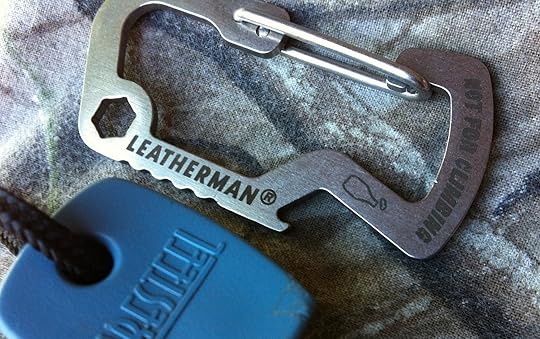
Carabiner Cap Lifter – $10
Hello stocking stuffer! Simple. TSA friendly. A great little tool at a fantastic price.
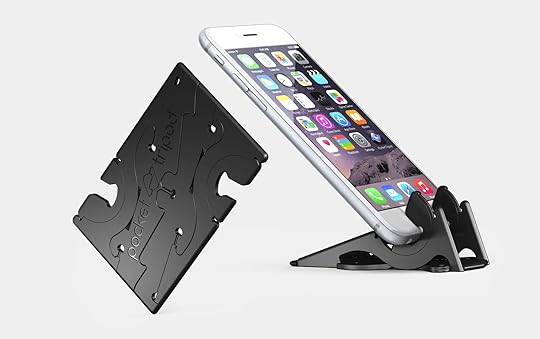
Pocket Tripod – Starts at $19
I recently pre-ordered this compact tripod. I haven’t received it yet, but the idea of it alone was worth sharing on this list. If it lives up to half its potential, it’s well worth it’s weight in rose gold. Available for iPhone and Android devices. Photo credit: Pocket Tripod.

Peel iPhone Case – $25
The best minimal case you can nestle your phone into. The guys from Need/Want make great products, and the Peel case lives up to their high standards. Available for most iPhones and some iPads. Photo credit: Peel Lookbook.
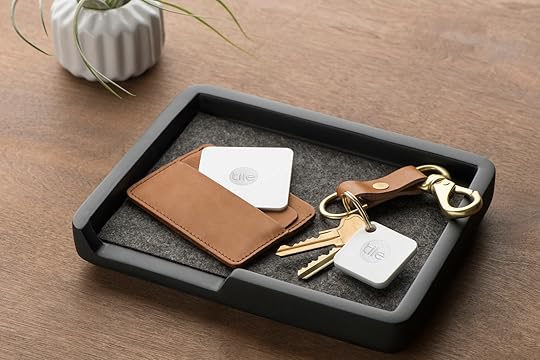
Tile Mate – Starts at $25
Luckily, I’m not someone who misplaces things (call it OCD, fine, but I don’t lose stuff, ever). If you or someone you know is frequent losing their keys or just wants a way to keep track of important items, the Tile Mate is a great gift. Photo credit: Digital Trends.

Stitch & Locke Slide Wallet – $38
I’m on my second slide wallet from Stitch & Locke. The first one lasted two years of pretty hard usage. As far as slim wallets go, this is my favorite. Come to think of it, I should just buy a few more to have on hand when I wear through the next one.

Black Oxide Keyring – $39
Taking the keyring from flimsy and boring to high quality and cool. Not only does it look great, but it also doubles as a bottle opener. Available in other colors and finishes. Photo credit: Grovemade.
Coffee Gifts (because, coffee)

Bluebottle Coffee Subscription – Starts at $19/month
I’ve had a Bluebottle coffee subscription for nearly two years. Every couple weeks I get fresh coffee in the mail, and it’s glorious. Plus, you can buy this as a gift for someone if you end up trying it for yourself.

Chemex Leather Collar – $34
Ugmonk is on the list for the final time. I never enjoyed the bamboo collar that comes with the Chemex. I love the simplicity of this leather collar, plus it looks more rustic and weathered as you use it. The leather collar comes in natural, brown, and black leather. Photo credit: Ugmonk.

Stagg Pour Over Kettle – $69ish
The sexiest kettle you’ll ever find. In matte black and chrome, this thing is simply the most beautiful way to pour hot water over coffee grounds. Photo credit: Frontsf.com.

Chemex Starter Kit – $150
Whether you or someone you know wants to elevate their coffee game without breaking the bank, this is your one-stop-shop item. This is the perfect starter kit for drinking better coffee. Photo credit: La Colombe.

Oxo Burr Grinder – $195
Speaking of better coffee, grind your beans yourself people (and do it right before you make your coffee). Yes, this grinder isn’t cheap, but it has a built-in scale and grinds your beans to absolute perfection. Photo credit: Oxo.
Not-Physical-Goods Gifts
Donate to their favorite charity or cause!
Everyone has a favorite charity or non-profit. Make a donation in their name and wrap a note about the donation.
***
And that wraps it up! Hope you’ve enjoyed this gift guide for entrepreneurs.
The post Unique Gifts For Entrepreneurs appeared first on Jason Does Stuff.
November 19, 2016
MacBook Pro with Touch Bar, A Comprehensive Review
With the arrival of the newest, new, most innovative, best-ever, MacBook Pro of all time, I was ready to upgrade my lowly late-2013 build 15″ Retina MacBook Pro.
Enter in, my new 2016 15″ Retina MacBook Pro…

My journey with Apple laptops started with the massive 17″ MacBook Pro back in 2005. Since then, I’ve always had a trusty MacBook Pro by my side. In fact, since 2005 I’ve owned ten MacBook Pro laptops (and not because I was starting a circus act where I juggled laptops).
Why share this with you? Seemed fun. Let’s keep going.
Leading up to this latest Apple event I wasn’t in dire need of a new computer, but I firmly believe in investing in good hardware. As a solopreneur who has as many businesses as most people have pairs of underwear, a few extra seconds saved while loading Photoshop or Final Cut Pro X can go a long way.
Here’s the side-by-side comparison of the specs of my previous MacBook Pro and the brand new, all-new, life-changing MacBook Pro:

New on the left. Old on the right.
As you can see in the specs, these two machines were fairly maxed out given the options at checkout on Apple’s website. Kind of like the cars on Pimp My Ride. I really miss Xzibit putting hot tubs and Viking stove ranges in the back of Toyota Tercels.
Anyhoo…
Let’s get superficial and start with the looks of the newest Apple MacBook Pro

I like my dock icons small. Deal with it.

If my new laptop was a model, these would have been the “sexy” photos.
This laptop would get a 9.8 on HotorNot.com.
It’s dead sexy.
I was skeptical about the space gray color, but it’s really nice. Think about it like this: The older silver MacBook Pros are George Clooney. He’s great. He’s handsome. Everyone loves George. But these new machines? Ryan Gosling all the way. Sharp edges, but not too sharp. Well proportioned. A look that’s timeless, but also sophisticated.
A missed opportunity to call this the MacBook Gosling? I think so, but hey, that’s just one man’s opinion.
The trackpad. It’s reaaaaally big. (twss)
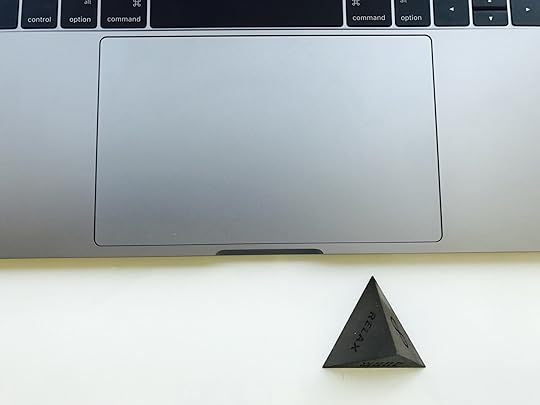
Hmmm… Being that I’m the person writing this review, I have to review it from the perspective as a large human being with extra large hands. How extra large you ask? Go to the gorilla exhibit at any zoo and find the bronze gorilla hand you can put your own hand on top of. You know how your hand looks childishly small in comparison to a gorilla’s? Mine is pretty much the same exact size as the gorilla’s. I’m not kidding.
As soon as I started to type on my new MacBook Gosling, my gigantic left thumb graced the top left edge of the enormous trackpad. Did my mouse just move on its own? Is there a ghost in the machine? Neo??
Nope. Giant trackpad is giant.
The more I used applications and typed on the keyboard, the more my left and right hand seemed to touch the trackpad at the same time. Pretty soon I was in zooming, swiping, and even ending up in the completely useless Mission Control app launcher thing without my express written consent.
Seriously though, who uses that dumb Mission Control thing? You should have gotten rid of that Apple and let us keep our MagSafe connector instead (more on this epic tale of sadness in a moment).

Gorilla hands are gorilla hands. I’m sorry if you thought I was lying.
A quick trip to system preferences and I turned off all gestures. Maybe I’m not the use-case for these gestures, but I’ve simply never found them helpful and have never once pinched to zoom on my MacBook Clooney.
That’s the bad of the trackpad.
The good? Force touch works well. Especially if you’ve upgraded to an iPhone 7 and have spent time getting accustomed to it on the home button. If you’ve never used force touch before, it can be a little weird at first.
The keyboard is L-O-U-D, but nice…?

As a gentle giant, I am very aware of how loud I walk, talk, and impact the world around myself. I immediately noticed how loud the butterflies were that lived under these new keys.
I’m writing this review about 8 feet from my lovely girlfriend who is using a 15″ Retina MacBook Clooney and I can hear her typing. But, it’s a different sound. To best describe the sound differences would be to say the MacBook Clooney keys sound like you’re typing on a keyboard (very familiar sound). The MacBook Gosling’s keystrokes sound like you’re breaking boards to achieve your yellow belt in TaeKwonDo (which, I was a very proud owner of when I was 13 years old).
The keys are loud. Maybe not louder per se… Maybe just different loud. I love the feel of the keys. That shouldn’t be overlooked. They feel wonderful. But, the loudness of them is distracting right now. I’m sure I’ll get over it, just like I got over realizing I’d never be able to fit my enormous hands in a soothing pair of Isotoner Gloves™.

Oh, small note: Why did they make the left and right arrow keys so damn big? They didn’t need to do this and it just makes the up and down arrow keys jealous and very self-conscious.
The USB-C/Thunderbolt Whatever/No more regular ports/#DongleGate2016


Macbook Gosling atop Macbook Clooney. A dream come true for some.
Getting rid of the MagSafe connector for the power cord sucks.
Yeah yeah, I know some tech wizards are making adapters that you can use for USB-C ports that will make them MagSafe, but I buy Apple products to not have extra gizmos and doo-dads (and whosits and whatsits galore!)
Let’s get right to it: DongleGate2016
When Apple removed the CD/DVD drive, people went ape-shit. Well, not really, only people in Arkansas who still loaded their 24 FREE AOL CDs into their computers.
Getting rid of the CD/DVD drive made sense, it was a completely outdated technology.
USB, HDMI, Mini DV (sometimes), and SD Cards are not outdated. In fact, they are quite abundant and used by many. Dated, some would say.
I primarily used the USB ports and the SD Card slot on my MacBook Clooney. If I had to tell you how often I used them? The USB daily, the SD Card 2–3 times per week. The other ports, meh, not a big deal to see them go (at least until I need them, upon which I’ll freak out and punch the nearest toddler — I’m totally joking, I’d just ask the toddler if his parents have an extra dongle).
I ordered two USB to USB-C adapters from Apple and an SD Card to USB gizmo. The $44 spent wasn’t that painful and now I simply have these things to carry around:

Dongles on dongles on dongles.
In the grand scheme of life, #DongleGate2016 will not be as big of a deal as people are making it. And I will give Apple credit, the sides of the laptop look exponentially better without the icons and different port sizes.
One thing I wanted to touch on: Unplugging cords from my shiny new MacBook Gosling SUCKS.
Maybe, just maybe, it’s my oversized fingers that struggle to grasp such a small cord, but I know i’m going to miss the quick connect/disconnect of MagSafe dearly.
And it’s worth mentioning, hello there headphone jack! So nice of you to exist. You are convenient and about 6 billion people on the planet use you. You make sense! Please don’t ever leave us, like you did on the iPhone 7. I am a little bummed you moved across the street (the other side of the laptop). I’ve tried plugging you in multiple times in the wrong spot and it’s made me feel like someone trying to drink out of a straw but missing multiple times.

Impressive GIF searching, I know.
Now, the feature you’ve been scrolling to read about: Touch Bar

Let me be as crystal clear as crystal: I WANTED to love the Touch Bar. I really really really wanted to.
As much fun as it is to scroll through emojis on the keyboard, it’s faster and more intuitive to just press control+command+space bar on the keyboard and pop up the emoji menu (which you can also search through!)
The Touch Bar is not helpful and it’s mainly because of its size.
It’s, at best, 1/2″ tall and we all know how much 1/2″ gets you, amiright?? Wait, what?
Touch Bar is not helpful. You know what’s helpful? The giant trackpad. That’s a 4×6″ clickable, scrollable, swipe-able, drag-able, get-things-done touch area.

Touch Bar in Final Cut Pro. Incredibly… not useful.
One of the most frustrating things about the Touch Bar is that for the past decade of using Apple laptops, you could easily increase/decrease screen brightness, skip/play music, and hit the ESC key when things go awry and you accidentally make something full screen (ugh, THE WORST).
I totally understand what Apple is trying to do with the Touch Bar. But as a strip across the top of the keyboard? It’s a failed attempt.
You know what would have been revolutionary with this MacBook Gosling? Replace the entire keyboard and trackpad with a Touch Area. The entire thing. No keys. No trackpad. Talk about making a technological leap. The Touch Bar, instead, feels like a technological toe tap (and don’t even get me started on trying to use your toes to operate the Touch Bar!)
Final thought on the Touch Bar: 99% gimmick, 1% usefulness.

The 1% usefulness of the Touch Bar, that only works with like 5 websites/things right now.
Some final thoughts, observations, and the answer to the BIG question: Should you buy a MacBook Gosling?

Disclaimer: I prefer Pamplemousse LaCroix, but ran out. Coconut is not an acceptable flavor.
Screen brightness
The MacBook Gosling has a noticeably brighter screen. Kind of like Ryan Gosling has had noticeably less girlfriends than George Clooney. I’m not sure that joke even makes sense.
Battery life
I spend a good part of my day on Skype video calls, creating and syncing fairly large files in Dropbox, and editing audio or video in Final Cut Pro. I wouldn’t say the new MacBook Pro’s battery is way better, but it is better. I’d guess I get an extra 1–1.5 hours of normal usage time.
Fingerprints
It may be the newness, it might be the space gray color, but I‘m seeing a lot more of my greasy fingerprints on the cover of the laptop and on the keyboard.
Opening the laptop when it’s on
This is WAYYYY faster. If the laptop is on, you close the lid, wait a minute or two, flip it open, it seems to fire up immediately.
The light-up Apple logo being gone
Yeah. If you didn’t know, the Apple logo on the lid no longer lights up. It’s just shiny and chrome. This doesn’t bother me as much as it bothers other people.
Touch Bar
Did I mention that the Touch Bar on the new MacBook Pro/Gosling really isn’t useful? Ugh. I keep trying to find it useful, I honestly do.

So…….Should you buy a MacBook Gosling?
IF you own a MacBook Clooney, the previous build of MacBook Pro (late 2013–2015), and you aren’t low on storage space or feel like your laptop runs slowly, you probably don’t need to upgrade*.
IF you own an older MacBook Pro or any generation MacBook, and want a more powerful machine, you should upgrade. Skip the Touch Bar option and spend that money on RAM, storage, and an upgraded graphics card.
IF you own a fairly new iMac, don’t upgrade. Unless you’re tired of carrying your iMac and cords into your local coffee shop and looking like a weirdo. Then definitely upgrade. And stop being a weirdo.
IF you own a PC of any kind (Dell, Samsung, Sony Vaio, Windows Surface, etc), you should have upgraded years ago and us Apple owners are ashamed of you. Just kidding. But not really.
*This was my use case. I did not NEED to upgrade, but I felt the slight increase in efficiency was worth the investment. I can’t completely judge that in just a few days of use, but I’m not unhappy with my purchase either.
Final, last, ending, closing this down, being done reviewing thought…
A fantastically well-designed laptop. Not a revolutionary laptop.
Apple is no longer in the business of being revolutionary. They are in the business of being profitable. Much like big car companies, Apple is releasing incrementally updated products. This new MacBook Pro and the iPhone 5, 6, and 7 were not revolutionary. They were profit generators with some additional hardware and visual improvements.
Don’t get me wrong, I’m not upset at Apple. I still use, love, and will purchase their products. But Apple is no longer in the business of shocking us with mind-blowing technological advances.
The post MacBook Pro with Touch Bar, A Comprehensive Review appeared first on Jason Does Stuff.
November 13, 2016
I Don’t Have It All Together
I don’t have it all together. I don’t know what I’m doing. I have no idea what the next few months/years hold for me. But I’m okay with this.
There’s beauty in uncertainty. There’s intrigue in not having a perfect plan.
With ambition and hard work, you don’t need to know everything.
The 10 years I’ve been an entrepreneur are proof of this. I’ve almost never known where I was going next, or what the 3-5 year plan looked like (heck, what about a 6-month plan?).
I often find myself dreaming of owning a simpler business. A business where I have one product to sell that speaks directly to one customer. But then I think about the limitations that “dream” would bring. The box that “dream” would put me in creatively and operationally. It is much safer to run a business with a single, focused product, targeting a specific customer. But I choose not to play it safe.
I’ve never wanted to play it safe.
I’ve never wanted to play by the rules. I’ve never wanted to accept things as they are. This is who I am, and this is what brings me personal fulfillment.
I’ve been a 7-figure business owner, but I can tell you it didn’t mean I had everything together. At every level of business, money does not mean you know what you’re doing or have it all figured out. It just means you’re doing something that people are paying attention to (and paying money to).
I’m okay with not making nearly as much money as other entrepreneurs. I’m okay with not having huge amounts of money in my savings account. Focusing only on money has only led me to dark and unhappy places.
I look at my many businesses as canvases. The ideas for those business are the brushes and paints. Sometimes I paint wildly, ending up with a business that only suits my needs and costs me money to keep afloat (Bumpsale). Sometimes I paint by the numbers, which leads to a business that provides more consistent (but not super sexy) income (Teachery). I’ve come to learn that a mix of both balances everything out.
I’m not in the pursuit of having it all together.
I’m not searching for a perfect idea or perfect business. I’m not sure I’ll ever find a truly sustainable business model for myself.
But that’s okay.
Life is an experiment.
I’m excited to keep playing this game at my own pace and by my own rules, because that’s what gives me satisfaction.
If you feel the same way, then keep trying things. Keep building things. Keep swinging wildly with your paints and brushes. Enjoy the outcomes, whatever they may be, and know you can always start a completely new canvas at a moment’s notice.
The post I Don’t Have It All Together appeared first on Jason Does Stuff.
November 6, 2016
Overcome The Fear of Selling
Selling is not reserved for “salespeople.” We are all salesmen and saleswomen these days.
People who sell things come in all shapes, sizes, and varieties. You’ve probably purchased something from one of them in the past hour/day/week (without thinking you were buying from a salesman/woman).
Every time you spend a dollar, it’s because someone convinced you that you needed to buy that thing. Unless it’s food. Then you don’t need convincing because that’s just survival. Well, maybe not donuts? Actually, yes. Donuts = Survival.
Let’s break down what it actually takes to sell a product or service, and how to overcome the fear of selling.
Stop letting your assumptions drive your decisions
“People are going to think I’m selling out.”
“What if someone doesn’t think I’m a good person once I start asking for money?”
“What if I put something up for sale and no one buys it and I look like a complete fraud??”
These are things we’ve all thought. They are also all assumptions until they actually happen. (Which means they’re usually false.)
Assumptions suck and can derail your future success, if you let them. So guess what? Don’t let them! Acknowledge your assumptions, write them down if you want to get them out of your head, and then move on. Want to feel empowered over your assumptions? Write them down on paper and then burn that paper! (Just, you know, burn it in a safe place.)
We assume we know what it means to sell, and as a result, we never bother to learn what it actually means. What’s worse, we fail to differentiate it from selling out. The two are very different.
Selling out is getting paid money for doing something you don’t enjoy.
If you work at a dead end 9-5 job and hate your boss, you’re a sellout. If you feel like you’re asking people to pay for a product you don’t believe in, you’re a sellout. If you get paid to smuggle rare Indonesian birds, you’re a sellout. (This one might not apply now that I think about it; however, still bad.)
But if you’re selling something you believe in? If you’re offering a product, service, or opportunity you’ve created and want others to be helped by? That’s not selling out. That’s just selling. And that’s your job.
So let’s talk about doing your job.
….(P.S. As an aside-that’s-not-really-an-aside, I recorded a podcast recently about the emotional rollercoaster involved in selling things we believe in. Want a front-row seat to my raw and unfiltered thoughts about how hard/important/necessary/rewarding it is to make a living as an entrepreneur? Click right on over here to listen.)
Create a realistic schedule for selling
There are so many ways you can sell something, especially online. It’s incredibly helpful to pick a selling schedule that works for you. Here are some that have worked for me, currently and in the past.
1. Do an open-and-closed launch, and don’t plan anything after that.
Sell something for a certain amount of time (say, two weeks), and then “close the cart.” Assess how things went, especially if it’s a new product or your first time selling. Having an open-and-closed launch (annually or on any other schedule) can create urgency and scarcity for your customers while allowing you to maintain a nice work-life balance: busy during launch, and then off enjoying your life the rest of the time.
(Related: This is what I do with BuyMyFuture and you can read the results of that open-and-closed launch here.)
2. Have an evergreen product that you want to offer year-round?
Awesome. Plan to do quarterly discounts or mini-launches that include extra goodies. This can create nice spikes in your sales, and you can control when they happen (and surprise customers with them). Just know that if you’re going to have something for sale year-round, it’s going to need year-round marketing and promotion (which we’ll get to in a moment).
3. Don’t follow a specific schedule of any kind.
Create a schedule on your calendar that gives you something to stick to and look forward to. I tend to loosely plan out my product launches 3-6 months in advance. These can be put on the calendar and moved around as you see fit. But doing the initial planning will help you have some semblance of an idea of what’s on your sales plate (which is obviously made of very expensive and ancient materials).
No matter what sales schedule you pick, you can always change it. You can always mix things up and learn from your experiences. The most important part is that you sell and give people the opportunity to put money in your bank account for the thing you are creating.
No matter your selling schedule, the pre-marketing is the most important part
No one, and I mean no one, just puts up a sales page and has money rain down upon them. We’ve all seen the Kickstarter campaigns that bring in millions of dollars, and it looks like they hit it big overnight. But those campaigns? They had months and months of pre-marketing, I promise you. Many of them are brands that have built small niche audiences and have found a product that works and sells well in small doses first.
When I launched BuyMyFuture in 2015, it was an open-and-closed launch. It may have looked to people seeing it during the sale window like it just appeared out of nowhere, all ready to go, but that’s not the case at all. From initial idea to official launch, I spent 4 months getting ready for a 14-day sale.
Here are the exact pre-marketing steps I took to generate $178,000 in sales in two weeks.
I spoke to 49 previous customers of mine on the phone* (yes, actual human interaction!)
I shared over 30 updates on social media that teased the project (photos, logos, short videos)
I created a specific pre-launch website that captured the emails of potential customers
I wrote 60 daily journal entries leading up to the launch date of the project (over 40,000 words written)
I coordinated 26 podcast interviews to go live at launch (all recorded before the launch date)
I reached out to 52 friends who I asked to be affiliates (14 of them ended up bringing in sales)
I hired a Facebook Ads specialist to create a retargeting campaign
I started a podcast for the project and recorded 21 episodes
I mentioned the project and the launch date in my weekly emails to this existing email list
I share this as an example to show you how many things you can do. There are so many more things I could have done, but this was plenty. And you, certainly, do not need to do this amount of pre-marketing work if you don’t want to. Just remember one thing: If you put in part-time effort, expect part-time results.
*49 phone (or Skype) calls is A LOT. You don’t need to do this many. I’d recommend 5-10 calls, but be sure these folks are your ideal customers for what you are selling. (That means don’t have a call with your mom unless you’re selling a product targeted to people like your mom). Tell them about your product/service, and listen to how they repeat your project back to you and the words they use. Also, listen for what features or benefits stand out to them, and make sure to highlight those when you’re selling.
A trip down Email Marketing Boulevard
I believe email marketing is the absolute best way to sell something right now. Don’t waste time on social media. Don’t waste time or money paying for ads*. Build a quality email list of highly interested people, and sell directly to those people.
*Paid advertising is great for products that are already selling, or if you know an expert in the paid marketing world. Sure, Facebook Ads seem attractive, but they can be a huge distraction and waste of money if you don’t know what you are doing and don’t have a product that people are willing to pay for.
What problem is your product or service going to solve for your potential customer?
Did it solve that problem for you? Share that story! People love to hear stories, especially ones they can relate to.
Example: I’m selling the Podcast Like A Boss workshop right now. It’s everything I’ve learned about podcasting and making real money with a podcast. The workshop is being done with friends who also have awesome stories and experiences with podcasting.
Does your product or service do something unique?
It better. If it doesn’t, it’s not going to stand out, no matter how many emails you send to people about it. Find the unique angle. Hint: It’s usually something your potential customers will point out to you (which you’ll find out on your customer calls).
Create real urgency.
Open-and-closed cart? A timed discount? Annual launch? Limited number of sales? These are things that create urgency and scarcity. These will motivate people to make a purchase. Do not, however, say something is “only available for the next week” if people will still be able to find it a week or two or five later. That’s bad business, and it will hurt your reputation.
Here’s a sample schedule** for sending sales emails to your list, based on a two-week launch window:
Day before: Launch is coming tomorrow! Feel free to share the details of the product/service and the cost, or you can save these for launch day.
Launch day: Your thing is available! (Get your mind out of the gutter.) Don’t just say “Buy Now!” but bring some story or problem-solving example into the email. Then make sure you have multiple Buy links throughout the email.
Day 7: This is a great time for a mid-launch bonus. You can plan ahead to do this! Have something cool you can add for people who buy? Include it in this email. You can also include some buyer testimonials (or simple quotes). Also, you should give this bonus to all buyers who’ve already purchased or will purchase.
Day 13: The cart is closing tomorrow! Have another story to share about the uniqueness or awesomeness of your product or service? Share it. Remind people the cart is closing tomorrow.
Last day (morning): This is it! Urgency! Scarcity! AHHHH!
Last day (evening, Clicked only): This is for the ConvertKit tag I’ll mention in a moment. It’s one final call to action to buy and it works.
**This schedule assumes that you’ve done lots of pre-marketing. Pre-marketing could include many mentions of your launch date leading up. You could mention it as early as 6 months ahead of time if you like, but do at least 1 month of lead-up mentions in your emails.
Ready to get a little more advanced? Here are some email marketing tips/tricks/hacks/tactics/more buzzwords here
One thing that can create a lot of complications and consternation is trying to automate things too early. I’ve seen it time and time again. People shoot themselves in their email marketing feet because they try to overdo all the email automation stuff. Sure, if you know how to do this stuff, continue reading this section, but if you’re new to Email Marketing Land, it might be best to skip this.
I’m going to mention tactics for ConvertKit, since that’s the platform I’m most familiar with (I’m sure you can use similar tactics, like segmenting, with other email providers).
1. Creating tags
Setup a new Tag called “ProductName – Clicked.” Then, create a new Automation for a Link Trigger. The link should go to the sales page for your product/service, and when clicked, it should add the new tag you just created (ProductName – Clicked).
Setup a new Tag called “ProductName – Purchased.” If you’re using Gumroad to sell things, ConvertKit makes it super easy to create an automation that adds a tag. You can also use Zapier.com to create an automation to add the purchase tag if you sell using Stripe (and other payment processors). You can also manually add the tag as people purchase.
If this is blowing your mind, that’s okay. You don’t need to do any automation stuff when selling. It’s a nice to have.
2. Using tags
Any time you link to your sales page in your email broadcasts, make sure to use the Link Trigger you created. This will continue to collect clicks (potential buyers!) and add them to the “ProductName – Clicked” tag you created (more in the next step).
When you set up your sales emails, go ahead and send them to your full email list, but when you’re selecting your subscribers for a new broadcast, add the filter group “Matching none” and select your “ProductName – Purchased” tag. This will exclude people who’ve already purchased from getting the rest of your sales emails.
Here’s an example of these tags in action:
3. Sending the “Final call!” (evening) email
I like to send this final sales email broadcast only to the folks who’ve clicked the sales page link in previous emails. You’d be shocked at how many people just need a final nudge, and the ones who will become paying customers are the ones who’ve already shown interest (clicked!). In the final broadcast, select to send only to subscribers with the tag “ProductName – Clicked.” You can even mention that you know they clicked (which is Internet wizardry) and that this is their very final chance to buy the thing they showed some interest in.
The good thing about creating these tags is that you can use them for future launches and future sales emails.
You survived the advanced email stuff! Congrats! Let’s keep going…
Don’t be afraid to ask your audience to share what you are selling
You’d be shocked at how a simple sentence in an email or on social media can help to get your existing audience to help you share the thing you are selling. An important thing to consider: Is what you are selling interesting? Because, be honest with yourself, you don’t share things that aren’t interesting, either.
Simple phrases like, “Want to help spread the word? Share this!” or “Would love if you guys could lend a hand and forward this email to a friend or share this with your friends on the social meeds!”
(Meta ask alert: Want to help spread the word about this article? Here’s a quick link to share it on Facebook or on Twitter