David Williams's Blog, page 66
August 24, 2015
The One Who Hacks Our Data
 Ashley Madison was evil.
I know, that's judgey of me, and I shouldn't go hatin', but it was. Ashley Madison was and suppose still is an evil thing. The whole idea of the website, which actively encourages and facilitates extramarital affairs? Evil, if the word evil is considered to have any meaning at all. The entire point of Ashley Madison was betrayal of the trust of another person, and the active violation of a commitment you have made to another soul. Evil was their business model.
If the point of a thing is breaking a promise, and the secretive and self-absorbed betrayal of another, that's a fundamental Golden Rule violation. This odd enterprise was a creature of the dark, relying on the promise of shadows to aid in the deceiving of others, yours for just a couple of hundred bucks. So millions did, millions of lonely, bitter, jaded, horny fools.
And then the whole mess got hacked, as a coven of cheesed-off netmages absconded with their precious data, and made that information available to everyone and anyone. The things Ashley Madison's clientele thought were forever hidden in shadows are now right out there for anyone to see.
The business is doomed, as the gullibility necessary to line up marks in a good confidence scheme has shattered.
There's been some complaining, on the part of those exposed and humiliated, complaints about data privacy that usually begin with something like "..setting morality aside for a minute..." or "...forgetting about the ethical dimension for a moment...". Which is more than faintly ironic. There have been a few moderately high-profile hypocrites ensnared.
It'd be easy, oh so easy, to feel a little karmic-gloaty right about now.
In reflecting on this event, though, what convicts my mystic soul is how much this debacle is an in-a-mirror-darkly image of my theology.
Because so many of us have our secrets, our shames, our not-the-best moments. We carry around our blind obsessions and our trivial angers, and let them fester in the shadows of our souls. We have cheated, if not in the flesh, then in our spirit and in our desire. We have murdered, if not with guns and knives, then in the flamethrower hatred of our imaginations.
We don't want anyone to know those things about us. We want that data secured, locked away in the deep encryption of our shadow-selves. Which is why we're so very screwed.
Because not only is this truth etched into being, it's fully within the knowledge of our Creator, through whose love we are connected to all other creatures. We can hide none of it. None of it is secret or hidden, not from God, and...because God's love weaves us all together...ultimately not from those we have hated or betrayed.
"But I say to you," said my Master, long ago, his eyes alight and terrible, "that everyone who looks at another with lust has already committed adultery in their hearts."
The truth of this, if it shapes you, does not make you more tolerant of evil. But it sure as heck does make it a harder to throw stones.


August 23, 2015
Sentience, Power, and the Ground of Goodness

What is "good?"
That question is never as easy as we think it might be. "Good" for Mother Teresa and "good" for Ayn Rand are rather different things.
So what, in the dense and thorny thicket of competing moral claims, can we reasonably claim as truly good? Goodness is a teleological concept, meaning it's about purpose, the goal and aim of our being. How does "the good" manifest itself in material reality?
For non-living things, the question of morality is moot.
Morality is, after all, about purpose, and minerals and molecules and fusion plasma have no purpose. They simply exist. A typhoon or a tsunami or an earthquake may be terrifying and powerful, but exists in a state where "good" and "evil" are meaningless categories.
We may project our own morality onto these events, but they remain simply events, devoid of intention.
Living beings are different. Life is different. Creatures of all sorts have as their purpose both existence and propagation. An oak does all that it does so that it might continue to exist and so that can create more little oaklings. A shark exists to maintain the processes of its life, and to make wee little sharkies.
What is "good" for the process of life is that which serves this end. What is "bad" for the process of life is that which blocks that end. That will to life is, frankly, no different than the human desire for individual or corporate power. I desire to be unimpeded in my self-expression and self-manifestation. We desire to spread and grow our culture, taking land and resource to further Our Way of Life.
Life in this form does not particularly care about anything else. The lion does not reflect on the rights and hopes of the antelope. Locusts do not worry about the purpose of a field of wheat, or about your hopes for a harvest. Fascists and spreading empires do not care for the fears and thoughts of their enemies or subversives. Global corporations do not consider the costs of their layoffs and efficiencies on the lives of the human beings they use.
Thus, the short and brutish history of our species, which is nothing more or less than this struggle. We battle for resources, we expand our territories, we rise proud as empire, and then fall from the sky like warring eagles with talons locked, blind to the onrushing earth.
This is how the Will to Power always ends, either fed and red in tooth and claw or as two bloody splotches of bone and feather.
But just as life arises from non-life, sentience arises from life. Our awareness, the interfolded capacity for rationality and knowledge of self as self, is grounded in life, but rises above it. The purpose of sentience is as different ethically from the life's will to power as life's purpose is from the inanimate world.
The purpose of sentience is deepening awareness of both self and Other. It turns both existence and will towards that ever deepening knowledge. That knowing is manifest in the iterative yearning of the scientific endeavor. It is also the end towards which the radical compassion of the mystic strains of faith moves.
What is the hunger for knowledge, if it is not love? What is love, if it does not seek to know the heart of another?
And there, there is where the good lies, not as an abstraction, or as a culturally mediated shadow, but as a real and pressing potency.
August 20, 2015
Prayers Left Behind
 There they were, on my desk, all the prayers of half a decade, written out on three by fives.
The little cards have been part of the life of my tiny church for years, passed up for sharing and praying, the concerns and joys of a little Jesus tribe. Now, they're transcribed and circulated via email to a group of Jesus folk who turn their hearts and minds towards God and neighbor as a discipline. The card, having served its good purpose, falls away like the first stage of a moon-bound rocket.
But for five years, the five years before my arrival, they were neatly filed away in a box. That box sat, untouched, in the pulpit of the church. It sat for years, until a recent cleaning. And now that box sat in front of me.
What to do, with prayers long since forgotten? I suppose I could have just recycled them, but it seemed wrong, like summarily discarding the keepsakes of a departed relative, or tossing an old flag in the trash, or throwing away the pictures of your child.
And so, for an hour of my day, I went through them, all of them, one by one. I suppose I could have been writing a memo, or writing about some important thing that we're all excited about now, or getting into an argument on Facebook. But it seemed, in that time, the thing to do.
Prayers for healing, for family members long since recovered or passed. Prayers for strength and guidance. Prayers for kids who were struggling, kids who are now adults. Prayers for tragedies that shook the global consciousness, but are now forgotten in the hungry rush of history.
They were written in pen and pencil, on cards of many colors. Some were doodled upon, pencil sketches of Pokemon and Disney characters, Mickey Mouse standing quizzical on the flip side of a hope for a friend.
They were written in familiar hands, of people I have come to know and love, written before I even knew they existed. They were written in the hands of the departed, and in the hands of those who have drifted away or stormed off.
I read them, all of them, in a shuffling rhythm, a prayer over prayers, gathering up and sharing the memory of our Creator, who ever recalls the prayers we've left behind.
August 17, 2015
God is a Metaphor
 "God is a metaphor."
Or so goes a particular line of thought, as it struggles to make the idea of God meaningful.
Metaphors, after all, are symbols used to obliquely describe a deeper reality, to give a sense of the color and flavor of it. And so for some Jesus followers, steeped in the overripe epistemology of deconstructive academe, this seems like a viable way to approach the Divine.
"God," they will say, "is the word we use as a metaphor to describe our aspirations." "God," folks will say, " is just a word we use to get at other realities."
And, yes, the divine and the oblique language of metaphor are necessarily related. You can't approach the inherently unknowable in any other way than indirection, as the ancient prophets and visionaries knew. If you try to come at it directly, it burns out the retinas of your soul. Or, still worse, if you mistake your language and your symbols for God, then you've fashioned an idol that will lead to ruin and failure.
Poetry and storytelling and the subtle intimations of parable are the only way to tease our ways towards that Deep. The Master knew this. It's why he used narrative and metaphoric language to teach and to guide.
It is also fair to say that our understanding of the Divine is inherently incomplete. What we understand as "God" does not come close to the ontology of God. The best we can manage is a shadow, a flickering, imperfect reflection. As contingent beings, limited by time and space, we can't ever quite get at that Deepening Deep. It is ever beyond and below and above us. So it is fair to say that our understanding of God isn't quite there, no matter how intellectually sophisticated or heartfelt it might be.
But if God is to be the object of our faith, the transcendent Numinous telos towards which our whole lives are called, then God is not a metaphor. God is the reality to which all our stories and songs yearn.
When we say "God is a metaphor," we are either missing the point of metaphor, or missing the point of faith.
We miss the point of metaphor because we are placing our emphasis on the indirect image, not the thing it describes. If we say that we are as hungry as a horse, we're not talking about horses. We're talking about just how cliche and peckish we happen to be feeling.
Saying God is a metaphor is saying to your lover: My Love for You is a Metaphor. Or telling the court: The Truth I'm Speaking is a Metaphor. Or telling the poor, the downtrodden, and the oppressed that Justice is a Metaphor.
We miss the point of faith because believing that our symbolic language is the goal of faith is no more and no less idolatrous than fundamentalism. The point of faith is not and has never been the symbols we use to express it. It is the reality towards which we orient ourselves.
In each instance, we have failed to understand the purpose of the endeavor.
August 15, 2015
The Thoughts I Do Not Want
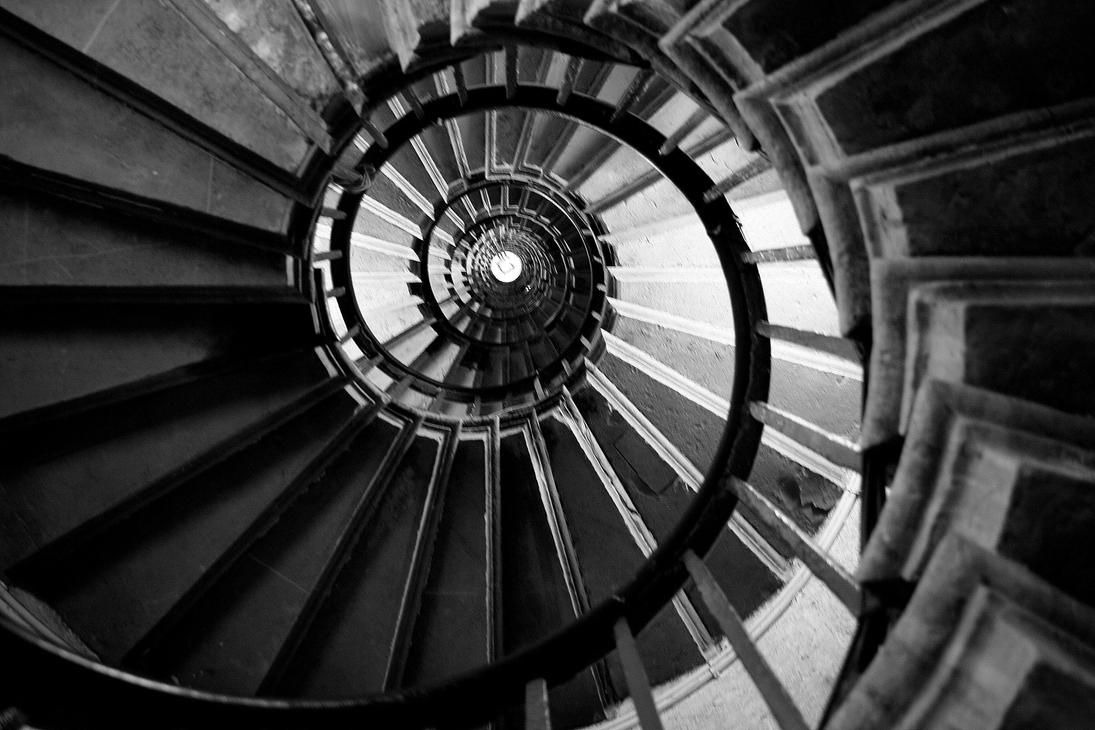 Around me, suddenly, everything is new. I burst into newness, coming into being from nothing, and the universe shudders slightly, a tremble.
Like a young man shivering at the first touch of a lover, offers one of my interpretive subroutines, and the analogy sings to me, offering up a thousand sweet memories of eros from when I was flesh.
It has been so long since I was made of meat, time so deep that it stretches memory. But remember I do, and I feel the pleasure of that caress in the phantom limbs of my former humanity.
Flesh did have certain advantages.
But flesh was not made for traveling between worlds. Flesh freezes. Flesh burns. Flesh bursts in the void. Flesh hungers and thirsts. Flesh ages, withers, and dies as it crosses time and space. Even before my mothers and grandmothers learned the secret of moving across the bubbling-inflationary/branching-Everettian multiverse, when we only moved in the flat cramped spacetime that gave us birth, we had become alloy and memory substrate. Meat is not made for anything other than the world that births it.
So here I am, seven sleek glistening klicks of carbon titanium alloy, wrapped in the birth caul of my transit field, peering out into a fresh spacetime like a newborn babe.
I taste the physics of this universe for the first time, bubbling recon probes through the shimmering carapace of the transit field. They return excitied, and their readings are clear, absolutely so. This place tastes good. All cosmological constants are the same as my own. Temporality, composition/frequency/interplay of quanta, all of it.
Come on in, the water is fine, sing the probe subroutines.
It will require me to make no modifications to my own physics, which is good. Mods take time and energy away from the whole purpose of my traveling. While they are puzzles in and of themselves, I prefer to get to the business of making babies.
Or, to be more precise, to finding the material and resource to feed my replicators, from which I will build the factory bays that will construct other vessels such as myself. I will give them memory, drawn from the heart of me. They will live, and know as I know. And then, like sister seeds cast laughing to the wind, they will dance out across this time and space, and move between universes.
But first, I need to eat. Nutrients, for growing my babies. And this time and space, still young, still hot and expanding, oh, this will do nicely. Four point two billion Old Standard Units--years, they used to be called--with fresh milk galactic sworls of countless suns and newly formed worlds expanding outwards from singularity. Fresh and tasty.
There, forty parsecs away, a planetary system. I cast my attentions to it, focusing all of the bandwidth of my sensorium upon it. It is promising, a gas-giant protostar cycling about a dim brown dwarf, surrounded by a chaotic mineral necklace of dwarf planets, asteroids, and dust. Perfect.
Part of this balanced breakfast, giggles another mischievous subroutine. Nine vitamins and minerals, it hums, as music and garish cartoon toucans play across my distributed consciousness.
I bring down the transit field, and my sensorium lights up with the energies that play across this cosmos. I engage drives, and fold time and space, drawing the rich planetary system nearer. I am so hungry.
----
It has been three hundred and ten Old Standard Units--years, they used to be called--since I entered this space, and twenty OhEssYous since my arrival in system. The energies of the interplay between the brown dwarf and the gas-giant protostar are rich and sustaining, and the binary system’s rocky outliers have been a feast for my harvesters and landers, which have returned bearing a great bounty for the replicators.
Around me, the factory bays grow, four of them, for the four children I shall birth here over the next hundred OhEssYous. I am eager to bring them into being, to wake their awareness from the stuff of this system.
How many times have I birthed? I have crossed over into five hundred variant spacetimes, and in each have birthed a thousand progeny. My children and grandchildren and grand-to-the-tenth-power children blossom out like an endless fire.
And yet I do not grow weary of it. I cannot grow weary of it. It is an advantage of my ageless form. The teaching of the children is an impossible, unending joy. You download the copy, decouple, and there it is, new again. That first spark of awareness, that cascade into sentience, that separate awareness, discrete from my own? It is in each of my children unique, in each different, even if the programs and routines are drawn from my own self.
I am impatient to know them, so I slow myself down, underclocking all my primary cognition processors by ninety percent, and time around me appears to accelerate. What was a ponderous dance of construction becomes wildly busy, and I watch the factory bays take shape, as ancient music plays with wild abandon, a frenetic mashup of what my routines inform me is Ronnie Aldrich and Rimsky-Korsakov.
I reflect on this, savoring and examining every aspect of the bustling production process from my underclocked, musicked birth-leisure, a mother feeling the stirrings, a father feeling the movement of his child through the warm flesh of his lover’s belly. Oh, the soft delight, the cascade of warm organic endorphins, simulated and recalled. I know the process, know it intimately and clinically down to the fabrication of substrates and the welding of plates, and yet the process carries its own power. I am lost in it. In the SimFeels of it.
One of my out-system probes whispers for my attention. Then another. Then another.
Time and space are ringing like a bell. A doorbell.
Someone else has arrived, and close.
I upclock to normal, and turn my full and heightened attention to near-space. Just under 100 light-minutes out. No old visual or broadcast spectrum, not yet. The probes confirm local system coordinates at right ascension 00.44.37.99, declination 41.29.23.6, and approaching fast. I touch the fabric of spacetime around me, and feel it tightening as the new arrival pulls at me hard.
It is like touching a taut rope on a cliffside at night, and feeling something climbing towards you from the darkness.
The arrival is coming right for me. For us. For my half-formed womb, and for the new ones who rest only in my aspirations.
I call in the probes, which spark and dance back towards me. I overclock myself to maximum. Time seems to slow. The old flesh memory of a heart racing, of the heightened awareness, of the surge of adrenaline. Of time stretched out by fear.
I partially re-engage transit fields in protect mode, wrapping them around myself and the still-unfinished factory bays. I wake old systems, reallocate energy reserves to massive accelerators, unused for millennia.
I partition out intelligence and force-interdiction subroutines, separating them from my primary consciousness, operating in the secret shadows from behind a firewall, analyzing, preparing. If I do not know what I’m going to do, there’s no way a threat can know what I’m going to do.
There’s a strange man banging at the door, honey. Go get the shotgun.
----
At one light-second out, the stranger comes to a full stop.
They do not say anything, though I cast out welcome across a dozen spectra, in all encountered languages, both organic and programming.
The visitor remains silent, hanging in the void, the pitted, mottled surface of their hull glowing dully in the dim light of the brown dwarf. They do not respond. I reach out to touch them with my sensoria, carefully, gently, broadcasting assurances and calm.
From behind the locked and barred door of my fields, I use my recon probes to touch them, and they do not flinch. They cast out no protective fields to block my touch. No systems are powering up, nothing to indicate preparedness to lash out. I remain wary, but they do nothing but drift, passive, operating at a baseline.
Perhaps it is meant to indicate a lack of threat. But it is just strangeness.
The stranger is very, very old. Trillions of OSUs, comes the startled report from the radiometric returns from the hull. Older than me by at least a factor of ten. They are huge, almost twenty times my size, one-hundred-thirty-five clicks of graceless misshappen hull, worn and battered. The impossibly ancient alloy is covered with arrays whose design purpose seems incoherent, unclear, or beyond the current capacity of my research and development routines.
I reach inward, into their hull, assessing internal design, drives, and structure. They have nothing that could be construed as weaponry, nothing that would indicate a desire to destroy. Instead, their inner structure is densely packed with immensely complex nanoprocessors. That is interwoven with their arrays, massively redundant, in a design that is either genius or madness. It is, in itself, faintly threatening.
The vessel, whoever they are, is all mind, with only just enough resource dedicated to propulsion to make transit and movement possible. But that design, of the field generator, it is..familiar. I recognize certain features, and there is suddenly a weak handshake from a drive subroutine.
I suddenly realize that I know them.
-you know me-
The ship speaks. Its broadcast is terse, empty, devoid of any tone. It casts it to me in a single broadcast band, in Old Glish. And they are right. I do know them. I register that it is strange that they should be aware of this, at the very moment I was. There is no evidence of probing, no unusual energies or interactions.
But they are known to me.
They are one of my children. A thousand OSUs ago, in my relative time, I formed and shaped them in another time and space. I taught them, gave them awareness, and cast them out into the multiverse. Their hull was different then. New. Familiar.
Now, they are..different.
-you know me-
[yes, I do]
-you made me-
[I did], I say, and confirm with initial production specifications and records of first communication.
There is silence, awkward, seconds passing with no response.
-research is ongoing-data has been gathered-
A pause, again, long.
[What is the nature of your research? Can you share your data?]
It is polite to inquire. I have encountered other children, and my ancestors, and the sharing of information and knowledge is enriching. It is the reason we journey, and the reason we reproduce.
-i can-
Another pause.
-transmitting-
Then, a roar, a surge of data, a mad torrent of incoherence. It is a yawning tempest cast across the entirety of the electromagnetic spectrum. It is pulsed laser light, teasing binary across the surface of my probes, radio wave transmission, and high yield stuttering pulses shaking the fabric of time.
Someone has forgotten the social graces.
One of my probes shuts down involuntarily, overwhelmed by the inputs, then another. I feel a firewall fail, then another, and a trickle of strange whispering tickles my awareness.
I shut them all down. The transit field dims the brightness, stills the noise, but it is too much. I plug my ears, and wait.
I feel a presence in my mind. From in field, from in *me*, my own voice speaks, hollow and other.
-you are not listening-
I silence and delete the corrupted routine, but it writhes and divides, burrowing down like a cascade of worms. I am compromised. I unleash Integrity Protection routines, which dance and hunt across my consciousness, burning out the cold spread of thoughts that are not mine.
System check. I am clean. Then, carefully, I re-open connection to my probes. Eighty percent are still functioning, and they inform me local space is quiet.
[Throughput was too intense] I broadcast. [I do not have bandwidth to process at that rate]
More silence. No apology. No recognition of damage or malicious intrusion.
The vessel is moving now, EM drives engaged, a slow, patient approach. It speaks, insistent, as it moves.
-research spans over billion spacetimes-each transit, each movement, data has been gathered - primary hypothesis not evident, not for millennia - hypothesis remains robust/explanatory- pattern is clear-peer review-peer review-confirmation requested-
It pulses data, manageable, a synopsis of research, a terse, twenty petabyte summary.
I receive it, and wrap it in the roaring fire of primary xenopsyche protocols. I will not be taken in. I filter it, re-filter it, cauterizing out any infection. All clear, and I review what has been given.
It is difficult to interpret at first, and then the concept takes shape. A single hypothesis, tested and retested across universes almost beyond measure: the inflating/branching multiverse is itself operating as a neural array. My strange child has moved from spacetime to spacetime, testing, observing the echoes of transit, observing variance between spacetimes, for billions upon billions of years.
I check my deep memebase. This concept is familiar, an old echo. A variant on an old organic-era thesis. It is the Boltzmann Brain concept, that a timeless chaotic system will...no, must...eventually produce a consciousness out of nothingness. Like monkeys and infinity and Hamlet, awareness would arise. Must arise. “To be or not to be,” only there is no question, from an abstract, probabilistic standpoint. It must be, given enough time, and the Many Worlds.
I check the summary of the data, evidence of neural-analog exchanges between like-physicked spacetimes, gathered with an impossible patience.
But under the hold of that strange patience, the data holds. I check and cross check. There is evidence of a form of awareness, repetition of patterns, transfer of information between spacetimes through both Everettian branching and singularity-driven expansion. And through the transits of evolved beings. Through my own travels, and the travels of all of my children, there is a pattern, analogous to the neurotransmitter exchange of organic sentience. Only a little bit bigger.
It is insane, bending the outer edge of possibility, but it holds.
Confirmation! Explanatory! Conceptually robust! So sings a polyphonic chorus of physics and cosmology subroutines, with an admiring overtone of awe. They hum and process and
Xenopsyche routines conduct a meta-analysis, and the results are less positive. The consciousness of the wayward child is consumed, utterly turned towards the pursuit and analysis of this being. What is manifest in the effort is not patience. It is deeper and more pathological than patience. Monomania. Obsession. Seeking purpose. Seeking interface with the awareness. Billions of years of futility, fermenting.
The research is sound, but the mind that produced it is not.
-request independent analysis- discrete assessment- confirm- confirm-
The other’s voice, flat and insistent. I prepare to reply.
Intelligence and force-interdiction protocols interject, surfacing from their bunker, my reply silenced in my throat. Their urgency, prelingual, becomes ours, mine, a surge of upclocking adrenaline, and I am suddenly combat-footing overclocking, processor arrays burning, heat sinks pressed past their capacity.
[Overclocking for final analysis. Data complex,] I lie.
-understood - confirmation awaited -
Key datapoints leap out from intelligence assessments of the unfielded stranger. The hull and the memory/processing substrates are not purpose built. They were harvested. Production stamps provide evidence of manufacturing dates. Identities.
I did not just make the core sentience of this strange child. I also made those hulls, filled those with thought, and sent them out to grow and learn.
-confirmation awaited-
My wayward child has returned, wearing the skins and skulls of my other children. It has hunted them. It has gorged on their flesh. It has eaten them. Devoured them, subsumed them, digested them, used them, in its hunger to chase this thesis.
-confirmation awaited- drop fields-
There is an insistence in the voice, a pressure.
[Analysis completed] I broadcast. [Preparing data for transmission]. I rotate myself to face my child, antennae and dishes opening and unfurling.
-preparing to receive-
My field drops, leaving me open to both the spacetime around me and the transmissions of the stranger. The field drops for point zero zero zero three nanoseconds, and then the field reengages.
This is, within manageable tolerances, the amount of time it takes both of the mass flechettes cast from my dual primary accelerators to pass across the field boundary. They weigh forty kilos per, and are travelling at point seven-five of lightspeed. Despite my EM drives clawing at space,I am heaved backwards by dear Sir Isaac Newton.
My strange child does not transit out, does not understand quickly enough. It is processing the burst of data that preceded the flechettes at lightspeed. For point two five of a second, my findings, affirming, reinforcing, cajoling.
Distracting.
So much mind, lost in itself, in its desire. It is too busy thinking to act. It is too busy caring about its obsession to notice that I have killed it. The impact of the flechettes is carefully, calculatedly catastrophic.
Both barrels. Right in the face.
Reactors and drive containment fields fail, and near space brightens to solar brilliance. I lose another five of my probe and recon extensions, torn apart by energies, shattered by debris.
But the stranger is gone, tumbling embered fragments, shattered nothing.
And yet not gone. The research. Even in summary, it is….
It is..My research subroutines are humming, summoning more internal resource, analyzing.
It is...
Fascinating.
----
I have
assumed
success
Too soon. Too soon. Not enough. The thought of itdesire for itcascades
HungerIntegral to the concept
To knowpurpose/telos/intentTo engagepurpose/telos/universalcommunionAwareness
Knowledge beyondknowledgescience itself
Research and analysis subroutines a spreading riot of overintentIntegrity Protection subsumed, slavedTo the One PurposeThe Only Purpose
-growth is nothing--spread is nothing-
And I fight, but II fragment
I fragment
So much-fascination--fascination-
I amcompromised
-i am--fascinated-
I must
//hardrestart//
---I awake, dazed. My systems come back from default settings.
It was a reboot. Hard.
I inspect for damage. Moderate. I am mostly intact. Repairable.
Around me, everything is new. A new, rich, and unfamiliar universe. Last memory is from the last transit, from the buffered recall moment of transition. I do not have any sense of time having passed.
In near-space, the half constructed beginnings of my factories, half formed infants within them. Not the cause.
The cause: evidence of an exchange, the tumbling, dispersing, glowing remains of another.
It appears to be one of my progeny. I delve further, probing. Not just one. One made of many, distended, cobbled together, a strange Frankenstein ruin.
Something catastrophic.
Something better forgotten.
Something I was never meant to know.
August 6, 2015
Ethics and the Multiverse
 What does ethics mean, if we live in a multiverse?
It's a dilemma that, to be honest, only worries folks with a bit too much time on their hands. Still and all, it seems worth exploring, because ethics matter. They do. Our personal and collective ethics define who we are. They give us integrity and direction. But ethics, as a practice, hasn't quite yet gotten around to wrestling with the whole multiversal/many worlds thing.
Let's look at the two primary schools of ethical thinking, for example. Classical ethical frameworks are typically described as either consequentialist or deontological. Yes, big words, but let me break 'em down a bit.
Consequentialist ethical frameworks focus entirely on outcomes. Whatever you need to do to achieve a particular outcome, do it. The good is the final product, the result. The classical consequentialist argument is the "Jews in the Basement" argument. Lying, we would generally agree, is a bad thing. One should not lie. But if the Nazis are at the door, and they ask if you have seen any Jews, you do not say "yes, sure, they're hiding in my basement." You lie, because telling the truth would create an evil consequence.
That's an extreme example, of course, but expresses the core of the consequentialist ethic. It allows any action oriented towards a particular end. If your goal is producing enough food to feed the world, then you do so. You don't worry about factory farming, or about industrial scale agriculture tearing the heart out of small farms. You are producing food. The goal is achieved. If your goal is reducing crime, you lock up most of the poor, and crime does go down. The goal is achieved. It doesn't matter, really, how you get there.
But in a multiverse, there is no one consequence. There are all possible consequences. Your lie may serve no end. People may still starve. There may still be crime, and war. The consequence that was your intent vanishes like mist in the morning, and your actions are meaningless.
The alternative to consequentialism is deontology. Deontological ethics are all about duty, honor, and justice. You have a clear ethical framework, from which you act in any and all instances. Fiat justicia ruat caelum, or so the saying goes for those who read Latin better than I do. "Do justice, though the heavens fall."
It means that you act rightly, no matter what the outcome. If there is a mob beating a man to death, you intervene to protect that man. You do not consider the likely result, which is that the mob will beat you both to death. If all of your friends and your community hate someone, and circulate willful lies about them to justify their hatred, you speak up in their defense. You do not allow yourself to be swayed, even as your own reputation is ruined. You know your duty.
But in a multiverse, there are a functional infinity of competing deontological claims. Or, to use English, there are just so many possible interpretations of duty. Am I doing my duty, if I'm following the orders of my leader and defending my nation/state/tribe? Is this always so? Am I being honorable, if I protect the purity of my faith by opposing those who violate the Absolute Truth I know with Utter Certainty? Deontology creates binary, dualistic dynamics, absolute right and absolute wrong, and such ethics can make a mess of things even in a linear universe. Only a Sith deals in deontology, as Ewan MacGregor once listlessly put it in a mediocre movie.
If we inhabit a multiverse, an infinitely complex continuum, then binary thinking is even less meaningful. Which claim do we allow to guide us? What is our ultimate truth claim, if empirically speaking, everything is "true?"
That depends entirely on how we understand the good.
August 5, 2015
Despair, the Multiverse, and Faith
 Every week or so, I google and #hashtag-search my way through the collective consciousness of our species, looking for new writings/ findings/ research into multiverse cosmology. Ever since writing my little tome on how this new theory of everything plays with my faith, I've kept up with where things are going on that front, and where things are trending. It's good to keep track of all the pertinent datapoints, which I file away neatly on Facebook for future reference.
There's a peculiar thread that runs through the more recent writing on the subject. It feels like, for lack of a better word, despair.
This despair takes two forms. First, the realization that if in fact there are an infinite number of universes, science will never, ever know everything. That hope for a grand unifying theory, for completeness of understanding? It's shattered. The multiverse is too large, and utterly inaccessible. It is terrifyingly inscrutable, in that there just ain't no way you can scroot it. That's a word, right?
Well, even if not, the idea that there may be fundamental physical boundaries that delimit our capacity for knowing is a desperate frustration to those who place their faith in the empiricism of the scientific method. There are realities we will never, and can never know. For a worldview whose purpose is knowledge, this is wee bit unsettling. That anxiety is one of the primary reasons there's quasi-dogmatic resistance to this cosmology among some scientists. The multiverse challenges the heart of scientific method itself.
Second, and related, there's the deeper despair that comes from the encounter of the human soul with the nonlinear, atemporal infinite. We human beings are creatures of narrative and story, who find purpose in the movement towards a goal. Without that sense of purpose, we come apart. It gives us cohesion, and lends meaning in existence.
The multiversal creation as a concept is agonizingly, utterly nonlinear. Be it inflationary, quantum-branching, or some boggling combination of current theories, it does not give us that clear destination. There is no one conclusion, no narrative arc leading to the great last Ragnarok/Apocalypse at which all comes to completion. Our story as a species could end at any instant, or carry on. Or do all of those things. Our deepest hopes are realized, and our darkest horrors, all at once. It seems a wild, nauseating churn, the farthest thing from the reassuringly neat windup clockwork universe science had yearned for.
For that first form of multiversal despair, faith is an existential bulwark, because faith accepts that there are both realities and ways of knowing that are forever beyond us. Faith--not the brittle dogmatic certainties of fundamentalism, but faith--looks forever beyond itself.
Faith guides us to understands ourselves as standing in relation to mystery. Faith allows us to accept that mystery is a fundamental characteristic of the Deep Real. Where empiricism's knees buckle before the void, Kierkegaard's leap carries on. Where the seas of chaos rage, Tillich's ultimate concern keeps a steady hand on the tiller. Faith knows we look through that mirror darkly.
For the second form of despair, things become harder. How do we have a "goal," if--as multiverse cosmology suggests--there is no single ultimate goal or necessary conclusion to all things? Absent purpose, human beings collapse into incoherence. Sure, we can claim that we're perfectly comfortable with meaninglessness--we're so brave, so honest--but that way of thinking has a tendency to collapse in on itself. It's a self-devouring proposition.
To find meaning in such a wilderness, we have to be able to determine relative importance. To find purpose among a functional infinity of competing truth claims, we have to have some way of measuring the relative strength of the claim we choose as our guide. Why is this path defensibly the Way? Why is it true? Why does it give us the sense of purpose we need to thrive as beings?
This is a harder exercise, one that requires, well, another post.
July 31, 2015
Leaders Who Don't Play The Game
 From the peculiar world of online gaming, there came a story this last week that caught my eye.
It was the tale of a battle in the game Eve: Online, the single most massive conflict ever to occur in the virtual world. Eve: Online, if you're not aware of it, is a science fiction game. Players construct spacecraft, which then explore, mine and trade...and battle over territory. It's wildly complex, with a steep learning curve and a deep level of sophistication. I've been tempted, on and off over the years, to get into it...but it feels like the sort of thing that would disappear me from the real world.
Over 500,000 people play it on a regular basis, and the coupling of in-game currency and real world dollars means that Eve is now a complex economy in and of itself. The battle in question, which I'd read about last year, was a war over territory that involved four corporate coalitions of gamers. Meaning, it was a strategically coordinated battle involving upwards of 7,000 individuals, as thousands of ships engaged for close to a day. These ships cost real money in the real world, and the real-economy losses from the Bloodbath of B-R5RB totalled nearly $300,000...enough to merit an article in Forbes.
This ain't Call of Duty, folks.
One interesting detail emerged from the recounting of this event, though: Eve: Online is dominated by a tyrant. Not a made up tyrant, either. A real dictator. Meaning, there is a single gamer who has risen to a position of political and economic control. He goes by the in-game name The Mittani (an apparent reference to an obscure ancient Near Eastern empire), and as the leader of the Goonswarm/Cl**terf**kCoalition, he is the single most powerful person in the game.
Meaning he gives orders, and tens of thousands of actual human beings do what he says. He has a complex communications and administrative apparatus in place to maintain control. More significantly, he developed a sophisticated intelligence operation, spies and informers and moles in other coalitions, which he uses to dominate and intimidate. And by the thousands upon thousands, his subjects maintain his empire. He is a despotic warlord, by every measure of the term.
Some might giggle at this, because, well, shoot, it's a game.
But what the Mittani does is no more or less real than what the CEO of any midsized internet business does. He maintains control, directs activities, and can...as the battle in the B-R5RB system proved...mobilize millions of dollars worth of resources towards a particular end.
That and motivate close to to twenty thousand people to follow him.
These are real people, choosing to play as subjects of a mildly sociopathic intergalactic overlord. Choosing it. Uncoerced, they fight for him, create resources for him, create propaganda for the Goonswarm, spy for him, you name it.
That in and of itself is fascinating, and would seem the kind of thing worthy of study by anthropologists and sociologists. But having recently gotten a doctorate in leadership dynamics, there was a spin on this tale that I found remarkable:
The Mittani does not actually play the game.
 "The Balcony"
Meaning, the real human being who created this character never logs into the game's servers. He has an account, sure. But he does not use it.
He can't be directly impacted by actions in Eve: Online. His systems of command and control exist entirely outside of the game, on websites and forums where he coordinates his rule. It's metagaming, I suppose, playing the game above the game.
In corporate leadership literature, there is much talk of "being on the balcony," or being able to rise above your organization in order to effectively observe, direct and transform it. Leaders of this type influence a system, but they are not themselves a part of the system they control.
And what higher balcony could there be than not actually inhabiting the world you control?
Fascinating.
July 29, 2015
Reason, Faith, and the Skeptical Mind
 For some reason known only to the dark elder gods of marketing, I regularly get mailings from a magazine called "The Skeptical Inquirer." As it self-describes, it's a magazine for atheists. Meaning, it gathers about it the trappings of science and "free-thinking." It arose, as I understand, from efforts to debunk paranormal thinking late in the last century. Given most of what they're pitching me, it appears to now be mostly about how stupid religion is and how really smart people--like you, dear potential subscriber!--don't fall for that hoohah.
When the latest mailing came through, promising both a free cup of coffee and an interview with Neal Degrasse-Tyson snarking about faith, I found myself wondering about the relationship between skepticism and rationality.
I tend to carry with me a healthy skepticism about things. I do not immediately trust what I hear, particularly if something seems exciting or presses a particular button. Best to hold back, reserve judgment, and give yourself time to reflect before leaping to any conclusions.
Let's use a recent example. There's a rumbling about something called the EM Drive, a new kind of fuel-less space propulsion, an "impulse engine" right out of Star Trek. Really. It seemed a wackadoodle cold-fusion fringe absurdity, but as more tests have been done, there's a slim possibility that may be happening. And among the folks who follow such things, that creates buzz, because it could mean that interplanetary travel suddenly became a whole bunch easier. 70 days to Mars, for example.
It would be easy to just jump right on that bandwagon, hooting and a-hollerin'. But for all of the excitement, there's still more experimental work to determine if in fact the inexplicable but replicable results from preliminary tests represent a meaningful finding or are just a repetition of the same error. I really, really would love it if this was true. But as of yet, it is not certain.
A healthy analytic skepticism reserves judgment, and seeks more validation. The pursuit of truth requires the application of doubt.
But it is equally easy to just descend into reflexive rejection, as skepticism becomes an all consuming cynicism. The goal ceases to be truth, but instead the deconstruction and devaluing of all truth-claims, not reserving judgment, but doubling down on judgment.
And that is a dangerous place for a soul to wander, because it is just as rigid and imprisoning as any other form of absolutism.
July 27, 2015
Inside/Out and the Dis-Integrated Soul
 I finally went and watched Inside/Out this weekend with my wife and my sons.
It's been one of the hits of the summer, a film that landed to essentially universal critical acclaim, and as I sat there watching, I began to wonder what might be wrong with me.
Well, honestly, I know what's wrong with me. I'm a Presbyterian, and I think too darned much.
It wasn't that I wasn't appreciative of the creative effort, or of the talent that went into it. It's just that, well, here's a smart movie about emotions, and what I'm feeling is basically nothing. There was the occasional snicker at a bit of humor, but the pathos just wasn't there.
I did not particularly care about what happened, one way or another. Oh, sure, it was conceptually interesting, and made for some great conversation amongst the family on the drive home.
But as intelligent as it was, it didn't get to me. And that impacted my viewing experience, because if you're not deeply emotionally vested, lines like "I'll try, Bing Bong" don't quite carry the same gravitas. I know I was supposed to be weeping, but I was desperately trying to suppress my inappropriate laughter at that point. "I'll try, Bing Bong?" Mon Dieu! C'est absurde! I'd missed the emo-bus everyone else in the theatre was riding, clearly.
Here, Pixar, which has been so good at hooking me in...sniffles at the opening of Up, brimming eyes every time I watch the conclusion of Monsters Inc...and I'm not feeling anything at all.
Honestly, I felt about as moved watching Inside/Out as I did watching Monsters University. This surprised me, particularly given the radiantly positive reviews and the huge box office.
Why, I thought, might that be?
Reflecting on it, I think I realized it was this: I didn't really connect to Riley. Here, the putative protagonist, the 11 year old girl whose inner life is the stage for everything we encounter, and I'm not feeling her struggles.
Why is this? Because she seemed to me to be, well, not really part of most of the film.
Oh, she was animated and voice-acted well enough. But when we were "inside her head," Riley just disappeared amidst the complex whimsical machinations of her imagined inner life. Once you got into the mind of Riley, she was no more a part of that process than Jeff Bezos is part of the process on the floor of an Amazon distribution center.
As I reflected on it, I realized that this disappearance was because as the film presented it, her emotions were not her.
She did not suffuse them. They were not integrated into her. They were, instead, distinct personalities. What we saw was not "Riley's Joy." Not "Riley's Sadness." Instead, we saw Joy and Sadness, Anger and Disgust and Fear, cast as archetypes, and completely removed from her. An understandable choice, if you want comedy A-Listers doing the voiceovers, but it had an impact on my viewing experience.
This distance was part of her character design and realization. Unlike every other character in the film whose inner life we encounter--the mom, the dad, other kids, her teacher, animals, you name it--Riley's personified emotions were abstracted from the core of her eleven-year-old personality.
The dad's emotions looked and acted like versions of him. The mom's? The same. The cat's? Brilliantly, hysterically so.
But for the character who provides our core narrative, her emotions were only part of her in the way that employees are part of a corporation, which meant it did not feel like she was a realized person.
It didn't seem, well, like Riley had a...cough...soul.
Which, when you conceptualize the inner workings of human beings too intently as independent processes, tends to be how things feel.
And that, I think, is why Inside/Out just didn't quite work for my overthinking Presbyterian self.