David Allan Hamilton's Blog, page 13
July 22, 2018
My Review: Star Trek Legacies: Book 1: Captain to Captain
 Star Trek: Legacies Book 1: Captain to Captain
by Greg Cox
The last 500 words were cool. The rest, not so much. Although this is the second Star Trek Original Series I've read where the Illyrian, Number One, is a major character. I like her. The giant slugs were nasty aliens too. I just found there wasn't quite enough tension in the story to get me excited about the read.
3/5 stars


July 21, 2018
Book Review: The Crying of Ross 128
 Reviewed by Scott Cahan for Readers' Favorite
The Crying of Ross 128 by David Allan Hamilton is a good mix of scifi adventure and hard science technology. The story is about a hobbyist radio enthusiast named Jim Atteberry who receives an alien transmission. He tries to do the right thing and share his discovery with the scientific community, but his good intentions backfire. Soon, shadowy organizations come out of the woodwork to find out how he made his discovery, including one power crazy scientist who steals his claim to the signal. Mild-mannered Jim Atteberry and his ten-year-old daughter are soon running for their lives, all the while trying to figure out who or what is sending that strange alien signal into space. I enjoyed The Crying of Ross 128.
Author David Allan Hamilton did an excellent job of bringing his characters to life with strengths, flaws, and idiosyncrasies. The science behind the story sounds authentic, along with the political reactions that result from the science. The story had a sincere sense of realism, from the opening scene where Atteberry hears the first signal to the last pages of the harrowing conclusion. The story is told mostly through the conversations of the main characters as they struggle to do the right thing while so many forces pull on them to do the wrong thing. But, the character interactions were well done and realistic. Overall, The Crying of Ross 128 is a great read for anyone who likes a science fiction tale told through the lens of real science.
July 20, 2018
The Hardest Thing About Writing
I’ve been in the writing game for many years: fiction, non-fiction, business, and poetry. I’ve also offered dozens of writing workshops over the past couple of years, and I can tell you with full confidence that the hardest thing about writing is not lack of creative talent, knowledge of genres or wordsmithing, no.
The most difficult thing about writing is actually sitting down and writing!
It’s not my intention to come across as obtuse or sarcastic or simplistic here. For me, Newton’s First Law of Motion is in full swing here: an object at rest tends to stay at rest. It’s very difficult to overcome our resistance and get our butts into our writing spaces and open up the laptop or pull out some paper and get writing.
What’s interesting about this, for me, is the reason why it is so hard to stop procrastinating and to start writing. It’s not writer’s block or some other excuse like that, no. It’s got everything to do with fear.
Look, I see this all the time with my writing groups. We are terrified of what writing might do to us, we fear being judged by others, and so rather than take the risk, we simply avoid it altogether by not writing at all. That, by the way, is the real reason behind “writer’s block”... fear!
I’m not different than anyone else. I fall into the fear-trap frequently, and the only way that works for me is to have a daily writing schedule that I force myself to stick to no matter what. I know, for example, that by 8:00 every morning, I’m going to be in one of two writing spaces, laptop open, notes beside me, ready to work. And I treat it like a job too. It’s the only thing that keeps me productive. If left to my own devices, I wouldn’t get anything written, ever.
A funny thing that many of my new writers notice too is that writing is actually hard work. I think we have this idea that writing is easy. All you have to do is learn words and a couple of formulas, and voila, you’re a writer. It doesn’t help either when Jessica Fletcher and other TV writers never actually write much on their shows! They’re always off doing other fun things. Miraculously, their books get written anyway.
But that’s not the way it really works. Writing is hard work. It’s challenging coming up with interesting and fresh story ideas, characters that don’t look like idiots, stories without zombies or vampires(!!), and then actually sitting down for a writing session.
So if you’re looking to be a more productive writer, the first thing to overcome is the fear of writing. Fight the inner resistance. Turn the TV off, and make a habit of writing on a regular basis.
The most difficult thing about writing is actually sitting down and writing!
It’s not my intention to come across as obtuse or sarcastic or simplistic here. For me, Newton’s First Law of Motion is in full swing here: an object at rest tends to stay at rest. It’s very difficult to overcome our resistance and get our butts into our writing spaces and open up the laptop or pull out some paper and get writing.
What’s interesting about this, for me, is the reason why it is so hard to stop procrastinating and to start writing. It’s not writer’s block or some other excuse like that, no. It’s got everything to do with fear.
Look, I see this all the time with my writing groups. We are terrified of what writing might do to us, we fear being judged by others, and so rather than take the risk, we simply avoid it altogether by not writing at all. That, by the way, is the real reason behind “writer’s block”... fear!
I’m not different than anyone else. I fall into the fear-trap frequently, and the only way that works for me is to have a daily writing schedule that I force myself to stick to no matter what. I know, for example, that by 8:00 every morning, I’m going to be in one of two writing spaces, laptop open, notes beside me, ready to work. And I treat it like a job too. It’s the only thing that keeps me productive. If left to my own devices, I wouldn’t get anything written, ever.
A funny thing that many of my new writers notice too is that writing is actually hard work. I think we have this idea that writing is easy. All you have to do is learn words and a couple of formulas, and voila, you’re a writer. It doesn’t help either when Jessica Fletcher and other TV writers never actually write much on their shows! They’re always off doing other fun things. Miraculously, their books get written anyway.
But that’s not the way it really works. Writing is hard work. It’s challenging coming up with interesting and fresh story ideas, characters that don’t look like idiots, stories without zombies or vampires(!!), and then actually sitting down for a writing session.
So if you’re looking to be a more productive writer, the first thing to overcome is the fear of writing. Fight the inner resistance. Turn the TV off, and make a habit of writing on a regular basis.
July 18, 2018
How You Know If You've Got A Hit
So you've written a novel, revised it, and now you're ready to unleash it on the world.
Or are you?
One of the most important aspects of novel writing is ensuring your manuscript has been effectively edited by a professional, and then reviewed by a select group of readers... your beta readers. Only when you send your novel to these readers will you know whether it's a potential hit or a miserable miss.
Look, I understand..every writer on the face of the planet thinks their latest work is the cat's meow, the holy grail to fame and fortune and so on. But you, as a writer, actually have no say whatsoever on the success of your story. Only when you put it out there into the world will you know. And chances are, most readers won't care about you or your story.
This is where the importance of beta readers comes in... a select group of 3 or 4 readers (not writers) who will read your story and tell you things like the following:
- did they like the hero?
- did they think the story's pacing was effective? That is, did it slow down too much in places and if so, where?
- was the dialogue crisp and believable?
There are any number of different things your beta readers will tell you. And if they come back with commens like "I couldn't put it down" or "it hooked me from the beginning", then you know you've got a potential winner.
Does that guarantee any kind of success? Not at all. There's a certain element of chance and luck involved in writing, just like there is in any endeavour. You know this to be true. You listen to some music that you think is brilliant, and yet no one else has heard of the musician. Same thing applies to novelists, leaders, parents... it's a bit of a crap shoot at the end of the day.
Still, if your beta readers come back and tell you they enjoyed your story, that's a great start. It's no guarantee that your story will be a best seller, but it's a whole lot better than hearing that your story was boring, unremarkable, stale, or any of those other descriptors.
Bottom line: no one can predict whether your novel will be a big hit. BUT, your beta readers (and other readers) will tell you whether your story is enjoyable or not. If it is, then wonderful things can happen!
Or are you?
One of the most important aspects of novel writing is ensuring your manuscript has been effectively edited by a professional, and then reviewed by a select group of readers... your beta readers. Only when you send your novel to these readers will you know whether it's a potential hit or a miserable miss.
Look, I understand..every writer on the face of the planet thinks their latest work is the cat's meow, the holy grail to fame and fortune and so on. But you, as a writer, actually have no say whatsoever on the success of your story. Only when you put it out there into the world will you know. And chances are, most readers won't care about you or your story.
This is where the importance of beta readers comes in... a select group of 3 or 4 readers (not writers) who will read your story and tell you things like the following:
- did they like the hero?
- did they think the story's pacing was effective? That is, did it slow down too much in places and if so, where?
- was the dialogue crisp and believable?
There are any number of different things your beta readers will tell you. And if they come back with commens like "I couldn't put it down" or "it hooked me from the beginning", then you know you've got a potential winner.
Does that guarantee any kind of success? Not at all. There's a certain element of chance and luck involved in writing, just like there is in any endeavour. You know this to be true. You listen to some music that you think is brilliant, and yet no one else has heard of the musician. Same thing applies to novelists, leaders, parents... it's a bit of a crap shoot at the end of the day.
Still, if your beta readers come back and tell you they enjoyed your story, that's a great start. It's no guarantee that your story will be a best seller, but it's a whole lot better than hearing that your story was boring, unremarkable, stale, or any of those other descriptors.
Bottom line: no one can predict whether your novel will be a big hit. BUT, your beta readers (and other readers) will tell you whether your story is enjoyable or not. If it is, then wonderful things can happen!
June 6, 2018
“The Waking” in Slaughterhouse-Five

For many of us, Kurt Vonnegut’s “Slaughterhouse-Five” is a brilliant example of post-modern writing meeting science fiction. His anti-war novel’s non-linear structure and lack of heroes shows the desperate attempts of Billy Pilgrim to come to terms with catastrophic events that are beyond his control. But Vonnegut is also notorious for jumping into his texts, both as a character and as himself. So even if we’re not too sure what the point is of post-modern writing, we cannot help but figure out it must have something to do with an ongoing dialogue between us readers, the author, and the characters in the story.
What is “The Waking” doing in S-5?
Much has been written about S-5 and I don’t want to add to the noise around free will versus determinism or whether the Tralfamadorians were “real”. What I do want to focus on is the little stanza from Theodore Roethke’s poem “The Waking” that appears in the first chapter of the story.
Recall what the first stanza of the poem is:
I wake to sleep, and take my waking slow.
I feel my fate in what I cannot fear.
I learn by going where I have to go.
It is an odd thing, isn’t it? And what possible purpose could it serve in Vonnegut’s novel?
Well, as astute readers, we recognize that while it may be easy to skim over this part of the first chapter, the poem was not thrown in just for fun. There is always something interesting and compelling in these types of novelistic insertions, so let’s have a closer look at the meaning of “The Waking” in the context of Slaughterhouse-Five.
First, let us recall that the first and last chapters act as bookends to this non-linear adventure of Billy Pilgrim during the fire-bombing of Dresden and his life afterwards as an optometrist. In fact, other than the first and last chapters, you could begin the story anywhere and still get it. That’s the fun on non-linearity in literature.
But it’s in the first chapter where Vonnegut outlines his reasons for writing the “lousy” book at all. He wanted to write an anti-war novel that dealt with the reality of Dresden and his own survival in a slaughterhouse. He wanted to show the absurdity of war, human fragility and whether we can live as deterministic beings. Of course, the story is much more than just that.
Just as Billy Pilgrim awakens to his own social reality – whether on Earth or on the planet Trafalmadore – Vonnegut too awakens to his own need to deal with his Dresden demons. In this way, Roethke’s poem begins to make more sense and in fact sets the tone for the rest of the story.
I wake to sleep, and take my waking slow.
Let’s look at the first line of the poem: I wake to sleep and take my waking slow. What does it mean to “wake to sleep”? This apparent paradox simply means that we are awakening to a dream-like world where things don’t make sense. Look, you know this is true from your own dreams. When you’re dreaming, you think what’s happening in your dream is real, even though it makes no sense. This is what the poet is getting at here. The context is that both Vonnegut and the reader needs to awaken to the fact that the world is absurd, and trying to make sense of it all can simply lead to frustration and confusion.
Now, the “take my waking slow” business means just what it says. This is not some kind of Joyceian epiphany. It is a growing awareness, an increased understanding over time.
I feel my fate in what I cannot fear.
This second line of the stanza appears to be just as confusing as the first line. What does it mean to “feel fate”? How does one do that exactly? Well according to Roethke, he feels fate in what he cannot fear. This is a bit tricky, so consider this: what are the things that you cannot fear? I’m not asking about things you don’t fear; I’m asking about what you cannot fear. In other words, those things where fear is impossible.
It might take a bit of thinking to figure that one out. If I cannot fear something, it means that no matter what happens, I will be safe and secure and unharmed. Does that make me a fatalist, happily going about my business because nothing I do is really because of my own free will? If the universe is deterministic, then is it even possible for me to fear anything? Ahh, padawan, now we’re getting somewhere. It’s almost as if the poet is saying to let it all go.
I learn by going where I have to go.
Well now we come to the concrete connection with Vonnegut’s writing journey. Just as he must go back to Dresden and write his anti-war novel in order to heal, so do we. By going back to our dark spaces and our hurts and shames, we too learn. We too awaken to a better understanding of the world and our lonely place in it.
In other words, ignoring our psychological pain does not help us get better in any way. We need to revisit our painful places, both in our minds and physically as well. This is the significance of having Roethke’s poem in Vonnegut’s novel. The book is an awakening for the author. It is also an awakening for us.

May 19, 2018
Closer to Publication
 Late last week, I received the final changes to the interior and cover of The Crying of Ross 128. It was more challenging than I thought it would be, only because even the smallest of changes took a week to turn around. I get it. The designer has a long list of clients. And perhaps I'm a bit more high maintenance than even I thought I'd be :)
In any event, both the cover and interior have been finalized. We're now moving on to establishing the distribution of the book - hard and soft cover - along with the electronic versions (kindle, kobo, etc.). While the administrative aspects of publishing are unfolding, I've been plotting the follow up novel to Crying and I'm very excited about the direction it's taking. There are lots of questions around the characters and their plot lines, which is normal at this stage, but overall, the story is one I'm looking forward to writing.
May 14, 2018
Echo in the Grey - Part V
 This is the finale of my 2017 short story...I do hope you enjoyed it.
Echo in the Grey - Part V
© David Allan Hamilton
When he awoke, Sarangan was surrounded by dark shadows. His visor had been removed and he was breathing freely. Thank God for the Echo. Somehow they made it faster than predicted. It was only when he tried to sit up that he noticed how cramped the space was. When he felt the curved sides of the place, he realized he must be inside the dome itself. Somehow, as he was blacking out, he’d found a way in.
He leaned back on his elbows, breathing deeply, recalling that his lab data indicated the pressure inside the dome was only 50 kPa, less than half the normal pressure on Earth. So why was it so easy to breathe? He peered into the darkness, trying to get a sense of his surroundings. That’s when he noticed the two lights blinking at him. When he scuttled over to get a better look, the lights scurried away and disappeared.
Those aren’t lights…
Sarangan scrambled back as far as he could. He felt around for his visor, so he could use the lights on it to see. But the visor was nowhere to be found.
Again, the light eyes. Different location. Staring at him.
Sarangan found his voice and croaked, “Who’s there?” But there was no response. The eyes blinked. Sarangan’s fear rose and his voice trembled. “I – I can see you there. I mean you no harm.”
Then he heard it in the still of the dome. The eyes fluttered, and the creature spoke slowly, mechanically, almost in a woman’s voice or that of a child. “You are… are the… the One John.”
“Yes,” he uttered, “I am John.” He heard the creature move around with a clacking sound.
“I am the… I am the One Keechik…Keechik.”
“Keechik,” Sarangan repeated.
“You…breathe good now?”
“Yes, thank you. You saved my life.” Sarangan strained his eyes trying to see through the dark, but all he could see was the ligh in Keechik’s eyes.
“I… Keechik fix air for you. One John be better?”
Sarangan began to relax. “Yes, much better.” He leaned back on his elbows again and began unbuckling his enviro-suit since he found the dome to be very hot. He knew other life existed in the galaxy. That was nothing new. The microbes on Mars, trench worms on Titan… but nothing like this creature, this “Keechik”. It must have vastly superior technology, being able to maintain this environment, to translate language and communicate. The TSA would love to take this thing apart.
Sarangan’s mind filled with a thousand questions. “Where do you come from? And how long have you been here?”
“No.”
He tried again. “What is your origin, Keechik? Your home? How did you get here?”
A slow hiss exhaled in the dark. Sarangan fell silent and closed his eyes.
“One Keechik… not like talk… noise is talk. No talk. Keechik leave home. Long time. Long, long time. Watch the Blue, like you. Watch your kind, One John, spread across the Blue. Enjoy the quiet. Not want noise. The Grey perfect.”
Sarangan realized the creature must be an ancient life-form by human standards. If, indeed, he’d seen the rise of humans on Earth, he was at least a couple million— “How old are you, Keechik?”
“I am…long, long time. Since before creatures on the Blue. I am.”
Sarangan was silent. Inside the dome, there in the deep shadows of the Grey, the only sound he could hear was his own breathing and the movement of his tired body. Keechik hardly made any sound at all. There was the odd clicking noise that came, and the strange voice when he spoke, but other than that, the dome was completely quiet.
“Keechik?”
“Yes, One John?”
“Why did you save my life?”
The clicking noise began again.
“That question… not good… no… not clear. Yes. Not clear.”
Sarangan tried it a different way. “You brought me inside here?”
“Yes.”
“Why?”
This time, the silence was complete. Finally, Keechik spoke. “One John… Keechik bring you inside because you are… close to not alive. One Keechik want alone… yes… want alone. The quiet… yes. But Keechik cannot let beings… suffer. Not when…not when One Keechik can… help. All beings… be like the Blue. All beings.” Then he added, “Keechik hurt One John. Feel…ugly.”
“What do you mean?”
“Keechik not want moonrock cover to go. One John move rock…move much dust. Uncover… my ship. Keechik sent large moon wave… very large. For to protect. But it break your moon home, One John. One Keechik break it so you have to leave. Feel ugly, yes. Feel… small.”
Then Keechik moved in the shadows and slowly, dim light replaced the dark. Sarangan finally saw the creature. It was no more than a metre tall, carried itself on two spindly legs and had two spindly arms and hands. Thin torso. Large head with saucered eyes. Keechik said, “See better in Black, yes... But One John see better… better in Light.”
“Yes, I do.” Sarangan stared across the dome at his brittle saviour.
“We both… we Two Be… we see good in Grey. Two Be, One John and One Keechik. We Two Be. We see in Grey. Yes?”
Sarangan felt a rush of warmth embrace him. This creature, this delicate alien calling itself Keechik, exuded a grace and generosity that could only be one thing. The one thing Sarangan had never felt before. He struggled to find the word for it, but words had abandoned him. So he felt it instead.
The familiar voice of the New Houston director broke the silence of the dome. “Moonlab 2 come in… John are you there?”
Keechik said, “One John home… talk and talk…I have heard talk. Much noise. They… worry.”
“They probably think I’m dead,” Sarangan said. “Can I talk with them from here?”
Keechik worked through various low-light blackened screens and said, “One John talk and talk to home now.”
“New Houston, I’m here, do you read?”
“Yes, John, we read! Thank God you’re alive. What’s happening up there?”
Sarangan was about to speak but stopped short. Keechik appeared to be hiding behind his consoles, a look of fear and anxiety on his face. “Stand by, New Houston.” Then turning his attention to the creature, he said, “Keechik, are you okay? Keechik good?”
Keechik looked over at Sarangan, his eyes wide. “One Keechik like…alone… Keechik and One John only…yes. Keechik and more, no…no. Keechik want alone. No tell, One John, no tell.”
Sarangan still felt the incredible warmth from the creature that saved his life. The least he could do was hide its presence for as long as possible. “New Houston, I found more oxygen here. I think I’ll be okay until the Echo arrives. I’ll be standing by until then.”
The incoming audio was somewhat garbled and Sarangan strained his ears to listen.
“John…okay, John, we copy.”
Sarangan noted the change in tone in the director’s voice.
“Listen, we’re sending up (garble) another ship, John. The Protector. It’ll leave tomorrow with a full complement of bio-scientists, engineers and (garble) alien security squad. I don’t want you to be alarmed, John, but when we linked up our (garble) with yours to see if we could help maintain your life supports, we also received all the data you collected on your last survey.”
Sarangan gulped. His throat was suddenly dry.
“You may not have (garble) chance to do the analysis on it yet, but we have and…well, there’s some (garble) artificial structure buried out there in the Grey. Looks (garble) could be an old building roof of some kind or perhaps a (garble). We don’t know. But listen – ”
Sarangan shook his. He looked over at Keechik who was staring at the floor.
“John, we’re registering a potential life environment (garble) within this structure. I don’t want you to (garble) alarmed, John, but we don’t know what we’re dealing with here so whatever you do, don’t go back out to the survey site. Stay (garble) the lab, wait for Echo to get you, and Protector will deal with whatever we find out there. Copy?”
Sarangan couldn’t answer. He kept looking over at Keechik.
“John, do you copy?”
Silence.
“Do you copy, John?”
Keechik slowly looked up, his eyes wide with fright.
John Sarangan turned his head away.
May 11, 2018
Echo in the Grey - Part IV
 This is the fourth instalment of my short story Echo in the Grey, published in 2017.
 Echo in the Grey
© David Allan Hamilton
Part IV
There are moments, like this, when all that you are nuzzles up against all that you ever have been, and a great reckoning emerges such that, bound by the past and lost in the present, the deepest desire for redemption at the end of your life reverberates through every thought you have. John Sarangan contemplated this and how its teasing Lacanian nature rendered it totally and forever just beyond his reach.
He understood he was dead and that he always had been. For all his running away, the terrified introversion and disdain for his species, Sarangan now ached for the touch of someone else, an unconditional hug that could only come like a refugee, bereft of affiliation, of expectation, of asking something in return. In the stark realization of all that he had become, John Sarangan didn’t want to die alone, and he was powerless to do anything about it. He sat down on the lab floor, stared up at the artificial lights of the control room and cried out from deep within his gut.
The data line kept flashing.
Amid the flurry of red lights and warnings covering the console, that blue data line had not stopped ticktocking for attention. Sarangan looked at it again through moist eyes and found new resolve. The atmosphere within the dome contained air that, perhaps, could sustain him. The pressure was low, but if he stayed in his enviro-suit, maybe he could survive long enough to be rescued.
He bolted up and checked the air on his tank. Two hours left. Plus, he had another six or so on the spare tanks. Forty-five minutes travel time to the dome site would leave him over seven hours to gain access to the structure where, he hoped, he’d find an environment to sustain him until the Echo arrived. The lack of excavator was a huge problem, so to physically dig with a shovel would reduce the amount of oxygen too. He’d have to work fast. And smart.
The LunaScoota ripped across the lunar landscape to the dome site. Sarangan took long looks at the scenery around him, thinking that if he was going to die here, he wanted the beauty of the Moon to be stamped on his brain. The stark contrast of grey and white against a black background reminded him of the French impressionist painters, how they loved to play with colours, to move your eye around a canvas. Sarangan traced the lines of ancient volcanoes and impact craters around the horizon, glimpsing briefly at his compass screen to stay on course. By the time he arrived at the dome site, he was more focused and calm. If accessing the dome failed, so be it.
The digging went slowly at first as Sarangan had to stop frequently to make sure he was at the right location above the apex. Within two hours, his shovel hit the top of the dome. He brushed the moondust away and marveled at the structure. Under his visor lights, the metallic surface gleamed like nothing he had ever seen before. A ship perhaps? If so, it was extremely small compared to even the tiniest of scout ships back on Earth. He paused, closing his eyes to catch his breath and rest. A warning rang in his ear that his air tank was nearly empty. Sarangan returned to the scooter, grabbed the larger reserve tank from the trailer, and plugged it in to his suit. Four hours and forty-nine minutes of air in this one.
Sarangan continued digging around the metal structure, looking for some kind of hatchway or portal to gain access to the hollow interior. There was nothing. Whatever this thing was, there were no apparent seams, no rivets, nothing that said this is a construction in the conventional terran sense. However, he did note strange-looking streaks as he revealed more of the structure, like those of water on high-velocity windshields when ships went through liquid atmospheres. The more he cleared away, the more he believed this was part of a spacecraft.
Time passed and Sarangan’s anxiety rose. He still couldn’t find a way in and before he knew it, the air level warning sounded again. He had an hour left in the last reserve tank. It took forty-five minutes to get back to the lab where he knew at least there were a few more hours of oxygen he could use. He swapped out the air tanks and stood looking out over the lunar horizon.
The Earth, beautiful and blue, shone marble-like in the sky and he wondered why he had never truly noticed it before. There was something about this location, he realized, that caused the Earth to appear more brilliant than anywhere else he’d been on the Moon. He hadn’t even noticed it when he first set up the seismic survey here. But there was no mistaking the glassy, deep blue now. It was unlike anything in the solar system.
With 50 minutes of air left in his tank, it was time to make a decision and Sarangan knew what he wanted to do. If he went back to the lab, he would simply prolong the inevitable. If he continued digging, at least there was a hope, however small, that he might gain access to the dome and find a way to survive.
And so he went on digging. He scraped in a circle around the dome, exposing a metre or so of the structure on each pass, but there was still no way to get inside. The air level warning sounded. He stopped and looked around at the totality of time. He had only a few minutes left to live and he didn’t want to spend it scrabbling in dust.
Sarangan sat down and leaned against the dome so he could breathe in the beauty of the Earth hurtling through space. He prayed to God, awkwardly, and then thought about his mother and the golden lab he had as a boy. He swore he could smell bread baking. He filled his mind with all those things that had given him joy, and marveled at that blue planet, glorious in its splendor, filling his visor. He pursed his lips hard, suppressing the last gasp of tears welling up from deep within. Then, as his breathing became more and more difficult, the blue was replaced by waves of black as he drifted in and out of consciousness. He dreamt that someone grabbed his legs, and felt the sensation of movement until finally, mercifully, he collapsed completely into the Black.
May 10, 2018
Echo in the Grey - Part III
 This is the third part of my short story Echo in the Grey, published in 2017.
 Echo in the Grey
© David Allan Hamilton
Part III
Fatigue set in as Sarangan prepared another run to the dome site. This time, he plugged the last full tank of air into his enviro-suit (leaving the remaining two to refill), exited the lab and loaded the portable excavator on the LunaScoota’s trailer. He did not have any goal other than to clear the dust and rock fragments surrounding the dome. No matter what this thing was, he reasoned, he’d send images of it to the TSA and, if he nuanced his report, perhaps he could perform any additional work by himself. No need for strangers to come. Perfect.
In the low-g lunar environment, the cylindrical excavator was easy to maneuvre. Back on Earth, the beast weighed close to 75 kg but on the Moon, it reminded Sarangan of the weight of a couple bags of fertilizer. He attached the wheeled tripod to its base, tilted it up and aimed it at the dome site like a spotlight.
Sarangan pulled the firing lever and the excavator sprang to life. Its collector began drawing in argon, helium and other gases from the Moon’s exosphere and manipulated them into a highly-charged plasma that acted as a giant blower. Within minutes, he was moving massive quantities of debris from the targeted structure. Knowing the dimensions of the dome and its location a few metres below the surface, Sarangan focused the excavator on the dome’s apex. He’d hoped to clear enough dust away to expose the entire structure before having to return to the lab. But as the excavation approached a depth of two metres, a massive moonquake suddenly erupted, like a warning, knocking the machine over and causing Sarangan to lose his footing. It continued rumbling across the surface, and Sarangan, concerned about the brittle crust breaking and swallowing him up, jumped as high as he could off the ground allowing the seismic waves to ripple underneath him. Each time he fell back to the surface, he immediately jumped again and in this way, he was able to avoid any potential danger. After several minutes, the quakes stopped as abruptly as they had begun.
The excavator had been tossed around in the waves like a rowboat in an ocean storm. When Sarangan retrieved it several metres from the dome site, he immediately saw the extensive damage on it. A large crack split the casing from one end of the cylinder to the other, revealing its servos and hyper-chamber, now full of dust. So much for that. But the larger question facing him was the origin of the quake itself. Moonquakes were not uncommon. He often recorded micro-seismic events at the lab from a variety of sources: asteroid impacts, gravitational pulls from other planets aligning, and so on. However, this was much larger than anything he’d ever encountered, suggesting the Moon’s interior was still active. But that was impossible. While pockets of water were known to exist within, they could not be responsible for a quake like this. Geologically, the moon was dead.
Sarangan hopped back to the dome site. The excavation was still there and he estimated he could dig the old fashioned way to the top of the dome in an hour or so, but he wanted to get back to the lab first, eat and recharge the LunaScoota’s batteries, and make sure he had all the air tanks filled.
He raced across the Moon’s surface towards the lab, the broken excavator hanging off the end of the trailer, and when he approached the lab, he knew something wasn’t right. A plume of gas rose above the side of the building where the massive oxygenators, scrubbers and water recyclers were located. Sarangan slowed down and found extensive damage to the entire Moonlab 2 site, undoubtedly caused by the quake. He hopped off the scooter, left it hovering, and entered the lab.
Inside, the computers and monitors were still operating. Several alarms were going off both on-screen and in the room itself, but Sarangan focused only on the one that read LIFE SUPPORT SYSTEMS CRITICAL. He pulled up the environmental data and saw that, indeed, the oxygenators were completely off-line, scrubbers were non-operational, and the amount of air left in the base would provide him with a few hours of life and nothing more. He decided not to remove his visor.
Sarangan slammed the emergency button on the comms panel and within seconds, the TSA security director in New Houston came online.
“What’s the problem, John?”
Sarangan walked through the control room, checking for damage as he spoke. “I’m in it deep, ma’am. Craziest thing. A moonquake apparently knocked out all life support systems. The oxygenators are off-line. Scrubbers destroyed. Integrity of the lab…” he checked the environmental parameters again, “appears to be stable.”
“Life supports?”
“Well that’s just it,” Sarangan said calmly. “I’ve got just under three hours of oxygen left before reserves are empty. I still have a few hours in the air tank I’m wearing now, and the other two tanks are partially filled. Not sure where they’re at.”
There was a moment of silence before the voice from Earth spoke again. “John, we’re dispatching an emergency ship to provide assistance. There’s a cargo vessel, the Echo, on its way back from Mars and it could be in orbit in…” Another pause. “In about 28 hours.”
“I see.”
“Do you have enough air to last that long?”
Sarangan checked the two reserve air tanks. One had just over an hour’s worth of air. The other had five hours. The refilling process had stopped as the automated emergency systems diverted all power to maintaining the now-useless oxygenators.
“I have maybe half that amount.” The calm in Sarangan’s voice belied the fear creeping up his spine. He was sweating profusely in his enviro-suit. The inside of his boots were soaked, and a memory of himself as a kid playing in rain puddles back home in Churchill flashed through his thoughts.
“John, we’re going to uplink into your systems and do everything we can to maximize life support from here. The Echo is on its way at full velocity and will achieve lunar orbit in 27 hours 14 minutes. You should detect it on your satellite surveillance network shortly, if that’s still working.”
“Thanks. Anything I can do at my end?”
“As much as possible, John, you need to control your breathing. No sense keeping your enviro-suit on and using up the air tank. That’ll be a last resort, okay?”
Sarangan raised his eyebrows. He did not remove his visor.
“We’ll do everything we can, John. New Houston out.”
May 9, 2018
Echo in the Grey - Part II
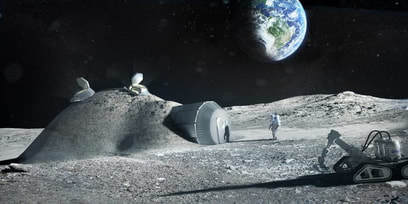 This is the second part of my short story Echo in the Grey, published in 2017. The first part is around here somewhere...
Echo in the Grey
© David Allan Hamilton
Part II
Sarangan completed the GPR survey, packed his gear back on the scooter’s trailer, and returned to the lab.
Soon after he settled back into the control room and began feeding the GPR data into the main computer, the amber light above the comms monitor signaled an incoming audio message from the TSA in New Houston. “John, is everything okay up there?”
“Sure, sure, just routine surveying,” he said. “Why do you ask?”
“Just checking. Usually by now we’d have your seismic data transferred. You know how the techs are.”
Sarangan felt jumpy and grimaced. Then he feigned a pleasant demeanor. “Yeah. Okay. Well, there was a small glitch in the array,” he lied, “and I’ve had to spend some time tracing it back through the net systems. Set me back a littlel longer than I thought, is all.”
It took just over a second for an audio message to travel between the Earth and the Moon. More than a few passed before the TSA crackled back at him. “Anything we can help you with down here? We can patch in to your system, you know, see if the problem’s at this end.”
“Thanks, but I ran it down here. Had to replace one of the mixer circuits in the signal processor.” He leaned forward in his chair, staring at the floor, and continued, “I’ll begin sending you the data shortly.”
“Acknowledged. Let us know if we can help in any way. I can only imagine what it’s like to be up there by yourself having to do everything on your own.”
Sarangan exhaled deeply. “It’s not always easy, that’s for sure. Anyway, I’ll check in shortly when I’m ready to transfer. Moonlab 2 out.” He cut the transmission and wiped a bead of sweat from his brow. He’d bought himself some time, that much he knew, but he wouldn’t be able to keep his findings from the TSA for long. If he sent – when he sent – the seismic data, the TSA would see precisely what he saw: the domed anomaly. But if he held that back, pretending the data had been corrupted, they’d simply order him to run the survey again. The last thing he wanted was a bunch of humans running around in such close quarters.
The filtered GPR data were now fully loaded into the computer and the image of the dome was much better resolved on the monitor. Sarangan studied it carefully. He was no anthropologist but he recognized a habitat when he saw it. This structure was much like the old geodesic domes he’d trained on back in Hawaii, but smoother and flatter with a height of only a metre and a half. Some ancient race, perhaps? If so, was this part of a larger community buried in the dust? Or maybe this was an abandoned outpost from long ago. It would take thousands, millions of years to be buried like this.
The screen refreshed itself as the chemical assay data was added. One line began flashing in blue and beeping quietly. Sarangan shifted his attention to it and his heart jumped. He had trouble catching his breath. The chemical composition of the dome was displayed on the monitor and, despite the high quality, clean data, the results of the assay kept showing INSUFFICIENT DATA. Whatever the dome was made of, it wasn’t anything found naturally on the lunar surface. This in itself was fascinating, but it was the next line, the flashing one, that caused Sarangan’s blood to run cold.
Interior Chem. Comp.:
N2: 91.6%
O2: 5.2%
He: 1.1%
UNKNOWN: 2.1%
Pressure: 50.74 kPa
Temperature: 35.3 C
SUITABLE FOR HUMAN LIFE
He had to return to the Grey.