David Allan Hamilton's Blog, page 9
March 4, 2021
When There’s Infinite Shelf Space, Getting Shelf Space Isn’t Worth Much
Riffing on my blog from yesterday here. It's way easier to do some creative things today compared to the past, but also much more difficult.
Consider that before Amazon and a robust internet, a writer's challenge comprised finding teachers (locally), finding editors (usually locally), relying on snail mail to send stuff, finding an agent, being rejected a lot, finding a publisher, being rejected a lot, and then if you made it that far, you could find your book on a shelf in a store and begin making a modest living.
Today, the writing of a novel is way easier. Internet, a million teachers and coaches at your fingertips, editing software, DIY book covers, Amazon for self-publishing. Yes, making the book is easier.
But with infinite digital book shelves, getting a spot on the shelf is almost worthless. The cold hard truth is that most books on digital platforms only sell a few copies (to family and friends). So there may be many more published writers these days, but very few actually make a living at it.
What can you do?
Two things:
One: write an amazing story that appeals to a small but committed segment of the population (no mass appeal) so much that they tell others in that community about it. Identify as specifically as possible who you audience is, and write for them. And make that story amazing.
Two. Use social media properly to generate more interest and sales. This doesn't mean posting garbage every 10 minutes, or yelling the loudest. That's noise. That's garbage. Instead, seek permission from your audience to engage with them. Then share with all kinds of helpful, interesting stuff. This builds trust. Your audience gets to know you. If they like you and become engaged, perhaps they'll support you with a book purchase too.
Writing a novel and publishing it on Amazon does nothing. That's the easy part (comparatively speaking). Finding an audience, earning their trust and permission, engaging with them = long term success. That's the more challenging part.
Consider that before Amazon and a robust internet, a writer's challenge comprised finding teachers (locally), finding editors (usually locally), relying on snail mail to send stuff, finding an agent, being rejected a lot, finding a publisher, being rejected a lot, and then if you made it that far, you could find your book on a shelf in a store and begin making a modest living.
Today, the writing of a novel is way easier. Internet, a million teachers and coaches at your fingertips, editing software, DIY book covers, Amazon for self-publishing. Yes, making the book is easier.
But with infinite digital book shelves, getting a spot on the shelf is almost worthless. The cold hard truth is that most books on digital platforms only sell a few copies (to family and friends). So there may be many more published writers these days, but very few actually make a living at it.
What can you do?
Two things:
One: write an amazing story that appeals to a small but committed segment of the population (no mass appeal) so much that they tell others in that community about it. Identify as specifically as possible who you audience is, and write for them. And make that story amazing.
Two. Use social media properly to generate more interest and sales. This doesn't mean posting garbage every 10 minutes, or yelling the loudest. That's noise. That's garbage. Instead, seek permission from your audience to engage with them. Then share with all kinds of helpful, interesting stuff. This builds trust. Your audience gets to know you. If they like you and become engaged, perhaps they'll support you with a book purchase too.
Writing a novel and publishing it on Amazon does nothing. That's the easy part (comparatively speaking). Finding an audience, earning their trust and permission, engaging with them = long term success. That's the more challenging part.


March 3, 2021
Writing and Publishing Your Novel is Easy, But...
 Twenty-five years ago, if you wanted to write and publish your novel, you were faced with a lot of hard work, big expenses, and no guarantees.
Setting aside the actual writing of your novel for a moment, let's look at the other factors that go into putting a novel together.
You probably went to school or took some courses at the local college to learn writing. If you lived in the boondocks, no class for you. Then you needed an editor. This might have been someone at the local newspaper or high school moonlighting. You print out your manuscript, mail it out, and wait. And wait. When you finally get the edits back and make the changes, then you need to get it published. So you had to have an agent or take your chances submitting your story to publishers and that took lots of time and energy and frustration when the dozens of rejection slips show up at your door.
If you're lucky enough to get a publisher, then they'd fuss with your book for a year before publishing it and getting it on to a shelf in a store somewhere.
Compared to today, writing and publishing your novel is easy. There's software to help with editing. Cheap editors overseas who can fix your manuscript. There are DIY covers or you can make your own with PowerPoint and a cell phone. You can publish yourself on Amazon in a fraction of the time it used to take.
But, in the digital world, there are infinite bookshelves. Your novel is lost among the million other books being published this year.
So writing and publishing your novel may be way easier, but getting it noticed is today's challenge. How do you stand out from the other million stories out there in the naked (digital) city?
March 2, 2021
Word Triggers, Dialogue, and Background Information
Another way to weave background information into your prose is using organic word triggers.
Let's say you want to establish that your main character, your hero, is fatherless. How do you get that tidbit of information in your story without imposing yourself as God The Author Making It So?
Word triggers.
Look for a natural, organic way to introduce that information. This is easily done through dialogue, for example.
Donkey: Why are you blocking?
Shrek: I'm not blocking!
Donkey: Then why do you have a problem with everyone?
Shrek: It's not me who has a problem with others! It's everybody else who has a problem with me! (sigh) They judge me before they even know me.
Ah, see, in that scene from Shrek (that I rattled off from memory so no guarantees of accuracy), we establish that Shrek is actually quite sensitive and frustrated. He appears angry because he feels he's misunderstood.
So dialogue is an easy, organic way to introduce background information. Someone asks the questions, the other one answers.
Let's say you want to establish that your main character, your hero, is fatherless. How do you get that tidbit of information in your story without imposing yourself as God The Author Making It So?
Word triggers.
Look for a natural, organic way to introduce that information. This is easily done through dialogue, for example.
Donkey: Why are you blocking?
Shrek: I'm not blocking!
Donkey: Then why do you have a problem with everyone?
Shrek: It's not me who has a problem with others! It's everybody else who has a problem with me! (sigh) They judge me before they even know me.
Ah, see, in that scene from Shrek (that I rattled off from memory so no guarantees of accuracy), we establish that Shrek is actually quite sensitive and frustrated. He appears angry because he feels he's misunderstood.
So dialogue is an easy, organic way to introduce background information. Someone asks the questions, the other one answers.
February 26, 2021
Weaving in Background Information
No one likes the dreaded info dump.
Remember in grade school when you wrote a little story about Sally and puppies? Oh, it was so important back then to describe every physical trait about everything and everyone. A laundry list of pig-tailed hair and freckled faces and such.
"Hi, Mary," Sally said.
Sally was 7 years old. She had big blue eyes and red hair tied up in pig-tails. Her dress was pink and torn at the shoulder. Sally had freckles and was missing a front tooth, and she had a bandage on her knee. In her hand was a red leash. At the end of the leash was a puppy, with brown fur and...
You get the idea.
This may have led to a gold star in grade 3, but as a writer now, the laundry list is boring with a capital B. It interrupts the reader's flow, breaks the story, and offers up too much information that usually isn't necessary.
So, how do we add in character description without resorting to the list?
First, remember that your reader's brain will fill in any gaps. If I told you that Sally was a little girl with freckles, then you already have an idea of what she looks like. The brain is the great in-filler.
Second, you can drip these physical traits as you write your story, but only if they are either super important to the plot or to a character's richness. If your trait doesn't do this, you don't need it.
"Hi, Mary," Sally said. She wiped a red curl from her face and smoothed out her dress. "Do you want to see my new puppy?"
Later in the story (or in the scene), you could mention the bandage ("Hey, Sally, what happened to your knee?") or anything else that might develop the plot of Sally's richness. The important thing is to ditch the laundry list. Forever.
Remember in grade school when you wrote a little story about Sally and puppies? Oh, it was so important back then to describe every physical trait about everything and everyone. A laundry list of pig-tailed hair and freckled faces and such.
"Hi, Mary," Sally said.
Sally was 7 years old. She had big blue eyes and red hair tied up in pig-tails. Her dress was pink and torn at the shoulder. Sally had freckles and was missing a front tooth, and she had a bandage on her knee. In her hand was a red leash. At the end of the leash was a puppy, with brown fur and...
You get the idea.
This may have led to a gold star in grade 3, but as a writer now, the laundry list is boring with a capital B. It interrupts the reader's flow, breaks the story, and offers up too much information that usually isn't necessary.
So, how do we add in character description without resorting to the list?
First, remember that your reader's brain will fill in any gaps. If I told you that Sally was a little girl with freckles, then you already have an idea of what she looks like. The brain is the great in-filler.
Second, you can drip these physical traits as you write your story, but only if they are either super important to the plot or to a character's richness. If your trait doesn't do this, you don't need it.
"Hi, Mary," Sally said. She wiped a red curl from her face and smoothed out her dress. "Do you want to see my new puppy?"
Later in the story (or in the scene), you could mention the bandage ("Hey, Sally, what happened to your knee?") or anything else that might develop the plot of Sally's richness. The important thing is to ditch the laundry list. Forever.
February 23, 2021
3 Steps to Writing an Amazing Novel (or doing anything else)
It's simple, really.
But not easy to do.
No one is born a master at anything. There are no overnight successes despite what our culture worships and what you may have been suckered into believing. Every skill, every accomplishment requires effort and lots of it.
Having said that, here are the 3 steps to writing an amazing novel or, for that matter, doing anything else in life.
1. Learn
Buy books, take classes, watch YouTube videos, talk to people in the game. All of this is easy to do. You don't need a certificate proclaiming that, just because you passed a bunch of courses and gave an instructor what they wanted, you're now an expert. Learning has never been easier.
2. Get Feedback
Video games are so compelling because they give you instant feedback. Open that door, and a zombie eats your brains. Next time? Don't open that door. Listen to constructive criticism from coaches, teachers, clients, readers, other writers. I am saddened by the number of writers coming into my workshops who don't want to share their work "until it's perfect". So they never share a thing. And they cannot improve their craft. Getting feedback is easy. Ask!
3. Do steps 1 and 2 over and over again for 10,000 hours.
This is simple, but not easy. It requires commitment, effort, showing up every day, practice and more practice, learning new stuff, sharing new stuff, learning what readers like and what they don't. But 10,000 hours? Seriously?
Yup.
There are no short cuts to becoming an expert.
If you happen to be born with a bit more innate talent than the rest of us, it may take only 5,000 hours. But you still need to put in the time and effort. A concert pianist gives up sports in order to put in the time. An athlete gives up watching TV and playing video games in order to workout and practice.
Malcolm Gladwell studied the experts, the upper echelon of achievers, and learned that most if not all put in at least 10,000 hours of hard work before they "made it". If it takes you 200 hours to write a novel, and another 200 hours to revise it, that's a total of 400 hours per novel.
Not even close to 10,000. And you expect your first book to be a best-seller? It won't be. The math tells us you'd have to write 25 novels before you become really good at it. If you expect or hope your first novel to be on the NYT best-seller list, you are, frankly and honestly, dreaming. Just know that everyone goes through this. There are no short cuts at all. If you really want to write an amazing novel, then get back to work and write.
But not easy to do.
No one is born a master at anything. There are no overnight successes despite what our culture worships and what you may have been suckered into believing. Every skill, every accomplishment requires effort and lots of it.
Having said that, here are the 3 steps to writing an amazing novel or, for that matter, doing anything else in life.
1. Learn
Buy books, take classes, watch YouTube videos, talk to people in the game. All of this is easy to do. You don't need a certificate proclaiming that, just because you passed a bunch of courses and gave an instructor what they wanted, you're now an expert. Learning has never been easier.
2. Get Feedback
Video games are so compelling because they give you instant feedback. Open that door, and a zombie eats your brains. Next time? Don't open that door. Listen to constructive criticism from coaches, teachers, clients, readers, other writers. I am saddened by the number of writers coming into my workshops who don't want to share their work "until it's perfect". So they never share a thing. And they cannot improve their craft. Getting feedback is easy. Ask!
3. Do steps 1 and 2 over and over again for 10,000 hours.
This is simple, but not easy. It requires commitment, effort, showing up every day, practice and more practice, learning new stuff, sharing new stuff, learning what readers like and what they don't. But 10,000 hours? Seriously?
Yup.
There are no short cuts to becoming an expert.
If you happen to be born with a bit more innate talent than the rest of us, it may take only 5,000 hours. But you still need to put in the time and effort. A concert pianist gives up sports in order to put in the time. An athlete gives up watching TV and playing video games in order to workout and practice.
Malcolm Gladwell studied the experts, the upper echelon of achievers, and learned that most if not all put in at least 10,000 hours of hard work before they "made it". If it takes you 200 hours to write a novel, and another 200 hours to revise it, that's a total of 400 hours per novel.
Not even close to 10,000. And you expect your first book to be a best-seller? It won't be. The math tells us you'd have to write 25 novels before you become really good at it. If you expect or hope your first novel to be on the NYT best-seller list, you are, frankly and honestly, dreaming. Just know that everyone goes through this. There are no short cuts at all. If you really want to write an amazing novel, then get back to work and write.
February 22, 2021
It's About Character (part 2)
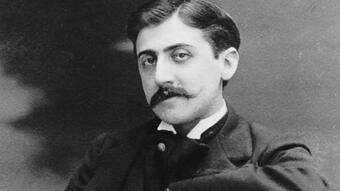 Yesterday, I wrote about the two key motivators that every one of your primary characters in a novel must have: a concrete goal (save the princess, slay the dragon) and an abstract goal (seek justice, find love, be honest)
Today, I'd like to show you a really practical way of fleshing out your characters in a fascinating way that my writers really enjoy and find the most helpful: The Proust Questionnaire.
Marcel Proust, before radio, TV and such, took a common Victorian parlour game and used it to develop his written characters. It's based on a bunch of questions and, once you fill it out, your characters will truly come to life! I find it way more helpful than a simple checklist of traits, physical attributes and so on.
YOu can find the questionnaire right here. It works particularly well when you take on the role of the character being interviewed, i.e., answering the questions.
Here are a few of the questions you'll encounter.
What is your current state of mind?
What do you consider the most overrated virtue?
On what occasion do you lie?
What do you most dislike about your appearance?
Which living person do you most despise?
What is the quality you most like in a man?
What is the quality you most like in a woman?
Along with completing the "interview", it also helps to have an image of your character in mind. Surf the net for the person you're thinking of. When I wrote the Ross 128 Trilogy, one of my primary characters, Jim Atteberry, was modeled after Commander Riker from Star Trek TNG :)
Let me know how this works for you!
February 21, 2021
It's About Character (part 1)
 Round, flat, nuanced, complex, realistic, maddening, boring...
There are lots of ways to describe your written characters.
One of the questions I get a lot in my writing workshops is how to create really interesting characters. The internet provides a mountain of information on this - as do books - and you may have come across some of these that encourage you to fill out all kinds of info on your characters' back stories. Things like when and where they were born, physical features, favourite subjects in school, pets, and so on.
These are well and good, and if you use them and they work for you: excellent!
I find, at least for me and my writers, these checklists have limited use.
So here's what I do:
What motivates her?
Your character behaves based on what motivates them at a fundamental level. And there are two key motivators. The first is what kind of story goal or objective faces them. This should be pretty clear in your story. Luke Skywalker wants to battle the Empire and rescue the princess. Fiona wants to be saved by her one true love. These are concrete goals that provide motivation for taking action (which, of course, moves your plot along).
The second kind of motivator is abstract. Ah, and now it gets interesting because this motivator is not always obvious when we see your character in action. An abstract motivator is something like: justice, loyalty, love, truth and honesty, generosity.
These are the building blocks for your character's behaviour. If, for example, your lead character is determined to destroy the oppressive government regime (concrete). As she moves through the plot, facing her obstacles, it's her abstract motivator that drives how and what she does. Sense of honesty? Then she won't lie to others. Sense of justice? Then she won't destroy one group in order to save another.
The fun stuff in a story occurs when our hero is placed in a terrible position where they have to question their fundamental beliefs :)
So, have a look at your main characters. Do you understand what their concrete goals are? You should know this. But, do you also understand what their abstract goals and motivations are? Spend a few minutes thinking about these, and writing more compelling characters will flow way more naturally.
Tomorrow, we'll look at the Proustian Questionnaire for fleshing out your main characters.
February 20, 2021
This May Not Work
 Whenever we create something, we encounter a ubiquitous underlying fundamental fear.
This may not work.
If only I could guarantee I'd sell a thousand copies of my book.
If only I could guarantee readers would love my book.
If only I could plot a best-seller.
THEN, I'd start my project.
But the creative process doesn't work that way.
So we look for templates, breadcrumbs of success. We play it safe with our stories. We fall into the mindset of the starving artist and blame the market or the competition or our upbringing.
Even if we could overcome all those things and follow all the recommendations from Writers Digest, and even if we signed up for all the master classes with all the famous authors, there are still no guarantees that anyone will read your book.
So what's a struggling writer to do?
Since we cannot predict the future or guarantee a result, to dwell on those will make us crazy.
Focus on what you can control.
Write every day (good, bad, and ugly).
Write your story.
Trust the creative process to teach you more about yourself than anything else.
Strive to make your next novel better than the one you just finished (you know what needs work).
Do that.
February 19, 2021
Commit, or, Leave Those Shiny Objects Alone
Yesterday, I discussed the idea of inviting your readers to take part in the change you describe in your story (read about that here). Before that, I suggested you need to understand who you're writing for.
And now, the only thing left to do is to commit to the writing.
Why is this such a challenge?
In my weekly writers group last night, we explored this idea of being really excited about starting a new project, but then, when that initial energy dissipates and we get into the hard work of writing (middle sections, anyone?), we are often tempted with ditching our WIP and picking up another, more exciting story idea... a shiny object, if you will.
We do this because starting something is more fun than finishing.
We do this because if we don't have to finish, then we don't have to put our story out there and open ourselves up to potential criticism.
We do this because finishing is hard work, and often frustrating, and the Lizard Brain appears telling us we don't really need to finish that stupid story because it sucks anyway and you're a bad person for even thinking you could ever be a writer.
And that's exactly the time when you should stay on track. Ignore the Lizard and commit to finishing your story even though it's hard work, even though it seems to go on forever, even though there are no guarantees anyone will read it (let along like it).
If you're in that place with your story, wondering why you ever started this in the first place, wrestling with the Lizard who implores you to quit, then know this: you are definitely on the right track. The more you feel like quitting, the more powerful you are becoming as a writer.
But only if you stick with it. Commit to finishing. There may not be any prizes when you're done (no guarantees, remember?), but there most definitely aren't any prizes for quitting.
And now, the only thing left to do is to commit to the writing.
Why is this such a challenge?
In my weekly writers group last night, we explored this idea of being really excited about starting a new project, but then, when that initial energy dissipates and we get into the hard work of writing (middle sections, anyone?), we are often tempted with ditching our WIP and picking up another, more exciting story idea... a shiny object, if you will.
We do this because starting something is more fun than finishing.
We do this because if we don't have to finish, then we don't have to put our story out there and open ourselves up to potential criticism.
We do this because finishing is hard work, and often frustrating, and the Lizard Brain appears telling us we don't really need to finish that stupid story because it sucks anyway and you're a bad person for even thinking you could ever be a writer.
And that's exactly the time when you should stay on track. Ignore the Lizard and commit to finishing your story even though it's hard work, even though it seems to go on forever, even though there are no guarantees anyone will read it (let along like it).
If you're in that place with your story, wondering why you ever started this in the first place, wrestling with the Lizard who implores you to quit, then know this: you are definitely on the right track. The more you feel like quitting, the more powerful you are becoming as a writer.
But only if you stick with it. Commit to finishing. There may not be any prizes when you're done (no guarantees, remember?), but there most definitely aren't any prizes for quitting.
February 18, 2021
The Change You Wish To Make Through Writing
Yesterday, I talked about getting clear on understanding who you're writing for.
Today, let's focus on your message of change to them. For starters, do you even have a message? I'd argue that even if you don't think your story has a message, that that in itself is also a message. One of apathy perhaps. One of disrespect. Now you may not consciously be aware of the Big Theme you're presenting in your story, but it's there. So let's be clear. When you write with intention, with a specific audience in mind, then your message to them must also be clear.
But wait, you say, I'm a romance writer! My message is one of light entertainment and nothing more. No heavy Orwellian ideas here.
Fair enough, but I'd argue there's still a message of change that you're promoting for your audience. Perhaps one as simple and worn as "love conquers all", and that's an honourable message to have. You show your audience, through your work, the importance of this idea and that by adopting it, they too can experience wonderful things.
Wait, you say again, is this a Ghandi "be the change you wish to see in the world" thing? Possibly. But remember, you are not your story. Bob Denver wasn't really Gilligan. Your characters in the story are the ones carrying the message, struggling with its expectations and challenges, overcoming them (or not) and building a new life. Leverage your characters.
Does it matter what kind of change I'm proposing in my story? No. What matters is that you're honest, speaking from the heart, and writing with intention.
Now, go write something amazing!
Today, let's focus on your message of change to them. For starters, do you even have a message? I'd argue that even if you don't think your story has a message, that that in itself is also a message. One of apathy perhaps. One of disrespect. Now you may not consciously be aware of the Big Theme you're presenting in your story, but it's there. So let's be clear. When you write with intention, with a specific audience in mind, then your message to them must also be clear.
But wait, you say, I'm a romance writer! My message is one of light entertainment and nothing more. No heavy Orwellian ideas here.
Fair enough, but I'd argue there's still a message of change that you're promoting for your audience. Perhaps one as simple and worn as "love conquers all", and that's an honourable message to have. You show your audience, through your work, the importance of this idea and that by adopting it, they too can experience wonderful things.
Wait, you say again, is this a Ghandi "be the change you wish to see in the world" thing? Possibly. But remember, you are not your story. Bob Denver wasn't really Gilligan. Your characters in the story are the ones carrying the message, struggling with its expectations and challenges, overcoming them (or not) and building a new life. Leverage your characters.
Does it matter what kind of change I'm proposing in my story? No. What matters is that you're honest, speaking from the heart, and writing with intention.
Now, go write something amazing!