David Allan Hamilton's Blog, page 10
February 17, 2021
Who's It For?
Who do write for?
What purpose does your story/novel/poem serve?
If you don't the clear answer to that, take some time today to think it through. Otherwise, you may never know if your work is reaching an audience who wants and needs to see it.
Too often, we write without intention because "my story is for everyone" or "I'm just writing this for myself".
Let's move away from that right now. Your story isn't for everyone. Not everyone will give it 5 stars. Don't believe me? Go have a look at The Handmaid's Tale on Amazon and see how many single star reviews there are. And that's okay, because Atwood wasn't writing for them.
Who is your story for?
What do they look like?
Where do they live?
What do they do for a living?
What other things do they read? Watch on TV?
What do they talk about on social media.
Only when you know the answers to these questions can you begin to write with intention. And writing with intention forces us to narrow our target audience, understand the genre we're writing in, and produce better work.
What purpose does your story/novel/poem serve?
If you don't the clear answer to that, take some time today to think it through. Otherwise, you may never know if your work is reaching an audience who wants and needs to see it.
Too often, we write without intention because "my story is for everyone" or "I'm just writing this for myself".
Let's move away from that right now. Your story isn't for everyone. Not everyone will give it 5 stars. Don't believe me? Go have a look at The Handmaid's Tale on Amazon and see how many single star reviews there are. And that's okay, because Atwood wasn't writing for them.
Who is your story for?
What do they look like?
Where do they live?
What do they do for a living?
What other things do they read? Watch on TV?
What do they talk about on social media.
Only when you know the answers to these questions can you begin to write with intention. And writing with intention forces us to narrow our target audience, understand the genre we're writing in, and produce better work.


February 16, 2021
Echoes and Rhymes
 I think it's safe to say that as many as half the writers who come into my novel writing workshops want to write something "totally unique", or "unlike anything else out there."
See, I get it. You are you, and your voice is your voice. Why copy someone else's? I've been asking you for the past couple of weeks to not copy others, right? We don't need any more skilled copiers. We want the real you.
But, we also want reminders. Echoes of stories we're familiar with. Lines that rhyme.
Which means, one of your responsibilities as a writer is to know your genre like a boss. You must become an expert in your field. If, for example, you write in the YA dystopian genre, you'd better know who all the key writers are in that field, what they write about, how long their stories are, viewpoints, etc.
So when someone unfamiliar with your work picks up your book and starts reading, they should know what kind of story this is. If you tell them it's hard science fiction and your readers think it's more like fantasy (because you want it to be unique), then you've got a real problem.
Uniqueness should not apply to the genre. If I'm looking for a cozy mystery, don't give me Fantasy Island because you want to be different.
Uniqueness applies to your voice, which comprises how you jigsaw a story together, how you spin words into fascinating combinations, how you lead the reader to understand the Big Ideas you're presenting. Don't scare off your reader with an unfamiliar take on genre.
February 15, 2021
Bob Denver wasn't Gilligan...
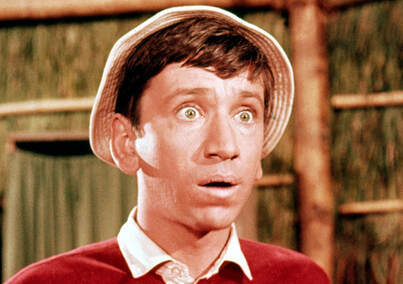 Bob Denver played Gilligan on the old Gilligan's Island series. He wasn't actually Gilligan in real life. He didn't really live in a bamboo hut with the Skipper.
Patrick Stewart isn't really Jean-Luc Picard, although we may wish that were the case. No, Stewart is an actor. He played Picard on Star Trek: The Next Generation. He's played hundreds if not thousands of other roles.
You are not your novel. You're the writer.
You are not your painting. You're the artist.
If you think Gilligan is an oppressed idiot who couldn't do anything right, Bob Denver wouldn't take that personally. Why? See the first line.
So how come if some random person doesn't like your novel, you feel compelled to take it personally? You are not your novel.
February 14, 2021
Copying, Reverse Engineering, and the Pursuit of the Guarantee
When we first begin writing or painting or playing music, we tend to imitate those who influence us. And, yes, we are constantly influenced by what we read, what we listen to, who we hang around with.
But there's a difference between being influenced by others and copying them. On the latter, the thinking goes like this: If Game of Thrones is a huge success, and I reverse engineer how it's structured, then I can also write a successful story. It's the pursuit of the guarantee: we minimize risk of failure and rejection by copying what's been successful before.
I know writers who will take a novel and map out every scene change, every switch in viewpoint, every plot twist - minor and major - in an effort to reproduce someone else's success.
Can this work? Sure, I suppose. A Quest is a Quest, right?
Will it guarantee success? Not at all.
Of course, you can write a novel or two this way, and maybe that's okay if you're learning the craft. But at some point, you need to stop copying and start creating a story with your voice, your characters, your themes and plot twists. And that means giving up any kind of wish for a guarantee.
But there's a difference between being influenced by others and copying them. On the latter, the thinking goes like this: If Game of Thrones is a huge success, and I reverse engineer how it's structured, then I can also write a successful story. It's the pursuit of the guarantee: we minimize risk of failure and rejection by copying what's been successful before.
I know writers who will take a novel and map out every scene change, every switch in viewpoint, every plot twist - minor and major - in an effort to reproduce someone else's success.
Can this work? Sure, I suppose. A Quest is a Quest, right?
Will it guarantee success? Not at all.
Of course, you can write a novel or two this way, and maybe that's okay if you're learning the craft. But at some point, you need to stop copying and start creating a story with your voice, your characters, your themes and plot twists. And that means giving up any kind of wish for a guarantee.
February 13, 2021
Where's the Grit?
I've tried to "like" Christian fiction.
I'm not talking about Narnia where the message is couched in allegory. No. I'm talking about the pablum that gets served up by contemporary Christian writers who see the world (or, perhaps more truthfully, their publishers see the world) as a sugar-coated, no one swears, namby pamby, smiley-faced place.
There's obviously a market for that kind of story. To those who like their Christian fiction sweet, have at it and enjoy. To those who write that kind of story because certain publishers will only pick you if you follow the rules, enjoy.
I'm not your audience.
I want the grit. I want the protagonist to struggle with these ideas of Good and Evil, to make them real. A lot of people curse. A lot of people are violent and nasty. I want to see them struggle. Give me the grit so the characters are forced into decisions they may not be ready to make yet. That's okay. Show me how people struggle in their own lives.
That's the kind of Christian fiction I want to read. If that's the kind of story you write, tell me about it and share a link to your book.
I'm not talking about Narnia where the message is couched in allegory. No. I'm talking about the pablum that gets served up by contemporary Christian writers who see the world (or, perhaps more truthfully, their publishers see the world) as a sugar-coated, no one swears, namby pamby, smiley-faced place.
There's obviously a market for that kind of story. To those who like their Christian fiction sweet, have at it and enjoy. To those who write that kind of story because certain publishers will only pick you if you follow the rules, enjoy.
I'm not your audience.
I want the grit. I want the protagonist to struggle with these ideas of Good and Evil, to make them real. A lot of people curse. A lot of people are violent and nasty. I want to see them struggle. Give me the grit so the characters are forced into decisions they may not be ready to make yet. That's okay. Show me how people struggle in their own lives.
That's the kind of Christian fiction I want to read. If that's the kind of story you write, tell me about it and share a link to your book.
February 12, 2021
Writing Risks
There are the ubiquitous risks you know well as a writer.
The risk of no one liking your story. The risk of your story "not working" the way you had hoped or intended. The risk of spending all those hours, crafting journey that no one cares about. Being ridiculed. Judged.
Every writer faces those, sometimes on a daily basis.
As a result, it's easy to convince ourselves that we must play it safe. Follow a proven path with proven tropes, archetypical characters. But I'm not sure the world needs yet another YA dystopian novel, or yet another vampire romance. That's what happens when fear infiltrates our craft. We end up with ridiculous shows on TV (Real Housewives of _____) playing to the lowest common denominator.
You're better than that. Your voice, your message is more important to me than how well you can copy Sarah J. Maas.
So. Will you take on the biggest risk there is? Will you write your story, the way only you can tell it, irrespective of the outcome? Something that will connect with only a handful of readers who are waiting for you? That's the story I want to read.
The risk of no one liking your story. The risk of your story "not working" the way you had hoped or intended. The risk of spending all those hours, crafting journey that no one cares about. Being ridiculed. Judged.
Every writer faces those, sometimes on a daily basis.
As a result, it's easy to convince ourselves that we must play it safe. Follow a proven path with proven tropes, archetypical characters. But I'm not sure the world needs yet another YA dystopian novel, or yet another vampire romance. That's what happens when fear infiltrates our craft. We end up with ridiculous shows on TV (Real Housewives of _____) playing to the lowest common denominator.
You're better than that. Your voice, your message is more important to me than how well you can copy Sarah J. Maas.
So. Will you take on the biggest risk there is? Will you write your story, the way only you can tell it, irrespective of the outcome? Something that will connect with only a handful of readers who are waiting for you? That's the story I want to read.
February 11, 2021
Does Your Novel Serve a Purpose?
At first blush, you may think, "Of course it does. I've written a story that readers will enjoy, so the purpose of the novel is to entertain. Maybe even inform them."
Is that it?
It seems to me that all novels - once an audience finds them - can be entertaining and informative, so that's almost a given. Don't tell me that. Instead, tell me what the real purpose of your novel is. Think about exploring controversial ideas, exploring the possibilities of hope, connecting like-minded readers and giving them a reason to follow you.
Sure, write a quest. Slay the dragon. Retrieve the rings. Pure entertainment is fine (space opera, anyone?), but I think you can do more. You must do more. Find the real reason behind your writing. Write it on post it notes and stick them around your house. Help me trust you to deliver the goods.
Is that it?
It seems to me that all novels - once an audience finds them - can be entertaining and informative, so that's almost a given. Don't tell me that. Instead, tell me what the real purpose of your novel is. Think about exploring controversial ideas, exploring the possibilities of hope, connecting like-minded readers and giving them a reason to follow you.
Sure, write a quest. Slay the dragon. Retrieve the rings. Pure entertainment is fine (space opera, anyone?), but I think you can do more. You must do more. Find the real reason behind your writing. Write it on post it notes and stick them around your house. Help me trust you to deliver the goods.
February 10, 2021
Bring The Ineffable Juice To Your Prose
One of the fun exercises we do in the Poetry Workshop is incorporating juicy word pairs into our work to bring out the flavour in our words.
Like word spices :)
You don't have to be a poet to incorporate this technique into your own writing, and maybe - just maybe - you'll discover aspects of your voice you never realized you had.
Here's what you do:
Make a list of as many juicy verbs as you can. What I mean by "juicy" are those words that feel interesting. Words like: scrabble, brittle, hush, cringe, screech... there's no limit.
Then, pair them up with nouns or other words in your work.
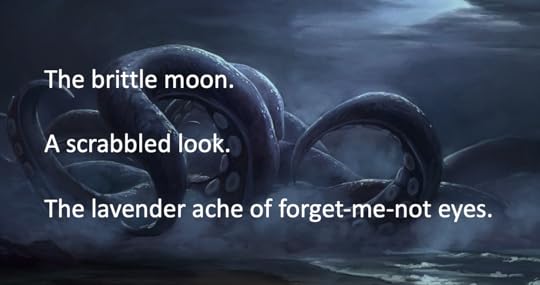 You get the picture. Now take a look at one of your paragraphs or poems, and see if you can strategically add some juicy word pairs to your work. Then note what happens.
The brittle sun shone half-heartedly through a gathering of clouds scorching overhead. Stone sauntered along a fine gravel path, fitting in seamlessly with the tweedy, professor crowd, attracting ineffable stares of scrabbled undergraduate girls.
Of course, you don't want to overdo this (like I did above, for the purpose of demonstration). Be thoughtful and sparse for greater impact.
Like word spices :)
You don't have to be a poet to incorporate this technique into your own writing, and maybe - just maybe - you'll discover aspects of your voice you never realized you had.
Here's what you do:
Make a list of as many juicy verbs as you can. What I mean by "juicy" are those words that feel interesting. Words like: scrabble, brittle, hush, cringe, screech... there's no limit.
Then, pair them up with nouns or other words in your work.
You get the picture. Now take a look at one of your paragraphs or poems, and see if you can strategically add some juicy word pairs to your work. Then note what happens.The brittle sun shone half-heartedly through a gathering of clouds scorching overhead. Stone sauntered along a fine gravel path, fitting in seamlessly with the tweedy, professor crowd, attracting ineffable stares of scrabbled undergraduate girls.
Of course, you don't want to overdo this (like I did above, for the purpose of demonstration). Be thoughtful and sparse for greater impact.
February 9, 2021
The Broken Hush of a Silent Scream
The beauty of poetry is that you can use it in your fiction writing.
Not to turn your prose purple, mind you (unless that's by design); rather, to bring an element of you - your voice - into the work.
Make a list of what I call "juicy words". Pair them up into seemingly unnatural combinations.
The broken hush.
The scrabble moon.
Drop them into your prose where they make sense.
Give your readers a glimpse of what you're able to do as a wordsmith.
Not to turn your prose purple, mind you (unless that's by design); rather, to bring an element of you - your voice - into the work.
Make a list of what I call "juicy words". Pair them up into seemingly unnatural combinations.
The broken hush.
The scrabble moon.
Drop them into your prose where they make sense.
Give your readers a glimpse of what you're able to do as a wordsmith.
February 8, 2021
Mass Appeal
I think most of us who write, paint, or create harbour a wish (or a hope?) to achieve success by selling our work to the masses. I mean, who wouldn't want that?
But if you're trying to make your art appeal to the masses, what happens to it? Chasing the next hit song. Writing the next Stephanie Plum. Photoshopping the next Hang In There, Kitty poster. What happens is you surrender your voice - the one the world is desperate to hear - for a hollow promise, for the possibility of adulation from creating art that a monkey or AI could make.
I think there's a better approach.
Be true to your voice, to your art. Write the story you want to write... you have to write. Focus on the process of writing, of making something the best you can make it. Invite others to read it. Those who take you up on it, and like what you wrote, will stick with you. Those are all you need to keep creating your art.
You don't need to sell a million copies. You only need to sell a few to connect with your tribe and make a living at it.
But if you're trying to make your art appeal to the masses, what happens to it? Chasing the next hit song. Writing the next Stephanie Plum. Photoshopping the next Hang In There, Kitty poster. What happens is you surrender your voice - the one the world is desperate to hear - for a hollow promise, for the possibility of adulation from creating art that a monkey or AI could make.
I think there's a better approach.
Be true to your voice, to your art. Write the story you want to write... you have to write. Focus on the process of writing, of making something the best you can make it. Invite others to read it. Those who take you up on it, and like what you wrote, will stick with you. Those are all you need to keep creating your art.
You don't need to sell a million copies. You only need to sell a few to connect with your tribe and make a living at it.