David Allan Hamilton's Blog, page 14
May 8, 2018
Echo in the Grey
While the "hurry up and wait" process of finalizing the last design stages of The Crying of Ross 128 continue, I've been plotting a second novel that picks up where Crying leaves off. Part of the plot was inspired by this short story I wrote in the fall of 2017 called "Echo in the Grey". Over the next few days, I'll be sharing it with you. If you enjoy it, please support the writers in the publication "Tales of the Maestro Moon" available on amazon. Thanks!
Ready?
Here's part 1...
Echo in the Grey
© David Allan Hamilton
The small reconnaissance spacecraft orbited the blue planet’s moon, scanning the surface for a suitable landing site. A solitary pilot had engaged the ship’s cloak light years ago, rendering the craft’s tracking beacons inoperative so none of its kind knew where it was.
All he wanted.
His scans indicated the moon was in a synchronous orbit with this planet, so he chose a site on the edge of sunlight where he could enjoy its remarkable beauty. He named it Blue. The sound of Blue is gentle, he thought.
Over the millenia, dust and rock fragments covered the ship until only the Black remained.
The sound of Black is not a sound at all.
It is perfection.
* * *
John Sarangan wiped the moondust off his visor, secured the hovering LunaScoota against the lab wall and cut its power. The one-man vehicle nestled gently down on the Moon’s surface. He’d just finished deploying the remaining thumpers in the latest seismic mapping survey – this one out in the Grey – and was preparing to run the array for the next couple of hours.
He entered the lab and removed his yellow enviro-suit. In the control room, he checked his monitors, cameras and remote sensors and smiled. When Sarangan was broken years ago after his partner betrayed him, he vowed never to get close to anyone again. So accepting this assignment with the Terran Science Academy allowed him the pleasure and security of complete self-reliability. The isolation he coveted professionally mirrored the rest of his life. It crept through his thoughts, shunting his emotions back and forth in a jumbled slosh of lost friendships and stunted relationships until everything he ever felt for anyone else was rendered inert. There was just the man and his work, and the 384,000 kilometres separating him from the nearest human being was almost enough.
He clicked the thumpers online, keyed the initial survey frequency into the imaging algorithm, and hit the flashing RUN button. The array monitor captured several thumpers coming to life, pounding the lunar surface in variable bursts and generating the seismic signals necessary to map near surface structural anomalies. Within seconds, the filtered data were constructed tomographically into three-dimensional colour images, and the first grainy 500 metres of surface depth ripened into clearly defined strata as more information became available.
The beauty of this work is in the imaging.
When Sarangan adjusted the frequency of the thumpers to survey structures closer to the lunar surface, something in the data grabbed his attention. Quite unexpectedly, a curved anomaly appeared out of the noise. Sarangan fine-tuned the filter’s dampening parameters to improve the signal to noise ratio of the anomaly, but what he saw appearing on the monitor left him second-guessing the integrity of the algorithm. He stood up and leaned toward the screen to get a better look. There, buried just a few metres below the Moon’s surface where the Light meets the Dark, a perfectly spherical dome-like structure emerged within the rock and silt.
Sarangan felt his skin flush and his shoulders tighten. He adjusted the filter parameters again and again and verified that the software was functioning properly. He was familiar with dome structures from his younger days as a geophysicist searching for oil and gas deposits, but this was different: extremely small relative to other geologic structures, and perfectly symmetrical. Nature, he knew, could be full of surprises, but to his trained eye there was no mistaking that what he saw buried in moondust out in the Grey was anything but a natural occurrence.
* * *
He’d put his faith in science a long time ago. Clearly, there was something artificial buried out there, but before allowing his imagination to get the better of him, he knew enough to investigate further. Gather more information, more evidence. Two questions came to mind: one, what was the nature of this dome-like anomaly and, two, what was its origin?
First things first, Sarangan thought. He wanted to get a better understanding of what was out there in the dust. He continued imaging the object, varying the frequencies of the thumpers to improve the resolution. He determined the anomaly was about three metres below the surface and its diameter was a little over eight metres. The dome itself was imaged cleanly; however, the area below the dome remained unclear. Despite his filtering efforts, he was unable to mitigate the noise in that data. If he wanted to know more, he would simply have to go out and have a closer look.
Sarangan checked the air tank on his enviro-suit. Five hours of oxygen was more than enough to get out to the Grey, run a targeted ground-penetrating radar survey, and get back to the lab. He strapped the box-like GPR instrument across the little trailer on the back of the LunaScoota, and whirred away.
It took forty-five minutes to arrive at the survey site. Sarangan checked his coordinates against the imaged data and was confident he stood right in front of the target. He placed reflective survey posts at half-metre intervals to form a twenty metre square grid over the dome. Then, rolling the GPR over the dust, he began imaging the areas along each line and feeding the data into the processor built in to his enviro-suit. The resulting image was projected on his visor along with crucial data continuously being updated beside it: depth to target, chemical composition of the overburden, reflectivity of the target, surface temperature, GPR frequencies, and remaining oxygen.
As the dome image crystallized, Sarangan was close to answering the first question on the nature of the anomaly. He knew the scientists and engineers back in New Houston would be utterly excited about this find for, indeed, the data he collected would ensure additional funding and profile within the TSA. And yet, with an increased profile there was little doubt the TSA would send more people to the Moon which meant more noise, more smell, more having to get along. That's when the idea of hiding this find from others floated into his thoughts, backdropping itself into his work the way the weather did on Earth when you were planning a day out.
He would still need to consider the second question: where did this anomaly, this thing, come from?
Ready?
Here's part 1...
Echo in the Grey
© David Allan Hamilton
The small reconnaissance spacecraft orbited the blue planet’s moon, scanning the surface for a suitable landing site. A solitary pilot had engaged the ship’s cloak light years ago, rendering the craft’s tracking beacons inoperative so none of its kind knew where it was.
All he wanted.
His scans indicated the moon was in a synchronous orbit with this planet, so he chose a site on the edge of sunlight where he could enjoy its remarkable beauty. He named it Blue. The sound of Blue is gentle, he thought.
Over the millenia, dust and rock fragments covered the ship until only the Black remained.
The sound of Black is not a sound at all.
It is perfection.
* * *
John Sarangan wiped the moondust off his visor, secured the hovering LunaScoota against the lab wall and cut its power. The one-man vehicle nestled gently down on the Moon’s surface. He’d just finished deploying the remaining thumpers in the latest seismic mapping survey – this one out in the Grey – and was preparing to run the array for the next couple of hours.
He entered the lab and removed his yellow enviro-suit. In the control room, he checked his monitors, cameras and remote sensors and smiled. When Sarangan was broken years ago after his partner betrayed him, he vowed never to get close to anyone again. So accepting this assignment with the Terran Science Academy allowed him the pleasure and security of complete self-reliability. The isolation he coveted professionally mirrored the rest of his life. It crept through his thoughts, shunting his emotions back and forth in a jumbled slosh of lost friendships and stunted relationships until everything he ever felt for anyone else was rendered inert. There was just the man and his work, and the 384,000 kilometres separating him from the nearest human being was almost enough.
He clicked the thumpers online, keyed the initial survey frequency into the imaging algorithm, and hit the flashing RUN button. The array monitor captured several thumpers coming to life, pounding the lunar surface in variable bursts and generating the seismic signals necessary to map near surface structural anomalies. Within seconds, the filtered data were constructed tomographically into three-dimensional colour images, and the first grainy 500 metres of surface depth ripened into clearly defined strata as more information became available.
The beauty of this work is in the imaging.
When Sarangan adjusted the frequency of the thumpers to survey structures closer to the lunar surface, something in the data grabbed his attention. Quite unexpectedly, a curved anomaly appeared out of the noise. Sarangan fine-tuned the filter’s dampening parameters to improve the signal to noise ratio of the anomaly, but what he saw appearing on the monitor left him second-guessing the integrity of the algorithm. He stood up and leaned toward the screen to get a better look. There, buried just a few metres below the Moon’s surface where the Light meets the Dark, a perfectly spherical dome-like structure emerged within the rock and silt.
Sarangan felt his skin flush and his shoulders tighten. He adjusted the filter parameters again and again and verified that the software was functioning properly. He was familiar with dome structures from his younger days as a geophysicist searching for oil and gas deposits, but this was different: extremely small relative to other geologic structures, and perfectly symmetrical. Nature, he knew, could be full of surprises, but to his trained eye there was no mistaking that what he saw buried in moondust out in the Grey was anything but a natural occurrence.
* * *
He’d put his faith in science a long time ago. Clearly, there was something artificial buried out there, but before allowing his imagination to get the better of him, he knew enough to investigate further. Gather more information, more evidence. Two questions came to mind: one, what was the nature of this dome-like anomaly and, two, what was its origin?
First things first, Sarangan thought. He wanted to get a better understanding of what was out there in the dust. He continued imaging the object, varying the frequencies of the thumpers to improve the resolution. He determined the anomaly was about three metres below the surface and its diameter was a little over eight metres. The dome itself was imaged cleanly; however, the area below the dome remained unclear. Despite his filtering efforts, he was unable to mitigate the noise in that data. If he wanted to know more, he would simply have to go out and have a closer look.
Sarangan checked the air tank on his enviro-suit. Five hours of oxygen was more than enough to get out to the Grey, run a targeted ground-penetrating radar survey, and get back to the lab. He strapped the box-like GPR instrument across the little trailer on the back of the LunaScoota, and whirred away.
It took forty-five minutes to arrive at the survey site. Sarangan checked his coordinates against the imaged data and was confident he stood right in front of the target. He placed reflective survey posts at half-metre intervals to form a twenty metre square grid over the dome. Then, rolling the GPR over the dust, he began imaging the areas along each line and feeding the data into the processor built in to his enviro-suit. The resulting image was projected on his visor along with crucial data continuously being updated beside it: depth to target, chemical composition of the overburden, reflectivity of the target, surface temperature, GPR frequencies, and remaining oxygen.
As the dome image crystallized, Sarangan was close to answering the first question on the nature of the anomaly. He knew the scientists and engineers back in New Houston would be utterly excited about this find for, indeed, the data he collected would ensure additional funding and profile within the TSA. And yet, with an increased profile there was little doubt the TSA would send more people to the Moon which meant more noise, more smell, more having to get along. That's when the idea of hiding this find from others floated into his thoughts, backdropping itself into his work the way the weather did on Earth when you were planning a day out.
He would still need to consider the second question: where did this anomaly, this thing, come from?


May 2, 2018
Why I Do This
Writing a novel is a huge challenge and undertaking, as anyone who's ever tried it and done it can attest. So why do it? I ask my workshop writers why they want to write, whether a poem, short story or novel. The reasons vary, of course, from the thrill of selling a book to a stranger, to personal pride of accomplishment. But if I could distil them all down to one reason, it would be this: to be heard.
There is so much noise in the world (this blog contributes to that noise too, doesn't it?) and to have our voices heard is increasingly difficult. So what I do through the workshops is offer my writers two things: first, a supportive community and tools to write awesome prose; and second, to be published so their voices can be heard.
I do this not for love of gold; rather, I do this to show writers how powerful they are and that anything is possible when you start to say "yes" to endless opportunities. And I see this all the time. "All actions have unintended consequences," as I say in The Crying of Ross 128. At first, this may sound fearsome and dangerous, but the other side of the coin is that our actions can change the world in ways we can't even imagine. That's why I do what I do.
Since starting the workshops in May 2017, over 150 writers have participated. More than 40 of those writers are now published authors for the first time, receiving accolades (and royalties) for their efforts.
Write, and change your world.
Publish, and change the world.
There is so much noise in the world (this blog contributes to that noise too, doesn't it?) and to have our voices heard is increasingly difficult. So what I do through the workshops is offer my writers two things: first, a supportive community and tools to write awesome prose; and second, to be published so their voices can be heard.
I do this not for love of gold; rather, I do this to show writers how powerful they are and that anything is possible when you start to say "yes" to endless opportunities. And I see this all the time. "All actions have unintended consequences," as I say in The Crying of Ross 128. At first, this may sound fearsome and dangerous, but the other side of the coin is that our actions can change the world in ways we can't even imagine. That's why I do what I do.
Since starting the workshops in May 2017, over 150 writers have participated. More than 40 of those writers are now published authors for the first time, receiving accolades (and royalties) for their efforts.
Write, and change your world.
Publish, and change the world.
Science Fiction Review: War Factory - Book 2 in the Transformation Series
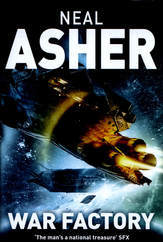 I enjoy reading a variety of genres, even science fiction :)
Lately, I've picked up Neal Asher's Transformation series - a rollicking new space opera romp.
This is the second book in the Transformation series that chronicles the rogue AI, Penny Royal, and the exploits of crab-like prador, augmented humans, and other sentient beings in the universe. Asher's stories are not as accessible as some in the SF world. This is not Ray Bradbury or Ursula Le Guin spinning a yarn. But as I've learned, if you stick with it and pay attention, you will be rewarded with a fascinating look at Asher's immense world-building skills.
There are many characters to keep track of here. It does help if you've read some of Asher's previous works, especially those that introduce the Polity and the human / prador galactic war. Still, if you got through Dark Intelligence, the first of this trilogy, you will enjoy War Factory even more.
Contemporary space opera for sure. Lots of things blowing up. Weapons are cool. Prador are fascinating bad guys. The future of augmented humans is frightening.
Review: War Factory - Neal Asher
I enjoy reading a variety of genres, even science fiction :)Lately, I've picked up Neal Asher's Transformation series - a rollicking new space opera romp.
This is the second book in the Transformation series that chronicles the rogue AI, Penny Royal, and the exploits of crab-like prador, augmented humans, and other sentient beings in the universe. Asher's stories are not as accessible as some in the SF world. This is not Ray Bradbury or Ursula Le Guin spinning a yarn. But as I've learned, if you stick with it and pay attention, you will be rewarded with a fascinating look at Asher's immense world-building skills.
There are many characters to keep track of here. It does help if you've read some of Asher's previous works, especially those that introduce the Polity and the human / prador galactic war. Still, if you got through Dark Intelligence, the first of this trilogy, you will enjoy War Factory even more.
Contemporary space opera for sure. Lots of things blowing up. Weapons are cool. Prador are fascinating bad guys. The future of augmented humans is frightening.
April 26, 2018
The Pre-Sale Launch
As a writer, should you or should you not offer your book for pre-sale on your author's site? That's the question I faced over the past couple of weeks and I'd like to share my thought process and decision to offer a pre-sale of the novel to my followers.
As a general principle, offering your book on your author's website is a must once it's published. But what do you do before your book is released? I reasoned out that generating interest and buzz and anticipation for the physical book was in my best interest, so I decided to offer the opportunity for followers to pre-order the book (hard or soft cover), and in exchange for that, I'd send them a PDF version of the novel. Although there are still a couple of design features that will change, the substance of the content will not.
My thinking behind offering the full PDF version of the novel as a thank you is, again, to have the early adopters read the story, talk about it, ask questions of me about it, and so on. This is an important part of building awareness for the book when it eventually does launch.
One drawback to this approach is that the book will not count as an official sale since I'll be fulfilling the orders myself. Still, for me, the benefits of building some interest outweigh the lack of official sales.
As a general principle, offering your book on your author's website is a must once it's published. But what do you do before your book is released? I reasoned out that generating interest and buzz and anticipation for the physical book was in my best interest, so I decided to offer the opportunity for followers to pre-order the book (hard or soft cover), and in exchange for that, I'd send them a PDF version of the novel. Although there are still a couple of design features that will change, the substance of the content will not.
My thinking behind offering the full PDF version of the novel as a thank you is, again, to have the early adopters read the story, talk about it, ask questions of me about it, and so on. This is an important part of building awareness for the book when it eventually does launch.
One drawback to this approach is that the book will not count as an official sale since I'll be fulfilling the orders myself. Still, for me, the benefits of building some interest outweigh the lack of official sales.