
Shevlin Sebastian's Blog, page 22
June 18, 2021
An encounter with a lizard
By Shevlin Sebastian
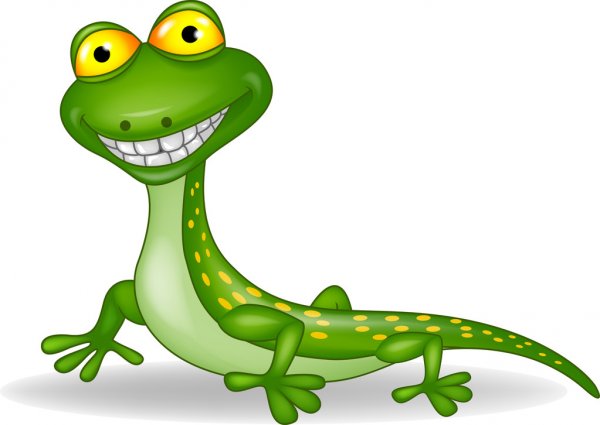
On a recent morning, when I made tea, I saw this light-brown lizard. It had fallen into the steel wash basin in the kitchen of my home. The basin has a depth of six inches. This happens once or twice a year.
The lizard looked up at me with its round, tiny black eyes.
The look seemed to say, “Now what are you going to do?”
This is the look prisoners give when they enter interrogation rooms and look at the man standing in front of them. They know, at any moment, they might be subjected to sudden and intense violence.
The problem is, I fear lizards. My wife was absent as she had gone to her mother’s place. The children were sleeping.
I made the tea and drank it while reading the newspaper at the dining table.
When I returned to wash the cup, strainer and utensil, the lizard looked extremely nervous. It tried desperately to climb up the smooth wall, but its legs kept slipping. Its heartbeat seemed to have increased dramatically because I could see the stomach expand and contract. Drops of water, from my washing, fell on it.
I had to find a solution.
This is what I did. I placed a plastic plate backwards on the basin, leaning it against the edge. I hoped the lizard would rush up it and go towards safety.
So I went away.
An hour later, when I peeped into the washbasin, the lizard was still there. That’s when I realised the plate was too smooth. Its legs must have slipped again.
‘Now what?’ I thought.
I could use a ladle and lift it, but I was afraid it would jump on me.
I decided to make my morning breakfast of an omelette. I pulled out the vegetable board from the drawer and began slicing up onions and tomatoes.
After I made the omelette and washed the vegetable board, I realised it had a rough surface. I checked the back too. It too was rough.
So I thought I would place the board.
I did so and went to have my breakfast.
Half an hour later, when I returned, I sighed happily.
The lizard had made good his escape.
I thought, ‘What will he tell the other lizards about me?’
I am sure he would say something like this. “Initially, I thought he was a cruel, vindictive, and heartless person. Just stared at me. Did nothing. I thought he was planning to kill me. But in the end, thanks to God, he allowed me to escape. So, maybe, he is a nice chap.”
I felt happy I did my one good deed for the day.
After this encounter, I read up on lizards.
Here are some facts:
Lizards are one of the biggest, most diverse and widespread groups of reptiles found on Earth. They can be found on all continents, except Antarctica.
There are 4,675 lizard species. They include iguanas, chameleons, geckos, Gila monsters, monitors, and skinks.
Their ancestors appeared on Earth over 200 million years ago.
The chief impact of lizards on humans is positive, as they are the major predators of the pest species.
A typical diet includes ants, spiders, termites, cicadas, small mammals and even other lizards.
Many types of lizards do not need to be close to water in order to survive, since they absorb all the water they need from their food.
Some lizards can go their entire lifetime without drinking any water at all.
‘Good to know this,’ I thought, as I logged out of Goggle.


May 29, 2021
Travails of a centipede

By Shevlin Sebastian
When I parked my two-wheeler outside a grocery shop, about two kms from my home in Kochi, I saw a thick, red centipede walk across the plastic top of the speedometer, the hundred-odd legs moving in unison, like a military unit during a Republic Day march. I took the end of my key and flicked it away. He fell on the ground, and turned its body into a circle, as a defence mechanism.
Now, what is he going to do? There will be an immediate disorientation. It is in a completely new environment. There may be no other centipedes nearby. Does he have a nose to find its way back to his friends and relatives? At his pace, it will take days. He has no mobile phone to contact his acquaintances and get their GPS.
There is no greenery nearby.
Meanwhile, I am sure, the other centipedes may ask, “Where has Bobby gone?”
A friend might say, “Surely, he has fallen into trouble or maybe Bobby has died. He was always a nosey parker. I have told him many times to stay clear of humans. But he ignored my advice. We have such a large patch of land, where it is safe. Why does he venture out?”
Bordering my house is a banana plantation. Apart from teak and coconut trees. Grass grows wild in the mud. And there must be many insects, birds and snakes.
The snakes do climb over and slide into our side. So we put sprinklings of kerosene along the wall. Apparently, it cannot bear the smell.
Will the grocery centipede be able to find food? Or will he spend the first day in a state of hunger? Would he be letting out a curse at me? ‘Damn the idiot rider,’ he might say.
My reply: ‘You can’t blame me. Who told you to move across the speedometer? Don’t you think it is an invasion of privacy?’
“Invasion of privacy,” the centipede might shout. “Mother Earth can say the same thing to you humans. You have invaded nature everywhere, destroyed it and made a mess. Now the planet is in danger of extinction because of warming and the melting of the glaciers.”
The centipede has straightened himself. And he stares at the footwear of the people who walk into the shop. There is a variety: sneakers, flip-flops, sandals, shoes, high heels, and boots.
‘Why do these people cover their feet?’ thinks the centipede. With over one hundred legs, the centipede would have to pay a fortune to get footwear for his legs. ‘And why are they afraid to show their body? Why do they cover it up with clothes?’
He remembered his mother telling him once, “Humans are shady characters. They are always doing some cover-up or the other. They are not willing to stand naked and look at each other. They feel ashamed. Crazy nuts. They are the only animals who do this. Have you seen tigers, lions, monkeys, elephants, giraffes or zebras do that? But these guys have souls full of darkness, guilt and fear. They spend their time trying to steal or kill each other. They are heartless. They will kill you in the blink of an eye. Just stay clear, that’s all.”
The centipede shed a tear as he remembered his mother, who had been crushed by the wheel of a speeding car. His father had been on the edge of the road, about to cross, and follow his wife, as they headed home. The family could not say a proper goodbye. His mother was right. He should have stayed in the banana plantation and not venture out.
The future looked bleak. He went up the steps of the shop and entered the ice-cool environs. ‘What the hell?’ he thought. ‘Am I in Iceland?’
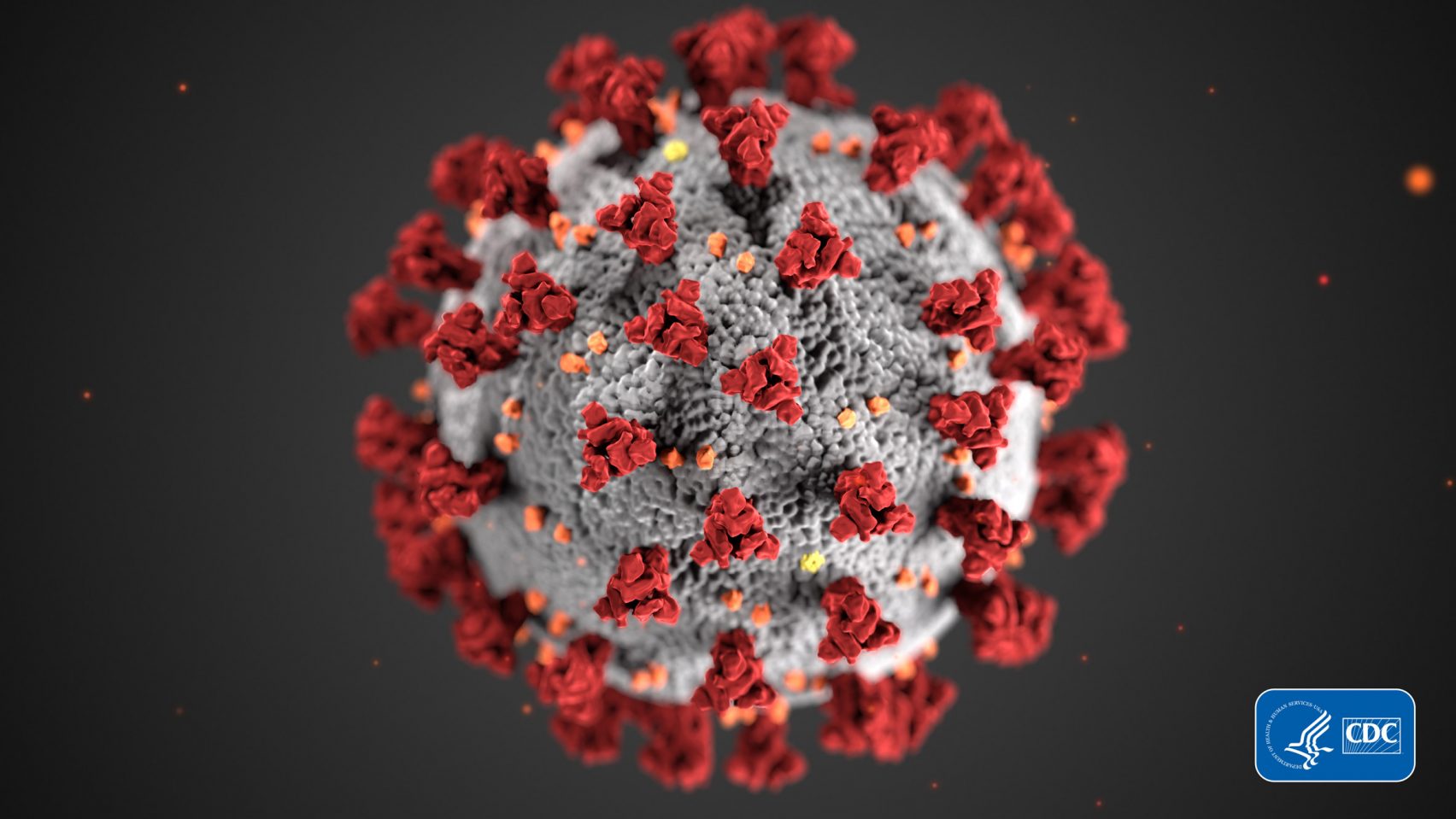
At one corner, near the vegetable stand, he saw a round grey blob with spiky red things jutting out all over its body.
“Who are you?” said the centipede.
“Oh hi, my name is coronavirus,” it said.
“And what is it you do?” said the centipede.
“Killing human beings and taking revenge for millions of years of domination on the rest of the animals,” it said.
“You are so tiny,” the centipede said, with a skeptical look. “What can you do?”
The virus smiled and said, “Size doesn’t matter, friend. Will, determination and a game plan matters, if you want to win.”
“Oh I see,” the centipede said, still keeping the doubtful tone.
The virus felt irritated.
Without saying a word, it flew up in the air, looking for a human being.
The centipede began nibbling on a coriander leaf.
May 25, 2021
A ‘bald’ anniversary

Today, May 26, it is one year since I went completely bald.
A barber did the act in 10 minutes.
I am happy with my decision.
No more depressing thoughts as I looked in the mirror. Earlier, I would watch with dismay at my receding hairline and the growing bald patch at the crown of my head. Now, when I look at my reflection, I feel happy and proud. It gives off a lively look.
But it is not easy to maintain this.
A 10-minute shave of the head is required every morning. I use the Gillette Mach 3 shaving razor like a comb. Of course, I could use a Phillips trimmer but a razor is more hands-on. But I have to be careful.
So far, I have had a nick only once. Most of the time, I concentrate when I am shaving my head: after all, it is the place where my brain is resting. But the best way I realised is to let the fingers do the work. No need to interfere. Because the body has its intelligence. Without our help, it runs our inner physical system. You don’t need to bother how digestion takes place or how the heart is pumping blood over the body and how it fights germs.
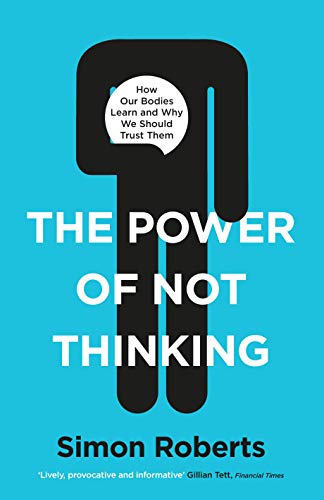
All this is explained in the book, ‘The Power of Not Thinking: How Our Bodies Learn and Why We Should Trust Them’ by business anthropologist Simon Roberts.
Former cricketer Sachin Tendulkar said something similar during an interview with TV personality Mark Nicholas. “It is important to play not with your conscious, but with your subconscious,” said Tendulkar. “And when you reach the peak of your concentration, you will not notice whether the bowler is coming at you from around the wicket or over the wicket. All you will see is the ball, and your subconscious mind will do the rest.”
The only problem arises when the mind interferes with the body with its panicky thoughts and soon things descend into chaos. So I am sure the body is happy when we sleep. That’s when they can do their repair work with peace.
Coming back to my baldness, people used to stare at me initially. But as more people go the bald route, everyone is getting used to it. Even women are doing it. My niece, Aneesha, within months of her marriage went bald, as a style statement.
Nowadays, I have completely forgotten I am bald when I step out in public. I am so glad I don’t have to use a comb, oil, shampoo or go to the barber. And when it rains, you can feel it drum on your head. That’s a pleasant feeling. No fears about getting sick because your hair is wet. Mums would always tell us this in an admonishing tone during our childhoods.
After a run, I noticed my head also sweats a lot. So, apart from wiping my face with a handkerchief, I have to wipe my head as well. I have wondered whether there was so much perspiration when I had hair. I can’t remember. It is also a fact the climate has become hotter and more humid.
I don’t have a full round head. There is a teeny bump if anyone looks upward from the forehead. But otherwise, it is round. Most people tell me they like what they see. But some did point out the bump. You can’t please all the people all the time. Thus said the 15th-century monk and poet John Lydgate.
How right he was.
For those of you who want to go down the same path, my suggestion is to find out whether your head is round. You can place a photo of yours in Photoshop and remove the hair. You will get an idea of how you look. If you like what you see, take the plunge.
There is nothing more powerful than to be bald and bold.
You will become irresistible to women.
Just joking!
May 16, 2021
A friend dies

By Shevlin Sebastian
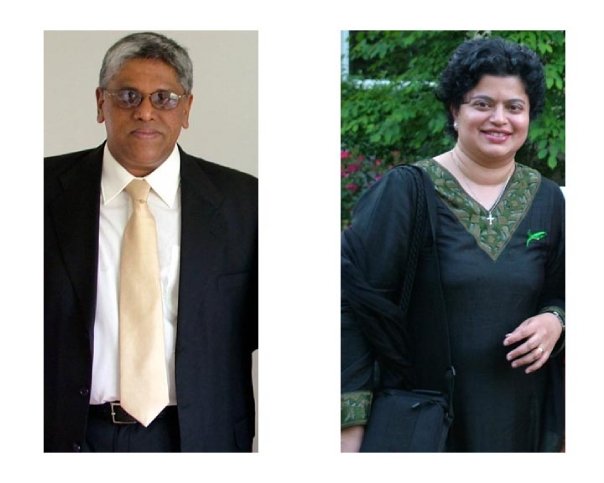
Photos: George Joseph and his wife Tessy; the Notre Dame Catholic Church at Southbridge, Massachusetts
At 7.30 p.m. on Saturday, May 15, I logged on to take part in the funeral service of my friend George Joseph, who died of Covid comorbidities on May 7, in a hospital in Springfield, Massachusetts. The service was taking place in the 109-year-old Notre Dame Catholic Church at Southbridge, Massachusetts. George’s friends had logged in from different parts of America, Australia, New Zealand, Brunei, and in India, from Kolkata, Kochi, Jaipur and other places.
At the start, Gina Kuruvilla, George’s cousin, gave a eulogy. “George was very kind,” she said. “He was one of those people whom everyone will agree did not have a single mean bone in his body. He loved his family. He especially loved Tessy (wife). He talked about you so much.”
I knew George because we lived a few buildings away from each other in Kolkata in the 1980s. He was 6’2” and heavily built. I was 5’6” and frail. It was like David and Goliath. We regularly met up with friends for an evening adda, sitting on a low wall by the side of a road.
We gazed longingly at the girls in the area, and we watched as one friend adopted an almost foolproof method of getting a woman’s attention. He would go up and say, “You are beautiful. Would you be interested in acting in the movies or even theatre?” Our friend was a theatre artist, so what he said was correct. He also knew people in Tollywood.
Many girls stopped in their tracks, zapped by this question and with immediate stars in their eyes. And then our friend, with his silky-smooth tongue, would make the necessary moves to go on a first date. And he succeeded most of the time. To his credit, one or two even tried their luck at the theatre.
We would laugh but felt envious of his skill. This was a time before the mobile phone and its irresistible apps, Instagram, Facebook, Twitter and Whatsapp. So, it was not easy to get access to the fairer sex, at all.
Sometimes, we went to George’s house, when his parents went out to work and his sister was in school. Our morning college finished at 9.45 a.m. Then we would sit and chat, have several cups of tea, and listen to music. George introduced me to rock bands Led Zeppelin and Jethro Tull but I never became a fan. I preferred the simple tunes of Abba, Boney M, Carpenters, and the Bee Gees.
All these thoughts passed through my mind as I watched the mass. It was a beautiful church. It had numerous large pillars, and it seemed like the floor was made of mosaic tiles. The priest, Fr. Ken Cardinale gave a sweet sermon and remembered some funny moments with George. With relief, the audience laughed.
I couldn’t believe George had passed away so quickly. The last time I met him was a couple of years ago, when he came to Kerala to meet his mum. We sat in the coffee shop at the Gokulam Park hotel, just opposite my former office, in Kochi. George had prematurely greyed. It was only that time had passed, but the ease of conversation and the camaraderie remained intact. We spoke non-stop for one-and-a-half hours.
During the mass, normally, I would have switched off Whatsapp. This time, for some unknown reason, I kept it on. Soon, a friend wrote, as he watched the service, ‘One by one, we will all have to leave’.
I quickly typed out, ‘Yes. This is unavoidable.’
There were messages from other friends.
One asked for a link to the service.
And some, like Suresh Reginald, were present in the church. Suresh has been George’s friend for over 50 years. He stayed just two houses away from George in Kolkata. Like George, he is 6’ 2” but slimmer. Now he is based in Lexington, Massachusetts, an hour’s drive from the church. They remained in touch (George had worked in India, Singapore and Brunei, where he spent several years, before he migrated to the US).
This is what Suresh wrote after attending the service: ‘The funeral service was perfect. The message from the family brought back warm memories of George, always kind, always high-spirited, always joking, and sometimes the jokes were funny. The sermon was given engagingly by Fr Ken who knew George well. There were about 200 people present, filling the church up with social distancing in place. It was a gorgeous, sunny, and warm spring day, with not a cloud in the sky. Tessy's faith has provided her with an enormous reservoir of hope to handle these weeks of adversity with a positive outlook, and she continued to display this inner strength.’
Indeed, Tessy has a deep faith in God. And this faith will sustain her, as she faces a future without George, who had been by her side for 31 years. It will be tough, very tough, but time, as always, will be the healer.
Because of Covid deaths all around, mortality is at the forefront of our minds.
On Saturday morning, I had read an article in the ‘New York Times’ about an American nun, Sr. Theresa Aletheia Noble, whose mission has been to revive the practice of memento mori. This is a Latin phrase that means, ‘Remember your death’.
As the reporter Ruth Graham wrote, ‘The concept is to intentionally think about your death every day, as a means of appreciating the present and focusing on the future’.
In the article, Sr. Aletheia said, “My life is going to end and I have a limited amount of time. We naturally think of our lives as a kind of continuing and continuing.”
George’s death, the first in our group of friends, has made us all focus on our own cessation of life. When will it end? At what age? At 61, 65, 71, 75, 86 or 91. It doesn’t matter. But the years are limited now. The youthful feeling of an endless life ahead has long gone.
The service concludes.
I close off the link and get up.
In Kochi, it is pouring now — a heavy, pulsating, and intense rain, accompanied by howling winds. The effects of Cyclone Tauktae, which hit the Gujarat coast, were being felt in Kochi.
I could not step outside.
So, I walked up and down the house, trying to shake off my melancholy mood...
May 13, 2021
Memories of Chandra
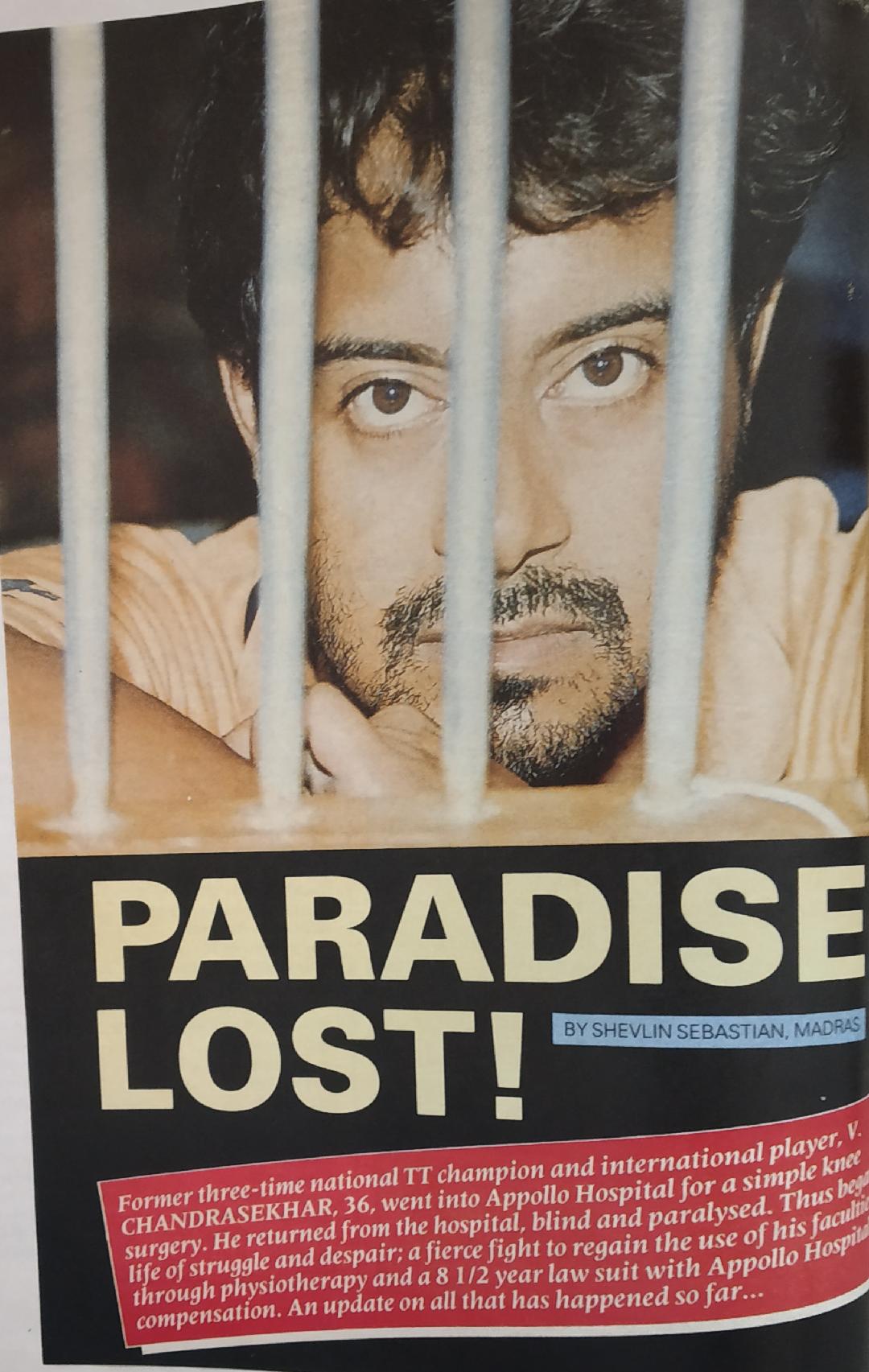
Nowadays, owing to the catastrophic Covid pandemic engulfing the country, on some mornings when I open the newspaper, I am reminded of the journalism I had done.
That was the case when I came to know former three-time national table tennis champion V Chandrasekhar passed away in Chennai on May 12, at the age of 64 because of Covid-related issues.
His life took a turn towards hell when at the age of 27, a botched knee surgery at the Apollo Hospital led to him losing his speech, mobility and partial vision. Through physiotherapy he fought back, regaining 80 percent of his mobility. But this was followed by a long and exhausting court case against the hospital which he won eventually.
I met him in 1996 at his home in Chennai and spent almost a day with him.
Since I worked for Sportsworld magazine, we had a lot of space to fill with words and photos.
Chandra was intelligent, pleasant, accommodative and spoke with a quiet intensity.
Accompanying me was the ebullient Chennai-based sports photographer George Francis, who sadly passed on April 11, 2019, to cancer. He had been the doyen of motorsports photography.
George and I got along well. He asked me the theme of the story. So, I told him it was a story of being in a sort of prison. Chandra could no longer do so many things. He had lost his freedom.
At Chandra’s home, George and I scratched our heads on how to get an apt photo. It was a typical middle-class flat, with a drawing cum dining room and bedrooms leading off from the main section.
Eventually, George pointed out at the entrance. I was sceptical, even though the door had small bars. George placed a chair just behind the door. He asked Chandra to sit on it and lean forward, his hands on the wooden base.
George stepped outside, switched on two photography lights, resting on triangular bases, which he had brought along. The result is the striking image on the first page.
It was in those days I understood the importance of the collaboration between reporter/writer and photographer. Of how the photos must match the theme of the story. Therefore, the photographer and the journalist should talk about what the story was all about.
It was also a time when we used typewriters to tap out the stories. So, in our office in Calcutta, the most consistent sound was of keys being hit at high speed as they slammed against the white paper, placed on a roller, and formed words in black letters…. unbelievable for today’s youngsters.
May 3, 2021
What’s the future going to be like?

By Shevlin Sebastian
One gets the feeling that while India is changing, thanks to its youthful population, its politicians have not. They are still stuck in tribalism, the caste system, fueling antagonisms and hate, focusing on temples, mosques, and churches, and ignoring the more important things of life.
They may not know it, but all religions have a finite date, even though it is difficult to believe. During the time of the Pharaohs, the Egyptians worshipped the sun god Ra. Now Egypt is an Islamic country.
Christianity is 2000 years old. But it is already in terminal decline in the West.
The truly powerful religions last between 2000 to 5000 years, and then they are gone. New religions and new ideologies will come up, especially now, as we are on the cusp of vast technological change.
Drones and robots are going to take over our lives. Many robots will look like real human beings. They will dress, walk and talk like us. So, on the street, you will not know who is an actual person and who is not.
Robots will gobble up jobs, especially done by labour. No labourer can replace 1000 tiles of a floor in a mere one hour. And there is no need to pay a salary and give other benefits. The robots will work 24/7 for years together until their parts fall into disrepair.
Which job will be safe? Nobody knows for sure. You already have robot dentists. Robots can read the evening news and write daily news reports. They can sweep the floor and lift heavy loads on to trucks. They could become doctors, engineers, or chartered accountants. Or as waiters in restaurants and security guards. And they can provide emotional sustenance, too. You can tell your problems, it will listen sympathetically and provide answers.
There are going to be robot women whom you can make love to. What will that do for marriage? Men mostly marry to get an easier access to sex. Now what? Will marriage collapse as an institution? Recently, a Chinese man married his robot woman. He is not the only one.
See the link: https://www.buzzworthy.com/meet-men-married-robots/
Will the state produce children in artificial wombs? Would they tinker with the DNA to produce perfect children? All criminal genes are edited out.
Those who have superior firepower and lakhs of robots can invade other countries and capture them for the host country.
There is talk of a world government. The nation-state will be decimated.
It sounds unreal, but it could be true.
Computer tycoon Bill Gates said the biggest danger of the 21st century will be from bio-terrorism and climate change.
We are already experiencing a type of bio-terrorism with the coronavirus.
So, a man can take a virus, put it in a small bottle, get a tourist visa, go to the enemy country, release the virus and create havoc.
No Army is required for this.
In case an Army is required, millions of robot soldiers will be at the ready.
As for climate change, in the future, 600 million Indians are expected to suffer from extreme water shortage.
Where are the solutions? What are the politicians doing about this? Maybe they will tell the people to get solace by staring at the Grand Vista.
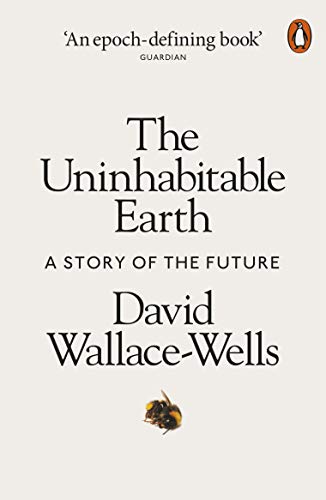
Oceans are going to overwhelm coastal cities in less than a hundred years thanks to melting glaciers. So, goodbye to Tokyo, Mexico, Shanghai, Melbourne, Sydney, Mumbai and thousands of other cities. Check out ‘The Uninhabitable Earth’ by American journalist David Wallace-Wells. It will give you chills as you flip the pages.
The heat has become so intense that migrations have begun northwards in several countries. All this is explored in social scientist Sonia Shah’s book, ‘The Next Great Migration: The Beauty and Terror of Life on the Move’. Sonia says that even insects like butterflies are on the move, looking for cooler climes. Agriculture will no longer be sustainable. Food will be made in laboratories and in farms located inside buildings.
And what is the mobile phone doing to the brain? I met a Hollywood producer who came to Kochi who said that in the future, a movie will be ten minutes long. Babies who are born today and go straight to the mobile phone, with its endless distractions, will no longer have the patience to sit through a two-hour movie.
Surely, this heralds the end of the book also.
One gets the feeling the politician, sprouting a brain-washed but outdated ideology, will soon be swept away by the tides of human history.
April 11, 2021
An incident outside the Lulu Mall

By Shevlin Sebastian
On a recent Sunday afternoon, I had just got out of the Lulu Mall, Kochi, with my daughter when a young woman, in a white mask, standing next to an auto-rickshaw nodded at me and said, “Would you have any change?”
She was holding a Rs 500 note in her hand. I checked my purse, and had only Rs 300. In these times of constant card usage, I carry little physical money. So I said that I didn’t have the change and walked away. Twenty metres away, I got an idea.
I returned and said, “How much is the fare?”
She said, “Rs 70.”
I gave her a Rs 100 note and said, “Pay the fare and you can return the money to me through Google Pay.”
She smiled gratefully, and that could only be seen in her eyes. So, the driver paid Rs 30 back to her, and she quickly took down my number.
And then I walked away.
Within a few minutes, my account was credited.
So that went off well.
In the evening, I was chatting with my sister June, who had come from Kottayam on a casual visit. So I recounted the incident with the girl at the auto-rickshaw. Through Google Pay, I realised her name was Rebecca Thomas (name changed).
When I mentioned this name, June immediately said, “I know of Rebecca Thomas.”
“What?” I exclaimed.
Quickly I mentioned, she has a middle name: ‘Susan’.
“Yes, it is the same,” she said. “She was my student in Pallikoodam.”
My sister was Principal and now Administrator of this school in Kottayam, which is run by Mary Roy, the mother of the Booker Prize-winning author Arundhati Roy.
I found the coincidence astonishing.
I called Rebecca. But she seemed to have panicked, thinking I was one of those guys trying to get friendly, even though I met her along with my daughter. Her father picked up the phone. I passed the phone to my sister.
Soon Rebecca came on the line. And she was equally shocked at the coincidence.
She said many people said no when she asked for change, even though she was sure they had the money. It seemed it was instinctive for people to say no. Nobody wanted to do anything out of the way. So, she was glad I took the effort to solve her problem.
(An aside: sometime ago I came up with the idea that if a salesperson comes to the house, and most of the time we usually say no to them, because they sell plastic containers, cups and saucers, Britannica books or the Eureka Forbes vacuum cleaner, I plan to give Rs 100 and say, “This is for tea and biscuits.” The aim is to mitigate the sting of the no. Most of the time, these salespeople are young men and women in their first jobs.)
June and Rebecca spoke for a while and she informed my sister that she had graduated from the OP Jindal Global Law School at Sonipat and was working in a firm at Bangalore.
This incident made me ponder about coincidences. Like most people, I had read Deepak Chopra’s bestselling book, ‘Synchrodestiny: Harnessing the Infinite Power of Coincidence to Create Miracles’.
Here are some quotes from the book:
“I do not believe in meaningless coincidences. I believe every coincidence is a message, a clue about a particular facet of our lives that requires our attention.”
“We cannot even imagine the complex forces behind every event that occurs in our lives.”
“When you live with an appreciation of coincidences and their meanings, you connect with the underlying field of infinite possibilities.”
Of course, all of us have experienced coincidences all the time. You think of somebody and that person calls you up. You have a dream; something in the dream happens in actual life. You meet a stranger unexpectedly; that person changes your life.
But it is too early to say what is the meaning of this unexpected interaction with Rebecca.
The answer lies somewhere in the future.
April 1, 2021
Where are you now?

By Shevlin Sebastian
It was twilight. Walking near several trees, I could see them get darker. The cries of the birds were getting fainter. The sky was darkening. Another day was ending. Nature was shutting down for the night.
As I walked, a thought popped into my head: where is my father right now?
Is he thousands of kilometres or a million light-years away?
Where in the universe do souls go? Is there a particular spot where they all congregate?
It has been over one month since he passed away. Would he have met all the people he knows by now? His parents, grandparents, in-laws, relatives, and friends? How did they recognise each other without their bodies? How did they talk without tongues? What do they communicate with each other? Was it about life on earth, sharing memories and unforgettable events?
How old is my Dad’s soul? When he passed away, he was 94? Would his soul be that age? Or younger? Or ageless?
How does he pass the time? Are there movies to see, or music programmes to attend? Are there coffee shops where souls can hang around and shoot the breeze? Can they sit down without bodies?
Do these spirits ever sleep? Is the light on 24 hours a day? Do they ever feel tired? Do they have regrets they had died? Does a soul have a desire to eat? Or is food of no consequence?
When you meet a former flame, will you try to resume the relationship?
What about people who harmed you and yet reached the place where there is light? Will they ask for forgiveness?
Will those who suffered from mental ailments like schizophrenia and Alzheimer’s, become completely restored after their death?
Is the soul perfect in every way?
What about the dark people of earth: the murderers, killers and thieves? Do they go to a different place than the good people? Is it dark there? Do they feel remorse for their actions?
Can my Dad see me? Watch what I do on earth?
Can he extend help if I am in trouble? Some friends told me they do.
He must be shaking his head, so to say, at the massive ego people have, when he realises the earth is not even a dot in the Milky Way.
Has my Dad seen God yet?
If so, what conversation did he have?
Has he met the human representatives of God? Was he able to have a chat with Jesus, Prophet Muhammad, Guru Nanak, Lord Buddha and the great Hindu saint Ramakrishna Paramahansa?
Is there a possibility he could meet a member of that much-reviled group: a politician? Can they reach the place where there is light, despite their many misdeeds?
Will God assign souls any work? Or will they remain idle?
How do they pass the time?
Do they play sports like football, cricket, or table tennis?
Or are they in a constant state of nirvana?
So many questions.
Who will give the answers?
Nobody.
If they do, it is guesswork.
Nobody knows what happens after we die.
Although my Dad has left physically, he seems to be with me.
I think of him a lot.
Sometimes I cry.
I realised feelings are like an ocean within oneself. When things are okay, the waves are quiescent. But if a big event happens, the waves swirl about, as if a storm is approaching. After a while, the waves of sorrow buffet your body, and you use your willpower to suppress it. For some time, you succeed, but then it gets into a fearsome motion and crashes against your eyelids and the tears flow out in an uncontrollable rush.
Still trying to get used to the lack of the physical presence of my father.
Death is so permanent.
Death, an alien concept in one’s youth is becoming increasingly familiar.
My uncles and aunts have died. A cousin’s wife. Distant relatives. And you battle on, trying to look for the sunny side of life. But it is getting increasingly difficult.
As you age, you can see death grinning at you from the sidelines.
You realise people are dying all the time. You see or hear this when you browse through newspapers, online, on TV and on the radio. Calamities are happening everywhere: natural disasters, accidents, war and murders. One human being killing another. No member of any species kills another of their own with such alarming frequency.
It has become dark now.
I look up at the sky.
I can see a few stars.
The whine of mosquitoes can be heard.
‘Time to go back home’, I think as I dab my eyes with a handkerchief.
March 24, 2021
Fighting the loss of privacy

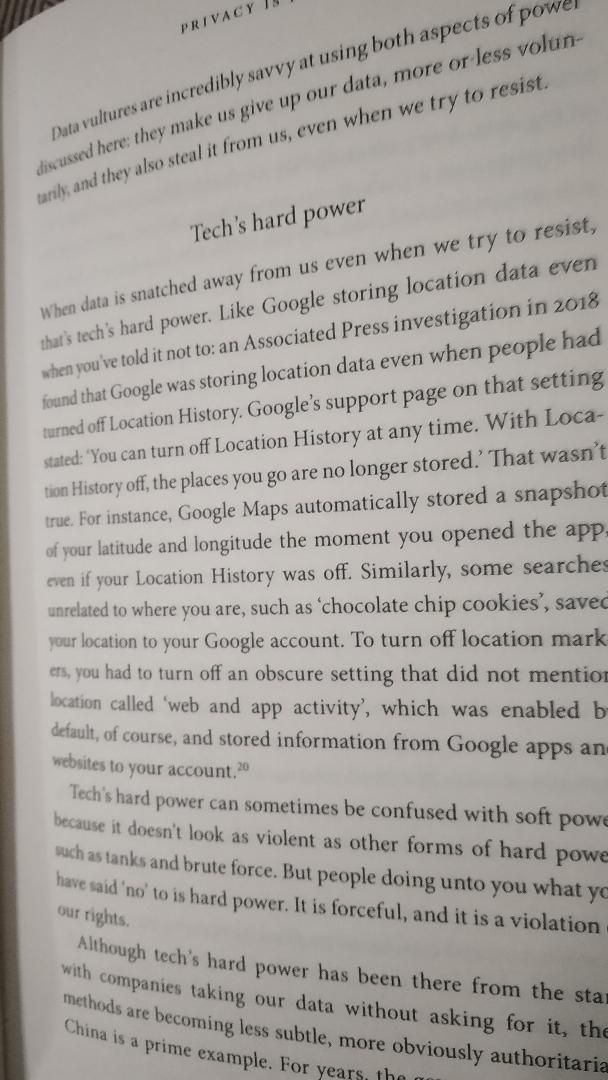
This book is a disturbing one.
The author, Carissa Veliz, makes clear that you are under 24-hour surveillance by Big Tech companies like Google and Facebook. They study what you do, who are your colleagues, where do you go for vacations, what you like to eat, who are your friends, your relationship with your spouse and children, the type of stuff you buy, the moves you like to see and your political beliefs.
They end up doing a psychological profile of you.
This can be used by them or sold to third parties and governments.
Through the laptop and mobile cameras, they can even look at you and see what you are doing.
The author suggests it may be safer to post as few personal information and photos online as possible.
And in case you want to turn the surveillance off, one way is to disable the web and apps activity.
I have attached a page for a quick read. And a link to disable the app.
March 21, 2021
Some thoughts about running

By Shevlin Sebastian
A few months ago, I discovered an area to jog which was salubrious. A broad tiled path ran through a large forest on one side and a few houses on the other. The advantage of this was that, unlike running on roads, I no longer encountered traffic. Instead, what I heard were the sounds of nature: birds chirping, the leaves rustling, and the crick-crick of the crickets.
Not surprisingly, there were walkers on the path. A group of four middle-aged women were regulars in their salwar kameez and sneakers. When I go past, I have heard the words, ‘cakes’, ‘pickles’, ‘property’ and ‘vaccine’. There are elderly couples too. Inevitably, the man walks ahead.
There are boys in cycles. A couple of them ride without touching the handle with the casual self-confidence of the very young. A man in his mid-thirties, with his shoulder length hair tied in a topknot, and with white earphones sticking out of his ears walks past, listening to music. Another girl in her late twenties also has earphones, but she is inevitably talking to somebody on the phone.
Sometimes, there are teenage boys and girls who stand on one side and have a chat. If they are in the mood, they play badminton but with no net. Just hitting the shuttle back and forth, interspersed with shouts and giggles. There is a group of seniors, all men with white hair, chatting about politics and the state of the world. The watchman, who is from Sikkim, is talking to his family back home.
In the midst of this crowd, I was the only runner, till recently. Now two youngsters do a bit of running.
I went about my run, thinking about this and that, even as my mouth was wide open, as I drew in gulps of air, whenever I increased my speed. Sweat poured off my forehead, and my T-shirt was drenched. But there were positives: my adrenal flow increased and so did my dopamine.
All was fine, till my wife asked me to drop off some clothes at a tailoring shop, which was just outside the area where I run. Imagine my surprise when the woman who runs the shop called my wife and said, “Oh, this is your husband. He runs like the breeze.”
Did I? I don’t think I am running fast. But it may look fast, because after a year of running non-stop, I have missed about 10 days in 365 days, I may have developed my stamina and endurance. Somebody told my aunt who lives nearby about my running. When I met her, she said, “Please try not to run so much. You are putting a lot of strain on my knees.”
Yes, I too am worried about my knees. So, I tell my knees: ‘please rejuvenate yourself and be healthy and full of vitality’. This is a practice I do often: I thank different parts of my body because of the ceaseless work they do: the eyes, ears, heart, lungs, liver, small and large intestines, arms, legs and the guru of them all: the brain. Sometimes, I will go further and thank the femur, tibia, ankles, soles, teeth, tongue, throat, spine, coccyx and even the anus.
The only alternative to running is swimming, the greatest exercise of them all, but thanks to the coronavirus, the pools are closed to ordinary people. Only competitors can access a pool.
A couple of days ago, two boys, on cycles, who looked to be ten and twelve years old, accosted me and asked my name and age. After I told my name, I asked them to guess my age. The ten-year-old shook his head, unable to think of a number, but the elder one took a shot. It was twelve years younger and I let it be. He would probably get a shock at the true number.
I felt elated that even youngsters had noticed me. But my wife killed me when she described my running style: “It’s like you have just grabbed a gold necklace from the neck of a woman and are fleeing, with the policemen chasing you.”
I had to laugh at this description, but it at least showed I ran fast.
But do I? In a country where very few people exercise, I might stand out. But if I go abroad, what I do, running a mere 3 kms a day, and walking another 3 kms will be regarded as pathetic.
A few years ago when I went to Singapore, my childhood friend Pradeep Paul invited me to go for a 10 km run with the Hash House Harriers Club, a group of cross-country runners. So we ran on roads, on bridges, climbed fences, and whizzed through fields. But there were so many foreigners in their sixties and even in their seventies who ran faster. I finished in the middle of the pack. So, in Singapore, my stamina would be considered not-so-great.
But in Kerala and India, where standards are abysmally low, a bit of speed is seen to be a big thing. So, I am not tapping myself on the back.
Meanwhile, I understood one important lesson from these daily runs. The mind controls the body. On days when I am in a good mood, I run faster. And there have been days when I have been low, and my body quickly got the message. I had to drag myself through the course, unable to get up the usual speed.
So, as author Deepak Chopra rightly said, what you think that you become. And your body responds to your every mood in that manner.
These are some thoughts which came my way on a sunny Sunday morning.


![[image error]](https://1.bp.blogspot.com/-FkhtPAYkfzs/YJzPcNFN7wI/AAAAAAAAgtg/vrJNiUCsjDANzfhND5dOfceuVc6oducxwCLcBGAsYHQ/s1579/Chandra-1.jpg)