Michael May's Blog, page 116
April 26, 2016
British History in Film | The Adventures of Robin Hood (1938) and Robin Hood (1973)
The Adventures of Robin Hood (1938)
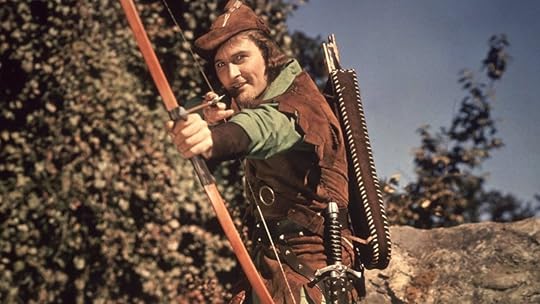
A wonderful spectacle that includes most of my favorite Robin Hood stories in a single film. And what Errol Flynn lacks in Douglas Fairbanks' sheer acrobatic ability, he makes up in swordsmanship and charm. It's tough for me to pick a favorite between the two of them.
Meanwhile, Claude Rains is a memorable Prince John and Basil Rathbone is always a delicious foil for Flynn. I'm not a huge fan of Olivia de Havilland as Marian - not when I have Mary Elizabeth Mastrantonio to compare her to - but she's fine and I have no complaints either.
Robin Hood (1973)
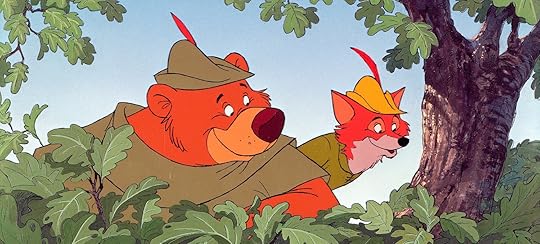
Made during a time when Disney was creating animated features on the cheap, but it's no less charming for that. It's not the best Robin Hood, but it will always be my Robin Hood.

A wonderful spectacle that includes most of my favorite Robin Hood stories in a single film. And what Errol Flynn lacks in Douglas Fairbanks' sheer acrobatic ability, he makes up in swordsmanship and charm. It's tough for me to pick a favorite between the two of them.
Meanwhile, Claude Rains is a memorable Prince John and Basil Rathbone is always a delicious foil for Flynn. I'm not a huge fan of Olivia de Havilland as Marian - not when I have Mary Elizabeth Mastrantonio to compare her to - but she's fine and I have no complaints either.
Robin Hood (1973)

Made during a time when Disney was creating animated features on the cheap, but it's no less charming for that. It's not the best Robin Hood, but it will always be my Robin Hood.


April 25, 2016
7 Days in May | Corky Romano, Covered Wagon, and a cat in a robot suit
Corky Romano (2001)
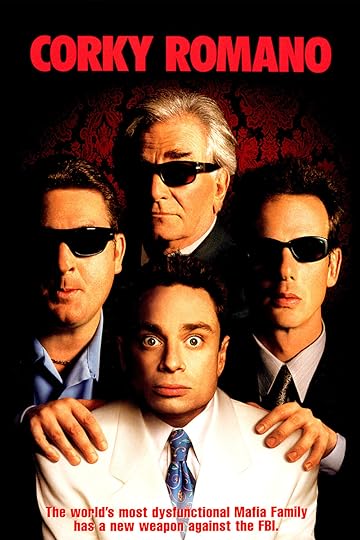
It's usually cited as a horrible movie (6% on Rotten Tomatoes), but I think it's hilarious and sweet. It's also plenty dumb, but Chris Kattan is totally endearing whether he's belting out "Take On Me" or dressed as a Girl Scout.
Sherlock, Jr. (1924)
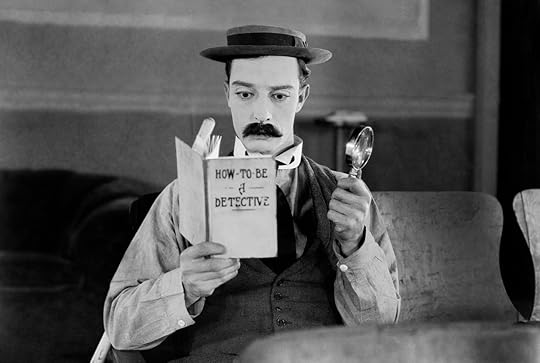
Innovative and clever, thanks to the famous sequence where Buster Keaton's projectionist character dreams himself onto a movie screen. Not one of the funniest Keaton movies, but still charming and wonderful. And while Keaton's Sherlock Jr character is only a dream, I would love a whole series of movies about that guy. He's part Philo Vance, part James Bond, and part Colombo.
The Covered Wagon (1924)
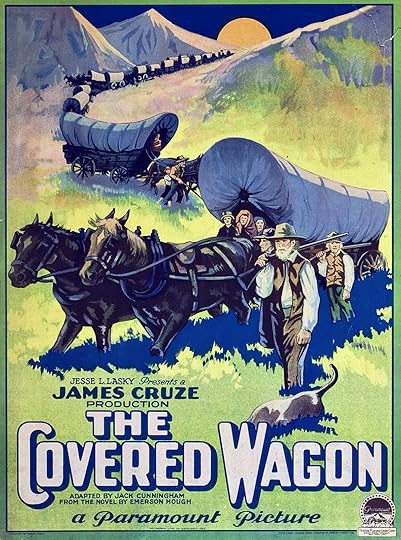
An impressive production with a huge cast and a lot of location shooting. It tells the story of a couple of wagon trains going from the Missouri River to Oregon. The two groups set off together, but differing opinions between their leaders (and some romantic drama between one leader and the daughter of the other) eventually split them up.
J Warren Kerrigan is pretty generic as the young hero who leads one of the trains. And Lois Wilson is just as bland as his love interest. But there are a couple of character actors who keep the movie interesting. Alan Hale (who'd go on to co-star in Errol Flynn movies and was also father of the actor who played Gilligan's Skipper) is appropriately loathsome as the other fellow who wants to marry Wilson's character.
But even better is Ernest Torrence, whom I knew as the heavy in movies like The Hunchback of Notre Dame and Steamboat Bill, Jr. This time, he's playing Kerrigan's friend and guide and it's great fun to see his imposing size and menacing looks used for good. His interactions with Hale are the best parts of the film.
The Navigator (1924)
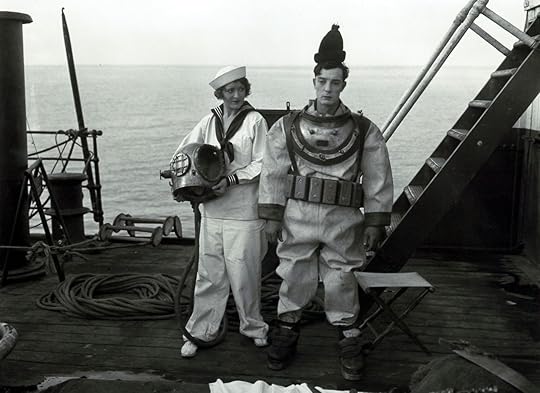
Possibly my favorite Buster Keaton film. I'm a big fan of nautical stories anyway, but this is also one of Keaton's funniest. The bit with the painting hanging outside his window still never fails to crack me up, but there are several gags like that in it.
Peter Pan (1924)
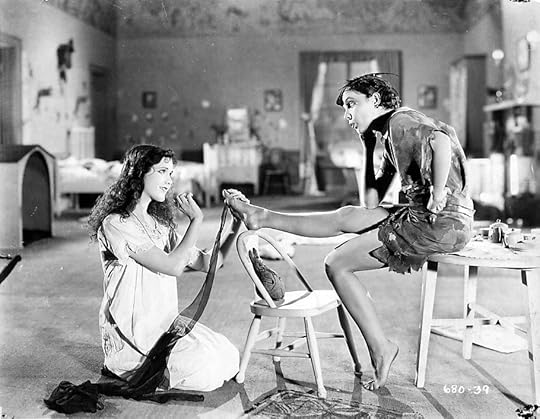
This isn't just a staging of the play, but it has a real theatrical feel to it. The sets are grand and impressive, but the action takes place only in those certain locations. It's like watching really great children's theater with some lovely visual effects sprinkled in - especially around Tinker Bell. And Ernest Torrence shows up again, this time as Captain Hook. Easily my favorite Peter Pan movie.
reMIND: Volume 1 by Jason Brubaker
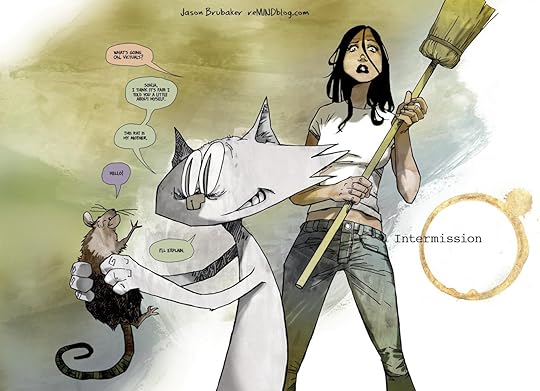
It's tough to judge the first of a multi-part story, but I'm eager to read Volume 2 of the series of graphic novels. Brubaker's got a lovely visual style and has created a beautifully mad world to tell his story in. It's got lizard-men, talking cats, robot-suits... lizard-men whose brains have been transplanted into cats wearing robot-suits. And we're introduced to the craziness in a cool, X-Filesy way through a skeptical woman whose deceased father made their village infamous by claiming to see something weird.

It's usually cited as a horrible movie (6% on Rotten Tomatoes), but I think it's hilarious and sweet. It's also plenty dumb, but Chris Kattan is totally endearing whether he's belting out "Take On Me" or dressed as a Girl Scout.
Sherlock, Jr. (1924)

Innovative and clever, thanks to the famous sequence where Buster Keaton's projectionist character dreams himself onto a movie screen. Not one of the funniest Keaton movies, but still charming and wonderful. And while Keaton's Sherlock Jr character is only a dream, I would love a whole series of movies about that guy. He's part Philo Vance, part James Bond, and part Colombo.
The Covered Wagon (1924)

An impressive production with a huge cast and a lot of location shooting. It tells the story of a couple of wagon trains going from the Missouri River to Oregon. The two groups set off together, but differing opinions between their leaders (and some romantic drama between one leader and the daughter of the other) eventually split them up.
J Warren Kerrigan is pretty generic as the young hero who leads one of the trains. And Lois Wilson is just as bland as his love interest. But there are a couple of character actors who keep the movie interesting. Alan Hale (who'd go on to co-star in Errol Flynn movies and was also father of the actor who played Gilligan's Skipper) is appropriately loathsome as the other fellow who wants to marry Wilson's character.
But even better is Ernest Torrence, whom I knew as the heavy in movies like The Hunchback of Notre Dame and Steamboat Bill, Jr. This time, he's playing Kerrigan's friend and guide and it's great fun to see his imposing size and menacing looks used for good. His interactions with Hale are the best parts of the film.
The Navigator (1924)

Possibly my favorite Buster Keaton film. I'm a big fan of nautical stories anyway, but this is also one of Keaton's funniest. The bit with the painting hanging outside his window still never fails to crack me up, but there are several gags like that in it.
Peter Pan (1924)

This isn't just a staging of the play, but it has a real theatrical feel to it. The sets are grand and impressive, but the action takes place only in those certain locations. It's like watching really great children's theater with some lovely visual effects sprinkled in - especially around Tinker Bell. And Ernest Torrence shows up again, this time as Captain Hook. Easily my favorite Peter Pan movie.
reMIND: Volume 1 by Jason Brubaker

It's tough to judge the first of a multi-part story, but I'm eager to read Volume 2 of the series of graphic novels. Brubaker's got a lovely visual style and has created a beautifully mad world to tell his story in. It's got lizard-men, talking cats, robot-suits... lizard-men whose brains have been transplanted into cats wearing robot-suits. And we're introduced to the craziness in a cool, X-Filesy way through a skeptical woman whose deceased father made their village infamous by claiming to see something weird.
April 22, 2016
One podcast will change two worlds

In the latest episode of Mystery Movie Night, my son David takes the reins to fly us through Harrison Ford and Tommy Lee Jones in The Fugitive, Hiccup and Toothless in How to Train Your Dragon, and Rocket and Groot in Guardians of the Galaxy. But no, the secret connection isn't that they're buddy movies. Take a listen and see if you can guess what it is before David reveals it at the end.

April 21, 2016
British History in Film | Ivanhoe (1952) and Robin Hood (1922)
Ivanhoe (1952)
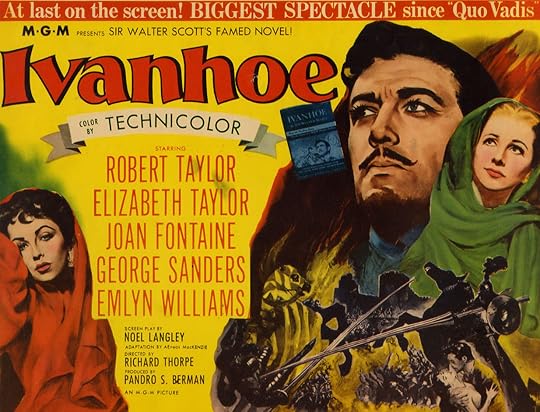
Last time, we left off with Henry II still king and fighting with his wife about who would take his place. She wanted Richard; he wanted John. If you know nothing else about the history of medieval Britain, you know that Richard won that argument. And you know it because of stories like Ivanhoe and Robin Hood.
I debated which to watch first, but settled on Ivanhoe just to get it out of the way. I love Walter Scott's novel, but the movie doesn't do it justice and weakens the Robin Hood character (which it just calls Locksley). And Robert Taylor's performance as the title character is super stiff. I think he's going for noble, but jeez he's wooden and it's surprising that Elizabeth Taylor and Joan Fontaine both go for him. The women are equally great though. Taylor easily makes me root for her, but Fontaine gives her character plenty of complicated emotions, too. I like them both.
George Sanders is doing what George Sanders does as the villain, but I always like that and De Bois-Guilbert is a tragic variety of his typical cad. The jousting scene and the attack on the castle are both a lot of fun, too. Ivanhoe isn't not one of my favorite medieval swashbucklers, but it still has plenty to recommend it.
Robin Hood (1922)
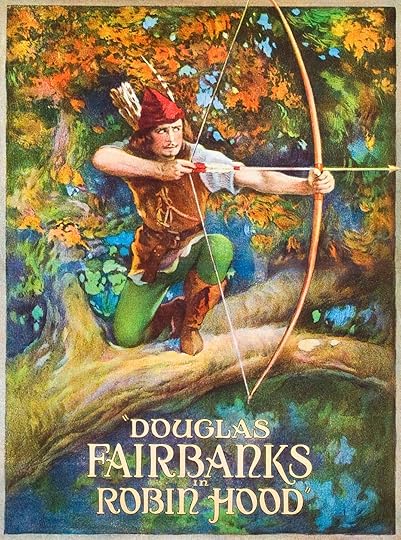
Now for the good stuff. Douglas Fairbanks' silent version of Robin Hood is an origin story, so Robin Hood as we know him doesn't appear until halfway through the movie. That might sound similar to complaints about the Ridley Scott version, but thanks to Fairbanks' impressive charm and some great humor, even the Hoodless half is a lot of fun.
Once the movie enters familiar territory, it gets even better with lavish sets and Fairbanks proving why he's the king of the swashbucklers. Silent or not, this version sets a high bar for other Robin Hood films. Next week, we'll look at a couple of more and see if they clear it.

Last time, we left off with Henry II still king and fighting with his wife about who would take his place. She wanted Richard; he wanted John. If you know nothing else about the history of medieval Britain, you know that Richard won that argument. And you know it because of stories like Ivanhoe and Robin Hood.
I debated which to watch first, but settled on Ivanhoe just to get it out of the way. I love Walter Scott's novel, but the movie doesn't do it justice and weakens the Robin Hood character (which it just calls Locksley). And Robert Taylor's performance as the title character is super stiff. I think he's going for noble, but jeez he's wooden and it's surprising that Elizabeth Taylor and Joan Fontaine both go for him. The women are equally great though. Taylor easily makes me root for her, but Fontaine gives her character plenty of complicated emotions, too. I like them both.
George Sanders is doing what George Sanders does as the villain, but I always like that and De Bois-Guilbert is a tragic variety of his typical cad. The jousting scene and the attack on the castle are both a lot of fun, too. Ivanhoe isn't not one of my favorite medieval swashbucklers, but it still has plenty to recommend it.
Robin Hood (1922)

Now for the good stuff. Douglas Fairbanks' silent version of Robin Hood is an origin story, so Robin Hood as we know him doesn't appear until halfway through the movie. That might sound similar to complaints about the Ridley Scott version, but thanks to Fairbanks' impressive charm and some great humor, even the Hoodless half is a lot of fun.
Once the movie enters familiar territory, it gets even better with lavish sets and Fairbanks proving why he's the king of the swashbucklers. Silent or not, this version sets a high bar for other Robin Hood films. Next week, we'll look at a couple of more and see if they clear it.
April 20, 2016
The Land of Harvey [Guest Post]
By GW Thomas
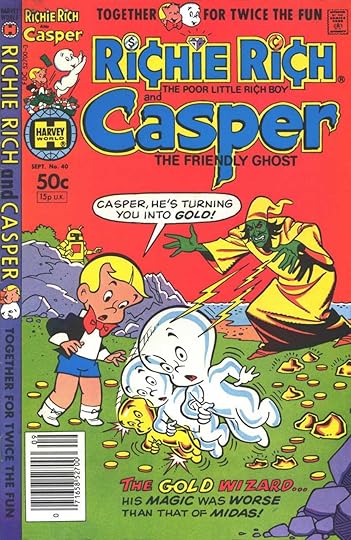 There is a fantasy realm that was important to my formative years, and it existed in an unusual place. I call it the Land of Harvey. "Harvey Comics?" you wonder. Isn't that Casper and Richie Rich? Yes, indeed, we are talking about the company that gave us the Poor Little Rich Boy and the Friendly Ghost who couldn't find a friend. These comics were very much a part of my youth as they were for millions back in the 1950s to 1980s. Like Archie Comics they are one of those phases you went through, eventually abandoning them for bulging superheroes or Catcher in the Rye.
In our world of The Lord of the Rings and Hobbit trilogies, World of Warcraft video games and fat George RR Martin bestsellers, it is easy to forget that in the past we saw fantasy just a little bit differently. That mythos that doesn't get any recognition at all, the Land of Harvey, was a fantastical realm where Casper, Spooky, Wendy, Stumbo the Giant, Nightmare, and other characters dwelled. It was a fairly consistent vision of a pastoral and wooded realm with a medieval flavour, though it transcended dimensions as well, like Lovecraft's Dreamlands, lying only a step away from demons and horrors or our comfortable suburban backyards. There aren't any maps or Tolkienesque guidebooks but the Land of Harvey existed all the same in those back issues of old comics for four decades.
Harvey Comics was created in 1941 by Alfred Harvey and published a wide range of comics, though the bulk were for children. The superheroes and newspaper characters fell by the wayside so that by the 1960s Harvey meant the characters we all know, such as Casper and Richie Rich. The company continued on, despite shrinking markets, until 1982. The writers and artists worked anonymously for decades and remain largely unknown today. Unlike their superhero brethren names such as (writers) Sid Jacobson, Lennie Herman, Stan Kay, and Ralph Newman, and (artists) Warren Cremer, Ernie Colon, Sid Couchey, Dom Sileo, Ben Brown, Steve Muffatti, and Joe Dennett did not become recognizable like Stan Lee or Jack Kirby. These men gave us the Land of Harvey, even if only one small piece at a time.
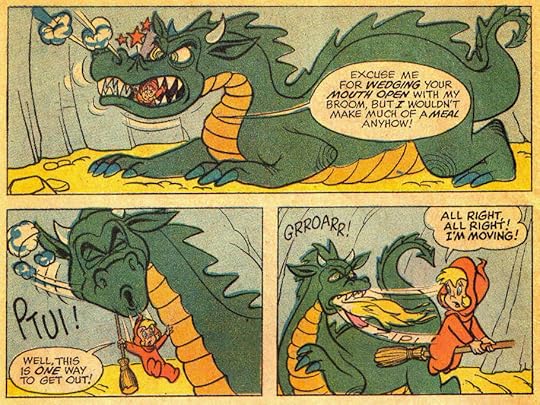 Now there are simply too many individual comic stories to cite from the 400 Casper, 300 Spooky, 120 Wendy, and 1000 Richie Rich comics that were produced between 1941 and 1982. Still, within all those comics certain types of stories become evident.
The first evidence of the Land of Harvey came from another fantasy source, the fairy tale. The earliest Casper comics often relied on fairy tales or nursery rhymes for their characters, as did the cartoons upon which the first comics producers looked for guidance. These fairy tale stories included "Little Boo Peep" in Casper the Friendly Ghost #14 (November 1953), "Little Red Riding Huey" in Casper the Friendly Ghost #13 (October 1953), and Mother Goose in "Mother Ghost" in Casper the Friendly Ghost #19 (March 1954) and "Wolf Call" in Casper the Friendly Ghost #21 (June 1954). Later issues reused the Little Red Riding Hood and Goldilocks stories but also introduced Mother Nature, Snow White, King Midas, the Sandman, the Fairy Queen, Merlin, Sleeping Beauty and elements from the Arabian Nights. The writers even rose to Greek mythology with a Ulysses special in "The Wanderer" in The Friendly Ghost, Casper #9 (May 1959).
Another favored theme was the quest. These stories would appear in three parts throughout the issue. Most involved a new location in each segment, including castles, forests, and cloud realms. For example, the three episodes, "When Magic Words Fail You," "Monsters and Demons and Stuff Like That," and "The Land of White Magic" in Wendy, The Good Little Witch #89 (August 1975) begins with Wendy's evil aunts turning Danny the Dwarf into a fish. This Macguffin sends Wendy on a quest to find a cure from the Land of White Magic. Her journey takes her into a creepy cave at Mount Happiness where the Scorpion King and his Grabniks try to grab her. She flees into the Demon Hall where demons chase her into the Dragon's Lair, then the Plant People Land, the Land of the Lonesome Ogre, and finally to the Land of White Magic. There she has to work her way through the bureaucracy, but eventually sees King Goodheart, who gives her lodgings, then a cure to the spell. Wendy lays a trap for her aunts when they try to turn Danny into a fish again. This time their spell gives him a big bag of gold. This is typical Harvey quest, following a structure as old as Gilgamesh.
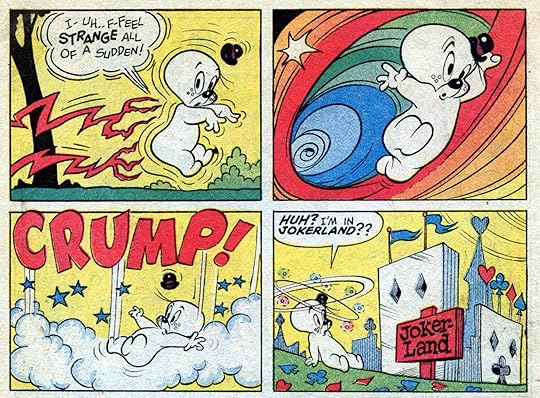 This story features one of the Harvey Comics favorite gimmicks: magical lands. Others include the Land of Make-Believe, Joker-land, Land of the Soap Bubbles, and even the Land of Shangri-La. Other common elements are knights, dragons, castles, giants, ogres, witches, wizards, talking animals, and gnomes. Comics like Stumbo the Giant and Casper and Nightmare were set entirely in this world that never existed. Others like Casper's Ghostland or Spooky Spooktown were a mix between supernatural settings and the fantasy realm of Harvey.
From this you can see the Harvey writers were fond of adopting props from traditional fantasy. While this is true, they did not preclude the existence of the modern world. A motorcar might become lost in that wood or one of the fairies or other creatures might visit our world. The line between them is never really explained, just as scenarios featuring the Wild West, the arctic, jungles, and desert adventures also exist, despite being long since gone from the world. In short, the writers were willing to cadge just about any genre scenario to fill one more issue.
It strikes me that these comics formed part of the basis upon which I continued on into the fantasy genre; the other being old films like The Magic Sword (1962) and Disney cartoons like Sleeping Beauty (1959) and The Sword in the Stone (1963). Afterwards, I would read the Oz books, the CS Lewises, the Tolkiens, later-classics like The Last Unicorn (1968) by Peter S Beagle, and lesser fare like The Sword of Shannara (1977). It was the 1970s and fantasy wasn't hard to come by on paper. But before my fantasy experience became truly literary I had sharpened my teeth on these comics. (Not surprisingly, the majority of the fantasy episodes come after 1965 when the Tolkien explosion was beginning in America. The writers at Harvey may have themselves been expressing a fascination with Middle Earth through these comics.) I look back at the Land of Harvey with a fond nostalgia; an appreciation for the consistency of its look and feel. It's a fantasy world I wandered with an uncritical eye and a few quarters in my pocket.
GW Thomas has appeared in over 400 different books, magazines and ezines including The Writer, Writer's Digest, Black October Magazine and Contact. His website is gwthomas.org. He is editor of Dark Worlds magazine.
 There is a fantasy realm that was important to my formative years, and it existed in an unusual place. I call it the Land of Harvey. "Harvey Comics?" you wonder. Isn't that Casper and Richie Rich? Yes, indeed, we are talking about the company that gave us the Poor Little Rich Boy and the Friendly Ghost who couldn't find a friend. These comics were very much a part of my youth as they were for millions back in the 1950s to 1980s. Like Archie Comics they are one of those phases you went through, eventually abandoning them for bulging superheroes or Catcher in the Rye.
In our world of The Lord of the Rings and Hobbit trilogies, World of Warcraft video games and fat George RR Martin bestsellers, it is easy to forget that in the past we saw fantasy just a little bit differently. That mythos that doesn't get any recognition at all, the Land of Harvey, was a fantastical realm where Casper, Spooky, Wendy, Stumbo the Giant, Nightmare, and other characters dwelled. It was a fairly consistent vision of a pastoral and wooded realm with a medieval flavour, though it transcended dimensions as well, like Lovecraft's Dreamlands, lying only a step away from demons and horrors or our comfortable suburban backyards. There aren't any maps or Tolkienesque guidebooks but the Land of Harvey existed all the same in those back issues of old comics for four decades.
Harvey Comics was created in 1941 by Alfred Harvey and published a wide range of comics, though the bulk were for children. The superheroes and newspaper characters fell by the wayside so that by the 1960s Harvey meant the characters we all know, such as Casper and Richie Rich. The company continued on, despite shrinking markets, until 1982. The writers and artists worked anonymously for decades and remain largely unknown today. Unlike their superhero brethren names such as (writers) Sid Jacobson, Lennie Herman, Stan Kay, and Ralph Newman, and (artists) Warren Cremer, Ernie Colon, Sid Couchey, Dom Sileo, Ben Brown, Steve Muffatti, and Joe Dennett did not become recognizable like Stan Lee or Jack Kirby. These men gave us the Land of Harvey, even if only one small piece at a time.
 Now there are simply too many individual comic stories to cite from the 400 Casper, 300 Spooky, 120 Wendy, and 1000 Richie Rich comics that were produced between 1941 and 1982. Still, within all those comics certain types of stories become evident.
The first evidence of the Land of Harvey came from another fantasy source, the fairy tale. The earliest Casper comics often relied on fairy tales or nursery rhymes for their characters, as did the cartoons upon which the first comics producers looked for guidance. These fairy tale stories included "Little Boo Peep" in Casper the Friendly Ghost #14 (November 1953), "Little Red Riding Huey" in Casper the Friendly Ghost #13 (October 1953), and Mother Goose in "Mother Ghost" in Casper the Friendly Ghost #19 (March 1954) and "Wolf Call" in Casper the Friendly Ghost #21 (June 1954). Later issues reused the Little Red Riding Hood and Goldilocks stories but also introduced Mother Nature, Snow White, King Midas, the Sandman, the Fairy Queen, Merlin, Sleeping Beauty and elements from the Arabian Nights. The writers even rose to Greek mythology with a Ulysses special in "The Wanderer" in The Friendly Ghost, Casper #9 (May 1959).
Another favored theme was the quest. These stories would appear in three parts throughout the issue. Most involved a new location in each segment, including castles, forests, and cloud realms. For example, the three episodes, "When Magic Words Fail You," "Monsters and Demons and Stuff Like That," and "The Land of White Magic" in Wendy, The Good Little Witch #89 (August 1975) begins with Wendy's evil aunts turning Danny the Dwarf into a fish. This Macguffin sends Wendy on a quest to find a cure from the Land of White Magic. Her journey takes her into a creepy cave at Mount Happiness where the Scorpion King and his Grabniks try to grab her. She flees into the Demon Hall where demons chase her into the Dragon's Lair, then the Plant People Land, the Land of the Lonesome Ogre, and finally to the Land of White Magic. There she has to work her way through the bureaucracy, but eventually sees King Goodheart, who gives her lodgings, then a cure to the spell. Wendy lays a trap for her aunts when they try to turn Danny into a fish again. This time their spell gives him a big bag of gold. This is typical Harvey quest, following a structure as old as Gilgamesh.
 This story features one of the Harvey Comics favorite gimmicks: magical lands. Others include the Land of Make-Believe, Joker-land, Land of the Soap Bubbles, and even the Land of Shangri-La. Other common elements are knights, dragons, castles, giants, ogres, witches, wizards, talking animals, and gnomes. Comics like Stumbo the Giant and Casper and Nightmare were set entirely in this world that never existed. Others like Casper's Ghostland or Spooky Spooktown were a mix between supernatural settings and the fantasy realm of Harvey.
From this you can see the Harvey writers were fond of adopting props from traditional fantasy. While this is true, they did not preclude the existence of the modern world. A motorcar might become lost in that wood or one of the fairies or other creatures might visit our world. The line between them is never really explained, just as scenarios featuring the Wild West, the arctic, jungles, and desert adventures also exist, despite being long since gone from the world. In short, the writers were willing to cadge just about any genre scenario to fill one more issue.
It strikes me that these comics formed part of the basis upon which I continued on into the fantasy genre; the other being old films like The Magic Sword (1962) and Disney cartoons like Sleeping Beauty (1959) and The Sword in the Stone (1963). Afterwards, I would read the Oz books, the CS Lewises, the Tolkiens, later-classics like The Last Unicorn (1968) by Peter S Beagle, and lesser fare like The Sword of Shannara (1977). It was the 1970s and fantasy wasn't hard to come by on paper. But before my fantasy experience became truly literary I had sharpened my teeth on these comics. (Not surprisingly, the majority of the fantasy episodes come after 1965 when the Tolkien explosion was beginning in America. The writers at Harvey may have themselves been expressing a fascination with Middle Earth through these comics.) I look back at the Land of Harvey with a fond nostalgia; an appreciation for the consistency of its look and feel. It's a fantasy world I wandered with an uncritical eye and a few quarters in my pocket.
GW Thomas has appeared in over 400 different books, magazines and ezines including The Writer, Writer's Digest, Black October Magazine and Contact. His website is gwthomas.org. He is editor of Dark Worlds magazine.
April 18, 2016
7 Days in May | Deadpool, Sinbad, and Sherlock Jr.
Deadpool (2016)
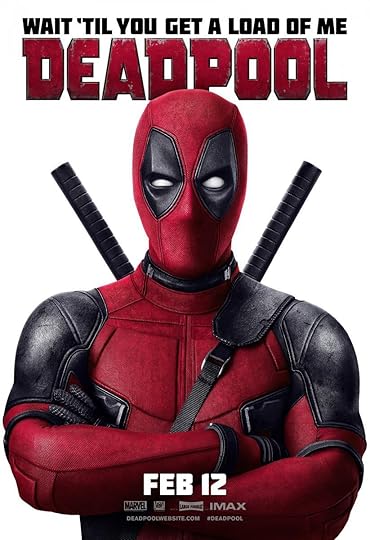
The trailers and other marketing for Deadpool didn't make me laugh at all, so I had decided not to see the movie. But positive reviews from friends and critics made me reconsider and with little else going on at the theater that I wanted to see, I checked it out.
And it's not too bad. I was surprised at how much I cared about the character even while I found him and his girlfriend super annoying. Colossus and Negasonic Teenage Warhead are great foils whom I enjoyed whenever they showed up, and it was also great to see Gina Carano and TJ Miller. The movie has a cool look to it, too, and I enjoyed the way it used music.
My biggest problem with the movie is that it's just not my humor. I chuckled a couple of times and neither were at actual jokes. They were just nice character moments that I thought were amusing. The jokes were simply more of what the trailer suggested: references to sex, poop, and self-referential stuff like other X-Men movies, Green Lantern, and Ryan Reynolds in general. Basically, it's Family Guy humor. So while I had a pretty good time watching Deadpool, it ultimately didn't feel like it was for me.
Sinbad: Legend of the Seven Seas (2003)
I remember liking this a lot when it came out, but the animation doesn't hold up by today's standards. Especially the integration of the CGI elements with the mostly hand-drawn cartooning. But for the most part it gets Sinbad right and I think that's what I originally responded to. He's a swashbuckling rogue with a diverse crew who faces various monsters in the pursuit of treasure.
Unfortunately, the treasure is a vaguely powerful object called the Book of Peace, with no explanation for what it does or why it exists in the first place. And the movie pulls Sinbad out of his Middle Eastern setting to plop him into Europe, which is a shame. Other than that though, it's enough in the spirit of the live-action, Harryhausen versions that I have a good time watching it, even if it doesn't have all the charm of those.
The Hunchback of Notre Dame (1923)
This is one of a handful of silent movies that I'm totally comfortable showing to people who don't know if they'll like the format. Thanks to Victor Hugo, it's a strong story, but the film does great by it. It balances the large cast of characters well, it's funny, it's touching. And of course Lon Chaney's makeup and physical shenanigans are fantastic spectacles.
Three Ages (1923)
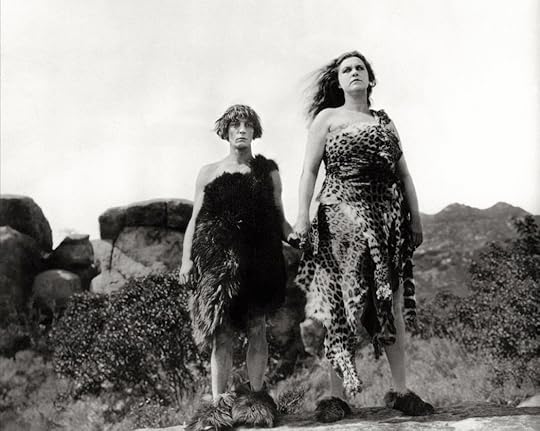
One of the first full-length features that Buster Keaton did. There's a racist gag that bothered me, but for the most part Three Ages is great. It explores essentially the same love story in three different time periods, with the same actors playing the same roles in each era.
What it calls the Stone Age could more accurately be described as the Flintstone Era, since Keaton rides a dinosaur and his rival in love owns a mastodon, but that's all for the better. The other two ages are Ancient Rome (featuring a fantastic chariot race and an awesome scene between Keaton and a lion) and the Modern Age. Great gags, great stunts, and charming plots.
The Balloonatic (1923)
A short Keaton film that's not so much about a hot-air balloon as just general outdoorsiness. Some good stuff, but not one of Keaton's best.
The Love Nest (1923)
I didn't realize until partway through that I've seen this short film before. I don't remember where - TV probably - but it's probably one of the first Buster Keaton films I ever saw. And it's a good one with Keaton as I most like him, bumbling into success on a whaling ship under a horrible captain.
Our Hospitality (1923)
A feature-length Keaton film that's super strong from beginning to end. The plot, the stunts, the gags, the characters... all of it. This is more of how I like him: as an unflappable, slightly clueless good guy who knows when to be heroic and when to run away.
The Ten Commandments (1923)
I've been curious about the original Ten Commandments for a long time. The Charlton Heston version was ubiquitous in my childhood and I've always wanted to see where it came from.
The Exodus stuff is impressively spectacular, but it's ultimately just a long prologue to the real story about a pair of brothers with differing views on religion. Sadly, this part is crazy didactic and obvious, with the characters primarily existing to demonstrate the relevance of the Ten Commandments to modern life. It's extremely well acted though and it's nice to see that the spectacle didn't end with the Biblical prologue. The modern segment also has massive crowd scenes and dramatic visual effects.
So it's great from a technical perspective, it's just that the movie's thoughts about religion are rather shallow, focusing on following rules instead of being a moral person. And that's a shame since communicating those thoughts are the entire reason the film exists.
Jane and the Unpleasantness at Scargrave Manor by Stephanie Barron
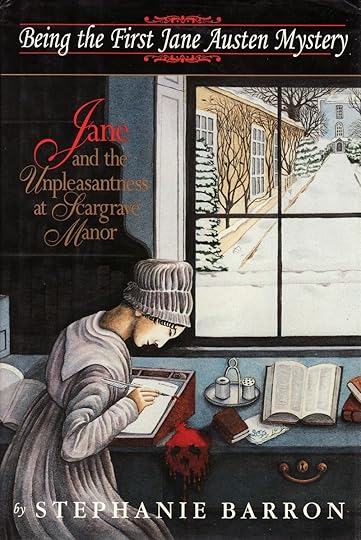
I've re-read this several times (and even blogged about it) and have just done it again in an attempt to catch up to the rest of the series. Barron (a pen-name for Francine Mathews) writes compelling, spooky mysteries in the humor-filled voice of Jane Austen. She includes great details to bring the historical period to life and a fantastic cast of supporting characters who follow Jane from book to book.
This one drags a little for me in the middle, but I think that's because I'm so familiar with it that I'm eager to get to the final revelations at the end. It certainly didn't feel slow the first time I read it.
Polly and the Pirates, Volume 1 by Ted Naifeh
I'm a big fan of Ted Naifeh anyway, but Polly and the Pirates is especially my cup of tea. It's the story of a proper, young girl who's horrified to learn that she's the daughter of an infamous Pirate Queen. Various groups want to use her to find the Queen's hidden treasure and adventure ensues. Naifeh's created a world that's just enough related to our own to feel comfortable, but also fantastically different.
Polly and the Pirates, Volume 2: Mystery of the Dragonfish by Ted Naifeh and Robbi Rodriguez
The sequel to the first Polly and the Pirates adventure is also fun. Robbi Rodriguez' drawing style is different from Naifeh's, but it's appropriate and beautiful. I wish there'd been more volumes, because it's a fun world and these are great characters.

The trailers and other marketing for Deadpool didn't make me laugh at all, so I had decided not to see the movie. But positive reviews from friends and critics made me reconsider and with little else going on at the theater that I wanted to see, I checked it out.
And it's not too bad. I was surprised at how much I cared about the character even while I found him and his girlfriend super annoying. Colossus and Negasonic Teenage Warhead are great foils whom I enjoyed whenever they showed up, and it was also great to see Gina Carano and TJ Miller. The movie has a cool look to it, too, and I enjoyed the way it used music.
My biggest problem with the movie is that it's just not my humor. I chuckled a couple of times and neither were at actual jokes. They were just nice character moments that I thought were amusing. The jokes were simply more of what the trailer suggested: references to sex, poop, and self-referential stuff like other X-Men movies, Green Lantern, and Ryan Reynolds in general. Basically, it's Family Guy humor. So while I had a pretty good time watching Deadpool, it ultimately didn't feel like it was for me.
Sinbad: Legend of the Seven Seas (2003)
I remember liking this a lot when it came out, but the animation doesn't hold up by today's standards. Especially the integration of the CGI elements with the mostly hand-drawn cartooning. But for the most part it gets Sinbad right and I think that's what I originally responded to. He's a swashbuckling rogue with a diverse crew who faces various monsters in the pursuit of treasure.
Unfortunately, the treasure is a vaguely powerful object called the Book of Peace, with no explanation for what it does or why it exists in the first place. And the movie pulls Sinbad out of his Middle Eastern setting to plop him into Europe, which is a shame. Other than that though, it's enough in the spirit of the live-action, Harryhausen versions that I have a good time watching it, even if it doesn't have all the charm of those.
The Hunchback of Notre Dame (1923)
This is one of a handful of silent movies that I'm totally comfortable showing to people who don't know if they'll like the format. Thanks to Victor Hugo, it's a strong story, but the film does great by it. It balances the large cast of characters well, it's funny, it's touching. And of course Lon Chaney's makeup and physical shenanigans are fantastic spectacles.
Three Ages (1923)

One of the first full-length features that Buster Keaton did. There's a racist gag that bothered me, but for the most part Three Ages is great. It explores essentially the same love story in three different time periods, with the same actors playing the same roles in each era.
What it calls the Stone Age could more accurately be described as the Flintstone Era, since Keaton rides a dinosaur and his rival in love owns a mastodon, but that's all for the better. The other two ages are Ancient Rome (featuring a fantastic chariot race and an awesome scene between Keaton and a lion) and the Modern Age. Great gags, great stunts, and charming plots.
The Balloonatic (1923)
A short Keaton film that's not so much about a hot-air balloon as just general outdoorsiness. Some good stuff, but not one of Keaton's best.
The Love Nest (1923)
I didn't realize until partway through that I've seen this short film before. I don't remember where - TV probably - but it's probably one of the first Buster Keaton films I ever saw. And it's a good one with Keaton as I most like him, bumbling into success on a whaling ship under a horrible captain.
Our Hospitality (1923)
A feature-length Keaton film that's super strong from beginning to end. The plot, the stunts, the gags, the characters... all of it. This is more of how I like him: as an unflappable, slightly clueless good guy who knows when to be heroic and when to run away.
The Ten Commandments (1923)
I've been curious about the original Ten Commandments for a long time. The Charlton Heston version was ubiquitous in my childhood and I've always wanted to see where it came from.
The Exodus stuff is impressively spectacular, but it's ultimately just a long prologue to the real story about a pair of brothers with differing views on religion. Sadly, this part is crazy didactic and obvious, with the characters primarily existing to demonstrate the relevance of the Ten Commandments to modern life. It's extremely well acted though and it's nice to see that the spectacle didn't end with the Biblical prologue. The modern segment also has massive crowd scenes and dramatic visual effects.
So it's great from a technical perspective, it's just that the movie's thoughts about religion are rather shallow, focusing on following rules instead of being a moral person. And that's a shame since communicating those thoughts are the entire reason the film exists.
Jane and the Unpleasantness at Scargrave Manor by Stephanie Barron

I've re-read this several times (and even blogged about it) and have just done it again in an attempt to catch up to the rest of the series. Barron (a pen-name for Francine Mathews) writes compelling, spooky mysteries in the humor-filled voice of Jane Austen. She includes great details to bring the historical period to life and a fantastic cast of supporting characters who follow Jane from book to book.
This one drags a little for me in the middle, but I think that's because I'm so familiar with it that I'm eager to get to the final revelations at the end. It certainly didn't feel slow the first time I read it.
Polly and the Pirates, Volume 1 by Ted Naifeh
I'm a big fan of Ted Naifeh anyway, but Polly and the Pirates is especially my cup of tea. It's the story of a proper, young girl who's horrified to learn that she's the daughter of an infamous Pirate Queen. Various groups want to use her to find the Queen's hidden treasure and adventure ensues. Naifeh's created a world that's just enough related to our own to feel comfortable, but also fantastically different.
Polly and the Pirates, Volume 2: Mystery of the Dragonfish by Ted Naifeh and Robbi Rodriguez
The sequel to the first Polly and the Pirates adventure is also fun. Robbi Rodriguez' drawing style is different from Naifeh's, but it's appropriate and beautiful. I wish there'd been more volumes, because it's a fun world and these are great characters.
April 15, 2016
Big they watched! Big they talked! Big their podcast!

A new episode of Hellbent for Letterbox dropped this week, in which Pax and I discuss the 1958 epic, The Big Country, starring Gregory Peck, Charlton Heston, Jean Simmons, Chuck Connors, and Sam the Snowman. Also: Pax talks about the TV shows Gunsmoke, Have Gun Will Travel, and The Wild Wild West, while Michael mentions Tumbleweeds (1925) and Jesse James (1939). Brad Pitt and Casey Affleck may come up as well.
Oh, and hey! Hellbent for Letterbox has a brand-spankin'-new website, too! I'm gonna keep the Tumblr going as a place to celebrate Westerns with all kinds of random stuff, but now we also have a manageable repository to archive all the episodes.

Meanwhile, over at Starmageddon, we're a little behind the Star Wars news cycle, but still plenty enthusiastic about the head-canon of Star Wars Rebels' Dave Filoni. And Ron describes his recent trip to Disneyland and experiencing Season of the Force.
We recorded a new episode this week where we talk about the Rogue One trailer and lots of Star Trek stuff, so that should drop soon. too. I'll let you know.

April 14, 2016
British History in Film | Becket and The Lion in Winter
Becket (1964)
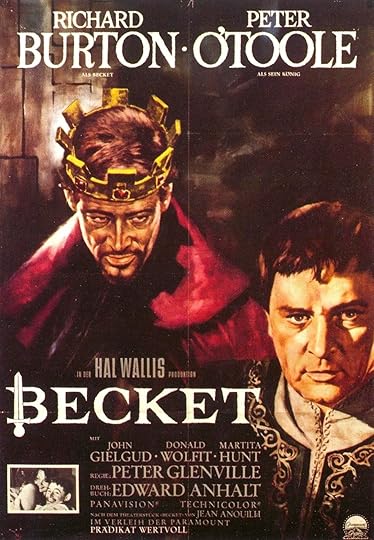
The Pillars of the Earth covers the bloody conflict to see who would succeed Henry I as king. His nephew Stephen is in control for most of the mini-series, but it closes with Henry's young grandson, Henry II finally taking the throne. Although the novel apparently goes farther in history and includes the events of Peter Glenville's film, Becket.
Peter O'Toole is the adult Henry II, who's in a conflict with the Roman Catholic Church. This is a recurring theme, since Henry I experienced the same trouble and - according to Pillars of the Earth anyway - it was the Church's attempt to put a friendlier king into power that caused the whole succession crisis in the first place. In Becket, Henry II irritates the Church further by filling England's top clerical position with his childhood buddy, Thomas Becket. Unfortunately for Henry, Becket begins to take his role seriously, instead of just being the puppet that Henry expected.
It's a great film that's lushly directed and superbly acted. It depicts a fascinating relationship between these two, extremely flawed men, one of whom outgrows the other to disastrous consequences. It's really a medieval version of That Was Then, This Is Now, except that it's really good.
The Lion in Winter (1968)
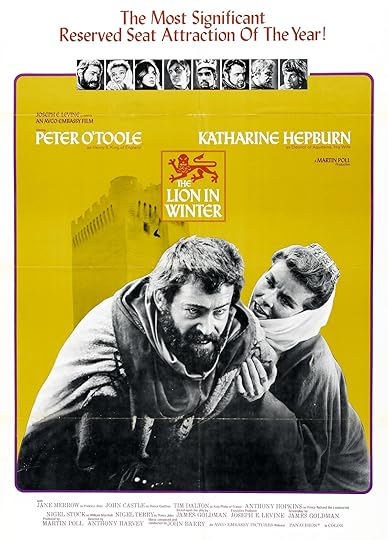
Not a true sequel to Becket, but it sure feels that way with O'Toole reprising his role as an older Henry II. Where Becket was an excellent relationship story though, Lion in Winter is a drawn-out, family melodrama. O'Toole and Katherine Hepburn are Acting, dagnabbit, and they want to make sure you know it. There's an interesting political drama in there somewhere, but it gets lost in the screwed-up relationship of the leads that we're supposed to care about for some reason.
One of the main things they're arguing about is who's going to follow Henry as king. Hepburn's Eleanor of Aquitaine wants eldest son Richard on the throne, but Henry supports youngest boy John. No one cares about middle-child Geoffrey, except for his buddy Philip, the new king of France. (John Gielgud played Philip's dad in Becket.)
Luckily, the sons are all great. Anthony Hopkins is a tough, but deeply troubled Richard. John Castle is delicious as the scheming Geoffrey. And Nigel Terry is perfectly sniveling as young Prince John. Timothy Dalton is also captivating as Philip. Their performances all kept me going even as O'Toole and Hepburn pushed me away.
Next week, you know who wins the throne. Eleanor gets her way, but Richard goes on a crusade that leaves the defense of his kingdom to outlaws.

The Pillars of the Earth covers the bloody conflict to see who would succeed Henry I as king. His nephew Stephen is in control for most of the mini-series, but it closes with Henry's young grandson, Henry II finally taking the throne. Although the novel apparently goes farther in history and includes the events of Peter Glenville's film, Becket.
Peter O'Toole is the adult Henry II, who's in a conflict with the Roman Catholic Church. This is a recurring theme, since Henry I experienced the same trouble and - according to Pillars of the Earth anyway - it was the Church's attempt to put a friendlier king into power that caused the whole succession crisis in the first place. In Becket, Henry II irritates the Church further by filling England's top clerical position with his childhood buddy, Thomas Becket. Unfortunately for Henry, Becket begins to take his role seriously, instead of just being the puppet that Henry expected.
It's a great film that's lushly directed and superbly acted. It depicts a fascinating relationship between these two, extremely flawed men, one of whom outgrows the other to disastrous consequences. It's really a medieval version of That Was Then, This Is Now, except that it's really good.
The Lion in Winter (1968)

Not a true sequel to Becket, but it sure feels that way with O'Toole reprising his role as an older Henry II. Where Becket was an excellent relationship story though, Lion in Winter is a drawn-out, family melodrama. O'Toole and Katherine Hepburn are Acting, dagnabbit, and they want to make sure you know it. There's an interesting political drama in there somewhere, but it gets lost in the screwed-up relationship of the leads that we're supposed to care about for some reason.
One of the main things they're arguing about is who's going to follow Henry as king. Hepburn's Eleanor of Aquitaine wants eldest son Richard on the throne, but Henry supports youngest boy John. No one cares about middle-child Geoffrey, except for his buddy Philip, the new king of France. (John Gielgud played Philip's dad in Becket.)
Luckily, the sons are all great. Anthony Hopkins is a tough, but deeply troubled Richard. John Castle is delicious as the scheming Geoffrey. And Nigel Terry is perfectly sniveling as young Prince John. Timothy Dalton is also captivating as Philip. Their performances all kept me going even as O'Toole and Hepburn pushed me away.
Next week, you know who wins the throne. Eleanor gets her way, but Richard goes on a crusade that leaves the defense of his kingdom to outlaws.
April 13, 2016
The Greater Gatsby [Guest Post]

By GW Thomas
I finally got around to seeing the Baz Lurhmann-directed Gatsby starring Leonardo diCaprio and my reaction was odd. As a film it was okay, but what struck me most was how much better it would have been if Fitzgerald had been a mystery writer. Or for that matter, a horror writer. Let me explain...
But first a necessary digression. The two authors who get the lion's share of credit for modern prose style are Ernest Hemingway and F Scott Fitzgerald. This is all nice and fine as long as you live in a bubble. My choices for the top prose modernizers would be Dashiell Hammett and Erle Stanley Gardner. For example, The Sun Also Rises by Hemingway has been in print continuously since 1926. The Great Gatsby was rated 2 on the Modern Library Top 100, while The Maltese Falcon only 56. (Not bad for a serial from the pages of Black Mask!) But the Perry Mason series has sold over 300 million. Gardner was the best-selling American writer of the 20th century at the time of his death. These four authors sum up the popular and the academic version of the truth.
Anyway, it is obvious where my bias is. I am a pulp guy and always will be. Which brings me back to The Great Gatsby. I think the entire story could have been twice as interesting if it had been done as a noir novel. Think of it. The story is not told by failed writer turned stockbroker Nick Carraway, but by the man who is hired to find the killer of the mysterious Mr Jay Gatsby. George Wilson does not commit suicide after the shooting but runs, making our detective have to find him. To untie the knot would require him to find out about Tom Buchanan's affair with Mrs Wilson and beat the snot out of Nick Carraway until he spilled the beans about his cousin Daisy and Gatsby`s obsession with her. George would die in a chase across the New York docks and our detective would the have to find the Buchanan family who have run away, so that he could arrest Daisy for Myrtle Wilson's death. Would he do it? His stern PI code could push him either way. Of course, Gatsby's thug connections could spice up the whole stew with gunmen and roughs. Now doesn't that sound more interesting than following Tobey Maguire around for 2 hours and 20 minutes?
 And that's just option one. There's still option two: the horror version. Fitzgerald had the right idea telling the story in a nuthouse. In the best Lovecraftian tradition, Nick Carraway is locked away in Arkham Asylum, spewing his sad, dark tale. In this version Gatsby is not only rich but an inventor and scientist. He has obsessed over Daisy, pursues her cruelly until she kills herself. But that won't stop Jay Gatsby. He resurrects her with a strange formula purchased from a stranger in Geneva, reputed to have once belonged to Dr Victor Frankenstein, combining it with weird experiments by New Englander, Herbert West. Daisy's resurrected self is not like her former quiet and loving personality. Now she revels in killing and torture, and Gatsby is hard-pressed to silence the locals who are missing pets and later, children. It all falls apart when Daisy targets the lover of her ex-husband, Tom Buchanan. In a frantic finale with a lightning storm, George Wilson tries to save his wife, but his pistol shots cannot stop Daisy. In the end, it is Daisy who kills Gatsby (perhaps by ripping his beating heart from his chest and holding it to the sky. The lightning, of course, finishes her off, but leaves poor Nick Carraway eating his own filth in a madhouse.) Now that's entertainment, folks!
Or you can have all that Jazz Age jazz with sleepy yawns, knowing things are only going to get worse when you try to read Tender Is the Night. The night is not tender. It's filled with insane killers and monsters and the wide, dark shadow of Horace Walpole and all things gothic. But not all is lost. There is always "The Curious Case of Benjamin Button" (and its Brad Pitt movie version), a kind of science fantasy for the gothically impaired. Better still, skip the Fitzgerald altogether and reach for one of Cornell Woolrich's "Black" novels instead. From there you can leapfrog into the sterling suspense novels of Fredric Brown, then rollover into his science fiction. Yes, there is hope. You avoid that early, unmarked grave known as "mainstream fiction." But you better hurry. Baz Luhrmann is eyeing up another version of Cop Rock.
GW Thomas has appeared in over 400 different books, magazines and ezines including The Writer, Writer's Digest, Black October Magazine and Contact. His website is gwthomas.org. He is editor of Dark Worlds magazine.

April 12, 2016
7 Days in May | Holmes, Hood, and the Headless Horseman
Nosferatu (1922)
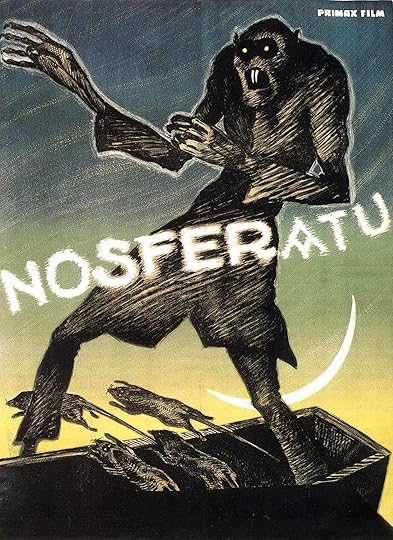
I've seen this so many times, but watching it again, I noticed a couple of story problems. How does Orlok get control of Knock? And Professor Bulwer, the Van Helsing character, has no purpose in the movie. He doesn't even directly interact with any other characters until the very last scene and even then it's only to observe what the real characters are doing.
But the style of Nosferatu is so strong, and Orlok is so utterly horrifying (thanks both to Max Schreck's performance and the way director FW Murnau shot him), that nothing else matters. It's not only the best adaptation of Dracula, it's the best vampire movie ever.
The Paleface (1922)
This lesser Buster Keaton short is full of racial stereotypes and hard to watch. They can't all be winners.
Cops (1922)
I love Buster Keaton's usual brand of slapstick, but the action in this short becomes more absurd than I like. It's also mean-spirited in that a lot of the comedy happens at the expense of innocent people. And finally, the plot that sets up Keaton's being chased by an entire police force is shakier than what I'm used to from him. It's still very funny in places, because Keaton, but not one I'll come back to a lot.
My Wife’s Relations (1922)
This is more like it. Due to a language barrier with a judge, Buster Keaton accidentally gets married into a rough family. As expected though, he stoically and resourcefully holds his own. I especially love the dinner table scene where he can't get a bite of his own food for having to constantly pass dishes up and down the table to the others. I've been there, pal.
Sherlock Holmes (1922)
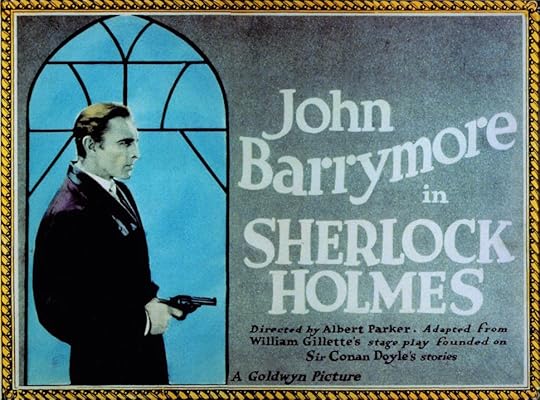
Sort of "Scandal in Bohemia" meets Young Sherlock Holmes, only Holmes and Watson meet in college. It also plays up Holmes' feelings for Irene Adler (renamed Alice Faulkner, but it's following the "Scandal" plot) to a level that's unbelievable for Holmes fans. And it not only inserts Moriarty into the tale; it makes him the reason for Holmes' becoming a detective in the first place. So, lots of liberties taken here.
It's not a strong mystery either and Holmes says things like, "It's easier to know so-and-so is guilty than to explain how I know it." In other words, it barely feels like Sherlock Holmes. John Barrymore is handsome in the role, but I wish he was in a more faithful adaptation. Enjoyable; just not essential.
The Blacksmith (1922)
A really strong short with Buster Keaton as a blacksmith. I can't tell if he's a partner or an apprentice in the business, but he works with another smith who's played by ubiquitous Keaton co-star/nemesis, Joe Roberts. The two are adversaries, but when Roberts' character finally takes his abuse too far and goes to jail, Keaton takes over the whole business. The gags mostly involve Keaton's destroying everything he touches, but they're all funny and I particularly like the bit where he fits a horse for new shoes.
The Frozen North (1922)
This is apparently a parody of William S Hart melodramas, but I've only seen one Hart movie, so I didn't get the joke. It's strange seeing Buster Keaton play a thieving, murderous villain, but not as strange as the plot, which was hard for me to follow. Some of the gags got chuckles from me, but this is low on my ranking of Keaton films.
The Electric House (1922)
When Buster Keaton is mistaken for an electrical engineer and hired to wire a new home for electricity, I thought the gags would involve his incompetence to do the job (especially since I watched this back-to-back with The Blacksmith). Surprisingly, he does a great job and fills the house with awesome gadgets, including an escalator and a train system to deliver food from the kitchen to the dining room table. The jokes come from Keaton's being the wrong person to operate the house as he demonstrates it to the owners, but once he leaves, that's going to be a cool place to live.
Robin Hood (1922)
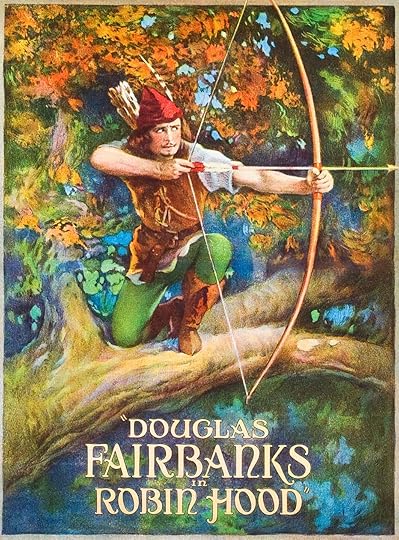
It's an origin story, so Robin Hood as we know him doesn't appear until halfway through the movie. But thanks to the charming Douglas Fairbanks and some great humor, even the Hoodless half is a lot of fun. Once the movie enters familiar territory, it gets even better with lavish sets and Fairbanks proving why he's the king of the swashbucklers. Highly recommended. I may even like this one better than Errol Flynn's (which I like a lot).
Day Dreams (1922)
Cute, but slight short film in which Buster Keaton writes letters to his sweetheart back home to report on his progress in building the fortune he needs to marry her. He'll tell her that he's "cleaning up on Wall Street" and she'll daydream about his being a stock tycoon, but of course he's actually a street sweeper. This kind of thing repeats a few times until he finally comes home to reveal his failure and face the consequences. It's a depressing scenario, but the individual gags are still very funny.
The Headless Horseman (1922)
Pretty faithful, silent adaptation of the Washington Irving story. Will Rogers isn't quite as lanky an Ichabod Crane as I like, but he's fine. And the Headless Horseman effects are surprisingly great.
It pads itself out though with extra subplots. There's one about the mother of one of Ichabod's students and how she wants to drive Ichabod out of town because he's not Dutch. And another has Brom Bones try to get rid of Ichabod by making the town believe that the schoolteacher is practicing witchcraft. It's interesting enough stuff, but not necessary, especially when I'm anxious to get to the ghost at the end.
I also don't care for how the movie robs the story of what ambiguity it has about Ichabod's fate. I mean, I think Irving's tale is pretty clear about what happens to Ichabod, but it leaves room for different opinions. This movie picks a side and shows it outright, acknowledging the other point of view, but basically mocking it as nonsense.
Harry Potter and the Chamber of Secrets by J.K. Rowling
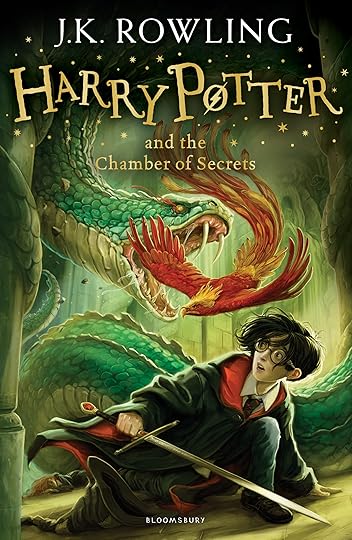
This is my first time reading this, but I've seen the movie many many times. I enjoyed unfilmed scenes like Nearly Headless Nick's party and the additional tension around everyone's thinking that Harry is the Heir. I also hadn't picked up from the film that Dumbledore wasn't the headmaster during Tom Riddle's day. And the Chamber of Secrets sequence flows a lot better without the long chase.
Like in the first book, Harry's successes rely more on coincidence than I'd like, but all-in-all it's a fun book and I'm looking forward to Azkaban.
Oyster War by Ben Towle
While I love sea adventure stories, very few of them are fully satisfying to me. The Unsinkable Walker Bean is one of those, and now Oyster War is another. It combines Ben Towle's knack for well-researched, detailed historical fiction with exciting action, captivating characters, humor, and lots of imagination. And the book is packaged handsomely in an oversized, hardcover album with thick paper, so it's as pleasurable to hold as it is to read.

I've seen this so many times, but watching it again, I noticed a couple of story problems. How does Orlok get control of Knock? And Professor Bulwer, the Van Helsing character, has no purpose in the movie. He doesn't even directly interact with any other characters until the very last scene and even then it's only to observe what the real characters are doing.
But the style of Nosferatu is so strong, and Orlok is so utterly horrifying (thanks both to Max Schreck's performance and the way director FW Murnau shot him), that nothing else matters. It's not only the best adaptation of Dracula, it's the best vampire movie ever.
The Paleface (1922)
This lesser Buster Keaton short is full of racial stereotypes and hard to watch. They can't all be winners.
Cops (1922)
I love Buster Keaton's usual brand of slapstick, but the action in this short becomes more absurd than I like. It's also mean-spirited in that a lot of the comedy happens at the expense of innocent people. And finally, the plot that sets up Keaton's being chased by an entire police force is shakier than what I'm used to from him. It's still very funny in places, because Keaton, but not one I'll come back to a lot.
My Wife’s Relations (1922)
This is more like it. Due to a language barrier with a judge, Buster Keaton accidentally gets married into a rough family. As expected though, he stoically and resourcefully holds his own. I especially love the dinner table scene where he can't get a bite of his own food for having to constantly pass dishes up and down the table to the others. I've been there, pal.
Sherlock Holmes (1922)

Sort of "Scandal in Bohemia" meets Young Sherlock Holmes, only Holmes and Watson meet in college. It also plays up Holmes' feelings for Irene Adler (renamed Alice Faulkner, but it's following the "Scandal" plot) to a level that's unbelievable for Holmes fans. And it not only inserts Moriarty into the tale; it makes him the reason for Holmes' becoming a detective in the first place. So, lots of liberties taken here.
It's not a strong mystery either and Holmes says things like, "It's easier to know so-and-so is guilty than to explain how I know it." In other words, it barely feels like Sherlock Holmes. John Barrymore is handsome in the role, but I wish he was in a more faithful adaptation. Enjoyable; just not essential.
The Blacksmith (1922)
A really strong short with Buster Keaton as a blacksmith. I can't tell if he's a partner or an apprentice in the business, but he works with another smith who's played by ubiquitous Keaton co-star/nemesis, Joe Roberts. The two are adversaries, but when Roberts' character finally takes his abuse too far and goes to jail, Keaton takes over the whole business. The gags mostly involve Keaton's destroying everything he touches, but they're all funny and I particularly like the bit where he fits a horse for new shoes.
The Frozen North (1922)
This is apparently a parody of William S Hart melodramas, but I've only seen one Hart movie, so I didn't get the joke. It's strange seeing Buster Keaton play a thieving, murderous villain, but not as strange as the plot, which was hard for me to follow. Some of the gags got chuckles from me, but this is low on my ranking of Keaton films.
The Electric House (1922)
When Buster Keaton is mistaken for an electrical engineer and hired to wire a new home for electricity, I thought the gags would involve his incompetence to do the job (especially since I watched this back-to-back with The Blacksmith). Surprisingly, he does a great job and fills the house with awesome gadgets, including an escalator and a train system to deliver food from the kitchen to the dining room table. The jokes come from Keaton's being the wrong person to operate the house as he demonstrates it to the owners, but once he leaves, that's going to be a cool place to live.
Robin Hood (1922)

It's an origin story, so Robin Hood as we know him doesn't appear until halfway through the movie. But thanks to the charming Douglas Fairbanks and some great humor, even the Hoodless half is a lot of fun. Once the movie enters familiar territory, it gets even better with lavish sets and Fairbanks proving why he's the king of the swashbucklers. Highly recommended. I may even like this one better than Errol Flynn's (which I like a lot).
Day Dreams (1922)
Cute, but slight short film in which Buster Keaton writes letters to his sweetheart back home to report on his progress in building the fortune he needs to marry her. He'll tell her that he's "cleaning up on Wall Street" and she'll daydream about his being a stock tycoon, but of course he's actually a street sweeper. This kind of thing repeats a few times until he finally comes home to reveal his failure and face the consequences. It's a depressing scenario, but the individual gags are still very funny.
The Headless Horseman (1922)
Pretty faithful, silent adaptation of the Washington Irving story. Will Rogers isn't quite as lanky an Ichabod Crane as I like, but he's fine. And the Headless Horseman effects are surprisingly great.
It pads itself out though with extra subplots. There's one about the mother of one of Ichabod's students and how she wants to drive Ichabod out of town because he's not Dutch. And another has Brom Bones try to get rid of Ichabod by making the town believe that the schoolteacher is practicing witchcraft. It's interesting enough stuff, but not necessary, especially when I'm anxious to get to the ghost at the end.
I also don't care for how the movie robs the story of what ambiguity it has about Ichabod's fate. I mean, I think Irving's tale is pretty clear about what happens to Ichabod, but it leaves room for different opinions. This movie picks a side and shows it outright, acknowledging the other point of view, but basically mocking it as nonsense.
Harry Potter and the Chamber of Secrets by J.K. Rowling

This is my first time reading this, but I've seen the movie many many times. I enjoyed unfilmed scenes like Nearly Headless Nick's party and the additional tension around everyone's thinking that Harry is the Heir. I also hadn't picked up from the film that Dumbledore wasn't the headmaster during Tom Riddle's day. And the Chamber of Secrets sequence flows a lot better without the long chase.
Like in the first book, Harry's successes rely more on coincidence than I'd like, but all-in-all it's a fun book and I'm looking forward to Azkaban.
Oyster War by Ben Towle
While I love sea adventure stories, very few of them are fully satisfying to me. The Unsinkable Walker Bean is one of those, and now Oyster War is another. It combines Ben Towle's knack for well-researched, detailed historical fiction with exciting action, captivating characters, humor, and lots of imagination. And the book is packaged handsomely in an oversized, hardcover album with thick paper, so it's as pleasurable to hold as it is to read.