Michael May's Blog, page 114
June 2, 2016
The Year in Movies: 1929
The Mysterious Island (1929)
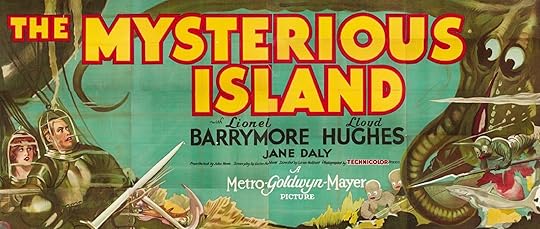
About the only thing this movie has in common with Jules Verne's novel is the title, but that's a-okay. There is a reclusive scientist (Lionel Barrymore) with a submarine on an island; it's just that everyone knows he's there. Which is too bad for him when a former friend (character actor Montagu Love, who's probably best known as Zorro's dad in the Tyrone Power version) wants to steal his technology in order to power a military coup.
The new plot is pretty great though. There's a romance between Barrymore's sister (Jacqueline Gadsdon, who has a small role in It) and one of the lead workers on the submarine project (Lloyd Hughes, who was Ed Malone in the 1925 Lost World movie). Better than that is how things spin out of control once Love's character invades the island. Barrymore's two subs fall into hands on opposite sides of the conflict, leading to an undersea battle and ultimately to the discovery of an undersea city, merpeople, and a giant octopus. Totally fun.
The Manxman (1929)
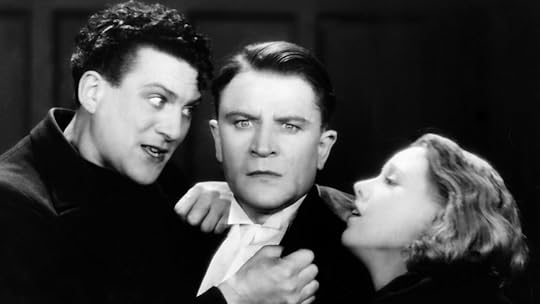
It's hard for me to like this early Hitchcock melodrama about two friends in love with the same girl. Mostly that's because Anny Ondra and Malcolm Keen's characters have to make ridiculous decisions in order to drive the plot. But once I'm past that, I do enjoy the drama of the position they put Carl Brisson's character in. And the Isle of Man is a great setting for the story.
Pandora’s Box (1929)
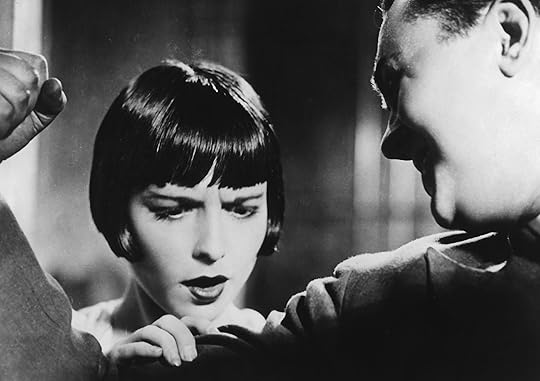
It's rough to watch the characters in Pandora's Box - especially Louise Brooks' - go through the ringer the way they do. Some of it's their own doing, but not all of it. Some of it they do to each other and it becomes a depressing spiral into despair. And yet there's a glimmer of hope at the very end for one of the characters, even though it's made possible by something horrible that happens to one of the others. Thoroughly sad, but capped with just a hint of catharsis.
The Canary Murder Case (1929)
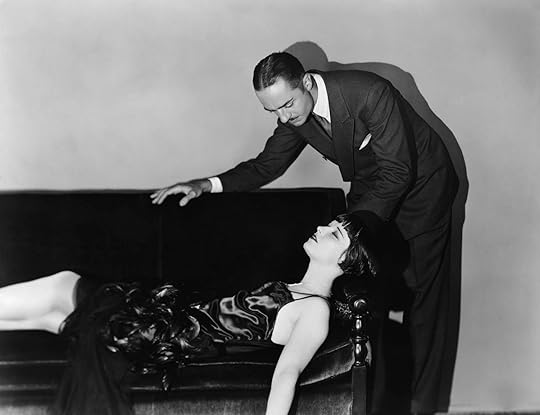
I had high hopes for William Powell and Louise Brooks together in a murder mystery, but sadly, this is no Thin Man. I've seen a couple of other Philo Vance movies (at least one other one with Powell and the one with Basil Rathbone, for sure) and I'm not crazy about the detective. Powell and Rathbone are both too cool for the dandy that I feel like Vance is supposed to be, and neither is as awesome as Vance as they are as Nick Charles and Sherlock Holmes. Vance comes off as an also-ran kind of character and The Canary Murder Case is about that level of story.
Brooks plays an evil nightclub performer with a long line of jilted and/or blackmailed men who would benefit from her death. After A Girl in Every Port and Pandora's Box I'm tired of seeing Brooks play snotty, entitled characters, so already we're off to a bad start. The mystery is also pretty easy to figure out, even though the way the killer covered their tracks is ludicrously unbelievable. I still like seeing two of my favorite actors onscreen, but I kept wishing I was watching them in something else.
The Iron Mask (1929)
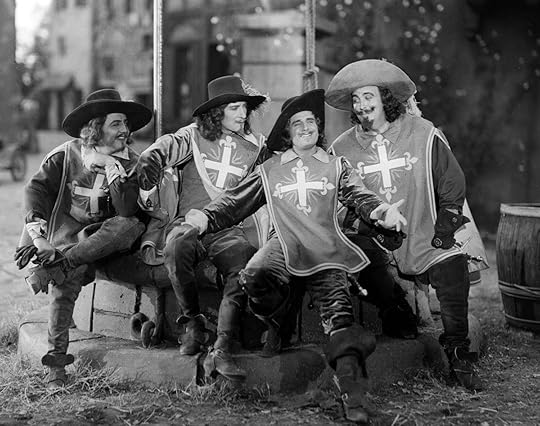
Speaking of wishing I was watching something else, I'll never complain about Douglas Fairbanks, but for spoilery story reasons, I prefer other versions of The Man in the Iron Mask to this. I've never read the novel, so maybe this one is totally faithful, but I still don't care for how it ends. It also takes a crazy long time to set up the Iron Mask scenario.
I'm not thrilled either with the device of turning the movie into a talkie by having Fairbanks simply narrate over silent movie footage. Fairbanks has a great voice and I don't particularly miss intertitles, so it's fine from a creative standpoint. It just feels like a cheap way of making a sound version when other productions were doing things like having actors dub their voices onto an audio track.
Ultimately, if I want to see Fairbanks playing D'Artagnan, I'll re-watch his version of The Three Musketeers.
Blackmail (1929)
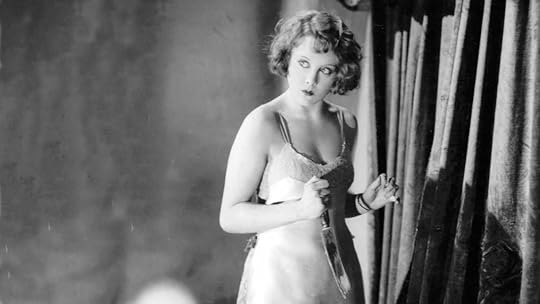
Hitchcock gets more into thriller territory with this story about a woman who kills in self-defense, but wants to cover it up. And as the title suggests, someone makes that difficult for her. Complicating matters is the case's getting assigned to her police detective boyfriend. It's a great setup with some tense moments, but sadly it doesn't wrap up very well. The ending is rushed and its unclear how events have affected the characters.
The Cocoanuts (1929)
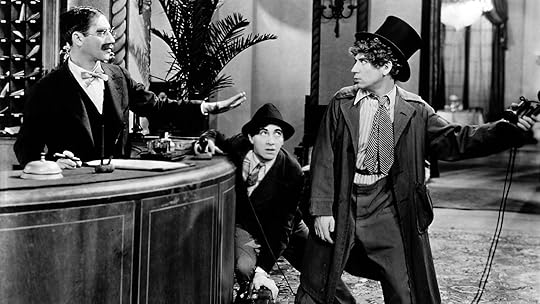
Probably my favorite Marx Bros movie. I never know what Zeppo contributed to the group, but it has strong bits by Groucho, Harpo, and Chico. Especially great are the two-rooms scene, the auction, "Why a duck?," and Harpo's reaction to boring speeches.
Diary of a Lost Girl (1929)
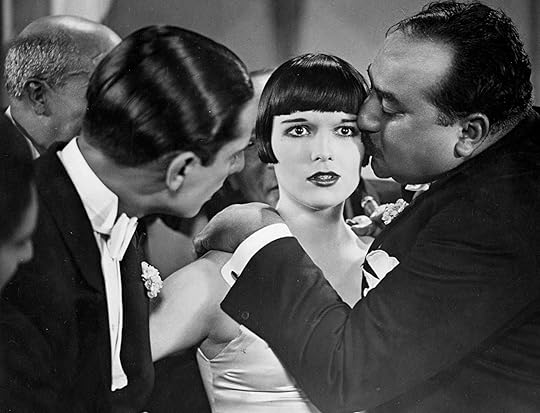
After the thoroughly depressing Pandora's Box, I wasn't sure I was ready for another Louise Brooks/GW Pabst collaboration, but Diary of a Lost Girl is beautiful and lovely. It's the antithesis of Pandora's Box, which was about a woman whose own flaws were largely responsible for her downfall. In Diary, Brooks plays a woman whose fall is no fault of her own, but because of the cruelty and heartlessness of people who are supposed to be looking out for her. She makes the most of it though and finds first a modicum of joy, and then finally a new family and purpose. It's uplifting and challenging at the same time. Loved it.
The Virginian (1929)
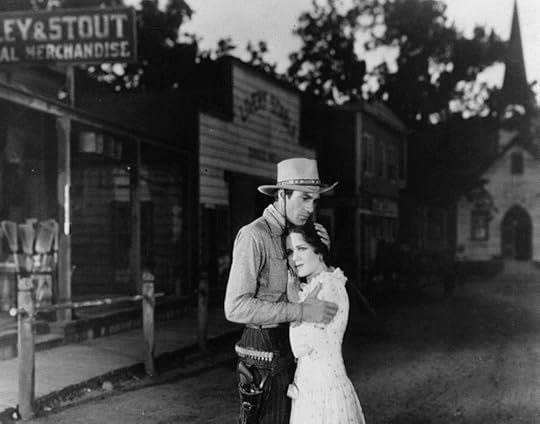
It's surprising how many parallels there are between this and High Noon, starting with their lead actor. Both sort of end up being about a lawman who has to face an enemy over the objections of his new wife. But where Will Kane is frustratingly inscrutable in High Noon, making him seem selfish and proud, I know exactly what drives the original Man With No Name.
The Virginian spends plenty of time setting up the conflict between its anonymous title character and Trampas, the villain. It's because of Trampas (in part, anyway) that the very sweet friendship between the Virginian and his best pal goes horribly wrong. That's not enough to force the showdown though and Trampas continues needling Cooper's character until he feels he has no choice but to throw down in the town's streets. When the Virginian explains this to his fiancée (Mary Brian, who was Wendy in 1924's excellent Peter Pan) she doesn't understand, but I do. And the film's spent enough time on her that I also understand why she doesn't.
Tarzan the Tiger (1929)
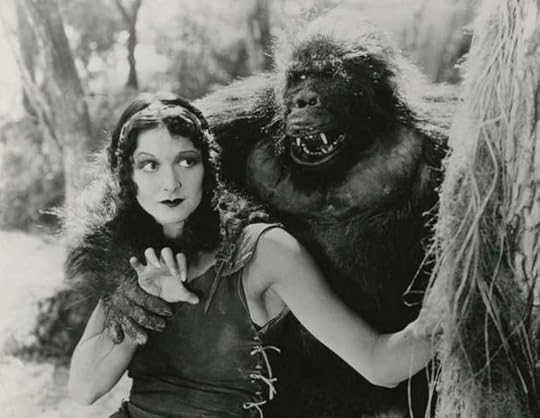
Tarzan the Tiger has some of the problems that many serials do with the same groups of characters being captured by, escaping from, and getting recaptured by the same groups of other characters. But not to the extent of, say, Son of Tarzan. For the most part, Tarzan the Tiger stays fresh and moves quickly. Some of that's because it mixes up the scenery between Tarzan's jungle mansion, the jungle itself, an Arab slave camp, and the hidden temple-city of Opar. Villains are defeated through the course of the story and new ones come along to take their place, though there are a couple of consistent ones, too. Allegiances shift. It's an above-average serial.
Frank Merrill is an impressive Tarzan, physically. He wears a goofy wig and headband - and I'm never excited about the look of over-the-shoulder furs - but he's ripped and handsome. Natalie Kingston is a great Jane, too. She needs saving a couple of times, but she saves Tarzan too and there's a way of watching the serial in which she's the hero and he's the MacGuffin. When he goes missing in the jungle, she throws on her own junglewear and heads out in search of him. By the end, they're a team, with neither overshadowing the other.

About the only thing this movie has in common with Jules Verne's novel is the title, but that's a-okay. There is a reclusive scientist (Lionel Barrymore) with a submarine on an island; it's just that everyone knows he's there. Which is too bad for him when a former friend (character actor Montagu Love, who's probably best known as Zorro's dad in the Tyrone Power version) wants to steal his technology in order to power a military coup.
The new plot is pretty great though. There's a romance between Barrymore's sister (Jacqueline Gadsdon, who has a small role in It) and one of the lead workers on the submarine project (Lloyd Hughes, who was Ed Malone in the 1925 Lost World movie). Better than that is how things spin out of control once Love's character invades the island. Barrymore's two subs fall into hands on opposite sides of the conflict, leading to an undersea battle and ultimately to the discovery of an undersea city, merpeople, and a giant octopus. Totally fun.
The Manxman (1929)

It's hard for me to like this early Hitchcock melodrama about two friends in love with the same girl. Mostly that's because Anny Ondra and Malcolm Keen's characters have to make ridiculous decisions in order to drive the plot. But once I'm past that, I do enjoy the drama of the position they put Carl Brisson's character in. And the Isle of Man is a great setting for the story.
Pandora’s Box (1929)

It's rough to watch the characters in Pandora's Box - especially Louise Brooks' - go through the ringer the way they do. Some of it's their own doing, but not all of it. Some of it they do to each other and it becomes a depressing spiral into despair. And yet there's a glimmer of hope at the very end for one of the characters, even though it's made possible by something horrible that happens to one of the others. Thoroughly sad, but capped with just a hint of catharsis.
The Canary Murder Case (1929)

I had high hopes for William Powell and Louise Brooks together in a murder mystery, but sadly, this is no Thin Man. I've seen a couple of other Philo Vance movies (at least one other one with Powell and the one with Basil Rathbone, for sure) and I'm not crazy about the detective. Powell and Rathbone are both too cool for the dandy that I feel like Vance is supposed to be, and neither is as awesome as Vance as they are as Nick Charles and Sherlock Holmes. Vance comes off as an also-ran kind of character and The Canary Murder Case is about that level of story.
Brooks plays an evil nightclub performer with a long line of jilted and/or blackmailed men who would benefit from her death. After A Girl in Every Port and Pandora's Box I'm tired of seeing Brooks play snotty, entitled characters, so already we're off to a bad start. The mystery is also pretty easy to figure out, even though the way the killer covered their tracks is ludicrously unbelievable. I still like seeing two of my favorite actors onscreen, but I kept wishing I was watching them in something else.
The Iron Mask (1929)

Speaking of wishing I was watching something else, I'll never complain about Douglas Fairbanks, but for spoilery story reasons, I prefer other versions of The Man in the Iron Mask to this. I've never read the novel, so maybe this one is totally faithful, but I still don't care for how it ends. It also takes a crazy long time to set up the Iron Mask scenario.
I'm not thrilled either with the device of turning the movie into a talkie by having Fairbanks simply narrate over silent movie footage. Fairbanks has a great voice and I don't particularly miss intertitles, so it's fine from a creative standpoint. It just feels like a cheap way of making a sound version when other productions were doing things like having actors dub their voices onto an audio track.
Ultimately, if I want to see Fairbanks playing D'Artagnan, I'll re-watch his version of The Three Musketeers.
Blackmail (1929)

Hitchcock gets more into thriller territory with this story about a woman who kills in self-defense, but wants to cover it up. And as the title suggests, someone makes that difficult for her. Complicating matters is the case's getting assigned to her police detective boyfriend. It's a great setup with some tense moments, but sadly it doesn't wrap up very well. The ending is rushed and its unclear how events have affected the characters.
The Cocoanuts (1929)

Probably my favorite Marx Bros movie. I never know what Zeppo contributed to the group, but it has strong bits by Groucho, Harpo, and Chico. Especially great are the two-rooms scene, the auction, "Why a duck?," and Harpo's reaction to boring speeches.
Diary of a Lost Girl (1929)

After the thoroughly depressing Pandora's Box, I wasn't sure I was ready for another Louise Brooks/GW Pabst collaboration, but Diary of a Lost Girl is beautiful and lovely. It's the antithesis of Pandora's Box, which was about a woman whose own flaws were largely responsible for her downfall. In Diary, Brooks plays a woman whose fall is no fault of her own, but because of the cruelty and heartlessness of people who are supposed to be looking out for her. She makes the most of it though and finds first a modicum of joy, and then finally a new family and purpose. It's uplifting and challenging at the same time. Loved it.
The Virginian (1929)

It's surprising how many parallels there are between this and High Noon, starting with their lead actor. Both sort of end up being about a lawman who has to face an enemy over the objections of his new wife. But where Will Kane is frustratingly inscrutable in High Noon, making him seem selfish and proud, I know exactly what drives the original Man With No Name.
The Virginian spends plenty of time setting up the conflict between its anonymous title character and Trampas, the villain. It's because of Trampas (in part, anyway) that the very sweet friendship between the Virginian and his best pal goes horribly wrong. That's not enough to force the showdown though and Trampas continues needling Cooper's character until he feels he has no choice but to throw down in the town's streets. When the Virginian explains this to his fiancée (Mary Brian, who was Wendy in 1924's excellent Peter Pan) she doesn't understand, but I do. And the film's spent enough time on her that I also understand why she doesn't.
Tarzan the Tiger (1929)

Tarzan the Tiger has some of the problems that many serials do with the same groups of characters being captured by, escaping from, and getting recaptured by the same groups of other characters. But not to the extent of, say, Son of Tarzan. For the most part, Tarzan the Tiger stays fresh and moves quickly. Some of that's because it mixes up the scenery between Tarzan's jungle mansion, the jungle itself, an Arab slave camp, and the hidden temple-city of Opar. Villains are defeated through the course of the story and new ones come along to take their place, though there are a couple of consistent ones, too. Allegiances shift. It's an above-average serial.
Frank Merrill is an impressive Tarzan, physically. He wears a goofy wig and headband - and I'm never excited about the look of over-the-shoulder furs - but he's ripped and handsome. Natalie Kingston is a great Jane, too. She needs saving a couple of times, but she saves Tarzan too and there's a way of watching the serial in which she's the hero and he's the MacGuffin. When he goes missing in the jungle, she throws on her own junglewear and heads out in search of him. By the end, they're a team, with neither overshadowing the other.


June 1, 2016
How To Get Your Name on a Magazine [Guest Post]
By GW Thomas
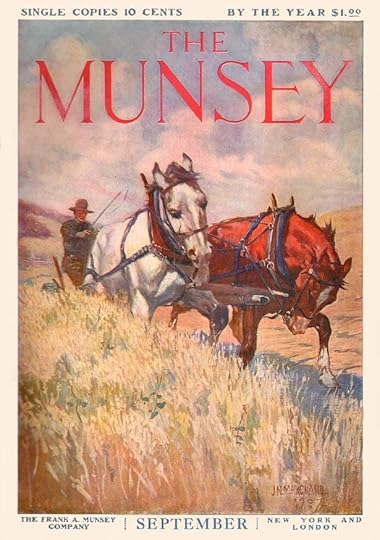 Magazines have been around for over 350 years. The first general interest magazine in English was The Gentleman's Magazine, beginning in 1731. Magazines with people's names have been around since at least 1817 when Blackwood's Magazine was a standard publication in most middle-class English homes. So how do you get that prestigious name on a magazine? There are several ways. Let's look at each one:
One: Be the publisher of the magazine.
If you want them to remember your name you'd better get it out there. The first magazines were used as promotional flyers for book publishers. Excerpts from current volumes could be plugged there. Later the titles promoted a whole line of publications, such as Munsey's Weekly (February 1889-October 1929) the flagship of the Munsey empire, that produced the first pulp magazines.
In England, the magazine business exploded with the first appearance of The Strand (named after its location, not a person) and the short stories of Sherlock Holmes. There were many imitators but the most famous was Pearson's Magazine (1896-1939) named after the publisher, C Arthur Pearson. Pearson's published many of the classic HG Wells stories and novels. Other named magazines of the era included Ainslee's, Hutchinson's, and Flynn's Weekly. The Pall Mall Gazette changed its name to Nash's Magazine to finish its run.
 Two: Become really famous.
The pulp era was furiously competitive. Any angle magazines could find to edge out the competition was worth a try. Celebrity became such a ploy when the short-lived Jack Dempsey's Fight Magazine (May - Aug 1938) tacked on the name of the former heavy weight champ. Though the magazine failed, the idea caught on.
The first mags to use celebrity names were the mysteries. With writers becoming synonymous with the genre, their name implied that all that would follow would meet similar heights of excitement and puzzle-solving. Ellery Queen Mystery Magazine (Fall 1941-present) is the premiere mystery magazine to this day, originally edited by Fredric Dannay, half of the Ellery Queen team. Alfred Hitchcock's Mystery Magazine (December 1956-present) was unusual in that the celebrity was not a writer but from the film industry. The magazine only used the director's name and image, and Hitchcock had no connection with the editing. This was largely done by Robert Arthur, who would also write many books as Hitchcock as well. The magazines tried to make lightning strike thrice with Mary Higgins Clark Mystery Magazine (1996 - Summer 2000), but it was no more successful than any of these other magazines using names such as John Creasey, Rex Stout, Don Pendleton, Edgar Wallace, or Ed McBain. (The oddity here was Mackill's Mystery Magazine (Sep 1952-June 1954) which had a name but not of a famous writer.)
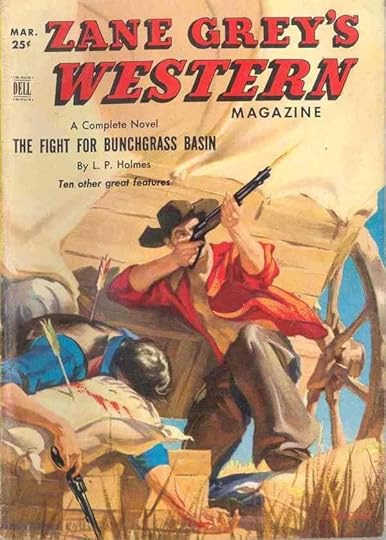
The Westerns weren't far behind the mysteries. The first was Zane Grey's Western Magazine (November 1946-January 1954). Zane was so famous that a revival of the title was tried over a decade later from October 1969 - September 1974. Top hands like Max Brand, Walt Coburn, and Luke Short blazoned titles with their names. Louis L'Amour became famous after the pulps ended, but even he got a magazine: Louis L'Amour Western Magazine (March 1994-Jan 1996).
Science fiction and fantasy magazines were not to be left out. The publishers of Famous Fantastic Mysteries tried the idea with the only writer well-known enough in the relatively small arena of the fantastic, with A. Merritt's Fantasy Magazine (December 1949-October 1950). Nobody tried it again for thirty years but the Good Doctor, Isaac Asimov, got two magazines: Isaac Asimov's Science Fiction Magazine (Spring 1977-present) and its short-lived companion, Isaac Asimov's SF Adventure Magazine (Fall 1978-Fall 1979). Rod Serling's Twilight Zone (April 1981-June 1989), like Alfred Hitchcock brought a celebrity from outside publishing to serve up weird horror, just as Marion Zimmer Bradley Fantasy Magazine (Summer 1988-Summer 2000) did with heroic fantasy. The Cthulhu Mythos-style horror gave us HP Lovecraft's Magazine of Horror (Spring 2004-Spring 2009). Jim Baen's Universe and Orson Scott Card's Intergalactic Medicine Show looked back to the old days and named themselves after the publishers and editors.
 Three: Create a famous character.
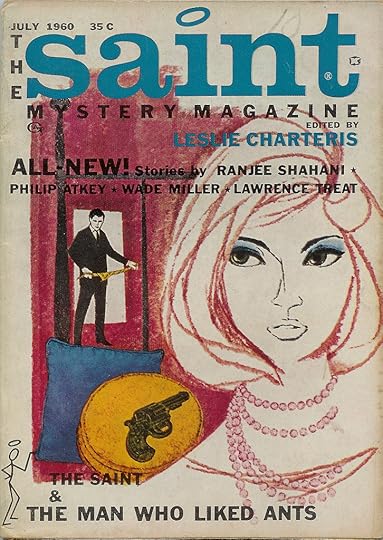
A strange mutant of the celebrity mystery writers was the famous characters who got magazines. Unlike a magazine named for the character, such as Doc Savage or The Lone Ranger, these magazines did have stories of these famous characters, but they also did more. The other stories that appeared with them had a similar feel or approach. In this way, the famous character almost acted like an editor, telling the buyer what to expect. The first of these was The Saint Mystery Magazine (Spring 1953-October 1967), what might have been called the Leslie Charteris Mystery Magazine, but Charteris was not the household name that Simon Templar was. The same idea worked for Mike Shayne Mystery Magazine (Sept 1956-Aug 1985), which could have been Brett Halliday's Mystery Magazine, but since he didn't exist, the character would do fine. Richard Prather had Shell Scott Mystery Magazine (Feb-Nov 1966), and coming full circle, we have Sherlock Holmes' Mystery Magazine (Winter 2008-present), which nobody thought to call the A. Conan Doyle Mystery Magazine. This magazine, like the others, features some new Sherlock fiction, but is actually aimed at readers who enjoy the Gaslight era, not just Holmes and Watson.
So there you go. Pretty easy really. Just get rich and famous and they'll be naming magazines after you. (Just ask Oprah!) But you better hurry. The paper magazines are fading, becoming as scarce as the buffalo. Who wants to buy Michael May's Digital Science Fiction, Fantasy and Horror Magazine in .epub format only? How will we get the excitement of having subscription cards falling out as you peruse them in the drugstore?
GW Thomas has appeared in over 400 different books, magazines and ezines including The Writer, Writer's Digest, Black October Magazine and Contact. His website is gwthomas.org. He is editor of Dark Worlds magazine.
 Magazines have been around for over 350 years. The first general interest magazine in English was The Gentleman's Magazine, beginning in 1731. Magazines with people's names have been around since at least 1817 when Blackwood's Magazine was a standard publication in most middle-class English homes. So how do you get that prestigious name on a magazine? There are several ways. Let's look at each one:
One: Be the publisher of the magazine.
If you want them to remember your name you'd better get it out there. The first magazines were used as promotional flyers for book publishers. Excerpts from current volumes could be plugged there. Later the titles promoted a whole line of publications, such as Munsey's Weekly (February 1889-October 1929) the flagship of the Munsey empire, that produced the first pulp magazines.
In England, the magazine business exploded with the first appearance of The Strand (named after its location, not a person) and the short stories of Sherlock Holmes. There were many imitators but the most famous was Pearson's Magazine (1896-1939) named after the publisher, C Arthur Pearson. Pearson's published many of the classic HG Wells stories and novels. Other named magazines of the era included Ainslee's, Hutchinson's, and Flynn's Weekly. The Pall Mall Gazette changed its name to Nash's Magazine to finish its run.
 Two: Become really famous.
The pulp era was furiously competitive. Any angle magazines could find to edge out the competition was worth a try. Celebrity became such a ploy when the short-lived Jack Dempsey's Fight Magazine (May - Aug 1938) tacked on the name of the former heavy weight champ. Though the magazine failed, the idea caught on.
The first mags to use celebrity names were the mysteries. With writers becoming synonymous with the genre, their name implied that all that would follow would meet similar heights of excitement and puzzle-solving. Ellery Queen Mystery Magazine (Fall 1941-present) is the premiere mystery magazine to this day, originally edited by Fredric Dannay, half of the Ellery Queen team. Alfred Hitchcock's Mystery Magazine (December 1956-present) was unusual in that the celebrity was not a writer but from the film industry. The magazine only used the director's name and image, and Hitchcock had no connection with the editing. This was largely done by Robert Arthur, who would also write many books as Hitchcock as well. The magazines tried to make lightning strike thrice with Mary Higgins Clark Mystery Magazine (1996 - Summer 2000), but it was no more successful than any of these other magazines using names such as John Creasey, Rex Stout, Don Pendleton, Edgar Wallace, or Ed McBain. (The oddity here was Mackill's Mystery Magazine (Sep 1952-June 1954) which had a name but not of a famous writer.)
The Westerns weren't far behind the mysteries. The first was Zane Grey's Western Magazine (November 1946-January 1954). Zane was so famous that a revival of the title was tried over a decade later from October 1969 - September 1974. Top hands like Max Brand, Walt Coburn, and Luke Short blazoned titles with their names. Louis L'Amour became famous after the pulps ended, but even he got a magazine: Louis L'Amour Western Magazine (March 1994-Jan 1996).
Science fiction and fantasy magazines were not to be left out. The publishers of Famous Fantastic Mysteries tried the idea with the only writer well-known enough in the relatively small arena of the fantastic, with A. Merritt's Fantasy Magazine (December 1949-October 1950). Nobody tried it again for thirty years but the Good Doctor, Isaac Asimov, got two magazines: Isaac Asimov's Science Fiction Magazine (Spring 1977-present) and its short-lived companion, Isaac Asimov's SF Adventure Magazine (Fall 1978-Fall 1979). Rod Serling's Twilight Zone (April 1981-June 1989), like Alfred Hitchcock brought a celebrity from outside publishing to serve up weird horror, just as Marion Zimmer Bradley Fantasy Magazine (Summer 1988-Summer 2000) did with heroic fantasy. The Cthulhu Mythos-style horror gave us HP Lovecraft's Magazine of Horror (Spring 2004-Spring 2009). Jim Baen's Universe and Orson Scott Card's Intergalactic Medicine Show looked back to the old days and named themselves after the publishers and editors.
 Three: Create a famous character.
A strange mutant of the celebrity mystery writers was the famous characters who got magazines. Unlike a magazine named for the character, such as Doc Savage or The Lone Ranger, these magazines did have stories of these famous characters, but they also did more. The other stories that appeared with them had a similar feel or approach. In this way, the famous character almost acted like an editor, telling the buyer what to expect. The first of these was The Saint Mystery Magazine (Spring 1953-October 1967), what might have been called the Leslie Charteris Mystery Magazine, but Charteris was not the household name that Simon Templar was. The same idea worked for Mike Shayne Mystery Magazine (Sept 1956-Aug 1985), which could have been Brett Halliday's Mystery Magazine, but since he didn't exist, the character would do fine. Richard Prather had Shell Scott Mystery Magazine (Feb-Nov 1966), and coming full circle, we have Sherlock Holmes' Mystery Magazine (Winter 2008-present), which nobody thought to call the A. Conan Doyle Mystery Magazine. This magazine, like the others, features some new Sherlock fiction, but is actually aimed at readers who enjoy the Gaslight era, not just Holmes and Watson.
So there you go. Pretty easy really. Just get rich and famous and they'll be naming magazines after you. (Just ask Oprah!) But you better hurry. The paper magazines are fading, becoming as scarce as the buffalo. Who wants to buy Michael May's Digital Science Fiction, Fantasy and Horror Magazine in .epub format only? How will we get the excitement of having subscription cards falling out as you peruse them in the drugstore?
GW Thomas has appeared in over 400 different books, magazines and ezines including The Writer, Writer's Digest, Black October Magazine and Contact. His website is gwthomas.org. He is editor of Dark Worlds magazine.
May 31, 2016
Happy Anniversary, Starmageddon!

If I'd been a better blogger last week, I would have let you know that a new episode of Starmageddon came out. It's our One Year Anniversary Special, which means that we do what we always do: talk about Star Wars and Star Trek news. We discuss Alden Ehrenreich as the newer, younger Han Solo and go over the recent Rogue One info that leaked out. Minor spoilers in that part of the conversation, I guess, though there's not much new info other than some names of characters and a couple of descriptions. I also recapped the Star Trek/Wars panel I hosted at MSP ComicCon and we briefly touch on the teaser trailer for the Star Trek TV series.

May 30, 2016
British History in Film | Braveheart (1995)

In The Black Rose, Edward I (aka Longshanks) is portrayed as a reasonable and even compassionate man who wants to unite his broken country. That takes the form of trying to settle an anachronistic conflict between Normans and Saxons as well as some vague talk of stopping oppression in general. It's quite easy to like that Edward.
The Edward Longshanks in Braveheart is very different. He's also trying to unite the people of his island, but by ruthlessly taking them over. The truth is somewhere in the middle with the historical Edward making significant contributions to English law, but also squashing rebellions and trying to conquer Wales and Scotland. Braveheart focuses on the latter conflict, of course.
I like Braveheart a lot, but I don't always feel like I should. I don't think it's a problem with Mel Gibson, whom I always like on screen even if I have problems with him personally. My issue with the movie is that I feel manipulated by it. Between the speeches and the music and the super generic theme of Freedom, I can see exactly what the movie is doing to make me feel the way it wants me to feel. The thing is that it works and I usually do feel the way it wants me to. But I can also see the strings that it's pulling and that creates some dissonance for me.
It ultimately wins me over in spite of that, though. If all it had going for it was speeches and music and Freedom, I probably wouldn't like it, but it also has humor and - for me - more personal themes about loyalty and leadership. Those are things that connect with me about Braveheart.
But I still like Rob Roy better.
Next time: We met Edward's undependable son in Braveheart and lucky for us, someone wrote a play about him.

May 25, 2016
Supergirl: A Second Chance [Guest Post]
By GW Thomas
 (Warning: This piece contains big spoilers.) I have a few confessions to make first. I slammed the pilot of Supergirl pretty hard back in June of last year. I avoided the series like the plague while I had Daredevil to watch on TV and several superhero movies to look forward to like Deadpool, Batman v Superman and Captain America: Civil War. But eventually I ran out of excuses and had to sit down and watch the finished first season. I had heard it was cancelled and then not cancelled. I wasn't sure if I cared or not?
Let me recall what my gripes were with the pilot:
1. The pilot lacked pace. They threw everything at you so fast.
2. Because of this we didn't get to know the characters or care about them.
3. The villains were all cardboard.
4. Each week they'd throw another villain at Supergirl.
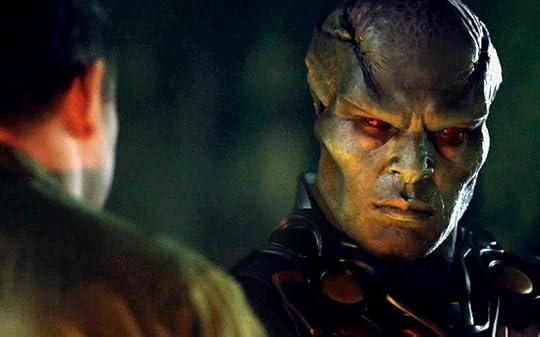
The first complaint I am happy to say is no longer a problem. With twenty episodes to fill, the pace has improved greatly. Kara Danvers can now take time to worry about dating, or be jealous of Lucy Lane, while other characters got story-lines and scenes that fleshed them out. Callista Flockhart as Cat Grant, who I found repulsive in the pilot, becomes this hard-edged, but worthy mentor. Hank Henshaw, who seemed superfluous and annoying, becomes an intriguing character as Martian Manhunter. All the peripheral characters such as Winn Schott Jr. and James Olson (along with future villains like Siobhan McDougal/Silver Banshee) all get time and purpose. This in turn gets rid of problem #2.
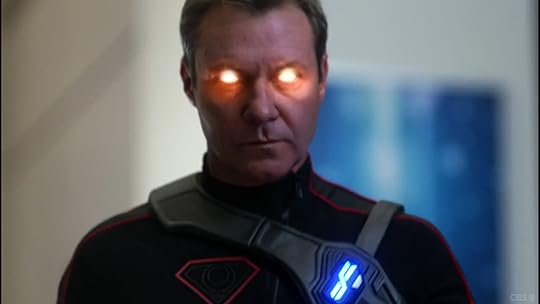 Problem #3 still persists. Non (played by Chris Vance), the husband of Kara's Aunt Astra, has about as much depth as Snidley Whiplash. His wife is killed by a kryptonite sword and he grinds his teeth and gets angry (but he always talks like that), but never really comes across as a grieving husband. Instead he hooks up with the Mystique-wannabe, Indigo (played by Laura Vandervoort) and leaves when he fails. He should have been a linchpin character who cast any ever-present pall of dread over Supergirl's life, but he comes off as tacky and boring. Let's hope next year they come up with a better big bad.
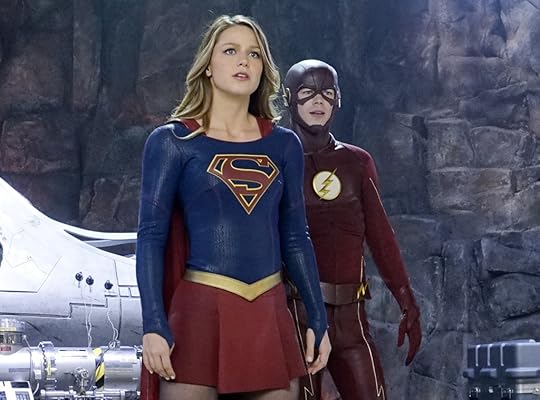
The last problem, the weekly villain or monster, is systemic and not only part of Supergirl's set-up, but any other superhero show, such as The Flash. (The "World's Finest" crossover episode featuring Grant Guston as Barry Allen was fun and a nice break from the main story line.) Even Joss Whedon's Buffy the Vampire Slayer had this problem, as do all episodic hero shows. Supergirl makes fun of this in episode 19 ("Myriad") when Max Lord says, “We’re way past ‘Villains of the Week’ and kittens stuck in trees.” This shows that writers are well-aware of the nature of the beast. So what do you do about it? Better writing. And we've seen that with Season One. "Red-Faced" (episode 6), where Kara has to deal with an invisible, intelligent robot and her anger issues, had some real pathos, though not quite enough logic for me. (Why would the Army spend billions on a prototype, then decide to destroy it on a whim? And who doesn't put a safety protocol into a billion dollar project?) The episode with the red kryptonite (episode 16) invented by Max Lord, Supergirl's Lex Luthor, that made Kara turn evil, also has Kara's sister Alex reveal that she killed her aunt. Some very good acting by Chyler Leigh and better writing showed that the series has soul.
 Other problems I never mentioned before include "teamism." All the superhero shows have teams. Arrow has Felicity Smoak and John Diggle, while the Flash has Cisco and Harrison Wells and Kaitlyn Snow. Supergirl has two teams! Her buddy team and the Department of Extranormal Operations (DEO). I understand that TV shows are filled with people talking to each other, and the teams allow this dialogue. But one of the things I loved about Netflix's Daredevil was that he didn't have a team. And if it gets to the point where DD is talking to Foggy Nelson on an ear piece while Karen Page works the monitor, then I give up, and will start watching reality TV (shudder). Again, I loved the movie, Unbreakable, because Bruce Willis' character was alone. It's limiting, but I love it.
So is the show cancelled? It appears not, just moving to the CW, where I think it will be quite at home. How do I feel about this? I'm glad and I will watch Supergirl next year. Partly because the show has embraced the old spirit of the Supergirl comics, which featured weekly complications ad nauseum from writers like Otto Binder and Mike Sekowsky. This is one side of her comics. Not all stories have to be galaxy-wide punch-fests (though some of these are good too). I want Supergirl to be something different from The Flash (which I still watch). I understand network superhero shows can't be as gritty as Jessica Jones, my second favorite after Daredevil, but perhaps on the CW Supergirl can survive long enough to find its way, and we can enjoy that Kryptonian universe Siegel and Shuster created 78 years ago.
GW Thomas has appeared in over 400 different books, magazines and ezines including The Writer, Writer's Digest, Black October Magazine and Contact. His website is gwthomas.org. He is editor of Dark Worlds magazine.
 (Warning: This piece contains big spoilers.) I have a few confessions to make first. I slammed the pilot of Supergirl pretty hard back in June of last year. I avoided the series like the plague while I had Daredevil to watch on TV and several superhero movies to look forward to like Deadpool, Batman v Superman and Captain America: Civil War. But eventually I ran out of excuses and had to sit down and watch the finished first season. I had heard it was cancelled and then not cancelled. I wasn't sure if I cared or not?
Let me recall what my gripes were with the pilot:
1. The pilot lacked pace. They threw everything at you so fast.
2. Because of this we didn't get to know the characters or care about them.
3. The villains were all cardboard.
4. Each week they'd throw another villain at Supergirl.
The first complaint I am happy to say is no longer a problem. With twenty episodes to fill, the pace has improved greatly. Kara Danvers can now take time to worry about dating, or be jealous of Lucy Lane, while other characters got story-lines and scenes that fleshed them out. Callista Flockhart as Cat Grant, who I found repulsive in the pilot, becomes this hard-edged, but worthy mentor. Hank Henshaw, who seemed superfluous and annoying, becomes an intriguing character as Martian Manhunter. All the peripheral characters such as Winn Schott Jr. and James Olson (along with future villains like Siobhan McDougal/Silver Banshee) all get time and purpose. This in turn gets rid of problem #2.
 Problem #3 still persists. Non (played by Chris Vance), the husband of Kara's Aunt Astra, has about as much depth as Snidley Whiplash. His wife is killed by a kryptonite sword and he grinds his teeth and gets angry (but he always talks like that), but never really comes across as a grieving husband. Instead he hooks up with the Mystique-wannabe, Indigo (played by Laura Vandervoort) and leaves when he fails. He should have been a linchpin character who cast any ever-present pall of dread over Supergirl's life, but he comes off as tacky and boring. Let's hope next year they come up with a better big bad.
The last problem, the weekly villain or monster, is systemic and not only part of Supergirl's set-up, but any other superhero show, such as The Flash. (The "World's Finest" crossover episode featuring Grant Guston as Barry Allen was fun and a nice break from the main story line.) Even Joss Whedon's Buffy the Vampire Slayer had this problem, as do all episodic hero shows. Supergirl makes fun of this in episode 19 ("Myriad") when Max Lord says, “We’re way past ‘Villains of the Week’ and kittens stuck in trees.” This shows that writers are well-aware of the nature of the beast. So what do you do about it? Better writing. And we've seen that with Season One. "Red-Faced" (episode 6), where Kara has to deal with an invisible, intelligent robot and her anger issues, had some real pathos, though not quite enough logic for me. (Why would the Army spend billions on a prototype, then decide to destroy it on a whim? And who doesn't put a safety protocol into a billion dollar project?) The episode with the red kryptonite (episode 16) invented by Max Lord, Supergirl's Lex Luthor, that made Kara turn evil, also has Kara's sister Alex reveal that she killed her aunt. Some very good acting by Chyler Leigh and better writing showed that the series has soul.
 Other problems I never mentioned before include "teamism." All the superhero shows have teams. Arrow has Felicity Smoak and John Diggle, while the Flash has Cisco and Harrison Wells and Kaitlyn Snow. Supergirl has two teams! Her buddy team and the Department of Extranormal Operations (DEO). I understand that TV shows are filled with people talking to each other, and the teams allow this dialogue. But one of the things I loved about Netflix's Daredevil was that he didn't have a team. And if it gets to the point where DD is talking to Foggy Nelson on an ear piece while Karen Page works the monitor, then I give up, and will start watching reality TV (shudder). Again, I loved the movie, Unbreakable, because Bruce Willis' character was alone. It's limiting, but I love it.
So is the show cancelled? It appears not, just moving to the CW, where I think it will be quite at home. How do I feel about this? I'm glad and I will watch Supergirl next year. Partly because the show has embraced the old spirit of the Supergirl comics, which featured weekly complications ad nauseum from writers like Otto Binder and Mike Sekowsky. This is one side of her comics. Not all stories have to be galaxy-wide punch-fests (though some of these are good too). I want Supergirl to be something different from The Flash (which I still watch). I understand network superhero shows can't be as gritty as Jessica Jones, my second favorite after Daredevil, but perhaps on the CW Supergirl can survive long enough to find its way, and we can enjoy that Kryptonian universe Siegel and Shuster created 78 years ago.
GW Thomas has appeared in over 400 different books, magazines and ezines including The Writer, Writer's Digest, Black October Magazine and Contact. His website is gwthomas.org. He is editor of Dark Worlds magazine.
May 23, 2016
The Year in Movies: 1928
Steamboat Bill, Jr. (1928)
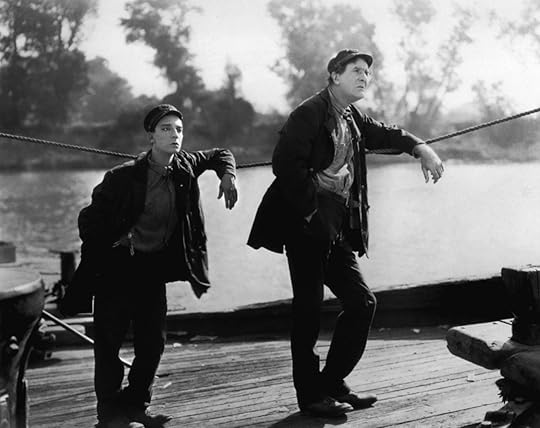
One of my favorite Buster Keaton films (Top Three with The Navigator and The General). The hat shopping bit is great and has a perfect payoff. I've also become a fan of Ernest Torrence, who plays Keaton's father. He and Keaton are perfect against each other, which reminds me of another great scene when Keaton tries to smuggle escape tools in a loaf of bread to his jailed dad. Also, Marion Byron is super cute as Keaton's girlfriend.
A Girl in Every Port (1928)
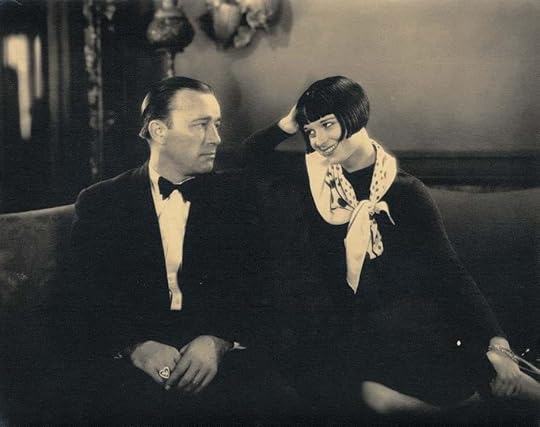
I was looking forward to seeing a Howard Hawks film starring Louise Brooks, but A Girl in Every Port is disappointing. It's the ultimate Bros Before Hos movie with a couple of womanizing bullies who fight and philander their way around the world. Brooks plays an equally awful woman who almost comes between them. I like that she's in the movie - and that so is Robert Armstrong, who went on to play Carl Denham in 1933's King Kong - but I wish that I liked either of their characters.
The Farmer's Wife (1928)
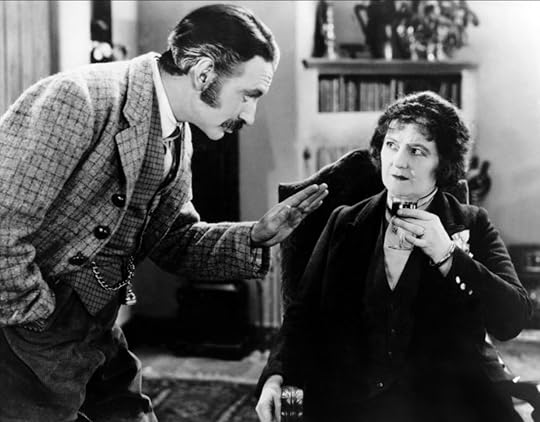
I blind-bought this a while ago because Early Hitchcock, knowing that it's not his usual genre, but curious anyway. Realizing that I remembered almost nothing about it, I watched it again and was reminded why it hasn't stuck with me.
The farmer of the title is a stupid, arrogant man who decides that enough time has passed since the death of his wife that he should remarry. He's not in love with anyone; it's just time. So he goes about it methodically, making a list of prospects and then proposing to them one by one. He rightly observes that none of these prospects have other prospects of their own, but the conclusion he draws from that is that any of them should realize how lucky they are to receive his proposal. Which he pretty much tells them as he's proposing. To his shock, they all turn him down. They give various reasons, but the fact that he's an ass is an unspoken one. His confidence begins to dwindle, rejection by rejection.
All the while, there's a wonderful woman in his household whom he doesn't consider even though her perfection is loudly obvious to the viewer. What's going to happen next is predictable every step of the way, except for two things.
One is that the film occasionally meanders from its plot to share cute sequences with some of the other characters, whether it's the farmer's servants or one of his prospects. These are generally enjoyable, but they did have me looking at the time to see how long the movie was spending on them.
The other surprise is better though, and that's how sweet the conclusion actually is. What happens may be telegraphed like crazy, but once the movie gets there, I'm genuinely happy to see the couple realize their feelings for each other. That has a lot to do with Lillian Hall-Davis' lovable performance as Minta - I wanted so much for her to be happy - but also something to do with the farmer's finding enough humility that he's no longer insufferable. In real life, I'm sure he goes back to being a jerk once he regains his self-respect, but in the final moments of the movie, I'm rooting for the new couple.
Easy Virtue (1928)
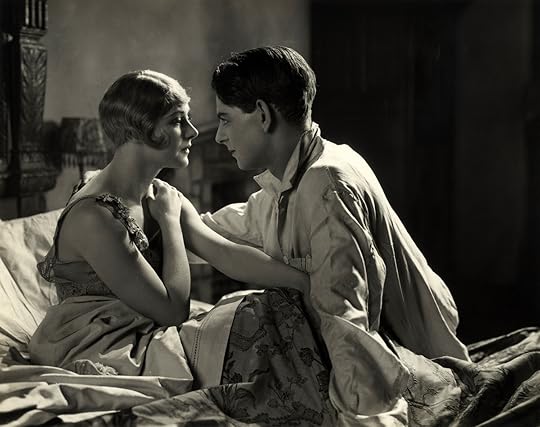
Another early Hitchcock outside the genre he became so well known for. Easy Virtue is an effective, but depressing story about the power of gossip, speculation, and the court of public opinion. Those things all make me cranky enough that I can't say that I enjoyed the film, but it's as relevant as ever and of course wonderfully directed.
The Man Who Laughs (1928)
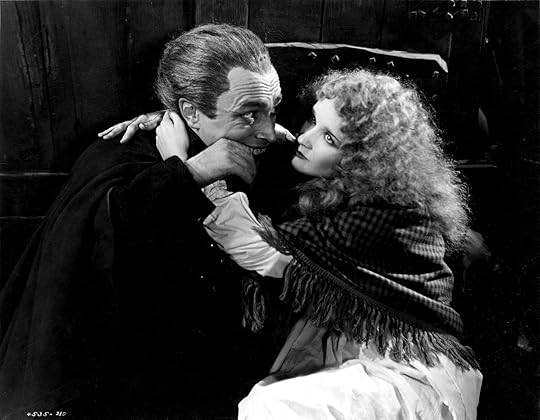
Conrad Veidt's disturbing grin in The Man Who Laughs was the visual inspiration for The Joker, so that - plus liking Veidt in The Cabinet of Dr. Caligari and Casablanca - is what drew me to watch it. Then I was reminded that Mary Philbin (The Phantom of the Opera) is in it and that it's based on a Victor Hugo story and I was even more excited.
It's an amazing film that uses horror-movie tricks to tell a story that isn't horror at all. It combines elements of the German Expressionism in Caligari and Nosferatu with the lavish productions of movies like Phantom and The Hunchback of Notre Dame. The tone of the movie is similar to Hunchback (also based on a Hugo novel, of course), which isn't a horror movie either, but I think of it as one thanks to Lon Chaney's awesome makeup. Same goes with The Man Who Laughs and Veidt's smile.
Like Hunchback, it's the story of a disfigured man who loves a beautiful woman. Unlike Quasimodo though, Veidt's Gwynplaine has a hope that his love may be returned. In fact, blind Dea (Philbin) openly loves him; he just has a hard time accepting it. On top of the romance are layered political complications since some powerful people have figured out that Gwynplaine is unknowingly the son of a nobleman. Brandon Hurst is delightfully sinister as a Machiavellian opportunist who uses his knowledge of Gwynplaine to win favor from the Queen, and Olga Baclanova is crazy seductive as the noblewoman who now possesses Gwynplaine's estate.
It's a captivating story with characters I loved. Another for the list of silent films that make great introductions to the format for someone who hasn't given them a try.
Beggars of Life (1928)
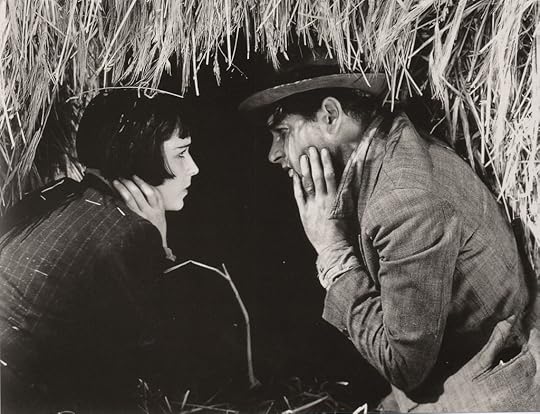
I watched a murky, pixelated version of this on YouTube, but still enjoyed it. I love rooting for Louise Brooks' characters, which is something that I can't always do. Beggars is exciting, sad, scary, and heart-warming. Heavier on the sad than I like, but worthwhile.

One of my favorite Buster Keaton films (Top Three with The Navigator and The General). The hat shopping bit is great and has a perfect payoff. I've also become a fan of Ernest Torrence, who plays Keaton's father. He and Keaton are perfect against each other, which reminds me of another great scene when Keaton tries to smuggle escape tools in a loaf of bread to his jailed dad. Also, Marion Byron is super cute as Keaton's girlfriend.
A Girl in Every Port (1928)

I was looking forward to seeing a Howard Hawks film starring Louise Brooks, but A Girl in Every Port is disappointing. It's the ultimate Bros Before Hos movie with a couple of womanizing bullies who fight and philander their way around the world. Brooks plays an equally awful woman who almost comes between them. I like that she's in the movie - and that so is Robert Armstrong, who went on to play Carl Denham in 1933's King Kong - but I wish that I liked either of their characters.
The Farmer's Wife (1928)

I blind-bought this a while ago because Early Hitchcock, knowing that it's not his usual genre, but curious anyway. Realizing that I remembered almost nothing about it, I watched it again and was reminded why it hasn't stuck with me.
The farmer of the title is a stupid, arrogant man who decides that enough time has passed since the death of his wife that he should remarry. He's not in love with anyone; it's just time. So he goes about it methodically, making a list of prospects and then proposing to them one by one. He rightly observes that none of these prospects have other prospects of their own, but the conclusion he draws from that is that any of them should realize how lucky they are to receive his proposal. Which he pretty much tells them as he's proposing. To his shock, they all turn him down. They give various reasons, but the fact that he's an ass is an unspoken one. His confidence begins to dwindle, rejection by rejection.
All the while, there's a wonderful woman in his household whom he doesn't consider even though her perfection is loudly obvious to the viewer. What's going to happen next is predictable every step of the way, except for two things.
One is that the film occasionally meanders from its plot to share cute sequences with some of the other characters, whether it's the farmer's servants or one of his prospects. These are generally enjoyable, but they did have me looking at the time to see how long the movie was spending on them.
The other surprise is better though, and that's how sweet the conclusion actually is. What happens may be telegraphed like crazy, but once the movie gets there, I'm genuinely happy to see the couple realize their feelings for each other. That has a lot to do with Lillian Hall-Davis' lovable performance as Minta - I wanted so much for her to be happy - but also something to do with the farmer's finding enough humility that he's no longer insufferable. In real life, I'm sure he goes back to being a jerk once he regains his self-respect, but in the final moments of the movie, I'm rooting for the new couple.
Easy Virtue (1928)

Another early Hitchcock outside the genre he became so well known for. Easy Virtue is an effective, but depressing story about the power of gossip, speculation, and the court of public opinion. Those things all make me cranky enough that I can't say that I enjoyed the film, but it's as relevant as ever and of course wonderfully directed.
The Man Who Laughs (1928)

Conrad Veidt's disturbing grin in The Man Who Laughs was the visual inspiration for The Joker, so that - plus liking Veidt in The Cabinet of Dr. Caligari and Casablanca - is what drew me to watch it. Then I was reminded that Mary Philbin (The Phantom of the Opera) is in it and that it's based on a Victor Hugo story and I was even more excited.
It's an amazing film that uses horror-movie tricks to tell a story that isn't horror at all. It combines elements of the German Expressionism in Caligari and Nosferatu with the lavish productions of movies like Phantom and The Hunchback of Notre Dame. The tone of the movie is similar to Hunchback (also based on a Hugo novel, of course), which isn't a horror movie either, but I think of it as one thanks to Lon Chaney's awesome makeup. Same goes with The Man Who Laughs and Veidt's smile.
Like Hunchback, it's the story of a disfigured man who loves a beautiful woman. Unlike Quasimodo though, Veidt's Gwynplaine has a hope that his love may be returned. In fact, blind Dea (Philbin) openly loves him; he just has a hard time accepting it. On top of the romance are layered political complications since some powerful people have figured out that Gwynplaine is unknowingly the son of a nobleman. Brandon Hurst is delightfully sinister as a Machiavellian opportunist who uses his knowledge of Gwynplaine to win favor from the Queen, and Olga Baclanova is crazy seductive as the noblewoman who now possesses Gwynplaine's estate.
It's a captivating story with characters I loved. Another for the list of silent films that make great introductions to the format for someone who hasn't given them a try.
Beggars of Life (1928)

I watched a murky, pixelated version of this on YouTube, but still enjoyed it. I love rooting for Louise Brooks' characters, which is something that I can't always do. Beggars is exciting, sad, scary, and heart-warming. Heavier on the sad than I like, but worthwhile.
May 20, 2016
British History in Film | The Black Rose (1950)

I couldn't find any movies about King John's son, Henry III, so I skipped ahead to his grandson, Edward. He was a tall dude for his time, so he's best known by his nickname, Edward Longshanks. The Black Rose doesn't focus on him, but he does play an important role in the story.
The movie plays up the Norman-Saxon conflict in a way that's probably not historically accurate. Someone correct me if I'm wrong, but my understanding is that the dust had settled on that long before Edward's time. I wouldn't be surprised to learn that there were lingering feelings of resentment among some folks, but The Black Rose has it as an official system of oppression with the Saxons ready to rebel against their Norman overlords.
The main character is Tyrone Power's Walter of Gurnie, the bastard son of a deceased Saxon who was married to a Norman woman. There's a lot of stuff early in the movie that's meant to show how unfair the system is to poor Walter, but that's all prologue to the real adventure in which Walter and his friend Tristam get fed up and leave England to seek their fortunes in China. There they meet a Mongol warlord played by Orson Welles and get involved in a plot to rescue a young woman (nicknamed The Black Rose) from a harem under the warlord's protection.
The movie is overly long, but the big problem with it is that I don't like Walter. With all that oppression being heaped on him, it shouldn't be hard to make him sympathetic, but he comes off as entitled and a baby about the whole thing. Tristam is pretty great though. He's an archer of Robin Hood-like skill who accompanies Walter more out of love for his friend than for any personal grudge against England. I also really like Welles' crafty warlord who has a great balance of ruthlessness and amiability.
One of the ways that Walter is oppressed in the early part of the story is that his father's will put Walter into the service of the Norman King Edward (played by Michael Rennie from The Day the Earth Stood Still). The Black Rose's Edward is a reasonable fellow who's primary goal is to unite his kingdom. In the movie that means putting a stop to oppression and trying to resolve the whole Norman-Saxon feud, so he ultimately rewards Walter for his adventures and comes off as a really nice guy.
Next week though, we'll look at a very different interpretation of Edward Longshanks, who's still concerned about uniting the kingdom, but in a much less benevolent way.

May 18, 2016
Bomba the Jungle Boy: A Swinging Scene [Guest Post]
By GW Thomas
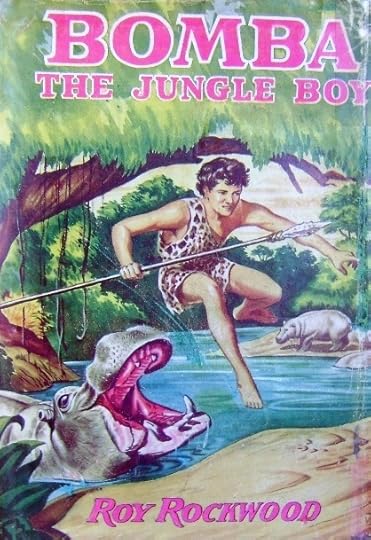 Bomba the Jungle Boy was created in 1926 by the Stratemeyer Syndicate, the organization that produced all those Hardy Boys and Nancy Drew novels by the truck load. The twenty Bomba novels were largely written by John William Duffield and included titles like Bomba and the Moving Mountain, The Abandoned City, The Swamp of Death, etc.. It was only a matter of thirteen years before the books became a movie serial starring Johnny Sheffield, now a grown Boy, looking for a new jungle to play in. Sheffield made a dozen Bomba serials from 1949 to 1955. The serials were cut into a popular TV show in 1962 called Zim Bomba. (Kurt Russell would play a parody of Bomba in an episode of Gilligan's Island, "Gilligan Meets Jungle Boy," February 6, 1965.)
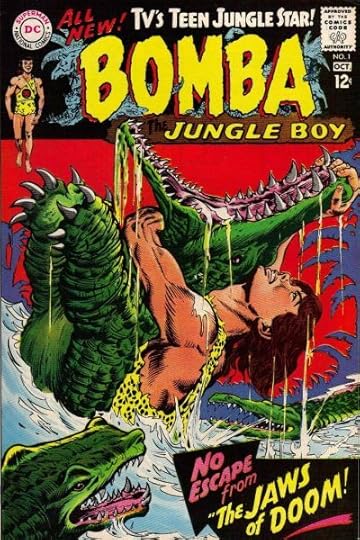
In 1967, with the Zim Bomba episodes endlessly in repeat through syndication, DC decided it was time to do a Bomba comic. (There were seven issues from September-October 1967 to September-October 1968.) They would have preferred Tarzan, but Western had a long-running franchise with the Burroughs property. So if no Lord Greystoke, then his most famous clone. And to make sure the kiddies got that it was based on the TV show the title bore in big letters "All-New! TV's Teen Jungle Star!" (Many readers were not TV fans, as the letter columns showed, and the title was dropped with Issue #3. One letter writer, John Stewart II of San Antonio, Texas was familiar and made this comparison: "On TV, he has a knife, and sometimes a spear or bow-and-arrows. The television star doesn't have a pet spider monkey, parrot, jaguar, ostrich or any giant bird. All he has is a pet chimpanzee and, once in a while, an elephant or two." The comic version of Bomba was more fantastic, and fans such as Stewart liked that.
To get the series started, DC editor George Kashden set Otto Binder (science fiction writer and old pro from the Superman comics) to write the first issue. After this premiere, Kashden would write the comic himself until Issue #5, when Denny O'Neil would script the last two. The first issue had a single page text piece called "The Amazon Jungle," meant to familiarize those who thought the comic took place in Africa. The piece may have been written by Otto Binder, but George Kashden seems more likely. Either way, it's a dull one, obviously cobbled from an encyclopedia.
 The story in this first issue sets the pattern with a three-part tale, similar to the old serials. A group of archaeologists come to the jungle to look for the ancient Incan temple of Xamza, but they are attacked by Jojasta and his marauders. The bad guys kidnap Dr. Jasper Craine, then ambush Bomba, forcing him to make a dangerous detour. His animal friends, the jaguar, the condor, and the emu help him to escape, then to find Dr Craine and Jojasta at the temple with the treasure. To Bomba's surprise, Craine isn't really in danger, but Jojasta's partner. The evil witch doctor uses the Mask of Xamzu to destroy Craine's pistol, exposing his double-cross. Fortunately for Bomba, his pet monkey Doto and parrot Tiki save the day.
The response in the second issue's letter column is revealing. The readers suggest in two cases that Bomba should have super-powers and join the Teen Titans. Kashden largely poo-poos this, reminding the readers that this is a jungle comic and it should remain true to that formula. Later letter columns would only contain letters in support of traditional jungle characters. While I agree with Kashden personally, it does show that some readers wanted something more modern and it should be no surprise that the comic only went to seven issues.
The artwork in the first two issues was done by Leo Summers, an artist who got his start in the pulps and would later do work for James Warren's Creepy. His work on Bomba is adequate, but nothing to grab fans by the throat. (Unlike Carmine Infantino's cover for Issue 1!) Jungle comics had a long tradition before 1967. The jungle style created by Will Eisner for Sheena, Queen of the Jungle had been copied by virtually every jungle lord or lady after 1938. Summers doesn't try to emulate this out-of-date look. It is closer to what Western was doing in Tarzan and Korak, Son of Tarzan. Jack Sparling would take over with the third issue and not really improve on Summers.
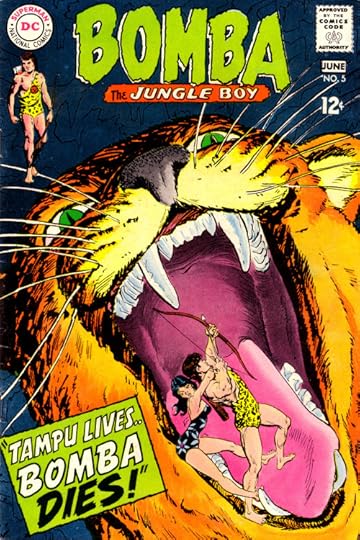 Issues #3-5 featured a mix of traditional Tarzan plots with "The Deadly Sting of Ana Conda" having more tribesmen after gold, but two more experimental stories featured animated tree-men in "My Enemy...My Jungle" and a robot idol in "Tampu Lives... Bomba Dies." Tina, the local girl who wears a flower-print dress, is featured in these three issues. A love interest for Bomba, she morphs from simple native girl into a hip teen saying, "Maybe you ought to try a folk rock beat, Bomba! You know how mod these animals are nowadays!" Not surprisingly, the response for Tina was poor and she had to go.
Along with the character, editor and writer George Kashden also went. In the editor's chair, Dick Giordano took over. In writing, Denny O'Neil brought a new feel to the comic. Issue Six relates the history of a new villain, Krag, a baddie from out of the past. O'Neil writes the entire issue without dialogue balloons, making Sparling's art feel different. This experiment was not repeated in Issue Seven, when the dialogue balloons returned. To defeat Krag, Bomba has to go to the city and wear a suit. This last issue ends with him running towards his beloved jungle, stripping off his civilized dubs. Bomba was cancelled after Issue Seven. The changes by Giordano and O'Neil came too late and didn't really offer anything better. The feel was more modern, but somehow less jungle.
In 1973, DC would finally get their chance to do Tarzan right, with Joe Kubert scripting and drawing the comic. Though a commercial failure, Kubert's Tarzan was a high water mark in Burroughs-related comics. Bomba would be back as a back-up feature to the ape-man, with old artwork from the Bomba comics reworked as "Simba" for copyright reasons. DC retained the rights to their artwork but not the name. Looking for cheap filler, they did not want to pay to use Bomba's name again. And so Bomba faded from the world of comics, under an alias.
GW Thomas has appeared in over 400 different books, magazines and ezines including The Writer, Writer's Digest, Black October Magazine and Contact. His website is gwthomas.org. He is editor of Dark Worlds magazine.
 Bomba the Jungle Boy was created in 1926 by the Stratemeyer Syndicate, the organization that produced all those Hardy Boys and Nancy Drew novels by the truck load. The twenty Bomba novels were largely written by John William Duffield and included titles like Bomba and the Moving Mountain, The Abandoned City, The Swamp of Death, etc.. It was only a matter of thirteen years before the books became a movie serial starring Johnny Sheffield, now a grown Boy, looking for a new jungle to play in. Sheffield made a dozen Bomba serials from 1949 to 1955. The serials were cut into a popular TV show in 1962 called Zim Bomba. (Kurt Russell would play a parody of Bomba in an episode of Gilligan's Island, "Gilligan Meets Jungle Boy," February 6, 1965.)
In 1967, with the Zim Bomba episodes endlessly in repeat through syndication, DC decided it was time to do a Bomba comic. (There were seven issues from September-October 1967 to September-October 1968.) They would have preferred Tarzan, but Western had a long-running franchise with the Burroughs property. So if no Lord Greystoke, then his most famous clone. And to make sure the kiddies got that it was based on the TV show the title bore in big letters "All-New! TV's Teen Jungle Star!" (Many readers were not TV fans, as the letter columns showed, and the title was dropped with Issue #3. One letter writer, John Stewart II of San Antonio, Texas was familiar and made this comparison: "On TV, he has a knife, and sometimes a spear or bow-and-arrows. The television star doesn't have a pet spider monkey, parrot, jaguar, ostrich or any giant bird. All he has is a pet chimpanzee and, once in a while, an elephant or two." The comic version of Bomba was more fantastic, and fans such as Stewart liked that.
To get the series started, DC editor George Kashden set Otto Binder (science fiction writer and old pro from the Superman comics) to write the first issue. After this premiere, Kashden would write the comic himself until Issue #5, when Denny O'Neil would script the last two. The first issue had a single page text piece called "The Amazon Jungle," meant to familiarize those who thought the comic took place in Africa. The piece may have been written by Otto Binder, but George Kashden seems more likely. Either way, it's a dull one, obviously cobbled from an encyclopedia.
 The story in this first issue sets the pattern with a three-part tale, similar to the old serials. A group of archaeologists come to the jungle to look for the ancient Incan temple of Xamza, but they are attacked by Jojasta and his marauders. The bad guys kidnap Dr. Jasper Craine, then ambush Bomba, forcing him to make a dangerous detour. His animal friends, the jaguar, the condor, and the emu help him to escape, then to find Dr Craine and Jojasta at the temple with the treasure. To Bomba's surprise, Craine isn't really in danger, but Jojasta's partner. The evil witch doctor uses the Mask of Xamzu to destroy Craine's pistol, exposing his double-cross. Fortunately for Bomba, his pet monkey Doto and parrot Tiki save the day.
The response in the second issue's letter column is revealing. The readers suggest in two cases that Bomba should have super-powers and join the Teen Titans. Kashden largely poo-poos this, reminding the readers that this is a jungle comic and it should remain true to that formula. Later letter columns would only contain letters in support of traditional jungle characters. While I agree with Kashden personally, it does show that some readers wanted something more modern and it should be no surprise that the comic only went to seven issues.
The artwork in the first two issues was done by Leo Summers, an artist who got his start in the pulps and would later do work for James Warren's Creepy. His work on Bomba is adequate, but nothing to grab fans by the throat. (Unlike Carmine Infantino's cover for Issue 1!) Jungle comics had a long tradition before 1967. The jungle style created by Will Eisner for Sheena, Queen of the Jungle had been copied by virtually every jungle lord or lady after 1938. Summers doesn't try to emulate this out-of-date look. It is closer to what Western was doing in Tarzan and Korak, Son of Tarzan. Jack Sparling would take over with the third issue and not really improve on Summers.
 Issues #3-5 featured a mix of traditional Tarzan plots with "The Deadly Sting of Ana Conda" having more tribesmen after gold, but two more experimental stories featured animated tree-men in "My Enemy...My Jungle" and a robot idol in "Tampu Lives... Bomba Dies." Tina, the local girl who wears a flower-print dress, is featured in these three issues. A love interest for Bomba, she morphs from simple native girl into a hip teen saying, "Maybe you ought to try a folk rock beat, Bomba! You know how mod these animals are nowadays!" Not surprisingly, the response for Tina was poor and she had to go.
Along with the character, editor and writer George Kashden also went. In the editor's chair, Dick Giordano took over. In writing, Denny O'Neil brought a new feel to the comic. Issue Six relates the history of a new villain, Krag, a baddie from out of the past. O'Neil writes the entire issue without dialogue balloons, making Sparling's art feel different. This experiment was not repeated in Issue Seven, when the dialogue balloons returned. To defeat Krag, Bomba has to go to the city and wear a suit. This last issue ends with him running towards his beloved jungle, stripping off his civilized dubs. Bomba was cancelled after Issue Seven. The changes by Giordano and O'Neil came too late and didn't really offer anything better. The feel was more modern, but somehow less jungle.
In 1973, DC would finally get their chance to do Tarzan right, with Joe Kubert scripting and drawing the comic. Though a commercial failure, Kubert's Tarzan was a high water mark in Burroughs-related comics. Bomba would be back as a back-up feature to the ape-man, with old artwork from the Bomba comics reworked as "Simba" for copyright reasons. DC retained the rights to their artwork but not the name. Looking for cheap filler, they did not want to pay to use Bomba's name again. And so Bomba faded from the world of comics, under an alias.
GW Thomas has appeared in over 400 different books, magazines and ezines including The Writer, Writer's Digest, Black October Magazine and Contact. His website is gwthomas.org. He is editor of Dark Worlds magazine.
May 16, 2016
The Year in Movies: 1927
The King of Kings (1927)
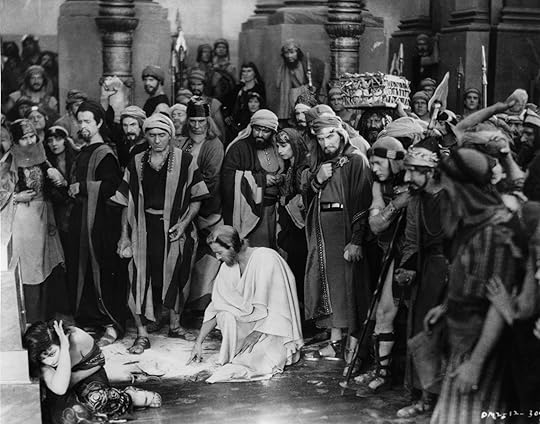
After the heavy-handedness of Cecil B DeMille's original Ten Commandments, I was nervous about how he'd portray Jesus' story in King of Kings. And I was right to have some of those fears. HB Warner's Jesus tends to be over-serious and often sounds like he's quoting himself instead of having conversations. And I hated the way the film portrays Mary Magdalene's conversion as a miraculous act that's possibly even against her will. (It's really well done from a technical standpoint; I just hate the theological implications.)
But the movie does great things with Magdalene and by the end of the movie I had no doubt that at some point she'd made her own decision to follow Jesus. And there are some great, human moments for him, too, especially in his interactions with kids and the woman caught in adultery.
And of course DeMille knows how to create a spectacular set, so every scene in the movie looks like an elaborate Renaissance painting. It's a gorgeous film to watch.
Metropolis (1927)
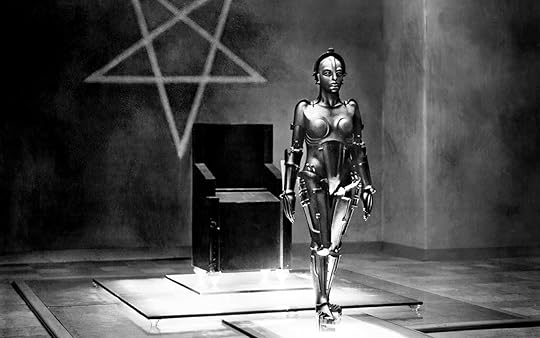
If you asked me a month ago if I'd seen Metropolis, I would've told you, "Yes," but that's almost not true. I have a crappy, murky, horribly framed print of the heavily trimmed down version, so that's what I've seen a few times. Recently though, I watched the restored version with all the extra footage. It looks great and improves the story significantly. The edited version I'm used to retains the plot, but cuts out a lot of character stuff. This time, I cared more for the characters than I usually do.
But I still have many of my usual problems. I love the theme about the relationship between heart, head, and hands, but the movie is so eager to get that point across that it makes some dire mistakes. It's super didactic, for one thing, but that's not as bad as the way its characters act. People do the craziest things, not because it makes sense to the story, but because they have to in order to make the analogy work. Drives me crazy.
But I do like the characters and the world and the concepts and above all else the look of the film. It's visually astonishing and needs to be seen if for no other reason than that.
The Lodger: A Story of the London Fog (1927)
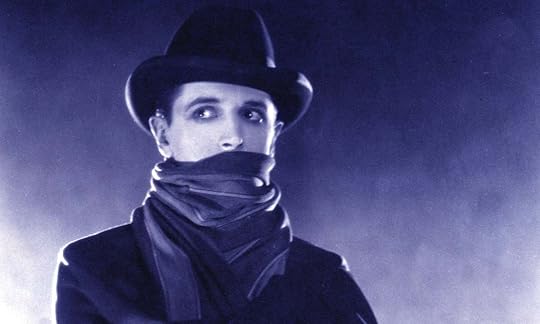
There have been many versions, but this is my favorite. No surprise, since it's Hitchcock, but for reasons that I can't go into without spoilers, I also love this story best. The others add their own plot twists, but end up diluting an an almost perfect story.
It (1927)
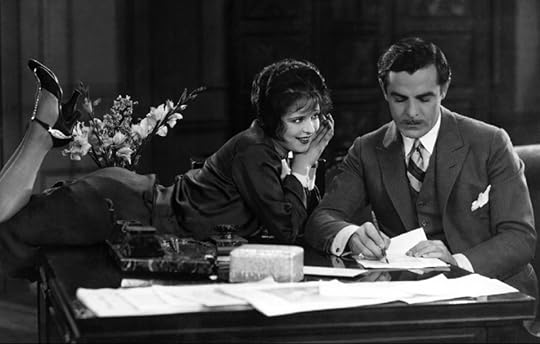
There's a contrived misunderstanding in order to drive a wedge between the romantic leads, but it's no worse than the plots of most modern romantic comedies. And few of those have leads as likable as Clara Bow and Antonio Moreno. Or goofy best friends as adorable as William Austin. It's easy to see why It is such a classic.
Tarzan and the Golden Lion (1927)
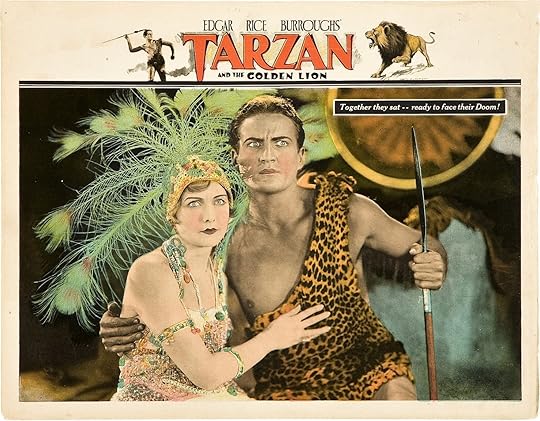
For some reason, Tarzan has a sister and a best friend who are in love with each other. Jane is in the movie, but she doesn't do anything. Sis gets all the plot (that's her in the poster above). Also, Boris Karloff plays an African warrior.
So the movie makes some weird choices, but James Pierce is a great Tarzan. He's not wearing a goofy wig, for one thing, nor does he occasionally stop to pound his chest like Elmo Lincoln and Frank Merrill would do. He's just a straightforward, clean-cut hero who happens to wear leopard skins. And he looks really cool hanging out with his pet lion. It's a minor Tarzan film, but a memorable one.
The Unknown (1927)
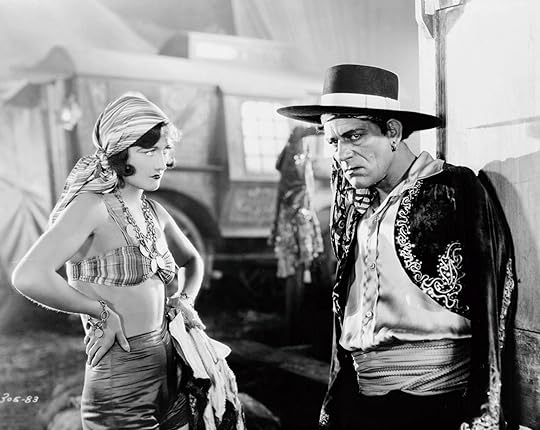
The plot is essentially an EC Comics horror story fleshed out to full length, but that's not a complaint. Once I figured out that's what it was, it let me predict the broad strokes of the outcome, but I love chilling tales of comeuppance for evil people, so I didn't enjoy it any less.
The bigger challenge was getting past Nanon's (Joan Crawford) goofy chirophobia. It's not goofy because it's irrational, but because it's so easily dropped when the plot needs it to be.
Still, the movie has a lot of style and the effects used to make Lon Chaney appear armless (like integrating the feet of an actual armless man to make it look like Chaney's manipulating objects with his toes) are seamless and amazing.
College (1927)
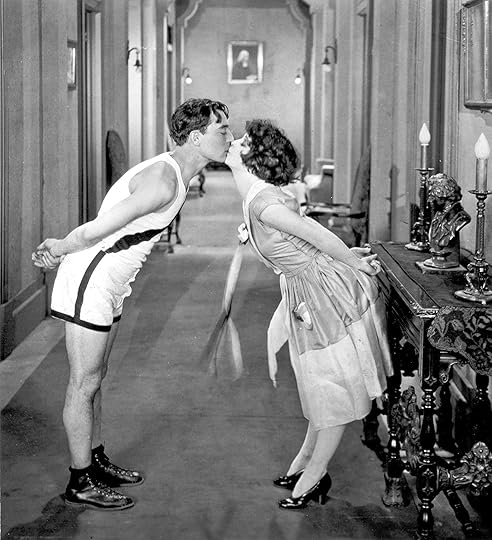
Buster Keaton's version of a sports movie. It's neither my favorite Keaton film nor my favorite sports movie, but I still cheered at the end and had a great time throughout.
London After Midnight (1927)
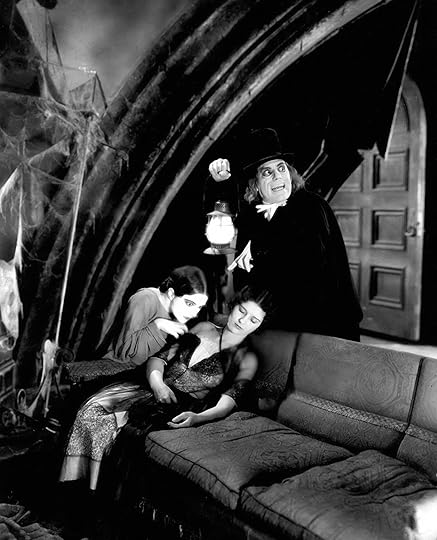
I watched the reconstruction with stills and it made me mourn the loss of the real version. It's a very cool story that I'd rather not spoil and the sharp-toothed stranger has a fantastic, iconic look. It deserves a better remake than 1935's Mark of the Vampire (which is enjoyable on its own terms, but not a good version of London After Midnight).

After the heavy-handedness of Cecil B DeMille's original Ten Commandments, I was nervous about how he'd portray Jesus' story in King of Kings. And I was right to have some of those fears. HB Warner's Jesus tends to be over-serious and often sounds like he's quoting himself instead of having conversations. And I hated the way the film portrays Mary Magdalene's conversion as a miraculous act that's possibly even against her will. (It's really well done from a technical standpoint; I just hate the theological implications.)
But the movie does great things with Magdalene and by the end of the movie I had no doubt that at some point she'd made her own decision to follow Jesus. And there are some great, human moments for him, too, especially in his interactions with kids and the woman caught in adultery.
And of course DeMille knows how to create a spectacular set, so every scene in the movie looks like an elaborate Renaissance painting. It's a gorgeous film to watch.
Metropolis (1927)

If you asked me a month ago if I'd seen Metropolis, I would've told you, "Yes," but that's almost not true. I have a crappy, murky, horribly framed print of the heavily trimmed down version, so that's what I've seen a few times. Recently though, I watched the restored version with all the extra footage. It looks great and improves the story significantly. The edited version I'm used to retains the plot, but cuts out a lot of character stuff. This time, I cared more for the characters than I usually do.
But I still have many of my usual problems. I love the theme about the relationship between heart, head, and hands, but the movie is so eager to get that point across that it makes some dire mistakes. It's super didactic, for one thing, but that's not as bad as the way its characters act. People do the craziest things, not because it makes sense to the story, but because they have to in order to make the analogy work. Drives me crazy.
But I do like the characters and the world and the concepts and above all else the look of the film. It's visually astonishing and needs to be seen if for no other reason than that.
The Lodger: A Story of the London Fog (1927)

There have been many versions, but this is my favorite. No surprise, since it's Hitchcock, but for reasons that I can't go into without spoilers, I also love this story best. The others add their own plot twists, but end up diluting an an almost perfect story.
It (1927)

There's a contrived misunderstanding in order to drive a wedge between the romantic leads, but it's no worse than the plots of most modern romantic comedies. And few of those have leads as likable as Clara Bow and Antonio Moreno. Or goofy best friends as adorable as William Austin. It's easy to see why It is such a classic.
Tarzan and the Golden Lion (1927)

For some reason, Tarzan has a sister and a best friend who are in love with each other. Jane is in the movie, but she doesn't do anything. Sis gets all the plot (that's her in the poster above). Also, Boris Karloff plays an African warrior.
So the movie makes some weird choices, but James Pierce is a great Tarzan. He's not wearing a goofy wig, for one thing, nor does he occasionally stop to pound his chest like Elmo Lincoln and Frank Merrill would do. He's just a straightforward, clean-cut hero who happens to wear leopard skins. And he looks really cool hanging out with his pet lion. It's a minor Tarzan film, but a memorable one.
The Unknown (1927)

The plot is essentially an EC Comics horror story fleshed out to full length, but that's not a complaint. Once I figured out that's what it was, it let me predict the broad strokes of the outcome, but I love chilling tales of comeuppance for evil people, so I didn't enjoy it any less.
The bigger challenge was getting past Nanon's (Joan Crawford) goofy chirophobia. It's not goofy because it's irrational, but because it's so easily dropped when the plot needs it to be.
Still, the movie has a lot of style and the effects used to make Lon Chaney appear armless (like integrating the feet of an actual armless man to make it look like Chaney's manipulating objects with his toes) are seamless and amazing.
College (1927)

Buster Keaton's version of a sports movie. It's neither my favorite Keaton film nor my favorite sports movie, but I still cheered at the end and had a great time throughout.
London After Midnight (1927)

I watched the reconstruction with stills and it made me mourn the loss of the real version. It's a very cool story that I'd rather not spoil and the sharp-toothed stranger has a fantastic, iconic look. It deserves a better remake than 1935's Mark of the Vampire (which is enjoyable on its own terms, but not a good version of London After Midnight).
May 14, 2016
Come see me at MSP Comicon!

I'm super late with this post, but if you live not too far away from Minneapolis/Saint Paul, I hope you've already made plans to come to MSP Comicon this weekend. And while you're there, I hope you'll look me up! I'll have a table with Kill All Monsters comics, but also some nifty Starmageddon "May the Force Live Long and Prosper With You" stickers.
And speaking of Starmageddon, this morning at 10:30 I'm hosting a panel called Star Trek and Star Wars: Why Can't We Be Friends?. We've got a great group of comics creators who are also Star Trek and/or Star Wars fans (a couple of whom have worked on honest-to-Spock official Star Trek comics). We'll be celebrating Star Trek's 50th anniversary by sharing our favorite memories from the show and hopes for the future of the series. And we'll be talking plenty of Star Wars, too, debriefing over The Force Awakens and looking forward to Rogue One. And then we'll wrap up with a discussion of the differences and similarities between both series.
It'll be audience participatory, too. We want to hear from anyone who wants to share!
See you at the show!