
Rick Warren's Blog, page 182
December 3, 2022
You Need God’s Promises, Not Explanations

“Even when [Abraham] reached the land God promised him, he lived there by faith—for he was like a foreigner, living in tents.”
Hebrews 11:9 (NLT)
In the Bible, God made more than 7,000 promises to you—but he has not guaranteed that he’ll fulfill every one of them instantly.
As a follower of Christ, you can expect that God sometimes will test your faith. And one of those tests comes when God’s promises are delayed. I call it the “When Test.”
You know you’re facing the When Test when you’re asking, “When, Lord? When are you going to answer my prayer? When are things going to change in my marriage? When am I going to get well? When am I going to graduate? When am I going to have a baby? When am I going to get that promotion?”
We looked yesterday at how Abraham faced the Where Test. But he also got hit with the When Test: “Even when he reached the land God promised him, he lived there by faith—for he was like a foreigner, living in tents” (Hebrews 11:9 NLT).
Abraham followed God in faith to a place he didn’t know. But once he got there, he couldn’t even settle down.
For three generations, Abraham and his family were basically nomads. Even though God had promised to give Israel to Abraham, he was going to do it on his own timetable. But Abraham continued to obey because he was confident in God’s promise to him.
God has all of eternity to fulfill his promises. That means that some of his promises are not even going to be fulfilled in your lifetime. They’re going to be fulfilled after your earthly life is over.
That’s why God wants you to build your life on his promises, not his explanations. In fact, God doesn’t owe you an explanation for anything in your life. God is God, and you are not. He wants you to trust his promises, not wait for his explanations.
Abraham received a big promise from God: God was going to make him into a whole nation! But after Abraham arrived in Israel and was still living like a nomad, I imagine he was constantly asking God, “When, Lord? You gave me this promise. When are you going to fulfill it? Is it time yet?” Abraham’s family lived in tents for three generations, and he was a stranger in his own country.
You may be in a When Test right now. You’ve been waiting for an answer, and it seems like there’s no end in sight. You’re asking, “When, Lord? When are you going to take care of this problem? My relationship? My finances? My health? My future?”
Faith means that you wait for God’s timing, without knowing when.
Are you in a time of waiting? Don’t waste the waiting. Show God that you trust him as you learn and cling to his promises. As you do this, God will grow your character and faith.
PLAY today’s audio teaching from Pastor Rick >>Talk It Over
How can you know what God’s promises are?
Do you trust God, even if he doesn’t fulfill some of his promises in this lifetime? Why or why not?
In what ways is God teaching you patience as you wait on him?
God’s greatest promise to you
The Bible says, “For God loved the world in this way: He gave his one and only Son, so that everyone who believes in him will not perish but have eternal life” (John 3:16 CSB).
Will you trust God today to fulfill his promise? Pray this simple prayer: "Dear God, I believe Jesus Christ is your Son. I confess I have sinned, and I ask for your forgiveness. I believe Jesus died to take away my sins and that you raised him to life. I want to trust Jesus as my Savior and follow him as Lord, from this day forward. Guide my life and help me to do your will. In Jesus’ name I pray. Amen."
If you just prayed to accept Jesus, please email me at Rick@PastorRick.comand let me know. I’d like to send you some free materials to help you start your journey with Jesus.
The post You Need God’s Promises, Not Explanations appeared first on Pastor Rick's Daily Hope.


December 2, 2022
A Dios le Importa cómo Das, no lo que Das

“Por la fe Abel ofreció a Dios un sacrificio más aceptable que el de Caín, por lo cual recibió testimonio de ser justo, pues Dios aceptó su ofrenda. Y por la fe Abel, a pesar de estar muerto, habla todavía”. Hebreos 11:4 (NVI)
Es interesante que la primera persona que se menciona en el “Salón de la fama de la fe” de Hebreos 11 es Abel, uno de los hijos de Adán y Eva.
¿Qué hizo Abel que hizo que se le incluyera junto con Moisés y Abraham y otros héroes bíblicos significativos en Hebreos 11? Hasta donde sabemos, Abel nunca hizo nada grandioso. Nunca tomó grandes riesgos. Pero dio una ofrenda en fe, y eso agradó a Dios. No es lo que dio Abel; es como lo dio. Abel dio con una actitud de fe.
Hebreos 11:4 dice: “Por la fe Abel ofreció a Dios un sacrificio más aceptable que el de Caín, por lo cual recibió testimonio de ser justo, pues Dios aceptó su ofrenda. Y por la fe Abel, a pesar de estar muerto, habla todavía” (NVI).
El dar y la fe van juntos. A Dios no le importa la cantidad que das. Dios no necesita tu dinero. Él anhela tu corazón.
De hecho, si no estás dando con fe, no des. La Biblia dice: “Sin fe es imposible agradar a Dios” Hebreos 11:6 (NVI).
Hay dos maneras de dar: puedes dar de manera razonable, o puedes dar por revelación.
Dar de manera razonable es sentarte, mirar los números y averiguar razonablemente lo que crees que tiene sentido dar. Pero ese enfoque no requiere ninguna fe en absoluto.
Cuando das por revelación, por otro lado, dejas que Dios te revele lo que quiere que le des en fe. Te detienes y te tomas un tiempo para orar y preguntar: “Dios, ¿cuánto quieres que confíe en ti en este momento?” Entonces haces lo que Él te dice que hagas. Este es el tipo de dar que amplía tu fe porque no es necesariamente razonable. Es dar basado en la revelación.
En la Biblia, hubo un grupo de cristianos primitivos que dieron por revelación, no por la razón. Vivían en Macedonia, la misma parte de Grecia de donde procedía Alejandro Magno. La iglesia de Macedonia había pasado por tiempos difíciles y estaba extremadamente empobrecida. Sin embargo, cuando escucharon que la iglesia de Jerusalén necesitaba ayuda, ofrecieron un regalo de sacrificio. Aunque los macedonios tenían muy poco dinero, dieron con fe para ayudar a sus hermanos cristianos.
Pablo dice esto acerca de ellos: “En medio de las pruebas más difíciles, su desbordante alegría y su extrema pobreza abundaron en rica generosidad” 2 Corintios 8:2 (NVI).
¿Notaste por qué dieron los macedonios? ¿Dieron por culpa? No, dieron “a causa de su desbordante alegría”.
Cuando das con fe, das con alegría. ¡Y, como resultado de tu entrega fiel y gozosa, tú creces y finalmente llegas a ser más como Cristo!
Reflexiona Sobre Esto:
¿Qué es lo que generalmente ha motivado tu donación en el pasado?¿Por qué muchas personas tienen miedo de dar en fe?¿De qué manera necesitas cambiar la forma en que ves tu dinero o cómo dar por revelación?Síguenos en Instagram & Facebook
Si todavía no has confiado en Jesús y no te has comprometido a seguirlo, ¿por qué esperar más? Si estás listo para cruzar esa línea y tomar la decisión de creer en Jesucristo y seguirlo; haz esta oración .
Recibe durante un mes un versículo de inspiración diario por WhatsApp
Nota: Desafortunadamente tenemos restricciones para enviar mensajes por WhatsApp a CUBA.
The post A Dios le Importa cómo Das, no lo que Das appeared first on Pastor Rick's Daily Hope.
Faith Means Following, Without Knowing Where

“It was by faith that Abraham obeyed when God called him to leave home and go to another land that God would give him as his inheritance. He went without knowing where he was going.”
Hebrews 11:8 (NLT)
Sometimes, when God wants to grow your faith, he gives you the “Where Test.” If you’re asking, “Where, Lord?” and feel like God isn’t answering, you’re probably in the middle of a Where Test.
God wants to see if you’ll follow him where he leads—even when you don’t understand, don’t want to go, or don’t know where you’re going.
God used the Where Test with Abraham from the Bible. Hebrews 11:8 says, “It was by faith that Abraham obeyed when God called him to leave home and go to another land that God would give him as his inheritance. He went without knowing where he was going” (NLT).
Abraham was living in a big city called Ur, which is in modern-day Iraq. God told Abraham that he was going to make him into a great nation. But he wasn’t going to do it in Ur. He wanted Abraham to go to Palestine. And Abraham obeyed.
Did Abraham want to go? Probably not. He was settled in his home with his family and household and animals—and there were a lot of them, because Abraham was a wealthy man. That kind of move would have been a massive undertaking in that day.
Abraham was also 75 years old—not really the age when you’re looking to start your greatest adventure in life.
Would you move if God said, “I’m not going to tell you where you’re going, how long it’s going to take, where you’re going to end up, or what it’s going to be like. Just trust me”?
Abraham, by faith, obeyed God. He left home and went to another land. He passed the Where Test. Would you pass the same test?
Maybe you’re in the Where Test right now. You know that you should quit your job, but you don’t know where you should go. God wants you to sell your house, but it’s where you’ve made your family memories. He may not even have told you yet where you’re supposed to move.
God is testing your character. He wants you to show and grow your faith as you obey him, whether or not you know where you’re going.
Hebrews 11 goes on to say about Abraham, “Even when he reached the land God promised him, he lived there by faith—for he was like a foreigner, living in tents. And so did Isaac and Jacob, who inherited the same promise. Abraham was confidently looking forward to a city with eternal foundations, a city designed and built by God” (Hebrews 11:9-10 NLT).
You will live your whole life by faith; no matter where God leads you, nowhere on Earth is your forever home. But you can trust God’s promises for you. And you can look forward to your eternal home with him.
PLAY today’s audio teaching from Pastor Rick >>Talk It Over
When has God told you to make a change without telling you where you were going? How did you respond?
Because Earth is not your home, you really have to live your whole life by faith. How have you seen that to be true in your own life?
How is God testing your faith right now? What promises from the Bible are you trusting in?
The post Faith Means Following, Without Knowing Where appeared first on Pastor Rick's Daily Hope.
December 1, 2022
La Fe y la Persistencia Van de la Mano

“Por la fe salió de Egipto sin tenerle miedo a la ira del rey, pues se mantuvo firme como si estuviera viendo al Invisible”. Hebreos 11:27 (NVI)
Existe una fuerte creencia en nuestra cultura que dice, si se siente bien, hazlo. Eso influye en cada uno de nosotros, lo queramos o no. Pero cuando permites que tus estados de ánimo te manipulen, estás viviendo tu vida de acuerdo con tus sentimientos.
Pero Dios quiere que vivas una vida diferente, una vida de fe, no solo una vida de sentimientos. La verdad es que no siempre tengo ganas de hacer lo correcto. Estoy seguro de que tú tampoco. Pero Dios puede darte el tipo de fe que persiste por encima de los sentimientos.
Si miras a tu alrededor, verás que las personas exitosas hacen cosas que no tienen ganas de hacer. Se cansan de hacer lo mismo y quieren hacer las cosas de manera diferente. Hacen las cosas que otras personas no están dispuestas a hacer.
No puedes ser un atleta olímpico a menos que pases horas extra entrenando. No puedes ser un maestro de la música a menos que pases muchas horas practicando.
El mismo principio es cierto para ser un cristiano maduro y piadoso. Si quieres profundizar tu relación con Dios, tienes que pasar tiempo con Él, incluso cuando no tengas ganas. ¿Conoces personas que realmente disfrutan su tiempo con Dios? Eso es porque persistieron en pasar tiempo con Dios, incluso cuando no tenían ganas.
La fe y la perseverancia van de la mano. La fe significa que no te rindes incluso cuando estás cansado. La fe significa que simplemente no renunciarás. Cuando vives en la fe, persistes.
Moisés fue un gran ejemplo de una vida vivida con fiel persistencia. Hebreos 11:27 dice: “Por la fe salió de Egipto sin tenerle miedo a la ira del rey, pues se mantuvo firme como si estuviera viendo al Invisible” (NVI).
Moisés se dio cuenta de esta importante verdad: solo puedes lograr lo imposible cuando ves lo invisible.
Dios te dará fuerzas para perseverar. Él te dará el poder para seguir trabajando en el matrimonio que parece no tener esperanza. Él te dará el poder de levantarte cuando hayas caído. Él puede darte el poder para seguir adelante cuando estés al borde de la bancarrota. Él te dará el poder de mantener tus convicciones cuando toda la presión a tu alrededor te diga que cedas.
La clave de la fe es ser persistente. Mantén tus ojos en Dios, no en tu problema.
El poder de Dios para seguir adelante siempre está ahí para ti. Solo tienes que pedírselo.
Reflexiona Sobre Esto:
¿Hay un área de tu vida en la que estás tentado a rendirte? Habla de ello con las personas que se preocupan por ti.¿Qué obstáculo tiende a limitar tu determinación y persistencia? ¿Agotamiento físico? ¿Superar la frustración? ¿Carga del pasado?¿Qué nuevos hábitos podrían ayudarte a superar ese obstáculo?Síguenos en Instagram & Facebook
Si todavía no has confiado en Jesús y no te has comprometido a seguirlo, ¿por qué esperar más? Si estás listo para cruzar esa línea y tomar la decisión de creer en Jesucristo y seguirlo; haz esta oración .
Recibe durante un mes un versículo de inspiración diario por WhatsApp
Nota: Desafortunadamente tenemos restricciones para enviar mensajes por WhatsApp a CUBA.
The post La Fe y la Persistencia Van de la Mano appeared first on Pastor Rick's Daily Hope.
God’s Promise to the Generous and Humble

“Happy is the person who honors the Lord . . . He gives generously to the needy, and his kindness never fails; he will be . . . respected.”
Psalm 112:1, 9 (GNT)
What does God promise to those who do everything in life with humility and generosity? They will be respected.
The Bible says, “Happy is the person who honors the Lord . . . He gives generously to the needy, and his kindness never fails; he will be . . . respected” (Psalm 112:1, 9 GNT).
Nehemiah lived a life of generosity and humility—and he was respected because of it.
Nehemiah 5 records Nehemiah’s personal testimony of humility: “During all the twelve years that I was governor of the land of Judah . . . neither my relatives nor I ate the food I was entitled to have as governor. Every governor who had been in office before me had been a burden to the people and had demanded forty silver coins a day for food and wine. Even their servants had oppressed the people. But I acted differently, because I honored God” (Nehemiah 5:14-15 GNT).
Notice that Nehemiah rejected a sense of entitlement as governor. Though he was entitled to certain privileges, he chose not to demand them. He refused all the perks of his office that the previous governors had expected. Nehemiah acted humbly and put the needs of the people ahead of his own.
Nehemiah 5 also offers Nehemiah’s personal testimony of generosity: “I put all my energy into rebuilding the wall and did not acquire any property . . . I regularly fed at my table a hundred and fifty of the Jewish people and their leaders, besides all the people who came to me from the surrounding nations . . . I knew what heavy burdens the people had to bear, and so I did not claim the allowance that the governor is entitled to” (Nehemiah 5:16-18 GNT).
Nehemiah wasn’t just humble; he was hospitable and had a generous spirit. He personally paid for the many costs of his leadership position. He even fed his whole team regularly, paying for it all himself.
Of course, being generous doesn’t necessarily mean you have to regularly feed 150 people. But Nehemiah did what he could with what God had given him to relieve the burdens of others.
If you want to be respected, start with humility and generosity. Refuse to have a sense of entitlement and don’t be demanding. In Christ, you can choose to give up your own rights so that you can serve him while defending the rights of others.
PLAY today’s audio teaching from Pastor Rick >>Talk It Over
What do humility and generosity have in common?
What leaders today make demands of people? What leaders are kind and generous? Do you see different results of their leadership styles?
In what areas do you struggle to lay down your rights in order to put the needs of others ahead of your own? What do you sense God is telling you to do about this?
The post God’s Promise to the Generous and Humble appeared first on Pastor Rick's Daily Hope.
November 30, 2022
Confiar en Dios Cuando no Entiendes

“Confía en el Señor de todo corazón, y no en tu propia inteligencia”. Proverbios 3:5 (NVI)
Muchas personas le piden a Dios que garantice su éxito antes de intentar lo que les ha pedido que hagan, pero eso no es fe. La fe siempre requiere riesgo.
La fe significa que obedeces incluso cuando no entiendes. Por ejemplo, perdonar nunca parece una buena idea antes de hacerlo, pero es una de las mayores pruebas de tu fe. Cuando alguien te lastima, puede que no se sienta bien perdonar a esa persona; puede que no parezca justo. Pero el perdón es siempre la elección correcta, sin importar si lo entiendes o no.
¿Recuerdas cuando eras niño y tus padres te decían que hicieras algo que no tenía sentido para ti? Pero ahora puedes mirar hacia atrás con una perspectiva 20/20 y comprender la perspectiva de tus padres.
Así es como funciona con Dios también.
La fe es hacer lo correcto incluso cuando parece absurdo. Proverbios 3:5 dice: “Confía en el Señor de todo corazón, y no en tu propia inteligencia” (NVI). Nunca ves el panorama completo, pero Dios sí.
La Biblia da un gran ejemplo de esto en la historia de Gedeón en Jueces 7. Gedeón llevó a 300 israelitas a luchar contra 135.000 soldados enemigos. Las probabilidades eran de 450 a uno. Dios hizo que los soldados llevaran antorchas, trompetas y vasijas de barro, una orden que estoy seguro de que Gedeón pensó que era ridícula.
Entonces Dios le dijo a Gedeón que pusiera las vasijas de barro sobre las antorchas para que la luz no se viera de noche y rodeara el campamento enemigo. Las instrucciones de Dios eran algo así: “Cuando yo les diga, toquen las trompetas, rompan las ollas y dejen que la luz de las antorchas brille repentinamente en la oscuridad. Parecerá que un gran ejército rodea el campamento. Causará confusión masiva y los soldados enemigos terminarán peleando entre sí”.
Gedeón obedeció, aunque no tenía ningún sentido. Los israelitas tocaron sus trompetas, rompieron sus ollas y revelaron la luz de sus antorchas. Los soldados enemigos se despertaron en estado de shock y comenzaron a pelear entre ellos en lugar de pelear contra los israelitas. Debido a que Gedeón hizo lo que Dios le dijo que hiciera, incluso cuando no lo entendió, los israelitas ganaron la batalla.
A veces Dios te dice que hagas algo que parece una tontería, como ir a la batalla enfrentando probabilidades abrumadoras. Pero cuando tienes fe, obedecerás a Dios incluso cuando no entiendas lo que te está pidiendo que hagas.
Como Gedeón y sus soldados, no puedes vivir por fe sin riesgo. Pero Dios ve el panorama completo con una visión 20/20. Puedes confiar en lo que te está pidiendo que hagas.
Reflexiona Sobre Esto:
¿Qué es lo más sorprendente que Dios te ha dicho que hagas? ¿Cómo resultó eso?La Biblia dice que no debes confiar en tu propio entendimiento. ¿Hay ciertas áreas de tu vida en las que te sientes particularmente tentado a confiar en tus propias ideas en lugar de las ideas de Dios? ¿Por qué?¿Cuál es tu mayor miedo cuando te piden que obedezcas algo que no entiendes?Síguenos en Instagram & Facebook
Si todavía no has confiado en Jesús y no te has comprometido a seguirlo, ¿por qué esperar más? Si estás listo para cruzar esa línea y tomar la decisión de creer en Jesucristo y seguirlo; haz esta oración .
The post Confiar en Dios Cuando no Entiendes appeared first on Pastor Rick's Daily Hope.
Do You Show Empathy?

“In everything, do to others what you would have them do to you.”
Matthew 7:12 (NIV)
There are many ways to earn the respect of others during times of conflict. Yesterday we looked at three of those ways: Pause before you speak, resolve conflict privately, and appeal to the best in people.
But the very first thing you should do is this: Empathize with the feelings of others. If you want people to respect you, you must respect their feelings. What you sow, you will reap. The Bible says, “In everything, do to others what you would have them do to you” (Matthew 7:12 NIV).
This is especially true when people are hurting, grieving, fearful, or feel there’s been an injustice against them. People want to know that you understand what they’re going through. They don’t care what you know until they first know that you care.
By the way, you don’t have to agree with someone to empathize with their emotions. When you see people protesting, for example, you may not agree with their conclusions, but you can still try to understand why they’re doing what they’re doing.
When Nehemiah was faced with conflict, the first thing he did was this: He empathized with the feelings of the people who were complaining and criticizing. He said, “When I heard their outcry and these charges, I was very angry” (Nehemiah 5:6 NIV). He didn’t say he was just angry. He said he was very angry.
What was he doing? He was mirroring the mood of the people who were upset. He was validating their feelings by feeling their feelings too. Instead of minimizing their emotions by saying, “Well, don’t be angry,” he showed understanding by saying, “I’m upset too.”
You might be thinking, “Isn’t anger a sin?” No, not always. Sometimes anger is an expression of love. If you hurt someone in my family and I’m apathetic instead of angry, then it suggests I don’t love my family. In Scripture, God distinguishes between righteous anger and unrighteous anger, good anger and bad anger. Ephesians 4:26 says, “Be angry, yet do not sin” (BSB).
Even Jesus got angry when the leaders around him weren’t helping someone in need. Mark 3:5 says that Jesus looked at them angrily and “was deeply disturbed by their indifference to human need” (TLB).
Do you get “deeply disturbed” when you see people being mistreated? If you want to be respected, be like Nehemiah and like Jesus. Empathize with people’s feelings. You don’t have to agree with them, but if you listen empathetically to their feelings, you’ll earn their respect.
PLAY today’s audio teaching from Pastor Rick >>Talk It Over
Think of a time someone empathized with you. How did they assure you that they really cared?
What’s your first reaction to conflict? Do you seek to understand all who are involved? If not, what can you do differently?
What types of injustice build empathy within you the most? What can you do to help address those injustices?
The post Do You Show Empathy? appeared first on Pastor Rick's Daily Hope.
November 29, 2022
Fe es Creer lo que no Puedes Ver

“La fe es la garantía de lo que se espera, la certeza de lo que no se ve”. Hebreos 11:1 (NVI)
La vida que Dios planeó para ti es simple. Es una vida de fe y amor.
La Biblia explica el principio del amor: “Ama al Señor tu Dios con todo tu corazón, con todo tu ser y con toda tu mente”… “Ama a tu prójimo como a ti mismo” Mateo 22:37, 39 (NVI).
Y Hebreos 11:6 explica lo que significa vivir una vida de fe: “Sin fe es imposible agradar a Dios, ya que cualquiera que se acerca a Dios tiene que creer que él existe y que recompensa a quienes lo buscan” (NVI).
Si eres padre, sabes lo contento que te sientes cuando tu hijo confía en ti. Es de la misma manera con Dios. Tu confianza en Él, tu fe, lo complace.
¿Qué es la fe? Fe es creer cuando no puedes verlo.
Las personas dicen: “Ver para creer”. Dios dice exactamente lo contrario: “Creer para ver”. Hay algunas cosas que nunca verás a menos que las creas primero.
Hebreos 11:1 lo dice así: “La fe es la garantía de lo que se espera, la certeza de lo que no se ve” (NVI).
Cada gran logro comienza cuando alguien primero cree que es posible. La fe convierte los sueños en realidades. En otras palabras, la fe hace realidad lo que está en tu imaginación. Nada sucede hasta que alguien cree que es posible.
Hace más de 40 años, me paré frente a un grupo pequeño de personas para el primer servicio de la Iglesia Saddleback. Compartí un sueño que Dios me dio para una iglesia con 50 acres de tierra, una iglesia que ministraría a 20.000 personas cada semana. La gente se rió. Francamente, yo también me reí. Todos sabíamos el alto precio de la tierra en el Condado de Orange, California. Parecía imposible.
Pero Dios lo hizo. Todo lo que Dios ha hecho a través de Saddleback en las últimas cuatro décadas parecía imposible antes de que sucediera. Pero teníamos fe en que Dios haría lo imposible.
¿Y tú? ¿Qué sueño tienes hoy que requiere fe?
Dedica algún tiempo hoy para preguntarle a Dios: “¿Qué quieres que haga?” Cuando estás sintonizado y hablando con Dios, establecer metas se convierte en un acto de fe.
Reflexiona Sobre Esto:
¿Qué cosa que alguna vez pensaste que era imposible, has visto lograr a Dios?¿Qué sueño estás confiando a Dios para convertirlo en realidad?¿Cuál es tu mayor temor cuando se trata del sueño o visión que Dios te ha dado para tu vida?¿Estás listo para recibir el perdón de Dios y comenzar una nueva vida con Cristo?
Dios prometió que, para aquellos que creen en Jesús, no hay condenación. La muerte de Jesús en la cruz pagó por cada mal que has hecho o harás. Y al sacrificarse por tus pecados y darte su justicia, Jesús hizo posible que tengas una relación con Dios, el Padre.
Y las buenas noticias no se detienen ahí. Dios también resucitó a Jesús de entre los muertos, demostrando su poder sobre el pecado y la muerte. Y eso hace posible que pases la eternidad con Él en el cielo.
Si estás listo para entregar tu vida a Jesucristo, comienza con esta sencilla oración: “Querido Dios, sé que soy un pecador y te pido perdón. Creo que Jesucristo es tu Hijo. Creo que murió por mis pecados y que Tú lo resucitaste. Quiero confiar en Él como mi Salvador y seguirlo como Señor, desde este día en adelante. Guía mi vida y ayúdame a hacer tu voluntad. En el nombre de Jesús hago esta oración. Amén”.
Si hiciste esta oración por favor déjame saber, enviándome un mensaje a esperanza@pastorrick.com. Nuestro equipo de Esperanza Diaria te enviará unos materiales sobre cómo empezar tu caminar con Jesús.Si quieres aprender más acerca de CÓMO SEGUIR A CRISTO mira este VIDEO. O puedes descargar este PDF donde aprenderás CÓMO PUEDES CONOCER A DIOS PERSONALMENTE.Todos nuestros enlaces de Esperanza Diaria AQUÍ.The post Fe es Creer lo que no Puedes Ver appeared first on Pastor Rick's Daily Hope.
How to Earn Respect in Times of Conflict
“A good reputation and respect are worth much more than silver and gold.”
Proverbs 22:1 (CEV)
One of the deepest needs in life is the need to feel respected by others. In fact, Proverbs 22:1 says, “A good reputation and respect are worth much more than silver and gold” (CEV).
But being respected doesn’t come automatically—you have to earn it. One way you earn it is by how you handle conflict. Why? Because any time you’re involved in a disagreement, people will watch to see how you’re going to react.
Nehemiah is a great example of someone who earned the respect of others by the way he handled conflict. Here’s how Nehemiah did it and how you can do it too:
Nehemiah paused to think before he spoke. He listened to the complaints and charges the Israelites had against those who exploited them during a famine. And before he responded, he “pondered them in [his] mind” (Nehemiah 5:7 NIV). This means he carefully considered the situation. He thought it through before he spoke, putting his mind in gear before opening his mouth.
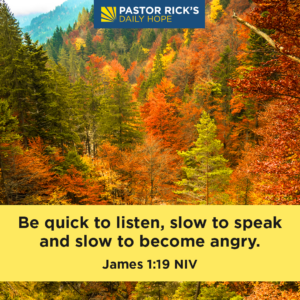
In today’s world, people quickly spout their ideas about injustices without ever thinking. Instead, we need to be “quick to listen, slow to speak and slow to become angry, because human anger does not produce the righteousness that God desires” (James 1:19-20 NIV).
Nehemiah resolved conflict privately. When he saw the injustice that was happening, Nehemiah didn’t start with a public protest. He first tried to build a bridge with the offenders who were taking advantage of the poor to increase their own net worth. The Bible says that he “called together a large meeting to deal with them” (Nehemiah 5:7 NIV).
This is also the way Jesus commanded his followers to handle conflict in churches. He says in Matthew 18:15, “If your brother or sister sins, go and point out their fault, just between the two of you” (NIV). Going public is the last resort. If you want to be respected, do it God’s way.
Nehemiah appealed to the best in people. He told the insensitive leaders, “What you are doing is not right! Should you not walk in the fear of our God . . . ? . . . but now let us stop this business of charging interest. You must restore their fields, vineyards, olive groves, and homes” (Nehemiah 5:9-11 NLT). And they did what Nehemiah said, because they respected him.
If you want to be respected, bring out the best in others. Don’t appeal to their worst instincts, fears, or prejudices. Proverbs 11:27 says, “If your goals are good, you will be respected” (GNT).
Respect and influence go hand in hand. In times of conflict, follow Nehemiah’s example.
PLAY today’s audio teaching from Pastor Rick >>Talk It Over
Think about your week ahead. What opportunities will you have to practice being “quick to listen and slow to speak”?
Think about a time you were thankful someone approached you privately about a matter. Did your level of respect for that person increase? Why or why not?
When has someone brought out the best in you? What opportunity do you have now to bring out the best in someone else?
The post How to Earn Respect in Times of Conflict appeared first on Pastor Rick's Daily Hope.
November 28, 2022
Gratitud: Cuatro Maneras de Desarrollar Alegría

“Alégrense siempre en el Señor. Insisto: ¡Alégrense!” Filipenses 4:4 (NVI)
El Apóstol Pablo dice: “Alégrense siempre en el Señor. Insisto: ¡Alégrense!” Filipenses 4:4 (NVI). Él no dice que debes estar alegre solo en los buenos tiempos. Él dice que debes estar lleno de alegría siempre. Pero ¿cómo puedes hacer eso?
La Biblia enseña que, incluso cuando los tiempos son difíciles, puedes estar feliz si sigues estas cuatro estrategias simples:
Dale gracias a Dios en todas las cosas. Cuando ores, hazlo con acción de gracias. La emoción humana más sana es la gratitud. De hecho, aumenta tus inmunidades. Te hace más resistente al estrés y menos susceptible a las enfermedades. Las personas que son agradecidas son felices. Pero las personas ingratas son miserables porque nada las hace felices. Nunca están satisfechos. Nunca eres lo suficientemente bueno. Pero si cultivas una actitud de gratitud, de estar agradecido en cada circunstancia, tu estrés disminuirá.
No te preocupes por nada. Preocuparse no cambia nada. Nadie nace preocupado. La preocupación es una respuesta aprendida. Lo aprendiste de tus padres. Lo aprendiste de tus compañeros. Lo aprendiste por experiencia. Esas son buenas noticias. El hecho de que la preocupación se aprenda significa que también se puede desaprender.
¿Cómo desaprenderlo? Jesús dice en Mateo 6:34, “Por lo tanto, no se angustien por el mañana, el cual tendrá sus propios afanes. Cada día tiene ya sus problemas” (NVI).
En mi cultura, podríamos decirlo así: no abras tu paraguas hasta que empiece a llover. O, en otras palabras, vive un día a la vez.
Ora por todo. En lugar de preocuparte, usa tu tiempo para orar. Si oraras tanto como te preocupas, tendrías mucho menos de qué preocuparte.
¿Está Dios interesado en los pagos de tu automóvil? Sí, está interesado en cada detalle de tu vida. Y debido a eso, puedes llevar a Dios cualquier problema que enfrentes.
Piensa en las cosas correctas. Si quieres reducir el nivel de estrés en tu vida, debes cambiar tu forma de pensar, porque la forma en que piensas determina cómo te sientes. Y la forma en que te sientes determina cómo actúas. La Biblia enseña que, si quieres cambiar tu vida, necesitas cambiar lo que estás pensando.
Esto implica una elección deliberada y consciente de pensar en las cosas correctas. Debes elegir pensar en cosas positivas y concentrarte en la Palabra de Dios.
¿Cuál es el resultado de dar gracias, no preocuparse, orar por todo y enfocarse en las cosas correctas?
Pablo dice: “Y la paz de Dios, que sobrepasa todo entendimiento, cuidará sus corazones y sus pensamientos en Cristo Jesús” Filipenses 4:7 (NVI).
Reflexiona Sobre Esto:
¿De qué te preocupas? Habla con Dios acerca de tus preocupaciones y dile honestamente que te preocupa.Si oraras tanto como te preocupas, ¿cómo crees que cambiaría tu vida? Dios dice que tiene su mejor interés en el corazón. Agradécele en todas las cosas, incluso si no puedes entender lo que Dios está haciendo en tu vida.¿Qué es en lo que más piensas? ¿En qué crees que Dios quiere que pienses? ¿Estas dos cosas están alineadas? Sí, No, ¿por qué?¿Estás listo para comenzar una nueva vida con Cristo?
Si estás listo para entregar tu vida a Jesucristo, comienza con esta sencilla oración: “Querido Dios, sé que soy un pecador y te pido perdón. Creo que Jesucristo es tu Hijo. Creo que murió por mis pecados y que Tú lo resucitaste. Quiero confiar en Él como mi Salvador y seguirlo como Señor a partir de este día. Guía mi vida y ayúdame a hacer tu voluntad. En el nombre de Jesús hago esta oración. Amén”.
The post Gratitud: Cuatro Maneras de Desarrollar Alegría appeared first on Pastor Rick's Daily Hope.
Rick Warren's Blog

- Rick Warren's profile
- 2007 followers

