M.J. Blehart's Blog, page 49
April 26, 2021
It’s Never Too Late
The positivity of realizing it’s never too late is spectacular.
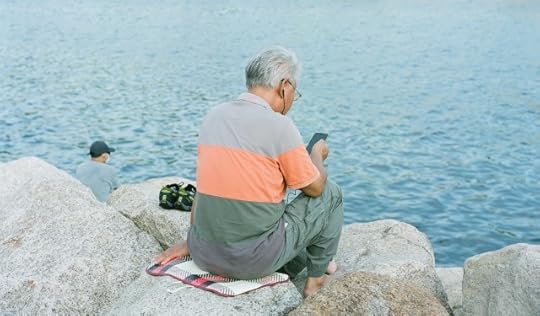 Photo by Enoch Ho on Unsplash
In the United States, at least, there’s a whole cultural phenomenon around “middle age.” Some people celebrate it while others lament it. And let’s be perfectly blunt here – “middle-aged” white men have a certain level of privilege that they take advantage of selfishly more often than selflessly.
Because of the attention surrounding becoming “middle-aged” – there is also a whole idea of no longer being able to do certain things. You’re “over the hill” and “past your prime” and it’s too late for this, that, or the other thing.
This, for the record, is total bullshit. It’s never too late to do anything. It’s only too late so long as you believe that it is.
How many stories are there of people in their 70s and 80s getting college degrees? The oldest swimmer of the English Channel was 71-years old. Retirees start new businesses in their 70s all the time. They didn’t think it was too late to do the thing they did – so why does this narrative continue?
You can work a job for 30 years but then start your own business. It’s possible to raise children and then travel the world. Granted, for some people, this is easier than others because of life situation, experience, where they are from, privilege, and whatnot. However – it’s never too late unless you believe that it is.
With virtually anything you desire for your life, it’s never too late to do, be, have, any given experience.
You have more power than you knowFortunately, or unfortunately, we live in a hyper-materialistic world. We’re inundated with messages about power being reflected by the things you own, the vacations you take, the home you live in, the neighborhood you occupy, and so on.
The most content people, however, are those who have the best handle on themselves. Google this if you disbelieve me – studies have been made. They are mindful of their conscious reality and look inside themselves for comfort more than to things without.
The problem with materialism is that it is extremely disempowering. Particularly when we have uber-wealthy people with more money than they could spend in a hundred lifetimes employing people for well below a viable living wage.
This creates a false narrative of haves and have-nots, which is disempowering.
When you stop worrying about having things to show off your affluence or to keep up with the neighbors – you take back your power. And the more you take back that power the more you will see just how very powerful you truly are.
“Things” do not make you happy. Having things is much less important than we treat them. What’s more, the materialistic quest for things adds to the illusion of it being too late to do this, that, or the other thing.
Don’t get me wrong – there are things that it’s nice to have. But the things are not the end-all-be-all they get made out to be.
It’s never too late to take charge of your life experience to have, be, and do what you desire.
Most of us don’t desire “things”When considering the idea of it being too late for this, that, or the other thing – it’s often tied to material things. But, more often than not, while there are material things we might desire – our deepest desires are not things.
What we most desire are experiences and connections.
Life is a series of connections and experiences. We might remember material things – but more than that, we tend to remember the experiences and connections therein.
This is not always connections between people. Every time I have visited Sedona and hiked through the energy vortices there, I have felt so connected to the planet that it felt as real as any connection I’ve had with a person. Whenever I hear the opening theme to Star Wars, I recall the connection to the joy I had when seeing it the first time as a 5-year-old child over 40 years ago.
These are experiences and connections – and they are the things that most people seek to have in their life. And they always begin within us.
As I recently wrote, it really is all about connections. Establishing connections between ourselves and people, places, and experiences is what drives humankind. Ultimately, the connection we seek is not some outside entity or God or what-have-you – it’s our inner Universal source energy. The place we ALL come from and desire to reconnect to (because the connection is lessened when we become material in these bodies.)
Things can help us to form connections and have experiences. To go to Arizona and hike around Sedona, to have that experience again, I either need to fly or drive there. That requires material things to make happen.
But the things are the means to the end – not the end to the means. This is why, in seeking experiences and connections, it’s truly never too late.
 Photo by Andy Beales on UnsplashIt’s never too late
Do you want to pursue your passion? Turn a hobby into a career? Get that college degree you never got? Become a teacher? Sell all your things, by an RV, and live the nomad life? Do something you have always desired to do? It’s never too late.
Age is just a number. Yes, our bodies experience some decay and degeneration over time – but largely the only thing that gets in our way is our inner selves. When we accept that there is lack, scarcity, insufficiency, or just not enough time – that’s the reality we live in.
Thus, if you’re over 50 and think it’s too late to do this, that, or the other thing – that’s the reality you create and live in. If you truly desire to have, do, be, or experience a thing – it’s never too late to go for it.
True, it might be super-difficult. There might be a ton of work for you to do to achieve that thing. But if it is your true desire – I mean you just know it feels like what you most want – then it’s never too late unless you believe that it is.
And this is a source of tremendous positivity.
When you realize that it’s never too late, you open yourself to taking control of your life. You empower yourself to find and have connections and experiences as you desire to. You open yourself up to potential and possibility and choosing to live life – rather than let life live you.
Consciousness creates reality. If you believe that it’s too late – that’s your reality. But when you see and believe that it’s never too late – THAT can be your reality. And the positivity of that can take you just about anywhere you really, truly desire to go.
Time is an illusionFinally, I’d like to point out that science has shown us – in multiple ways – that time is an illusion.
Thus, if time is merely an illusion – then it can never be too late. This isn’t just new-agey bullshit – science agrees that time does not function merely how you and I perceive it. What’s more, as our perceptions of the Universe vary – so, too, do our perceptions of time.
Hence, it’s only too late if you perceive that it’s too late. But the truth is that it’s never too late – and to do, be, and have the life experiences you most desire you just need to find and/or create your way.
Since this moment in time, here and now, is the only real time that there is – why wait? Sure, it’s never too late – but why delay? Practice mindfulness, visualize the connections and experiences you desire – and go for it.
You are worthy and deserving of a life that excites, invigorates, motivates, and makes you happy. It’s never too late to find and/or create it.
Recognizing that it’s never too late isn’t hardIt begins with mindfulness of your thoughts, feelings, actions, and intentions.
Knowing that age is a made-up number and that there are always options available – you can work to do anything you set your intention to do because it’s never too late. When you apply mindfulness to find and/or create what you desire for your life experience that ultimately empowers you.
When you feel empowered, your mindfulness increases, you become more aware overall, and that gets reflected and spreads to more people. This creates a feedback loop of awareness and positivity. A feedback loop we can all take part in.
Then, we build more positive feelings and discover further reasons to feel positivity and gratitude. That can be the impetus to improve numerous aspects of our lives for the better, help overcome the overwhelming negativity of any current situation, and generate yet more positivity and gratitude.
We are worthy and deserving of all the good we desire.
An attitude of gratitude is an attitude of pure positivity. That positivity can generate even greater positive energies – and that is always worthwhile.
This is the three-hundred and seventy-seventh entry of my Positivity series. It is my hope these weekly messages might help spread positive energies for everyone. Feel free to share, re-blog, and spread the positivity.
Please visit here to explore all of my published works – both fiction and non-fiction.
Please take a moment to sign up for my newsletter. Fill in the info and click the submit button to the right and receive a free eBook.
The post It’s Never Too Late appeared first on The Ramblings of the Titanium Don.


April 21, 2021
Know Your Habits to Change Your Habits
You can’t change habits you aren’t consciously aware of.
When it comes to choosing any given path, the choice often requires adjusting routines.
That’s not to say that all routine is bad. Some routines are super-healthy. They may be good for you mentally, emotionally, spiritually, physically – or all the above. Instituting regular exercise or writing out daily gratitude are examples of this.
Some habits are obvious to us. But others are not. And that’s because habit exists in your subconscious mind.
As I have written prior, there are three states of mind in everyone.
Unconsciousness is that which you do purely automatically. Overall breathing, swallowing, digesting, and similar things your mind and central nervous system do unaided.Subconsciousness is where your habits, beliefs, values, and overall sense of self exist. It is subconscious because you CAN access it — but largely don’t. Subconscious is passive, doing things by rote and routine.Consciousness is here and now. It’s your inner being, specifically your mindset/headspace/psyche sense of self. Conscious is active, choosing and deciding things in the moment.Since habits exist in the subconscious mind – which you don’t inherently access consciously – they can be rooted deeply. And when a habit has its roots deep in your subconscious the work that goes into changing it can be considerable.
To know a habit you need to become truly aware of it. Which is where mindfulness comes into play.
Mindfulness accesses the subconscious mindYour conscious mind is how you, at this specific moment, perceive reality. As you do any action with intent you are working consciously.
The conscious mind is where your mindset/headspace/psyche sense of self is. It is informed of not just the outside world – but all interactions within and without – via your sensory input and your thoughts, feelings, actions, and intentions.
Your conscious mind, as such, is 100% under your control. When all is said and done nobody is in your head, heart, or soul but you. Thus you, and you alone, have the ability to control yourself.
This means that you have the power to control your thoughts, feelings, actions, and intentions consciously. That’s where mindfulness – conscious awareness of your self – comes into play.
When you don’t practice mindfulness – your subconscious does the driving. Which is how you can find yourself distracted. Or focused on things you don’t truly desire to focus on. Or you become suddenly aware but uncertain how you got to where you are.
We are always thinking. The subconscious mind is working when the conscious mind is not doing the driving. It’s in your subconscious mind where your beliefs, values, and habits are planted like a forest of trees.
Thus, when you actively desire to change habits – you need to know the habits. This means you need to get into your subconscious mind with your conscious mind to find the habits and their roots. This, of course, means employing mindfulness.
Why change habits?Habits can be good, bad, or neutral. What we often fail to realize is how many behaviors are, in fact, habits.
While some of these are neutral – they can, depending on the application, lean good or bad.
For example – biting your fingernails. No, this is not a good habit – but unlike smoking, heavy drinking, and lying – it’s not a bad habit of the same ilk. The same thing applies to spinning a pen between your fingers anytime you’re frustrated, cracking gum you’re chewing on when nervous, braiding your hair when you’re bored, etc.
However, like major social issues, neutrality can lead to complacency. That complacency can and will lead you to undesired places.
What’s more, a lot of these neutral habits tie into deeper matters. Matters which are rooted in your subconscious.
Since habit can be controlled, choosing mindfully to perform good habits empowers. This is how you consciously create reality and manifest the things you desire into your life experience.
Thus, changing neutral habits is a matter of control. Particularly when it gives you insight into other, deeper matters.
For example – I used to regularly chew on my fingernails when bored or anxious. Now, when I’ve found myself chewing off a fingernail, it sparks a look into what caused it. Was I bored? Anxious? Frustrated? And what can I do about that?
Changing your habits is how you make ongoing changes to take control of your paths in life. Rather than let life live you – knowing and controlling your habits empowers you to know and control your overall life experience.
Knowing habits leads to more knowledgeThe subconscious mind is not only the home of your habits – but your beliefs and values.
Habits, beliefs, and values tend to be tied together.
For example, I believe that meditation puts me in touch with my inner source energy. That, I believe, empowers my mindfulness practice. I value understanding and exploring how I am – in this body – connected with that energy. Habitually, I meditate daily.
Belief in universal source energy, coupled with valuing how it connects all of us, leads to my meditation habit. Mediation is a mindfulness practice for me – which connects my subconscious beliefs and values via the habit.
This is why knowing your habits connects you to your subconscious mind. That, in turn, connects you with your beliefs and values that are within your subconscious. Habits, as such, are a bridge between the subconscious mind and the conscious mind.
Or rather, CAN be a bridge – when you use mindfulness to be consciously aware of the connection.
Choosing and deciding to find and/or create your own path in life is about control. When it comes to control, the only thing you can truly control is yourself. Gaining that control is a choice and/or decision that you make in your conscious mind. That leads to accessing the beliefs and values in your subconscious – and habits related to both.
Taking control over your life experience – particularly if the subconscious has been doing more of the driving prior – takes conscious effort. As part of that, you often need to change habits as part of taking that control. But you can’t change habits you aren’t consciously aware of.
You have all the powerKnowing your habits and their connection to your subconscious values and beliefs allows you to take the wheel, assume control, and consciously create reality. Further, you gain an appreciation for the journey as much as any goal you are seeking to attain.
You have the power. All the power. To use it requires nothing more than applying conscious awareness – i.e. mindfulness – to recognize what’s in your subconscious. That connection to your beliefs, values, and related habits creates recognition. Recognition is knowledge, and knowledge is power.
That power is how you uproot, remove, replace, alter, change, or build new habits. Which, in turn, connects to beliefs, values, and all else in your subconscious mind.
Know that you are worthy and deserving of finding, knowing, and changing habits to improve your life howsoever you most desire. And while this can be scary – leaving comfort zones almost always is – the reward is worth it.
We each get one shot at life in our meat popsicle bodies. Humankind is not meant to simply survive – but to thrive. To do that – our conscious mind needs to be doing the driving.
Do you know your habits so that you can change your habits?This is the four-hundred and eighty-seventh exploration of my Pathwalking philosophy. These weekly essays are ideas for – and my personal experiences with – mindfulness and walking along a chosen path of life to consciously create reality.
I share this journey as part of my desire to make a difference in this world along the way. Additionally, I desire to empower myself and my readers with conscious reality creation.
Thank you for joining me. Feel free to re-blog and share this.
The first year of Pathwalking, including expanded ideas, is available here. My additional writing, both fiction and non-fiction, are available here.
Please take a moment to subscribe to my mailing list. Fill in the info and click the sign-up button to the right and receive your free eBook. Thank you!
The post Know Your Habits to Change Your Habits appeared first on The Ramblings of the Titanium Don.
April 19, 2021
Stronger as We
The positivity of being WE and disregarding “us” or “them” is tremendous.
 Photo by Marija Zaric on Unsplash
We are all one.
When you get past these physical bodies we identify ourselves as, the communities and affiliations you and I place ourselves within, and any other identifications you can imagine – we are the same.
At our core, we are Universal source energy. It doesn’t matter if you are male, female, fat, thin, Christian, atheist, American, Korean, or whatever other labels you can think of. At our core, to our deepest level of existence – you and I are just energy and the same as one another.
There are numerous reasons for the stratifications we have in modern society. All these artifices that get employed to create not just individual identity, but group identity, get turned into something that’s ultimately disempowering.
This is ironic since most of these artifices are intent on empowerment. We get so caught up in this that you and I end up frequently divided into “us” and “them.”
When I wrote about this previously, I intended to discuss how both sides of “us” and “them” are hurtful to our existence. Ironically, in the process of writing this, I have come to realize that instead, I played right into “us” versus “them” – exactly opposite the intent of the article.
While my point was that the concept is a lie – and causes harm between people – I still wound up very much expressing the ideas of “us” and “them” over unity and WE.
So long as we place ourselves in one camp or another – rather than coming together as one – healing the divisions is close to impossible.
Instead of getting caught up in “us” and “them” focus on “we” I want to take a different approach to this
We the peopleThe United States Constitution begins thus:
“We the People of the United States, in Order to form a more perfect Union, establish Justice, insure domestic Tranquility, provide for the common defence, promote the general Welfare, and secure the Blessings of Liberty to ourselves and our Posterity, do ordain and establish this Constitution for the United States of America.”
Despite the imperfections of the framers of the Constitution and a slave-owning nation of the time – these words are important. The whole idea is that WE as a singular unit come together to create something great for EVERYONE.
That’s super easy to lose sight of when so many of our leaders love to divide and conquer. But then, let’s face it – that’s history. Lots and lots of worldwide history.
You and I have the power to be WE. You and I are empowered to draw more people into this. That can close the gaps and remove the artificial divisions between us.
This requires us to stop fighting one another, stop seeing each other through imperfect lenses, and open real dialogues between us.
When all is said and done, what people desire is to have freedom, prosperity, health, and wellbeing. Nobody truly wants anyone else to suffer. So long as you and I keep mindsets of “us” and “them” we set ourselves up to be duly manipulated into these divisions.
Our leaders won’t change this. Why? Because the more you and I become WE the more we’re empowered. When you and I are more empowered we don’t need them quite so much. Too many “in power” are convinced their power only comes from disempowering everyone else.
You and I as separate entities are easy to divide. Working together for the greater good WE are more empowered and are not easily divided at all.
There is positivity in being weOne of the largest issues in the “us” versus “them” narrative is how negative it is.
When you choose a side – which tends to be “us” for everyone as an individual – you set up a negative narrative.
And yes, given my previous “us” versus “them” essay, I recognize the irony of my above statement.
This is why today I am writing about the focus on WE. Let’s face it – our individual perceptions of self are based in our illusion of reality.
I share this Einstein quote a lot – but it’s utterly applicable here,
“Reality is merely an illusion, albeit a very persistent one.”
What that means is that how you and I perceive reality is utterly individual. My perception of reality might line up with yours – or it might not. Even where they do align – there can be vast variations because of the differences in who we are.
Everyone has life experiences. Good, bad, indifferent, planned, unplanned, what-have-you. Everyone had a unique experience as to what and how life is. Which is what Einstein, I think, was getting at.
Because of our unique, illusionary perceptions of reality – we create categories that range from individual to huge groups. Man, woman, nonbinary are examples of the individual. Americans, Muslims, and black people are examples of the groups. From these perceived groupings and their differences comes the creation of “us” and “them.”
Yet despite all those differences – and more – everyone desires to have positive things in our lives. Peace, freedom, prosperity, joy, caring, kindness, empathy, understanding, and the like. All the good that is possible is what everyone desires.
WE ALL DESIRE GOOD. And that is a tremendous positive that is most evident in being WE.
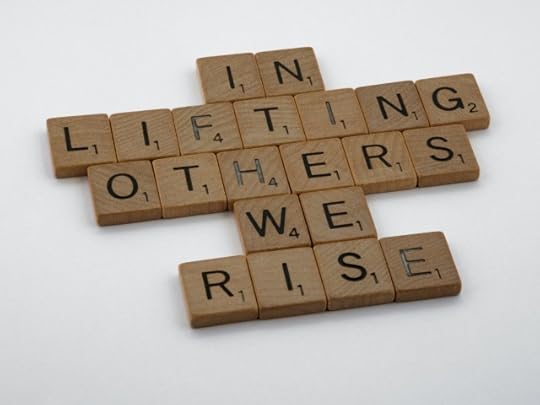 Photo by Brett Jordan on UnsplashPause and reflect
I get frustrated when I see people choosing things that will hurt people. Laws being made to disempower, cops getting away with racist murder in the “line of duty,” greedy leaders in business, politics, and religion taking and giving nothing back – and all the other artifices breaking people into “us” and “them.”
It’s easy to fall into this trap (as evidenced by my previous article). This is why it’s imperative to pause and reflect on how WE are all one and not, truly, “us” or “them.”
The thing is – I can’t do anything about how anyone else thinks, feels, or acts. While I am not saying that we can just forget some of the atrocities we’re seeing, you and I can choose to continue to be apart – and focus on “us” versus “them” – or how to come together as we.
I get to decide to act to close the divides and bridge the gaps in how I focus on and work with people. You have the same choice. WE can alter this and shift the collective consciousness towards being more WE than “us” and “them.” But only by doing our parts individually.
You and I have always been stronger together. But you and I need to recognize and work with that first as individuals. The positivity that can be made by just being WE and disregarding “us” or “them” is tremendous. That, then, can change the world for the better.
Focusing on seeing and being part of WE isn’t hardIt begins with mindfulness of your thoughts, feelings, actions, and intentions.
Knowing that, though we might be individuals, “us” and “them” are artifices – you and I can begin with ourselves to put more energy into being WE. When you act to cross the gaps, close the divides, and work with people from a more inclusive mindset of we, that ultimately empowers you and me.
When we feel empowered, our mindfulness increases, you and I become more aware overall, and that gets reflected and spreads to more people. This creates a feedback loop of awareness and positivity. A feedback loop WE all can take part in.
Then, we build more positive feelings and discover further reasons to feel positivity and gratitude. That can be the impetus to improve numerous aspects of our lives for the better, help overcome the overwhelming negativity of any current situation, and generate yet more positivity and gratitude.
We are worthy and deserving of all the good we desire.
An attitude of gratitude is an attitude of pure positivity. That positivity can generate even greater positive energies – and that is always worthwhile.
This is the three-hundred and seventy-sixth entry of my Positivity series. It is my hope these weekly messages might help spread positive energies for everyone. Feel free to share, re-blog, and spread the positivity.
Please visit here to explore all of my published works – both fiction and non-fiction.
Please take a moment to sign up for my newsletter. Fill in the info and click the submit button to the right and receive a free eBook.
The post Stronger as We appeared first on The Ramblings of the Titanium Don.
April 14, 2021
“Us” versus “Them” Is A Lie
All of us live inside this society to one degree or another.
Thus, all of us are equally subjected to a particularly damaging lie. The artifice of “us” versus “them.”
All too often, this is used by those in “power” for control. They create “laws” supposedly intent on protecting “us” from “them.”
All you have to do is look at the United States right now. Voter laws, anti-transgender measures, the trial of a white cop who murdered a black man with inappropriate force, and the resurgence of white supremacy thanks to the GOP’s bid for power at any cost are almost impossible to ignore.
All of them are the product of false “us” versus “them” notions. The further we emphasize and spread these divides the more we disempower everyone – ourselves included.
In the words of Ram Dass,
“Why does the distance increase? Because nobody wants to be ’them.’ Everyone wants to be ‘us.’”
This is how politicians – who have not been part of any “us” save their tiny, massively out-of-touch circles – have an influence on people. They play the role of “us” and assert how the “them” are wrong/destructive/harmful/the worst.
In truth, we’re not so different. The majority of the “us” versus “them” we see is a complete and utter lie.
For example – in what way does a transgender person harm anyone else? They aren’t harming anyone – they are simply being true to themselves and their self-identity. There is ZERO harm or intent of harm in them being transgendered. So why have they been turned into a “them” to be feared and legislated?
The only reason I can conceive of is that making transgendered people “them” creates exploitable fear.
Real fear versus exploitable fearBefore humankind started recording history as we do – we were hunter-gatherers. Then, we roamed and foraged – and were prey to predators.
Fear told us to avoid some of their known habits. It was fear that kept us safe, taught us how to care for ourselves, survive, grow, and thrive as such.
This was tangible fear. But as humankind evolved into a stratified society with a lot of artifices and intangibles making up our lives – so, too, did fear evolve to mostly intangibles.
There is still real fear that occurs which is tangible. There are circumstances where your life is threatened, and fear protects you. But that real fear tends to occur far less than the exploitable, intangible fear.
The truth is that nobody wants to suffer. Nobody. Most intangible fears boil down to fear of suffering. If ‘X’ happens there will be pain and suffering. Should ‘Y’ come to pass, suffering comes with it. The closer you examine this the more you fear the potential suffering.
The suffering, however, is seldom half what you fear it will be. In the words of Paulo Coelho,
“Tell your heart that the fear of suffering is worse than the suffering itself.”
When you don’t see that the fear of suffering you experience tends to be worse than the suffering – your fear is exploitable.
For example – you’ve got a meeting with your boss. Worst-case scenarios play out in your head, and you go from a fear of being fired to fear of losing everything you have to fearing the ruination of your entire life. It’ll be the worst.
Then the meeting happens – and you aren’t fired, you’re promoted. Or reprimanded, but not fired. OR, yes, you get fired – but it’s not even close to as bad as you thought it would be.
Most “us” versus “them” notions are exploitable fearThe Republican Party in the United States has become the party of obstruction, negativity, mudslinging, and fear-mongering. If you can disprove me, PLEASE do. But everything they do is about insulting this group or that for being different, standing against but never for anything, and creating impediments instead of expanding freedoms.
The Democrats are imperfect. But their ongoing narrative isn’t “fuck the conservatives.” On the other hand – “fuck your feelings” and “fuck the liberals” is a frequent siren call from the Republican party. Democrats largely strive to work for “us” where Republicans work against “them.”
As such, they exploit the fear of suffering in their followers. To do that, they paint the “them” as the cause of that suffering. The “them” will ruin all you have, destroy your livelihood, and make you suffer unimaginably.
This is a collective-consciousness issue – but can’t be ignored. Why? Because it will seep into your psyche because your subconscious mind gets bombarded by these messages of lack, scarcity, insufficiency, and suffering for “us” versus “them.”
Fear gets exploited to disempower as many as possible. Those “in power” believe that keeps them in power. And, unfortunately – it works.
This is why you, on your own, need to work on your mindfulness. You are the only one in your head – and you can use mindfulness to keep that fear of suffering at bay.
The more of us who reject “us” versus “them” fear exploitation – the more we can change this fear-based society towards being reason-based.
And, in truth – it all begins with our individual life paths.
The power belongs to youLike your ability to find and/or create your life path – you are empowered to recognize the artifice of lack, scarcity, and insufficiency. That, further, empowers you to not let the fear of suffering exploit you.
Nobody wants to suffer. And that’s why the fear of suffering is so powerful. But it’s intangible, and the fear is frequently far worse than the outcome will be.
To recognize that you need to be mindful.
Mindfulness is conscious awareness, here and now, of your sensory input, as well as your thoughts, feelings, actions, and intentions. Combined, these inform your inner being – your mindset/headspace/psyche self. And that, in turn, lets you see into your subconscious and the underlying habits, values, and beliefs that dictate your life experience.
Insight into your subconscious helps you see if you are being manipulated by “us” versus “them” fear exploitation. And if you are – it empowers you to change it.
But – and this is important – you need to forgive yourself if you have been thusly exploited. Congrats, you are only human – and your thoughts and feelings can be manipulated easily if you spend more time living subconsciously than consciously.
Everyone has routines, lives by rote from time to time, and allows their subconscious to take the wheel. And, sometimes, this occurs longer than intended. But practicing mindfulness is how your conscious mind takes control back from your subconscious.
Or, in other words – the power belongs to you.
Recognize that “us” versus “them” is falseWhen all is said and done, beneath our skins, our ideologies, sexual orientations, religious affiliations, genders, and all the other ways we differ – we are all one. At our deepest depth, we are universal source energy that is only different by our material existence in these bodies with these consciousnesses.
All notions of “us” versus “them,” as such, are false. They are artificial. That’s because there is no “us” versus “them” in truth. All of us are one.
I don’t care what your religion, nationality, political affiliation, or gender might be. It doesn’t matter nor impact MY life – unless you intend harm and suffering for me. Because I, certainly, don’t intend it for you. I know you don’t want to suffer. Please know that neither do I.
When we pause and realize that the truth is that everyone desires to be content, to avoid suffering, and to live a good, full, and satisfying life – we can see how “us” versus “them” is such a harmful lie.
Finally – remember that you have control over only yourself. Do you desire to see others harmed? If so – well, that’s a whole other issue. I am pretty sure that for the most part – nobody wants to do harm. Nobody wants to suffer nor cause suffering.
Mindfulness opens you and me to better seeing this for what it is. That, in turn, empowers us. When we are empowered – we gain the ability to empower others. And that can make the world a much better place for EVERYONE, regardless of if they are “us” or “them.”
Can you see how “us” versus “them” is a lie?This is the four-hundred and eighty-sixth exploration of my Pathwalking philosophy. These weekly essays are ideas for – and my personal experiences with – mindfulness and walking along a chosen path of life to consciously create reality.
I share this journey as part of my desire to make a difference in this world along the way. Additionally, I desire to empower myself and my readers with conscious reality creation.
Thank you for joining me. Feel free to re-blog and share this.
The first year of Pathwalking, including expanded ideas, is available here. My additional writing, both fiction and non-fiction, are available here.
Please take a moment to subscribe to my mailing list. Fill in the info and click the sign-up button to the right and receive your free eBook. Thank you!
The post “Us” versus “Them” Is A Lie appeared first on The Ramblings of the Titanium Don.
April 12, 2021
This Isn’t Self-Help Psychological Mumbo-Jumbo
Self-help involves any and all acknowledgment of mental health matters.
 Photo by Utsman Media on Unsplash
Mental health is important. And the stigma that still exists regarding aspects of it helps nobody.
A lot of different elements go into working on mental health. Many of these elements work best when combined.
Therapy, psychopharmacology, and self-help notions can be used separately. But often a combination of these proves to be most effective.
In my experience, the best way to not just find but stay balanced and centered is the work you put into yourself. Which, yes, means self-help.
But oftentimes, to get to the point where self-help will have any effect or be of use to you, it may require therapy and/or medication of some kind.
I write about what I practice. Positivity, mindfulness, conscious reality creation, and general self-help notions. I am not perfect at this – it’s a practice, after all. There are good days and bad. Despite working to be focused on positivity, I still sometimes get negative, unfocused, unmindful, and frustrated as such.
I have read and listened to a lot of different books, articles, podcasts, and the like on these topics. Then, I have worked to distill this to something not just for me to approach, but that I can share to hopefully help you, too.
Still, I know that I am sometimes annoying to friends because of my constant expressions of my practice. Along that line, rather than just commiserating when someone shares what they were going through, I might inadvertently upset them. Not be telling them what and how to do things in a mindful self-helpy way – but just asking questions in those directions to try and help them move onwards.
Mental health matters. But what control you take to deal with issues matters, too.
Alone in your head – but not aloneOne of the biggest issues we have with anything we’re dealing with is that, ultimately, we’re all alone inside of ourselves.
No matter how many friends you have, how large a family you come from, or however many people you share your thoughts and feelings with – you’re alone inside of yourself. In your head, heart, and soul, there is only you.
Many lament this. They fear that because of this they are disconnected, and potentially destined to always being alone. But the truth is – you are not alone.
The individual that you identify as – the “I” of self – is still interconnected with everyone and everything else in the Universe. That’s because we are all made from Universal Source Energy – which can neither be created nor destroyed, but rather transmutes from form to form to form.
The point is – we are all connected. So, you may be feeling alone and disconnected. But that’s just a part of the human experience. In taking this physical form it shifts how we find and experience our interconnectivity with all.
Alone can spur negative emotions. What’s more, it also creates a sense of disconnect and a lack of understanding. There is truth in this – I’m incapable of entering your head, heart, or soul. Thus, no matter how much you convey what you are experiencing – I can’t grasp, comprehend, or to use the Heinlein term “Grok” you in fullness.
This is why broader acceptance of mental health issues and complexities is so important. Acceptance is how we better connect to each other – but also, in accepting the overall concept and its issues we strengthen the unseen, internal connections between ourselves and all the energy that is.
Maybe you feel alone in your head – but you are not, truly, alone.
Tuning in and taking controlWhen all is said and done, you have the ultimate control over your self.
When it comes to your thoughts, feelings, actions, and intentions, you are the one in control. Nobody can make you think, feel or act against your will. You are the driver behind the wheel of your life experience.
That’s not to say that outside stimuli won’t cause you to experience unwanted feelings. Nobody wants loved ones to die, homes to burn down, relationships abruptly ended, jobs lost, and so on. I don’t know anyone the desires to be involved in a car accident, a mugging, or a shooting. And all of these ARE outside your control.
While you can and will be the victim when these things occur – how long that influences your mentality is a choice you make. If you view the world as out to get you, life sucks, and everything goes wrong for you – congratulations, that’s the reality your will consciously create.
We are all energy. All energy vibrates at a frequency. Like attracts like. If you vibrate at a low frequency – which tends to be negative – that’s what you will attract to you. Conversely, vibrate at a high frequency – which tends to be positive – THAT is what you will attract to you.
It is not a perfect attraction, mind you. Just like tuning a classic radio with a dial, it may require adjustment to reach the perfect, static-free frequency. To change YOUR frequency takes time.
If you’ve been the victim of an awful thing – your frequency was swiftly, possibly violently lowered from where it was. To return it to where it was – or somewhere higher – you’ll go through a lot of static to recapture the desired frequency.
This is where self-help comes into play.
 Photo by Aziz Acharki on UnsplashSelf-help is literally about helping yourself
Seeking therapy and accepting a medication prescription for an anti-anxiety drug or antidepressant are self-help. Nobody can force you to do these things.
I know someone who is presently in tremendous pain. They’ve been through a lot. Yet they refuse to seek a therapist – and I’m pretty sure taking a prescription is equally out of the question, too. None of us who love this person can force them to act.
This is always true. You can intervene, cajole, plead, beg people to work on mental health issues. But you can’t do it for them – nor force them against their will.
Self-help is not just buzzwords and hooky-spooky practices. It’s an acknowledgment of mental health issues and acting to understand and balance them.
Besides therapy and psychopharmacology – you can act in your own interest to practice self-help. Meditation, mindfulness, journaling, positivity, and all the things I write about are elements you can use to work on your mental health by your own hand.
Because, in truth, even getting therapy or a prescription for medication IS self-help. It’s not some dirty, self-aggrandizing notion. Because the reality is that you are the only one who can alter, change, control, and yes – HELP – yourself.
YOU decide to see a therapist. It’s YOU who decides to fill and take the prescription. YOU choose to meditate, practice mindfulness, seek and/or create positivity, and the like. It is YOU who acknowledges or denies mental health matters and the work they might require for balance and control.
Ergo – you help yourself. If you don’t self-help – you deny control. That stifles growth, change, and can and will kill your contentment.
Self-help is NOT hippy-dippy, psychological mumbo-jumbo. It’s the necessary acknowledgment that you have ALL the power when it comes to head, heart, soul, and overall life experience.
Employing self-help isn’t hardIt begins with mindfulness of your thoughts, feelings, actions, and intentions.
Knowing that mental health is important, and any negative stigma attached to it serves nobody – you can choose ways and means to help yourself and your overall state of being. When you practice self-help – be it by seeking therapy, taking meds, or self-guided practices like mediation and mindfulness – you take control of your inner being and overall sense of self. And that ultimately empowers you.
When you feel empowered, your mindfulness increases, you become more aware overall, and that gets reflected and spreads to people around you. This creates a feedback loop of awareness and positivity.
You build more positive feelings and discover further reasons to feel positivity and gratitude. That can be the impetus to improve numerous aspects of your life for the better, help overcome the overwhelming negativity of any current situation, and generate yet more positivity and gratitude.
You are worthy and deserving of all the good you desire.
An attitude of gratitude is an attitude of pure positivity. That positivity can generate even greater positive energies – and that, like you, is always worthwhile.
This is the three-hundred and seventy-fifth entry of my Positivity series. It is my hope these weekly messages might help spread positive energies for everyone. Feel free to share, re-blog, and spread the positivity.
Please visit here to explore all of my published works – both fiction and non-fiction.
Please take a moment to sign up for my newsletter. Fill in the info and click the submit button to the right and receive a free eBook.
The post This Isn’t Self-Help Psychological Mumbo-Jumbo appeared first on The Ramblings of the Titanium Don.
April 7, 2021
How Important is Communication?
Communication is the key to connection – both within and without.
I would, unscientifically, estimate that 90% of all the chaos, uncertainty, and misunderstanding between the peoples of the world is due to issues with communication.
These, like the people themselves, are wildly variable. Some of it is language – both a difference in the language used and comprehension of similar language. I suspect some of it is miscommunication – a lack of nuance, a poorly-stated intention, or general misunderstanding.
And of course, there’s a total lack of communication. Not communicating is a great way to disempower and keep people in the dark.
Human beings are not just social animals – but inherently curious. It’s in our nature to seek out information – sometimes directly, but often indirectly. Thus, we look for answers to questions great and small. And a lot of that comes down to communication.
While how we communicate with one another is super-important, often we neglect the more important internal communication.
What is that all about? Self-talk; mindfulness of your inner head, heart, and soul; being true and genuine to why, what, how, and who you are or desire to be.
While external communication is important to personal relations between people – internal communication is important to how well you know yourself. And if you don’t have a good internal communication process you will more readily fall victim to depression, anxiety, uncertainty, and other negative states of being.
Or – since they are unavoidable, after all – you’ll have a far harder time getting out of these negative states.
How does internal communication work?The most obvious aspect of this is self-talk. That’s how you think and speak to yourself about yourself.
We all have inner voices that talk to us. All of them, since you are the only one inside of your head, are you. But it doesn’t always feel like that’s true. Particularly when it comes down to brain weasels saying unpleasant and awful things, causing you harm.
When you consider the words “I AM” – what follows is deeply impactful. Thus, negative self-talk – I am an asshole; I am unhappy; I am a failure – all drives your conscious reality creation.
This brings us to mindfulness. Mindfulness is conscious awareness of your inner being here-and-now. Your inner mindset/headspace/psyche self is informed about the world – both within and without – via your six senses, as well as your thoughts, feelings, actions, and intentions.
When you gain that conscious awareness, you open yourself to seeing into your subconscious depths. It is there that the brain weasels often are found chewing on old habits, beliefs, and values – which may no longer apply to you.
Internal communication is working with mindfulness and self-talk to direct and control conscious reality creation. Or, frankly, if you are skeptical about this notion and the Law of Attraction – it’s about having control over the one thing you can – yourself.
You have ZERO control over anyone or anything else. But when it comes to you – it’s all yours. But just like a lack of communication without leads to negativity, chaos, uncertainty, and misunderstandings – lack of communication within has the same impact.
If you are not in touch with yourself – or communicating poorly – control slips away.
Subconscious versus conscious mindWhether you believe in the notion of conscious reality creation or the law of attraction – you ARE creating your life. When you don’t do so consciously – you are doing so subconsciously.
How does that work? Most people develop patterns and habits. They have a way they do things regularly. Routines occur – and can dominate all that you do.
You live by rote and routine – which means that your subconscious is doing the driving. That means that rather than choosing what to do, where to go, how to act and react consciously – you do it subconsciously.
That’s how certain habits get embedded and fail to be recognized. For example, you get uncertain or busy or whatever – and find yourself chewing off fingernails. I’ve done this – and as someone told me to stop, it occurred to me that I hadn’t consciously realized I was doing it.
The subconscious will have the wheel because someone ALWAYS has the wheel. If you don’t take it consciously – the driver is your subconscious.
Because your subconscious mind lacks critical thinking and filters, it will drive you to places you don’t desire to go.
If your internal communication skills are poor – or you are lax about maintaining them – this cedes control to your subconscious. But when you are mindful and consciously aware – you take the wheel and do the driving.
To do this, however, requires you to communicate within yourself.
To know requires communicationYou can read all the blogs, books, and the like you come across. They pass through your eyes into your head.
But what happens after that?
The same applies to interaction with people, places, and things. Again, you take them in via your six senses. That may or may not then be coupled with thoughts and feelings.
But what happens after that?
You process the input. That occurs both consciously and subconsciously.
Subconscious processing happens non-stop. Your six senses relay to your internal mechanisms and they register what they encounter. Lots of this has no impact consciously upon you. But then, say you burn yourself – now the conscious mind recognizes pain and you react as such.
That’s passive communication within.
When you take something in via conscious awareness – you are already directing its impact. Does it speak to you in a way that inspires? Does it not just sink into your head, but your heart and soul, too? That’s all communicated actively within – and opens you to how to control the information you glean.
It’s no different than talking to someone and learning who they are, where they come from, and so on. Likewise, it’s no different examining a work of art and feeling an emotional connection to it.
Communications are both internal AND external. What you receive without impacts you within – and what you have within impacts how you communicate without.
This is why internal communication is as important – and maybe more important – as external communication. To build knowledge and share information – communication is the key to everything.
Maybe, just maybe – if we better communicate within ourselves, we can improve how we communicate without. That improves the connections we make internally and externally.
That is not only empowering – but can be spread to change the world for the better.
How mindful are you of your communication within and without?This is the four-hundred and eighty-fifth exploration of my Pathwalking philosophy. These weekly essays are ideas for – and my personal experiences with – mindfulness and walking along a chosen path of life to consciously create reality.
I share this journey as part of my desire to make a difference in this world along the way. Additionally, I desire to empower myself and my readers with conscious reality creation.
Thank you for joining me. Feel free to re-blog and share this.
The first year of Pathwalking, including expanded ideas, is available here. My additional writing, both fiction and non-fiction, are available here.
Please take a moment to subscribe to my mailing list. Fill in the info and click the sign-up button to the right and receive your free eBook. Thank you!
The post How Important is Communication? appeared first on The Ramblings of the Titanium Don.
April 5, 2021
It’s All About Connections
What if the questions of life, the Universe, and everything are all about connections?
 Photo by Toa Heftiba on Unsplash
There is nobody in your head but you.
You are the only consciousness inhabiting your mind, body, and soul. The notions, ideas, beliefs, values, habits, and everything that makes you, you, are singular. There is no us inside of you, no them, just you.
But you’re not alone on this planet. No, there are nearly 8 billion other people here. And that’s just humanity – the animals on this planet outnumber us a lot.
Despite all the people and creatures on Planet Earth – you’re alone inside of you. And given human nature to be social – that’s a lonely place to be.
We all know introverts, extroverts, and ambiverts. There are plenty of people we encounter who we see as the life of the party, everybody’s friend, and so on.
Likewise, we know plenty of people who prefer solitude. They would rather sit alone and read than go to that party. But there are times that they, too, seek out others for company.
Most of us fall somewhere in the middle. We want to have our people around us – and we also like to go it alone. I love the morning solitude of sitting on my couch (with or without a cat) and reading. Writing is a solitary act. But I also love to hang out with friends in groups when we can.
When all is said and done, we are, ultimately, alone within ourselves. And because of this truth, we all seek out connections.
How we connect is variable. But why we connect – I believe – is the answer to the great questions.
Connections and life, the Universe, and everythingBecause we are alone within ourselves – but naturally curious and social creatures – to be social, we must make connections.
Some social circles are super broad – religions, nationalities, genders, and so on. The next level in is narrower but still broad – families, individual churches, workplaces, social organizations, and the like.
Then it gets personal. The people we choose to call friends; physical, mental, and emotional intimates; close-knit family; partnerships, and other direct personal relations. These are your people versus people in general.
What’s the difference? People can be exhausting, infuriating, disturbing, distressing, and every other negative you can imagine. When you stand on one side of a divide – natural or artificial – the people on the other side might be some you have less-than-zero interest in knowing or associating with.
On the other hand, YOUR people – and some of the people that tend to be their people – are okay. You have connections, shared values and beliefs, and other elements you can come together over.
There is comfort in our connections. We seek and find people we can talk to, who “get us” and our way of being. People we can imagine sharing our brains, getting into our hearts, minds, and souls, and knowing us as intimately as we know ourselves.
Except, of course, they can’t enter into us any more than we can enter into them. This means all connections we can make are impermanent, changeable, and potentially unstable. While this is something we frequently relegate to the back of our heads – it’s still there. And it can become brain weasels and similar notions you carry of unworthiness, imposter syndrome, and the like.
To overcome feeling alone inside of ourselves we seek connections. But even finding them, we know – deep down – that they are impermanent.
Impermanence in the human conditionBuddhism and Hinduism both put a lot of energy into the notion of impermanence and its impact on the human condition.
In the worlds of Jen Sincero –
“You are a human, being.”
To me, what that means is that we’re here to be – and as such to experience the vast offerings we will encounter in our lives. Unless, of course, we choose to curl up in a ball and await death – or just let life live us like a bear lives in its fur.
The notion of impermanence, if you are unfamiliar, is that all is transient. Nothing lasts forever, period. Both philosophy AND science agree with this. NOTHING lasts forever. Change is the only constant in the entire Universe.
The concept of forever and infinity is impossible to grasp by the human mind. The meat popsicles that are our bodies are tiny and short-lived in the grand scheme of the cosmos. And no matter how many connections we make in our lives – we remain inside of these bodies, all alone.
Many, many people hate being alone. And loneliness is the cause of depression, anxiety, suicide, homicide, and numerous other negatives.
It’s almost like we have a need – in our loneliness and lack of connection – to rob others of THEIR connections to feel the same.
Coming to understand the notion of impermanence is one way to get over the loneliness of being the only person inside your head, heart, and soul. How? Because beyond our bodies WE ARE All CONNECTED.
The whole Universe is made up of energy. Energy that can neither be created nor destroyed – it just changes. Ergo, all of us come from and return to the overall unseen energy that hasn’t transmuted to a physical form. We might feel alone – but we aren’t.
Recognizing we’re ALL alone forms connectionsI recognize that’s a paradox. But it’s still true. In acknowledging that we are each alone inside of our perceptions of ourselves, we have made connections.
These connections within, to our sense of being, help us to make further connections without.
This, I think, is what the philosophers and gurus have been trying for nearly all known written time to understand and explain. Because of the ego, and the notion of self, we have the notion of being alone. That causes us to seek external connections.
But when we see that internally all is one and the connections already exist – we can alleviate that loneliness. We can see that we’re not alone. The connections exist – deep within.
But the outside picture is how you and I perceive this world. First, there is the identity of self, followed by the identity of others. Because each of us is alone inside of the self, we make attempts to connect with others. But even with those connections, we remain alone inside of ourselves.
However, when we connect better within to the depths of our subconscious and core being, we can see that we ARE, in truth, interconnected with the entire cosmos. That’s the point of enlightenment and trying to understand how the ego and notions of self are the cause of our loneliness. And it is our loneliness that drives the act of making connections.
I know that this seems roundabout and convoluted – but it’s simple. The answers we seek to the questions of life, the Universe, and everything aren’t outside of us – they are inside. They’re already here – we just need to stop feeling alone in the identity of the self to make those connections within.
 Photo by Toa Heftiba on UnsplashPermanent connection
The energies that make us all up are connected for all of time. Again, this is because energy can neither be created nor destroyed. It just IS and changes form over time and circumstance.
You, me, grass, sky, subatomic particles, and galaxies are comprised of one thing – energy. And it is connected permanently.
However, when you are a being and have a sense of self – that creates a disconnect. And in the process of forming connections without the constant of change has an impact and influence on all connections we can make.
I am not saying making outside connections is bad – it’s not. It’s necessary for our wellbeing on multiple levels. But to better understand it and to escape the loneliness, we need to connect to our inner selves. Seeing that we are interconnected and not truly alone – despite being the only person within our bodies perceiving reality – can overcome the loneliness.
When we are better connected within, we can be kinder, more compassionate, more empathetic – and connect better without. We can recognize and acknowledge the abundance of the Universe and that there are more than enough connections to go around for everyone.
Maybe – just maybe – connecting more within will lessen the disconnect without. And that, I believe, empowers everyone.
It isn’t hard to make connections within or withoutIt begins with mindfulness of your thoughts, feelings, actions, and intentions.
Knowing that your perception of self and being alone is why you seek answers to complex questions – you can see that forming connections is the answer. When you further come to recognize that forming connections without is good – but forming connections within to the energy of the Universe can help alleviate the loneliness – that ultimately empowers you.
When you feel empowered, your mindfulness increases, you become more aware overall, and that gets reflected and spreads to people around you. This creates a feedback loop of awareness and positivity.
You build more positive feelings and discover further reasons to feel positivity and gratitude. That can be the impetus to improve numerous aspects of your life for the better, help overcome the overwhelming negativity of any current situation, and generate yet more positivity and gratitude.
You are worthy and deserving of all the good you desire.
An attitude of gratitude is an attitude of pure positivity. That positivity can generate even greater positive energies – and that, like you, is always worthwhile.
This is the three-hundred and seventy-fourth entry of my Positivity series. It is my hope these weekly messages might help spread positive energies for everyone. Feel free to share, re-blog, and spread the positivity.
Please visit here to explore all of my published works – both fiction and non-fiction.
Please take a moment to sign up for my newsletter. Fill in the info and click the submit button to the right and receive a free eBook.
The post It’s All About Connections appeared first on The Ramblings of the Titanium Don.
March 31, 2021
Whose Life is it Anyway?
Are you living life for you – or someone else?

As children, our parents have a lot of expectations of us. But a great deal of this – particularly when we’re young – is beneficial.
For example – saying please and thank you, sharing toys with other kids, overall good manners, and punctuality are qualities you carry with you all your life.
As you get older, teachers have expectations of you. Learn what they are teaching, do your homework, meet the given deadlines for this project, and so on. Again, many of these will carry into your overall life experience.
After school, when you set off on your own, you take charge. However, you still likely must meet the expectations of others. As an employee, you must be on time to work, meet the deadlines, and show proper deference to the bosses. As a child, your parents expect you to come to meals and visit with them during holidays and such. If you are involved with someone, they have expectations of you, too.
Is life nothing but meeting the expectations of others? Is that what it’s all about? NO.
Whose life is anyway? It is yours. But, since human beings are social creatures, we have various interactions with one another.
For many people, it feels easier to just go with the flow, let life live you, and exist by rote. Wake, work, rest, do things, sleep, repeat.
Yet if you choose to do this and live by rote, it will become unsatisfactory in time. Why? Because you’re not being true to yourself.
Being true to youI know a lot of people who have jobs they abhor. But to pay the bills, keep the house, order take-out, and do the things that are expected – they accept them as necessities.
Along that line, many people are incapable of living in the here-and-now because they’re too busy worrying about the future. According to our first-world societal expectations, to retire comfortably in your late sixties, you must work your ass off in the meantime. Give it all you’ve got – and then toss in an extra 10-50% more.
Meanwhile, whose life is it anyway? Are you living and working for you or for them? Sure, you can argue it’s for you – meanwhile, here you are miserable day in and day out – but looking ahead to how it will be in ‘X’ number of years when you get to retire.
We only get one shot, in these bodies, to live this life. Choosing to not be bothered to be content and focused on the now in the hope of a comfortable future, when all is said and done, is kind of silly.
Don’t get me wrong, you should save for the future. Having a retirement account is wise, particularly if you can start it in your 20s. But not living, here and now, for the sake of a future that might not come makes no sense.
If you are in your 20s or 30s and working a miserable job that saps all your energy or stresses you out, you’ve already lowered the odds of making it to that retirement in your late 60s. Or, when you get there, being too broken to enjoy the fruits of your labor.
That doesn’t even account for random happenstance. Between here and there, lots of things outside your control might occur.
Who else can live your life for you?There is nobody but you inside your head, heart, and soul. Only you think and feel thoughts and emotions. You’re the only one moving your body to act and have intentions behind it.
Nobody else is capable of getting into your inner being but you. This means, despite societal expectations and what friends, family, and loved ones may want of you – you get the final vote.
Why are we so scared to live in the now? Because we have bought the false narrative that we need person ‘X’, thing ‘Y’, and object ‘Q’ to truly live.
But that’s not true. I can live without that expensive car, a six-figure salary, or the influence of any given politician. True, you may need to adjust from the familiar to the unfamiliar – but you can.
Humans are eminently adaptable. Don’t believe me? What other animal on Planet Earth can physically live in ANY given climate, travel by land, air, sea, and even outside the atmosphere? Just human beings can adapt to do it all.
Along the way, we’ve developed all sorts of artifices that dictate our lives. False divisions, power struggles, made-up currencies to buy anything and everything imaginable, and so on. The reality we accept tends to make us appear very small and disempowered.
We made this reality, however. In 1921 – 100 years ago – tons of things we take for granted didn’t exist. The internet, mobile phones, microchips and all their affiliate technology, vaccines to keep us safe, and much more.
No higher power, no great being wiser than you or I made this world. Human beings did. Working together, we transformed ourselves. We changed.
Change, of course, terrifies people. Which creates a constant loop that can stall you out because change is inevitable – but the ONLY constant in the Universe.
Change or be changedThe vast majority of change we experience we don’t even recognize as change. We just accept it as a part of life.
Your hair and nails always grow. Your body changes throughout your lifetime in numerous ways. The air we breathe changes constantly.
Big changes are far more noticeable. For example, the United States went from having over ten-million cars registered in 1921 to over two-hundred-seventy million in 2021. That’s a big difference, and if a person who lived in 1921 was instantly transported to the world of 2021 the shock would likely be tremendous.
Change is inevitable. Big or small, it will ALWAYS happen. It’s the only constant in the Universe. Yet we tend to be afraid of it rather than embrace it.
Why? One of the dualities of humankind is that while we seek to grow – and thus change – we also seek comfort and familiarity. So, you live your life to achieve a certain comfort level – which, of course, is never unchanging.
When a drastic, unwanted change occurs – such as losing your home to flood or fire – you will change or be changed. But before a drastic, outside influence change occurs, you have the same choice. Change or be changed.
This is where the question of whose life is it anyone comes into play. Because you need to be cognizant of whether you’re living for you or for someone else and/or expectations you don’t truly desire.
Get to know you and your lifeOften, we look outside ourselves for answers. But the answer to whose life is it anyone is wholly within you.
How do you work with this? Mindfulness.
When you practice mindfulness, you gain conscious awareness of what’s both within and without – in the now.
Mindfulness paves the way to the inner paths between your physical, mental, emotional, and spiritual being. It shows you a wide variety of your overall sense of self.
This begins with awareness of your sensory input via your six senses. Additionally, conscious awareness of your thoughts, feelings, actions, and intentions.
That then feeds into your awareness, in this moment, of your mindset/headspace/psyche and overall inner-being. How, what, where, who, and why YOU are. This is your conscious self.
Once you become better aware of your conscious self, you become empowered to understand, work with, and alter your subconscious self. That opens you to knowing and changing your beliefs, habits, values, and your underlying sense of being.
Which ties into whose life it is anyway. Because consciously or unconsciously, you choose who you desire to be. When you practice mindfulness, you are choosing consciously.
By getting to know who you are, you also get to know who you desire to be. Thus, you determine if the life you live is yours – or if you’re living more for the benefit of another.
Finally – there is no denying that we make choices that entangle our life with that of another. Often, your life is shared with a spouse, parents and children, business partners, close friends, etc. That might mean that, in choosing to live life for you, it also means living life for them.
But so long as you’ve consciously made those choices for your life – your life is, clearly, yours.
Are you living life for yourself, or someone/something else? Did you choose to live the life you live consciously or subconsciously?This is the four-hundred and eighty-fourth exploration of my Pathwalking philosophy. These weekly essays are ideas for – and my personal experiences with – mindfulness and walking along a chosen path of life to consciously create reality.
I share this journey as part of my desire to make a difference in this world along the way. Additionally, I desire to empower myself and my readers with conscious reality creation.
Thank you for joining me. Feel free to re-blog and share this.
The first year of Pathwalking, including expanded ideas, is available here. My additional writing, both fiction and non-fiction, are available here.
Please take a moment to subscribe to my mailing list. Fill in the info and click the sign-up button to the right and receive your free eBook. Thank you!
The post Whose Life is it Anyway? appeared first on The Ramblings of the Titanium Don.
March 29, 2021
Do You Know Your Triggers?
Knowing your triggers can be hugely positive.

I have made it no secret that I’ve been battling with depression for most of my life. I’ve worked hard over the years on my own, with therapists, and take an antidepressant to maintain my overall sense of balance.
For the most part, I maintain an even keel. And I practice at that regularly. I meditate daily, express gratitude for numerous things every day, and focus on mindfulness practices. All these keep me centered, balanced, and best able to function well overall.
But like everyone, there are triggers that get me upset, angry, hurt, and put me into a negative headspace. Things occur that pull me out of my normal centered, calm, well-adjusted place and impact me negatively.
This takes different forms in different situations. Idiots driving in the left lane blocking traffic trigger me to get annoyed and shout sometimes. Reading about atrocities against women, minorities, LGBTQA+ rights, and other social injustices makes me sad and angry. When I look at certain aspects of my life and expect too much of myself, I can get annoyed, frustrated, and displeased overall.
Whether it’s an outside influence or an inside one, you have triggers. What they are and how they impact you is variable. But knowing them and recognizing them is the first step in working with them.
Denial isn’t just a river in EgyptWhile I write frequently about positivity, it is never in denial of negativity, bad things, and its other various opposites. You cannot avoid, deny, or shun the negative in favor of – or in denial of – the positive. It doesn’t work that way.
Truth is, we need the negative to see the positive. Life is yin and yang, you need to have both elements within it. Otherwise, you miss a whole lot of the overall experience of living.
While there are certainly people who tend to be sunnier than not, nobody is happy all the time. Majority of the time? Sure. All the time? No. And that applies to everyone.
Lots of things go down way outside of our control that impacts us. And because of that, we can’t deny that bad things can, do, and will happen.
Toxic positivity is positivity at the expense of truly experiencing life. Because the pain you feel is a tool for change, development, and the quest for learning and growing. That’s how we evolve as individuals, which in turn is how we evolve as a species.
When it comes to triggers, doing the backstroke in the river of de Nile is ludicrous. We ALL have them – and we should not just avoid, ignore, neglect, or deny them. Why? Because they won’t miraculously go away.
What’s more – the only way to overcome a trigger is to recognize it. When you deny it, avoid it, ignore it – you can’t recognize it. It’s like the wind – in that it has no form – it’s a current of air that may be gentle and warm or harsh and freezing. And it’s seldom the same twice.
Knowing your triggers is not so that you can avoid them. It’s a tool for working with and overcoming them.
You’re only a victim if you choose to beBefore you read that statement and get angry about it, please take this into account. At the time a thing happens to you outside of your control – a mugging, a rape, abuse, and so on – you are the victim of what happened. I am in no way whatsoever denying that.
But a lot of people take that incident and let it define their overall being. They’re always a victim of this, that, or the other thing. Life’s never fair, shit always happens to them, and they’re constantly behind the eight-ball or such. THAT, specifically, is what I am talking about when I state that you’re only a victim if you choose to be.
One of my triggers was recently pointed out to me by my wife. I didn’t see it because I’m dead center in the middle of it. Hard to see the whole forest when you’re but one tree in the middle of it. But she saw it and brought it to my attention.
Every time I am put in a certain situation – I come away from it broken, upset, angry, hurt, and negative. It’s a victim mentality that undoes all the good work I do to be calm, centered, and Zen overall.
This has been an ongoing state for the entirety of the decade my wife and I have been together. But I never saw it for what it is, and thus this trigger – which triggers me far more frequently than I ever imagined – is there. Apparent to her, utterly missed by me.
Now that I am aware of this trigger – I am empowered to not be victimized by it. Sure, I could ignore what she shared and go on being oblivious – until it occurs again. Or I can make choices and decisions to work with it.
Knowing your triggers empowers your choicesA lot of people strive to avoid their triggers. But that’s not helpful. Sure, it avoids pain and suffering – or, I think more often FEAR of pain and suffering – in the moment. But frankly, avoiding your triggers means they will ALWAYS be there. But you have a choice.
This trigger has been recurrent in my life since long before my wife came into the picture. It’s probably at least two decades old or more. I never saw it for what it is until she pointed it out to me. And now I know it. And I know what it does to me. So – I have a choice.
Be triggered again when the next situation arises – or work now to deal with and potentially deactivate the trigger.
That is what I mean by writing that you’re only a victim if you choose to be. Because you are the only one inside your mind, body, and soul. Thus, you are empowered to deactivate your triggers and cease being a victim.
No, there’s nothing you can do in the moment of an outside attack – whether it’s physical, mental, emotional, or what-have-you. Yes, you may remain the victim of this for a time while you recover. But once that time has passed – and that time is different for everyone because time is an illusion in the first place – you are choosing to remain a victim.
Hence, when you know a trigger – you gain the power to choose what to do with it and about it. Steps can be taken to disarm it, handle it better when it occurs, and even in some cases walk away from it completely.
 It’s different for everyone
For example, some people are your triggers. Sometimes you can easily cut them out of your life.
But sometimes, because they might be people you love, you can’t. Not because you will hurt them by doing so – but because you will hurt your wellbeing.
Other triggers may be places, things, environments, or what-have-you. But when you are faced with something that triggers you – you have a choice. Avoiding, denying, and pretending it’s not there is an option – but not one that empowers you.
When you recognize your triggers, you are empowered to work with them. Knowing your triggers can be hugely positive because you can alter, fix, cope, destroy, deactivate, or otherwise deal with them. You get to decide to disempower THEM rather than let them disempower YOU.
Knowing this trigger that I have I’m getting to work disarming it. It will take time, and effort, and mindfulness – but the positivity is that in removing the trigger I will be better balanced, centered, calmer, and happier. Thus, I can better walk my chosen paths with my head held high, find and/or create positivity, and consciously create my reality.
You have the same power when you recognize and confront your triggers. How you do this depends on the choices and decisions you make. But you are worthy, deserving, and capable of these choices and decisions, and working to overcome your triggers.
It isn’t hard to know your triggersIt begins with mindfulness of your thoughts, feelings, actions, and intentions.
Knowing that you have triggers, when you become aware of them, you have a choice. Ignore and avoid them, let them victimize you, or work to disarm and overtake them. When you choose to employ mindfulness to work on disempowering the triggers and the effect they have on you – that ultimately empowers you.
When you feel empowered, your mindfulness increases, you become more aware overall, and that gets reflected and spreads to people around you. This creates a feedback loop of awareness and positivity.
You build more positive feelings and discover further reasons to feel positivity and gratitude. That can be the impetus to improve numerous aspects of your life for the better, help overcome the overwhelming negativity of any current situation, and generate yet more positivity and gratitude.
You are worthy and deserving of all the good you desire.
An attitude of gratitude is an attitude of pure positivity. That positivity can generate even greater positive energies – and that, like you, is always worthwhile.
This is the three-hundred and seventy-third entry of my Positivity series. It is my hope these weekly messages might help spread positive energies for everyone. Feel free to share, re-blog, and spread the positivity.
Please visit here to explore all of my published works – both fiction and non-fiction.
Please take a moment to sign up for my newsletter. Fill in the info and click the submit button to the right and receive a free eBook.
The post Do You Know Your Triggers? appeared first on The Ramblings of the Titanium Don.
March 24, 2021
Where Am I Now?
Answering the question “where am I now?” is a first step in conscious reality creation.

The philosophy of Pathalking, when all is said and done, is about using conscious reality creation to direct the journey. Knowing what you desire to create for your life, and how you’d like it to look, provide the goal.
However, the future is not yet written. To get anywhere ahead of where you are now – you need to know where you are now.
Many people fail to see the value of living in the now and being present. They don’t understand that the now is the only aspect of time and reality that’s utterly, truly, real.
That’s why there are plenty of gurus, teachers, and the like who emphasize the importance of the journey over the destination. Having an end goal provides the direction for your path. But only in the now can you be ON the path in full.
What’s more, when you are mindful and aware of yourself, here and now, you become empowered to control your mindset/headspace/psyche inner being. That, in turn, opens the door to altering subconscious beliefs, habits, and values that might be interfering, now, with where you want to go.
We are all hyper-aware of the past. Personal or societal, the past is often looked to with reverence, nostalgia, and even longing.
But the past has passed. It’s done, over, and cannot be returned to. Repeated, certainly – redone, no. For a lot of people, however, this is hard to accept.
To make choices and decisions for where you want to go, you must know where you are now.
Why “Where am I now?” is the starting pointThe question, “Where am I now?” is both literal and metaphorical. While where, physically, you are in the here-and-now has an impact on life, the Universe, and everything – it’s where, mentally, emotionally, and spiritually, that conscious reality creation is based.
I am, right now, sitting at my desk in my home office, writing this article. That’s where I am physically. Mentally, I’m considering the next sentence and the overall direction of this article. Emotionally, I’m feeling good about doing this work. Spiritually, I’m getting in touch with unseen forces to best explain what I am striving to share here.
If I had no idea of where I was, right now, I’d be floundering. This article would not be coming together, and the idea I am working on sharing with you wouldn’t get shared.
As you read this, I am done writing this article. Where am I now? For you, that’s not important. But for me, whatever work I am doing, it will be done better, clearer, and with more direction, if I have that answer.
Now, this moment in time, is the result of many things. This includes past experiences, lessons, achieved and failed goals, good and bad relationships, and everything else I’ve experienced physically, mentally, emotionally, and spiritually. I am, right now, the most real that I can be.
Knowing where I am – more than how I got here and where I desire to go – tells me a lot. With this knowledge, the choices and decisions for where I desire to be have clarity. That clarity tells me what it will take to walk the paths to create the life I desire to have in the now – but that is not quite here yet.
That’s why knowing “where am I now?” is the starting point of conscious reality creation.
Practicing mindfulness in the nowWhen you practice mindfulness, you put yourself firmly in the here-and-now. That’s because mindfulness is conscious awareness of what’s both within and without – in the now.
Alongside the question of “where am I now?”, mindfulness paves the way to the inner paths between your physical, mental, emotional, and spiritual being.
This begins with awareness of your sensory input via your six senses. Additionally, conscious awareness of your thoughts, feelings, actions, and intentions.
To ascertain this, the following questions develop the perspective of your inner being – your mindset/headspace/psyche self:
Where am I now?What am I thinking?How am I feeling?What am I thinking?What is my intent with this action?There are other questions, but these are all keys to recognizing and using mindfulness.
Once you become better aware of your conscious self, you become empowered to understand, work with, and alter your subconscious self. That opens you to knowing and changing your beliefs, habits, values, and the underlying sense of being.
Conscious awareness is how you know, literally and metaphorically, where you are now. When you really know this, you empower yourself to change it as you most desire to.
How? By seeing where you desire to go in relation to where you are. That allows you to see where you desire to be as if you are already there with more clarity.
In the idea of linear time, this is how you create the pathway to be walked to get from here to there, wherever there might be.
Mindfulness is how you know, in the here-and-now, mentally, emotionally, spiritually, and figuratively, the answer to “where am I now?”
From here, you have a clearer idea of the path to take to “where do I desire to be?”
“Where am I now?” is knowledgeKnowledge is power. Knowing where you are, what you are, who you are, and why you are, informs your perspective on life, the Universe, and everything.
When you have the perspective more in-hand and are working to be consciously aware, you are better equipped to handle the unexpected.
The only thing you have true control over is you. Specifically, who, what, where, why, when, and how you are. Apart from that control – which is both literal and metaphorical – all else is outside your design.
Shit happens. And you can do nothing about it until it does. You will be fired, dumped, unfriended, yelled at, treated poorly, belittled, and otherwise experience unwanted, bad things. That’s part of the human experience and it applies to EVERYONE.
However, when you are consciously aware of yourself – you might be caught off-guard, but you are better prepared to react from a place of strength rather than one of weakness.
When you are lost in thought, going about your day by rote and routine, and subconsciously doing your thing – and you will be in this state from time to time – when shit happens, the impact can be particularly brutal. If you have not been practicing mindfulness and being consciously aware of yourself, reaction and recovery must reach the level ground of awareness first.
If you regularly practice mindfulness and being consciously aware, reaching that needed level ground is much easier to do. Knowing “where am I now” and related questions provide equilibrium. That, in turn, makes handling the unexpected shit that WILL happen a lot easier.
Practice makes perfectAsking the questions to invoke conscious awareness and be in the here-and-now is an ongoing process. You cannot just do it once and be done – because change is constant. The answer you have to these questions now likely will be different later today. Almost certainly different tomorrow.
This can be a scary prospect for many people. And that’s part of why they don’t like to ask, and prefer not to know, the answer to “where am I now?” Society loves to make it look like the escape and avoidance of shit that happens – or making not choices and decisions for yourself – lessens pain and suffering.
That’s simply not true. Pain and suffering are part of the human experience. And whether you believe in a higher power or not, to quote Paulo Coelho,
“When you find your path, you must not be afraid. You need to have sufficient courage to make mistakes. Disappointment, defeat, and despair are the tools God uses to show us the way.”
Blaming other people, circumstances, or otherwise avoiding pain not only doesn’t lessen it – it opens the door to repeating and worsening it. Pain and suffering suck – but they are also teachers. From them, we grow, gain new insight, and can choose how to change.
You are thusly empowered. That’s why being mindful, consciously aware, in the here and now, is so powerful. It lets you be proactive and gives you the keys to take control of the only thing over which you HAVE control – YOU.
Practice makes perfect. Asking the questions and mindfully knowing the answers, here and now, is how you consciously create reality. To start down any path of your choosing, you need to know where you start from. You need to answer the question, on all levels, “where am I now?”
Where are YOU – physically, mentally, spiritually, and emotionally – now?This is the four-hundred and eighty-third exploration of my Pathwalking philosophy. These weekly essays are ideas for – and my personal experiences with – mindfulness and walking along a chosen path of life to consciously create reality.
I share this journey as part of my desire to make a difference in this world along the way. Additionally, I desire to empower myself and my readers with conscious reality creation.
Thank you for joining me. Feel free to re-blog and share this.
The first year of Pathwalking, including expanded ideas, is available here. My additional writing, both fiction and non-fiction, are available here.
Please take a moment to subscribe to my mailing list. Fill in the info and click the sign-up button to the right and receive your free eBook. Thank you!
The post Where Am I Now? appeared first on The Ramblings of the Titanium Don.