Summer Kinard's Blog, page 13
April 18, 2017
Efcharisto

It is Pascha, and we are each holding up a tiny slice of sky. We are each the sweeter for waiting, like layer cakes set up in old-fashioned frosting.
I have thought of death and remembered it. It has come to me as a reminder every day in my bones. The loveliest people are bones underneath.
Bones are testaments to living.
I have loved being alive and warm. I have been so happy and so sad. I have felt pain and love and the flame of candles that burn without consuming.
It has all been a gift, and every moment is a gift.
I look out at the world of living bone people, and I am so glad to see the laughter in their mouths and to hear them hum when they do not think we are listening. They are alive, and I can see them alive and also the bones, and their pasts and futures dance together in this moment of our faces coming near.
What am I going to do about this joy and these bones? We never see them, mostly.
Our grandmothers’ wombs and fathers’ strong hands turn to myrrh in boxes beneath our feet, and we never smell the fragrance of their blessings.
Such a small spot of sky we hold up, and who will know when are gone that the bones left behind still rejoice?
We are not in the habit of looking for life in graves.
There is a wind that blew through the tomb of Lazarus and over the face of Jairus’ daughter and under the gates that kept the dead. But it doesn’t smell of rot. It is life and light. It is the sweetness of beeswax and bay leaves and the incense that only comes when you have waited.
There is no way to be candle enough to hold that flame or to be still as bones to be clothed in flesh by that wind. There is no song that will sound far enough from such a small space as one of us holding up a tiny speck of sky.
So small, and yet that wind woke me up and made me live. It is even now seeping under the door.
It can give you a false impression of your size, the being raised. To you, it is so important, a gift of such all-encompassing dimensions, that you can think you can do anything.
You can forget that even the elder standing and turning to flame was only a small man in a vast universe. Where are his bones? (They are myrrh beneath your feet, sweetening the grave.)
When you are one of the ones raised up, how do you say thank you?



April 13, 2017
Maintenance Sins
I’ve been a Christian for nearly 40 years. Most of the big sins have been chipped off my character: my tendency to pick the wrong friends, my tendency to judge people for things beyond their control, my desire for revenge, seething self-hatred, objectifying and reducing people to caricatures or tools. Mostly, these are gone, along with the hotheadedness that I used to think was “honesty.”
Mostly.
I get by most days by lighting candles and bowing towards the cross from afar as I rush past. I have tucked God into the corners of rooms beside my unfinished crochet projects and half-formed prayers.
I dance the sacred reel of laundry and cooking and stories and diapers and stories and cuddles and prayers, always with an eye on the lineup. I’m always waiting till it’s my turn with God in the dance.
Then the Saturday of Lazarus comes, and I find myself face to face with God. My best dress looks shabby in the light, and I wonder how I failed to see the patches and cheats through all those days doing laundry and diapers and setting tables and lighting candles and arranging my life around those tucked-in corners. How did I come through months of incense in my hair without noticing that my hem is half rolled, the sleeves unstitched?
My dress has suffered from lack of maintenance. I have fallen into maintenance sins: the slow unraveling of knitted things.
Some of the damage was done by foolish questions. How long did I hit my shins on the question of buying oil for my lamp? Why is it only now, in the dim of a Bridegroom service, that I feel the truth: the oil is a gift, THE gift of the Holy Spirit? My little jar of clay is a lamp. If I will be brave enough to accept mercy, I am the lamp filled with oil.
Most of the damage was done by despair. Why did it take me so long to understand that I needed the same mercy I had applied to others?
I rinse cups and think of my sins in the morning. I have taken too long to see that love cures me sideways. I can’t climb some ladders, but I can be lifted up them from the side. I can’t climb this ladder while holding my autistic children, but I can let the saints and angels lift us all. I can be one of the team, hoisting in rhythm to the common call: “holy, holy, holy.”
I have relied on some sins as stopgaps. They were the poor choices I made between knowing what was wrong and knowing how to do right. These I hope will be forgiven more easily, like we have to forgive ourselves for eating poorly on the road when good food is not available.
But there is still that unravelling.
I have not stopped the threads from slipping out of their channels. I knew better than to stop taking time for silence. I knew better than to succumb to the chaos of noise. I knew better than to treat myself as though I were worthless and an object to be used. I cannot forgive myself for these things, because I don’t really know better. I only know I’m wrong. I can see the garment unraveling and feel the threads pop and pull away beyond the reach of my fumbling hands.
My confessor is a tailor of souls.
I go and tell him all the troubling things I’ve discovered this Lent: the chaos of noise, the lostness and fear, the inability to navigate identity and calling – is this a dress or a shopping bag? He listens and mends the spots I show him, sewing with the thread of the Holy Spirit, turning my sow’s ears into silk purses.
I go through the laundry of confession and feel God “bleach the agony out of His clothes” (as Hildegard of Bingen so aptly described the Incarnation). I go away with a packet of needles and thread and buttons -sundries to keep me in the meantime.
That’s how I manage to not trip on my frayed edges when I kneel here in the sweetened air and lamp-lit night with the other vigil keepers. The song fills the chamber – Behold! The Bridegroom comes. I tremble in my madeover dress, and reach out my hands, this lamp I am, this cup of trembling.


April 9, 2017
Interview with My Family’s Favorite Easter Book Author Charlotte Riggle
It’s Holy Week! My children eagerly gathered around us tonight as we read them Catherine’s Pascha for the first couple of times this season. Among its other distinctions, Catherine’s Pascha was a finalist in the 2015 USA Book Awards, and it’s my family’s favorite Easter book. (Click on the title of the book anywhere in this post to visit the Amazon page. There’s still time to order copies!)
I had the honor of talking with Charlotte Riggle, the author of Catherine’s Pascha, about some of the unique joys of the book and of Easter books and Pascha for children.
[image error]
Your book, Catherine’s Pascha, is brilliant for children with special needs for so many reasons. First of all, I think the picture within a picture format captures the way we teach language so well. It’s a relational book in its very format, helping us enter the story. Were you thinking of that as the book came together?
[image error]
The picture within a picture came out of conversations with my illustrator, R.J. Hughes. She’s utterly amazing, and she knew exactly how to convey the big ideas of the book visually, and to combine them with the words, so that a child would understand.
It started with us chatting about the look and feel we wanted for the book. I told her that it had to be beautiful, and full of light and joy. It had to look like Pascha. And when we talked about picture book styling in general, I told her that I very much like picture books where the illustration is “framed.”
So she started doing research, trying to decide what sort of page frame might work with our book, what would be beautiful. And not just beautiful – it had to convey both the beauty and the meaning of the Paschal celebration. Over the next few weeks, she sent me sketches. Marginalia from medieval and Byzantine manuscripts, motifs from liturgical embroidery, and some other things, too.
And then, one day, when we were talking, I mentioned the Orthodox Church in Antarctica. “No way!” she said. I assured her that, yes, there is an Orthodox Church in Antarctica.
And at that moment, she knew exactly how to frame the story. She would put a different Orthodox church on every page. And in all of those churches, it would be Pascha. And even though they’re in different time zones around the earth, on the pages of the book, it would be at the same point in the Pascha service there as at Catherine’s parish.
That allowed her to show, visually, the universality of Pascha. In that celebration, we have all stepped outside of space and time, and we are participating in one glorious celebration of Paschal joy. It pulled everything together. I couldn’t have been more pleased.
[image error]
Another way the book welcomes children with special needs is that the artwork shows children with disabilities actively participating in the celebration of Pascha. What inspired you to make sure to include all levels of ability in the book?
That came out of another conversation with my illustrator. She told me a story that she’d read about Dietrich Boenhoffer. He was a German Lutheran, of course. And somehow, although he didn’t realize it, and he certainly knew better, he thought of Easter as something that Lutherans did. And then one year he happened to be in Rome on Easter. And he saw people of every land and tongue celebrating Easter together, rejoicing in the Resurrection of Christ. And it opened his eyes and his heart in a way that nothing else had ever done.
Even before we had thought of framing the pages with churches from around the world, we knew that we wanted to show, not just Catherine’s celebration of Pascha. We wanted to capture this universal rejoicing.
We wanted to make it clear that Pascha is for everyone.
And because my children had special needs, I wanted to make it absolutely clear that “everyone” included children like mine. My children have what are known as invisible disabilities – you can’t look at a child and see autism, or other neurological or developmental disabilities. And we couldn’t figure out how to communicate those sorts of conditions to a child reading the book.
Making it a physical disability made it work with the story. And one of the important things about Elizabeth’s disability, in the story, is that Catherine never mentions it at all. It’s not that she doesn’t know about it, or that she doesn’t care. It’s that, in the context of their friendship, it doesn’t matter. They’re best friends.
[image error]
Catherine’s Pascha is our family’s favorite Easter book. I had to read it twelve times in a row last Holy Week, and I’m sure we’ll read it even more this week. There’s that anticipation of the Great Feast that draws children’s hearts, even if they aren’t quite able to stay awake for it yet.
When I read your book, I think of the very few other places I’ve seen Orthodox children in picture books, like Chicken Sunday. Which are your favorite children’s books for celebrating Easter?
There are, sadly, very few picture children’s books about people celebrating Easter.
If you go to a bookstore or a library, you’ll see that Easter books are largely about bunnies and other little animals having egg hunts. And there’s a place for that. I think any collection of Easter picture books ought to include The Easter Egg by Jan Brett, and The Country Bunny and the Little Gold Shoes by Du Bose Heyward. But those two would be enough. They’re masterpieces.
And then, of course, you want a book that tells the story of our Lord’s death and resurrection. I shied away from those books when my kids were small, because they were always watered down and insipid. But last year, I discovered The Easter Story by Brian Wildsmith. It is a magnificent book. It is visually compelling and honest and true, without overwhelming children with the violence of the crucifixion. I can’t recommend it enough.
I absolutely adore Chicken Sunday. Patricia Polacco is always wonderful. Rechenka’s Eggs is fun, too. It’s fun, when Orthodox Christian children are reading those books, when they notice the icons and such. They don’t expect to see their faith in a picture book, and when they do, it’s delightful.
I’d add to those books Tekla’s Easter by Lillian Budd, The Dance of the Eggshells by Carla Aragon, and Piccolina and the Easter Bells by Pauline Priolo. Tekla’s Easter and Piccolina and the Easter Bells are out of print, but you can still find them online, if you look. All three books share stories of young girls celebrating Easter with their families according to their culture and traditions. Talking with a child about how the celebration in the story is the same as yours, and how it’s different, is a great deal of fun. And it helps children understand the universality of the joy of Christ’s Resurrection.
[image error]
What’s your favorite memory of Pascha with children?
One year, when my children were small, one of them fell asleep on the bench in the church. I couldn’t get him to wake up for communion. I couldn’t get him to wake up for the party after the service. I couldn’t get him to wake up to get him into the car after everything was over. He was just out. As sound asleep as only a young child can be.
So I wrestled him into the car, and out of the car when we got home, and into bed.
And the next morning, when he woke up, he wailed, “I missed Pascha!”
(And now you understand the ending of Catherine’s Pascha.)
Thank you, Charlotte!
Make sure to find a copy of Catherine’s Pascha this week. Visit Charlotte’s website, {Catherine’s Pascha}, to find out more about Easter traditions, children’s book reviews, and resources for families with special needs. Follow her on Instagram for her life with icons and writing on trains. Her Facebook Page has wonderful links to resources for children, children’s books, and special needs parenting.
This post contains Amazon affiliate links. If you choose to shop through the links, I will receive a small percentage of your purchase price for referring you to the Amazon pages of the books mentioned here, with no change in costs to you.
Images from the book courtesy Charlotte Riggle.


April 4, 2017
A Guide to Minor Wonderworking
Long before I had four special needs children (That’s right. Four. Another just got an ASD diagnosis.), I loved to read about wonderworkers. I had been the recipient of miracles, and gratitude led me to look into the lives of these people whose lives were sacred spaces that let other people connect with God.
Think of Abraham sitting across a table from the three angels. Abraham and Sarah’s household was filled with the kind of hospitality where someone could sit at the table with God.
Think of St. Mary Magdalene, holding out an egg to an emperor in a hand that didn’t tremble because she had already seen everything that could be seen of sorrow. To sit at table with her was to sit in the midst of witness where even the food might alter before your eyes to proclaim the glory of God.
Think of St. Panteleimon, mixing prayers into his ointments and making soul medicine along with his elixirs. He had found the true theriac, the antidote for all poisons, in the love of Christ, and he shared it freely with all the sick he came across.
Think of St. Seraphim of Sarov, striving in the wildnerness for years until his heart was so warm and soft with love of God that he was no longer troubled by the cold, hard stone on which he slept. “Acquire peace within yourself, and thousands around you will be saved.” “Acquire the Holy Spirit.”
I noticed that when I tried to imitate these saints that I was very bad at it.
Even my A game was riddled with mixed motives and inadequacies of faith and execution.
I learned to ask God for help despite my weaknesses. The saints helped.
“Lord, even if I have not done anything good before Thee, do Thou help me in Thy grace to make a good beginning.” -St. John Chrysostom “Late have I loved Thee, beauty so ancient and so new, Late have I loved Thee.” -St. Augustine of Hippo “Fiat mihi secundum verbum tuum.” -Theotokos In gratitude, I named my children after them and filled my home and mind with their prayers and images to point me along the way to Christ.
I wondered what a wonderworker would look like who was in my shoes. Could a no-account, low-born, uninteresting and flawed middle-aged American woman become holy enough to have God show up at her table or pour out of her teapot or keep company with her guests?
I decided the answer to that question would be an interesting book. I started to outline it several times, but it kept going wrong. I went to my priest to talk to him about it, which I probably should have done first anyhow. (I have a tendency to like to show up with an outline in hand so there’s something to edit. That’s not always helpful.) Why did the wonderworkers work wonders? If we grow in faith, will we also work wonders?
It’s probably obvious to everyone holier than me that his answer was simple.
The wonderworkers loved God.
The gifts of God look different in every life, but the kenosis is the same. Everyone seeking God pours herself or himself out again and again in order to be filled with the love of God.
I’m a teacher. I don’t know if I’m very good at it, but then, I don’t know if Peter, James, and John were very good fishermen, either.
I opened my hand to God and gave Him what I had: a little faith, a little talent, a little learning and discipline, and the muchness of my love.
My life isn’t the sort that will be bound by university presses and shelved in reference libraries for the edification of generations. But even in my cracked little corner of the world, I have begun to see miracles.
Special needs parenting is exhausting and hard and isolating and financially draining. We could always use more money for therapies or home modifications – I mean LOTS more money, ridiculous sums that might make my saint friends smile and nod. We could always use more help – LOTS more help. Do you know how little sleep we get compared to what we’re supposed to get? I’m guessing it’s a 2:3 ratio at best. (My FitBit tells me I average 5.5 hours sleep a night, and I’m one of the lucky ones whose kids sleep pretty well.) Do you know how long it takes to design and laminate interventions? The ratio of available time to the time I need to help my children is roughly 1:12. We have a list of necessaries that are outright weird. (I have an Amazon subscribe & save for velcro. Velcro!)
If we tell any of these things to people who don’t have special needs kids, the incomprehension adds to the isolation. But we don’t talk to people without special needs kids about it much, because we aren’t trying to complain.
We love our kids and are happy, despite their needs. It’s just that their needs have made our needs much more profound, much more visible to us.
Holiness is always particular, always embodied in a person, place, and time. As I struggled to address my children’s needs and my own needs and to pour them out in love, I came to see that holiness can look like needing God.
I’m never going to be good at this mom/life/Christian thing. But I’m getting better at knowing that I need help. I’m getting better at grabbing hold to the human chain of saints pulling me back toward the center of life in love with God.
I’m getting better at being God’s needy kid. And I’m starting to see wonders.


April 1, 2017
How to Sort Autism Facts from Fads
Your child’s behavior seems “off,” and you wonder if they could have autism. Someone you know has been diagnosed as being on the autism spectrum, and you’d like to understand how it works.
Unfortunately, a simple search engine won’t take you to the most thorough and helpful and up-to-date autism information and research. That can lead to a feeling of frustration and overwhelm.
When we first learned that my young son is autistic, I had no idea how broad his horizons might be. Most of what I heard from people outside the professional therapy world were uninformed questions and theories about what had caused the autism – hardly helpful and often blaming. When I searched for news articles and websites, the information was either too watered down to be helpful or too fringe to be applicable.
To a parent looking for ways to help her child, useless information (“people with autism are different” – no kidding!; So and So is doing a study to see if a chemical has any correlation with autism statistics – irrelevant newsiness!; anecdotes and conspiracy theories – who has time for this?) is as unhelpful as misinformation.
Why is there so much misinformation about autism?
When a new study is funded or published, journalists rush to inform the public. But not all studies or all results are equally important.
The internet still favors search results by ad revenue or popularity, not necessarily accuracy.
The result is that parents searching for information about the autistic brain can come away with a lot of information about popular fringe ideas but no meaningful knowledge of how their child’s brain is wired differently.
Where should I start and how do you know?
I’m sharing with you information I learned through reading professional texts and participating in professional conferences as part of my advocacy for my children with ASD. I’ll link some of the best, most accurate and up-to-date autism resources below. But first, let me share my approach to autism, which has helped me to get to the best information and to apply it well.
Putting Some Pieces Together
[image error]
1) Complexity not simplicity
Let’s start with the brain. Autistic persons are born with (or rapidly develop in the newborn phase) too many pathways in the brain that fail to connect in meaningful ways with other parts of the brain that allow for efficient learning. All children go through a process in their toddler years, especially around 18-24 months, when the unused brain pathways are pruned. In typically developing children, the pathways that stay after the pruning make learning and coordination throughout the brain and body easier.
Austistic children are different. When their synapses prune in the 18-24 month time period, they often seem to regress or stall out. That’s because the brain pathways that they kept pay attention to objects and motions rather than people and social interactions. It’s also because their brains don’t have as many cells that help make the longest paths across the brain. There are lots of extra pathways that never quite connected to the parts of the brain they needed to go.
If a neurotypical toddler has a top of the line superspeed highway system, a toddler with autism has a lovely set of meandering cart paths with a few high-speed railroads criss-crossing the terrain.
But that’s only a starting point. The rich scenic route of autism affords amazing flexibility and ability to grow and change and learn, once a child is helped to make connections throughout their brains.
People with autism can learn that they are not alone. They can learn to participate in social customs and communication. They can even in many cases outgrow the diagnosis of ASD in terms of its delays and deficiencies.
This process is easiest when the parents and therapists and teachers understand that the child is coming from a place of too-much complexity rather than not-enough. The work is not the work of starting from scratch, but of filtering the overwhelming amount of stimuli that persons with autism struggle to process at once.
2) Difference not damage.
There’s a trend in research reported to the public to highlight potential sources of brain damage for children with autism. This is a basic misunderstanding of the autistic brain. Children with autism process the world differently, but they are not brain damaged. Approaching them as different opens us to understanding them and working to intervene in useful, whole-person ways, rather than trying to train only basic communication of needs and wants.
3)Emotions first.
Our nervous systems process emotions before we think, in what’s called a pre-cognitive process. In superhero terms, our bodies have a Spiderman-like ability to feel emotions before we recognize the cause. This pre-thinking process is still in place for children born with autism. That’s why it’s vital that they be given tools to express and process their feelings as a first course of action in therapy.
Often therapies focus on avoiding disruptive behavior by teaching children to express their basic needs. Basic needs are still important, but without the emotional filter, they are disconnected from the whole person.
Now to the links you need. The resources listed here are free, but many of them require registration.
What is autism? How can I spot it?
{Autism Navigator ASD Video Glossary}
Watch videos with side by side comparisons of neurotypical and austistic children at different stages of development. The side by side videos demonstrate real life examples of the different ways our brains work. The site also has extensive print resources. Once you register (free), you have access to the videos.
Prefer a book? For parents of young children: An Early Start for Your Child With Autism is an invaluable book resource that helps you figure out how to keep your family strong with the challenges of autism, how to help your child, and how your child’s brain works differently. It’s based on the Early Start Denver Model, one of the early interventions that often sees children outgrow their autism diagnosis by age 6 or 8. (The book link is an Amazon Affiliate link.)
What actually helps?
Evidence-based practices versus apps in the news or outdated trends.
{Evidence-Based Practices }on The National Professional Development Center for Autism Spectrum Disorder site. Find out what has been proven to work, and weigh the merits of an intervention before spending time and money on it. Ask for proven therapies in your IEP or from your providers. You can also register on the site and learn about the interventions yourself by going through video-based modules.
Some apps are helpful, but that doesn’t mean they’re the most helpful for the money or that you should seek them out as a first course. Therapies for autism are enormously expensive, and this page helps parents choose interventions that are proven to help.
If apps are particularly of interest to you, this site {PraacticalAAC}, a blog focused toward speech therapists has a {post up about helpful apps} now.
Thank you for reading and exploring these links. As a parent of three children on the autism spectrum, I know how important it is to find useful, helpful information about autism. Please Follow me on Facebook or follow this blog to learn more about autism and particularly autism in the church.
I have an Etsy shop where I offer prayer aids for families with ASD and other concrete thinkers. {Awetism Shop} Today, in honor of World Autism Awareness Day, I’m giving away a free download of a symbolated Lord’s Prayer. Click {lordsprayerPODD} to download the pdf PODD page, or download the image below.[image error]


March 22, 2017
The Myth of the Genuine Christian (and a lesson for children)
Years ago when I was a teaching assistant at Duke University Divinity School, I noticed a recurring theme in student papers: the search for the ideal conditions to form a genuine Christian.
Real Christians might be formed with special polity or liturgy or study groups or music, the seminarians proposed. Maybe if an entire civilization were Christian and devout, the odds of being a real Christian would be higher. Maybe if we preach better or teach better or build our houses and streets differently, we can find real Christians among us.
My favorite course to TA was on the Rwandan genocide, not because of the immense suffering we explored but because it wrecked every fantasy of the genuine Christian. Chief among the horrors of the genocide was that it was committed by Christians on Christians. People slaughtered their fellow church members, in the churches. There was no sanctuary.
We asked very tough questions in that class: What forms our ideas on the purpose of our bodies? Why wasn’t the Body of Christ as powerful on the imagination as the racist propaganda that led people to see their bodies and their neighbors’ bodies as enemies? What if…(whispered the awed students on the precipice)…the people who committed these atrocities had been good Christians, real Christians, who got caught up in a set of lies that led them to unspeakable acts of evil? How can we avoid falling into the same trap?
Because my primary field of study is the early Christian Church, I had a historic compass in navigating these tough waters. In short, I knew that the struggle with the Enemy is not primarily external. Whenever we begin to accuse anyone outside ourselves for our sinfulness, we have fallen into the trap of an evil question.
It’s with this context in mind that I have watched the furor unfolding in the Christian world over the so-called “Benedict Option.” Not to be confused with actually becoming a monastic or a lay monastic such as a Third Order Benedictine, the Benedict Option purports to call Christians to a higher form of holy living by withdrawing from the world into intentional communities centered around Christ.
Look, I’m a homeschooler and work at home mom who is part of an ancient faith (Greek Orthodoxy) that is frankly weird by American standards. I’ve been studying monasticism and the home as a little church for decades. We have a scriptorium in our home. We write holy icons here and burn incense and light candles and sing prayers.
I get the appeal of intentionally filling one’s life with the beauty of holiness. But I can’t help but see, in all of the back and forth about the Benedict Option, the same old misleading search for the genuine Christian.
Lay aside for the moment the many faithful Christians whose political leanings are deeply at odds with those of Rod Dreher. The problem is much deeper.
Real Christians can’t be made through social engineering or exclusions. They are not known by their residence in a utopia or their associations with pious friends.
You can’t spot a real Christian in a crowd of righteous people.
Real Christians navigate the waters of the world not in a self-contained ark, but by clinging stubbornly to the Cross as their only boat. They are inspired not by righteousness, but by mercy. They have met the merciful God and love Him and cling to Him and show mercy as they have been shown mercy.
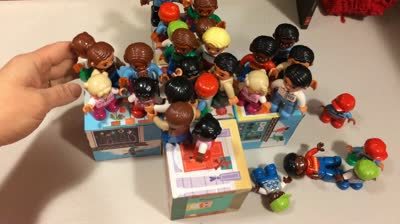
Here’s how I teach my kids about this. What do people look like when they’re defending a claim they’ve staked?
[image error]
Defending your turf (staking your claim) means that you are always kicking someone out or defining yourself over against another group.
What do they look like when they have taken up their cross?
[image error]
Taking up your cross means you love God most and willingly go together with everyone else clinging to God.
What makes a difference is not where you live, but in whether you’ve pulled up your stake (tou stavrou) in the world and taken up your cross (tou stavrou).
Here’s a little video summary of a lesson I teach the children.
Notice how our relationships to others are formed. Are we kicking people on and off our territory? No. We’re mutually embracing God, and that means we go together.
The only real Christians are those who love God and daily choose to cling to Christ over and above any and every other form of identity. We might not know what they look like or be able to recognize them by their addresses or where they work or send their kids to school or how they vote, but we will know them by their love.
If you give an exceedingly charitable reading of the Benedict Option, you might say I’ve simply restated the thesis here, the broad call to fidelity (which I find too obvious to warrant the attention and controversy). But there’s a major problem with the Benedict Option, and that’s in its assumptions about who is out and who is in.
If we say that faithful Christian living aligns with one political party or philosophy, we have gone back to staking our claims in the world’s systems rather than taking up the cross.
We have sought to find genuine Christians apart from Christ.
The moments of truth are not so garish as election cycles and polemics (fighting words). Clinging to the Cross doesn’t make us rich or famous or interesting or even righteous. It makes us loving.
They will know we are Christians by our love.
Find my other Hands-On Sunday School Lessons here (affiliate link). This series of lessons is accessible to concrete thinkers (such as those with autism, ADHD, and learning disabilities). Hands-On Sunday School Lessons Volume Two: Parables will be out later this spring.


March 17, 2017
Book Review and Activity: In the Candles Glow
Last Lent, the children and I were part of a church group that took several months to study the meaning of the items in a typical Orthodox Christian home prayer corner. We took an interactive approach to each part, learning about icons, incense, the Bible, and candles.
For the lesson on candles, the focus was on how we offer ourselves to God when we light a prayer candle. The candle is a sort of self-offering. To explore the idea, we used gold beeswax sheets to make little designs that we could stick to small beeswax candles. In our family, the little candles became a staple on birthday cakes and Vasilopitas and Name Day cakes and feast day cakes. The children connected to the ideas of the candles as self-offering and beautifying our lives through prayerful, virtuous living. This year as Lent began, I realized those well-loved candles had burned down. We were about ready to decorate new candles, when I came across this beautiful Orthodox Christian children’s book on a friend’s blog. I immediately ordered a copy.
In the Candle’s Glow by Elizabeth Crispina Johns fit perfectly with my family’s practice of decorating feast day cake candles!
This beautifully illustrated book shows a prayer candle from bee to billowing prayer. The little girl protagonist, Felicia, is so like my little daughter: She has a hard time being still, though she’s reverent; She thinks concretely about prayer. For a concrete thinker like my dear daughter, the metaphor of the candle flame containing and lifting Felicia’s prayers to God was apt and meaningful.
Since it was time to refresh our special beeswax candle supply, we made an evening of reading the book together and decorating the candles. My daughter loved the story and seemed to connect especially to the way Felicia’s prayers were represented in the candle’s flame. She and I have met twice now to read the book and make more candles. It’s become a way for us to talk about the sacred in terms that are easier to grasp.
 Here’s my daughter with the first prayer candles we decorated after reading the book. As we pressed the wax, we talked about how kindness and love make us even more beautiful to God.
In the Candle’s Glow Candle Decorating Activity
Supplies:
In the Candle’s Glow by Elizabeth Crispina Johnson
Stockmar Decorating Beeswax, Gold
Small Beeswax Candles (such as these)
Scissors
Cut small strips of beeswax from the larger decorating sheet to make crosses, dots, Chrismons, and other patterns. Warm the wax between your hands and press onto the beeswax candles.
We save these decorated candles for special cakes at home or to burn in our home prayer corner.
Options: If you would like to use this method to decorate a baptismal candle, adjust the size to a large taper candle. Though the golden decorations are still beeswax, it’s probably best to consult your priest before burning a decorated candle in the prayer stands. It could be a meaningful way to help concrete thinkers (such as persons with autism or persons stuck in grief) to offer themselves more fully in prayer.
I did not receive a free copy of this book or any compensation for this review. I wrote it because I want to share every way I can find to help children with autism connect with the Orthodox Christian faith. The links throughout this post are Amazon affiliate links. Please consider shopping through the links to help support this blog and my family.


March 15, 2017
Parables of the Kingdom for Concrete Thinkers: A Review of The Suitcase by Jane G. Meyer
As you know if you’ve read recent posts, two of my children have autism. One of the gifts of autism is the ability to think concretely about big, beautiful ideas. I had been pondering how much of my teaching style relies on that very gift, when I had the opportunity to review The Suitcase by Jane G. Meyer.
[image error]
This poignant story of faith features a boy with typical autism characteristics. I highly recommend it for Christian families who want to look deeper into the parables of the Kingdom of God, especially if those families have members who are concrete thinkers.
Thomas, the stories protagonist, has many of the hallmarks of a boy with autism: he enjoys spinning and lining up toys and a favorite quiet spot and talking at length about subjects he loves. I was immediately fond of Thomas, as he reminds me so much of many of the persons I love.
I love two things especially about this story:
The parables about the Kingdom of God are represented in terms of the concrete thinking that is recognizable and accessible to people on the autism spectrum.
Thomas is thoughtful about his faith and takes it seriously enough to fill a suitcase with items he’ll need to enter the Kingdom of God.
It’s rare to find a resource, much less a beautifully illustrated children’s book, that shows concrete thinking as a gift. It’s even rarer to find autistic children shown to be gifted with insights about faith.
I plan to use this book to supplement discussions with my children about the meaning of Jesus’ parables of the Kingdom of God. We will probably also read the book in our church’s children’s groups, HOPE & JOY. I like that Thomas’ family is multi-ethnic, and the group scene at the end of the book includes a diverse group of adults and children. It’s good for children to recognize themselves in books, especially when the children are concrete thinkers.
Families will enjoy finding references to each of the parables in Thomas’ suitcase. My favorite was the mustard seed. The seed is small, but Thomas went to great lengths to find it. The artwork, lovely throughout, is especially poignant here in conveying the earnest faith of a young boy who takes God at his word.
[image error]
Image from The Suitcase, courtesy of author Jane G. Meyer.
I received a reading copy of The Suitcase in exchange for an honest review. You can find The Suitcase now on Amazon (affiliate link). It makes an excellent Easter/Pascha gift for the children in your life.


February 24, 2017
A Love Letter to My Kids with Autism
My Dear Ones,
I wake in the wee hours to pray over you and ponder how to make the world as honest as you need it to be. You are sincere and intractably hopeful. I want everything to reveal itself to you in its beauty.
I spend my evenings making apocalypses for you. Here is a chart that will make the day fall into a pattern. Here is mirror that reveals prayer as joy. Here is a little game that charms the teeth out of sequencing.
When you, my boy, sing with me, and you, my girl, cover your ears when I sing, I know it is because you both understand the power of music to reveal the heart.
I would have wrapped myself around you like a pocket, like I did when you were tiny, and shaken my love-drunk fist at the world to frighten it away. I would have done so, if you could have seen its beauty through a grumpy bear of a mama.
But I have learned to hold my drink, of love, and I know that for you two, I cannot give up too soon my role as place for you. Every mother is a person and a place to her children. Each of you lived inside of me and knew me as your first home. I am not your walls any longer, but I can build you windows.
I will draw a frame around a bird for you to know the sky. I will make a circle for your trains so you can rejoice in the freedom of motion. The bird comes back. The train comes back. There is nothing to fear.
When you lose yourself in time, and you lose yourself in space, and I am here holding you and squeezing your hands until you know you are here and breathing big breaths with you until I am lightheaded and you know that you are now, I want you to know I love you then. I want the assurance of your loveliness to draw your hands back to you and draw you back into the present with each breath.
I don’t know if you will ever tell me that you love me, but please know that I did not become a parent in order to be loved. You are children of joy, and I love you. If you cannot please my ears with sweet words, please know you please my heart by your very being.
I used to think of myself as a prophet and a teacher. I used to think I was pretty smart. Maybe I am those things. Maybe prophets prepare the way of the Lord by rolling Thomas the Train over a little boy’s back till the boy giggles and makes eye contact. Maybe teachers and smart people spend too much money on the exact Disney Princess doll dress that a toddler sibling destroyed, so that a little girl can tuck her Anna doll into bed just so. Maybe when we dance in the kitchen, and I get you to smile, King David is beside us, dancing like he danced before the Ark.
I wish I had not ignored autism before you came. I wish I had not bought the hype that says autism is damage and simplicity. You are different, not damaged. You are overly complex, not too simple to function. You are not cold, but you feel everything more deeply and at once.
I put together the pieces of my own history as I try to fit our lives together. I remember myself in a time when quiet children were considered “good” and beauty sufficed for boundaries. I got away with my atypical brain undetected. I remember little me, spinning and spinning so I could feel safe and happy. How the earth and ground seemed to love my feet after I had spun enough, and how frightening it was until I could feel the ground again. I remember my puzzlement when my mother grew angry at me for lining up all of my toys along the walls when she asked me to clean. I remember the long hours of silence when I pinched dirt into hallways and gardens and mazes for doodlebugs under our kitchen windows. I remember the feeling of safety when my dog sat on my legs and how I begged my mother to squish me on the couch (but she wouldn’t, because she was afraid of hurting me). I would dig under the dirty clothes till they rested on top of me in a heavy pile, and I would fall asleep in the comforting pressure. I remember learning to hear lies in the music of voices.
I see the gifts within the burdens of my childhood: Living in a strange world filled with liars and patterns sharp as knives. The first time my standardized tests revealed the giftedness behind my quiet and fear. The math brain that didn’t look like a math brain because it loved fractals, not multiple choice. The gift of an abusive family that made me learn body language because my life depended on it. The gift of poverty among people who speak plainly and disdain artifice. (I would not have survived in a middle class world, with its prevarications and low affect.) The gift of having to work five times harder for everything, because I had to learn the object and the people and what they wanted to know and which part of what I knew they wanted to know and how to tell them what they wanted to know that I knew, and how to hide that I knew more than they wanted me to know. Most of school is not knowledge, but filtering. I always see too much, the tiny connections between things and the vast network, the large and small together. I had the hardest time narrowing down paper topics. I had the hardest time learning which correct answer was wanted. I learned the code within the questions people asked – usually. I grow weary of people who lie too much or assume too much that I am like them. I have to forgive more than other people because I cannot filter out the constant stream of dishonesty and disregard and disrespect and thoughtlessness that most people do not notice, because they have filters. I am a profoundly intuitive teacher now, and I can forgive even the things I’d rather not see.
This matters to you, children, because I can help you navigate this lying world. I will show you how to forgive and how to love anyway. Love is the key to getting through the too-loud, too-cruel, too-much, facile, shallowness that hides the good stuff.
We can see right through the veneer, children. To us, God is the God of all living. To us, every place is thin. Emotions will waft around the people you meet like miasma, and you will learn to reach out a hand or to speak a word or breathe a prayer to sanctify them. You will learn to have compassion without losing yourself. You will learn to feel the ground under your feet. Through those precious toes I’ve counted so many times, you will feel the vibrations of the footsteps of saints walking with you on the journey. You will feel the throb of earth that was broken open in the Resurrection and the eternity that has sought you to make you ripe and whole right now, right here. Faith is real to you, children, because you live on the inbreaking edge of God’s Kingdom. The GodMan holds you and heals you in time and space, and you will see Him when you are brave enough to look.
This matters to you, children, because I will look for you through every difficulty we face together. When you pinch my throat in terror, or when you scream into my ears for an hour, I will keep looking for you till I find you. I will point to the pictures of your feelings till your fear and rage and hurt subside. I will hold you in the middle of the night for hours when you wake up lost, and I will speak peace to you in words and hugs.
I can see what’s happening. I know that you are working five times harder than everyone else. I know you are tired.
I cannot help but notice you blossoming. You are never unimportant to me, and my heart gives thanks to see you.
I will cup your face in my hand and whisper to you that you are a joy to me. I will drop kindnesses like flowers into your laps and press love onto your shoulders like a protective mantle.
There is no shame in you, my children. You are wonderful.
You are not a puzzle to me or a problem to be solved. You are a mystery, so full of goodness that it’s hard to find a place to start.
I will start in the usual way with us. I will take your hand and kiss your palm and tell you a truth. Mama loves you. Mama loves you.


February 20, 2017
Prayer for Literal Thinkers
My oldest daughter has autism and often asks me very specific questions. If I tell her to pray, she asks me how. She doesn’t mean that I should only tell her the words to say. She wants to know the meaning of prayer.
A couple of weeks ago, she got frustrated after bedtime prayers and kissing icons. She said, “But how can I pray?”
(Again, she wasn’t asking about the words to say, as she knows the Lord’s Prayer and will repeat prayers that we guide.)
I had a sudden gleam of inspiration for how to tell my literal, visual thinking daughter how to pray.
Imagine everyone you love and every beautiful thing one at a time. Think of what they would look like if God lit a candle in them on the inside. That’s prayer. Think of every part of your life, every circumstance, and every story, and ask God to light it from the inside with his love. That’s prayer.
[image error]
My daughter loves birds. We thank God for birds to help her calm down. Over the weekend, her favorite bird flew into the living room to visit her. It was a moment of pure grace and joy.
Like so many practices that communicate better with a visual aid, prayer as I described it to my daughter can be done with physical symbols. I picked up a few supplies over the next week and gathered the sheet protectors we had on hand. {Buy the transparency film HERE and gold metallic paper HERE using my Amazon affiliate links if you’d like to support my blog.}
[image error]
We recently purchased a color laser printer to accommodate the many therapeutic visual aids my children need.
On Sunday morning, my husband woke up sick. His fellow preschool Sunday school teacher was out of town, so I filled in. With the help of 8 preschoolers and toddlers, I taped gold mylar paper to the wall.
We talked about light. The sun gives light. The ceiling lights give light. The candles in church give light. The gold in icons reflects light and symbolizes the light of God.
Everyone looked in the gold paper. It was like a mirror.
[image error]
Since we’re Orthodox, the language of icons with their gold backgrounds already shows us the way God shines through the creation that He saves. Many of the pages in my daughter’s visual prayer book are icons like this one of Jesus blessing the children.
What if we were lit from the inside by a candle from God? We said thank you to God for making us.
We learned that Psalms are songs that God’s people have sung for thousands of years. We adapted the Byzantine chant tune for Psalm 135 (136) and thanked God for several important parts of the children’s lives: our patron saint, St. Barbara, their families, their teachers and classes, and their pets. (As I get a chance, I’ll add to their transparencies so that they have a broader repertoire of images to guide their prayer.)
[image error]
We thank God for St. Barbara, our dear patroness. The static cling between the mylar and the transparencies keeps them on the wall.
What do we do when we pray? We thank God for His love shining through every part of what He made.
Tonight, I put together my daughter’s portable visual prayer book. I cut a sheet of the gold paper in half, folded it over a transparency page to keep it in shape, and slid it into a sheet protector. I trimmed the excess and taped the top closed. I’m printing icons, birds, family photos, and people she loves on transparencies this week. By Lent, she’ll have a visual prayer book, a way to hold her loves up to the light of God represented by the gold.
I hope this prayer method helps other Orthodox families with special needs as well.
It’s simple, though it takes a little while to set up. The act of moving the pages and looking with intent gives a filter to prayer that older persons might access through becoming iconographers, perhaps. That framework enables a deeper practice for children with all types of neurological function.
***
[image error]
The prayer board is the short cut for the visually adapted prayer method above.
I also made a decision board for my daughter that I’m sharing here, in case it might help other children who loop in church. We take a quiet book with stickers as well as the Visual Schedule for Orthodox Liturgy with us each Sunday, along with some aids for sensory needs.
Decision Board for Use in Church: choice-in-church
Feel free to download and share, but do not reproduce for profit, as the images are copyrighted by Boardmaker. I would appreciate a link back to this blog, since I write about accessibility in the Church and would like to make connections in the Orthodox special needs community.