Evo Terra's Blog, page 24
November 22, 2013
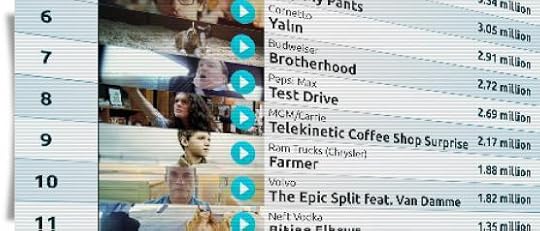
Top 20 Viral Ads for 2013
Is it bad that I've only seen 2 out of the top 5?
Well... the idea behind...
Top 20 Viral Ads for 2013
Is it bad that I've only seen 2 out of the top 5?
Well... the idea behind branded videos is to get people watching. And that happened with these ads in droves. Yet I still have no idea what the camel is so compelling. Sheep.
Is it bad that I've only seen 2 out of the top 5?
Well... the idea behind branded videos is to get people watching. And that happened with these ads in droves. Yet I still have no idea what the camel is so compelling. Sheep.


Five Publishing Personas
#5. Disruptors
The last persona I'll discuss in this series is that of disruptor...
Five Publishing Personas
#5. Disruptors
The last persona I’ll discuss in this series is that of disruptor. Every industry has disruptors, for without them (us, if I may be so bold) there would be no innovation. And there’s plenty of that in publishing today happening at almost every level and layer. Disruptors can be individuals, startups, standards groups, pivoting entities, and more.
Previous posts in this series:
▶ Preamble (http://goo.gl/dZoZcQ)
▶ RFAS (Reader first, author second) (http://goo.gl/uVkvRs)
▶ Author-first authors (http://goo.gl/QqXNcK)
▶ Publishers (http://goo.gl/wEZzSm)
▶ Makers (http://goo.gl/4LvHih)
Disruption is often confused with destruction. Some of that is of our own design, as we choose language like “break things” rather than “build things”. (Candidly, one of those is more likely to get the attention of those stuck in the status quo.) But we — typically —don’t just break things and leave them lying around. We like to pick up the pieces, discard those that need discarding, polish up those that weren’t getting appropriate attention, and add in a few others to create something new and — hopefully — improved.
Because of the diverse entities approaching from myriad angles, standardizing on a single motivation seems a daunting task. But if you boil down all the various motivations you might think of, at the root of most is this: a genuine desire for change. Not change for the sake of change (though I admit that has a certain appeal to me,) but a change for the better. Not the greater good or pure altruism. But a change that better delivers on unmet needs. Changes that improve a process or create a better/faster/cheaper product. Or change that opens up more books to more people.
Our time-horizon is concentrated on that change event toward which we are working. In some cases, we’re up against the juggernaut of the Publishing Industry, and that event is a long ways off. Others are busy creating alternate paths that can bring about that event in a more timely fashion.
But in all cases, we’re focused on the outcome of that change event. We’re the dreamers of something new, and we’re not satisfied until we’re able to see our vision become a reality. We have ideas, but understand that ideas not put into action are of no value. Not yet, anyhow. We know we have to create lots of outputs — some of which will not be understand, and many of which will crash-and-burn. But those are only outputs, and every failed output is one less potential to explore, letting us work toward the outcome, when our disruptive activities take root, and real change happens.
And now that I’ve posted all five personas, I see that I need a wrap-up piece. I’ll write and post that sometime over the weekend. Here’s what you missed:
All posts in this series:
▶ Preamble (http://goo.gl/dZoZcQ)
▶ RFAS (Reader first, author second) (http://goo.gl/uVkvRs)
▶ Author-first authors (http://goo.gl/QqXNcK)
▶ Publishers (http://goo.gl/wEZzSm)
▶ Makers (http://goo.gl/4LvHih)
▶ Disruptors (you are here)
Creative commons licensed photo from Flickr: http://flic.kr/p/P22Ry

#5. Disruptors
The last persona I’ll discuss in this series is that of disruptor. Every industry has disruptors, for without them (us, if I may be so bold) there would be no innovation. And there’s plenty of that in publishing today happening at almost every level and layer. Disruptors can be individuals, startups, standards groups, pivoting entities, and more.
Previous posts in this series:
▶ Preamble (http://goo.gl/dZoZcQ)
▶ RFAS (Reader first, author second) (http://goo.gl/uVkvRs)
▶ Author-first authors (http://goo.gl/QqXNcK)
▶ Publishers (http://goo.gl/wEZzSm)
▶ Makers (http://goo.gl/4LvHih)
Disruption is often confused with destruction. Some of that is of our own design, as we choose language like “break things” rather than “build things”. (Candidly, one of those is more likely to get the attention of those stuck in the status quo.) But we — typically —don’t just break things and leave them lying around. We like to pick up the pieces, discard those that need discarding, polish up those that weren’t getting appropriate attention, and add in a few others to create something new and — hopefully — improved.
Because of the diverse entities approaching from myriad angles, standardizing on a single motivation seems a daunting task. But if you boil down all the various motivations you might think of, at the root of most is this: a genuine desire for change. Not change for the sake of change (though I admit that has a certain appeal to me,) but a change for the better. Not the greater good or pure altruism. But a change that better delivers on unmet needs. Changes that improve a process or create a better/faster/cheaper product. Or change that opens up more books to more people.
Our time-horizon is concentrated on that change event toward which we are working. In some cases, we’re up against the juggernaut of the Publishing Industry, and that event is a long ways off. Others are busy creating alternate paths that can bring about that event in a more timely fashion.
But in all cases, we’re focused on the outcome of that change event. We’re the dreamers of something new, and we’re not satisfied until we’re able to see our vision become a reality. We have ideas, but understand that ideas not put into action are of no value. Not yet, anyhow. We know we have to create lots of outputs — some of which will not be understand, and many of which will crash-and-burn. But those are only outputs, and every failed output is one less potential to explore, letting us work toward the outcome, when our disruptive activities take root, and real change happens.
And now that I’ve posted all five personas, I see that I need a wrap-up piece. I’ll write and post that sometime over the weekend. Here’s what you missed:
All posts in this series:
▶ Preamble (http://goo.gl/dZoZcQ)
▶ RFAS (Reader first, author second) (http://goo.gl/uVkvRs)
▶ Author-first authors (http://goo.gl/QqXNcK)
▶ Publishers (http://goo.gl/wEZzSm)
▶ Makers (http://goo.gl/4LvHih)
▶ Disruptors (you are here)
Creative commons licensed photo from Flickr: http://flic.kr/p/P22Ry
November 20, 2013
Five Publishing Personas
#3. Publishers
For this instance, I'll use the term publisher to describe ...
Five Publishing Personas
#3. Publishers
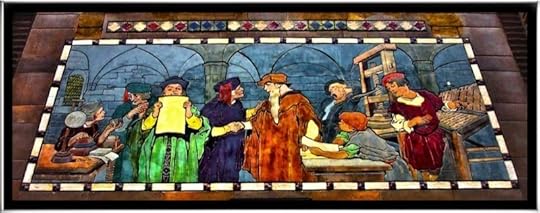
For this instance, I’ll use the term publisher to describe a business entity. Publishers are in the business of publishing books. Lots of them. And not just books they personally write. In fact, that’s the exception to the rule. Self-publishing effectively eliminates the need for a publisher, but the business of publishing isn’t going away anytime soon. But let’s leave aside the troubles of the publishing industry and focus on the person (or persons) behind a publishing company.
Previous posts in this series:
▶ Preamble (http://goo.gl/dZoZcQ)
▶ RFAS (Reader first, author second) (http://goo.gl/uVkvRs)
▶ Author-first authors (http://goo.gl/QqXNcK)
Since publishers run a business, their motivations aren't hard to predict: running a profitable business that stays in business. They have to not only keep the lights on, but also have to pay salaries, have a fiduciary responsibility to their employees, and have enough operating capital to absorb the risk inherent to publishing books that may or may not sell. And since they are a business, they need to turn a profit.
All of those things require a publisher to have a longer time-horizon than our other personas. They have to concentrate on changes to their industry (read: upheaval,) changing book consumption habits, competing publishers, alternate media sources, governmental regulation, cash flow ... all balanced with the changing needs of their authors and the fickle wants of their customer base. Oh, and they have to keep tabs on those pesky disruptors that keep moving the ball.
Surrounded by a sea of outputs, Publishers must focus on outcomes. Making a better overall experience for authors that deflects (or delays) the competition (including self-publishing). Turning a profit. Successfully launching a new imprint. None of these are ever finished, and each require a host of well considered outputs to drive to the desired outcome. Not only does their focus need continually shift to track to these outcomes, but new opportunities for better or additional outcomes are always there. They have to be managed, lest it becomes overwhelming, leading to indecision and blown chances.
Tomorrow, I'll talk about Makers — the people who really make publishing work.
Current posts in this series:
▶ Preamble (http://goo.gl/dZoZcQ)
▶ RFAS (Reader first, author second) (http://goo.gl/uVkvRs)
▶ Author-first authors (http://goo.gl/QqXNcK)
▶ Publishers
Creative Commons licensed image via Flickr: http://flic.kr/p/arywJa
#3. Publishers
For this instance, I’ll use the term publisher to describe a business entity. Publishers are in the business of publishing books. Lots of them. And not just books they personally write. In fact, that’s the exception to the rule. Self-publishing effectively eliminates the need for a publisher, but the business of publishing isn’t going away anytime soon. But let’s leave aside the troubles of the publishing industry and focus on the person (or persons) behind a publishing company.
Previous posts in this series:
▶ Preamble (http://goo.gl/dZoZcQ)
▶ RFAS (Reader first, author second) (http://goo.gl/uVkvRs)
▶ Author-first authors (http://goo.gl/QqXNcK)
Since publishers run a business, their motivations aren't hard to predict: running a profitable business that stays in business. They have to not only keep the lights on, but also have to pay salaries, have a fiduciary responsibility to their employees, and have enough operating capital to absorb the risk inherent to publishing books that may or may not sell. And since they are a business, they need to turn a profit.
All of those things require a publisher to have a longer time-horizon than our other personas. They have to concentrate on changes to their industry (read: upheaval,) changing book consumption habits, competing publishers, alternate media sources, governmental regulation, cash flow ... all balanced with the changing needs of their authors and the fickle wants of their customer base. Oh, and they have to keep tabs on those pesky disruptors that keep moving the ball.
Surrounded by a sea of outputs, Publishers must focus on outcomes. Making a better overall experience for authors that deflects (or delays) the competition (including self-publishing). Turning a profit. Successfully launching a new imprint. None of these are ever finished, and each require a host of well considered outputs to drive to the desired outcome. Not only does their focus need continually shift to track to these outcomes, but new opportunities for better or additional outcomes are always there. They have to be managed, lest it becomes overwhelming, leading to indecision and blown chances.
Tomorrow, I'll talk about Makers — the people who really make publishing work.
Current posts in this series:
▶ Preamble (http://goo.gl/dZoZcQ)
▶ RFAS (Reader first, author second) (http://goo.gl/uVkvRs)
▶ Author-first authors (http://goo.gl/QqXNcK)
▶ Publishers
Creative Commons licensed image via Flickr: http://flic.kr/p/arywJa
I have more than a mild fascination with black IPAs. And when they are doubles, all the better!
A Mountain...
I have more than a mild fascination with black IPAs. And when they are doubles, all the better!
A Mountain Standard from Odell.

A Mountain Standard from Odell.
November 19, 2013
Five Publishing Personas
#2. Author-first authors
Author-first authors (I'll just call them authors...
Five Publishing Personas
#2. Author-first authors
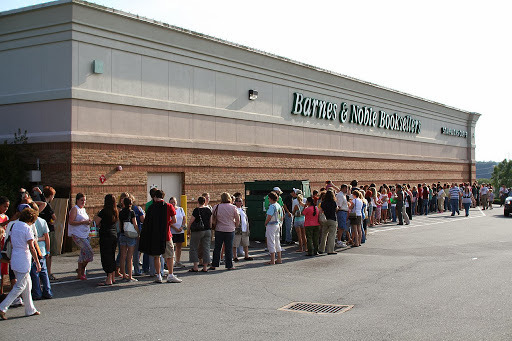
Author-first authors (I’ll just call them authors because alliteration bothers me) view modern publishing as a business venture. It may not be all about the money, but the ability to make (or at least probability of making) make money at their craft is of primary importance to the author.
Previous posts in this series:
▶ Preamble (http://goo.gl/dZoZcQ)
▶ RFAS (Reader first, author second) (http://goo.gl/uVkvRs)
Note the word probability in that statement. Not possibility. Not promise. Probability is calculated and measured and requires the author to change the conditions in his/her favor to get to the outcome. But more about that in a moment.
Authors are motivated by paying the rent. This is their job, or they want it to be their job. As such, they know when to abandon sunk costs and slay sacred cows. They dedicate time and money to improving their craft. They associate themselves with professionals who can help and further their careers. They track — and therefore trend toward — success.
To that end, authors have a time-horizon that extends beyond _right-now_ and what’s-next. They spend time considering and contemplating emerging and disruptive trends, looking for natural fits in surging genres, changing consumption habits (audio books, ebooks, books-in-browsers, etc.,) and trans/cross/multimedia opportunities for existing and future works.
They are focused on outcomes more than outputs. Of course they need to finish their book, work with their editors, engage with fans and do all the other things necessary to a modern author. But these outputs are part of their daily/weekly/monthly routine that, when well-scripted and well-orchestrated, lead to real outcomes. They focus not just on what they want to write, but what they need to write in order to stay relevant and in business. Experiments are fine, but continuing an unselling series of Victorian-themed hard boiled novels because you have a story to tell isn’t a smart business move.
Tomorrow, I'll talk about Publishers. The people, not the industry.
Current posts in this series:
▶ Preamble (http://goo.gl/dZoZcQ)
▶ RFAS (Reader first, author second) (http://goo.gl/uVkvRs)
▶ Author-first authors
Creative commons photo from Flickr: http://flic.kr/p/2kaJWL
#2. Author-first authors
Author-first authors (I’ll just call them authors because alliteration bothers me) view modern publishing as a business venture. It may not be all about the money, but the ability to make (or at least probability of making) make money at their craft is of primary importance to the author.
Previous posts in this series:
▶ Preamble (http://goo.gl/dZoZcQ)
▶ RFAS (Reader first, author second) (http://goo.gl/uVkvRs)
Note the word probability in that statement. Not possibility. Not promise. Probability is calculated and measured and requires the author to change the conditions in his/her favor to get to the outcome. But more about that in a moment.
Authors are motivated by paying the rent. This is their job, or they want it to be their job. As such, they know when to abandon sunk costs and slay sacred cows. They dedicate time and money to improving their craft. They associate themselves with professionals who can help and further their careers. They track — and therefore trend toward — success.
To that end, authors have a time-horizon that extends beyond _right-now_ and what’s-next. They spend time considering and contemplating emerging and disruptive trends, looking for natural fits in surging genres, changing consumption habits (audio books, ebooks, books-in-browsers, etc.,) and trans/cross/multimedia opportunities for existing and future works.
They are focused on outcomes more than outputs. Of course they need to finish their book, work with their editors, engage with fans and do all the other things necessary to a modern author. But these outputs are part of their daily/weekly/monthly routine that, when well-scripted and well-orchestrated, lead to real outcomes. They focus not just on what they want to write, but what they need to write in order to stay relevant and in business. Experiments are fine, but continuing an unselling series of Victorian-themed hard boiled novels because you have a story to tell isn’t a smart business move.
Tomorrow, I'll talk about Publishers. The people, not the industry.
Current posts in this series:
▶ Preamble (http://goo.gl/dZoZcQ)
▶ RFAS (Reader first, author second) (http://goo.gl/uVkvRs)
▶ Author-first authors
Creative commons photo from Flickr: http://flic.kr/p/2kaJWL
An overload of tinnitus today finds me with ear plugs in place of my hearing aids and wearing studio...
An overload of tinnitus today finds me with ear plugs in place of my hearing aids and wearing studio headphones to block out the world.
The specialist can't see me until late this afternoon, so I'm going to try and nap. This Joseph James 5th Anniversary Barrel Aged Smoked Wee Heavy clocks in at 14%. That'll help, and maybe I'll stop being Mr. Cranky Pants.
In the meantime, read my post about the Author-first author publishing persona and tell me what you think of it or the series: http://goo.gl/uVkvRs

The specialist can't see me until late this afternoon, so I'm going to try and nap. This Joseph James 5th Anniversary Barrel Aged Smoked Wee Heavy clocks in at 14%. That'll help, and maybe I'll stop being Mr. Cranky Pants.
In the meantime, read my post about the Author-first author publishing persona and tell me what you think of it or the series: http://goo.gl/uVkvRs
This sort of shit drives me nuts. Then again, I'm in a foul mood today, and that's probably clouding...
This sort of shit drives me nuts. Then again, I'm in a foul mood today, and that's probably clouding my judgement. No matter, I'll push on.
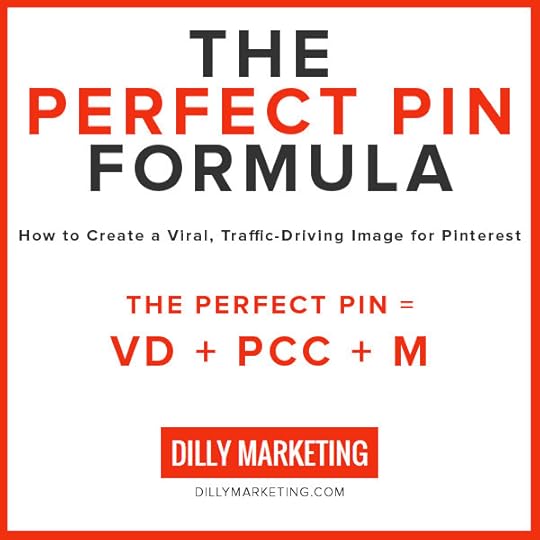
Putting aside the ludicrous One Right Way implications for a moment, the authors of this piece make the assumption that getting pinned thousands of times or driving thousands of visitors to a site = marketing success!
Forgive me, but bullshit. I can see how these might be indicators of success, but they are merely tick marks on a wall, not the ultimate outcome.
I have no beef with the first two stated goals (getting your pins noticed and repinned a lot.) But the third -- drive more click-throughs to your site -- is misguided at best.
All traffic is not created equal. And a click-thruough should not be the assumed end goal. Even though I'm no Pinterest freak, I assure you that the vast majority of Pitnerest users will not appreciate the withholding of quality content just so your site's Google Analytics numbers creep up by one.
Putting aside the ludicrous One Right Way implications for a moment, the authors of this piece make the assumption that getting pinned thousands of times or driving thousands of visitors to a site = marketing success!
Forgive me, but bullshit. I can see how these might be indicators of success, but they are merely tick marks on a wall, not the ultimate outcome.
I have no beef with the first two stated goals (getting your pins noticed and repinned a lot.) But the third -- drive more click-throughs to your site -- is misguided at best.
All traffic is not created equal. And a click-thruough should not be the assumed end goal. Even though I'm no Pinterest freak, I assure you that the vast majority of Pitnerest users will not appreciate the withholding of quality content just so your site's Google Analytics numbers creep up by one.
So I pretty much hate Klout.
No, that's too aggressive. Klout pisses me off, therefore I choose to ...
So I pretty much hate Klout.
No, that's too aggressive. Klout pisses me off, therefore I choose to ignore it. Yep. Much more accurate.
As I was writing this today, I realized I might should better (where I grew up, that's good English) log in. And when I did, I was presented with two choices: Login with FB or with Twitter.
[insert Alan Rickman table flip here]
The vast (and by that I mean 90% or more) of my engagement comes from Google+ and not FB or Twitter. Now do you see why I'm enraged? But no matter... I shall press on.
_Klout would like to post to Facebook for you."
Uh... no. I don't want Klout or anyone else posting for me. I know how to do that, and don't really need your help. So piss off. (Which I can tell them to do with "Skip"!)
OK, I'm getting off topic. What I really came here to talk about was the linked article, "Why a Klout score may be an appropriate marketing metric".
And I have to say... I get it. I can point to lots of (well, a few) screw-ups that Klout has made over the years. But... it's the best we've got. And gaming douches notwithstanding... it's not bad. Given the conditions laid (lain?) forth by the author, I see how it might be the most useful metric we have. And perhaps -- just perhaps -- become a truly disruptive force.
For now.

No, that's too aggressive. Klout pisses me off, therefore I choose to ignore it. Yep. Much more accurate.
As I was writing this today, I realized I might should better (where I grew up, that's good English) log in. And when I did, I was presented with two choices: Login with FB or with Twitter.
[insert Alan Rickman table flip here]
The vast (and by that I mean 90% or more) of my engagement comes from Google+ and not FB or Twitter. Now do you see why I'm enraged? But no matter... I shall press on.
_Klout would like to post to Facebook for you."
Uh... no. I don't want Klout or anyone else posting for me. I know how to do that, and don't really need your help. So piss off. (Which I can tell them to do with "Skip"!)
OK, I'm getting off topic. What I really came here to talk about was the linked article, "Why a Klout score may be an appropriate marketing metric".
And I have to say... I get it. I can point to lots of (well, a few) screw-ups that Klout has made over the years. But... it's the best we've got. And gaming douches notwithstanding... it's not bad. Given the conditions laid (lain?) forth by the author, I see how it might be the most useful metric we have. And perhaps -- just perhaps -- become a truly disruptive force.
For now.
For 2011-2012, there's been no change in cigarette use for middle and high school students, and the ...
For 2011-2012, there’s been no change in cigarette use for middle and high school students, and the use of newer tobacco products such as electronic cigarettes and hookahs is rising. These are products that take advantage of loopholes in restrictions on tobacco marketing, pricing and products and encourage children and youth to smoke. Learn more: http://huff.to/1bHmn1p.

November 18, 2013
Here's +Shannon Hernandez getting ready to talk +Google+ to a full conference room (~40 people) at +...
Here's +Shannon Hernandez getting ready to talk +Google+ to a full conference room (~40 people) at +TechPhx 2013!
And he's doing way too much sucking up to someone in this room.
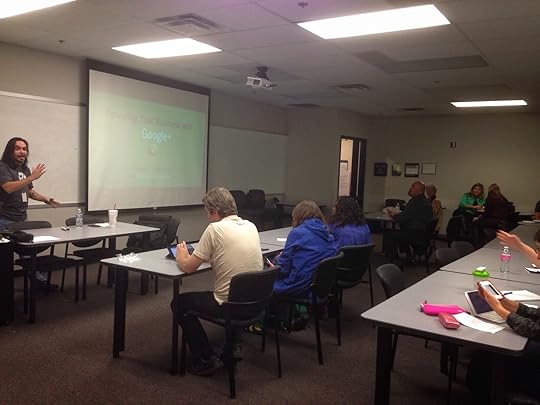
And he's doing way too much sucking up to someone in this room.