
Susan Spann's Blog, page 93
February 26, 2013
Getting Along On the Reef
Some people have the capacity to get along with everyone. I strive to be one of those people, to have genuine compassion for people I meet, and to strive to find common ground.
Little did I know I would find an example – and a mentor – on my reef.
My smaller male seahorse, Ghillie, spends most of his time in hiding. He’s shy by nature, preferring the shelter of corals to the glare of the overhead lights.

But when other residents of the tank decide to interact, Ghillie shows surprising patience and social facility. Red the fire shrimp sometimes tries to give Ghillie a “cleaning” by pulling the algae off the seahorse’s armored body. To my surprise, Ghillie tolerates the attention.

A week ago, Cygnus decided to check out Ghillie’s feeding bowl – an inverted clam shell glued to the rock near Ghillie’s favorite hitch.

I expected Ghillie to hide in a cave the moment Cyg approached, but instead he shared the bowl without complaint.

Most surprising of all, however, is Ghillie’s ongoing friendship with Emo the clownfish. Clownfish – maroons in particular – are territorial where their “hosts” are concerned. Our clownfish, Emo, hosts in a large anthelia at the front of the tank. He drives off other fish that approach, but for reasons known only to smaller brains than mine, Emo considers Ghillie a welcome friend.

They spend several evenings a week together in the anthelia, with never a hint of any trouble between them.
The lesson? Patience and proper temperament go a long way toward finding common ground – whether seahorse or human, a good thing to keep in mind.


February 25, 2013
WANACon, Fear, and an Unexpected Victory
On Saturday I had the honor of speaking at WANACon, the online writers’ conference sponsored by Kristen Lamb’s WANA International.
I’ve spoken at many conferences, to authors’ groups, in libraries, and on the radio. I spent five years as a law school professor and almost twice that many in adjunct teaching roles. I long ago passed the point where fear was a factor in public speaking.
Until this weekend.
As the hour of my talks approached, I found myself increasingly nervous – sick-to-the-stomach nervous, something I haven’t felt in over a decade. I told my husband about it, and (as usual) he found the solution almost at once: technology.
When I’ve spoken before, I’ve spoken either in person or (on the radio) with an interviewer guiding the talk. I’d never lectured via web-conferencing software, and the new experience took me out of my comfort zone. I wasn’t worried about the talks. I know my subjects and know them well. I was worried about interfacing with a computer instead of a human, and about goofing up because I had to lecture out of sight of my audience.
Those who know me probably find this funny. I’ve adapted to blogging, to Twitter and Facebook and Skype. I use FaceTime to talk with relatives on a regular basis, and I’m a huge fan of tech that lets me connect with family, friends and readers.
Yet WANACon scared my boots off. (Literally … I did the sessions barefoot.)
As it turned out, I didn’t have to worry. The technology worked exactly as planned and from what I could tell, the attendees enjoyed the sessions. After a nervous minute or two, I loosened up, established my bearings, and had a fantastic time. (Big thanks to Jami Gold for moderating, too – her confidence helped me re-establish my own.)
The experience taught me a valuable lesson about flexibility and preparation. My willingness to take a chance allowed me to reach an audience that I never could have reached in another way. Even so, if I hadn’t been well prepared, it wouldn’t have been as easy to conquer my fear. Having conquered it, however, I find myself looking forward to the next time I have the chance to reach an audience this way.
The lesson in this applies across the board: as authors and as people, we need to be willing to step outside our comfort zones, and to be as prepared as possible when we do. Facing fears is never easy, but the positive payoffs – for ourselves and for those we can help and reach – is more than worth the risk.
February 22, 2013
An Interview With Robyn Oyeniyi
Today we welcome Robyn Oyeniyi, author of LOVE VERSUS GOLIATH, a nonfiction work chronicling Robyn’s personal struggle to keep her family intact and alive while obtaining permission for her husband and step-children to live with her in Australia.
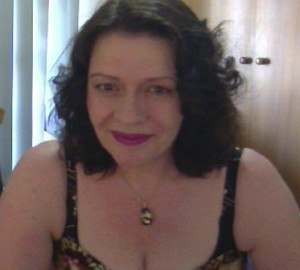
Robyn Oyeniyi is an Australian IT professional and CPA who spent many Sunday mornings writing her memoir detailing a traumatic battle against the government to be reunited with her husband and four step-children.
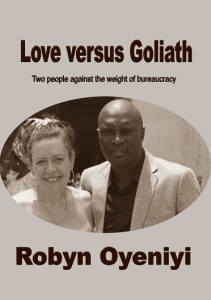
Nearly forced to flee her homeland to be with the man she loves, Robyn Oyeniyi battled her government and won after committing the cardinal sin: falling in love with and marrying an asylum seeker. LOVE VERSUS GOLIATH chronicles the pain, anguish, and trauma government interference caused in the lives of Robyn and her family.
I met Robyn through the Pitch Wars competition. Her experiences are compelling and fascinating, and I’m delighted that she agreed to join me for an interview today.
And now, on with the questions:
1. Where did you grow up? Will you share a story from your childhood?
I grew up in Kopara Falls, a remote area of the West Coast of the South Island of New Zealand. There were no schools close enough, so I studied by correspondence school until I went to boarding school at age 10.
We ran a sheep and cattle farm and I used to help my father deliver lambs. I once gave mouth-to-nose resuscitation to a calf after we had pulled the calf out of the mother using the tractor. The calf didn’t survive. Dad was breeding Charolais cattle. We were not allowed to import stock, just semen, so we had to breed out the local breed over generations. Charolais were a larger breed, so birthing problems were common.
2. What inspired you to write LOVE VERSUS GOLIATH?
The horror of what we went through was the primary inspiration. I want to show readers the truth of the system in the hope my doing so may lead to change. Not just in Australia, but globally. There are problems all over the world in the areas of treatment of refugees and, to a lesser degree, partner/spouse visas, yet when your own personal battle is over, it is so tempting to just be relieved and not fight for change. As a citizen of my country, I feel I was treated so badly by my country. The provisions of the ICCPR are not enshrined in our domestic legislation. There are limited avenues to seek compensation for the costs of fighting Goliath, who has endless financial resources. My husband was also treated badly, but as a non-citizen at the time, I can only look at his experience from a human rights perspective. While Australia certainly came good in the end, the process was devastating and I doubt I will ever fully recover my health.
3. If you could go back in time and share one writing lesson with “new writer you” before starting your manuscript … what would that be?
Start in the tense you mean to finish in! A lot of LOVE VERSUS GOLIATH was originally written in the present tense on my website. Editing from present to past is a very painful exercise, I discovered.
4. LOVE VERSUS GOLIATH is the true story of your family’s struggle to survive in the midst of assassination attempts, governmental red tape, and painful long-term separations. What did the process of writing the book teach you about yourself and your family?
The process of writing crystallized what we had been through. When you travel a journey such as ours, you tend to deal with each step as it happens, the overall picture gets lost. Writing LOVE VERSUS GOLIATH brought it all together and I realised my family and I did achieve pretty amazing things.
A reader’s comment probably sums it up.
“Just have to keep reminding myself that the tumble of emotions is the story of your and John’s horrible time with all of this and realising that THIS is what you actually went through and also to say to myself ‘these people are sharing incredibly intimate emotions of a horrifying time and it was REAL’ not something made up, this horror was real and that’s incredibly humbling.”
5. Do you have a favorite author or book? If so, who (or what) is it, and why?
I’m not sure I have a favourite author right now. As a reader, I have always been a sci-fi and history fan. I loved “The Dice Man” by Luke Rhinehart and “The Shore of Women” by Pamela Sargent, two very different books by very different writers. I remember loving Barack Obama’s “Dreams from My Father” and Sidney Poitier’s memoir “The Measure of a Man”.
I have three books on my “to read” list right now, all by Australian authors. “Am I Black Enough For You” by the wonderful Anita Heiss, “The Happiness Show” by the very “out there” Catherine Deveny and “Tomorrow Never Comes” by Vera Berry Burrows.
The answer, I suggest, is no favourites!
6. What did you find most challenging about telling your personal story in memoir form?
Very hard to go deep enough. I’m not sure I have really. It is hard to describe the trauma and my own reactions without sounding insane and none of us want to sound insane to our readers. How do you described being curled up in a ball in tears in a post office without sounding absolutely crazy? I don’t think I really solved that problem in the end.
7. Writing memoir is very different than writing pure fiction. How did you balance the obligation to tell the truth with the need to create compelling narrative sequences?
I think I was lucky. Because of the journey this memoir is relating, the truth lead to compelling narrative. I left out the hours and hours spent sitting at the computer or crying in bed alone – those are not very compelling events and were far too frequent!
8. What is the last book you read, and why did you read it?
Given the events of the last few years, I haven’t read much at all. There was no time. I believe the last book I read was Barack Obama’s “Dreams from My Father” and I read it because here was a man standing for election who, for America, was very different. I was intrigued. It was a great book and I highly recommend it!
9. What advice do you have for other authors considering writing a memoir?
I think the timing is critical. Leave it too long and details are forgotten. Write it too soon and it can be too painful. I wrote and then left it sit for months. Many months. I was terrified what I would think of it when I started editing again. Luckily, on the first fresh edit pass, I actually liked the manuscript. On subsequent edit passes, I discovered, the feelings varied. It is very hard to read your own life events over and over. Beta readers are a MUST! Absolute must. But don’t expect them all to agree. For example, in my case, two particular beta readers were totally opposed in their opinions. One loved the first half but wanted the second half condensed. The other loved the second half, but wanted the first half shortened. You can’t please all of the people all of the time!
I would advise one thing. In memoir it is what happened. Stay true to the journey.
And now, the speed round:
- Plotter or pantser?
As I have started a sci-fi, I’d have to say pantser. The characters make themselves in my head, I just write it down.
- Coffee, tea, or bourbon?
Coffee
- Socks or no socks?
NO SOCKS!
- Cats, dogs, or reptiles?
Dogs
- For dinner: Italian, Mexican, Burgers or Thai?
Thai
Thank you so much, Robyn, for joining me today!
You can find out more about Robyn and her journey on her website. LOVE VERSUS GOLIATH is available at Amazon, Copia, eBookpie, on iBooks , and in the Kobo store, as well as on Sony readers. It’s getting great reviews, and I look forward to reading it too!
February 21, 2013
How the Cat Got Its Claws
It’s no surprise that my debut Shinobi Mystery novel is titled Claws of the Cat.
It may surprise some of you, however, to learn that it wasn’t always so. The novel’s original title, SHINOBI, ended up as the name of the series instead. Although the decision to change the title didn’t originate with me, I’m actually very glad it worked out this way.
If you’d like to know more about how it happened, and who it was that suggested we call it Claws of the Cat (a hint: it wasn’t me, and it wasn’t my editor either) head over to The Debutante Ball … I’m telling the story there today.
Or, if publishing contracts are more your thing, you can find me at Chiseled in Rock, discussing Serial Killers Rights. (I get them confused sometimes.)
And if neither writing stories nor legalese floats your boat, please accept this gratuitous photo of a Flappy the Mandarin:
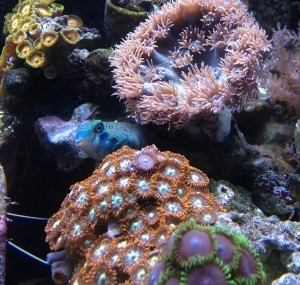
Have a great day!
What are you up to this afternoon? Let me know in the comments!
February 20, 2013
Learning to Find the Middle Ground
I mentioned last week that part of effective negotiation is finding and proposing a middle position both parties can accept. Today we look more closely at how that’s done.
Pretend that a publisher offers you 10% royalties on hardback sales (gross royalties on domestic sales) of your book.
You, the author, would prefer a higher percentage, but you know that this number is close to industry standard.
How do you meet in the middle?
You might ask if the publisher would consider escalating royalties at different sales levels. For example, 10% on the first 5,000 copies, 12% on sales 5,001-10,000, and 15% on sales 10,001 and above.
This represents a compromise.
The publisher might refuse, but you might have started a conversation that leads to a change in the contract. Instead of insisting on “more money now,” you offer an option that benefits both parties.
The same philosophy holds for other contract terms as well.
“Meeting in the middle” means looking beyond the numbers and finding a way to meet both parties’ needs. A three-step process for finding middle positions:
1. Figure out why the other side wants the term originally offered. What is the benefit gained?
In the case above, the publisher wants to make money. By offering you 10%, the publisher is able to pay off the expenses associated with publishing your book more quickly. The publisher’s goal is to make money, but it needs to make that money for two different reasons: first, to recoup its investment in your work, and second, to generate profits. A lower profit percentage is more acceptable after the first goal is met, so your solution should address that reality.
2. Figure out what you gain from your position, and how your gain relates to the other side’s goal.
Your desire to make more money isn’t too hard to dissect. When you look at this in light of the publisher’s need to recoup the investment, it seems pretty clear that you stand a better chance of obtaining what you desire (more money) when the publisher’s needs (to recoup its investment) are met.
3. Find a solution that helps each party advance its goals simultaneously.
Note this requires compromise, and compromise isn’t always on the table. (For example, most publishers will insist that lawsuits be brought in the state where the publisher is incorporated and does business. That term, and some others, will almost always be “take it or leave it.”) Where the point is negotiable, however, a mutually beneficial solution will often result in modification of the deal.
Here, your request to increase the royalty percentage after a certain benchmark represents a suggestion that once the publisher receives a return on investment, you would like to share a bigger slice of the pie. In many cases, publishers are willing to consider this kind of request (though the percentages and sales thresholds may vary).
Obviously, it’s hard to do this kind of analysis and negotiation if you don’t know industry standard contract terms – so learn them!
I’m always encouraging authors to learn about contracts, as well as the publishing business. When we finish this series, I’m starting one on publishing contract language – be sure to stay tuned!
Have questions about publishing contracts or negotiation? Feel free to ask in the comments – I really do love to hear from you.
February 19, 2013
Worldbuilding for Non-Planetary Engineers
A guest post by Tammy Salyer
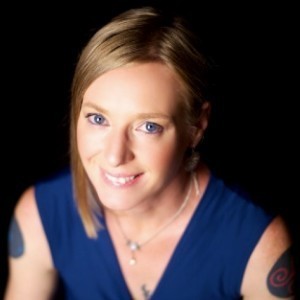
Long ago in a land far, far away, I began writing a fantasy novel. While the manuscript still sits in bits collecting virtual dust on my harddrive, I fondly remember the enjoyment that came with the process of making up an entire world from scratch. Little did I know when I was writing that trunk novel–creating maps of the geography, developing the culture and the social order, et cetera–that years later I would publish a science fiction trilogy. Yet, when people think of worldbuilding as a writing device, most of us tend to think of fantasy tales, and, in my case, that experience served to help me better think through and construct the society and physical settings for my novels.
Story conflict, which is primarily derived from a distortion of the norm, and worldbuilding are often interlinked, especially in genre fiction. Sometimes that distortion is more mild, such as in stories about unrequited love or missed opportunities, and less dependent on elaborate and variant worlds for the story conflict to unfold. But sometimes that distortion is more severe, even apocalyptic. The entire paranormal arsenal of zombies, vampires, and werewolves are based on the physical and mental distortion of human beings’ basic needs and desires, exacerbated by a distortion of the safety and security of well-ordered and well-understand social conditions. Part of the reason genre fiction is so widely appealing is because it allows readers to completely leave behind the known world and explore the consequences of massive physical, social, and behavioral distortions. A total escape from normal reality.
For me, inspiration for the worldbuilding in my novels came from two things. First, I made a decision to stick to “what I know.” I’m not a physicist, engineer, or astronomer, and for me to have tried developing a hard science fiction story based around the ideas of faster-than-light travel or planetary terraforming or even alien biology would have been biting off more than I could chew (hence the emphasis on “fiction” in my brand of SF). However, with a background in behavioral science and sociology, I have strengths in imagining possible behavioral actions by people within, and outcomes of, certain social conditions.
Secondly, I developed a simple premise that allowed me to explore a given set of social conditions, such as, if humanity is going to continue existing hundreds of years from now and have the technology required to travel to and settle a completely new solar system, there would have to be an almost universal system of values and cooperation among us. However, knowing that no good story springs from a perfectly harmonious world order, I extrapolated from the “good” things that would allow a future-based society to function and figured out what would turn them corrupt–in other words, I distorted them. Then I plunged my characters right into the middle of the chaos brought on by this deliciously corrupt world order.
My best beta reader describes the intersection between conflict and world this way: “You build a world because you have a story to tell, and the specific world you build is as much a part of the plot as the plot is. How you craft that world makes a grand statement and is often a way to explore social mores and/or make a statement about society at large.” Thus, the main three considerations in deciding how to develop your own unique story world are: the premise you want to explore, the conflict you want to create for your characters, and how these two things can manifest in the world’s physical and social attributes to serve as the setting for a page-turner that readers can’t put down.
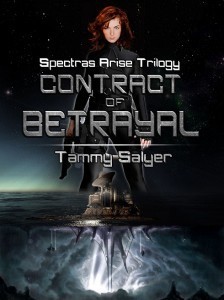
Tammy Salyer is a nerd who spends her day surrounded by the written word, both hers and others’. As an ex-paratrooper with the 82nd Airborne Division, her stories are often as gritty as a grunt’s pile of three-week-old field gear. Her military science fiction novel, Contract of Defiance, is the first book in the Spectras Arise Trilogy and debuted to acclaim in Spring 2012. Contract of Betrayal, the trilogy’s second book, released on February15 (heads up: stop by Tammy’s blog a few times in March for a couple of exciting contests and giveaways).
When not hunched like a Morlock over her writing desk, Tammy runs silly miles, cycles the playground of Southern California, and spends an inappropriate amount of time watching Henry Rollins videos on YouTube. Feel free to visit her blog or her editing website, or stop by and say hi on Twitter (@TammySalyer).
February 18, 2013
Hey Bud … Be Strong.
While pruning my roses the other day, I found myself pondering publishing. (This isn’t as strange as you may think, and not only because I’m odd.)
Traditional publishing is a lot like pruning roses.
Roses require pruning in spring, after the dormant period, when the canes start sending out the buds that form the new year’s branches. The buds start small, just little red nubs, but they quickly grow into branches if given a chance.
The problem is, a rosebush doesn’t have the strength to let every bud grow to a branch. Someone has to prune the canes directly above the strongest buds, so the rose will put its energy into helping the right ones grow. The gardener’s job is choosing which buds look strongest – choosing which buds deserve a chance.
You can see where this is heading.
A publishing house, like a rose bush, lacks the resources to publish every “bud.” Editors have to choose the strongest and most promising projects, the ones that have the best chance of selling many copies.
But, like a gardener with a rose, a publishing house’s choices often come down to a judgment call. Many buds look the same, or similar, and sometimes the ones that look strong at the start don’t make the strongest branches after all. Still, a gardener can’t wait to see which branches will grow before pruning them – and publishers can’t take a chance on every book they see.
And yet, I see cause for encouragement, not despair. (And a note: I thought so even before I had an agent and a publishing deal.)
Why?
Because there’s something I can do to help my chances. I can be a strong bud – and you can too.
Write the very best novel you can. Edit and polish – revise until it shines. Don’t query the first draft, or the second, or even the third. Don’t go after a contract until you’re the strongest, healthiest bud you can possibly be.
And if that doesn’t work, go back into your “cane” and write another book. Like the rose, about a year later you’ll find yourself ready to try once more – but with stronger skills and a better book. You’ll be a stronger bud.
Some books and authors get picked on the very first try. Others need more time to learn and grow.
Whatever your situation, don’t give up.
Keep writing. Keep learning.
Be strong, bud.
You’ll get your chance in time.
February 16, 2013
Shinobi News: February 16, 2013
This week in Shinobi News:
- First Pass pages for Claws of the Cat are on their way from New York! For those of you not in the publishing industry, “first pass” is the author’s first look at the “final” printed pages of a manuscript. It’s the final opportunity to catch typos and also my first chance to see the formatting, font and style of the finished book.
To say I’m excited would be an understatement!
Looking for me this week?
On Saturday, February 23 I’m speaking at WANACon, the online writing conference sponsored by WANA International. I’m giving two workshops: Contracts & Copyrights, designed help authors understand publishing contract legalese, and Law for the Lone Wolf: An Author’s Tour of Publishing Law and Business. It’s not too late to register! I hope to see you there!
On Monday, 2/18, I’m guest blogging at Kristen Lamb’s blog about publishing horror stories and the importance of taking charge of your publishing career.
On Thursday, 2/21, I’m blogging at Chiseled in Rock (we’re talking royalties – show me the money!) and at The Debutante Ball (this week, we’re dishing about editing and revision).
February 15, 2013
Release Day Congratulations to Tammy Salyer!
Some of you may remember my friend and fellow author Tammy Salyer.

I interviewed Tammy last year about her debut novel, CONTRACT OF DEFIANCE, Book 1 of the Spectras Arise series (which also won the Rocky Mountain Fiction Writers’ Colorado Gold Writing contest in 2010).
I’ve been eagerly awaiting the release of the second Spectras Arise novel, CONTRACT OF BETRAYAL, which continues the adventures of kick-ass heroine Aly Erikson, space Corps deserter turned smuggler, whose search for her kidnapped brother turned into an unexpected (and unwanted) mission into the heart of Corps territory.
CONTRACT OF BETRAYAL was originally scheduled for release in March, but the wait is over early! I received an advance copy yesterday, and the novel officially goes on sale TODAY.
If you’re a fan of military science fiction and don’t know Tammy’s novels, you’re missing out. I’ll have a review of CONTRACT OF BETRAYAL (and a guest post from Tammy about world-building in Sci Fi) here on the blognext week – but don’t wait to get a copy. I already know it’s well worth the read.
Happy Release day, Tammy!
February 14, 2013
A Valentine’s Day Interview with Dana Bate!
Happy Valentine’s Day everyone!
Today we welcome Dana Bate, whose debut novel THE GIRLS’ GUIDE TO LOVE AND SUPPER CLUBS would make a great Valentine’s gift for … you! (Or, if you’re in a giving mood, for anyone who loves humor, food, and a great fun read.)
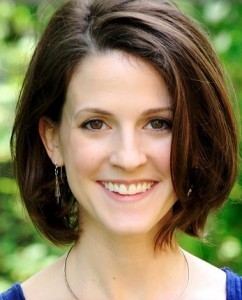
Dana Bate is a writer and former Washington producer and reporter for PBS’s Nightly Business Report, where she won the Gerald Loeb Award for a series she produced on the Indian economy. She studied molecular biophysics and biochemistry at Yale University as an undergraduate and received her master’s degree from Northwestern’s Medill School of Journalism, where she won the Harrington Award for outstanding promise in the field of journalism. She lives outside Philadelphia.
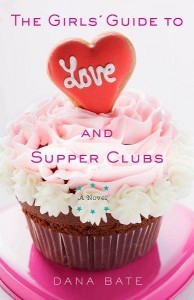
I met Dana through the Debutante Ball blog, where we’re both members of the Class of 2013. I read an ARC of THE GIRLS’ GUIDE TO LOVE AND SUPPER CLUBS, and absolutely loved it, so I’m thrilled Dana could join us here today for an interview!
And now, on with the questions:
1. Where did you grow up? Will you share a favorite story from your childhood?
I grew up outside of Philadelphia, on a cul-de-sac where all of the neighbors knew each other and regularly got together (in fact, several of my former neighbors came to my book signing last weekend!). One of my neighbors, Sarah, was my age and in my class at school, and we used to get into all sorts of trouble together. When we were about ten, we saw an ad on TV for a service called “Teledate,” where you would call a 1-900 number and link up with a “date” on the other end. Not realizing that this was likely a borderline x-rated service, we thought it would be really funny to prank call this 1-900 number and pretend we were adults looking for a date. So when Sarah’s parents were elsewhere in the house, we called the number and pretended we were “Barbara and Roxanne,” two ladies looking to chat it up with a nice gent. Needless to say, Chad (or whatever his name was) realized within five seconds that we were ten-year-old girls and promptly hung up the phone. We tried a few more times, to similar effect.
Fast forward a few months, and Sarah’s mom gets an exorbitant bill for the minutes we racked up on these calls. She called my mom, and they both had a sit down with us, explaining why it was not okay to call 1-900 numbers without permission – especially 1-900 numbers that were meant for “adults.” Whoops.
2. What inspired you to start writing?
Two things: my love for story telling, and my eighth grade English teacher, Ms. Purcell. I’ve always loved telling stories, and Ms. Purcell taught me how to channel that love in a creative way.
3. If you could go back in time and share one writing lesson with “new writer you” before starting your first manuscript … what would that be?
“Trust the process.” There are times when, in the midst of a major revision or difficult scene, you wonder if you will ever get through it or if this book is a terrible idea destined for failure. You have to trust that this is all a part of the writing process, and if you keep going, you can get through it – and your book will be better for it in the end.
4. Your debut novel, THE GIRLS’ GUIDE TO LOVE AND SUPPER CLUBS, involves an underground dinner club. What inspired you to choose such a unique and unusual setting?
I knew I wanted to write about food, but I wanted a setting that wasn’t a restaurant or a bakery. At the time, I was living in London, and one morning I came across an article online – in the Guardian, I think – about a woman called MsMarmitelover who hosted a secret supper club out of her flat. Total strangers would come from all over and pay to eat her food, even though the whole operation wasn’t technically legal. I thought it sounded like such a fun, albeit risky, idea, and that sort of became the launching pad for my novel.
5. Do you have a favorite author or book? If so, who (or what) is it, and why?
I have lots of favorite authors and books, so it would be hard to narrow it down to one. But I will say that 1984 made a lasting impression on me. The book made me think about the role and power of government in an entirely new way, and as the tension increased throughout the story, I found myself unable to put the book down.
6. Hannah Sugarman, the protagonist in THE GIRLS’ GUIDE TO LOVE AND SUPPER CLUBS, is a dissatisfied professional who seeks – and finds – an outlet for her true passions: food and cooking. What did you find most challenging about creating Hannah and writing her story?
In order to increase the tension and raise the stakes, I had to continually put Hannah in situations that made me uncomfortable. I loved Hannah and really felt for her, so that was hard. I also had to make her do things I’d never do (as in, many questionable decisions on her part), so that was definitely a challenge as well!
7. Do you have a favorite scene in THE GIRLS’ GUIDE TO LOVE AND SUPPER CLUBS? If so, what makes that scene stand out for you?
Ooooh, that’s a tough one! The problem is that a few of my favorite scenes give away aspects of the plot I’d rather not give away. I hate spoilers! So, with that in mind, I do love the Halloween party scene. The costumes and the scenery make the scene so visual – Mrs. Lovett, Sweeney Todd, Balloon Boy, the pizza guy. Writing that scene, I felt as if I was right there with all of the characters.
8. What is the last book you read, and why did you read it?
The last book I finished was Kerry Schafer’s Between. I hadn’t read much fantasy before that book, but I met Kerry through The Debutante Ball and was delighted to dip into a new genre. Her book was such a ride!
9. Hannah Sugarman often ties her supper club menus to times, places, and memories. What is your favorite cooking memory, and do any of Hannah’s experiences with food and cooking parallel your own?
When I was sixteen, my mom-mom taught me to make rugelach, using her old rolling pin and my great-grandmother’s recipe. My great-grandmother – Gram, as she was called – died when I was a baby, but the stories about her cooking lived on. Her dishes were legendary – mocha cake, strudel, cherry pie, poppy seed cookies. I loved learning how to make one of her recipes, if only to keep her traditions alive.
In my book, Hannah also maintains a strong connection to her heritage through cooking, although she sometimes does it in unconventional ways. But Hannah and I both find solace in cooking – the way it allows you to put the rest of the world on “mute” while you measure and mix and fold. That said, one major difference between our experiences is that my mom taught me took cook from a very young age. Whereas Hannah’s mom poo-poos her interest in cooking, my mom always supported mine.
10. Do you have any upcoming signings or readings?
I just had two signings outside Philadelphia last weekend, both of which were lots of fun! I also have a reading and signing on Saturday, February 23 at The Spiral Bookcase in Manayunk, a neighborhood in Philly. There will be cupcakes and bubbly – everyone wins!
And now, the speed round:
- Plotter or pantser?
Both. I write a very loose outline, but from there, I let my imagination run wild.
- Coffee, tea, or bourbon?
Coffee – usually in the form of a latte.
- Socks or no socks?
Depends on the place, season, and time of day. How’s that for an evasive answer?
- Cats, dogs, or reptiles?
Dogs!
- For dinner: Italian, Mexican, Burgers or Thai?
Can’t I have all four? No? Okay, okay. In that case, Italian. I could live on antipasti and pasta.
Thank you, Dana, for joining us today!
You can find Dana at her website, on Twitter (@DanaBate) and Facebook, and every Tuesday at The Debutante Ball. You can buy her book at Indiebound, Barnes & Noble, Target, Amazon.com and a variety of local and independent booksellers near you.
Dana’s novel is also available in the UK, under the title THE SECRET SUPPER CLUB!
Big thanks to Dana for joining us today, and if you’re looking for a last-minute treat for a special someone (or for yourself! You’re special too!) check out THE GIRLS’ GUIDE TO LOVE AND SUPPER CLUBS!


