
Susan Spann's Blog, page 97
January 11, 2013
Chonmage: the samurai topknot
Chonmage is the Japanese name of the traditional hairstyle worn by adult samurai males.
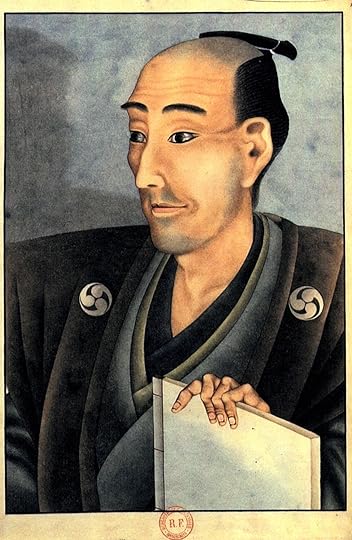
Adult samurai men and women wore their hair long (and usually pulled back in a bun or tail). Samurai of both sexes often visited stylists to have their hair arranged, because the elaborate hairstyles favored in medieval Japan were difficult for a person to achieve through solo effort.
After shaving the hair off the samurai’s pate (the forehead and front portion of the scalp), the hairdresser brushed and oiled the remaining hair and tied it into a tail. The tail was folded back and forth on top of the head and secured with a strip of leather or other material.
Only samurai had the legal right to wear chonmage, and the style was worn only by adult samurai males who had completed a genpuku ceremony and earned the right to wear the two swords that identified them as adults and samurai.
The female samurai character who appears in Claws of the Cat also wears a chonmage, but without the shaven pate.
What’s your favorite historical hairstyle? Do you know any other interesting facts about hair in history? I’d love to know – please tell me in the comments!


January 10, 2013
Japanophiles Unite!
Today I’m pleased to welcome guest author Travis Heermann, a fellow author of Japanese-themed fiction who’s agreed to share a little about his love for Japanese history and culture.
Travis is also hosting a Kickstarter campaign for his next novel, Sword of the Ronin – and you’ll find a link and more information at the end of his post.
Welcome, Travis!
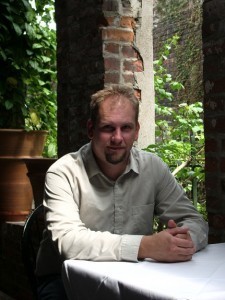
Lots of readers around these parts might be fans of Japanese stuff, for obvious reasons, so I’m thankful to Susan for letting me chime in, and also present a small request (more on that in a minute).
I guess I first fell in love with Japanese culture when I saw Star Wars (now Episode IV: A New Hope, blah blah blah)….
“Huh whut?” you say, “There ain’t no Asians in that movie!”
I didn’t discover this until many years later, but the Jedi were inspired by samurai. One of the great inspirations for Star Wars was the Japanese film The Hidden Fortress by director Akira Kurosawa.
But I’m getting ahead of myself.
A naïve and incomplete vision of a samurai is that of the indomitable swordsman, ready to die for his cause, protecting the weak and upholding justice. With a realllly sharp sword. While certainly not a lightsaber, the katana is capable of tremendous feats of cutting, the perfect evolution of an instrument designed to cut through flesh and bone with greatest efficiency. In days of yore, newly forged katana were rated by the number of bodies they could cut through in a single stroke. New blades were tested on the stacked corpses of criminals, and some blades were known to have cut through five human torsos in a single downward stroke.
But I digress.
Samurai Cinema
When I was in high school, I happened upon a movie on Bravo called Musashi Miyamoto, from 1954, starring Toshiro Mifune. My curiosity was stoked by the screen presence of the lead actor and perhaps having to read a movie for the first time ever, so I watched it to the end, enthralled. That film is the first in what is now called The Samurai Trilogy. I devoured them all, completely blown away.
Toshiro Mifune brought more power and intensity to the screen than all but a small handful of actors, like a tiger in human form. In addition to the Samurai Trilogy, he starred in a long list of Kurosawa films, and he dominates every scene in which he appears.
Here’s a few:
The Seven Samurai
Rashomon
Yojimbo
Red Beard (Akahige)
Throne of Blood
The Hidden Fortress (hello, Mr. Lucas!)
What strikes me about Japanese culture are the deep fundamental differences between it and Western culture, the values that drive us at the core level. For the Japanese, the needs of the many far outweigh the needs of the few or the one (bet you didn’t think I could work in a Wrath of Khan reference did you). Community over individualism. Group over Self. This results in behaviors that often leave Westerners thinking, “Huh? Why the hell did he just do that?” This reaction happens routinely when I watch Japanese movies with friends.
Here’s a conversation I had with a friend after watching Musashi Miyamoto recently.
“You mean he’s going to leave her? They clearly adore each other and want to hump like bunnies!”
“Yup.”
“Why?”
“Because he’s going to away to train himself and can’t let love stand in the way. He wants to be the best swordsman there ever was.”
“But he loves her! Why can’t she go with him?”
“She would be a distraction.”
“So she’s just going to stand there by that bridge waiting for him to come back maybe? Someday?”
“Looks like.”
“That’s dumb.”
In the case of Musashi, he was not about the Group there, but this highlights another aspect of samurai culture—absolute single-minded pursuit of martial prowess. There were to be two things on a warrior’s mind, becoming a better warrior and serving his lord.
Here in the West, how single-minded are we about anything?
East vs. West
Japanese and American culture could form two extremes on a spectrum of the individual versus the community. For Americans, intellectual understanding of the Japanese way is one thing; seeing it in practice is another. As a Westerner living in Japan, I often saw behaviors than mystified me.
A prime example from when I lived there, taken from an article on Japan Focus.
“In the spring of 2004 [in the early days of the war in Iraq], five Japanese civilians doing volunteer aid and media work in Iraq were kidnapped, threatened and released unharmed by Iraqi militant groups in two separate, overlapping incidents lasting just over one week. On their return to Japan (16 April 2004), the hostages appeared defensively solemn, having been harshly criticized and shamed for their effrontery to travel to a government-declared danger zone and undertake anti-war actions perceived as critical of both the Japanese and U.S. presence in Iraq. More than the abductions themselves, the inhospitable homecoming seized headlines around the world and marked one of the most searing images in Japan’s controversial involvement in the American-led war.
The first, more publicized, abduction was initially seen as a test of the commitment of Japan to support America, but within one week was transmogrified in Japanese media to public shaming of the victims. The five were compelled to say they were “sorry” for their transgression and were pressured to pay back some of their repatriation expenses to the state. In the story’s moral ending, they should have been acting with “self-responsibility” (jiko sekinin).”
These people went to Iraq, were abducted by militants, subsequently were released, returned home, and were castigated by their communities for their “selfishness.”
The group nearly always wins out over the needs of the individual, whether the group comprises family, job, town, or country; people have a selflessness which often results in the devastation of individuals’ personal well-being.
Here’s the other side of that coin.
At the start of the ongoing Fukushima nuclear disaster of 2011, a number of aged plant workers came out of retirement literally to sacrifice themselves and save the world from radioactive fallout. These old Japanese men went into areas of the Fukushima plants contaminated by lethal doses of radioactivity to do work that was a death sentence, because they knew it had to be done; they had lived their lives.
At the other extreme, American culture is all about the Rugged Individualist, he who needs no family or community or society to succeed, must often succeed in spite of the Group. Self over Group. Our culture is filled with narratives of heroes who “went against the odds” and achieved great things, people who “pulled themselves up by their bootstraps” and made something of themselves. This is embedded in the “American Dream” itself.
The downside of this is an often astonishing self-absorption and narcissism, which is detrimental to the needs of the community and society as a whole. (Ridiculous gun laws, bloated CEO salaries, and environmental degradation anyone?)
Japanese culture shows us that there are other ways of doing things that are diametrically opposed to the way American culture does things. We are all still human beings, and there are fantastically successful ways to succeed beyond what we in the West think we know.
Anime-niac
Parallel with my discovery of samurai cinema was an intense interest in Japanese animation, stoked by desperate efforts to watch Robotech through the snow of a TV signal that wouldn’t quite come in. (I’m so old that it wasn’t even called anime back then.) All I knew is that those brief glimpses of Robotech made the coolest cartoon I had ever seen.
In the 80s, Japanese animation was mighty hard to come by in rural Nebraska, until I got to college in the big city and saw Akira and discovered the films of Hayao Miyazaki. Katsuhiro Otomo’s Akira blew my mind for its epic scope, smooth, scintillating detail, and mind-bending concept, and My Neighbor Totoro for its tenderness, endearing characters, and originality.
Walt Disney and company pioneered animation, but somewhere along the way, perhaps the 1970s, the Japanese picked it up, ran with it, and left American animators in the dust. In 1988, Akira was groundbreaking for its sheer, breathtaking detail, and represented a new pinnacle of what animation could be. There have been other milestones, such as Ghost in the Shell, that keep raising the bar. Traditional animators in America seem to have given up trying to catch up and nowadays simply focus on computer animation. Japanese animation has become the standard.
Japanophile + Writer = ….?
Through live-action and animated films, I fed my passion for samurai adventure, Japanese culture and history, until I reached the point where I knew I had to write a samurai novel. I’d been a writer since elementary school, and writing novels was as necessary to my existence as breathing.
So I set foot upon the path that would lead me to begin writing The Ronin Trilogy. My agent sold the first book, Heart of the Ronin, to Gale-Cengage’s Five Star imprint in 2009. Unfortunately, Five Star subsequently phased out their fantasy and sci-fi line, effectively orphaning the series. As a promotion experiment, I also released Heart of the Ronin as a serial audio book via podcasting. So ever since the book’s release, readers and podcast listeners have been asking when the next book is coming out. Meanwhile I had written a couple of other novels and screenplays, but in 2012 I returned to the world of 13th century Japan and finished the second book, Sword of the Ronin.
The reasons behind this decision can be found here, but I have launched a Kickstarter campaign for the month of January, 2013, to fund the publication of Sword of the Ronin. This will be my first venture into indie-publishing, and I would be immensely obliged if you would give the campaign a look here.
C’mon, samurai, ninja, demons, talking animals, hordes of barbarian invaders, you know you’re curious. A story is afoot!
January 9, 2013
THE NEXT BIG THING BLOG HOP
Welcome to the NEXT BIG THING Blog Hop.
What is a blog hop? Basically, it’s a way for readers to discover new authors. At this stop, you’ll find a bit of information about me and my upcoming Shinobi Mystery novel, along with links to some other authors to explore!
Big thanks to my friend and fellow author Piper Bayard for inviting me to participate in this round of THE NEXT BIG THING. Click HERE to learn more about Piper and her upcoming novel (currently titled SEEDS) – which I’ve read and highly recommend for anyone who wants an action-packed read. You can buy it this spring at Amazon and Barnes & Noble.
Or visit Piper’s Website: Bayard & Holmes
In the Next Big Thing blog hop, authors (at their respective blogs) answer ten questions about a book or work-in–progress (giving readers a sneak peek at the project). The answers also include some behind-the-scenes information about how and why we write –I hope you enjoy it.
Here’s my Next Big Thing:
1. What is the working title of your book?
Claws of the Cat, a Shinobi Mystery
2. Where did the idea for the book come from?
I was standing in front of the bathroom mirror, getting ready for work, and suddenly I had a thought: “Most ninjas commit murders, but Hiro Hattori solves them.”
From that moment, I was hooked.
3. What genre does your book come under?
Mystery. More properly, historical/police procedural – which means it’s set in 16th century Kyoto and it has significant forensic elements.
4. Which actors would you choose to play your characters in a movie rendition?
Whichever ones the producers hire. I’d just be thrilled to see the book made into a film.
5. What is the one-sentence synopsis of your book?
When a samurai is brutally murdered in a Kyoto teahouse, master ninja Hiro Hattori has just three days to find the killer before the dead man’s vengeful son kills both the beautiful geisha accused of the crime and Father Mateo, the Jesuit priest that Hiro has pledged his own life to protect. The investigation plunges Hiro and Father Mateo into the dangerous waters of Kyoto’s floating world, where they quickly learn that everyone from an elusive teahouse owner to the dead man’s dishonored brother has a motive to keep the samurai’s death a mystery.
And yes, that’s two sentences. Ninja detectives often break the rules.
6. Is your book self-published, published by an independent publisher, or represented by an agency?
My book (and the next ones in the series) will be published by St. Martin’s / Minotaur – a traditional publisher. My work is represented by fantastic literary agent, Sandra Bond.
7. How long did it take you to write the first draft of your manuscript?
First draft? 30 days.
The real work comes after that.
8. What other books would you compare this story to within your genre?
There’s a “Holmes and Watson” feel to the relationship between Hiro and Father Mateo. Beyond that, I’ll let the readers draw their own conclusions.
9. Who or what inspired you to write this book?
Since the idea came on like a ninja attack, I’m going with “Hiro did it.”
10. What else about your book might pique the reader’s interest?
It’s the first in a series featuring Hiro and Father Mateo. Each book will focus on a different feature of medieval Japanese culture – the first book focuses on the geisha houses, the second on the shogunate, and the third … I’ll leave that a mystery too, for now (though the novel is written).
CLAWS OF THE CAT has lots of action, a ninja detective, a female samurai, a Jesuit priest, an unusual murder weapon … and an orphaned, paper-eating kitten. What’s not to like?
Here are some other authors joining the blog hop next Wednesday. Bookmark and add them to your calendars to hear about each of their NEXT BIG THING!
Happy Writing and Happy Reading!
2. Erika Mailman (a friend and writing partner whose work I always enjoy!)
And an author participating today:
Kerry Schafer (whose upcoming release, BETWEEN, should be on the top of every fantasy reader’s list.)
Are you an author writing THE NEXT BIG THING? Leave a comment and let us know how to find you!
January 8, 2013
Slow, Calm and Careful
It’s Tuesday, which means it’s time for another lesson learned from the reef.
Today we return to one of my favorite subjects – Oscar the Sea Snot Abalone. Although primarily nocturnal, Oscar recently started showing up with the lights on, which gives me the chance to observe him more closely (and take a few pictures).
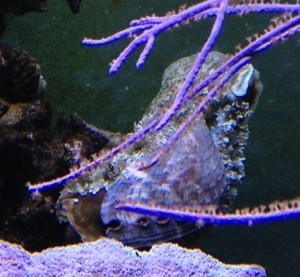
Oscar’s primary characteristic (aside from his aforementioned and unfortunate resemblance to something that belongs in a Kleenex) is his speed, or more properly lack thereof.
Oscar wiggles around the tank, munching on algae. He’s diligent to a fault, and stays in each spot until he’s consumed every last edible particle. With the exception of my hand (which he considers a threat) he pretty much ignores outside stimuli. He’s too busy with single-minded, calm, and careful pursuit of his goal.
My female seahorse, Ceti, exhibits similar behavior when hunting crustaceans in the rocks. Her favorite snacks move quickly, so she has to pay careful attention in order to catch them.

Ceti and Oscar remind me of an important writing truth: in fiction, as in anything else, you reach your goals by slow and careful effort.
Most of us live our lives in a state of impatience, more eager to reach the goal than to spend the time to perfect the process. I’m as guilty of this as anyone, and it’s helpful to have the visual reminder that reaching the goal is a process, not just an endpoint, and that success depends on performing carefully and well.
January 7, 2013
Someday We’ll Laugh About This … Part 3
And now, for the afternoon crowd, Marci Jefferson’s take on today’s theme:

I worked on my upcoming novel, THE DUCHESS OF RICHMOND, for a total of five years, researching, writing, and researching some more. I edited, I cut my darlings, and I polished it till it screamed. I went to local author groups, critique sessions, and writing conferences. I studied the art of the synopsis, the query, and how not to make a fool of oneself when an agent offers representation. I laughed, I cried, I went to therapy to feel like I still had a grip on reality.
If anyone had said then that I’d be laughing about it one day, I might have bitten their head off! And though I don’t exactly laugh about my long road to publication, having a publishing contract with St. Martin’s Press for a 2014 release does allow me to look back on that road with a relieved sort of fondness.
Almost every step of the way I encountered people who inquired about my blog. “You don’t blog?” they’d say with scandalized expressions.
I just didn’t think I could manage a blog when my office was littered in eight drafts and thirty different research books all open and piled about in precarious stacks. But that’s all behind me…
So I think I will start a blog of my own. And why not develop a new website to go with it?
Now I’m up to my ears in HTML code, content, and graphics. I’m overloaded with terms like web-host, RSS feed, and permalink. Tech has never been my forte. Some days I look at this thing and want to rip my hair out. But I’m on a new road. The Road to Release Date! I’m determined to have a fun interactive web-home of my own on this journey, so I’m pushing through. Hopefully it’ll be up and running in a few weeks. And, hey, maybe I’ll look back and laugh at my tech-adventures someday!
Someday We’ll Laugh About This: Part 2
A Monday Blog Game Offering From DeAnn Smith:

“A horse, a horse! My kingdom for a horse!”
William Shakespeare scripted Richard III’s last moments for slapstick humor as he unsuccessfully charged toward Henry Tudor and his crown rolled into a bush. Audiences are to knowingly laugh at the failures of Richard, who is one of history and literature’s greatest villains. Most know Richard for the disappearance (and likely death) of his two young nephews on his watch.
But this battle of usurpers at a field near Bosworth was deadly serious. Few were laughing in August 1485 as the Yorks and Lancasters met in pitched battle with the throne and England’s future at stake.
Virtually all of England’s monarchs found their final resting places to be a grand cathedral in England or France. A majority were buried at Westminster Abbey or Windsor Castle, but no glorious monument was built for Richard.
Instead, his bloodied and battered body was taken to the nearby town of Leicester where legend said the Grey Friars quietly buried him in the choir of the their church.
Some ardent supporters of Richard worked tirelessly to organize an archaeological dig to find his remains, and that apparently occurred in September. The final announcement is expected in a matter of days, but all indications are that the dig turned up the bones of their man.
This is where the “Someday We’ll Laugh about This” aspect enters. As a result of “progress,” the church disappeared and a car park covered the body of the crookback king. (Or as we Americans know it: a parking lot). This, of course, has prompted the inevitable jokes with one of my favorites being a voice was heard from the grave saying, “A hearse, a hearse. My kingdom for a hearse!”
At least Richard died fighting valiantly in battle unlike his older brother, George, who was executed by the family golden boy, King Edward IV. George died for being truly a bad, bad younger brother. Thanks to his mother’s intercessions, George was allowed a private death inside the Tower of London to spare him public humiliation.
Back then, you could lose a tongue for a joke that offended the king, but modern audiences can laugh at the deaths of the York brothers.
George, a reputed heavy drinker, was drowned in a butt of malmsey a.k.a wine. If that doesn’t make him the butt of jokes, I don’t know what does.
Monday Blog Game: Someday We’ll Laugh About This
January 2-8 is official “Someday We’ll Laugh About This” week. In honor of the occasion, here’s something I look back on with gratitude:
In 2004 I decided to get serious about writing. I finished my first manuscript and submitted it to a writing competition. Although I didn’t win, the manuscript placed in the finals – which earned me 3 requests from agents who wanted to see the entire manuscript.
Six weeks later I received a telephone call from one of the agents who requested the novel.
It was THE CALL!! I could barely contain my excitement.
Except … it wasn’t THE CALL. The agent actually called to say she’d decided not to sign me. The manuscript wasn’t ready for publication. However, this agent (I won’t mention her name) had decided to call me anyway, to explain where my writing needed improvement.
Our phone call lasted 90 minutes. She was kind, but also completely honest – which meant I heard some very difficult things. Things like “your characters are one-dimensional,” and “you need to pay more attention to the details of your historical setting.”
Ouch.
I hung up the phone with my dreams in a thousand pieces but my hopes very much alive. A publishing professional had seen enough potential in me to offer help. I resolved to prove that her time and effort had not been wasted.
Nine years, five hundred thousand words and five manuscripts later, I look back on that call and smile.
Sometimes life hands out hard lessons. The question is whether or not you’re stubborn enough to keep pushing through.
Because if you are, no matter how hard the lesson, eventually you’ll get where you’re going – and smile.
January 6, 2013
A Guest Post About Resolutions
Today we’re joined once again by my critique partner and fellow Historical fiction author DeAnn Smith, who’s sharing a few special words about resolutions:
Like many folks, I make New Year’s resolutions.
They are inevitably the exercise-more-and-lose-weight resolutions. Annually, I promise to strive to be a better wife and employee.
And invariably, I fail to meet my hopes and desires. I hope 2013 breaks the trend.
My grandest hope for 2013 is to finish my historical novel on Anne of York and find myself confidently pitching my book at the Historical Novel Society convention in June. And if I’m really going to dream big, I’ve lost several dress sizes and I’m sveltely sashaying in Florida in my “old” clothes I can fit into again (much work at the gym and lots of hunger pangs would be involved for that to happen).
While walking my Australian cattle dog, Lucy, in the woods that line the creek behind our home, I enjoy contemplating life and my book. I meditate and seek inspiration from nature as Lucy sniffs the air and chases the birds and squirrels.
Last week, my boots crunched through freshly fallen snow as I paused atop my favorite bluff overlooking the creek below. I always get my best inspiration there, and hope for the occasional deer to pop up. And on this day, the trees seem to whisper the answer.
My New Year’s resolution is to appreciate what I have and not focus on what I don’t have. My resolution is to be the best I can be.
I have been so blessed and I have so many fabulous people in my life. I have been given so many opportunities. But my nature is to focus on what I don’t have, what I think I should have and to let paranoia eat away at my soul.
Instead of focusing on how many pounds I lose, how many words I write, how many pages I edit, how I conduct myself at work, and how well I treat the ones I love, I’m going to embrace all the extraordinary gifts in my life. I am going to cherish them and celebrate them. I am going to focus on what’s right in the world and not what’s wrong while still hoping to make it a better place.
I’m going to dream big and hope I’m wearing a size 6 dress as agents fall all over me because they believe the world is ready for a unique take on what really happened to Edward V and his brothers along with the sister, who gave everything and more to cherish and protect her family. Look out 2013! Here I come!
January 4, 2013
What’s a ‘Shinobi’ Anyway?
Ninja fans will already know the answer to this one, but for those not already in the know:
The word “ninja” comes from a Japanese word which is written using Kanji, or characters, borrowed from the Chinese. The Chinese pronunciation of the characters is “nin sha” – or “ninja” in the Western derivation.
The Chinese pronunciation is sometimes also used in Japan, but the native Japanese pronunciation of the characters is “shinobi.”
TL;DR: A Shinobi is a Ninja.

The different pronunciations enable me to offer the entertaining explanation that shinobi is “the Japanese word for ninja.” (Think about it for a minute. You’ll get the joke.)
Did you know that Shinobi and Ninja meant the same thing? Do you have a favorite foreign word or unique translation you enjoy? I’d love to hear about it in the comments!
January 3, 2013
Favorite Words for the New Year
I’m a the Debutante Ball today, blogging about the New Year.
I’m also delighted to host a guest blog from my friend and critique partner DeAnn Smith, a fellow author of historical fiction. And so, with no further ado, here’s DeAnn:
My favorite word: Annie
My sincere thank you to my dear friend, mentor, incredible cheerleader and author extraordinaire Susan Spann for offering to let me post on her fabulous website until I get mine up and (hopefully) soaring come this spring.
Hugs and love!
She issued a challenge that perplexed me and flummoxed me for days.
Write about my favorite word. Not words, oh no, that would be too simple. Word.
Crikey.
Words that immediately came to mind included love, sweet, and hope. I’m partial to the words fascinating and interesting. (Eyes glazing over in a conversation? Just repeatedly murmur, “How interesting!” They think you care while you stay true to yourself).
All those words seemed way too easy. Her challenge was a Rubik’s Cube I mulled repeatedly during my daily commutes to work.
And then I thought I had the oh-so-obvious choice. Pepper. It had to be pepper. What an incredibly versatile world. The humble word functions as noun, adjective and verb.
If I tell you that Thomas Howard, the earl of Surrey, had salt-and-pepper hair, you can immediately visualize it. If I tell you the dish had more than a dash of pepper, your tongue can almost taste it. I love to pepper politicians with questions. See? Pepper. Great word.
But my *favorite?* I wasn’t completely sold until the proverbial light bulb flashed in my mind.
Schadenfreude. Tis not exactly the best side of myself, but, wow, I love that word. I love the way it rolls off my tongue and what it means. It makes me snicker (another great word).
While zipping along Interstate 70 one morning contemplating why schadenfreude was the word and how to write that it won the Academy of Word Awards, the word came to me like a lightning bolt.The choice was so simple and so easy that it was really laughable how long it took me to realize that fact.
Annie.
My beloved Nannie always called me Annie. I was her Annie, and that became my family nickname fondly used by my nearest and dearest when I was a little girl. I lost my Nannie in 2002, but I can still hear her beautiful voice calling, “Yoo hoo! Annie!”
It’s six simple letters, but to me Annie means unconditional love by the one person who always saw the best in me. She was my Nannie and I was her Annie.
I am writing a historical novel about Anne of York, middle daughter of Edward IV, and a fresh take on the fate of her brothers, who you likely know as the “Princes in the Tower.” And just like “Annie” gave me a special bond with my beloved grandmother, Annie is what those closest to Anne of York called her. Her beloved brother summoned her to her dying father’s bedside by whispering, “Annie,” which let her know just how serious their father’s illness is. Only those who love her the best and the most call her Annie.
A short little proper noun, but it has such a powerful impact. Annie means family and unconditional love by those nearest and dearest to both me and my fictional heroine. My Annie would give her life just to hear her father and brothers one more time call her Annie and say how proud of her they are and how much they love her.
An incredible woman, Lura Brown, was born on New Year’s Day 1911, so it seemed totally appropriate to write this homage to my Nannie on this day of all days. Just hearing the word comforts me, makes me smile and brings a lump to my throat as I remember my Nannie. I would give most of my worldly possessions just to hear her one more time call me Annie and tell her how much she loves me.
I love and miss you Nannie.
Your Annie.


