
Susan Spann's Blog, page 90
April 15, 2013
A Word About Something Not So Taxing
In addition to tax day (here in the U.S.A.) April 15, 2013 marks another important milestone:
90 days remain until the publication day for CLAWS OF THE CAT.

We already have two signings scheduled:
July 25 at the Barnes & Noble on Santa Monica’s Third Street Promenade, and
September 16 at the Tattered Cover Bookstore (on Colfax) in Denver, Colorado.
We’ll be adding more as the date gets closer, and I’ll be lighting up a tour page on the website soon, as well as extra features about the book!
I’ve already had a couple of requests to talk with book clubs, either in person or by Skype, and I’d be delighted to talk with groups interested in having an author chat. You can contact me through my website email (Susan (at) Susanspann (dot) com – but replace the parentheticals with the symbols.).
April 15 is also “Take a Wild Guess Day” - which has more relationship with doing taxes than I’d like to admit, at least in my case.
So tell me … have you done your taxes? Or is the extension fairy leaving something under your pillow this year too?


April 11, 2013
In Honor of National Pet Day
April 11 is “National Pet Day” here in the United States, a day to celebrate pets of all shapes, sizes and origins.
National Pet Day was the brainchild of Colleen Paige, a pet lifestyle expert and animal welfare advocate. As the National Pet Day website says, “it’s about love” – and about encouraging people to make the choice to spay, neuter, and adopt whenever possible.
Almost all of our cats are and have been rescues, adopted from shelters or foster homes. (A couple we received in other ways, but when we have the option we adopt.) We wouldn’t have it any other way, and neither would they.
In fact, when I asked Oobie where she thought she would be today if we hadn’t rescued her, she seemed unwilling to entertain the thought:

So, if you have the chance and the choice, consider bringing a loved one home from a shelter. You’ll make a friend, and have someone watching over you for life.
Yep, watching.

Like a stalker.
But I digress…
I learned one other interesting fact from the National Pet Day website.
The #1 name for male pets (measured by frequency of use) is MAX.

For once, the Emperor approves.
A note: National Pet Day is sponsored by the Animal Miracle Foundation & Network, a group that works to promote adoption and proper treatment of companion animals. To find out more, visit the National Pet Day website.
April 10, 2013
Who Can an Author Trust? (Trusts in Author Estate Planning, Part 1)
Today we continue the ongoing series on author estate planning with a look at how to pass copyrights by means of a trust.
The language we look at here applies only to revocable trusts, meaning trusts established by a living person or persons (the “settlor” – in our case, an author and/or the author and his or her spouse) which can be canceled or modified during the settlor’s lifetime.
Irrevocable trusts operate under entirely different rules, and are not generally appropriate for standard estate planning purposes.
In most cases, a person (or married couple) establishes a trust in order to hold and manage assets. Trusts have many legal advantages (which vary somewhat by jurisdiction) but the primary one is avoiding probate proceedings.
A properly drafted and managed trust ensures that the settlor’s property does not go into probate after that person’s death. Instead, the property is managed and distributed by a trustee in accordance with the instructions written into the trust by its creator.
Step 1 for the Author is selecting the right Trustee.
With a will, the person named as executor (the person who handles administration and distribution of the author’s estate) will usually be acting with court supervision. However, the Trustee of a trust does not usually have any court (or other official) supervision, which makes selection of a Trustee a serious matter.
The settlor (creator) of a revocable trust typically serves as his or her own trustee throughout the settlor’s lifetime. The trust then names the person who will act as “Successor Trustee” upon the settlor’s death.
When selecting successor trustees, Authors need to ensure that the people named as successor trustee(s):
1. Are likely to survive the author. The trust estate won’t be distributed until after the author’s death. The law permits naming multiple successor trustees, as well as the order in which they serve, so a backup is always a good idea.
2. Have sufficient business acumen to handle transferring title to copyrights and other intellectual property. While this isn’t absolutely required, it makes the process easier and minimizes stress on the trustee.
and
3. Will have the mental clarity to administer the author’s estate. Selecting a relative is fine, but remember that close relatives often have trouble focusing on business during the grieving process. If you choose a relative as trustee, you may want to locate an experienced attorney to assist the trustee with the administration process. For an author’s estate, it helps if the attorney is familiar with intellectual property issues as well as estates and trusts.
Next week, we’ll look at different ways an author can order the trust itself to facilitate management and distribution of copyrights after death.
Have questions about trusts or author estate plans? Feel free to ask in the comments!
April 9, 2013
Facehuggers on the Reef
Last weekend I went to the fish store and came home with a pair of little porcelain crabs (Neopetrolisthes maculata). Sometimes called “squat lobsters” due to their elongated chelipeds (aka “the legs with the claws or pincers on them”), porcelain crabs are not true crabs – instead, they’re closely related to hermits and other “false crabs.”
Porcelain crabs are filter feeders. They hide in corals or anemones and feed using a pair of modified legs with feather-like feeding attachments that the crabs use to scoop miniscule particles out of the water.
The crabs aren’t difficult to photograph (though they are small…their bodies measure just over half an inch in diameter) but photos don’t capture the feeding motion accurately or well.
In light of that, and because the feeding motion is so unusual, check out this 45 second video of Face the Porcelain Crab enjoying his dinner:
The other crab (not shown in the video) is “Hugger.” Pay attention to the shape of the legs, and they way they grab the coral, and the reason why should be more or less self-evident.
April 8, 2013
The Value of Sadness … to the Point of Change
I’m late getting the blog post up today, but as it turns out, that’s a good thing. It gave me time to read a brilliant blog post (I’m a Reject, You’re a Reject, and Why This is Okay) by friend and fellow debut author Kerry Schafer.
I’ll pause while you go read it.
Back? Ok.
Kerry makes some critically important points about the ongoing nature of rejection, and the fact that authors (and all creative people, regardless of genre) must learn to live with rejection or be crushed by a world that LOVES THE TASTE OF YOUR DELICIOUS DREAMS. (MMMMM….sweet unicorns and rainbows….)
I won’t restate her points because (a) she said them better already and (b) I’d like to take a tangential riff on the theme.
A riff on sadness.
Rejection hurts. It makes us sad, and sadness is unenjoyable. Sadness sucks. It makes us feel worthless, untalented, and wasted. And that’s true whether it’s the first rejection or the ten-thousand-and-first.
So what can we do about it?
We can choose to use that sorrow to fuel change. Sadness for its own sake is destructive – a pile of dirt on the cheesecake of our existence. But sadness that doesn’t go anywhere is also a waste of energy. It saps our strength. It leads to depression, misery, and sometimes even quitting the things we love.
That’s one choice, but it’s not the only one.
Sadness can also act as fuel, the gasoline that runs the combustion engine of an artist’s creativity. Rejection doesn’t mean “I suck.” It means “I need to get better.” It offers an opportunity to improve my craft to the point where “no” becomes “yes.”
It isn’t easy to see that when you’re gasping from the gut-punch of rejection, but your brain can remember more than your eyes can see. Make the choice. Make it now. When rejection comes – and it will, regardless of the state of your talent, your life, or your career – don’t just be sad and mope in the corner.
Get back on that unicorn. Be sad … but only to the point that it fuels hope, and work, and skill.

That, my friends, is the value of sadness. It brings us to the point of genuine change.
April 5, 2013
An Interview With Beverly Swerling
Please help me welcome Beverly Swerling, author of BRISTOL HOUSE (Viking, April 4, 2013).

Photo Copyright Sigrid Estrada
Born in Boston, I went to school in Kansas City MO (don’t ask). After college I moved to NYC and took a job as a file clerk in an insurance company so I could support my writing habit. Eventually I could legitimately call myself a freelance journalist, but it was a good ten years before I managed to write a saleable novel. In the meantime I got married and not long after moved to England. Lived there and in France and Spain for nearly a quarter century. We settled in New York when we first returned stateside full time – my husband’s Manhattan born and bred, and my professional life is rooted there – but a few years ago, on impulse, we moved to Philly. I’d been researching a possible book set here (never wrote it) and discovered it’s a delightful town where we were able to get three times as much house for a third as much money. And it’s a little over an hour by train from NYC. I can and do go up to the city for lunch meetings. All in all, a good move.
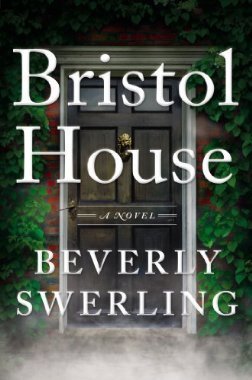
In modern-day London, architectural historian and recovering alcoholic Annie Kendall hopes to restart her career by locating several long-missing pieces of ancient Judaica. TV pundit, Geoff Harris, is soon drawn into her quest, both by romantic interest and suspicions about the head of the organization sponsoring her work. He’s also a dead ringer for the ghost of a monk Annie believes she has seen at the flat she is subletting in Bristol House.
In 1535, Tudor London is a very different city, one where monks are being executed by Henry VIII and Jews are banished. In this treacherous environment of religious persecution, Dom Justin, a Carthusian monk, and a goldsmith known as the Jew of Holborn navigate a shadowy world of intrigue involving Thomas Cromwell, Jewish treasure, and sexual secrets. Their struggles shed light on the mysteries Annie and Geoff aim to puzzle out—at their own peril.
BRISTOL HOUSE is a dual period narrative that seamlessly blends a haunting supernatural thriller with vivid historical fiction.
I’m delighted that Beverly could join me during her busy launch week! And so, with no further delays … on with the questions:
Where did you grow up? Will you share a favorite story from your childhood?
I grew up in Revere MA, just outside Boston. When I was a kid Revere was mostly Italian and Jewish immigrants (my own family is a mix of both!) and in large measure dominated by two racetracks. Suffolk Downs for horses and Wonderland for greyhounds. In those days it was not uncommon for bookies to rent space in front rooms that allowed them to see the tote board of one of the tracks, so they got the results as soon as they were posted. Which in those pre-cellphone times was a huge advantage for odds-making. All of this is, of course, entirely illegal. Nonetheless, for a while at our house we had Sid and Nate. They were very nice to me. Gave me lovely presents – I remember a Cinderella doll particularly – and a gift I didn’t recognize at the time. I constantly overheard things like, “The Little Guy wants two g’s in the third at Aquaduct…” It’s been very useful to call back that kind of louche in the occasional novel.
What inspired you to start writing?
Stories have been hatching in my head from the earliest I remember. And I was terrible at math and science, but from as early as third grade I remember being the one picked to write a letter to some important person on behalf of the class. Don’t remember the person or the subject. Only being picked because I could put words together. But I couldn’t actually get it on paper very well! I never had good penmanship and was always being scolded about blotting the page. My parents bought me a typewriter when I was just entering middle-school and I soon became an extremely fast touch typist. It’s proven to be a useful skill!
If you could go back in time and share one writing lesson with “new writer you” before starting your first manuscript … what would that be?
Don’t be afraid to let bad things happen to your good characters. I got a lot of early – and valid – editorial criticism for allowing important scenes to happen off-stage. Eventually I realized it was because I liked the people I was making up and didn’t want to see them suffer! The serious lesson is don’t avoid drama. You have to learn the difference between it and melodrama, then it’s a tool you can wield to great effect.
Your new novel, BRISTOL HOUSE, is a fast-paced mystery with supernatural features, blending a modern-day sleuth with the ghost of a monk and events that took place in Tudor London. What did you find most challenging about writing a mystery with multiple timelines and supernatural elements?
It was Annie Kendall – the sleuth – who was the toughest character to realize on the page. She’s an architectural historian who goes to London to do some research, and finds herself drawn into a complex and ultimately very scary mystery that she gradually realizes has roots in Tudor times. In the contemporary story we see everything from her point of view. Annie was born in my head with a lot of baggage – a recovering alcoholic who has made a mess of her career and hopes to salvage it with this assignment – and I could not have written her any other way. That meant I had to make her both strong enough to fight the evil, but vulnerable enough for readers to forgive some pretty serious past mistakes. Getting that right was really hard. Also, I heard the voices of the two Tudor characters from the moment I started thinking about this book. Both the monk and the goldsmith spoke to me in first person voices and I knew I had to write them that way. But where were they speaking from? It turned out to be something I came to call “The Waiting Place,” which is explained more fully in the story. Finally, it wasn’t until the third or fourth draft that I fully realized how the Tudor story and the contemporary story came together. Maybe all this explains why Bristol House took me four years to write. (Though admittedly I was working on the last two books of my series about early New York City during the first two years of that time.)
Do you have a favorite author, book, or genre? If so, who (or what) is it, and why?
Well, no surprise that historical mystery is my favorite genre absolutely. Though I love contemporary mystery as well – particularly psychological mystery. And when the three come together, I’m in heaven. I’ve got lots of favorite authors. Starting with the late great James Clavell. Absolutely master of the genre. Both Shogun and Noble House are towering accomplishments in commercial fiction. (Incidentally, I think we need to recognize that “historical fiction” can run right through WWII, and great historical fiction often straddles the literary/commercial line.) I’m also a huge fan of memoirs and biographies. I adore Virginia Woolf’s non-fiction (not as enchanted by her novels), and I’m fascinated by anything to do with the Bloomsbury group. In fact, when I first heard the historical voices in Bristol House – the monk and the goldsmith – I wasn’t sure what period they were speaking from. And since I already knew the novel would mostly take place in Holborn, within spitting distance of Bloomsbury Square, I thought maybe those two men were somehow connected to V.W. and her friends. But I listened a bit longer and realized that wasn’t true. They were unquestionably men of Tudor times.
Do you have a favorite scene or section from BRISTOL HOUSE? If so (and if you can tell us about it without revealing the mystery!), what makes that scene stand out for you?
There’s a very dramatic and unusual chase scene towards the end of the story, and advance readers all said it got their pulse racing. Certainly it was a challenge to write and I’m elated that I seem to have gotten it right. But it’s not my favorite scene. That’s a scene that also takes place near the end, in Guys Hospital. I love that it’s both physically graphic and fully realized emotionally. I think it allows the reader to actually drive through London to the hospital with Annie, experience her frustration when it seems she may not be in time, and then to be fully engaged in what she finds when she gets there. It’s a really well honed scene, and I know how many years of practicing my craft went into making it so. I love that feeling of knowing that for a time at least – maybe just a few hours – I was writing at the top of my game.
What is the last book you read, and why did you choose to read it?
DEARIE: The Remarkable Life of Julia Child by Bob Spitz. I read it because I’m a passionate cook and learned an enormous amount from watching Julia. Also, I’ve scheduled a trip to D.C. with two of my nieces in April. We’re going to the Smithsonian to see the remount of Julia’s fabulous kitchen.
How did you push yourself to get past difficult moments in writing and editing BRISTOL HOUSE? Do you have a favorite place to write or to edit your work?
Answering the second part first: I write in an office on the second floor of my three story Victorian in Philly. And in a sense that’s the answer to the first question as well. I get up every morning really early and go into my office and sit at my computer and just bloody do it. Sometimes, if I’ve come to a place where I seem to be stuck, I spend a lot of time rewriting things I’ve written already – I’m a compulsive rewriter – but eventually I just grit my teeth and get on with it. Even if it’s terrible, at least it’s something I can rewrite. Also, I act as a consultant to other authors on writing and representation, and that work always provides a welcome, frequently inspiring, change.
Do you have any upcoming signings or readings?
April 9, 2013, 7pm: Five Stones Bookstore, Lebanon PA www.fivestonebooks.com
April 10, 2013, 7pm: Nicola’s Books, Ann Arbor MI www.nicolasbooks.com
April 11, 2013, 7pm: Lake Forest Book Store, Lake Villa Public Library, Lake Villa IL I’m very lucky because this is a twofer with me and Christina Schwarz www.lakeforestbookstore.com
April 12, 2013, 6:30pm: Murder By The Book, Houston TX www.murderbooks.com
And be sure to check Beverly’s Website for even more information about her readings and signings!
And now, the speed round:
Plotter or pantser?
Pantser – which will be a surprise given that I’m known for complex plots. But I work them all out on the page as I’m writing, and NEVER outline.
Coffee, tea, or bourbon?
Tea. Or seltzer with OJ when I’m working. With dinner, wine. Maybe brandy for special occasions. Years since I’ve tasted bourbon.
Socks or no socks?
None unless it’s below zero.
Cats, dogs, or reptiles?
Dogs. I have a delightful little mutt – part Chihuahua part God-knows-what called Daisy. We got her as a rescue dog in 2003. She’s the smartest dog we’ve ever owned. Incredible vocabulary, understands every word you say. Maybe because she writes with me most mornings.
For dinner: Italian, Mexican, Burgers or Thai?
Italian (or French, which I’ve been rediscovering thanks to DEARIE, and which you didn’t list!)
Thank you again, Beverly, for joining me here at the blog today. I truly appreciate you joining me during your release week, and I’m really looking forward to reading BRISTOL HOUSE!
You can find out more about Beverly on her website, or find her on Facebook! BRISTOL HOUSE released Thursday, April 4, and is available in Hardcover, ebook and audio formats at all major online retailers and at your local bookstore!
April 4, 2013
And Now, For Something Completely Awesome
Instead of teaching you something new here today, I’m sending you over to BOING BOING for a six-minute video (from Smarter Every Day) showing the way Prince Rupert’s Drop glass will shatter.
For those not already aware: a Prince Rupert’s Drop is created by dropping molten glass into water. The outside hardens first, creating a droplet shape that will not break when hit with a hammer – but explodes (from the inside out) when the tail is moved even slightly.
The video, run at over 100,000 frames per second, is absolutely amazing. This is definitely worth the time: head over to BoingBoing and watch.
April 3, 2013
Author Estate Planning: Nuts, Bolts, and Bequests
Welcome back to our continuing series on author estate planning. Today we begin our look at the nuts and bolts of bequeathing copyrights and other intellectual property rights in a will or trust.
The distributive language (meaning the language which grants property or other assets to someone in a will or trust) differs slightly depending on whether an author is using a will or a trust. This is because a will is administered through probate, whereas a trust is usually administered by a Trustee without court supervision.
In a will, the author doesn’t need to address who controls the copyrights during the author’s lifetime because the will only becomes operative after the author’s death.
The language for distribution of copyrights in a will might read like this:
Copyrights and Intellectual Property. I hereby will, give, devise and bequeath all of my right, title and interest in and to all copyrights and other intellectual property owned by me at the time of my death, including without limitation all published and unpublished works of fiction and non-fiction, to [name of beneficiary]. If [name of beneficiary] predeceases me all gifts, devises and bequests to [name of beneficiary] will automatically pass to [name of backup beneficiary].
The operative points to remember are:
1. Use granting language: “will, give, devise and bequeath” (or whatever variation your state requires). This is the language that actually makes the gift.
2. Describe what is granted: “all of my right, title and interest in and to all copyrights and other intellectual property owned by me at the time of my death” – remember to cast the net broadly and include all intellectual property, not just copyrights.
3. Include published and unpublished works. You never know what your heirs may do with the unpublished works after your death.
4. You don’t have to leave all copyrights to a single person. If you want to split up the rights, you’ll need a separate, specific grant for each work and beneficiary to whom you want to leave specific rights.
Remember: make sure your will complies with the legal requirements in your state, country, or territory. This language may require modification to meet the specific requirements where you live.
Have questions about this or other author-specific estate planning issues? Feel free to ask in the comments!
April 2, 2013
Everyone Likes the Sun
When you keep hermits, you have to keep a few empty shells around for the crabs to examine and use. Some hermits change shells more often than others – some shift only when growth requires a move, while others swap their shells on a regular basis.
Our first Halloween Hermit, Lazarus, hasn’t ever changed his shell. He found one he likes and stays with it, despite the presence of half a dozen larger (and better-looking) options around the reef.

Our second Halloween hermit, Spike, seemed much the same. She examined every shell in the tank and found none of them to her liking.
I left the shells around, and the hermits examined them periodically, but neither showed any interest in changing homes.
Three nights ago, I cleaned the filter intakes and discovered a baby sun coral growing inside the motor housing. I removed the coral and glued it to the nearest moveable object – an empty shell – but the shell was one both Halloween hermits had rejected many times. No problem. I glued the coral down and went on my way.
Less than an hour later, I looked into the tank and saw this:

Spike, the smaller hermit, had discovered the shell with the coral attached … and suddenly found it irresistible. At first, I didn’t think she’d be able to move it. Determination works wonders, however, and she now maneuvers the new shell just as skillfully as the old one. She loves it.

The coral still hasn’t decided what to do about this particular turn of events. Not that it – or I – have much choice, since there’s no taking the shell away from its happy resident now.
Have you ever had a great plan work out a little differently than intended? I’d love to hear about it in the comments!
April 1, 2013
Pecan Month (Quit pecan on my pie. You nuts.)
Multiple Bi...
Pecan Month (Quit pecan on my pie. You nuts.)
Multiple Birth Awareness Month (Call me crazy, but if I had more than one baby at once, I don’t think I’d need a reminder.)
Financial Literacy Month (I’d like to practice reading hundreds, but ones will have to do.)
Emotional Overeating Awareness Month (Don’t eat that cookie … give it to me.)
Soy Foods Month. (Soy sorry, and if you don’t like it, tofu.)
Holy Humor Month (Batman)
and, last but not least,
Workplace Conflict Awareness Month (Don’t touch my stapler.)
Do you know of any other wacky observances this month? Hop into the comments and share!


