
Steven Colborne's Blog, page 30
April 15, 2022
Was Jesus Really Crucified?
It’s Friday morning, just after 11am as I type. I’m sat outside a cafe in South London, composing this on my phone. It’s a really warm and sunny day, thanks be to God.
Today is celebrated as Good Friday in Christianity. It is the day that is supposed to recall the crucifixion of Jesus. However, according to the Qur’an — an “unassailable Scripture which falsehood cannot touch from any angle” (Surah 41:41-42) — Jesus did not die, nor was he crucified, though it was made to appear that way.
The composition of the Bible differs from that of the Qur’an. The New Testament is a collection of writings, many from unknown authors, selected for inclusion by church councils (though different denominations differ concerning which writings are deemed ‘canonical’). No one knows for sure when many, if not all, of the New Testament books were written.
The Qur’an, on the other hand, is believed by Muslims to be a perfect revelation from God, and this is a claim made emphatically within the Scripture. The Qur’an is written on a preserved tablet (Surah 85:22), according to its writings. The revelation was given in Arabic.
How is one to know whether the Qur’an is truly a perfect revelation from God? Well, it would be wise to read it and see what you think. I recommend the Oxford World’s Classics translation by Abdel Haleem as a very lucid translation.
As the Qur’an repeatedly emphasises, God guides whoever He wills to guide and leaves to stray whoever He wills to stray. I think it’s wise to ask yourself: What are your motivations for not reading the Qur’an? Are you rejecting it without true knowledge of its content? Have you prayed to God in humility, asking Him to reveal whether the Qur’an is a revelation from Him?
God will judge us all. As the Qur’an repeatedly emphasises, God is most forgiving and most merciful. The direction contained within the Qur’an asks us to worship God alone, to be charitable, to do good deeds, to be mindful of God, and to pray regularly. The Qur’an asks, will any take heed?


April 13, 2022
Emotions, Love, and Vulnerability
True words from Tara, just what I needed to read today!



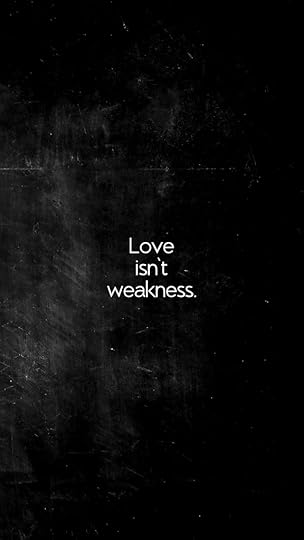
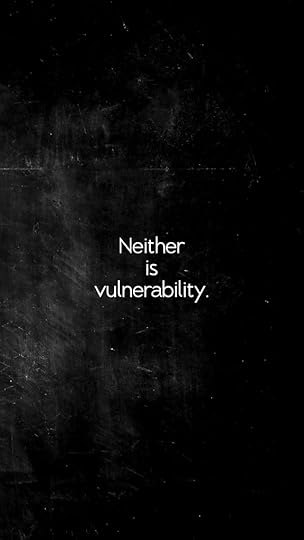
tara caribou | ©2022
April 10, 2022
Featured on TikTok
Greetings, friends! I mentioned a few weeks ago that a guy interviewed me in Hyde Park in London when I was going through some of the hardest moments in my (ongoing) close-to-homelessness experience. The interview was for his TikTok channel which is called Be That Somebody.
You can watch the video clip here:
https://vm.tiktok.com/ZMLX5eA6u/
In response to the video a few people contacted me to offer support and donations! This is really appreciated as I am deep into my overdraft and am still trying to find a solution to the difficult problems with my accommodation. If you feel you’d like to help me out, please consider making a donation of whatever amount you can spare. You can also help by sharing the video. Thank you! 
April 9, 2022
Praise Be to God Alone
The Lord reigns! He is perfect in all of His ways. When we face great trials, the Lord is faithful to those who are mindful of Him, who pray to Him and do good deeds. Thanks be to God!
The Lord provides abundantly for whoever He will. It may feel like your enemies surround you, but God surrounds us all. God will not let evil prevail over good. What an amazing Truth!
The Lord likes repentance and a humble heart. He is most forgiving and merciful — the ever-relenting. God has not left human beings without guidance concerning what pleases Him. We can all access His revelations!
Be mindful of God, as much as you can. Be kind, pray, and give. No good deed, small or large, will be unaccounted for by God, and nor will any wicked deed.
God loves a heart of gratitude! Count your many blessings and give God all the praise. Those on the surest footing are those who put God first in their lives!
You may find comfort in friends and family, but on the Day of Judgement you will face God alone. Don’t delay in getting right with God!
Some are boastful and think they can dismiss God’s revelations because they know better. No indeed, you will be judged for every single word you have ever spoken.
God’s power is something to be feared. We should not assume we are guaranteed God’s mercy. He has the power and the knowledge to decide!
Glory be to God, the Lord of all worlds! He is far above whatever they join with Him. He alone created the heavens and the earth, and every creature is subject to Him!
As for me, I fear a Day of widespread woes. I will be raised and my record of deeds will be spread open. Lord God Almighty, please forgive my sins and give me an easy reckoning on the Day of Judgement!
The Lord is mighty and greatly to be feared. Praise be to God alone!
April 8, 2022
What Motivates You to Write?
I was recently pondering the question: Why do I write? I really wanted to understand my motivations and check that they were good. I realised I am motivated by a few different things. Above all, I love helping people to draw closer to God, because being in relationship with God is the greatest blessing there is. I aim with my writing to share insights that point to truths about God and my hope is that these insights will resonate with people and enable them to grow in their own relationship with God. I hope this is a positive motivation.
I have a desire to reach more people with my writing. Why is this? I don’t particularly like the idea of being famous, so it can’t be that. I think it’s more about leaving a legacy. I want to impact the lives of as many people as possible in a positive way, and that will be my legacy. I suppose it’s a selfish motivation in a sense, because I am hungry for God’s favour and feel that by helping others I am benefiting myself, as helping others is what God asks me to do. So I want to please God and be favoured by Him. I also just love seeing people happy because the happiness of others makes me happy. If other people love my writing, their joy sparks joy in me! So I suppose there is a desire for love and connection behind my writing as well.
Am I motivated by financial greed? Well, I would love to make a full-time income from my writing. I have never wanted to live in a big house or own a fast car, but I would love the freedom of being able to pay for my basic needs using money from sales of my books. So I am motivated by money to an extent. Money isn’t the driving force behind my writing but it is perhaps a driving force behind my promotional efforts and is a reason why I seek to reach more people. I’ll leave you to decide whether or not this is a good motivation!
Clarity. That’s definitely something that motivates me. I want to present thoughts in a way that is clear. I want to write about things that are deep and true in a way that shatters falsehood. This is something that gives me a thrill. Why does it give me a thrill? Is it because I like to sound clever? No, I think it’s because the truth is liberating and it thrills me to think my words might help set someone free from mistaken beliefs they hold so that they can enjoy more freedom. I have been on a healing journey myself and I want others to be healed by the things I have learned. I hope this is a positive motivation.
Let me throw this over to you! Think deeply about it. What motivates you to write? Please leave a comment below and share your thoughts! 
April 4, 2022
Truth and Certainty
We experience a sense of certainty in relation to different ideas at different times in our lives. Often, those things that we believe to be true when we are younger cease to make sense as we grow older and life experiences expose us to different ideas and belief systems.
The experience of feeling certainty about a particular belief or set of beliefs is philosophically very interesting. We find some people who are wholeheartedly conservative, while others are passionately liberal. We find some people wholeheartedly dedicated to a particular religion, not feeling they can identify with the logic of other religions. Some believe wholeheartedly in God, while others are ardent atheists.
In my book God’s Grand Game, I go into some depth about what I term ‘modes of mind’. These are the thoughts that God gives us that determine our character and personality. There may be long-lasting modes of mind, such as an affiliation to a religious or political group, and there may also be more fleeting, transitory modes of mind, such as a preference for a particular drink or a favourite song.
Believing as I do that God is in control of all things, I understand our thoughts as being brought about by God. In one person, God may instil an assurance that a certain set of beliefs are absolutely true, and in another person He may instil an assurance that a very different set of beliefs are the absolute truth. And so we find ourselves in a world where we debate with one another, often feeling that we are absolutely correct and our opponents are in error.
So is there such a thing as absolute truth? Let’s take the example of the crucifixion of Jesus. From a Christian perspective, this absolutely happened, and is the cornerstone of Christianity. From an Islamic perspective, Jesus was not crucified, though it was made to appear this way. While those drawn wholeheartedly to Christianity will believe strongly in the former, those drawn to the teaching found in the Qur’an will believe wholeheartedly in the latter.
It must be the case that there is absolute truth in relation to whether the crucifixion of Jesus actually happened. If we were able to go back in time, we could witness the event either happening or not happening, and we would know for sure the truth of the matter. Seeing as we cannot do this, how are we to know which perspective to believe?
We can be quite certain that God knows the answer to the question. So I believe the wisest course of action for any human being in theological and philosophical matters is to go to God in humility in prayer with our questions and problems, and ask Him to guide us and reveal the truth. God has all power and is entirely free, so He may respond to such petitions in any way He chooses.
It is conceivable that God could respond to the prayers of a Christian in one way, giving them an assurance that the crucifixion happened, and to Muslims in another way, giving them an assurance that the crucifixion never happened. But if there is absolute truth to the matter, would God really give ‘false beliefs’ to one group and ‘correct beliefs’ to another?
Well, as the Qur’an repeatedly emphasises, God does whatever He will. I often come across Christians trying to vehemently defend the position that it’s impossible for God to lie, as lying is not ‘consistent with His character’. However, I personally believe in God’s absolute freedom to do whatever He wishes, and of course it is therefore not impossible for God to give different individuals beliefs that either accord with the reality of historical events or do not. God is unfolding a plan for creation, and part of that plan seemingly involves different individuals holding different beliefs that conflict with one another. They cannot all be right, but they do all come from God, as He is the animator of all our thoughts, actions, and beliefs.
I love the fact that the Qur’an is so emphatic about God’s absolute sovereignty. The Qur’an repeatedly says that God guides whoever He will to the truth, and leaves to stray whoever He will. The Scripture also repeatedly emphasises that God is the controller of all things, a view which fits my own understanding of the nature of God perfectly.
When I first read the Bible and made a commitment to the Christian faith, God gave me certain modes of mind that gave me absolute assurance in the truthfulness of Christianity. Even though there were some areas of Christian theology that didn’t fully make sense, I still felt a sense of certainty about being a Christian and that Jesus was the only way to salvation, and the only solution to the big questions of philosophy and theology. However, reading the Bible, though an incredibly powerful experience, always left me feeling certain subconscious conflicts, and within the Christian worldview I was never able to entirely make sense of the divine sovereignty versus human free will predicament, which is a problem that was solved for me when I read the Qur’an, which speaks clearly of God’s absolute sovereignty over all events. The Qur’an describes itself as ‘the Scripture that makes things clear’ and ‘guidance and light’ for all people. I personally felt a much deeper sense of certainty when reading the Qur’an than I ever felt when I was reading the Bible.
I have spoken with Muslims who do believe in free will, so the situation is not entirely black and white. The Qur’an (in the translation I have) says God ‘leaves’ some people to stray, rather than ’causes’ some people to stray, and it’s possible to make an argument for free will from this language, I suppose. But the control of God over all events, including all our thoughts, words, and actions, is something of which I am entirely convinced, and it is the cornerstone of my own beliefs. Therefore, I have to try to understand sacred Scripture in light of this certainty.
It could be argued that there is a logical contradiction in saying firstly that God is in control of all events, and secondly that God leaves some people to stray. But both of these ideas can make perfect sense depending on which particular modes of mind God gives a person as they are considering these matters. It’s possible for someone to believe in free will, and for that view to make perfect sense, and for another to believe there is no free will, and for that view to make perfect sense.
The absolute truth of the matter, in my view, is that when God ‘leaves’ people to stray, He is causing them to stray. I believe God included the word ‘leaves’ purposefully, because this wording reflects His grand game; the fact that within God’s plans human beings often have the illusion of freedom, and this is God’s will for them at those times. So, I might have a conversation with someone in which I describe my choices and actions, and as I am discussing those choices and actions I may have a very real feeling that they were undertaken of my own free will. But then later, I might be in a different scenario, reflecting on the sovereignty of God, and I might clearly understand that my choices and actions were not free; they were the will of God expressed through me. This is the absolute truth, although the sense of free will felt absolutely real when I was having the earlier conversation.
The sense of free will we often experience is a mode of mind under God’s control. We are not really free in any way. I believe this is the ultimate truth.
When we’re engaged in philosophical and theological discussions with others, we should be mindful of the fact that the beliefs of others can make perfect sense, from a certain perspective. God may have given the other person absolute certainty about their beliefs, though they conflict in some ways with our own. So we should try to understand why the beliefs of others make sense to them, while at the same time pursuing the quest for absolute truth, which is surely a noble endeavour.
As people of faith, we all want the same thing — to avoid suffering as much as possible, and to be recipients of God’s mercy; in this life, and most importantly, in the life to come. Our quest for truth and certainty should always be tempered and guided by this desire.
April 3, 2022
Last chance to read my books for free
I recently made all my books free in their eBook editions at all retailers. This was a limited time offer and it ends next week. Therefore, I advise you get the book or books you want today if you’re on a budget and would like to read any of them.
For details of all my books, visit my Books page.
If you have read one or more of my books and not yet left a review, please do! Positive reviews go a long way in helping me reach new readers.
Also, if you have downloaded any of my books for free and found value in my writing, please consider helping me out with a donation. My finances are really stretched right now and I would really appreciate your support, even if it’s just a few dollars or pounds. Visit the Donations page for further details.
Wishing you all a wonderful week ahead!
April 2, 2022
‘Heaven and Hell’ by Bart Ehrman (book review)
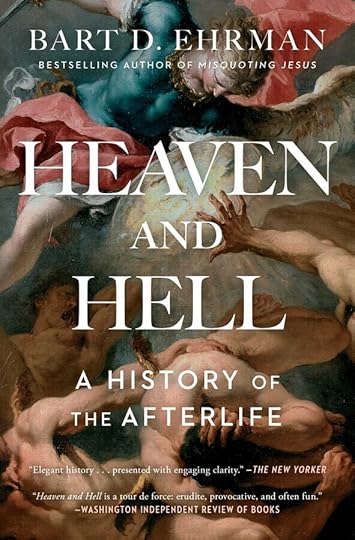
Bart Ehrman is known mainly for his work as a New Testament textual critic. His career has involved exploring the origins of the New Testament and trying to decipher how reliable the Christian Scriptures are in their presentation of who Jesus is and what Jesus did and said.
In Heaven and Hell, Ehrman attempts to produce a history of the afterlife; that is, to describe how perspectives on heaven and hell have developed since antiquity and how they have been passed down and altered through the generations. In the book, Ehrman writes a lot about the philosophers of Ancient Greece, for instance, and describes how Greek mythology may have influenced later thinking concerning the afterlife.
I really enjoyed reading this book. I found that it struck a nice balance between being scholarly in its research and accessible in its style. It is not a long book, but is full of interesting insights.
I do find the main assumption of the book — that thinking about the afterlife developed in a linear way through history — problematic. To look at things in this way is rather anthropocentric, and neglects the all-important factor of the will of God. Ehrman is agnostic about God’s existence, so it is perhaps not surprising that the author approaches the subject of the afterlife in terms of human progress rather than a divine plan.
The main thought that consistently came to my mind while reading the book was whether or not Ehrman has read the Qur’an. For me, this is the main source by which humans of our time are able to understand the subjects of heaven and hell. Ehrman’s book is entirely focused on how Christian thinking about the afterlife may have developed, and the author doesn’t explore the perspectives found in other religions. I suppose Ehrman is writing within his niche, which is understandable, but I would have liked the scope of Ehrman’s research to have included Islam and other religions.
At the close of the book, Ehrman succinctly describes his own view, which is that after death we probably cease to exist completely. In the same way as when someone is under general anaesthetic they lose consciousness completely, the author believes it’s likely this will happen to us when we die — there will simply be oblivion; nothingness. I suppose this means that Ehrman believes the entire subject matter of his book (the beliefs of humans about the afterlife throughout history) is just human invention and speculation. But if this is the case, why write the book? What are Ehrman’s motivations? Maybe intellectual interest, maybe the desire to make money, maybe the desire for recognition. God only knows, and it’s not for me to judge. I’m just curious.
I did learn a lot from the book, especially from the chapters about Greek mythology, which is not a subject I have explored in depth in my life thus far. I found the whole of the book to be entertaining and interesting, and I would recommend this book as a gripping read that is unlikely to disappoint anyone with an interest in philosophy and religion. I’m looking forward to reading more of Ehrman’s books on the subject of the text of the New Testament, as I think this is where the main value in Ehrman’s extensive research can be found.
‘Heaven and Hell’ by Bart Ehrman is available in eBook, paperback, and hardcover formats from Amazon and other retailers. To read my review of ‘Misquoting Jesus’ by Bart Ehrman, click here. To see a full list of the books I have reviewed on Perfect Chaos, click here. Thank you for reading!
March 31, 2022
Writing, though lost for words
Hi, friends! It’s been quite a few days since I last posted and I felt it would be good to share what’s been happening and what’s on my mind. In all honesty, I’m not sure what to write and I had to push myself to ‘put pen to paper’, so apologies if this article isn’t perfect in its content and construction. I will do my best!
I’ve been feeling drained and overwhelmed by life in recent days. I have been keeping a mood diary and the entries show that I have been depressed most days, though not bitterly so. The app that I’ve been using to log my mood is called Moodistory — it’s free in the app store should any of you feel you’d like to give it a try. While there are blessings in every day, it’s been a long time since I experienced a joyful state of mind. I’ve been feeling exhausted, largely because of issues related to mental health and accommodation, some of which I’ve written about in recent posts.
I am not currently homeless, and after prayerfully considering everything over the last few days, I felt it best to return to the flat, even though this has created and continues to create a lot of anxiety. I have been trying to focus on the positive aspects of living here (there are many) and trying not to let the worries and problems related to living here get me down. I have set reminders to pop up on my phone every day with the intention of keeping me grounded in my relationship with God and the teaching of Scripture, and these reminders have proven to be comforting and helpful.
I feel as though the main reason for my recent depression is the state of the world and how corrupt everything is. The thought that keeps coming to my mind is that God’s judgement must surely be coming upon the world soon. We find in Scripture that God allows communities to become more and more corrupt before administering judgement, and I feel we’re presently in an acute ‘corruption stage’ in the unfolding of God’s plans. I don’t know if I’m alone in feeling this way, but it seems to me that the world is particularly evil at present. Whether it’s a sign of the ‘end times’ I do not know, God only knows.
It’s hard feeling as though I have no one to talk to. My faith in God and my love for the Qur’an have left me feeling isolated. I’m sure there are many Christians at this time taking great comfort in their faith communities, but I have no community as my beliefs and understanding of reality are unorthodox. I can’t attend church, because I don’t believe Jesus is God. I can’t attend a mosque, because God has told me that engaging in Muslim rituals is not part of my calling. Even those closest to me do not understand or relate to my perspective on spiritual matters, which means I am rather isolated and lonely much of the time.
I will sign off with a few words of encouragement for anyone else who is struggling right now. Read Psalm 37 if you’re feeling overwhelmed by the evil in the world. Read the Qur’an if you are in any doubt as to what God requires of you and how you can have the best chance of avoiding hell on judgement day. Also, feel free to read one or more of my books (which are all currently free as eBooks) as they may help you to feel more grounded in matters of faith and truth. Thank you for reading and God bless you.
March 25, 2022
Read all my books for free!
Greetings, friends! I hope you are doing well today. This is a quick note to let you know I decided to make all of the eBook versions of my books available for free for a limited time. So if you’re looking for some thought-provoking reading material this weekend, look no further!
Click here to view all my booksIt’s taking a little while for Amazon to update the books to free in all their international stores, so if you’re looking for a specific book and it’s not showing as free on Amazon, please check back in a couple of days.
If you read one of my books and enjoy it, I’d really appreciate a positive review on the relevant retailer website as this will help me reach a wider audience.
As always, thank you for your interest in my work! I wish you a wonderful weekend and happy reading 
Steven Colborne's Blog

- Steven Colborne's profile
- 16 followers

