Gary Roe's Blog, page 15
March 20, 2017
Buck up and get over It? Yeah, right.


©unsplash.com
Buck up and get over it.
Yep, we’ve all heard some version of that. If we’re in the middle of a pity party, that might be good advice. If we’re hurting and in the midst of healing, however, it’s not very helpful.
“People are telling me to buck up and get over it. Life goes on. Put on your tough shoes. Be strong,” Paula said, with an edge in her voice.
She paused and pursed her lips. Her eyes bore into mine.
“Just how do you get over a husband? Tell me that!” she quipped.
You don’t. That’s impossible.
We never get over people. We learn to cope and compensate. Healing and recovery is about accepting the reality of the loss over time. But getting over the people we loved and have lost would mean forgetting or somehow pretending they never existed.
Ridiculous. We never “get over” husbands, wives, children, grandchildren, moms, dads, siblings, or friends. We never get over a missing loved one.
But we will get through this time. Somehow. Some way. As we grieve well, over time the grief will change. For now, we do the best we can, feeling what comes, dealing with life one small step at a time.
Here’s an affirmation for today:
“I’ll never get over you, but I will honor you by grieving in healthy ways
during this season of loss.”
As Winston Churchill said, “If you’re going through hell, keep going.” Be nice to yourself. Be patient with yourself. Take your heart seriously. Breathe deeply.
Adapted from the Bestseller Heartbroken: Healing from the Loss of a Spouse (2015 USA Best Book Awards Finalist, National Indie Excellence Award Finalist).


March 2, 2017
When We Blame Ourselves

©photodune.net
Guilt can be heavy.
“I know it’s my fault. Now I’m being punished. I can’t make this right. What can I do?” Melissa choked through her tears.
Melissa’s son Carter was her third child. He came out screaming, and (according to Melissa) never stopped talking. He grew like a weed.
One hot summer day, the family was in the back yard enjoying their pool. Melissa turned away for a moment. When she looked back, Carter was gone. She frantically searched before finally noticing him on the bottom of the pool. Carter was three years old.
“I should have been watching. God will never forgive me for this. And I’ll never, ever forgive myself. Because of me, Carter is dead,” she said with a cold stare.
When we feel guilty, we punish ourselves
When someone close to us dies, we can feel responsible. How could this happen? We missed something. We should have been there. We should have known.
We add guilt and remorse to the already unbearable pain of losing them. We begin to punish ourselves, consciously or subconsciously. The shame cripples us. Even if our faith is deep and solid, some of us have trouble raising our eyes to heaven, or even whispering a prayer.
Perhaps we see this tragedy as punishment for the things we did or didn’t do. Maybe we believe our loved one was taken from us because we weren’t good enough. We’ve messed up too much and crossed a line somewhere, and now God, karma, fate, or the universe has given us what we deserve.
Underneath it all is the shaky belief that if we had been better people this would not have happened. We’re bad and our loved one is dead. Forgiveness is impossible.
In grief and in life, we often confuse being responsible with being in control. That never works, because it’s simply not true. We influence much, but are never “in control” when it comes to relationships, other people, or circumstances. We don’t even cause our own hearts to beat.
We aren’t perfect. Far from it. We aren’t omniscient (all-knowing) – not even close. We’re not omnipresent (everywhere at once), but limited to being in one small spot on this planet at any given time. We’re not omnipotent (all-powerful) – not by a long shot. Yet we sometimes expect ourselves to be all of these.
Whatever our belief system, it must provide somehow for the resolution of guilt. Forgiveness must be included and available, or else we are lost and without hope.
Blaming ourselves is a common reaction to some deaths. But it is not healthy, and hinders our recovery and healing.
“Part of loving and honoring you is forgiving myself. I’m working on that.”
An exercise to consider:
This exercise will take a little time. It may be emotional. That’s okay. We’re processing some tough stuff here.
Take a moment and list anything you feel responsible for related to the death of your loved one. Be as specific as possible.
Do you believe you can be forgiven? What would it look like to forgive yourself?
Write a letter or poem to your loved one expressing the guilt you feel. Be as specific as you can. Consider asking forgiveness from God, your loved one, and perhaps your family.
Now, imagine your loved one in front of you, and read this letter out loud.
When done, go back to the letter and write at the bottom, “I forgive myself.” Read it out loud.
We often need to forgive ourselves over and over again, each time at a deeper level. Keep forgiving. Keep releasing yourself. This is part of healthy grieving.
Adapted from the new bestseller, Shattered: Surviving the Loss of a Child. Watch the Shattered videos here: Gary, Michelle.
February 21, 2017
How to Deal with Fear and Worry
Fear. Worry.
One leads to the other, and then back and forth.
Life is tough. Our hearts get hit. Losses abound. If we’re not careful, fear can take up residence. Worry can paralyze us. We can’t afford that.
Worry can gobble a life
Larry was diagnosed with MS in his early thirties. He adapted courageously for more than twenty years, then declined quickly. When I first visited as his hospice chaplain, his life consisted of sitting motionless in his recliner, dependent on others to move even the pillows under his arms and behind his head.
Yet, he still managed a smile every time I walked in.
During one visit, I was distracted by something that happened earlier in the day. I looked up at one point, and Larry was gazing hard at my face.
“Gary, you’ve got a worried look. Something troubling you?” he asked.
With a sigh, I said, “I’m sorry, Larry. As a matter of fact, yes.”
“Worry is bad stuff,” he said, shaking his head. “It will eat your mind.” Then he promptly changed the subject.
Larry was right. Worry is terrible stuff. It preys on our fears. It fills our mental spaces with “what if.” It dupes us into expending vast amounts of energy trying to keep something bad from happening. It gobbles up our life.
Some suggestions on dealing with worry
When you’re hurting, worry is definitely not your friend. In fact, I don’t think it ever is.
How do you deal with it? Here’s some suggestions:
Realize that you’re vulnerable. You’re enduring a loss. Life isn’t what it used to be. Pain and grief are fertile ground for worry. Your heart is naturally more vulnerable.
Breathe deeply. Breathing in deeply though your nose and then out through your mouth activates your parasympathetic nervous system and initiates a calming effect throughout your body. It slows the mind down.
List the things you’re concerned about. Don’t just think about them, but get them out and on paper. This too keeps the mind from running ahead. There’s something about seeing our fears on paper in front of us that unplugs some of the terror.
Which concerns do you have no control over? Write a big “NC” (no control) by them. These are the ones that your heart will demand that you let go of, sooner or later.
Of the things you DO have some control over, which one of them is bugging you the most? Put a star next to it. Ask yourself, “What action can I take here?” It may be as simple as talking to someone about it.
Once you take action on one item, go to the next most troublesome one and do the same thing.
And so on…
Take your time and pace yourself
Take your time. Life saps us and sometimes leaves little emotional energy for conquering the big stuff. Pace yourself.
And keep your list. Each time you look at it, let the “NC” labels be a reminder that you’re not in charge of that one or in control of it. This will help you release it over time.
Add to the list as needed. More things will come up as time moves on. Over time, you’ll be amazed at how much you’ve released and how much action you’ve taken.
Worry has stolen enough already
“Worry is bad stuff. It will eat your mind,” Larry said.
True. Worry has stolen enough of our lives already. It’s time to take action. Make that list. You’ll be glad you did.
Question: What have you found helpful in dealing with fear and worry?
January 27, 2017
SHATTERED: Surviving the Loss of a Child has been released!
Losing a child is a terrible thing. And that’s a gross understatement.
As many of you know, I have been working on a new book for bereaved parents and grandparents. It has been a difficult and emotional project.
We’re pleased to announced that the electronic version of Shattered: Surviving the Loss of a Child, has been released.
AND, by special arrangement with Amazon, Shattered is FREE today and tomorrow (January 27-28). Click here to download your free copy.
If you don’t have a Kindle, consider downloading a free Kindle reading app. If you would prefer a paperback, it should be out next week. Due to various restrictions, we can’t offer the paperback for free, but it will be 50% off the first week after it’s released.
Click here to learn more about the book.
If you haven’t lost a child, you know someone who has. Consider grabbing this free version to help you understand better what they are doing through and how you can help. Also, I believe you will find many things in Shattered that relate to your losses in life, whatever they might be.
We care for grieving hearts. Thank you for being in this with us. I’m glad none of us is alone, though loneliness might often seize us.
Breathe deeply today. Be patient with yourself and others. Take your heart seriously. You are more important than you know.
December 22, 2016
Merry Christmas, from me to you

©photodune.net
Merry Christmas.
Not all of us feel merry. Perhaps none of us do.
For those in grief, this time will be emotional, hard, and unpredictable. This holiday is uncharted territory. We’ve never been here before, at this particular time and place. This can be unsettling and scary. Many of us are wondering about a lot of things.
In the midst of all the uncertainty of life, loss, and grief, here are three things I believe to be true. I hope they will be comforting to you somehow:
You matter, more than you realize. I believe you are of priceless, eternal value. This is true about you no matter what happened in the past, or what happens in the future.
Your loss matters. You’re missing someone you love. Your world had been upended, perhaps even shattered. That’s a big deal, because your loved one is a big deal.
Your heart matters. Your heart has been hit, hard. Perhaps it’s broken. Take care of your heart. Take care of you. Honor your loved one and grieve. Grieve well.
You’re not alone. You’re not crazy. You will make it.
I’m glad to be on this road with you.
Merry Christmas,
Gary
P.S. Here are some Holiday Affirmations (taken from Surviving the Holidays Without You) that might help:
Even in my loss, this holiday can still be good. I’ll begin by managing my own and others’ expectations.
My holidays will be different but they can still be good.
I’ll feel alone sometimes. I need alone time, but I’ll be careful not to isolate myself.
If I want to do the holidays well, I must pay attention to my heart.
I will watch my “gas tank” carefully. This holiday I will choose what I’m going to do, when, and with whom.
Safe people will help me stay grounded and sane. I will find and treasure them.
I don’t have to leave my loved one behind. I can be creative and move on with them in new ways.
God is with me in my grief. He is my comfort and healing.
December 6, 2016
When Holidays Hurt: 3 Keys to Survival
©photodune.net
December is upon us.
Ah, the holidays.
Halls, houses, and lawns are decked with festive decorations. Kitchens are filled with delightful, savory aromas. The air is laced with laughter, familiar music, and the tinkling of Salvation Army bells.
The holiday spirit is everywhere.
But underneath the bright lights, smiles, and cheerful greetings lurks the unseen warehouse of holiday expectations. We have to top last year, and the year before that. Bigger, better, more colorful, and more delicious. We must somehow make this holiday more “wow,” better than ever before, the best ever.
We all have expectations. We have ideas of how this should go, what should happen, and when. We have expectations of others. Others have expectation of us. We have expectations of ourselves based on what we think others’ expectations are.
Even our culture has expectations. Have the appropriate holiday spirit. Engage in holiday cheer. Fa-la-la-la-la, and all that. Be happy, happy, happy! And above all, buy, buy, buy.
The pressure mounts.
What if we’re not happy?
What if we’re not happy? What if we’re actually sad? What if we’ve lost a loved one, or several? What if we’re depressed?
Amidst the smiling faces, there are some wounded hearts. Holidays are naturally times for reminiscing. Memories of what we once had swim before our eyes. We become hyper-aware of who and what we’ve lost.
Grief is lonely thing. Surrounded by gaiety, a broken heart can feel more alone and isolated than ever. No one wants to hurt for the holidays, but some of us do.
Hurting for the Holidays?
How do we deal with this?
Here are a few suggestions:
1. Manage those expectations.
One question to ask ourselves might be, “Exactly whose game are we playing here?” Instead of plowing ahead as usual, let’s pause and take a good look at our expectations and plans. What do we want this holiday to be like? What’s honestly possible and realistic? What do we really want to do, how, when, and with whom?
Focus on a few things. What’s most important? What must happen? Along the way it might be good to let those close to you know you’re doing things differently this year. This will help manage their expectations too.
2. Make a plan to remember loved ones who’ve passed on.
Acknowledge the elephant in the room. Bring up their name and talk about them. Invite others to share a special memory or what they miss most. Holidays are a wonderful time to honor the special people who now reside in our hearts rather than next to us.
3. Be kind to yourself.
You can do more than merely survive. Take your heart and health seriously. Pace yourself. Rest. If you love yourself well through this time, that love will spill over onto family and friends as well.
Watch those expectations. Focus on the most important things. Simplify. Honor deceased loved ones. Be kind to yourself along the way.
These holidays might be tough and stressful, but they can still be good.
Adapted from Gary’s article “Healthy Holidays: Managing Stress and Grief” from INSITE Magazine and his book Surviving the Holidays Without You (2016 Book Excellence Award Finalist).
November 22, 2016
When SPECIAL DAYS bring SADNESS
©photodune.net
One Sunday afternoon when I was fifteen, my dad had a massive heart attack and collapsed in front of me. They resuscitated him at the hospital, but he never regained consciousness. For a week I sat by his bed and talked about anything and everything that came into my mind.
I knew he wasn’t going to make it.
Since there was no evidence of any brain activity, the doctors asked for permission to turn off the machines. Dad died several hours later.
I had been living with my dad, just the two of us. It wasn’t a perfect relationship, but I loved him. When he died, I felt lost. He had been my home.
Another family stepped up and took me in. Even though they already had four kids, they welcomed me in as one of their own. It was wonderful. They helped me heal.
Then November and December rolled around. First dad’s birthday, and then Christmas. I was having a blast with my new family, but I also felt terribly sad. My heart ached.
I missed my dad.
Holidays can mess with our hearts
Special days bring up and magnify our losses. We become keenly aware of who’s missing.
I think of feel-good Christmas classics like Miracle on 34th Street, It’s a Wonderful Life, and White Christmas. The backstories of these films include tragedy, illness, economic disaster, war, death, depression, and the difficulty of aging. Perhaps that’s why they’re classics. They give us hope. They’re about overcoming our losses. Though life is tough, love and goodness can still win out.
I’ve had almost 40 years of holidays without my dad. The ache has gotten better, but it’s still there. I’ve gotten used to that hole in my heart and have learned to appreciate it.
I miss him. I’m supposed to.
Using special days to heal
We never get over a person. We learn to get through tough times in the healthiest way possible. And that includes birthdays, anniversaries, Thanksgiving, Christmas, and all the other special days.
Like those holiday classic movies, many of our special days will be about overcoming. The goal isn’t to merely survive, but to make those special days work for us in less and help us heal.
How can we use that special day to honor our loved one, express our love for them, and also loved those around us in the process?
Holidays can be tough. But they can still be good.
Adapted from the 2016 Book Excellence Award Finalist, Surviving the Holidays Without You: Navigating Grief During Special Seasons
October 28, 2016
Will the Hurt Ever End?
©photodune.net
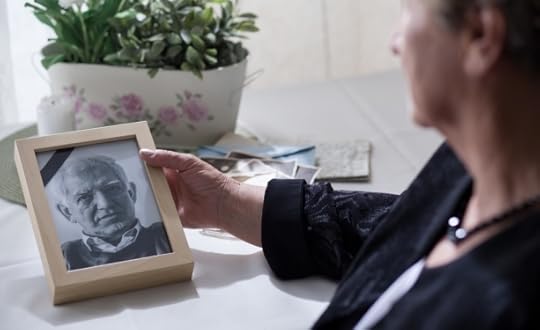
Missing someone is painful.
Will the hurt ever end?
“I kept waiting for the pain to stop. Some things got easier with time, some didn’t. Right now, there is this deep, dull ache in the recesses of my heart,” Noel confided.
She paused and looked at her hands in her lap.
“I’ll always miss him. Always,” she said.
Noel’s husband Steve had died almost a year earlier from brain cancer. She’s right. She will always miss him.
Missin g someone is painful
The missing can be so painful. The yearning for your loved one can be intense. Perhaps you wonder when all this will be over.
On some level, the ache in your heart will remain. You won’t feel it as much, or as acutely perhaps, but it’ll be there. When the aroma, place, or song triggers a memory, your heart will groan.
But over time, the ache will not only bring longing, but a smile. Thanksgiving for what your loved one and what you had will replace sadness over losing it.
He or she has an always-place in your heart.
Today’s grief affirmation:
“I’ll always miss you, because you have an always-place in my heart.”
“I still miss those I loved who are no longer with me but I find I am grateful for having loved them. The gratitude has finally conquered the loss.” – Rita Mae Brown
But these three things remain: faith, hope, and love. But the greatest of these is love.” – 1 Corinthians 13:13
Want more? Grab your copy of Heartbroken today (Amazon Bestseller, USA Best Book Awards Finalist, National Indie Excellence Award Finalist).
October 14, 2016
When the Pain Becomes Fresh Again

©photodune.net
Pain runs deep. Early scars are powerful, and sink into the darkest recesses of the heart. Catastrophic wounds can throw us into survival mode for a while.
No matter how old the wound, with the right trigger, the pain can become incredibly fresh again.
Grief is like that.
Pain Messes with our Sense of Time
“It all seems so strange. I can still see him in his recliner. I still hear him in the kitchen. I dream about him at night,” Ellen said.
“It’s been eleven months, but it feels like yesterday.”
Death, loss, and trauma mess with our sense of time. For a while, it’s like life is in slow motion. Some people have memory gaps – periods of time during their grief or painful experiences that they don’t remember at all.
It can also seem like everything is happening at once, and life is flowing quickly past while we’re standing still. Dazed, we see this activity but it doesn’t seem to register somehow.
Dazed and Confused
Deep wounds have huge shock value. Everything is different now, including our sense of time. Grief and loss are like some weird alternate universe. The whole experience is surreal.
Time has a different meaning now.
Here’s a new grief affirmation:
“Weren’t you here only a moment ago? You seem so close sometimes.”
Grief messes with our sense of time.
“Grief … Up till this I always had too little time. Now there is nothing but time.”
― C.S. Lewis, A Grief Observed
Adapted from Heartbroken (Amazon Bestseller, USA Best Book Award Finalist, National Indie Excellence Book Award Finalist).
October 1, 2016
When Half Your Heart is Gone

©photodune.net
Physically, it’s hard to imagine being able to survive with half a heart.
Emotionally, that’s what some wounds and losses feel like.
Gone, Just Like That
“I’m devastated. Half my heart is gone. How does a man live with half a heart?” Robert asked.
“We had tornadoes growing up. One time we were hit hard. I remember the shock afterwards. Our home was gone. Just like that.”
Robert paused and looked at me. “She was my home. Now she’s gone – just like that,” he said.
A Tornado of the Heart
No matter how much time you had to prepare, you may still have that gone-just-like-that feeling. When your loved one took their last breath, your life changed forever. The shock waves hit every part of your life.
You’ve suffered a devastating tornado of the heart.
Half your heart is gone. Perhaps your home has been swept away.
How do you go on? How are you going to rebuild?
As you grieve, the answers will come in their proper time.
Here’s a grief affirmation for today:
“It’s okay if I feel devastated at times. You were my home.”
Tornadoes of the heart can be devastating. You are not alone, though it may feel that way at times.
Breathe deeply. Take your time. Be nice to yourself. Recovery is hard.
“You will not ‘get over’ the loss of a loved one; you will learn to live with it. You will heal and you will rebuild yourself around the loss you have suffered.”
―
Elisabeth Kübler-Ross
Adapted from the bestseller Heartbroken: Healing from the Loss of a Spouse (USA Best Book Awards Finalist, National Indie Excellence Book Awards Finalist)