
Jerome R. Corsi's Blog, page 343
December 16, 2013
Kiss your IRA good-bye

NEW YORK – The recent volatility of the Dow Jones Industrial Average indicates savvy investors on Wall Street are worried.
Should the Federal Reserve, under Chairman Ben Bernanke’s replacement, “taper” the current Fed policy of buying U.S. Treasury debt, investors anticipate a sharp downward market correction, possibly even a market crash.
Last week, the Dow fell below 16,000 only to rally back over the barrier as Federal Reserve officials attempted to calm nervous investors.
This week, the U.S. Senate is expected to confirm Janet Yellen to replace Bernanke as Fed chief, despite the continuing attempt by Republicans to slow the confirmation of Obama administration appointees after Senate Majority Leader Harry Reid employed the “nuclear option,” ending the requirement for a supermajority of 60 votes to force a vote.
Yellen, currently vice chairman of the Board of Governors of the Federal Reserve, is expected to begin ramping down Bernanke’s policy known as “Quantitative Easing.” Under the policy, the Federal Reserve has bought billions of dollars of U.S. Treasury debt to keep interest rates as close to zero as possible.
The concern is that stock prices have been inflated by excess liquidity pumped into the financial markets by the Fed purchase of U.S. debt. There are fears that the bubble will burst like the dot.com bubble in the late 1990s and the real-estate bubble in 2008 after the dramatic increases in housing prices.
In a market crash, typically only the first investors to get out of the market avoid losses, while others – typically retail investors and those in retirement savings markets, including 401(k) and IRA investments – lose market value as underlying investments drop quickly in value.
“Many market observers believe the central bank is unlikely to begin withdrawing stimulus, a process widely dubbed ‘tapering,’ this coming week,” the Wall Street Journal said Saturday. “But if the Fed does act, they say, the improving economy has left investors feeling more comfortable with the prospect of a pullback.”
However, downward adjustments in the stock market in the past few months strongly suggest growth in the Dow is heavily dependent on the Fed continuing a policy of quantitative easing at the current levels.
‘Flash crash’
In May, WND reported, all it took to trigger a global stock sell-off was a comment Bernanke made suggesting the Fed would consider backing off quantitative easing at one of its “next few meetings.”
Global markets took Bernanke’s seemingly innocuous comments as a signal the Fed was serious about ending its third round of buying billions of dollars monthly of U.S. government debt, including Treasury bonds and housing bonds. The program is currently designated Quantitative Easing 3, or QE 3, indicating the current debt buying round is the third such effort the Fed has taken since the Dow hit a 12-year low of 6,547.05 on March 9, 2009.
The most severe stock market decline occurred in Japan as a “flash crash” caused the Nikkei index to plunge 7.3 percent.

Japanese stock market decline, May 23 (Source: ZeroHedge.com)
Overnight, stock markets in Frankfurt, London, Paris and Milan slumped more than 2 percent .
On the market open in the U.S., the Dow plunged 127 points before bullish analysts, including some government officials representing the Obama administration, quietly advised institutional investors the Fed had no immediate plans of ending or significantly backing off QE3.
Bernanke doubles U.S. debt
As WND reported in January, Bernanke is known among professional economists as “Helicopter Ben,” for his proven tendency to hover over developing financial crises only long enough to hurl seemingly endless dollars on the problem.
In December 2012, Bernanke reached a new milestone, doubling the magnitude of U.S. debt since the day he became Federal Reserve chairman in 2006, as graphically illustrated in a chart published by Zero Hedge.

(Source: ZeroHedge.com)
As demonstrated by the chart, U.S. national debt was $8.183 trillion on Feb. 1, 2006, and doubled to $16.366 trillion on Dec. 12, 2012, when the Federal Reserve officially announced the launch of Quantitative Easing 4, or “QE4.” It amounted to a fourth annual round in which the Federal Reserve would buy U.S. debt, including both U.S. Treasuries and Mortgage Backed Securities Bonds commonly issued by investment firms and commercial banks.
The Fed announced it would enter 2013 with a plan to purchase $45 billion a month of U.S. Treasury securities and $40 billion a month of mortgage-backed securities as part of a continuing Fed plan to depress long-term interest rates and encourage borrowing, spending and investing, the Wall Street Journal.
In the December 2012 announcement, the Fed set specific targets, declaring an intention to keep short-term interest rates near zero into 2015, or until unemployment fell to 6.5 percent or lower, as long as inflation forecasts remain near the Fed’s 3 percent target.
“The key point here is that the Fed is now actively running both monetary and fiscal policy because it will now be in the business of funding nearly 100 percent of all the new government deficit spending in 2013,” concluded Chris Martenson of Peak Prosperity. “And it is pumping a bit more than $1 trillion of hot, thin-air money into the economy as it does so.”
In December, the Federal Reserve revealed that its holdings of U.S. government debt had increased to an all-time record high of nearly $2.2 trillion.
By comparison, when Obama was inaugurated in 2009, the Fed owned a mere $475 billion in U.S. government debt.
The Fed’s holdings of U.S. government debt have increased nearly 500 percent between Jan. 20, 2009, when Obama was inaugurated president, and December 2013.


Pope replies to Rush: 'I am not a Marxist'
NEW YORK – Pope Francis’ claim that he is not a Marxist has been widely interpreted as a response to criticism leveled by talk-radio host Rush Limbaugh against criticism of the free-market system in the 84-page apostolic exhortation, “Evangelii Gaudium,”or “The Joy of the Gospel.”
As WND reported Dec. 5, the major Italian newspaper La Stampa cited WND and Limbaugh in an article about opposition to Francis’ views on poverty and wealth, framing the debate as “the world of the conservative USA vs. Bergoglio.”
Over the weekend, Francis said he knew many “good” Marxists but was not one himself.
“Marxist ideology is wrong,” Francis explained to La Stampa in an interview published Dec. 14. “But in my life I have met a lot of good people, so I do not feel offended.”
Stressing there was nothing in his apostolic exhortation that cannot be found in the Social Doctrine of the Catholic Church, Pope Francis insisted: “I was not, I repeat, speaking from a technical point of view but according to the Church’s social doctrine. This does not mean being a Marxist.”
Yet, the denial he is a Marxist would never have been required had not the language of “The Joy of the Gospel” contained a direct attack on free-market capitalism, as WND reported Nov. 27.
Mixed signals
Since being named by Time Magazine the “Person of the Year 2013,” Francis has given off several contradictory signals that have confused both liberal and conservative Catholics. Many liberals would like to believe he represents a new era in which the Roman Catholic Church will eventually embrace same-sex marriage and abortion as well as atheists and believers in other religions. Meanwhile, traditional Catholics insist the new pope doesn’t intend to bring about any fundamental doctrinal changes in Catholic theology.
While there is general consensus among Catholics that Francis has changed the tone of the Catholic Church’s message in his few short months in the papacy, there is no general agreement whether the change is anything more than semantics.
Liberals worldwide can be expected shortly to begin making demands to see just how flexible Catholic theology will be under Francis.
At the same time, traditional Catholics will be testing him to see if he will abandon the theological rigor of his predecessor, Pope Benedict XVI, testing, for instance, whether or not he will allow Catholics to return to celebrating the traditional Mass in Latin.
Francis condemns abortion
On Dec. 7, the eve of the Feast of the Immaculate Conception, Francis held an audience in the Vatican with the pro-life think-tank Dignitatis Humanae Institute on its fifth anniversary.
Addressing the group, Francis condemned abortion in strong and direct language, saying unborn babies who fall prey to abortion are victims of a “throwaway culture” that threatens “to become the dominant mentality.”
The pope said:
The victims of such a culture are precisely the weakest and most fragile human beings – the unborn, the poorest people, sick elderly people, gravely disabled people … who are in danger of being “thrown out,” expelled from a machine that must be efficient at all costs. This false model of man and society embodies a practical atheism, de facto negating the Word of God that says: “Let us make man in our image, according to our likeness.”
Luca Volontè, chairman of the Dignitatis Humanae Institute, addressed the pope on behalf of the Institute, saying:
The false idols of gender ideology that want to eliminate man and the family. Consumerism and individualism that seduces humanity to cling to the ephemeral. The new statism and the temptation of a new irresponsible collectivism. A culture of heath care that transforms itself into external perfection or into eugenics. The rebirth of an economic and speculative elite. The new Malthusianism and euthanasia that imposes abortion and the sacrifice of millions of children, the elderly and the poor. Our days are characterized by the desire to ignore and eliminate God from the hearts of men and the life of the people.
The Dignitatis Humanae Institute proposes with joy, courage and a generous heart, the truth of the dignity of the human person, and decisively rejects these teachings and furious ideologies. They are borne of moral relativism, imposing a true and real tyranny based on the supremacy of the strong against the weak, where forms of slavery are taking hold in the context of a resigned silence. We cannot resign ourselves, because we are Christians.”
In October, the Dignitatis Humanae Institute called upon the Vatican to excommunicate Catholic politicians who publicly support abortion or euthanasia legislation.
In announcing the policy stance, the Dignitatis Humanae Institute website quoted Cardinal Raymond Burke, the prefect of the Supreme Tribunal of the Apostolic Signatura, the highest court in the Vatican, who spoke about the inability to reconcile pro-abortion Catholic politicians with their worthiness to receive communion.
“You cannot reconcile it – it is a contradiction, it is wrong, it is a scandal, and it must stop!” Cardinal Burke, the highest-ranking American currently in the Vatican, said Nov. 10 in an interview with The Wanderer, a Catholic online daily. “We live in a culture with a false sense of dialogue – which has also crept into the Church – where we pretend to dialogue about open and egregious violations of the moral law.”
On Dec. 12, in a televised interview with EWTN’s flagship program, “The World Over,” Burke responded to criticism that the Catholic Church should follow the advice of Francis and focus on “essentials” rather than abortion or same-sex marriage.
“What could be more essential than the natural moral law?” Burke told EWTN News’ Raymond Arroyo. “We can never talk enough about that as long as in our society innocent and defenseless human life is being attacked in the most savage way. I mean it’s literally a massacre of the unborn.”
Crackdown on Latin Mass
A controversy between Francis and traditional Catholics has developed over the determination of the Franciscan Friars of the Immaculate to continue celebrating the Mass in Latin instead of in the vernacular, the so-called “New Mass.” The change was made in Vatican II, an ecumenical council of the Catholic Church opened in Rome under Pope John XXIII in 1962 and closed under Pope Paul VI in 1965 on the Feast of the Immaculate Conception.
The Franciscan Friars of the Immaculate is a growing order of several hundred priests, established in Italy by Pope John Paul II in 1990 and subsequently erected by Pope John Paul II as an Institute of Religious Life in January 1998.
The controversy takes on added significance in that the Franciscan Friars of the Immaculate is part of the Franciscan order established by Pope Francis’ namesake, St. Francis of Assisi.
In 2007, after months of debate, Pope Benedict XVI, in a concession to traditional Catholics, rolled back Vatican II rules that demanded saying Mass in the vernacular. Benedict allowed the limited reintroduction of the 16th century Tridentine Mass, widely known as the “Latin Mass,” specifying that to celebrate the old Latin Mass, a priest must obtain the permission of his local bishop.
In July, the Vatican Congregation for the Religious, with the approval of Francis, appointed Rev. Fidenzio Volpi, a Franciscan Capuchin friar, as a special commissioner to oversee the Franciscan Friars of the Immaculate. The aim was to require the order to receive explicit authorization by competent authorities to celebrate the traditional Latin Mass.
The move was widely interpreted as the first time Francis directly contradicted a decision by Benedict.
Volpi took strong action, sending the founder of the Franciscan Friars of the Immaculate to live in a religious home, so he could go about imposing without interference the restrictions on the Latin Mass ordered by Francis.
Then, on Dec. 8, Volpi closed the friar’s seminary and sent its students to other religious universities in Rome. At the same time, he suspended the ordinations of new priests for a year and required future priests ordained in Franciscan Friars of the Immaculate to accept formally the teachings of Vatican II by agreeing only to say the New Mass in the vernacular.
Francis has typified supporters of the Latin Mass as “retrograde” Catholics out of touch with the evangelizing mission of the Catholic Church in the 21st century, who seek “restoration of outdated manners and forms” of worship that are “no longer meaningful” given the guidance of Vatican II.
Then, on Dec. 16, in a surprise move, Francis dropped Cardinal Burke from the Congregation for Bishops. The move suggested Burke is no longer on a short list of American Catholic Church clerics exerting a growing influence on Francis.
David Gibson, reporting the decision for the Religious News Service, characterized Burke as “something of an outlier,” a “very conservative holdover from the Benedict XVI era and a fan of the kind of high liturgical finery that Pope Francis does not take to, at all.”
December 15, 2013
Retirement plans attacked for 'savings inequality'
NEW YORK – A report by the Washington-based National Institute on Retirement Security that found a significant racial disparity in retirement savings among working-age households appears to be setting the stage for introducing “income redistribution” concepts into the next round of debate over cutting Social Security benefits.
What appears to be taking shape in Washington is an argument that 401(k) plans are a tax advantage enjoyed disproportionately by the rich. Meanwhile, cuts contemplated to Social Security to reduce future unfunded federal budget liabilities would be disproportionately disadvantageous to the poor.
“A large majority of Black and Latino working-age households – 62 percent and 69 percent respectively, do not own assets in a retirement account, compared to 37 percent of white households,” according “Race and Retirement Insecurity in the United States,” a paper published this week by Nari Rhee, Ph.D., for the National Institute on Retirement Security.
While emerging research on retirement savings has not resulted in calls to curtail 401(k) plans, the argument is not out of the question in a political environment in which economic outcomes are increasingly judged for their racial or class fairness
WND has reported the federal government, with continuing Obama administration annual budget deficits in the range of $1 trillion, have contemplated forcing holders of tax-qualified retirement insutruments – including 401(k)s, IRAs, and annuities – to invest a portion of their retirement savings in U.S. government Treasury bonds.
In September, WND reported that cash-strapped Poland confiscated half of its citizens pension funds by requiring pensioners to transfer approximately half their retirement savings to a state-guaranteed, government-run pension fund.
Poland’s move followed a similar move by the Mediterranean island-nation of Cyprus in March when the government confiscated 10 percent of all bank accounts. Cyprus sought to raise 6 billion euros to meet a condition set by international bankers, including the International Monetary Fund as a condition of finalizing a proposed Eurozone bailout.
In November 2012, WND reported the Obama administration was exploring a creative way to finance continuing trillion-dollar annual federal budget deficits by forcing private citizens holding IRA and 401(k) accounts to buy Treasury bonds.
The report by the Washington-based National Institute on Retirement Security noted:
Three of four African-American households and four of five Latino households age 25-64 have less than $10,000 in retirement savings, compared to one of two white households:
Among near-retirees, the per-household average savings balance among African American, Latino and Asian households ($30,000) is one-forth that of white households ($120,000); and
Across age groups, African American, Latino and Asian households with at least one earner are half as likely as white households to have retirement savings equal to or greater than their annual income. Just 19 percent of African American, Latino and Asian households have at least one earner with savings equal to or greater than annual income., compared to 41 percent of white households.
Despite stressing racial differences, the report concluded Americans of all races are facing a retirement crisis.
“All racial groups are inadequately prepared, and the majority of households in every racial group face a large shortfall in retirement assets compared to what they will need in order to maintain their lifestyle, or even meet basic expenses,” Rhee wrote.
“For instance, while whites have fared significantly better than other groups in terms of access to employer-sponsored retirement benefits and overall retirement savings, the median account balance of $29,000 for near-retirees represents a tiny fraction of the 8-11 times annual income that some financial experts recommend in order to maintain their standard of living.”
Still, the National Institute on Retirement Security report concluded the retirement crisis was particularly severe for “households of color” headed by African-Americans, Asians and Latinos.
The report ends with a plea to restore planned future cuts in Social Security benefits designed to increase the age when benefits may be claimed. Instead, Social Security benefits should be increased, the report urges, especially because of the retirement-income inequality faced by minority households.
“The wide racial gap in retirement savings is part and parcel of the broader problem of racial inequality in household wealth in the United States,” Rhee wrote. “While there is a significant earnings and income gap between people of color and whites, the wealth gap is even wider – and growing. In turn, the growing racial divide in retirement wealth contributes to worsening inequality in overall household wealth. With little else to depend on besides Social Security when they retire, people of color are especially vulnerable to economic hardship and reliance on public assistance in old age.”
Disappearance of ‘defined benefit’ plans
Leftist economic analysts focused on the racial equality of retirement savings have reason to be concerned about the demise of defined contribution retirement plans in America.
The New York Times report of the National Institute on Retirement Security study stressed that employers nationwide have been moving in the past few years from plans that pay fixed retirement benefits to 401(k)-style retirement plans in which employees generally assume the risk.
“Such public employee pensions, which typically pay a fixed benefit for life, have been of particular help to African Americans, who make up a disproportionate share of government workers,” Michael A. Fletcher wrote in the New York Times. “Similarly, trimming retirement benefits will disproportionately hurt the retirement prospects of black workers, even as they struggle with lower housing values and homeownership rates than whites.”
WND reported last week a federal bankruptcy judge ruled Detroit can proceed to negotiate reductions in city worker pensions since federal bankruptcy law trumps state constitution provisions that were designed to prevent the pensions of municipal employees from being cut in a Chapter 9 filing.
Increasingly, the political left is spinning the available economic data to attack 401(k) plans, known generally as “defined contribution” plans, because the “fixed” payment includes the amount contributed, not the amount of retirement benefits paid, as has traditionally been the case with “defined benefit” plans.
A booming U.S. retirement savings market
Concerns about racial inequality have also intensified with an acknowledgment that retirement savings in the U.S. are at an all time high, largely because of the increase of 401(k) plans and the bull market in stocks taking the New York Stock Exchange to over 16,000 recently.
The Investment Company Institute, a trade organization generally representing mutual funds, together with the American Benefits Council and the American Council of Life Insurers, reported this month that Americans currently have a record amount of money saved for retirement of $20.9 trillion in total, not including Social Security benefits.
The study found that in 1975, 21 percent of retirees, including former employees and their spouses, were receiving income from retirement plans sponsored by a private employer. Among retirees with private-sector retirement plan income, the median annual income per person in 1975, expressed in 2012 dollars, was $4,800, while comparable figures for 2012 showed 32 percent of retirees were receiving income from private-sector retirement plans, when the median annual income was about $6,300.
The study emphasized that Social Security forms a strong foundation for a “pyramid” of retirement resources, with higher income-replacement rates for lower-earning households. Social Security replaces 70 percent of lifetime earnings for the lowest-income quintile, compared to 47 percent in the second quintile.
In a study by the left-leaning Economic Policy Institute earlier this year titled “Retirement Inequality Chartbook: How the 401(k) revolution created a few big winners and many losers,” Monique Morrissey, an economist with the group, and Natalie Sabadish, a research assistant, argued 401(k) programs have contributed to retirement-income inequality in the U.S.
“Retirement-income inequality has grown in part because most 401(k) participants are required to contribute to these plans in order to participate, whereas workers are automatically enrolled in defined-benefit pensions and, in the private sector, are not required to contribute to these plans,” Morrissey and Sabadish wrote.
The authors said that, therefore, “higher-income workers are much more likely to participate in defined-contribution plans.’
“In addition, higher-income workers have more disposable income and a higher investment-risk tolerance, receive larger tax breaks, and are more likely to work for employers that provide generous matches. Thus, even if participation had not grown more unequal, disparities in retirement preparedness would have grown with the shift from defined-benefit to defined-contribution retirement plans.”
Morrissey and Sabadish concluded with a plea to retain Social Security as a means of helping workers harmed by the perceived unfairness of 401(k) plans.
“The existence of a retirement system that does not work for most workers underscores the importance of preserving and strengthening Social Security, defending defined-benefit pensions for workers who have them, and seeking solutions for those who do not,” Morrissey and Sabadish said.
Sudden threat endangers Hillary's 2016 run
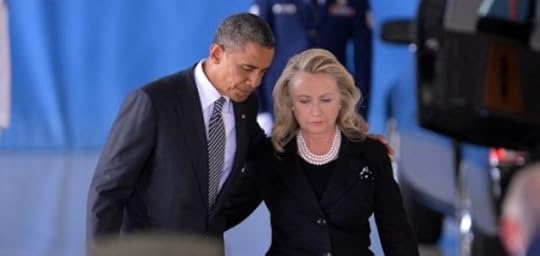
NEW YORK – A threat to Hillary Clinton’s much anticipated 2016 presidential campaign appears to be developing in Egypt where that nation’s government is taking steps to criminalize the Muslim Brotherhood.
Specifically, a new criminal complaint has been filed with Egypt’s attorney general, Hisham Barakat, alleging then-U.S. Secretary of State Hillary Clinton collaborated with Naglaa Mahmoud, the wife of ousted Egyptian President Mohamed Morsi, in seeking to incite domestic insurrections to topple Abdel Fattah el-Sisi, the Egyptian general who has been commander in chief of the Egyptian armed forces, as well as minister of defense, since Aug. 12, 2012.
Researcher Walid Shoebat, a native Arabic-speaker and a former Palestinian Liberation Organization operative, has reported on his blog that credible news sources in Egypt have reported in Arabic that criminal charges have been brought against Hillary Clinton and Morsi’s wife.
Shoebat translated the following from an Egyptian Mehwar TV channel news video in which television reporter Nasr Qaffas explains on camera details of an interview Turkey’s Anatolia news agency conducted with Naglaa Mahmoud.
The excerpts from the transcript of the Mehwar TV news video include comments by Naglaa Mahmoud implicating Huma Abedin, wife of former Democratic Congressman Anthony Weiner and the former Hillary Clinton chief of staff whom WND has identified as having close ties to the Muslim Brotherhood:
Qaffas: According to Anatolia Press, Mahmoud said, “I have between my fingers, a treasure trove of secrets from the White House and Mrs. Clinton fears my wrath.” She said, “I will not speak about Huma Abedin.” When asked if she had a close relationship with Hillary Clinton, Mahmoud said, “When my husband returns from his kidnapping, the one who led the coup will pay a hefty price.” Of Mrs. Clinton, she said, “We have a long friendship of many years. We lived in the U.S. and my children learned there. This friendship increased further when my husband became the legitimate president of the country.”
Mahmoud went on to say that they were recruited by the Clintons from the U.S. and began their friendship in the 1980s. This appears to be a conspiracy that is being hidden.
When asked if they still have friendships with each other, Mahmoud said communications never ceased and that the conversations are all recorded. The wife of Morsi divulged that Mrs. Clinton seeks the assistance – both official and unofficial – of several members of the Muslim Sisterhood organization to help with problems in the Middle East. “We also have routine business dealings with the Clintons.”
Continuing with the excerpts from the transcript of the Mehwar TV news video, Naglaa Mahmoud claimed Hillary Clinton is looking for the support of Morsi and the Muslim Brotherhood in her anticipated 2016 run for the U.S. presidency:
Mahmoud further stated that “Hillary depends on us tremendously to help her succeed in the coming presidential elections, just as we helped Barack Obama win twice.” She is quite the looney bin to believe she helped Obama win.
When asked about her relationship with Michelle Obama, Mahmoud said it is very good but it never developed to the point of close friendship, like with Hillary.
On the ability of women to take the lead in the revolution, Mahmoud said that could indeed happen with the Sisterhood. “I have many wives of Brotherhood leaders with me. Many of their husbands were kidnapped and jailed too. I tell them to be patient, for you will have a great reward in the future. I tell them that if their husbands are martyred, we will see to it that they are married off to other men as soon as their menstrual period is over,” she said.
According to Mahmoud, the police will not touch the women, which is why the women are so effective.
Finally, the Mehwar TV news video excerpts suggest Naglaa Mahmoud was aware the current criminal charges her husband and other Muslim Brotherhood leaders face in Egypt could be a liability for Hillary Clinton in her anticipated presidential race:
On her concerns that the Muslim Brotherhood could be identified as a terrorist organization, the wife of the former president said she was not and declared that she and her colleagues are in the process of organizing a “coup against the coup.”
“We are under the condition of war and Jihad,” she said, “and we have a good command of the necessities of war, the ancient and the modern. I will keep the tactics of war secret because in Islam, war is trickery.”
She said her conscience will not be eased until all of the traitors are hanged in the gallows.
“A key revelation in these reports is Mahmoud’s claim that the Clintons befriended her family in the 1980s while living in the U.S. As one of 63 leaders in the Muslim Sisterhood, Mahmoud is a colleague of Saleha Abedin, another one of those 63 leaders,” Shoebat wrote. “Saleha is the mother of Huma Abedin, who is a close adviser to Hillary Clinton and wife of former Democratic Congressman, Anthony Weiner.”
Muslim Brotherhood goes on trial in Egypt
WND first reported in August that criminal charges have been filed against Malik Obama, half-brother to President Barack Obama, for his involvement allegedly managing funds for a terrorist organization based in neighboring Sudan as well as for the Muslim Brotherhood in Egypt.
A criminal trial against former Egyptian president Mohamed Morsi is scheduled to begin in Egypt in January 2014, with Morsi facing charges that he supported the Muslim Brotherhood in acts of violence directed against the Egyptian people.
President Obama is likely to be a subject in Morsi’s criminal trial given evidence the Obama administration used to U.S. Embassy in Cairo to provide direct financial support to key Muslim Brotherhood political operatives, with the full knowledge and complicity of the Morsi government, as WND first reported in August.
In November, WND reported the Egyptian Air Force Officer currently residing in the U.S. and working as a physician, who has pressed terrorist charges in Egypt against President Obama’s elder brother Malik, has characterized the decision of the Egyptian government to prosecute the Muslim Brotherhood in Egypt a conflict that involves “Moderate Muslims vs. the Obama brothers.”
As Jan. 8, 2014, approaches and Egypt prepares for the next appearance in court of former president Mohammed Morsi and the 14 Muslim Brotherhood leaders facing charges of incitement to murder, Sadek Raouf Ebeid believes Barack Obama and his brother Malik Obama in Kenya will be implicated in the criminal proceedings because of the support President Obama and his brother have shown for the Muslim Brotherhood in Egypt.
Ebeid was the man who filed last August what in Egypt is known as “Complaint No. 1761″ with the office of Egypt’s Attorney General Hisham Barakat, a complaint that accused Malik Obama of managing investment funds for the Muslim Brotherhood in Egypt.
In a letter addressed to WND, translated and published as a “guest column” on the website of Walid Shoebat, Ebeid stressed that the promptness with which Hisham Barakat responded to the filing of his complaint requesting that Obama’s elder brother, Malik, be placed on the Egyptian terrorist watch list reflected not just the efficiency of Ebeid’s lawyer in Egypt, Dr. Ahmed el-Ganzory, but also demonstrated the degree to which this case “resonated with the feelings of the majority of moderate Muslims in the Arab world.”
On Sept. 5, WND reported that Ebeid’s attorney, Dr. Ahmed Nabil Ganzory, filed Complaint No. 1761, adding that the complaint asked the Egyptian High Court to consider placing Malik on the terrorist watch list both for his involvement managing funds for both the Muslim Brotherhood in Egypt and for the Islamic Dawa Organization, or IDO, in Sudan.
On Nov. 11, WND reported that Egyptian lawyers have filed criminal terrorism charges in the International Criminal Court against President Obama, in addition to the criminal terrorism charges previously filed in Egyptian courts against the president’s half-brother Malik.
Specifically, the criminal charges filed in the ICC against President Obama charge Obama coordinated, incited, and assisted the armed elements of the Muslim Brotherhood in the commission of crimes against humanity including the torching, destruction and plundering of some 85 Christian churches, in the period March 7 through Aug. 18 in Egypt.
Attacks in Egypt on Coptic Christians
WND has previously reported on Muslim Brotherhood violence against Coptic Christians in Egypt.
According to a paper published Nov. 12 by Middle Eastern expert Raymond Ibrahim on the website of the Gatestone Institute, titled “What Happened to Christians in the Middle East this August?,” the attacks on Egypt’s Coptic Christians and their Christian churches began with the June 30 Revolution that “saw the ousting of President Morsi and prompted the Muslim Brotherhood to scapegoat and incite violence against the Copts.”
Ibrahim reported the attacks became “even more brutal in mid-August after security forces cleared out Brotherhood ‘sit in’ camps, where people were being tortured, raped, and murdered.”
He noted the attacks were especially devastating in Minya in Upper Egypt where the large Christian community was hit especially hard, with at least 20 attacks on churches, Christian schools and orphanages.
According to Ibrahim, the goal of the radical Islamists in their attack on the Copts in Egypt was “to erase all the traces of a Christian presence,” such that even the orphanages were looted and destroyed.
Earlier, in an article titled “Attacks on Christians Escalate in Egypt, Nigeria” published by the Gatestone Institute on Sept. 19, 2013, Ibrahim wrote:
On July 4th, the day after the Egyptian military liberated its nation from Muslim Brotherhood rule, Christian Copts were immediately scapegoated and targeted. All Islamist leaders – from Brotherhood supreme leader Muhammad Badi, to Egyptian-born al-Qaida leader Ayman Zawahiri, to top Sunni cleric Sheikh Yusuf al-Qaradawi – made a point to single out Egypt’s Copts as especially instrumental in the ousting of former Islamist president Morsi, a claim that ushered in a month of slaughter against the nation’s Christian minority.
Although religious violence by Muslims against Christians remains largely unreported in the mainstream media in the U.S., Ibrahim warned that persecution of Christians in the Islamic world is on the way “to reaching pandemic proportions.”
Note: There is a poll embedded within this post, please visit the site to participate in this post's poll.
December 13, 2013
CBO stuns! 'Rich' pay 106% of income taxes
NEW YORK – A new Congressional Budget Office study has torn in hole in yet another one of President Obama’s insistent claims about the way things are.
The Congressional Budget Office study, “The Distribution of Household Income and Federal Taxes, 2010, ” shows that the top 40 percent of households, based on pre-tax income, paid a remarkable 106.2 percent of the nation’s income tax in 2010. Meanwhile, households in the bottom 40 percent paid “negative income tax,” receiving an average of $18,950 in government transfer payments while paying no federal income tax.
That fact contradicts the Saul Alinsky-like theme central to President Obama’s 2012 re-election campaign in which he claimed “the rich are not paying their fair share of income taxes.”
The poor in America not only pay no income tax, they receive various government payments drawn from income tax revenues paid by the so-called “rich”
The CBO determined that in 2010, the lowest income quintile of taxpayers in America paid an individual income tax rate of -9.2 percent, while the second lowest income quintile paid -2.3 percent.
Why the poor pay ‘negative income tax’
The CBO explained that a group of U.S. taxpayers was considered to have a “negative income tax rate” when refundable tax credits, in terms of government transfer-payments to the group, exceeded the income tax the group would otherwise earn.
This produces the disparity in which the higher-income groups of taxpayers end up paying more than 100 percent of all income tax paid, as a result of needing to generate from income tax revenues the tax credit transfer payments the government “owes” lower income Americans.
“Because the federal tax system is progressive – average rates rise with income – shares of taxes paid exceed shares of income for the highest income group, and the opposite holds true for the bottom four quintiles,” the CBO explained.
Included in the government transfer payments paid disproportionately to lower income groups are the following: Social Security and Medicare payments, as well as other government benefits paid from the Supplemental Nutrition Assistance Program, or SNAP, generally known as “food stamps”; benefits from the Children’s Health Insurance Program; and various “earned income tax credits” calculated for lower-income wage earners.
“Social Security and Medicare go predominately to elderly households, many of which have low market income,” the CBO explained.
43 percent pay no federal income tax
In a separate study, the Tax Policy Center has reported 43.3 percent of all U.S. households are expected to pay no federal income tax in 2013. The figure is down slightly from the Tax Policy Center’s 2009 estimate of 47 percent paying no federal income tax, an estimate that went viral to the detriment of the Romney presidential campaign.
Of the 43 percent that will owe no federal income tax in 2013, the Tax Policy Center estimated nearly half will be off the rolls because their incomes are too low. The other half will be off the rolls because federal government income redistribution in the form of transfer-payments such as the Earned Income Tax Credit and the Child Tax Credit exceed the amount the taxpayer would otherwise have owed in income tax.
Fully 14 percent of all U.S. households this year can be expected to pay no income tax and no payroll taxes simply because they are not working, either because they are unemployed and looking for work or because they have dropped out of the labor force.
Poverty in USA rises under Obama
WND reported recently that poverty has increased under President Obama, with Census Bureau statistics showing more Americans on welfare than working full time.
Despite the trillions of dollars spent in anti-poverty programs since President Lyndon Johnson launched “The Great Society” in 1964, the U.S. under President Obama has just seen the highest spike in poverty since the 1960s, leaving 50 million Americans living below the poverty line, defined as a family of four earning less than $23,021 a year.
As measured by the Census Bureau, median U.S. household income fell for the fifth straight year in 2012, to $51,017, the lowest annual income adjusted for inflation since 1995. Income inequality has intensified, with the top 5 percent of all households earning 22.3 percent of all the nation’s income in 2012.
Nearly one out of five U.S. households were enrolled in the federal government’s Supplemental Nutrition Assistance Program, or SNAP, commonly known as food stamps. There were 22,993,709 American households enrolled in the program in August, totaling 47,665,069 persons, approximately one in every seven Americans, as compared to the 1970s when about one out of every 50 Americans was on food stamps.
Since President Obama took office, the federal government has spent a total of $3.7 trillion on approximately 80 different means-tested poverty and welfare programs, excluding Social Security and Medicare. The sum is nearly five times greater than the federal government spent on NASA, education and all federal transportation projects over that time.
As WND has also reported, the problem of child poverty in the United States today is alarming.
Michael Synder, the creator of the website TheEconomicCollapse.com, points out that about one of every four U.S. children is enrolled in the food stamp program, while 50 percent of all U.S. children will be on food stamps before they reach the age of 18.
Some 17 million children in the U.S. are facing food insecurity, with “one in four children in the country is living without consistent access to enough nutritious food to live a healthy life.”
According to an October report published by the Southern Education, 60 percent of the public school children in American cities were in low-income households, with Mississippi leading the list (83 percent), followed by New Jersey (78 percent) and New York (73 percent).
While the problem of poverty in the public schools is most intense in the cities, it is by no means limited to the cities. Fully 50 percent of the public school children in America across all classifications – urban, suburban and rural – were in low-income households in 2011. It was the first time ever that half the nation’s public school student population could be considered to be living in or near poverty levels.
The crisis in public school poverty is not only a crisis for today, it is also a crisis for tomorrow. Low-income public school students face major disadvantages and hardships in gaining the educational skills required to emerge from poverty as adults seeking meaningful employment in an increasingly competitive global economy.
Remarkably, the National Center for Homeless Education, a group affiliated with the University of North Carolina at Greensboro, funded by the Department of Education, reported in October that there were 1.2 million homeless students in U.S. public schools during the 2011-2012 academic year, from preschool through high school – a record number up 10 percent from the year before and up 72 percent from the start of the recession.
A long list of “warning signs” listed by the National Center for Homeless Education has been presented to public school officials to help them discern if a child may be homeless. They include chronic hunger, including hording food; poor self-esteem and unwillingness to risk forming relationships with peers and with teachers; fear of abandonment, a need for immediate gratification; and what is designated as “school phobia,” an unusual need to be with the parent.
The New York Post reported last month that even in the Big Apple, one of America’s wealthiest cities, the subways are being “overrun with homeless.”
December 11, 2013
Pope's 'Person of the Year' award a blessing or curse?
NEW YORK – Pope Francis has been named Time Magazine “Person of the Year” at a time when his favorability, nine months after being elected pope, is at 92 percent among Catholics in this week’s ABC News/Washington Post poll, 16 points above the rating of his predecessor, Pope Benedict XVI.
Nevertheless, many conservative Catholics continue to wonder if this pope from Argentina is merely riding a wave of public relations as he reaches out to non-believers – even atheists, embraces the poor and shows sympathy with the LGBT community, in a sharp contrast to the theological rigidity and doctrinal strictness of his German predecessor.
What happens when same-sex couples begin to demand the sacrament of matrimony in Catholic churches in America or when non-believers and atheists present themselves to receive Holy Communion at the celebration of Mass?
The new pope has so challenged traditional Catholic views that many conservative Catholics are fear that should his rhetorical tone translated into changes in doctrine and practice, the church will bear little resemblance to the traditional church of Pope Benedict XVI.
Many traditional Catholics parted ways with Rome after the Vatican II reforms introduced by Pope John XXIII and ratified by Pope Paul VI produced a far-reaching modernization of liturgy. The Latin Mass was replaced with Mass in the vernacular and included a reconciliation that encouraged Catholics to pray openly on equal terms with Christians of other denominations.
Will the fallen-away Catholics brought back to the church by Francis fall away again if he ends up ultimately demanding strict adherence to traditional Catholic moral values?
What happens to the liberal Catholics returning to the church who practice contraception and support same-sex marriage if Francis ultimately maintains that marriage is a sacrament defined as a union between one man and one woman?
Conflict with conservative Catholics
Conversely, what happens if Francis issues new doctrinal re-definitions that make the transformational impact of Vatican II look small in comparison?
Will conservative Catholics that stayed with the Catholic Church because of the theological clarity of Pope Benedict XVI start losing patience and become the new group of lapsed Catholics who have stopped going to Mass or participating in the sacraments?
Having crossed into the territory where Time Magazine and much of the political left in the United States have embraced Francis, millions of conservative Catholics are waiting to see what happens next.
With the Vatican announcing in June that Francis was preparing for a “Family Synod” on the theme “The Pastoral Challenges of the Family in the Context of Evangelization,” could the pope be contemplating redefining Catholic teachings on contraception and divorce, if not marriage?
Already, U.S. Catholic bishops have begun urging Francis to “address more directly the evil of abortion.”
Other traditional American Catholics are wondering whether his apparent tolerance of homosexuals will extend to homosexually inclined priests, or will he take harsh steps to prevent further damage by pedophile priests sexually abusing mostly male teenagers and young boys.
Could Francis, for instance, take his criticism of a “Vatican-centric” Catholicism to the point where the pope shares leadership with a conclave of Cardinals, possibly inviting leaders of other religions to participate?
Pope Francis a Marxist?
As WND has reported, Francis recently issued an 84-page apostolic exhortation titled “Evangelii Gaudium,” or “The Joy of the Gospel,” which has been widely praised in establishment media worldwide. The document, however, makes no attempt to hide the pontiff’s affinity with the anti-capitalist themes common to socialist manifestos of the past century.
In reaction, conservatives such as talk-radio host Rush Limbaugh have accused the pope of embracing Marxism, charging he is hypocritical to criticize capitalism, because the church relies on free-market activity to operate and to fund charities for the poor.
Francis is well known for having said to the priests and the faithful of Buenos Aires: “I prefer a church which is bruised, hurting and dirty because it has been out on the streets, rather than a church which is unhealthy from being confined and from clinging to its own security.”
Time Magazine embraced Francis for focusing on inequality, stating the world’s poorest 50 percent barely control 1 percent of the wealth, writing:
You could argue that he is Teddy Roosevelt protecting capitalism from its own excesses or he is simply saying what Popes before him have said, that Jesus calls us to care for the least among us – only he’s saying it in a way that people seem to be hearing differently. And that may be especially important coming from the first Pope from the New World. A century ago, two-thirds of Catholics lived in Europe; now fewer than a quarter do, and how he is heard in countries where being gay is a crime and educating women for leadership roles is a heresy may have the power to transform cultures in which Catholicism is a growing, even potentially liberating force.
Yet, in this first pastoral statement written in his own voice, Francis continued to support traditional Catholic views that women should not be admitted to the priesthood, while stressing that abortion must be rejected on moral grounds.
“The reservation of the priesthood to males, as a sign of Christ the Spouse who gives himself in the Eucharist, is not a question open to discussion,” he wrote.
Conservative Catholics suspect that how Time Magazine will feel about Pope Francis in 2014 and beyond may depend on whether or not there are fundamental changes, including opening the clergy to women and accepting same-sex marriages.
Warnings from the Mafia
WND has reported the Mafia in Italy is considering assassinating Francis for his anti-corruption sermons and his threats to reform or possibly even close the Vatican Bank, according to Nicola Gratteri, the deputy chief prosecutor of Reggio Calabria, the southern across the Straits of Messina from Sicily.
Clearly, the Mafia has to be concerned that a martyred Francis might actually prove to be counter-productive, accelerating efforts to purge the Vatican Bank of money laundering and other criminal financial transactions important to organized crime.
Yet, the effort to root corruption from the Vatican Bank remains a daunting task.
The trial of Monsignor Nunzio Scarano, an accountant in a Vatican department known as APSA, the Administration of the Patrimony of the Apostolic See, a top Vatican financial office that overseas Catholic Church real estate holdings, is scheduled to begin Dec. 13.
As WND reported in August, Scarano, along with Giovani Carenzio, a financial broker, and Giovanni Maria Zito, described as a military police agent deployed to the Italian Secret Service, were implicated in a scheme to sneak the equivalent of about $26 million in cash into Italy. Working on behalf of a Neapolitan ship-owning family, they allegedly evaded international financial controls by hiring a private plane to bring the cash into Italy from Locarno, Switzerland.
Vatican observers note Pope John Paul I, who died in his sleep Sept. 28, 1978, only 33 days into his papacy, was believed at the time of his death to be getting ready to launch a major investigation into Vatican Bank corruption.
The Vatican Bank, also known as the Institute for the Works of Religion, was a major shareholder in Banco Ambrosiano, a major Italian bank that collapsed in 1982 with losses of more than $3 billion.
On June 18, 1982, the chairman of Banco Ambrosiano, Roberto Calvi, a banker with close ties to the Vatican Bank, was found hanging from the Blackfriars Bridge in London in what was widely suspected as a murder disguised as a suicide.
At time of Calvi’s death, the Mafia was believed to have been using Banco Ambrosiano for money-laundering purposes.
Calvi was known as “God’s Banker” because of his close ties to the Vatican.
Founded in 1942, the Vatican Bank is one of the most secretive in the world, operating with 114 employees and over $7 billion in assets.
The questions remain: How deep into the Vatican curia does the corruption in the Vatican Bank extend? Can any pope, even one as determined and as popular as Francis, take on the financial corruption at the heart of the Catholic Church and win?
December 10, 2013
Central bankers controlling U.S.-Iran talks?
NEW YORK – The chronology of the Obama administration’s nuclear negotiations with Iran indicates the preliminary, six-month agreement is as much about global economics as it is about Iran developing nuclear weapons.
Tehran’s move to free its central bank from direct government control and to resume working with international banking authorities may have prompted the U.S. to ease sanctions, whether or not Iran complies with restrictions on uranium enrichment.
The United States has been threatened by Islamic nations aiming to use the politics of oil as a lever to undermine the U.S. dollar as a standard of pricing and settling international oil transactions.
Meanwhile, Iraq and Libya, as a result of U.S.-backed wars involving coalitions of Western nations, have abandoned government-owned central banks that issue a national currency under government control.
Now, the record of the past two months suggests Iran, in exchange for relief from increasingly onerous economic sanctions, will agree to abandon its government-controlled Iranian central bank.
Iran’s central bank was determined to use the euro to price and settle Iranian oil transactions in favor of establishing a privately managed Iranian bank conforming to World, the World Bank and the Bank of International Settlements, or BIS.
‘Deceptive practices’
On Feb. 6, 2012, President Obama signed an executive order imposing sanctions on the Central Bank of Iran, followed by a letter sent the next day to Congress explaining that more sanctions were warranted.
The order said the restrictions were deserved “particularly in light of the deceptive practices of the Central Bank of Iran and other Iranian banks.”
The Associated Press reported the executive order was designed to implement through the U.S. Treasury the sanctions specified in an amendment to the defense appropriations bill Obama had signed into law at the end of 2011.
WND has reported since the administration of President George W. Bush that Iran has waged a war against using the dollar as the standard for pricing and settling oil transactions worldwide.
In 2006, WND reported Iran was considering establishing an Iranian oil bourse to compete with the New York Mercantile Exchange and London’s International Petroleum Exchange. The aim was to create an international market with oil transactions priced in the euro rather than the U.S. dollar.
In April 2007, WND reported Iran had reached a decision to end oil sales in dollars, expanding the 60 percent of its oil transactions settled in non-dollar currencies. The dollar was to be replaced either with the euro or with special nation-state agreements in the currency of the buyer nation.
In December 2007, WND reported that Iran, an OPEC country, had proposed to OPEC that it should stop settling oil transactions in the U.S. dollar. The proposal was communicated through Iranian oil minister Gholam Hussein Nozari, who declared that dollar depreciation had advanced to a point where the dollar should no longer be considered a trustworthy currency.
Iran reverses course on international banking
On Sept. 27, Reuters reported that Iran had resumed making loan payments to the World Bank, even though Tehran had suspended the repayments in July and the World Bank had not included Iran in World Bank lending since 2005.
On the same day, President Obama spoke by telephone with Iran’s newly elected president, Hassan Rouhani, marking the historic first direct conversation between leaders in Washington and Tehran under its mullah-led regime, established by Ayatollah Khomeini in 1979.
The last conversation between a U.S. and Iranian president had occurred between President Carter and Iranian Shah Mohammed Reza Pahlavi shortly before Pahlavi was overthrown by the Islamic revolution and forced to flee Iran.
The telephone conversation between Obama and Rouhani came at the end of the United Nations General Assembly session in which both leaders spoke. It followed unsuccessful diplomatic efforts to get the two leaders to meet in person in New York at the U.N.
During his trip to New York to speak at the U.N., Rouhani met with Christine Lagarde, the head of the International Monetary Fund, to discuss Iran’s economic policies and steps it might take to deepen relationships with the IMF, as reported by ABC News.
On Sept. 28, the Shanghai Daily reported in China the International Bank for Reconstruction and Redevelopment under the World Bank Group had moved all loans to the Islamic Republic of Iran from non-performing status to performing status following Iran’s payment of all overdue amounts on the loans.
Iran moves central bank toward independence
Then, a little more than two weeks later, on Oct. 14, Bloomberg reported Iran’s government-controlled central bank would be granted more independence after Rouhani agreed to separate monetary and fiscal policies. Bankers working within Iran’s central bank would be given the authority to set interest rates independently, separate from any intervention exercised by government officials in charge of determining fiscal policy.
While the decision still retains government control over Iran’s central bank, Iran’s Money and Credit Council, headed by the central bank chief, will be responsible for administering Iran’s monetary policy, including interest-rate setting.
On Oct. 22, Reuters reported Mohammad Nahavandian, a member of Iran’s Money and Credit Council, said a rise in interest rates that was being studied although the Iranian central bank would have to move slowly. He pointed to the continued weakness of the Iranian economy under the sanctions imposed by the United States and the P5+1 Western nations, consisting of the five permanent members of the U.N. Security Council – the U.S., Russia, China, U.K. and France – plus Germany.
Reuters noted the move was interpreted as a sign Rouhani intends to fundamentally change course from government-controlled monetary policy as determined under Iran’s previous president, Mahmoud Ahmadinejad.
“After taking office on Aug. 3, Rouhani promised to improve economic management and appointed a new central bank governor, Valiollah Seif, who called for ‘disciplined financial practices,’” Reuters noted. “The Tehran Times quoted Seif as saying earlier that Rouhani had agreed to give the central bank more independence to focus on controlling inflation and the money supply.”
Next, the IMF decided to visit Iran from Oct. 29 through Nov. 7 with a mission “to review economic developments in the country.”
The Iranian central bank reported on the visit by the IMF Mission to Iran as follows:
The IMF mission held discussions with senior officials from the central bank and government, as well as with a broad spectrum of representatives from financial institutions and the business community. These discussions focused on the need for Iran to tackle high inflation and restore economic growth, as well as on the need for Iran to begin addressing long-standing policy and structural challenges in the economy. These challenges include the monetary and fiscal policy frameworks, the implementation of the subsidy reform, and the reforms in the banking and corporate sectors to revive growth. The authorities’ understanding of the challenges and the high expectations of several sectors in the economy provide a timely opportunity for advancing such reforms, notwithstanding the difficult external environment.
Then, on Nov. 24, the P5+1, with the blessing of the Obama administration, announced in Geneva a deal had been reached with Iran to reduce sanctions, including the release of $4 billion in Iranian assets seized by the U.S. government during previous sanctions. In return, Iran would limit uranium enrichment and cooperate with the U.N.’s International Atomic Energy Agency, IAEA, on increased international inspections of Iran’s nuclear program.
Finally, as WND reported last week, although the White House has denied reports surfacing in Arabic-language newspapers that President Obama was planning a trip to Tehran in the middle of next year, Tehran moved to capitalize on the P5+1 deal by seeking to increase oil production with an aim to resume full participation as OPEC’s second largest oil-producing member nation.
WND further reported Rouhani continues to insist Iran has a sovereign right to continue uranium enrichment despite the new agreement reached in Geneva.
International private banking and oil interests
WND reported in February 2006 that Saddam Hussein, in effect, signed his death warrant in 2000 when Iraq received U.N. permission to sell Iraqi oil for euros, not dollars, as well as U.N. permission to convert the Iraqi $10 billion oil-for-food reserve fund from dollars to euros.
“Many administration critics argue today that the real reason for invading Iraq in 2003 was not to remove WMD from Iraq or to establish freedom but to preserve the dollar dominance of the world’s oil market,” WND reported at the time.
At that time, WND reported the real reasons for the increased concern over Iran had less to do with its secret nuclear weapons program and threats to destroy Israel than with the threats of developing a system of international private banking and the politics of oil.
In August 2006, WND reported that on July 11, 2000, at the Lome Summit in Togo, the states constituting the Organization of African Unity signed a declaration to form the 53-nation African Union.
While the African Union professed to respect the sovereignty of the individual countries constituting the group, it still has created executive, legislative and judicial bodies required for regional government, including an African Union Executive Council, a Pan-African Parliament, an African Union Court of Justice and an African Central Bank.
The goal of the African Central Bank was to create an African single continental currency, named the “Gold Mandela” after South Africa’s former president Nelson Mandela.
After being named the chairman of the African Union, Libya’s Muammar Gadhafi moved to settle Libyan oil transactions in a new gold-backed Libyan dinar.
On March 19, 2011, the rebels opposing Gadhafi in the Transitional National Council designated the Central Bank of Benghazi as an independent Libyan central bank monetary authority capable of countering a U.N. Security Council resolution adopted March 17, 2011, freezing the foreign assets of the Libyan National Oil Corporation and the Central Bank of Libya.
On the same day, March 19, 2011, the U.S., participating in the multi-nation NATO coalition, began a military intervention into Libya that resulted in the capture and death of Gadhafi.
‘Banksters’ and the central bank end-game
In an article published by GlobalResearch.org Sept. 4, Ellen Brown, the president of the Public Banking Institute, argued the U.S. Treasury supported requiring World Trade Organization member states to transition government central banks into privately owned and operated central banks that would participate with international banking organizations, including the World Bank, the IMF and the BIS.
Brown identified seven Islamic “rogue” nations, where usury was forbidden by Islamic tradition, that were holdouts to the Financial Services Agreement of the World Trade Organization: Iraq, Iran, Libya, Syria, Lebanon, Somalia and Sudan.
“What did these countries have in common?” Brown asked. “Besides being Islamic, they were not members either of the WTO or of the Bank for International Settlements (BIS). That left them outside the long regulatory arm of the central bankers’ central bank in Switzerland. Other countries later identified as ‘rogue states’ that were also not members of the BIS included North Korea, Cuba and Afghanistan.”
She continued: “The body regulating banks today is called the Financial Stability Board (FSB), and it is housed in the BIS in Switzerland. In 2009, the heads of the G20 nations agreed to be bound by rules imposed by the FSB, ostensibly to prevent another global banking crisis. Its regulations are not merely advisory but are binding, and they can make or break not just banks but whole nations.”
Eye on Syria
Meanwhile, with Syria not yet moving along a similar monetary track as Iran, the Obama administration continues to press to obtain a U.N.-backed coalition willing to attack the Assad regime.
WND has reported credible evidence that the rebels in Syria, not the Assad government, are responsible for launching chemical attacks. WND has also reported U.N. investigators have failed to establish indisputable proof Assad’s government is culpable in the chemical attacks, while credible evidence continues to mount blaming the rebels.
Recent revelations by Pulitzer Prize-winning journalist Seymour Hersh suggest the Obama administration has not been honest with the American people in accusing the Assad regime of chemical attacks that killed hundreds of civilians, reinforcing the impression the U.S. is selectively using intelligence information as a pretext for war in Syria.
WND reader Hank Sullivan contributed to the research in this story.
December 5, 2013
Italian media: It's WND and Rush vs. the pope
NEW YORK – The major Italian newspaper La Stampa has cited WND and radio commentator Rush Limbaugh in an article about opposition to Pope Francis’ recently expressed views on the free enterprise system, framing the debate as “the world of the conservative USA vs. Bergoglio.”
“U.S. radio talk show host Rush Limbaugh has unleashed his usual verbal abuse, sparking a new debate. In this debate one can make out an underlying resentment felt by U.S. conservatives toward Francis,” wrote Italian journalist Paolo Mastrolilli in an article that was republished by La Stampa’s English language Vatican Insider.
Mastrolilli paraphrased a remark by Limbaugh on the host’s top-rated radio show: “Pope Francis is a Marxist, and it is hypocritical of the Catholic Church to criticize capitalism when this is where it gets its funding from.”
Later in the article, Mastrolilli takes on WND, focusing on a WND commentary published Dec. 1 titled “Jesus Christ is a Capitalist,” by Virginia attorney Jonathan Moseley.
“Jesus Christ is weeping in heaven hearing Christians espouse a socialist philosophy that has created suffering and poverty around the world,” Moseley concluded, after arguing that Francis’ views on poverty mirror socialist economic theories. “It is impossible to love one’s neighbor as yourself without fighting against socialism, meaning government meddling in private lives.”
After writing that Limbaugh’s radio show has an estimated 20 million listeners and is worth $400 million, Mastrolilli singled out Moseley as one who shares Limbaugh’s opinions regarding Francis’ economics.
“Tea Party activist Jonathon Moseley, for example, published a WorldNetDaily column saying that Jesus is crying over the pope’s socialist philosophy,” Mastrolilli noted. “According to Moseley, Jesus himself had rejected the theory of redistribution when he was asked whether it was right for a brother to share his inheritance with other family members: ‘Jesus spoke to the individual, never to government or government policy. Jesus was a capitalist, preaching personal responsibility, not a socialist.’”
WND reported last week Pope Francis, in his 84-page apostolic exhortation “Evangelii Gaudium,” or “The Joy of the Gospel,” castigated unfettered capitalism. He described it as an ideology that worships “the absolute autonomy of the marketplace and financial speculation” to produce “a new tyranny” that results in the earnings of the already rich “growing exponentially” while the poor suffer an income gap “separating the majority form the prosperity enjoyed by the happy few.”
Urging Christians to say “No” to what he characterizes as “the new idolatry of money,” Francis expressed his belief that income redistribution is essential to a moral theory of economics.
“I encourage financial experts and political leaders to ponder the words of one of the sages of antiquity: ‘Not to share one’s wealth with the poor is to steal from them and to take away their livelihood. It is not our own goods which we hold, but theirs,’” Francis wrote.
In his apostolic exhortation, Francis embraced a vision in which the cruel reality of poverty takes on a moral imperative.
“How can it be that it is not a news item when an elderly homeless person dies of exposure, but it is news when the stock market loses two points,” he asked.
“Can we continue to stand by when food is thrown away while people are starving? This is inequality. Today everything comes under the laws of competition and the survival of the fittest, where the powerful feed upon the powerless. As a consequence, masses of people find themselves excluded and marginalized: without work, without possibilities, without any means of escape.”
The pope charged that capitalists and free market advocates “end up being incapable of feeling compassion at the outcry of the poor, weeping for other people’s pain, and feeling a need to help them, as though all this were someone else’s responsibility and not our own.”
Francis was equally harsh on the Roman Catholic Church itself, returning to a theme he brought up often with the priests and parishioners of Buenos Aires: “I prefer a Church which is bruised, hurting an dirty because it has been out on the streets, rather than a Church which is unhealthy from being confined and from clinging to its own security.”
In July, Francis issued his first papal encyclical, “Lumen Fidei,” or “The Light of Faith,” a collaborative work begun by his predecessor, Pope Benedict XVI. The document is strong on the theological orthodoxy that Catholics came to associate with Benedict and short on the human feelings, the “joy of the Gospel,” that Catholics are beginning to associate with Francis.
In his radio broadcast Thursday, Limbaugh objected, “I won’t play villain in the pope.”
Limbaugh made clear he did not want to make himself the center of the growing worldwide controversy.
“I’m not gonna join it. I’m not gonna allow these people, at least I’m not gonna participate these people making me the bad guy, ’cause I am not. I am one of the guys in the white hats in this soap opera, and I always have been, and I am not gonna let them turn me into a black-hatted character. I’m just not gonna do it, ’cause it’s all made up,” Limbaugh insisted to his listeners.
“This anger, this outrage, it’s all phony. I mean, you’ve got people who themselves hate the Catholic Church but, all of a sudden, now having to weigh in: ‘Well, who do we hate more, Limbaugh or the Catholic Church?’”
Topless, swastika-bearing feminists assault praying men
WARNING: Portions of the following video have been digitally altered because of graphic content, but viewer discretion still is strongly advised:
NEW YORK – Chanting, “Get your rosaries out of our ovaries,” a mob of pro-abortion feminists – many of whom were topless with Nazi swastikas on their chests and foreheads – attacked and sexually molested a group of Roman Catholic men who were praying as they stood outside a cathedral in Argentina to protect it from threats of vandalism.
Video by the Catholic news service Lifesitenews.com of the incident Sunday in San Juan shows the protesting women spitting on the rosary-praying men, pushing their breasts into the faces of the men and spray-painting them.
The savage protest was the culmination of an afternoon demonstration in which an estimated 17,000 militant feminists and their supporters marched through the streets chanting and carrying protest banners and signs as part of the 23rd National Meeting of Women held in the city Nov. 23-25.
David Kupelian, author of “The Marketing of Evil” and “How Evil Works” and managing editor of WND, noted that the “display of demonic fury outside a Catholic church in Argentina, though shocking, is nothing new.”
He recalled that the U.S. has seen similar “demonstrations,” including the 1989 attack on New York City’s famed St. Patrick’s Cathedral in which hundreds of “gay” activists stormed the church and terrorized its parishioners during Mass.
“However, the homosexual activist movement in the U.S. has generally adopted a more media-savvy strategy for mainstreaming their sexual behavior and advancing their agenda,” Kupelian said.
“Unfortunately, when a society demonizes Christian values and glorifies perversion, both culturally and with the force of law, this is what you get.”
On Sunday, failing to break through the barrier of praying men, the feminists burned an effigy of Pope Francis while chanting, “If the pope were a woman, abortion would be legal.”
During the demonstration, some 700 parishioners remained inside the cathedral, accompanied by the bishop of San Juan, Alfonso Delgado.
Along with “abortion rights,” the protesting feminists called for support of lesbianism, economic and social justice, and more funding for “women’s health.”
In 2010, Argentina was the first country in the predominantly Roman Catholic region of Latin America to legalize same-sex marriage.
Jorge Mario Bergoglio, a Jesuit priest, was archbishop of Buenos Aires before being elected pope in March and taking the name of St. Francis of Assisi.
December 4, 2013
Pope Francis could shut down Vatican Bank
NEW YORK – On the eve of the Rome trial of a senior cleric accused of money laundering, Pope Francis has moved a trusted aide and a top banking professional to the inner circles of Vatican Bank management in an attempt to balance the impression of past corruption with the promise of future reform.
Still, the corruption within the Vatican Bank, otherwise known as the Institute for Religious Works, or IOR, has historically run deep, and Francis continues to make clear he has little tolerance of worldly corruption.
As WND reported last week, in his apostolic exhortation “Evangelii Gaudium,” or “The Joy of the Gospel,” Francis expressed disdain for market capitalism and set an agenda to return the Roman Catholic Church to the humility Christ showed in his devotion to the poor.
The question remains whether Francis will succeed in reforming the Vatican Bank, or whether he will despair of the effort, deciding instead to close the bank altogether.
The trial of Monsignor Nunzio Scarano, an accountant in a Vatican department known as APSA, the Administration of the Patrimony of the Apostolic See, a top Vatican financial office that overseas Catholic Church real estate holdings, is scheduled to begin Dec. 13.
As WND reported in August, Scarano, along with Giovani Carenzio, a financial broker, and Giovanni Maria Zito, described as a military police agent deployed to the Italian Secret Service, were implicated in a scheme to sneak the equivalent of about $26 million in cash into Italy. Working on behalf of a Neapolitan ship-owning family, they allegedly evaded international financial controls by hiring a private plane to bring the cash into Italy from Locarno, Switzerland.
The New York Times reported that prior to his arrest in June, Scarano, a priest from Salerno in southern Italy who has served a long-time tenure at the Vatican, was under investigation for illegally moving approximately $730,000 in cash from his account in the Vatican Bank to Italian banks.
According to a BBC report in June, Scarano has also been under investigation by Italian police for a series of suspicious transactions involving the recycling through the Vatican Bank of a series of checks described as church donations.
This week, Agence France-Presse reported lawyers for “Mr. 500,” a nickname Scarano acquired for the large amounts of 500 euro notes he was reported to be carrying when arrested, kept donations in several accounts he owned at the Vatican Bank.
Scarano, who continues to protest his innocence, remains under house arrest in Salerno.
Pope changes Vatican Bank team
On Nov. 28, Francis appointed his private secretary, Alfred Xuereb, a prelate from Malta, as supervisor over the activities of the Vatican Bank. The assignment is to oversee the activity of the special investigative pontifical commission established in June to study Vatican Bank reform. He also is to oversee the activity of a second pontifical commission Francis organized in July to study the organization of the economic-administrative structure of the Holy See.
Two days later, the Vatican Bank announced it had appointed Rolando Marranci, a 60 year-old long-time outside consultant to the Vatican, to be the general-director of the Vatican Bank. He is responsible as the bank’s new manager to take charge of operations as the Vatican Bank seeks to implement a series of expected reforms.
Marranci, has been acting as deputy director of the Vatican Bank since July, when Scarano was arrested and Francis called upon the then director-general of the Vatican Bank, Paolo Cipriano, and his No. 2 assistant, Massimo Tulli, to resign.
that Marranci, formerly the chief financial officer for Italy’s Banca Nazionale del Lavoro and subsequently an executive with the Promontory Financial Group advising the Vatican Bank, was appointed top manager of the Vatican Bank. He task is to position the Vatican Bank with the Council of Europe’s Moneyval, an EU financial watchdog agency that has been critical of the Vatican Bank for dragging its feet in improving transparency standards, ahead of Moneyval’s next scheduled evaluation.
the Vatican Bank is scheduled for another round of Moneyval evaluations on its progress complying with international norms to fight money laundering and terror financing. The bank passed Moneyval’s first test in the summer of 2012, despite receiving poor or failing grades on various watchdog activities.
The changes occur against the backdrop of the papal decree known as a “Motu Proprio,” issued Aug. 8. It authorizes the Vatican’s Financial Information Authority to have increased supervisory powers over the Vatican Bank and other Vatican departments involved in financial activities.
Despite stating his intentions clearly and putting in place a new, more trusted management team, Francis has no assurance that his efforts to reform the Vatican Bank will be successful.
Accusations that the Vatican Bank continues to be involved in questionable, if not criminal, international banking transactions continue to surface.
As WND previously reported, on Aug. 2, HSBC bank in London announced a decision to close the Vatican Bank’s account along with dozens of diplomatic accounts.
The world press speculated HSBC was reluctance to handle the large volume of cash frequently transacted in diplomatic accounts in the wake of paying a record fine of $1.9 billion in 2012 to U.S. government authorities. The agreement enabled HSBC to avoid prosecution for having engaging in massive money laundering to facilitate transactions by terrorists and drug cartels.
WND, in a series of exposé articles beginning in February 2012, was the first to report on billions of dollars in money laundering activities being run through HSBC.
Still, the question remained: Why would HSBC close the Vatican Bank’s account unless the Hong Kong-headquartered bank had reason to suspect the Vatican was engaged in money-laundering activities?
Clearly, the EU officials in charge of Moneyval will be watching Scarano’s upcoming trial in Rome carefully for any additional Vatican Bank transgressions not already scheduled to be examined in the next round of Vatican Bank inspections.
Reform a risky business
On Nov. 14, WND reported an Italian prosecutor warned that the Mafia is considering assassinating Pope Francis for his anti-corruption agenda and his threats to reform or possibly even close the Vatican Bank.
The prosecutor, Nicola Gratteri, said members of the Calabrian Ndrangheta Mafia are concerned about the pope’s crusade against corruption, “wearing his iron crucifix, as he rails against worldly goods and plans a total clean up, the London Daily Mail reported.
Careful Vatican observers note an official decision to investigate money-laundering activities at the Vatican Bank has historically been a risky enterprise.
Pope John Paul I, who died in his sleep on Sept. 28, 1978, after only 33 days as pope, was believed at the time of his death to be getting ready to launch a major investigation into Vatican Bank corruption.
The Institute for the Works of Religion was a major shareholder in Banco Ambrosiano, a major Italian bank that collapsed in 1982 with losses of more than $3 billion.
On June 18, 1982, the chairman of Banco Ambrosiano Bank, Roberto Calvi, a banker with close ties to the Vatican Bank, was found hanging from the Blackfriars Bridge in London in what was widely suspected as a murder disguised as a suicide.
It was widely suspected at the time of Calvi’s death that the Mafia was using Banco Ambrosiano for money-laundering purposes.
Calvi was known as “God’s Banker” because of his close ties to the Vatican.
Founded in 1942 as the Institute for the Works of Religion, the Vatican Bank is one of the most secretive banks in the world, operating with 114 employees and over $7 billion in assets.
Traditionally, the Vatican Bank has refused to cooperate with Italian banking authorities and international monetary authorities on the basis that the Vatican is a sovereign.
Jerome R. Corsi's Blog

- Jerome R. Corsi's profile
- 74 followers

