
Jerome R. Corsi's Blog, page 339
January 28, 2014
Obama step closer to seizing retirement accounts

NEW YORK – When you hear, “Hello, I’m from the federal government and I want to help you manage your retirement savings,” the best advice is to run away, as fast as you can.
In November 2012, WND reported the Obama administration was exploring a creative way to finance continuing trillion-dollar annual federal budget deficits through forcing private citizens holding IRA and 401(k) accounts to purchase Treasury bonds by mandating the placement of government-structured annuities in their retirement accounts.
Two years ago, WND reported the U.S. Department of Labor and the Treasury Department held joint hearings on whether government lifetime annuity options funded by U.S. Treasury debt should be required for private retirement accounts, including IRAs and 401(k) plans.
It looks like that day is getting closer.
Packaged as a new retirement-savers plan designed for workers whose employers do not offer IRAs or 401(k), President Obama announced in his State of the Union address Tuesday an initiative that allows first-time savers to start building up their savings in Treasury bonds that could eventually be converted into traditional IRAs or 401(k) plans.
While it is not as onerous as an Obama administration directive demanding a certain percentage of individual retirement savings must be invested in U.S. Treasury bonds, it is a first step in that direction.
With the Obama administration having run federal budget deficits in the range of $1 trillion every year in office since 2009, and with the Federal Reserve announcing a new policy to “taper” Quantitative Easing by buying $10 billion a month less in U.S. government debt every month this year until QE hits zero, somebody has to buy all the Treasury debt the Obama administration plans to issue.
In January 2013, the U.S. Consumer Financial Protection Bureau suggested it should play a role in helping Americans manage the $19.4 trillion they have put into retirement savings.
“That’s one of the things we’ve been exploring and are interested in terms of whether and what authority we have,” bureau director Richard Cordray told Bloomberg in an interview.
Under the direction of the Obama White House, the Treasury and Labor departments have increasingly pushed the investment theory that because government bonds carry a sovereign guarantee against default, any IRA or 401(k) funds placed in a Treasury R-Bond would constitute, in effect, a government annuity that would pay the retiree a lifetime income, regardless how stock and bond markets might independently perform.
The government’s argument is that IRA and 401(k) investors lost principal from their retirement savings accounts when the housing bubble burst and the Dow Jones Industrial Average fell from a closing high of 14,164.53 on Oct. 9, 2007, to a closing low of 6,547.05 on March 9, 2009.
Fidelity Investments estimated the average 401(k) fund balances on the approximately 11 million accounts Fidelity manages dropped 31 percent to $47,500 at the end of March 2009, from $69,200 at the end of 2007.
Yet, with the stock-market rally that began in March 2009, Fidelity noted 401(k) account balances increased 28 percent, from a low at the end of the first quarter 2009 of $47,500 to an average of $60,700 by the end of the third quarter 2009.
With the Dow going over 16,000 in the extended rally since 2009, most IRA and 401(k) investors have registered substantial gains, but that could change.
WND has reported that should the stock-market rally turn into yet another financial bubble that bursts, retirement savers with IRA and 401(k) money invested in the stock market could again take serious losses that may take years of patience to regain.
U.S. to follow path of Argentina?
Unfortunately, retirement savers in other nations with high debt that have demanded retirement savings be placed into government debt have fared badly, taking huge losses as debt crises deepened and bond markets began selling the debt at serious discounts.
Writing in the Telegraph of London in October 2008, business and economics editor Ambrose Evans-Pritchard warned that G7 nations, including the United States, may begin following the path of Argentina in forcing privately managed pension funds to be invested in government-issued debt.
In 2008, Argentine sovereign debt was trading at 29 cents on the dollar, reflecting the devalued state of the Argentine peso, with the result that private pensioners holding government debt in their retirement accounts could not be assured those bonds would have any meaningful value at maturity.
“Here is a warning to us all,” Evans-Pritchard wrote. “The Argentine state is taking control of the country’s privately managed pension funds in a dramatic move to raise cash.”
He warned the same could happen in the U.S. and Europe, writing the G7 states “are already acquiring an unhealthy taste for the arbitrary seizure of private property, I notice.”
“It is a foretaste of what might happen across the world as governments discover that tax revenue,” he said.
With the Treasury needing in fiscal year 2010 another $1.4-$1.5 trillion in debt to finance the anticipated federal budget deficit, the Obama administration is obviously scrambling to find new ways to sell government debt cheaply, without having to raise interest rates.
As WND reported last September, Poland confiscated one-half of all its citizens’ private pensions in a move to cut the nation’s debt crisis.
Reuters reported Sept. 4, 2013, Polish Prime Minister Donald Tusk announced a government decision to transfer to ZUS, the government pension system, all bond investments in privately owned pension funds within the state-guaranteed system.
For the time being, the Polish government continued to allow private citizens to keep equity investments that in the Polish state-guaranteed pension system tend to be approximately half of all private pension investments.
Polish Finance Minister Jacek Rostowski said the change will reduce Polish national debt about 8 percent of Polish Gross Domestic Product, or GDP. The move allows the Polish government to resume another round of aggressive debt creation by borrowing in international markets, as reported by ZeroHedge.com.
By confiscating, or otherwise “nationalizing” the bonds held in Polish citizen private retirement accounts, the Polish government, with public debt currently standing at approximately 52.7 percent of GDP, circumvents two threshold restrictions that deter the government from allowing debt to rise to over 50 percent of GDP. A second deterrence kicks in when Polish national debt hits 55 percent of GDP.
Reuters pointed out that by shifting bonds held in private retirement accounts into ZUS, the government can book the assets on the state balance sheet to offset public debt, giving the government more scope to borrow and spend.
As is the case with other nations in the European Union, Poland faced with slowing economic growth, a grim job situation, and declining tax revenues, has been forced to borrow to maintain the nation’s large social welfare system without imposing austerity measures.
The international reaction among private investment advisers was one of shock and dismay.
Poland’s move follows a similar move taken by the Mediterranean island of Cyprus earlier this year. The Cyprus government confiscated 10 percent of the amount in all bank accounts in a move calculated to raise 6 billion euros to meet a condition set by international bankers, including the International Monetary Fond, as a condition of finalizing a proposed Eurozone bailout.
Note: There is a poll embedded within this post, please visit the site to participate in this post's poll.


Kerry signals advance of 'North American Union' plan

Canadian Foreign Minister John Baird, U.S. Secretary of State John Kerry and Mexican Foreign Secretary Jose Antonio Meade.
NEW YORK – It was in last year’s State of the Union address that President Obama announced an ambitious trade agreement negotiated behind closed doors with North American and Pacific Rim nations – the Trans-Pacific Partnership – that drew little attention.
Now, ahead of tonight’s State of the Union address, Secretary of State John Kerry has presented evidence that a plan originating with the George W. Bush administration to evolve NAFTA into a European Union-style confederation in North America between the U.S., Mexico and Canada has been put into overdrive with the Obama administration’s effort to obtain “fast track authority” to rush the Trans-Pacific Partnership through Congress with limited debate.
In a joint press conference in Washington Jan. 17 at the conclusion of a ministerial meeting with Canadian Foreign Minister John Baird and Mexican Foreign Secretary Jose Antonio Meade, a reporter posed a question to Kerry. The secretary of state was asked if the U.S. planned to reopen NAFTA and engage in direct negotiations with Mexico and Canada to avoid future conflicts between the Trans-Pacific Partnership currently before Congress and the forthcoming Atlantic counterpart, the Trans-Atlantic Trade and Investment Partnership, now being negotiated with the Europeans.
Kerry’s surprising answer suggested that with the expected ratification by Congress of the Trans-Pacific Partnership, or TPP, the Obama administration already considers the U.S., Mexico and Canada as part of a “post-NAFTA” world.
“I think that stepping up, all of us, to the TPP, is a very critical component of sort of moving to the next tier, post-NAFTA,” Kerry answered. So I don’t think you have to open up NAFTA, per se, in order to achieve what we’re trying to achieve.”
The Canadian foreign minister, Baird, reinforced Kerry’s point.
“Now listen, we believe that NAFTA’s been an unqualified success; the Trans-Pacific Partnership trade negotiations, which all three of us are in, offer us the opportunity to strengthen the trilateral partnership, and we’re keen to use that opportunity to do so,” he said.
Jerome Corsi’s “Late Great USA” uncovers government deceptions that threaten U.S. sovereignty
Anticipating the rubber-stamp passage of the TPP by Congress through “fast track” authorization, the White House will have an opportunity to kick off the “post-NAFTA” era at the next North American Leaders Summit meeting between the “three amigos” of President Obama, Mexican President Peña Nieto and Canadian Prime Minister Stephen Harper.
The meeting in Toluca, Mexico, is scheduled for Feb. 19.
As WND reported, Obama announced in his 2013 State of the Union address the plan to add the trans-Pacific free-trade agreement to the trans-Atlantic agreement already in place.
“Fast-track” authority would allow the Obama administration to move the TPP through Congress with a simple majority vote. The rules would limit debate so that no amendments could be introduced to modify the language of the agreement the Obama administration has negotiated behind closed doors.
Leapfrogging NAFTA
As WND reported, the Obama administration has shut down the Security and Prosperity Partnership website, spp.gov. The last joint statement issued by the newly formed North American Leaders Summit, operating as the rebranded SPP, was issued April 2, 2012, at the conclusion of the last tri-lateral head-of-state meeting between the U.S., Mexico and Canada, held in Washington, D.C.
Without much fanfare, the White House wrapped Mexico and Canada into the TPP negotiations.
On June 16, 2012, U.S. Trade Representative Ron Kirk issued a statement announcing that Mexico had decided to join the TPP negotiations.
“We are delighted to invite Mexico, our neighbor and second largest export market, to join the TPP negotiations,” said Kirk. “Mexico’s interest in the TPP reflects its recognition that the TPP presents the most promising pathway to boosting trade across the Asia Pacific and to encouraging regional trade integration. We look forward to continuing consultations with the Congress and domestic stakeholders as we move forward.”
Three days later, with similar language, the USTR announced Canada had decided to join the TPP negotiations.
“Inviting Canada to join the TPP negotiations presents a unique opportunity for the United States to build upon this already dynamic trading relationship. Through TPP, we are bringing the relationship with our largest trading partner into the 21st century,” said Kirk. “We look forward to continuing consultations with the Congress and domestic stakeholders regarding Canada’s entry into the TPP as we move closer to a broad-based, high-standard trade agreement in the Asia-Pacific region.”
Now, with the Trans-Pacific Partnership, the Obama administration appears to have leapfrogged SPP ambitions to work toward creating an EU-style confederation by including Mexico and Canada in the TPP configuration.
The 12 nations in the TPP – along with Mexico, Canada and the U.S. – are Australia, Brunei, Chile, Malaysia, New Zealand, Peru, Singapore, Vietnam and Japan.
A graph shows the reach of the agreement across the Pacific, including Peru and Chile in South America; Australia and New Zealand; Malaysia and Vietnam in Southeast Asia; Singapore; and Japan.

Republicans join in
As WND has reported, Republicans under the leadership of House Speaker John Boehner, with the willing cooperation of Reps. Mark Cantor and Paul Ryan, have given way to multi-national corporate interests backing the party and are preparing to support the White House on passage of the TPP.
On Jan. 9, in a little-noticed statement, Senate Finance Committee Chairman Sen. Max Baucus, D-Mont, together with ranking member Sen. Orrin Hatch, R-Utah, and House Ways and Means Committee Chairman Rep. Dave Camp, R-Mich., announced they were introducing “fast track” trade promotion authority.
The last line of congressional resistance to TPP appears to be coming from House Democrats concerned that more U.S. union jobs will be lost.
Last year, 151 House Democrats opposed to TPP, led by Reps. Rosa DeLauro, D-Conn., and George Miller, D-Calif., wrote a letter to President Obama stating their opposition to using “outdated ‘Fast Track’ procedures that usurp Congress’s authority over trade matters.”
This week, as WND reported, political analysts with an impressive group of 564 labor, environmental, family farm and community organizations in the Democratic Party’s voting base sent Obama a strongly worded letter charging that pushing TPP undermines the president’s message on income inequality.
“President Obama can’t have it both ways,” Arthur Stamoulis, the spokesman for Citizens Trade Campaign, the group organizing the letter, told WND. “Either the President is for reducing income eligibility as we expect he will say in the State of the Union address, or he can push for Fast Track legislation on the job-destroying TPP free-trade agreement. He can’t have it both ways.”
The power of the punch the Citizens Trade Campaign plans to deliver the White House can be seen by the letter’s signatories.
They include labor unions such as the AFL-CIO; American Federation of State, County and Municipal Employees (AFSCME); American Federation of Teachers; International Brotherhood of Teamsters; United Autoworkers (UAW); United Brotherhood of Carpenters; United Steelworkers (USW); and Service Employees International Union (SEIU).
Among the environmental organizations are 350.org, Friends of the Earth, Greenpeace, League of Conservation Voters, National Resources Defense Council (NRDC), Rainforest Action Network and the Sierra Club.
Family farm organizations include the National Family Farm Coalition, National Farmers Union and the Western Organization of Resource Councils. Consumer groups include Food & Water Watch, Organic Consumers Association, National Consumers League and Public Citizen.
“Income inequality and long-term unemployment are serious problems that the job-killing TPP would only worsen,” Stamoulis said.
Obama’s 2-ocean globalist plan
As WND reported, in his SOTU address last year, Obama announced a two-ocean globalist free-trade agenda:
“To boost American exports, support American jobs, and level the playing field in the growing markets of Asia, we intend to complete negotiations on a Trans-Pacific Partnership. And tonight, I am announcing that we will launch talks on a comprehensive Transatlantic Trade and Investment Partnership with the European Union – because trade that is free and fair across the Atlantic supports millions of good-paying American jobs.”
It marked the first time that a decision was made public by the U.S. trade representative to expand on-going trade negotiations to create a free-trade zone with Pacific-rim as well as EU countries.
WND reported in 2009 that the Obama administration had “rebranded” and “refocused” the Security and Prosperity Partnership of North America to advance the Bush administration’s agenda of North American integration under the rubric of the “North American Leaders Summit.” The rubric was a less controversial banner, according to confidential sources in the U.S. Department of Commerce and State Department who agreed to speak with WND only if their comments were kept off the record.
In a series of articles dating back to June 13, 2006, WND reported the activities of the extensive tripartite “working-group” designed for the bureaucrats of the U.S., Mexico, and Canada to create the regulatory structure needed to transform NAFTA into a fully-functioning regional confederation.
The SPP was simply announced at a tripartite summit meeting held between President George W. Bush, Mexican President Vicente Fox and Canadian Prime Minister Paul Martin in Waco, Texas, on March 23, 2005.
'2016' filmmaker to Obama: Defend free speech in SOTU

Dinesh D'Souza
The director of Dinesh D’Souza’s hit, anti-Obama film, who believes D’Souza’s prosecution on federal campaign-finance charges is political payback, is urging President Obama to affirm his support for the First Amendment’s right of free speech in his State of the Union address tonight.
“I understand that the president will be speaking in the state of the union speech about income inequality,” Gerald R. Molen, the producer of “2016: Obama’s America” and the Academy Award-winning film “Schindler’s List,” told WND.
“I am also hoping that he will make a statement that all citizens are equal under the law and that his most vocal critics in popular culture will not be singled out for special scrutiny and selective prosecution,” Molen said.
D’Souza’s 2008 film “2016: Obama’s America,” which envisioned dire consequences for the nation if Obama were elected to a second term, became the second-highest grossing political documentary of all time.
Federal authorities have accused D’Souza of donating more than the legal requirement to the 2006 campaign of Republican Wendy Long, who lost the race for the Senate seat in New York that had been vacated by Hillary Clinton.
The indictment charges D’Souza donated $20,000 to Long’s campaign by aggregating the money from various people and falsely reporting the source of the funds.
As WND reported, many of D’Souza’s defenders see the indictment as the administration exacting revenge over D’Souza’s film.
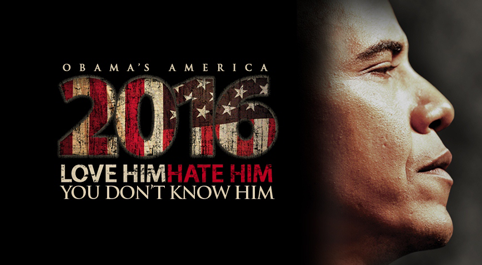 Molen, in a previous WND interview, called the charges against D’Souza “the equivalent of prosecuting a political dissident in the Soviet Union for jay-walking.”
“Yes, jaywalking in the Soviet Union is a crime, but it’s a minor crime. The real point is that you are a political dissenter and the government wants to put you away,” he said.
“When Dinesh D’Souza can be prosecuted for making a movie,” he continued, “every American should ask themselves one question: ‘What will I do to preserve the First Amendment?’”
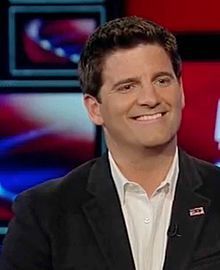
Filmmaker Dennis Michael Lynch
Dennis Michael Lynch, well-known for his films on immigration, “They Come to America” and “They Come to America II: The Cost of Amnesty,” also sees a political motive behind the charges.
“Is he guilty of what it is they claim he did? I have no idea,” Lynch told WND.
But, he added, “Guilty or not, they’re going to throw him into the mud to discredit his name.”
And why would “they” do that? Because, Lynch pointed out, D’Souza has another film coming out, right before the 2014 midterm elections.
“What Dinesh D’Souza proved is there is a huge appetite, a huge audience, for the kinds of films that he and I make. That’s why it won’t happen again. Because, the other side knows that. And they want to make sure that doesn’t happen,” observed Lynch.
He said what D’Souza accomplished is extremely rare, because it is almost impossible for conservatives to get distributors to show their films in theaters. Almost all conservative filmmakers have to sell their movies as DVDs.
Dinesh D’Souza’s books are available at the WND Superstore
“Dinesh was the exception. He had the perfect storm. Everything lined up. He went about it the right way,” he said.
D’Souza’s new film, “America,” is scheduled for release July 4, and Molen predicts it will become a thorn in Obama’s side because of the prosecution against D’Souza.
“This action may have been designed to intimidate us, but it will have the opposite effect,” Molen said.
Lynch also believes the prosecution of D’Souza will boomerang because of the old adage, “There is no such thing as bad publicity.”
“Actually, this is going to be a huge win for Dinesh. He couldn’t get more lucky. He’s going through the pain right now, but when that new film comes out, it’s going to be the talk of the town,” Lynch predicted.
D’Souza pleaded not guilty to the charges last week in federal court in Manhattan, where he was released on $500,000 bond and restricted to travel in the U.S.
He faces a maximum of two years in prison for the illegal contributions charge and a maximum of five years in prison for a false statements charge.
D’Souza’s lawyer, Benjamin Brafman, released a statement saying, “Mr. D’Souza did not act with any corrupt or criminal intent whatsoever. He and the candidate have been friends since their college days, and at worst, this was an act of misguided friendship by D’Souza.”
Molen insists the Obama administration “is engaging in a practice of ‘selective enforcement of the law,’ where there is double standard such that if you oppose Obama politically, the IRS and the Department of Justice knock on your door, but if you’re a liberal who supports Obama, you can say anything you want.”
In the eyes of the Obama administration, Molen contends, D’Souza’s crime was to dare to produce a movie that could damage President Obama at the polls.
“This is not the America we grew up in,” Molen said. “In the America I treasured, a president would go out of his way to protect those who disagreed with the president’s policy. That’s what the First Amendment is all about.”
Molen said D’Souza is encouraging Americans who still treasure the First Amendment and want to preserve the right to express political dissent without being prosecuted to “vote with your feet” by making the debut of D’Sousa’s next film, “America,” a success at the box office.
See a trailer for the upcoming film:
January 27, 2014
Now bank decides IF you can have your money
NEW YORK – Think your bank deposits are safe, just because the FDIC now insures accounts up to $250,000?
Better think again.
Until customer complaints forced a reversal of policy, the British multinational bank HSBC unilaterally imposed a restriction blocking customers from withdrawing large amounts of money from their own accounts, unless they could provide the bank with a “good reason” for it.
After the uproar in London when the BBC reported the new policy, HSBC issued a statement claiming the concern was money laundering. The bank notified customers that it would “not necessarily” deny depositors the ability to withdraw large amounts of cash from their accounts.
The HSBC explained in its statement that it has “an obligation to protect our customers, and to minimize the opportunity for financial crime.”
“However, following feedback, we are immediately updating guidance to our customer-facing staff to reiterate that it is not mandatory for customers to provide documentary evidence for large cash withdrawals, and on its own, failure to show evidence is not a reason to refuse a withdrawal,” HSBC said. “We are writing to apologize to any customer who has been given incorrect information and inconvenienced.”
The bank’s motivation may have stemmed from reports leaking out of Washington that U.S. regulators continue to find HSBC has failed to implement required measures to prevent money laundering amid fears that its weakened financial position might cause a run on the bank. The Comptroller of the Currency made the demand after HSBC was forced in December 2012 to pay a record fine of $1.9 billion in lieu of criminal charges. WND broke the blockbuster story that HSBC was widely engaged in laundering billions of dollars in conjunction with known criminal cartel drug lords and suspected terrorists.
The shocking series of WND stories beginning in February 2012 drew the attention of the Department of Homeland Security in New York and the Senate Permanent Subcommittee. WND reported on the 1,000 pages of bank records a former account relationship manager with the HSBC southern New York region brought exclusively to WND. The evidence showed the global banking giant was money-laundering billions of dollars using the Social Security numbers of current and former bank customers to create bogus proxy bank accounts to deposit and transfer internationally the illegal funds, unbeknownst to the account holders.
Federal Reserve investigations in 2012 found HSBC’s drug-related and terrorist-connected money-laundering violations included managing $19.4 billion in transactions for the Iranian government while Iran was under U.N.-imposed economic sanctions. The bank also was accused of making $7 billion in banknote transfers, most of which were drug-cartel related, from an HSBC branch in Mexico to an HSBC branch in the United States.
Remarkably, in a statement published by the Guardian of London in December 2012, Assistant Attorney General Lanny Breuer admitted the Obama administration Justice Department had concluded HSBC was too big to prosecute.
At a New York press conference, Breuer said that despite HSBC’s “blatant failure” to implement anti-money laundering controls and its willful disregard of U.S. sanctions, the $1.9 billion civil fine was preferable to the “dire consequences” of taking the bank to court.
The Guardian noted that had Justice Department prosecutors decided to press charges, HSBC would almost certainly have lost its banking license, “and the future of the institution would have been under threat and the entire banking system would have been destabilized.”
HSBC said it was “profoundly sorry” for what it called “past mistakes” that allowed terrorists, drug cartels and rogue nations like Iran to move billions around the international financial system while circumventing U.S. banking laws.
The Guardian noted HSBC processed for Mexico’s Sinaloa cartel, regarded then as the most powerful and deadly drug gang in the world, some $881 billion in drug trafficking money laundered through its accounts in the United States and worldwide.
In July 2012, WND published an analysis of Federal Election Commission records proving HSBC since 1997, the first year FEC electronic records were available, had generously donated millions of dollars to both Democrat and Republican members of the House of Representatives and the Senate who held committee assignments in which they oversaw banking and financial services regulation.
HSBC’s troubles as a rogue bank did not end there.
Last August, Reuters reported the London-based HSBC had earnings seriously depressed after announcing it had to reserve $1.6 billion for an anticipated settlement with the Federal Housing Finance Authority in Washington. The U.S. demanded reparations for HSBC for violating banking laws, this time by misrepresenting the quality of the collateral mortgage-backed securities bonds the bank aggressively but fraudulently marketed between 2005 and 2008.
Then, in October, Reuters reported HSBC had been ordered to pay some $2.46 billion to settle a class action lawsuit that charged Household International Inc., now HSBC Finance Corp., with fraudulently misleading investors about its predatory lending practices, the quality of its loans and the accuracy of its financial accounting from March 23, 2001, through Oct. 11, 2002.
When HSBC acquired Household International in 2003, the acquisition made HSBC the largest subprime lender in the U.S. at the time. HSBC played a major role in the housing industry bubble that finally burst with disastrous economic consequences in 2008 at the end of George W. Bush’s second term as president.
On Jan. 14, the Wall Street Journal’s Market Watch reported shares of HSBC Holdings fell 1.42 percent following a report HSBC may have overstated bank assets by as much as $92 billion.
Market Watch further reported analysts calculated HSBC may need to raise between $58 billion to $111 billion to continue operations. The analysts warned HSBC could be forced to cut or suspend dividends to meet the capital-raising goals.
In October 2013, WND reported a decision by banks in Cyprus not to allow customers to withdraw deposits preceded a government-imposed “bail-in” in which the Cypriot banking system agreed to confiscate up to 10 percent of customer deposits. The move was designed to recapitalize the nation’s ailing banking system, as required by the IMF as a precondition to obtaining an emergency Eurozone loan of 10 billion euros.
Democrats scramble to block 'New World Order'
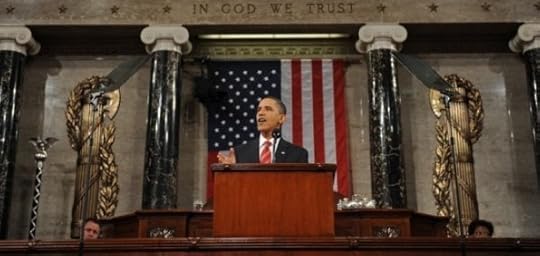
NEW YORK – As President Obama prepares to deliver his State of the Union address Tuesday evening, powerful groups in the Democratic Party base are organizing to oppose “fast track” authority for the Trans-Pacific Partnership, a sweeping free-trade agreement the Obama administration is ready to push through Congress.
On Monday, an impressive group of 564 political analysts from labor, environmental, family-farm and community organizations sent Obama a strongly worded letter to the White House arguing that pushing the Trans-Pacific Partnership, or TPP, undermines the president’s message on income inequality.
“President Obama can’t have it both ways,” Arthur Stamoulis, the spokesman for Citizens Trade Campaign, the group organizing the letter, told WND. “Either the president is for reducing income eligibility as we expect he will say in the State of the Union address, or he can push for fast-track legislation on the job-destroying TPP free-trade agreement. He can’t have it both ways.”
Jerome Corsi’s “Late Great USA” uncovers government deceptions that threaten U.S. sovereignty
The TPP is the first part of a two-ocean globalist plan the Obama administration is working quietly to put into place. The aim is to follow up the passage of the TPP with the finalization of the Transatlantic Trade and Investment Partnership between the United States and the European Union.
As WND reported, Obama announced in his 2013 State of the Union address the plan to add the trans-Pacific free-trade agreement to the trans-Atlantic agreement already in place.
“Fast-track” authority would allow the Obama administration to ram the TPP through Congress with a simple majority vote. The rules would limit debate so that no amendments could be introduced to modify the language of the agreement the Obama administration has negotiated behind closed doors.
Meanwhile, the power of the punch the Citizens Trade Campaign plans to deliver the White House can be seen by the letter’s signatories.
They include labor unions such as the AFL-CIO; American Federation of State, County and Municipal Employees (AFSCME); American Federation of Teachers; International Brotherhood of Teamsters; United Autoworkers (UAW); United Brotherhood of Carpenters; United Steelworkers (USW); and Service Employees International Union (SEIU).
Among the environmental organizations are 350.org, Friends of the Earth, Greenpeace, League of Conservation Voters, National Resources Defense Council (NRDC), Rainforest Action Network and the Sierra Club.
Family farm organizations include the National Family Farm Coalition, National Farmers Union and the Western Organization of Resource Councils. Consumer groups include Food & Water Watch, Organic Consumers Association, National Consumers League and Public Citizen.
“Income inequality and long-term unemployment are serious problems that the job-killing TPP would only worsen,” Stamoulis said.
He said calling for fast-track authority in the State of the Union address Tuesday night “would undercut positive proposals to battle growing income inequality and create middle class jobs which are expected to be the central focus of the president’s speech.”
“As short-sighted as such a call would be, even more short-sighted would be for Congress members on either side of the aisle to answer it, as they’re the ones who would be dealing with the political repercussions this November,” Stamoulis said.
On Wednesday, another group opposed to TPP, the U.S. Business & Industry Council, plans to deliver the second punch in the one-two punch act by following up the State of the Union address with a national press conference revealing the results of a bipartisan national poll on TPP.
In an unusual move, two pollsters that usually do not work together, Democratic pollster Gary Molyneux of Hart Research and Republican pollster Bob Carpenter of Chesapeake Beach Consulting, have collaborated to take the poll and report the results.
While Eden Gorden, spokeswoman for the U.S. Business & Industry Council, would not say in advance precisely what the poll results will show, it’s likely that the majority of responders would oppose the TPP as a job-killing measure. Critics charge the Obama administration negotiated it in secret and is now trying to rush it through Congress before the American public finds out how the trade measure compromises U.S. sovereignty.
On Jan. 14, WND reported Republicans in the House are preparing to follow the lead of the White House and Senate Majority Leader Harry Reid to rubber-stamp the TPP, the most sweeping free-trade agreement since NAFTA.
On Jan. 9, in a little-noticed statement, Senate Finance Committee Chairman Sen. Max Baucus, D-Mont, together with ranking member Sen. Orrin Hatch, R-Utah, and House Ways and Means Committee Chairman Rep. Dave Camp, R-Mich., announced they were introducing “fast track” trade promotion authority.
The last line of congressional resistance to TPP appears to be coming from House Democrats concerned that more U.S. union jobs will be lost in the free-trade “fast track” steamroller Republicans under Boehner and Democrats aligning with Reid plan to run through Congress.
Last year, 151 House Democrats, led by Representatives Rosa DeLauro, D-Conn., and George Miller, D-Calif., opposed to TPP wrote a letter to President Obama stating their opposition to using “outdated ‘Fast Track’ procedures that usurp Congress’s authority over trade matters.”
With Boehner’s decision to support Obama on TPP, the Republican Party appears ready to ignore concerns raised by GOP conservatives and various tea-party groups that the 12-nation deal further undermines U.S. sovereignty. The opponents argue it places major sectors of the U.S. economy under a new dispute-regulation mechanism that takes precedence over U.S. judges and courts.
As WND has reported, “fast track authority,” a provision under the Trade Promotion Authority also has the function of reassuring foreign partners that the FTA negotiated by the executive branch will not be altered by Congress during the legislative process.
In his 2013 State of the Union address, Obama declared that to “boost American exports, support American jobs and level the playing field in the growing markets of Asia, we intend to complete negotiations on a Trans-Pacific Partnership.”
“And tonight,” he said, “I’m announcing that we will launch talks on a comprehensive Transatlantic Trade and Investment Partnership with the European Union – because trade that is fair and free across the Atlantic supports millions of good-paying American jobs.”
The promise of creating new jobs drew congressional applause despite legitimate concerns that previous trade agreements, including NAFTA and U.S. participation in the World Trade Organization, have resulted in the loss of millions of high-salary U.S. jobs to nations with less expensive job markets.
The 12 nations involved in the TPP are Australia, Brunei, Canada, Chile, Japan, Malaysia, Mexico, New Zealand, Peru, Singapore, Vietnam and the United States.
Note: There is a poll embedded within this post, please visit the site to participate in this post's poll.
January 24, 2014
'Schindler's List' producer rips Obama's 'Soviet' tactics
Dinesh D'Souza
The Obama administration’s prosecution of conservative author and filmmaker Dinesh D’Souza on campaign-finance charges is a “political prosecution” comparable to the tactics used on the communist former Soviet Union to quell dissent, charges the producer of D’Souza’s 2012 hit film, which warned of dire consequences for the nation if Obama were elected to a second term.
“When Dinesh D’Souza can be prosecuted for making a movie, every American should ask themselves one question: ‘What will I do to preserve the First Amendment?’” Gerald R. Molen, the producer of “2016: Obama’s America,” told WND.
Molen previously produced the Academy Award-winning film “Schindler’s List.”
D’Souza has a new film scheduled for release July 4, “America,” which imagines what the world would be like without the nation.
His “2016: Obama’s America” was the No. 2 political documentary of all time, Molen noted, “and it obviously got the attention of our rulers.”
“This action may have been designed to intimidate us, but it will have the opposite effect,” he said.
Federal authorities have accused D’Souza of donating more than the legal requirement to the 2006 campaign of Republican Wendy Long, who lost the race for the Senate seat in New York that had been vacated by Hillary Clinton.
The indictment charges D’Souza donated $20,000 to Long’s campaign by aggregating the money from various people and falsely reporting the source of the funds.
Molen told WND the prosecution of D’Souza “is the equivalent of prosecuting a political dissident in the Soviet Union for jay-walking.”
“Yes, jaywalking in the Soviet Union is a crime, but it’s a minor crime. The real point is that you are a political dissenter and the government wants to put you away,” he said.
D’Souza pleaded not guilty to the charges Friday in federal court in Manhattan, where he was released on $500,000 bond and restricted to travel in the U.S.

Dinesh D'Souza interviews Barack Obama's half-brother George Obama in the film "2016: Obama's America"
He faces a maximum of two years in prison for the illegal contributions charge and a maximum of five years in prison for a false statements charge. D’Souza’s lawyer, Benjamin Brafman, released a statement saying, “Mr. D’Souza did not act with any corrupt or criminal intent whatsoever. He and the candidate have been friends since their college days, and at worst, this was an act of misguided friendship by D’Souza.”
Molen said the Obama administration “is engaging in a practice of ‘selective enforcement of the law’ where there is double standard such that if you oppose Obama politically, the IRS and the Department of Justice knock on your door, but if you’re a liberal who supports Obama, you can say anything you want.”
In the eyes of the Obama administration, Molen contends, D’Souza’s crime was to dare to produce a movie that could damage President Obama at the polls.
“This is not the America we grew up in,” Molen said. “In the America I treasured, a president would go out of his way to protect those who disagreed with the president’s policy. That’s what the First Amendment is all about.”
Molen said D’Souza is encouraging Americans who still treasure the First Amendment and want to preserve the right to express political dissent without being prosecuted to “vote with your feet” by making the debut of D’Sousa’s next film, “America,” a success at the box office.
Note: There is a poll embedded within this post, please visit the site to participate in this post's poll.
January 23, 2014
Obama, Clintons accused in Egypt of aiding terrorists
NEW YORK – Two new, classifed documents leaked by Egyptian security implicate President Obama, Secretary of State Hillary Clinton and former President Bill Clinton in the aiding and abetting of terrorists.
The documents have been entered as evidence in the criminal trials of former Egyptian President Mohammed Morsi and other top Muslim Brotherhood leaders, scheduled to begin next month in Cairo.
Obtained by Arabic-speaking former Palestinian Liberation Organization-member Walid Shoebat and posted Thursday on his website, the two leaked documents provide evidence Egyptian security forces have monitored the movements and activities of Obama’s half-brother, Malik Obama, and his Islamic Dawa Organization, or IDO. The security forces also have kept an eye on the dealings with the Muslim Brotherhood of Essam El-Haddad, the father of Gehad El-Haddad, a senior adviser to the Muslim Brotherhood in the United States and a former employee of the William J. Clinton Foundation.
Malik Obama’s alleged terrorist ties
Shoebat referenced the publication of the leaked documents in Arabic by the Al-Masry Network in Egypt as evidence Malik Obama’s organization is the main sponsor of the effort to Islamize the Nuba area, Aswan and Luxor.
“The Aswan region is a territory in southeastern Egypt that borders northern Sudan, which includes a long stretch of the Nile River,” Shoebat wrote. “During the Mohammed Morsi regime, both Egypt and Sudan (under Omar al-Bashir) would have presented an opportunity to work toward the slow erasure of the border between the two nations. Such negotiations in Aswan would have predictably caused Egypt’s Security Forces great concern.”
Shoebat noted the Al-Masry report indicated that Malik Obama’s role with the Sudanese branch of IDO is much more significant than previously thought.
According to Shoebat’s translation from the original Arabic, the article says in part:
“Authorities within Egypt’s security apparatus have warned over the past two and a half years of the movements of the Islamic Dawa Organization (IDO), based in the Sudanese capital of Khartoum, headed by businessman Kenyan owner Aboonju Obama (Malik), the elder brother of U.S. President Barack Obama, according to security authorities who are privy to the details of the investigation. One official said the organization and its president, a close friend of the President of Sudan Omar al-Bashir, support the Muslim Brotherhood with money, as well as the international organization of the group.”
Shoebat further notes the Al-Masry report suggested that Malik has headed not only the Kenyan branch of IDO but the Khartoum-based organization that is “overseen by Sudanese President Omar al-Bashir.” Malik Obama’s role allegedly includes assisting and regulating the global Muslim Brotherhood agenda.
In November, WND reported Egyptian lawyers had filed criminal terrorist charges in the International Criminal Court against President Obama in addition to the criminal terrorism charges previously filed in Egyptian courts against Malik Obama.
WND reported in August that Tehani al-Gebali, the vice president of the Supreme Constitutional Court of Egypt, gave a speech and participated in an interview broadcast on Egyptian television, identifying Malik Obama as “a major architect” managing investments for the Muslim Brotherhood in Egypt.
On Sept. 7, 2011, two years before the IRS targeting of conservative groups became a national scandal, WND reported the Barack H. Obama Foundation, a 501(c)3 tax-exempt raising operated by Malik Obama in Kenya, appears to have received IRS approval one-month from the application submitted in May 2011. The IRS determination letter dated June 11, 2011, granted a highly irregular retroactive tax-exempt approval only after the group came under fire for operating as a 501(c)3 foundation since 2008 without ever having applied to the IRS for a tax determination.
“Malik Obama’s prominent role as Executive Director of the IDO, at minimum, implicates his brother in a serious conflict of interest matter relative to national security,” Shoebat said.
“That Malik was given illegal tax-exempt status by Lois Lerner may implicate his brother, President Barack Obama, as an accessory to terror funding, which is why Lerner should be granted immunity for her testimony,” he said. “So far, members of Congress who sit on such committees have shown no desire to do this.”
Problems in Egypt for Hillary and Bill
In September 2013, Gehad el-Haddad, openly known to be a senior Muslim Brotherhood official who had worked for five years at the William J. Clinton Foundation, was arrested in Cairo and charged with inciting violence. Until the arrest, el-Haddad was one of the Muslim Brotherhood’s top communications officials in Egypt as well as a top adviser to Morsi.

Gehad el-Haddad
In December, Shoebat documented that el-Haddad’s father, Essam el-Haddad, was also in custody in Egypt for his close association with the Muslim Brotherhood while serving as an aide to Morsi.
Both father and son are now in Al-Agrab, a high-security prison in Egypt, with their assets seized by Egyptian government, while they await trial on espionage charges. The charges include working with Clinton while she was secretary of state to coordinate between the Morsi government and the Obama administration, allegedly in the interest of inciting violence in Egypt to solidify political control for key Muslim Brotherhood leaders active in Egypt as terrorist operatives.
“Further evidence that Gehad el-Haddad is not just an innocent victim of circumstance has to do with the family he married into,” Shoebat noted.
“His wife is the daughter of Dr. Mahmoud Abu Zeid, who is a leader within the Muslim Brotherhood Guidance Bureau. Gehad is also the nephew of Mohammed Ibrahim, who is a member of the leadership within the Guidance Bureau. This all adds up to mean that the longtime Bill Clinton employee is one of the primary players within the Muslim Brotherhood regime.”
Shoebat has further reported that in August, when U.S. Deputy Secretary of State Bill Burns went to Cairo with U.S. Sens. John McCain and Lindsay Graham, it was Gehad who helped Burns arrange a secret 90-minute meeting with then-imprisoned Khairat el-Shater, a top-ranking Muslim Brotherhood member who had served as a deputy to the Morsi government.
“Without reading too much between the lines, that ‘major espionage involving foreign countries’ most likely includes the Obama administration when Hillary Clinton was the Secretary of State,” Shoebat concluded.
January 21, 2014
Evidence of new al-Qaida attacks rebut Obama's claim

Libyan government airplane bombing tribal resistance fighters Jan. 20
Trusted sources in Libya provided WND visual evidence via Skype to refute President Obama’s assertion in a New Yorker interview that al-Qaida is like a junior varsity team, a decimated shell of the international terrorist organization that under the direction of Osama bin Laden was capable of carrying out major terrorist attacks on the United States homeland.
The photos show evidence of bombs being dropped from planes flown by foreign pilots recruited by al-Qaida in attacks by the Obama-administrated and al-Qaida-backed Transitional Council of Libya on tribal forces in the country operating under a green flag of resistance in a dozen southern towns, including the largest town, Sabha.
According to the Libyan tribal sources, Ayman al-Zawahiri, the current leader of al-Qaida, has surfaced in Misrata, Libya, in recent days to organize with Abdul Hakim Belhaj, the al-Qaida operative currently in Tripoli.
Belhaj, as WND reported, has been identified as the principal organizer of the terrorist attack in Benghazi that resulted in the death of U.S. Ambassador Christopher Stevens.
Belhaj has joined with the Libyan provisional government to organize air attacks on tribal resistance groups who have taken control of Sabha.
Via Skype, the Libyan sources provided still photographs and video showing military aircraft operated by the National Transitional Council of Libya operating over Sabha. The pilots, the sources say, were recruited by al-Qaida from Qatar, Turkey and Sudan after Libyan military pilots supposedly refused to drop bombs on fellow Libyans.

Bomb dropped by Libyan government plan in Sabha, Libya, Jan. 20
Images of the bomb damage caused by the Libyan government air attacks were posted Monday on Facebook and affirmed by the Libyan tribal sources in the interview with WND.

Bomb dropped by Libyan government military airplane explodes in Sabha, Libya, Jan. 20
Tribal forces in Libya opposing National Transitional Council of Libya are operating under a green Libyan flag of resistance in more than a dozen southern cities.
The Libyan sources further asserted al-Qaida is today training recruits in terrorist camps in Mistrata, preparing for future attacks in Europe and the United States.
WND has previously reported a Libyan tribal leader interviewed via Skype from Libya charged President Obama and NATO are responsible for destabilizing Libya politically by allowing al-Qaida and radical Islamic factions to gain control of the country.

Libyan resistance fighters
WND first broke the story that the initial purpose of the CIA special mission in Benghazi was to run-guns to al-Qaida and other Islamic radical “rebels” fighting Gadhafi and after the dictator’s fall to coordinate arms shipments from Libya to al-Qaida-backed rebel groups opposing the Assad government in Syria.
WND tribal sources in Libya insist al-Qaida’s current operational goal is to gain control of radical Islamic governments across North Africa, while assisting al-Qaida-backed rebels in Syria to topple the Assad regime. Al-Qaida, meanwhile, the sources say, has not abandoned the plotting of future terrorist attacks in Europe and the U.S. on the scale of the 9/11 attack.
Will Fed meeting burst stock bubble?
NEW YORK – The Federal Reserve and U.S. stock investors face yet another critical test at the end of January when incoming Fed chairwoman Janet Yellen takes over.
Wall Street currently expects the Federal Reserve to announce at the end of the Federal Open Market Committee meeting Jan. 28-29, the last meeting for outgoing chairman Ben Bernanke, a further “tapering” of the current Quantitative Easing policy.
The expectation is that the Fed will decide to buy $65 billion a month in U.S. debt, down from the $75 billion level currently in place and the $85 billion that was the standard last year.
With the Fed expected to continue “tapering” QE by $10 billion a month until the it no longer is buying U.S. debt, the question becomes: Will the cost of inducing foreign nations and institutional investors to buy the U.S. debt the Fed is no longer buying force bond yields to rise, reflecting a perhaps irreversible general rise in interest rates across the U.S. economy?
A rise in interest rates could trigger the popping of the stock market bubble, resulting in a downward correction that would be painful for most investors. It would particularly hit fixed-income retirees that have 401(k) and IRA funds invested in the stock market, either directly or via stock market-based mutual funds.
China, the leading foreign holder of U.S. Treasury debt, reported holding a record $1.3167 trillion of U.S. Treasury debt last November, topping a previous peak of $1.3149 billion registered in July 2011.
As a result of its substantial and continuing trade surplus with the United States, China has decided to ease off accumulating foreign-exchange reserves, with possible dire consequences for the U.S. economy.
China set a record in the third-quarter 2013 as the world’s leader in foreign exchange reserves, holding a record $3.66 trillion, triple the amount of any other country and bigger than the GDP of Germany, the EU’s largest economy.
While Japan remains close behind China as the second leading foreign holder of U.S. Treasury debt, reported at $1.1864 trillion in November 2013, China’s foreign exchange reserves have soared nearly three times Japan’s.
In 1996, China’s foreign reserves totaled only about $100 billion. But it took China only a decade to surpass Japan to become the largest holder in foreign exchange reserves, in 2006, when topping $1 trillion for the first time.
At the end of 2013, China’s foreign exchange reserves rose to $3.82 billion, some 60 percent of which is estimated to be held in dollar-denominated assets, including U.S. Treasury bills.
With China’s central bank continuing to signal a desire to diversify away from holding U.S. Treasury debt at new record levels, higher bond yields may be needed to induce China and other foreign national purchasers to continue buying the increased quantity of U.S. Treasury debt that will be on international markets as the Fed continues the planned systematic reduction of QE throughout 2014.
In December, the Financial Times reported the rise of the benchmark yield of the 10-year U.S. Treasury note to above 3 percent, the highest level since July 2011, caused financial analysts worldwide to anticipate higher U.S. interest rates in 2014 as the Fed reduces QE.
WND has reported concern that higher interest rates will increase the federal government’s cost of servicing the more than $17 trillion in accumulated U.S. national debt.
With the expectation on Wall Street that interest rates soon will rise, a speech by Federal Reserve Bank of Boston President Eric Rosengren is drawing widespread attention.
Rosengren, who just finished a year’s service on the FOMC, was a vocal supporter of the Fed’s QE policy, designed to keep interest rates at or near zero. He was the sole dissenter in his last vote as a member of the FOMC in December 2013, opposing the decision recommended by outgoing Fed chairman Ben Bernanke to begin reducing its purchases of U.S. government-issued debt.
Worried that QE tapering was almost certain to give momentum to rising interest rates, Rosengren’s carefully worded speech still managed to convey his concern that ending QE too rapidly could cause an interest-rate spike. In a chain reaction, the consequent increase in interest expense could tank the economy.
For instance, if interest rates were to rise, as many economic experts anticipate, increasing yields on the three-month treasury to approximately 4 percent by 2018 and 10-year Treasuries to approximately 5.2 percent, interest payments on the federal debt would rise to $505 billion in 2018 from the current level of $255 billion.
By comparison, the still rancorous sequester only cut government expenses by some $85.3 billion in the first year.
Obama takes phony route once again
UNITED NATIONS – In the New Yorker interview published over the weekend, President Obama misrepresented his actions when he stated he vetoed a plan for the U.S. to intervene militarily on behalf of the rebel forces in Syria fighting President Bashar al-Assad.
Interviewer David Remnick failed to challenge Obama with evidence the United States is supplying the rebels in Syria with arms after pressing Congress to approve military intervention. The congressional lobbying effort failed after the United Nations was unable to corroborate Obama administration claims that the Assad regime was responsible for chemical attacks against Syrian civilians.
“I am not haunted by my decision not to engage in another Middle Eastern War,” Obama told Remnick.
“It is very difficult to imagine a scenario in which our involvement in Syria would have led to a better outcome, short of us being willing to undertake an effort in size and scope similar to what we did in Iraq.”
Obama, however, went on to affirm that the U.S. was financing and arming the opposition to Assad.
The president said that when he hears people “suggesting that somehow if we had just financed and armed the opposition earlier, that somehow Assad would be gone by now and we’d have a peaceful transition, it’s magical thinking.”
In the next section of the interview, Obama appears to contradict himself by asserting that the CIA could not find a single instance in which U.S. financing and supplying of arms to an insurgency turned out well, implying he decided not to aid the rebels in Syria.
“It’s not as if we didn’t discuss this extensively down in the Situation Room,” Obama said. “It’s not as if we did not solicit – and continue to solicit – opinions from a wide range of folks. Very early in this process, I actually asked the CIA to analyze examples of America financing and supplying arms to an insurgency that actually worked out well. And they couldn’t come up with much.”
Then, in another apparently contradictory explanation, Obama tips off his inclination to intervene in Syria. He argued his motivation is humanitarian, while stressing the U.S. is working to stop any financing and arming of the rebels in Syria because he is worried they could become radicalized, as did the U.S.-backed mujahedeen in Afghanistan in the 1980s.
“And the truth is that the challenge there has been, and continues to be, that you have an authoritarian, brutal government who is willing to do anything to hang on to power, and you have an opposition that is disorganized, ill-equipped, ill-trained, and is self-divided. All of that is on top of some of the sectarian divisions,” Obama said.
“And, in that environment, our best chance of seeing a decent outcome at this point is to work the state actors who have invested so much in keeping Assad in power – mainly the Iranians and the Russians – as well as working with those who have been financing the opposition to make sure that they’re not creating the kind of extremist force that we saw emerge out of Afghanistan when we were financing the mujahedeen.”
Policy reversal
On Sept. 10, 2013, in a nationally televised address, Obama reversed his previous policy by calling off a planned military strike on Syria, deciding instead to ask Congress to authorize the use of force.
With his statement, Obama “evolved” in his foreign policy regarding Syria, steering away from a commitment he appeared to make at a White House press briefing Aug. 20, 2012. At that time, Obama said any attempt by Assad to move or use Syria’s chemical weapons would cross a “red line,” triggering a direct U.S. military response.
After failing to convince Congress to authorize force against Syria, Obama decided finally to order, on his own authority, the CIA to supply arms to the Syrian rebels.
“The CIA has begun delivering weapons to rebels in Syria, ending months of delay in lethal aid that had been promised by the Obama administration, according to U.S. officials and Syrian figures,” wrote Ernesto Londoño and Greg Miller in the Washington Post Sept. 11, 2013. “The shipments began streaming into the country over the past two weeks, along with separate deliveries by the State Department of vehicles and other gear – a flow of material that marks a major escalation of the U.S. role in Syria’s civil war.”
The collapse of Obama’s Syrian foreign policy has drawn comment from Washington observers generally favorable to the Obama White House.
“It’s hard to pinpoint just when, exactly, Barack Obama’s Syria policy fell apart. Was it in December, when Islamists humiliated U.S.-backed rebels by seizing what limited supplies America had given them?” asked Michael Weiss in Politico Magazine Jan. 2.
“Was it back in September, when Obama telegraphed his reluctance to enforce his own “red line” after the Syrian regime used chemical weapons on its own people? Was it in the months beforehand, when the administration quietly and mysteriously failed to make good on its pledge to directly arm the rebels? Or did it collapse in August 2011, when Obama called on Syrian dictator Bashar Assad to go, only to do almost nothing to make it happen?”
Kerry pushes Congress to approve attack on Assad
In August, Secretary of State Kerry accused the Assad government of covering up the use of chemical weapons in what Kerry characterized as “a cowardly crime” and a “moral obscenity” that shocked the world’s conscience. Kerry maintained that the Obama administration had “undeniable” evidence that the Assad government was culpable in the use of chemical weapons on civilians in Syria the previous week.
On Aug. 26, 2013, WND published video evidence from reliable Middle Eastern sources that indicated the sarin nerve gas attacks were launched by the rebel forces, not by the Assad government.
Assad rejected Kerry’s charges, labeling allegations that his government forces used chemical weapons as “preposterous” and “completely politicized.”
“How is it possible that any country would use chemical weapons, or any weapons of mass destruction, in an area where its own forces are located?” Assad asked in the interview with Izvestia, according to a translation provided by Syria’s official news agency and published by the Los Angeles Times. “This is preposterous! These accusations are completely politicized and come on the back of the advances made by the Syrian Army against the terrorists.”
On Sept. 3, 2013, WND reported United Nations Secretary-General Ban Ki-moon announced samples collected by the U.N. inspection team in Syria were being transferred to chemical laboratories for inspection.
“The whole process will be done strictly adhering to the highest established standards of verification recognized by the Organization for the Prohibition of Chemical Weapons, OPCW,” U.N. spokesman Martin Nerisky told reporters in New York.
On Sept. 4, 2013, WND reported Kerry, joined by Secretary of Defense Chuck Hagel and chairman of the Joint Chiefs of Staff Gen. Martin Dempsey, appeared before the Senate Foreign Affairs Committee to explain why the Obama administration wanted congressional authorization to launch what Obama had described as a limited military attack on Syria.
Kerry explained that, even though the war in Syria is a civil war, U.S. credibility was still on the line.
“We are talking about the credibility of America as a global power,” Kerry said. “We’re talking about sending a clear message to the dictators in Tehran and Pyongyang that there will be serious consequences for flouting the will of the international community and that the U.S. backs its words with action.”
Kerry insisted the CIA had indisputable proof the Assad regime has authorized and engaged in chemical weapons attacks, though the Obama administration has yet to make the evidence available to the American public or to the international community for examination.
Kerry testified:
Our intelligence agencies have assessed with high confidence that these innocent civilians were killed by sarin gas, a deadly nerve agent classified as a weapon of mass destruction by the U.N. Security Council and outlawed by the Chemical Weapons Convention of 1993. They have also concluded beyond a reasonable doubt that the Assad regime is responsible for the use of these horrific weapons.
I strongly agree with President Obama that the United States must respond to this flagrant violation of international law with a limited military strike to deter the further use of chemical weapons and degrade the Assad regime’s ability to use them again.
Kerry suffered a major loss of credibility after WND reported on Sept. 6, 2013, that in his testimony before the Senate Foreign Relations Committee, he had relied upon a Georgetown University graduate student to make his argument that the United States should attack the Assad regime.
Kerry cited Elizabeth O’Bagy, a 26 year-old graduate student currently pursuing a Ph.D. in Arab studies and political science at Georgetown University who was working on a dissertation on woman’s militancy. She argued that the war in Syria was “not being waged entirely or even predominately by dangerous Islamists and al-Qaida die-hards.” On the contrary, she insisted, “the struggle is being led by “moderate opposition forces – a collection of groups known as the Free Syria Army.”
U.N. report doesn’t blame Assad
On Dec. 12, 2013, the United Nations, by refusing to assign blame, delivered the final blow to the Obama administration attempt to pin the chemical weapons attacks against civilians on the Assad regime.
The U.N. report found clear and convincing evidence chemical weapons had been used in Syria against civilians, including children, in at least five instances. But the U.N. declined to attribute responsibility to either the Assad regime or to the rebel forces.
In a searing criticism of the Obama administration, investigative journalist Seymour M. Hersh published an article titled “Whose sarin?” in the London Review of Books on Dec. 19, 2013. He charged the administration misled the U.S. public in not disclosing the CIA knew the Syrian army was not the only party in the civil war with access to sarin gas.
Hersh wrote:
But in recent interviews with intelligence and military officers and consultants past and present, I found intense concern, and on occasion anger, over what was repeatedly seen as the deliberate manipulation of intelligence. One high-level intelligence officer, in an email to a colleague, called the administration’s assurances of Assad’s responsibility a “ruse.” The attack “was not the result of the current regime.”
He went so far as to accuse the Obama administration of falsifying information to push its claim the Assad regime was responsible:
A former senior intelligence official told me that the Obama administration had altered the available information – in terms of its timing and sequence – to enable the president and his advisers to make intelligence retrieved days after the attack look as if it had been picked up and analyzed in real time, as the attack was happening. The distortion, he said, reminded him of the 1964 Gulf of Tonkin incident, when the Johnson administration reversed the sequence of National Security Agency intercepts to justify one of the early bombings of North Vietnam. The same official said there was immense frustration inside the military and intelligence bureaucracy: ‘The guys are throwing their hands in the air and saying, “How can we help this guy” – Obama – “when he and his cronies in the White House make up the intelligence as they go along?”’
Jerome R. Corsi's Blog

- Jerome R. Corsi's profile
- 74 followers

