Russell Atkinson's Blog, page 74
November 4, 2017



November 2, 2017
Punctuation is important
My wife heard yet another ignoramus radio announcer today make yet another ambiguous and confusing statement:
“Saipov said President Trump should get the death penalty.”
Now is that supposed to be:
“Saipov,” said President Trump, “should get the death penalty.”?
I’m OK with it either way, actually.
The post Punctuation is important appeared first on OnWords.
October 25, 2017
Tax reform – 401K
Let’s talk taxes. Recently the House Republicans proposed lowering the maximum deferral amount on 401K plans from $18,000 to $2,500 in order to raise the revenue needed to pay for the tax breaks in the plan such as lower rates. President Trump has said he will not go along with that change.
This is an area I know something about, although I’m not nearly as current as I used to be. I was a research assistant for my tax professor in law school and worked for an accountant during tax season, but that was almost 50 years ago. More recently, I handled tax matters for the Valley Transportation Authority (VTA) from 2001 to 2006, almost exclusively dealing with the retirement plans. But I’m no expert on the details and haven’t kept up. What I do understand are the basic policy issues.
What the 401K and similar federal retirement plans, such as 403(b) and 457 plans are designed to do is to encourage people to save money toward retirement. Such savings benefit both the individuals and all levels of government by reducing the dependence people might have on government programs like Social Security or other forms of public assistance. They do this by allowing people to put money in these programs before tax, i.e. so it is not included in their taxable income at the time it is earned, but is later when withdrawn, typically at or after retirement age. This provides a benefit to the taxpayer in three ways. First, current taxes are lowered and that income can then be preserved. Second, the earnings in those plans such as dividends and interest are also not taxed at the time they are earned, although they are later. This allows them to grow faster. Third, the taxpayer is likely to be in a lower tax bracket when he finally withdraws the money and is taxed on it. There are limits on how much income individuals can defer in these plans (benefit #1) and how much in total each year (which can help with benefit #2 even if taxes must be paid over the first limit). The exact amounts may vary for individuals depending on the plans, their age, their work longevity, how much they’ve deferred in the past, and whether they are “highly compensated” under IRS rules. I won’t bother with those details. For the current policy debate the main number under consideration is that $18,000 deferral amount for the average individual.
In my judgment, the deferral plans work as intended for most middle class people. People save more because of these rules and everybody wins. However, they help wealthy people even more. That’s because the deferral limits are set too high in my opinion. I support the GOP proposal. The fact is most middle class individuals can’t save $18,000 a year, tax-deferred or not. The U.S. Census Bureau reported in September 2017 the real median household income was $59,039 in 2016. That’s a household, which on average has more than one wage earner. For a two-earner family that would mean they could defer $36,000. The permitted deferral amount would be 61% of their gross income. I doubt you will find many families earning $59K who can put over 60% of their earnings into savings. They need their salaries for such necessities as rent, food, clothing, and medical care.That’s not even counting the fact they’ll have to pay federal and maybe state income taxes on the rest of it. The GOP proposal of $2,500 (or $5,000 for husband and wife) is probably a reasonable amount for the typical middle class family. Everything above that is really a benefit for the upper middle class or the very wealthy.
I know that when I reached my peak earning period in my 50’s I maxed out my contributions. Because I was working in a government agency I could contribute to both a 401 plan and a 457 plan and had the option of contributing even more under the “catch up” rules. Frankly, it was an unfair benefit for me. Other, lower-paid taxpayers had to take their salaries to live on, and paid their taxes immediately as a result, while I was stashing mine away untaxed. The tax code requires that I withdraw amounts every year starting soon, so I’ll be paying some taxes, but I doubt I’ll ever withdraw my entire deferred amounts. My wife can inherit it tax-free and my kids will probably get a big chunk of it. Under current rules they can open an inherited IRA and defer the taxes on that yet again. I think this is unfair to lower-paid taxpayers. With lower deferral limits, the wealthy would finally have to pay taxes when the money is earned, but of course could still save as much as they want and can afford and wouldn’t be taxed on it later. The GOP is not known for taxing the rich to help the middle class, but in this case, they should be supported for trying to do so. Let’s hope the president changes his mind.
The post Tax reform – 401K appeared first on OnWords.
October 22, 2017
Atomic Adventures by James Mahaffey
 Atomic Adventures: Secret Islands, Forgotten N-Rays, and Isotopic Murder by James Mahaffey
My rating: 4 of 5 stars
You probably need to have a strong science interest and education to enjoy this book. The title should use the word misadventures, rather than adventures. It describes a number of nuclear projects, experiments, or cockamamie ideas that failed for one reason or another. Two chapters are spent on cold fusion, for example, an idea that the author himself admitted took him in long enough for him to “confirm” its existence, only to discover that the “proof” of its existence was simply an instrumentation error. The book is written with a degree of wit, especially in the numerous footnotes, which are often more entertaining than the main text.
I enjoyed the book and recommend it to the non-physicsphobic. I did catch one error in the book. In Chapter 10 he describes the three-filter phenomenon, which involves polarized filters. He says that if you take two polarized filters and rotate them 180 degrees to each other you will block out all light. He meant 90 degrees. He then goes on to say the third filter should be oriented at a 45 degree angle, halfway between the other two. 45 is halfway between 0 and 90, not 0 and 180 confirming that the earlier 180 was a simple error.
The post Atomic Adventures by James Mahaffey appeared first on OnWords.
October 17, 2017
Killers of the Flower Moon by David Grann
 Killers of the Flower Moon: The Osage Murders and the Birth of the FBI by David Grann
My rating: 4 of 5 stars
If you ever want to confirm your impression that middle America is populated entirely by racist whites devoid of any moral values, you need not look just at the recent presidential election. This book will prove it beyond any doubt. The Osage Indians were forced onto what was believed to be useless rocky land in Oklahoma by the U.S. government but they kept the mineral rights to their native land. When it turned out that land was sitting on top of rich oil deposits, they became incredibly wealthy. They then became the victims of hordes of white people who proceeded to steal their money in quite a number of imaginative ways. Most common was marrying an Osage then killing him or her to inherit their “head rights” to the oil revenue. One man blew up his own family including his children. Another common way was to have the Osage declared legally incompetent and to become the guardian, who of course controlled the wealth. Although there was one particularly powerful and violent man controlling a cadre of killers, virtually the entire white society in Osage County was complicit. It took corrupt bankers, undertakers, sheriffs, judges, and doctors for the murderous conspiracy to succeed and continue for decades. This book lays it out in detail. In short, the entire white society subscribed to the old saw that the only good injun was a dead injun.
The FBI was born during this time and this was then J. Edgar Hoover’s biggest case. A dedicated and competent FBI agent named White continued to pursue the case until the worst culprits were caught and convicted, but much like the Vietnam War, Hoover declared victory and closed the case, despite the fact that the killings continued to occur and that many of the worst offenders were never prosecuted or even publicly accused.
The book is a heartbreaking read as it can destroy your faith in humanity, assuming you ever had any. It’s not necessarily a fun read, nor is it particularly well-written. It is one of those duty reads we all need to make from time to time to keep ourselves grounded.
The post Killers of the Flower Moon by David Grann appeared first on OnWords.
October 12, 2017
Persuasion by Jane Austen
 Persuasion by Jane Austen
My rating: 5 of 5 stars
Persuasion is not Austen’s very best work, but for an Austen fan like me, it is still a delight. The main character, Anne Elliot, is the middle daughter of a baronet, Sir Walter. Her elder sister Elizabeth is her father’s favorite, and like her father is concerned primarily with wealth, station, and appearances. Sir Walter himself is a vain fop who dislikes Bath because there are too many plain women there. He’s a spendthrift and outright fool. Anne’s younger sister Mary, an airhead and whiner, is married to a gentleman who once showed an interest in Anne, but whom Anne rejected. Neither her father nor her sisters pays Anne any attention although she is the only family member with any intelligence and common sense. Anne’s mother is deceased and the role of protector and friend, indeed mother substitute, has been filled by Lady Russell, a good woman with much good sense who loves Anne dearly. Anne seems destined for spinsterhood and the role of surrogate mother for Mary’s neglected children.
As any Austen fan knows, the plot centers around finding a match for our heroine, but not just any match. It must be her lost love Captain Wentworth, the young naval officer who once made his intentions known to Anne, only to be rejected due to Lady Russell’s persuasion and Sir Walter’s objection as Wentworth was then near penniless and had no family connections. Now, years later, Wentworth returns with a fortune made at sea, but Anne is pursued by a fine-looking wealthy young fellow, her cousin in fact, who is the heir to the baronetcy and the entailed estate of Sir Walter since Sir Walter has no male children. She can be the lady of the estate and wife of a baronet, but she has doubts about her cousin’s character. I need not describe all the other relatives and characters as the direction of the plot cannot be a mystery to any reader.
What I love about Austen is how she writes with such intelligence and is not afraid to assume a similar intelligence on the part of the reader. Her sentence structure is elegant, her vocabulary immense and yet natural in the dialog of her characters, and her wit delightful. Of course the style is dated and out of fashion now, and the overt class prejudice is so blatant, even to some extent with her virtuous and open-minded heroines, that it can be off-putting to our modern ears. If words like thither, innoxious, plighted, and hitherto throw you for a loop, then Austen is not for you. Her prose is replete with sentences like: “She reentered the house so happy as to be obliged to find an alloy in some momentary apprehensions of its being possible to last.” They parse exquisitely for a grammarian but sag thickly like an overdecorated Christmas tree to others.
I first read this book in the 1970s when I needed a pocket book to read on the New York subway commuting to work. This time around I listened to the audiobook, which is perfectly read by Nadia May. I recommend it highly.
The post Persuasion by Jane Austen appeared first on OnWords.
October 10, 2017
The Twelve Lives of Samuel Hawley by Hannah Tinti
 The Twelve Lives of Samuel Hawley by Hannah Tinti
My rating: 3 of 5 stars
This is a difficult book to classify. There are plenty of killings, but it’s not a murder mystery. There isn’t a single cop or detective working on any of them, at least reported in the story. The title refers to the many shooting incidents in which the title character, Sam Hawley, takes a bullet. Sandwiched between these episodes of violent gunplay, most of them in the distant past, are chapters of Hawley’s current life with his teenage daughter Loo. Those chapters form a rather standard coming of age story.
I can’t say I liked the story all that much, but it wasn’t as repellent as the level of violence would suggest. The characters were interesting; credible – not so much. I’ve seen many caper movies or similar escapist fare where you are to root for the criminal. I have no problem with that when the crooks are ripping off the bigger crooks (e.g. The Sting). I don’t have that feeling with the real scumbags (e.g. Bonnie and Clyde). I think Tinti was trying to hit that spot where the protagonist is likeable enough that we cheer him on. Unfortunately, she missed it, at least for me. Bear in mind I’m retired FBI and do not like criminals. Hawley is a rather despicable character, even though he loves his daughter and makes an effort to leave “the life.” I found myself rooting for him to survive his many criminal escapades solely for Loo’s sake, but the nature of the format is such that you know he will at least until the very end, so there is no suspense.
I can’t help but feel that the excessive violence was just a form of pandering to the baser readership instincts that drive book sales. I never developed an empathy for the characters. This resulted in a reading experience much like reading a series of police incident reports. Just the facts, ma’am. It was just good enough to keep me reading to the end, although I came close to putting it down and not picking it up again several times. Some long waits in the doctor’s office helped keep me on track with it.
The post The Twelve Lives of Samuel Hawley by Hannah Tinti appeared first on OnWords.
October 6, 2017
Anagrams on the News – sad
Once again we have proof that the real threat of violence in America is not from Arab terrorists but from white American men who like guns.
Two anagrams on the news:
O, those deadly American bump stocks
(Los Angeles Times)
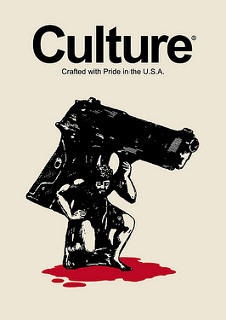
O, those deadly American bump stocks ~ must be yoked; splotch on America. Sad!
Anagram: Russ Atkinson
Image: Christopher Dombres
Posted by Anu Garg


Friday, October 6, 2017
Stephen Craig Paddock
(The New Yorker)
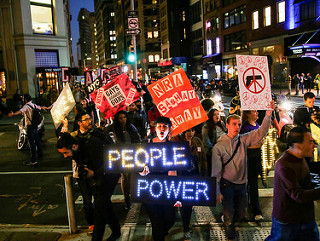
Stephen Craig Paddock = then a sick dog crapped
Anagram: Russ Atkinson
The post Anagrams on the News – sad appeared first on OnWords.
September 24, 2017
Operation Mincemeat by Ben Macintyre
 Operation Mincemeat: How a Dead Man and a Bizarre Plan Fooled the Nazis and Assured an Allied Victory by Ben Macintyre
My rating: 4 of 5 stars
For fans of classic WWII derring-do or the early James Bond novels, this book is not to be missed, not only for its complicated and nail-biting plot, but because it is the real deal that inspired that sort of fiction. It is the non-fiction account of the wartime disinformation operation already well-known from the book and movie The Man Who Never Was. The British floated a dead body ashore in Spain costumed to appear as a Royal Marines officer, carrying (actually chained to his wrist) a satchel with counterfeit top secret war plans intended to fall into the hands of the Germans, who had great influence in Franco’s Spain at the time. The plans were intended to persuade the Germans that the invasion of southern Europe would come in Sardinia or Greece rather than its true target, Sicily.
That much we learn early on, but all the planning, politics, and operational problems that stood as obstacles to the plan were so vast, it is astonishing that the plan was eventually carried out. As Robert Burns, the Scottish poet wrote, “The best laid schemes o’ Mice an’ Men, Gang aft agley, An’ lea’e us nought but grief an’ pain.” And agley they did gang, indeed.
I was initially reluctant to read this because I had read the original book and remembered much of the story. It is well-known among intelligence and counterintelligence personnel, of which I was once one. It was, however, the book chosen by my book club, so I dug in. The beginning was, as I expected, somewhat of a rehash of what I already knew. But the latter half of the book especially filled in details I’d never heard or at least didn’t remember. I believe this is a much fuller and more credible account that what has been told before. I found it hard to put down after the midpoint. I’m not a huge fan of the writing style as the author tended to exaggerate mercilessly. Every person was the most brilliant, most gullible, most devious, most corrupt, or most eccentric man to have ever walked the earth. The flourishes and color – make that colour since it was all too, too British – were a bit too much, but the story was riveting enough that it didn’t distract. It was a cracking good read.
The post Operation Mincemeat by Ben Macintyre appeared first on OnWords.
September 16, 2017
Unisex baby names
The names we give our children can tell us something about the society we live in. I’ve a few months ago. This data is from the U.S. Census Bureau. Take a look at the following chart.
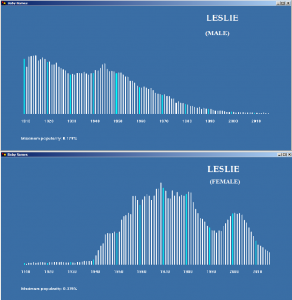
The name Leslie can be male or female. It seems that in the 1940’s and 1950’s it became popular for baby girls. About that same time, it became less popular for boys. I speculate that in those days it was important that boys not be saddled with a “girl’s name.” Now compare it to this one:
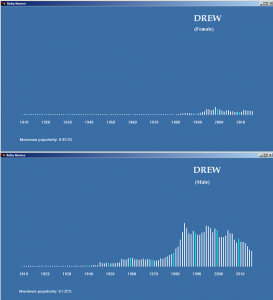
Drew is another unisex name. However, it became popular with both sexes at about the same time, mostly in the 1990’s. I suspect that issue is not so important now since the whole LGBT wave hit. It’s not hard finding other unisex names in the last twenty to thirty years to support this latter conjecture, e.g., Jamie, Shawn, Cameron. It’s not as easy to see other examples to support my earlier speculation about boys not wanting girls’ names. Jackie did decline as a boy’s name in the 1960’s as it became popular during Jackie Kennedy’s tenure as First Lady, but it had already begun a slide for boys.
In my previous posts I showed how pop culture made some names more popular. It was easy to spot when certain singing or movie stars began their rise by looking at baby charts. It was true even back in the 40’s and 50’s, too, although to a lesser extent. Dwight became popular when Eisenhower was winning the war or in the oval office. Stan became briefly popular during Musial’s reign at the ballpark. Jamie’s rise for both boys and girls matched very closely with the popularity of The Bionic Woman TV show (main character Jamie) and M*A*S*H (Jamie Farr played Radar). It’s a bit harder to pinpoint why some names made their surge. Drew, for example, got popular for girls mostly in the early to mid 1990’s. It started earlier for boys. It’s tapered off for both, but stayed fairly popular for boys. The girl’s part might be attributable to Drew Barrymore’s brief time in the spotlight, but she wasn’t that major a media star that I recall. Drew Carey had a successful long-running comedy show, but his character was nerdy, hardly the kind of star power to inspire naming your child after him, and in any event, the rise for boys’ names began before that show.
Consider the next chart:
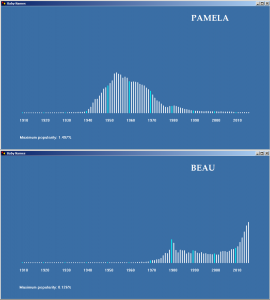
Pamela is a made-up name from the famous novel Pamela; or, Virtue Rewarded, by Samuel Richardson (1740) but I haven’t been able to find any reason for its resurgence in the middle of last century. Similarly, I don’t know why Beau is suddenly popular for boys. Fashion may explain a lot of this of course, but I find it odd that Beau’s newfound popularity seems to be centered in Montana, Idaho, and Utah when state records are examined. Is there a popular white supremacist named Beau that I haven’t heard about? I always thought Beau was short for Beauregard, a name I associated with the South, but that is the region where Beau is the least popular. Penny had a similar surge almost identical to Pamela’s, but unlike poor Pam, Penny has come back into popularity a bit in the last few years.
The charts can be compared to each other time-wise, but not on the height of the popularity bars because they are at different scales. To judge absolute popularity, look at the notation in the lower left giving the maximum popularity. That tells you the scale. Just find the tallest bar and the number tells you what percent of babies that year of that sex were given that name. Other bars on the same chart are to the same scale.
The post appeared first on OnWords.