Annie Cardi's Blog, page 114
February 22, 2012
Links Galore
A few more links to round out your day:
I love these lunchtime napkin illustrations! The friendship bracelet one is especially cool.
Reading Roald Dahl's books is the ultimate survivor guide.
Another reason technology is cool: apps for those who struggle with reading/writing.
An excellent review of The Fault in Our Stars. It's nice to see an excitement for YA overall, too.
The ever-awesome Taylor and Queen of the Air get a shoutout.





Sisters Are Doin' It For Themselves
Loving this post about strong female protagonists over at Christina Farley's blog, Chocolate for Inspiration. One point I like:
"The heroine must have internal and external motivations that push the boundaries and up the stakes."
This is probably a good rule for any protagonist, but it's one that's easy to forget. I want to read about people who make specific choices to overcome their challenges, not people who get kind of shuffled along until the end. That said, the protagonist doesn't have to fight dinosaurs. Little struggles can be just as moving, but they have to be deliberate choices. I also like the emphasis on internal and external motivations. Part of being a strong protagonist is having a vivid internal life. Jane Eyre, for example, is quiet but very determined and consistently stands up for herself.
I do wonder at Farley's point that the heroine must save the day. I am totally into characters who don't need to be rescued, but I also like books that have a balance of "saving the day." In real life, sometimes you do need help. Sometimes the victories aren't so clear. The heroine should play a major role in saving the day, but I don't think that should come at the cost of any other victories any other characters could have. For example, I love Patricia Wrede's The Enchanted Forest Chronicles. In the second book, Searching for Dragons, much of the success is due to both Cimorene and Mendanbar. I like that they're both strong characters and ultimately work well as a team.
What do you like to see from heroines in novels?





You Can Dance If You Want To
Really digging this video for Don't Go by Pyyramids:

Lots of awesome work in the background, and I love how genuine this girl seems. I could easily picture her doing the same dance at home, in front of her bedroom mirror. I want to dance, too!





The Novel Title Mad Libs Game
Titles are hard. How are you supposed to sum up the emotional content of your work while still making sure it's memorable and will catch a reader's eye? Wouldn't it be easier to turn some lead into gold while we're at it?
Fortunately, NPR has provided us with a handy guide for . Not really YA-specific, but here's the closest match:
If Your First Novel Will Be A Withering Teenage Quasi-Memoir
How I Flunked [YOUR WORST ACADEMIC SUBJECT] But Passed [THE FIRST MUSICIAN YOU SAW IN CONCERT]
The memoir part doesn't really work, but with this in mind, my first novel should be How I Flunked Chemistry But Passed The Four Tops and the Temptations.
I also like:
If Your First Novel Will Be A Harrowing Historical Account
The [A COLOR] [REPEAT THAT COLOR] [A FLOWER]s Of [A CITY IN EUROPE]
It's that double color that makes it stick out, of course. Feel free to share your titles in the comments!





February 21, 2012
Links Galore
A few more links to get through Tuesday:
Book-inspired items are awesome.
The 2011 Los Angeles Times Book Prize finalists have been announced, including a YA category.
Today my coworker and I were lamenting the fact that Downton Abbey season 2 is over. Good thing the Hub suggests similar books to read while we wait for season 3!
Science books go fully electronic at Download the Universe.
Over on her blog, Shannon Hale has a great conversation going about the missing female characters in film/books.





Next Time, I'm Tessering to New York
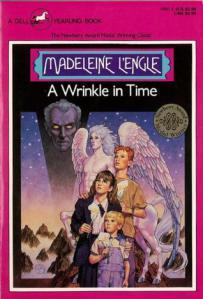
The cover version I had would have also worked on a Trapper Keeper.
If, like me, you were unable to attend the recent celebration of A Wrinkle in Time's fiftieth anniversary (did your invitation get lost in the mail, too?), have no fear! You can read all about the evening's events at Publisher's Weekly and The Horn Book. It sounds like it was a truly special and exciting event. One moment I liked, from PW:
"[Rebecca] Stead said: "My son made me lunch today." Then she pointed to Meg as her favorite character in Wrinkle: "[Meg] gave me access to the internal life of a girl like me," Stead said. She added that it was through Meg's vulnerability and "self-doubting" that she was able to address her own private feelings that girls don't always share with one another at that age. Meeting Meg was Stead's way of "having that conversation.""
This is one of my favorite aspects of A Wrinkle in Time. Meg isn't the perfect protagonist, ready to save the universe. She's frustrated with herself and her surroundings; she's quick to anger; she doesn't always know how to express herself. But she does save the universe. It can be a huge relief for young readers to know that you don't have to be perfect to accomplish great tasks.
At Horn Book, Lolly Robinson brings up an interesting point about the book's lasting appeal:
"What I found most interesting about the panel discussion was the way all of them managed to praise the book's emotional appeal to kids while hinting that it might not stand up to in-depth critical appraisal. I found this refreshing, and it's a good lesson for all of us. Nothing will ever sway my devotion to Meg and her family, but it has taken me almost 20 years to get over the feeling of let-down I had when I re-read this book as adult and found it lacking in a literary sense."
I haven't reread A Wrinkle in Time in a while, but this makes me wonder if I'd find it lacking as well if I read it now. Part of me thinks I wouldn't. I don't remember being blown away by the style initially. What I enjoyed as a reader was the strength of characters, the inclusion of physics and math as natural part of the story, and the excitement of traveling through time and space. (And really, who doesn't want to travel through time and space? This is part of why I now watchDoctor Who!) I don't think I'd put it to a real, critical test, but I'd hope that I could walk away with a similar kind of satisfaction I had when I was young. Even so, I think Robinson is good to point out that no matter what, so many readers are devoted to this book. There's a great emotional attachment there that's transcended generation.
Might have to add this classic to my to-read list again!





Books You Haven't Read
We've all done it: claimed to have read a book/story/poem/etc. we haven't. At Book Riot, Cassandra Neace talks about literary lying and the corresponding guilt. She describes one particular lie:
"I imagine that I was caught in one of those moments when I was trying to socialize with my fellow students (not something that I excelled at), and when one of them made reference to something Borges had written, I, like everyone else, smiled and nodded. I may have even responded with some complimentary quote from a comparable author. I met the group's approval, we became friends, and I have lived a lie ever since."
I've totally been there. Someone mentions a book you feel like you should have read. You nod and hope they don't ask you for your opinions on it or make you comment on a particular character. And if they do, you pretend you read it a while ago. ("Man, how long ago was tenth grade, am I right?!") Usually, you're not caught in the lie.
Still, this idea of literary lying got me thinking about when I was in grad school, and people would mention books by very literary authors. Some of them I'd read, but mostly I couldn't drum up the same kind of enthusiasm for literary fiction as I could for YA or children's literature. I could enjoy it and admire it, but I didn't necessarily want to apply to writing conferences and workshops where the focus was on literary fiction. When I realized that I wanted to spend my time on YA, it was a huge relief. No more pretending my authors didn't win prizes like the Printz! Fortunately, my program approved of a YA thesis, and I had several other YA/children's lit-leaning friends in the department as well.
Again, we all have our literary lies, but maybe these lies are telling us something. Maybe you would love Borges if you read him–or maybe not. Maybe there's a reason you haven't delved into a certain writer's work. I'm all for trying different writers and genres, but there's no reason to feel guilty about books you haven't read.





Making Readers and Keeping Them
When I changed schools in fifth grade, the principal asked my parents what I liked to do. They said, "She reads a lot," and the principal smiled and said, "I could tell." I was the kid who checked out an armful of books from the library and had a rotating stack of them on my nightstand. It wasn't all great literature (a glance at the Friday Fifteen would tell you that), but it meant I wasn't fearful of reading in any way. As a result, I was always a little surprised to hear from friends who weren't big readers as kids. And these aren't just people who had trouble in school when they were young. They were bright and talented kids who didn't find reading that appealing.
So I was interested in a couple of recent blog posts about fostering a child's love for reading, even if the child in question doesn't naturally gravitate towards books. The first is by David B. Crowley, who talks about how to spark a child's interest in books. He suggests making reading time special (I love the idea of reading together in the morning, not just before bed), going to the library, and letting a child get interested in reading things that aren't books (like manuals). Lots of David's tips were things my parents did, which I think helped maintain my love of books. A few tips I'd add:
Don't be judgmental of a child's reading. Maybe The Baby-Sitters Club or Goosebumps isn't exactly A Wrinkle in Time, but you don't need to read all the classics all the time to be a good reader.
Encourage books as gifts. I love giving/getting books as presents, and it helps foster the idea that books are special.
Don't pit books against the television. Granted, my home was pretty lax in terms of TV rules, but most of the time I wasn't just watching TV anyway. I'd put on cartoons and then grab a volume of Childcraft to browse through. Making TV totally off-limits can make it more appealing, and as a result reading can seem like a chore.
But what happens when you want an older child or teen to read more? At Co.Exist, Michael Coren looks at the Uprise Books Project, which endeavors to get banned or challenged books in the hands of low-income students. Obviously there are a lot of excellent books that have been banned or challenged, including those by Judy Blume, Sherman Alexie, Chris Crutcher, Toni Morrison, and John Steinbeck. But usually these books are touted with the suggested that kids should read them because they're classics–while really, these are gritty, real stories that have major potential to connect with teen readers. Justin Stanley, founder of Uprise, says:
"Pushing banned/challenged books provides those kids with a shield to use against that pressure. Instead of reading a great work of literature, they're breaking the rules and discovering what they (parents, adults, the establishment, etc.) don't want them to know."
I'm very curious to see how the Uprise Books Project does. A lot of times, reading is pushed as something teens should do because it's enriching and educational–which it is. But saying that doesn't exactly grab the average teen reader. I suspect a lot more teens would be interested if they knew these books were about tough, relevant issues and were subversive in some way. At the very least, I think it will get reluctant readers to think differently about what books can be.
Were you always a reader? Have you had success with a reluctant reader?





February 17, 2012
Friday Fifteen
Another Friday, another Friday Fifteen, in which I review fifteen books in fifteen words or less.
1. The Unabridged Journals of Sylvia Plath by Sylvia Plath, Karen V. Kukil (Editor)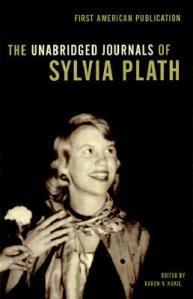
It became immediately apparently that Plath was way smarter at 18 than I'll ever be.
2. The House on Mango Street by Sandra Cisneros
Love the vignette style, fantastic voice. Even jock senior boys in English class liked it.
3. Everything is Illuminated by Jonathan Safran Foer
Feels forced in parts, but moving overall. Foer's best novel so far.
4. The Cat in the Hat by Dr. Seuss
Made me very nervous as a child. People shouldn't mess up your house!
5. Eat, Pray, Love by Elizabeth Gilbert
Hated it initially, then got pulled in by Gilbert's voice. Some nice local history, too.
6. The Witch's Sister by Phyllis Reynolds Naylor
First in a series; read these obsessively in fifth grade. My limit on horror reading.
7. The Midnight Ride of Paul Revere by Henry Wadsworth Longfellow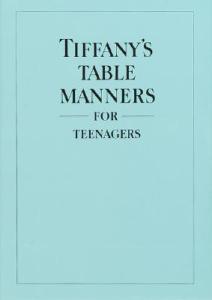
Poetical and historical bedtime reading in my household. Fun for New England kids!
8. Happy Birthday Samantha!: A Springtime Story (American Girls: Samantha #4) by Valerie Tripp
The first AG book I read, sparking enthusiasm for the series and the Victorian period.
9. Tiffany's Table Manners for Teenagers by Walter Hoving
Christmas gift that I kept glancing through. Surprisingly useful stuff for an eleven-year-old
10. Our Mutual Friend by Charles Dickens
Some classic Dickensian style, but the ending fell flat for me.
11. Where are You Going, Where Have You Been?: Selected Early Stories by Joyce Carol Oates
The title story is exquisitely eerie, others follow the same unsettling tone.
12. The Disreputable History of Frankie Landau-Banks by E. Lockhart
A recent favorite. Love a heroine who's not afraid to be clever, bold, and ambitious.
13. Knights of the Kitchen Table (The Time Warp Trio) by Jon Scieszka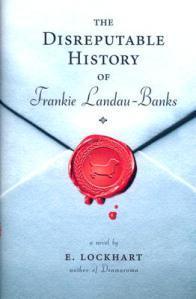
I'm holding it in pictures from first day of first grade, so probably liked it.
14. The Emperors Embrace Reflections On Animal Families And Fatherhood by Jeffrey Moussaieff Masson
Summer reading for Bio, ended up enjoying it. Found out why beavers are so awesome.
15. Holidays and Birthdays (Childcraft: the How and Why Library #9) by World Book-Childcraft International
What's your birthstone? When's Yom Kippur? My source of all calendar knowledge as a child.
Happy weekend reading!





Links Galore
A few more fun links to get you ready for the weekend:
The one day conference, A Sense of Wonder: Stories of Nature, Science & History, at the JFK Library sounds pretty awesome.
A look at Judy Blume's books and their particular controversies.
Daniel Handler/Lemony Snicket is the master of the fictional author platform.
Lesson: it's okay to talk up your book.
Are writers disinclined to like technology? I'd argue this is probably more the case of writers of literary fiction, not YA or children's lit.
Valentine's Day is behind us, which means it's the perfect time to look at break-up novels.
Tiny, pop-up libraries are so cool.
Still too many LGBTQ kids feel unsafe at school, but hopefully new resources mean a move toward safer, more accepting school environments.
A Q&A with Shannon Hale and a giveaway! Love that Hale/Austen combination.