Annie Cardi's Blog, page 116
February 14, 2012
I Do Like Tote Bags
Happy Valentine's Day everyone! No matter how old you are or what your relationship status is, I think it's a great holiday to spread love and eat tasty treats. In case you're still looking for some valentines, check out the ones from NPR:
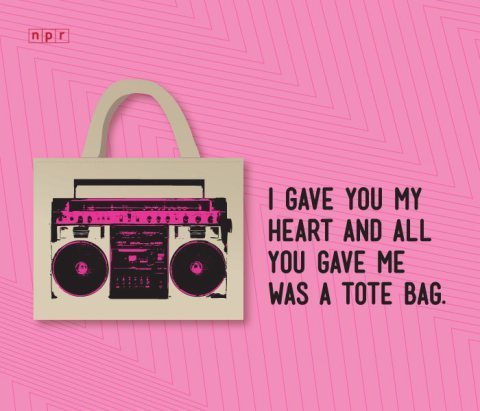
More through the link.





February 13, 2012
Links Galore
A few more links to start off your week:
In an interview from 2000, Madeleine L'Engle talks about prayer, writing, and community.
Are fairy tales too scary for kids?
E-publishing contracts require as much consideration as traditional publishing contracts.
Are we blogging just for the other bloggers? Does it matter? (Frankly, I'm thrilled if anyone anywhere reads my posts at all.)
Humanity loves lists.










You Are a Writer
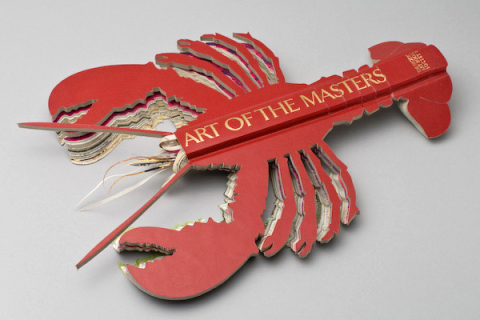
When people ask what I do, I usually tell them about my day job, not my writing, even though I think of writing as my chosen career. Like the writing is less real because it doesn't give me health benefits. So I like Kristine Carlson Asselin's post about owning yourself as a writer. She talks about the hesitation to identify as a writer, and how we should stand up for our writing. She says:
"I AM A WRITER. And if you write, YOU ARE A WRITER. Not you want to be a writer. Not you hope to be a writer. If you write, YOU ARE A WRITER."
Amen to that! I might need to start practicing this affirmation. Do you find it hard to identify as a writer?





Joining the YA Party
At Salon, an article suggesting what many of us have known for a while: that YA novels can be as well (or better) written and as touching as any novel for adults. About The Fault in Our Stars and There is No Dog in particular, Laura Miller writes:
"Both of these novels ask questions as difficult as those posed by any serious writer: Why do we suffer, why must we die, and what meaning can be found in any of it? More important, they are not afraid to respond to these questions unflinchingly. These books are often — very often — funny, but they aren't frivolous. I can think of a dozen acclaimed contemporary adult novelists who blunder through this territory, wallowing in sinkholes of sentiment, tangling their narratives in thickets of saccharine fabulism. It makes no sense that the maudlin goo that is "Extremely Loud and Incredibly Close" should be classified as a work for adults, when "The Fault in Our Stars," a far more mature rumination on the same themes, is regarded as a children's book. Likewise, why should grown-ups be subjected to the cutesy "The Life of Pi" while teenagers get to revel in an astringent fable like "There Is No Dog"?"
I'm glad to see a review for YA novels that doesn't include the phrase "Most YA novels are bad, but this one is surprisingly good." It's nice to see the genre get some recognition. Just as in fiction for adult audience, there's a huge range of good and bad, and many readers would find favorite novels in the YA category.
Unfortunately, Miller also says:
"It's debatable whether Rosoff's shrewd, trim prose might not occasionally fly just over the heads of teen reader…"
Considering the teens I've heard from who read books like Rosoff's or Green's, there's no question about whether or not they get the prose. These are teens who are actively pursing crisp writing and compelling stories, and can certain understand as much as any average adult reader. More respect for YA novels? Awesome. But we also need respect for young adult readers.





Light the Candles
A little late, but check out this gorgeous trailer for Chanukah Lights by Michael J. Rosen and Robert Sabuda. A fantastic example of how artistic pop-ups can be!
Also make sure to check out this interview with Rosen about creating the book. One part I thought was interesting:
One funny accident: We were talking about the "desecration" of the Temple that's used as the pivotal start of the Chanukah story. And we got all excited about a pop-up spread with columns crashing, oil barrels spilling, fires, and so forth. And then, coming back to my senses after the call, I remembered/realized that we let "desecration" turned into "destruction," and that neither of the two destroyed Temples are in the this story. I shot Robert an e-mail: "At this point, the Syrians had basically taken over the Temple, erected an altar to Zeus, sacrificed pigs within its space, unsealed the oil containers, etc., but there's no rubble to tumble and pop up. If scratch-and-sniff is an option, a bacon scent might be nice here."
I'd always pictured "desecration" as "destruction" as well! It's cool to see that kind of care with history and translation. And I have to admit, a bacon scratch-and-sniff would be hilarious.





February 10, 2012
Links Galore
A few more links to round out your Friday:
Why we need the unknowable and the unsettling in horror writing.
If you're currently in eleventh grade, you can apply for the Leonard L. Milberg '53 Secondary School Poetry Prize Contest.
Pugalicious Press is looking for historical romance stories with a fantasy element.
A video about Sophie Blackall and her art. She spoke at SCBWI!
Documenting WWII veterans' stories.
Read the first 80 pages of The Disenchantments online? Don't mind if I do!





Friday Fifteen
Another week, another Friday Fifteen, in which I review fifteen books in fifteen words or less. Here we go!
1. Mrs. Dalloway by Virginia Woolf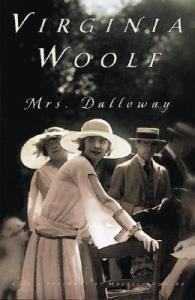
One of my favorites. Gorgeous writing about human connections. Read it in Regent's Park.
2. Harry Potter and the Half-Blood Prince by JK Rowling
Accidentally spoiled the ending for my husband. Worst moment ever. Works well as penultimate novel.
3. The Very Hungry Caterpillar by Eric Carle
Beautiful art, excellently written picture book. And it's science!
4. The Face on the Milk Carton by Caroline B. Cooney
Made me forever paranoid that my parents aren't my parents.
5. Julius Caesar by William Shakespeare
What it feels like when friends stab you in the back. Love Mark Antony's speech.
6. Teacher's Pet (Sweet Valley Twins #2) by Francine Pascal
The younger version of SVH. Twins still obnoxious and size 6. They did ballet briefly.
7. The Female Quixote by Charlotte Lenox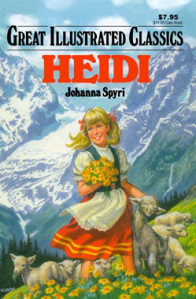
The kind of book Catherine Morland from Northanger Abbey would have read.
8. Babylon Revisited and Other Stories by F. Scott Fitzgerald
Title story is great; others are good. None as good as Gatsby.
9. Heidi (Great Illustrated Classics) by Johanna Spyri
The easy reader Heidi, with lots of pictures. Didn't need to read the real thing.
10. Something Upstairs by Avi
Inspired me to write a lot of bad, historical ghost story knock-offs.
11. In Cold Blood by Truman Capote
Chilling look at real-life violence in rural America. Capote's best.
12. Oranges Are Not the Only Fruit by Jeanette Winterson
Engaging premise (lesbian grows up English and Pentecostal) and vivid writing.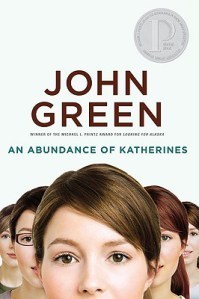
13. Wicked: The Life and Times of the Wicked Witch of the West by Gregory Maguire
Didn't love it as much as I hoped. Is it wrong to love the musical?
14. Witch Week (Chrestomanci #3) by Diana Wynne Jones
Only one I've read in the series. Fun, non-HP book about boarding school and witches.
15. An Abundance of Katherines by John Green
Green's weakest, in my opinion. Fun, but doesn't carry the emotional weight of his others.
Happy reading/reviewing!





Why We Write YA
It's a good time to be a young adult or middle grade writer. Thanks to the success of series like Harry Potter, Twilight, and The Hunger Games, people are paying a lot more attention to these genres and realizing that there's a major audience out there for good YA/MG literature.
But the YA/MG writers I know don't get into the genre because it's popular or because it could make them a lot of money. (Ha!) Instead, it's because they have a passion for stories that will resonate with younger reader. Writers don't choose YA; YA chooses them.
A couple of these writers–Lucas Klauss and Melissa Kantor–have great posts about why they write YA. You should read the complete posts, but a couple of good quotes. First, from Lucas Klaus:
"Most YA novels tell a story in a direct way, unencumbered by cynicism, cleverness, or pretentiousness. Teenage readers will not tolerate that bulls**t. True, this approach, like any other, has limitations, and more oblique methods can yield surprising insights, but I find young adult literature's straightforward style refreshing and rewarding. If one of the major goals of fiction is to help us empathize with one another—or, from a different point of view, to help us feel less alone—then why not try simply to communicate?"
I don't tell to like very experimental fiction, so this focus on emotional communication is key for me as a reader and as a writer. And from Melissa Kantor:
"Writing about teenagers (for me), means not just remembering but being willing to dwell in that place where life felt like walking a tightrope without a net."
Love that description. Although anyone can feel desperation at any point their lives, there's something about being a teenager in which emotions are heightened–and not just because of hormones. It's a time when you are first experiencing so many things on your own, and when you're learning to be yourself. As a result, relationships and events are filled with an intensity you might not feel at any other point in your life. Literature about those experiences can really resonate with readers–both teen and adult.
I didn't set out thinking I'd be a YA author. My MFA program was in general fiction writing. I came to realize that I'd way rather will a Printz or Newbery than a Pulitzer, and that most of my short stories centered around young characters. I love how daring the genre is–you can write historical fiction, novels in verse, or paranormal romance and still connect with readers. The focus is on crafting a good story with compelling characters.
I also love how vibrant the YA community is. I'm not sure how it compares with, say, literary fiction or adult fantasy, but the YA/MG community has felt very encouraging t me so far. Again, people get into it because they love the literature, and teen readers are unabashedly enthusiastic about their favorite books. Why wouldn't you want to be part of a literary community like that?
Feel free to share your own thoughts about why YA/MG rocks.





Keeping up with Technology
At YA Highway, Lee Bross has a great post about referencing technology and other modern details in YA novels. Should you mention iPads? Facebook? Texting? Will these be obsolete in the next five years? What about bands or actors, or particular brands?
I tend to shy away from very specific references. I mention cell phones and texting, but don't dwell too long on them and don't call out particular brands. So far I haven't references any particular actor, movie, or band, just because they can all fade so quickly. But I think it's safe enough to use brands or names that have existed for at least a decade. For the most part, I don't think you need to reference anything to feel "current." It's one thing to completely avoid mentioning these things (is your character really going to send a carrier pigeon to get a message to his friend instead of texting?) but any references for the sake of making your character current will probably feel more false than not.
It can also be fun to invent stores/bands/websites instead of using ones that currently exist. That can keep your novel somewhat more current, since readers will be able to associate the fictional store/band/website with one he or she likes now.
What choices do you make when referencing modern life in your contemporary novels?