Annie Cardi's Blog, page 118
February 7, 2012
Lessons in Rejection
Rejection is hard, no matter who you are or what your career is like. (At SCBWI, Jane Yolen talked about how she still gets rejected.) It's hard work, putting your writing out there and hearing that it's not quite good enough. Writers usually have to develop thick skins, or else hide away all manuscripts in desk drawers. But Nancy at Out to Play has some great suggestions for coping with rejection. I especially like her Mike Wazowski approach!
A couple of other tips I'd add:
Editors/agents get a ton of submissions. Their email inboxes are constantly overflowing. As a result, they have to be super picky about the work they represent. Rejection doesn't mean your work is necessarily bad. It just means that this editor/agent didn't feel the right connection with it. When I was working on lit journals in college and grad school, most of the submissions we got were perfectly fine. But we only have the space to print a handful, and we had to make cuts somewhere. But that also means that if someone selects your work, they absolutely love it and will treat it with major enthusiasm.
It may seem like your fellow writers are never rejected, but that's not true. For the most part, people don't tend to talk about their failures like they do their successes. Remember that everyone gets rejected, and maybe broach the subject with some close writer friends.
It's not rejection; it's a learning tool. If you can figure out what went wrong, maybe you can make your story sharper and better than ever for the next time around. That way, it's another step on the road to being an even more awesome writer.
When you do get good news, think about those former rejections and how they led you to where you are now. It's all a process.
What are your tips for handling rejections?





Forever Austen
 If you're a fan of Shannon Hale, you probably know that Midnight in Austenland, her follow-up to adult novel Austenland, was recently released. Over at figment, Hale talks about what Jane Austen meant to her at various points in her life. On different readings, Pride and Prejudice could be a love story, social commentary, or a comic novel. Hale says:
"Many people ask me, why do you think Jane Austen is so enduring? Simple answer: she writes books people want to reread. Books mean different things to different people at different times."
I entirely agree. A lot of people dismiss Austen as old-fashioned chick lit, but her writing is sharp and funny and she understands very grounded social concerns. Going to a ball isn't just a fun night out; it means the possibility of meeting someone halfway decent so you're not left homeless at age twenty. She writes about real family drama and social power struggles. I'd wager that more people can relate to that than they can to the subjects of many other classic novels. And I think this is another reason that Austen can appeal so much to the YA audience.
Make sure to check out Hale's full post. And if you want more, she and other YA authors–Elizabeth Eulberg and E. Lockhart–are talking about Jane Austen's continued popularity on Monday, February 13. How cool is that?





February 6, 2012
Links Galore
A few more links to start your week off right:
If you're a member of SCBWI, you can vote in the Crystal Kite Awards.
What makes a novel sell? Compelling story, good writing, raising the stakes.
The story behind the animals of publishing logos, including the bear of Candlewick Press!
Vote for your favorite fake book summary over at the Hub.
Love the idea of a writing shed, but I think I work better with a little more action around me.
How to be awesome at indie bookstore readings.
Pretend you were at the Midnight in Austenland launch party–and enter to win a copy!
Learning from your rejection is essential.





Even Blog Post Titles Are Hard
Some people are really good at titles. They can come up with really memorable titles that perfectly connect with their novel/play/poem. These people are also probably visited by helpful elves and ride to work on their pet unicorns.
I am not one of these people.
Either I come up with a title and no accompanying story, or I finish a story and stress about the title for a while. But titles are worth some stress. A good title can capture a reader's attention right away, while a bad title can make an otherwise compelling book forgettable. Sometimes I'll remember the plot well but totally forget the title and not remember that I've read/seen it until someone describes it more.
To see the difference that a good title can make, check out these alternate titles for famous movies. While I love the sound of The Rebel Nun, it has a very different feel than The Sound of Music.
Are you good at coming up with titles? What are some of your favorites?





Antique Clocks and New Trailers
Another awesome book trailer, this one for Angelmaker by Nick Harkaway.
I love the animation, and the spare description of the character is compelling. Adding to my list! (via Book Riot)





Novels I'd Like to Call My Own
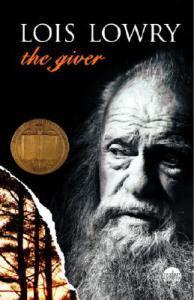 Although it's not Friday anymore (sigh), I still love the idea of last week's Friday Fives by Paper Hangover: What are the five novels you wish you had written? It's a tough one! There's a big difference between enjoying or loving a novel and wishing you could call it your own. I'm sure I could add several to this list, but my five wish-novels are:
1. The Giver by Lois Lowry
The first book to really make me think. The writing is fantastic, the characters are engaging, and the plot unfolds in a terrifying but realistic manner. Lowry has dozens of wish-worthy novels, but this one tugs at my heart in a very special way.
2. The Golden Compass by Philip Pullman
I almost claimed the whole series but figured I'd better stick to one novel instead. The first in the His Dark Materials series is gorgeously written and compelling, and main character Lyra is one of my favorites.
3. The Commitments by Roddy Doyle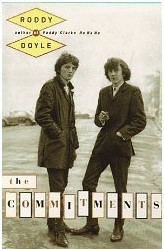
Doyle's novels all have a wonderful lyricism and vibrancy. I think it's almost impossible to incorporate music well into a novel (usually the lyrics or descriptions of music fall flat), but Doyle really gets the vibe of soul music. The movie is awesome, too.
4. Feeling Sorry for Celia by Jaclyn Moriarty
Even though it's full of whimsy, when I first read this I thought "Yes, this is exactly what it feels like." Moriarty handles everything well, from having crushes to losing/gaining friends to family drama, while still maintaining an enormous sense of humor.
5. To Kill a Mockingbird by Harper Lee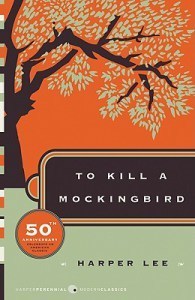
A novel that truly stands the test of time. It's a beautiful look into small-town life, the first encounters with violence and chaos, and how there are still people who refuse to back down to prejudice and hate.
You can check out other people's lists over at Paper Hangover's post. I found the challenge through Reading on the F Train–great choices there, too! Feel free to blog about your own choices, or share them in the comments.





Historical Background, or How Often Do You Notice the Toaster?
 Over at Six Boxes of Books, Roger Sutton talks about the Scott O'Dell Award and what makes good historical fiction. From the interview:
What is something that you see over and over again in the books you read, a common mistake that authors make [in writing historical fiction]?
RS: The thing that always bothers me the most, both judging this award and reviewing books, is undigested historical information thrown into a story. There was this great article in School Library Journal by Joan Blos called "Bunches of Hessians" where she talks about the various mistakes that are made in historical fiction. She said to take something from a historical novel–for example, a mother making dinner–and translate it into contemporary fiction. And then she wrote this hilarious passage about "Mother stood in front of the white box and carefully adjusted the black dial." It has to be natural to the person telling the story. They shouldn't be noticing things that only an outsider would be paying attention to. That always pulls me right out of the story.
This seems so obvious when Roger says it, but I think it's a very common problem when trying to write historical fiction–or any kind of world that's not our own. I know I've run into this issue of how much to describe and when. You want to develop the setting, but you don't want to throw details in just to sound "authentic," which actually makes you sound less authentic.
Make sure to check out the rest of the interview, too.





February 3, 2012
Friday Fifteen
Welcome to another edition of the Friday Fifteen, in which I review fifteen books in fifteen words or less!
1. The Goose Girl by Shannon Hale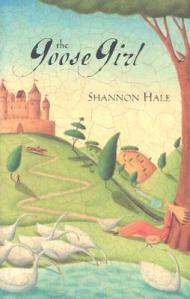
Inspired take on a lesser known fairy tale. First in a series.
2. Summer Sisters by Judy Blume
Mom got this for me thinking it was YA. Scandal! Still prefer the Blume YA/MG.
3. A Tree Grows in Brooklyn by Betty Smith
So good I wrote about it on the AP English exam. Not embarrassed.
4. The Sound and the Fury by William Faulkner
Got it without knowing anything about it and was initially confused. Still loved it though.
5. Go Away, Bad Dreams by Susan Hill
I had nightmares a lot as a kid. This book helped.
6. Sons and Lovers by D.H. Lawrence
Really enjoyed it when I read it, but can't remember much about it now.
7. Baby-sitters' Summer Vacation (Baby-Sitters Club Super Special #2) by Ann M. Martin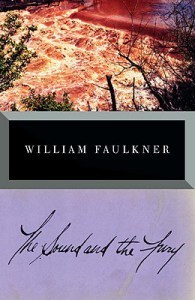
The BCS goes to summer camp, encounters poison ivy, romance, and racism. Typical camp experience?
8. Sense and Sensibility by Jane Austen
Sisters, sisters, there were never such devoted sisters. Love Elinor and Marianne.
9. The Namesake by Jhumpa Lahiri
Touching novel, with only one or two missteps. Ashima and Ashoke shine.
10. The Canterbury Tales by Geoffrey Chaucer
Didn't have a good professor, probably I could have gotten more out of it.
11. Coyotes: A Journey Through the Secret World of America's Illegal Aliens by Ted Conover
Fascinating look at immigration as Conover lives and works with people crossing over.
12. Twilight by Stephanie Meyer
Makes me glad I had Buffy in middle school.
13. Civilwarland in Bad Decline by George Saunders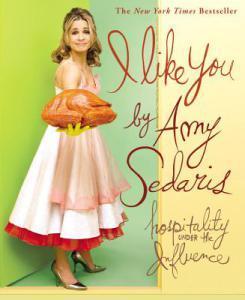
The title story is excellent. Others are good, some don't hold up as well.
14. Brighton Beach Memoirs by Neil Simon
Hilarious and heartfelt look at growing up in pre-WWII New York.
15. I Like You: Hospitality Under the Influence by Amy Sedaris
Amy has the best party games for kids.
Happy reading/reviewing, everyone!





Racing Through Friday
Somehow I haven't picked up The Scorpio Races yet, but reading the first chapter has put it at the top of my list.
Stiefvater's next book sounds pretty fantastic, too.





Mixing Colors with OK Go
OK Go already does musical videos better than anyone else. So of course their work with Sesame Street is stellar:
Another good example of you can take a basic idea (primary colors can mix together to make other colors) and still make it fun and exciting for kids. There's a lesson in there, but it's presented in such an engaging way that it doesn't feel forced at all.