Annie Cardi's Blog, page 115
February 17, 2012
Bonjour, Les Dents
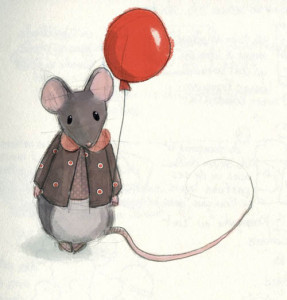 Did you know that in France, instead of the Tooth Fairy, children are visited by La Petite Souris (the little mouse)? I didn't until I saw this post at Design Mom. So cute!! I haven't done much research on this, but I'd love to see an English translation or English-written book about La Petite Souris. Or maybe I'm just reminded of of The Tale of Despereaux, an MG favorite.
For more tooth fun, check out Throw Your Tooth on the Roof: Tooth Traditions from Around the World by Selby B. Beeler and G. Brian Karas. It's an adorable book about how different cultures celebrate a tooth falling out.
(Illustration by Delphine Doreau)





City of Videos
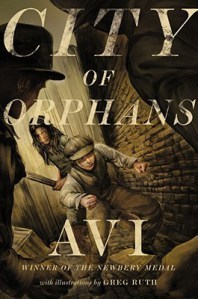 Even though there's still a lot of debate over the ebook, technology can be a very useful tool for writers. One recent example: well-known author Avi is launching a video contest for his novel City of Orphans. Details via readergirlz:
"Any teacher or librarian is eligible to submit a City of Orphans video for a student or classroom in fourth through ninth grade. Options include formats such as live action, documentary-style, readers' theater, costumed theater, and book trailers; the format is not as important as the entrants' demonstration of creativity and their interpretation of City of Orphans. An online voting process will help determine the winners, who will receive prizes ranging from an in-person visit and lunch with Avi (one Grand Prize) to Skype visits by Avi (nine Finalists). Five contest voters are eligible to win autographed copies of City of Orphans."
Sounds like a cool project for a classroom or library group! I like that the video style is open, too; I think that will inspire a lot of different interpretations and allow readers to really have fun and explore their thoughts on the book. I haven't read City of Orphans yet but it sounds like something I would have loved when I was younger.
Check out readergirlz and Avi's page for more details.





If Only There Were an Idea Orchard We Could Pick From
Probably the most frequently asked question of writers: "Where do you get your ideas?" The short answer: Lots of places.
The long answer: Richard Thomas at Storyville is here to help with that. He looks at how various writers can get ideas. Obviously not the absolute final list, but it's a fun collection of how the imagination can work. For me, most ideas come from what Thomas describes as Quiet Time:
"Always be open to suggestions. Maybe it's in the shower, or on the toilet (I'm not kidding here), or when you go jogging. Always keep a notepad handy. When you are doing other things and NOT thinking about a story idea, a new title, a way to use that new word or setting or character you've been holding onto, you'd be surprised what comes to you. Let your mind wander, let whatever abstract thoughts you have just float about. Maybe it'll turn into the "What if…" game we talked about earlier. Just be open and aware and quick to write something down if it comes to you. "
Queen of the Air, for example, started with the phrase "My mother thinks she's Amelia Earhart." No connection to anything else; it just flashed in my brain one afternoon. It started as a short story and soon I realized I needed a lot more space to develop it.
I'd say most people think writers use what Thomas calls Personal Issues or Personal Challenges. Lots of people tell my husband or me "You should write about this aspect of my/your real life." Maybe that works for some people, but generally this doesn't work for me. I write fiction, not nonfiction. Nonfiction is great, and sometimes I'll pull details from my real life, but rarely will I write a story that's inspired by people or events in my life. I think that's part of the fun of fiction–you get to make stuff up! It's nice to be able to impart a personal connection with your characters, but I think it's also just as good to develop a sense of empathy for emotions you haven't experienced.
Mostly, I think this is a hard question for writers to answer because a lot of times it's not the simple or exciting answer an audience wants or expects. Rarely does a writer get a spark of inspiration, sit down and pound out a perfect novel. More often, the idea strikes and it gets mulled over and tweaked and written down and rewritten a thousand times. It's part of the process, but not as simple as one might expect.
Do you ever get asked where your ideas come from? What do you respond?





February 16, 2012
Great Editors Still Want Great Writers
Editorial friends: ever wish you could have been the person to work on books by JK Rowling, Philip Pullman, Tomie dePaola, Jerry Spinelli, and more? Arthur Levine has you beat. Check out this fantastic interview with him about his experience as an editor and how a hopeful writer can approach the world of publishing. A few nice points:
OLSWANGER: Do fiction editors want to find new writers?
LEVINE: Sure. The lists get full, but there's always room for a new, special voice. There's nothing more exciting than coming across that. I can't imagine a point where I will have covered every possible form of great writing, not only serious literary fiction but humorous literary fiction, fiction from many different cultures, and mysteries, and . . . you know, there's so many genres and so many types! I can't imagine a time when I would have a writer that is the last word in every possible form of writing. There's always going to be room for somebody new.
OLSWANGER: You've worked with many writers over the years. In your opinion, how does a writer grow?
LEVINE: I think writers grow by pushing themselves to be more honest and revealing about themselves in their work. They grow by reading and turning outward, not by turning inward and becoming self-referential. The writer who says, "Oh, I only concentrate on my own writing–I don't read other people's books" is missing out on the opportunity to be exposed to new voices and approaches that help one grow. And taking risks. That's another way that writers grow.
OLSWANGER: Do you believe good writing always gets published?
LEVINE: "Always" is too strong a word because nothing happens always. But I think if a person is determined, smart and professional enough, in addition to having that piece of writing, then they have a great chance of getting published. A person who has a truly original piece of writing will have their choice of opportunities. With enough persistence, they will wind up getting published.
Overall, I think there's a lot of hope in this interview for upcoming writers. Rowling and Pullman may be great, but even Levine is excited about what's next. Make sure to check out the rest of the interview, too!





The Top 100 Countdown
Scholastic has put together a list of the 100 Greatest Books for Kids. Obviously lots of favorites are included, and it's impossible to list all of the children's books that have meaning for readers. The top ten:
Charlotte's Web by E.B. White
Goodnight Moon by Margaret Wise Brown
A Wrinkle in Time by Madeleine L'Engle
The Snowy Day by Ezra Jacks Keats
Where the Wild Things Are by Maurice Sendak
Harry Potter and the Sorcerer's Stone by J.K. Rowling
Green Eggs and Ham by Dr. Seuss
The Diary of a Young Girl by Anne Frank
The Giving Tree by Shel Silverstein
Frog and Toad Are Friends by Arnold Lobel

No major surprises here, I'd say, although I'm surprised to see Frog and Toad in the top ten. I liked their stories growing up, but I wasn't emotionally touched by them. And The Giver is only at #25, even though it's one of the best books ever. That said, I am glad to see Tuck Everlasting so high at #16; I feel like usually it gets shuffled further down.
What are your thoughts on the list? Does it reflect the best of children's lit?





Historical Revision
Gail Gauthier and Tanita Davis have fantastic posts about historical fiction and how it's gotten a bad wrap in the last several years. In short, the label suggests a focus on "educational" aspects of reading, not the story. Gauthier tests this theory:
"So I decide I should take a look at a few middle grade historical novels. I tried maybe three before giving up. I couldn't finish any of them. The historical fact aspects of the book were in my face and annoying. My professional reading from that period reinforced my impression–the most important factor in historical fiction for kids was historical accuracy."
Problems like this can kill a story before a reader even gets invested. And it's not necessarily that authors are sitting at their computers, writing with the idea that historical fiction must teach children all about history. It's difficult to figure out what details to include to ground the characters in the appropriate setting but not overwhelm the reader with historical info. Davis says:
"As an author, I can say that one of the hardest things about writing historical fiction is the tightrope walk the author has to do — between historical accuracy and humanity. It's important not to infodump dates and names, but it's also crucial not to veer the characters – and the details of their daily lives – into obvious anachronisms by using more modern tools, language, and attitudes about social tolerance which make the historical accuracy a lie. "
Like Gauthier and Davis, I like historical fiction. Heck, I used to love the American Girl books, which probably veered more into infodump than not. But a story that's set in another time period shouldn't necessarily get shuffled off into the land of educational reading. Gauthier lists some good examples of novels set in the past but firmly grounded in story and character, including one of my favorites, The Astonishing Life of Octavian Nothing, Traitor to the Nation by M.T. Anderson. I'd also add Number the Stars by Lois Lowry, The True Confessions of Charlotte Doyle by Avi, and Catherine, Called Birdy by Karen Cushman. Did I learn historical facts from these books? Sure. But when I remember these books, I remember the stories, the characters, the excitement and drama–just like any other novel.
I hope historical fiction has a resurgence in one way or another. I think we're probably missing out on some fantastic historical novels just because they're considering unpopular.





February 15, 2012
Links Galore
A few more links to round out your day:
A round-up of LGBTQ fiction at The Horn Book.
An interesting article on Michael Chabon's experiences in Hollywood.
Cool project watch: The Ideal Bookshelf.
I know it's exciting to get an offer of representation, but it's still good to ask questions first.
Love advice from YA novels.
The 2011 Cybils Awards have winners now!





Writers Reading
It's one piece of advice almost always given to hopeful writers: Read. Read is essential for anyone who wants to write. You need to develop an understanding of what's already out there, and what it takes to craft a story.
But in a recent article, Cormac McCarthy said that he hasn't read a novel in years. The comment is glossed over in the article, but it got me thinking: do you need to read to write? Of course, you could argue that McCarthy has probably read many novels in his lifetime; that he's a very established writer; that he could be referring to new work published; that he could be readings lots of nonfiction or short stories.
But it still irks me a little. If you're a writer, why wouldn't you want to read at least one novel every so often? Even if you're an established author, it's good to know what changes are occurring in your market. You could miss this generation's The Great Gatsby or The Catcher in the Rye. Or you could miss a book that will become a personal favorite.
At DIYMFA, Gabriela has a great post about how important reading is as a counterpart to writing. Check out the whole thing, but a nice point:
"One of the biggest problems I see with the world is that everyone out there is trying to be a writer. Everyone's got an agenda; they're trying to use their words and take up mental real estate and get people to listen to what they have to say. The problem is, very few people out there put effort into Reading-with-a-capital-R….In the end, Nash's speech came down to one important point: "Writing and reading are behaviors. Most people do both." I agree completely and would add only one thing: To change the world, we need to do both and do them responsibly."
I especially like the reminder that reading should be an active response to writing. Without reading, we're writers shoving letters into the void. And as readers, we are more conscious of our connection with humanity, which will in turn make us better and more responsible writers.
Not sure what McCarthy is up to, but for now I'll stick to reading.





Across the Pond
As you may or may not know, book covers are usually different for a novel in the US and its international counterparts. A recent post at the Millions looked at a few different US/UK novels, and I thought it would be cool to look at some popular YA or children's titles as well. I chose John Green's Looking for Alaska, which has been translated into several languages.
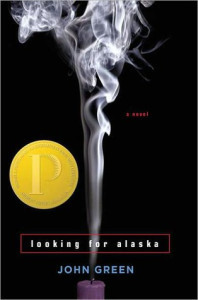 This is the cover we American readers know and love. I think it's a solid cover; maybe not startling, but it strikes the right mood.
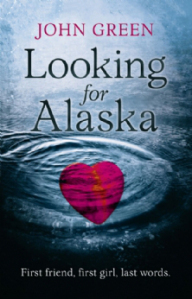 This is the latest UK cover. This is probably my least favorite, as it feels a little generic.
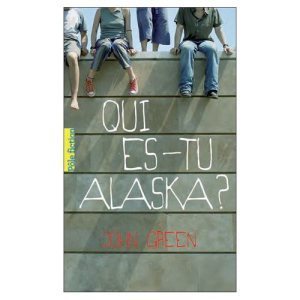 This is the French cover. Again, maybe a little generic, but I like the collection of teens here.
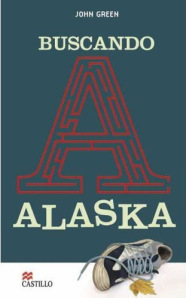 This is the Spanish cover. At first glance I didn't like it much, but I think the A as a maze is actually pretty cool. (Could do without the shoe, however.)
I'd be curious to hear more about what goes into different cover designs for international versions of the same title. Do you ever check out international covers?





February 14, 2012
Take Care of the Sense and the Sounds Will Take Care of Themselves
You know those nonsense words you have to type to prove you're not a spambot? Gabrielle de Vietri made them into a story:
It sounds so Lewis Carroll-esque. Is Desmodowe the next Alice?