Annie Cardi's Blog, page 110
March 6, 2012
Support Library Funding
Two more reasons to contact your US Representative. From the National Children's Book and Literary Alliance:
"Appropriations season is now underway in Washington, D. C. It's crucial that you call your U.S. Representative today and ask him or her to sign two separate "Dear Colleague" letters that support funding for libraries.
One letter, found here, supports funding for the Innovative Approaches to Literacy Grant in FY13. This grant is crucial because at least half of it would go to low-income school libraries to help update their books and materials.
The other letter, found here, supports funding for the Library Services and Technology Act (LSTA) in FY13. LSTA is the primary source of funding for libraries in the federal budget."
Click through for more info from the NCBLA.





The 10 Percent
Depressing:
"Every year the Cooperative Center for Children's Books at the University of Wisconsin reports the number of books they receive from US trade and small publishers and how many are written by authors of various backgrounds. Again, in 2010, more than 90 percent of books for children and young adults in the United States were written by white authors about white protagonists."
Hopefully this can spark more publishers to accept books about different characters and background, and spark more writers to share different stories.
If you're an SCBWI member, you can read more about this in the current SCBWI bulletin (March/April 2012).


A Literary Holiday
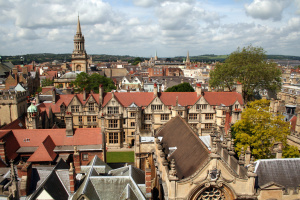 I love the UK. When I was in college I had the opportunity to study abroad in Oxford and London. The classes were fantastic, and I felt immediately at home in both cities. So this list of children's literature landmarks in the UK has me ready to pack my bags.
There are fantastic suggestions for fans of Harry Potter (I've had my picture taken at Platform 9 3/4, of course), Peter Pan, The Secret Garden, and more. I'd also add checking out castles in Scotland for a dose of Susan Cooper's The Boggart, or dash around Oxford like Lyra in The Golden Compass–but watch out for Gobblers.
Where would you want to go on a children's literature tour? (image: Oxford City, UK by mridula)


March 5, 2012






Tale as Old as Time
Finding hundreds of new fairy tales is an awesome way to start the week: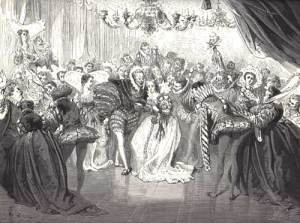
"A whole new world of magic animals, brave young princes and evil witches has come to light with the discovery of 500 new fairytales, which were locked away in an archive in Regensburg, Germany for over 150 years. The tales are part of a collection of myths, legends and fairytales, gathered by the local historian Franz Xaver von Schönwerth (1810–1886) in the Bavarian region of Oberpfalz at about the same time as the Grimm brothers were collecting the fairytales that have since charmed adults and children around the world."
I am so into this kind of thing. When I was in high school I wrote a paper on the Grimm brothers and their connection to German nationalism. (And kind of had fun writing it.) Now we have more folk tales and verbal history/culture to talk about*? So cool!
*ie, to inspire more YA novels. (via bookshelves of doom) (image: Gustave Dore, via SurLaLune)





Summer Camp for Writers
When I was in high school, I had a lot of friends who were readers but not a lot who wanted to be writers. Not a bad place to be by any means; I had fantastic friends who would swap books and get into debates about which Harry Potter character might die in the next book. But going to the Young Writers Workshop at the University of Virginia was a revelation. There were people who were as wildly excited about writing as I was–from the students to the counselors to the faculty, everyone there wanted to make art. Not just fiction or poetry, either–they offer courses in playwriting/screenwriting, nonfiction, and songwriting as well. My roommate was a songwriter and it was fantastic to get to know more about her process. The students take their work seriously, and everyone I met was fiercely intelligent and creative.
Everyone was so supportive and encouraged taking risks. I tend to dislike reading in public, but every student took part in a final reading/performance series. It was the first time I'd read my work aloud to anyone and was really nervous beforehand. But after I finished everyone cheered and it gave me such a rush. The closest I can think to compare it to is the Nerdfighter community–lots of energy and passion, and a willingness to be silly or wild or unconventional.
I only went one summer (many students return for at least a few years), but the experience really stuck with me. When I came back for my senior year of high school I felt more confident and was even more committed to making writing a part of my future studies. Having enjoyed the setting so much, I ended up back at UVa as an undergraduate (and loved that experience as well)
The program lives on and continues to inspire young writers and their teachers. If you or someone you know might be interested in attending, definitely check out this video for thoughts on YWW. It got me pretty teary-eyed. Although the deadline for this year was March 1, they are reviewing late applications on a rolling basis. And there's always next summer.
Seriously guys, can we all go back to Young Writers now?





Pin It
 If you're on the internet, you've probably heard of Pinterest by now. If not, it's a social network/media site in which users can create virtual inspiration boards by pinning and sharing images. People are kind of obsessed. Frankly. I prefer Tumblr because I think it offers more variety as a site and, since I already post pretty much everything there that I would post on Pinterest, creating a general account there would be a little repetitive.
But Pinterest can be more than just a fun social network. It can actually be a great writer resource. On her blog, agent Rachelle Gardner talks about things writers should know before they start pinning. One point I found interesting:
"3. People spend significant TIME on Pinterest.
Users spend more time on Pinterest (average of 15 minutes per visit) than they do on Facebook (average of 12 minutes per visit) or Twitter (3 minutes). And by "people" I mean your potential readers."
Part of me wonders if this is the novelty factor. It's a very new experience for most users, so I wonder if there's a lot of initial build as people create their boards, and if those people will gradually fade away, like most bloggers. Still, it's a fun diversion with minimal downsides for the average user. (Unlike Facebook, you don't have to put up with potentially obnoxious status updates. Stupid people on vacation while you're stuck at work!)
As a writer on Pinterest, you can have boards for your favorite books or books you wish you'd written. For example, Raul Gutierrez has a board devoted to Gotta Get Kids Books–a fantastic collection.
Although I don't have a generally public Pinterest account, I do use it. For me, it's a great way to post images that inspire me for or remind me of whatever project I'm working on. I think it's similar to creating a playlist for your novel–it helps create a mood so if you're stuck, you can scan through the collection of images and perhaps get inspired. So I don't share my boards or even invest that much time in them, but for me there's a great writerly tool.
Do you use Pinterest? Or do you think it's a passing online fad?
(image: Pinterest)





March 2, 2012
Friday Fifteen
Another Friday Fifteen already? Get your dose of fifteen reviews in fifteen words or less:
1. The Popcorn Book by Tomie dePaola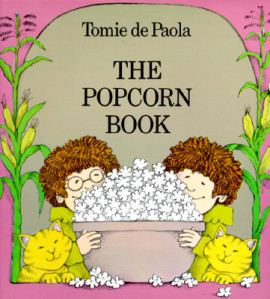
Don't remember a lot of story details, but I remember the art.
2. Memoirs of a Teenage Amnesiac by Gabrielle Zevin
Try to remember the kind of September before you fell on the steps…
3. Slaughterhouse Five by Kurt Vonnegut
Dresden parts very moving; the time travel/sci-fi aspects didn't work for me.
4. The Vile Village (The Series of Unfortunate Events #7) by Lemony Snicket
The series starts to expand to include the Snicket side of the Baudelaire mystery.
5. The Norton Anthology of Modern and Contemporary Poetry, Volume 1: Modern Poetry ed. Jahan Ramazani, Richard Ellmann, and Robert O'Clair
Nice variety, found some new favorites. Got to use this in class with Ramazani!
6. The Stories of John Cheever by John Cheever
Required reading (aka peer pressure) for the MFA.
7. Little House in the Big Woods (Little House #1) by Laura Ingalls Wilder
Mom read this aloud. I made her change Mary's name to Anne. I was invested.
8. Lord of the Flies by William Golding
And you thought middle school was bad.
9. Curious George by H.A. Rey
I was always a little nervous when George got in trouble.
10. Leonardo – A Scrapbook in Words and Pictures by Grace Catalano
I thought Leonardo DiCaprio and I were going to get married. Sorry, Leo.
11. Stitches: A Memoir by David Small
Very thoughtful, moving graphic novel. A fellow book clubber got my copy signed!
12. The White Darkness by Geraldine McCaughrean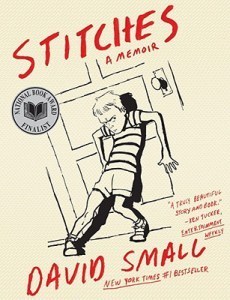
Chilling is pun-esque but also appropriate. Really enjoyed this one.
13. A Room of One's Own by Virginia Woolf
Dynamic, but for some reason I remember it less than I do Woolf's novels.
14. River Secrets (The Books of Bayern #3) by Shannon Hale
Probably my least favorite in the series, but it doesn't miss the mark by much.
15. The Braindead Megaphone by George Saunders
One essay made me laugh hysterically on the El. Others very moving.





Leave Debtor's Prison to the Dickens Characters
Over at her blog, Hazel Mitchell has probably one of the smartest posts I've seen about writing and finances. She says writers need to have a level of financial stability in order to write well.
"I am here to tell you that this career can be a money pit. And if all it is doing is sucking your resources and leaving you in crisis it's not a career and you may need to back off a bit."
Blunt? Maybe, but it's excellent advice. Even lots of really successful writers can't afford to just be writers. They can't travel to all the conferences or go to all the workshops. In fact, I wonder how most people afford these kinds of things anyway. Being at the SCBWI conference in New York was fantastic, and I'm planning to attend the New England version as well, but I don't think this is something I could do every year. It's not quite the same, but as Hazel mentions, having the internet is an extremely useful substitute. You can still connect with writers on a daily basis and get inspiration without paying for a hotel room.
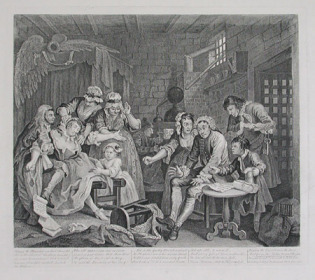
The Rake's Progress, Plate 7 by Hogarth
Hazel also mentions that writing is not like being a doctor. Doctors have to pay a lot for med school, but eventually they have a more secure financial living. (Although I'm sure lots of doctors could reply and tell me otherwise.) Even if you're extremely talented and hardworking, there's no guarantee that you'll ever make it as a financially viable writer. So why go into debt over something that most likely won't make you money?
I think it comes back to that job/career balance. It can be really tempting to say you're going to give up the day job and just write, and things will eventually come together. But I know I tend to stress about where money for heat/rent is coming from if I don't have a job and health benefits. It can be frustrating to lose major hours of your day to something that's not your chosen career, but in the end it might be better to go to work everyday and write whenever you can and not be crushed by debt.
I'd really recommend checking out Hazel's whole post. It's not gentle advice, but it's really worth hearing.





Posts About Books About Books
 It's Read Across America Day, so it feels very appropriate to see this post by Kate Goodman at GoodLife Eats, Etc., in which she talks about books about books. Book-ception!
She focuses on picture books, most of which I haven't read but sound fantastic. I definitely want to check out That Book Woman by Heather Henson.
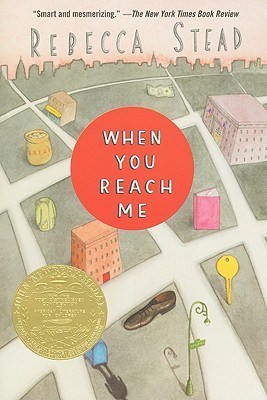
On the novel side, I'd suggest Inkheart by Cornelia Funke, The Book Thief by Markus Zusak, The Princess Bride by William Goldman, and When You Reach Me by Rebecca Stead. Any other ideas?