
Matador Network's Blog, page 2118
April 17, 2015
7 things only French people know

Photo: Nicolas CLAVIER
1. Hot morning beverages belong in bowls, not cups.
Ah, breakfast, king of meals. Contrary to popular belief, not all French people start the day off with a cigarette and a coffee, “bien serré s’il vous plait”. If you’re of the bon vivant variety, you probably like to feast on a generously buttered tartine (that butter’s salted if you’re Breton). And then comes the fun part: dunking it in your bowl of piping hot tea, coffee, or chocolaty Banania! Your American friends recoil in horror at the soggy state you’ve put your baguette in, but they have no idea what they’re missing out on. You’ll sweep the crumbs off the table when you’re finished because who needs a plate for bread anyway?
2. Your electrical bill is the most important document you own.
Ah, the justificatif de domicile. Proof of residence is perhaps the most sought-after document in your personal arsenal of administrative papers. If you want to get your driver’s license, renew your passport, open a savings account (yes, at the same bank where you’ve had a checking account for the last two years) or do anything else involving a visit to a guichet, you’ll need to prove where you live. No, the address on the back of your state-issued id card doesn’t cut it. You’ll need to print or dig out an electrical bill less than three months old. Okay, last month’s rent receipt will do if EDF still hasn’t updated your file after you notified them of your address change six months ago…

This story was produced through the travel journalism programs at MatadorU. Learn More
3. Milk does not have to be refrigerated.
Any trip to a low-ceilinged, halogen-lit Franprix includes a trip down the milk aisle. Shrink-wrapped six-packs of waxy paper cartons and blue- or red-capped opaque plastic bottles of entier and demi-écremé jostle for space on shelves neighboring the eau pétillante. You probably don’t drink a lot of milk (except for that dunking bowl of Banania in the morning) so a liter is just fine and it’ll fit in the half-size fridge that doubles as counter-space in your studio apartment. If you don’t get around to opening it in the next six months, no problem: ultra-high temperature pasteurization has killed everything living in it. For your foreign friends who poo-poo UHT milk, you point them to the fromagerie-laiterie where farm-fresh milk with a two day shelf-life is still sold in glass bottles.
4. The best you can ever be is “not bad.”
You just made your first quiche; you finally mastered watercolors; you won the Nobel Prize. Chances are, when you tell your friends of a recent accomplishment that has you bursting with pride, they’ll respond with a nonchalant, “C’est pas mal” and a slightly more interested eyebrow shrug. You probably followed your own announcement of achievement with a self-deprecating comment. Despite your best efforts, you’ll only ever be “not bad.” But that’s okay because we’re all just not bad. Remember back in school where teachers graded papers out of 20 and you were thrilled to get a 12? Even the head of the class only got 16s. Everyone knows, no one gets a 20, ever. Otherwise, there’d be no reason to go to class.
5. Saturday is a school day.
While other children were getting up at the crack of dawn to settle in with a bowl of Lucky Charms and watch Saturday morning cartoons, you were packing up your cartable for a morning at school. The debate whether a four-day school week or nine half days best suits young children’s natural rhythm has been around for about twenty years, but most French children have had to sacrifice their Saturday morning at some point. On the upside, this means you probably had Wednesday afternoon off to relax — in your dreams. You either spent mid-week cramming for your English and German tests or practicing your scales at the conservatory down the street. At least on Wednesdays you made it home from school before 6pm.
6. No one plans anything but vacation in May and August.
A fun pick-me-up in dreary February, when the only thing to look forward to is eating crêpes on Chandeleur, is opening the office calendar to May: if you’re lucky, Labor Day, V Day, Ascension and Pentecost all fall on a Monday or a Friday, turning the month into a series of long weekends, or les ponts. Between that and the tradition of taking 3 or 4 consecutive weeks of vacation in August to faire des randonnées in far-flung regions of the globe or chill on the in-laws’ patio in the Sables d’Olonne, these two months are basically a wash. Foreign colleagues dread the end of July, as they scramble to send anything urgent before your away message kicks in. You might connect now and then if your position warrants it, but vacation is as sacred as respecting meal times, and you’ll be taking full advantage so you can come back ready to work hard—until Toussaint rolls around at the end of October.
7. Magnesium is the ultimate cure-all.
Are you feeling a little down lately? Or perhaps a little sluggish? Maybe you’re having trouble shaking off an indefinable restlessness? Fear not, there is a remedy: magnesium. If you report any of these symptoms to your general practitioner, nine times out of ten you will leave with a prescription for a two-week magnesium “cure”, fortified with vitamin B6 if you’re lucky. Heck, if it’s winter, you’ll probably leave with one even if you don’t have any of these symptoms. To fill your prescription pronto, you know to follow the green glow of the pharmacy plus-sign that beckons on every street in France. 


9 signs you're from Austria
Photo: luca.sartoni
1. You’ve been mistaken for an Australian at least once in your life.
Typical conversation when meeting someone abroad:
“And…where are you from?”
“Austria.”
“Australia? Oh what a beautiful country!”
“No. Austria. In Europe. That one with the Alps.”
After your conversation partner finds out that you’re not from one of his favorite travel destinations, but from some undefined place in Europe, he gives you a puzzled look, stares down, gives you a big grin, and comes up with the most stereotypical representation of Austria he can think of —
“Oooh. That country from The Sound of Music!”
2. You’ve never seen The Sound of Music.
Travelers often want to impress you with their knowledge about The Sound of Music. Some are so thrilled that they start singing “The hills fill my heart with the sound of music…” to you. And when you think it can’t get worse, dancing moves come in. At that point you start to feel bad, because no matter how hard they try to convey their enthusiasm to you, that movie is totally unpopular in Austria and barely anyone has seen it.

More like this: 8 Spanish habits I lost when I moved to Austria
3. You thinks it’s totally normal to eat pancakes for dinner.
Sometimes your body requires more sweetness than it can gain from just having dessert after dinner. So why not fill a whole meal with sugar? Thoughts like that come so naturally to you that it’s totally normal for you to eat pancakes (palatschinken) with hot chocolate, milk rice, or one of the many kinds of dumplings for dinner…or, really, at anytime during the day.
4. You don’t know borders.
One of the benefits of living in a tiny country in the middle of Europe is that you’re free to go anywhere you want. Fancy going shopping in Hungary? Sure. A weekend trip to Venice? Less than 7 hours on the train and you’ll be there.
You’re so used to these short trips that you’re truly shocked when traveling to the US for the first time and find yourself driving for 9 hours in what still feels like exactly the same place.
5.During winters, you’re busy watching the Ski World Cup.
It’s October and one of your favorite seasons is about to start — ski season. From now until the end of March, you’re busy following your favorite skiing stars on TV. Slalom, Downhill, Super G — it doesn’t matter, you watch them all. When Marcel Hirscher or Anna Fenninger lose a race, you probably lose control and shout at your TV like a crazy hooligan, “No, no, nooooo!”
Sometimes your thirst for ski races gets so high that you have to head to Schladming or Kitzbühel just to watch the competitions live.
6.Your childhood dream was to be a ski jumper.
All over the globe, children dream of becoming princesses, doctors, or pilots when they grow up. You were different. You wanted to become a ski jumper. From an early age you built ski-jump hills for all your stuffed animals to jump down. You also risked your life several times when jumping down the stairs to land your perfect telemark. In the evenings, your parents let you watch ski jumping competitions, just for you to transform the whole back yard and living room into a paradise for ski jumping the next day.
7.You still talk about Cordoba 1978.
Despite its popularity, the Austrian soccer team is no comparison to the world elite. Nevertheless, you act like it is. Every soccer match, you hope that Austria will win a game and will finally be able to participate in the World Cup. But no. Not this time. Nostalgically, you think back to Cordoba 1978, the good times, when Austria won against Germany.
8. You know how to waltz.
Austria is one of the view countries where 18th-century dances have survived and are still practiced. Especially if you’re from Vienna, you enjoy the multiplicity of classical dances around the city — more than a hundred 18th-century dances take place in the capital every year. And as soon as the countdown to the New Year has reached 0, you grab a partner and start waltzing the night away.
More like this: 26 signs you were born and raised in Germany
9. You’re proud that you’re not German.
Even though there are only slight differences between Austrian and German culture, you are very keen on being different. Your petulant behavior towards Germans can be likened to how a younger sibling behaves toward their older brother or sister. Whether it´s sports, music, education, or any other random area, you want (you have) to be better than them. You mostly ignore the fact that Germany’s more than double the size of Austria and they, therefore, mostly win these silly competitions.
And even though you’re proud to be different from Germans, you copy almost everything from them. Whether it’s popular TV shows, music, clothes, or any other trend, you know in just a couple weeks it will have found its way to Austria. 
11 images of springtime in France
Spring looks different around the world, but many would argue France is the place to be to watch the world wake up from a long winter. These 11 outstanding images prove that France in the Springtime is seriously something to behold.
1. Cherry trees erupt in Ménerbes

S P R I N G by Thomas Roux on 500px
2. Poppies burst forth near Saint Avold

poppies by Daniel Guffanti on 500px
3. Cows in a hazy sunrise in Parc Naturel Regionel d l’Avesnois

Foggy bocage and spring cows by Guillaume Louÿs-Jupiter on 500px
4. Fields of Normandy in full bloom

Le joli mois de mai by Lucien Vatynan on 500px
5. The Senate of the French Republic in Paris

Spring will return by Jérémie Fricker on 500px
6. The hills come alive in Auvergne

Le méandre de Queuille by ©Stefoto63 on 500px
7. Firey sunsets in the French Alps

In flames by Matthieu Parmentier on 500px
8. Spring skiing in the Tinges Mountains

Backflip over Tignes by Andy Parant on 500px
9. SpringtimesSunset at Etretat

Spring magic by Nicolas Rottiers on 500px
10. Annecy Lake lights up

The Garden by Tristan Shu on 500px
11. A motorcyclist slices through the countryside

Spring Ride by frédéric DAVID on 500px

Egyptians risk their lives eating it
Every year on the day of the spring festival Shem el-Nessim, Egyptians are rushed to the hospital after eating the traditional delicacy of fermented (sometimes rotten) fish, or “fesikh.”
The ancient holiday marking the new season falls every year on the day after Coptic Easter and is celebrated by Christians and Muslims. Shem el-Nessim means “smelling the Zephyrs,” or smelling the breeze, in Arabic.
Fesikh — a grey mullet, dried in the sun and fermented in salt for up to a year — is considered an essential part of the celebration, even though it can sometimes be deadly.
The way the fish is prepared leaves those who partake at risk of botulism. Every year the newspapers are full of stories of poisonings, despite calls from health officials for citizens to forgo the dish.
This year, like every year, Egypt’s Health Ministry issued a warning that advised Egyptians against eating fesikh.
“The way of preparing fesikh can be unsafe due to the lack of salt in the fish, and some people use dead fish floating on the sea surface,” Hossam Abdel Ghaffar, spokesman for the Ministry of Health, said on Monday.
The most recent figures show that two people died from eating fesikh in 2010, and the same number in 2009. In 1991, 18 people were killed after eating it.
Although there have been no reports of deaths so far this year, six people have already been hospitalized.
Tips to avoid #foodpoisoning after #Fesikh #shamelnessim #شم_النسيم
#Egypt
Read more: http://t.co/yVONCWGJxN pic.twitter.com/nq5x88xpP7
— The Cairo Post (@TheCairoPost) April 13, 2015
But for some, the risk is worth it. A long line formed today outside a shop in Cairo belonging to Hajj Mohamed, who has been selling fesikh in his neighborhood for as long as anyone can remember.
“I throw those warnings out the window,” says Ezzat el Hennawi, a local schoolteacher. “I’ve bought my fesikh from him forever. He has a great health record. No one’s gotten sick.”
“Hajj Mohamed is famous, everybody buys from him,” says Mumtaza Zaki, 50. She is buying her fesikh on the day after the holiday because she didn’t have enough money on the day.
The delicacy costs 80 to 100 Egyptian pounds ($10-$13) for a kilogram, a lot of money for many Egyptians. She buys nearly $2 worth.
Public parks have been filled with families getting some fresh air and eating a concoction of fesikh, onion, lemon, lettuce and tahini — some people say the lemon and onion aid with digestion.
It’s not to everyone’s taste, however. This year on Twitter was awash with fesikh humor. One meme subbed the word fesikh into well-known movie titles (50 Shades of Fesikh, The Fesikh and the Furious). Others on Twitter bemoaned the fesikh smell in their houses and having to eat it with their families.
By Laura Dean, GlobalPost
This article is syndicated from GlobalPost

American habits that saved Tokyo
Photo: Sean McGrath
ONE OF THE MOST IMPORTANT TRAITS an expat can have is the ability to adapt, but sometimes what you need most is to just be yourself…
1. Being direct.
Just yesterday, I saw a junior high schooler trying to step off the train get thrown back on by the incoming rush of commuters. I couldn’t stand idly by and watch the poor kid get crushed AND miss his stop, so I “Hulked out” and cleared a path. His smile was worth the scared looks and torn shirt.
2. Independence.
“Oh? Everyone’s going to the shitty, fake British pub with over-priced, watery drinks?” Cool! I’d love to come, but I’m beat after such a long week! I think I’ll just grab some ramen and head in for the night. See you Monday!”
3. Unshakeable optimism.
“Wow! Everything is so convenient and organized! Everyone is so kind and helpful for such a big city!” *Gets shoved onto packed train by Train Pushers (oshiya)* “Wow! The trains here are so cozy! Just keep swimming, just keep swimming.”
4. Personal space.
As cozy as those trains are, when you get one of the precious, coveted seats, you keep it. Tokyo is a huge city, yet I find myself having to hunch over to do my dishes. Some of my friends have to duck into their own doorways. In those conditions, you have to carve out space however you can. (But don’t manspread on public transport, that’s rude even by American standards.)
5. Working hard.
Say what you will about America, Americans work HARD. I don’t need to stay for an extra 5 hours of unpaid overtime because I finished the task in the time allotted, dammit.
6. Being friendly.
Tokyo can overwhelm even the most seasoned traveler. A willingness to smile, offer a hand to lost tourists or even just practice a little English with the kind septuagenarian sitting next to you in a coffee shop goes along way toward preserving your sanity.
7. Sarcasm.
“Why, NO! I have no idea how to use chopsticks!” *Eats meal with chopsticks*
8. Clarifying ahead of time.
Some folks like to jump right into things and this city will gladly sweep you up physically, mentally, literally AND figuratively. Personally, I prefer a little chance to prep for most activities if I can. To quote a friend, “It’s not that I don’t want to go along for the ride, I just want to know where it’s going.”
9. Fearlessness.
“Yes, I absolutely would like 1 kilogram of your spiciest bowl of ramen, 5 beers and some chocolate takoyaki to go. Throw in some pickled plums while you’re at it…”
10. Hot sauce on everything.
I can’t get enough of most Japanese foods, but I’d be lying if I didn’t keep a small bottle of red-hot ambrosia in my bag for bland emergencies. If that doesn’t sell you, two words: Buffalo Karaage.
11. A love of all things fried.
Nothing beats American southern fried chicken, but Tokyo is still a Mecca for grease lovers. Japanese fried chicken, Korean fried chicken, fried eggs, fried pork, fried calamari, fried squid, fried oysters, breaded fried ham (much better than it sounds), fried vegetables, fried croquettes, fried cheese (soooo many kinds) fried tofu, fried spring rolls, tempura… “Do I want a sausage patty sandwiched between slices of lotus root, then battered and deep fried? Shut up and take my money!” 
April 16, 2015
Snowboarding tricks in Montreal
Follow Matador on Vimeo
Follow Matador on YouTube
SNOWBOARDER SEBASTIEN TOUTANT — or, as he calls himself, “Seb Toots” — has the two things you need to become a good snowboarder: fearlessness and a complete lack of pain buds. Every year, the 22-year-old Canadian Olympian puts together videos of himself doing insane tricks in the snowy urban landscape of Montreal.
This year’s video is spectacular as always — with jumps off of train tracks, grinds up the bar, and slides along walls rather than painfully into them — and Toots is cool enough to put a few of his failures into the video as well. 
American habits I lost in Thailand
Photo: ironypoisoning
1. Being stressed out all the time
When I’m behind Thai people who are moseying down the sidewalk while munching on a skewer of pineapple, I slow my roll too. I no longer glorify a frantic, fast-paced lifestyle, nor do I believe that being stressed is the only path to success.
I’m dedicated to my job, but I have time to get coffee and chat with my co-workers during the weekdays. I work hard because teaching is a demanding profession, but I don’t have to do the impossible to feel like I’m making a difference. A less stressful, laid-back work environment helps me to lead a more balanced life; I always have time to stop and smell the… street food.
2. Buying groceries and cooking my own food
I no longer burden my arms with with heavy bags of groceries, but I do occasionally pick up takeaway bags filled with hot tom yum and spicy som tum. Instead of an expensive, weekly shopping trip to the grocery store followed by manual labor in the kitchen, my daily routine involves seeking out cheap and delectable Thai meals from the nearby street stalls and restaurants. No muss, no fuss, no cleanup.
3. Wearing jeans
Although jeans are not just an American habit anymore, almost every American has a favorite, indispensable pair. Sadly, I’ve put my favorite low-cut, skinny, blue babies into storage because in Thailand’s tropical heat, they uncomfortably suction themselves to my sweaty body. I need a little more airflow than denim can provide: breezy skirts and breathable, light fabrics are the way to go.
4. Being completely independent
During my first few months in Thailand, it bothered me that servers wanted to pour my drinks. Self-sufficiency had been a huge source of my pride in America: I could drive myself around in my own car, do my own laundry, clean my own apartment, and I could definitely pour my own beer, thank you. However, I’ve learned to loosen the reins.
I let sweet, old Thai ladies grab my hand and sweep me across the street; they’re not trying to undermine my independence — they’re just being nice. I let servers pour my beer. I rely on taxis to get me to work every day. Even cleaning and laundry services are affordable and sought after, so I’ve had my apartment cleaned. Nevertheless, I have yet to relinquish my laundry duties.
5. Shopping in indoor malls and department stores
Thailand has high-end malls and sparkly, stocked department stores, but I don’t spend any more time withering away under their fluorescent lights than I need to. I’ve developed a love for shopping outdoors: on the streets and at festive outdoor markets. It’s enjoyable, and it can be done anywhere, anytime. On my thirty-minute walk home from work, I pass power cords, blow dryers, batteries, skirts and sandals, hair products, cheap pirated DVDs, and a solid selection of exotic fruit. Everything I need (and don’t need) is right outside my door.
6. Eating excessive amounts of dairy
I’m the girl that needed liberal amounts of cheese to be pleased. I ate it on my eggs, with my spaghetti, melted in my soup, and sprinkled on my salad. Cheese was a cherished staple of my diet, as it is for many Americans.
However, cheese is not found in Thailand, unless you want to pay big bucks for it at the grocery store. Thai cuisine is heavy on white rice, broth-based soups, coconut-based curries, and noodles — all of which are topped with meats, seafood, eggs, and veggies. I’ve traded cheese, milk, and sour cream for zesty Thai dishes, and my downfall is now fried chicken instead of ice cream. Surprisingly, my waistline has been pleased with these compromises.
7. Eating with my fork in my right hand
Along with a change in diet is a change in the way I eat my food. I’d always eaten with a fork in my right hand and a knife in the left. Now my fork waits in my left hand, and its backside pushes rice and other food pieces into the spoon held by my right hand. I don’t need a knife, and I no longer use the impractical tactic of mashing the last few pieces of rice onto the back of my fork… because we all do that.
8. Talking loudly
In the States, we can easily (and not always purposely) eavesdrop on each other’s phone conversations. You couldn’t hear a Thai person on their phone if your ear was an inch from their mouth. They practically whisper into their phone while covering their mouth with a cupped hand. I never realized how naturally loud I was, or how loud most Americans are, until I was around quiet, soft-spoken voices. I no longer yell into my phone or shout at my friends who are sitting next to me and have perfectly fine hearing, though sometimes we give each other friendly reminders to take our voices down a notch.
9. Leaving the house in sweatpants
In college, I didn’t give a second thought to wandering down the aisles of my local supermarket hungover in patterned flannel pants, hair in a scraggly bun, rings of makeup smattered on my face from the previous night. And would I get a second look? No way. Americans are notorious for doing their errands while looking super subpar.
I tried pulling this stunt in Thailand and never have I felt like such a hag. Thai people, especially females, are well manicured and put great care into their appearance even to do something as simple as shopping. Now I don’t get all dolled up to go to 7-Eleven, but I do at least look somewhat decent before leaving the apartment — aka no pajama pants.
10. Always voicing my honest opinion
Americans always like to have a say in the matter; we like to speak up about wrongdoings and voice our dissatisfaction, and yet those acts would disrupt to the peaceful way of life in Thailand. For the sake of keeping things smooth on the surface, I now keep my dissenting and unsolicited opinions to myself.
Did the server put sugar in my coffee when I asked her not to? Oops, I’ll drink it anyway. Is the change back from the taxi driver off by just a bit? I can live without the extra ten cents. In a culture where saving face is valued, I don’t want to make others (or myself) look bad by raising my voice or getting angry, even if mistakes have been made. I’ve learned to let the little stuff go in order to leave Thai feathers unruffled.
11. Wearing a seatbelt
Buckle up! Click it or ticket! When getting into a car, these were always the safety slogans that rang in my head. I panicked the first time I got into the back of a cab in Thailand — where’s the seatbelt? In the backseat of most cabs, it’s not even an option to buckle up, and I no longer instinctively reach behind me for the seatbelt. Besides, who needs a seatbelt when you can cling onto your motorbike taxi driver who is speeding between 2 lanes of traffic? Hold on for dear life, and enjoy the ride. 
Why Nevada is the best US state

Photo: Ian Norman (Lonely Speck)
Which is why the Nevada desert has been the only venue for the event since the ’80s. Sorry, San Francisco.
2. There are more hot springs here than pretty much anywhere.
In fact, there are over 300 of them in the state. A Las Vegas local favorite is Goldstrike Hot Springs, where numerous soaking pools are accessible along a 6.5-mile round-trip hike, parts of which require a rope-assisted boulder scramble.
3. Vegas’ pool clubs are a hotter, hipper, crazier scene.
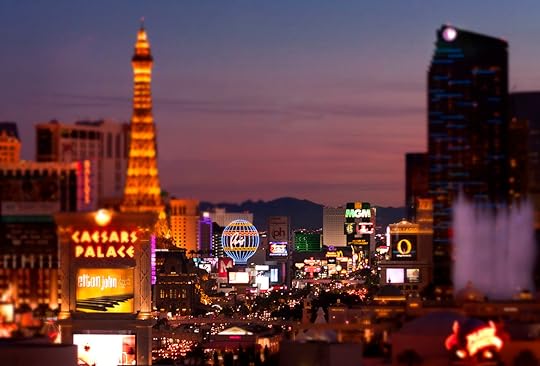
Photo: Joseph De Palma
Especially on the weekends. And only in Vegas can can you swim up to both the bar and blackjack tables.
4. Nevada’s largest and oldest state park looks like this:
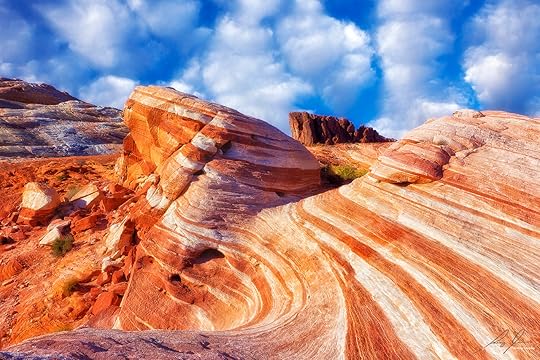
Photo: cjarv2010
Plus a visit means you get to tell everyone you spent your weekend in the “Valley of Fire.” What’s not to love?
5. And the national parks have the sickest names.
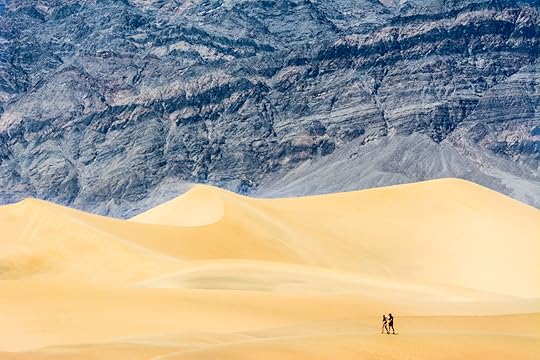
Photo: 白士 李
Enter Death Valley. “Hottest, driest, lowest,” brags the website for this national park straddling the border of Nevada and California. Highs average 116 degrees in July, putting something of a damper on exploring outside the air-conditioned confines of your vehicle. In contrast, winter is hiking season, with polished canyons, rolling sand dunes, and snowy peaks to traverse. Even the Badwater salt flats, nearly 200 miles of barren landscape that sits 282 feet below sea level, can be downright pleasant.
6. It’s 1 of 7 US states with no income tax.
7. It has some of the best rock climbing in the US.
The Aztec sandstone here is covered with a thin black desert varnish, which makes it stronger and gives it more incut edges than other major sandstone climbing spots in the country. And by the time Red Rock Canyon received its National Conservation Area designation in 1990, intrepid climbers had already been exploring and mapping out routes for 20 years. Talk about pioneering!
8. It’s home to North America’s largest alpine lake.
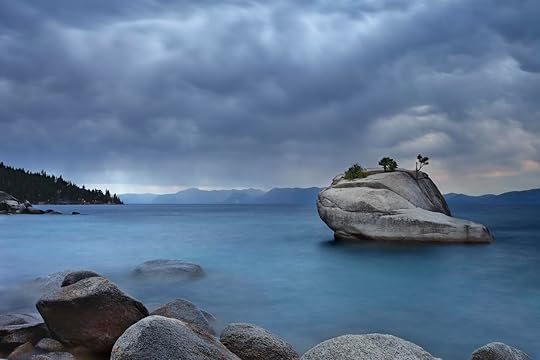
Photo: the_tahoe_guy
Stretching for 22 miles along the Nevada-California border, after the Great Lakes, Tahoe is actually the largest US lake by volume. It’s ringed by ski resorts, postcard mountain peaks, and resort and local communities.
9. Nevada has more mountain ranges than any other Lower 48 state.
In addition to its 314 named ranges, Nevada has at least 100 more that cut through the desert anonymously, with a total of 40 peaks that exceed 10,000 feet in elevation (the highest of which is Boundary Peak at 13,147).
If you’ve never done it, check out Nevada on Google Maps with the “Terrain” layer turned on. It’s a trip.
10. There’s an accidental man-made geyser in Washoe County.
You’ve seen pictures of it — it looks like something out of Super Mario World. Sadly, the geyser is located on private property and is therefore closed to the public. Less sad are the wealth of personal accounts and tutorials available online for seeing it anyways.
11. Area 51 is real.
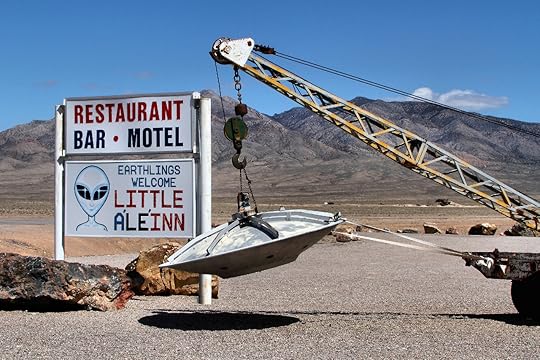
Photo: Airwolfhound
There’s even a ton of armed guards who’ll literally chase you away if you come too close.
12. Nevada’s gone foodie.
Aside from the Las Vegas Strip, where celebrity chefs throw it down nightly, Nevada’s culinary scene has been quietly experiencing a renaissance of farm-to-table, locally minded indie restaurants, festivals, and food trucks.
Case in point: Reno’s Midtown district. What was once a swath of abandoned storefronts is now a place I won’t hesitate to recommend the best poutine outside of Canada at Saint James Brasserie, a selection of over a hundred fancy cheeses at Wedge, or a bison burger with a local brew at Midtown Eats.
13. And there’s some seriously fine beer here, too.
Thanks to some recent changes in legislation, Nevada’s distilleries are also thriving. And here, they take drinking local seriously. To be considered “craft,” distillers need to produce tiny batches of booze — no more than 10,000 per year (to put that in perspective, big name-brand liquors sell close to 70,000 cases a day), with at least 90% of their ingredients sourced from within the state.
14. Wild mustangs and burros roam free.
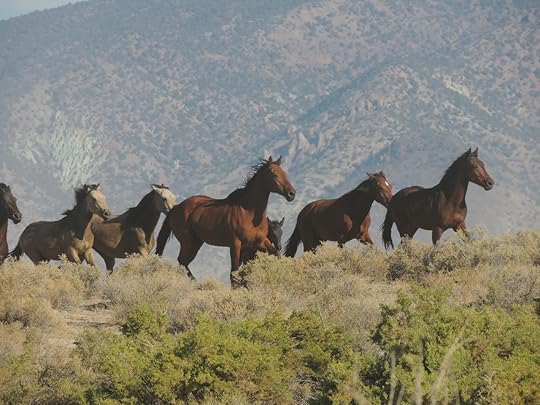
Photo: BLM Nevada
There are approximately 25,000 wild horses and burros in the state — that’s about half of the entire country’s wild horse population.
15. Most US gold comes from Nevada.
And it yields way more gold than California. In fact, Nevada produces 80% of all the gold mined in the country today, and actually ranks among the top national producers in the world. You can still find sizable nuggets in every county of the state with nothing more than a gold pan, a lucky stream or river, and disciplined, monk-like patience.
16. It’s the “birthplace” of Mark Twain.
In 1861, a young Samuel Clemens arrived in Virginia City to try his hand at prospecting. After spending a year attempting to find work in the mines, he eventually was hired and got his start as a feature writer for the Virginia City Territorial Enterprise. As his coverage of the bustling frontier mining town grew, Clemens adopted a pen name: Mark Twain.
17. You can see a “sandstorm frozen in time.”
Way out in the Gold Butte region of Nevada, rock formations have developed undisturbed for millions of years. Just look at Little Finland’s twisty sandstone landscapes!
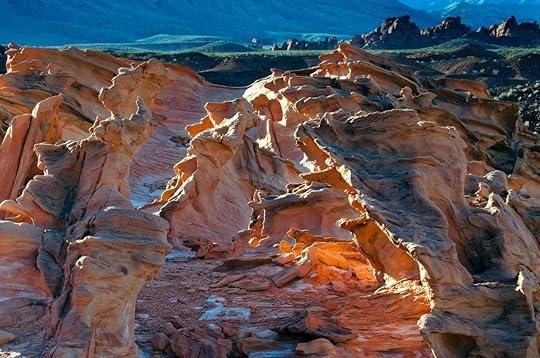
Photo: John Fowler
18. It has some of the darkest night skies anywhere in the US.
Once you escape the brightness of Las Vegas and Reno, Nevada’s dry air and vast skies equate to awesome star gazing opportunities, especially at Great Basin National Park aka that quintessential Bob Ross painting where you can see some mountains, some water, some snow, and happy little trees. It’s also home to over 320 species of wildlife, including 238 species of birds alone. All that, and the oldest living trees on Earth.
19. There are petroglyphs…everywhere.
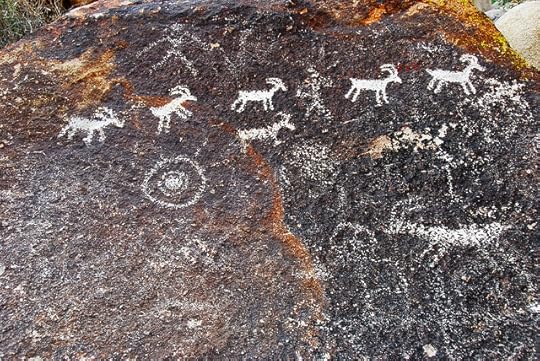
Nevada’s basically covered in ancient graffiti, some of which dates back as far as 10,500 to 14,800 years. And Winnemucca Lake, just northeast of Reno, is the site of the oldest known petroglyphs in North America.
20. The largest intact ichthyosaur skeleton in the US was found in Nevada.
21. There’s a town that hosts cowboy poetry gatherings.
For the last 31 years, thousands of spur-toting cowboys from all over the nation have descended on Elko’s Western Folklife Center for the National Cowboy Poetry Gathering, when cowboy culture and the Old West are celebrated through literature, music, and other arts.
22. And where else can you see camel and ostrich races in the US?
This September Virginia City will be hosting its 56th Annual International Camel & Ostrich Races, where jockeys vie for the fastest humpback (the camels reach speeds up to 40mph).
23. There are whole websites chronicling all of Nevada’s ghost towns.
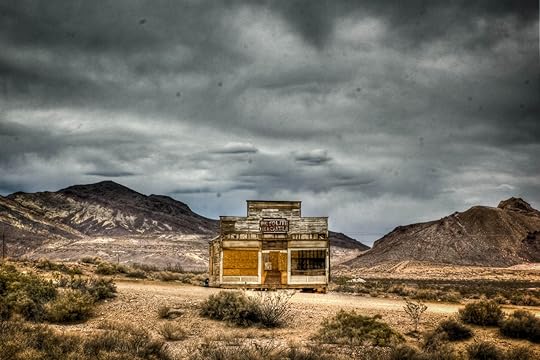
Photo: Graeme Morgan
24. Practically all the old alien movies were filmed here.
Well, all the movies of yesteryear, where a team of space explorers land on Martian terrain and hop over red and tan swirly boulders around cliffs and up canyons, were most likely filmed in Nevada. In fact, coupled with the heat, you’d swear you were on a planet closer to the sun, where life is scarce and getting jumped by a Tusken Raider is a semi-legitimate concern. Plus, have you ever seen a rattlesnake?Dune-quality.
25. It has really weird theme parks.
The next time I’m on the hunt for some dirty entertainment in Vegas, I know where I’ll be going. What looks deceptively like a barren construction site is actually Dig This, a heavy equipment sandbox full of obstacle courses and activities designed to challenge your hand-eye coordination.
26. And it’s sunny as hell.
Las Vegas sees sunshine for no less than 85% of annual daylight hours. Take that, everywhere else.
This article references the following sources from Matador:
20 truths about Nevada you never would have guessed, by Sarah Park
15 things every Californian should know about Nevada, by Abby Tegnelia
14 reasons to hit Las Vegas in winter (that have nothing to do with the Strip) by Sarah Feldberg
Travel guide to the coolest small towns in Nevada, by Kristen Bor
8 of the finest clothing-optional hot springs in Nevada (and how to find them) by Kristen Bor
14 reasons Nevada kicks ass (that have nothing to do with Las Vegas), by Alex Scola
7 things to do in Vegas besides gamble, by Sara Benson

Photographing your first safari
Last April I ventured to South Africa for a weeklong safari in Kruger National Park to photograph wildlife. I chose Kruger for its variety of wildlife and good reviews of wildlife sightings even though I was visiting during the tail end of the wet season. The park is over 100 years old and has seen a lot of logistical and infrastructure improvements over the last 10 years. It is best to fly into Johannesburg, South Africa, just a few hours from Kruger and rent camera gear from there to start your safari.
All photos by author.
1
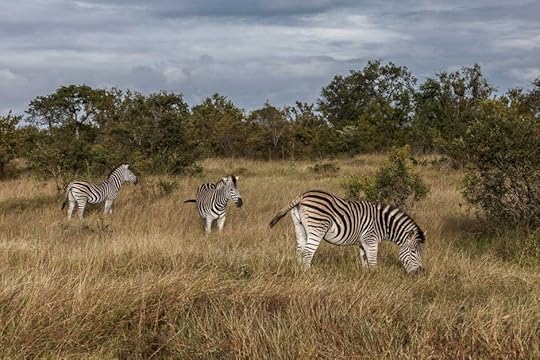
Research seasons and animal behavior.
There is a change in animal behavior, locations, and likelihood of seeing wildlife between the wet season and dry season. Which animals will be having babies or migrating? Are there specific animals or actions that you what to photograph? Most companies recommend going during the dry season, but prices may be less and most parks won’t be as crowded during the wet season.

2
Should you drive on your own or book with a safari company or both?
Renting a car and driving on your own allows you the freedom to photograph for however long you want, but there are perks to going with a company. With a group of people you have more eyes for finding animals and most of the guides work together to find unique wildlife. Other guides told us the location of this leopard. If not for them we wouldn’t have found it.
3
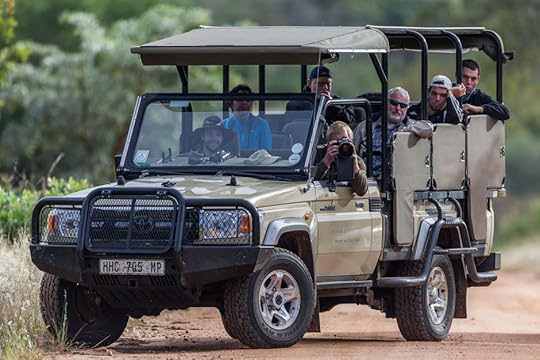
Research companies and the type of accommodation you’ll be in.
You don’t have to book a luxury safari to have a great time. Many companies offer budget safaris that still include all food and drink, but you just end up in a tent cabin for hundreds or even thousands less. Compare how many game drives and what food and drinks are included.
This story was produced through the travel journalism programs at MatadorU. Learn More

4
Rent a long lens.
You don’t need to buy a $10,000 lens for a weeklong trip. Instead rent one for a couple of hundred dollars. Check local rental agencies in the country you are visiting. That is easier that toting a huge lens from home. I recommend a 600mm, and the lens case for it is bigger than most carry-on limits allow anyway.
5
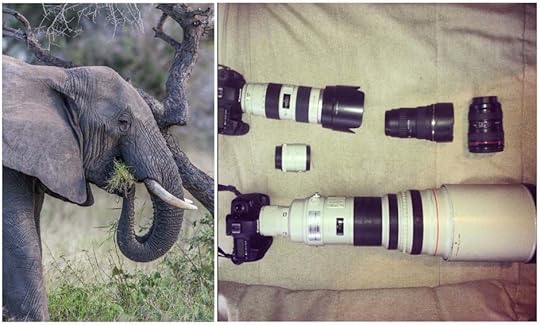
Rent a 2nd body.
It isn’t practical to change lenses in a dusty safari vehicle and you’ll waste valuable seconds messing with changing lenses if you don’t have a second body.
6
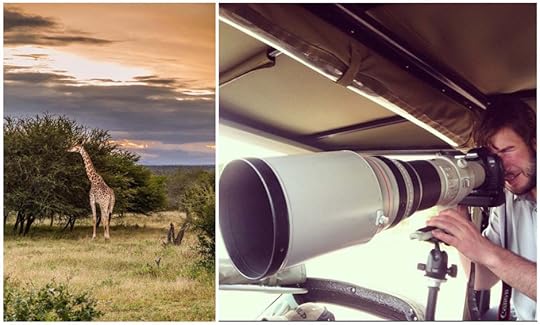
How will you stabilize your camera?
Tripod, monopod, or beanbag? Beanbags are best because they sit on the side of the vehicle and allow plenty of stability, but easy movement to recompose. If there aren’t many people in the truck you might have room to set up a tripod, but check and see if your tripod is rated to hold a heavy, super-telephoto lens.
7
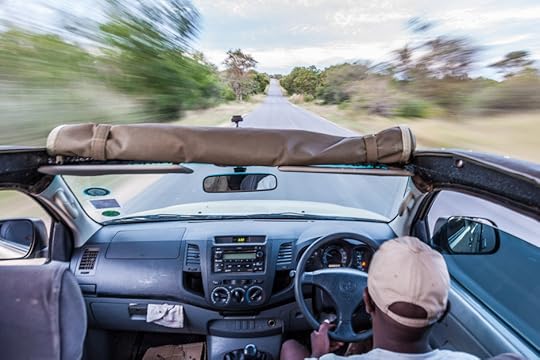
Make friends with the safari guides.
These guys are the key to finding wildlife and getting the vehicle in good position for photos. They hold a wealth of knowledge about the plants and wildlife in the area and love sharing their environment with visitors.

8
Don’t be afraid to ask your guide to stop.
Each visitor holds a big part of the responsibility of how many animals are seen. If you see something cool speak up to the guide. And even though you’ll see thousands of impala each day, don’t be embarrassed if you want to stop and watch these animals for a bit.

9
More importantly make friends with your fellow safari goers.
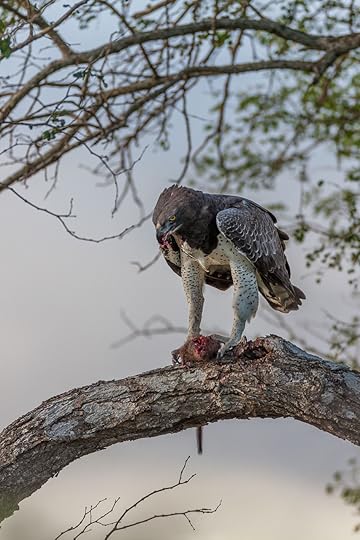
You’ll be taking up a lot of space with that giant lens of yours and multiple camera bodies, etc. so be considerate of other’s space in the vehicle. As you build a good rep with your fellow visitors they will be excited about helping you get great shots. These eagles were barely visible from my seat in the truck so everyone volunteered to lay down in their seats as I sprawled across the tops of the seats with a 600mm lens. I favored the front row of seats in the back of the safari truck for the best photo opportunities.
Intermission
187
The 20 coolest towns in the US
by Matador Team
5
A taxonomy of youth culture in Cape Town
by Mia Arderne
10
20 signs you were born and raised in Lithuania
by Milda Ratkelyte

10
Take time to walk around your camp.
Monkeys and other small animals are accustomed to humans inside the fenced camps. Use some of the time in between game drives to explore the local critters and surroundings.
11
Go on every drive you can.
Each day and time of day is different. You never know what you might see. On the one game drive that I skipped I missed a mother cheetah kill an impala for her two cubs. On that note, go for as many days as you can afford. It is exhausting, but worth it.

12
Take a night drive.
These are usually only offered by the park service, but most safari companies will sign you up for them. Some animals only hunt at night so this is your only chance to see them.
13
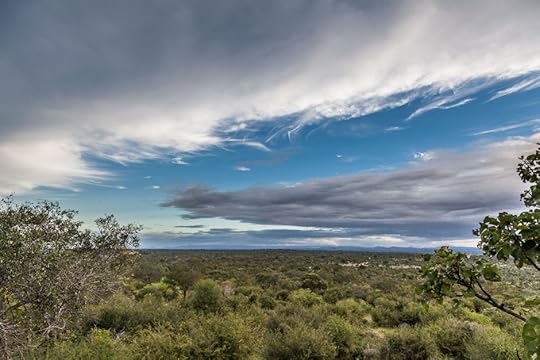
Don’t forget to capture the landscape.
While the wildlife is the big draw to go on an African safari, don’t forget that you are also in a new and exciting landscape. Put that wider-angle lens on your 2nd camera body and open up to what else is around you.
14
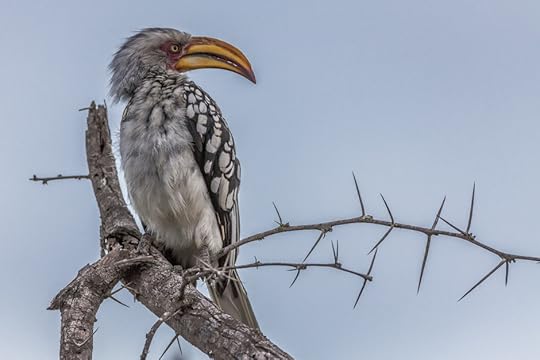
It isn’t all about the mega-fauna.
Africa is full of unique birds, rodents and insects. Enjoy the smaller critters around the parks.

15
What is your photo backup plan?
Do you have enough memory cards? You’ll probably shoot thousands of photos each day. Make a plan and get in the habit of uploading these photos to your computer and/or hard drive as soon as you get back to camp. Will you have enough battery power if the power goes out?

Is this the future of air travel?

Photo: gravitat-OFF
IF YOU THOUGHT THAT AIRPLANES were uncomfortable, wait to see what Airbus has in store for you.
The 2015 Aircraft Interiors Expo that took place this week in Hamburg, Germany revealed Airbus’s plan to make passengers even more miserable. The new seat configuration in the A380’s economy class (of course, where else?) consists of rows of 11 seats, i.e. instead of a 3-4-3 layout, passengers will have to deal with a 3-5-3 layout as soon as 2017.

Airbus’s official picture of the new seat configuration. Photo: Australian Business traveller
This hellish “innovation” will bring up the passenger count from 525 to 544. Airbus explained to Quartz that “more crammed seating offers airlines and their economy customers more choice, especially those in China and southeast Asia who are willing to sacrifice some comfort for cheaper seats”.
Here is a better view of what it will actually be like to sit in an A380’s budget economy class. Doesn’t it make you want to spend hours in the middle seat? 
Photo: John Walton

Photo: John Walton

Matador Network's Blog

- Matador Network's profile
- 6 followers

