
Matador Network's Blog, page 2114
May 4, 2015
6 food myths about Boston that need to die

Photo: Sameliaz8
All clam chowders are the same.
Hold the phone right there. Sure, the basic ingredients of clams, butter, cream and potatoes are standard, but this does not mean all chowders are created equal. Bostonians swear by certain spots that make the greatest soups around with real seafood locally caught, fresh dairy thickeners, and maybe bacon if you’re feeling fancy. A few herbs, scallions and cracked pepper doesn’t hurt either.
You can get a decent bowl in Quincy Market at Ned Devine’s, but it’s better to stick close to the water for chowder perfection. Legal Seafood makes a mean, chowder you can stand your spoon up in, and you can find fancy house made oyster crackers atop your soup in B & G Oysters. Or, forget the crackers all together and carbo-load with a chowder served in a bread bowl – there’s several places to get it along Boylston Street. If you order chowder and it comes to you with a red broth, send it back. That’s a Manhattan chowder and it’s blasphemous.
Everyone loves ‘Boston Baked Beans’.
Many restaurants will feature baked bean sides on the menu, but that’s mostly just to appease tourists. If a local is out looking for grub, they will rarely order a crock of beans as a side, and might just pick at it if it comes with their meal. There are a few places that will do bakes beans correctly, with molasses and salt pork, which can be much better than the canned version if you want to try the dish.
Candy-coated peanuts are also a classic candy called ‘Boston Baked Beans’ that is found in sweet shops locally. But beans on toast is for the Brits and is not found in Boston. And while we’re at it, nobody calls Boston “Beantown,” so get that out of your system before you arrive.
Mike’s Pastry has the best cannoli.
If you Google Little Italy in Boston for authentic pastries, Mike’s is always the first to pop up. Due to its popularity, there’s almost always a line around the corner and the cannoli prices are much higher than at other bakeries. Not to mention, here’s a secret – while the cannoli are good, Mike’s makes them offsite and freezes them to keep up with demand. If you want the real thing, go across the street to Modern Pastry, they often fill their cannoli right in front of you while you wait.
After drinking all night in Boston, you can also get a decent cannoli or Italian cookie at Bova’s, which is open super late, especially for Boston standards. Or before you get rowdy for the evening, you can sip genuine Italian espresso along with your cannoli, ricotta pie or biscotti at Café Vittoria. They also have booze to spike your coffee with and gelato to finish.
All pasta in the North End is fresh.
There are roughly 427 Italian restaurants in the North End. Roughly. But not all of these cozy eateries offer Italian cuisine on par with our European neighbors. Peruse the menu for terms like ‘homemade pasta’ or simply ask the server outright, as there are many posers lurking about. It often costs a couple extra dollars to get the real stuff, but it is well worth it. You can also try the local delis for freshly made pastas to take home. These shops are also perfect spots to snag a real Italian sub. Also, it’s a sub, not a hoagie or grinder. Order one of those and they will have no idea what you’re talking about.
You have to eat oysters raw.
Don’t avoid oyster slurping in Boston just because you’re not a fan of the slimy stuff. Plenty of spots offer just-caught shellfish prepared in a variety of ways. Arguably Neptune Oyster has the best in the North End that come fried marinated or smoked. Or head to South Boston’s new Loco Taqueria and Oyster Bar for perfectly grilled, local oysters. Those will be a great introduction to start working on oyster shooters like a pro.
There’s only Chinese food in Chinatown.
As the third largest Chinatown in the country, Boston’s best Asian food from Japan, Vietnam, Taiwan, Korea and beyond reside there. Skip the greasy takeout variety and go for the authentic dishes you have to order while rubbing elbows with the residents on Beach Street. Bostonians will order cold beers and cheap ‘pho’, or Vietnamese noodle soup to cure any hangover. The Peking duck that has to be called to prepare ahead of time is well worth the wait and an easy way to impress a date with your exotic taste. Dim sum carts pushed though giant restaurants filled with steaming dumplings is the norm, as well as bubble tea, mooncakes and pad thai that make for a quick, wallet-friendly snack. Locals know nothing goes better with a large iced coffee from Dunkin Donuts than a pile of fresh ramen on your lunch break. 


How to become an Argentine in 20 easy steps

Photo: martinak15
1. Show up anywhere you go, from parties to work meetings, with a huge smile. Then start kissing everyone on the cheek.
2. Love or hate la Presidenta. No middle ground here.
3. Drive as if pedestrians are immortal beings that can’t never die from your actions.
4. Don’t be afraid to polemize about everything, from politics to Bailando por un sueño.
5. End those heated debates with a firm “¡Chupate esa mandarina!” (“Suck that tangerine!”) or a “¡Sos un grasa!” (You are pure grease!”).
6. Love Fernet-Cola.

More like this: 11 reasons you should never travel to Argentina
7. Have big emotions and show them! Get involved in a big discussion with the taxi driver, laugh and cry like nobody is watching you, and make out with your girlfriend at la plaza at noon.
8. Never use the formal “Usted”, unless you want to be asked if you consider the other person to be as old as a dinosaur.
9. Don’t you dare to fart in public. Argentines consider this the most disgusting, improper thing in the world and no amounts of “Excuse me” could fix the inflicted wound.
10. But you do have to learn the hundred meanings of the word pedo.
11. Consider your friends to be family, don’t be afraid of telling them the truth, even if it hurts; hug them and kiss them a lot and simply be the best friend in the world.
12. Cultivate the art of charla, or conversation. El don de la conversación is a true gift Argentines gave to this world. When a good conversation has started the world stops and the mate brings the rest.
13. Share el mate and don’t ever worry about germs.
14. Eat huge amounts of pizza, pasta, and panqueques de dulce de leche and still look fabulous.
More like this: You know you're in Buenos Aires when...
15. Don’t make an effort to be politically correct. A fat person can be called Gordito; a redhaired person Colo, and a woman with big bust Tetas.
16. Be scared to death of mixing wine and watermelon.
17. Learn early on that an Argentine “Si no la gana la empata” (If he doesn’t win he at least ties…).
18. Work to live and don’t live to work.
19. Play hard, love hard. You’ll have time to sleep once you die.
20. Be a natural charmer and act as if you don’t know it. Some people are simply born under a lucky star, you know… 
15 US habits I lost in Barcelona

Photo: Toshikio Sakurai
1. Spending evenings with Netflix and snacks.
On Sundays, my American friends and I would find ourselves hungry for entertainment, and yet too lazy to get up and do anything. The solution was always the same — order a pizza, put House of Cards on, and perhaps throw some cheap wine in the mix. Well, guess what – Spain doesn’t have Netflix! Instead of spending my time with Frank Underwood, I ended up played ping pong at the Ciutadella Park, known for the soft guitar music and the laughter of happy people in the evenings.
2. Comfort food.
America loves its comfort food. Tough day at work? Grab a Ben & Jerry’s. Your boyfriend dumped you? Pepperoni pizza to the rescue! In Barcelona, you eat when you’re hungry and you talk when you’re upset. The locals love their churros and bocadillos, but when an emotional crisis ensues, they turn to a friend, other than Papa John, to talk it out with.
3. Shopping online.
Like many other US girls, I loved to shop online. The ease of browsing through hundreds of stores on the web while lounging around in pajamas couldn’t be beat. In Barcelona, on the other hand, shopping is a social, wholesome experience. I enjoyed spending hours with my roommate at the Glories Center, a cute, open-air mall with a variety of cafes, restaurants, an Imax theater, and the occasional street performer.
4. Using a credit card.
My use of credit cards declined to a bare minimum when I found out that the US “plastic fantastic” culture is not a thing in Barcelona. Not only is it easier and quicker to pay in cash, but the majority of the hole-in-the-wall tapas places and boutiques don’t take MasterCard. Besides, euro coins make a pretty cool collection.
5. Paying for things.
There’s no free lunch, right? Think again. One of the first words I learned in Barcelona was “gratis”, which translates to “free.” Follow this magic word for special promotions and you’ll see the Picasso Museum open its doors for you on Sunday afternoon, an invitation to a mini booze cruise down at the Barceloneta, and a few extra cans of Damm Lemon at your local grocery store.
6. Getting the recommended amount of sleep.
“Eight hours a night is a must,” my mom always says, but then again, she’s never lived in Barcelona. Instead of catching Zs, I spent that time having late-night picnics on the beach with friends, clubbing at Sala Razzmatazz until dawn, sampling tapas at Euskal Etxea and hiking up the million steps to the Montjuïc Castle. If your energy levels are really depleted, you can always ask for a day off to go sleep on the beach. Your boss will understand.
7. Being intimidated by my boss.
Though my American boss was friendly, I always felt like I was being evaluated in his presence. This was the mindset I had going into my receptionist job in Barcelona. Surprisingly, I was invited to have lunch with the entire staff every day, where I sat across from the hotel’s general manager who would tell me about his trips to Girona and gave me recommendations on the best bars in town.
8. Planning.
A meticulous planner and busy American worker, I used to have a schedule for each day, down to the minute. In Barcelona, time passed more slowly, accommodating both my work duties and leisure needs. I no longer made checklists for the weekend. Instead, I woke up and spontaneously determined my game plan, which included trips to Figueras, visits to the hair salon and even a tattoo, done whenever I felt bold.
9. Working out at a gym.
Exercising in the US used to be a chore for me. The dreadful image of running on the treadmill was the first thing on my mind upon waking up, along with the desperation for coffee. I was pleasantly surprised to see so many active people in Barcelona who ran, biked, and rollerbladed. Every morning I laced up my Nike’s and jogged along the Nova Icaria beach, breathing the Mediterranean air and catching the sun’s rays. Another perk was the xiringuitos, tiny cafés lining the beach which serve cold orange juice to quench the post-run thirst.
10. Dressing casually for clubbing.
America is known for its accepting attitude towards people of all cultures, shapes, sizes, and fashion sense. I could easily go to a club in NYC wearing flats and only eyeliner on my face. Clubs in Barcelona have actual rules and dress codes listed on their websites, telling you what the no-nos are. Some examples include hair ties, flats, and pants for the ladies, and t-shirts, sneakers, and worn-out jeans for the gentlemen.
11. Leaving items unattended.
It took one stolen iPhone to teach me to keep an eye on my things. In the US, it may be okay to put your phone down at the bar for a moment, but unfortunately pickpockets are a part of the Barcelona experience, and yes, they do manage to get into Pacha on its grand opening night and steal your purse. Enjoy your gadgets, but definitely keep in mind that others want to enjoy them too.
12. Relying on my phone for directions.
God bless America, the land of free wifi! In Barcelona, this isn’t always the case. For the majority of time out of work, I either had no wifi, or it was very slow. I could no longer rely on Google maps to tell me how to get to Plaça de Catalunya, so I resorted to using an actual map (yes, they still make those) and asking the friendly locals for directions. It worked just as well, getting me to actually pay attention to the beautiful surroundings.
13. Being shy of strangers.
Any American mom would tell her five year old not to talk to strangers. She’s right, but not when the kid grows up to be twenty and still feels uneasy about striking a conversation. The vibrant tourism industry in Catalonia, as well as the laid-back nature of the locals, makes Barcelona the perfect place to form friendships with strangers. So don’t be shy, but still — listen to your mom and don’t get into a stranger’s car even if they offer you candy.
14. Loathing the subway.
Subway trains, yuck! The US still battles with eliminating trash from the underground transportation system. Barcelona amazed me with the efficiency of its metro system, where the majority of trains were new and very clean, always punctual and absolutely pest-free. I’ve gone as far as to take short siestas and eat lunch on the metro.
15. Holding my emotions back.
Americans, as any other human nation, have a lot of feelings, but we don’t often show them. Instead, we eat them, buy them shoes, or take them to therapy. Catalans, in contrast, are very passionate and not the least bit embarrassed about it. Known to always walk around with a polite smile on my face, I was shocked when I found myself crying inconsolably on the metro after saying goodbye to a friend. Luckily, a kind stranger came over, playing the accordion and trying to make me laugh. What a nice change from the usual shrink session! 
3 most dangerous habits: Budapest
Photo: I Am Ming
1. Living in a not-so-good district and not giving a shit about walking home alone at night
The houses are badly maintained, the plaster is crumbling, youth gangs are gathering in front of the supermarket to spread terror after they ate their Turo Rudi and the fashion choices of many inhabitants lead you to think pimp or prostitute. Neighbors yell death threats at each other and the old men you pass by ooze beer at all hours of the day.
Welcome to Budapest’s infamous 8th district, my home for almost two years.
While the smell of urine on the streets (there are just too darn many dogs in this city) and the sight of homeless people even in the better districts of Budapest are not a rare thing, it is not a characteristic of a district’s quality. But there is one district that many consider the “slum” of Budapest’s center: Józsefváros, the 8th district, one of the poorest districts in the center, with supposedly high unemployment and crime rate.
Nevertheless I chose this district as my home. It was the only one where I could afford a two-room flat, which I desperately needed to keep the peace between me and my cat.
And all I have ever experienced in this area are friendly people who put more effort in striking up a morning conversation in the elevator, as limited as their English might have been, than the ones when I was living in one of the “posh” districts. I never had any problems or felt unsafe while walking home alone in the middle of the night. Nobody ever harassed me on the street.
Maybe they just thought that I am one of them, poor and unemployed, with no perspective for a better life. And there is no point in robbing someone who has nothing in the first place. Call me naïve, but I’d rather like to think that we should all reconsider our prejudices about the less privileged fellow citizens in our cities.
So if I’ll be ever in need of a home in Budapest, I’ll opt again for the 8th district without any hesitation.
2. Starting political discussions with ultra-right-wing nationalists
I had listened to explanations why Hungary should immediately be given back all the territories it had lost 100 years ago, why immigration needs to be fought by all available means and that all gays will go to hell when I decided to step in.
“But you said your father is Serbian, your mother is half Romanian and your grandparents have also German, Czech, and Italian blood. How can you be a Hungarian nationalist, when you are not even Hungarian?”
He looked at me, confused, as he had never considered this before, searching for an explanation in his beer-numbed mind.
“I am a very tolerant person,” he suddenly tried to change the subject. “I am Catholic, and I have no problems with Protestants at all.”
“Oh, there is a difference? I thought that’s just all the same.”
I looked at him with a bright, innocent smile and an undeniable hint of mockery in my eyes.
The whole table shook when he crushed his beer down on it.
“No, it is not!”
“It is for me. Anyway, accepting other religions that are only marginally different to your own is not a sign of tolerance.”
Still staring at me, he gripped onto the bottle so tight till his knuckles went white. His whole body was dangerously tense.
He looked around and finally relaxed, remembering that we were in a busy bar in Budapest’s famous party district, surrounded by the usual Friday-evening crowd — luckily not the right place for a hulk to be aggressive toward a woman two heads smaller than him.
I gave him a last smile, bid my farewell and quickly grabbed my friend, explaining to her that we had to leave because I hadn’t been able to hold my tongue. Again.
3. Ignoring the smell of leaking gas
I don’t like gas heaters. I don’t trust them. In my native Germany, gas heaters are not used as frequently as in Budapest; at least not the kind of gas heating that’s been outdated since the Communist era over 20 years ago. It’s the type of heating where a slight smell of gas lingers around constantly; they are all over Budapest.
Once I called the handyman, since the flame in the living room heating kept dying. Ny ‘handyman’ I mean the old Hungarian living two blocks away, with the smell of pálinka in his breath and more than 70 years’ experience in fixing things.
Waiting in the kitchen, there was nothing but silence on the other side of the door, interrupted only by an occasional mumbled “Baszd meg.” Not a good sign at all.
When the door finally opened again, he wildly gestured at me to not turn on the heater. With my very limited Hungarian I understood after a while that he needed a spare part and would come back in a few days. Once again he gestured not to turn on the heater under any circumstances, because otherwise: “Boooom!” Walking out of the door, laughing, he left me alone with the choice to move out immediately or just to accept that living in Budapest carries some risks.
I did not move out. And the heater did not go “Boooom!” Otherwise, I could not tell you this story. I still don’t like gas heaters, but since I’ve slept in one apartment with a ticking time bomb, they don’t scare me any more. 
7 of the raddest Idaho adventures

Photo: Fly Sun Valley
There’s a famous saying in the ski community of Sun Valley that goes, “The higher you get, the higher you get.” Rising 3,200 feet above the town of Ketchum, Bald Mountain is an ideal launchpad for paragliders looking to grab their favorite high. Two detachable quad chairlifts will rip you to the top, and then…feet dangling, wind ripping across your face, you’ll get some of the most scenic views of Sun Valley when you’re paragliding off Baldy’s crown.
Beyond a few high-knee steps at takeoff, the crew at Fly Sun Valley will do all the work for you. Their keen eye on the wind and dialed-in maneuvering skills will let you simply sit back and enjoy the trip. Catch the right summer thermals and these guys can take you on one hell of a ride.
2. Floating the Middle Fork of the Salmon
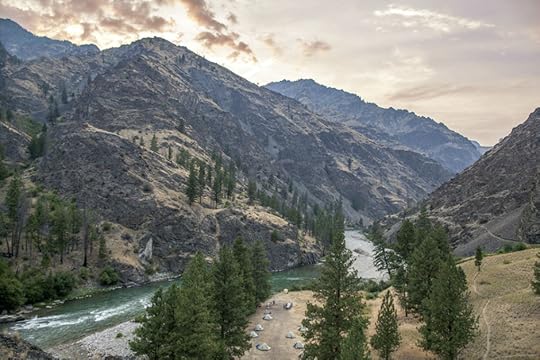
Photo: Solitude River Trips
The Middle Fork of the Salmon River has everything you’d expect from an epic whitewater rafting experience. On a typical trip of 5-7 days down the River of No Return, you’ll encounter meaty rapids, incredible scenery, wildlife, hot springs, petroglyphs, and waterfalls.
Lewis and Clark weren’t huge fans of this wild river, but there are countless raft guides who’ll claim this stretch as one of their top floats in the contingent 48. Its uninterrupted nature is what makes it so special — running 104 miles through the Salmon River Mountains in the Frank Church Wilderness, the Middle Fork is as remote a spot as you can get outside of Alaska.
If you know someone with a private trip permit, butter them up accordingly for your shot at the trip of a lifetime. But don’t worry if your ticket doesn’t get drawn, as the folks at Solitude or Mackay Wilderness River Trips can style you out with plush glamping accommodations and gourmet meals.
3. BASE jumping off Perrine Bridge
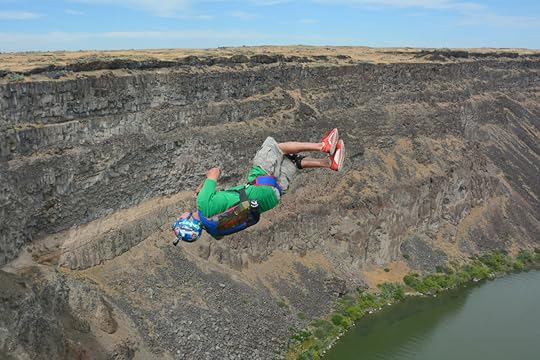
Photo: Luanne Horting for Tandem BASE
Say your friend jumps off a bridge…would you follow? The Perrine Bridge is one structure where you might find yourself buckling under peer pressure and leaping in pursuit. World-renowned BASE jumpers travel from near and far to legally freefall from this truss arch bridge 486 feet off the deck of the Snake River. This is one split-second experience that will have your adrenaline surging long after the ride is done.
Access to the bridge is hard to miss. You’ll pass over it on your way into the town of Twin Falls, located just off Idaho’s major artery, I-84. If it’s your first go, check with the folks at Tandem BASE, who’ll help you take that first step.
4. Mountaineering in the Sawtooths
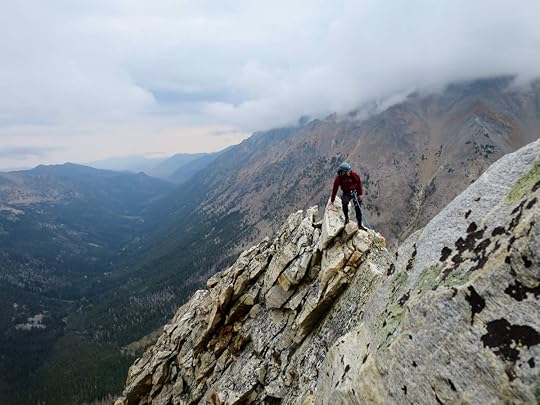
Photo: Sawtooth Mountain Guides
The Sawtooths are by no means the tallest mountains around, but their summits still hold a particular lure with tons of mountaineering opportunities. From cruxy climbs and rappels to grippy boulders and smooth moran fields, this range delivers. Get to the top of one of the Tooth’s peaks and be rewarded with views of the Stanley Basin, high mountain lakes, and quite possibly an encounter with a curious mountain goat.
The tiny town of Stanley is a sweet basecamp for launching your Sawtooth adventures, with close proximity to all the major trailheads and one of the best breakfasts around at Stanley Baking Co. Sawtooth Mountain Guides offers a slew of classes and trips to dial you in, if you need them.
5. Jet boating through Hells Canyon
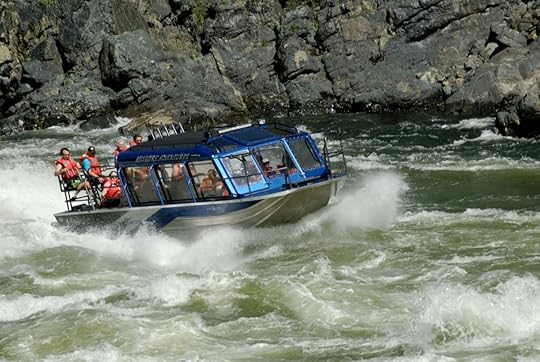
Photo: KillgoreAdventures
Located in the deepest river gorge in North America, the Hells Canyon stretch of the Snake River is home to a steady, heady flow of mesmerizing whitewater along the Idaho-Oregon border. The area’s wildlife is equally epic — this is bald eagle, bighorn sheep, and black bear country.
While there are countless ways to see the canyon, hopping aboard one of Killgore’s aluminum jet boats is arguably your best, most adrenaline-filled option. Propelled by three power-hungry engines, these vessels are eager to cut through the mightiest class IV/V rapids.
6. Fire lookout camping
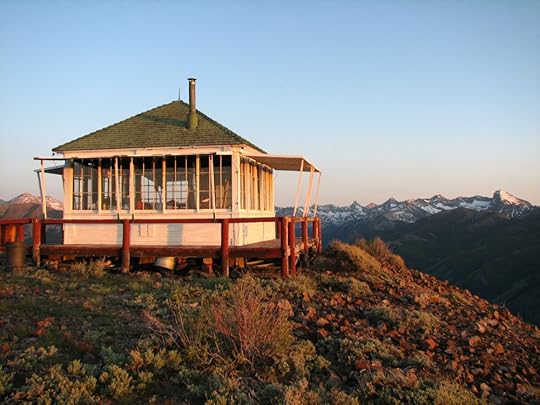
Basin Butte, ~10 miles north of Stanley, looks out over the Sawtooth and Salmon River Mountains. Get here via a high-clearance 4WD.
Photo: Chuck Arpp for US Forest Service
Grab the fam, load up the 4WD, and set course for what must be Smokey the Bear’s favorite remote hangouts. The various fire lookouts dotting Idaho’s far reaches provide a basic yet family-friendly camping getaway.
The ideal day begins with sunrise viewed from the comfort of your cozy bed, followed by a hearty breakfast cooked over a wood-fired stove. Make sure the kids are geared for a day of adventuring: wildflower and wildlife scavenger hunts along the various hiking trails. Afternoon naps are encouraged, and evening stargazing is your accompaniment to a fire-pit dinner and s’mores.
7. Mountain biking the hot springs
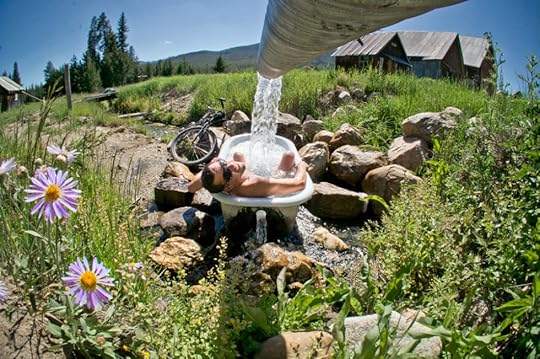
Photo: Casey Greene
If you’re a trail rider, you probably appreciate cracking into a frosty craft brew post ride. Throw in the ability to peel that gritty, greasy chamois off and slip into a backwoods hot springs with said frosty beverage, and you get the Idaho Hot Springs Mountain Bike Route, which mixes some of the most scenic bike-friendly terrain in the state with 40 natural pools and 11 manmade spa-style setups.
Views along the ride take the mind into Bob Ross territory, deferring thoughts of the pain cave. When inertia slows to a stall and the aches kick in, there’s always geothermal reprieve close at hand. And those warm beers you’ve lugged along all day will chill nicely in the nearby river. Load up the panniers and hit the trails.

This post is proudly produced in partnership with our friends at Visit Idaho.
Make every summer count. Check out 18 Summers to plan your next Idaho adventure.

May 3, 2015
18 Things I Learned From My Mexican

Photo: Josh Loyd
1. No sacar los trapitos en el sol.
The number one thing every child of a Mexican mother should never do is publicize the family’s business. So, this article is probably the last thing my mother wants for Mother’s Day. Oops. Sorry, Mami.
2. In fact, your biggest fear in life must always be becoming a sinvergüenza.
A Mexican-American friend of mine used to joke “Mexicans spend their whole lives fearing embarrassment.” A Mexican mother’s “Eres una sin vergüenza” stings so deeply that it will ingrain guilt as a basic function during your daily decision-making. Couple that with the hardcore Catholicism, and when it comes to a guilt-free existence, children of Mexican mothers don’t stand a chance.
3. If you are a lady, you must always be bien arregladita.
I spent a large portion of my adolescence running away from my mother who would chase me with curlers, gel, lotion, lip gloss- anything and everything to make me look decente. Every Christmas, a good chunk of my gifts seemed like hints and nudges towards things my mother thought I wouldn’t purchase on my own- purses, leather boots, a nail filing kit, a proper dress.
She claimed it was all about confidence: walking in heels with nice hair could actually make you believe in yourself. This past August, when I was invited to speak at a conference in South Africa, I tried out her advice: did my hair, wore stylish, black pumps, put on some mascara. I killed it. I got a job offer afterwards, and finally realized that even my stubborn, tomboy self can admit the perks to being bien arregladita once in a while.
4. One adjective doesn’t cut it; you must insult/shame/scold people in “threes.”
Whenever my room was a mess: “Cochina, fea, asquerosa.” Whenever I’d walk out of the house in an unironed shirt: “Que corriente, ordinaria, vulgar.”
5. “Boredom” doesn’t exist.
Bored as hell and feeling stuck inside the house?
“Pues ponte a limpiar.”
6. People with real work have no time for “boy drama.”
The first time my mother watched Sex and the City, she lasted about ten minutes before getting angry, and saying:
“Estas mujeres no tienen que hacer!”
My mother has no time for relationship complaining. With so many real problems in her life to deal with, the nuanced, sexual concerns of Manolo-Blahnik-wearing Manhattanites make absolutely no sense.
7. The worst thing you could be? A marihuano.
Tequila can cure a cold, and whiskey’s great for a stomach ache, but don’t you dare touch a joint in a Mexican household: “Que, no tienes abuela?”
8. And expect no sympathy for the negative consequences of your poor decisions.
Her response after I mess up: “Ándale, bien hecho, por ser pendeja.”
9. Bad children are ones who leave home instead of taking care of their mother.
The Mexican version of the three little pigs- “Los Tres Cochinitos”- twists the story: the three pigs are not building houses necessarily but dreaming about what they believe will change their circumstances. One dreams of building himself a palace and act like a king. One dreams of building himself a sailboat to travel the world and leave his family for good. But the last pig- the most honorable and cherished of the three- dreams of devoting his life to building a sturdy house for his poor mother. Hidden messaging before bedtime? You bet.
10. You must value “ haciendo cosas bien. ”
Ever the true Mexican woman, my mother believes highly in the quality of things.If my mother sewed a dress, it was going to be a show-stopper. If a button came undone from a jacket, her stitching was exquisite. If the porch needed pressure washing, she’d scour that shit until the entire floor was beaming white. My mother would not understand the notion of “half-assed”. For her, the only legitimate way of completing something is by doing it right.
11. But that doesn’t mean you can’t be thrifty or resourceful.
Making sure our things were beautiful didn’t always mean spending lots of money. She handmade the majority of our family’s Christmas ornaments. She sewed basically every curtain, pillowcase, table mat that decorated our windows, tables and beds. For my first communion, she designed and made my dress herself, modeling it right after Audrey Hepburn´s dress in Funny Face, complete with a bible case made from leftover fabric. The dress was the hit of the church.
12. At the end of the day, piojito cures all.
Conditioned by my mother, to this day, I still sleep exponentially better when someone runs their fingers through my hair before bed (Future husband: take notes).
13. So does a good Mexican meal:
“Estó mago lleno, corazón contenta.”
14. And good Mexican cooking need only consist of three simple ingredients.
All my life I revered my mother’s cooking, how in twenty minutes she could prepare a plate of picadillo, fajitas, or carne con papas that could change a mood, resolve a family feud, possibly create world peace. News of her meals eventually started causing neighbors to conveniently come over at six o’clock with hopes of having a shot at a dinner invitation.
So you can imagine my surprise (and relief!) at 22, when my mother finally wrote down all her famous Mexican recipes in a homemade cookbook that I could take with me to college that all her works of art boiled down to these three basic things: chile, salsa de tomate, and comino. No secret techniques needed, no Julia Child textbook required; just variations on jalapeños, tomato sauce and a ton of cumin and the masterpiece was complete.
15.You don’t have to let other people’s racism affect your sense of self.
As an immigrant to the States, my mother never really understood the complicated labels and notions of race in the States. She didn’t know whether to identify as “Latina” or “Hispanic” or neither, nor did she really understand why or how it mattered.
But during her first year working as a Spanish teacher at my old high school, students often called her “wetback” and “dirty Mexican”. One night, a group of students even slashed her tires. I was lived; my mother seemed unphased. “No les dejas”, she’d always say to these kinds of things-“don’t allow them”. Without that reminder, I always forgot I had a choice.
16. When you travel, don’t underestimate the sacred power of a bendición , a lit candle, and a virgencita in your backpack.
Anytime I’d leave my mother for an extended period of time- a road trip, a vacation, even a sleepover- she wouldn’t let me leave the house until she gave me “la bendición” across my forehead. And the day before I traveled abroad for the first time, my mother gave me a tiny figurine of the Virgen de Guadalupe to keep inside my backpack. She made me promise that I’d keep it with me wherever I go for protection. That virgencita has now traveled with me for six years through thirty countries on five continents. And I’ve come home each time intact.
There’s more to it though than the virgencita. My mother also told me just this year that when I first decided to study abroad in South Africa, she went to the closest catholic church, lit a candle, and made a deal with God: “If you bring her back safe, I promise I’ll take her with me to the Basilica de Nuestra Virgen de Guadalupe in Mexico City (the church where it is believed she appeared originally) and light a candle there too.” Two years after I returned, we made the pilgrimage together, and she kept her word.
17. “Sí se puede” is no joke.
My mother came to this country at fifteen without knowing a lick of English, and graduated with honors from high school by doing her homework each night with a dictionary. She rose the ranks as an executive assistant at an airline company by studying the extra copies of business letters that other high-powered employees would leave in the copy room, and mimicking their vocabulary. After raising three kids, she went back to college and got her bachelor’s degree in Spanish literature at the age of 45. Last year, working as a high school AP Spanish Literature teacher, over 90% of her students passed the AP exam. Her life story is my ultimate proof that Mexican ganas is alive and well.
18. At the end of the day, there are always subtle ways to say “I’m proud of who you are”, even if it’s not what a traditional Mexican daughter should be.
The day I took off on my year backpacking around the world, my mother gave me a gift: a money bag- the kind you put beneath your jeans to stash your extra cash and your passport- hand sewn by her of course, and made from the same fabric that used to drape mi cuna where I slept as a baby. She had saved the fabric for 24 years, waiting for the right time to use it. It came with a note “From birth to traveling the world!”
And then I knew that even if I’m a vagabonding twenty-seven year old woman, writing articles about the family’s trapitos sucios for a travel magazine, she still might be proud of me in her own special way.
Happy Mother’s Day, Mami linda. I love you dearly. 
Vietnam might let rich convicts buy their way off death row
Here’s some good news for death row inmates in Vietnam. Give back half of your ill-gotten gains and the government might not kill you.
Vietnam’s communist party is fairly unabashed about its steely treatment of those convicted of crimes. Even non-violent offenders — from heroin traffickers to corrupt bankers — have found themselves tied to a post in front of a firing squad.
But soon there might be a way out — at least for the rich. If a proposed law passes, convicts could reduce their death sentences to life imprisonment if they give back “half the money or property they gained from their offenses,” according to Vietnam’s Thanh Nien newspaper.
This isn’t a done deal. So far, it’s just a proposal within Vietnam’s powerful National Assembly, which is looking at ways to “express the Vietnamese government’s humanity.”
Some judges and lawyers, however are already resisting the idea. According to Transparency International, Vietnam is somewhere between Russia and Mexico on the corruption scale — which means it’s an entrenched and debilitating problem.
Some warn of a twisted scenario where hyper-corrupt officials, having robbed taxpayers, could then use that same cash to evade the ultimate penalty. As one lawyer told the outlet Tuoi Tre, it’s using “money in exchange for life…many death-row inmates have a lot of cash and they will try to duck the death penalty at any cost.”
In recent years, Vietnam has seen high-profile trials in which corrupt bankers are sentenced to death. This can be interpreted as a not-so-subtle message to citizens: we know you’re fed up with corruption and this is what we’re doing about it.
But will giving them an out, one that is potentially lucrative for the government, sit well with a Vietnamese public that is already weary of seeing wealthy elites behave with impunity?
By Patrick Winn, GlobalPost
This article is syndicated from GlobalPost.

May 2, 2015
Did this man just save the world?
Follow Matador on Vimeo
Follow Matador on YouTube
ELON MUSK WANTS TO SELL YOU A BATTERY. That, I realize, is not an awe-inspiring sentence. But it may actually have awe-inspiring implications. Musk is an innovator, and Tesla Energy, his new company, has developed an innovative home energy system that may allow homes and small businesses to easily and relatively cheaply move off the grid.
The battery — called Powerwall — can store energy from solar panels or wind, and is just about affordable for middle class families: a nine year lease for the 10 kilowatt/hour system is $5000, while a full purchase for the system is $7,140. It’s a bit on the pricey end, for sure, but this is the first time such a system could be at least in the affordable range for normal families.
This could be the start of a major trend of people moving off the grid and switching en masse to sources of renewable energy. So the question is: did Elon Musk just save the world? 
Your water footprint is important
WITH CALIFORNIA’S WATER CRISIS all over the news recently, it may be time to include our water footprint as one of our top priorities.
Although the term “water footprint” brings to mind the time you spend in the shower every morning, the number of bubble baths you have weekly, or how often you let the tap run when you do the dishes, the calculations involved are a lot more intricate. The concept does not only include the water you use directly, it also takes into account the water that is used to produce the food you eat, the energy you use, and the water that goes into making the clothes you wear. GRACE Communications Foundation explains that “you may not drink, feel or see this virtual water, but it makes up the majority of your water footprint”.
Fresh water is vital to life and high water footprints contribute to water insecurities everywhere on the planet.
To reduce your water footprint, the solutions are easy to implement and, more often than not, obvious. Have shorter showers and forget all about baths, don’t water your lawn (or even better, forget about it all together and grow a garden instead), eat less meat, and shop at second-hand stores (animals and cotton are very water-consumptive).
According to GRACE Communications Foundation, The average American has a “water footprint” of 2,121 gallons (almost 8 thousand litres) per day, a very impressive number when one is aware of the serious water crisis the American West is and will continue to be facing. You can obtain your own average water footprint by using the calculator above. If your number seems high, you know what you need to do. 
This new messaging app from developers in Myanmar is kind of revolutionary

Photo: AFS-USA Intercultural Programs
YANGON, Myanmar — In the United States, typing goofy messages into an anonymous messaging app might seem unremarkable.
But in Myanmar — a brutal police state until recently — it’s kind of revolutionary.
Just five years ago, every bit of expression in Myanmar (also called Burma) was filtered through a panel of stuffy censors. Every lyric, every pamphlet, even sports item and piece of pop star gossip — all of it was subject to state censorship.
Angsty punk songs? Banned. Models wearing pink wigs? Banned. Calls to oust the military government? Banned plus prison time, maybe torture.
Myanmar’s dreadful history of totalitarianism, only now receding after five decades of military domination, is what makes Hush so extraordinary. The perfectly named Hush is an app, designed by a young Myanmar-based team, which allows long-repressed citizenry to express any thought with total anonymity.
Its closest cousin in the Western world is YikYak, an app so popular in the states that it’s widely banned on high school campuses.
Why did we develop hush? Because we like to create a space where everyone can express freely. #FreedomOfSpeech #Myanmar
— Hush (@letshush) March 11, 2015
“Hush is designed to let people expose their feelings without getting caught,” says Ye Myat Min, the 24-year-old CEO of Nex, a digital startup in Yangon. “We’re targeting teenagers and letting them say whatever the hell they want.”
“The Burmese have been conservative introverts for a long time,” he says. “My friends never talk openly about their true feelings.”
For decades, loose talk was a luxury most in Myanmar weren’t able to afford. A surveillance network of military spies forced many to temper their speech. So does cultural pressure. Myanmar is as conservative as 1950s America and young women are expected to be prim and chaste.
So what exactly are the long-repressed youth of Myanmar yearning to talk about? Mostly heartache and sex, unsurprisingly.
Hush is loud with notes such as “SADNESS IS WHEN UR BF IS SOO BUSY TO TALK TO U” or “feeling unhappy, wanna cry.” There are odes to beautiful strangers spotted in ice cream shops and hair salons. There are occasional requests for threesomes.
But there are also more and more posts on weightier issues. Users can comment endlessly on each anonymous post. One of the longest threads is on Aung San Suu Kyi, an icon of resistance to military rule, and perhaps the most famous living person from Myanmar.
Some argued that she should be allowed to become president; others insisted that she should retain her iconic status by veering away from direct politics. It wasn’t so long ago that any public discussion of Aung San Suu Kyi risked a visit from military intelligence.
On a much darker Hush post, a distraught brother rants about a semi-nude man who appears near his sister’s window and masturbates. (He even uploaded a not-too-explicit photo.)
Hush’s anonymity allowed the poster to vent without exposing his precise location. He described it as a Muslim-majority neighborhood, which have been targeted by shadowy all-Buddhist vigilante squads in recent years. Full-on riots have exploded over Muslim-on-Buddhist sexual assault — some real, some fabricated — and the poster apparently feared another could erupt if he divulged his family name and location.
So far, Hush has racked up more than 12,000 users. That might not sound like much. But consider that only about 5 percent of Myanmar’s 50 million population uses the internet and, until recently, mobile phone SIM cards were priced absurdly high ($1,500-plus) to keep mobile phones only in the hands of a connected elite.
Hush could play a small role is cracking rigid barriers of caste and religion that define life in Myanmar. Or it could serve as a medium for crush fantasies and hookups. Or it could do both. “We’re hoping for more constructive thought,” Ye Myat Min says.
So far, he says, the government has not interfered with the app. But he’s registered its license abroad, in Singapore, just to be on the safe side.
By: Patrick Winn, GlobalPost
This article is syndicated from GlobalPost.

Matador Network's Blog

- Matador Network's profile
- 6 followers

