
Matador Network's Blog, page 2111
May 22, 2015
Why South Carolina could be the most hauntingly beautiful place on earth
SOUTH CAROLINA IS composed of five geographic areas, whose boundaries parallel the Atlantic coastline of the southeastern US. The state is well known as playing large role in slave trade — succeeding the commodification of rice and indigo. South Carolina’s traditional charm, rich history, the ruggedness of its terrain, salt marshes and waterways draped with weeping willows stand testament to being the most hauntingly beautiful state in the US. 
The Angel Oak

Voices of the Angels by Magda Bognar on 500px
Warm sunset falling over a shrimp boat, Beaufort
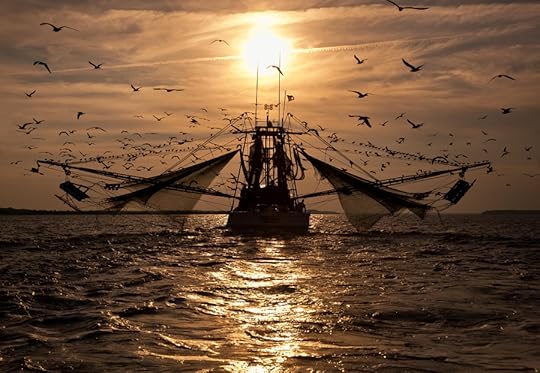
A Long Day by Carmody Baker on 500px
Moss-draped oaks smother a coastal lane, Botany Bay Plantation
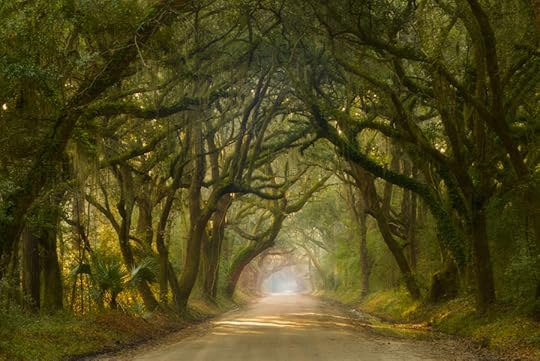
Deep South by Joseph Rossbach on 500px
The romantic and tragic Lover’s Leap in Rock City

Seven States by Desmond Lake on 500px
Dead tree stranded on Folly Beach County Park

Unbalanced by Jason Frye on 500px
Summer lightening storm over Hilton Head

Summer Storm by Ed Hetherington on 500px
Motionless southern swamp land
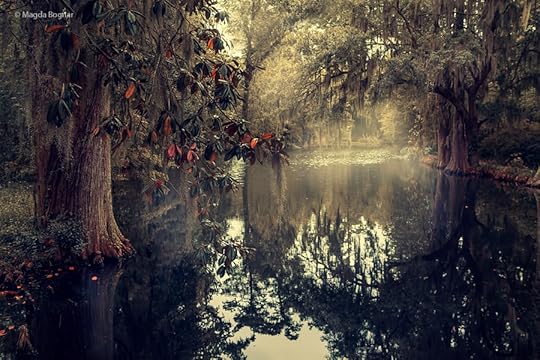
Southern Magic by Magda Bognar on 500px
An old rundown barn on the cuff of Gaffney
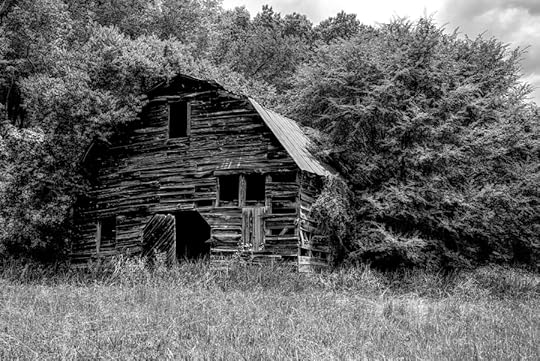
Cherokee County Barn by Steven Blackmon on 500px
Moody, blue-tinged sunset over pines trees in the Lowcountry
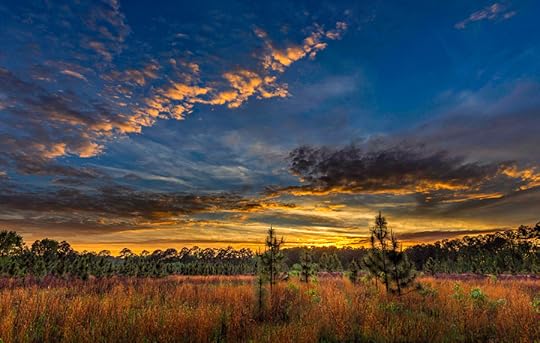
Moody blues by Farnsworth on 500px
Mist over the Atlantic at Myrtle Beach
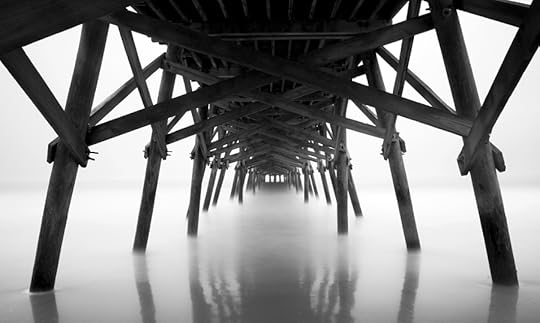
Beneath by Aric Morgan on 500px
Morning sunshine through the Symmes Chapel, Greenville
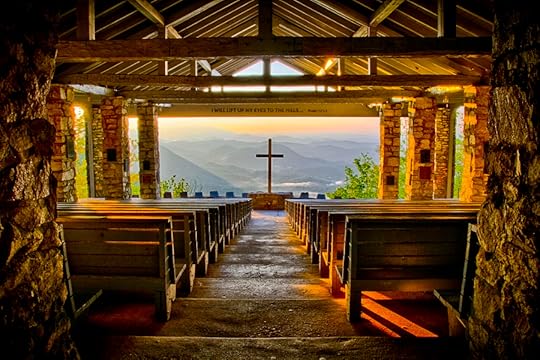
First light by Nexsi Castillo on 500px
The Limehouse Bridge in Charleston on a foggy morning.
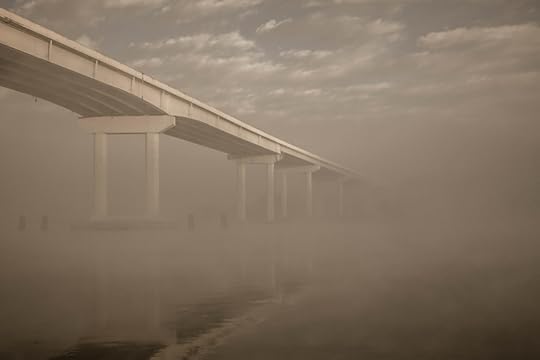
Limehouse Bridge by Andy Gehrig on 500px


8 ways people are getting naked in Europe
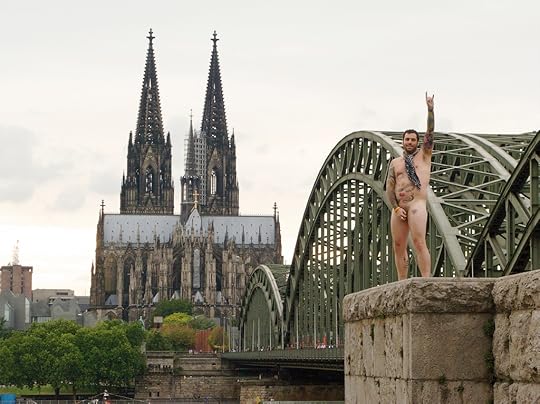
1. Getting their body painted in Austria
Since 1998, Austria has hosted the World Bodypainting Festival where 30,000 people come down to “Bodypaint City” to experience the work of body painting artists from around the world. The event includes lessons and seminars (for beginners and professionals) on topics like airbrush, special effects, digital art, photography, fashion and more. The main event is the Body Art Fashion Show and the World Bodypainting Championships where the best of the best showcase their work. The festival ends with the traditional Body Circus, a club dance party with attendees decorating themselves in masks, extreme make-up and body paint along with live music, DJ’s and displays of visual art.
2. Hiking naked in Germany
In 2010, Germany opened its first nudist hiking trail. The trail runs between the town of Dankerode to the Wippertal dam, near Leipzig. The trail runs 11 miles and even got an endorsement from the mayor of Wippertal.
3. Taking a cruise with Bare Necessities Tour & Travel
The tour company claims they are the “the only true nudist cruise company in the world.” Clothing is entirely optional in every space aboard the ship except for the dining rooms. Tours visit destinations like Italy, Greece, Slovenia and Greece, stopping at nudist locations along the way.
The company states on their website that they support “the belief that sexuality is not a state of undress but rather a state of mind, and that social nudity is not a sexual activity. We strive to dispel the misconception that nudity is sexually exploitative.” Options range from large cruises carrying up to 3,000 passengers to small, luxury yachts.
4. Running with the nudes in Pamplona
Organized by PETA (People for the Ethical Treatment of Animals), this event takes place two days before the traditional “running of the bulls” festival in the town. The run was created as a protest against the cruelty and torture of bulls that occurs as a result of the famous festival.
5. Sledding naked in Germany
Each February, the World Naked Sledding Championship is held Germany with 44 contestants stripping down, putting on their helmet and boots, and sledding down a 50 meter hill to cross the finish line first for the title of “Nacktrodelmeister” or “Naked Sledding Champion”. 5,000 people show up each year to cheer them on.

Read More Like This: 11 Ways People are Getting Naked in the U.S.
6. Feeling the breeze at Bellevue Beach near Copenhagen
In the warm summer months, locals love to visit this 700 meter nudist beach just 15 minutes away from central Copenhagen.
7. Rocking out naked at the Roskilde Festival in Denmark
Held every June, this festival is the largest culture and music festival in Northern Europe, with more than 100,000 spectators. It also has a yearly nude race around its 80 hectare campsite. Winner gets free tickets to next year’s event. The festival itself is run by Roskilde Festival Charity Society, a non-profit organization that supports initiatives that benefit young people and support cultural and humanitarian work.
8. Taking a bath at Kaiser-Friedrich-Therme in Germany
As homage to the Roman sweat baths of the ancient past, the Kaiser-Friedrich-Therme allows visitors to get the complete nude spa relaxation experience in one of the establishment’s many steam rooms. Not “clothing-optional” but instead “clothing prohibited” in the sauna area (the site explains this is for hygienic reasons), the spot is perfect for those who are unafraid to bare during their cleansing, sauna experience.

This is what oil roads look like in the Amazon, and here’s what they do to people’s lives
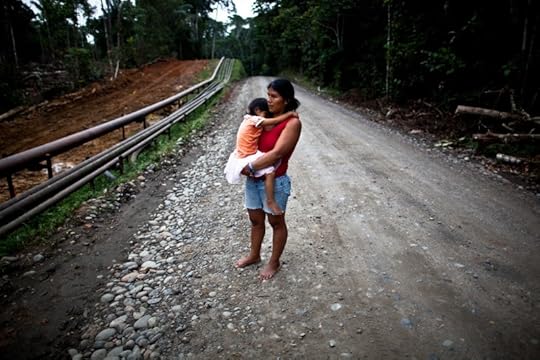
A Waorani woman and her daughter along an oil road near their community. All photos courtesy of Give Clearwater.
With a thunderous boom and the weight of two hundred years, a mighty ceiba tree crashes into the damp earth in which its roots previously lay safely buried. With the absence of this giant, sunlight penetrates the canopy, streaming down to the undergrowth that never before knew the heat of direct sun. The frantic buzzing of chainsaws accompanies the woody creak and thud of more downed trees in this violent industrial symphony in the rainforest. As men in hard hats and denim jumpsuits fell tree after tree, tractors plow through the soil, uplifting bush and root. Steamrollers flatten the earth with a hollow, tinny roar. And thus, another road is gouged out of dense, primary forest in the Amazon.
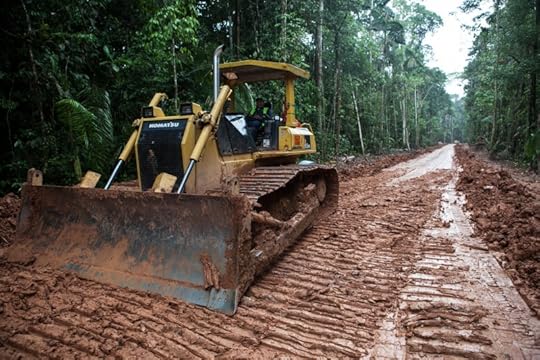
An oil access road under construction in primary forest, Siona indigenous territory, Sucumbíos province.
With the discovery of black gold in the Ecuadorian Amazon, oil companies began building roads through the rainforest to connect oil wells with the outside world and lay pipelines to extract the crude being pumped from under the forest floor. Soon the region had become a maze of interconnected roadways stretching through the forest. More oil roads are built every year.
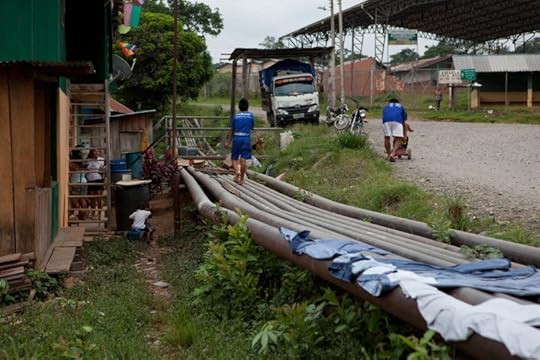
A colonist settlement alongside the Via Pindo oil road, Orellana province.
As previously unreachable areas of forest open up, colonist settlers move in, taking advantage of road access to start farms and form new communities. As settlers arrive, large areas are deforested and more roads are built. This is referred to as the “fishbone” effect: small “bones” or secondary roads are built off of the “spine” of the fishbone, the original oil road. From the air these road networks resemble fish skeletons.
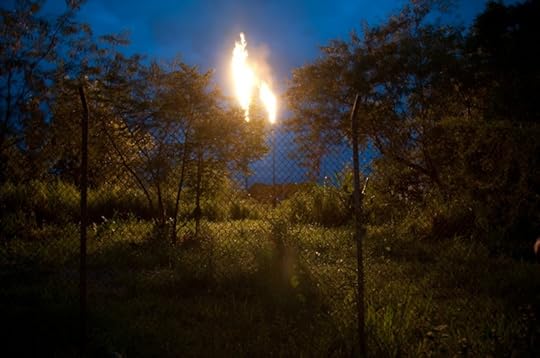
Gas flares at night, Orellana province.
Roads not only allow the oil companies to move ever-deeper into the forest, they also open up the forest to increased logging, farming, and hunting. As roads are built, forests and wildlife disappear.
The construction of oil roads alters indigenous way of life in the Amazon. Noise from construction and transit scares away game animals. Hunters come from outside the territories, leading to overhunting and game scarcity. Colonist settlers begin to move into indigenous territories, causing deforestation and the reduction of ancestral lands. With roads come outside influences, like alcohol, often resulting in a cycle of indigenous dependence on money earning activities like logging or working for the oil companies.
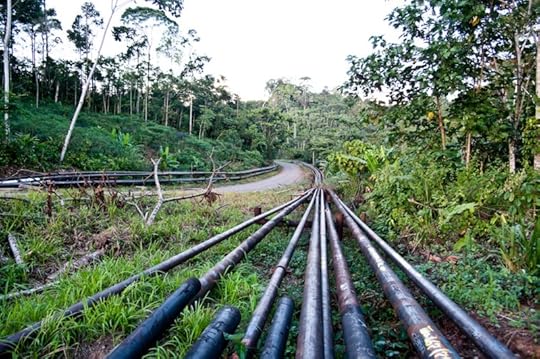
The Via Pindo oil road, Orellana province.
Roads also mean access to markets, schools, and hospitals for indigenous community members. Often times, new indigenous communities will form alongside recently constructed roads because of the advantages these roads provide. However, indigenous life changes with the presence of roads. Many communities that place a priority on rainforest conservation prohibit roads within their territories as a staunch principal. “I have seen how roads have changed the way my people live,” said one Waorani woman from a community without road access in Pastaza province. “The Waorani that live in communities alongside roads have become beggars for the oil company. I think that the moment a road reaches my community it will be the end of us.”
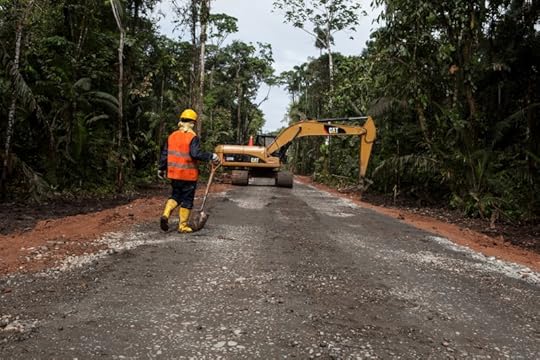
Roads reach further and further into the last remaining primary forest in Ecuador.
This article originally appeared on Give Clearwater and is republished here with permission.

9 questions Canada has for you, Amer

Photo: Jamie
1. How did you Americans manage to elect a President who actually has a sense of humour?
Histrionically divisive Republican/Democrat politics aside, Americans actually dug deep when they elected a President for two terms who has the self-confidence to play himself up once in a while. Canadian politicians — particularly those elected to higher offices — must seemingly swear an oath that they’ll never take the piss in public or even so much as crack a smile, on pain of dismemberment. So our question to you Americans is — can we please have Obama when you’re finished with him?
2. And speaking of ‘humour’…
What is with the American phobia over using the letter ‘u’ in the English language? Humor, color, flavor, neighbor, labor? Clearly, that’s just not right…
3. What is it with the love affair for drive-through everything?
Banks, funeral parlors, strip-clubs, prayer booths, liquor stores, law firms, doughnut shops, wedding chapels… almost everything you have to leave your homes to acquire seems to be available from your car window. What’s with the antipathy for getting a little exercise by parking the car and walking through a store to make your purchases?
4. How in the hell have you Americans survived your health care system?
In Canada, we have a socialized medical system that the majority of us access on a fairly regular basis, and which doesn’t break the bank every time we step through the door of a doctor’s office. What happens if you’re an unlucky schmuck who doesn’t have private health care coverage and get a nasty infected splinter in your big toe and you can’t afford the trip to the doctor’s office and a course of antibiotics? Yank it out and do a healing ceremony? Pee on it like Chandler did to Monica when she was stung by a jellyfish in ‘Friends’? Is the fact that you’ve managed to stay alive in spite of your health care system proof that God really IS an American?
5. How come you have New York and we have Toronto?
Toronto is cosmopolitan. Toronto is artsy. Toronto is multicultural. Toronto is Canada’s financial heartland. Toronto has Italians who know how to make real pizza. Toronto even has a beach you can swim on, for God’s sake. And yet, whoever heard of anyone boasting that they’re off to Toronto for their vacation? But nooooo… it’s all ‘We’ve booked our flights, and we’re going to New York!! New YAWKKK!!!’ How is that fair?
6. How come Americans get all the good Netflix shows?
Canadians pay outrageously high fees for bandwidth, and yet basically have to cheat on their own computers just to get a decent Netflix line up. How is it that, in spite of the fact that many American series and movies are actually filmed in Canada, Americans get vastly more selection from their Netflix accounts, compared with the old sitcom reruns and endless Teletubby cartoons that Canadians are supposed to put up with?
7. How is it possible?
How is it possible that a country like the US can have cities like San Francisco on one coast and Provincetown on the other, both of which are shining beacons of liberality and tolerance for the broad range of sexual orientations, and yet can be a home to certain states where someone can be refused service or other everyday civil liberties if they’re even suspected of being gay? Really?
8. When are you going to open up Trader Joe’s franchises in Canada?
Because those long drives across the border to stock up on amazingly drinkable $10 bottles of wine and cocoa dusted truffles with toffee bits are getting downright tedious.
9. What’s up with that water crisis in California?
Apparently, Californians are now watering their crops and drinking stuff out of their taps that’s been sitting in aquifers for 20,000 years because all the other water is gone. What’s your plan, California? Because the technology to mine water from asteroids is a few years off and, although we’re polite and all, and would love to share if we could, we kinda need to hang on to our own water supply to freeze for our igloos. 
11 things you need to know when you date a girl from Cornwall
1. Don’t even bother making summer plans.
Because she’s got it covered. Every town has its own festival to attend, every month has an unmissable event and every sunny day calls for ciders in a beer garden or a BBQ on the beach. Your Cornish girl knows just how to while away the summer days whilst having the most fun possible. She’ll take you to the Masked Ball to dance until dawn on the cliffs of Porthleven, she’ll know someone who can get you both on the guest list for Leopallooza and she will already know the best spot to wild camp on Gwithian Towans. You’ll soon forget what a weekend at home feels like.
2. You’ll never have to wait for her to get ready to go out.
Going from beach to bar is how she grew up and sun-bleached, sea salty hair is how she rocks her style. Having fun with her friends at a gig at The Watering Hole is far more important than choosing what shoes to wear – after all, you don’t need shoes when you’re dancing on the sand.
3. You’re going to have to learn to love cider.
Rattler. Cornish Orchard. Polgoon. Haywood Farm. Scrumpy. Press Gang. Riverside. Haye Farm. Shane’s Cider. Lyonesse. Apple Slayer. Any will do, as long as it’s Cornish. Because that’s what her and her friends will be drinking.
4. Cornish ale, too, though…
Proper Job. Cornish Knocker. Betty Stogs. Bolster’s Blood. Scilly Stout. Tribute. Heligan Honey. Doom Bar. Roughtor. And of course, Spingo. Because that’s what her dad will be drinking.
Word of warning, go easy on the Spingo.
5. Don’t expect her to order a half.
Or even a glass of wine. Cornish maids drink pints, like Betty Stogs herself.
6. She will keep up with the drinking pace.
And if you’re from out of county, she’ll likely drink you under the table, you pussy. Don’t take it to heart – she’s been drinking with the lads since she was 15 and has been known on more than one occasion to complete the Rattler challenge and still be able to stand.
Read More Like This: How to Piss Off Someone From Cornwall
7. A stroll through town will take at least three hours.
Because she’ll know everyone, every five metres, all the way. Her grandma’s friend or the man who sells cockles in the shack by the Scillonian, Banjo Man or the local reporter from the West Briton. Maybe it’s the resident DJ from the Zero Lounge or just an old school friend. Whoever they are, however your Cornish bird knows them, there’s always a need to stop and say, “alright?”
8. Expect to never be able to pronounce the names of anywhere.
And if you pronounce Fowey “Fo-wee”, the joke is on you.
9. Lunch is a pasty.
And that’s fine with her. Pick up a little slice of pastry heaven from Philp’s in Hayle or the Cornish Oven (controversial?) from Illogan, head to Portreath Beach car park and watch the waves roll in over the sand. She’ll think it’s bleddy ‘ansome.
10. Be prepared to lose your girl to the sea.
If your girl is a gig rower, you’ll lose her to race days, training sessions and Scilly weekend. If she’s a surfer, you better pray for no swell on Fistral that weekend you’re meant to be going up north to see your family. Maybe she’s a kayaker, a snorkeler, scuba diver or sailor. But one thing is for sure, those born and raised in Cornwall are governed by the sea, and nothing shall stop them!
11. Kernow King IS hilarious.
And you will laugh. Watch Cornish Grand Theft Auto and tell your maid it ain’t funny and there’ll be hell to pay. 
May 21, 2015
Is anyone here Jewish?

Photo: Israel_photo_gallery
“Is anyone here Jewish?”
My ears perked up. I was sitting in the courtyard of Café Mazal, a restaurant serving Jewish-themed food in what was once the Jewish Quarter of Cordoba, Spain. That Monday afternoon, the restaurant was mostly empty except for my husband, me, a waiter, and the gregarious manager, whose English was a bit shaky, so he asked for the question to be repeated.
The middle-aged man asking the question stood by the door next to a silent, petite young woman with a dark ponytail. “Is anyone around here Jewish?” he asked again. “We have traveled all the way here from India to see the synagogue, but it is closed. We want to find someone here who is Jewish who can open it for us. Just for a few minutes.”
“I’m sorry,” the manager explained. “Mondays the synagogue is closed. It will open tomorrow.”
“But we are only here today,” said the man. “That’s why we were hoping to find someone here who is Jewish who can open it for us.”
The manager shrugged helplessly, then explained that though his restaurant served Jewish food, no one there was actually Jewish. In fact, unless there was something I didn’t know about the man and the young woman I presumed was his daughter, I was the only Jew anywhere in the vicinity, and I could not help. I too had come to Cordoba for the day and was disappointed to find the synagogue closed.
“Six hundred years ago, Isabelle and Ferdinand, send all the Jews out from Spain. Since then, no more,” said the manager, waving his hands to illustrate the expulsion of Spain’s Jews in 1492. He suggested seeking aid at the tourist information.
The two Indian tourists, appearing dissatisfied with that answer, departed.
Walking through the narrow white lanes of Cordoba that day, I’d been struck by the degree of general interest in reclaiming that city’s long lost Jewish past. There were Jewish-themed souvenirs for sale. There was a plaza named for Maimonides with a statue of the great doctor-philosopher, beside which I watched a group of Japanese tourists take turns posing for photos. There were books on the subject, and records of Sephardic Jewish music for sale.
That fascination was all the more surprising to me because while growing up in a Jewish suburb of Detroit, I had never felt there was anything very fascinating or exotic about my ethnic-religious identity. In fact, most of my life, I have felt as if being Jewish was something I’ve admitted to rather than broadcasted to strangers.
Growing up in a Jewish suburb of Detroit, I had never felt there was anything very fascinating or exotic about my ethnic-religious identity.
I suppose it did not help that the images and role models of Jews I was exposed to growing up were often pious (any number of prophets), intelligent (the great rabbis, plus Einstein and Freud), cultured (numerous great authors, artists, directors), funny (the Marx Brothers, Woody Allen), and of course victims of prejudice and genocide. But to my recollection, Jews were rarely sexy, alluring, or cool.
And then there was something else. “Remember what happened in the Holocaust,” was something I heard very often as a child. I was taught to be careful, that there were still neo-Nazis out there. I was reminded that the history of Jews in Christian lands until very recently has been a precarious one. In fact, my father taught me that unless I had good reason to believe otherwise, I should assume that most non-Jews were anti-Semitic.
my father taught me that unless I had good reason to believe otherwise, I should assume that most non-Jews were anti-Semitic.
I remember once as a teenager in synagogue hearing our rabbi wonder aloud during a sermon why it was Jews were more likely to say “I am Jewish” rather than “I am a Jew,” as if the second version had the tang of a slur. Though none of us raised our hands to answer his rhetorical question, I had a pretty good idea that we in the audience knew what he was talking about and why.
Today I am a mostly non-practicing Jewish adult who nonetheless takes great pride in my heritage. I am happy to be part of a culture that has given the world so much in terms of spirituality, art, science, philosophy, and so much more.
And yet there’s still that unfortunate residue of my growing up years that quivers in the middle of my chest, that sticks at the back of my throat, that catches at the tip of my tongue, so that when I’m mixed company, in unfamiliar surroundings, and I hear the question “Is anyone here Jewish?”
I do not spring up from my table to answer:
“Yes, I am. I am a Jew.” 
I’m OCD. My partner’s ADD. Here’s what happens when we travel.
Photo: Sean McGrath
I am a diagnosed Obsessive-Compulsive and my husband Shawn has Attention Deficit Disorder. As such, our vacation preparations unfold differently: I read hotel reviews, pore over maps, and note our proximity to major hospitals while he steps onto the airplane without a clue where it will land. I prepare for diarrhea, malaria, guerilla warfare, and hangnails; Shawn forgets to bring pants.
We are going to Costa Rica for our anniversary, leaving the children with their grandparents. My travel anxiety engages as we drive to the airport. The interstate is a brilliant red pinball machine, and I am the silver sphere trapped in its walls. The underground tram to the terminal is a tunnel that could collapse at any moment and bury me alive. If I lose my footing on the escalator, it will scalp me, and behind the counter at Au Bon Pain lurks a botulism-tainted scone. I scan for terrorists, zeroing in on anyone who looks more nervous than I do, including an elderly man with a cane — the aged and infirm are highly under-scrutinized.
At security, my shoes, belt, coins, and keys go into the tray, but Shawn seems to be clothed in chain mail and steel-toed lace-up boots. TSA relieves him of the large can of spray deodorant he always packs in his carry-on bag — one never knows when he might work himself into a stink, he says — and he stands in the thick of the exiting throngs as he re-threads his belt through his pants, loop by loop. I find myself flummoxed and begin to back away, only to hear his sorrowful voice call, “Honey! Wait a minute! I’m trying to get my belt on! Why aren’t you waiting for me?” The last time this happened our little boys tugged at my hands and said, “Mommy, Daddy looks like he needs some help.”
Surprisingly comfortable in the middle seat, he presses his knees into the back of the chair in front of him, settles in, and lets one fly. He farts on every plane ride, and claims that everybody else does too. Trapped in the window seat, I poke him in the arm. “You can’t fart on the plane when I’m sitting next to you. People are going to think I did it.”
Within minutes, he falls asleep on his hand, exhausted from his over-stimulating romp through the terminal, while I stare out the window, rip at my cuticles as the plane takes off, and listen for a sign that I’m about to die. When the plane successfully reaches cruising altitude I turn my focus to my calves and wait for a thrombosis.
It’s exhausting to be paranoid.
Shawn smiles in his sleep. When we travel, he always smiles, and he carries all of my heavy bags, and the kids too if they are with us. Often he remains oblivious to our itinerary. When I ask if he’s read the travel guide, Shawn asks, “Which hemisphere are we going to again?” Yet he follows me with mirth and makes true friends of cab drivers and beach combers, rainforest guides and bartenders, remembering their names for years. He wakes up in the morning whenever I ask him to, and he socks away extra money to buy me a gift. He maintains the attitude that we’ll be just fine, and he puts his faith in me to make it happen.
With my brain bound and gagged, I am free to be Shawn, and I realize suddenly the weight of my dysfunction and long to exchange it for his.
The plane rattles. I take half of a Xanax and listen to a chant by the Gyoto monks of Tibet on repeat to quell the image of the pulmonary embolism I know is creeping up my leg — still a death I’d prefer to a plunge from 31,000 feet. After twenty minutes, the drug enters my bloodstream with the force of an engulfing wave. I feel my chances of survival improving. The cabin no longer smells like a discarded sock, and I wonder: Is this what it feels like to be Shawn? To look down on 30,000 feet of atmosphere and believe that it will carry me to my destination? To venture far from home without concern for gate changes or snake bites or flesh wounds?
This pill has turned me into my husband; I’ve shed my obsessive skin. I’m reinvented. I don’t care, and it’s miraculous. I imagine he follows the spark of intrigue down whatever path tempts him, sees the world for what it is, not its rare and gruesome possibilities. People are fascinating when they’re not frightening, and we are going to a country we’ve never seen, where I can dive deeply, eat heartily, and rush the trails. With my brain bound and gagged, I am free to be Shawn, and I realize suddenly the weight of my dysfunction and long to exchange it for his.
But my dysfunction has its uses. When the ADD ambles off in aimless directions, OCD reigns him in. Obsession has brought us to this time and place; it made the reservations and did the packing. My methodical planning and my exhaustive efforts to micro-manage detail mean that the splinter in Shawn’s toe three days from now will be easily removed, and the stomach aches we’ll get from the strange Costa Rican potatoes will melt away with a single antacid. I’ll be thankful for my OCD. In turn, Shawn will tell me to spend an extra few minutes watching tree frogs and howler monkeys. We’ll lose track of time and hold up the tour bus, but I’ll be thankful for his ADD too, because he brings adventure to my rigidity.
He tenses in his seat, as though he’s just had a dark thought. “Crap,” he says, sitting up. “I have no idea where I put my passport.”
“I took it from you two hours ago,” I tell him. “It’s in the bag.”
He puts his hand on my leg. “Thank God. I’m such a disaster. What would happen to me if you weren’t in charge?”
“You’d be standing in the airport parking lot, in your underwear, watching the plane take off without you.”
He smirks. “Yeah. I would.” After a pause, he squeezes my arm and adds, “And you’d be on that plane by yourself, hyper-ventilating about MRSA on the armrest.”
“Yeah,” I say, and nudge him back. “I know.” 
8 things that will completely baffle foreigners in Colombia

1. The Lip Point
If a woman asks you to pass her a magazine that is in the room, and you ask her which one she means, she won’t point at it with her finger and say ‘that one’. That would be too easy.
She instead will pout at the magazine in an exaggerated manner and slightly flick her head back as she’s doing it. The first time you see it, it looks ever-so-slightly insouciant, as if you are her personal magazine–fetching slave. Worry not, though; it’s just her way of politely asking you to pass her the magazine.
2. The Hello Blink
This is particularly prevalent among middle-aged women. If you pass an acquaintance in the corridor at work and you say say hello, don’t be surprised if A) they don’t say hi back, B) they don’t wave, or C) they don’t smile. What they might do is blink at you with both eyes for slightly longer than a normal blink would last. The first time I saw this I thought the lady in question had an unfortunate tic. She didn’t. She was just saying hi.
3. Shop Frustration
You are being served by someone in a tienda. You give your order, the person turns away to prepare it, then someone else barges in and asks for something with more urgency than you did. At this point, the attendant forgets they were helping you, serves the interloper, and answers the 18 questions they ask before turning back to you. They aren’t being mean, they are just trying to be nice to everybody, albeit choosing an utterly chaotic and random way of doing so.
4. Si o No?
This will be used like we use a tag question, e.g. “It’s cold today, isn’t it?” However, when a Colombian uses it, they are almost daring you to say ‘no’ to a perfectly evident situation.
“That Hitler was a bit of a bad egg, yes or no?”
You really can’t argue with statements like that, so you have to go with the affirmative, rendering the ‘yes or no’ option they gave you redundant.
5. ‘No…’
“So, what did you do last night?”
“No…”
This is just a standard way of saying ‘not much really’. It is a little disarming at first when someone responds to an open question in the negative, but that’s what they mean.
6. The Elbow Cheapskate
This is almost exclusively a female gesture, accompanied by a wry smile. If you ask a girl how her first date went last night, she might tap of the fingers of her bent elbow, signifying that her handsome suitor turned out to be a cheapskate. She was probably taken to the hotdog stand instead of being whisked off to the fancy French restaurant she was hoping for.
Read more like this: 18 funniest expressions in Colombian Spanish (and how to use them)
7. Shopping Bags
Any trip to a Colombian supermarket will see you waiting at the checkout for the cashier to pack your bags (I’d much rather do it myself, it feels bourgeois to just stand there watching them do it). They will fasten the handles of your bags together intensely tightly, as if it contained some uranium that you spotted in the frozen foods section. What this means is that you can barely hold the bags (all eight of them) with a pinkie finger wedged into the small space they have allowed for you to carry them. When you get home your pinkie finger will be bright red and swollen and quite hurty.
Don’t worry – its not because they want to make you suffer. It’s because they don’t trust you not to steal anything and slip it into your bag. Feel better, now?
8. The Animal Hand
In Colombia there’s two ways of expressing height with hands. In Europe and the States, if you want to express how tall someone is, you will use your hand horizontally to show it. In Colombia, this is for animals. Human height is shown using the hand vertically. You can actually offend someone, because you might be insinuating that they are a pig or a dog.
Personally, tolerant as I try to be with all the quirky cultural differences like this, their system is flawed, (si o no?). How do you know whether someone’s height ends at the bottom or the top of your hand?

The language diversity of the US

Photo by James McDowell
AMERICA’S LANGUAGE SKILLS MAY SUCK, but its linguistic diversity is incredible.
In 2014, Slate put together a series of maps of the languages spoken in American homes by using the Census Bureau’s American Community Survey.
These maps help us go beyond what we know to be the most prevalent languages in the US — English and Spanish — and creates awareness of the amazing multiculturalism at work in this country.

This one is not too much of a suprise, but look at what happens when Spanish is excluded from the data.

Who knew Polish was the third most spoken language in Illinois and that Korean was widely used in Georgia? And what on Earth is “Hmong”? (A dialect spoken in certain regions of China, northern Vietnam, Thailand, and Laos).

According to Slate, Navajo is the most commonly spoken Native American language, with more than 170,000 speakers and “there are more speakers of Navajo in Utah, Colorado, New Mexico, and Arizona than there are speakers of other Native American languages in all other states combined.”

Nepali spoken in Montana and North Dakota? Really?


Ireland is about to make history
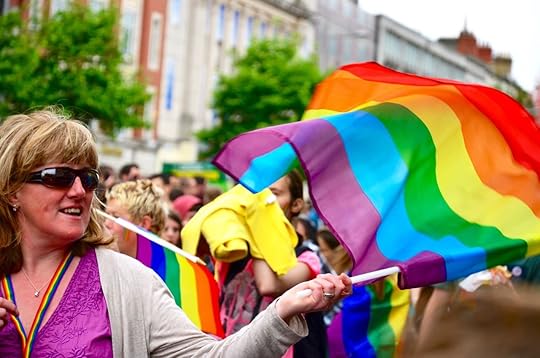
From Dublin’s 2013 Pride celebration. Photo: Daniel Dudek-Corrigan
GAY RIGHTS HAS MOVED FROM AN ISSUE on the margin to a front-and-center global issue in a pretty short period of time. As of right now, 18 countries have legalized gay marriage completely, while others (like the United States and Mexico) have at least made gay marriage legal in some regions. What has not happened yet is the legalization of marriage in a country by popular vote. Tomorrow, Friday May 22, that is likely to change.
An upcoming referendum in Ireland is likely to legalize gay marriage, a major turnaround for a country known for it’s historically strict Catholicism. The current polling suggests that Ireland is likely to vote in favor of the legalization referendum with as much as 69% in favor, or as low as 53% in favor. While the vote isn’t over until it’s over, it appears that it could very well pass.
Ireland’s social conservatism has been somewhat on the decline in recent years, thanks in large part to scandals within the Catholic Church, which has traditionally had a very strong hold on Ireland. Irish celebrities like Colin Farrell and Bono have come out in favor of legalization as well, which has helped the push. But regardless of the reasons, Ireland’s change is remarkable not only in that it is the first country to likely legalize gay marriage by popular vote, but the first in Europe to even have such a vote: most similar votes have not been on whether to legalize gay marriage, but whether to ban it.
In the meantime, the rest of us hold our breath: tomorrow, Ireland may make human rights history.
h/t: Mic.com. Also check out Buzzfeed’s article for more in-depth coverage.

Matador Network's Blog

- Matador Network's profile
- 6 followers

