Matador Network's Blog, page 2107
June 1, 2015
8 places to see in Manhattan before they go extinct
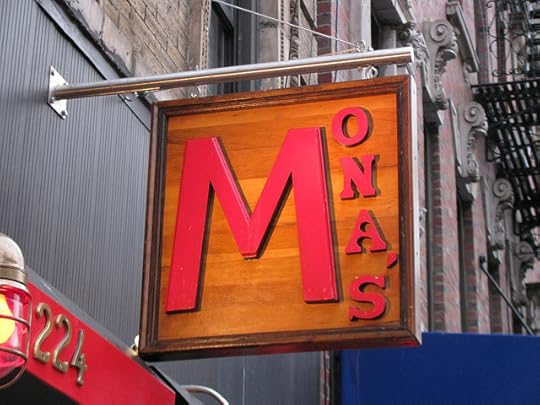
Photo: Eden, Janine and Jim
The idea of Mona’s disappearing makes me want to vomit more than all the times I’ve ralphed after too many $3 Guinnesses (Thursday night special). Irish locals say Mona’s has the only drinkable Guinness outside of leprechaun land; several bartenders hail from the isle. Even dogs can get a taste: regulars have been known to pull a stool to the bar for their furry friends to lap up a watered down stout. The pool table may be a teeny bit crooked, but that doesn’t stop sharks from running the night. Don’t expect ironic hipster music on the jukebox either: your dollars here are going to get you the Rolling Stones, some Talking Heads, and the B-52s.
2. East Village Cheese Shop
A photo posted by Michael Van Nort (@mvndesign) on May 20, 2012 at 7:22am PDT
Handwritten paper signs plaster the shop door and windows, and inside the tiny digs you’re expected to have used those messages to make your decision in a New York minute. In other words, don’t dare to approach the counter without knowing what you want, or be prepared to brave all the snark and sass for which New York used to be known. The brave get good deals though: you can snag a full wheel of brie here for roughly the cost of a subway ride. The Third Avenue mainstay very recently announced it was finally closing its doors and moving to a new location on Seventh Street, but thank the dairy gods that it isn’t closing forever.
3. Astor Place Hairstylists
Venture out into Queens or deep Brooklyn and there’s no shortage of classic barbers, but they’re no longer a dime a dozen in Manhattan. The fellas at Astor Place have been in the biz for 65 years, and the barbers are all as seasoned and weathered as someone who’s been chopping NYC locks for that long should be. The place is decorated with its own storied past, boasting celebrity autographs, newspaper clippings, and random chotskies from a time before anyone would ever pay $50 for a trim.
4. B&H Dairy
A photo posted by Wellington Lee (@superwellington) on Apr 15, 2014 at 11:11am PDT
Forget Katz’s and the currently embattled Carnegie Deli: if you’re looking to transport yourself to the days of old with a cup of burnt coffee, skip the tourist traps and head to Second Avenue. A teeny hole in the wall with the original 1940s counter and stainless steel stools, this place serves up unapologetically classic diner fare like tuna melts and ridiculously delicious breakfast. Pull out your yarmulkes—this joint is kosher, and will put all other Matzoh ball soups to shame. Think you’ve had perogis? Think again. Though most customers are regulars, the friendly staff won’t make you feel like it’s your first time.
5. Sugar Sweet Sunshine Bakery
A photo posted by Baby Cargo (@babycargo) on Sep 1, 2014 at 5:01pm PDT
The New York gourmet cupcake craze arguably began when Carrie Bradshaw and Miranda Hobbes visited Magnolia, and ended when the Crumb’s Bake Shop chain narrowly avoided bankruptcy. All the while, Sugar Sweet Sunshine has been a ray of hope for true baked-good lovers, keeping it real with reliably delectable cupcakes for $2.25. The place looks like your grandma’s kitchen circa 1974, and the staff is as cute and sweet as the shop’s namesake. Walls are plastered with photos of regulars, and the coffee isn’t bad to boot.
6. East Village Books
A photo posted by nycgo: NYC's Official Guide (@nycgo) on Mar 4, 2015 at 8:39am PST
I consider myself a book aficionado, and I usually hate literature snobs—but this place makes snobbery not only ok but even kind of cool. Don’t expect anyone to help you find what you’re looking for, or to discuss whatever obscure title he’s devouring behind the counter. While the Strand may have the monopoly on stacks to get lost in, these shelves are spilling over with used books for as cheap as $2. The store itself is below street level, and low ceilings make this tiny place feel like a literary hobbit wonderland. Love that musty book smell? It’s worth checking out just to get a whiff.
7. Cafe Reggio
A photo posted by Dennis Schoeller (@dmschoeller) on Dec 29, 2014 at 10:34pm PST
Macdougal Street may currently be overrun with NYU students and burgeoning comics, but the spirit of the street’s beatnik past is alive and well at Reggio. Allegedly home to the first espresso machine on American soil, the mama-mia Italian vibe is strong here, despite that most of the wait-staff is Eastern European, gorgeous, and appropriately rude. Snuggle into a window booth and watch the street traffic while you listen for the ghosts of young Bob Dylan and Alan Ginsberg writing at an adjacent table.
8. Russian souvenirs
You don’t need to go to Leningrad to buy authentic nesting dolls, or to experience the surly demeanor of someone who’s lived through the rise and fall of the Soviet Bloc. You may not think you need a Russian Army badge for your pack, but you definitely need to witness this store’s very Russian proprietor holding true to the very old-school New York tradition of ruthless haggling. 


May 31, 2015
14 foods you'll love in Tokyo
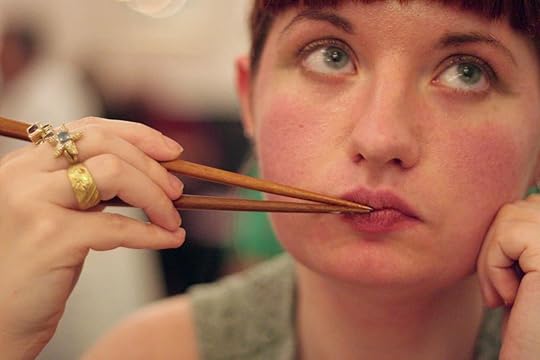
Photo: Orin Zebest
Tan Tan Men in Asakusa
Cold noodles in a spicy black sesame sauce = AMAZING SUMMER FOOD. My first summer in Tokyo, I ordered the hiyashi kurogoma tantanmen at Asakusa’s Chinkatei so often, they started giving me free plates of gyoza.
Chankonabe in Ryogoku
Want to eat like a sumo? Of course you do.
Monjayaki in Tsukishima
Monjayaki (runny savory pancake) is fun to eat but it’s even more fun to say. If you’re bored, try chanting it to yourself in a crowded place while trying not to laugh. Bonus points if you add Jim Carreyesque facial contortions and emphasize different parts of the word. MONJAyaki! monjaYAKI! MONjayaKI!
Gelato in Shibuya
What’s better than snapping a selfie in front of Hachiko and losing yourself in the scramble crossing? Snapping a selfie in front of Hachiko and losing yourself in the scramble crossing WITH GELATO.
Kebabs in Asakusa or Ueno Ameya Yokocho
Kebabs are a quintessential drinking food in any city and the stands throughout Tokyo have clogged a special place in my heart. They’re also great for striking up convos with the gregarious Turkish expats who run them. The guy at my favorite stand even taught me how to say thank you in Turkish, “teşekkür ederim.” He also put me on to dondurma: gooeylicious Turkish ice cream.
Yakitori
Even if you’ve just walked out of a tabehoudai baiking (all-you-can-eat buffet), when that smoky perfume hits your nostrils, your betsu bara (other stomach) kicks into high gear, and you’re ready to eat all over again.
Yatai in Asakusa Koendori
When I was staying at Sakura House in 2012, I used to spend most nights tossing back cheap happoshu with my buddy Shun. Shun worked at Tonbou, one of the cozy yatai food stalls that line both sides of Asakusa Koendori. They’re great spots for sipping sake and munching otsumami (beer snacks). You may leave wondering how that much tasty food can come out of such a tiny kitchen.
Xiao Long Bao in Shinjuku
I used to have to go through Taiwan so I could stop by Din Tai Fung for dim sum. Now, all I have to do is go to Takashimaya Times Square. I’ve waited up to an hour to get my xiao long bao fix and I’d do it again in a heartbeat. Well played, Tokyo.
Pudding in Asakadai
One Friday last November, I spent over ¥4000 ($40 USD) on pudding from Maison de Premier. That purchase led to one of the best weekends of my life.
Sesame Milk Coffee in Hiroo
The sesame coffee at the Ueshima Coffee Shop (aka “Precious Coffee Moments”) is SERIOUSLY ADDICTING.
Cream Puffs in Department Stores
I’m not much of a shopper, but I regularly explore the basement levels of department stores with a single-mindedness that borders on obsession. The object of my quest: CREAM PUFFS. I’m salivating just thinking about them.
Ramen.
The best thing about Tokyo ramen is that you’re totally spoiled for choice. Here are the two best.
Ichiran in Harajuku: Fatty, garlicky, spicy, and available all over the city. Fukuoka’s own Hakata-style ramen served customized to your taste. The Harajuku location always seems less crowded.
Curry Tsukemen Syuuichi in Ebisu: Now, whenever I smell curry, I’m thinking, “I wonder if I can get noodles with that…”
Konbini food
Konbini, my old friend. Always open, your warm neon glow welcoming me in for a drink and a wide selection of indulgent food I shouldn’t eat, but am going to anyway. Your service with a smile and a polite bow. Your knowing wink– all grace, no judgment. One juicy fried chicken and kari kari ume musubi to go. No bag, please–they’re already in my mouth.
Korean BBQ and Fried Chicken in Shin-Okubo
Spike D is all about that spicy fried chicken and Korean food is the perfect mix of seared, sweet and heat. Keep that chickin mul and bibim naengmyon comin! 
You have to hear what Jet Blue did for this autistic boy

Follow Matador on Vimeo
Follow Matador on YouTube
Shawna Wingert, the mom of an autistic son, isn’t used to airlines being very understanding of her unique travel situation. Her son has acute sensory processing issues which make flying a difficult nightmare for both her and her son. But she was just blown away by her first experience flying with Jet Blue — here’s why:
Dear JetBlue Airways,
I am writing this post to thank you.
My son has high functioning autism and, because of the custody arrangement between his father and me, we fly seven to nine times a year out of sheer necessity. Flying, with all of its loud announcements and crowded waiting areas and unusual smells, is, quite frankly, torture for him. He has acute sensory processing issues that affect us even in simple everyday situations, so you can imagine how complicated airports and airplanes are for us.
In the past, we have flown other airlines. It has not gone well. As my son was literally banging his head on the wall in the boarding area, I once had the gate agent question why I was asking for early boarding for a child clearly over 5. When I explained that the constant boarding announcements and large crowd were extremely difficult for us, she allowed me to board early, but finished our interaction saying, “Just this once,” as if I were getting away with something.
(Incidentally, this occurred after I had already called the airline a week before to request this special service. After being put on hold and then transferred, I was told to just speak to the gate agent and it wouldn’t be a problem.)
Unfortunately, this has been the case with every airline we have flown… except with JetBlue.
I needed to fly my son home yesterday. I went online and determined that if we used an airport a bit further from our home, we would be able to try JetBlue.
I was immediately impressed that the JetBlue online booking system allowed me to include information about his special needs when I booked his ticket.
So simple. No expectation of calling and being put on hold. No extra requirements. No having to educate a phone representative about high functioning autism and sensory issues. Nope, I just checked a box and included a few comments.
That alone was worth the extra drive time to the airport with JetBlue.
I called ahead of time anyway (maybe because I just couldn’t believe it would be so easy). I spoke with a sweet, friendly phone rep who not only moved our seats to the middle of the plane when she heard the smells of the bathrooms are tough for my son, but also informed me that she placed a note for “silent boarding” in our reservation. She told me that before a single announcement was made, the gate agent would come and personally escort us to the gate for essentially pre-preboarding.
“No announcements. No huge line of harried travelers. No head banging before we even get on the plane.”
When I hung up the phone, I was in relieved, grateful tears.
When we got to the airport yesterday and checked in, the agent asked if we would like a meet-and-assist to get through security more easily. I was floored.
I declined, because I know how busy your employees are, and my son really only requires assistance when it comes to the boarding area. We may not have used the service, but I was totally impressed by the offer.
Just before boarding, the gate agent sweetly escorted us to the gate, as promised. We boarded the plane before anyone else, and had my son’s headphones on before the noise and craziness of boarding the plane began.
Throughout the flight, your attendants also went out of their way to be understanding and kind. It was obvious they had been made aware of the information in our reservation, and they were so gracious in ensuring my son was comfortable.
When he started to melt down because he wanted a different drink than what was on the menu, the attendant told him he would wait as long as necessary for him to make another decision — no rush. My son calmed down, smiled and ordered a ginger ale.
It was exactly what he needed.
So, thank you.
Thank you from an already overwhelmed, tired, fighting-for-her-son-every-day-of-her-life momma.
Thank you on behalf of an 11-year-old boy who struggles to cope in a world that just doesn’t understand or easily accommodate him.
“Thank you from a now-lifetime JetBlue customer.”
With much respect and gratitude,
Shawna
Dear Readers, please know, I wrote this out of sheer gratitude. This is in no way an advertisement for JetBlue, nor was I compensated in any way for this post. I do think you should fly them — every single time you fly. But that’s just my opinion based on my own experience described above. 
16 reasons Oklahoma City is the most underrated US city
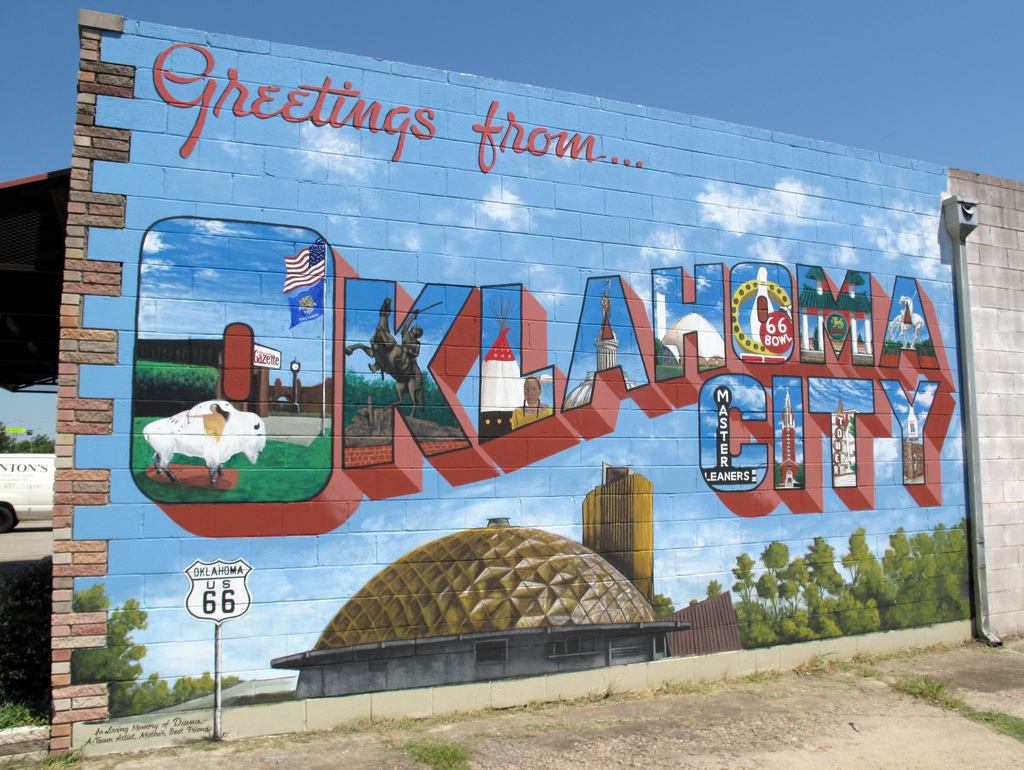
1. We completely revitalized our downtown into the busiest entertainment district in the state.
Many of us who grew up in Oklahoma City don’t remember ever going downtown during our precious formative years, and that’s because we didn’t. Downtown was a grungy, deserted warehouse district and the area was all but ignored until the 90s.
But in 1993, Oklahoma voters approved a one-of-a-kind increase in sales tax to overhaul OKC’s downtown area. The tax was called MAPS and originally ran through 1999, raising over $300 million. Seemingly overnight, downtown became Bricktown and businesses flooded into the historic brick warehouses that inspired the area’s name.
Now Bricktown is primarily home to a range of bars and restaurants that even the most picky groups of friends can agree on: from the patio complete with fire-pit at Deep Deuce Grill to our local version of a pub, Bricktown Brewery.
Cutting through Bricktown is a mile-long canal that offers guided Water Taxi tours if you’re interested in history and bad jokes. If you’re not, eating at one of the many waterside restaurants makes for some great people watching. The Chickasaw Bricktown Ballpark is home to the newly renamed Oklahoma Dodgers baseball team in the summer, and hosts some epic snow tubing during the winter.
2. We’ve got the NBA’s biggest superstars.
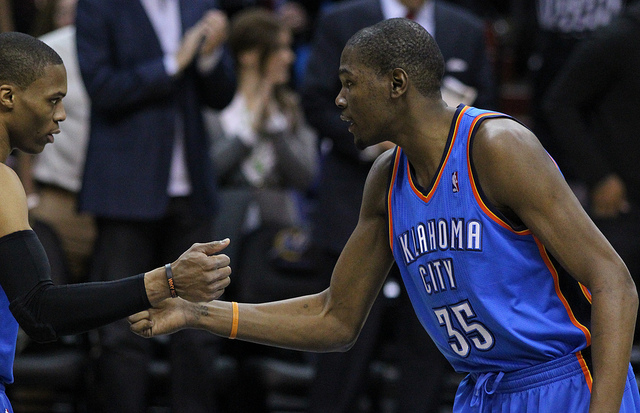
Wizards v/s Thunder 03/14/11
KD and Westbrook. Enough said. But also Serge, Collison, and sometimes Adams, especially when he’s high-fiving Collison. You absolutely will not find more passionate fans anywhere in the US. Our crazy, intense love for our biggest major sports team is rivaled only by the rest of the world’s love of soccer.
With OKC since arriving from Seattle in 2008, many attribute the city’s recent revival exclusively to the overwhelming popularity of the Thunder. Whether or not that’s true, our boys have certainly pumped a lot of money into the local economy purely through merchandise sales. Walk for longer than 30 seconds anywhere in OKC and you’ll encounter at least one piece of Thunder merchandise. Sorry, not sorry Seattle. What kind of name is Supersonics, anyway?
3. We have one of the most popular Native American festivals in the US.
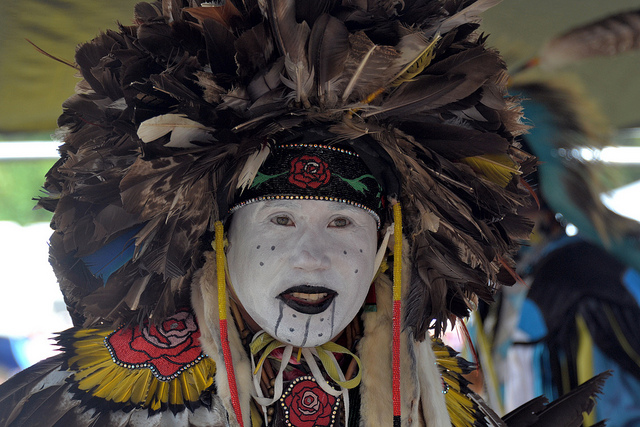
The word Oklahoma literally means ‘red people’ in Choctaw and was negotiated as the name to Indian Territory by a Choctaw chief back in the 19th century. The state still has dozens of federally recognized tribes and much of its land is subject to tribal law. Despite this, your average Oklahoma City resident doesn’t encounter Native American culture too terribly often, with one exception.
For 3 days a year, even those of us without a drop of Native American blood can appreciate the unique aspects of tribal life in downtown OKC. Red Earth Native American Cultural Festival is an award-winning event showcasing Native American art, dance, clothing, and heritage. It’s kicked off by a huge parade that even includes tribal princesses.
4. Our river is an Olympic and Paralympic Training Site.
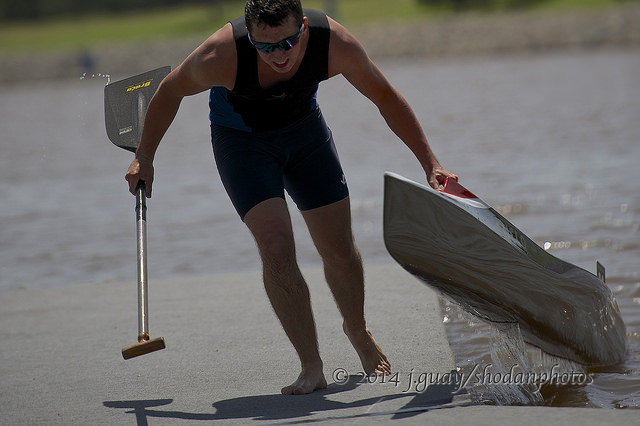
In 2004, at the height of the revamp of OKC’s downtown, the river that cuts OKC in two was renamed the Oklahoma River within the city’s borders. With that rename came the beginning of a huge change for the riverbanks. Not only is the area a training site for Olympic and Paralympic level athletes in canoeing, kayaking, and rowing, the Boathouse District is now an adrenaline-junkie attraction on the North side of the river — a mere 5 minutes from Bricktown.
It includes several boathouses designed by an award-winning architect, a 700-foot zipline across the river, kayaking, paddle boarding, dragonboating, and best of all: The Sandridge Sky Trail.
The Sky Trail is a six story adventure course where the only safety is a harness that leaves you scarily free to tackle obstacles like balance beams suspended in the air. When (if) you reach the top without giving up, there’s a choice of either descending by stairs, 80-foot free fall, or America’s tallest slide. This choice can divide friends and families alike, with some viewing the free fall as the ultimate accomplishment. However, all of us can agree that anyone who takes the stairs down should be ashamed of themselves.
5. We embrace our cowboy roots.
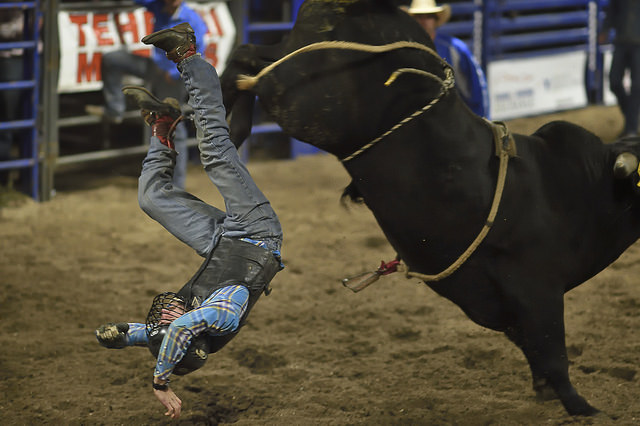
The Cowboy Hall of Fame is the most well-known museum in all of OKC. Everyone has been here at least once, whether it’s as a child or for a champagne gala as an adult. It was technically renamed sometime in the last few years, but I doubt even the employees call it by the new name either. The most famous piece in this Western culture museum is entitled “The End of the Trail” — a famous sculpture depicting a Native American man and his horse that is shown on every OKC postcard or tourism advertisement we’ve ever seen.
Beyond that, it is always surprising just how much else there is to see. There are also exhibits on American rodeo, Victorian firearms, Native American artifacts, and amazing artwork depicting the American West. There’s even a replica of a turn-of-the-century town inside the museum where you can see businesses and homes exactly as they would have been in a cowtown like OKC, which is much more fun as an adult than it should be.
6. We know steak.
In OKC, everyone has a favorite steak joint. Everyone. There are plenty to choose from, some better than others, but a few are standouts in their ability to reach that perfect medium rare. Cattleman’s Steakhouse in the Stockyards is by far the most well-known steak joint in the city. It’s barely changed over the years, dark and covered in photos of famous cowboys throughout the years. Not everyone’s a fan, but every local has joked at least once about ordering their notorious lamb fries.
An up and coming destination for some of the best steaks in the city is Broadway 10 Bar & Chophouse, located on the trendy Automobile Alley downtown. The area used to be the location of most of the city’s car dealerships but now includes some of the best restaurants, bars, and shops. Broadway 10 is in the old Buick building just off the highway on 10th street, which we all know is the unspoken marker of downtown limits. For those on a “working” lunch, the bar literally takes center stage in the restaurant and serves up one of the best margaritas this side of Cinco de Mayo.
7. There’s an actual lake inside our city limits.
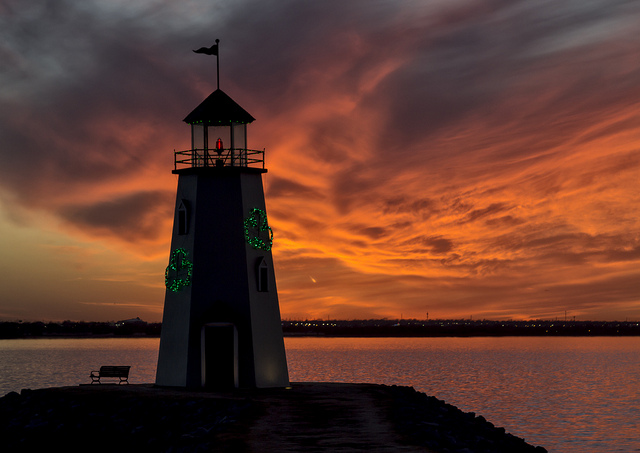
Smack dab in the middle of one of the most populated residential areas of OKC lays Lake Hefner. Although all of Oklahoma’s lakes are man-made, this just means that they’re specifically designed to maximize the fun. Lake Hefner’s shores feature several restaurants specializing in seafood, like Redrock Canyon Grill — that’s where we go to view that Oklahoma sunset we all love so much.
Hefner also has miles of hiking and biking trails, a golf course, fishing, playgrounds, and boating. At the head of Hefner’s East Wharf is a 40-foot working lighthouse, a beacon for sailboats returning to the marina as well as nervous cowboys about to propose to their cowgirls.
8. We rock climb on old grain silos.
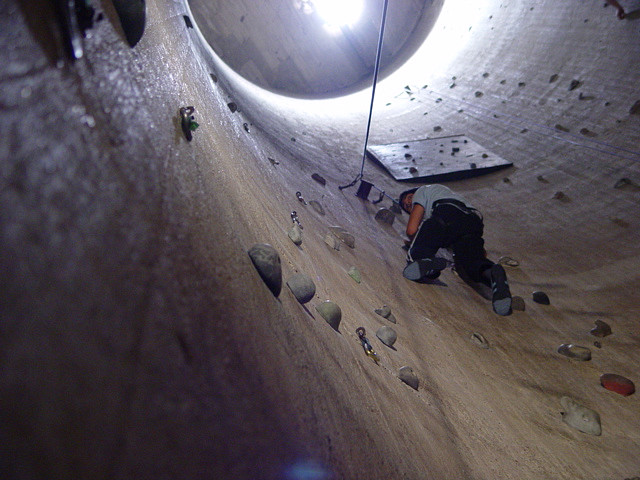
OKC might be about as flat as a pancake, but adventurous types are nothing if not resourceful. Enter Rocktown Climbing Gym, just outside of Bricktown. Located in an old repurposed grain silo (which are truly massive structures in case you aren’t from around here). Everyone from experts to beginners get their adrenaline pumping for the day by climbing up to 100 feet above the plains on any of the inside or outside routes.
To add to the unique experience, a local artist painted a large-scale mural on the outside of the silo depicting several state symbols like the scissortail flycatcher and the buffalo, which can be seen from any of the major highways in the area.
9. The Paseo is by far the country’s most unique arts district.
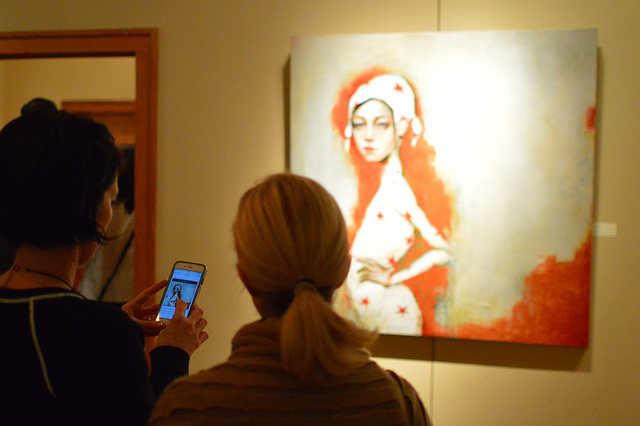
The Paseo was originally the first major district outside of downtown back in the early 20th century. Now a popular district for arts and music, the two-block area maintained its colorful and detailed Spanish architecture that you can’t find anywhere else in the city. No matter how many times you’ve been to the Paseo, you always feel like you’re on a movie set in the Southwest: brightly colored stucco, balconies, and painted tile roofs.
Plus there’s Paseo’s First Friday Art Walk. It’s a time where all the art-minded residents of OKC can get together in one place and peruse new exhibits, enjoy live music, and grab a drink at one of the Paseo’s several restaurant/bar combos. There’s Sauced, a New-York style pizza place with a famous patio and plenty of seating. But if you’re in the mood for a more upscale atmosphere, the artsy and eclectic Picasso Cafe is a hipster staple. They even have a monthly vegetarian dinner for those crazy enough to live in OKC and not eat steak.
Any visit to the Paseo is incomplete without braving a trip into Craig’s Curious Emporium, the most unique gift shop in OKC. Stepping foot in there is like stepping into another world. Dark, narrow aisles hold trinkets you’d never expect to find anywhere in the Midwest. Where else can you find a handmade steampunk necklace hidden amidst a life-size suit of armor and the best sandalwood incense in the state?
10. We’ve got a whole lot of Route 66 here.
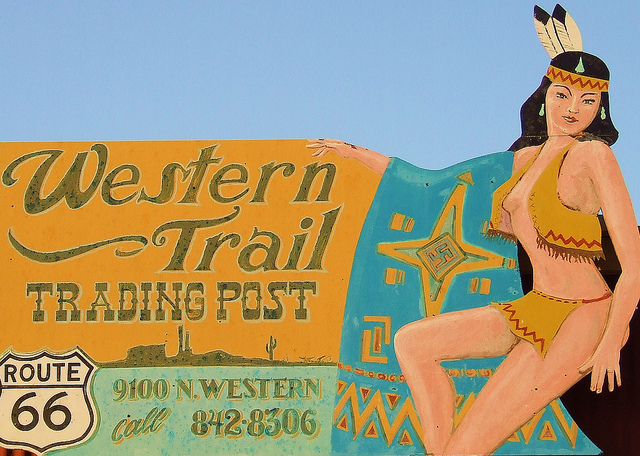
Oklahoma has the longest stretch of Route 66 of any US state, and although the highway has been broken up by businesses and highways, there are still dozens of neon signs and vintage attractions in OKC. One of the most refreshing of these is the Blue Note Lounge on 23rd and Robinson. Located just west of the State Capitol, which is also a Route 66 notable mention, Blue Note first opened in the 50s to serve Route 66 road trippers who needed a break from their children. Okay, not really. But since then, it has been one of the best bars in the city for strong drinks, great live music, and pool. It’s a little intimidating at first glance, but once your eyes adjust to the smoky darkness and rough customers, you’ll be relieved to find yourself there.
11. Our Asian District kicks ass.
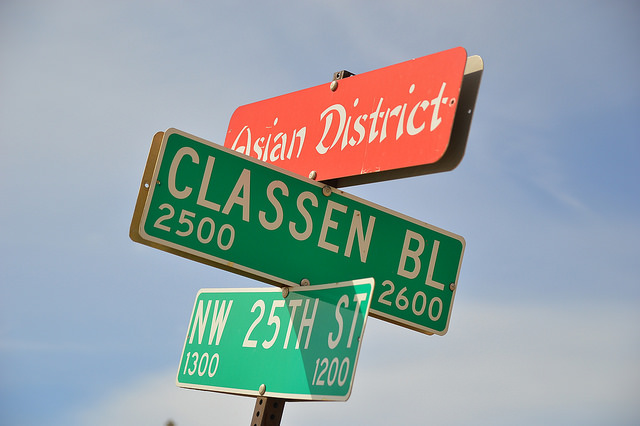
OKC has one of the largest Vietnamese populations in the country and Vietnamese is even the third most spoken language in our state. But the area around 23rd and Classen in the city has grown to include businesses, stores, groceries, and services run by several other Asian American groups including Chinese and Thai populations.
Now known as the Asian District, with fancy red street signs to match, this is where we get our dim sum on at Grand House and marvel at just how many animal parts are, in fact, edible while strolling through the meat section of Cao Nguyen Supermarket.
The most notable landmark in the area is the giant Braum’s Milk Bottle that marks the entrance of the district, a weird OKC Route 66 landmark that provides a laughable Americana contrast to the international nature of the area.

This story was produced through the travel journalism programs at MatadorU. Learn More
12. We’ve got the tropics in the middle of skyscrapers.
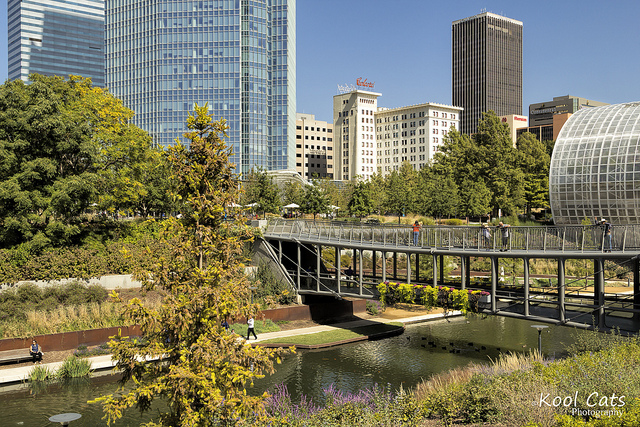
In the middle of the Myriad Gardens, which is a beautiful 15-acre area containing a playground, fountains, a dog park, waterfalls, and more, is the Crystal Bridge Tropical Conservatory. It may not be the prettiest structure on the outside, despite what its name suggests, but the inside always leaves you gaping at the 1,000 types of plants from six continents on display. Just make sure a butterfly doesn’t fly in. Half of the plants are kept in a wet zone with constant water, while the other half are in a dry zone that is given a drought period. There’s a huge waterfall, ponds, and different rock formations that highlight the best of each zone. The best part is definitely the bridge spanning high above the entire exhibit that gives the coolest views of the entire building.
13. The Memorial Marathon is one of the most supportive races in the country.
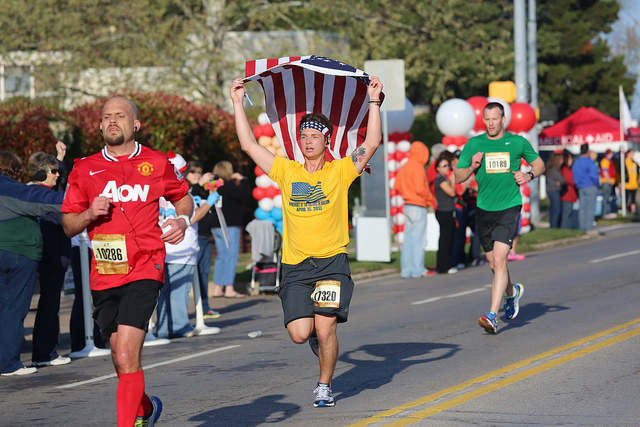
Oklahoma City was rocked to its core on April 19, 1995 when 168 citizens were killed and countless more injured in the bombing of the Alfred P. Murrah Federal Building, one of the worst acts of domestic terrorism in our country’s history. Most people who live in OKC have their own story to tell about that day, whether it’s memories of the sound of the explosion or a friend of a friend who survived the blast. In true Oklahoma spirit, a beautiful and moving permanent memorial was built on the site a few years later.
In 2001, the Oklahoma City Memorial Marathon began as a way to raise money for the memorial. Voted as one of the “must-run” marathons in the world, the event offers options beyond the traditional 26.2 miles, including a relay and 5k race. The marathon route winds through the most beautiful neighborhoods and areas of OKC, including Heritage Hills, Edgemere Park, and Nichols Hills. For being so flat, OKC has a lot of neighborhoods named after hills.
One of the best parts about the race is the sheer number of supporters along the route. It’s a big deal to all of us, and we cheer on every single runner. It truly is “A Race to Remember”.
14. We really do have ALL the space.
Oklahoma is in the top 10 of the largest US cities by area, beaten only by a few cites you’ve never heard of in Alaska and Montana. However, its population is only a bit over half a million. This means that we have a lot of the perks of city living without the hassle of overcrowding. We rarely have to wait in line at our restaurants or bars , rush-hour traffic clears within an hour, and we can still buy a home within city limits where neighbors can’t even be seen from the front yard. There’s just space for days!
15. We have TONS of trendy areas to choose from when we go out.
If Bricktown, Automobile Alley, and the Paseo don’t suit the evening, there’s still Midtown, Western Avenue, and the famous Plaza District.
The Plaza is a relatively small area of bars, restaurants,and local stores, including a funky hair salon and a resale shop. You used to need a security detail to travel down 16th Street, but now it s just recommended that you wear plaid and have a mustache.
DNA Galleries is a local store and art gallery that’s crazy affordable. Almost all of their products are made in Oklahoma and they highlight new and emerging artists around the state.
The best part about DNA is that it’s right next to Pie Junkie, the world’s best pie place. No one particularly remembers when Pie Junkie got so popular, but now it’s an OKC staple. If your favorite pie isn’t the Drunken Turtle, which is fudge pie, pecans, and salted bourbon caramel, you might get a side eye from the OKC locals.
16. We can have dinner at the top of the tallest building in the state.
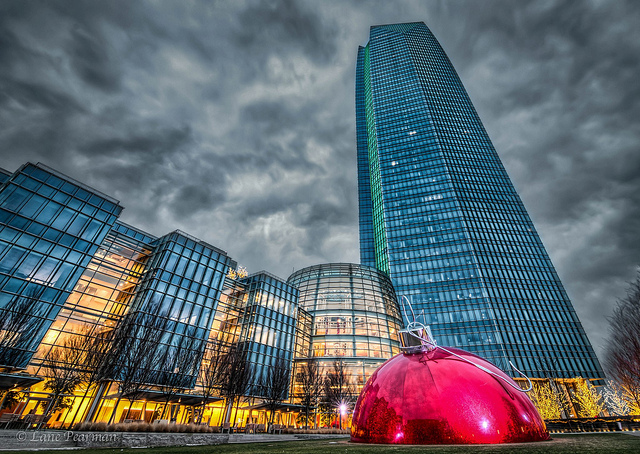
The fact that our city’s attitude has always been more onwards than upwards also explains why we don’t have much of a skyline in traditional terms. Although OKC residents love our city from the ground or above, googling OKC didn’t really lead to any print worthy photos of a beautiful downtown horizon. That (mostly) changed in recent years, and the one skyscraper we do have has become an icon for our city.
The Devon Tower was built by Devon Energy in 2011 and stands at 50 stories, which is by far the tallest thing Oklahoma has ever seen. Aside from hosting several holiday activities during the winter, the top floor of the building is occupied by Vast, a restaurant and bar with 360 views of OKC. Nothing makes us more proud of our city than viewing it from 850 feet above with a Prairie Mule or three, in hand. 
Tourists won’t stop getting naked at Cambodia’s Angkor Wat
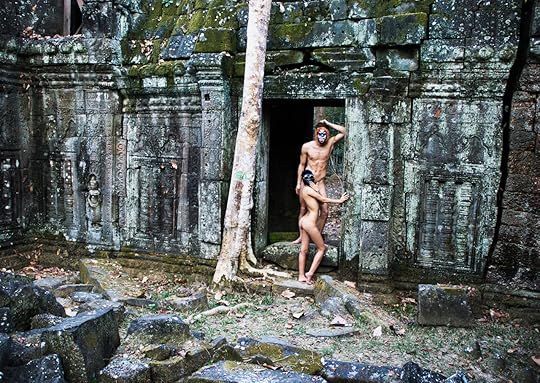
Screenshot from dirtydirty.me
BANGKOK, Thailand — Cambodia’s Angkor Wat is among the world’s most magnificent holy sites. Many believe the sprawling Angkor complex of stone temples, of which Angkor Wat is the crown jewel, rivals any architectural relic from ancient Rome.
Most visitors simply marvel at all that ancient grandeur and move on. Yet a small minority are compelled to strip down naked and take photos of one another traipsing around the temples.
This rash of nude photo shoots has created a tiny scandal at Angkor, which is deluged by more than 2 million visitors per year.
First came photos, circulated online in January, of a topless woman — believed to be Chinese — leaning against an intricately carved doorway.
Then came cruder photos of three Frenchmen strutting naked inside the complex. After that there were a couple of bottomless American sisters mooning for the camera. Then two naked Germans in ape masks posing next to a moss-covered temple. The list goes on. (This blogger has a NSFW roundup.)
The lucky exhibitionists evade capture and post their photos once they’ve left the country. The not-so-lucky flashers — like the two sisters from Arizona — get fined and deported.
The scandal has been well documented by Cambodia’s Phnom Penh Post, which at one point quoted a museum official wondering if he “went to a Catholic church and did the same thing, how would people feel?”
This comparison is fair. If anything, it fails to capture the reverence that Cambodia’s long-suffering population feels toward the temples at Angkor. Cambodians, who live in one of the poorest and most corruption-plagued nations in Asia, have few symbols that can stir national pride.
In the last century, they have been colonized by the French, bombarded by the United States, invaded by Vietnam, and killed en masse by the Khmer Rouge regime. Cambodia’s current government is often described as a “kleptocracy.”
But Cambodians can at least look to Angkor Wat as proof of their past greatness. The majestic complex was completed in the early 1200s by a king whose empire consumed almost all of Southeast Asia. Those were the days before wave after wave of foreign invaders tore apart the kingdom.
An official who presides over Angkor’s management group alluded to a very real scenario: a peasant family scrimps and saves to finally visit the nation’s grandest site only to stumble across a pack of naked foreigners trying to take edgy photos.
“As a Cambodian, it’s hurtful to my beliefs, and especially to the poor Cambodians saving up money to be able to come across the country to pray at Angkor,” said Kerya Chau Sun, a spokesperson for the management group, speaking to CNN.
Angkor authorities are now finalizing a new code of conduct for tourists. The Phnom Penh Post reported that rules on “not dressing inappropriately” are on the list.
For more on threats tourists pose to the temples, here’s GlobalPost’s “Commercial Overload at Angkor Wat.”
By Patrick Winn, GlobalPost
This article is syndicated from GlobalPost.

May 30, 2015
14 bars and restaurants that Chattanooga locals swear by

1. Lamar’s
“Uh huh, who’s driving?” Gerald, the lone bartender, raises his eyebrow as he brings out a round of unrequested water to accompany the Long Island Ice Tea that has you hammered by the second glass and the White Russian that would impress even The Dude himself.
Candlelit round tables sit beneath an eight-month-old Happy Birthday sign pinned against black and gold velvet wallpaper strung by Christmas lights and next to a jukebox loaded with Muddy Waters, Prince, and Michael Jackson — making you almost forget you’re at an hourly-rented motel bar.
2. Aretha Frankensteins

The only logical explanation for how good this place is is that their inch-thick buttermilk pancakes are actually crafted by the hands of breakfast deities and their omelettes are stuffed by brunch warlocks. No mortal can make food like that. We’re onto you, Aretha.
3. Clumpies Ice Cream Co.
Just try to walk past Clumpies on Northshore and ignore the overpowering scent of fresh waffle cones luring you inside to grab a scoop of Mayan spice chocolate or Tutti Frutti littered with Pop-Rocks. We dare you.
4. JJ’s Bohemia
Because nothing says ‘dive bar’ like cheap beer, sticky floors, hip visual clutter, misspelled graffiti claiming ‘FORVEVER IS NOW’, live performances from Shark Week, Elk Milk, or local comedians, and a communal handwashing station where you’ll meet the person you’ll probably be stumbling home with later that night.
5. The Purple Daisy Picnic Cafe
Do you like your mouth stuffed with loaded potatoes smothered in sour cream, jalapenos, cheese, bacon bits, and barbecued chicken with a side of creamy hashbrown casserole and spicy hot slaw in an atmosphere that mimics either your hip grandmother’s living room, a Florida condo, or both?
…is that even a question?
6. Sluggo’s North
Sluggo’s is a safe haven for those looking to avoid any animal products but who also aren’t total f-ing douchebags like the folks who order a dry soy patty on a handful of naked lettuce and pretend it’s halfway enjoyable.
Grilled and marinated seitan slices thrown on local rye, smothered with kraut and grilled onions, and dripping with Russian dressing and soy cheese? Breaded and grilled seitan nuggets soaked in buffalo sauce and dipped in a creamy, soy ranch? Garlic mashed potatoes slathered in mushroom gravy?
Food has never been so messy, so delicious, yet so damn ethical.
7. Bluegrass Grill
Sure, it may give you flashbacks to loud, chaotic, and packed meals spent with your entire Southern family but goddamn, those biscuits.
8. The Yellow Deli

You’ve got fresh sandwiches, herbal teas, yerba mate, trippy wall art criticising ‘Hippiecrits’ and pot, tie-dye floors, a framed Woodstock ticket, fluid stringed music fueling Israeli folk dances, rustic wood and hand-crafted furnishings, ‘come as you are’ bathrooms, and a hand operated dumbwaiter carrying the Fruit of the Spirit upstairs. And, of course, by the Fruit of the Spirit, I mean roast and corned beef, hot pepper jack and provolone cheeses, onions, tomatoes, mayo, and mustard, dripping with Deli Rose sauce and pressed together in an onion roll served with a side of Joy’s Special Chili and cream cheese pie drizzled with honey.
*drools*
9. Taconooga

Battered, seasoned, and fried cactus dipped in spicy mayo? ‘Nuff said.
10. The Bitter Alibi
In a tiny basement scattered with board games and beer cans, hanging out at The Bitter Alibi is a lot like hanging out at your high school buddy’s house except with less empty Doritos bags and more IPAs.
11. Bea’s
If you can see the bottom of your bowl, servers will snatch up the current smorgasbord of food and replace it with fresher and hotter bowls of fried chicken, peach cobbler, fried okra, turnip greens, new potatoes soaked in a white cream sauce, pinto beans, buttered yeast rolls, and coleslaw. The tea is syrupy sweet, the warm hospitality is like a family reunion, and the tangy chow-chow relish compliments pretty much everything. Yeah, you may have to sit with total strangers during the rush, but small talk is normally kept to a minimum since everyone is pretty much face down in comfort food.
Be warned, though. Pace yourself or you’ll end up having to dig your pants out of your gut for the next two days.
12. Chucks II
But as far as the whereabouts of Chucks I, the world may never know.
This story was produced through the travel journalism programs at MatadorU. Learn More
13. City Cafe
Sure, you may have to wait so long for a table that you find yourself either drooling all over the rotating plates of giant, assorted cakes or passing the time in the connected hotel lobby, but where else are you going to get a side of strip steak for $13.95 and a plate of rice stuffed grape leaves or fajita omelettes washed down with a beer from a retro style diner at four in the morning?
14. Moccasin Bend Brewery Company

Oh, MBBC, you little dingy bar made of stone wall masonry and oak beams tucked away in the trees of St. Elmo where you’d imagine your hermit uncle would reside. Come back. We miss you. 
15 Unbelievable complaints travelers *actually* filed against their tour operator
Yes, these are actual complaints to travel agents and tour operators, culled by Thomas Cook and ATBA travel. I feel my faith in humanity slipping. [source: HuffPo]
1. “It’s lazy of the local shopkeepers in Puerto Vallarta to close in the afternoons. I often needed to buy things during ‘siesta’ time — this should be banned.”

Seriously?! (via)
2. “On my holiday to Goa in India, I was disgusted to find that almost every restaurant served curry. I don’t like spicy food.”

You were expecting, maybe, sushi? (via)
3. “The beach was too sandy.”

Surprise! (via)
4. “We went on holiday to Spain and had a problem with the taxi drivers as they were all Spanish.”

I, too, would be shocked to find that the cabbies in Spain were Spanish. (via)
5. “We booked an excursion to a water park but no-one told us we had to bring our own swimsuits and towels. We assumed it would be included in the price.”

Personally, I don’t know if I would trust swimsuits that were “included in the price.” (via)
6. “We found the sand was not like the sand in the brochure. Your brochure shows the sand as white but it was more yellow.”

“And the water, it was blue. BLUE! What kind of scam are you running here?!” (via)
7. “No one told us there would be fish in the water. The children were scared.”

As if that was *really* a deal-breaker.
8. “Although the brochure said that there was a fully equipped kitchen, there was no egg-slicer in the drawers.”

After all, all any of us want to do is eat sliced eggs on our vacation. (via)
9. “The roads were uneven and bumpy, so we could not read the local guide book during the bus ride to the resort. Because of this, we were unaware of many things that would have made our holiday more fun.”

Because as a tour operator, it’s obviously their responsibility to make sure all roads are paved smoothly.(via)
10. “It took us nine hours to fly home from Jamaica to England. It took the Americans only three hours to get home. This seems unfair.”

This person has a strong grasp of geography. (via)
11. “There were too many Spanish people there. The receptionist spoke Spanish, the food was Spanish. No one told us that there would be so many foreigners.”

“Someone should have warned me that everything in Spain would be so Spanish.”(via)
12. “I compared the size of our one-bedroom suite to our friends’ three-bedroom and ours was significantly smaller.”

Let me guess, was it about one-third the size? (via)
13. “The brochure stated: ‘No hairdressers at the resort’. We’re trainee hairdressers and we think they knew and made us wait longer for service.”

Yep, they were obviously out to get you. (via)
14. “We had to line up outside to catch the boat and there was no air-conditioning.”

Shame on them for not air-conditioning the outside. (via)
15. “My fiance and I requested twin-beds when we booked, but instead we were placed in a room with a king bed. We now hold you responsible and want to be re-reimbursed for the fact that I became pregnant. This would not have happened if you had put us in the room that we booked.”

When in doubt: blame the bed and the hotel. They’re the ones that got you pregnant, after all. (via)
[cover photo: Luke Ma]

New York government commits to shutting off lights to help migrating songbirds
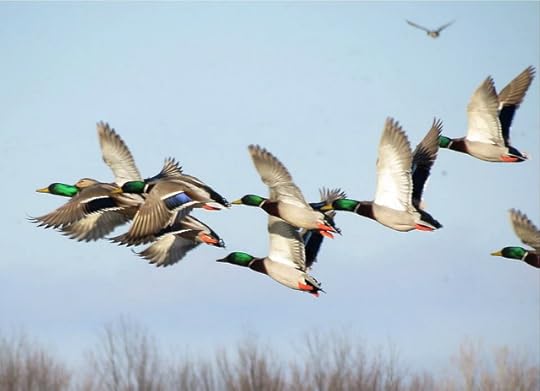
Photo: U.S. Fish and Wildlife Service Headquarters
New York State Governor Andrew M. Cuomo announced that state-owned and state-managed buildings from Buffalo to Gotham and Binghamton to Plattsburg will participate in the Audubon NY Lights Out program. What’s this mean? That unessential outdoor lighting will be shut off from 11:00 p.m. to dawn, from April 15 through May 31, and August 15 through November 15, when songbirds migrate through New York in the dark while traveling to or from their southern wintering grounds.
Light pollution impedes with the birds’ navigation system, so lost or confused migrating birds can collide with buildings, and many just circle around until they finally drop from exhaustion. It is estimated that between 365 million and nearly a billion birds die trying to navigate tall buildings and bright lights.
The obvious solution: turn off the lights.
“This is a simple step to help protect these migrating birds that make their home in New York’s forests, lakes and rivers,” said Cuomo. This is Cuomo’s second action against light pollution: In 2014, he signed a billmandating that outdoor lighting from state buildings must be at least partially shielded and directed downward.
While only 20 buildings will be directly affected by the new mandate, Cuomo hopes the program will encourage other building managers to sign on to Lights Out. Cuomo also added a special page of the State website dedicated to birding, so New Yorkers can learn more about the creatures they’re helping.
The Rockefeller Center, Time Warner Center, and the Chrysler Building already voluntarily participate in the Audubon NYC Lights Out program.
Inspired yet? Here’s a few easy things you can you do to help the migrating birds in your area: Close your blinds at night, or shut your lights off all the way if you leave a room. Use only motion-activated outdoor lighting, and also make a point to choose outdoor lighting that has shielded fixtures. Petition your local government to get on board with the Lights Out program. Super serious about birding? Conservation groups like Audubon often organize population counts and bird migration censuses to study the migration patterns and success rates of different species. These events count and identify migrating birds, survey habitat or band migratory birds, and birders can volunteer to participate in these studies. 
6 times human rights were violated in the name of soccer
PARIS, France — FIFA, soccer’s governing body, is currently in the midst of the biggest — and arguably, first — corruption probe in its history.
The charges against nine of its top officials couldn’t be more damning: the US Justice Department, which is leading the investigation, has accused them of participating in “rampant, systemic and deep-rooted” corruption that spans several years and many millions of dollars.
The picture that the indictment paints is sickening. But there’s something even worse: the effect that the soccer industry’s single-minded pursuit of profits has on human lives.
Certain injustices perpetuated in the name of FIFA’s lucrative business will never make it onto the charge sheet. They include the virtual enslavement of construction workers, child labor, mass evictions and police violence.
Here are just a few instances when the ugliness in the beautiful game touched far more than a few FIFA officials.
1. When children sewed soccer balls
Up until the 1990s, most of the world’s soccer balls came from Pakistan: an estimated 75 percent of all hand-stitched balls, the only kind professional players use. The center of the industry was the region of Sialkot, where investigations found more than 7,000 children aged between 5 and 14 stitching soccer balls full time. A 1996 study revealed that some worked as many as 11 hours a day, earning as little as 50 US cents per ball, each of which typically took half a day to make.
When childrens’ and labor rights organizations brought the abuses to light, FIFA was forced to act. In 1998 it adopted a code of conduct banning the use of child labor by its contractors and subcontractors. While the code has done much to weed child labor out of the soccer supply chain, in Pakistan and beyond, recent investigations found that the practice has not been eradicated.
What’s more, campaigners say that FIFA and its suppliers across Asia have failed to address other abuses of workers such as low wages, long hours, unsafe conditions and discrimination against women. And that’s just soccer ball suppliers. Similar problems are believed to exist throughout the sporting goods industry that produces the jerseys, mascots and other merchandise that makes FIFA and others billions.
2. When the World Cup had its own courts
How’s this for irony: FIFA, probably one of the only organizations with a lower approval rating than Congress, once demanded the right to say how others should be judged. The time was 2010 and the place was South Africa, host of that year’s World Cup. FIFA required the country to establish costly fast-track “World Cup Courts” to deal with crimes committed at the tournament.
Some said the sentences doled out were exceptionally harsh: five years’ imprisonment for the unarmed robbery of a cellphone, for instance. They also moved worringly fast. In one notable case, two Zimbabweans mugged some journalists on Wednesday, were arrested on Thursday and by Friday were beginning 15-year prison terms.
Some of the “criminals,” meanwhile, were only criminals in FIFA’s eyes: like the two Dutch women detained for wearing orange dresses to a match in Soccer City. Their offense was “ambush marketing” for a beer company that hadn’t paid FIFA for the privilege of being an official sponsor. It was only a crime thanks to something called the 2010 FIFA World Cup Special Measures Act, a special piece of legislation that saw South Africa change its own laws — and even contravene the rights guaranteed in its constitution — for the duration of the tournament. Fair play, indeed.
3. When the poor were evicted to make room for fans
Displacing your most vulnerable members of society is as much a World Cup tradition as, well, corrupt officials allegedly siphoning off eye-popping amounts of cash. In South Africa in 2010, organizers were accused of forcibly removing slum dwellers, squatters and homeless people from areas near World Cup venues, either to build accommodations for tourists or simply to spare them the sight of poverty. In Cape Town alone, several thousand people said they were forced to move into tin shacks in a settlement they compared to a concentration camp.
Meanwhile hawkers, street food vendors and any other traders who hadn’t paid a hefty fee were expelled from the “exclusion zones” established — on FIFA’s orders — around match venues. Some reported being arrested and harassed by police; some said they lost their goods and their livelihoods to the raids.
World Cup organizers in Brazil took notes. By the time the fellow BRICS nation hosted the tournament four years later, critics claimed as many as 250,000 people across the country had been evicted or threatened with eviction as part of the preparations. In Rio de Janeiro, at least 19,000 families were removed and some of the city’s oldest favelas demolished, residents reported. While authorities are bound to provide better or at least equal living conditions for those they displace, according to the United Nations rapporteur on adequate housing, in Brazil most of those evicted ended up worse off than they started.
4. When police cracked down on anti-World Cup protesters
Protesters are about as welcome at a FIFA tournament as a taxman at its headquarters. In June 2013, Brazilians began voicing their discontent with social issues including the massive cost of “their” World Cup and its little brother, the Confederations Cup, which Brazil was hosting at the time. The authorities’ answer was swift.
The more than a million demonstrators around the country were met with what Amnesty International would later describe as a “violent and abusive” police response. The rights group documented indiscriminate firing of tear gas, excessive use of rubber bullets and beatings with batons. Hundreds were injured and hundreds more detained, often without evidence they’d done anything other than exercise their right to peaceful protest.
That wave of demonstrations died down, but authorities remained tetchy throughout the build-up to the 2014 World Cup. As riots broke out again to coincide with the opening games, police were once more accused of heavy-handed tactics such as shooting stun grenades and tear gas at unarmed protesters and journalists. Behind the scenes, security forces reportedly intercepted emails and spied on Facebook activity of people judged to be “violent protesters” at risk of disrupting the tournament. Good times.
5. When gay supporters were told not to have sex
While FIFA is happy enough to get host countries to change their laws if they affect their sponsorship deals, when it comes to denouncing anti-LGBT legislation it’s surprisingly hands-off. So hands-off, in fact, that FIFA has advised gay supporters traveling to homophobic Qatar for the 2022 World Cup to quite literally keep their hands off.
“I would say they” — gay visitors — “should refrain from any sexual activities,” FIFA president Sepp Blatter opined in 2010, after his organization had awarded international soccer’s biggest prize to a country where homosexuality is illegal. He later apologized for the remark. But guess what, the 2022 World Cup is still in Qatar.
You know who else does a terrible job of making LGBT people welcome? Russia, host of the 2018 World Cup. By extraordinary coincidence, Swiss prosecutors are currently investigating the bidding processes for both the 2018 and 2022 World Cups, which they suspect were tainted by “criminal mismanagement.”
6. When construction workers died to build stadiums
What is possibly soccer’s greatest human tragedy is still unfolding: the deaths of hundreds of migrant workers in Qatar.
Laborers from Nepal, India, Sri Lanka and elsewhere who are building the infrastructure needed for the 2022 World Cup describe conditions close to slavery, where wages are withheld, passports confiscated, work demanded in 120-degree heat, even drinking water denied. If something doesn’t change, and soon, the International Trade Union Confederation warns that at least 4,000 migrant workers will die in Qatar before the opening whistle is blown.
Will something change? Hmm, let’s see: on the one hand we have Qatar, a sovereign state where political parties and trade unions are banned. On the other we have FIFA, whose general secretary Jérôme Valcke once famously declared: “Less democracy is sometimes better for organizing a World Cup.” Thousands of exploited workers would disagree — but happily for Valcke and his cronies, they don’t get a say.
by Jessica Phelan, GlobalPost
This article is syndicated from .

10 reasons you should never take your kids to Munich
A photo posted by Ricardo Gonzalez Crash (@ricrash) on Oct 9, 2014 at 3:11pm PDT
2. Be spellbound by the story enacted by dolls at the Rathaus-Glockenspiel, depicting the wedding of Duke Wilhelm V, a horseback fight, and the cooper’s dance. But then, as soon as the golden rooster chirps the end of the show, the kids are bound to scream ‘Again!’ and you have to come back for the noon and 5 o’ clock shows as well. And yes, they might also sprain their necks by looking high up at the Glockenspiel for 15 minutes at a stretch.
#glockenspiel #muchen #germany
A photo posted by ละออง (@facekate) on May 28, 2015 at 6:09am PDT
3. After a day of watching animals in impeccable replicas of their natural habitat at the Hellabrunn Tierpark, the first geo-zoo in the world, and getting to pet some of them, the kids will invariably want to bring some of them back as pets. Your offer of a puppy will be vehemently rejected.
A photo posted by Tamer Yurdagul (@tameryurdagul) on May 3, 2014 at 7:26am PDT
4. If your kids are fascinated by cars and all things speedy, taking them to the BMW Welt will be a mistake you probably can’t afford (literally!). The minivan back home won’t fare well in comparison to the sleek beauties they will see in abundance here. Plus, the adventure programs and fun detective games, all related to automobiles, are going to make things as bad as they can get.
A photo posted by Regina Kovacs (@regi_kovacs) on May 28, 2015 at 11:46am PDT
5. After a few days of exhilarating toboggan runs, downhill sledding, snow-tubing, and snowball fights, they will not only not want to go back home, but stand a high risk of hating summer (*shudder*). By all means, even if you commit the mistake of taking them to Munich, keep them as far away from the super-exciting hills of Olympiaberg and Luitpoldhügel.
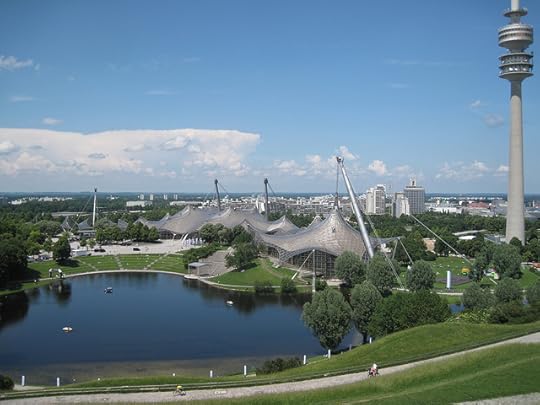
Photo: Jamie Moore
6. If you are in Munich, you are bound to end up at Neuschwanstein Castle, the dreamy hilltop castle a short drive from Munich. Once they have seen it and the treasures stored inside, good luck trying to make them believe that fairy tales are made up. Stay away!
A photo posted by VisitEurope (@visit_europe) on May 29, 2015 at 5:28am PDT
7. A few hours of jaw-dropping performances and acrobats at the Circus Krone, one of the largest and most popular circuses in all of Europe, accompanied by mind-boggling sounds and lights, will ensure that you never hear the end of it, how the clowns made faces and the trapeze artist swayed and the rhino and the horse and the this and the that…Ugghhh!
#mädelsabend @ #Teddyshow #circuskrone #munich #München #teddy #teddycomedy
A photo posted by Susi Susanna (@quadratratschn) on May 28, 2015 at 12:16pm PDT
8. 4D motion simulation cinema, interactive movie sets, adventure world, behind-the-scene insights, thrilling rides, yummy food — they all add up to Bavaria Filmstadt (one of the largest film production companies in Europe). But they also add up to falling sick from too much excitement, nagging insistence to keep going back there on every single holiday.
A photo posted by @iamsophiemarie on May 25, 2015 at 11:39am PDT
9. After a day spent getting up close and personal with sharks and shrimp, dolphin and dogfish, and over 5,000 varieties of rare, exotic, and downright weird sea creatures at the Sea Life Munchen, they will break into hysterical tears every time they see anyone eating their new friends (read: fish).
A photo posted by Geir Ringdalen (@valanelli) on Apr 12, 2015 at 7:28am PDT
10. Kids love dinosaurs, for whatever reason. A few hours spent among the relics of dinosaurs and fossils at the Paläontologisches Museum München might make them too interested in archaeology, or palaeontology, or evolution, or all three!

Matador Network's Blog

- Matador Network's profile
- 6 followers