
Matador Network's Blog, page 2112
May 21, 2015
What I learned from my Amish grandma
1. If you don’t talk about it, it never happened.
I’ve always wanted to hear about how my Amish grandma met my non-Amish, motorcycle-riding grandpa in 1942 but she would never tell me. Anyone who can do simple math can figure out she was already pregnant with my father when they married later that same year. Always a devout Christian woman, I think that she simply choose to ignore her ‘sin’ of sex before marriage as though it never happened. Whenever I asked, she would avoid the subject altogether, offering me instead some fresh-baked chocolate chip cookies from the oven or a story about how my Dad would get up every morning at 5am before school to help milk the cows, then walk the two miles (uphill both ways) to get there.
2. Hard, physical work is essential in getting what you want.
My grandmother was never afraid of hard work. During the time when my dad and uncle were growing up and they ran a dairy farm, she would always be the first one up to make coffee and breakfast then she would head out to the barn with them to start the milking. When they decided to open a plumbing store to supplement their income, Grandma learned what parts and supplies to order, balanced the books, and managed the scheduling of jobs. She singlehandedly ran that shop for 20 years along with the dairy farm. I’m pretty sure she never really slept.
3. Indoor plumbing should be celebrated.
The house my grandparents spent their whole lives in didn’t have indoor plumbing at its inception. According to legend, there was a good old outhouse on the property that was in operation until my Dad was about 10, or the year 1952. At that time, my grandfather, with the help of his friends, installed two of the largest bathrooms I have ever seen in their old farmhouse. The one on the second floor occupied what was once a bedroom. The tub and sink were a huge island in the center of the room and the toilet was in the closet. Even today, in large, expensive houses or hotels, it is rare that I come across a bathroom as spacious as that one was.
4. The quickest way to build a barn or a garage is to hire Amish.
Amish barn raisings are real. They happen quickly, efficiently, and expertly. To watch one happen is a marvelous study in coordinated team work and carpentry skill, a beautiful dance where everyone knows their moves by heart.
5. Practice slow travel whenever you can.
Even though she married out of the Amish clan, my grandmother still took many journeys in a buggy with a horse. She loved the sound of horses’ hooves and confessed that they often lulled her to sleep. She liked to see the countryside out the window, to watch the fields go by at a manageable pace, as she called it. She did learn to drive but never liked it much. She (nor my grandfather) ever once boarded an airplane.
6. Watch the sun rise and set every day.
I spent many summer days and weeks at my grandparents’ farm. Grandma would always stop whatever she was doing at sunrise and sunset and walk to the back porch to watch. She’d take a tin cup with her — in the morning filled with coffee, in the evening, whiskey — sit down in her cane rocking chair, kick off her shoes, and watch. Every time she’d say “Ah, that was a good one today, Lord.”

This story was produced through the travel journalism programs at MatadorU. Learn More
7. You are stronger than they think.
It still boggles my mind that Grandma was able to extract herself from the Amish culture. I’ve always wondered what drove her so recklessly to do so. There were whispers and implications that her father was a bit too heavy handed and she embarked on the one course of action that would guarantee her being allowed to leave his house — she got herself pregnant. I have no actual proof to this, only conjecture. I imagine it took every bit of courage she had. I wish I could go back and meet that 16-year-old Amish girl. I’d tell her that everything was going to turn out just fine.
8. You can’t take it with you.
My parents, my siblings, and I always imagined that my grandparents were socking away oodles of cash. I don’t know why exactly we thought this — maybe because they didn’t buy a lot of extravagant things and we just assumed it was because they were ferociously saving every penny. As it turns out, they somehow managed to leave this world with essentially no money left and no debt. It appears they paid cash for everything through their life — every vehicle, every piece of property, every trip to Florida and back, every present they bought us. They had somehow managed, in the 90+ years in this world, to break perfectly even. 


The most compelling argument to see the Oregon Coast for yourself
Follow Matador on Vimeo
Follow Matador on YouTube
Uncage the Soul Productions takes viewers on tour of the rugged Oregon Coast in their latest video for Travel Oregon. Filmmakers Ben Canales and his partner John Waller create a unique look at all that the Oregon Coast has to offer, from the massive waves to the jagged cliffs and long stretches of empty beaches.
Canales sat down for an interview with me over at FStoppers to tell me about the process of making this film.
When asked about seemingly cheating death in the films opening scene, Canales told me how creative moviemaking can help tell a more dramatic story.
Thanks to some thoughtful lens compression, we were able to capture scenes that look like the waves are literally crashing over our heads, but in reality were falling short in front.
I asked Canales what vision they had set out to achieve when making a film showcasing their home state.
Our big goal of this piece is to communicate the beautiful and stirring raw power of the Oregon Coast in the winter. Most people think about flying kites, dogs on the beach, and leisure sun bathing when dreaming of the ocean. We wanted to bypass that and embrace and celebrate stiff winds, stormy sunsets, and cozy lodging for this project. Oregonians naturally have a toughness to them to enjoy this aspect, but I think anyone can be thrilled and excited about standing in a big storm and feeling the rain beat down on you, knowing that a hot meal, good beer, and a fireplace is a short run-through-puddles away.

What makes me so American is my Blackness.
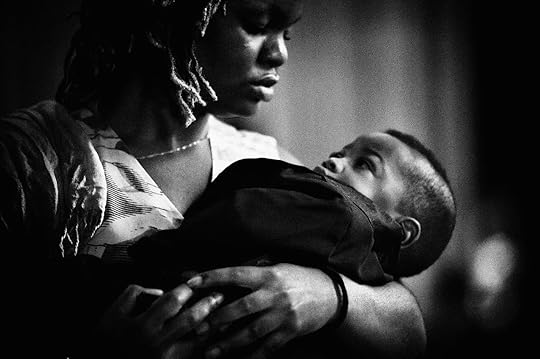
Photo: August Brill
“A powerful way to sidestep America’s reluctance to become post-racial would be for more Black Americans to become post national.” – Thomas Chatterton Williams
As 2015 already seems exhausting with regards to the frequency of police brutality, I’ve been having parallel conversations with a number of friends, mostly Black, about their holiday travels. Non-ironically, almost all of them went abroad. Between the friend who spent three weeks in Trinidad and Jamaica, the friend who went to Ghana for almost a month, and my own holiday in France, it was clear without having to be stated: the fatigue of American life has sent a number of my friends, particularly my Black friends, abroad.
Going out of the country is hardly newsworthy. Facebook is full of travelers, mostly childless Millennials flexing their international check-in muscles at hole-in-the-wall bistros across Europe and half-ruined Buddhist temples. A few friends are feeling thirsty and bohemian, trapezing across Southeast Asia; another friend is hiking across East Africa; a poet friend is planning her tour across South Africa. But the reasons my friends are travelling doesn’t quite split down a racial line – rather, race and class illuminate the fractured spaces. Ostensibly, my friends, irrespective of race, are travelling to get away from the ties that make life respectable but taxing. Everyone said, “I need a break,” but the subtext from my Black friends was screaming, “I needed to get out of the United States because I can not breathe.”
And then there are those who can neither breathe nor leave. The activists across the country who organize, who fight, who sacrifice, who make decisions like choosing between bus fare to protests and eating dinner — they can’t leave. Most Black Americans, when shit starts hitting the fan, the walls, etc. — they can’t leave. It’s not that they don’t want to. They too dream of lying on beaches of white sand and warm waters with their families. They too want to travel the world. They want to know what it’s like to mention places like the Louvre and the Tate with a casual boredom that happens when money, opportunity, and freedom have bred familiar contempt. Eric Garner was selling cigarette loosies (but not that day) because of a judicial and economic system that denied him more formal alternatives; the probability that he or Mike Brown or Kimani Gray could “just get away” is laughably and insultingly, low.
Living while Black in America requires an intellectual and mental athleticism and finesse that has few peers. It is the startup of all startups. It is the ultimate marathon.
The end of 2014 was a traumatic period for lived Blackness; the miscarriages of justice for Clinton Allen, Michael Brown, and Eric Garner left me completely drained. Being Black at the end of 2014 left me with an overwhelming mix of anger and despair that can only be described as fighting with an opponent whose arms are so long it feels like air boxing. For many, “Black Lives Matter” reminded them how much their lives actually don’t. The paradoxes of Blackness in late 2014 were reconciling the love of a country that your Blackness has built, but that hates you. We left because of fatigue, because the arc is long and we are still so very young to be this exhausted. Anywhere but here was appealing. “Why are we even staying in a country that hates us?” someone asked me on Twitter. I couldn’t really answer that. I was conflicted. As much as I needed to go, I didn’t want to. I stalled looking for an Airbnb. I waited until the absolute last minute to renew my passport. I was late when contacting friends in Paris. I briefly wondered if I’d regret not booking a one-way ticket. I wasn’t even completely sure what I’d be writing about in Paris. I just knew that I wouldn’t be in the States. But I felt forced out.
I chose Paris because I like problems and paradoxes. I went knowing that Paris was not free; Paris has not been free since the Romans colonized and humiliated the Gauls, who never forgot it and in turn, colonized and brutalized Algeria, Morocco, Vietnam, Senegal, Cote d’Ivoire, and more. I knew better than most that racism in Paris can be acute, if not for African-Americans, most surely for the North Africans, whom I have been mistaken for on occasion. Paris has always loved African-Americans, even if French history itself has despised and exploited Blackness. As such, while New York was filled with protests through the holidays, I floated through Paris for nearly two weeks mostly unbothered, the assumption being until I opened my mouth that I was from Martinique or Guadalupe. The Martiniquaises and Guadeloupéens more or less, are people from island colonies in which their very racially mixed population are widely cited testaments to the alleged French commitment to racial mixing and thus, racial harmony. Even when my Americaness was revealed, it was not a problem for two reasons: one, I was African-American (the only Americans the French respect) and two, I would be leaving soon – but while I was there I was spending money, not like those other Black immigrants sponging off the French economy. Perhaps this is what White privilege feels like, I remember thinking. You can convince yourself that none of this is really about you. Should you even think that hard about it to begin with.
I failed this practice test of White privilege miserably and immediately. The protests that I left behind in the States had ignited passions in Paris; weeks before I arrived, activists took to the streets to protest the human zoo exhibit. Gross old Frenchmen suggestively raised their eyebrows and when they could, whispered loud enough, “café au lait.” I interviewed people of color in Paris about their experiences, which ranged from wanting to open a Black Panther Party chapter at the Sorbonne to forced indifference. The correct answer, had I passed this test, would have been to assign it all to Frenchness, to the lasciviousness of French men, to the complex colorblindness of French society that I, as a race-obsessed American, would never understand. But it seemed like a trick answer given how deeply French functions as a proxy for “White.”
I thought of another dear friend, who now lives in London with no immediate plans to return to the States. His words before he left always ring clear: “There’s no law that say that you have to make your home in the country you were born in. In fact, America was built on a whole mass of people that did exactly the opposite of that.” But I didn’t want to be French, or British, or even African for that matter. How could I be? I am so thoroughly American. And part of what makes me so deeply American is my Blackness. Blackness, as a concept of not Whiteness and a justification for exploitation, was put on the books in the Americas first, most notably in 1639 and 1705, though the slave trade had begun and been perfected by the Europeans.
If culture has always been America’s most valuable export, the fruits of Black labor are still its biggest and most lucrative. And since Blackness and subsequent racial constructs were first created, used, and exported to the rest of the Americas, Europe, and even Africa in order to justify the economic system of slavery, how, in my Blackness, could I be anything but American?
African-Americans, as it pertains to descendants of American slaves, have every logical reason to permanently leave the United States of America. African-Americans have also ingeniously employed every seemingly illogical reason to stay. Incredibly, many of them are returning to the lands of plantations, sharecropping, and lynching that just a generation or two ago sent their grandparents fleeing north as political refugees. If we were to look at this objectively, it is clear that African-Americans should consider their investment in America as sunk costs. The cultural capital of Black America would presumably travel wherever they go. Try elsewhere. Start over. But yet, African-Americans do not. Why they do not leave, collectively, I can’t answer. But I know why I cannot permanently leave. I have lived elsewhere, but it is here, to me, that the breadth of Black sorrow has become the most radiant form of life affirming brilliance — and it is addictive. Living while Black in America requires an intellectual and mental athleticism and finesse that has few peers. It is the startup of all startups. It is the ultimate marathon. Blackness demands from its cognizant participant a rigor and focus that can only produce majesty and mania. It is both heaven and hell. It is mercilessly reviled and hopelessly imitated. It is in short, a spiritual experience.
The reasons why we left are explicit and endless. The reasons why we returned are more complex, more paradoxical. Black America has consistently provided the moral compass and blueprint for a country in which its White faction has consistently, more or less, asked us to leave. And perhaps we would have left, if we knew that America — one of the brilliant masterpieces that Blackness has created, the thing which our soul, over centuries, has been given to and pillaged for — would be all right without us. Would you abandon your masterpiece? For a people denied property, rights, the opportunity to possess much less bequeath, America is what we own. It is our life’s work, our investment, our birthright, our trust fund. We are past the point of sunk costs, or even investments; it is a matter of ownership, stewardship. Our deeds and receipts are written in blood that still flows out of brutality and exploitation. And while America as a proxy for Whiteness has never thought to wonder this, many of us are more terrified of what America would become without us. Or perhaps it has. And it could be that the inability for Blackness to breathe is what America would feel too, if we left.
This article originally appeared on Medium and is republished here with permission.


How to piss off someone from Wyoming
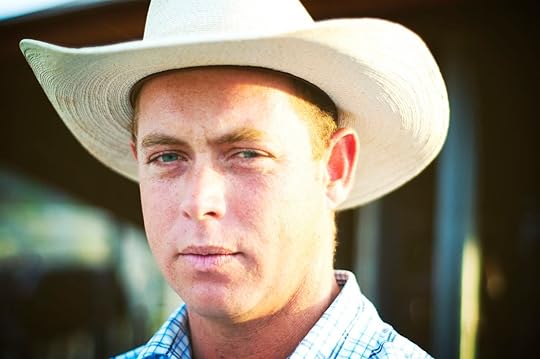
Photo: David Salafia
1. Assume we’re from Jackson Hole.
There’s only 550,000 Wyomingites and less than 2% of us claim Jackson Hole as our residence. Plus there’s a ton of transplant wannabe Wyomingites in that neck of the woods, so take any impressions they make on you with a grain of salt.
2. Say that Jackson Hole is the only worthwhile place in the entire state.
That corner of Wyoming is undeniably beautiful and deserves the hype, but our entire state abounds with incredible places. However, modesty is one of our strong suits and we prefer not to draw the crowds.
3. Tell meth jokes.
When did this virulent substance become humorous? Despite the amusing portrayal of the meth industry in the television series Breaking Bad, this stuff is a real menace. Widespread use is certainly not the norm, but in affected areas the addiction to these substances tears apart families and communities. Please get a little more creative with your jokes and lets laugh about something that’s actually funny.
4. Classify us all as conservative extremists.
Wyoming will probably always go red in a presidential election, but that doesn’t mean we all idolize Dick Cheney. We have plenty of freethinking individuals that don’t sound like dogmatic Fox News anchors. Yes, we might have different views, but many of us see beyond the elephant and donkey show in Washington, and we don’t let politics define us.
5. Complain about the long boring drives.
So you’ve survived the 401 tedious miles that make up Wyoming’s stretch of Interstate 80. Congratulations, you did it once! To get just about anywhere in Wyoming you can count on a lengthy uneventful cruise, and we’ve been doing it our whole lives. Can’t you recognize the beauty that lies in the endless prairie? Can’t you just be happy that such ‘nothingness’ exists? Either way, we do appreciate your contributions to the Wyoming Treasury Department via the Highway Patrol.
6. Drive dangerously slowly in mild winter conditions.
Snow flurries do not warrant driving half the speed limit. You are only creating a hazardous situation by going 20 mph on the Interstate. If you can’t handle driving in wintery conditions please stay off the roads.
7. Ask if we marry our cousins.
We pride ourselves in strong family connections, but not like that.
8. Ask if we ride a horse to school.
Nope, another stereotype unfulfilled. We take pity on you if that was a serious inquiry.
9. Say there’s nothing to do.
In much of the state you can actually do anything you want, but you’re responsible for making your own fun. On second thoughts, you can continue thinking we’re all bored to tears here… but whatever you do, please don’t visit and try to bring your city ways with you.
This story was produced through the travel journalism programs at MatadorU. Learn More
10. Bring your noise-making machines into our solitude.
Wyoming is unique and beautiful in many ways. We relish the solitude that sits out the back door and we’d prefer to keep tranquil. So if you’re planning to rev up your snowmobiles, motorcycles, boats, and ATVs on public lands, please don’t come to Wyoming to do it.
11. Play something Country in our honor.
Yep, there’s a lot of rural living going on in Wyoming, but that doesn’t mean we all enjoy that clap trap music industry stuff spewing out of Nashville. Do yourself a favor and get to know us a bit before assuming we enjoy the twangy cheese that is corporate ‘Country music’. And by the way, folk and bluegrass are not synonyms for Top 40 Country.
12. Claim our energy economy is the source of global warming.
Until you start charging your smart phone on your own methane releases, I suggest you worship Wyoming for helping to maintain your endless supply of cheap energy. When you live completely off the grid you can proceed to bash our carbon industry, but for now be realistic about your own role as a consumer. Plus, give us some credit for sacrificing our landscapes and wildlife habitats to build wind farms for out of state ‘clean energy initiatives’. 
May 10, 2015
Tell your mom how beautiful she is
Keith Rivers, the director of A Mother’s Day Tribute, asks a very important question: when was the last time you told your mom she was beautiful?
Most of us don’t remember.
On this Mother’s day make sure you tell your mother how much you appreciate her. And tell her she is beautiful.
Follow Matador on Vimeo
Follow Matador on YouTube

Mother's Day around the world
MOTHER’S DAY IS RIGHTFULLY CELEBRATED all over the world — if there’s one thing we can all agree on, it’s the awesomeness of our moms. Giftcloud, a digital gift card app, put together this nifty infographic on how Mother’s Day is celebrated around the world. Check it out.


In the drone race, Europe is killin’ it
While the United States grapples with the effectiveness and morality of military drone strikes, Europe is seeking to reap the benefits of bringing the remotely piloted aircraft into civilian life.
Authorities on this side of the Atlantic are hoping to harness drone technology to help farmers mind their flocks, engineers maintain pipelines and power cables, and delivery services send parcels faster and cheaper.
“Europe needs to be ambitious and embrace drones as an essential part of the future of flying,” says Violeta Bulc, the European Union’s transport commissioner.
“Drones are already flying, and the market is pushing for more,” she told a recent aviation conference. “We need to create the right environment for them to flourish.”
Europe’s market is now governed by a patchwork of national regulations.
Spain last year banned commercial drone flights despite an outcry from its tech and film industries. France, Italy and others take a more liberal approach. Now, the EU is working to introduce common rules that would address privacy and safety issues, while allowing commercial drones to operate around the 28-nation bloc.
In March, national governments, civil aviation agencies and industry representatives met in Riga, Latvia, to map the way ahead. They agreed to draw up regulations by December “to allow businesses to provide drone services everywhere in Europe as from 2016.”
Industry experts say that could leave the US civilian drone industry trailing in Europe’s wake.
The drone industry in the United States says it loses around $27 million a day due to rules that effectively ban commercial flights by unmanned aircraft systems (unless they get special authorization from the Federal Aviation Authority).
“If European regulators have their way, drone operations in the EU are going to become very permissive, far outpacing American regulations,” Gregory S. McNeal, a drone expert at California’s Pepperdine University, wrote in a regular blog for Forbes magazine.
As it struggles to inject new life into an economy struggling to recover from the euro zone debt crisis, Europe sees clear advantages in drone investments.
The EU estimates civil unmanned flight could generate $17 billion a year by 2020, and the aerospace industry says building and operating drones will create 150,000 jobs in Europe by 2050.
Some aren’t waiting that long. In Italy alone, 85 schools have been authorized to teach drone piloting in the past year, according to the country’s civil aviation agency.
France, which became one of the first countries to regularize commercial drone flights in 2012, now has more than 1,200 operators.
Bordeaux wine producers operate drones to monitor the quality of grapes and rapidly detect signs of disease on the vines.
French energy giant GDF-Suez has started to use surveillance drones to check for potentially damaging construction work close to its network of almost 20,000 miles of underground pipeline.
During recent floods in southern France, local authorities hired commercial drones to monitor water levels, assess damage and prioritize response operations.
Companies like Amazon, Google and DHL are preparing to start commercial services using remotely piloted planes, but Europeans are likely to get their goodies dropped in the backyard by miniature helicopters before Americans.
Amazon said that American legislation prevents it from even test-flying its delivery drones in the United States. So it shifted its experimental work to Canada.
Meanwhile, DHL was able to launch a groundbreaking regular drone delivery service in Germany last autumn, taking medical supplies eight miles from the mainland to the remote North Sea island of Juist using a yellow-painted four-rotor “parcelcopter.”
Europe hopes its incoming legislation will encourage more such initiatives to keep it at the forefront of a fast expanding market, even as officials insist new EU-wide standards will take full account of the privacy, safety and security questions.
The European Aviation Safety Agency has put forward a “concept of operations for drones” that could form the basis of the legislation due to be adopted by the end of this year.
It proposes placing drones in three categories, ranging from the most simple that require no specific authorization — provided they are not flown in risky areas, such as over crowds or near airports — to more complex drones requiring a risk assessment and government clearance, and a highest category that would be treated like traditional manned aircraft.
“We have quite an open approach,” Ilias Maragakis, an EASA spokesman, said from the agency’s headquarters in Cologne, Germany.
“Our priority is not just to develop regulations, but to make sure the regulations do not strangle this new and upcoming industry,” he told GlobalPost. “Always keeping safety in mind, but creating a fertile field for this industry to grow.”
Civilian deaths from US drone strikes in Yemen, Pakistan and Afghanistan, and recent terrorist fears after mysterious drones appeared over sensitive sites in Paris have given unmanned planes a sinister reputation. The European industry however is stressing the aircraft’s good-guy applications.
Relief organizations have been using drones to survey damage and search for survivors in the wake of the Nepal earthquake — although the government announced restrictions Wednesday over fears they were revealing sensitive information.
A Malta-based humanitarian group says its two drones have helped locate and rescue thousands of migrants seeking to cross the Mediterranean Sea into Europe.
Researchers in Belgium and the Netherlands are testing “ambulance drones” to fly defibrillators to cardiac arrest victims, saying their speedy arrival could increase survival rates by 10.
And conservationists are using drone-borne cameras to catch poachers preying on rhinos and elephants in African game parks.
By Paul Ames, GlobalPost
This article is syndicated from GlobalPost.

17 attributes of a Polish mom

Photo: David Goehring
1.
A normal mom will let you eat frozen foods on occasion.
A Polish mom will spend time cooking naleśniki, gołąbki, bigosz, fasolówkę and biały barszcz or żurek.
2.
A normal mom will compliment you on your outfit.
A Polish mom will tell you everything that is wrong with it, and only when you change or cover up the offending item, will she say, “A tak dobrze wyglądasz.”
3.
A normal mom will not give you a refill of food if you don’t ask for it.
A Polish mom will fill your plate whether you like it or not.
4./
A normal mom will let you eat certain foods with your hands.
A Polish mom will hand you a fork, knife, and spoon with your meal, and expect that you use them.
5.
A normal mom will not bring anything for the guests if they say that they do not want anything.
A Polish mum will put the babka, sernik, makowiec, chruściki and jabłecznik on the table anyway, along with the tea or coffee.
6.
A normal mom will ask your teacher why you’re failing.
A Polish mom will get on your case to do better.
7.
A normal mom will let you stay indoors at times.
A Polish mom will drag you outside for a walk or to help her garden.
8.
A normal mom will set automatic sprinklers to water her garden.
A Polish mom will spend three hours hand-watering everything.
9.
A normal mom will take you to the doctor.
A Polish mom will give you Amol, put on olej kamforowy, and only when you feel half dead, take you to the doctor.
10.
A normal mom drives according to the laws in the state.
A Polish mom is one third street drag racer, one third NASCAR racer, and one third normal driver, and she chooses the driving persona depending on the situation or her mood.
11.
A normal mom will give you pointers when you begin driving and then stay silent.
A Polish mom will constantly tell you how to drive, and will press on the invisible brake on the passenger’s side while simultaneously yelling “ZWOLNIJ!” two miles away from the red light even though you still have time to slow down.
12.
A normal mom will treat your boyfriend as your boyfriend.
A Polish mom starts asking where is the engagement ring or when you’re moving in together when you first announce you have a boyfriend.
13.
A normal mom will let you text on your phone or chat on Facebook.
A Polish mom will lean over your shoulder and ask who you’re talking to, and why.
14.
A normal mom asks questions , well, like a normal person.
A Polish mom is the KGB interrogator whom you should fear — and if she is not satisfied with your answers, she will continue to do so until you’re completely worn out and worn down.
15.
A normal mom will talk to you a few times a week.
A Polish mom needs to talk to you every single day at least once by phone, and the rest of the day she needs to constantly keep in touch by text.
16.
A normal mom says she loves you and leaves you alone.
A Polish mom shows she loves you by constantly butting into your life.
17.
A normal mom will bring you antibiotics and let you sleep.
A Polish mom will bring you antibiotics, a heaping plate of food, and tea with lemon before helping you change your PJs so you have dry clothes while you sleep. 
May 9, 2015
12 things your Mexican mom does better than anyone else in the world

Photo: Taylor Ward
Hacé clic para leer este artículo en Español. Tambien podés darnos un “me gusta” en Facebook!
1. Sopa aguada
Even when bottomless plates of soup were a definite part of your childhood nightmares, you must accept that your mom makes the best soup in the whole wide world and there’s no discussion about that.
2. Calling you names depending on her mood
M’hijito: peace and harmony reign the world.
M’hijo: all good, could be better.
Juan: Something you did or forgot to do… she noticed already.
Juan Alfonso: two names… time to start worrying.
Juan Alfonso Sánchez: as we Mexicans use to say, “ya valió madre”.
3. Taking away your boredom
There’s a lot to do around the house. If you’re bored and are innocent enough to claim it out loud, sooner rather than later you’re gonna be chopping onions, hanging clothes to dry, folding dry clothes, cleaning beans, sweeping the sidewalk or cleaning up your room, which surely looks as a dog’s nest… Are you still bored or you want some more?
4. Predicting the future…especially when the weather is involved
If she tells you to get a sweater, you better follow her advice; it’s quite probable she already detected the polar masses of air approaching. Mexican moms have a weather station integrated into their senses and it’s far more accurate than the Weather Channel. Better grab that jacket and the umbrella when she tells you so.
5. Becoming a human lie detector
“Veme a los ojos y dime que no fuiste tú” (look into my eyes and tell me it wasn’t your fault)… is the typical phrase that indicates she’s switched to lie detector mode. You know there’s nothing you can do about it, she’s more efficient than the polygraph test and sodium pentothal together. Now is a good time to confess and surrender to her will.
6. Improvising costumes in record time
Mexican moms have the uncanny ability to transform three sheets of crêpe paper and some glue into the most faithful representation of any national hero, with the corresponding headdress and everything… overnight.
7. Smashing your depression with a sugar overdose
No breakdown is powerful enough to prevail against your mom’s arroz con leche or any other dessert in her arsenal. In case of a true emergency, she always keeps enough chocolate Abuelita to leave you swimming in serotonin.
8. Treating your discomfort with home remedies
Half of the plants she keeps at home are there for something more than aesthetics… including the garlic and onions in the kitchen. You probably know that there’s nothing better for your soared throat than a good garlic or bougambilia infusion, that your stomach upset will calm down after having some cinnamon or chamomile, and that no evil resists a direct confrontation with arnica. Thank your mom for all this knowledge.
9. Scaring the hell out of you with urban legends and myths
She told you that crooked mouths are a consequence of leaving the dinner table in a rush, that men with sacks patrol the city looking for naughty children, that watching tv for too long or from an inappropiate distance is related with becoming cross-eyed, that La Llorona has been seen around here and that your hand will rot and dry if you ever dare to raise it against her… All these efforts just to make you a better person!
10. Finding lost objects
You know this scene by heart because you’ve been there uncountable times: your mom sends you looking for her purse, she’s positive it’s inside her bedside drawer; you go to her bedroom and open the drawer to confirm the obvious… the purse is not there; you empty the drawer and behold it’s emptiness; you now put everything back in and return to your mom to give her the bad news; the dreaded sentence arrives “Si voy y lo encuentro… ¿qué te hago?” (if I go and find it… then what?). You know she’s gonna find it, but it’s always surprising to see how easily she manages to make the damn purse appear out of thin air. You doubt your senses for a while and fantasize about your mom having a night job as a magician. Was the purse always in the drawer? Were you really such a distracted kid? Was your mom bullying you?
11. Making your hangover disappear
Your mom’s breakfast menu leaves no room for competitors. Her chilaquiles and those scrambled eggs in green or red salsa are just perfect to jumpstart your system after too much partying. Feeling good already? Perfect! Now you can go buy some groceries, pick up the laundry, give the dog a bath…
12. Being right
You know it’s true. 
Matador Network's Blog

- Matador Network's profile
- 6 followers

