
Matador Network's Blog, page 2117
April 18, 2015
You know you're an Anchorage local

Photo: Nano Anderson
You think moose are extra-large, dumb cows that like to walk through town on occasion.
There are two things every Anchorage visitor wants to see: the Aurora Borealis and a moose. I shouldn’t judge too much because when I first moved to Anchorage I was in the same situation, but now as a bona fide resident I can tease these silly, cow-chasing Outsiders.
Moose are definitely something to be wary of, dumb + huge = dangerous, but they aren’t all that special. Some towns have deer, we have moose. Actually, we have 1600 resident moose.
You consider above freezing temperatures any time between November and March as warm.
In Fairbanks during the winter it is automatically assumed that when someone says “twenties” or “thirties” they mean “negative twenties” and “negative thirties” (Fahrenheit), so compared to the rest of Alaska, Anchorage is a pretty warm place. However, when people from Outside (aka the lower 48 or elsewhere) first visit or move here it can be a bit of a shock. A standard year won’t see above freezing temperatures until March and snow is still possible into May.
You’ve met, or your friends have met, the Palins.
Just 45 minutes up the Alaska 1 Interstate (yes, we have Interstates) lies the town of Wasilla where former Alaska governor and Vice Presidential nominee Sarah Palin lives along with the rest of her family. Approximately 35% of the workforce in Wasilla commutes each day into Anchorage and Anchorage already holds 40% of Alaska’s population. Travel between the two cities is commonplace. Eventually, someone makes the connection.

More like this 11 signs you were born and raised in Alaska
You hate reality television featuring Alaska.
It’s not reality. Trust me.
You have a strong, probably negative, view of Chris McCandless.
The very barebones story of Chris McCandless is he left his prosperous family in Virginia to travel around the country eventually hitchhiking his way northwards to Alaska where, in 1992, he starved to death in a VW bus near Denali National Park.
To some, McCandless was a free spirit, representing anti-consumerist ideals and a throwback to the old days of exploration around the United States. To others, he was an uneducated squatter and poacher who got what was coming to him. I’ll let you make your own opinion. We definitely have ours.
You own bear spray, a gun, or both.
According to the Alaska Department of Fish and Game, approximately 250 black bears and 60 brown bears live in and around Anchorage. Not to mention the moose.
I personally subscribe to the philosophy that guns make big animals angry, so I opt for carrying bear spray when exploring wooded areas around the municipality. Essentially pepper spray on steroids; bear spray produces a strong cloud of capsaicin, the spicy compound in peppers, with a range of up to 20 feet for ten seconds. Nothing wants to stick around in that. Whether you belong to the gun or spray camps, if you want to go out during the summer you should be able to protect yourself.
You drink coffee.
When I moved to Anchorage, I quickly learned that many people and events around here only provide coffee as a hot beverage.
Anchorage and Seattle are neck and neck as far as which city contains more coffee shops per capita. In 2005, Anchorage was ahead at 2.8 shops/1000 residents; in 2011 Seattle held the lead. Despite the best efforts of Kaladi Brothers (the Anchorage version of Starbucks), Alaskan free spirit keeps our number up due to roadside, drive-through coffee stands in nearly every available parking lot.
You never expect fruits and vegetables to last long.
95% of the food consumed in Alaska is shipped in from Outside. Those extra days in transport mean a shorter shelf life and higher costs once finally reaching a store. That Chilean apple or Californian avocado is not going to last as long in the kitchen when it spent several days being barged across the northern Pacific to reach Anchorage.
You, or your neighbor, work for an oil company.
Alaska has oil, many entities want that oil. Most major US or British energy companies are here extracting a piece of the fossil fuel pie along with the necessary offices, field workers and contractors. Much of the reason Anchorage is the relatively large size it is comes from the oil boom of the 70s.
You’ve seen the Iditarod.
The Last Great Race stretches over one thousand miles from Willow, 80 miles north of Anchorage, to Nome. A day before the true beginning of the race a ceremonial start winds eleven miles through Anchorage beginning at 4th and F downtown, stretching a mile and a half through city streets before breaking onto the bike paths and trails that connect parks across the city.
I watched the night before the ceremonial start as dump trucks piled high with snow came in to town to line the city streets with what would hopefully be enough slush to protect the sleds from harsh concrete the next morning. It mostly worked.
You know what skijoring is.
For those who want to race sled dogs without investing what amounts to their whole life in time and money managing an entire dog team, we have skijor racing. It’s cross-country skiing with the aid of dogs for additional speed. One to three dogs are attached to a skier, then let loose to see which group can complete a five to twenty kilometer circuit the fastest.

This story was produced through the travel journalism programs at MatadorU. Learn More
Hearing explosions is not abnormal.
The majority of Alaska is unpopulated, which Air Force and Army folks at the neighboring JBER use to test new aircrafts, technologies, and practice the proper way to blow something up. Those of us living in east Anchorage can sometimes hear said practicing.
I actually applied for a biological field research job that would take place on a base where, if I had gotten the job, I would have had to learn the proper procedures when one comes across unexploded military ordinance. That’s not a standard field practice.
At least some of the meat in your freezer is wild.
I’ve mentioned moose and bear, both of which have a hunting season, but Alaska also contains fish, shellfish, ducks, ptarmigan, wild sheep, and caribou. Subsistence hunting and fishing is still critically important to countless people across the state and a great supplemental food source even for those in the larger towns that have access to regularly stocked stores. Wild meat is cheaper, healthier and, at least for now, abundant.
Vegetarians, don’t you worry, our wild blueberries and lingonberries are killer. 


Gone from California too long

Photo: Sarah
1. You wish there were other people beside you who said things like “super awesome,” “hella,” and “sweet, dude.”
Like any place, California has its own slang and you never feel silly reveling in it. Until you leave. And then people mock you for sounding like a surfer, even though you’ve never lived close to the ocean.
2. You spend a shameful amount of money on avocados.
Back home, avocados aren’t a luxury, they are a staple. When you see one for 3 dollars, you don’t even question buying it. Avocados 24/7 is your goddamn right.
3. The rest of your money goes towards Vitamin D supplements.
The sunny weather in California often gets taken for granted, until you leave and experience a straight month of cloudy skies and rain. You miss your best friend, the sun, and whenever you don’t see him, it’s another Vitamin D down the gullet to keep away those blues.
4. You haven’t driven a car in over a year.
California, as awesome as it is, isn’t exactly known for its stellar public transportation. No longer do you have to drive just to get to the grocery store or even work. You do find yourself missing road trips, though…
More like this 11 signs you were born and raised in California
5. You find yourself craving things like chia seeds, wheatgrass shots, and almond butter.
When living back home, you sometimes laughed at all the hippie health crazes people cycled through. But now, you find yourself dreaming about smoothie recipes and making your own cheese.
6. You no longer have a tan.
A good tan is an art. It doesn’t matter if you live in Northern or Southern California; you’re going to have some color in that skin, or people think you’re sick or anti-social.
7. You’re getting fat.
You don’t even have to try to stay in shape when you live in California. People will be calling you up for hikes, bike rides, or yoga class all day, every day. It’s not just about working out. It’s about being seen working out.
8. You go into a valley girl/dude accent when talking to other Californians.
When you Skype your friends back home to gossip and someone overhears, it can be embarrassing. Every Californian thinks they don’t have an accent, until someone rudely points it out.
9. You grow angry at people back home who are not acknowledging the drought.
There’s a drought, people. Conserve your water. Please, leave something of California for us to enjoy for when we come back home.
This story was produced through the travel journalism programs at MatadorU. Learn More
10. You can’t even remember what In-n-Out tastes like.
It was magical, right? You have faint memories of gooey cheese and grilled onions, but it feels like a fever dream.
11. You no longer get free weed.
I’m sorry, you want me to pay for you for weed?! Hahahahahhahaha, good one. Wait, really? I thought this was a sharing space.
12. You no longer remember the annoying things about California.
You tell all your friends to come visit you because California is all sunrises, majestic forests, salty surf, and sunsets. Nope, no downfalls at all.

Italy's running out of pizza makers
GENOA, Italy — There are few things more quintessentially Italian than pizza. Yet the country that introduced it to the world is having a hard time finding enough Italians who want to make it. Restaurants are short about 6,000 pizza makers. Almost half of young Italians are unemployed, but few want to make pizzas for a living.
Pizza-making is not the only job to have lost appeal among young Italians. Italy also lacks carpenters, nurses, electricians, and even its famous tailors. Some 150,000 of these manual jobs remain unfilled. One problem, economists say, is that schools aren’t preparing students for this kind of work. But another is cultural: These jobs have lost their prestige.
By: Damiano Beltrami, GlobalPost
This article is syndicated from GlobalPost.

April 17, 2015
Two travelers

Photo: James Evans
SOME PEOPLE TRAVEL to reassure themselves that the grass growing in their backyards is as green as the stuff growing anywhere else.
They compare the cut, the colour and the fertilizer of where they are with where there’ve been in the hope that they will find that, out of 196 countries in seven continents, their little patch of Earth is just a little better than the next place.
After spending thousands of dollars on plane tickets, tours and taxi fares, they leave their homes in search of what they can see on an average day in an average life and find themselves dreadfully disappointed when things are faster, slower, dirtier or simply different to what they are used to.
The three German men behind me won’t shut up.
It’s 11pm on a bus from Bangkok headed to Surat Thani and for the last two hours they’ve been complaining about the efficiency of the Skytrains, the checks at Suvarnabhumi airport and even the cheap seats on this cheap bus are a little too cheap compared to the German standard of squalor.
I don’t know why they’ve come.
They hate the spice in the food, they hate the traffic in Bangkok and, in the most ironic utterance of the evening, they hate that there are so many tourists around in the tourist hot spots.
As they kvetch and cavil deep into the stifling night, I have to resist the urge to tell them to go home.
Firstly because nobody likes an eavesdropper and secondly because I’ve had just enough lack of sleep to saunter clear off the reservation and start insulting German national treasures like bratwurst, lederhosen and Jägermeister in defense of tom yum, novelty shirts and Sang Som.
Their tirade goes on.
It ebbs and flows past temples, ladyboys and glowing Buddhas and eventually I get to thinking that there are two kinds of travelers.
The first are like these German men.
They leave home hoping to find something just like it somewhere else. Their logic is that people in other countries can look different and speak other languages but when it comes to what they eat, how they travel and how they use the bathroom, this type of traveler’s enjoyment of the country grows proportionate to any perceived similarities rather than in celebration of difference and discovery.
this type of traveler’s enjoyment of the country grows proportionate to any perceived similarities rather than in celebration of difference and discovery.
Essentially, they pay lots of money to do a comparative study and ,when they touch down, their happiness increases relative to the number of Starbucks’, Burger Kings and McDonalds they can find in a 1km radius.
The second type of traveler has come to be somewhere else.
They’ve stepped out their door a million miles away because they know there is more than one way to live life and they are bent on seeing what this world has to offer in terms of taste, ideology and smiles exchanged across language barriers.
They’ve seen their own world and take pride in it but rather than talking about how wonderful it is, they ask the locals what they love about their own country.
They ask them where to go and what to eat and instead of experiencing a new place in the soft, packaged form peddled by travel agents, they jump off the plane and into this new space with only their whimsy and wits to lead the way.
In Thailand, they eat Thai food, they use the bum guns and the tuk-tuks and they do everything in their power to shake off their old self and forge a new incarnation that can be happy and inspired wherever they are.
This kind of traveler immerses themself in any and many versions of the new country and tries to figure out why different people do things in different ways and, when they get home, they have brought a bit of the place with them in the guise of recipes, philosophy or a talisman that reminds them that there is more than the ordinary and the every day.
And it is only some saving, an open mind and a night flight away.
As I listen to the Germans grumble, I understand that I can be better about this.
I realize that even when I get home, I can do so much more about letting people be more like them and less like me and I feel any vestiges of homesickness fall away with the promise to be present and accept my travels for the novel and exciting gift that they are rather than wishing anything was more like home.
Namibia isn’t going to up and leave.
It’ll be just as bright and as beautiful as I remember when it’s time for me to head back and, even though I would kill for a braai, some feta cheese and a day that doesn’t mean certain death to a dozen mosquitoes, I promise that I will stop looking for home in a place that is similarly wondrous but nothing like it.
Not better or worse.
Just different.
This article was originally published on Martha Mukaiwa’s blog and is reproduced here with permission.

7 reasons to move to Romania

Photo: bortescristian
1. The internet is fast and cheap.
When many people think of Romania, they think of horses and carts, orphanages and vampires. They don’t think of awesome internet access — yet that’s exactly what Romania has to offer. Romania currently has the fastest download speed in Europe. My service currently costs about 12 USD a month.
2. The cost of living is pretty cheap in general.
For basic goods, Romania has some of the lowest prices in the EU. Rent in Bucharest — the most expensive city in Romania – can be as expensive as you want it to be, but you can get a comfortable place for less than $400 a month, and often it’s much less.
A good bottle of wine can cost as little as $6. I recently ordered two pizzas, a dessert pizza, chicken wings, and mozzarella sticks from a local pizza delivery company for about $12 (and due to a promotion, they threw in a bottle of wine for free).
While wages for a majority of Romanians are notoriously low, if you work for a multinational company, an international school, or as a successful freelancer, you can live really comfortably here on much less than you need at home.
3. You’ll have epic road trips.
While the roads in Romania are by no means perfect, Romania is a cool place to see by car. You have the Transfăgărășan Highway — a long, meandering road through awe-inspiring mountain scenery. When the road was featured on Top Gear, Jeremy Clarkson was so impressed he called it “the best road in the world.”
But apart from that, being able to watch the tranquil countryside and menacing mountains pass you by, and having the opportunity to stop in picturesque rural villages along the way, makes seeing Romania by car an unbeatable experience.
4. Learning basic Romanian language skills isn’t too difficult for native English speakers.
The US Foreign Service Institute categorizes languages based on how many hours it takes for native English speakers to learn them. Romanian is a “Category I” language, which means it is one of the easiest languages for native English speakers to learn.
More like this: How to piss off a Romanian
Also, if you’ve studied a Romance language at any point (especially Italian or Spanish) learning Romanian will be even easier for you, as it too is a Romance language. That’s not to say Romanian doesn’t have its difficult points — like the goddamn noun endings — but in the grand scheme of world languages it’s one of the easier ones for native English speakers to master.
5. The Romanian wilderness begs to be explored.
Do you like hiking? Skiing? Kayaking? Bird watching? Spotting large mammals in the wild? Beaches? The country is huge, and these places are everywhere (some of them don’t even have names but you’ll find them if you just start walking in any direction). Romania’s varied nature and four seasons have you covered.
6. Romanian wine is cheap, plentiful, and tasty.
I know pretty much nothing about wine in the deadly serious swilling and spitting and noticing the “warm, oaky aroma” sort of way. However, I do have a deep appreciation of wine that is both cheap and delicious. Romania has both in abundance — and it’s not just drinkable, it actually tastes good.
Also, I can all but guarantee that it is available in every “non-stop” convenience store in the country. Consider this: Romania has one of the oldest winemaking traditions on Earth, dating back over 10,000 years. With that sort of historical dedication to the craft, you have to assume they’re doing something right by now.
More like this: 13 signs you were born and raised in Romania
7. The people are fantastic.
In stark contrast to European media depictions of Romanian citizens as beggars and criminals, the vast majority of Romanians I’ve met are friendly, hardworking, and exceptionally accepting of foreigners. Recently, the country has taken a few turns for the better by cracking down on corruption and electing a president who has pledged to take the country in a more progressive direction. Maybe it’s just me, but people in Romania seem a bit more hopeful, a bit more optimistic, than they were in the past. Moving to Romania now, in a time of palpable change, may be a decision you will never regret. 
The last male northern white Rhino

Photo: Heather Paul
SUDAN, A 42-YEAR-OLD male northern white rhino is under 24-hour armed protection at a Kenyan reserve to prevent him from being attacked by poachers. He is the only male left of his species.
To make him less appealing to poachers, Sudan’s horn was cut off, but it will eventually grow back.
Last Male Northern White Rhino under 24/7 guard in Kenya to save species from extinction. Only 5 left on the planet. pic.twitter.com/iK7qmK15Wj
— Mihir Bijur (@MihirBijur) 14 Avril 2015
He is taken care of at Ol Pejeta Conservancy in Kenya with two female companions: Fatu and Najin. They are 3 of the last 5 white northern rhino left on this planet.
“The rhino-poaching death toll hit a record high in 2014 with over 1,000 rhino being slaughtered. The figure has more than tripled in the last four years. People are calling it a war. And all for a horn that has no medicinal qualities whatsoever; studies in Switzerland, the UK, and China have all confirmed it”, explains Matador Network author Jo Jackson.
A crowdfunding campaign has already raised more than $78,000 to help protect the rhino rangers, also at great risk of being attacked while keeping Sudan safe.
Keep our #rhino #rangers safe- the men who safeguard our rhinos need your help. http://t.co/50hxQENE9d #RT #OlPejeta pic.twitter.com/nHLtJFgRR2
— Ol Pejeta (@OlPejeta) 9 Février 2015
Scientists are now working towards mating Sudan with one of the other females at Ol Pejeta to preserve the endangered species. 
Drone footage of Oahu's North Shore
Follow Matador on Vimeo
Follow Matador on YouTube
THE LONG, PAINFUL WINTER OF 2015 is coming to an end, and it’s time to start getting psyched for summer. Fortunately, we live in a world with the island Oahu, drones, ultra HD cameras, and the internet.
Turtle Bay, a resort on Oahu’s North Shore, put together this awesome video using an Ultra-HD camera mounted on a drone. The footage of surfers, sunbathers, and whales along the shore will get you stoked for the summer. If you have a fast internet connection, the best way to view this is in fullscreen with 4K Ultra HD, which you can select in the settings icon in the lower-right-hand corner of the video. 
Your layover doesn't count as travel

Photo: Sarah-Rose
There will always be someone who has traveled more places than you. When confronted by this person, the mature thing to do is to except that fact, and move on. The immature thing to do is to suddenly blurt out that you’ve actually been to about five countries more, all of which were countries where you were in transit.
But sitting in an airport, whether it’s for one hour or for twelve, does not mean you have visited that country. Below are six reasons why transit travel doesn’t count as real travel:
1. It’s not real if there’s no stamp.
“Pics or it didn’t happen!” — it’s a common phrase that has resulted in us taking pictures of every possible situation we find ourselves in. But for those who travel, “passport stamp or you weren’t there” is probably more applicable. To be able to enter a new country from an airport, you are required to show your passport. In most cases, you’ll get a stamp or a sticker saying you are free to enter. And we all know that the highest glory amongst travelers is reserved for those who need a new passport because the current one is filled with stamps.
During a layover, you are considered in transit and so you do not get the magical stamp. You are “just passing through.” Of course, some countries do give stamps to in-transit passengers, but these actually say “in transit” and so I don’t count them.
2. The food lacks authenticity.
When visiting my in-laws in New Mexico, everyone was most disgusted that the nachos we ordered at the “local” restaurant in the airport had some tex-mex sauce on it. It tasted fine and was probably quite popular with non-locals, but as my father-in-law said, “My biggest problem is that people flying through here will think that this is how we eat nachos!”
Food is a very important part of a cultural experience, and is a distinguishing aspect for most countries. It’s about new flavors and smells, and even ingredients. Airports usually only offer fast food, a token “healthy” salad-and-smoothie place, and something that might resemble local food (from a tourist point of view). What you find in an airport is usually boring, over-priced and in no way resembles what people really eat there.
3. You miss out on personal connections.
In Paris, two older gentlemen bought my friend and me a glass of red wine and cherry pie at 10 am, because my friend had “beautiful Spanish eyes.” On that same trip, I met a bunch of guys from a local rugby team who were so impressed that I knew about South African rugby, that they invited me to their next game. I went to the game, had a great time, and was invited to hang out some more.
One of these guys actually let me sleep on his couch for three weeks when my money ran out, and in that time he fed me, took me out for drinks and even organized a trip for us to Disneyland where his cousin works (so we got in for free). His parents also invited me to their family Easter gathering. He ended up coming to visit me in Namibia.
At the same time my money ran, out an American girl at my hostel was willing to pay for my room for another two nights while an American guy I met a few days earlier was willing to wire me money that I can pay back later. Even the random guy I met on the New York subway who chatted with me all the way to my stop is one of my clearest memories; a local guy who made my first trip to this hectic city start on a good note.
This does not happen in an airport where everyone is stressed, hurried, tired or just not interested. The people you meet while travelling play a really big role in the whole experience. It does not include the airport personnel, airport security, immigration officials or the other harried passengers waiting for their next plane.
4. The smell and the air are different on the outside.
Few things evoke memories the way that smells do. The smell of petrol when we go camping. The smell of fermenting grapes in the country of Georgia. Even the smell of the cleaning agent from the hostel in Madrid. If I smell any of these scents, I’m immediately transported back.
I have no idea what an airport smells like, mainly because it doesn’t smell of anything. The air in an airport, and on a plane, is also completely stale and recycled. I can distinctly remember the feel of the fresh air every time I stepped outside an airport in a new country. These are the first impressions of a new country, and I still carry them with me. I definitely do not carry the air-conditioned feel of any airport with me.
5. You can’t bring anything “back” with you.
Whenever a bunch of people who travel get together, there is a lot of talk about “the next trip.” As soon as you mention your destination, you become inundated with recommendations from where to stay, to where you should eat to what you should see. Sure, you can find standard recommendations on the Internet or in guide books, and these are what transit travelers would recommend e.g. “if you’re in Paris you should definitely go see the Eiffel Tower.”
The secret is the recommendations that only come from truly having experienced a place yourself. We were told just before going to the country of Georgia that not drinking can cause grave offense, but if you really didn’t want to/weren’t able to drink anymore to just mention that you’re taking medication for rabies (there are a lot of stray dogs that bite) and that you can’t drink. This is the only acceptable excuse.
I fell in love with this little crêperie close to the Moulin Rouge in Paris. It looks kind of dingy so most tourists stay away from it, which means no long lines and the food there is awesome and completely affordable. I’d never have found it from sitting in an airport. It’s just not the same, telling someone traveling to Istanbul that they should definitely check out the Starbucks next Boarding Gate 3.
6. You remain unchanged.
In Madrid, I learned how truly independent I can be. It was my first time overseas, on my own in a country where I didn’t speak the language. In Paris I learned that it’s not a bad thing to ask for help when you need it. Camping all over southern Africa taught me how friendly people can be (an important thing to bear in mind sometimes in an increasingly cynical world).
Countries where I’ve only been in transit have not taught me similar lessons, but here is what I did learn: the Istanbul airport has really nice Starbucks. Doha’s airport is hot all the time, and not somewhere fun to spend a 10-hour layover. The airport I traveled through in France is overpriced, and unfriendly; what I paid for a sandwich at that airport is what I paid for an entire meal at the right brasserie.
When we stay in an airport, we are not changed by the experience. What I remember about airports is either stress, boredom or laughing/crying about how much a simple sandwich costs. It’s definitely part of the experience of traveling, but it’s not where memories and friends are made and sitting in transit is not the reason we travel. 

13 reasons to travel Europe by train
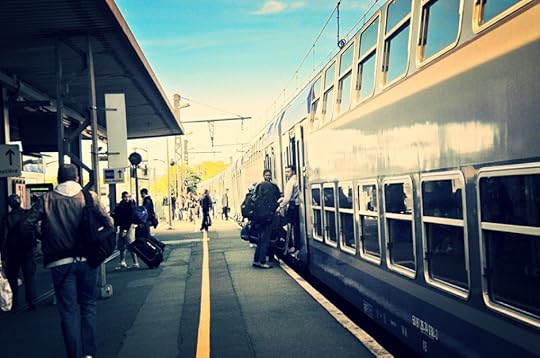
Photo: faungg’s photo

This post is proudly produced in partnership with our friends at Eurail.
1. Flexibility is essential.
If you’ve spent any time in Europe, you know there’s so much more than what’s in your guidebook. Sure, there are the major sightseeing attractions, but the best places are the ones you stumble on while traveling between the big names.
Unfortunately, on an airplane your view of all those in-betweens is restricted to 30,000 feet. And even if you did happen on a particularly delightful town and wanted to change your itinerary to spend a few extra days there, you’d face a hefty change fee.
Most trains, in contrast, can be booked shortly before you need to leave. Better yet, with a Eurail pass you get to pick the day you want to travel. You can stay in one place for the rest of your trip, or you can leave early if you’d rather see more.
2. Budget airlines make for a miserable travel experience.
Budget airlines have taken over European travel. And they are a nightmare. Yes, the base fares can be pretty cheap, but you’ll understand why when they’re trying to sell you peanuts from the snack cart, putting glaring advertisements on the seatbacks, and charging you exorbitant fees for having a bag that weighs an ounce over the limit. There’s even talk from some budget airlines about making people pay extra to be able to sit.
Oh, and you have to go through airport security for the privilege of being so nickel-and-dimed.
3. No one falls in love with a beautiful stranger on a plane.
There’s a reason the movie Before Sunrise begins on a train — trains offer a uniquely social travel experience. You have space to turn and talk to neighbors. No one is insanely stressed after getting an invasive patdown from security, so people are more likely to be relaxed and talkative. Dining cars offer an even more communal traveling experience.
Who knows? Maybe you meet Julie Delpy. Maybe you fall in love. Or maybe you’re simply able to have a pleasant conversation with someone without fighting over the armrest and battling knee defenders.
4. You’ll have speed when you need it.
Planes get all the credit for being fast, but when you add the time spent in security lines and getting to and from the airport, high-speed trains, in many cases, become the more appealing option. Europe has a solid and expanding network of high-speed rail routes (some trains travel at 200+ mph), so you can get around by train pretty fast.
5. You need to see the Alps.
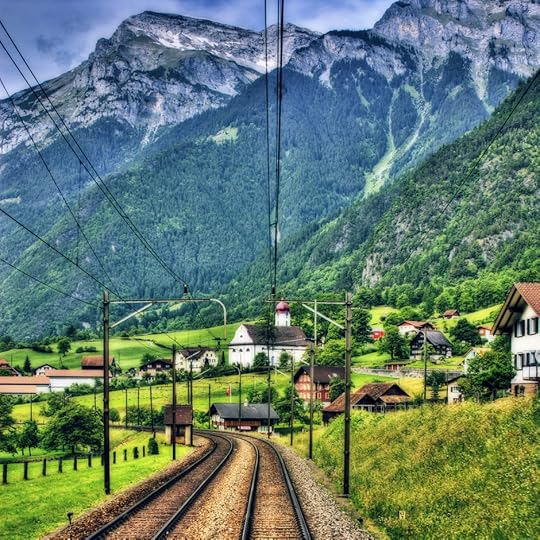
Photo: Jakob Montrasio
The Alps are one of the most dramatically beautiful mountain ranges in the world — snow-capped peaks, alpine forests, and the tiny, picturesque towns clinging to their slopes. To truly experience these mountains, you need to travel by rail on one or more of the scenic routes through the French, Italian, Swiss, German, and Austrian Alps. There’s no reason to skip over this region by plane.
6. You’ll have much less of an environmental impact.
Trains are one of the modes of travel with the lowest carbon emissions — usually second only to motor coaches, according to the Union of Concerned Scientists. They’re almost always more eco-friendly than travel by plane.
7. You won’t get lost in the ‘burbs or screwed by cabbies.
Most European train stations are smack-dab in the middle of the city. So unlike at an airport — often on the outskirts, especially when you’re flying budget carriers — or when you’re driving, you’re not going to have to navigate the suburbs or possibly wonder if your cabbie is screwing you by taking the long way to the city center. When the train gets in, you get out, you’re in the middle of the city, and boom, you’re exploring.
8. You’ll save on hotels.
Got a long journey between two places? Schedule it at night. Get on the train in one city, fall asleep, and wake up in your next city. You just saved on a night at a hotel by bundling it into your travel. Even if you pay a little extra for first-class seats or a sleeping berth, you still come out on top.
9. You’ll spend less time at customs.
Trains in Europe don’t require that passengers have their passports checked at every international border, so your customs and immigration experience is usually just a quick stamp when you leave / arrive in a country.
10. They’re BYOB.
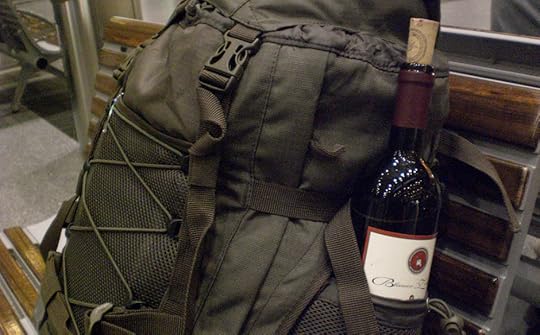
Photo: 00abstrahiert99
Still have half a bottle of wine and a baguette from your picnic in Paris? Good luck getting that on a plane.
11. You can go pretty much anywhere.
Amtrak, the main passenger train service in the US, is a beautiful nightmare. Beautiful because train travel comes with the benefits listed here, but a nightmare because Amtrak covers an absolutely pitiful amount of the country beyond the East Coast, and because it’s underfunded and horribly run.
Europe, on the other hand, has invested in its rail networks. Trains go everywhere, are fast and efficient, and aren’t beset by constant delays. European trains are infinitely more enjoyable than American trains. And this is coming from someone who still enjoys American trains quite a bit.
12. Because Europe is huge, and driving is hard.
Europe has great road infrastructure, of course, but traveling between countries by car isn’t for everyone. For one thing, you probably won’t know all the rules of the road in each country you’re in; for another, driving requires your full attention for long distances. And that’s going to make you exhausted when you arrive.
13. Two words: Eurail pass.
Eurail passes provide an incredibly affordable and convenient way of seeing the European continent. They allow flexibility in terms of both the places you visit and the timing of your travel, and they’re priced so that any budget traveler could afford them. Browse the many pass options and find the one that’s best for you and your particular trip.
This post is proudly produced in partnership with our friends at Eurail.

Matador Network's Blog

- Matador Network's profile
- 6 followers

