
Matador Network's Blog, page 2077
August 4, 2015


What really causes plane crashes? (It’s not what you think)
The decade’s biggest aviation mystery may be inching closer to resolution: the whereabouts of Malaysia Airlines Flight MH370, which disappeared without a trace in March of 2014 with 239 people on board. Investigators believe the debris found this week in the west Indian Ocean came from a Boeing 777. And the only missing Boeing 777 in the world is Flight MH370.
Even though we may be done with the mystery of Flight MH370’s location, we’re on chapter one, page one in the story of what caused the crash. And that’s often a difficult question to answer. There aren’t always survivors to interview for clues. Even when authorities know the location of the plane, they still have to hunt for the flight data recorder and the cockpit voice recorder. And you can’t always attribute the accident to a single identifying factor as we could with that other ill-fated Malaysia Airlines flight, MH17, which was brought down by a missile in Ukraine last year.
That said, for the most part, plane crashes tend to break down into four main categories: mechanical failure, weather, intentional, and human error. What is the biggest factor in plane accidents? You might be surprised by the answer. Here, the top four causes of plane crashes explained.
Mechanical failure

Photo: jbgeronimi
A study by Boeing blamed mechanical failure for roughly 20 percent of today’s commercial air accidents (other studies have reached that same conclusion). But as aviation safety analyst, pilot and FAA Safety Team representative Kyle Bailey tells Yahoo Travel: “Mechanical failure isn’t as prominent as most people think.” While it seem like a high percentage, in the early days of flying it was the culprit in the vast majority of accidents, as many as 80 percent.
Bailey says we can thank improved airplane technology for the improvement. “The backup systems, the redundancy, and the computers pretty much are triple checking what pilots are doing,” he says. Plus, planes are being built better. “These airplanes aren’t like buying a $30,000 car; we’re talking about a $400 million 747,” Bailey says. “Each component that’s in there, every single component, is manufactured by an engineer to precise standards.”
In all, improved airplane technology is the factor most often attributed to the massive decline in accidents and marked improvement in commercial air safety in recent years. “The airplanes that are designed and built are so safe, even as a pilot it’s hard for me to comprehend how safe an airplane actually is,” Bailey says.
Weather
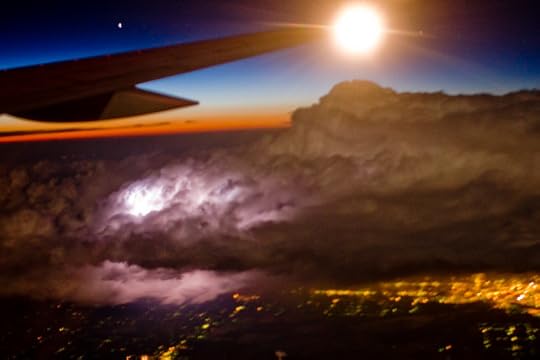
Photo: Kenneth Lu
The National Transportation Safety Board finds weather is a primary contributing factor in 23 percent of all aviation accidents. “Whether it’s a small plane or a big plane,” Bailey says, “getting yourself into weather that’s a little bit above the scope of what an airplane can handle” often leads to trouble.
He points to last December’s crash of AirAsia flight QZ8501, which went down during a flight from Indonesia to Singapore, killing all 162 people aboard. Thunderstorms with cloud tops above 50,000 feet were reported in the area before the crash and are considered a possible factor.
“Those storms are going on every single day, all around that area, and [pilots] learn to weave their way through them,” Bailey says. “Ninety-nine percent of the time, they do a fine job. But there’s always that fraction of a percent that something will happen, something will go wrong, or you might misinterpret something and you’ll find yourself a little bit too close to or inside the thunderstorm.”
Thunderstorms, says Bailey, are especially treacherous. “[Planes] can withstand lightning,” he says. “But they can’t withstand going directly through a thunderstorm.” He adds hail, winds, updrafts, and downdrafts can wreak havoc with a plane, sometimes with disastrous results.
Human error
The numbers may vary, but the experts agree: Human error is the biggest cause of plane accidents. The focus is often on the pilots. PlaneCrashInfo.com analyzed 1,015 fatal accidents involving commercial aircraft, worldwide, from 1950 thru 2010, and found pilot error was a factor in 53 percent of all fatal accidents in that period.
“The planes are so complicated and sophisticated and have so many backup systems, [accidents] usually [are caused by] pilot error,” Bailey says. “If somebody comes up to me and says, ‘Planes are unsafe, blah blah blah,’ I’ll always say, ‘You shouldn’t be afraid of the plane, you should be afraid of the human element.’”
And when you add all human factors — mistakes by mechanics and air traffic controllers in addition to pilots — Boeing estimates human error in general might be a factor in as many as 80 percent of all airplane accidents.
Human error can also work in tragic concert with other leading causes of crashes — for instance, a pilot making a bad weather-related decision or making a catastrophic mistake while dealing with a mechanical issue. The latter may have been the case with TransAsia Airways Flight GE235, which crashed in Taiwan back in February (a widely seen video showed the plane clipping a bridge before crashing into a river), killing 43 of the 58 people aboard:
The plane’s troubles started when one of its two engines malfunctioned. But a critical mistake in the cockpit is what authorities believed caused the crash. “That was the pilot shutting down the wrong engine inadvertently,” says Bailey, echoing concerns that the TransAsia pilot shut off the working engine instead of the malfunctioning engine, causing the plane to stall.
Unfortunately, one can’t completely account for the human factor in plane incidents. After all, Bailey says, pilots are only people and not immune to the family stress, job pressure, fatigue, or inattention that can lead to disaster. “Things like that start to take their toll on the pilot and on everything running smoothly,” says Bailey.
Intentional
An especially rare cause of plane disasters (accounting for 8 percent of all fatal plane accidents since 1950s, according to PlaneCrashInfo.com) is also one of the most frightening: intentional sabotage. The 9/11 attacks fit into this category, as does the more recent case of Germanwings Flight 4U9525, which a co-pilot purposefully crashed into a mountain back in March, killing all 150 people aboard. Bailey finds that case especially troubling. “Most pilots are highly dedicated people,” he says, “But obviously every pilot is a human being and you know, human beings have problems.”
But the good news…
You simply can’t look at scary aviation stats without acknowledging their most crystal-clear conclusion: that flying is incredibly safe and getting safer, despite high-profile accidents like Flight MH370. The International Air Transport Association says last year’s global jet accident rate was the lowest in history; the equivalent of one accident for every 4.4 million flights. The overall number of commercial airline fatalities also is near historic lows, despite the fact that the number of flights has increased dramatically in recent decades. That should be the gigantic grain of salt with which you take any scary stats about flying. 
Let Yahoo Travel inspire you every day. Hang out with us on Facebook, Twitter, Instagram, and Pinterest. Watch Yahoo Travel’s original series “A Broad Abroad.”
This article originally appeared on Yahoo!Travel and is republished here with permission.

Drunk tourism is ruining everything

Photo: Mixtribe
I HAVE LIVED ON THE JERSEY SHORE for a grand total of nine months, and despite what you’ve heard, it’s actually a really lovely place. People are friendly and laid back, the food is insanely good, and the culture, for an area that doesn’t have any huge cities nearby, is surprisingly vibrant. But on the weekends in the summer, it becomes a slightly less nice place. The towns fill up with the tourists you probably recognize from the show Jersey Shore and there’s a lot of public drunkenness, lewdness, rudeness, and general ickiness.
It’s the curse of all vacation destination towns: we love our beach homes, but the economy in our area mostly revolves around tourism, which means that in order to fund our town’s continued existence, we have to put up with the annual invasion of drunken douchebags.
This is not limited to the Jersey Shore. “Drunken tourism,” according to the New York Times, has gotten so bad in Spain that Spanish officials have called in their equivalent of the National Guard, and have requested that the British government send their own officials to deal with rowdy British tourists. The bad behavior is by no means restricted to alcohol: In Italy, American tourists with selfie sticks carved their names into the Colosseum. Russian tourists filmed a porno at the Pyramids. Backpackers in Laos practically destroyed the small town of Vang Vieng by turning it into an eternal, anarchic party, And for whatever reason, people from all over the place have been stripping nude at Cambodia’s sacred Angkor Wat.
This type of bad behavior ruins it for everyone. Some cities, like Barcelona, have implemented tourist taxes and have frozen new hotel construction permits. Copenhagen has instituted tour bus “quiet zones” and has made an effort to integrate tourists, rather than cater to them. The country of Bhutan has adopted an extremely anti-tourist policy that makes visiting very difficult in the name of preserving their pristine Buddhist culture. But for places that are more reliant on tourism than a self-sufficient city like Barcelona or Copenhagen, and for places that don’t want to wall themselves off from the rest of the world like Bhutan, measures that discourage tourists may not be an option, which means that citizens must simply grudgingly put up with tourists. This can curdle into resentment and even hostility.
Speaking as a tourist town resident, I can say that I genuinely don’t mind when people come into town and have one too many to drink, or when they come into town to have fun. I have one too many pretty frequently. And it is fun here. That’s why I live here. When it becomes a problem is when people start shouting obscenities in front of kids, puking in the streets, and peeing on our lawns. There’s a very, very simple rule to follow, whenever you visit a new place: treat it like a friend’s house.
Imagine you’re visiting from out of town. You’re staying at your friend’s place. How would you behave in their house? You might have a couple extra glasses of wine over dinner, because hey, you’re on vacation. But you wouldn’t go pee in their closet. You wouldn’t shout at them for not giving you more wine. You wouldn’t puke all over their couch.
I mean, maybe you would, maybe you’re a totally terrible person. But you shouldn’t. Thi is the type of behavior that would make your host much less likely to invite further visitors in the future. This same principle applies regarding tourism.
Fun during travel is fine. Trashing someone’s home is not. 
13 signs you were born and raised in Finland
The Finnish ruisleipä might not be legendary in the eyes of foreigners; however, it’s a typical thing you’ll miss when living abroad (what’s with the white fluffy substance the rest of the world consume?). Those who weren’t introduced to it as a child will probably never learn to appreciate it much. You’re just a little bit offended when people don’t immediately see the greatness of this national treasure.
2. You’re so used to paying ridiculous amounts of money for alcohol it’s stopped bothering you.
Whenever you visit a liquor store in a foreign country you can’t believe your luck. Alcohol doesn’t make you happy, but looking at the price of booze abroad might, if only just for a little while. Even sophisticated Finns might catch themselves shouting, “Can you believe these prices?” in an Estonian supermarket.
3. You’re obsessed with what foreigners think about you and your country.
If you’re lucky enough to run into a foreigner on the streets of a Finnish city, you simply must know what they think about you. Should an American visit Finland, they’re guaranteed to be asked the question, “What do you think about us?” This is a sign of low national self-esteem. The Finns want approval and won’t brag about their achievements easily.
4. You live next to Russia, but you’ve never set foot there.
You’re happy to accept the existence of this giant beyond the eastern border but aren’t willing to do much more. You might not know much about the country and feel you should learn more, yet you end up spending your holidays elsewhere year after year. And their alphabet just puzzles you.
5. You think your English is subpar.
Most Finns will compare their English to other Finns’, not other Europeans’. This leads to absurd situations where you’ll, with your perfect English, apologize for your bad English to someone whose mother tongue IS NOT English.
6. You think Moomins are the best thing since Shakespeare.
They’re big, white, and philosophical in an everyday manner. You own a dozen expensive mugs with pictures of them. You can’t comprehend why everybody doesn’t simply love them. Most Finns have an answer ready to the question, “Which Moomin character do you most resemble?”
7. The ice-bucket challenge doesn’t impress you.
Cold water is no stranger to you as seawater temperatures rarely reach levels to brag about, and swimming naked is part of your daily routine. Seeing people pour ice-cold water on themselves makes you think, “Refreshing!” not, “Courageous!”
8. You’re only interested in sports when you realize your country might actually win something; i.e., you’re only interested in hockey.
Let’s face it, a small country like ours can only really be good at a few sports. So why not pick one that’s seriously played in about four other countries? Gold medal here we come!
9. The cold and dark winter surprises you every year.
You moan about the winter until it’s over and then forget about it until next winter. Then you start moaning again. You sometimes plan to move somewhere where it’s warmer but quickly realize the only countries you’d deem acceptable to live in are Nordic, and that sure won’t solve your problem.
10. You think getting drunk with someone is the only true way of getting to know them.
You like talking to other Finns when you’re sober but secretly feel you’re only getting skin deep with them. You really want to reach a level of honesty that comes out after that seventh drink. After that, we’re really sharing some good stuff!
11. You feel that not having a summer house is a synonym for homelessness.
You’re surprised to hear that some countries consider summer houses a fancy of the elite. For you, it’s kind of like having a normal house, just a less modest one by the sea. You didn’t buy your summer house and don’t know what they cost. It just was there when you were born.
12. You make fun of the Swedes but secretly admire everything they do.
You mock the way they talk, the way they don’t say things straight, the way their meetings drag on. On the other hand, you like their fashion, their music, their politics, and everything about Stockholm.
13. You’re not surprised to run into top politicians on the street or in the bus.
Oh, there’s the president reading the paper. And there’s the prime minister on a bike. Now let’s get on with work.
Feature:Maria Morri

August 2, 2015
Over half of the UK wants marijuana reform but the government is being a total buzzkill
LONDON, UK — WILL WE SOON SEE BRITIAN’S LAWMAKERS DEBATING MARIJUANA decriminalization on the floor of the House of Commons? Almost definitely.
Will Britain’s lawmakers decriminalize marijuana? Almost definitely not.
A citizens’ petition to fully legalize the drug’s use, possession and sale has received more than 170,000 signatures in the week since a 25-year-old economics student posted it to the UK government’s e-petitions site.
The House of Commons will consider any issue with more than 100,000 signatures, and Parliament is expected to schedule the debate on cannabis this week.
But despite support for decriminalization among the public and police officers, drug policy experts think the chance the government will legalize marijuana at this point is only slightly more likely than, say, Queen Elizabeth II toking live on television.
“There’s just no way they’re going to legalize cannabis in this climate. There’s no chance at all,” says Caroline Chatwin, senior lecturer in criminology at the University of Kent.
Under Prime Minister David Cameron, the government has taken a firm anti-drug stance. It stripped proposals to reform the country’s drug laws out of a report published last fall.
Parliament is currently considering a bill that would ban all “psychoactive substances,” including legal highs like laughing gas. The government is keen to get that passed.
So legalizing pot while criminalizing poppers? Nope. Not happening.
“Politicians are behind the curve compared to the public on this issue,” says Niamh Eastwood, executive director of Release, a UK advocacy group that lobbies for drug policy reform.
More than half the British public supported marijuana legalization in a 2013 survey.

Photo: Courtesy of Transform Drug Policy Foundation
Evidence shows the police favor easing the laws as well.
Marijuana possession has accounted for 65 to 70 percent of drug crimes in England and Wales every year for the last decade, according to government statistics. Policing pot in England and Wales costs an estimated $155 million per year.
With police forces around the country facing steep austerity-era budget cuts, even many law enforcement officials are no longer willing to incur those costs.
“It has never been a top priority to go looking for cannabis in people’s houses,” Sara Thornton, head of the National Police Chiefs’ Council, told the BBC on Tuesday. “If somebody was caught they would be dealt with at the very lower end of the scale.”
More from GlobalPost: The legalize it push in the UK and Australia
But experience has taught Britain’s politicians that a liberal take on drugs doesn’t pay politically.
In 2004, amid public support, Tony Blair’s Labour government loosened restrictions on marijuana, effectively decriminalizing its possession.
Arrests plummeted. But after a bunch of negative media coverage warning of the potential mental health effects of marijuana use, the government reversed course and reinstated the harsher controls.
For the Labour and Conservative parties, the politically embarrassing episode was a lesson learned.
“When the Labour government did listen to the public and the police, it did swing back to bite them on the bum,” Chatwin said.
by Corinne Purtill, Global Post
This article is syndicated from Global Post.

August 1, 2015
what New Hampshirites never say

Photo: Mycatkins
1. It IS cold enough for me.
2. I just love leaf peepers. I wish they were here all year long.
3. The government is doing everything right.
4. Aren’t people from Massachusetts courteous drivers, honey?
5. Go Yankees!!

More like this 29 signs you were born and raised in New Hampshire
6. I prefer a paisley pattern to flannel.
7. PSNH is so reliable in the winter, I don’t even need a generator!
8. No thanks, it’s too cold for a beer.
9. Oh yeah, this winter is worse than the Blizzard of 78’.
10. I found a 1922 model T Ford snowmobile in the woods, but I just didn’t think it was worth hiking it out.
11. I have absolutely no opinion about the Northern Pass.
12. Dunkin Donuts is OK, but I really prefer Starbucks.
13. Connecticut is my favorite New England state.
14. Please pass the Aunt Jemima syrup.
15. Oh, is it primary season? I hadn’t noticed.
More like this How to Piss off someone from New Hampshire
16. Just got myself a wicked cheap townhouse in downtown Portsmouth!
17. I wish L.L. Bean would put snaps on their flannels shirts and make the material thinner to achieve that ‘urban’ look.
18. I always buy my liquor out of state.
19. Let’s sell the snow blower and switch to shoveling.
20. I was the ONLY person in line for the ski lift at Loon Mountain!
21. I don’t care what the Farmer’s Almanac said!
22. Yeah, Tom Brady probably cheated.
23. French Canadians are so polite.
24. I think I’m going to jump on 93 this Sunday night and head South just for the fun of it!
25. Our whole state is basically a suburb of Boston.
26. Put away your long johns and crank up the heat! We’re going to keep it at 85 this winter!
27. This year, let’s make sure we grow some plants the deer like to eat.
28. Yup, Vermont is just an upside-down NH and that’s where the differences end!
29. think I’m going to move to Berlin to take advantage of the thriving economy.
30. I love taxes. Why don’t we have more?
31. A bear! Cuuuuuute!!
32. Hampton beach is my favorite beach!
33. I grew this mustache to be ironic.
34. Now that the Old Man fell down, let’s take him off our license plates and signs.
And last but not least:
35. You CAN get there from here. 
6 endangered animals that poachers are hunting into extinction
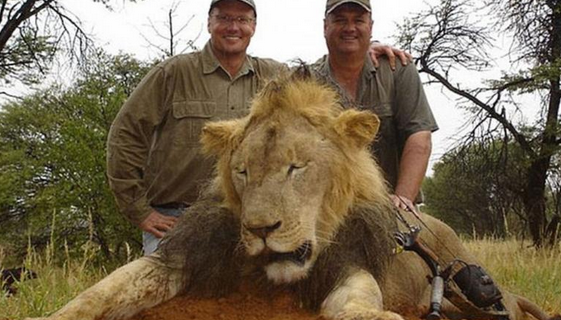
Photo: Trophy Hunt America
DO YOU WANT THE BAD NEWS OR THE EVEN WORSE NEWS?
The bad news you probably already know: Cecil the lion, one of Zimbabwe’s best loved wild animals, was slain last week at the hands of unscrupulous safari guides and, it’s claimed, a crossbow-happy dentist from Minnesota.
Cecil’s death, sadly, is only the tip of the iceberg — and unlike the real icebergs we’re so intent on melting, this one ain’t shrinking, it’s growing. Each year humans deliberately kill thousands of the animals we’re privileged to share the planet with, even the ones we nominally call “protected.” Not content with destroying their habitats and compromising their food supply, some members of our species hunt and slaughter creatures that are already struggling to survive.
It’s not just humans who want to shoot something. More often it’s organized criminals who want to cut up animals and sell them to different humans who think they’ll make them live longer or look good on a wall. Other times it’s impoverished people looking for ready cash, or even a meal.
Whatever poachers’ motivations, they’re threatening to wipe some of the most vulnerable species off the face of the earth. Here are six animals that, like Cecil, poaching might rob us of forever.
1. Elephants
Right now, poachers are the single biggest threat to elephants’ survival. After decades of decimation of elephant populations for their ivory, the international trade in “white gold” was banned in 1989. Yet people’s persistent willingness to hand over bigger and bigger sums of money for dead elephant tusk — in China, $2,100 per kilo on average as of last year — has made it more tempting than ever for profit seekers to kill elephants illegally. The most comprehensive survey to date stated that 100,000 African elephants were poached across the continent between 2010 and 2012. According to those figures, in 2011 alone poachers killed roughly one in every 12 African elephants.
Sometimes elephant poachers, like Cecil the lion’s killers, use bows and arrows as their weapon of choice. Sometimes they tip the arrows with poison, like the people who last year slaughtered one of Kenya’s most famous elephants, Satao, and hacked off his magnificent 6.5-foot tusks. Other hunting expeditions have seen gangs turn grenades and AK-47s on entire herds, even within the supposed shelter of national parks.
Asian elephants, considered an even more vulnerable species, are also hunted for their tusks, body parts, meat and hide. Unlike their African cousins, only male Asian elephants have tusks — a fact that makes the consequences of poaching even more devastating, since the selective killings of bulls creates a gender imbalance and thereby reduces reproduction in the remaining population.
2. Rhinos
Rhinoceroses, like elephants, suffer the misfortune of having an external protrusion that humans arbitrarily place a crazily high value upon. Crazy, crazy high: rhino horn was reported to be selling for $65,000 per kilo in 2012, making it more expensive by weight than gold, diamonds or cocaine.
The demand comes from Southeast Asia, particularly Vietnam, where some people believe that consuming rhino horn — approximate nutritional value: human fingernails — will cure everything from cancer to hangovers to a dull night out. The black market demand for rhino horn has led to a surge in poaching of the critically endangered black rhino and the more numerous southern white rhino across southern Africa since 2008. This is especially the case in South Africa, where illegal killings hit another record high this year at 393 in the 12 months till April.
And that’s not counting legal deaths. Trophy hunters can pay more than $100,000 for the “right” to kill a rhino and keep its horn, under a government scheme that allows hunters to shoot one rhino a year with the proper permit. Many suspect it’s open to abuse by people who’ve come for the horn, not the hunt. Either way, the rhino ends up dead.
Finding themselves faced with more and more mutilated rhino carcasses, horns hacked off sometimes while the animals were still alive, authorities are resorting to increasingly drastic methods to try and protect the rhinos that remain, from drone surveillance to a rhino DNA database to even poisoning rhinos’ horns. So far, it’s not working. The western black rhinoceros went extinct in 2011. The rest of Africa’s wild rhinos could follow suit within 20 years.
3. Tigers
Fact: humans are the worst thing ever to happen to tigers. We’d hunted them down to just 5,000 and 7,000 individuals worldwide by the late 1990s. That was considered a dangerously low number then. By 2014, it had halved. Some estimates say fewer than 2,500 mature tigers currently exist in the wild.
The problem is our passion for every part of them: Tiger skins, bones, teeth, claws, tails and even whiskers find a place on the black market as decorative items or ingredients in traditional Asian remedies. The illegal trade is further fueled by tiger farms in China and Vietnam, where large numbers of the animals are bred for their body parts. Depressingly, as many as three times more tigers exist on such farms than in the wild. Elsewhere, tigers are reared to be killed in “canned” hunts by trophy seekers.
Even in the wild, we’re killing tigers faster than we can destroy their habitat. The most haunting proof that poaching is the greatest threat to tigers? “Empty forest syndrome”: Roughly 620,000 square miles of what should be tiger habitat currently lies unoccupied.
4. Sea turtles
Don’t imagine that poachers only ransack the land. Oh no, they find plenty to kill in the sea, too. One of their most popular targets is the hawksbill, the tropical turtle whose beautiful yellow-and-brown shell provides the commodity known as tortoiseshell. Millions of the animals have been killed over the past century to feed the fashion for tortoiseshell jewelry, glasses, ornaments, instruments and other items, with the result that the species is now critically endangered. The international trade has been banned for almost 40 years, but a black market continues to thrive in Asia, notably China and Japan, and in the Americas.
Hawksbills are also killed for what’s under their shell — their meat. Either it’s eaten by humans, or used as bait to catch sharks. Other parts of their body are used to make leather, perfume and cosmetics, or stuffed whole and displayed as “decoration.”
For all sea turtles, including the leatherbacks and green turtles that also find themselves on the receiving end of poachers’ deadly attention, poaching is potentially catastrophic. The animals take so long to reach breeding age — more than 30 years, in some cases — that many are killed before they ever have the chance to reproduce.
5. Lemurs
There are no mammals on earth more endangered than lemurs — and yet, we’re still hunting them. Over 90 percent of all species of the big-eyed primates — found only on the island of Madagascar — are considered vulnerable, endangered or critically endangered.
Deforestation and climate change are largely to blame for their decline. But hunting lemurs for their meat, which has reportedly increased in the chaos that followed Madagascar’s 2009 coup, is also diminishing their tiny numbers. Despite legislation that makes killing them illegal, lemurs are poached either to be sold to restaurants or simply to be eaten by impoverished locals desperate for food.
The tragic irony is that a lemur in the hand is worth much less than two in the bush. Like lions in Zimbabwe, lemurs are a huge tourism attraction for Madagascar and will always make more profit for more people alive than dead. Not to mention the fact that NO ONE SHOULD BE KILLING LEMURS ANYWAY.
6. Gorillas
Still clinging on to a scrap of faith in humanity? Prepare to drop it, quick. We humans are slaughtering the greatest of our fellow great apes, the gorilla.
Gorillas used to be protected from our murderous appetite by the huge tracts of unspoiled forest in Central Africa that they lived in. But then — oopsy! — we spoiled it. Logging, new roads and the migrations caused by successive wars brought people within firing range of gorillas. You can guess what happened next. What began as subsistence hunting quickly grew into an illicit commercial trade in gorilla meat that sees the animals butchered, transported and sold on. An increasing number of them make it as far as cities, where restaurants serve up “bushmeat” to wealthy clientele who like their dinner endangered.
If that weren’t enough, poachers have begun to target gorillas for their body parts, to be used in folk remedies or simply as trophies. Heads, hands and feet are said to be particularly popular.
Other gorillas are casualties of other crimes in their protected habitat. In the Democratic Republic of Congo’s historic Virunga National Park, mountain gorillas have been found shot through the back of the head, execution-style, in attacks blamed on traders who illegally harvest wood to make charcoal from the protected forest.
All species of gorilla are suffering, including the critically endangered western lowland gorilla. Combined with habitat loss, climate change and disease, numbers are now so low and reproduction so limited that the deaths of even a few animals at the hands of poachers stand to have a major impact on the population. According to the International Union for Conservation of Nature, by the middle of this century we may well have wiped out more than 80 percent of all western gorillas in just three generations.
Good job, humankind.
by Jessica Phelan, GlobalPost
This article is syndicated from Global Post.

28 signs you're from Aberdeenshire

Photo: Mike Kneic
1. As a wee one, you easily confused Storybook Glen for Disneyland.
Okay you were four, but what were you thinking?
2. There was literally nothing better than the flumes at the Beach Leisure Centre.
Except maybe the Friday night discos at the ice rink or the outdoor pool in Stonehaven.
3. You still get cravings for Murray Cup and Um Bongo.
Not to mention Rainbow Drops, Wham bars, Irn Bru bars… You might not have been a healthy loon, but you were a happy loon. That’s what matters.
4. By the time you were born, the tattie holidays had nothing to do with tatties.
5. There was no joy greater than a snow day.
Sledging till your socks were soaked through and your cheeks were bitten red, coming in to the warmth of the fire, Supermarket Sweep, piles of buttery toast and mugs of Cadbury’s hot chocolate… It was the best, until the snow days turned to weeks and you never wanted to see Dale Winton again.
6. The best days in primary school were the ones when pudding was choc ices.
Those blue wrappers are still pure nostalgia for you. You even get pangs for Turkey Twizzlers. Sometimes.
7. Without fail, January 25th meant being forced to sing and recite Rabbie Burns poems and Scottish folksongs…
Standing up on stage in the village hall, aged 10, and doing a Skye Boat Song solo could not have been more cringe.
8. …But it was worth all the embarrassment in the world just to see your dad plunging a knife into the “great chieftain o’ the puddin’ race” that same night.
So much drama for an overstuffed sausage! You loved it, even if you hated haggis.
9. A Sunday roast that saw a hunk of silverside placed on the table was the best, because it meant only one thing…
Stovies accompanied by beetroot, oatcakes, and cold glass after cold glass of milk. You did try to go vegan once, but how could you say goodbye to your (delicious) roots?
10. You still know of no greater joy than a fly cup.
Fine piece after fine piece — Tunnock’s teacakes, millionaire’s shortbread, queen cakes, buttered slices of fruit loaf — all washed down with hot tea… Oh min!
11. Any school bus trip had at least a dozen school kids singing “Don’t look back in anger, I heard you say” at the top of their lungs.
Maybe a bit of Stereophonics or Manic Street Preachers was thrown in there for some variety, but really, it was ALL about Oasis.
12. You know exactly what “Get yer rat oot,” “Chebs oot,” and “See’s yer beaver” mean.
And you really, really wish you didn’t.
13. Codonas was class.
Not classy. Class.
14. You never signed your letters off with “from.”
You had to write “fae.” Always.
15. Summer holiday mornings began with Big Breakfast…
Until that came to an end, and double bills of Dawson’s Creek on T4 saw you through till midday.
16. The Northsound 1 concerts in Duthie Park each summer were unreal.
Darius! Cleopatra! Hear’Say!
17. August was the always the best month.
Because there was, and will never be, a greater delight than walking country lanes gorging on wild raspberries and brambles in the sun.
18. But June and July were pretty great too.
Bowlfuls of Mackie’s ice cream and strawberries might have something to do with that.
19. The first thing you learned to make in Home Ec was cheesy beanos.
Somehow even that dish took a double period to make.
20. The neds at school smoked tabbies in the woodies…
Huddled under bridges, crammed into back alleys… if it smelled of urine, the Lammie Bammies would be OOT. If you were into that sort of thing, you probably couldn’t afford your own, so you’d resort to begging the older lads for leavings. Or if you were having a really bad day, you weren’t above pleading in your smallest voice, “See’s the beef?” Yep, you willingly smoked other people’s soggy yellow cigarette butts. It was probably the same at Gwyneth Paltrow’s high school in Santa Monica, though, right?
21. Amadeus under 18s night was INCREDIBLE.
You were in the biggest club in Scotland. There were babes from other schools. If you got lucky, you might even get a trap from one of those babes from other schools. Could life get any better? Never.
22. Most of your pocket money went to Superdrug and Boot’s.
Because that creamy blue Maybelline eyeshadow you gunked on your lids straight from the tube didn’t come cheap! Okay, it did, but it felt expensive when you’d already spent most of your money clubbing together with your pals for a few orange WKDs on Friday night. That eyeshadow was a wonder of a thing though — caking and crusting over 13 year-old eyelids like luminescent trails of incredible blue slime. Once you’d ironed your hair straight (with an actual iron) and popped on your Adidas shell toes and biggest GAP hoodie, a pale pink slick of Bourjois Effet 3D lipgloss and a spritz of Impulse was all you then needed to feel like the next Britney Spears.
23. You had a Nokia 6100.
And there was only one thing better than Snake. And that was Snake II. Or maybe MSN Messenger.
24. You remember a time when Union Street was lively.
You loved it all — the St. Nicholas Centre because you could read the magazines for free in WHSmith, the Trinity Centre because HMV, and right next door, Virgin Megastore. But the Bon Accord Centre food court had the best pizza meal deal around, so it was the best.
25. Saturday nights in Liquid were amazing.
Or were they?
26. You once went to Charlie’s by accident.
Five minutes later, you came out trembling having been repeatedly asked by hard-faced girls what you were looking at and if you were “starting.”
27. You started driving lessons the day of your 17th birthday.
In fact, you’d have started them at midnight if you could, because in the words of that great Scot, Mel Gibson, “FREEEEEEDOM!”
No more calling mum and dad for lifts from village hall parties at 2am, ever! No wonder they forked out for your lessons.
28. At times, Aberdeenshire made you feel claustrophobic.
Castles, tearooms, distilleries… at some point you probably yearned for wider horizons. And then you’d go to the beach, the sand slipping beneath your feet and marram flicking your knees as you tumbled down the dunes to the edge of the roaring North Sea. Just you, birds, sky, and water — it made you realise that, actually, you’re from a pretty incredible part of the world after all. 
July 31, 2015
10 reasons Whistler is the world’s best place for adventure junkies
I can never act normal when someone takes a photo of me. #hiking #whistler #wanderlust #BC #yeg
A photo posted by cardhousedreamer (@cardhousedreamer) on Jul 31, 2015 at 12:27pm PDT
1. No one gets away with doing just one sport here.
Think you can get away with just being a skier? Not in Whistler. If you call the Village your home, be prepared to master, at the very least, one activity per season. It might overcrowd your gear room, but when everyone is limbering up to jump on their Beaver Boards for some yoga on Nita Lake, you’ll be thankful you took up paddle boarding last summer.
2. You can ride a bobsleigh.
Ever watch Cool Runnings? Yeah, it’s all sorts of awesome. And so is the fact that you can ride a piloted Bobsleigh or a self-directed Skeleton down the 1,450 meter-long track created for the 2010 Winter Olympics at speeds upwards of 80 kms/hour. “Feel the rhythm, feel the rhyme…” Come on, you know you know the rest.
3. It has year-round bungee jumping.
A photo posted by Ben York (@byorky) on May 24, 2015 at 7:55pm PDT
“If all your friends jumped off a bridge, would you do it too?” Well, now you can tell your mother that yes, yes you would if they were strapped in 53 meters above the glacier-fed Cheakamus River. Nothing like jumping off a bridge in the middle of winter and plummeting head first toward ice-cold water to really test your adventure tolerance.
4. Downhill skiing is for amateurs.
You can downhill ski at any resort, but in Whistler, you can shoot things at the same time! That’s right. Take on the sport of biathlon and really push your boundaries. Rifles and skate skis? Only for those living life on the edge…
5. Name your favorite type of terrain, and Whistler has it.
6 things I learned from eating street food

There’s no doubt I’ve become a better traveler since my first bag of beetles.
When I found myself on the patio of a quaint guesthouse in Siem Reap sitting at a table with a bag full of hundreds of fried black bugs in front of me, I watched the two receptionists and their friends sitting next to me pop the crispy insects into their mouths, smacking their lips and savoring every crunch. I slowly picked one beetle and sat for several minutes tracing it’s outline while watching the locals carefully peel off the wings. When I finally gave in, to my surprise, it was delicious. I only stopped after a woman to my left told me I’d eaten too many. “You’re a real Khmer,” she joked as she poured me another beer and her friends cheered in delight.
I didn’t think twice about trying new foods after that. During my time in Cambodia, I moved on to grilled pregnant forest tarantulas, maggots, stuffed frogs, turtle soup, stewed dog meat, and less exciting things like crickets, spiced gizzards and chicken hearts. Through my adventures in trying everything, here are the six things I learned:
1. Exploring street food is a critical piece of traveling
I travel to explore, to learn, to grow, to have fun, and find something new. For me, food is an essential part of that experience. But sadly, to my dismay, when it came to food, many other foreigners insisted on playing it safe. Often fellow travelers would judge a new food as “gross” before even tasting it. Though I can’t anticipate that everyone will enjoy a wide variety of tastes, I think it’s fair to expect fellow travelers to at least attempt to develop an adventurous palate. By trying local street food, you at least make an effort to somehow engage in a part of a culture travelers sometimes overlook.
2. Food is an art. Treat it that way.
I’ve seen too many travelers treat street food with an unsettling discourtesy. Trying some fried creepy crawler doesn’t warrant screaming, and spitting it out like a child, or throwing a tantrum and yelling at the person behind the food stall. During my time traveling, I’ve watched countless foodstall cooks try to hide their disdain for the blatant disrespect travelers showed when unhappy with new flavors.
Street food is no different from a country’s paintings, sculptures, or music. They are all steeped in history and equally valid parts of a culture. If you visit a museum and you can’t appreciate the display in front of you, you politely move on in search of something better–with street food it’s no different.
3. You never know what a “simple” food might mean to someone else.
While picking through mango covered chilies one afternoon with an old Khmer friend, he told me the story of the fruit’s history in his family. During the Khmer Rouge, his mother was working in the labour camps with his father, and had stopped menstruating due to malnutrition. Upon discovering a hidden mango tree, she began eating them in secret as often as she could. Soon after, she became pregnant. The little nutrition his mother was able to absorb from those mangos allowed her to eventually conceive.
4. Or might mean to a country’s history.
Khmer people always had a diverse diet including a variety of meats, starches, and produce. However, during the Khmer Rouge, consuming insects became increasingly popular when food was scarce and rationed. Learning this made me look at the dish entirely differently. Even if you dislike a dish, the stories behind it are often good enough to be savored.
5. Food shouldn’t have a hierarchy.
With street food, there are no waiting lists, no reservations, and no frills. You’re eating your meal with loud motorbikes and taxis zooming by, while other food-stall keepers are busy yelling about how their treats are better than the stuff next door. People from every social status can eat from the same stand and you’ll see people in rags and suits enjoying the same meal. Nothing is fabricated and so you can’t afford to be a snob. It’s a space where everyone is equal.
6. Food cannot be separated from people.
In the U.S. and most other Western nations, we usually do not see the person who prepares our food. We get our plates, and the server is the medium between customer and cook. With street food, there’s an added layer of intimacy. You see them, and they see you. If you speak the same language, you can tell them that you want more chillies, or less of that sauce. With street food, I not only connect with food, but I’m also reminded that food is connected to human beings.
As a Western traveler, street food allowed me to get into the thick of it–to not only embrace exciting new flavors but also gain insight into the people who brought them to me. 
Matador Network's Blog

- Matador Network's profile
- 6 followers

