
Matador Network's Blog, page 2076
August 7, 2015
How the concept of home changes

Photo: Daniel Zedda
I LANDED IN SYDNEY two years ago with nothing but a backpack, an expectant and excited heart and an unknown future.
And here I am now traversing through Indonesia without any idea of where I am headed or what I am doing.
It’s funny, because if there was anything I realized when I left Australia and started my travels through New Zealand, it is that for the first time in my life, I feel like I am wandering.
People I meet ask me where I was from, and naturally I always say the States. Yet I never fail to follow it up with, “But I have been living in Australia for two years.”
“Oh, so you are going back there then?”
What? Well…no. No, I left. I mean…I lived there for a couple of years. But yeah, no. I do not live there anymore.
“Ah right. Where are you going from here? Do you reckon you will go home at some point?”
Home. What is home anymore?
Home. What is home anymore?
Think about how your childhood home can suddenly transform into your parents house. In university, we would say “I am going home for the weekend” or “I am spending the holidays at home”.
But as we grow older and we create our own lives, that sentence changes. Words are taken out and new ones are added. It becomes “I am going back to my parents’ place” or “We celebrate the holidays at my parents’”. It no longer just a place that holds so many memories; it becomes a memory itself as you move forward in life.
I can remember when my older brother Michael called me one day during his first semester away at college. He had just had dinner and was walking across campus, back to the dorms.
“Yeah, I’m going to go home and get some work done…”
“Don’t call it home,” I said to him as I sat on the phone in the basement of our childhood house in Brooklyn.
“I’m sorry,” he apologized. “But, well, it kind of is home right now.”
It was an idea and feeling I did not understand until later in life.
I am a delicate combination of an expat, someone living and creating a life for herself outside of her home country, and a traveler, someone living and creating a life for herself out on the open road.
Traveling has seen me unconsciously learn and experience all the places and meanings that home can take on. The idea of something being home for “right now”, because at the end of the day home is an abstract concept.
I have not lived in the States for four years. That is a long time. I am a delicate combination of an expat, someone living and creating a life for herself outside of her home country, and a traveler, someone living and creating a life for herself out on the open road.
But the States is still home, right?
Then there is Sydney.
Sydney is the one place, the one city, the one home where I’ve spent the longest and most time consecutively since I was 18 years old. I was in Sydney for 22 months — a little bit of moving house here and there (try five times) but ultimately just staying put. Sydney is not a place where I grew up, and it became more than just a place that shaped me.
Instead Sydney became a place that I shaped to fit me. It was the first place post-university where I took small steps to create a larger picture for myself: a relationship, friends, a job, freelance work, a routine, a favorite beach. It was the first place I started to imagine myself one day living in the most realistic of ways. Overtime, it became mine.
Is home a place? Is it trusting and following the stability of having a routine? Is it the people — your family, friends? Knowing your way around?
And now I am left wondering what home is. Is home a place? Is it trusting and following the stability of having a routine? Is it the people — your family, friends? Knowing your way around?
Is it having a local coffee shop where the barista has your order ready for you before you’ve even walked in the door? The open and undiscovered road stretched out before you? The sigh of relief when you rest your head against the pillow at night to rejuvenate your mind, body and soul for another day?
These are all things I think about on a daily basis.
One question I get asked all the time is (other than what is my favorite country): “Where could you see yourself living?”
The rush of answers floods my brain like a waterfall, and I find my heart racing as it tries to find the perfect answer. The right answer.
Tokyo. Paris. Rome. Sydney. Florence. London. Bangkok. Indonesia.
These are all places that that I have found myself getting lost in, mezmerized by their lights, the fashion that walks their streets, the winding corners that lead me to the most beautiful squares, the energy that pulsates through their veins, the rich traditions that could fill bank vaults buried deep underground, the people that surround me.
These cities and places have all made my heart skip a beat at one point or another, made me sick with wanderlust. Give me the chance to stay and live out my days there in any of these places, and I would not hesitate to do so.
But where I could see myself living and where I would call home are two entirely different concepts.
There is one thing I have learned throughout my travels around the world: Home is so much more than a physical place, so much more than a structure that you can just open with the turn of a key.
Home is where the heart is, they say, but what happens when your heart has taken up residence in someone else’s, nestled in the blankets of being in love? Can home become a person?
For a while, my home was in the arms of a person I truly loved, a place where I felt more secure, safer, and happier than I ever knew possible. But it turns out that can be a home where the lease is suddenly up, the terms of the agreement have changed and they can not, and should not, be re-written. Time to pack up your things, say goodbye, move on.
Throughout the past seven years there have been cities and people that have stolen my heart, that have made it grow bigger, that have given it a new rhythm to dance to, a new depth of love to reach, a new layer of understanding home.
They have taught me all the ways you can be at home in the world, because I have discovered that home is a feeling.
Home is a feeling of relief, a breath of fresh air, the weightlessness that comes with being in a place that makes your soul feel like it is sitting there by a fire smiling, cozying up with a warm cup of tea.
Home is a feeling of relief, a breath of fresh air, the weightlessness that comes with being in a place that makes your soul feel like it is sitting there by a fire smiling, cozying up with a warm cup of tea.
I have learned that your heart can find solace and comfort in so many places and moments, and that can make the gigantic universe feel refreshingly small. There are just certain times things click, and they feel as natural, warm and welcoming as the sun against your skin.
Home is a place that feels familiar and feels good, it is a place that comes without question, a place that is waiting for you day in and day out, a place that is yours.
Home is a place that just feels right, and deep inside you heart you will know when you have found it. 
This article was originally published on The Write Way Around, and has been re-posted here with permission.


I gave up on New York dating, went to sea, and had a fling with a 21-year-old sailor

Fed up with New York and its men, I left, and went to sea to learn to sail. Photo by the author.
After three years in New York, it was time to break myself of my unhealthy fixation on the sad, young literary men of New York, the ones who claimed to identify with George Plimpton and Ernest Hemingway to compensate for a modern world that had utterly castrated them.
Because of the abundance of beautiful women at their fingertips, these guys seemed to feel entitled to treat me like just another dish on the Sunday brunch menu–usually the one sitting limp and uneaten under the heat lamp.
So I saved my money, went to Tierra del Fuego, down at the bottom of the world, and boarded a three-masted schooner to learn to sail. I figured that, when the trip ended two months later in the Azores, I was bound to have learned at least one useful skill. Maybe I could actually contribute something to the world rather than be a drain on its natural resources and Internet bandwidth.
Plus, it seemed likely that I might meet some guys who actually knew how to, you know, DO something, instead of just write about it. I’d knew there had to be some of those left — never met any, but I’d heard stories.
My plan worked better, and faster, than I could have possibly imagined. I was one of two single women in a crew of twenty, and Sailor Boy, 21, had shoulders you could crack a two-by-four on.
“Make way for the beautiful lady,” he said, ushering me forward as he lined everybody up to show me and some other amateurs how to belay a rope. Melt.
Sailor Boy, born and raised outside Amsterdam, was like some unholy Real American mashup, a State U frat bro meets surf rat, in his liquor-logo T-shirts and the trucker hats that he would slam on backward over his shaggy sun-bleached hair, his accent like The Hague-meets-San Dimas. He shimmered like phosphorescence shining up from the fathoms; like cool ocean water down my back. I mean, I knew the odds would be good, but I didn’t think the goods would be so… good.
Hearing I was a writer, he came up to me the first day of the trip, as we were motoring out of the harbor, and asked me to edit something he had written–written! In English! Oh, lord. Not only was he hot, and a preternaturally gifted sailor, he was smart.
“He sees things about the ship,” the captain told me. “Things I could never see. He could make captain in five years–if every single sailor in the universe doesn’t hate his guts by then.”
I soon saw why. Sailor Boy’s masterwork was manifesto on proper trash disposal, a job he’d gotten stuck with by light of his youth and inexperience, along with scrubbing toilets and pumping them out when they overflowed with shit. He may have been brilliant, but the crew was making him earn his keep.
Of course, he was smart enough to know he was too smart for that, so naturally, he hated it. He cracked the metaphorical whip on the easiest target–me. He’d play the part of the petty martinet, enlisting me to do his his job of sorting trash, or chewing me out for dripping brass polish all over the saloon, then make me spend the afternoon cleaning it up. Then, as if to make it up to me, he’d switch his trucker hat with my furry one, or joke to his fellow deckhands about that sunscreen dripping between my legs (I did mention he was only 21, right?). He called me a mermaid and served me dessert first, always, in between, trying to impress me by misusing ten-dollar English words and asking me what I was reading on my Nook.
“Thomas Pynchon,” I replied.
“Sounds… invigorating,” he stammered.
“I don’t think that word means what you think it means,” I said.
“Don’t be silly, Claire,” he said, not missing a beat. “Of course it does. By the way, have you cut up those tin cans yet?”
Revenge.
“How come you don’t have any tattoos?” I asked him once late one night after watch, sitting side by side in saloon one of his few free moments. He even made me cup of tea. “You’re a sailor!”
“Well, I don’t really come from a tattoo kind of family,” he said. “We are actually descended from Spanish royalty. It’s true. My aunt read it on the Internet.”
“Well, I think you should get one,” I said, hiding a smile at the poor kid’s idle vanity, touching the inside of his arm. “Of a mermaid. Right here.”

Onboard the three-masted schooner where I learned to sail. Photo by the author.
It was around this time that Oh Captain, My Captain put his oar in. Rangy, taut, fiftyish, and utterly self-possessed, he’d seen the entire world, and also had the authority to make me do anything–which is exactly why he didn’t have to. Instead, he brought me coffee and soda and sat in the wheelhouse with me for hours on end, chain-smoking and teaching me how to test the direction of the wind. He told me stories about Greenland, and about tending bar in the Canaries during the era when house music was born. He accepted that I was useless but was trying not to be, and he became my refuge. Oh Captain even took pleasure in setting up a makeshift pool on deck and splashing around with my bikini-clad self while Sailor Boy toiled away nearby.
Sitting at the dinner table, watching the plates slide back and forth across the table while playing these two off each other was hilarious, frustrating, and the best way I’ve found yet to improve my self esteem after three years in a New York dating scene that shredded me like Parmesan cheese. It was almost as good at watching the two of them argue, in the middle of a kicked up gale, about the best time to reef the jib, a frequent dust-up that only served to underscore their barely-concealed lust for each other (or so I liked to imagine, but maybe that’s because I read a lot of slash fanfic).
“Eh, he’s the worst captain I’ve ever had,” Sailor Boy insisted on our first trip to shore in a month. We were romping down the beach on Ascension Island at sunrise, like two idiots in an eHarmony ad, looking for sea turtles laying their eggs in the sand. He stuck a cigarette behind his ear, borrowed from you know who. On the beach, in port, he could be free. I was pretty sure Oh Captain My Captain had straight up propositioned me earlier, but Sailor Boy knew there was no rush. He only drew his arm around my waist casually, holding me close for a second before breaking away. For the moment, it was more than enough.
I know that there were more than few nights when he went below decks and made off-color comments about me to his bunkmates before drifting off to his well-deserved sleep. Degrading? Maybe. But I’d be lying if I said it didn’t it felt good to be talked about by twenty guys rather than surrounded by two million guys not saying a word.
Our last night, after leaving the pub, Sailor Boy took me back on the ship and kissed me for the first time. “Meet me on the foredeck,” he whispered, his eyes darting around to make sure none of our fellow crew had heard–not like they weren’t on to us. We climbed down a ladder, one at a time, to have quick, dirty sex in the paint room, with metal chains and cans like a torture dungeon. “Sorry this isn’t more romantic,” he whispered.
“You’ve got a lot to learn about romance, kid,” I said. Or maybe I just imagined saying that.
“I’m very proud of you, Claire,” he said to my back as I walked away the next morning, before running up to the highest hill in Horta and pulling a Pocahontas, waving as the ship pulled out of the harbor and disappeared in the misty horizon. Sailor Boy was under the thumb of a new captain, with plans to finally enroll in college next fall, and I was alone.
And then next night, Oh Captain My Captain met me at the pub again. I invited him back to my guesthouse, and on a subtropical island in the middle of the North Atlantic, he showed what three extra decades of experience were worth.

I’m back where I started now, but I’m so glad I went. Photo by the author.
This was more than just a self-esteem boost, even though obviously it was. I’m back home in Minnesota now, writing, still struggling with the shape the rest of my life will take. But at least now I know that the world is still making beautiful things — and I don’t just mean the albatrosses, or the pods of hourglass dolphins that raced the bow.
I highly recommend it.
This article originally appeared on xoJane.com and is republished here with permission.

19 truths about summer in Sun Valley
IT MAY BE TEMPTING to pigeonhole Sun Valley as a winter destination (it’s home to one of the top ski resorts in North America, after all). But the options for adventure and fun only increase in proportion to the daily hours of sunlight — meaning that summer in Sun Valley is pretty hard to beat. Here are 19 truths that prove why.

Photo: Cody Doucette
1. Two wheels are better than four.
Whether you’re riding a beach cruiser around town on the local bike paths, charging over Galena Summit in a peloton, or exploring the backcountry on your mountain bike — Sun Valley and bikes go together like strong coffee and sunrises.
2. The Milky Way is a lot bigger than a candy bar.
Stargazing in Sun Valley will take your breath away. The ultra-clear sky, lack of light pollution, and high elevation combine to turn the night sky into a sparkling kaleidoscope where the Milky Way is often visible and even familiar constellations can become difficult to pick out among all the stars.
3. The dress code is always optional.
There aren’t many places where you can go straight from a day’s fly fishing at Silver Creek to an evening at the symphony without having to change your clothes. But in Sun Valley, the attitude is always “come as you are.” And if you just so happen to show up at Whiskey Jacques in a tuxedo after your best friend’s wedding, you’ll still fit right in. Anything goes as long as you wear it with a smile.
4. History lives here.
From its early days as a mining town, to becoming the grand dame of American ski resorts and an all-ages mountain playground, Sun Valley is stuffed full of history. Hemingway’s grave is here, as is the house where he spent his final days (it remains unchanged since 1961), and the Sun Valley Lodge room where he wrote For Whom the Bell Tolls. Old mining claims and ghost towns dot the nearby canyons, and one of the world’s first chairlifts is preserved and on display in front of local establishments. Ketchum hosts the largest non-motorized parade in the country every Labor Day, and if watching the four lanes of Main Street fill up with sheep every October doesn’t feel like a blast from the past, nothing will.
5. Life is spontaneous.

Photo: Cody Doucette
There’s no shortage of local watering holes and events to help you celebrate summertime in Sun Valley. Everyone who’s been here can attest to the fact that the town knows exactly how to party — it certainly isn’t unheard of to start out with an innocent sunset cocktail or two and wind up standing outside the Casino at 2am with some brand new friends. Luckily the free local bus service, Mountain Rides, runs till 2am on weekends throughout the summer.
6. A river runs through it.
The Big Wood River is a summertime masterpiece of flowing water. There’s an abundance of natural swimming pools and world-class fishing holes just steps away from downtown Ketchum, and its two tributaries — Trail Creek and Warm Springs Creek — make sure you’re never far from the water when you’re in Sun Valley. Blow up the inner tubes and cool off on a hot summer day, cast for trout during the long dusk, jump off Big Rock after a session at the Ketchum Skatepark, walk along the shady banks searching for moose and deer, fall asleep to the sound of rushing water…it doesn’t matter what you do, just make sure you spend a little time every day in, on, or near the river.
7. Singletrack is the new black.
You’ve heard the rumors, and they’re all true. The singletrack in Sun Valley is second to none. Ride it, hike it, run it — you’ll fall in love with it and so will your dog. One of the coolest things about Sun Valley in the summertime is how accessible the trails are. You can walk or ride out your back door no matter where you are in the valley, and within five minutes be on a stretch of singletrack winding through wildflowers, pine forests, and sunny hillsides without a human-built structure in sight.
8. Bullwinkle and Bambi are alive and well in Sun Valley.
To say that wildlife is plentiful in Sun Valley would be an understatement. From the local moose families that hang out near the rivers and marshlands to the herds of deer, antelope, wolves, elk, bighorn sheep, and mountain goats that occupy the valleys and peaks, wildlife surrounds Sun Valley in abundance. Bears and mountain lions keep locals on their toes all year long and necessitate some basic precautions in the backcountry, proving that Sun Valley is anything but tame.
9. Blue sky and sunshine are good for the soul.
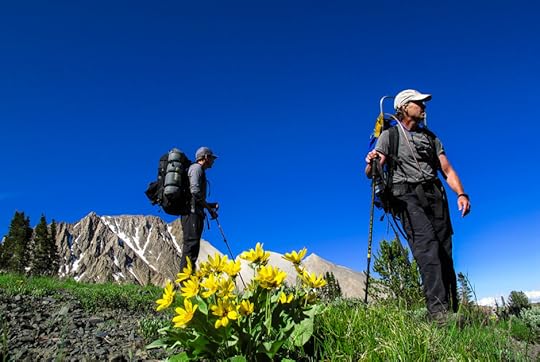
Photo: Cody Doucette
There’s a certain shade of blue, so deep it can almost look purple, that the Idaho sky turns on a clear sunny day. Named Sun Valley for a reason, sunny days are the norm here all summer. That, coupled with the extraordinarily long daylight hours, means there’s plenty of vitamin D to go around.
10. Inspiration is served daily.
Sun Valley will inspire you. That could be the inspiration to try something new like whitewater kayaking, nuking down mountains on your downhill bike, or paragliding off the top of Baldy. Maybe it’s just finding a quiet spot by the river and getting lost in your thoughts, practicing meditation and yoga with top-tier instructors, or exploring the largest roadless area in the Lower 48. Go ahead, be inspired, be free, be wild, be whatever you want to be, just be here now.
11. Small town. Big life.
There’s a magazine founded in Sun Valley called Big Life, and they couldn’t be more spot on. Sun Valley is a small town, but life here is BIG. From sophisticated restaurants to the thriving theater scene, big-name concerts, free symphonies, and music in local parks, it’s all going on here.
12. Smile. Pass it on.
People in Sun Valley are happy. They just are. Fresh air, physical activity, intellectual stimulation, small-town living, healthy food, and a strong sense of community all contribute to this. So join the party, smile at everyone, and slap a few high fives, because that feeling of being in the right place at the right time is contagious.
13. Surfing below mountain peaks sure is cool.

Photo: Cody Doucette
A somewhat new phenomenon on the mountain lakes, rivers, and reservoirs near Sun Valley, surfing on rivers and behind boats has spiked in popularity as of late. Combine that with the SUP boarding craze and it’s easy to find some wave-fueled surf stoke despite your distance from the ocean. Practice your shaka and get with the glide, because surfing in Sun Valley beneath the mountains is an amazing way to shred.
14. Dancing barefoot on the grass is the best.
Yes, listening to live music outdoors beneath the stars and surrounded by mountains is wonderful. But being able to kick your shoes off and dance around barefoot in the grass while listening to live music beneath the stars is the best feeling ever. Good thing Sun Valley has such amazing live music venues.
15. It might take some effort to get here, but it’s even harder to leave.
Everybody who’s traveled to Sun Valley inevitably runs into this hard truth: It’s a long ways from anywhere and not as easy to get to as, say, New York or LA. But once you’re here, you immediately start hoping your flight out gets canceled so you can stay one more day, one more season…an entire lifetime. Just remember: Nothing good in life comes easy.
16. Memories matter, so make them great.
A summer in Sun Valley is all about moments. Moments you remember forever. Moments that become the memories that become stories you tell your kids and grandkids. The first time you caught a big brown trout at Silver Creek, the epic mountain bike ride that left you bruised, scraped, and exhausted but also giddy with accomplishment. Camping by a mountain lake with no one else around for miles. Surfing beneath the jagged peaks above Redfish Lake. A cold beer shared with friends sitting on tailgates at the trailhead. Meeting your future spouse on the dance floor at Whiskey Jacques. Watching a herd of antelope grazing in a mountain meadow. The list goes on but our time here doesn’t, so put a priority on experiences that create memories and let Sun Valley do the rest.
17. The higher you get, the higher you get.
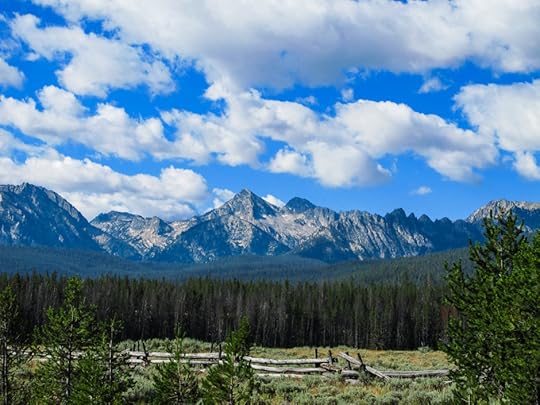
Photo: Cody Doucette
Sure, it’s written in big white letters on the roof of Pioneer Cabin — one of Sun Valley’s most iconic mountain landmarks and the endpoint of a killer hike — but what it says is more important than where it is. There’s an undeniable natural high that spending time in the mountains bestows on us. Maybe it’s the size and timelessness of those jagged peaks that help put our problems in perspective. Mountains make us feel small, and at the same time like we’re standing on top of the world. It’s a buzz unlike any other, and one big reason people have been coming to Sun Valley for decades.
18. Mountain lakes are magical.
You could hike or ride to a different mountain lake in the area around Sun Valley every day of the summer and still not see all of them. It might be how clear and still they are, how much wildlife exists around them, the way they look surrounded by cliffs and rocky peaks, and the reflections of those peaks on the water — there’s a sense of awe that these sapphire jewels create.
19. It just doesn’t get any better than this.
It’s a statement you’ll say and feel multiple times every day during summer in Sun Valley. It happens when you find yourself looking around in wonder at the view, tearing down the trail on an evening ride, drinking a beer with good friends after an all-time day on the lake, kicking back on a picnic blanket and listening to a band like Wilco, swimming in the river, and any number of the other million things that stop and make you shake your head and smile during a summer in the valley of sun.

This post is proudly produced in partnership with Visit Sun Valley.


13 things you will be homesick for after leaving Bulgaria

Photo: del mich
1. Banitsa with boza
You may never actually eat this stereotypical breakfast much when you are in Bulgaria, but for some reason you will sure crave it bad after you leave the country and you can no longer have it. When I was living in London, I used to go on hour and a half journeys to the North, just so I could buy a ready-made rolled pastry with eggs and feta cheese and a plastic bottle filled with what basically is brown, thick, sweet-sour liquid bread. Banitsa with boza seems to be a homesickness tranquilizer.
2. The slower pace of life
It seems that time has almost stopped in some areas of rural Bulgaria — elder people are sitting and gossiping on a bench in between taking care of the garden and feeding the animals. The radio is still playing Shturtsite’s song Vkusat na vremeto (The Taste of Time) from 1982. Nobody is in a hurry to do their job and there is always time for the occasional 2 to 4pm power nap. Even in Sofia, Bulgaria’s busy capital, life is not nearly as hectic as in most metropolitan cities. When living in London, I used to scarf my morning muesli while drinking coffee and pacing to the Daft Punk’s “Harder, Better, Faster, Stronger” beat on my way to work.
3. Traveling to “your village”
Having parents or grandparents who have a house in a Bulgarian village is a blessing that you don’t take for granted anymore after you leave. You don’t just get the casual trunk full of fresh salads, potatoes, fruits, meat and eggs, but you also have your place where you can escape the frantic city life. Your village is where you have spent most of your school summer holidays and it will always bring sweet childhood memories of you running around riding a stick, climbing trees to eat greenplums (djanki) and playing hide and seek with your buddies.
4. Partying until after sunrise
How I miss a good Bulgarian party ending with shkembe chorba (tripe soup) or pizza with beer for breakfast, accompanied by new and old friends you had fun with the night before. Our parties get warmed up at about 1 am and continue until or after sunrise. We do it in shifts – there’s the pre-party drinks, the party and the after party when everyone is feeling drunk-hungry and chatty. I really missed the Bulgarian nightlife when living in England, where the fun ends with running for the last train. Just about an hour after midnight.
5. Rhodope Mountain
When leaving Bulgaria, you are also leaving its mysterious and enchanting mountains, especially Rhodope Mountain. Some of the cleanest areas on the Balkans are situated in the Rhodope area, and us Bulgarians take great pride in that. A recent interview done by Nova TV showed a 87-year old Rhodopian couple who admitted they were still having sex several times a week, for 72 years. No need for further advertising of this region’s magic.
6. Having huge living space
Not only the grass, but rent is also “greener on the other side”. When you move abroad, let’s be honest — you can usually afford only a tiny corridor pretending to be a room. Spread your arms, and you might touch the side walls of your new nest. Your new accommodation will be about 1/3 the size of your Bulgarian room and on top of that, there could be a bathroom jammed in it. Dropping the soap while taking a shower is a challenge – if there is no space to bend down, you will have to pick the slippery bar with your toes and pass it to your fingers. As a Bulgarian, I just couldn’t tolerate not having my own living space big enough to do a cartwheel in. Soviet tower blocks and houses might be grey and ugly on the outside, but they are super spacious on the inside.
7. Lactobacillus bulgaricus
Thanks to this bacteria discovered by a Bulgarian scientist, we can enjoy yogurt. When you leave Bulgaria, you will sure miss its yogurt’s authentic sour taste. Which is why we don’t call it yogurt, we call it “sour milk”. Sorry, Greece, your Greek yogurt is not nearly as good as ours. Even in Japan, where the number one yogurt brand is called Burugaria (ブルガリア), the yogurt tastes sweeter and more creamy than usual. Hate to break the news, Japan. It is just not the same. Anywhere. Else.
8. The Bulgarian beauty
As much as I am curious for guys from different cultures and races, I can’t deny how hot Bulgarian men can be, especially those with chiseled bodies, bright skin, thick dark hair and an insanely cute smile. Even MTV recognizes the Bulgarian tennis player Grigor Dimitrov as one of the top 10 sexiest men alive. Bulgarian women get even more recognition when it comes to sexiness and beauty. A Bulgarian friend of mine once described how “every second woman walking down the street looks like a model here — tall, slim and gorgeous.”
9. The Cyrillic alphabet
Contrary to the common ignorant belief, the Cyrillic alphabet doesn’t originate from Russia. It was developed in The First Bulgarian Empire and we Bulgarians are proud of that fact. Unless you are going to one of only 12 countries where Cyrillic is the national script, you will definitely miss having the ability to read and write in your own alphabet.
10. Having four seasons
Of course, Bulgaria isn’t the only country with four seasons. But there are many countries that lack snowy winters and hot summers, or are too foggy and lack sunshine. Most Bulgarians will get depressed in England, which averages only 58 sunny days per year. In comparison, Bulgaria offers 230 to 300 sunny days out of 365. You will definitely miss being able to hit the slopes in winter and get sun tanned at the Black Sea’s beaches in the summer.
11. Christmas Eve’s family dinner
Christmas Eve’s dinner is the time of the year when it is depressing to be away from your family and relatives, eating ready-made food while they are having a vegan feast. Stuffed cabbage and vine leaves, homemade bread, pumpkin banitsa with fortune papers in it, dried red peppers stuffed with beans and pickled vegetables are among the dishes any Bulgarian will definitely want to have in front of them while waiting for Christmas to come.
12. Dancing horo
Ahhh, dancing to an uneven rhythm while sweatily holding hands with friends and strangers in a circle not only burns off the banitsa with boza treat, but creates a sense of togetherness found nowhere else. After having left Bulgaria, you won’t really have to miss horo, because there are so many Bulgarians abroad that you will have enough occasions to gather with the community and form that energizing circle.
13. Expressing true emotions
Expressing emotions is quite accepted and tolerated in Bulgaria. If you like someone, you can openly show it by being relaxed, chatty and enthusiastic, like you already are old friends. When you feel angry, you can mumble, fidget, sigh, make grumpy faces or get into an argument. You don’t have to smile at people you hate, with the exception of evil grins. In some countries, being emotional can be perceived as rudeness, but not here. 
August 5, 2015
30 Things You’ll Never Hear a Philadelphian Say

Photo: Jeff T
1. I don’t know which is the better cheesesteak. I love both Pat’s and Geno’s!
2. We are the proud Sixth Borough of New York City!
3. It was smooth sailing on the Blue Route today. No traffic!
4. Why are you putting your apartment on Airbnb when you could stay in town and see the Pope?
5. Sheetz is way better than Wawa.
6. No. They’re not called the Art Museum steps. They’re called the Rocky Steps. Get it right.
7. Skeletor Karaoke Gong Show is so overrated.
8. I’ve never heard of ‘It’s Always Sunny in Philadelphia’
9. These world-class chefs need to stop opening restaurants and make way for fine dining establishments like Applebees, Chili’s, and T.G.I. Friday’s.
10. I forgot all the lyrics to ‘Fly, Eagles, Fly.’
11. We’ll get there just in time if we take SEPTA.
12. They really need to disassemble the SS United States. It’s cluttering up the Delaware River and nobody wants to look at it while they’re shopping at Ikea.
13. I refuse to drink anything but Bud Light.
14. The hottest place to be on a Friday night is totally Fat Tuesday on South Street.
16. Let’s go out for a relaxing evening at The Dolphin.
17. Yes! The intro to ‘The Fresh Prince of Bel-Air’ does remind me of my childhood!
18. What does “jawn” mean?
19. For a classy night out on the town, I treat myself to a City Wide special.
20. I met this guy last night and guess what… We have no mutual friends!
21. Tastykakes and scrapple are two important components of a balanced and nutritious breakfast.
22. I couldn’t find anything good to eat at Reading Terminal market.
23. That’s it! I’m tired of rooting for the Eagles. I’m becoming a Giants fan.
24. This bar has too many craft brews on tap.
25. I can’t wait for that new vape shop to open up on Girard.
26. The new construction in Fishtown makes the neighborhood look so vibrant and modern.
27. Pop-up beer gardens are terrible use of our empty lots.
28. Bill Cosby is the most legendary celebrity to come out of Philadelphia.
29. Forget N3RD Street. Comcast is the only innovative tech company in the city.
30. Ben Franklin should have stayed in Boston.

abilities Finns have over everyone

Photo: Juho Holmi
1. We’re VERY honest.
I once had a bank clerk phoning me: “Hey, someone found your credit card in the metro station. Do I send it to your home?” You can leave anything from your Fazer chocolate bar to your wallet or grandma in the middle of Helsinki (or any other place in Finland) and, when you go back, you will find a worried passer-by wondering where your belongings should be taken. Reader’s Digest actually tested this and they found 11 wallets out of the 12 they had left in different places around Helsinki. These things don’t happen in Sweden.
2. We’ve got Sisu.
There is no equivalent word for sisu in English, but freely translated it means “Whatever happens I will not give up for any reason and will not whine about the consequences”. It’s a Finnish spirit that makes you do the things you have started no matter how difficult it gets. With sisu we face our work, friendships, and winter. Sisu is the reason why a pitching competition held in an ice hole on a frozen lake was invented by the Finns.
3. We’re cool with nudity.
Thanks to sauna, we see our friends, colleagues, as well as random strangers naked at least at some point in our lives. As a result we don’t take nudity too seriously. Really, what’s all the fuss about naked bodies? Especially if that naked person is of the same gender, there shouldn’t be anything you haven’t seen before.

More like this The 20 funniest Finnish expressions (and how to use them)
4. We’re good students.
Have you heard about how great Finnish schools are? Besides the fact that our school system is free, the food served there is healthy, and the teaching is of very good quality, we are great students. We do our homework if we said we would, we don’t cheat on tests, and we are able to sit in silence. We like rules and are determined to obey them.
5. We love mothers.
There are few things missing from the free maternity package sent by the state as a gift to all new mothers. The package includes bodysuits, a sleeping bag, outdoor gear, bathing products for the baby, bedding, a small mattress (allowing the box to be used as a crib), a hooded bath towel, nail scissors, hairbrush, toothbrush, wash cloth, muslin squares, a picture book, teething toy, one set of reusable nappies, 10 sanitary towels, bra pads, nipple cream, and 6 condoms. The state-governed Kela (Social Insurance Institution) has sent a package for Prince williams and Kate Middleton’s baby, too. We love moms and babies that much!
6. We don’t like bullshit.
When you ask us “what’s up?”, we will tell you exactly what’s going on. We don’t like talking about things neither relevant nor interesting to us and there is nothing we dislike more than dishonesty. If you want to find an employee confessing a hangover, or a friend telling you that you look like a crow with your new haircut, give us a shout. We don’t even have a direct translation for “chit-chat”, but we most often call it “chewing shit” (jauhaa paskaa). That’s about how much we enjoy it.
7. We’re unbelievably quiet.
We can sit for hours with our friends, enjoying a sunny day exchanging only the most necessary sentences, such as: “could you pass me a beer?” It’s not easy to make us understand that silent moments between you and us is uncomfortable. If you don’t have anything to say, and I don’t have anything to say, why would we use energy in talking?
8. We’re down-to-earth.
Our President shopping at Ikea or a lotto millionaire flying economy class? Yeah, why not. We just happen to think that modesty is cool. Among Finns, experts tell you that they “know something about the subject”, the most skilled people say they “are may be able to do it”, and answers like “it was nice” are used to describe one’s own wedding. If a Finn tells you that “the food was excellent” you can be pretty sure that it was one of the most delicious things they have ever eaten in their life. 
8 things we Irish say (and what we really mean)
Photo: slettvet
1. “If you’re ever in Ireland, give me a shout!”
Us Irish like to make friends, but be warned, this friendship may be fleeting. There is nothing we hate more than a casual acquaintance met on a night on the tear last summer in Prague arriving on our doorstep expecting to be put up and shown the town. Think twice before accepting a lukewarm invitation, or you may be hastily presented with a map of Dublin and pointed towards the nearest hostel.
We are not Germans, we do not necessarily mean what we say.
2. “Sure we’ll just go for one…”
Going for “one” drink is the great Irish deceit. In Ireland, “going for one” is shorthand for “I’m not planning on getting absolutely shitfaced, but if one turns into 15, then I can at least say that it was the drink that made me do it.”
Spontaneity is the spice of life, and booze is the spice of spontaneity. So go for one. It’d be absolutely rude not to.
3. “What’s the craic?”
This is Irish for “What’s up?/What’s going on?” Although on the surface it may seem like we are genuinely inquiring as to your well-being, the reality is that we don’t really give a shit. This greeting is a formality, and isn’t supposed to be answered with any ACTUAL information about how you are. An equally vague response is expected in return, such as “grand.” A typical exchange would go something like this:
Person 1: “What’s the craic?”
Person 2: “Grand! Yourself?”
Person 1: “Grand!”
[End conversation.]
4. “Ah, it’s just up the road.”
Metric, imperial, who knows? Rather than following in the footstep of our European counterparts and measuring distances in meters, or doing it the American way and counting blocks, we Irish prefer a more general system of measurement…”up,” “down,” or “around.” We would rather bullshit and appear helpful than tell the truth and leave you hanging, so even if we have no clue where something is, an answer in the form of an approximation will do.
5. “Sure it’ll stop in 5 minutes.”
Not content with lying to others, we also have to lie to ourselves, mainly about the eternal rain. This self-imposed delusion contributes to our endless optimism; The rain will never stop, but we continue to stay hopeful.
6. “Ah, no, I’m grand thanks.”
We don’t want to seem greedy, so we ALWAYS decline the first offer of anything — tea, pints, whatever. But don’t be fooled; it doesn’t matter what it is, we DO want it. You just have to offer a few more times, a la Mrs. Doyle.
7. “Ah shite, I never got round to it.”
Lies. More lies. It’s not that we “didn’t get around” to doing something, it’s that we weren’t arsed. We’ll never get around to it. Ever.
8. “It was grand.”
Ha. “Grand.” A word meaning completely the opposite when used in Ireland. When we say something was “grand,” it means it was mediocre, alright, or, most probably, shite. 
13 lessons you learn in Turkey
Photo: -Abdik-
1. Saying goodbye can be an hour-long affair.
“It’s up to the guest when they arrive, but it’s up to the host when they leave.”
In a culture where hosting guests is a great honour, your host doesn’t let you out of the house that easily. On an evening visit, following dinner, tea, and sweets, the emergence of the fruit plates is the earliest sign that it might be appropriate to start taking your leave — but you’re sure to begin this process long before you hope to make it out the door.
The intricate dance of “farewelling” begins with the guest saying Yavaş yavaş kalkalım — “Slowly slowly let’s get up to leave.” This will inevitably be met with “Oh, but how nicely we were sitting!” or, even in the dead of winter, “But we were going to cut a watermelon!” meaning, “The night is young — stick around a while longer!”
After the back-and-forthing of excuses and pleas (and perhaps a cup of Turkish coffee and another half hour of conversation), your host will show you to the door, where your shoes will have already been arranged for slipping on. With the ensuing cheek-kissing and requests that you come again soon will come profuse apologies for anything that was missing or unsatisfactory in your visit.
If you’re going on a long journey, or your hosts won’t be seeing you again for a long time, they’ll bid you Su gibi git, su gibi gel — “Go like water, return like water.” And toss a pitcher of water after you to wish you a smooth journey.
2. It makes total sense that Edmund was willing to sell his soul for a box of Turkish delight.
If your only experience with Turkish delight is Cadbury’s “Big Turk” chocolate bar and that soapy rose-flavoured stuff Brits eat at Christmas, you’re in for a treat. Truth: Fresh Turkish delight is like biting into a sweet, gummy cloud.
Lokum comes in a variety of flavours, like double-roasted pistachio, pomegranate, lemon, and mint, and is usually coated in icing sugar or coconut. Some cities have their own local specialties — like the clotted cream with chocolate chip in Afyon and the saffron in Safranbolu. Even Starbucks has its own twist on the traditional, with chocolate-covered coffee flavoured lokum — little cubes of caffeinated happiness.
3. Vegetables make the best breakfast.
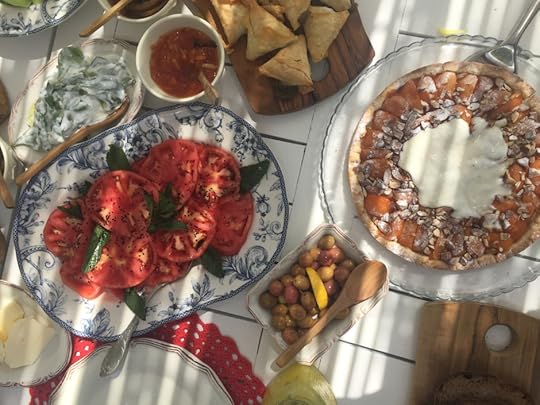
Photo courtesy of Patiska Bag Evi, in Bozcaada
“Veggies for breakfast” took a bit of getting used to, but elaborate kahvaltı spreads quickly became one of your favorite aspects of Turkish culture. Cucumbers, tomatoes, briny olives, eggs, several types of cheese, and a generous helping of fresh bread are staples on every breakfast table. And of course, çay. Cup upon tiny cup of piping hot çay.
Pansiyons and hotels often include local jams, fresh fruit, börek (a kugel-like pastry filled with cheese or spinach), Nutella, and tahin pekmez (a mixture of tahini and grape or mulberry molasses) for spreading on your bread. Many restaurants, often located in the forest or countryside, serving köy kahvaltısı (village breakfast) expand the menu further to include offerings like hot, buttery, giant English-muffin-like bazlama and sucuklu yumurta (fried eggs with sausage.)
4. Dancing is an appropriate response to pretty much everything.
Turks have no trouble finding an excuse to dance, anytime, anywhere. Versions of the halay — the Anatolian “line dance” involving linked pinkies and grapevine steps — varies from place to place, but the dance is a universally accepted response to any joyous event. News of a baby being born, a goal scored by one’s football team, or an election victory is reason enough to grab a friend and bust out in a jig.
In the northeastern province of Trabzon, it’s common to see a whole carload of people pull over and break out in the horon on the side of the road for the sheer joy of having returned to their hometown after a long absence. While in Istanbul, you’ve probably spent an evening watching live Black Sea music and traditional dancing at one of the many folk bars around the city. How easy it was to just a grab a pinkie and join in.
5. Intercontinental journeys are best done by ferry.
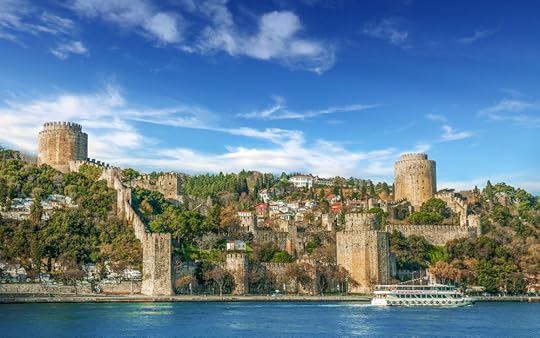
Photo courtesy of the Turkey Ministry of Culture and Tourism
Europe to Asia in four minutes flat? Sure, that’s impressive. But what the Marmaray, Istanbul’s two-year-old Metro line connecting the two shores of the Bosphorus, offers in convenience can never replace the wind in your hair and the magical feeling of sailing past the Maiden’s Tower, the Hagia Sophia, and Topkapı Palace as you make the intercontinental journey.
Whether you’re headed to Kadıköy for a stroll through the Fishermen’s Market, up to Beşiktaş to watch the sunset from Ortaköy, or over to the Prince Islands for a day of bike riding and a horse-drawn carriage tour, you grab a seat outside and inhale the salty sea air and the view of the Imperial City.
6. Lemon cologne can fix anything.
Your first experience with the alcohol-based kolonya was probably after a meal at a kebap restaurant, when the waiter poured enough into your hands to take a bath in. Lemon kolonya is also offered as a way to refresh upon arrival, and is a staple of Ramadan Festival and Sacrifice Festival house visits.
But the uses for the miracle-liquid extend far beyond cleaning grimy hands and faces. A whiff is guaranteed to revive someone who’s fainted. A good dousing will freshen up a greasy head of hair. Slather it on a stain on a wooden table and (no joke) light it on fire — that stain will vanish before your eyes. You might even notice it sprayed into the air vents and generously sprinkled on the aisle floor by the attendant on a long-distance bus ride — an olfactory relief during a hot summer journey.
7. It’s totally a good idea to let a complete stranger light your face on fire.
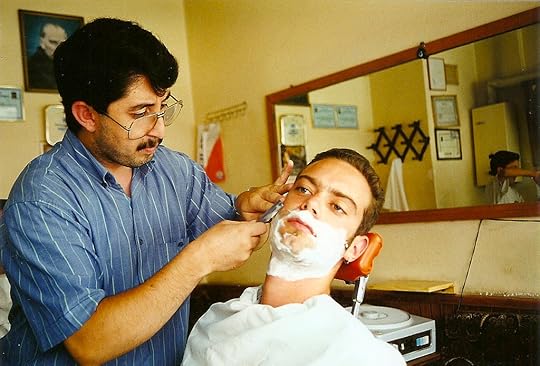
Photo: seamusiv
Turkish barbers take the meaning of “close shave” to a whole new level. Tell any barber you want a sakal tıraşı. Using a horsehair brush and a bar of soap, he’ll whip up enough lather to make you look like St. Nick (who, by the way, was born in Turkey.) With a sharp, straight blade, he’ll masterfully rid your cheeks of unwanted whiskers, then rinse and repeat. After he’s trimmed the hair around your ears and neck, the real fun begins.
The barber will douse a wire swab with cotton on the end in flammable fluid and light it on fire. This is not some form of medieval torture — he’s only out to singe every last rogue hair off your cheeks and neck. Once he’s waved the flame around your face to his satisfaction, he’ll do the same for your ear hair. (And, if it’s particularly jungle-like in there, he may also resort to waxing.)
Then, after he’s trimmed your nose hairs, he’ll give you a good rub-down with lemon cologne, which will leave you momentarily feeling like your face really is on fire. Before you have a chance to cuss the barber out, he’ll have followed up with soothing lotion and a relaxing face massage to make up for the pain he’s inflicted. For good measure, he’ll throw a steamer cloth over your head and let you marinate in there for a bit before washing and blow-drying your hair. And voila! Skin as smooth as a Turkish baby’s butt. Don’t forget to leave a few lira tip.
8. Very long sentences can be said with just one word.
How would you like to face the word muvaffakiyetsizleştiricileştiriveremeyebileceklerimizdenmişsinizcesine in a spelling bee?
Turkish is an agglutinative language, meaning that rather than wasting time pressing the space bar, Turks just stuff suffix after suffix into their already hefty words — making them Scrabble rock stars. Maybe the above example is a tad exaggerated, but in everyday conversation you’ve come across temizlettiremeyecekmişsiniz, which means “apparently you aren’t going to be able to have it cleaned.”
9. Work happens between tea breaks, not the other way around.
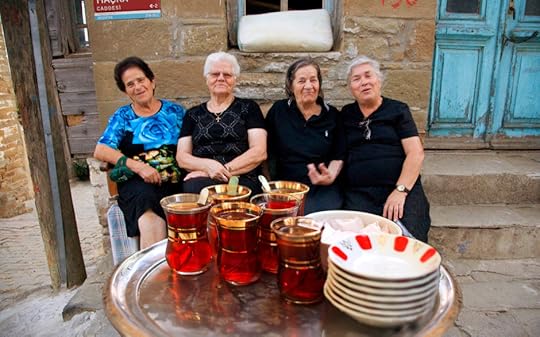
Photo courtesy of the Turkey Ministry of Culture and Tourism
One buzz of the intercom is all it takes for the neighbourhood çay guy to show up at any shop or office with a tray of steaming hot tea in thin-waisted “tulip glasses.” Offered to customers and guests, it’s the lubricant of choice for both business transactions and gossiping tongues. It’s what wakes Turks up in the morning, keeps them talking late into the night, and brings them together every hour in between.
Çay is supposed to be the colour of tavşan kanı — rabbit’s blood — and is served straight or with sugar. No cream. No pinkies. Just Turkish hospitality in liquid form. You’ve learned that when you sit down in a carpet shop and the guy spinning the “flying carpets” asks if you’d like some çay while you browse, you should skip the apple tea (which Turks jokingly refer to as “tourist çay”) and tell him you want “tavşan kanı.”
10. A long-distance bus ride is always better than flying.
As cheap as domestic air travel is in Turkey, you miss out on all the great landscapes at 30,000 feet. Fortunately, long-distance buses offer nearly all the comforts of an airplane: reading lights, personal TVs, wifi, and an attendant who makes his rounds with a cart full of pretzels, Pop Kek (mini cream-filled cupcakes), tea, Nescafe 3-in-1s, and, if you’re lucky, little personal ice cream cups. The only thing missing, unless you’re on a luxury bus, is a toilet.
11. Some of the best sights are underground.

Photo: Helen Cook
The central Anatolian region of Cappadocia (Kapadokya in Turkish) is a plateau formed of soft volcanic “tuff” rock, eroded by millennia of wind and water into conical pillars and “fairy chimneys.” Citizens of the early Roman Empire carved cave houses (many of which are now hotels), churches, and monasteries from the rock, leaving behind spectacular frescoes painted on the cave ceilings, most of which can be found in the area around Göreme.
While the landscapes in Cappadocia are out of this world (hot-air balloon ride over the fairy chimneys at sunrise, anyone?), the wonders below the surface are a whole other kind of incredible. In the 7th and 8th centuries AD, locals seeking to escape invaders outwitted their would-be pursuers by digging underground cities like Derinkuyu and Kaymaklı, which are up to 13 stories deep. These cavernous hideaways, complete with animal stalls, pantries, chapels, and school rooms, could house 20,000 people. Ingenious little add-ons, like millstones used to seal off tunnel openings in the event of imminent danger, and ventilation shafts that carried smoke from cooking fires miles away from the cities so it wouldn’t give clues to their location, enabled whole communities to safely carry on with business as usual for up to a year.
Istanbul has its own subterranean world, which is well worth exploring. Emperor Justinian’s sprawling underground Basilica Cistern (Yerebatan Sarayı) in Sultanahmet is open for tours of the ancient royal reservoir. The Binbirdirek (1001 Columns) Cistern is used as an unforgettable locale for art exhibits, gala nights, and weddings. And the Yedikule and Anemas Dungeon, located in towers in the Theodosian land walls, offer a chilling glimpse into the last home of many prisoners and out-of-favour Ottoman sultans.
12. It’s perfectly acceptable to crash a stranger’s wedding.
If you see a throng of merrymakers making their way down the street on foot, drums beating and bride in tow, you consider it an invitation. While you wouldn’t be advised to pull up a chair at a sit-down wedding dinner in a restaurant or hotel, the attitude at village and neighbourhood weddings is “the more the merrier!”
Plastic chairs in a wide circle in an empty lot, little bags of nuts and crackers for refreshments, and dozens of people dancing the halay in a long, snaking line are a sure sign that no one is checking invitations at the door. Turks are extremely hospitable and most would be honoured to have a curious foreigner join their party.
13. Every cup of coffee has a 40-year memory.
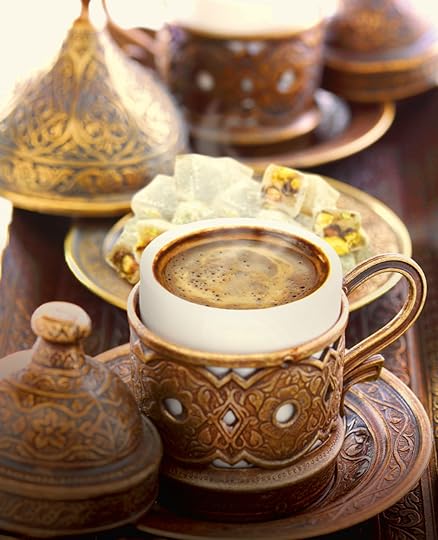
Photo courtesy of the Turkey Ministry of Culture and Tourism
It’s said that a cup of Türk kahvesi (Turkish coffee) has a 40-year memory, meaning the sipper is indebted to the server for his kindness in offering it. Traditional coffee culture is about slow sipping and togetherness, and the shared experience is meant to seal friendships for decades to come. Old family companies like Kurukahveci Mehmet Efendi and Fazıl Bey’s have been bringing people together in kahvehanes and living rooms since the days of the Ottomans, while Osmanlı, a newer arrival on the caffeine scene, is reintroducing the coffeehouse culture for the younger generation by offering traditional Türk kahvesi in a funky café atmosphere.
Coffee also plays a starring role in uniting families through engagement rituals. When the family of a potential suitor comes to ask for a girl’s hand in marriage, she prepares them Türk kahvesi as part of the two-way screening process. Not enough froth might cause her potential mother-in-law to have second thoughts, and a pinch of salt in the young man’s cup is a face-saving hint that he should look elsewhere.
Southeast Turkey has its own particularly bitter brew, mırra, which is said to be “Hot as hell, as dark as the devil, as pure as an angel, as sweet as love.” In the old days, if the person drinking the mırra placed his or her cup on the table when they were done, it meant they agreed to marry the server or pay for their wedding. So, if you’re not rich or looking, you’d best keep that cup in your hands, or an engagement ring may arrive with the second round. (Though perhaps a pinch of salt would get you off the hook…)
Powered by Turkey Home.

August 4, 2015
Amnesty International is about to make sex trafficking easier, worldwide

(via)
CAMBRIDGE, MA — In many countries, including the United States, it’s no harder to buy a human being for sex than to get a pack of cigarettes. Now a leading human rights group, Amnesty International, is about to make it even easier to purchase sex by endorsing one of the most exploitative human rights abuses of our time.
At its bi-annual summit in Dublin on Aug. 7, “Irony International” will vote on a proposal advocating decriminalization of prostitution — not just selling, but also pimping and buying sex, worldwide. The rationale: women will be safer when all of those involved — including pimps, brothel owners, and buyers — don’t operate underground.
I’ve supported Amnesty for decades, yet I find no logical or ethical basis for the view that pimps’ and buyers’ rights trump the right not to be exploited when you’re scared, poor, and have suffered all kinds of abuse. Decriminalizing commercial sex overall isn’t reducing harm, it’s endorsing a system that exploits untold numbers of people worldwide.
The vast majority of prostituted women have been forced into the trade (in the US, at age 15) because of economic desperation, violence, and/or psychological manipulation. The idea that they have real choice is absurd; only a handful are “happy hookers.”
It is certainly right to decriminalize the selling of sex, especially when we provide exit strategies to those who want to get out. (Most say that they want to leave but don’t see any choice.) But the evidence is clear: vindicating pimps and johns won’t improve the lives of “sex workers.”
In Germany and the Netherlands, with some of the world’s most profitable sex trades, legalization has led to an explosion in prostitution, without the promised reduction in trafficking. In fact, the mayor of Amsterdam has shut down half the red light district, because legal attracts illegal. There, girls and women being prostituted are mostly immigrants without protection from exploitation.
Amnesty leaders seem to believe that pimps and men buying sex from “consenting adults” have the right to exercise their autonomy. But who can tell if a seller is an adult? Or that she’s truly consenting? These aren’t questions that buyers ask after “how much for what?”
The vast majority of prostituted women have been forced into the trade (in the US, at age 15) because of economic desperation, violence, and/or psychological manipulation. The idea that they have real choice is absurd; only a handful are “happy hookers.” But these few — backed by a multi-billion dollar criminal industry — are convincing groups such as Amnesty that it’s progressive to support “sex workers,” pimps, and buyers’ rights, at the expense of the far more basic right of girls and women not to be abused.
Sound public policy does not protect the right of some to act in ways that cause crushing harm to others. That’s why we limit the sale of cigarettes. Why we should further limit access to guns. Why we force refineries to clean up emissions, and why we recall cars when one out of ten thousand brakes fail.
By framing this issue as “sex work,” Amnesty implies that prostitution is a labor issue to be fixed by getting “workers” better rights. But Harvard’s esteemed scholar of racial issues, Orlando Patterson, calls this “modern day slavery.” Let’s see this crisis for what it is: gender-based violence. The notion that someone in power (almost always a white male) has the right to buy another person’s body (usually females of color) is perverse entitlement. Being lured into sexual activity is not a career choice.
More like this Sweden's prostitution solution: Why hasn't anyone tried this before?
Not all of Amnesty’s policy is unsound. Some principles, including insistence that victims of prostitution be helped — not arrested — are vital to protecting lives. The nonprofit program Demand Abolition advocates that we stop hunting down and punishing those being exploited — the sellers — and instead focusing on the true perpetrators: those who buy, those with the checkbook and the real choice to consent.
Amnesty would be wise to support a philosophy born in the (sexually liberated) Nordic countries and increasingly welcomed as the path to defending trafficking victims’ rights. Adopted by Canada, Sweden, Norway, Iceland, and more recently, Northern Ireland, the “Nordic Model” offers services to those driven into selling themselves for sex, while prosecuting buyers and educating them to the harsh realities of the global sex trade. Sweden, the country that pioneered the Nordic Model, has documented sharp reductions in prostitution, including sex-trafficking and related crimes.
Amnesty’s proposed approach suggests that boys will be boys, so we shouldn’t bother trying to stop them, just make them less harmful. What an insult to men, saying they can’t control their urges. And surely that sympathy means nothing to a “sex worker” purchased for sex ten times in one night, then sent out by her pimp who takes her money then sends her out for her next “job.”
Amnesty must vote against decriminalizing buyers and pimps; it’s criminal to do any less.
Swanee Hunt is the Eleanor Roosevelt Lecturer in Public Policy and Senior Advisor at the Carr Center for Human Rights at Harvard Kennedy School. She founded Demand Abolition, a nonprofit working to end demand for illegal commercial sex.
By Swanee Hunt, GlobalPost
This article is syndicated from GlobalPost.

You learned to drink in Buffalo
2. Once you turned legal, you had at least one birthday getting your groove on at the Funky Monkey.
3. Thank God no one cares what you’re wearing out, because it’s two degrees. You’re always prepared to stumble home with someone else’s North Face by mistake though.
4. You’ve had enough SoCo limes and fishbowls to drown a cat.
5. Depending if you want a bohemian, fancy, foodie, or hipster scene, or you exactly where to go in Allentown, Elmwood, or Chippewa.
6. You know pre-gaming takes place early at Frizzy’s in Allentown before getting really rowdy.
7. Happy Hours reign supreme and you know exactly where to find the best ones.
8. Some of the cheapest deals are best found in Allentown.
9. You go to the Wellington Pub on Mondays off of Hertel for five dollar pitchers. You then struggle to work the next morning.
10. Getting your Sunday Funday with margarita towers at Don Tequilas is a great and horrible decision all at the same time.
11. Sunday Funday can only be done if you’ve avoided two dollar gin and tonics at Lenox the night before — or at least washed them down with their awesome wings.
12. Many will swear by the wings at Duff’s and say the Anchor Bar is past its prime. But you’ll say Bar Bill is the real deal when it comes to wings, hands down.
13. When watching the Sabres, you drink at Fat Bob’s. For the Bills, you head to Thirsty Buffalo. Many people will fight you over this opinion.
14. You know a couple of stupidly simple drinking games like Kings and Quarters that you can get away with playing at the bar.
15. You love your local breweries, especially Hamburg and Flying Bison. This can also be argued all day long.
16. But you know you can’t turn down a cold Molson or Blue Light either.
17. All hail Mighty Taco after a long night of getting your drink on.
18. Summertime makes everyone crazy at Mickey Rats or Sunset Beach.
19. But when you want to keep it classy, it’s always nice to suit up and head to Mezza or Epic of Elmwood once in a while.
20. You know no matter what you do you have to lock it up at least until 4AM. Or just go get sober up at Jim’s SteakOut.
21. And if that’s the case, you know getting a taxi is going to be rough. Hope you wore your snow boots.
This article was originally published on April 20, 2015

Matador Network's Blog

- Matador Network's profile
- 6 followers

