
Matador Network's Blog, page 2079
July 29, 2015
The link between “tourism” and “settler colonialism” in Hawai’i
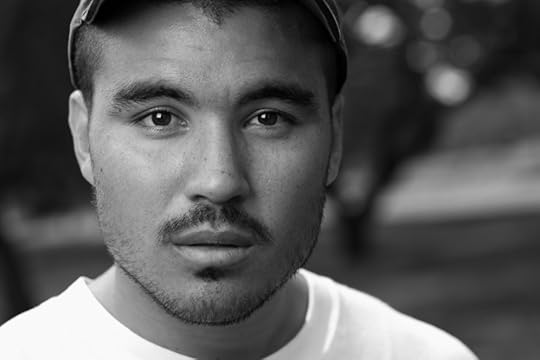
Maile Arvin is a Native Hawaiian feminist scholar who writes about Native feminist theories, settler colonialism, decolonization, and race and science in Hawai‘i and the broader Pacific. She is currently a University of California President’s Postdoctoral Fellow in Ethnic Studies at UCR and will be officially joining the department as an assistant professor in July. She is part of the Critical Ethnic Studies Association working group and a member of Hinemoana of Turtle Island, a Pacific Islander feminist group of activists, poets, and scholars located in California and Oregon. You can find some of her academic writing here.
Bani Amor: Tell us about yourself, the work that you do, and how your identities play into that work.
Maile Arvin: So I’m Native Hawaiian, and my family is from Waimanalo, a small town on the windward side of O’ahu. I’m an academic – I research and teach about race and indigeneity in Hawai’i, the larger Pacific and elsewhere. Being Native Hawaiian grounds my work, motivates me to write about Native Hawaiian lives and histories in complicated, respectful ways.
One of my current projects is working with Hinemoana of Turtle Island, a group of Native Hawaiian and other Pacific Islander feminist women, many of whom are also academics but also poets, activists, artists. We support each other in the academic world and are accountable to each other. We talk to each other a lot about current issues that affect Pacific Islanders, usually in news that erases the existence of Indigenous Pacific Islanders altogether, and sometimes write up responses on our blog, muliwai. We’re currently working on a response to the movie Aloha. Or maybe more about the criticism of the movie that is entirely focused on Emma Stone’s casting.
Bani Amor: Word. That leads me to my next question: I often find that travel media and tourism are complicit in settler colonialism, in that it still purports an archaic, false image of indigenous peoples as smiling caricatures who are ready, willing and able to serve at the beck and call of the (white) tourist. Any idea why this is especially the case for Hawai’i?
Maile Arvin: For Hawai’i, because it is actually a U.S. state, there is this incredible sense of entitlement that white Americans in particular feel to being at home in Hawai’i. Since World War II in particular, and the Japanese bombing of Pearl Harbor, there was this narrative of Hawai’i as being the place that militarily makes the rest of the U.S. safe. And along with that, there is also a need to justify and naturalize U.S. military occupation of these islands that are over 2000 miles away from the U.S. continent. So Hawai’i becomes this feminine place in need of the masculine U.S. military to safeguard both Hawai’i and the rest of the U.S. And Native Hawaiian women in particular become these symbols of a happy, paradisical place, a place where white military men will have fun, will get their own Native Hawaiian girl.
Then there’s just the economic situation of Hawai’i. The two biggest industries are the military and the tourism industry, so a lot of Native Hawaiians have to work for one or the other. So there will be a lot of Native Hawaiians working as performers, staff, etc. in Waikiki hotels. And they are asked to project a certain image, which is in line with this old but also current colonial idea of Hawai’i as a carefree place, a vacation place for white people.
I think there is also sometimes a sense that the U.S. has “helped” Hawai’i and Native Hawaiians, through “civilization” and through conferring statehood status on Hawai’i. So Native Hawaiians are supposed to be grateful to white Americans for those things. Which actually signify settler colonialism and genocide.
Bani Amor: Right! Travel media – mainstream and “indie” alike – seem to hold on to this theory that the tourist presence = savior presence, that indigenous people somehow *need* tourists to better their economy, keep things “civilized,” i.e. colonization is progress. In Hawai’i, does the tourist presence ever feel like another form of occupation?
Maile Arvin: Absolutely. Which is not to say that Native Hawaiians hate all tourists. But just that tourism is this structure that furthers U.S. occupation of Hawai’i. One example is that Waikiki, the site where most hotels are clustered on O’ahu, can often be actively hostile to Native Hawaiians who look out of place there. The City Council keeps passing these resolutions to ban anyone from sleeping or lying on the sidewalks. Which is a blatantly anti-homeless measure that forces Native Hawaiians out of sight of most of the tourists.
I live in California, and a lot of people who live here go on vacations in Hawai’i. Sometimes they ask me where to go, or they just want to tell me about where they went. And usually they go to outer islands, not O’ahu where I’m from, to Moloka’i or Kaua’i islands, where I’ve actually never been. I’m glad many people love Hawai’i, but it’s hard not to feel upset sometimes when it seems like my Californian neighborhood has seen more of Hawai’i than I have. But then again I wonder what they really see, and think about how much they must miss.
For Native Hawaiians, it’s really important to try to have a relationship with the places you visit, or at least to acknowledge the relationships that other people from that place have with that land. So it’s not really about just seeing as much of Hawai’i as possible but having relationships, honoring responsibilities to places.
Bani Amor: Yes, and it’s hard to communicate that to (white) people who want to visit our lands. It took me 21 years to be able to get to Ecuador, where my fam is from, and leading up to that time white people would like to tell me how many times they’d been there, what they did, what I should see when I finally go. It was torture! And when I’m living in Ecuador (white) people are always talking about the Galapagos, a mostly inaccessible place for actual Ecuadorians. I’ve never been, nor has 99% of my family.
Maile Arvin: Yeah! It’s really hard to get people to truly acknowledge how much privilege structures their ability to travel places. To not just try to explain it away, but to sit with that however uncomfortable it may be. It’s also hard to get them to see the ways their comments are often structured by the expectation that Indigenous peoples are tour guides or that there is one authentic Indigenous experience that they can casually ask for and receive.
Bani Amor: Yup, it’s a transaction. Places are sold to tourists as brands and their consumption of place forces indigenous people to become culture hustlers, in a way. Getting back to perceptions of tourists – do you feel that there’s a sentiment that some or many Kanaka Maoli/Native Hawaiians have towards tourists that the media is intentionally erasing?
Maile Arvin: I definitely think the media (local or national) does not see Native Hawaiians as a primary audience, and so even when there is reporting on Native Hawaiian issues, it is often very shallow and tries not to make any non-Native person uncomfortable.
For example, the best coverage around the Kanaka Maoli protectors of Mauna Kea blocking the road to the summit where a thirty meter telescope is proposed to be built has largely come from international media outlets or just from folks using social media to get information out. Local and national media often tries to present “both sides” in ways that are disingenuous and don’t acknowledge power dynamics. Then Native Hawaiians get called out for being “uncivil” for disagreeing with the priorities of Western science.
Mauna Kea is a very sacred site within Hawaiian epistemologies. It is the piko, or umbilical cord, signifying the birthplace of our people. But the protectors are not fighting simply to preserve the site for Native Hawaiians. They are also fighting to stop environmental destruction, and the possible poisoning of the water aquifer that would effect everyone who lives on Hawai’i Island. But the media rarely acknowledges that, they represent the “Native Hawaiian side” versus everyone else, which is a false binary.
Bani Amor: So often, the consequences of tourism directly lead to environmental racism, is complicit projects that natives actively fight against. I’m wondering how that binary is false though, can you clarify?
Maile Arvin: I just mean that the media often treats Native Hawaiian views as this specialized, boutique kind of opinion which is relevant only to a very small number of people. When actually the knowledge Native Hawaiians have to share, and the struggles Native Hawaiians are engaged in, often impact everyone. Especially in regards to the environment. So it seems false to me to tokenize Native Hawaiians into this one box that is sometimes acknowledged, but is set up as necessarily being against the needs/desires of the larger public, when that isn’t even always the case. Does that make sense? Maybe false binary isn’t the right phrase for it.
Bani Amor: Yes, thanks for clarifying. Seems like the media has done a lot of work to invalidate those “boutique” opinions. My final question is just about getting some resources up in here so that people can do work that continues after this conversation ends: For folks looking to balance their perceptions of Hawaii, can you name drop some Kanaka Maoli/Native Hawaiian activists, groups or creatives that are working towards decolonization?
Maile Arvin: Gladly! This is a really wonderful blog, He Kapu Hehi Ale, written by a group of Native Hawaiians and others in Hawai’i. It covers a lot of current issues in the Pacific, including Mauna Kea, and it is really creative and just great writing. To keep up to date on Mauna Kea, you can follow Sacred Mauna Kea Hui on Facebook. Another blog I love is by Teresia Teaiwa, an academic and activist working in Aoteraroa/New Zealand. And finally Kathy Jetnil-Kijiner, a poet and activist from Micronesia who has a blog. Also she gave a killer speech/poem to the UN recently.
Bani Amor: Awesome, thank you! 


How to piss off an Argentine
[Para leer este artículo en español, haz click aquí.]
Fart in public.
In the US, kids are taught to say “excuse me.” In Argentina, kids are apparently taught a zero tolerance policy. People fart unabashedly in public restrooms across the US, while bathrooms in Argentina are deathly quiet.
Argentina is a nation where public flatulence is so offensive, so unforgivable, that a dancer named María Amuchástegui who accidentally farted on her popular (and unfortunately, live) aerobics show literally fled the set, ending her career, and not appearing in public for another 30 years. It’s a nation apparently holding it in at all times, accounting perhaps for the preponderance of people walking around with cara de culo, or “ass-face,” particularly in Buenos Aires. Por favor, wait until you’re safely out of anyone’s auditory / olfactory range before tirarte un pedo.
Don’t have change or small bills.
Just try paying for your 12-block taxi ride with a 100-peso bill.
“Microphone” while you’re drinking mate.
Drinking mate has a pace to it. It’s not like sipping coffee. When you really get it, you see how it sets the rhythm of a conversation, or charla. When it’s passed to you, sip purposefully until the mate is completely empty (you need to hear a gurgling sound), and then pass it directly back to the cebador (person serving the mate). Don’t say “gracias” unless you want to communicate to the cebador that you’re finished and don’t want another round.
Argentines take a lot of care in how mate is prepared and served. In any way tampering with the bombilla (straw), stirring the yerba around, playing with it, trying to prepare it yourself and then mess up the temperature of the water, the amount of yerba, etc, or most of all, sitting there talking while you’re holding the mate (microphoning) — all of this gets people ornery.
Be surprised when people microphone while smoking pot.
Contradictorily, Argentines seriously bogart joints and other smokeage. It’s not puff puff pass but puff puff talk puff puff talk. This is frequently how big bottles of Quilmes and other beers are passed around circles of friends as well. Tranqui: There’s no hurry.
Talk shit about their pizza.
Be prepared to feel the wrath if you start comparing your organic veggie-topped, dank microbrew-accompanied, non-greasy pies to Argentines’ beloved “peek-zas.” In general, praise everything culinary, as Argentine asado, vino, and pastries sort of make up for its soggy pizza, dearth of vegetables, (and any solid concept of “breakfast” for that matter).
Misinterpret the kissing thing.
In Argentina you greet people with besos. It’s not about hugs or fistbumps or handshakes. Regardless of gender, people’s friends, family, their friends of friends, even casual acquaintances are greeted and said goodbye to with a quick peck on the right cheek. So don’t start having panic attacks when you’re suddenly stubble to stubble with some dude, or mistake that the girl is actually interested in you. Check yourself: It’s a saludo, nada más.
Refuse to engage in absurdly dangerous handling of fireworks.
Somewhat self-explanatory. Happens on New Year’s Eve and Christmas. Either stay in if you’re not ready to lose an eye/eardrum, or just be ready to duck. Either way, complaining gets you nowhere.
Obey traffic rules / give right of way to a pedestrian.
The roads in Argentina are a shitshow. On every conceivable level, laws, lanes, common sense, and courtesy are thrown out the window, replaced with a kind of machismo hierarchy based around balls and the size/velocity of your vehicle.
Q: Who has right of way at a four-way stop? A(1): Whoever doesn’t stop, and (2) whoever’s momentum and vehicle size would inflict the most damage on others.
There is one universally followed law: No matter what, you do NOT stop for peatones (pedestrians), and if you do, prepare yourself for a chorus of raised fists, ¡boludo!s, and possible rear-endings.
If you’re a guy: Don’t flirt with girls to some degree.
If you’re a guy and you don’t flirt at least a little, then you’re basically written off as un aparato (an “apparatus”).
Leave a party or social event early.
And by “early” we’re talking 2am. In Argentina, the phrase/excuse “I’ve got to get up early for work tomorrow” doesn’t exist.
Refuse hospitality.
In the same spirit, Argentines will want you to eat, drink, party until you reach a comatose state. When you’re literally passing out on someone’s sofa, that’s when you’re done. You can try to claim dietary restrictions or simply say you’re too full for a fifth porción of meat, but you’ll be doing irreparable damage.
Ask if they speak Portuguese.
Buenos Aires is not the capital of Brazil (where, yes, they speak Portuguese), but Argentina, where they speak castellano, aka Spanish.
Doubt their directions.
If you stop and ask for directions, Argentines have two rules: (1) Never say “Sorry, I don’t know,” and (2) Even if you don’t know or aren’t sure, create elaborate, ultra-convincing, and completely false directions as a bluff. With enough language skills, perspicacity, and time spent in Argentina, you can begin to recognize when somebody is actually telling you the truth versus “playing the guitar,” but either way, just smile, nod, and enjoy the show.
Bring up the Nazis.
Juan Perón, Argentina’s at once reviled, revered, and at one point exiled president, seemed to have a hard-on for Nazis. He made Argentina a safe haven for war criminals, helping sneak in Josef Mengele and Adolf Eichmann (among others), where they were protected and able to prosper for decades.
But while this is true, it’s also given rise to unfair, undeserved, hyperbolic associations of Argentina as “full of Nazis” (I’ve personally experienced / witnessed much more anti-Semitism here in the US). Ultimately the most far-reaching fact is that post-WWII, Argentina accepted more Jewish refugees than any other country in Latin America, and is now home to the 6th-largest Jewish population in the world.
Be from the US. . . and be right about something.
I’m not saying it isn’t somewhat deserved (just check your history: Operation Condor), but an obscure antipathy towards Los Yanquis definitely exists in Argentina. Even if you manage to ingratiate yourself with a local crew (and it’s surprisingly easy as long as you’re not an apparatus), there will always be this tiny layer of something like jealousy, suspicion, a sense that you’ve had it easier somehow…. I’m not exactly sure how to describe it.
All I know is that if you just go with it, outwardly accepting, that yes, you’re a boludo when it comes to carving meat, building fences, tending horses, hitting on girls, whatever it is, all will be fine. But as a gringo, as soon as you suggest something — like driving slightly faster on a dirt road to smooth out the bumps — and your (likely male) Argentine friend discovers you’re right? Shit, prepare for extended sulking, bitterness, even outright rage.
Don’t give up your place in line for a pregnant woman.
This is a truly beautiful (if inconsistent with the pedestrians thing) part of Argentinean culture: People in lines always give up their place for pregnant women. Are you a healthy 20-something backpacker waiting for the ATM where you’ll leverage ridiculous euro or dollar exchange rates to extract more pesos for your night in San Telmo than the pregnant woman at the back of the line (with four nenes pulling on her) will withdraw in a month? God help you, let her pass in front.
Call yourself an “American.”
While this is true in other Latin American countries, Argentines seem particularly sensitive to the fact that technically all of us throughout the Americas are “American” and that the proper term is estadounidense.
After getting made fun of for your accent, ask about their English.
Imitating gringo accents is just a kind of national pastime in Argentina. You can live there for years, speaking with so much fluency, grace, and jerga that no Latino outside of Argentina would ever guess you weren’t from there…and still, the second you round off the the d’s and r’s of “Puerto Madero,” you’re gonna get made fun of. And you’re expected to just take this in good humor. The second you laugh at their version of “Bob Marley,” “Pink Floyd,” “Rolling Stones,” etc. — the second you ask about their English — preparate. 
This article was first published on December 9, 2013

Things an Argentine would never say
Photo: Paula Rey
1. It’s not worth it to start a discussion about this, my friend, you know you’re always right!
2. I don’t have any advice to give you. I’ll pass.
3. I’m so sorry I can’t go to the party tonight, but I have to get up early tomorrow.
4. Inflation? What’s that?
5. I voted for Menem.
6. Oh, and I voted for de De La Rúa too!
7. I love watching “Bailando por un sueño.”
8. Please address me formally. “Che” is not my name, nor is “Boludo.”
9. Who is Mafalda?
10. Going to a therapist? Please be careful; only really crazy people do that, man.
11. I’m a fan of Boca, but we can go together to see River. I’ll be so happy for you if your team scores a goal!
12. It’s not fair our politicians are making so little money…
13. It’s 2am, loco, it’s too late to go out!
14. Please don’t bring your cousin to el asado, there’s not enough food for one more person, maybe next time!
15. I just lost another truco match, but that’s OK, it’s having fun what matters!
16. I’m so sorry you told me to come at 9 and I got here at 12…I have no excuses, I promise it won’t happen again.
17. I’m not in the mood to talk about politics, let’s chat about the weather instead.
18. I trust my own currency. I don’t need dollars, euros or gold.
19. Vegetarianism is the norm in my country.
20. Do we always have to celebrate eating huge amounts of food?
21. I’m so sorry I came to your house without telling you in advance.
22. Mate? No, thank you, I’m worried about getting your germs.
23. Hey, I came to bring you back those books I borrowed two years ago.
24. No thank you, if I have another beer I will fall asleep.
25. Panqueques de dulce de leche? Maybe next time, I’ve eaten enough for today.
26. It’s been such a long time since I called my friends by their real names…I’ll stop calling them “Reina,” “Gordo,” or “Negra” right now.
27. Friends are not part of the family, so please stop taking our friendship so seriously!
28. I don’t know how people can spend so much time talking…
29. Don’t you think we’re talking too loud?
30. I live to work.
31. Naps are a total waste of time.
32. I love it when you mock my accent. I do want to repeat “yo quiero que llueva” a couple more times for your entertainment.
33. And no, my accent is not sexy. 
29 signs you're from New Hampshire

Photo: Rose Morelli
1. You had flannel and a beard before it was cool. Or at least your dad did.
2. You can drive through ice storms, sleet, blizzards, pouring rain, frost heaves, and deer grazing on the highway without blinking, but ‘Boston traffic’ is the end of the world.
3. Your automatic response to being cut off is to yell ‘Masshole!’ and shake your fist, even if the license plate says Nebraska.
4. You own a snowplow that attaches to your truck, or you know someone who does. It’s good to know a plow guy, which is actually the subject of a song by an NH rap group.
5. You can strike up a conversation at any bar by saying “What happened to Adam Sandler?” We don’t have many big celebrities, so it’s a sad day for all of us when one of them is responsible for Jack and Jill.
6. You jar homegrown vegetables for winter.
7. You chainsawed the tree blocking your car yourself rather than wait for road crews.
8. You dream of living off-the-grid and installing solar panels (not for the environment, but because you are sick of PSNH taking your money).
9. You own at least one pair of Carhartts that is more patchwork than original material.
10. You are belligerently self-sufficient (sometimes to a fault).
11. You have been told that the words yoga, spatula, and idea do not include an ‘r.’
12. You might have forgotten exactly where you were when 9/11 happened, but you remember every detail from the day the Old Man of the Mountain fell down. When it finally slid off the mountain despite decades of supporting cables, the normally reticent people of my neighborhood wept.
13. You have been involved in a bragging war about how many gas stations or stoplights your hometown had.
14. You give directions with a stingy nod of your head but will talk for hours about local politics.
15. If you aren’t a state representative, you probably live next to one. With 400 representatives among a population of 1.3 million people, you are almost guaranteed to run into one of them at the grocery store, town dump, or shooting range.
16. You have given or taken directions that make use of farm animals as a crucial landmark.
17. You have an opinion about whether Arctic Cat or SkiDoo is better, and you will defend it to the death.
18. You are upset that I left out Polaris.
19. When you find out which town someone is from in your state, your next question is “What’s your last name?”
20. When they tell you, you realize you are related to them.
21. You then realize that last night was a huge mistake (you spend the rest of your month praying Aunt Edith doesn’t find out).
22. You know that no matter how far you travel, you can never outrun being a Yankee — and you don’t really want to.
23. You refer to Boston as ‘the South.’
24. During the Red Sox riots, you might have been caught saying “What are they all excited about again down there?”
25. You have at least one personal story that involves a moose — hitting a moose, getting chased by a moose, chasing a moose, drinking with a moose, waking up next to a moose…
26. You had your first legal drink in Canada.
27. You’re pretty sure a population of 20,000 is a city, 200,000 is a big city, and anywhere with a population of 2,000,000 or more is just awful. As in, “I’m from the city (Manchester), but my wife is from the big city (Boston), and she wants to visit her sister in [huge eye roll]…New York City.”
28. You grew up thinking Mt. Washington was the tallest mountain in the world.
29. You watch the Patriots, Red Sox, and Weather Channel with the same mixture of unbridled enthusiasm and anxiety. And whether the Yankees just scored or there’s 15 inches of snow coming tomorrow, people are yelling at their televisions all over the state. 
9 things Oregonians have over everyone else (and one thing we suck at)

Photo: Stefano Leotta
1. Vegan strippers
Portland has an old reputation as a port for the licentious and wanton. That routine is upheld by Portland’s strip scene, which includes vegan strip club Casa Diablo. Portland holds the title of most strip clubs per capita, a statistic fact-checked by Willamette Week in 2013. Whether this is worth being proud of is debatable, but regardless, we win.
2. Non-capitalist nudity
Oregon State Law allows nudity, so long as you’re not trying to arouse others (so… not stripping). City codes, like Portland, Ashland, and Eugene have more restrictive ordinances, but all told Oregon is pretty skin-friendly. Collins Beach just outside of Portland is a popular clothing-optional get-away on Sauvie Island, the Oregon Country Fair lets it all hang out, and hot springs like Bagby and Breitenbush give the clothing disinclined a place to soak it all in.
3. Berry ice creams
Oregon grows small, sweet strawberries, and large, dark huckleberries and a range of other berries tiny and tart to sweet succulent. We take these berries, mix them with sweet, creamy dairy and wind up with Tillamook’s Marionberry Pie Ice Cream or Salt and Straw’s Strawberry Honey Balsamic and Black Pepper.
4. Pale ales
If you like your brews bitter and hoppy, chances are you’ll find a microbrew to sate your taste in any establishment. Special shout-out to my own first beer and the staple of my grandfather’s fridge, Deschutes Brewery’s Mirror Pond Pale Ale.
5. Big cheddar
And I don’t mean money, because we’re running up a nice little budget deficit like every other state. I’m talking about the large logs of sharp yellow yumminess. The free samples at the Tillamook Cheese Factory almost make the motion-sickness enduring drive to Tillamook worth it. I hear Wisconsin has some sort of cheese thing going on, but west of the Rockies, Tillamook reigns.
6. Urban growth boundary
I sometimes hear from visitors that Portland sprawls more than they expected. This is true, especially around the I-5 corridor, but Portland’s growth boundary is pretty stark. Once you hit Wilsonville to the South or Hillsboro to the West, the landscape changes immediately and dramatically from rolling suburbia to agricultural or wooded lands. It’s a beautiful concept to consider sometime as you drive Interstate 210 hours through Los Angeles’ never-ending suburbs and satellite cities. Yep, that shade’s for you LA, I heard you need it.
7. Shameless self-promotion
I heard somewhere that only half the people now living in Oregon were born here. The rest are what we call “transplants.” How did that happen? It’s because those of us who leave, for love or college or sunshine, can’t stop talking about how freaking awesome Oregon is — and how affordable — and full of juicy berries. And ice cream. And vegan strippers. Then people move here and we complain about how Californians can’t drive and the newcomers are driving up real estate prices. But what am I doing right now? Writing about how freaking awesome Oregon is. I can’t stop.

This story was produced through the travel journalism programs at MatadorU. Learn More
8. Absurdly long walks 9. Oregon-themed tattoos
It wasn’t long after the iconic green heart in Oregon sticker became a bumper-craze that the same design started appearing on upper arms and napes of the neck. Then other Oregon icons made their way into popular ink — the Douglas Fir design of the license plate, the Made in Oregon sign over Old Town, and “she flies with her own wings,” the state motto. Even the PDX carpet design is being immortalized on people’s flesh. Explain that one to the grandkids.
And one thing we suck at? Gentrification.
In that we’re doing it, a lot. I remember in high school we (primarily middle class kids from west-of-the-Willamette white neighborhoods) would joke about how “white-washed” Oregon was. As if it was past-tense. As if it was an inevitable fact. As if it were funny, albeit in a self-deprecating kind of way. But that white-washing is a process continually happening, and in the present more than ever. In the last decade, communities of color in urban areas of north and east Portland have been “revitalized” and while my grandparents still worry I’ll be shot while I’m out on N. Williams, my friends and I know that’s the new trendy place to get brunch. And where are those longtime residents now that rent raises priced them out of their own neighborhood? Primarily those communities have moved east towards Gresham. So, now a new generation of middle-class white teenagers growing up along MLK Blvd can so astutely observe how “white-washed” we are as a state, as if it’s always just been that way. 
People from Edinburgh never say:
Photo: Neil H
1. I got a tram here.
2. Salt and vinegar please.
3. You have Scottish ancestry?! That’s fascinating! Let me get a pen; I don’t want to miss any of this.
4. 17 degrees? Probably too cold for a barbecue. I think I’ll keep my top on too.
5. I bought this in Princes Mall.
6. I don’t know anyone who works at Standard Life.
7. Nope, definitely never tried to feed pennies to the fish at the museum.
8. Of course I’ll come to your one-man comedy puppetry retelling of Schindler’s List!
9. I met the love of my life at City.
10. Can’t wait for the Wetherspoon’s on Lothian Road to open.
11. I went back to the Commonwealth flumes after I heard that rumour about the razorblades.
12. I never tried to lick the iceberg at Dynamic Earth.
More like this 11 signs you learned to drink in Edinburgh
13. Please, tourists, move slower. I’ll wait.
14. I love how all the new architecture is of such high quality and so sensitive to its surroundings.
15. The parliament building? Really, I don’t have an opinion about it.
16. Let’s not go to the pub tonight.
17. What’s The Hive?
18. I can’t wait until I save up enough money to buy a flat in Platinum Point.
19. These sudden gusts of wind are so refreshing. My umbrella works better this way round anyway.
20. The sun’s out, but let’s not go to The Meadows. What’s the point, right?
21. (During the festival) Hang on, I know a shortcut, it’s just down the High Street.
22. I love the George Street clubs because of their welcoming ambiance.
23. It’s a bit early for a drink.
24. What this city needs is more festivals.
25. My favourite band are playing tonight.
26. Climb Arthur’s Seat at 4am? What a stupid idea.
27. I definitely don’t regret going to The Hive last night.
28. It’s Carlton Hill.
29. Potterrow is the place to be.
30. I hate fireworks.
31. I hate The Proclaimers.
32. That extinct volcano in the city centre is such an eyesore.
33. Let’s not bother celebrating Hogmanay / Christmas / Fireworks night / Spring Equinox / Summer Solstice / any made-up occasion this year. We’ll just have a quiet one.
34. Aren’t Glaswegians friendly?
35. Princes Street is my favourite place to shop.
36. I have no idea the exact percentage by which the population of Edinburgh changes every August.
37. I love September.
This story was produced through the travel journalism programs at MatadorU. Learn More
38. Tell me again how everything looks like Harry Potter.
39. Thank you for succinctly explaining your precise location in The Meadows.
40. This is extremely good value for a pint of Foster’s in a plastic cup.
41. What tune is that piper playing? Oh, never heard that one before…
42. We’d better get into the comedy gig early so we can sit down the front.
43. I visit the castle all the time! 
July 28, 2015
You should date a girl who travels

Photo: Mr Seb
A friend of mine (and fellow traveler) shared this article with me, titled, “Don’t Date a Girl Who Travels.” At first read, I could relate to every attribute the writer described. But then I got to the ending:
So never date a girl who travels unless you can keep up with her. And if you unintentionally fall in love with one, don’t you dare keep her. Let her go.
I am a girl who travels, but I don’t want to be let go. I just want to find someone who wants to come along for the ride. I don’t think that makes me undatable. In fact, traveling has taught me valuable lessons that shaped who I am today. Traveling has introduced me to so many other like-minded women who are daring, brave, and beautiful because of it.
That’s why you should date a girl who travels. Maybe she’s not skilled at putting makeup on, and maybe she can’t control her messy hair. Maybe she can, and she just doesn’t care. For her, an extra 20 minutes spent getting ready could be better spent exploring her surroundings. And those wrinkles you see? They’re creases from the grin she’s always wearing.
If you date a girl who travels, she won’t be hard to please. She’s definitely not simple, but she can enjoy simple things. Instead of fancy dinner parties, she’ll pick hot dogs and roasted corn over a campfire. Instead of movies, she’ll want home-brewed tea and a good conversation. And if you have stories about hiking glaciers or diving the Great Barrier Reef, she won’t complain if you brag. She’ll snuggle up close and beg you to tell her another one.
You should date a girl who travels, but don’t be surprised when she comes home one day having splurged for a last minute trip to Peru because she found a great deal. This might seem careless at first, but you’ll come to realize that she is quite selective about the things she spends money on. A $250 first-time scuba dive off the coast of Oahu to see sea turtles? It’s all hers. A $100 ticket for a New Year’s Eve party at a bar she can go to any other night of the week for free? She’ll pass. She knows that celebrating lavishly for one night could be the equivalent of an experience she’ll never forget.
If you date a girl who travels, and she has a steady job, you might have to listen to her vent when she feels like it’s slowing her down. You will also have to listen to all of her half-baked, crazy ideas about how she wants to:
A) Give up her stable career to focus on travel blogging as a primary source of income
B) Jet-set across the world to become a sheep farmer in New Zealand in exchange for food and housing
C) All of the above
(Correct Answer: C)
If you date a girl who travels, and you complain about your boring job, she might try to convince you to quit and come with her. And she just might succeed.
You should date a girl who travels because a life of uncertainty doesn’t scare her. It’s exciting because she knows she can handle whatever gets thrown at her. She’s the kind of girl that makes friends with strangers on buses or in public bathrooms. She’s the kind of girl who speaks her mind and follows her heart. She’s the kind of girl whom you can take home to your parents and friends because she is smart, culturally sensitive, and humble. She’s the kind of girl who has a good sense of direction but prefers being lost. She’s the kind of girl who finds comfort in the sounds of foreign languages and feels completely at home in unfamiliar places. She might not know her place in the world yet, but she sure is trying to figure it out. She is strong, courageous, adventurous and daring.
So, you should definitely date a girl who travels. Give her a chance, and try to keep up. Because when the time comes, and she’s ready, settling down with you will be a great adventure too.
This article was originally published on Brave Little Cheesehead, and is republished here with permission.

Why Latinos Aren’t Hiking

Photo: Elvert Barnes
José G. González aka the “Green Chicano” is an educator, environmentalist, artist and the founder of Latino Outdoors, an organization which serves as a storytelling platform for defining the ambicultural identity connecting Latino communities and the outdoors, among many other functions. Latino Outdoors exists to connect cultura with the outdoors.
Bani Amor: Tell us about yourself. How would you describe your work?
José G. González: I would say I’m Mexican by birth, Chicano by identity, Latino by culture and Hispanic by census count. An educator by training, illustrator by interest, and conservationist by pursuit. I’m very much a mestizo and ambicultural in many ways.
What that looks like now with the Green Chicano identity and Latino Outdoors is to work on the storytelling of what these identities mean/look like and what they say about carrying these identities in relation to outdoor spaces, nature, and conservation.
So when I’m admiring the beauty of Grand Tetons National Park, I’m also thinking about the history and culture of the space in relation to who’s there, who’s not, and why that may be. I look at natural spaces with the eyes of a naturalist, artist, and historian.
Bani: Amazing. How did Latino Outdoors come about?
José: Latino Outdoors came about with several threads. During college I was an instructor for an outdoor program specifically for migrant students in CA, mostly Latino and English Language Learners. As a teaching team we traveled throughout the state and saw all these amazing outdoors spaces, from the desert to the redwoods, and I noticed how rare this “work” was in terms of the instructors, the students, and the places we were working. I thought, “Why aren’t there more programs like this?!” Basically, where are all the Latino outdoor professionals in this field and how they connect? How do they know about each other? Because I wasn’t finding them.
That experience further connected me to the outdoors and after teaching for a few years I went to get a Masters in Natural Resources & Environment. And the question was, where are the Latino-led and Latino-serving organizations in the environment and the outdoors? Especially those that are not framed solely around environmental justice. It was then that an instructor from the same migrant outdoor program asked, “José, I want to pursue this as a career, who do I talk to? Who do I connect with?” And I didn’t have a great answer for him, I didn’t have a community to connect with. And it made me think of visiting all these state parks and national parks and remembering how awesome they were but how much of a privileged opportunity they were in many ways/cases.
Lastly, I was asking people to tell me where to find this unicorn of an organization and they would tell me, “Great idea, tell us too!” So I thought, well, let’s do it!. Because there are a lot of stories, travelers, and programs that I know are doing great work, but we don’t really exist in a community or are connecting with a shared identity.
Bani: What do y’all do?
José: We center around 4 things.
1. The professional community.
We want to identify, connect, and amplify the leadership infrastructure of individuals that exist with this identity. They bring their culture on the trailhead and they use it in positive ways to connect their work as conservationists/ outdoorspeople with the community. I’ve found many that say, “I’m the only one doing this work…” and I want to say “You’re not, let’s exist and collaborate in community. Let me share with others the awesome stuff you do.”
This community is a precious resource that allows us to get to the other three things.
2. The youth.
Beyond just getting youth outdoors, we want to show them that there are role models and possible mentors in this field for them so that they can follow in this work knowing that their culture is an asset and that it’s valued in this field. We’re also finding that youth in their 20’s are the ones that naturally want to connect with Latino Outdoors, that they are looking for ways to have their culture be positively represented in the outdoor experiences they already enjoy.
3. Family.
We want to showcase the value of family and community-oriented outdoor experiences because it connects parents with their kids and it naturally taps into how many other communities like to enjoy the outdoors beyond the solitary backpacker. We do this through day hikes, outings, and other events partnering with parks and conservation orgs.
4. Storytelling.
We wrap this all together by finding ways to say, “Yo cuento” — to show what the story looks like as a Latino/a in relation to the outdoors — and how diverse that is in terms of identity and experiences. We have “Xicano in the Wilderness,” “Chicano in the Cascadias,” “Chasquimom,” and so forth — people identifying in many ways but highlighting their culture in the outdoors. We’re doing this through interviews, narratives, social media, and just starting with video.
Bani: Awesome. What are some strategies you’ve found effective in inspiring urban-dwelling Latinos to care about conservation issues and to also get out into the outdoors?
José: Good question. The “urban Latino millennial” is one demographic that is high on many lists for parks and open spaces. Which is no surprise, since they like to be out in a group with a social experience. It can be shared through social media or at least documented with a smart phone. But we know that it’s also a matter of how the outdoors in your community is viewed and supported. How your local park is a connection to outdoors farther way.
People can identify with a well-known national park farther away and not know they have a fantastic national wildlife refuge nearby. So one thing is to just go, let the place speak for itself and show each other how accessible all these places are. Then once we’re there, we have the programming be flexible so that we learn as much from the community as we want to share. So it’s a not a lecture about the outdoors or a class in conservation.
I may say it’s like learning English if you only know Spanish. We don’t want you to not know or use Spanish and have it be replaced by English. Same with the outdoors. What is the language you already know about these experiences? Tell us! and we’ll share “new words” to add to that. It makes it challenging, exciting, fun, and so rewarding.
Bani: That’s amazing. Using that analogy of language-learning, I think that it’s more like remembering a language that we were taught to forget. For me, communities of color being separated from nature is a part of the process of colonialism.
José: Exactamente! That can be hard for many people and there is a lot of anger and hurt that sometimes comes out, but I keep my hand out to people to say, I understand. Especially if you are “Latino” and you have a history of colonizer and colonized. Many public lands in the Southwest used to be land grants that were taken away from Hispanos and Chicanos. But those lands themselves were carved up from indigenous communities.
Bani: I wonder how Latinos in the U.S. can connect to the outdoors while also confronting our place as both settlers on indigenous land and displaced mestizos from our own lands across Latin America.
José: It’s both a complex and simple process but it takes time and understanding. I find that people, and especially young people love to connect to their culture. Especially in college when they take a Chicano studies class or the like and they say, “Wait, how come nobody told me about this?!” I use that frame to share how there are many reasons to be proud of our history, and especially with our traditions and heritage of conservation and the outdoors.
We have it, but often need to rediscover it, and much of it comes from our indigenous roots. So we elevate that as much as it was torn from us or as it has been forgotten. But a reality is that so many of us are mestizo and that has been a process too. Indigenismo did not just happen. People looked into their history and said, wait, there is a lot to culture and tradition here that we tried to get away from thinking that just European values were the way to civilization.
Bani: Yup, it goes back to education. We’re kind of forced in this country to adhere to the popular immigrant narrative — we came here for a better life, etc. — instead of learning how we were really, a lot of the times, displaced politically and ecologically.
José: So I say, are you proud to be Mexica? Did you know they strived to be a zero-waste society? Yeah.
Bani: You came up with this word, “culturaleza.”
José: Yeah, that’s another example of mestizaje. Connecting cultura and naturaleza to show that the separation of people and environment is one frame and often one that alienates many of the communities that many conservation organizations want to reach. One perfect example is food. Food is a cultural trait that is with us all the time from when mom and grandma made tamales and nopales at home and when we’re looking for the right taqueria.
So if we’re having an outing in the outdoors, instead of me just saying “I’ll bring the sandwiches, or let me run to Trader Joe’s” (which I do anyways, jaja) we try to ask people to make it a potluck and they love bringing something they like and want to share. Some favorite memories of mine are having nopales, tostadas, and mole in the sequoias with moms that love to cook that at home.
Bani: That’s what’s up.
José: People have asked, why “Latino Outdoors”? Isn’t that exclusive? Or, isn’t that giving in to a colonized identity? I say that I intend for it to be an INCLUSIVE starting connective point. It’s to bring in communities and people that maybe we haven’t reached out to let alone just expect them to join in and be valued in this space. And we are open to all “shades” of Latino including those that stress nationality, or being Chicano, Hispano, and so forth. Because one thing that can connect us besides often having shared Spanish/Spanglish language is that we also have a connection to land and space in our roots, and that is important.
Bani: Word.
José: Ah, and to make sure we are kind to each other, because in some of these beautiful spaces are ugly human experiences. Very short: while visiting Grand Tetons National Park, we once stopped at a small town for ice cream and I was given one of the worst looks of “You’re not welcome here” that sticks to me to this day. So yeah.
Bani: I know that look very well. Our presence in natural spaces is radical.
José: Bien dicho. 
13 things Venezuelans miss the most when they’re abroad
1. People (family and panas)
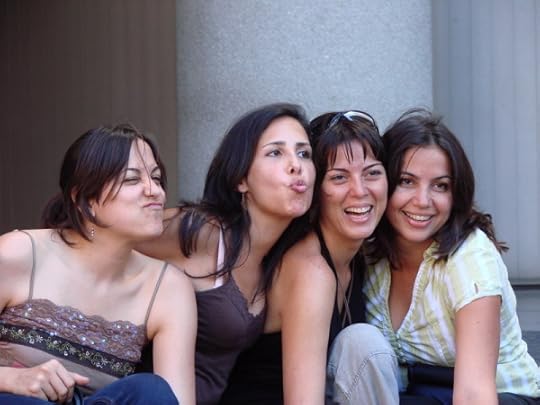
Photo: Rufino
We Venezuelans are panas, we have camaraderie for life. Wherever we go, we recognize fellow Venezuelans by their hospitality and treat one another as relatives.
2. Tropical fruits
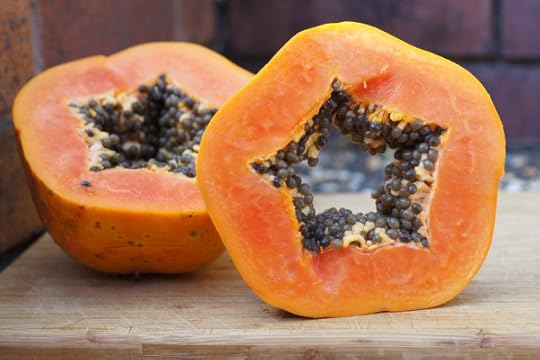
Photo: Tatters
Who doesn’t like a mango for dessert? Or passion fruit juice with your meal? Our fruits are just delicious, plus we can get them in every season of the year for a very very very reasonable price, something difficult in other countries. A couple of dollars is too much for a mango when you’re used to picking them from the tree for free.
3. Perfect weather
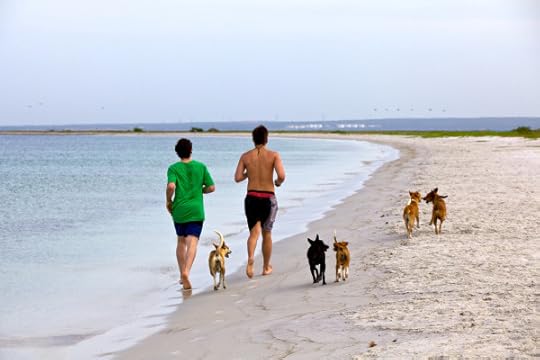
Photo: Konstantin Zamkov
Venezuelans are used to tropical weather, and we miss it a lot the moment we have to suffer sub-zero temps. We all know how comfortable and nice is to spend 365 days a year in shorts and flip flops.
4. White cheese — Queso blanco
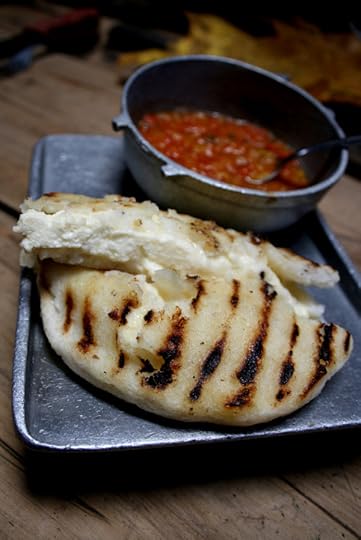
Photo: nicole tarazona
Every Venezuelan loves to eat empanadas, cachapas, arepas or pabellón criollo, and most of the time we put queso blanco on them. There´s nothing similar. It´s hard, salty and pairs with every dish. Queso blanco make us drool.
5. Beaches
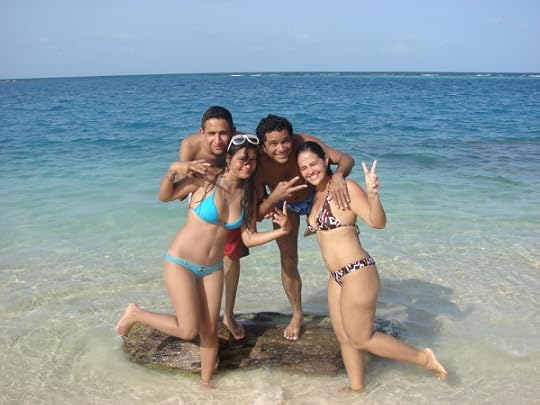
Photo: Alfonzo Marchan
We know we won’t be punctual and we won’t get in the road to the beach at 7am as we planned the night before but we will get there one way or another.
6. Speak Venezuelan

Photo: Rufino
It’s really good to hear our own language in other places in the world, even more if we haven’t heard it for some time. “Esta vaina me tiene arrecho” (I’m really pissed about this) or “esto está depinga” (this is really good), are expresions that only venezuelans understand. You can speak Spanish but you have to know our lingo to not get confused.
7. Hungry Street — Calle del hambre
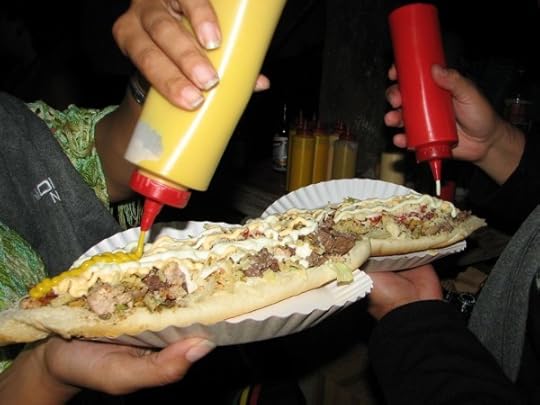
Photo: Omar Enrique Pérez Rodríguez
“Dame un con todo” (give me one with everything), wise words you can use in a perrocalentero (sreet food truck) everywhere in Venezuela. All those salsas you can choose from, the most crappy food truck and your friends are the perfect ingredients to finish a night after party.
8. Snacks and candies — Chucherías

Pirulin or Toronto are some of those candies you can´t replace with another chocolate made candy elsewhere in the world. Platanitos are the undisputed chips with beers in family reunions. We can´t not mention Pepito (chip) or Super Popy. If you dont miss those, you are not venezuelan. Sorry, amigo.
9. Drinking on the beach
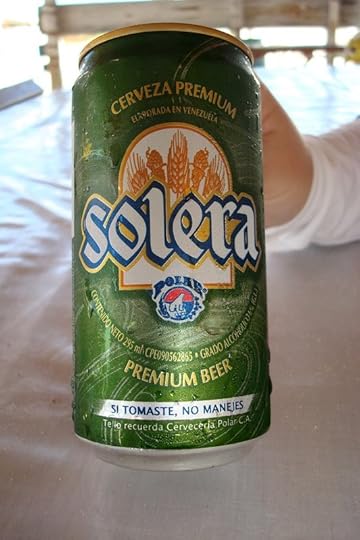
Photo: Márcio Cabral de Moura
If you go to the beach and you don’t drink a negrita (Venzuelan Pilsen beer) you’re wasting your time. We love to relax for a while, and obviously drinking beers with friends is really typical in our country. There’s nothing like a sunrise on Christmas or New Years on the beach to forget the hangover.
10. Cheap gas
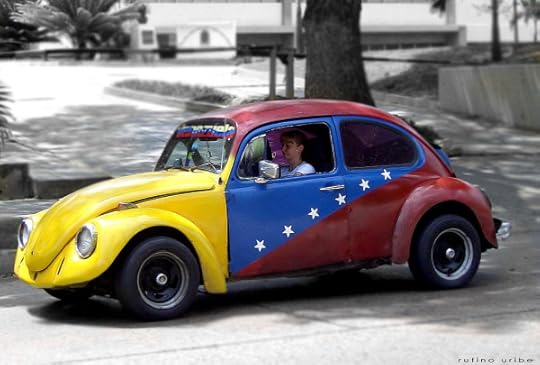
Photo: Rufino
We have this wonderful advantage for roadtrips around Venezuela without spending a fortune in gas. We only need money for food and accommodations. Driving a bunch of miles for next to nothing is something we really miss.
11. Bodegas
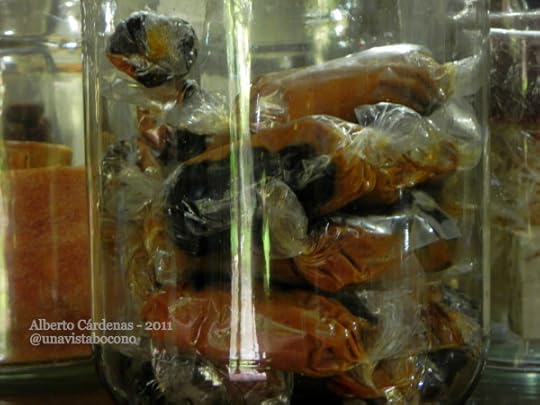
Photo: Alberto Cárdenas Almeida
You can find anything need in a bodega. Any food, candies or snacks, like chicharrones and papitas, or even a cold Coke for a hot afternoon. They are just around the corner, and are always run by your neighbors. We miss this!
12. Drinks
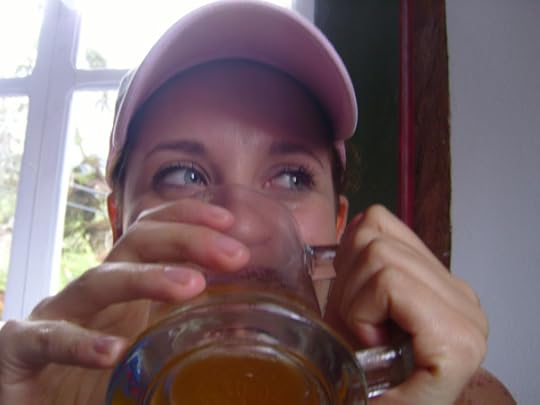
Photo: Ciro Duran
The papelón con limón is our best friend and is like our own ice tea, perfect in any moment and definitely a delicious drink we won’t get in another country. The Colita and the malta are the number one choice to enjoy with empanadas. Yummy!
13. Venezuelan sunsets
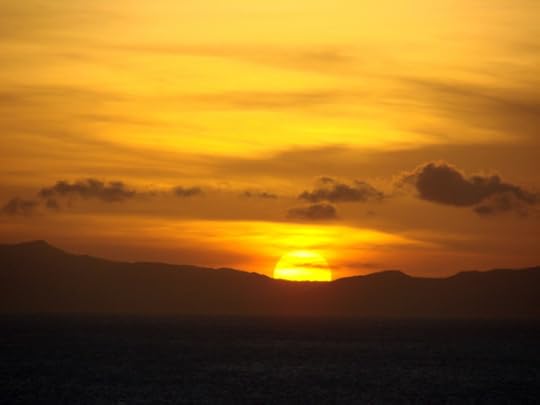
Photo: Juraj Kubica
They are really beautiful and create special momenst in different places around Venezuela. From Falcón to Anzoátegui, they cheer our souls with bright and warm colors. 

Matador Network's Blog

- Matador Network's profile
- 6 followers

