
Matador Network's Blog, page 2082
July 23, 2015


4 reasons it’s still way easier to be a white dude while traveling
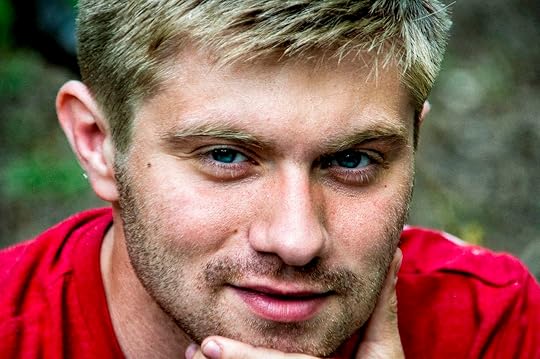
Photo: Artur Potosi
I AM A WHITE DUDE, AND THAT MEANS two things: first, that I am endowed with an insane set of privileges that literally no one else gets to enjoy, and second, that I am completely ignorant of those privileges. The ignorance of myself and my fellow straight-white-dude peers is what has led us into a world where “check your privilege” is a common saying, and where there are actual debates over whether white men have it better or not. We demonstrably do have it better in virtually every aspect of life, and this includes in the world of travel. Here’s how.
Virtually the entire world is open to us.
People from majority white countries, on the whole, have an easier time traveling around the world solely based on their passports. The passport power rankings are based off of which countries have unfettered access to the most countries — as in, countries that no additional visa is required for entry. Tied at the top are the U.S. and the U.K., and of the 30 best passports, 26 are predominantly white countries (the other four are all Asian).
While there are obviously people in all of these countries who are of different races, the point stands that powerful passports disproportionately go to countries typically perceived as “white.”
We don’t face any extra challenges.
Non-white citizens in the United States have an additional difficulty that us white dudes don’t ever have to deal with: racial profiling. It’s a frequent occurrence at airports, and it doesn’t just target people perceived to be Muslim: it targets African Americans and Latinos as well.
Once abroad, the world is generally more accessible to white males. As Angela Fichter wrote a couple of weeks ago, black women in places like Thailand face a constant onslaught of racism, while women in general face restrictions and threatening behavior while traveling alone in some parts of the world. Ernest White wrote for us a few years back about how casual racism and downright hostility can become a part of the everyday routine while traveling as a black American male.
This simply is not a worry for white men traveling abroad.
No one at home questions where we’re going or what we’re doing.
A few weeks ago, my colleague Alyssa James wrote about how she constantly gets shit for traveling solo without her boyfriend. One of the things she frequently hears when she tells people she’s going to travel abroad solo is the question, “How does your boyfriend feel about that?” The impulse may be to think that this is a more or less harmless question, but the fact is, it’s not asked equally of men. I personally have spent years traveling, three of which I’ve been in a serious, committed relationship, and I have never once been asked this question while traveling on my own.
In fact, last year, literally six days after I got engaged, I went on a press trip to a brothel in Nevada. You know how many people asked me what my new fiancee thought about that? No one. Not a single person. Everyone asked, “What was it like?” instead.
I’m not complaining about this response: it was a question that didn’t need to be asked, because our relationship is built on trust. But if it had been my fiancee going instead, she almost certainly would have been asked if I’d had her permission.
We even have a separate word for what we are when we move abroad.
I have long loved the word “expat.” It has an air of romance to it, an air of having been something but not of being that thing anymore. I was super bummed, then, when earlier this year, The Guardian pointed out that the word “expatriate” is reserved exclusively for white people, while “immigrant” is reserved for everyone else. When I travel abroad, I am having an adventure, I’m contributing to my new home. But when Latin Americans come to my country, they’re slandered by a vile talking hairpiece who is running for President — and gets a surge in the polls because of that slander.
There is nothing wrong, of course, with being a white dude and traveling — but it is important for us white guys to recognize from time to time that because of our whiteness and because of our penises, we generally have a much easier time while traveling abroad. 

Thailand isn’t always the LGBT paradise it appears to be. Just ask these gay dads.
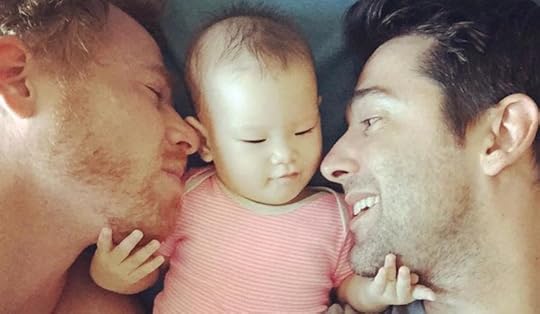
Gay fathers Bud Lake and Manuel Santos with their child conceived by a surrogate mom in Thailand. They claim she sabotaged their custody process after realizing they’re a gay couple.
Photo: @twogaypapas
When it comes to gay visitors, Thailand doesn’t flinch. Two men sharing a hotel room on a tropical isle? No problem. Foreign women strolling hand in hand? Fine.
For tourists, Thailand can feel like an oasis of gay acceptance in a world that’s often hostile to same-sex romance. This vibe is nurtured at the highest levels: the government actually runs a campaign called “Go Thai, Be Free” to attract spendy gay travelers.
But a dramatic case involving two gay dads — one American, one Spanish — highlights a less alluring reality: Thailand is not the LGBT paradise it often appears to be.
The two married fathers — Bud Lake and Manuel Santos — used a surrogacy agency to hire a Thai woman who agreed to carry their child. The baby is the product of Lake’s sperm and an anonymous donor’s eggs. (Prior to this arrangement, the couple and the Thai surrogate were strangers.)
In January, the couple traveled to Bangkok to await the child’s birth. It went smoothly and the surrogate mother, according to the men, signed much of the paperwork releasing the child into their care. The men named their baby Carmen.
https://t.co/t9UvbidqoV #HowWeFamily #bringcarmenhome @BringCarmenHome #lgbt @family_equality #gayparents pic.twitter.com/ycGcawi92z
— Twopapas (@twogaypapas) June 23, 2015
But the couple’s self-described nightmare kicked off when the woman explained to their lawyer “that we were not an ordinary family,” Lake told GlobalPost. “She doesn’t think two men can bring up a child.”
The surrogate mom has since refused to sign documents that would allow the child to leave Thailand and to fully relinquish her rights as the birth mother. “Emotionally, we’re just shocked,” Lake says.
The woman, who does not share the baby’s DNA, has appeared in disguise on Thai TV insisting that “I had no idea this was a gay couple” when she first signed on and saying that “the child was in my belly…so we have the same heart.” The custody dispute is unsettled and in a legal grey zone. So the couple is currently hiding in Bangkok with the infant as they battle for full legal custody.
The case may be surprising to those who see Thailand as a bastion of gay tolerance. In many ways, it is. But discrimination against gays in Southeast Asia’s Buddhist-centric mainland has a decidedly different flavor than US-style anti-gay prejudice.
Thailand’s attitude towards homosexuality is far less puritanical than those held by America’s religious fundamentalists, who believe gay life is a corrupting force on society.
In Thailand, gay is generally seen as OK. When the government floated a proposal in recent years to legitimize same-sex couplings, there was no great backlash. The nation simply shrugged. According to one poll, nearly 90 percent of Thais report having gay friends.
But as Lake and Santos have learned, the prejudice often doesn’t kick in until homosexuality enters the perceived sanctity of family life.
The notion of gay parents remains highly taboo in Southeast Asia. Society has yet to shake a deep-seated notion that homosexuality, while no grave sin, is still an imperfection. The superstitious may even regard it as a minor curse warranted by a past life’s misdeeds.
Even youth, often assumed to be enlightened on LGBT rights, report a surprisingly high level of anti-gay sentiment. In a recent poll of Thais aged 15- to 24-year-olds, more than one-quarter said they perceive homosexuality as “really wrong.” Another 29 percent considers it “not so terrible” but still wrong. (The rest, 44 percent, called homosexuality “not wrong at all.”)
Gay men are tolerated in Thai society, especially if they adhere to foppish stereotypes. Transgender women — so prominent in the world’s image of Thailand — are welcome too so long as they are garish entertainers or sexual playthings, not objects of serious romantic love.
But when it comes to family, many in Thailand do indeed flinch at homosexuality. The most recent polling suggests 60 percent of Thais have “no objection” to gay marriage while 35 percent oppose it.
Foreign tourists can take the government’s suggestion and “go free” with little fear of judgment. But gay men (foreign or otherwise) who try to become fathers will find that much of Thai society, deep down, believes they are unfit to raise a child.
Much of society, perhaps, but not all. “I still think Thai people are very loving and accepting,” Lake says. By the thousands, Thais have flooded the couple’s Facebook page to wish them well. “We’re hoping the media attention will help show more Thai people that two men can be wonderful parents.”
By Patrick Winn, GlobalPost
This article is syndicated from GlobalPost.

15 sights only someone from Portland would recognize
City swim lyfe with @racheljoyn.
A photo posted by Samuel Nagel (@samuel.nagel) on Jul 20, 2015 at 2:23pm PDT
2. The ever-elusive “lack of line” outside Voodoo doughnuts:
A photo posted by Brent Robinson (@therealb_rob) on Jan 23, 2015 at 1:17pm PST
3. One of the countless secret breweries tucked into the strangest places:
A photo posted by Scott Holmes (@thebobscott) on May 24, 2013 at 4:40pm PDT
4. The view of Southeast from the skytram (as opposed to the view of the skytram from Southeast):
A photo posted by Kerry Ann (@kerryboberryy) on Jul 20, 2015 at 2:02pm PDT
5. The day-brightening rainbow of food trucks at the Portland Mercado:
Stay cool! Frozen beverages + AC are inside!
A photo posted by Portland Mercado (@portlandmercado) on Jul 19, 2015 at 9:20am PDT
6. A completely deserted Punchbowl Falls after hours of hiking the Eagle Creek Trail:
A photo posted by Dustin Eastman (@dustineastman) on Jul 13, 2015 at 3:43pm PDT
7. The times when Portland took “street art” a little too literally, like at Sunnyside Piazza:
A photo posted by Paul (@paul.desmond) on Jun 1, 2015 at 2:17pm PDT
8. What this is (and why it’s culturally significant):
Before and after #PDXcarpet, I leave it for you to judge.
A photo posted by Sam Bergen (@sambergen) on Jul 20, 2015 at 2:09pm PDT
9. This little plastic cup, which is the most important thing for one week in July:
30 things you’ll never hear a Canadian say

Photo: CRUSTINA!
1. Oh, we’re just like the States.
2. I honestly think Quebec drivers are some of the best in the world.
3. Sure, I could find Nunavut on a map!
4. Prime Minister Harper is one of the best PMs we’ve ever had.
5. Winter’s not THAT long.
6. Winter’s not THAT cold.
7. I hate maple syrup.
8. I hate Tim Horton’s.
9. I hate hockey.
10. I can’t wait to move to Saskatoon!
11. Boy, apartments in Vancouver sure are cheap.
12. No, I am NOT sorry!
13. Our money is boring. Also that whole thing about it smelling like maple syrup is a lie.
14. It’s summer! Ugh, let’s stay inside and watch TV.
15. Huh, I didn’t know Jim Carrey was Canadian. William Shatner, too? No way!
16. It doesn’t take very long to drive from one side of the country to the other. It’s kind of like Europe that way: everything is so close together.
17. I just don’t like fiddle music.
18. The CBC is one of the most low-quality radio networks I’ve ever heard.
19. I’ve never been ice skating.
20. I’ve always thought having a national anthem in two languages was kind of silly.
21. The Toronto Blue Jays? Who are they?
22. I prefer my winter coat be stylish rather than warm.
23. Of course everyone speaks French!
24. I’ve never seen a single accident along the 401, it’s probably one of the safest highways in the world.
25. Who DOESN’T have a concealed carry license for their handguns, right?
26. I wish we didn’t have socialized medicine; free health care is stupid.
27. Molson? Labatt’s? Never heard of them.
28. Of course I’ve been to Newfoundland, it’s not that hard to get to.
30. Actually, the weather in British Columbia is terrible.
31. I love having one and two dollar coins! My pockets and wallet aren’t heavy at all! 
15 ways you know you’ve become culturally Spanish

Photo: Roman Königshofer.
1. You have dinner at 10pm.
2. You can’t say goodbye without exclaiming “VENGA!”
3. Guapa and cariño are common words you use with strangers.
4. Tortilla de patatas is a perfect meal for any occasion.
5. You know that Sangria and tinto de veranos are the liquid fuel of champions.
6. You’ve mastered the art of minimizing productivity while maximizing your work hours.
7. You hold an opinion on the independence movement of several regions of Spain, especially Catalonia.
8. 99% of the time you say “la leche” you’re not even talking about milk.
9. You don’t own a single pair of sweatpants.
10. You plan to do nothing but be with family on Sundays.
11. If you plan to meet with a friend at half past 4, that’s a general point of reference where punctuality is neither expected or adhered to.
12. There’s no way you can eat any meal without having a café con leche or cortado afterwards.
13. You have no problem bringing your small kids to festivals past midnight.
14. Protests no longer faze you and are to be expected regularly and sporadically.
15. You’ve mastered the art of partying until 8am. 
Is your Southeast Asia vacation supporting child sex-trafficking?
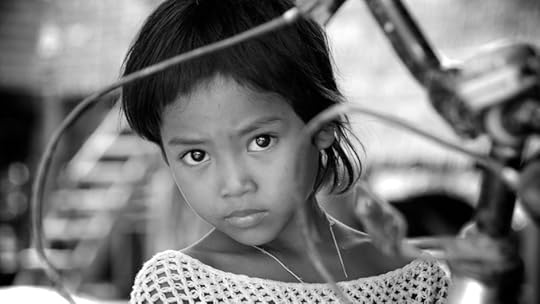
“You can go Cambodia, Phnom Penh. The place is called Svay Pak. There are many there you can try. Age around 6 to 16. Depending on what u want to do. I find 12 to 14 year olds the best as they are freshest and is becoming a grown up girl soon. Innocent too.  and very curious about sex.”
A recent article by the Washington Post highlighted a conversation between an undercover officer and a pedophile named Chan Chun Hong who was planning to visit Svay Pak, Cambodia, to have sex with children. Svay Pak is an economically disadvantaged fishing village in Cambodia, close to the nation’s capital, that is infamous for being a child sex destination.
Cambodia is no stranger to tales of mothers selling their own daughters to brothels. The statistics are scary. SHE Rescue Home says that in the Mekong sub-region of Southeast Asia, approximately 30% of sex workers are between 12-17 years of age, most of whom are also victims of human trafficking. Several factors have made the country the way it is, with child sex offenders as one of their main tourism revenues. Mark Capaldi, senior researcher for Ecpat International, an organization committed to combating the sexual exploitation of children, said in an article for CNN “Insufficiently enforced laws, corruption, and the failure to address more overarching problems such as poverty and the negative side effects of globalization have made it a challenge for the country to shed the unenviable reputation as a destination for child sex.”
The reason why parents can renounce their parental duties has a lot to do with the country’s very recent, brutal past: Khmer Rouge completely destroyed educational, religious and social structures during its reign. They lost education and the moralities that Buddhism provided.
Before you book a hotel, or patronize a restaurant, do a little background work to support businesses that are trying to make a difference. Below is a list of Cambodian businesses doing what they can to help the cause, and other social responsibilities.
Blue Lime
The Blue Lime is a gorgeous boutique hotel that is, in their own words, “strongly committed to socially responsible tourism.“ It’s a 23-room rustic boutique hotel that serves up delicious curries, and offers top notch service. There is a sign in front of the hotel that says, “sex travelers not welcomed” and we reckon it should be used everywhere in the city.
www.bluelime.asia/ 19Z, Phnom Penh, Cambodia +855 23 222 260
The Pavilion
The Pavilion hotel, located smack in the historical circle of Phnom Penh is too, committed to responsible tourism, which is a nicer way of saying that they’ll throw out perverts, pedophiles and sex tourists. The hotel is upmarket, and they have conscientiously preserved the original architecture of the buildings, which are part of Cambodia’s remaining architectural patrimony.
https://www.thepavilion.asia/ 227 19, Phnom Penh, Cambodia +855 23 222 280
The Kabiki
For those travelling with little kiddos, head to The Kabiki, another hotel that supports the fight against sex trafficking epidemic. They support a number of other important social causes as well. The hotel is gorgeous too, with incredibly helpful and knowledgeable staff that will go out of their way to make sure that you’re comfortable.
http://www.thekabiki.com/ 22, street 264 – Phnom Penh, Cambodia – +855 (0) 23 22 22 90
Friends Restaurant
If you’re looking for a clean restaurant that serves up local food without much of a culture shock to your system, go to Friends. Run by local non-profit Mith Samlanh, in partnership with international NGO Friends International, the company trains street kids and marginalized youth in every aspect of running a restaurant so they can go out for higher paying jobs, or even to set up smaller businesses of their own. Try their Cambodian curries, or salads here!
#215, Street 13
Café Living Room
Popular with expats, Café Living Room dishes up both local and international cuisine and employs and pays a fair living wage for graduates of programs in Phnom Penh for vulnerable and at-risk groups.
#9, Street 306
Lotus Blanc
The restaurant Lotus Blanc not only serves top-notch cuisine (try anything with their tamarind sauce), but also runs alongside a French NGO (http://www.pse.org) that tackles hunger and poverty by providing education and skills training to children on the street.
#61B, Street 51

July 22, 2015
6 uncomfortable truths about anti-blackness in the Dominican Republic

Photo: Lee Cohen
1. In the late 1930’s, then dictator Rafael Trujillo oversaw the ethnic cleansing of around 20,000 Haitians.
This was known as the The Parsley Massacre. The massacre’s name derived from the method Trujillo used to decide which people to kill: troops would ask citizens to pronounce “perejil”, the Spanish word for parsley, and whoever didn’t have a Spanish inflection was promptly murdered.
Trujillo later also established a detailed plan to “lighten” the Dominican race. The plan included allowing more Jewish refugees to enter the country, as well as exiles from the Spanish Civil war. He tried filling universities and hospitals with light-skinned professionals to create a great presence of whiteness in professional areas. He even tried altering the Merengue dance so that it more modeled the European waltz. Dominicans were also often encouraged to marry white partners, or partners with lighter skin, with the hope that the nation would become more successful the lighter its citizens became.
2. Because of the extreme societal disdain for dark complexions, many Dominicans — including popular Dominican baseball player Sammy Sosa — have bleached their skin.
After using bleaching treatments, Sammy Sosa even thought of possibly endorsing the product to others. As Dominican-American writer Ghislaine Leon wrote in an article for San Francisco Bayview: “This internal self-hate inflicted upon us by our Dominican families goes back generations. Line after line of Dominican families have hated their skin because it was not light enough or because they didn’t have long, silky hair like their Eurocentric-Dominican brothers and sisters.”
3. Though more than 85% of Dominicans are said to have descended from Africa, in a recent Federal census, only 4% of Dominicans classified themselves as “black”.
DNA evidence has estimated that as much as 85% of Dominicans have African ancestry. Less than .08% have ancestry from Europe. And yet, on a federal census, 82% of Dominicans chose to classify themselves as “indio”, a term many Dominicans have adopted for any person with slightly darker skin. As Henry Louis Gates Jr. , an African American history professor from Harvard, said in a reflection about who is deemed black in the Dominican Republic after he visited the country “Who is black? Who is “negro”? Why, the Haitians!”
4. Lynchings of black Haitians have happened as recently as February of this year.
In February, a black man of Haitian descent was found in a city park, hanged from a tree and beaten. Authorities refused to state that racism or xenophobia were motivations for the incident, yet many thought the connection was obvious. The death also came only hours after a group of Dominicans in Santiago, the country’s second largest city, were seen publicly burning the Haitian flag.
5. And just last year, Dominican Carnival parades allowed the demonstration of white supremacy symbols.
The DR’s 2014 Carnival parade included a procession of people dressed as the Ku Klux Klan. The Minister of Culture defended the group saying “every group is free to choose their themes” and “express their creativity.”
6. The Dominican Republic is still the only country in the New World that celebrates its independence from another American country.
The Dominican Republic’s independence day doesn’t celebrate its independence from Spain. Instead, it recognizes the day it liberated itself from Haiti’s military occupation.
Originally, Haiti invaded the DR with hopes of freeing its slaves and transforming Hispaniola into an island of total black sovereignty. Instead, the Dominican Republic’s independence from Haiti’s rule created even stronger divisions and resentment between the two countries sharing one island, a resentment that many argue has contributed to feelings of anit-blackness expressed throughout the area. 
How to piss off someone from NorCal
“NorCal” is the abbreviation of Northern California. Ironically enough, this doesn’t include places in the super north of California, like Redding, Shasta, or Eureka. Sorry, but NorCal is limited to the areas of San Francisco, San Jose, Monterey, Santa Cruz, Sonoma, and, on a good day, places like Sacramento. We take great pride in being from NorCal. So much so that we will very obviously let you know with our car decals, flags, and T-shirts declaring this fact. If you come into our neighborhood with SoCal plastered all over your car, be ready for problems.
2. Tell us that LA is better than SF.
Yes, there is rivalry between NorCal and SoCal in a major way. Call us territorial or proud, but that’s how it is. Sure, LA has Hollywood, UCLA, and celebrities, but it also has a shit-ton of traffic and fake people. LA is a huge sprawl; it’s not even a real city per se. So please, do yourself a favor and keep your mouth shut if you like the city of Lost Angels more than San Francisco. Because, really, San Francisco is the best city in the world.
3. Diss on our pulgas.
It might look like a glorified garage sale to you, but our flea markets are so much more than that. We go to the flea market in the wee hours of the morning to sell our gently-used couches, denim jeans, and chanclas. (We all know what craigslist is, but that’s just not how we roll.) If we’re not selling our own stuff, we’re looking for our own new (to us) treasures. Going to the pulga on the weekend is a family ritual, where you can eat some mango con chile, a snow cone, and possibly score a vintage wine rack.
4. Make racist comments.
The community in Northern California is highly multi-cultural. If you grew up here, you might have had Portuguese, Mexican, Vietnamese, African-American, and Indian friends, and you thought nothing of it. (Fun fact: San Jose has the largest Vietnamese community in the world outside of Vietnam.) People are people, and we embrace each other’s cultures, foods, and languages. So don’t make stereotypical or racist comments in public — like saying that Mexican immigrants are taking our jobs — if you don’t want a very, very stern lecture. Also, do yourself a favor and keep mum if you don’t like our multi-lingual signage.
5. Buy your books from Amazon.com.
Not all of us actively read. But those who do are very passionate about their books. So don’t insult us by purchasing your books from a Seattle-based company. The majority of the chain bookstores who came into our neighborhoods, like Borders and Barnes and Noble, have come and gone like last month’s lover. Places like City Lights, Diesel, Book Passage, and Dog Eared Books are still going strong without having sold out. So if you’re in NorCal and you happen to be a bibliophile, go to one of these independent book dealers. If we find you secretly ordering books on your iPhone from Amazon, we will shank you.
6. Hate on Haight Street
Maybe tie-dye T-shirts, crystals, and incense just aren’t your thing. But there is so much more to this iconic street in San Francisco than that. If you’re not aware, it was the place to be in the 1960s, when its hippie counterculture drew in people from all over the country to experience love, psychedelics, and an open sense of community. Legendary musicians like the (Bay Area-native) Grateful Dead, Janis Joplin, and Jefferson Airplane all lived within blocks of Haight Ashbury. The Summer of Love took place here in 1967, and protests against the Vietnam War flooded the streets. Eventually, the hippie movement dissipated, but the remnants are still quite tangible. Nowadays, you can spend the entire afternoon shopping for vintage clothing at Wasteland, get pierced at Cold Steel, eat a delicious crepe at Squat & Gobble, and sip on an old fashioned at Trax before the sun even begins to set. So if you hate on Haight, you’re hating on history. And that’s just not cool.
7. Say that we work too hard.
Um, excuse me? If we didn’t work so hard, success stories like those above wouldn’t even exist. There’s a reason NorCal possesses such a strong economy, and it’s not because we like to take it easy. If you want a chill place to live, where you do as little work as possible to get home, smoke a bowl, and watch your favorite reality TV show, I wouldn’t suggest doing it here. It doesn’t matter where you’re at in the income totem pole, we’re all busting our ambitious asses. Many of us have at least two jobs, and are likely to have other side projects as well. If you’ve just read The 4 Hour Work Week and are beyond psyched, just keep it to yourself.
8. Criticize our drinking activities.
That’s right; I said “activities,” not “habits.” We work hard, but we also play hard. On any given day of the week, you might find us at our local watering hole, sipping on a beer, a glass of Napa Valley merlot, or a margarita. We don’t discriminate. Whether alone, with friends or our co-workers, we’ll be unwinding with a cup in hand, chatting about work, or still gloating about how the Warriors won the NBA championship this year.
9. Talk shit about the Warriors, Giants, or Sharks.
And depending on who you talk to, the 49ers or the Raiders. We take our sports teams very seriously. Our fanaticism swells to epic, religious proportions. We worship people like Steph Curry, Buster Posey, Pablo “The Panda” Sandoval, Patrick Marleau, and Colin Kaepernick as if they could turn water into wine with their next play. It is not uncommon for people to miss out on dinners, quinceneras, graduations, family reunions, and even days of work if their team is in the playoffs. If they’re in the finals you won’t hear from your NorCal friends at all for a couple of weeks. Unless, of course, they’ve posted the latest awesome play on their FB wall. But don’t expect a response, or even a like, on your comment.
10. Eat at Taco Bell, El Pollo Loco, or Baja Fresh.
Not only are all of these places gross, but they are also not fresh, not real Mexican food, and not from NorCal. There are almost two million Latin@s living in the Bay Area, and 75% of those people are Mexican American. So every time you shove a processed-meat, plastic-tortilla into your mouth and call it a burrito, it’s a personal insult to us. There are a ton of hole-in-the-wall restaurants and food trucks on almost every block here with excellent Mexican food. But if, for some weird reason, you don’t have a Latin@ friend to show you the ropes, try our hecho en NorCal eateries, like Super Taqueria, La Victoria (affectionately known as “LaVic’s”), Aqui Cal-Mex, or Chacho’s. Your taste buds will thank you.
11. Complain that your rent is too high.
Unless you live in Manhattan, you have absolutely no right to complain about your rent. Yeah, San Francisco is charming, eclectic, and magical. It really is everything you’ve heard about and more, but living in The City without a six-figure income is quite complicated. Just renting a tiny room in a house will cost you more than $1,500 a month. If you want to own a home, just forget about it, unless you’re Donald Trump. (Then again, why would you want to be?) Head an hour south to San Jose, and you’ll be lucky to score a one bedroom for $2,300 in exchange for Silicon Valley status and proximity to the Levi Stadium. So, what was that you had to say about your woe-is-me rent prices?
12. Ask us on a date without owning a car.
In some countries, it is required that you own a home and have a huge chunk of cash in your bank account before you get married. It’s kind of the same with dating in NorCal. If you don’t have a car and you ask us on a date, it’s kind of like living at your parents’ house when you’re 50, or not bathing for a month. It’s repulsive. Why? Because, unless you live in the heart of SF, this is how we get around. If we date you and you can’t afford a car, we will not only have to give you rides to work, the bank, and to your auntie’s house, but we’ll more than likely also have to foot the bill at restaurants, grocery stores, and Coors Light runs. Sure, you might ride the BART or Caltrain to enjoy Bay to Breakers in the City, but the rest of our public transit sucks. It might not be tomorrow or next week, but you will eventually start asking for rides. And we fucking hate giving people rides, unless they’re drunk and Uber can’t find them.
13. Avoid San Jose and Oakland because they’re “too dangerous.”
If you’re listening to the media, like Fox News and other crappy “news” sources, you’ll hear nothing but the ugly side of SanJo and Oaktown, as they are referred to locally. To be sure, there are violent acts, robberies, and other illegal activities going on in NorCal. But these things happen in many, many other places, too. San Jose and Oakland are not hell holes teeming with gangsters and thugs. You just have to know where to go and where to avoid. It’s not rocket science, and NorCal is surely not a war zone. So stop being scared and come hang out on the East Side. You might even meet some really nice people who were born and raised there, like me.
14. Claim that Tupac was an East Coast rapper.
Tupac Shakur sold over 75 million albums. Rolling Stone listed him as one of the 100 best rappers to have ever lived. And while he was born in Harlem, N.Y., and raised on the East Coast, it wasn’t until he moved to Oakland that his career began. He joined Digital Underground, a local hip-hop group, and started to find his voice. As the years went on, he increasingly identified with the West Coast, and especially the Bay Area, as his true home. It’s no coincidence that he pitted against the Notorious B.I.G. during the infamous East Coast- West Coast hip-hop feud. So you will not only piss us off if you say that he was an East Coast rapper, you’ll also enrage 2-Pac himself. When he does came back as Machiavelli, you’d better watch your back.
15. Move to the Silicon Valley and think that your start-up is going to be the next Facebook.
Or Apple, Google, eBay, PayPal, Instagram, Pinterest, and well, you get the point. Our techies know what they’re doing, and they do it well. People here have a strong sense of innovation, push the envelope, and cater to the public’s unforeseen needs. Over the last 15 years or so, The Silicon Valley has put itself on the map in a major way because of its revolutionary billion-dollar companies. Most of these originally began in college dorm rooms and garages, but have succeeded because of their passion, expertise, and insane number of hours worked. So please, don’t waltz in with another generic idea in an over-saturated market and think that you’re going to make it big. Most don’t.
16. Say that “hella” is not a word.
“Hella” is a word that started in the Bay Area and has since spread all over the West Coast, and possibly even to Mars. It can be used to mean “very,” “a lot of,” or “totally.” So don’t even dare claim that it didn’t start in NorCal, or deny its linguistic validity. Because, if you do, we hella won’t be your friend. 
The next generation of Burners looks like this
You might’ve heard of Burning Man, the annual gathering of tens of thousands in Nevada’s Black Rock Desert. It is an event like no other with art installations that leave you awestruck — colorful characters in fanciful attire — and, of course, one very tall effigy of a man set ablaze once a year. Yet, Burning Man is so much more than that — it is a full-spectrum, generationally diverse city including families and children of all ages.
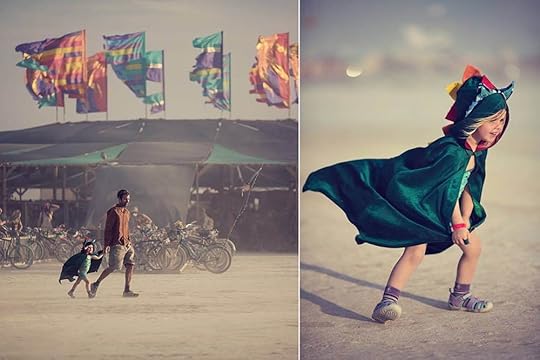
Little Dragon Indie & Papa Tim, Center Camp, BM 2014.
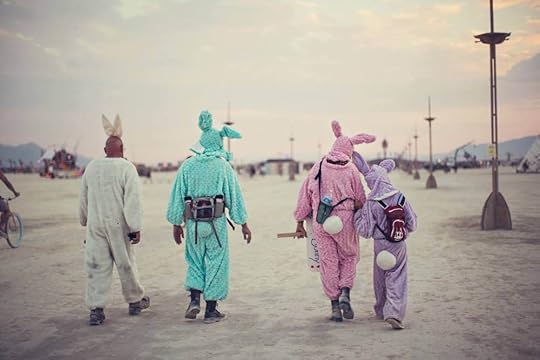
‘Every Bunny Loves Some Bunny,’ BM 2014
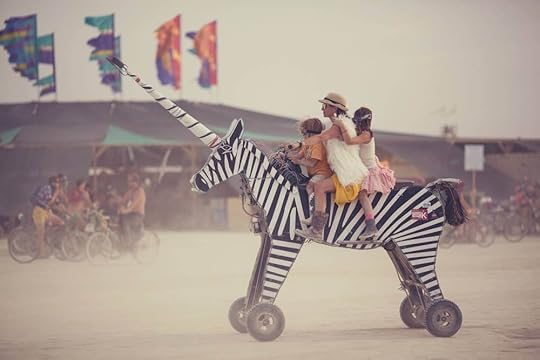
April & Her Littles on Their Trusty Zebracorn, BM 2014.

Kinnikin Baby Takes the Wheel, BM 2014.
Encountering kids on the Playa always feels like a magical experience — like I’m encountering some piece of a spectacular future — rubbing elbows with the architects of a better tomorrow.
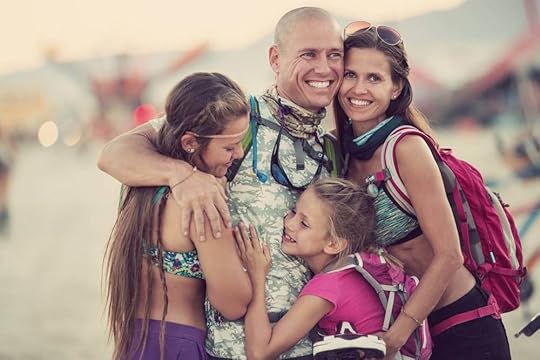
Thompson Family, BM 2014.
Their youthful spark reminds me to lighten up — to be fearlessly present and PLAY.

Making an Offering at the Temple of Grace, BM 2014.
The presence of these families in Black Rock City is a genuine gift to the community. In tribute to these Littlest Burners and their amazing parents — I am creating a photobook titled, Dusty PlayGround — an 11”x11” hardcover printed on FSC Recycled Paper, set to publish in June of 2016.
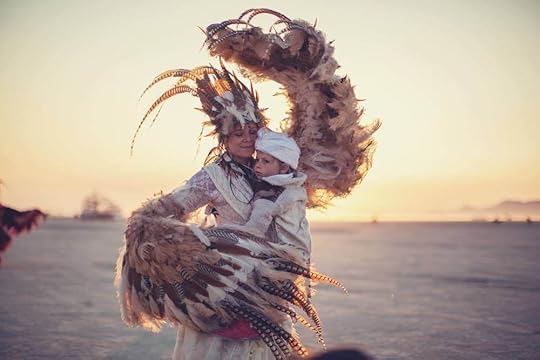
Jessica & Jonakai, BM 2014.

Baby Astara & Mama Maura, Temple of Grace, BM 2014.
To bring this book to life, I am currently raising funds through Kickstarter. You can help make it happen! I have until August 3 to raise $40,000 or I receive no funds. Please visit this link to learn more and consider backing this project. 
Matador Network's Blog

- Matador Network's profile
- 6 followers

