
Matador Network's Blog, page 2085
July 16, 2015
13 reasons you should never visit Australia

Photo: Drew Hopper via Australian Geographic
1. You prefer your scuba diving in cold water, with limited visibility.
Une photo publiée par Simon (@simonmarkhof) le 9 Juil. 2015 à 5h00 PDT
2. You’re allergic to eucalyptus.
Une photo publiée par Sarah Doyle (@eskajay) le 7 Juil. 2015 à 7h03 PDT
3. Not only would it never occur to you to slather whipped meringue with fruit and name it after a Russian ballerina, the very idea strikes you as distasteful.
Une photo publiée par @margfjell le 15 Juil. 2015 à 12h47 PDT
4. You prefer your toast with jam or peanut butter, thank you very much.
Une photo publiée par Claudia Moser (@4theloveofhoney) le 14 Juil. 2015 à 1h21 PDT
5. You ENJOY being a type-A stress-case who works hard with no vacations. Why would you need more than one way to say “relax, everything will be fine”? “She’ll be apples”? What is that?
Une photo publiée par Brett B. (@bluemoonbeachwalks) le 7 Juil. 2015 à 5h08 PDT
6. You find 30,000 year old rock paintings and petroglyphs to be boring; who cares if indigenous Australians were engraving rocks in the Burrup peninsula since long before the last ice age?
Une photo publiée par Yohan Bouchereau (@tr0umf) le 24 Juin 2015 à 17h17 PDT
7. You hate barbecue. Nobody likes free gas-powered grills in most public spaces, where families can congregate and play cricket, eat kangaroo and veggies, and watch the ocean…
Une photo publiée par Adam Pinzone (@foodie_adam) le 14 Juil. 2015 à 0h37 PDT
8. Beaches are better when they’re full of pebbles. White sand hurts your eyes. Coral reefs are too sharp.
Une photo publiée par Charter Yachts Australia (@charteryachtsaustralia) le 16 Juil. 2015 à 0h12 PDT
9. You’re definitely not interested in birdwatching, and you don’t even own a set of binoculars.
Une photo publiée par @soniamphoto le 16 Juil. 2015 à 0h25 PDT
10. You don’t really like dry heat. You definitely don’t like deserts. In fact, landscapes in general are kind of uninteresting; you seen one, you seen them all, right?
Une photo publiée par D E M I . (@demierfurth) le 12 Juil. 2015 à 22h29 PDT
11. You have a pet cat and a dog (and maybe a budgie)…how many more animals could there be?
Une photo publiée par @gorgeousgippsland le 11 Juil. 2015 à 18h04 PDT
12. Long road trips make your butt hurt from too much sitting in the car, and you like staying on the beaten path…exploring can be too dangerous.
Une photo publiée par Martynas Narvilas (@martynas_x) le 24 Juin 2015 à 3h04 PDT
13. You’ve never been very interested in sports, even if they are played by attractive young men in tight shorts.
Une photo publiée par @mayson_pods le 11 Juil. 2015 à 21h04 PDT
Follow Drew Hopper on Facebook, Instagram, and on 500px.


July 12, 2015
15 things all Portuguese miss when they leave Portugal
The blue-and-white decorative plates saying “tenha cuidado com o dono, que o cão está preso” (be careful with the owner because the dog is on a leash), make us smile as we walk by the porch. Or, walking in a house and reading, “quem nesta casa em casa entrar na língua tenha cautela, pode entrar pela porta e sair pela janela” (those who enter this house be careful with their tongue, they might enter through the door and leave through the window.) Not to mention the plate on the coffee shop around the corner, “se bebes para esquecer, paga antes de beber” (if you drink to forget, pay before you drink).
2. Amália’s “Uma Casa Portuguesa.”
Just as Amália Rodrigues described it, the image of a white house, of a Saint depicted in azulejos, “pão e vinho sobre a mesa” (bread and wine over the table), the smell of basil, and roses in a garden bring us back to the cliché of a Portuguese home. So, when we play her song, even those who did not like fado might find themselves singing along with a smile, while secretly shedding a few we-will-never-talk-about-it tears.
3. What we know as “A língua de Camões.”
After we leave the country and return, we feel aware of the beauty that is walking on a street and recognizing the sounds around us, linking them to words and accents we grew up with. As Fernando Pessoa once said, “A minha pátria é a língua Portuguesa,” (my homeland is the Portuguese language). Although there are over 170 million people in the world who speak Portuguese, from native Brazilians, to the PALOP — African Countries with Portuguese as Official Language — passing by Timor Leste and Macau, we still cannot help but to smile when we overhear a European Portuguese accent trying to figure out the subway system in New York, Paris or São Paulo.
4. Hearing “o meu José e a minha Maria.”
The use of the possessive before our first name does not mean, to a Portuguese parent, especially to a Portuguese mother, we belong to them. They say it fondly, with all their heart, because we are their children and have their hair, their nose, their smile. On another hand, the preceding “my” is much better than the subsequent use of our second/middle name. After all, who has not quivered to “Filomena Maria vem cá já imediatamente!” (Filomena Maria come here immediately!)
5. Making a sardinhada.
Could summer be a real summer without a sardinhada? When dad is at the grill barbecuing sardines and carapaus, and we are helping mum, taking the black skin off a roasted green pepper and ripping it apart with our hands to add it to the tomato salad? Unfortunately, those of us who venture to different countries have had many “non-summers,” but we know nothing tops up sun and sand better than the scent of grilled fish filling the air around us.
6. Drooling over Mum’s soups.
When we were young we probably dreaded “sopa Juliana,” but now as adults “lá fora” (abroad), who has not longed for mother’s beautiful “sopa de espinafres,” (spinach soup), tasty vitamin-filled “sopa de nabiça com grão” (turnip greens and chickpeas soup) and raise-the-dead-from-the-grave “sopa da pedra” (stone soup)? Then after a day of drooling over images of traditional soups on Google, we secretly plot bringing mum over and opening a Portuguese soup parlour.
7. Eating pão Alentejano.
As good Portuguese, we like bread on the table. But we are fussy. We do not understand packed bread with an expiration date. We dream of pão de milho (corn bread) melting in our mouths at lunch, hot pão de mafra dripping with Milhafre butter in the afternoon and pão alentejano with our soup for dinner. After all, “em casa que não há pão todos ralham e ninguém tem razão” (in a house without bread everyone fights, and no one is right).
8. The gastronomic wonder of Caracois done right.
The world knows the French escargot, but for us, nothing beats an overflowing plate with delicious snails boiled with oregano and piri-piri spiced up with the skill of a Portuguese hand. Unless you take the plate to an esplanade, near a cliff overlooking the Atlantic, on a hot day.
9. Spontaneous debates at the Café.
We miss beber café com a malta (drinking coffee with your friends) after dinner. It was a perfect time to discuss the neighbour’s love affair, to act as politicians, to be football managers, to debate theories to save the world or merely to discuss our plans for the weekend. At times it felt like we were at the Assembleia da República, if only the prime minister was there drinking coffee with us.
10. Bread with Doce de Tomate.
Some shake their head in disbelief when we talk about the wonders of eating a slice of homemade bread with tomato jam accompanied by a cup of café pensal. The more they shake it, the more you feel prompted to call your mother and ask for grandmother’s old family recipe. Then, after a few long hours, we casually put it on the table and serve it, knowing their minds are about to be blown.
11. As festas & romarias da aldeia.
Even though some of us might be from the city, through blood and tradition we have been to one of those typical festivities. We danced to the happy, cheesy rhythm of música Pimba — Portuguese popular music — which we would never play during the day. We’ve headed to the quermesse (bazaar) to buy a few raffle tickets, and if luck was on our side took a few souvenirs home or laughed at the unsuitability of what we got. When we felt hungry, we looked around to see if the Pão com chouriço (bread with chourizo) stand was around that year. Then we wiggled and sang “se elas querem um abraço ou um beijinho nós pimba” (if they want a hug or a little kiss, we give it to them) with a fried fartura in our hand.

This story was produced through the travel journalism programs at MatadorU. Learn More
12. Olha a bola de Berlim.
There are many cakes we miss like pão de lo, pastel de nata and pampilho, but there is a cake shaped like a ball filled with a cream made with egg that makes our day a lot better, the Bola de Berlim. Especially because it is brought to us when we are laying down at the beach feeling the heat of summer on our skin and we hear the beach vendor’s cry “é para o menino e pá menina!” (it’s for the boy and for the girl).
13. Nestum, Cerelac or Pensal loyalty.
Every Portuguese, regardless of age, has a favourite type of baby cereal. And there is no shame in saying it out loud — or teasing each other discussing which is best.
14. A form of Bacalhau.
Maybe if we are lucky when we leave, we land in a country with good enchidos, good cheese and good bread to go with it, even though it is not o nosso (ours). But life without bacalhau in one of our favourite forms such as Bacalhau à brás, bacalhau à gomes de sá, bacalhau com natas or a tiny pastel de bacalhau, for us, that’s a sacrifice we have not figured out why we must endure.
15. The Portuguese Sea.
You will not be able to find it on a map, even though it does refer to the water that bathes our cliffs and shores. It is not ours because we own it, but because for hundreds of years, caravelas and fishing boats set sail to feed their families and their dreams. But without it there would be no “Portugality”. As Fernando de Pessoa said in the poem Mar Português, “Deus ao mar o perigo e o abismo deu, Mas nele é que espelhou o céu” (God, to the sea gave danger and abyss. But it was on it that he mirrored heaven). 

8 tips for responsible travelers

Photo: Jose Manuel Rios Valiente
1. Whenever possible, take the bus.
Unfortunately for us, travel is an activity that puts a lot of carbon in the atmosphere. This isn’t to say we should never travel, just that we should be thoughtful about the way in which we travel. The most carbon efficient way to travel (aside from walking or biking) is by bus. The least efficient option is to fly first class. The Union of Concerned Scientists made up this handy little chart to help you figure out the best way for you to travel in any given situation.
2. Stay away from big hotel/hostel chains whenever possible.
Tourism does wonders for local economies. But only if you’re actually spending the money locally. Spending at big hotel chains sends the money straight back out of town. Do your research ahead of time, and find nice locally-run hotels and hostels to stay at instead.
3. Pick ethical destinations.
Every year, the non-profit Ethical Traveler puts together a meticulously researched list of the most ethical countries to visit in the developing world. Check the list out, and pick one of these spots for your next trip!
4. Instead of giving to beggars, give to charities.
Tough as it may be, it’s probably best not to give any money to that begging child. If you feel bad for not giving, give to local charities instead. If you’re worried about whether the charity you’re giving to is spending your money well or not, check out websites like GiveWell or The Life You Can Save.
5. Be very, very careful with voluntourism.
It sounds like a great deal, right? You visit a foreign country, lend a helping hand, and everyone’s better off.
Well, not necessarily. Voluntourism has a lot of ethical issues, particularly if you don’t have a specialized skill set that isn’t already available in the community you’re visiting. Read Matador writer Rich Stupart’s cautionary piece on voluntourism, and look into long-term, sustainable volunteer options instead.
6. Be mindful of the souvenirs and food you buy.
Found a cool tropical fish for sale? It may have been captured in a reef using cyanide, a method which is contributing to the destruction of the world’s coral reefs. Want to try a local delicacy like shark fin soup? Shark finning has driven many shark species to the brink of extinction. Love the look of that ivory trinket? Poachers are murdering elephants and rhinos for their horns left and right. The Northern White Rhino is down to a single male because of this practice.
There’s often more to that exotic souvenir or meal than meets the eye. Educate yourself ahead of time.
7. Stay away from animals in captivity.
Not all zoos treat animals badly, but some do, especially in the developing world. If you see an attraction that advertises interaction with wild animals, be very wary. The Tiger Temple in Thailand, for example, did not treat its animals particularly well, but remained a very popular tourist attraction until it was shut down by officials, and there are almost always serious problems with keeping elephants in captivity. The safe bet is to just avoid any attraction based around animals in captivity. Try seeing them in the wild instead.
8. Listen!
If you see something that makes you uncomfortable in the country you’re visiting, don’t start thinking about what the people are doing wrong, or about how they should do things differently. Instead, ask them about it, and really listen to what they have to say. Everyone you meet has something to teach you. Find out what it is. 
5 signs you have an Italian mother

Photo: Enrico
1. Food is always her question and her answer.
It doesn’t matter whether you’re on the verge of a nervous breakdown, you’re depressed, can’t sleep at night because your boss treats you like crap, or you have the flu. The first question your Italian mother will ask you will be: “Have you eaten?” Her question is so typical of her that your answer will always come automatically “Yes, I have/Of course, I have” even if it’s been five days since the last time you ate something.
2. Your Italian mom loves calling you. All the time.
Even though you’re almost in your forties and you’re off for the weekend just a two hour-drive from home, you know that as soon as you arrive in your vacation place or about to come back, you’ll receive a phone call or a WhatsUp message (why did I ever teach my mother to use Whatsup?) asking you “Have you arrived safely? Everything’s ok?” Of course, you can remind her that “Mum, I’m not twelve years old anymore!” but it will be useless.
By the way, do you know you can block users on Whatsup? You are welcome, fellow Italians.
3. She tells everyone every minute detail of your birth and childhood.
A friend of yours had just had a baby, she’s visiting you and it happens that your mother is also there. You don’t have kids so you can’t share your own experiences, but, wow, your mother can! She will start telling in detail everything about your birth and your first days as a newborn, as though you were born yesterday (but actually it happened in 1979). You’ll feel embarrassed and bored listening to the same old story for the millionth time, so you shift the focus on something else as fast as you can.
More like this 20 signs you were born and raised in Italy
4. Sunday is definitely her day.
Your mother is not practicing Catholic and neither your father is but for her is impossible not to consider Sunday a special day. You can try to tell her that for you is just a day like any other, but you know you’re supposed to go see your parents in your best clothes and have a massive lunch together on Sundays You are away on vacation? You’ll receive her Whatsup message (again) with her usual “Have a nice Sunday”. Sigh.
5. You never dare tell your mother you are ill. It’s not worth the drama.
If it happens that you woke up with a stomach ache, a little headache or a scratchy throat, don’t ever tell your Italian mother. She will immediately get overly worried about you and she will stop doing anything she is doing to come and see you. Of course, you will need to follow all her advice and hers only. If the following day you’re still feeling mildly ill, you will hear her whispering to you “don’t you think it’s better to be safe and go to the closest ER”? 
July 11, 2015
38 things someone from Tennessee would never say

Photo: Krasava
1. “Jack…that’s a bourbon, right?”
2. “I really commend Iron Man 3 with its spot-on depiction of Chattanooga.”
3. “Meh. The state could be redder.”
4. “He ended the argument with ‘I’ll pray for you,’ so everything’s probably fine.”
5. “Actually, I root for the Denver Broncos solely because they’re an all-around fantastic team.”
6. “If we time it right, we can get to Cracker Barrel right as the church crowd does.”
7. “What’s a Sundrop?”
8. “Do you have unsweetened iced tea?”
9. “The Bell Witch doesn’t exist.”
10. “Is this vegetarian?”
11. “I just said ‘yeah’ to an 85-year-old man. The look on his face was priceless!”
12. “…But with no available options, where am I supposed to go to church?”
13. “I just love the look on out-of-towners’ faces when they find out I’m actually not a rhinestone-wearing racist who valiantly bleeds red, white, and blue.”
14. “Man, living in a dry county is so badass.”
15. “Ugh, there’s literally nothing to do outside.”
16. “Dolly who?”
17. “Fried moonpie? Sounds like a disaster.”
18. “What’s sales tax?”
19. “Krystals or White Castle?”
20. “You know, orange really is such a beautiful color.”
21. “Wine sold at grocery stores? We don’t need it.”
22. “I mean, I know it’s Game Day and all, but people will still come to my party, right?”
23. “Atlanta is the birthplace of Coca-Cola. Definitely.”
24. “Well, if you’re looking for a low-key dive bar with no chance of hearing brutal renditions of ‘Don’t Stop Believing,’ I’d definitely stick with Honky Tonk Highway.”
25. “Besides Ke$ha and Miley Cyrus, what other musicians are from Tennessee?”
26. “Blueberry pie moonshine? From a mason jar? What do I look like to you? A 19th century Appalachian mountain man?”
27. “Could Nashville lay off with the whole free music thing for a while? We’re not a freakin’ charity case.”
28. “Too bad we don’t have a bigger barbecue festival to see how North Carolina and Texas do it right.”
29. “Country music? Hate it.”
30. “The forecast is only calling for a dusting, so I’ll see you bright and early at work tomorrow.”
31. “Some stranger just waved at me on the road. Is that weird?”
32. “Well, all I have is this burger, so I’m not sure what we could possibly eat that fried egg with.”
33. “First Friday in August? Sounds like a good time to get some casual back-to-school shopping done.”
34. “I just don’t understand why Tennessee got so much shit for trying to make the consumption of flattened fauna legal. Isn’t the highway pretty much already a buffet?”
35. “Congrats on beating us for having the longest pedestrian bridge in the world, Poughkeepsie!”
36. “When you used that ‘you’re the only ten I see’ pickup line, I thought you were so funny and cute. Would you like to sleep with me?”
37. “Ha, yeah. I’ve actually been to more than the 8 bordering states, but I completely understand why you’d assume I hadn’t.”
38. “My accent is pretty funny, isn’t it? I’m glad we can all laugh about it together!” 
An insider’s guide to Aspen in the summertime
A photo posted by Kathlyn Waugh (@runswitharrows) on Apr 13, 2015 at 6:44pm PDT
The Woody Creek Tavern was a favorite hangout for eccentric writer Hunter S. Thompson. Need any other reason to go? The walls are plastered with photos, and the ultra cool bar is housed in a building that once served as the post office, gas station and small grocery store. Get yourself a Fresh Squeezed Lime Margarita or two. Or three or four, just to honor Thompson, of course.
2. Settle down outside of Paradise Bakery with one of their legendary cookies and people watch.
We know sprinkles are extra. Aspen tradition. #paradise #gd4w
A photo posted by Grubbin' Cross Da USA (@grubdown4wut) on Sep 6, 2014 at 2:21pm PDT
The blend of different types of people in Aspen never ceases to amaze. Everyone, from celebrities to locals, are comfortable and in their element. Grab a window seat at the Red Onion Restaurant and Salon and observe. Check out the locals, the ski bums, the hippies, the high school kids, the yuppies, the tourists, Kurt Russell and Goldie Hawn. You might even spot local legend Klaus Obermeyer or Olympic snowboarder and Aspen resident, Gretchen Bleiler.
3. Cozy up with a book at Explore Booksellers.
A photo posted by mattferro (@mattferro) on May 2, 2015 at 1:36pm PDT
Explore Booksellers, located in a beautiful Victorian home on Aspen’s Main Street, has been a local favorite for more than 30 years. The first and second floors are filled with current and past titles and the children’s room will make even the most serious adult wish that they were a kid again. Grab lunch at Pyramid Bistro (located inside Explore), then go bury yourself in books once again.
4. Go shopping just so you can realize that Aspen isn’t all Louis Vuitton and Prada.
A photo posted by Kevin Mcgarry (@kevinmcgarry) on Aug 3, 2013 at 2:49pm PDT
In fact, dig a little deeper and you’ll find shops carrying just about anything. Don’t miss Pitkin County Dry Goods (Aspen’s original clothing store which opened way back in 1969) and Carl’s Pharmacy (located on Main Street, it has a kick-ass toy section, funky hats and lots of cool and cheap Aspen souvenirs). There are a ton of shops located on the walking mall covering the streets radiating from Hyman Avenue towards the mountain. Make sure to take a pit stop at The Popcorn Wagon, located directly across from the historic Wheeler Opera House, and enjoy some buttery, fluffy popcorn. It should be a goal to find some truly unique item — after all, you’ll get to tell your friends, “Oh this? Just a little something I picked up in Aspen.”
5. Get artsy at the Aspen Art Museum and local galleries.
A photo posted by Aaron O'Quinn (@landman303) on Jul 4, 2015 at 3:10pm PDT
First things first, it’s free. Try getting that in many other places in Aspen. The Aspen Art Museum organizes exhibitions showcasing cutting-edge international contemporary art. The Aspen Art Museum’s new building, which opened in August of 2014, is a piece of art itself. Designed by famed architect Shigeru Ban, winner of the 2014 Pritzker Prize, architecture’s highest honor, the AAM is his very first building in the entire United States. The museum also offers a Sunday Cinema series, in case you feel like catching a flick.
After exploring the contemporary collections at AAM, head down Hyman Avenue to one of the many local galleries featuring everything from sculpture to modern paintings, Colorado photography, Western Americana pieces and everything in between. Omnibus Gallery, located on the walking mall in downtown, specializes in rare and vintage posters, most dating from the 1800s to 1939. Omnibus is “strong on content, light on fluff,” with prices to reflect the quality of the works (don’t be surprised if you see an original by Henri Toulouse Lautrec) and the location (yes, this is Aspen, meaning that average prices for posters can range from $1,500 to $100,000).
6. Escape to Hallam Lake.
A photo posted by Jen Murphy (@jengoesafar) on Jun 8, 2015 at 6:16pm PDT
Aspen Center for Environmental Studies, better known as ACES, is a non-profit environmental science education center including Hallam Lake, a 25-acre reserve which takes you through woodland, meadow, pond and marsh communities, to reconnect with nature. In addition to Hallam Lake, ACES has three preserve sites which showcase the Roaring Fork Valley.
This story was produced through the travel journalism programs at MatadorU. Learn More
7. Comfort food plus boutique shopping means one thing: Boogie’s Diner.
Stairway to heaven.. Or Aspens best milkshakes! You can call it either..
If you want to try Singapore’s famous street food, you’d best make your trip now
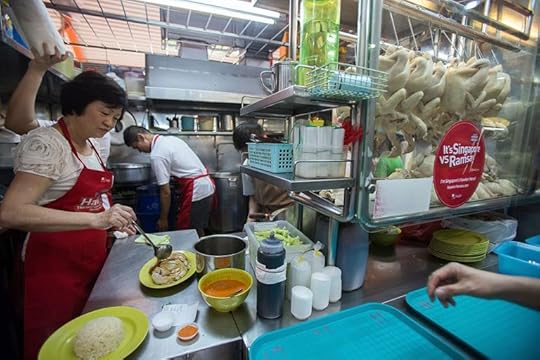
When the former British colony of Singapore became a country nearly 50 years ago, its people were sustained by a multiethnic street food culture that would make the island-nation a global food mecca.
This was long before the arrival of celebrity chefs, Michelin-starred restaurants, eye-popping restaurant tabs, and the rise of Singapore as one of most expensive places in the world to live.
Back in the day, food hawkers generally had just one specialty dish, usually served from a rickshaw on the street — often on “opeh,” or banana leaves instead of paper plates.
In the 1970s and ’80s, prompted by concerns over sanitation and unlicensed food sellers, Singapore moved street food vendors off the streets and into open-air pavilions called hawker centers, with running water and electricity.
Hawker centers thrived, but today Singapore’s venerable street food culture is threatened by its growing wealth and changing tastes. As elderly hawkers hang up their woks, there are far fewer young people willing to carry on the tradition. Nor would many status-conscious Singaporean parents want them to.
Lucky food hawkers have children who help out like Brendon Yip, who works for an IT firm during the week but spends weekends ladling out silky smooth Cantonese-style porridge at his parent’s Hwa Yuen Porridge stall at the Tiong Bahru hawker center.
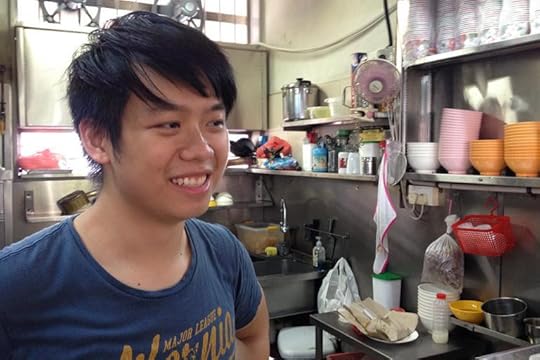
Photo: Tom Benner/GlobalPost
The 27-year-old doesn’t plan on taking over when his parents, now in their 60s, decide to retire. Nor do his two brothers, who also have corporate jobs.
“No one knows what’s going to happen,” he says.
Foodies, bargain lovers, and even the Singaporean government worry about the fate of humble yet beloved artisanal and traditional foods. Efforts, including a government pilot program, are underway to preserve the endangered street food culture.
Singaporeans take their food extremely seriously. Demanding palates and a wide variety of dishes make eating one of two national pastimes (the other is shopping). The food selection reflects Singapore’s cultural and ethnic mix of Chinese, Malays, South Indians, and Peranakans (descendants from British Malaya of Chinese, European, and Malay families).
That makes Singaporean cuisine unique to Singapore, a melting pot like no other, prompting food writer Calvin Trillin to famously observe of Singaporeans: “Culinarily, they are among the most homesick people I have ever met.”
A well-prepared and satisfying meal from a food hawker can cost as little as S$3 (or US$2.22). The fear is that traditional street fare will become pricier — and grow out of fashion — in a city that is frequently named the world’s most expensive to live in.
As traditional street food hawkers retire and the availability of good, cheap food becomes a concern, chain franchises and fast-food outlets continue to grow.
There are increasingly ubiquitous indoor food courts, which have “air-con,” as it is called in Singapore, along with a new mix of available options including Western food outlets such as McDonald’s and Subway, as well as pricier options that are increasingly affordable to wealthy Singaporeans.
Meanwhile, Singapore’s growing wealth has summoned the arrival of restaurants branded by celebrity chefs such as Wolfgang Puck and Mario Batali.
The implications are economic, and not just for moderate-income Singaporeans who rely on the easy availability of cheap, good food. Food tourism is a big draw in this widely acknowledged food paradise, with organized food trails offering deep-pocketed tourists a glimpse into Singapore’s rich cultural history and diversity.
Singaporean street food can mean many things to many people. It can mean chicken rice, a deceptively simple dish of plump and tender chicken served on a bed of rice made moist and fragrant with broth and ginger. Or carrot cake, a fried radish cake. Or “popiah,” spring rolls filled with finely grated fresh vegetables. Other basic hawker fare includes “laksa” (a spicy noodle soup combining Chinese and Malay elements), “bak kut teh” (a peppery pork rib soup), and “rojak” (a fruit and vegetable mix that is part of a Javanese ceremony for first-pregnancies).
More unusual dishes include black-skinned chicken (believed to have medicinal qualities), pig organ soup, fish head curry, and frog leg porridge. On the somewhat pricier side of hawker fare are chili crab, black pepper crab, and barbecued stingray.
Food blogger Leslie Tay, author of “The End of Char Kway Teow and Other Hawker Mysteries,” says hawker center prices are too low to draw enough young people into the hawker profession. He also sees the tradition of highly skilled hawkers specializing in a single dish — such as “char kway teow,” a popular noodle stir-fry — giving way to a trend toward mass-produced fare and today’s wider choice of international foods.
“When I get old I’ll be reminiscing about the old times and thinking ‘I miss my char kway teow, I miss this, I miss that’,” Tay said. “But the young generation may not, because they would have grown up in a different environment where the hawker food has to compete with other cuisines like Japanese, Italian and Korean food.”
Hawker center food prices are slowly creeping upward. A survey released last fall by the Consumers Association of Singapore found that hawker food prices increased by 10 to 20 percent for most food items over a two-year period.
Preserving Singapore’s hawker heritage is the goal of a recent government program that pairs up young apprentices with experienced hawkers. But the take-up has been low.
Wayne Tan, 28, who serves the Chinese Hakka dish thunder tea rice, is doubtful about efforts to attract fellow young hawkers.
“I talk to my friends about it, they don’t seem to be interested in any of the schemes,” he said. “Singaporean children go through the education system, they’ve got certificates to university or even further education, even their parents who supported them won’t want to see their children work at the hawker center.”
By Tom Benner, GlobalPost
This article is syndicated from GlobalPost.

July 10, 2015
12 culture shocks Americans will have in Thailand
If you expect cars to stop for you to cross Sukhumvit Street, you won’t move a foot in Bangkok. Simply stick your hand out and start walking — blind faith style. No worries if you get hit, Bangkok is actually known for having some of the best hospitals in the world.
Next
Prev
2. Everyone is going to want to eat ‘family style.’
When you order a bowl of Tom Yum, an order of Pad Thai, or any other meal either in a restaurant or from a street vendor, it will be served in the center of the table with rice and/or noodles.
And every utensil will be shared and bare hands will be used to prepare the food. So just relax, it’ll boost your immune system.
Next
Prev
3. The bathroom accommodations — or lack there of — will require a solid utkatasana stance.
Gravity squatty potties. Look it up.
Next
Prev
4. Street food is always going to be the best choice.
When in doubt, ask for the specialty — usually blood soup served with pig intestines. Yummy! If you are simply looking for a snack, the most obvious choice would be protein-packed pan-fried grasshoppers.
Next
Prev
5. Thai iced coffee is going to make your Starbucks skinny mochachino taste like sludge.
Your body will go into shock after trying this caffeine-infused, milky sugar drink bought at any corner vendor. Unfortunately, Thailand’s the only place to get the real deal. Dunkin Donuts will never be the same.
Next
Prev
6. Thailand’s cost of living will actually allow you to live.
Sukhumvit Road is one of the main strips in Bangkok, you can survive there for 10 USD a day. There are massive malls, world famous restaurants, massage parlors and street vendors — everything you need. When you go back to the US, you’ll be mortified to pay that much for a cobb salad.
Next
Prev
7. You’ll have to salute the king before watching a movie.
Movie theaters are one of the only places to escape the heat in the late afternoon, so you’ll want to be in there. But if you don’t stand up to salute during the national anthem, you’ll be asked to leave. But that’s a small price to pay for reclining seats and even a complimentary blanket to make you feel all snuggly.
Next
Prev
8. People will be celebrating way more than just three or four times a year.
It doesn’t matter when you go to Thailand, you’re going to be there for at least one holiday. In fact, the word ‘holiday’ is pretty much meaningless in Thailand because they happen almost weekly. In summer, there’s the Buddhist Lent day in July and the Queen’s birthday in August. Markets and tourist attractions are shut down but opportunities for Thai massages and food tours are everywhere. And if you’re lucky, you may catch a glimpse of the royal family out and about.
Next
Prev
9. Everyone’s going to say ‘swatikaa’..?
Sounds strangely like ‘swastika,’ but it’s actually the traditional Thai greeting that you’ll get from the moment you land. No, nobody’s bowing and encouraging white supremacy.
This story was produced through the travel journalism programs at MatadorU. Learn More
Next
Prev
10. The Skytrain will be far cleaner and way more exciting than any Amtrak you’ve taken.
It runs along the tops of buildings throughout the city — what’s cooler than that? Plus, combined with the overall cleanliness of the Thai people and the (somewhat annoying) no food or drinking policy, you’ll never see a cleaner form of public transportation.
Next
Prev
11. You can actually barter here.
The price tag says 100 Baht? You can definitely get it for 40.
Next
Prev
12. Nobody’s going to care about how trendy your shoes are.
Because you can’t really show them off anyway. Shoes are a big no-no and never worn in any sacred area. It’s barefoot all the way — you couldn’t swing that in New York City.
Next
Prev

How the US was founded on beer
Follow Matador on Vimeo
Follow Matador on YouTube
WHEN WE TALK ABOUT THE THINGS AMERICA was founded on, we include a lot of lofty ideals: Freedom. Liberty. Justice. Equality. Democracy. What we don’t focus on as much as we should is that other essential pillar of the United States: beer. Drew Christie, a writer and animator, put together this short animation on how beer was a shared great love of the Founding Fathers, and how teetotaling is at least slightly correlated with being a terrible President.
Our national love of beer tapered off for a while — a recent study shows that American colonists drank twice as much as modern Americans — what with the prohibition and all, but the craft beer revolution has brought America’s favorite drink back to the forefront. America is America again. All thanks to beer. 
Matador Network's Blog

- Matador Network's profile
- 6 followers

