
Matador Network's Blog, page 2089
July 6, 2015
9 abilities Iowans have over everyone else

Photo: Kristin Schmit
WE IOWANS have an unparalleled ability to fly under the radar. It’s like we’ve had this enormously successful marketing campaign convincing everyone else that we’re flat, hogs are our childhood friends, and the only thing we have to offer the world is fried butter on a stick. While we enjoy being left alone, let’s straighten out the record: What other abilities do Iowans have that seem to go unrecognized?
1. Being politically tolerant
When some Joe Schmoe candidate publically wonders “why those hicks have all the power,” we tell them, “You’re welcome. Consider it a favor.”
When it comes to the battles between the Bushes and the Clintons, the Obamas and the McCains, Iowa has first-in-the-nation status AND it’s a swing state. That means we’re literally tolerating politicians on our doorsteps and in our living rooms for two years of every four-year presidential cycle. We swim through junk mail, juggle robo-calls, and have about 24 months where we see nothing but political ads and surprise signs on our front yards. All this intrusion into our daily lives and yet somehow we still manage to stay sane enough not to abandon our post and lead the country in presidential voting trends.
So the next time you hear two solidly-blue-so-politicians-don’t-bother New Yorkers (or anyone else, for that matter) wishing the election would just be over, tell them, “Oh, honey. You have no idea.”
2. Not shutting up about Iowa
Because if we keep talking, maybe we’ll say something that’ll make you realize we’re not talking about Idaho.
3. Keeping calm and being Iowan
Have you ever stood in line at a Dunkin’ Donuts, say, in Boston, where the customer at the counter is taking more than 15 seconds to order? Everyone else in lines starts tutting and huffing and puffing and she practically spills her coffee to get out of the way. Or maybe you’ve been on the 5 heading back to LA when you’re merging onto an exit behind some Honda Accord going 35 mph and you’re worried everyone is blaming you.
In that coffee line, most other people start seething. On the highway, other vehicles start darting back and forth to get virtually nowhere. But we Iowans tend to not give a damn what the rest of you all are doing (see political record below), and not let it affect us. We’d probably have fewer heart attacks if it weren’t for all those “yellow days.” Speaking of…
4. Recognizing that yellow is the best color
Chicken, biscuits, mashed potatoes, gravy, corn, coffee cake, cheesy potatoes, potato salad, grilled cheese, French fries, onion rings, tater tot casserole, Maid Rites — it’s all some shade of yellow, and it’s all delicious.
5. Dealing with the real world effectively before most everybody else wakes up
When did Iowa remove the ban on interracial marriage? Only 116 years before the US did. How about school desegregation? 86 years before Brown v. Board of Ed. Women’s property rights? 1851. In 1869, we had the first female lawyer. In 1920, women had the right to vote federally, but we also said, “Guess what, ladies? You get jury duty, too.” In 2009, we had gay marriage rights to stay. And while there are inevitably going to be haters that spout out about how much more progressive their state is, remember that we’re doing it all under the guise that we’re “farmers and hicks.”
Why doesn’t congress just turn over everything to us already?
6. Telling the difference between corn and actual vegetables
Actually, there is none. Six servings a day, please.
7. Keeping a secret
Imagine a world that looks like the Shire from Lord of the Rings. There are massive rivers on all sides, glacial lakes, waterfalls and ice caves. Imagine this world where people are more concerned that they’re in your way than you’re in theirs. One where there’s no commute to work, no traffic to deal with, no church-knockers on your doorstep, and your house is basically free (well, in comparison). There are four distinct seasons with spring breezes, summer sunsets, autumn leaves, and wintery snowfalls. There’s Chinese food on pizza and produce out the back of your neighbor’s pick-up truck. There are towns dedicated to ice cream, hobo festivals, writers’ workshops, and everything is local, local, local.
That’s the secret we’re keeping.

More like this To Iowa: I'm sorry
8. Appreciating jazz despite our 91% whiteness
Iowa is the birthplace of Glenn Miller and Bix Beiderbecke, but the reputation doesn’t stop there. We’re one of the only states that has big-deal state high school jazz contests, meaning that not only do we appreciate the genre, but our kids are good. Iowa City also has the Iowa City Jazz Festival, where well over 50,000 people crowd the streets each day. Jazz nights can often be found at our bars and clubs, where budding performers get the chance to practice their chases and side-slipping for groups they’d never guess were amateur enthusiasts.
9. Seeing the future before anyone else
Let’s just leave this right here: Iowa is one of the first in pretty much any issue from women’s rights to gay marriage, we vote for the president first, and we’re the home of Captain Kirk? Yeah. That’s right. We basically live in the future.
And just like Captain James Tiberius Kirk says, “I’m from Iowa. I only work in outer space.” 


15 reasons you should never travel to San Francisco
A photo posted by Asian Art Museum (@asianartmuseum) on Jun 8, 2015 at 5:58pm PDT
2. There are too many wild walking tours to fit into your trip!
A photo posted by Wild SF Walking Tours (@wildsftours) on Jun 26, 2015 at 2:04pm PDT
3. Beer in a shoe? Who’d want that?
A photo posted by Schroeder's Restaurant (@schroederssf) on Jun 25, 2015 at 3:55pm PDT
4. An alley dedicated to murals? It’s probably too good to be true.
A photo posted by San Francisco (@onlyinsf) on Apr 30, 2015 at 10:33am PDT
5. It’s always foggy in San Fran, right?
A photo posted by San Francisco (@onlyinsf) on Jun 22, 2015 at 12:29pm PDT
6. Good luck trying to get any decent photos.
A photo posted by San Francisco (@onlyinsf) on May 19, 2015 at 12:25pm PDT
7. Tropical food is just an urban myth. Don’t get your hopes up.
A photo posted by Palm House (@palmhousesf) on Jul 1, 2015 at 10:24am PDT
8. You’ll get all nostalgic when you see the painted ladies in Alamo Square.
A photo posted by San Francisco (@onlyinsf) on Mar 9, 2015 at 1:08pm PDT
9. You might have fun, but will your kids?
A photo posted by Anjan Mitra (@anjan) on Jun 25, 2015 at 2:37am PDT
10. The people are super unfriendly.
A photo posted by Love Street (@lovestreetsf) on Jun 14, 2015 at 3:55pm PDT
11. And super conservative.
A photo posted by San Francisco (@onlyinsf) on Jun 29, 2015 at 8:43am PDT
12. You’ll fall in love with Haight-Ashbury and never want to go anywhere else.
A photo posted by L I Z • T R A N (@liz.tran) on Jun 22, 2015 at 5:49am PDT
13. You’ll get addicted to the tacos and burritos at La Taqueria.
A photo posted by La Taqueria (@lataqueriasf) on Dec 10, 2014 at 8:38pm PST
14. Alcatraz will never live up to the hype, will it?
A photo posted by Lewis Sneddon (@lsneddon95) on Jul 1, 2015 at 9:07pm PDT
15. When you get back home all your friends will ditch you because you won’t stop talking about how much you love San Fran.
A photo posted by San Francisco (@onlyinsf) on May 11, 2015 at 9:07pm PDT

Voluntourism in the social media age

Photo: PippaBiddle.com
I never meant to make anybody cry. I wanted the students at the small high school in Brooklyn to question themselves and the institutions that they are a part of, but I didn’t want to make them cry.
Soon after walking off stage, a teacher pulled me aside to let me know that one of his students had left in tears. I gave him my email and offered to talk to her, knowing that I was probably the last person she wanted to see.
Over the next 24 hours, I pieced together that she’d worked in Africa; she’d done trips and created service projects, she’d been on the cover of magazines and received awards. She’d just gotten into a top-tier college that rejected me, and there she was having an existential crisis at 17 in the middle of a crowded auditorium. They must have felt like bullets, the words that I was spraying out into the crowd about zebras, lions, international aid, volunteer work, and impoverished African children.
She hadn’t been warned that I was coming, and I was not told that she was there. Had I known, I would have started with a disclaimer — “Hi there, my name is Pippa and if you do international volunteer work I’m about to crush your world. Feeling shitty after? Come talk to me.”
The school called her parents before she went home to warn them. I hear that they weren’t too happy with what, as a peeved teacher who hadn’t been present but felt strongly put it, “I’d done to her.”
My speech had been about my opinions on voluntourism. This time I’d done my research and padded it out with facts. Like how 88% of the 1.1 million Americans who volunteer abroad each reach are white, or how 1 in 3 comes form a household that makes at least twice the average American income.
It was probably the guiding imagery I used, not the facts, which hurt her. The thousands of Facebook albums full of pictures of lions, zebras, and African (or Asian, or South American, etc.) babies, the young children reduced down to a prop to hold hands with or perch on your hip for a developing world photo shoot. Pictures to be uploaded upon return.
I imagined a scenario, fictional but oh-so plausible, in which that young person in the photo puts down the baby with the distended belly and reaches into her backpack for a packet of peanut butter because lunch was basic and haven’t these people ever heard of protein? Maybe they’ll have chicken at dinner. As she squeezes the peanut butter inter her mouth flies descend on the child’s face.
The truth is, I have some of those photos. Photos of me with three or more young children on my lap smiling for the camera. Most of the one’s from Tanzania I have taken off of social media, finally accepting that when you don’t even know the other subjects names the shared stage of your Facebook profile picture becomes an altar to the commodification of poverty. You might as well tag them “African Child 1-3.”
The photos I removed are, to just about everyone who doesn’t work with me, indistinguishable in nature from those that remain on my Facebook profile. The composition is the same. Me seated or standing, surrounded by small children. The difference? These children I know. These children I have lived with, learned from, and watched grow up for years. Yes, I rarely go back to the Dominican Republic anymore, but my love for the kids we serve is unchanged.
More like this The problem with little white girls and boys
To the untrained eye, the pictures from Tanzania and the DR are interchangeable, but I like to think that my campers held me a little tighter, hugged me a little closer, and know that they are never props.
At the end of my speech I encouraged the high school students to travel. I told them to go with an open heart, helper’s hands, and to have the first thing they ask be “What do you need?” rather than “Where can I put this thing that I’ve decided you must want?” I don’t know if the girl was gone by then, but I don’t think it would have made a difference. The icky feeling that we get inside when our most basic values are questioned had boiled over.
The next day, I helped lead a White Affinity Group at the school. They hadn’t heard about the incident but one of two students had read my article. We had a tough discussion fueled by frustration at being there in the first place. While we were cleaning up, three of the kids, one of whom had all but refused to participate, came back into the room. They wanted to thank me for challenging them, pushing them, but more than anything listening to them. They want me to speak at the middle school. I wonder what their parents might think.
In a few weeks, I’ll be returning to the small Brooklyn school to lead a follow-up discussion with students. I am sure that they have a lot of questions. In an effort to use social media for good, and recognizing that my point of view is controversial, I encourage readers to post the questions that they might have about my experiences and/or opinions as comments on this piece. In the coming weeks I will answer as many of them as I can.
This article originally appeared on PippaBiddle.com and is republished here with permission.

The 5 worst habits I picked up in London
Photo: wildebeest1
1. Turning the pub into my social-meeting hub
The pub is a quintessentially British thing, and in London pubs are as frequent as Starbucks in New York. They are open throughout the day and have all sorts of things to keep your attention. I’ve always been much more of a café person, but since making London my base I have spent way too many hours in the pub — I tend to end up here no matter the occasion or the day of the week. For dinner, snacks, pints, drinks, coffee, crumbles with custard, to play board games, watch the Premier League, sit outside, take a quiz, for birthday parties, leaving drinks and for after works and Sunday roasts, you will find me and every other Londoner at the pub around the corner.
2. Getting angry with people not following commuter etiquette
Spending two hours of my day on the tube, I developed an aversion towards any person that made my commute unsmooth and unpleasant. I saw my day slowly shrinking into commutes and an office building, and I eventually became one of the barking dogs. If you stopped in the middle of the platform when you got off the Jubilee Line at London Bridge, I would bump into you, give you a death stare, sigh loudly and think you’re an imbecile for disturbing my flow.
3. Pushing to get on the tube at rush hour
Around 9am and 6pm, it’s mayhem on the tube, and, of course, no one wants to another 2 minutes until the next train (you never know if there will be a red signal or there’s going to be a delay because there were people on the tracks in Loughton). So it’s completely acceptable to force yourself on to the train. I’ve watched people packed like sardines, standing basically at the edge of the train doors and still decided it would be a good idea to squeeze (read: forcibly push) my way in.
4. Constantly walking at high speed
You don’t stroll in London — there’s always somewhere to be, somewhere to hurry to, a meeting with a friend to run late for or a dinner reservation at a hyped Dalston restaurant given five stars by Time Out to miss. I quickly learned that walking and pondering your way through life in this city, you might as well throw yourself to the dogs (a.k.a., the Londoners with an aversion to mindfulness). People will definitely get mad at you, sigh loudly and mutter annoyingly as they rush past you and make you feel you’re less of a person because you actually take time to observe your surroundings.
5. Time managing every single hour of my day
It doesn’t look that big on the map, but London is time consuming and everywhere you go, getting there seems to eat up at least an hour of your day. Every Londoner knows this, so whenever they leave their house they know they most likely wont be able to pop by again to pick up the gym bag or change to evening attire between work and drinks. Therefore every hour of the day is used wisely — all in order to spend as little time as possible on public transport and waste those precious minutes there never seem to be much of in a bustling city of 8 million people.
My third year in London left me with a job in Chiswick, a flat in Shepherds Bush and friends spread out from Woodside Park and Golders Green in the north, to Dalston in the east and Farringdon in the city. There were days where I would squeeze in work, commutes, errands, leaving drinks for colleagues, dinner with friends in Chinatown and club nights in Dalston — all in a day.
I hardly ever stopped to enjoy the moment. As I filled my life with efficiency I was drained on energy and missed ninety per cent of the things that were actually going on around me. 
Want to go to Cuba from the US? Here are 6 tips to decipher the new rules

Photo: Christopher L.
The administration of President Barack Obama announced earlier this year that after half a century of restrictions, Americans are finally free to go to the Caribbean island of Cuba without having to ask for permission.
Or did it?
You might think the new rules, which will took effect as part of a historic shift in Cuba policy under Obama, are a little confusing. They could be deliberately so. The government appears to be easing the restrictions as much as possible within the bounds of the restrictive trade embargo still in place. This naturally creates a certain ambiguity.
To help steer through this fog, GlobalPost provides some pointers to help travelers going to Cuba.
Can any American go to Cuba?
Not quite. The United States Treasury has a list of reasons for which American citizens can go to Cuba. It does not include general tourism. However, the list is broad and open to interpretation. It includes religious activities, humanitarian projects, artistic performances, journalism, academic work, and family visits. You will no longer need to obtain permission from the Treasury for this trip, so it is up to you to decide if you qualify.
Do I need to take stacks of cash?
No. A major change is that US credit and debit cards will work in Cuba. The practice of taking bundles of bills in your socks should be over. But Elmer Castillo, who organizes trips through In Touch With Cuba, warns it could take some time for the ATM machines to actually begin working. “The bank in Cuba needs to sign agreements with the bank in America and agree on the terms, which could take a while,” Castillo says.
What do I need from the Cuban government?
The Cuban government provides US citizens with a permit for their visit at a cost of $75 from an office in Washington. Travel agencies are allowed to help visitors obtain these agreements, and they can also do so without the Treasury’s special permission.
Where do the flights leave from?
Flights to Havana currently leave from Miami and Tampa — and now New York. JetBlue this week announced that starting July 3, they will offer flights from New York to Cuba. However, they are charter flights, which are normally booked through the special agencies organizing Cuba travel.
Can I bring cigars and rum back from Cuba?
A little. The new rules allow US visitors to Cuba to bring back $400 in souvenirs, but that includes just $100 worth of tobacco and alcohol at Cuban prices.
How long will these new rules last?
It is difficult to gauge, but anticipate more changes. The Treasury is expected to issue more thorough guidelines on how these new rules will work. The real shift would be for the US government to actually end the trade embargo law. This would need a vote in Congress. While some prominent Republicans have said they are against ending it, others could support the president. Watch for that battle soon.
By Ioan Grillo, GlobalPost
This article is syndicated from GlobalPost.

July 5, 2015
Check this radical day in the life perspective of a woman surfer in Australia
Follow Matador on Vimeo
Follow Matador on YouTube
Steven Briand and Team O’Neill worked with Malia Manuel, a professional surfer, to capture a single day’s surf session in Western Australia. By utilising drones this allows the viewer to be taken into the waves and experience them just as Malia does. 
Greece’s collapse is kind of awkward for Europeans there on vacation
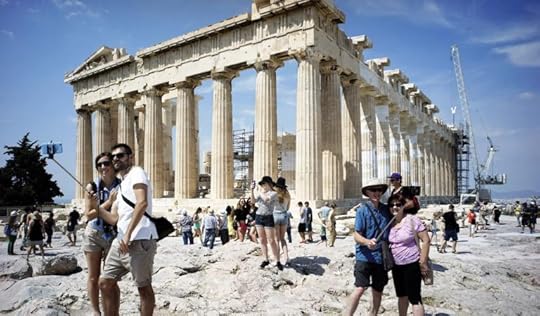
ATHENS, Greece — Greek civilization may be falling apart, but you wouldn’t know it at the Acropolis.
The weary locals are supposed to vote Sunday on whether the country should accept more harsh conditions for aid money.
And meanwhile, here at Athens’ ancient hilltop citadel, tourists from around Europe are wandering happily, seeming oblivious to the chaos that could ultimately threaten the very future of the European Union.
That said, there are small signs of nervousness. “My friends told me I should say I’m from Austria or Switzerland,” joked Max Holtgrave, a German — a clear reference to the current unpopularity of German Chancellor Angela Merkel in this country.
Germany could lose billions if Greece goes bust. Late Tuesday, the Greek government skipped paying back about $1.7 billion to the International Monetary Fund.
Merkel has run out of patience with Greek Prime Minister Alexis Tsipras, whose controversial referendum idea came as a curveball after their talks collapsed last week. Merkel called Tsipras’ bluff. She claims Sunday’s poll is really a stay-or-go vote on the euro.
Tsipras says that’s a lie. He insists that voters will be asked whether or not to accept austerity demands imposed by creditors. And he’s been advocating they should vote “No.”
Confusingly, he sent a letter to these very same creditors that appeared to concede to most of their previous terms.
The country’s future now lies in the hands of voters. But nobody appears to be quite sure of what they are voting for any more. You could forgive visitors to the country for being confused, too — if not a bit concerned.
“Everything seems very peaceful, but what’s it going to be like after Sunday?” asked Lisbeth Claussen from Denmark. “Should I be checking the planes going back?”
We asked Claussen and other visitors to the cradle of democracy what they make of the situation.
Lisbeth Claussen — Copenhagen, Denmark
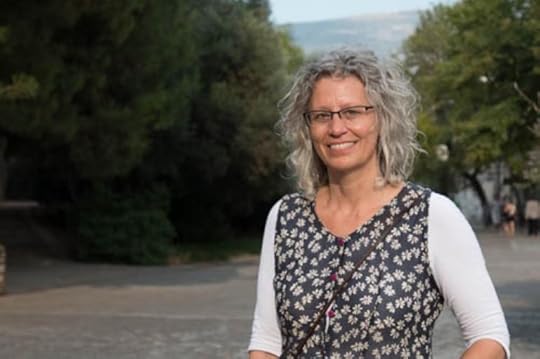
“Of course [the Greeks] have to stand up for themselves. But they also have to take responsibility.
“However, the situation here is difficult because this is a country with few resources. Apart from agriculture, there’s not a lot of production. That’s why it’s difficult to criticize Greece. We’re telling them to grit their teeth and work harder. But, at what exactly?
“It’s very critical. [The Greeks] are more than cynical. They’re sad, giving up.”
Rachel Valentine Smith and Mark Leipacher — London, England
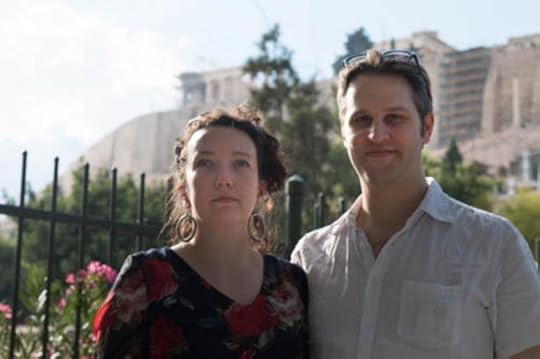
Leipacher: “It’s tricky. It’s a very big issue and it’s not black and white. The fact of the matter is that Greece owes creditors a lot of money. But their attitude has been gung-ho and belligerent. Tsipras hasn’t been playing ball. He hasn’t done anything to ensure people are paying their taxes as they should be. It’s a kind of game. There’s been a lot of demonizing in this country of Germany, which is keeping it afloat.”
Valentine Smith: “It’s easy to analyze the situation from a political point of view. But, what about the people of Greece? Do we just leave them to fall apart? Greece has never recovered from the position in which it found itself in 2011. There are probably ways European countries could be more helpful without damaging our economies.”
Max Hecht — Leipzig, Germany

“The situation is very bad. That’s why the people have turned in one direction, towards the populists, which doesn’t help. But, there are concessions to be made. I’m not sure how long the Tsipras government will be able to keep this up.
“It’s also the fault of the media. The politicians on both sides have been guilty of showing off.”
Caridad Cintas Quesada — Madrid, Spain
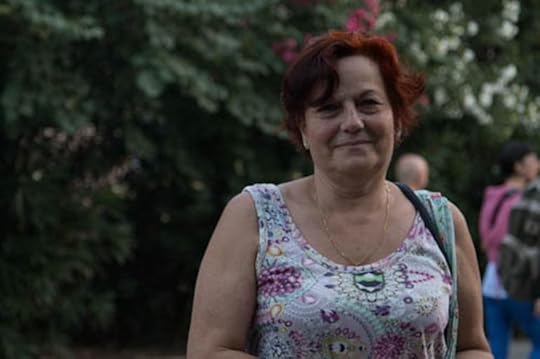
“What Germany is proposing is not right for the Greeks or the European people. The Tsipras government wants to break the economic formula that the euro zone countries have created. This formula is a lie.
“They want to crush the Greeks to give a lesson to other southern European countries like Spain and Portugal. We are the poor countries of Europe. In Spain, we had textiles, metals and shipbuilding. Now we have been turned into a services economy.
“They have fat salaries. We have low wages. They want to impose austerity on us, to cut public services. The Greeks have to be strong and resist the pressure. They want to scapegoat the Greeks.”
Cedric Camier — Paris, France
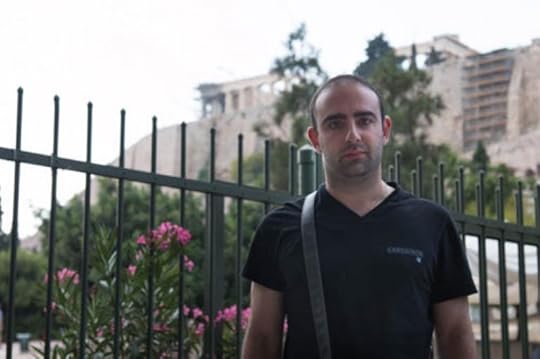
“If the Greeks leave the euro, things will only get worse for them. The country has borrowed a lot. Now they’ll struggle just to pay back the interest.
“The euro zone countries that are putting pressure on Greece obviously want their money back. But, I also understand that the Greeks feel the euro zone countries are partly to blame for putting them in this situation. They lent the money, but wanted to dictate how it should be spent.”
Karl Kütt — Tartu, Estonia
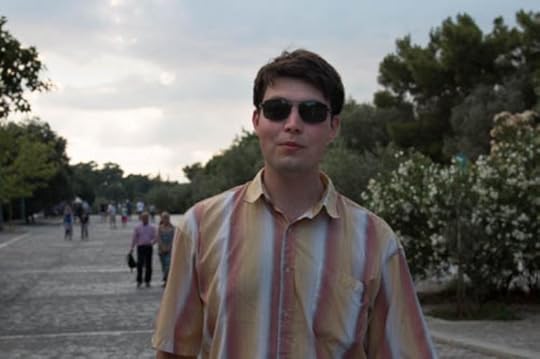
“The Tsipras government is populist. You can definitely sense they are desperate. They know they have to accept the conditions to receive more money. But, they don’t want to take the heat for it.
“The Greeks should vote yes [to the austerity measures]. It would be crazy for them to step out from the euro zone. They’d face a rapid devaluation of their currency, huge deficits and higher inflation.”
By Lorraine Mallinder, GlobalPost
This article is syndicated from GlobalPost.

July 4, 2015
“American Parties” abroad prove these folks have never been stateside for the 4th of July
When it comes to celebrating America, it may seem obvious to anyone who’s been in the good ol’ US-of-A that there are certain core components to celebrating our great nation. Things like barbecues, fireworks, and our distinctly American beers will likely be found in every living room and backyard across the country during today’s festivities.
So what happens when folks in other countries decide to throw an American-themed party? The results are hilarious, and rather culturally revealing.
France:
11 signs you were born and raised in West Texas
You understand what a windy day really is. Listen, Chicago seems nice — but we can all agree that Lubbock or Amarillo should really be considered the Windy City. But also, only in West Texas are the people so resilient that the local tennis team still practices with 65 mph wind, because that’s just a normal day. Don’t even get me started on Haboobs.
2. You’ve survived a Haboob.
Imagine a wall of dust a mile high, countless miles wide, and speeding in your direction. If you’re a real West Texan, you’ve not only survived a Haboob, but you’ve THRIVED in one. Somehow you managed to not only keep the dirt out of your eyes and mouth, but you’ve kept a garden alive, you managed a trip to the bank, and you trekked across campus to turn in your final paper.
3. You affiliate with and defend only one local TexMex restaurant.
Be it Garza’s, Savannah’s, or (insert favorite local Hispanic family named restaurant here). You’ve pledged your allegiance to one family restaurant and refuse to acknowledge the existence of any other. Every West Texas town has one — but you guarantee your favorite’s enchiladas are supreme.
4. You think that an 8-hour road trip is like driving to the grocery store.
Texas is a big state, and West Texas is massive, but chances are you’ve driven more than six hours to shop for school clothes or to go to a concert. You went on a high school physics trip to Six Flags — five hours there and five hours back — in one day. You have to go everywhere to get anywhere. So now, your brain instantly thinks a 12-hour trip is nothing.
5. You laugh when people bring up Friday Night Lights.
Because you actually lived it. Football is King in Texas — but in West Texas it’s practically a religion. Just like the whole congregation knows your Sunday morning seat, the whole community knows who sits where at the high school football game. They may not have won a game in eight years, but the whole town will cheer for them like the small town heroes they are.
6. You’re ready for snow, rain, and scorching heat…all on the same day.
It’s spring break and you’re trying to decide what to do for the day: the pool, a trip to the library, or maybe a day on the golf course. No matter what you decide, you’re prepared for a small blizzard in the morning, a 90-degree temperature by lunch, and a thunderstorm from hell (with hail) by the time you start making dinner. West Texans are not joking when they say the weather is as bi-polar as former Texas Tech basketball coach Bobby Knight.
7. Your family threatened to disown you if you went to college anywhere but Texas Tech.
You sport a burnt orange shirt? Disowned. Mention a trip to College Station. Disowned. Even go to the zoo and say that you think bears are cute, and your dad suddenly thinks you want to go to Baylor. Disowned.
This story was produced through the travel journalism programs at MatadorU. Learn More
8. Your first addiction was Taco Villa.
You could have worst addictions, but when you go to Taco Villa seven times in one week…you know you were raised in West Texas.
9. You understand that a West Texas sunset is unlike any other sunset.
Almost every night the sun reaches across the plains as far as the eye can see and a mix of reds, pinks, and blues intertwine with the brown fields around your house. Miranda Lambert said it best, “The Texas skies are the biggest ones I’ve seen,” but a West Texas sunset could have a song all its own. For a few minutes every night you know you’re right where you need to be.
10. You appreciate the simplicity in the names of small West Texas towns.
They might not be brilliant names, but you have to appreciate the early settlers’ ability to name towns for what they really were. Think, Levelland, Plainview, Shallowater, and Muleshoe. Plus, they make for a good laugh when you get to tell someone from out of state you grew up in a town called Happy, Texas.
11. You’ve always thought the geographical names for Texas make zero sense.
Looking at a map you were always confused why the Texas Panhandle was considered “West” Texas when really it’s the most northern part. That’s fine though, you’ll let the city slickers in Dallas keep the title of “North,” because West Texas is a league of it’s own. It may not have an Ikea, but it has friendly people, good food, and a beauty that only a true native will understand. 
How I drastically improved my photography with just 2 little decisions

Photo: Manuel Becker
THE QUESTION I GET ASKED THE MOST IS: “Wow, nice pic! Which cam are you using?” Does this sound familiar? Every time I heard this question I used to answer in the same way, telling people which camera I was using, but that it didn’t really matter in my opinion.
Beginners and hobby photographers usually expect that if they can only save enough money to buy much better equipment this will improve their results in a linear way. That’s maybe the reason why so many people are buying DSLR cameras without knowing or even without having an open mind to learning how to use them.
You recognize this type of photographers pretty easily while they are using a flash in auto mode to brighten up the whole skyline of New York.
Matador Network's Blog

- Matador Network's profile
- 6 followers

